Author: Mei Ling Tan

  • Kakao Bank, South Korea first internet-only banks

    Kakao Bank, South Korea first internet-only banks

    The country’s Financial Services Commission said Sunday it awarded a preliminary license to Kakao for a business to be named Kakao Bank.

    “An Internet bank is meant to give non-financial players, including IT firms, chances to enter the banking sector if they have feasible business plans to improve the financial market and customer rights”, the FSC said earlier’.

    Kakao Bank and K Bank will individually apply for the final approval after satisfying the human and material requirements.

    For Kakao Bank, Korea Investment Holdings Co. will take part as a major shareholder with 50 percent share, while Kakao and Kookmin Bank own 10 percent share each.

    Kakao, KT and Interpark were reported to be the three applications accepted by the FSC. It is the first time in 23 years that a new commercial bank has opened in the country’s banking industry. Once they receive the official approval form the FSC, they need to start operation within six months.

    According to the agency, Kakao’s Kakao Bank gained high scores for innovative services based on its immensely popular mobile messenger app KakaoTalk with 40 million users.

    The banks holding a stake in the two winning consortiums, on the other hand, rejoiced at the FSC approval, but are also facing financial burdens, as well as possible power struggles within the consortium.

    Currently, top-tier banks offer an annual rate of 3 percent to 5 percent, while secondary financial institutions, such as mutual savings banks or capital services, charge 15 to 34 percent.

    “Kakao’s rival, the K-Bank consortium, includes South Korea’s second-largest mobile carrier KT, Woori Bank, GS Retail and China’s Alipay, which is affiliated with e-commerce company Alibaba”.

    Nonparticipating banks geared up to expand their online banking platforms and increase their range of mid-interest rate loans to defend against the incoming Internet-only banks.

    FSC Chairman Yim Jong-yong has been a strong advocate for the web-based bank, saying he expects the online-banking industry to raise the competitiveness of the Korean banking industry as a whole. However, many difficulties are expected in order to pass the bill.

    The bank also aims to go global as it has secured ties with Tencent, China’s biggest social-networking and mobile games company, and the USA online retail giant eBay, which also owns Korea’s two leading shopping sites Gmarket and Auction.


  • India is now Alibaba Group’s second largest market

    India is now Alibaba Group’s second largest market

    For Alibaba.com, the business-to-business arm of the world’s largest e-retailer Alibaba Group India is the second largest market globally.

    “India is the second most important market for Alibaba globally, next only to China for us,” said Timothy Leung, head of global business development, Alibaba. The business-to-business subsidiary of Alibaba Group launched an online platform to provide Indian small and medium enterprises (SMEs) access to global counterparts.

    “India is at a critical point at present and from here we will see sharp upswing in ecommerce. We are very excited in building this consortium for SMEs,”he added.

    The company has 4.5 million registered users from India, with the country accounting for the second-highest paid users on the platform after China. SMEs in India can also avail assistance in terms of financing, logistics (domestic and cross-border), inspections and certifications, technology and SME trade-linked education on this platform. The Chinese company has partnered with enterprises such as ICICI Bank, Kotak Mahindra Bank, Crisil Rating, Tally, Capital Float, Jeena, SGS and Mypacco to help Indian SMEs expand their business.

    “There are at similarities in our experience in Chinese and India markets in terms of population size, kind of SMEs and also the core path in the ecommerce. We are also looking at our experience in the past in China and match it with what is happening in India,” added Leung.

    Citing similarities with the Chinese market Leung said that in China, B2B side of the business spearheaded the growth for Alibaba. The company through its B2B platform brought buyers and suppliers together and then ventured into supporting different aspects of the ecosystem.

    “That’s what we trying to build here. Other than matching buyers and supplier we are trying to develop the ecosystem,” Leung said.

    On the consumer side of the business also the Chinese major and its financial arm Ant Financial have picked up stakes Indian ecommerce companies Paytm and Snapdeal. Founder Jack Ma was in India three times in one year and also met the prime minister.

    The recently launched initiative, known as SMILE, hopes to connect Indian manufacturers with quality Chinese suppliers on Alibaba.com, provide Indian sellers the trading support and facilitate the global sales of Indian products through the platform.

    Talking about the fast growing ecommerce industry in the country, Leung said that 16 years ago when Alibaba started China went from becoming a no-internet country to one of the most advanced ecommerce ecosystems in the world. India is at much advanced stage and growing at a very fast rate when compared to China of those times.

  • GS Retail replaces vice chairman

    GS Retail replaces vice chairman

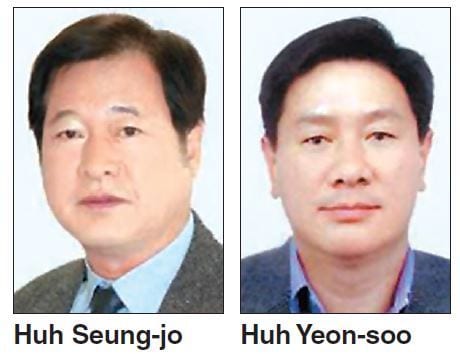
    GS Retail vice chairman Huh Seung-jo stepped down from his post in the latest executive reshuffle announced by GS Group on Tuesday.

    He has been replaced by his nephew and GS Retail president Huh Yeon-soo, the son of Huh Shin-goo — the fourth son of the GS Group founder.

    The new appointment reflects the firm’s efforts to reinvigorate its operations.

    The resignation of Seung-jo, the youngest son of GS Group founder Huh Man-jung, signals the end of the leadership of the second-generation members of the controlling family.

    Meanwhile, the incoming vice chairman is credited with having made significant contributions to the growth of GS Retail’s convenience store business in Korea.


  • Amazon Fire tablet hits China

    Amazon Fire tablet hits China

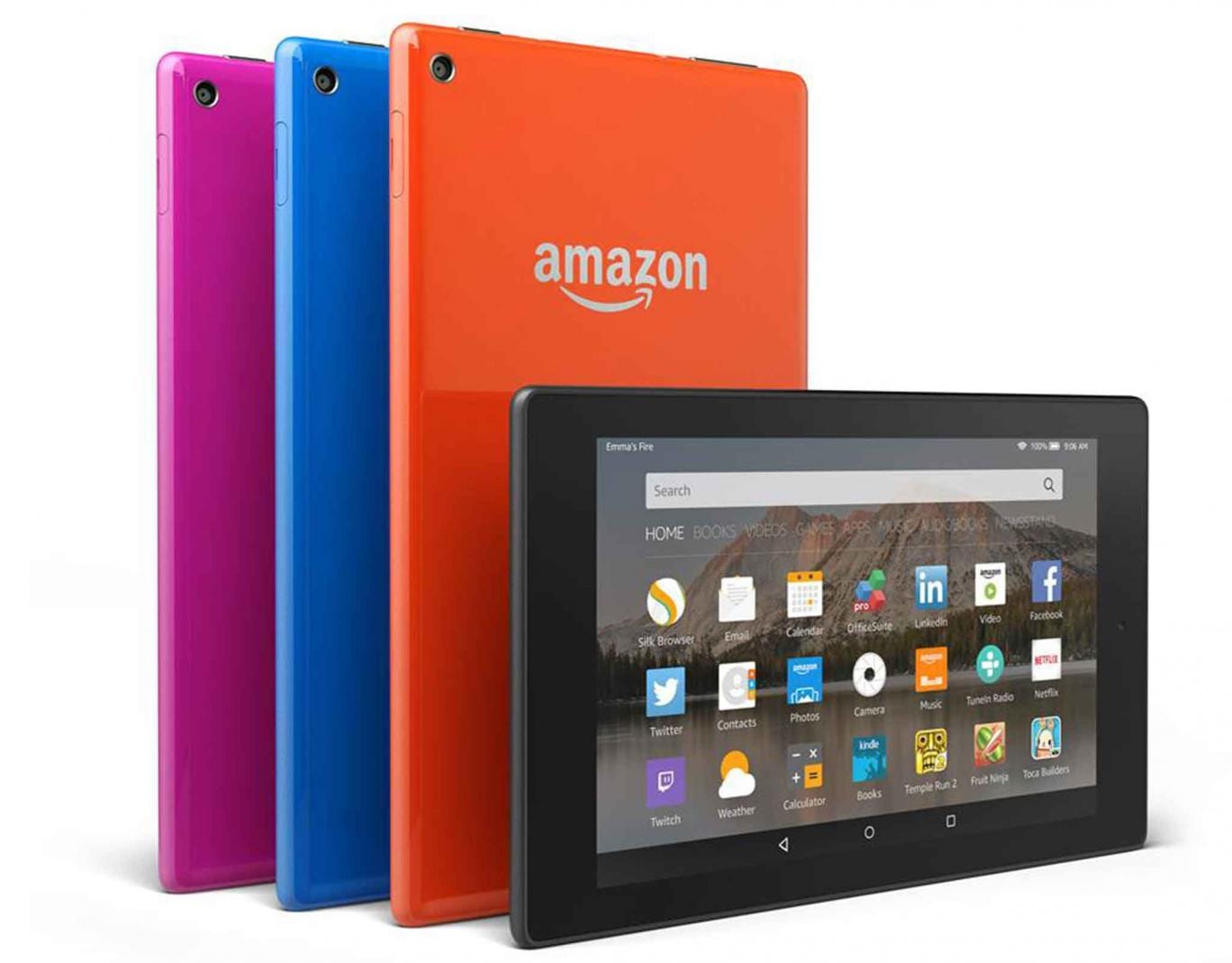
    Amazon has launched its first ever tablet in the Chinese market. The online retail giant has made the Amazon Fire tablet available in China. It initially launched in the West back in September with an eye-catching £50 price tag.

    With a price of 499 RMB, the Amazon Fire is pretty much identically priced in this new market.

    Amazon has had to find a new search engine partner for the China launch. Google is unable to operate in the country, so Amazon is partnering with top Chinese search engine Baidu to help power its tablet.

    Baidu will also provide apps through its 91Wireless Android app store, as well as online video through iQiyi – China’s second biggest online video service.

    Amazon doesn’t enjoy anything like the same market position as it enjoys in the US and UK over in China. It’s online retail business is well behind such local giants as Alibaba and JD.com.

    It will be interesting, then, to see how the Amazon Fire tablet fares in China – especially as its low price is nothing special in a market filled with affordable, decent-quality Android tablets.

    Still, the extensive backing of China’s top search engine should at least start the Amazon Fire tablet off on something like a level playing field.


  • Retail sales decline for eighth straight month in October

    Retail sales decline for eighth straight month in October

    Retail sales in Hong Kong dropped for the eighth consecutive month in October amid a decline in the number of mainland tourists.

    October sales fell 3 percent year on year to HK$37.2 billion, against an estimated decline of 5 percent, the Hong Kong Economic Journal reported.

    By volume, retailed sales edged up 1.2 percent, compared with a 3 percent drop in September.

    The improvement in the city’s retail sales volume was attributed to Apple’s launch of iPhone 6s and iPhone 6s Plus, which pushed up sales of consumer goods.

    However, sales of luxury goods such as jewelries, watches and accessories continued to slump.

    Thomson Cheng, chairman of the Hong Kong Retail Management Association, expects the weak trend in retail sales to persist for the remainder of the year as more Hong Kong people travel abroad during the festive season.


  • Retail landlords headed for another horrible year in 2016, says CBRE

    Retail landlords headed for another horrible year in 2016, says CBRE

    Retailing landlords will likely continue to feel the pinch in coming times, as the ongoing slump in tourism is poised to weigh negatively on capital values in prime shopping districts, thumping prices a further 20 per cent next year, on top of an expected 20 per cent drop this year, according to CBRE.

    But CBRE predicts the office market will be a bright spot next year as the potential launch of Shenzhen-Hong Kong Stock Connect will drive up demand from mainland firms.

    “Retail rents will continue to trend down as leases expire, but given a lower base of comparison, the pace of decline is expected to decelerate,” according to CBRE’s Hong Kong Commercial Real Estate Review & 2016 Preview.

    It predicts that rents will track the decline in capital values, tumbling as much as 35 per cent this and next.

    “Sales momentum of upmarket goods will remain slow but mass market sales should continue to have more resistance,” CBRE said.

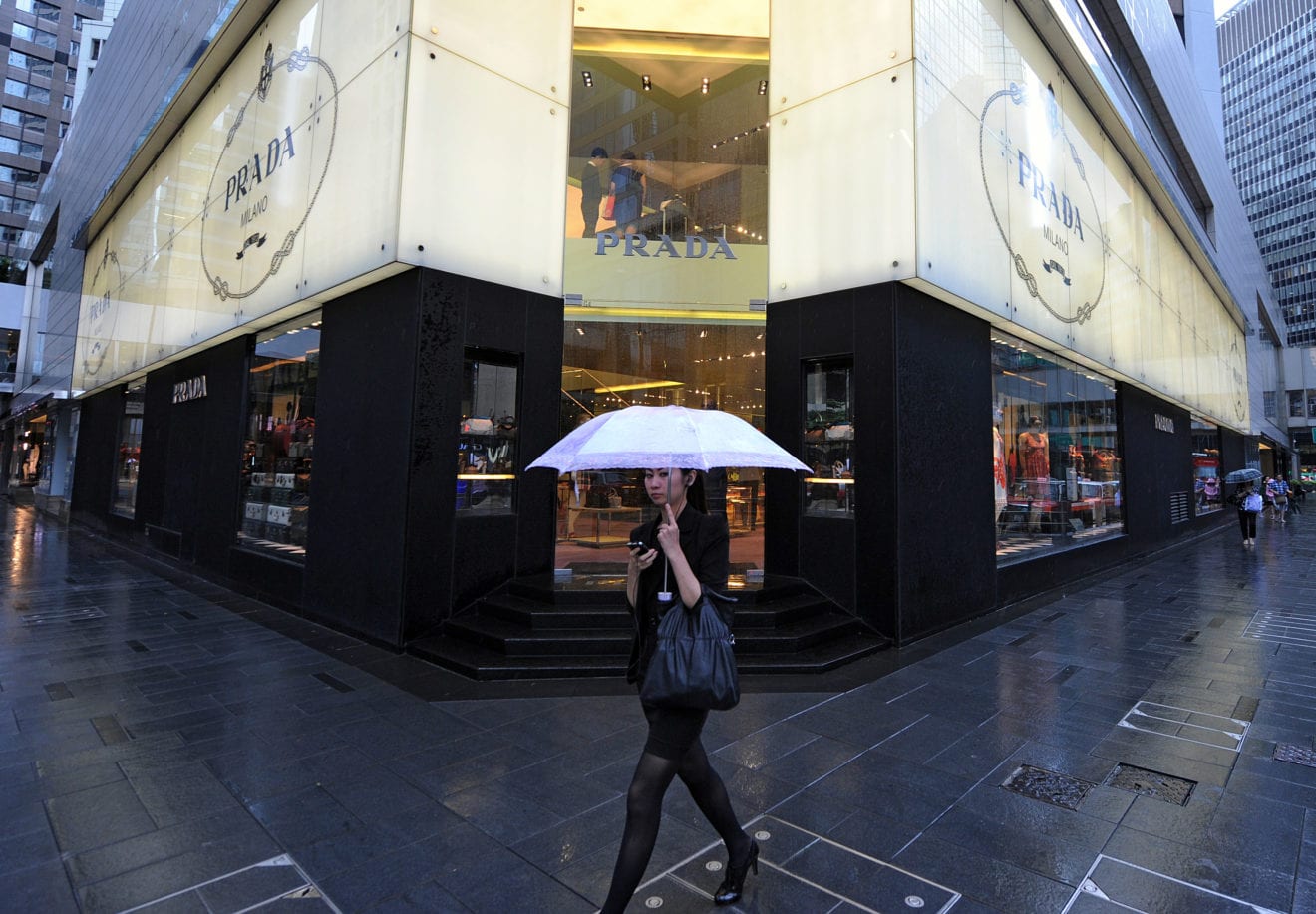
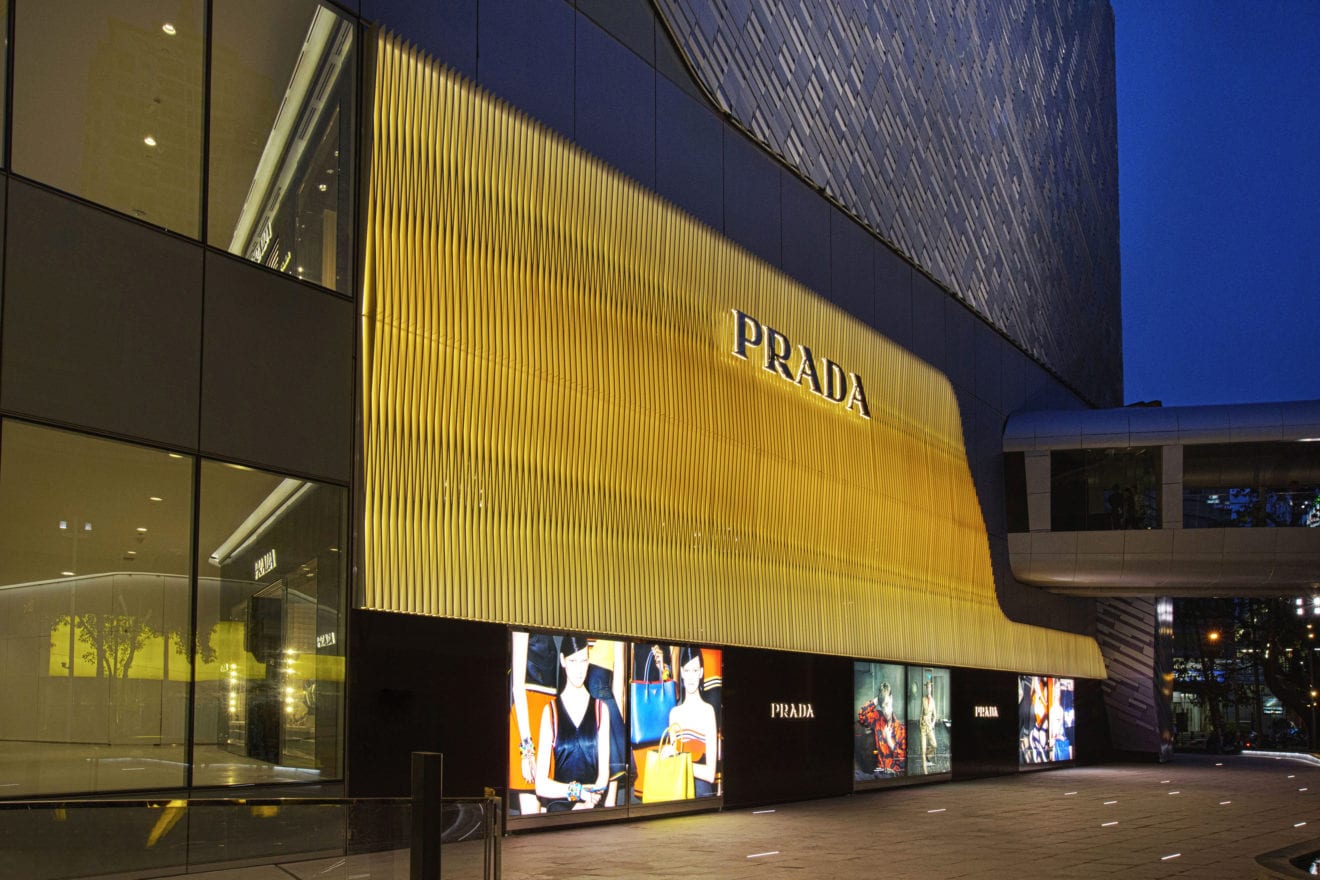
    Symptomatic of the woes facing the luxury retail sector, on Friday high-end brands Prada, Miu Miu and Gucci unexpectedly offered up to 50 per cent discounts as a way to drum up sales and attract long queues of shoppers, including those from the mainland.

    In a stark contrast to the depressed retail market, CBRE expects overall office rents to increase 10 per cent for 2015, and a further 10 per cent next year.

    “Next year will be another year of landlords’ market but the rental cycle is approaching the peak,” CBRE said.

    In 2016 office rents in Central would register the largest year on year growth, climbing 10 per cent, after rising an estimated 15 per cent this year.

    The sector would also benefit from the limited supply with just 1.4 million square feet due for completion next year, it said.

    CBRE also expects the capital value of office real estate could rise as much as 10 per cent next year, after 5 per cent growth this year.

    Two noticeable office transactions in November offered an indication of the upwards momentum in the sector. Mainland developer Evergrande Real Estate agreed to buy the 26-storey Mass Mutual Tower in Wan Chai from Chinese Estates Holdings for a record-breaking HK$12.5 billion.

    On the same day, China Life, the mainland’s largest insurer, announced the purchase of an entire office tower with a two-storey retail block at One HarbourGate in Hung Hom for HK$5.85 billion from Wheelock & Co.

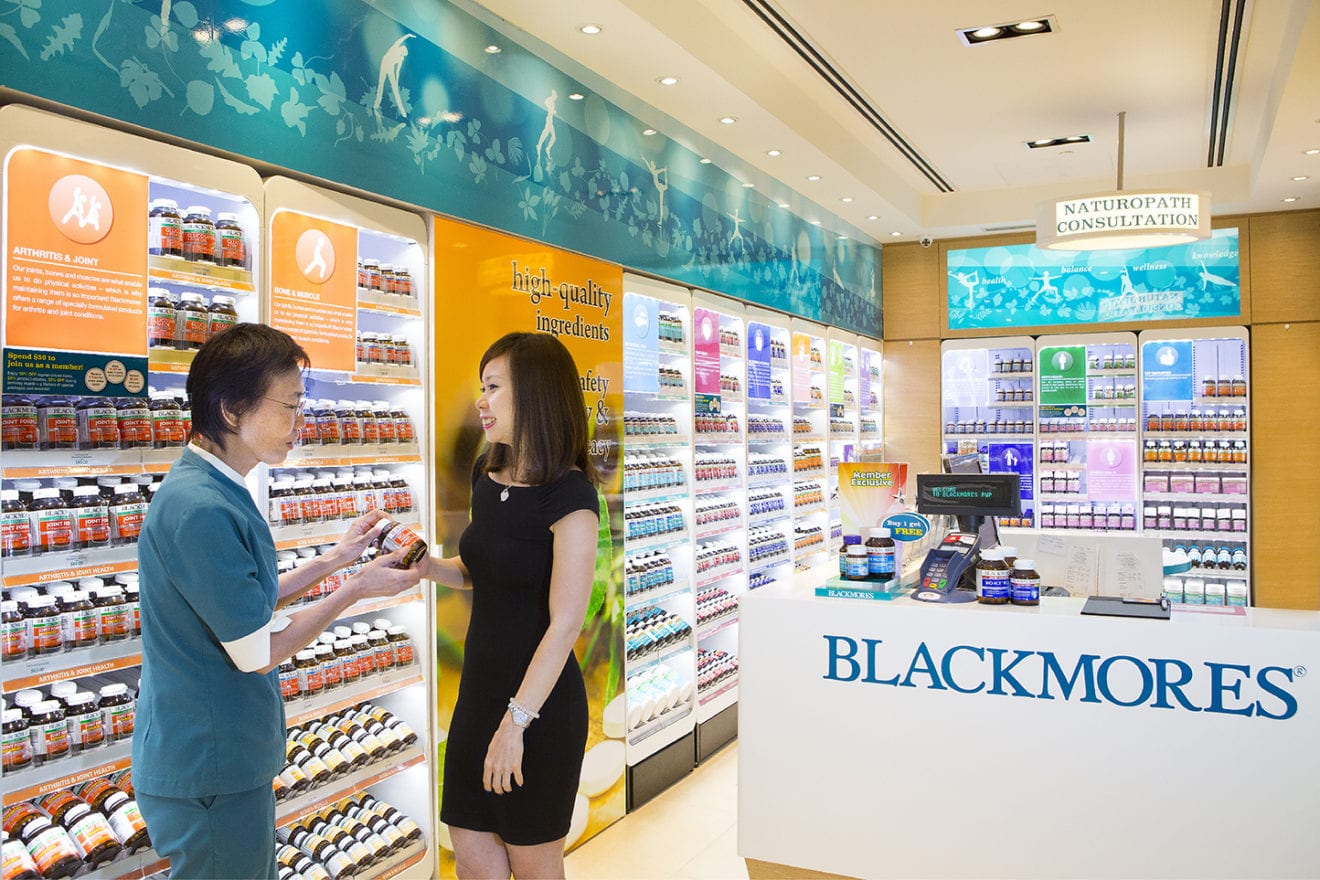
  • Blackmores cuts the ribbon on Bondi store amid mad China scramble

    Blackmores cuts the ribbon on Bondi store amid mad China scramble

    Blackmores chairman Marcus Blackmore admits he had no idea just how much the opening up of China would turbocharge sales of his company’s vitamins, creams and supplements.

    The ASX-listed natural health business has been showered with awards this year while booming sales have seen the stock light up the local sharemarket.

    Around 80 per cent of our products are sold through pharmacy in Australia and they give fantastic advice.

    Christine Holgate, Blackmores

    Shares in Blackmores, of which Mr Blackmore owns 24.5 per cent, have surged from $32 in January to around $189, giving the company a market value in excess of $3 billion.

    “It has been an unbelievable year,” Mr Blackmore told Fairfax Media at the unveiling of the company’s first retail store in Australia.

    Advertisement

    “It is beyond any expectations. We’ve been in China for four years but we had no concept of what China would deliver.”

    At a recent dinner in Shanghai Mr Blackmore met a man from Guangzhou who runs three hospitals treating 20,000 people a day with traditional Chinese medicine.

    He said that China’s long history of using traditional medicines means customers in that market are much easier to win over.

    “Chinese people have a very clear understanding of the philosophical values of natural health,” he said.

    Blackmores floated on the ASX 30 years ago, and for most of that time the company sold 3000 tubs of vitamin E cream a month. In November 2015 the company sold 800,000 tubs of vitamin E cream.

    For the three months to September 30, Blackmores reported a 64.7 per cent increase in sales to $162.2 million and a 161.5 per cent increase in profit to $22.6 million.

    Mr Blackmore said “things come in threes” and the opening of Blackmore’s first Australian retail store at Bondi Junction Westfield caps off the trifecta.

    The other two things brightening the vitamin king’s mood happened last week.

    Last Thursday Blackmores boss Christine Holgate was named chief executive of the year by CEO Magazine, and on Friday federal trade minister Andrew Robb awarded Blackmores the health and biotechnology exporter of the year award.

    New store boosts connection

    Ms Holgate said the Bondi store is not about building a retail presence across Australia but is intended to help connect with Blackmores customers.

    “We are not going to become retailers, we partner with pharmacy. Around 80 per cent of our products are sold through pharmacy in Australia and they give fantastic advice,” she said.

    “What this allows to do is to bring our products and our therapies much closer to the consumer and enables us to listen to the consumer and better understand their health needs.”

    While Ms Holgate is trying to deepen ties with her local customers, the big issue she has is satisfying voracious Asian consumers.

    In the past six months Blackmores has increased it production capacity by 60 per cent. The company has hired 100 extra people but has now run out of office space.

    In November, which Mr Blackmore believes was “probably a record month”, Blackmores produced 2.7 million bottles of product. It will have capacity to produce 4.2 million bottles a month in April next year.

    “The things that keep me awake at night are: availability of raw materials, availability of raw materials, and availability of raw materials,” Ms Holgate said.

    In some product lines there is a natural brake on boosting production immediately. For example, evening primrose oil, a market dominated by Blackmores, comes from a plant harvested once a year.

    In other cases Blackmores is constrained by its strict quality criteria.

    Ms Holgate is loath to put the brand name at risk by compromising even slightly on quality.

    “I’m sure I could give you a lot more sales, but not at the quality levels we want,” she said.

    Last month Blackmores inked a joint-venture deal with dairy group Bega Cheese to supply infant formula and other nutritional products to Asia, opening a range of new opportunities for both companies.

    Ms Holgate said the company actually uses a dairy rival, New Zealand’s Fonterra, as a case study for an internal quality workshop.

    Fonterra has been embroiled in a number of dairy food scandals including the 2009 melamine crisis in China and the false botulism alert, which prompted a massive product recall, in 2013.

  • Restaurant operators regain a presence in Hong Kong

    Restaurant operators regain a presence in Hong Kong

    Restaurant operators have regained their presence in Hong Kong’s retail market where an increasing number of top-end retailers have surrendered their spaces in the wake of weakening spending on luxury items and a decline in tourist arrivals.

    JLL said that in 2013 food and beverage operators accounted for only 29 per cent of the leasing deals it handled. This year, that figure has increased to more than 50 per cent.

    “There are in discussions with a number of overseas restaurants to open their first outlets in Hong Kong as part of their their Asian expansion plans,” said Michelle Chiu, an associate director at JLL’s retail department. “They come from the United States, Europe and Southeast Asia.”

    A new trend of incorporating food and beverage elements into their retail businesses has been seen among luxury fashion brands, including Franck Muller and Vivienne Westwood. And then, there is the lifestyle concept, such as the collaboration between Mercedes-Benz and Maximal Concepts, which has led to the creation of Mercedes Me.

    At more than 4,000 square feet, Mercedes Me has taken the space formerly occupied by Porsche Design and Geox on the ground floor of Entertainment Building in Central at an estimated monthly rental of HK$4 million. Meanwhile, Vivienne Westwood opened its first cafe in Tsim Sha Tsui and Swiss luxury watch maker Frank Muller has launched a fine-dining restaurant in Causeway Bay.

    To capture growing leasing demand among restaurants, JLL has formed a seasoned food and beverage team to cater for the industry.

    Terence Chan, head of retail at JLL, said the team will offer specialist services to local operators, international restaurant groups and new-to-market entrepreneurs alike.

    “Apart from the traditional F&B agency services including site introduction, lease negotiation, location analysis, tenant representation and market entry strategy and analysis, we also provide project coordination services. We will assist the clients in liaising with the interior designers, licensing consultants, contractors and maintenance vendors for set-up of their restaurants,” Chan said.

    Helen Mak, the retail services group head at Colliers International, believes the softening retail leasing market will provide more opportunities for the return of restaurants given the high rents the international brands could afford to pay just a few years ago.

    “With a restaurant inside the shop, it will also help to retain customers inside longer as well as serving as a venue for promotional events,” Mak said.

    She said shopping centres intend to allocate more space for restaurants in view of the difficult retail market.

    But the rapid expansion of restaurants could increase direct competition as most shopping centres plan to devote more space for food and beverage operators.

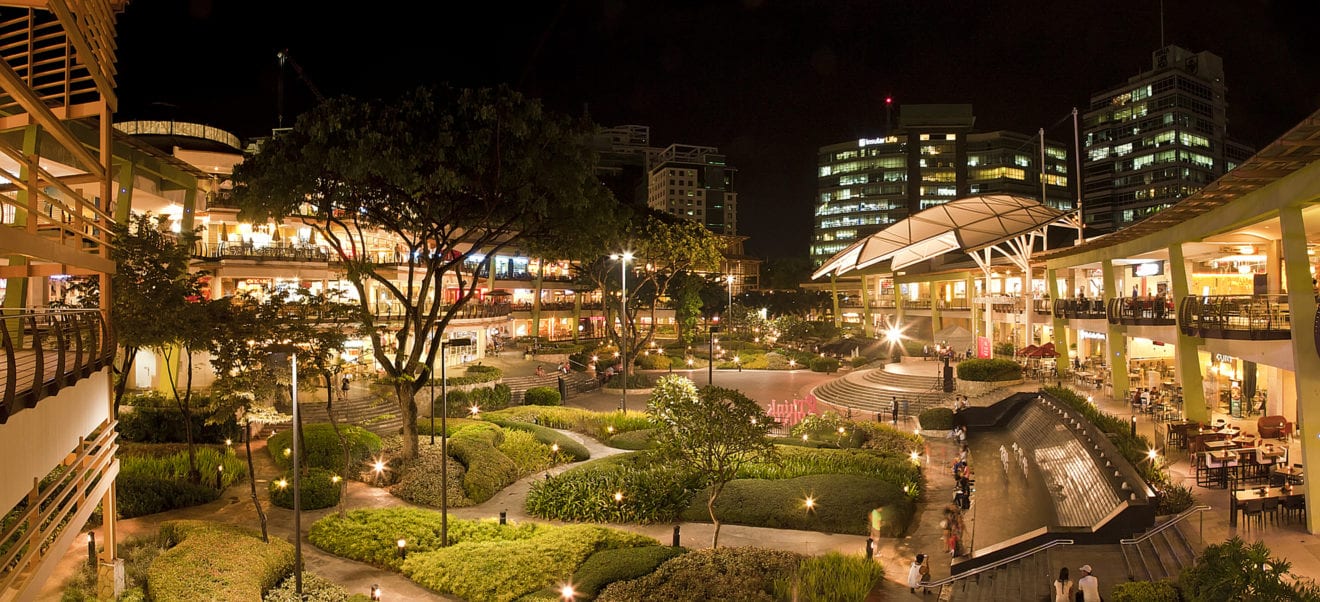
  • Three-storey retail haven launched in Cebu

    Three-storey retail haven launched in Cebu

    Something big was coming and people could see the signs. Some jeepneys were painted with announcements of an unveiling to come, not to mention that eye-catching red hanger stationed right at the grounds of The Terraces.

    Sure enough, it was unmistakable that after much anticipation, every shopper’s dream came true as one of the world’s biggest fashion retail brands finally opened in Cebu City, namely H&M in Ayala Center Cebu last Friday, Nov. 27.

    H&M, which stands for Hennes & Mauritz AB, is a multinational retail-clothing company founded in Sweden with a business idea to offer fashion and quality at the best price in a sustainable way. Approximately, H&M has 3,900 stores worldwide. This 3,800 square meter store is the 11th store built in the Philippines and is so far the biggest in the country.

    The store in Ayala Center Cebu is a full concept store that offers three levels of retail goodness. Everything that the brand has to offer, Cebuanos can now certainly enjoy them. It carries ladieswear which can be found at the first two floors, a home section also located at the second level, and kids’ wear and menswear at the third level.

    Apart from expecting the latest trends in fashion, H&M also features its Garment Collecting initiative in this store, where customers can donate their used clothes. In return, they get a discount voucher which one can use on one’s next purchase at the store.

    With this opening, it also introduces its holiday collection. Festive and playful, this year’s collection for women is in collaboration with Katy Perry in fun, eclectic and cozy styles. For the men, it’s all about neat, textured tailoring with fun accents and patterned pieces. The little tykes also get to have their moment as H&M offers its fairytale-themed designs.

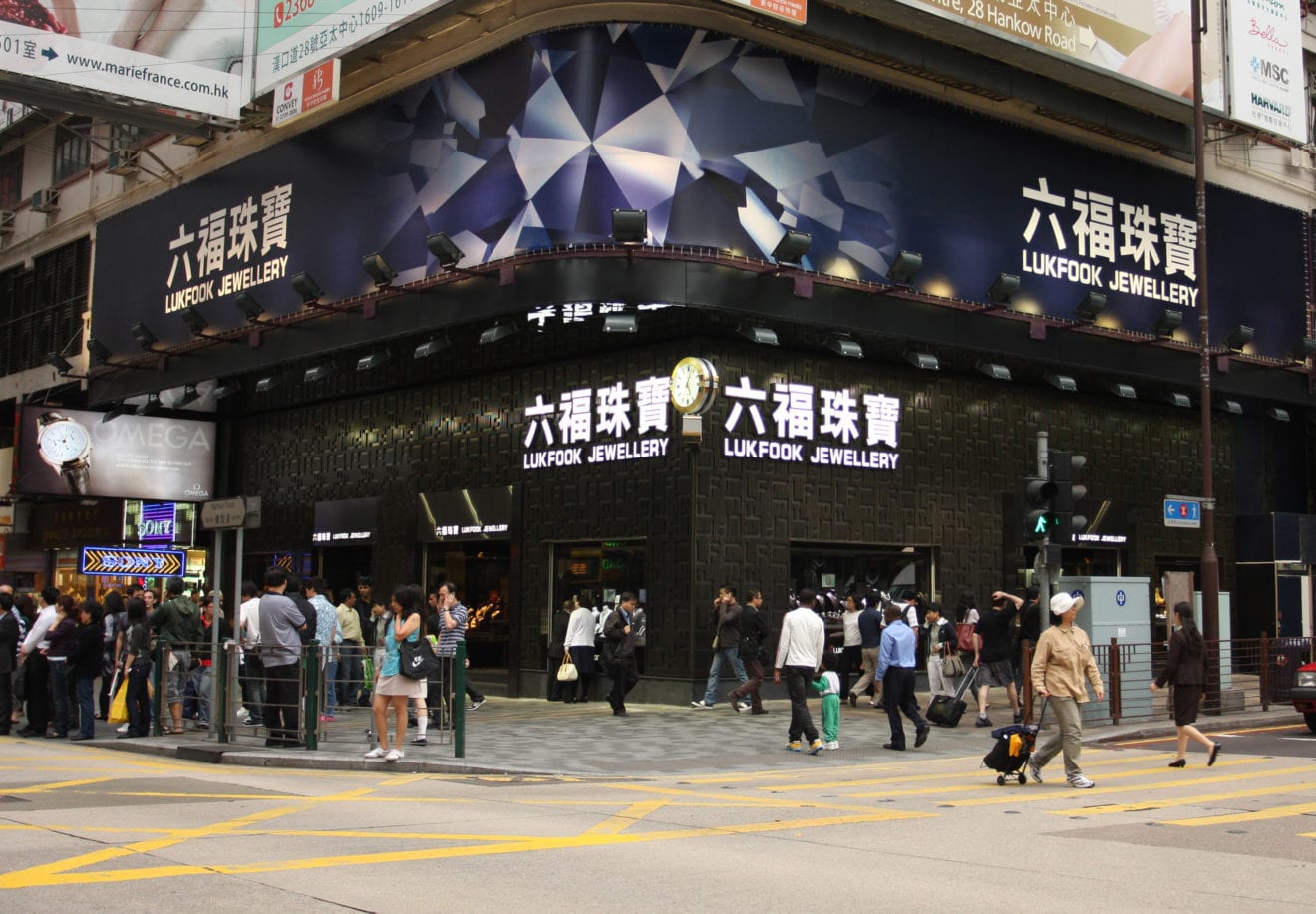
  • Luk Fook profits slump 42% on weak Hong Kong, Macau sales

    Luk Fook profits slump 42% on weak Hong Kong, Macau sales

    Jeweller Luk Fook Holdings is looking to Mainland China to restore growth after a heavy drop in profits due to the Hong Kong and Macau market slump.

    Lukfook Group says its sales declined 7.7 per cent to HK$6.965 billion in the half year to September 30 and profit attributable to shareholders slumped 42.4 per cent to $463 million.

    Same store sales across the business fell 11.6 per cent, largely due to falling sales of gem‐set jewellery products in Hong Kong and Macau. Sales fell 16.2 per cent in Macau alone.

    However in Mainland China, gem-set jewellery sales rose 17.5 per cent, marking the 10th consecutive quarter of positive growth in that market.

    Wong Wai Sheung, chairman and CEO of Lukfook Group said the slowing economic growth in Mainland China, relaxed visa requirements and currency devaluation in Europe, Japan and Korea as well as a strong Hong Kong dollar against other currencies had caused Mainland tourists to switch to overseas for consumption.

    “These adversely affected the retail industry in Hong Kong and Macau and hindered the recovery of the retail business of the group.”

    Hong Kong rents also took their toll on Luk Fook profits.

    “The decrease in revenue, together with the increase in total rental expenses mainly contributed by the high rental of the loss‐making new shops in certain Hong Kong prime locations, resulted in the increase in the total operating expenses to revenue ratio to 14.6 per cent (2014:13.0%),” the company said in its filing.

    The company opened a net total of 29 Lukfook shops (including 23 licensed shops and six self‐operated shops), and four 3D‐Gold self‐operated shops established by the new joint venture (the group has 51 per cent equity) with a licensee in Mainland China. The number of shops in Hong Kong and Macau and overseas remained unchanged. As at September 30, the group had 1412 Lukfook shops globally in Mainland China, Hong Kong, Macau, Singapore, Korea, the US, Canada and Australia; and four 3D‐Gold shops operated in Mainland China.

    Mainland Chinese visitors remained the primary customer group for the Hong Kong retail business, which contributes 60 per cent of the group’s turnover.

    Wong Wai Sheung said with continuing uncertainty in the global economy, the overall operating environment will remain challenging in the short term.

    “However, in the long run, as the per capita income in Mainland China increases, the group believes that there will still be strong customer demand for jewellery products, therefore the group remains positive about the mid‐ to long‐term business prospects. The group will continue to optimise the retail network, maintain the expansion strategy of focusing on the development in the Mainland China market, and further strengthen the cooperation with eCommerce platforms to expand our distribution channels, and also offer more fashionable and affordable jewellery products which are suitable for wearing in workplace, in order to attract middle‐class consumers.”

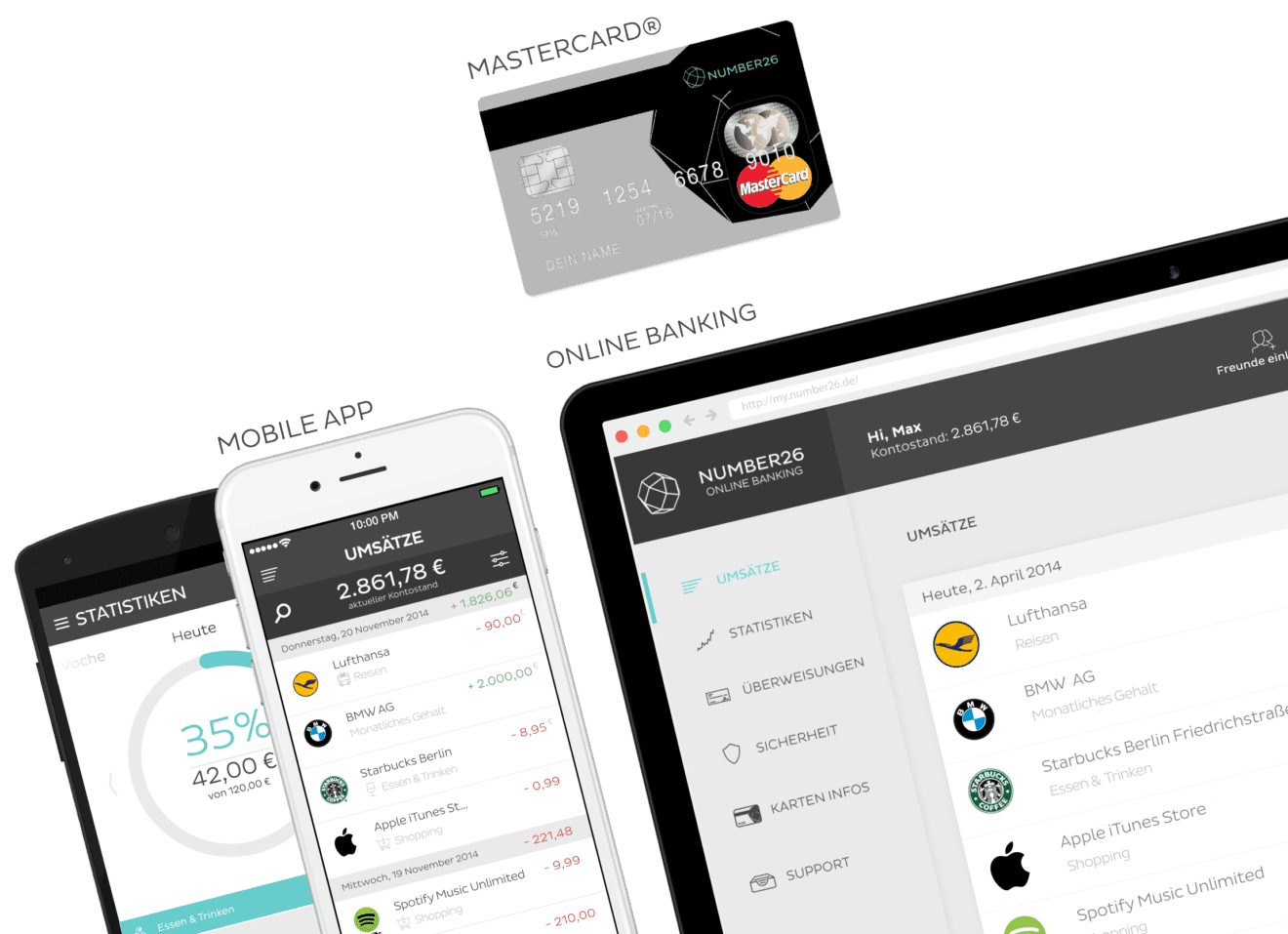
  • German start-up Number26 launches pan-European mobile bank

    German start-up Number26 launches pan-European mobile bank

    Number26 is looking to succeed where traditional lenders have struggled, by relying on mobile phones to build a true pan-European bank.

    The German financial services start-up is expanding into six European markets, making it the first mobile phone bank to straddle the region’s borders, it said on Thursday.

    Number26 is entering France, Italy, Spain, Slovakia, Greece and Ireland, the latter being a test for moving into Britain, and eventually plans to develop a continent-wide bank.

    Founded by two Austrians and based in Berlin, the company revealed plans to offer a MasterCard and basic current accounts via a licence from its partner Wirecard Bank of Germany, which guarantees funds using the German Deposit Protection Fund. Its parent, Wirecard, also supplies Number26 with core banking software and transaction processing.

    Without branches, legacy computer infrastructure and by relying on selective outsourcing, mobile-first banks can compete with little up-front capital against big banks, all while promising lower lending rates and higher rates on savings.

    Number26 also has a jump on rival mobile-first banks including Atom Bank which took a UK bank licence in June and Tandem, which received a licence this week. Both plan to start operating in Britain next year. BBVA, Spain’s No. 2 bank, has taken a 29.5 per cent stake in Atom.

    “The model for these mobile start-ups is to compete on fees,” said Andrew Copeman, an analyst with financial research firm Aite Group. “Banks can’t afford to go after those rates because they are saddled with big overhead from branch networks and old systems.”

    Taken by surprise, banks have responded by ploughing more money into fixing creaky systems, rolling out mobile apps of their own and shuttering many branches. Worldwide, banks could cut half their jobs in 10 years as they fight to stay relevant, the former head of Barclays has said. “I don’t see banks at all as my competitors. They just can’t move fast enough,” Number26 chief executive Valentin Stalf, 30, said in an interview.

    The company, which launched this year in Germany and Austria, provides more than 80,000 customers with accounts for cash withdrawals, deposits and overdraft services up to ?2,000 via a slick smartphone app. “We see the current account as just a starting point,” said Maximilian Tayenthal, 35, Number26’s co-founder and chief financial officer. Credit, savings and insurance products will follow, he said.

    It recently began offering a retail checkout-based alternative to ATM machines for cash withdrawals and deposits in Germany.

    It now counts 6,000 cash outlets including supermarket chain Rewe, or more ATMs than Deutsche Bank and Commerzbank combined.

    The Number26 name refers to the optimal number of quarter turns it takes to solve a Rubik’s Cube puzzle and is a play on the most efficient route it can find to reinvent banking.

    Mobile phone-based banks aim to tear up the rule-book of an earlier generation of direct banks, which used online sites and telephone call centres to woo millions of customers away from bank branches starting in the 1990s.

    ING’s DiBa and others are now some of Europe’s biggest retail banks after being spun out of parent banks to offer a wide array of services created within those banks.

    By contrast, Number26 is looking to evolve rapidly into a full-service banking hub, providing not just services of its own but those from third parties. It is in talks to offer money transfers from TransferWise, loans from LendingClub and deposit comparison site SavingGlobal on its platform.

    The 75-employee company has raised ?12.5 million in venture funding. Backers include Peter Thiel, founder of PayPal and one of Silicon Valley’s top investors, Earlybird Venture Capital and Axel Springer Plug & Play, both of Germany, and Swiss-based Redalpine Venture Partners.

  • Telstra retail boss resigns after short stint in the job

    Telstra retail boss resigns after short stint in the job

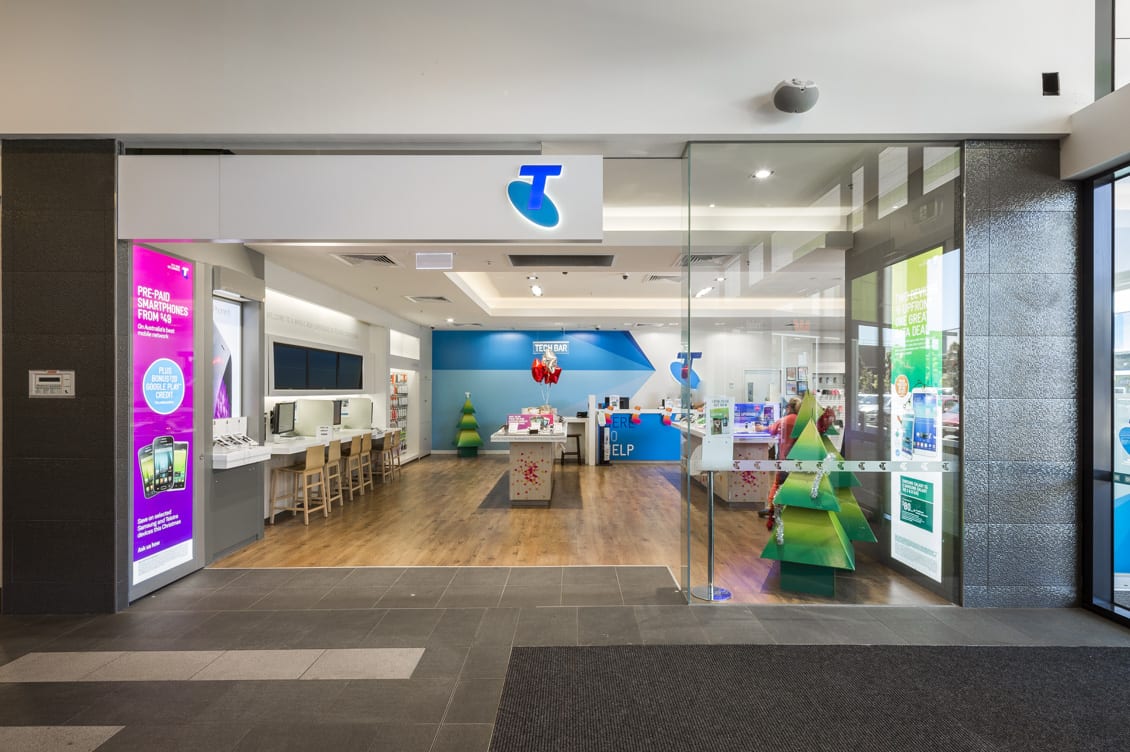
    Telstra head of retail Karsten Wildberger has resigned after less than two months in the job.

    Wildberger is leaving the telco for ‘personal reasons’ and will return to Germany around the middle of next year to take up an executive role outside the telecommunications industry.

    Wildberger was appointed to the retail role when Telstra undertook a management reshuffle after of the resignation of Gordon Ballantyne. Wildberger, who had been an executive in Telstra’s consumer division since 2013, replaced Ballantyne as retail group executive.

    Telstra CEO Andy Penn announced Wildberger’s resignation this morning, saying he was sorry that Dr Wildberger would be leaving Telstra, “as he was a very capable telecommunications executive who had contributed to Telstra’s progress”.

    “Karsten is a great executive.  We will be disappointed to see him go but understand his personal reasons.  Karsten brings great energy and passion to our business and has significant global experience.”

    Penn said a successor to Wildberger will be announced in the near future.

    Wildberger is a former partner and managing director with The Boston Consulting Group and held Executive Vice President roles in Finance, Sales and Marketing for Deutsche Telekom in the UK and Germany. He also worked with Vodafone as an executive and interim CEO in Romania and is a Director of the Telstra Foundation and Telstra Ventures.

    The Telstra Retail business includes consumer and business divisions, product and digital business units with broader enterprise-wide responsibilities and a strong focus on customer advocacy.  The division is responsible for a significant portion of the Telstra’s revenue and profit.

    In a brief statement, Wildberger said “I have thoroughly enjoyed my time at Telstra and in Australia and am excited by the company’s prospects.

    “I was privileged to be selected by Andy Penn to lead the retail team.  I am grateful to this incredible company, its people and its customers for three years of achievement and inspiration.”

  • Zara Home to launch its online platform in Australia

    Zara Home to launch its online platform in Australia

    Zara Home, the Inditex Group trademark devoted to homewear and home decor, is due to launch its online platform in Australia (www.zarahome.com) on 3 December.

    This launch marks the start of Inditex’s e-commerce operations in the Southern Hemisphere. This move emulates the decision taken back in 2007 to use Zara Home as the first Group retail format to spearhead online sales. The rollout of Inditex’s first virtual store in Australasia coincides, moreover, with the opening of the chain’s 500th establishment, namely a 480m2 flagship store in Sydney’s Pitt Street Mall.

    The product catalogue available at the new online store includes home textiles from sheets and towels to tablecloths as well as a selection of furniture, dishware, cutlery, home decoration objects and gift items; in short, all the same products as are available in the physical stores.

    The e-commerce platform will also be configured for the chain’s official app which is available in iOS and Android format. www.zarahome.com users will be offered new items weekly and monthly lookbooks and videos with all the latest trends.
    To celebrate its arrival in Australia, all orders placed online during the first week following the launch will enjoy free delivery.

    Zara Home store #500

    In parallel to the arrival of www.zarahome.com in the Australian market, the Inditex Group’s homeware chain will inaugurate its 500th store in Sydney’s Pitt Street Mall. The new establishment, a two-storey flagship store spanning 480m2, will accommodate all of the brand’s collections, including the Zara Home Kids line.

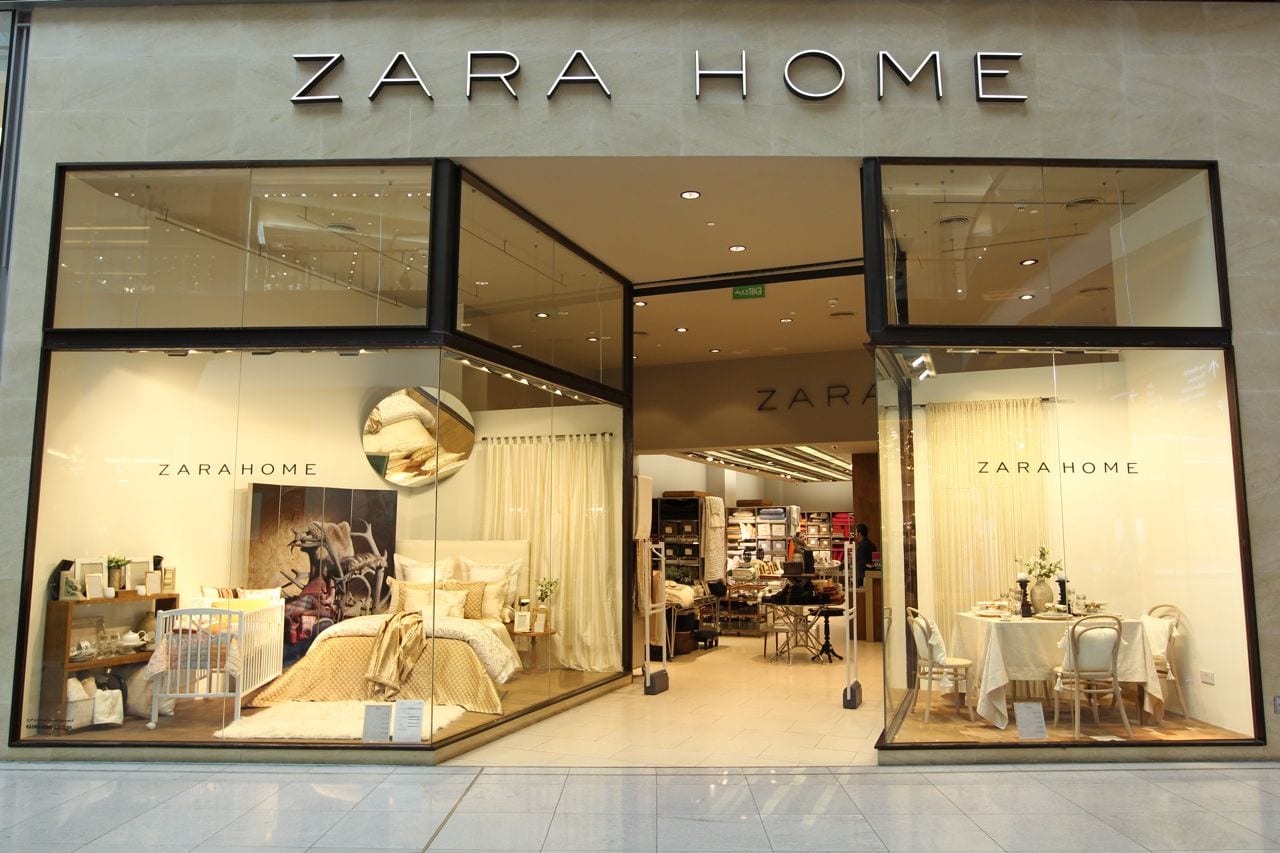
    The establishment will showcase an innovative store design, in keeping with the newest Zara Home image being deployed worldwide. The architecture team has sought to respect the building’s original façade, which is punctuated by characteristic gold logos and white lattice anagrams on the windows.

    The store combines a vanguard and elegant design with a penchant for simplicity and respect for nature, as is evident in the materials used. The neutral colour palette, the use of chestnut timber and marble floors which echo mother-of-pearl are some of the hallmark traits of this new Zara Home store in Sydney.

    As with the rest of the Zara Home stores around the world, the Sydney store will launch two collections a year. To this end, the design teams will present ideas which pick up on the latest trends each season. In parallel, the product range will be refreshed with new items twice a week.

    About Zara Home
    Zara Home is the Inditex Group chain specialised in homewear and home decor. Its collections take their inspiration from the latest fashion trends and materialise in a catalogue encompassing home textiles, such as bedding, towels and tablecloths, as well as furniture, dishware, cutlery, ornaments, gift items, loungewear and a line of bathroom and bodycare products. Since its launch in 2003, Zara Home has grown rapidly and its footprint currently extends to 62 markets, including Australia, with a total of 500 stores.

    Moreover, it sells its products online in 22 markets. Underpinned by a team of over 3,500 professionals, the brand offers the latest trends in home decor and fashion every season, restocking and rolling out new products across its store network every week.

    Zara Home – the milestones

    • 2003 – Zara Home was set up as an Inditex Group retail format in the month of August. By the end of that year it had already opened 26 stores: 22 in Spain, two in Portugal, one in the UK and one in Greece.
    • 2004 – Zara Home registered substantial growth in its second year in existence, opening 36 new stores and entering two new markets: Mexico and Netherlands.
    • 2005 – The trademark forged ahead with its expansion, opening 48 new establishments and penetrating nine new countries by year-end: Italy, Belgium, Cyprus, Turkey, Saudi Arabia, United Arab Emirates, Kuwait and Andorra.
    • 2006 – Zara Home disembarked in France. By October of that year, the Inditex Group store network reached the 3,000 mark as Zara Home opened a new store in Valencia. The brand ended that year with 152 stores worldwide.
    • 2007 – Zara Home penetrated four new markets: Qatar, Jordan, Oman and Lebanon. That same year it would initiate online selling in 14 European markets. Sales floor expansion, meanwhile, continued apace, with 52 new store openings.
    • 2008 – Zara Home established itself in four new countries: Romania, Malta, Bahrain and Morocco. That year it also inaugurated a flagship store in Saint Petersburg (Russia) in a neoclassical building on the city’s emblematic Nevsky street, with new openings that year tallying 35.
    • 2009 – Zara Home opened the doors of its first ‘eco-efficient’ store, on Portal del L’Angel street in Barcelona. It was the first European establishment to obtain LEED certification, endorsing compliance with the most stringent sustainable building standards. It also opened its first store in Poland that year and ended 2009 with 22 new openings.
    • 2010 – Zara Home unveiled a flagship store in Milan (Italy), on Piazza San Babila. That same year, a total of 27 new stores opened their doors for the first time.
    • 2011 – The homeware brand opened its maiden store in Asia: in Peking. In November of that year, Zara Home celebrated its #300 store opening when it opened a flagship store in the heart of A Coruña (Spain).
    • 2012 – Zara Home chose Sao Paulo for its first store in Brazil. That year it also penetrated four new markets: Colombia, Peru, Guatemala and the Dominican Republic. 2012 was also marked by the inauguration of the chain’s e-commerce platform in the US.
    • 2013 – The brand celebrated its tenth anniversary with store openings in 11 new markets: Canada, Honduras, Hong Kong, Indonesia, Japan, Kazakhstan, Panama, Thailand, Taiwan, Sweden and Uruguay. And it opened two new flagship stores: one on Paris’s Champs Elysees and one on Barcelona’s Paseo de Gracia.
    • 2014 – Zara Home rolled out its online platform in Mexico and Russia. The chain’s bricks & mortar presence was extended to encompass South Korea, Hungary and Algeria.
    • 2015 – Having docked in Australia (Melbourne in February and Sydney in December), Chile, Austria and Switzerland, Zara Home has extended its physical reach to 62 markets, ending the year with 500 stores worldwide. It also initiated online sales in Australia, thereby spearheading the Inditex Group’s e-commerce strategy for the Southern Hemisphere.###
    Inditex: Zara Home to launch its online platform in Australia

    Inditex: Zara Home to launch its online platform in Australia

  • BMW 2 Series saloon unveiled at Auto Guangzhou 2015

    BMW 2 Series saloon unveiled at Auto Guangzhou 2015

    What will become the new BMW 2 Series saloon was unveiled recently at Auto Guangzhou 2015, one of the largest international motor shows in China

    The car, which will take on such as the Audi A3 saloon and the Mercedes CLA, was unveiled as the BMW Concept Compact Sedan and, according to BMW design chief Adrian van Hooydonk, reveals the potential the company sees in a compact sedan.

    “It not only gives the driver and passengers generous amounts of space within a compact area but does so while providing the sporting ability you’d expect from BMW and an elegance otherwise only available in large BMW sedans,” said Mr van Hooydunk. “The quality and intrinsic value of the BMW Concept Compact Sedan are clear signals of our premium intentions for the car.”

    BMW says the compact and agile exterior of the new car creates a familiar sedan silhouette based around a striking three-box design. Hallmark BMW proportions imbue the car with a dynamic allure unrivalled in its segment. Its sweeping bonnet and long wheelbase stretch the car visually, while the slightly set-back greenhouse further underlines its sporting nature.

    The interior of the new car and its BMW family ties are immediately evident. Elongated horizontal lines and surfaces creating a generous feeling of space provide a counterpoint to the cabin’s driver focus and sporty styling.

    We will have more in due course.

    Online shopping

    Speaking of BMW, the company’s UK arm has rolled out a system where buyers can now carry out the whole process of buying a car online. Previously, some steps could only be completed at a dealership.

    Customers can specify a car, arrange a test drive if necessary, agree financing options and payment method, and get a trade-in value for their own car before finalising the delivery date.

    Help is available from a ‘BMW Genius’ or a sales executive at the retailer via live chat or email, if needed.

    Sales and marketing chief Ian Robertson said: “We are the first car manufacturer to offer a digital sales solution for the entire product range and the full end-to-end buying or leasing process online.

    “Now, the customer can do it all from the comfort of their home. The integration of the BMW Genius via live chat and retailer messaging functions where the customer is able to get personalised support in real time, makes this system unique and a new benchmark for the automotive industry.”

    Before being rolled out nationally, BMW Retail Online was trialled with nine UK retailers and proved such a success 95% of BMW UK retailers have decided to offer this service to their customers.

    Nigel Hurley, Sytner Group BMW divisional managing director, whose retail outlet took part in the trial, said: “This is great news for retailers. It forms part of our ever more customer-centric focus and makes life easier for the customer. We see this becoming an increasingly important channel in the future.”

    Watch this space for further developments on the online sales developments.

  • Singapore to invest US$15 million on pharmacy industry

    Singapore to invest US$15 million on pharmacy industry

    Singapore has stated its interest to invest in the pharmacy industry worth US$15 million.

    “Singapore will use the three-hour service facility system in arranging the permit of its plan to make investment in the pharmacy sector,” Chief of Investment Coordinating Board Franky Sibarani stated on a press release received here on Sunday.

    Franky said the candidate investor company has a data centre operated in India with employment reached 12 thousand people in the world.

    The company employs 600 researchers and markets their products to 18 European countries and also more than 30 others in the world. The investor is the first company who utilize nano technology for pharmacy industry.

    “Its product is a medicine used to protect live cell from cancer and eliminate cancer,” Franky said.

    According to Franky, the company is interested to invest in Indonesia because the country has big market, added with other ASEAN countries.

    Indonesia, says Franky, need investment in pharmacy industry to boost technology transfer.

    The Board noted that the company also is a also a challenge to Indonesia, particularly the related ministries, to provide service for permit in a short length of time.

    “Thus, the coordinating board pushes the relevant agency to process permits in three hours as the investment will involved an amount of US$8 million,” Franky went on.

    The coordinating agency has met several Singaporean companies engaged in telecommunication, pharmacy, real estate and maritime sectors.

    During the meeting, the agency also signed a Memorandum of Understanding (MoU) with UOB Bank to promote investment potential.

    Singapore is one of the biggest foreign direct investment source to Indonesia.

    The country has noted Foreign Direct Investment up to the third quarter of 2015 at US$ 30 billion with 6,868 projects in the transportation, telecommunication, warehousing, plantation, mining, mineral and non-metal sectors as well as in the power generator sector.