Author: Mei Ling Tan

  • Vertu eyes China

    Vertu eyes China

    Luxury phone brand Vertu says its new Hong Kong investor will allow the brand to embark on its next growth phase – into Mainland China.

    Vertu will continue to operate its global business from its UK Headquarters with new partner, Godin Holdings, a Hong Kong based company backed by a group of international investors. This move will support accelerated growth for Vertu and maximise its ‘Luxury Tech’ market leadership position.

    Since shipping its first phone in 2002, Vertu had sold around 450,000 devices worldwide, with an average selling price of around £5000 per handset last year.

    “Godin brings with it a significant understanding of the world’s fastest developing luxury market, China, as well as an ability to help with the technical development of a future range of industry leading Vertu products,” the company said in a statement.

    Vertu runs 70 of its own boutique retail stores and is sold through 430 partner stores in 66 countries. It is not yet clear if the brand will expand in China through its own store network of partner with an existing retailer.

    The new investment has led to a management shakeup with CEO Massimiliano Pogliani stepping down after three years

    As part of the new investment, a number of changes have taken place within Vertu’s management, replaced by Billy Crotty. Justine Rouch, COO and Davide Vassena, VP product and marketing, have both also left the company.

    Crotty says the company has a clear vision for the next phase of its growth.

    “Vertu is regarded as the clear leader in the luxury mobile category; a company with a strong USP, brand equity, product roadmap and established retail network; the ‘Handmade in England’ aspect of Vertu is appreciated globally as a particularly valuable, fundamental brand strength.

    “Godin Holdings’ investment will allow Vertu to maintain its leadership position within the luxury technology industry and to expand its already world class product portfolio.

    “Mainland China is a key market for Vertu, alongside its other pan-Asian and European business. All in all, the Godin team are perfectly placed to offer both investment into the company, as well as mobile technology industry expertise and contacts. Godin believes that significant growth opportunities lie ahead for Vertu, within specific markets as well as through new product developments.”

    A key part of Vertu’s future is the launch of Vertu Club, explains Crotty.

    “Vertu Club will be the umbrella for the evolution of our on-device and off-device services. Our aim is to ramp up the already very close relationship we enjoy with our customers through Concierge, Life and Certainty apps, in order that it can inform, to an ever increasing degree, not only the portfolio of services we offer, but the manner in which we do so, in order that we create a world class personal service, unattainable in any other format than that which can be achieved by being a member of the Vertu Club.”


  • Kakao, KT to launch Korea’s first Internet banks

    Kakao, KT to launch Korea’s first Internet banks

    Two consortiums, led by South Korean Internet giant Kakao and No. 2 telecom operator KT, were approved to launch the nation’s first Internet-only banks next year, the banking authority said Sunday.

    Under the government’s pilot program, the two banks will offer financial services from deposits, lending and credit cards to foreign exchange transactions through their online platforms only — the first of their kind in Korea’s 23 years of financial history.

    Their operations are expected to start after they get financial approval in the first half of next year. The Financial Services Commission requested they come up with stricter security measures.

    Do Kyu-sang, financial services chief at the Financial Services Commission, speaks at a media meeting held at the agency`s briefing room in Seoul on Sunday. Yonhap

    According to the agency, Kakao’s Kakao Bank gained high scores for innovative services based on its immensely popular mobile messenger app KakaoTalk with 40 million users.

    KT’s K Bank was also praised for better customer access as it has teamed up with partners from diverse sectors such as telecommunications, payments and retail, it said.

    Internet banks come as the government looks to open up its financial services sector recently. Internet companies are already jumping into the bandwagon amid the rapid infiltration of online banking and mobile payments here.

    Due to stringent financial regulations, however, they are still required to partner with a licensed bank to launch their own Internet bank.

    Kakao and KT are especially pinning high hopes on “middle-interest loans” that would appeal to small borrowers.

    Currently, top-tier banks offer an annual rate of 3 percent to 5 percent, while the secondary financial institutions such as mutual savings banks or capital services firms charge whopping 15 percent to 34 percent interest rates.

    Internet banks say they can better evaluate the creditworthiness of borrowers based on the data they collect from hundreds of millions of mobile devices — including location, the use of local services and e-commerce transitions.

    Kakao Bank plans to bring Kakao’s traffic resources, big data on users and data analytics, while its bank partners KB Kookmin Bank and Korea Investment Holdings have knowledge of financial products.

    The bank also aims to go global as it has secured ties with Tencent, China’s biggest social-networking and mobile games company, and the U.S. online retail giant eBay, which also owns Korea’s two leading shopping sites Gmarket and Auction.

    “We will ramp up efforts to offer diverse and practical benefits for customers through Kakao Bank,” said Yoon Ho-young, Kakao’s senior vice president.

    K Bank also showed confidence in building a more accurate credit rating system based on KT’s own delinquency customer list and the data collected from its card and bank partners, including Woori Bank, the nation’s second-largest lender in terms of assets.

    “We will expand benefits for small borrowers and start-ups,” said Kim In-hoi, the bank task force leader. “We aim to become the No. 1 Internet bank by offering more convenient on- and off-line services.”

  • McDonald’s Japan arrests sales decline

    McDonald’s Japan arrests sales decline

    McDonald’s Japan has lost 29.2 billion yen in the first nine months of this year, roughly US$236.8 million.

    However, the beleaguered fast food business, which launched a Business Revitalisation Plan involving closing 131 stores in April, says it has arrested its sales decline.

    Same store sales in the third quarter of this year slid by four per cent – a fraction of the massive 32.3 per cent drop in its horror first quarter.

    In the first nine months of the current year, system wide sales have decreased by 70.1 billion yen (US$568 million) to 273.9 billion yen ($2.221 billion).

    While sales and profit have declined significantly, the company said the BRP is progressing “broadly in accordance with schedule, and the business is on the path to recovery”.

    On October 26, McDonald’s Japan launched ‘Otegoro Mac’, part of a “Shin Otegoro Sengen” initiative designed to provide better, more consistent every day value for money. The company says that has been well received by customers to date.

    “We will continue to focus on ensuring food quality while making additional progress on our modernisation plan, delivering customer visible points of change, accelerating business recovery, and achieving long-term growth.

    “We are committed to providing customers the best possible dining experience by delivering the highest possible level of quality, service and cleanliness, with an unwavering focus on

    building stronger relationships in local communities.”

    McDonald’s Japan’s new vision is of “becoming a modern burger restaurant that connects with our customers”.

  • Nike Japan reopens Kichijoji store

    Nike Japan reopens Kichijoji store

    A new Nike Japan running concept store adjacent to Inokashira Park is a hub for runners in suburban Tokyo.

    Located 20 minutes from Tokyo suburbs Shibuya and Shinjuku, Kichijoji is a suburb of well heeled consumers and home to Inokashira Park, opened in 1918 and now among the city’s top running destinations.

    Nike Japan reopens Kichijoji store 1

    The newly remodelled two story, 502 sqm Nike Kichijoji store blends Nike’s sport DNA with graphics from local artist Shun Sasaki, whose work pays respect to the area’s artistic traditions.

    “We are extremely excited that Nike Kichijoji is our first running experience store in Tokyo,” says Heidi O’Neill, VP, GM of Nike Stores.

    “At Nike, we love to run. We want this store to be an invitation for Tokyo to come run with us.”

    Nike Japan reopens Kichijoji store 2

    The store exterior features a slatted wood screen inspired by traditional Japanese woodcraft, with an embedded Just Do It message. Digital signage brings local tones and patterns to the interior.

    Nike Japan reopens Kichijoji store 3

    Nike Kichijoji also offers a variety of services, including Personal Run Clinics, where runners receive one-on-one coaching on an in-store; treadmill; Personal Styling Services; bra-fitting for Nike+ members; and NikeiD.

    Additionally, the store hosts Nike+ Run Clubs each week, leveraging the store’s new community hub, where runners can pick up trial shoes, refill water bottles, grab a towel and store their gear.

  • China’s QKL Stores’ sales decline

    China’s QKL Stores’ sales decline

    Nasdaq-listed Chinese supermarket chain QKL Stores says its revenue fell four per cent in the last quarter, its profit by 4.5 per cent.

    “Our third quarter results generally met our levels of expectation,” said Zhuangyi Wang, chairman and CEO.

    “The variety, value and freshness of our products continue to resonate with our customers driving sales higher. This store growth was also driven by in-store promotional events such as store anniversary celebrations.”

    But he said sales and profit were impacted by “a challenging environment” for retail businesses, mainly due to the rising costs and the emerging eCommerce channel.

    “However, we are still confident on the domestic needs because of the urbanisation of the third and fourth tier cities that we will achieve a fundamental improvement in the consumer purchasing power during the process.”

    Third quarter revenue totalled $58.6 million, down from $61.1 million in the same quarter last year. Gross profit was $9.8 million, down from $10.3 million.

    “We look forward to the upcoming holiday season as we have a number of exciting marketing initiatives planned,” said Wang.

    “Our balance sheet is healthy with a strong cash position, low level of debt and stable flow of cash from operations. We continue to make progress with our store operations and that can result in greater sales and profits over time.”

    Based in Daqing, China, QKL Stores is a regional supermarket chain company operating in Northeastern China and Inner Mongolia. It operates 45 supermarkets, hypermarkets and department stores – two less than at the same time last year.

  • Spar Indonesia plans 55 stores by 2018

    Spar Indonesia plans 55 stores by 2018

    Spar Indonesia launched in March with just three stores – but the local partner expects to end 2015 with 15 operating.

    Another 40 stores will join the network by 2018 according to the Dutch retailer’s master franchisee PT Ramayana Lestari Sentosa.

    The partnership agreement between Ramayana and Spar was signed in September 2014 and the two companies wasted little time bringing the brand to the Southeast Asian nation.

    Besides rolling out the Spar supermarkets, RLS plans to open several new department stores under the Ramayana brand in Jakarta and East Java next year. It has budgeted US$29.41 million for store openings.

    RLS will also open Spars in Makassar town in South Sulawesi, Padang in West Sumatera, Balikpapan and Samarinda in East Kalimantan.

    Part of the rollout involves rebranding and reconfiguring existing Robinson department stores into Spars.

    Spar Asia has already established a network of more than 250 large format stores in China and is in the early stages of a new foray into India.

  • Singaporeans love to shop overseas

    Singaporeans love to shop overseas

    Never mind that Singapore is renowned globally as a shopping destination.

    Singaporeans want to shop elsewhere.

    A survey by insurance company AIG conducted back in April found 36 per cent of the 1205 polled go on holiday solely to shop.

    When they take a holiday for retail therapy, Singaporeans spend an average of S$336 a day.

    The three most popular overseas shopping destinations are Bangkok, Hong Kong and Taiwan.

    AIG says it had received 7500 insurance claims between November 2014 and October 2015 for baggage lost on trips home from – in order – Thailand, Taiwan and Hong Kong.

    The insurer says people should keep receipts or photographs of their overseas purchases to ensure a smooth claims process.

    Other reasons for non-business travel by Singaporeans rated far lower than retail therapy, including a weekend getaway (21 per cent), to see somewhere exotic (12 per cent) or to indulge in a luxury break (four per cent).

  • Ted Baker thrives on expansion

    Ted Baker thrives on expansion

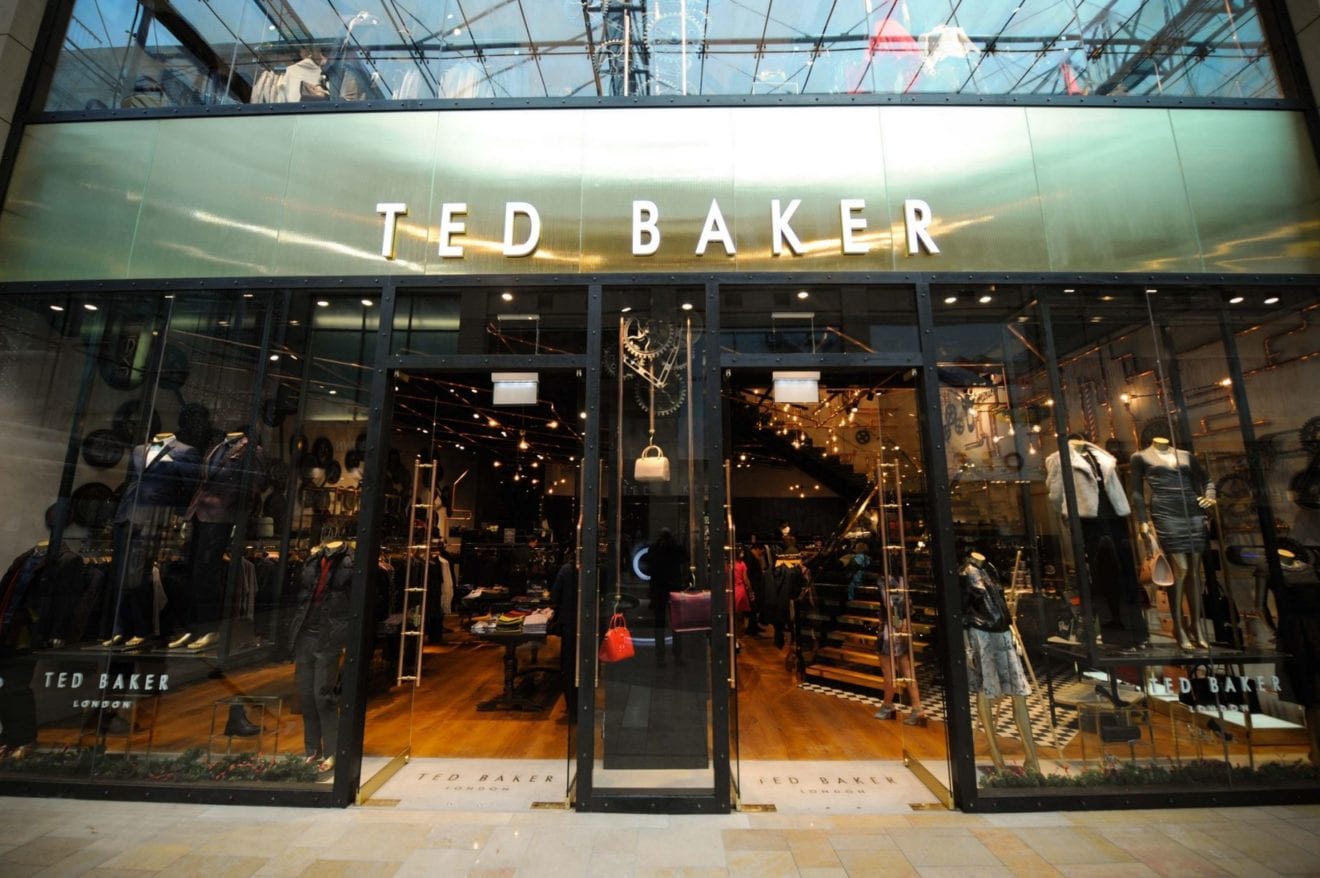
    Quirky UK fashion and lifestyle label Ted Baker has announced a 20.5 per cent rise in group revenue for its third quarter to 14 November.

    Celebrating an 18.1 per cent rise in retail sales at constant rates, these results were helped by the addition of more than 32,516 sqm in average retail space (an increase of seven per cent) during the period. A planned customer event, which fell a week earlier than last year, also boosted sales.

    Despite the continued international challenges that Ted Baker outlined in its half year results last month, the company has proceeded with numerous openings, spanning Amsterdam, Hawaii, Malibu and Toronto, adding further concessions in premium department stores in Germany, Ireland, Spain, North America and Toronto over the last three months. The brand has also made a return to London’s Stansted Airport, following an £80 million transformation of the terminal. The “Departures Store”, which officially opened on November 6, has a summer holiday theme, featuring 3D Polaroid-style wall boxes set against blue swimming pool tiling and light fixtures in the shape of inflatable beach balls. An interactive digital screen across the store front senses movement and invites passersby to move closer.

    Ted Baker’s wholesale arm saw a sales increase of 27 per cent (25.1 per cent in constant currency), helped by strong trading in both the UK and North America. Group wholesale sales are expected to be 28 per cent ahead at the close of the full year.

    Ted Baker’s varied international approach has also seen licensed store openings in Singapore and Taiwan together with licensed concessions in Kuwait and Mexico. These have enabled Ted Baker to progress with expansion in the Far East despite economic volatility in the surrounding region.

    An outtake from the “Wonders Never Cease” Autumn Winter 2015 campaign, shot over five nights at London’s Natural History Museum in collaboration with shoebox film firm Crowns and Owls, currently represents the backdrop for the brand’s website. While the “affordable luxury” label has received a positive reaction to its Autumn/Winter collections so far, the swing of success at the end of the year will be heavily dependent on strong Christmas trading.

  • 500 TukTuks Is Even More Keen In Thai Startups Than Ever!

    500 TukTuks Is Even More Keen In Thai Startups Than Ever!

    A micro-fund focused on Thai startups reveals what has happened in the past three months of operation.

    500 Startups, one of the most active seed investors/accelerators in the world, made an announcement early this year about a $10 Million micro-fund focused on Thai promising startups — called 500 TukTuks. That announcement was such a thrill, as this definitely would make an impact to the Thailand’s startup ecosystem!

    Led by Krating Poonpol (Founder of Disrupt University) and Moo Natavudh (CEO of Ookbee), 500 TukTuks has been operating for about three months now. Today, they made an exciting announcement once again at Echelon Thailand 2015 about their fundraising and investment up to date.

    Krating stated “After the first batch of investments, 500TukTuks is more keen in Thailand’s startup ecosystem and gaining confidence from investors who believe in the potential of Thai tech startups, leading to more investment into 500 TukTuks. So we decided to increase the fund size to $12 M and will invest in 60-70 Thai startups over the next 3 years. This is a good sign for startup ecosystem and for the country as a whole because it shows that more people are willing to support Thai startup community.”

    Moo Natavudh also added “500 TukTuks is here not only to invest, but to provide Silicon Valley’s education, the access to talented mentors and other 2000+ founders in the 500 Startups network, and to grow #500Family together at the same time.”

    The highlight of the announcement was the 10 startup companies in Thailand that made it through the TukTuks’ first batch of investment.

  • Thai e-commerce firm expands to Metro Manila

    Thai e-commerce firm expands to Metro Manila

    Ascend Group, Thailand’s leading e-commerce retailer, has launched iTrueMart.ph e-commerce website to serve the Philippine market as it sees a huge potential in the country, with the onset of the Asean Economic Community.

    iTrueMart.ph aims to become the dominant e-commerce player in the Philippines by 2017, says Punnamas Vichitkulwongsa, chief executive of Ascend Group, the company behind iTrueMart.

    Following its success in Thailand, iTrueMart is now looking to expand into the Asean Economic Community with the Philippines as its next destination, he says. iTrueMart.ph hopes to bring an unrivaled shopping experience with access to a variety of products, various payment channels, and competitive pricing that are currently only available for metropolitan shoppers to customers in all provinces in the Philippines.

    “E-commerce will have huge potential when the AEC fully materializes,” says Vichitkulwongsa.

    According to a study by Ystats SE Asia eCommerce, the volume of Asean’s mobile Internet users rose 56 percent in 2015. Up to 56 percent of the Thai and Vietnamese populations are now accessing the Internet via their smartphones, a figure close to the Philippines’ 50 percent rate. “Recognizing the growing number of mobile-Internet users, we are confident that online shopping in the region will also grow. The AEC is an emerging and interesting market for e-commerce through which entrepreneurs can expand their businesses,” says Vichitkulwongsa.

    “At present, iTrueMart has already been tapping into the AEC market with over $150 million Uinvestment planned for 2016. The investment will be used for e-commerce optimized fulfillment centers, logistic hubs, expansion of our own fleet, marketing, and ramping up assortment and inventory. We are debuting our operations in the Philippines and that will be followed by Vietnam, Indonesia, Myanmar, Cambodia, Malaysia and Singapore later in 2016. We are committed for long-term success in the Philippines and everywhere else that we go to,” he says.

    Seubsakol Sakolsatayadorn, general manager of the iTrueMart division at Ascend Commerce, says iTrueMart.ph is not a newcomer to the market as the team is backed by the strong success of iTrueMart in Thailand. “During the past year, the number of visits to iTrueMart.com has increased by as much as 424 percent. Since October 2014, the average number of visits recorded was 4.6 million per month. iTrueMart.com receives 7,000 orders per day on average, with the highest volume of daily orders at 10,000. This marks the highest record in Thailand’s online retail industry,which puts iTrueMart.com at the forefront of Thailand’s e-commerce sector. Moreover, iTrueMart.com’s delivery averages at two days throughout Thailand and it enjoys the lowest e-commerce return rate in the country which confirms the trust and shows the high quality of the products offered on the website,” says Sakolsatayadorn.

    Dean Krstevski, chief operating Officer E-Commerce of Ascend Group, says the decision to launch in the Philippines stemmed from the fact that competition in the e-commerce sector in the Philippines is still considered low. “With the market still in its infancy, there are still plenty of opportunities for new players. Now that the e-commerce market is being developed, brands are increasingly looking for partners to sell their products online, which we see as a great advantage that will help us speed up our market entry. We are confident of our success in the Philippines because we have a strong team with extensive experience in both online and offline retail,” says Krstevski.

    Under the slogan “Great Value, Everyday,” iTrueMart.ph works only with authorized distributors of international brands and act as authorized dealer of local brands so customers can be guaranteed that all products on the website are genuine. The current focus of the site is on smartphones and gadgets and it will expand into consumer electronics, computers and laptops, health and beauty and moms and kids in the future.

    iTrueMart.ph offers free delivery and free returns with cash on delivery payment as an option for customers. To deliver the best possible end-to-end customer experience, iTrueMart.ph is starting off delivery in the Luzon area and will further expand from the beginning of next year. iTrueMart.ph is targeting to have 100 vehicles in its delivery fleet by the year-end, operating out of its own fulfillment center in Pasig.

    With 45 percent of the traffic coming from mobile devices, iTrueMart.ph has a mobile version while a mobile application will be rolled out by the first quarter of 2016.

    “iTrueMart.ph is determined to become the dominant e-commerce player by 2017 and the second largest e-commerce player by the end of this year through partnerships with key local brands and authorized distributors, as well as attractive Christmas campaigns, where customers are offered great value and guaranteed delivery before Christmas Eve. Our goals are to be the top-of-mind e-commerce brand, to have great assortment at best prices, to provide the best end-to-end customer experience and to become the most trusted online shopping platform,” says Krstevski.

  • Jacob Delafon China opens first store

    Jacob Delafon China opens first store

    Jacob Delafon, a leading French fashion bathroom brand, has launched its brand in China and opened its first store there.

    The new Jacob Delafon China showroom opened on Tuesday, November 17 in Shanghai.

    Bruno Chenesseau, kitchen & bath design director of Jacob Delafon Europe, Middle East and Africa, said given the company is based in Paris, “we were naturally inspired by the city”.

    “By its architecture, its atmosphere, its unique diversity and above all, by the elegant and audacious Parisian style. It is a truly creative playground,” he said.

    The heritage of the Jacob Delafon brand helps the design team to “jump out of the box” and present a more elegant lifestyle.

    “Jacob Delafon speaks the same language with French fashion trend, and is inspired from the elegant and independent Paris ladies,” said Chenesseau.

    “Then, from these observations, Jacob Delafon created three brand “universes” of collections. The Presqu’ile collection is inspired by the flea markets, a perfect mix between bric a brac and eclecticism. The Terrace collection takes place in an industrial loft with refined lines. And the Stillness collection is the modern reinterpretation of an Haussmannian apartment. The brand spreads these different universes throughout our design, which makes Jacob Delafon’s products so unique and recognisable among others.”

  • Perfect Shape plans more China stores

    Perfect Shape plans more China stores

    Listed slimming and beauty services chain Perfect Shape plans more stores as demand soars in Greater China.

    Perfect Shape provides slimming and beauty services and sells slimming and beauty products in Hong Kong, the Mainland and Macau. The company provides medical beauty services under the brand name of Dr Face, including injection treatments such as Botox, Restylane and Sculptra, as well as laser treatments for hair removal, skin rejuvenation and depigmentation. The company operates more than 60 stores or service centers.

    In the six months to September 30, the group recorded revenue of HK$457.1 million, up 41 per cent year on year. Profit attributable to shareholders was $75.1 million, up $4.1 million year on year.

    The company says combined Hong Kong and Macau revenue soared 85.9 per cent, with Macau sales up 134 per cent.

    The company attributes its success to tapping into the high technology beauty segment in Hong Kong soon after listing in 2012, which is now bearing fruit.

    “Moving forward, management remains optimistic about the group’s prospects in the principal markets of Hong Kong and the PRC, despite modest economic growth anticipated on both sides of the border,” the company said in its stock exchange filing.

    “While the group’s development in Hong Kong remains promising, its business prospects in the PRC shows even greater potential. With an increasingly large number of people who are obese, and generally more and more individuals who are overweight, the need for slimming services will continue to rise. And given that there is a growing middle class, particularly women who care about their appearance, the demand for high technology beauty and slimming services will grow further.”

    Perfect Shape plans to replicate its high tech model in the Mainland market, and thereby provide one-stop services to local customers.

    “Part of the group’s development road map will involve further expansion of its store and business network in Greater China in the coming period. In addition, we will invest still more in our workforce, including enhancing the service quality delivered by our frontline staff through ongoing training and information sharing.”

  • Starbucks Korea to launch ‘Startup cafe’

    Starbucks Korea to launch ‘Startup cafe’

    Starbucks Korea is to launch a ‘startup cafe,’ in partnership with the country’s government, to stimulate innovation.

    The South Korean arm of the world-famous coffee chain Starbucks and the country’s ICT ministry said Tuesday the “startup cafe” will be a place where visitors can share experiences and ideas on starting a new company.

    Starbucks and the Ministry of Science, ICT and Future Planning said they will host venture-related programs, including lectures at one of its stores in central Seoul, in their latest effort to beef up local startups.

    The ministry said around 46,000 startups kicked off in the first half of 2015 in South Korea, adding it is vital to establish an ecosystem where new companies can share their know-how and experiences to keep the trend sustainable.

    The accessibility and openness of cafes are suitable places for startups to gather, the ministry added.

    Starbucks will provide the venue, as well as drinks and food, for participants. It also plans to roll out joint programs, such as a tumbler design competition.

    The Starbucks-supported startup cafes will expand to areas outside Seoul starting next year.

  • JD.com posts huge GMV sales increase

    JD.com posts huge GMV sales increase

    JD.com, China’s second largest eCommerce player, has reported a 76 per cent increase in core GMV sales in the third quarter to RMB111.0 billion (US$17.5 billion).

    Excluding Paipai.com – which the company is closing down by the end of this year – unique customers, annual active customer accounts increased by 62 per cent to 126.9 million year on year.

    Net revenues for the quarter RMB44.1 billion (US$6.9 billion), an increase of 52 per cent from the third quarter of 2014.

    The company fulfilled 329.7 million orders during the quarter, an increase of 85 per cent from the 178.2 million of the same period in 2014.

    But JD.com still fininshed the three months with a loss of RMB530.8 million (US$83.5 million) and a net margin of negative 1.2 per cent.

    “This was another quarter of strong growth, as JD.com increasingly becomes China’s source for fast, worry-free shopping online,” said Richard Liu, founder and CEO.

    “Our partnership with Tencent’s dominant Weixin and Mobile QQ platforms puts JD.com at the fingertips of virtually every Chinese mobile online consumer, and continues to drive rapid user growth. Looking ahead, we will stay focused on enhancing user experience, deepening ties with leading brands and working to further expand JD.com’s leadership in mobile eCommerce.”

    Sidney Huang, JD.com’s CFO, said third quarter results were “very healthy, with encouraging user growth and robust performance across all of our product categories”.

    “As China’s direct B2C eCommerce leader, JD.com is benefitting from the industry-wide shift to direct-sales eCommerce as we continue to invest strategically in our core business and high-growth initiatives,” he said.

    As at September 30, JD.com had approximately 90,000 merchants on its online marketplace and a total of 94,615 full-time employees.

  • AirAsia swings to Q3 loss, dragged by Indonesia and forex losses

    AirAsia swings to Q3 loss, dragged by Indonesia and forex losses

    Malaysia-based AirAsia, the region’s biggest budget carrier by fleet size, said on Thursday (Nov 26) it suffered a loss in the third quarter, bogged down by foreign exchange losses and its Indonesian operations.

    AirAsia registered a net loss of RM405.72 million (US$95.9 million) in the quarter ending Sep 30. The company had registered a profit of RM5.4 million in the corresponding period of 2014.

    Revenue increased by 15 per cent to RM1.52 billion due to an increase in passenger numbers, fuelled in particular by increased demand from Chinese travellers, AirAsia said. The discount carrier, in a statement, added that foreign exchange losses were RM435.98 million, up from RM152.66 million a year ago.

    AirAsia’s flamboyant boss Tony Fernandes, a former record industry executive, remained optimistic for the rest of the year, insisting that in Malaysia, all signs were “pointing towards rational and sustainable growth in the coming quarters.”

    The company’s Indonesian operations, Indonesia AirAsia, (IAA) took a hit with a drop in passengers and revenue fell by 14 per cent to 1,483.7 billion rupiah.

    “IAA’s turnaround plan was solid but was affected by new regulations,” Fernandes said. “Demand during the quarter was affected due to the negative equity regulation introduced which was widely covered by both local and international media. This created uncertainty and prompted travel agents to divert bookings away from IAA.”

    Meanwhile, the company’s long haul arm AirAsia X posted on Wednesday a third quarter net loss of RM288.19 million. During the same period last year it suffered a net loss of RM210.85 million.