Author: Mei Ling Tan

  • ASOS launches mobile apps for iPhone, iPad and Android in China

    ASOS launches mobile apps for iPhone, iPad and Android in China

    Developed using retail technology specialist Red Ant’s award-winning RetailOS mobile commerce accelerator, the apps are:In a first for the UK’s largest independent online fashion and beauty retailer, ASOS has launched mobile apps for iPhone, iPad and Android to the Chinese market.

    • Fully transactional mobile app designed specifically for the 700 million-strong Chinese smartphone user market
    • Feature rich and fully shoppable with hybris commerce platform and Alipay
    • Features include Catwalk for all products, access to personal profiles, wishlists and Chinese social sharing

    Social media buzz suggests it has been well-received by ASOS customers and the fashion industry:

    • “I appreciate the fashion sense of ASOS’ fashion buyer, the items on the app attracted me so much and the app is more convenient than selecting on the website. I can also share the items with my friends from my phone, it is very warm and useful for us.”

    Men’s Health Assistant Editor Yu Qing

    • “Cool! Finally I can view the ASOS products in clear categories instead of spending a lot of time searching for what I want on Tmall. It’s more convenient.”

    Rayll Beauty Fashion Editor Kich

    ASOS’ general manager – China, Daniel Jenks, said: “ASOS is dedicated to delivering the best possible experience to our customers in China, and the launch of our apps, backed by Red Ant’s expertise, is a significant step towards ensuring they receive a high-quality, mobile-first service which meets all of their needs in an increasingly sophisticated marketplace. We’re delighted with the results so far and in the space of a few weeks, app downloads and sales have exceeded our expectations to form a substantial mix of our sales.”

    Red Ant’s CEO Dan Mortimer said: “As the UK continues to forge stronger and more profitable business relationships with China, we are delighted to be the mobile partner of choice in the Far East for one of the world’s most successful and reputable online retailers. The local knowledge and expertise of our team on the ground in Asia has been invaluable in developing an app which makes the most of the commercial opportunities presented by the world’s biggest mobile market.”


  • Online seafood retailer iChef rolls out nationwide store pick-up

    Online seafood retailer iChef rolls out nationwide store pick-up

    Online seafood company iChef is expanding its physical retail operations even as more grocery retailers are moving into the online space with e-concierge shopping services and free deliveries.

    Four-year-old iChef opened its second store at the basement level of The Cathay this week, and is also rolling out pick-up services around the island. Its first outlet is in Tai Seng, where the company’s offices are.

    A subsidiary of Suki Group – which operates eight chain restaurants here, including Sakura International Buffet, Saboten and Chabuton – iChef sells packaged frozen seafood items, such as snow crabs, oysters and prawns, as well as frozen beef and chicken, on e-commerce site Qoo10.

    The items sold by iChef come from the same seafood wholesalers that supply items served in the Suki Group of restaurants.

    Customers can head down to the stores to make their selection, or choose to pick up their online orders, made via Qoo10, from either outlets. Otherwise, free delivery is provided only on orders of $80 and above.

    It is also introducing store pick-up services across its 10 Nihon Mura sushi restaurants across the island.

    Singapore’s online grocery retailer space has exploded recently, with nearly a dozen marketplaces opening up to offer fruits, vegetables, seafood, meats and other grocery products to busy consumers. Supermarket giants NTUC and Cold Storage offer a selection of its in-store inventory on its online store, while others like GoFresh, focuses on selling fresh produce such as fruits, vegetables and meats.

    Homegrown start-up honestbee is a grocery buying concierge service that has its staff of shoppers pick up items directly from nearby supermarkets located close to a customer, while e-commerce services such as Qoo10 and Rakuten offer specialised perishable food items from its sellers, including frozen oysters, king crabs and salmon fish roe, as well as fresh seafood flown in directly from Japan.

  • China forecast to lead APAC in online spending

    China forecast to lead APAC in online spending

    China will lead the Asia-Pacific region in online spending this holiday season with $150 billion in sales forecast, new research from Adobe Digital Index reveals.

    China’s booming economy has led to the highest anticipated online spend in the region (55 percent), with nearly half of the country’s consumers surveyed (49 percent) predicting an increase in their online spend for the period.

    The average Chinese Internet user is predicted to spend a total of $210 online during November and December, driving one-fifth of total online sales for the year.

    Adobe’s global Online Shopping Prediction is based on an analysis of 55 million product SKUs and aggregated and anonymous data of more than one trillion retail websites over the last seven years. The holiday season represents 20 percent of worldwide online spending – with Austria and the US at the top of the list.

    Across the rest of APAC, consumer spend is expected to remain steady year-on-year with 14 percent and 16 percent of Australians and Singaporeans respectively, anticipating they will increase their total spend this holiday season.

    Japan is expected to see the second highest online spend in the region with $37 billion in online sales (a 5 percent year-on-year growth) predicted, followed by Australia at $7 billion.

    The survey found that consumers in APAC are not only shopping online more, they are also becoming increasingly efficient, with 20 percent or more in each country surveyed saying they expect to spend less time holiday shopping this year compared to last – a saving that could give them more time to spend with their families and friends.

    “Holiday shopping is a huge investment and consumers get more sophisticated every year with their online and mobile shopping in order to secure the most popular gifts at the best prices,” said Tamara Gaffney, principal research analyst, Adobe Digital Index.

    Meanwhile, Gaffney said Southeast Asia is expected to lead the charge in mobile shopping with 21 percent of e-commerce purchases to be transacted via smartphones and around 10 percent via tablets.

    Japanese shoppers won’t be too far behind, with 24 percent of e-commerce purchases predicted to be made via smartphones and 6% via tablets.

    Consumers are also finding online shopping less stressful than heading to the stores. In Australia, almost one-in-five (19 percent) consumers rated offline shopping as extremely stressful, compared to only 6 percent who said the same about online shopping. China is the only country in the region where online and offline shopping are seen as equally stressful.

  • iTrueMart enters Philippines, plans to invest $55 million

    iTrueMart enters Philippines, plans to invest $55 million

    iTrueMart, Thailand’s leading e-commerce retailer, has launched its first e-commerce site in the country, iTrueMart.ph, and targets to be the dominant local e-commerce player in two years.

    In 2016, the online retailer, one of the companies under Bangkok-based Ascend Group, plans to invest over USD$150 million (more than P7 billion) in the ASEAN Economic Community (AEC) as part of its regional expansion.

    “The investment will be used for e-commerce optimized fulfillment centers, logistic hubs, expansion of our own fleet, marketing, and ramping up assortment and inventory,” announced Ascend Group CEO Punnamas Vichitkulwongsa.

    “We are debuting our operations in the Philippines. Vietnam, Indonesia, Myanmar, Cambodia, Malaysia, and Singapore will follow later in 2016. We are committed for long-term success in the Philippines and everywhere else that we go to,” he underscored.

    “Competition in the e-commerce sector in the Philippines is still considered low. With the market still in its infancy, there are still plenty of opportunities for new players,” Dean Krstevski, Chief Operating Officer E-Commerce of Ascend Group, reasoned.

    “Now that the e-commerce market is being developed, brands are increasingly looking for partners to sell their products online, which we see as a great advantage that will help us speed up our market entry. We are confident of our success in the Philippines because we have a strong team with extensive experience in both online and offline retail.”

    They are investing about US$4-5 million in the Philippines this year and easily $50 million in 2016.

    The Philippines is iTrueMart’s second destination in AEC, bringing access to a variety of products, various payment channels and competitive pricing currently limited to metropolitan shoppers.

    “E-commerce will have huge potential when the AEC fully materializes,” confirmed Ascend Group CEO Punnamas Vichitkulwongsa.

    According to a study by Ystats SE Asia eCommerce, the volume of ASEAN’s mobile Internet users rose 56% in 2015. Up to 56% of the Thai and Vietnamese populations are now accessing the Internet via their smartphones, a figure close to the Philippines’ 50% rate.

    Recognizing the growing number of mobile-Internet users, the Ascend Group is confident that online shopping in the region will also grow.

    Furthermore, “iTrueMart.ph is not a newcomer to the market as the team is backed by the strong success of iTrueMart in Thailand,” according to iTrueMart General Manager Seubsakul Sakolsattiyathorn.

    During the past year, the number of visits to iTrueMart.com increased 424%.

    Since October, 2014, the retailer averaged 4.6 million  visits per month. iTrueMart.com receives 7,000 orders per day on average, with the highest volume of daily orders at 10,000, the highest record in Thailand’s online retail industry.

    Add to that, iTrueMart.com’s delivery averages at two days throughout Thailand and it enjoys the lowest e-commerce return rate in the country.

    Under the slogan “Great Value, Everyday,” iTrueMart.ph works only with authorized distributors of international brands and act as authorized dealer of local brands so customers can be guaranteed that all products on the website are genuine.

  • Moreh gets first shopping complex

    Moreh gets first shopping complex

    Manipur’s Moreh which borders Myanmar got its first multi-storied shopping complex on Wednesday. Deputy chief minister Gaikhangam, who also holds the home portfolio, inaugurated the complex that comprises 82 shops, a car parking site, a conference hall and a food court.

    The gateway to South East Asia, Moreh, in tribal-dominated Chandel district, sees business of around Rs 5 crore daily.

    The Rs 21-crore shopping complex, set up under the aegis of the ministry of commerce and industries, is located near border gate number 2, one of the busiest areas in Moreh and 110 km from Imphal.

    Addressing the inaugural ceremony, Gaikhangam emphasized on the need for peace and harmony to enhance commercial activities in the border town.

    Echoing Gaikhangam, state industries minister Govindas Konthoujam said peace would allow rapid progress in trading at Moreh. Meanwhile, construction of a multi-crore Integrated Check Post is also under way at Moreh. The town, through which the Trans-Asian Highway passes, was among 13 sites in the country selected for construction of ICPs.

  • Hong Kong flight takes food from paddock to plate in a day

    Hong Kong flight takes food from paddock to plate in a day

    A VEGETABLE grower is excited about the prospect of his product going from the ground to the dinner plates of Hong Kong within 24 hours. Geoffrey Story is among many from Toowoomba and the region who are preparing to tap into the lucrative Asian market.

    As the first international freight flight out of Wellcamp airport prepares for lift-off on Monday, companies say it will be a game-changer. In a trial run for freight transport out of the region, a Cathay Pacific Airways Boeing 747-800F will fly to Hong Kong packed full of Darling Downs produce. Story Fresh has farms at Cambooya, Grantham and Clifton and is looking to break into the export market. The company already exports on Cathay Pacific from Brisbane but said Wellcamp would be logistically more convenient.

    “We see the opportunity for this airport to do it better because we’re closer and we can get product there quicker.” He said Australia had a good reputation for high quality and standard of food. The plane will also carry 14 tonnes of high quality chilled Black Angus grain fed steak.

    Warwick beef producer Rangers Valley is another of the companies taking the opportunity to use the service. It will ship to Hong Kong on Monday with about half going to food service like high end restaurants and the rest being sold in retail stores. The company has been selling products in Hong Kong for about a decade and usually uses the Cathay service out of Brisbane.

    Andrew Moore is marketing manager from the company’s Warwick office and called the flight a great opportunity for producers. “Once all the infrastructure is in place at Wellcamp there will be transport advantages. “It’s great to be part of this first shipment to see how it works.”

    Over the past 12 months, the company has air freighted about 700 tonnes of high quality chilled Wagyu and Black Angus grain fed beef to customers across the globe. Mr Moore said the ultimate plan was to use Hong Kong as a hub to export beef products across Asia. The flight arrives at 2.30pm. A public viewing area will be established.

  • What Are The Key Drivers Of Growth For Estee Lauder?

    What Are The Key Drivers Of Growth For Estee Lauder?

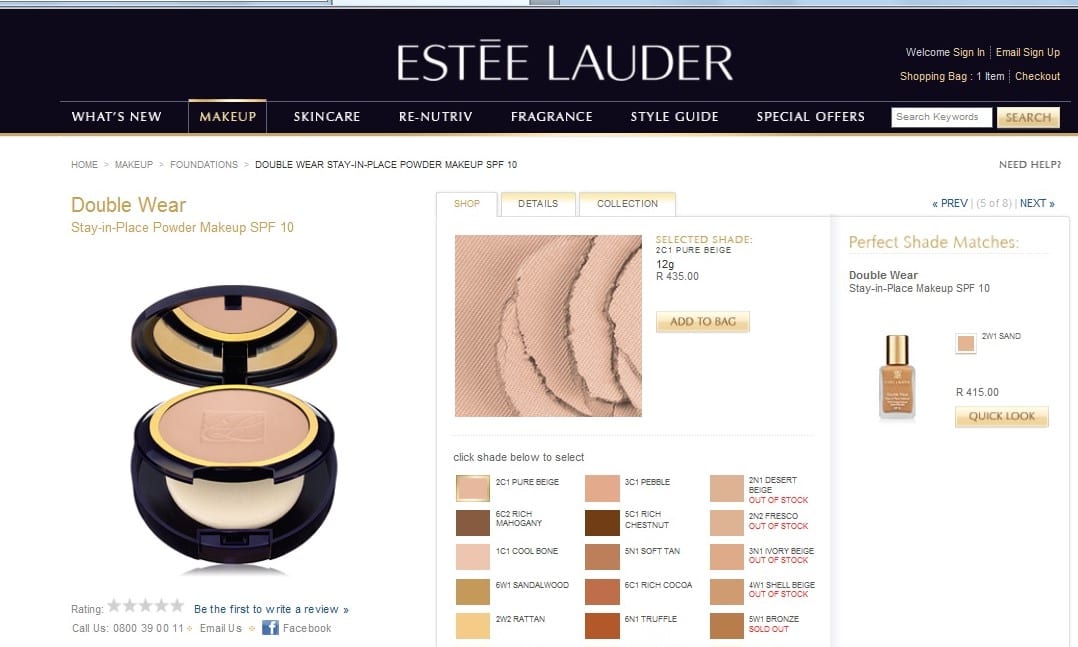
    Focus on the online sales channel, digital initiatives, and revival of its travel retail channel, will be the key drivers for Estee Lauder‘s (NYSE:EL)  growth in the future.  While travel retail showed tremendous growth in 2014, the slowdown in China and natural calamities had a negative impact in 2015.  Estee Lauder feels this setback is temporary and we believe new product launches and initiatives in this segment will boost its revival, and will be a key driver of growth for the company. With booming e-commerce and mobile internet penetration, we believe focus on online sales will be another driver of growth for the company, especially in emerging economies such as China.

    Revival Of The Travel Retail Channel

    In the fiscal year 2014, Travel Retail was one of the highest growth channels for Estee Lauder contributing to 13% of its product distribution. Global Airport retailing information reveals that by 2016, airport retail spending will be $23.2 billion for Asia Pacific, whereas for the Americas and Europe the figures will be $10.1 billion and $12.4 billion. Estee Lauder is leveraging this trend primarily to capture the Asian market. In May 2014, the company launched a flagship boutique at the Detroit Metro Airport, a primary gateway to Asia, via Delta Airlines. This boutique offers a collection of all its luxury brands, High-Touch services, along with other facilities such as a first-class lounge area, free Wi-Fi, and updated information on the flights. Growth in the travel retail channel slowed down in Q4 2015 due to the macroeconomic slowdown in China and spread of MERS virus in Korea, but the company believes this setback is temporary. It is continuing to emphasize  skincare, its most profitable product category, to boost travel retail sales. Estee Lauder recently launched a vast array of products under several brands including Clinique, Bobbi Brown, Jo Malone, Tom Ford, and M.A.C., at the Tax-Free World Association (TFWA) Exhibition, held at Cannes in October. The products include face contouring, eye makeup, lipstick, serums, treatment creams, and fragrances. These new products will be available across Estee Lauder’s travel retail channel. [].We believe revival of the travel retail channel will be a key driver of Estee Lauder’s revenues in the future.

    Focus on Online Channels And Digital Initiatives

    The shift towards online shopping is evident from the tremendous growth in e-commerce.  New York based research agency, L2 ThinkTank.com found that while the global beauty industry grew at 6% in 2013, sales through the e-commerce channel witnessed a 29.1% growth during the same period. To leverage this trend, Estee Lauder is selling 14 of its brands directly to consumers online through approximately 120 of its own e-commerce and mobile commerce sites.  The company also launched  “Forecast,” a mobile application under its Clinique brand, which provides weather information and skin care tips based on weather conditions.  To expand in the Chinese market, Clinique opened its  flagship store on Alibaba’s Tmall. According to the National Bureau of Statistics cited in Statista, the online transaction value of cosmetics retailing in China is forecast to grow by 123% in 2015. Given the market potential, we believe Estee Lauder’s focus on online sales and digital initiatives, around the use of social media and mobile apps for promotion, will be key drivers of its revenue in the future.


  • Korean consumers get cynical

    Korean consumers get cynical

    Korean consumers are becoming cynical about store pricing as they are increasingly exposed to cheaper international online marketplaces and have experienced months of sales and promotions by bricks-and-mortar outlets.

    K-Sale Day, Korea’s Black Friday, Korea Grand Sale are just some of the events that have taken place recently as retailers and government seek to boost consumer spending. This slumped in the wake of an outbreak of Middle East Respiratory Syndrome in late May when people avoided crowded places in an attempt to avoid infection.

    One consequence of that was that more consumers went online for not only essentials like groceries, but also for big ticket items and discovered that these could often be acquired relatively cheaply and with a straightforward delivery process, Inside Retail Asia reported.

    “As more consumers learn they can easily buy products at a much cheaper price via online vendors, offline shops are more frequently conducting discount events to retain their customers,” according to Jun Mi-young, a professor at Seoul National University.

    “The experience of buying foreign brands at discounted prices has created a healthy dose of cynicism about department stores’ pricing policy,” he added.

    Inside Retail Asia highlighted one example – the price of a kitchen knife set slashed by almost 60% in a sale but still more than the price charged by several online shopping malls on any given day.

    And as bricks-and-mortar sales start earlier and last longer, it noted, “they become less important and easier for consumers to ignore”.

    That said, the retail discount events have had some short-term impact, as government data shows that the 22 retailers that joined its own Black Friday Korea campaign saw their sales rise 20.7% year-on-year to 719.4bn Won (US$634.9m) during the two-weeks of the event.

    But “squeezing margins is not a sustainable business model”, Jun pointed out.

    “As the rise of digital shopping has become an inevitable trend in the retail industry, offline sales channels should seek ways to provide better in-store experiences and quality service,” he said. Data sourced from Inside Retail Asia; additional content by Warc staff

  • Asia’s new shopping hotspots (and their must-have products)

    Asia’s new shopping hotspots (and their must-have products)

    Cashed-up Asian shoppers are switching their retail allegiances from long-time favorites Hong Kong and Singapore, and it’s not just for a change of scenery.

    Japan, South Korea and Taiwan are the new regional hotspots for selective shoppers, experts say, because they offer a mix of attractive exchange rates and must-have products.

    The Americas and Europe are still the world’s two largest luxury hubs, with 34 and 33 percent of the market respectively, according to the Altagamma 2015 Worldwide Markets Monitor report by Bain & Company. The report calculates market-share based on the value of the luxury goods purchased.

    Asia holds 28 per cent of the global personal luxury goods market, but the regional distribution is changing.

    “Hong Kong, mainland China and Macau have taken a hit, losing spend to Japan and Europe,” Joel Stephen, senior director and head of retailer representation for Asia at commercial real-estate player CBRE, said, adding that China’s corruption crackdown had also hurt the level of spending.

    “Singapore and Taiwan have also seen a drop in mainland Chinese luxury spend. There is still tourism, but a lot of the HNWI’s [high net worth individuals] from mainland China are traveling further afield.”

    While still largely driven by local shoppers, Taipei’s retail sector got a boost when the government eased visa restrictions and brought in a more consumer-friendly tax system. High-end department stores such as The Breeze Centre in the Taipei 101 area are an example of the stores capitalizing on the trend.

    Shoppers are also taking advantage of the weak yen, which is giving them greater purchasing power in Japan.

    “Chinese and, to a certain extent, Singaporean shoppers prefer to buy luxury goods when travelling where there are more opportunities to purchase them at lower prices,” said Amrita Banta, managing director at luxury-focused adviser Agility Research & Strategy.

    Japan is more popular with mature customers, while younger shoppers are heading to South Korean capital Seoul, Banta said.

    Seoul’s famous TV dramas and K-pop stars have as much, or more, influence on shoppers as traditional advertising campaigns for luxury brands. A recent example: Jimmy Choo shoes worn by Gianna Jun on the TV show “My Love from Another Star” sold out in stores across Asia.

    But Banta said old favorites Hong Kong and Singapore could make a comeback as Europe becomes more expensive, and Asians grow increasingly wealthy.

    “We see the Asia Pacific retail environment becoming increasingly competitive as shoppers will head back into stores in the region due to the price changes in Europe,” Banta says.

    Here’s what cashed-up shoppers are hunting for:

    Sulwhasoo ‘Timetreasure’ Renovating Serum – Seoul

    A price tag of hundreds of dollars for a 50ml bottle of anti-aging serum doesn’t stop moisturizer addicts from flocking to South Korea. Beauty products are a serious business for the country, with the rest of the world taking notice of all the products Korea has to offer.

    Moynat boutique – Hong Kong

    The trunk-maker’s first boutique outside of France sits in Central’s Landmark in a 400-square foot space. One of its prized offerings is the limited edition mini Réjane, a crocodile bag with diamonds on its clasp priced at $124,300.

    Café Dior – Seoul

    This year, the French designer fashion brand set up shop in Gangnam, offering a six-floor experience called House of Dior. The boutique has a glass-walled café upstairs – Café Dior is a culinary representation of the label, with a menu designed by French pastry chef Pierre Hermé.

    Hermès Petit H – Tokyo

    Works created from upcycled parts makes for a unique Hermès piece. Using leathers and textiles known in their products to create something new, Petit H is a pop-up series that lasts only a few weeks in locations such as Japan’s Ginza store, designed to promote recycling in a very high-fashion way – offering bags, wallets, necklaces and even a life-size fawn. This limited time offering drew design fanatics to Tokyo. It’s now set up in London.

    Taipei 101 – Taipei

    What once was the tallest building in the world still has one of the most highly regarded retail spaces on its first five floors. The sixth floor is where the VIP club is, which requires a purchase of over $44,000 in the one day to gain entry. Once in, you’ll have access to a private showroom with the latest in luxury items, private dressing rooms and Chanel spa products.

    Three Michelin stars – Tokyo

    Culinary experiences and Japan go hand-in-hand, from imported chefs such as Joël Robuchon gaining widespread appeal for modern French cuisine, to local chef Yoshihiro Narisawa’s fusion of European cooking styles with local ingredients.

  • L’Oréal CEO says Q3 slowdown in Asia is ‘temporary’

    L’Oréal CEO says Q3 slowdown in Asia is ‘temporary’

    The L’Oréal chairman has stated that despite a market that slowed in the third quarter in Asia and in Travel Retail, L’Oréal Luxe has “strengthened its worldwide position with significant gains in Western Europe, in Asia, Pacific, in the Middle East and in Latin America.”

    His statement accompanies the release of the firm’s nine-months sales results which reveal a temporary third quarter slowdown for L’Oréal Luxe in Asia; strong e-commerce sales (projected at +€1bn in 2015); a slowdown in travel retail; and ‘significant’ sales and profit growth.

    According to Agon, despite these results, the ‘Consumer Products Division’ is performing well in India, Australia and Thailand. In China, growth at L’Oréal Paris is reportedly accelerating, while Magic is undergoing a transitional period.

    Market ‘turbulence’ in Asia

    The active cosmetics division is also said to be ‘growing strongly’, thanks to the success of La Roche-Posay.

    Kiehl’s, Yves Saint Laurent and Giorgio Armani are contributing to the dynamism of L’Oréal Luxe, in a context of slower third-quarter growth in Hong Kong and Travel Retail Asia.

    Roche-Posay is renewing its expert franchise for oily skin with the launch of Effaclar K(+). The company adds that the brand is continuing to post double-digit growth in all geographic Zones, with ‘outstanding performances’ in France, Brazil and China. The successful international roll-out of SkinCeuticals is continuing.

    L’Oréal Luxe experienced a temporary slowdown as a result of market turbulence over the summer in Asia, in Hong Kong and in Travel Retail. By geographic zone, North America’s growth is gradually increasing and Western Europe confirms its positive trend. In the third quarter, the New Markets have been hampered by the difficult Brazilian market, market turbulence in Asia and the taking over of agents’ contracts in the Middle East. In China, sales growth is in line with earlier quarters,” says Agon.

    Finally, the chairman said that currency fluctuations actually had a positive impact of +8.3% and if September-end exchange rates (€1 at $1.12) are extrapolated up to December 31, then the impact of currency fluctuations would be +6.7% for the whole of 2015.

  • How Agencies Are Adapting to China’s E-Commerce Boom

    How Agencies Are Adapting to China’s E-Commerce Boom

    This week, Saatchi & Saatchi China announced it was bringing on 48 hires from a local e-commerce services provider called Bysoft. It’s the latest example of how international agencies are adjusting their offer to cater to China’s e-commerce boom.

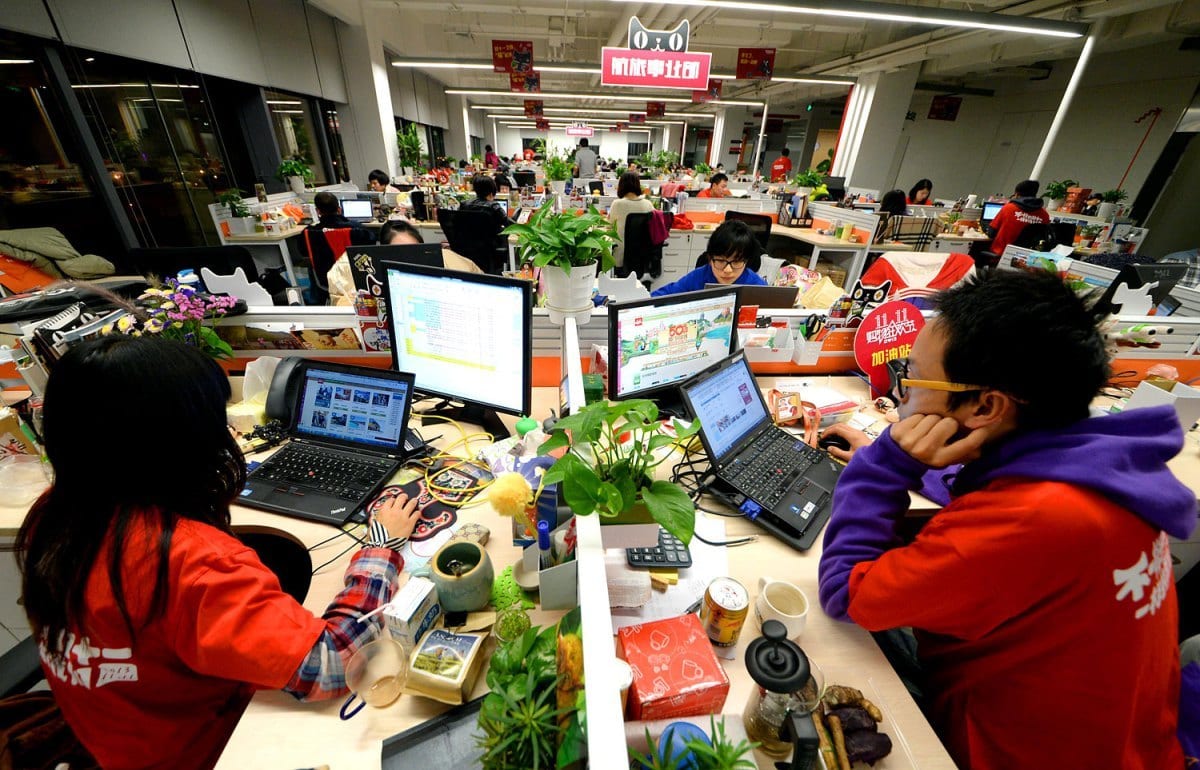
    In China, now the world’s largest e-commerce market, almost anything can be bought online – from exotic imported produce to cheap locally made clothing, from iPhones to Cadillacs. Online purchases are a greater percentage of retail in China than anywhere else. This year 15.9% of retail will be via digital, according to eMarketer. In the U.S. that figure is just 7.1%.

    Given China’s rapid embrace of e-commerce, “marketers and agencies are having to adapt at warp speed to build capabilities and potential capabilities in this area,” said Greg Paull, Hong Kong-based principal of agency-management consultancy R3 Worldwide.

    Agencies are trying different tactics. WPP China CEO Bessie Lee told an investors’ conference last week that two WPP companies, Kuvera and Salmon, were doing “a very hard-core e-commerce service. What does that mean? It means managing the e-commerce storefront for our clients, finding warehousing, managing warehousing, finding logistics partners for our clients, doing CRM (and) customer service for our clients for their online stores.” The agencies do marketing but are also distributors and store managers for clients, Ms. Lee said, adding: “So this is new money that we probably never had before.”

    Like many agencies, Dentsu’s Carat is expanding its e-commerce team. When Chinese internet giant Alibaba hosted its massive one-day online shopfest on Nov. 11, logging $14.3 billion in merchandise sales, Carat had a 28-hour war room for clients including Mondelez, handling everything from media optimization to brand-shop management to product replenishment to competitor tracking. China’s e-commerce boom also factored into a new partnership between Dentsu’s Carat, Mondelez and internet giant Tencent to work together on data, research and content.

    The company that Publicis Groupe-owned’ Saatchi hired staff from, Bysoft, has cast itself as a one-stop solution that includes digital marketing and operations, with a warehouse and fulfillment system for brands, and a client list including Adidas and Durex. Two of the hires were Cyril Drouin, Bysoft’s CEO, who takes charge of Saatchi’s China e-commerce strategy, and Christine Wang, Bysoft’s managing director. (Saatchi says it wasn’t an acquisition of Bysoft, but a recruitment of talent from the company.)

    Did you know 40%+ shoppers impulse buy and 71% in-store phone usage is checking prices? Gain deep understanding of consumer behavior and why this enables digitally-centric brands to gain advantage.

    Learn more

    Bysoft, founded in 2003, is one of dozens of standalone e-commerce agencies to pop up in China; many promise brands a range of services from marketing to operations, which is attractive to some brands. Alibaba-backed Baozun handles digital marketing, store operations, customer services and warehousing and has clients including Nike and Burberry. It had a $110 million initial public offering on the Nasdaq this year.

    The Chinese e-commerce market is fast-changing and complex, with different platforms than elsewhere – not only Alibaba’s marketplaces, but also online superstore JD.com and many verticals. Many brands are still figuring out their strategy, and the big question is how agencies will eventually fit into the landscape.

    “Are marketers going to push their business into a standalone e-commerce agency or into the existing creative digital agencies?” Mr. Paull asked. The argument in creative agencies’ favor is that “in the end an e-commerce customer is still a customer, and the work needs to be treated with same brand integrity you would treat any other work.”

  • Uber wants to deliver everything, not just people

    Uber wants to deliver everything, not just people

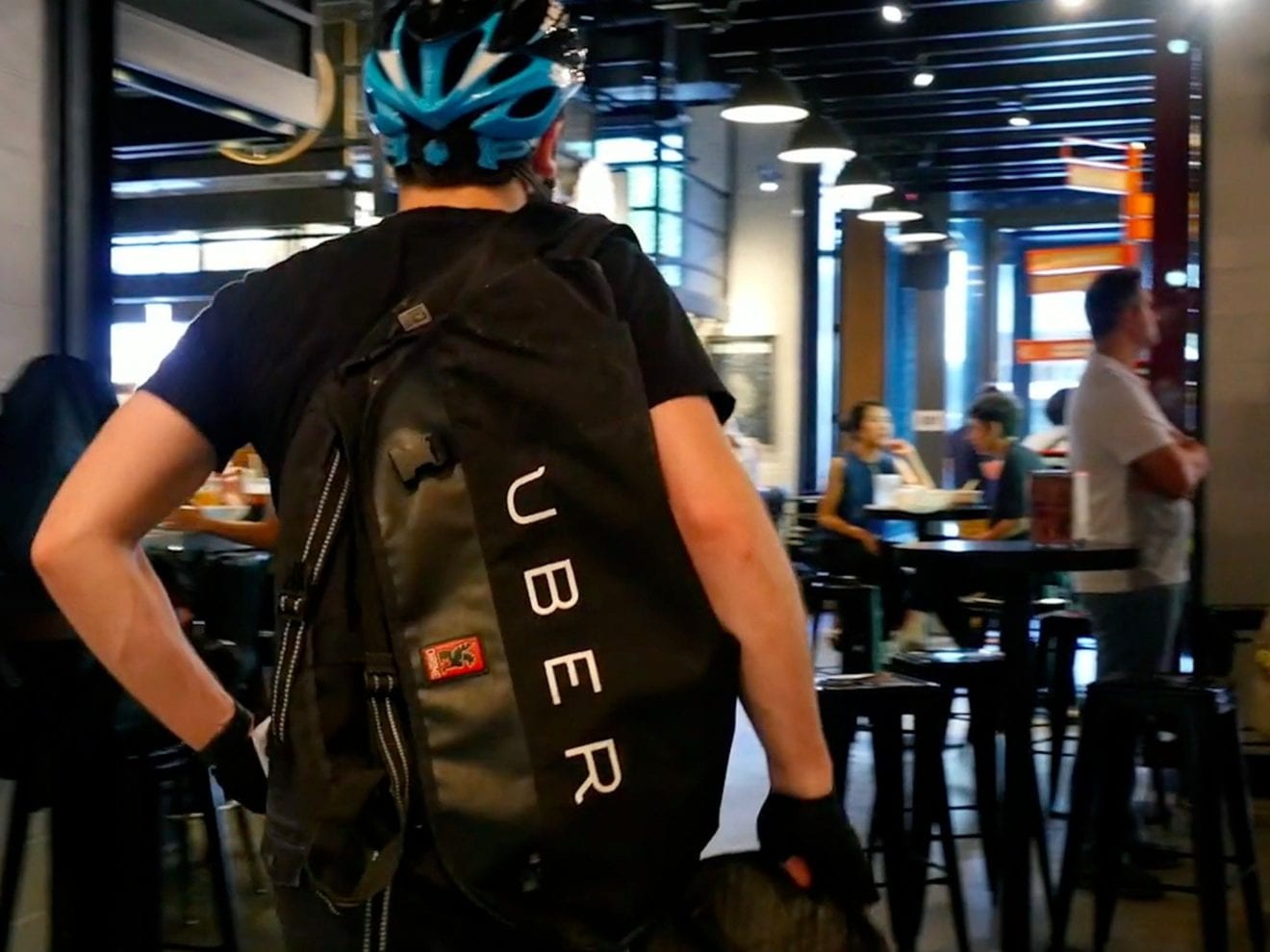
    Uber is not a taxi company, it’s a delivery company. And whether its cars are moving human beings or, as they are already in the US, physical products (and no, it’s not just cats and ice cream), what it’s really delivering is information about how to make cities more efficient.

    Jo Bertram, regional general manager for the UK, Ireland and Nordics at Uber, told that the company’s ambition to provide on-demand delivery for restaurants and businesses will reduce congestion in cities, and cut the time between ordering a product and receiving it.

    “Our mission is to make getting anything in your city more convenient, affordable and reliable than picking it up yourself,” she said.

    So far Uber has tried a limited number of delivery experiments in London, mainly for PR but also to test its infrastructure. In New York however it has already launched UberRush, a full-scale delivery service that lets restaurants and shops send products on-demand, for a relatively low cost.

    Bertram said Uber’s task is to apply what it has learned providing taxis in 350 global cities (including Bogata, Nairobi, Bangalore and 12 in the UK) to other forms of urban infrastructure. “We already provide the ability to get a car at the touch of a button,” she said. “Now imagine if you could use that same network of drivers and allow you to also get other things.”

    Don’t miss

    For businesses, on-demand delivery provides a competitive edge that bigger rivals might not be able to match, Bertram said. It also gives them the chance to scale more quickly, as they are able to reach customers who would otherwise be too far away to buy their product. Finally it provides “customer loyalty and satisfaction” Bertram said. “To get something within an hour? That’s pretty amazing.” It also means travelling long-distance to a one-stop superstore isn’t necessary. “Customers can think about buying local,” she said.

    “We believe it’s a positive thing for the city in which we operate.”

    What’s next is not necessarily transitioning delivery to robots, self-driving cars or drones, she said, but being able to combine multiple deliveries into one trip — vastly reducing the cost. That’s the concept between the UberPool ride-sharing service, and the concept is increasingly applicable to deliveries too.

    “Imagine if you could combine UberPool and UberRush?” she said, under a slide labelled “One More Thing”. With clever match-making tech, the price of instant delivery could be dramatically reduced.

    Eventually Uber drones might be possible, she admitted — but autonomous delivery is “five to ten years off” even if you assume questions around insurance and liability are settled, which they are not. Regulations — as Uber has seen constantly in regard to its core taxi product — are also a potential headache.

    “It’s almost impossible for us to think ahead,” she said. “But we’re always looking at pushing the boundaries of the services we offer.” But one prediction is possible — that “by 2025 there will be no need to own a private car”.

    “We’re able to start solving, or helping to solve some of the really big transportation problems in our cities,” she said.

  • Hugo Boss’s sales suffer amidst the falling Chinese economy

    Hugo Boss’s sales suffer amidst the falling Chinese economy

    Hugo Boss has recently announced that it is anticipating challenges in the Chinese and US markets, which will have a negative impact on sales next year. While a decline is expected, the brand plans to continue investment in its stores and online platform.

    The German fashion retailer* announced in a presentation for its investor day that 2016 sales growth is likely to be lower than its long term target for a high single-digit increase, adding that it would only reach 2020 targets for a core earnings margin of 25% if the overall market recovered.

    These results come just a year after one of Hugo Boss’ main brands BOSS opened two new flagship stores in Hong Kong.

    Earlier this month, Burberry recorded a 9% increase in pre-tax profits, while still in the midst of a “challenging” trading environment due to China’s suffering economy. The British brand said sales at stores open for a year or longer have been affected by the Chinese climate, especially those in Hong Kong, a major shopping destination for mainland visitors.

    Up until its recent economic downturn, Hong Kong was viewed as China’s shopping centre, housing the world’s luxury and most expensive retailers. However, failing sales have led to cuts in rents and ultimately struggling retail sales, following years of luxury growth in the region.

    Both Boss and Burberry have faced a declining demand in China as well as an overall decrease in luxury retail spending. Burberry is poised to downsize its biggest store in Hong Kong, while it has been suggested that French house Louis Vuitton will also be assessing sales performance in its 8 China stores in second-tier cities.

  • Yue Yuen sales rise on retail rollout

    Yue Yuen sales rise on retail rollout

    The world’s largest branded athletic and casual footwear manufacturer and retailer Yue Yuen Industrial says retail and wholesale sales of sportswear in Greater China rose 19.6 per cent in the first nine months of this year, due to an expanding store network.

    Yue Yuen operates more than 6000 retail stores and concessions across Greater China under its own name as well as the international brands it manufactures for.

    Total sportswear sales reached US$1.7 billion compared to US$1.456 billion in the same period last year. Other factors in the growth were the company’s efforts to increase efficiency and a better merchandise selection.

    Sales of athletic shoes were up by 3.4 per cent and sales of casual shoes were down by 5.6 per cent. The total volume of shoes sold increased by just 1.1 per cent to 231.4 million pairs for the period.

    Hong Kong listed Yue Yuen designs and makes shoes for brands including Nike, Crocs, Adidas, Reebok, Asics, New Balance, Puma, Timberland and Rockport as well as operating its own network of retail stores under the YY Sports brand, through subsidiary Pou Shen.

    The increased athletic shoes and sportswear sales helped boost Yue Yuen’s overall revenue by 5.8 per cent to US$6.3 billion and gross profit by 9.1 per cent to $1.422 billion. Total net profit attributable to owners of the company was $285.6 million, up 36.6 per cent year on year, according to figures filed with the stock exchange.

    Pou Shen, which opened 771 new points of sale during the nine months, increased its gross profit by 32.5 per cent to $566.5 million due to management’s strategy to concentrate on the retail business, improved operating efficiency, and better procurement of inventory.

    YY Sport instore wide

  • 11street plans monthly ‘Love 11 Day” discounts

    11street plans monthly ‘Love 11 Day” discounts

    Malaysian online marketplace 11street plans a new mobile shopping app – and a monthly ‘Love 11 Day’ when it plans to launch surprise, snap deals and giveaways.

    The Korean-headquartered online retailer says it is now ranked a top 40 website in the country and its online marketplace now has more than 7 million products on offer.

    11street CEO Hoseok Kim has unveiled an RM11 million giveaway running until December 31. Shoppers can redeem daily offers of deals and coupons with up to 90 per cent discounts.

    Kim said the 11th day of every month was chosen for the promotion because of its symbolic similarity to the company’s brand name.

    Meanwhile, Kim says almost 50 per cent of traffic to 11street is now from mobile devices.

    According to Nielsen, the growth of connected devices have paved the way for a positive increase in the eCommerce sector with 47 per cent of Malaysians using their smartphones to shop online.

    “Today, the 11street mobile shopping app is already one of the most popular apps in Malaysia. Listed as one of the top three shopping apps on the Malaysian Google Play store, we are pleased by this achievement as we have always placed great importance in offering a convenient mobile shopping experience for all users.”

    11street Malaysia - Love 11 day

    He says in 2016, 11street will strengthen its focus to serve mobile shoppers through a two pronged approach by providing more curated content with an improved user interface and user experience designs, along with additional personalised features for greater customer experience. 11street will also be offering more mobile exclusive value deals and discounts.