Author: Mei Ling Tan

  • Vipshop sales soar

    Vipshop sales soar

    Vipshop, the Chinese online discount retailer, says it boosted sales by as much as 63 per cent in the last quarter.

    The US-listed company says it expects revenue to be between RMB8.6 billion (US$1.349 billion)  and RMB8.7 billion ($1.365 billion). But that is less than its earlier guidance of RMB9.1 billion to RMB9.3 billion.

    “The weaker-than-expected preliminary third quarter results for total net revenue are partially driven by the warmer-than-expected fall weather in China, which caused customers to delay purchases of relatively higher-priced autumn and winter apparel,” the company said in a stock exchange disclosure.

    The preliminary, unaudited results are based on management’s initial review of operations for the quarter to September 30, and remain subject to change based on management’s ongoing review of the third quarter results.

  • Poll finds Asian prefer Christmas shopping online

    Poll finds Asian prefer Christmas shopping online

    Nearly half of Asia’s shoppers said they prefer to do their Christmas shopping online this year, according to a new survey conducted by internet services company Rakuten.

    Of 2500 shoppers polled in Singapore, Malaysia, Indonesia, Thailand and Taiwan, 47 per cent said they preferred to complete their Christmas shopping online – due to convenience (83 per cent), the ease of browsing and comparing of products (55 per cent) and cost effectiveness from attractive rebates and loyalty programs (41 per cent).

    The same shoppers reported an average increase of 20 per cent, in terms of the amount spent online on Christmas shopping in 2014, versus the year before.

    The Rakuten Shopping Secrets Survey 2015 found that 75 per cent of shoppers expect to buy more, or at least, the same number of Christmas gifts online this year compared to the previous year.

    “Our survey found that in general, when shopping for a gift, shoppers look at price (33 per cent) as the single biggest factor influencing their decision of what to buy, followed by the likeability of a gift by the recipient (26 per cent) and practicality of the gift (25 per cent),” said Masaya Ueno, director of Rakuten Asia

    Rakuten has launched a five per cent rebate on everything listed on its shopping sites, every day, with no limit on the amount of rebates, through the Rakuten Super Point program, across all its online shopping sites in Asia.

    This means that if shoppers buy anything on Rakuten sites in Singapore, Malaysia, Indonesia, Thailandor Taiwan, they are given Rakuten Super Points that are the equivalent of five per cent of their purchase value. These points can be used like cash, to offset their next purchase.

    Asians spend on average US$30 on a Christmas gift, and Rakuten says its new cashback scheme would reward shoppers with a $15 voucher if they bought gifts for 10 people.

    Meanwhile, the survey found that while three in five people remembered what they received for Christmas last year, a quarter of them received gifts they disliked. Those gifts ended up being re-gifted (38 per cent), kept somewhere and forgotten about (33 per cent), donated to charity (24 per cent), or being sold off (13 per cent).

    That could be one reason why 27 per cent of Asians find Christmas a stressful occasion, with Singapore shoppers the most stressed (40 per cent), well ahead of shoppers from Taiwan (32 per cent), Malaysia (30 per cent), Indonesia (18 per cent) and Thailand (17 per cent).

    “The year-end season is usually the busiest time of the year for online retailers like us, with shoppers wanting to splurge due to great discounts (62 per cent), liking to start a new year with new things (40 per cent), or rewarding themselves after a year of hard work (33 per cent),” said Ueno.

  • China retail sales surprise

    China retail sales surprise

    October figures for China retail sales show a surprise 11 per cent leap year on year.

    It seems that while the commentators were talking about how China’s economy was nodding off, consumers were out spending.

    Total retail sales of consumer goods during the month reached 2,827.9 billion yuan, or US$442.939 billion.

    From January to October, the total retail sales of consumer goods reached 24,435.9 billion yuan, up by 10.6 percent year-on-year.

    October retail sales in urban areas rose 10.8 per cent and in rural areas by 12.2 per cent.

    From January to October, retail sales in urban areas rose 10.4 per cent and in rural areas by 11.8 per cent.

    Online sales for the first nine months of this year totalled 2,948.4 billion yuan, an increase of 34.6 per cent year-on-year. Sales of  food and clothing rose 41.2 per cent and 24.4 per cent respectively.

  • New CEO for NTUC Fairprice

    New CEO for NTUC Fairprice

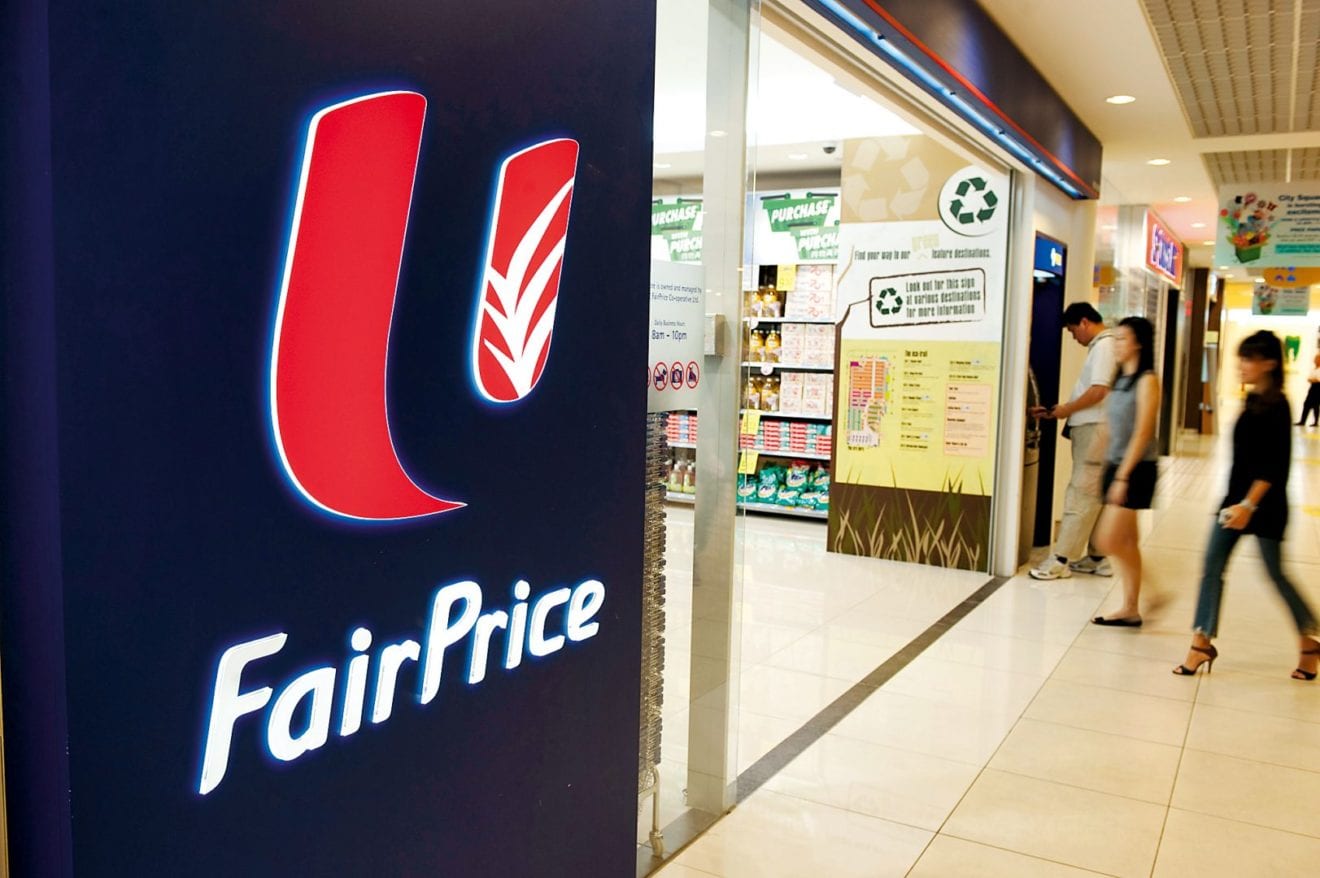
    NTUC FairPrice has announced the resignation of  CEO Tan Kian Chew on December 31 after 23 years with the company.

    Tan will join the Singapore Labour Foundation as CEO.

    His replacement has been named as Seah Kian Peng, who will commence on January 1. Tan joined NTUC FairPrice in 1992 as one of its assistant GMs and quickly rose to become GM (operations and corporate planning) in 1994, COO in 1995, deputy CEO in 1996 and eventually CEO in 1997.

    NTUC FairPrice chairman Bobby Chin said he deeply appreciated Kian Chew’s 23 years of service to FairPrice.

    “In [his] time, he has helped to build and strengthen the social enterprise.  He leaves FairPrice well poised to continue to deliver significant social good and in sound financial health.  He has built strong relationships not only within Fairprice but also across the group of social enterprises and the Labour Movement.  He is not only a colleague, but a friend to all and a mentor to many.  I wish him every success in his next career and I am sure all of us at FairPrice will miss him dearly.”

    During his tenure, Tan focused NTUC FairPrice on its social mission of moderating the cost of living for daily essentials. These include absorbing the initial impact of GST, launching the Everyday Low Price basket of goods and introducing the two per cent discount for seniors (on Tuesdays) and three per cent discount for pioneers (on Mondays), benefitting over 170,000 seniors every week.

    NTUC FairPrice has regularly been voted the most socially responsible company and one of the top brands in Singapore and the region by independent survey companies.

    Apart from delivering on its social mission, under Tan’s leadership NTUC FairPrice also grew quickly to become Singapore’s leading retailer with annual sales growth from $752 million in 1997 to $3.2 billion in 2014, attaining a market share of 59 per cent in 2014. Profit before tax also rose from $49 million in 1997 to $227 million in 2014 and net assets of the cooperative rose from $217 million to $1.5 billion during this period.

    “I am grateful to have spent 23 years with this great organisation, and deeply honored to have had the opportunity to lead it for the last 18 years,” said Tan in a statement.

    “I am very proud of what my colleagues and I have accomplished together during this period; in meeting competition, overcoming challenges and leading FairPrice to becoming a clear market leader in Singapore with a strong social mission.  I am leaving FairPrice with a sense of confidence as I am handing it over to Seah Kian Peng who has proven himself to be a very capable and dynamic leader.”

    Incoming CEO Seah has worked in both the public and private sector and joined the National Trades Union Congress – administration & research unit (NTUC-ARU) in June 1996 and was seconded to NTUC FairPrice in February 2001 as COO. In November 2001, Seah was re-designated as deputy CEO and continued to be overall-in-charge of supermarket operations.  In July 2006, with the announcement of the new group corporate structure, Seah was appointed MD of Singapore and was subsequently promoted to CEO of the Singapore business in April 2010.

    Under Seah’s leadership, FairPrice increased its footprint in Singapore from 99 to 290 stores with the opening of new formats to meet the evolving needs of the people in the city.

    Said Seah today: “I am humbled and excited by this continuing opportunity to serve the people of Singapore. NTUC FairPrice is an important part of the social fabric of Singapore and we will continue to focus on our social mission of moderating the cost of living for daily essentials while meeting the evolving needs and aspirations of the people of Singapore in this area.”

  • Parkson expands into food to stem losses

    Parkson expands into food to stem losses

    Hit with a 15 per cent sales slump since the introduction of GST in Malaysia, embattled department store operator Parkson is set to enter new categories – gourmet food, supermarkets, beauty  – and import new fast fashion brands.

    The company has invested RM100 million (US$22.8 million) into a rebranding and repositioning project.

    It will also introduce variations of its reform into other countries where it operates: Vietnam, Indonesia, China, Myanmar and Cambodia.

    Parkson Retail Asia director Datuk Magic Lee said in a media briefing that the group expected sales to fall as much as 15 per cent after GST came into effect and that the company has also been hit by a heavy devaluation of the ringgit.

    “We will keep doing this. Retail needs to keep changing or it will get boring. We will continue investing in new businesses, bringing in new brands, even in food and beverage. We plan to bring in a bakery in the future.”

    Parkson plans to launch three “affordable” fast fashion brands from Korea into Malaysia soon, targeting about RM60 million in annual sales from the stores in stores. Those brands are Spao, Mixxo and Who.A.U. The first concessions will open on November 27.

    Lee says the company plans to build a portfolio of about 100 brands in its apparel offer and will also continue to open new stores throughout the region.

    “At the moment, we are very aggressive in South-East Asia. In Malaysia, we open three or four new outlets each year, and in Indonesia between three and five outlets,” he said.

    “In Southeast Asia, we are still fairly competitive. Competition here [in Malaysia] is not so severe. Many strong brands have not come to Southeast Asia yet, so we can bring these brands in.”

    Lee says while the company expects the weak consumer sentiment in Malaysia to continue, the company plans to remain proactive “so when the market is ready, we are ready too”.

    He hopes the rebranding campaign will fuel at least a 50 per cent rise in sales year on year.

  • Padini fears margin squeeze

    Padini fears margin squeeze

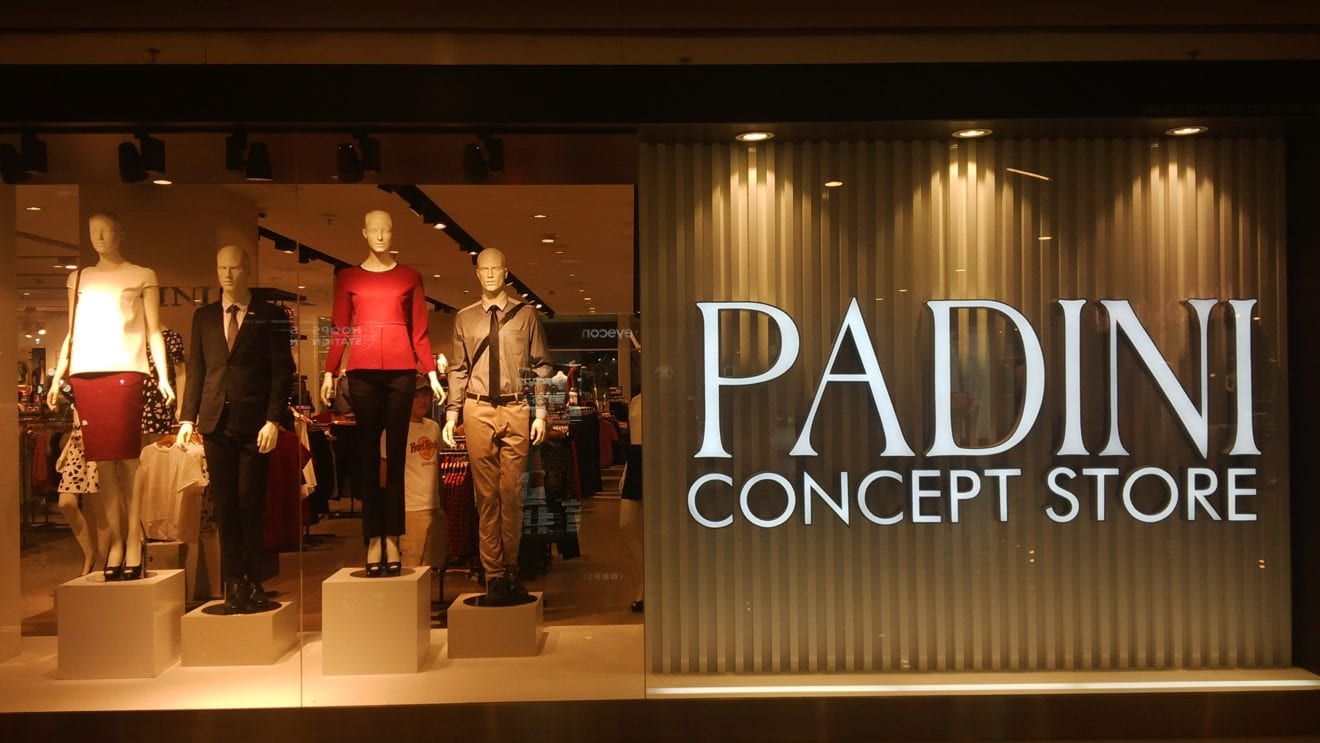
    Malaysia-based Padini Holdings expects an even tougher year ahead as it deals with a double whammy of having to cut prices and pay more for its stock.

    Padini owns the brands Vincci, Seed and Miki as well as stores trading under its own brand.

    The company has revealed margins reduced by between three and five per cent across its brands during the year to June 30 – and it fears even more reductions in the current year. It’s margin is now sitting at around 40 per cent.

    The company has had to absorb the additional six per cent GST applied on retail prices on April 1. At the same time, stock costs have risen due to the rapid deterioration of the value of the ringgit.

    “This financial year is going to be more difficult than FY15 as the weakening ringgit is affecting the cost of goods due to higher import costs,” CEO Chan Kwai Heng said in a news conference after the group’s annual meeting.

    But Chan says the market won’t accept price increases given deteriorating consumer sentiment.

    “We are more focused on driving top-line growth, and have no plans to increase our prices in the short term in order to remain competitive,” he said.

    In the year ahead the company will focus on boosting its online sales (which carry lower overheads than stores), and searching for cheaper supply sources.

    Padini plans to open 16 new stores in 2016, including nine outlet stores, mostly in new malls under construction.

    The company had earlier reported an 11.8 per cent reduction in net profit last year, blamed on aggressive promotional and discounting activities.

  • Bizpluss.in targets $20 billion sales

    Bizpluss.in targets $20 billion sales

    Indian B2B eCommerce startup Bizzplus.in has added 32 suppliers from China to its portfolio, giving 50 brands direct access to its Indian business customers.

    And the company says it aims to become a US$20 billion turnover business within the next three years.

    Its next priority is to add suppliers from the UK, UAE and Europe as it aims to supply 100,000 retailers in the first phase of its growth plan.

    Among the 50 new Chinese suppliers are TCL, Toshiba and G’Five.

    “This new venture will disrupt the long supply chain and will directly connect the retailers and suppliers between India and China for better pricing,” said Yasharth Verma, executive director of Bizpluss.

    “Today with 100 per cent production, the demand is only for 50-60 per cent compared to 120 per cent before. Suppliers from electronics, electrical home appliances and home furnishing are the top categories from China region. Next, we will get children products and garments from European countries,” he said.

  • China is our future says Walmart Asia CEO

    China is our future says Walmart Asia CEO

    China will drive more than half the world’s retail growth over the next decade, Walmart Asia CEO Scott Price has told the Asia-Pacific Economic Cooperation (APEC) CEO Summit in Manila.

    Despite slowing economic growth, the world’s largest retailer still believes in the power of the world’s most populous nation, referring to October’s retail sales figures showing 11 per cent year on year growth, and September’s 10.9 per cent.

    The Singles Day record set last week of US$14.3 billion further underlined the spending potential of Chinese consumers.

    Price highlighted the performance of the company’s wholly-owned Chinese online retail subsidiary Yihaodian on Singles Day which he described as “great’ without revealing data.

    He said the company had opted to take full ownership of Yihaodian this year to make the most of the “gamut of opportunities” in the burgeoning online-to-offline (O2O) market where shoppers order online and collect instore.

    “We think online-to-offline is critical, as customers look for convenience, and convenience is not just one mode.”

  • Paipai.com axed to fight counterfeiting

    Paipai.com axed to fight counterfeiting

    China’s number 2 eCommerce player JD.com has axed its consumer to consumer online storePaipai.com in a bid, it says, to cut sales of counterfeit goods.

    The store will be closed by December 31 and after a transitional period of three months, the company will completely close down the website of Paipai.com.

    “The shutdown of the C2C platform is in line with the company’s policy to combat the marketing and sale of counterfeit products and the company will make persistent efforts to protect the interests of consumers and brands,” JD.com said in a statement.

    Paipai.com, along with another site Wanggou, were acquired from WeChat parent Tencent in March 2014. The combined businesses have a goodwill and intangible asset value of US$400 million, making it a very expensive gesture in the war against counterfeit goods in Mainland China.

    The company says it has yet to calculate the book value of the loss given the two websites are accounted for in the books as a combined entity and Wanggou will continue to operate.

    While JD.com is amputating a limb, Alibaba is undergoing a high profile battle in the US courts with French luxury brand owner Kering which alleges Alibaba has failed to take sufficient steps to counter the trading of counterfeit goods on its various websites, as reported by Inside Retail Asia last week.

  • Indonesia Emerging as New Battlefield for ICT Companies

    Indonesia Emerging as New Battlefield for ICT Companies

    Korean mobile companies are making inroads into the Indonesian market one after another. The Korean mobile industry anticipate that Indonesia will rise as a new mobile market since the nation has the world’s fourth largest population and its many islands gave rise to the creation of a mobile service-friendly culture.

    According to the Ministry of Science, ICT and Future Planning on Nov. 19, the number of mobile service subscribers stood at 303.69 million as of the end of 2013. This figure was up 7.3 percent from a year before. Its penetration rate was staying at 121.5 percent. The Asian Mobile Consumer Report says that about 15 percent of all of Indonesia’s mobile service users were using two or more cell phones as of Sept. 2013.

    The report added that 24 percent of them were using smartphones, so the penetration rate of smartphones is expected to rise. Two Korean internet business leaders –- Naver and Kakao – began to preempt the Indonesian mobile platform while focusing on messenger services since Indonesia has a mobile market with great growth potential. In particular, the nation is planning to transform its 2G mobile telecommunication infrastructure into 4G long-term revolution (LTE) before hosting the Asian Games in 2018.

    At the moment, the 2G service accounts for 75% of the mobile service infrastructure in Indonesia. With the opening of a big mobile market momentum, Korean mobile messengers began to enter the market ahead of other foreign companies.

    Naver is ranked second in the Indonesian messenger market after its global messenger “Line’ took the Indonesian market in 2012. The number of monthly average users of Line grew to 26 million in the first quarter of this year from eight million in the first quarter of last year.

    Kakao is spurring its expansion in the Indonesian market by taking over assets of Indonesian SNS Path and Path Talk for 22 billion won. Path is the third biggest SNS after Facebook and Instagram in Indonesia. Its monthly average users add up to ten million. Three years ago, Kakao Talk made a foray into Indonesia and has been inking 18 million downloads. The company is aiming at taking Indonesia as a springboard to the global market by expanding synergies with Path.

    Pantech is planning all-around strategies to invade the Indonesian mobile market such as smartphones, communication equipment and the internet of things (IoT). The company already announced its plan to take Indonesia as a toehold for its revival when it exchanged hands. First of all, Pantech is planning to export a total of 300,000 units of mid- to low-priced smartphones to Indonesia within the second half of next year. It is said that the company will produce the products in the OEM system at factories in Southeast Asian countries for price competitiveness.

  • Pitney’s Borderfree Expands Online Catalog to Woo China

    Pitney’s Borderfree Expands Online Catalog to Woo China

    Pitney Bowes Inc. subsidiary Borderfree is expanding its online shopping catalogue for Chinese online customers to serve their penchant for America-based consumer products. The company intends to provide these customers with more options for American brands in fashion, sports apparel and lifestyle accessories ahead of the upcoming holiday season.

    In particular, Borderfree has extended its partnership with China’s e-commerce giant Alibaba Group Holding’s subsidiary company, Ant Financial’s Alipay (an online payment services provider). This will allow China-based consumers to purchase directly from the retailer’s websites using localized payments. Borderfree’s collaboration with Ant Financial helps obliterate currency and logistics barriers, allowing leading global retailers to explore the Chinese soil.

    Borderfree realizes that customer security is paramount in online transactions and hence, is working closely with payment and marketing platform “Alipay ePass” (which allows U.S. merchants to gain access to Chinese consumers with an Alipay account), to woo in major crowd this holiday season. On the other hand, this deal also enables Alipay’s 400 million registered customers to access the products of a wide range of international retailers including Aéropostale, MotoSport, Bloomingdale’s, Macy’s and Saks Fifth Avenue at comparable prices.

    In our opinion, the incredible growth of online shopping in China, which likely accounts for over 40% of the world’s retail e-commerce according to EMarketer, is enough to bank on the profitability of this particular deal. Moreover, the fact that the U.S. happens to be the leading e-shopping destination of the world further brightens the commercial attractiveness of Pitney Bowes.

    Earlier in June, Pitney Bowes completed the acquisition of Borderfree to complement its e-commerce business. Encouragingly, this gave the company a first-mover advantage for exploring a multibillion-dollar market, which enjoys a double-digit growth rate. Notably, company sources suggest that the rapidly growing Chinese e-commerce sector is emerging as the key driver of the nation’s overall economic growth, primarily fueled by increased Internet penetration and surge in smartphone ownership.

    We believe the approaching holiday season will witness colossal growth in online purchase data, and this bodes well for Pitney Bowes’ profitability. Moreover, integration of the Borderfree business with its global e-commerce business will help the company reap significant cost-synergies in the long run.

    Pitney Bowes currently has a Zacks Rank #3 (Hold). A better-ranked stock in the industry is Advanced Emissions Solutions, Inc., that holds a Zacks Rank #2 (Buy).


  • SM Prime opens third mall in Cebu

    SM Prime opens third mall in Cebu

    SM Prime Holdings, Inc., one of the leading integrated property companies in Southeast Asia, opens today its newest regional landmark, SM Seaside City Cebu.

    In a disclosure to Philippine Stock Exchange, SM Prime said this is its 56th mall in the country, and the third mall within Cebu – along with SM City Cebu and SM City Consolacion.

    The new destination mall provides an additional 430,000 square meters (sqm) in gross floor area (GFA), expanding SM Prime’s total retail space to 7.3 million sqm in the Philippines.

    SM Seaside City Cebu is the first of many developments in the 30-hectare SM Seaside Complex which SM Prime president Hans T. Sy said will take about five years to fully develop.

    SM Seaside City Cebu, located within the SM Seaside Complex at the South Road Properties (SRP) in Cebu City, is the first of its kind in urban development in the SRP.

    As the anchor development, the mall is slated to transform the city’s landscape as SM Prime builds residences, offices, an arena, a five-star hotel, and convention centers.

    The Complex features “The Cube”, a steel sculpture that symbolizes strength and stability of Cebuanos and its consistency reflects SM’s continued commitment to excellence.

    “We are inspired by the success of our Mall of Asia Complex in Pasay City, the first lifestyle city project or mixed-use development that offers retail, residences, offices, hotels and convention centers,” Sy said.

    He added that “we are replicating this concept of ‘lifestyle cities’ in Cebu as we open the SM Seaside City mall. We see Metro Cebu as one of our important growth corridors in Visayas and Mindanao following our growth track in Metro Manila.”

    The new destination mall will open with 80 percent of space lease-awarded which serves as the new home to flagship stores of well-known local and international brands. It will also be the venue of unique and world-class events and entertainment.

    The shopping mall will have anchor tenants such as The SM STORE, SM Supermarket, Forever21, UNIQLO, Our Home, Ace Hardware, SM Appliance Center, Watson’s, The Body Shop, Kultura, BDO Unibank, and Chinabank.

    SM Seaside City Cebu is the newest architectural jewel of SM Prime with its nautilus inspired design of concentric arcs from a central multi-purpose space featuring a “Seaside Tower,” a 147-meter iconic viewing tower which offers a sensational panoramic view of the entire city.

    A Sky Park provides a  unique setting for diverse dining outlets situated in an elevated garden with soothing water features. The mall will have a skating rink, eight cinemas houses and 5,000 parking slots.

  • DFS partners with kid’s Make-A-Wish charity

    DFS partners with kid’s Make-A-Wish charity

    For the second year running, DFS Group is partnering with Make-A-Wish International (www.worldwish.org) this December in its #JoyToYourWorld charity campaign to help children fighting life-threatening medical conditions by granting their special wishes.

    Jay Frame, DFS Group’s Vice President Corporate Communications and CSR said: “We are thrilled to partner with Make-A-Wish International for the second year in a row and share the goodwill of our customers, employees and partners to help these children’s wishes come true.”

    The retailer says that crowdsourcing and social media combine in this charity campaign and DFS customers can help to grant wishes by following @DFSOfficial and liking posts tagged with #JoyToYourWorld. DFS says that for every #JoyToYourWorld post that receives 1,000 ‘likes’, it will donate to Make-A-Wish International to help grant up to nine wishes to children around the globe.

    Coinciding and honouring DFS’ 55th anniversary, an equal 55 celebrity ambassadors are supporting this year’s campaign, including past DFS campaign spokespeople Godfrey Gao, Ming Xi, Caroline de Maigret and Perry Liu.

    DFS says: “The mission of Make-A-Wish is to grant the wishes of children with life-threatening medical conditions to enrich the human experience with hope, strength and joy. Since its inception in 1980, Make-A-Wish has collectively granted the wishes of more than 350,000 children in nearly 50 countries. Each wish that comes true inspires these seriously ill children to persevere against their illnesses.”

    Make-A-Wish International President and CEO Jon Stettner said: “We are proud to renew our partnership with DFS and its ambassadors this holiday season to help grant even more wishes to deserving children facing serious illnesses. It’s through the support of partners like DFS and its customers around the globe that make these life-changing wishes possible.”

    Amongst those children DFS helped to grant wishes to last year around Asia was Evan, an eight-year-old from Hong Kong battling acute lymphoblastic leukaemia. He wanted to be an astronaut and lift off was duly granted when he attended NASA’s Space Camp in Alabama, US.

    Then there was Mostafa, a 17-year-old from Japan suffering from congenital biliary atresia and pancreatic cancer. He wanted to be a racing car driver and his wish came true when he sat in a Ferrari 138 driven by two-time Formula 1 champion Fernando Alonso.

    This year, DFS and Make-A-Wish International will grant wishes to children like Wang-yau, a nine-year-old boy from Hong Kong battling spinal muscular atrophy who wishes to travel abroad, or Joanna, a 10-year-old girl from Singapore in treatment for medullablastoma, who wishes to become a pastry chef.

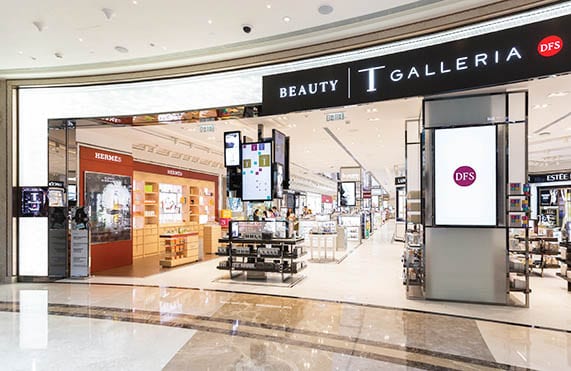
    As part of all this, DFS Group is generously encouraging customers to help out with donation boxes placed within its T Galleria by DFS stores worldwide. These will be available at its 11 T Galleria outlets in Hong Kong (3), Macau (4), Singapore, Auckland, Okinawa and Hawaii as well as its DFS Gallerias in Cairns and Sydney.

    In addition – and again celebrating DFS’ 55th anniversary – 55 celebrity ‘ambassadors and influencers’ have signed up this year to help support the #JoyToYourWorld Campaign. These include famous actors, models, make-up artists, photographers, a princess, an athlete, photographers, fashion bloggers, singers and many more.

  • Paul & Shark makes Korea debut launch inside Incheon

    Paul & Shark makes Korea debut launch inside Incheon

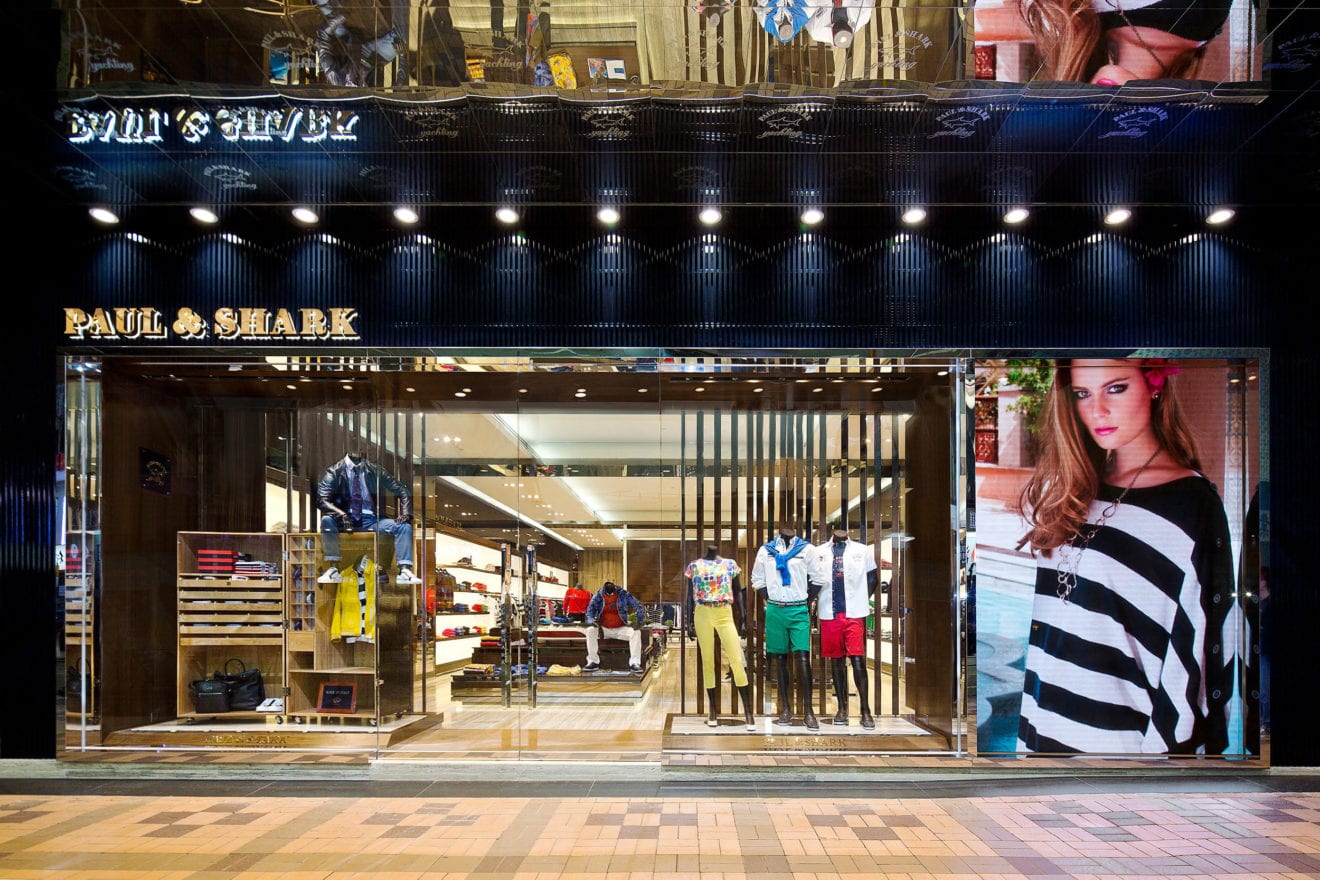
    Paul & Shark will launch its first store in South Korea with a new point of sale opening at Incheon International airport with Lotte Duty Free, and will also open its first personalised boutique onboard cruiseship Costa Fortuna.

    “Our new opening in Incheon will enable us to enjoy truly spectacular visibility for the brand. Along with the Lotte store we have another two openings planned in Seoul by the first quarter of 2016, giving Paul & Shark a very strong foot-print in the South Korean travel-retail market. These openings are both downtown duty-free – one with Donghwa and another with SM Duty Free.”Both stores will make its inaugurate launch next month. “We are so excited about these two projects,” said Paul & Shark Worldwide Travel Retail director Catherine Bonelli. “The Costa Fortuna is a beautiful ship and to have our own standalone boutique onboard is a real coup. Opening in December in the run up to Christmas could not be better timing and we’re expecting really good sell-through during the month.

    This continues a trend that has seen a 55% increase in openings for Paul & Shark over the past 18 months, of which Bonelli said around half were located in airports and the rest with cruiselines and downtown duty-free stores.

    After coming back from a busy TFWA World Exhibition last month, Bonelli sees a rosy future next year. She added that openings in 2016 were earmarked at Pudong terminal one in partnership with King Power Orient; Hong Kong International airport with Lagardère Travel Retail, and Houston with ATU-Heinemann.

    Speaking of last month’s TFWA, she added: “Cannes, with our new stand, was an incredibly busy and successful week for us with head to head appointments all week,” said Bonelli. “Our personalised embroidery service was again a particular talking point and has become a real stand-out highlight for us.

    “It’s been an incredibly busy and hardworking year for the Travel Retail team but the effort is certainly paying off and we are being rewarded with superb locations for the brand. We are confident that 2016 will be another exceptional year for us, as retailers continue to understand and realise the business potential of partnering with Paul & Shark.

  • Apple’s Fifth Retail Store in Beijing Opens November 28

    Apple’s Fifth Retail Store in Beijing Opens November 28

    Apple has announced that its fifth retail store in Beijing, and 27th in China, opens Saturday, November 28 at 10 AM local time. The store will be located in the new Chaoyang Joy City shopping mall at 101 Chaoyang North Road in Beijing’s city proper Chaoyang District.

    The new store will be open 10 AM-10 PM local time everyday and offer traditional Apple Store services, including the Genius Bar, Workshops, JointVenture, events and seminars. Apple’s four other retail stores in Beijing are located at China Central Mall, Sanlitun, Wangfujing and Xidan Joy City.

    Apple has opened more than seven new retail stores in China this year, including locations in Chongqing, Dalian, Hangzhou, Hong Kong, Nanjing and Tianjin. The company is committed to expanding its footprint in China, an increasingly important market, under the leadership of retail chief Angela Ahrendts.