Author: Mei Ling Tan

  • Tesco Thailand to offer phone services

    Tesco Thailand to offer phone services

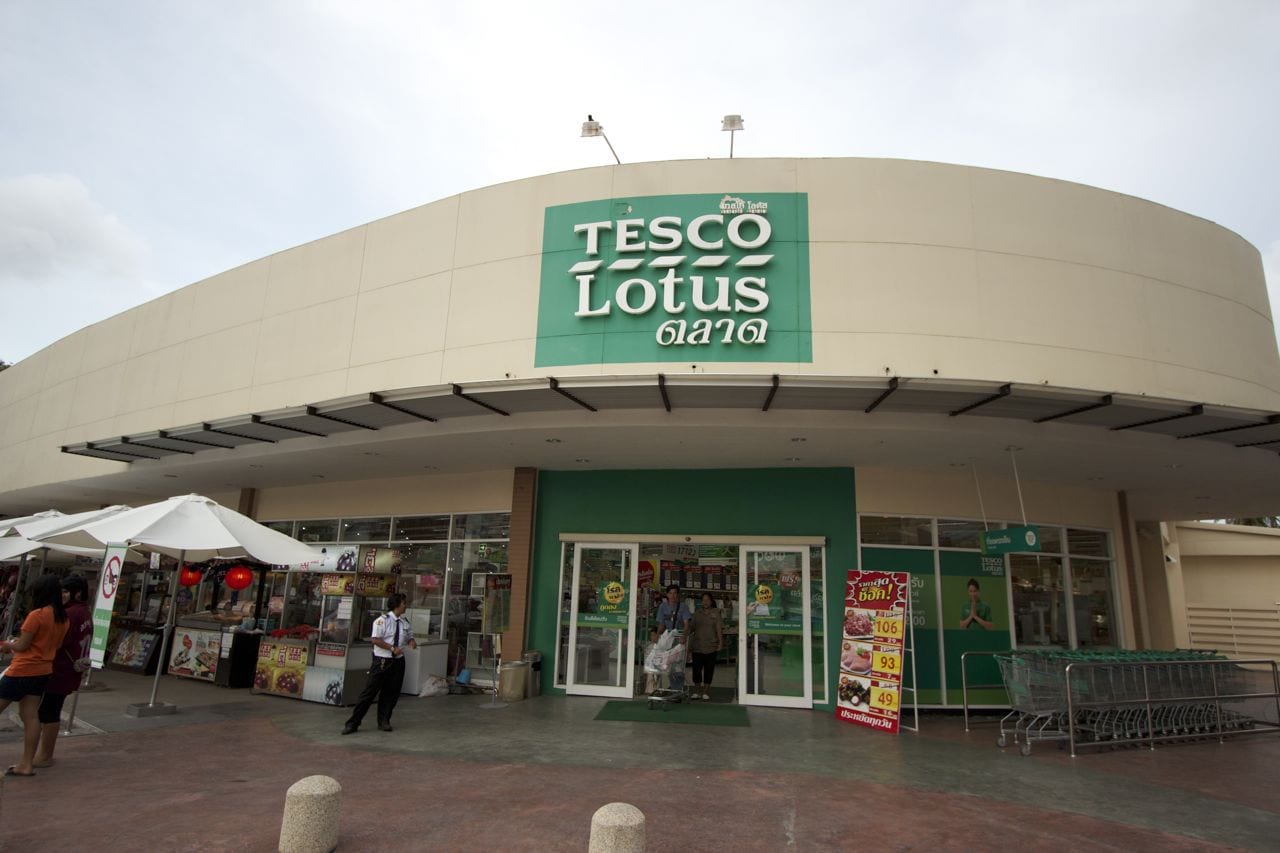
    Tesco Lotus Thailand is teaming up with CAT Telecom to offer a mobile virtual network service.

    The deal will see Tesco Thailand selling SIM cards to its 3 million Clubcard loyalty program members and other customers and marketing cellular network services under its own brand.

    CAT has similar partnerships with True and Real Move, among others. Real Move accounts for 80 per cent of its capacity, serving 13.5 million customers.

    The 50-50 joint venture partnership will run until CAT’s current licence expires in 2025, with Tesco Lotus marketing commencing next year. CAT will lease space on its network and Tesco Lotus will develop a marketing plan and distribute SIM cards.

  • Central Pattana plans four new malls

    Central Pattana plans four new malls

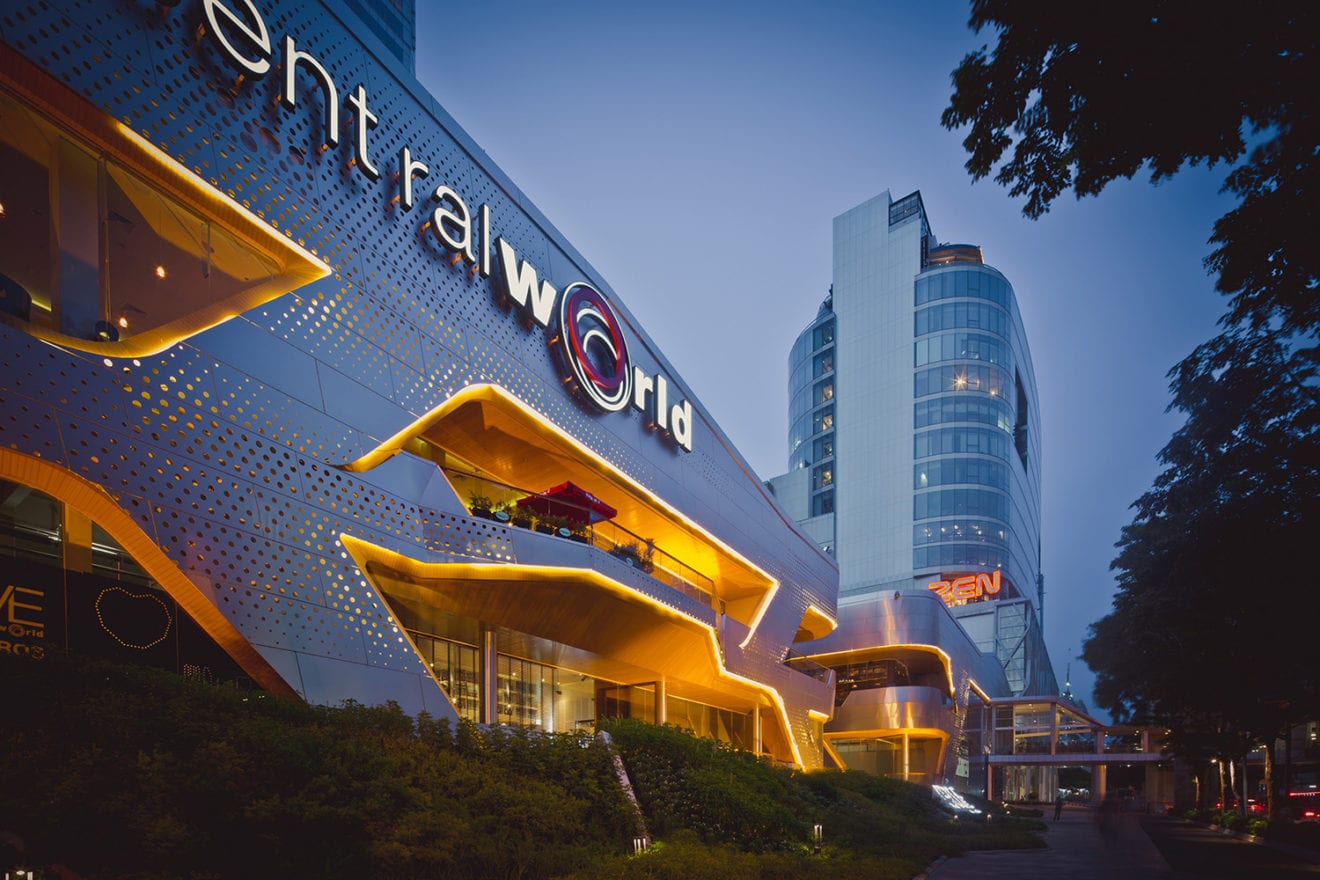
    Thai shopping centre operator Central Pattana has announced plans for another four or five shopping malls to be completed by 2018.

    The company says it has allocated THB30 billion (US$838 million)  for the new properties – which it says are in addition to a raft of previously announced planned properties.

    Central Pattana is the listed property development subsidiary of Central Group which owns shopping centres the length and breadth of Thailand and in Italy, Germany and China.

    The new malls will be built in the capital city of Bangkok and in larger regional cities. It has already announced plans to build centres in Phuket, Nakhon Ratchasima and Nakhon Si Thammarat.

    “CPN still aims for further expansion in major economic cities, as well as locations with potential business both in Thailand and neighbouring countries to demonstrate its sustainable growth,” said CFO Naparat Sriwanvit.

    Besides its Thai plans, the company is proceeding with a Malaysian joint venture to open a shopping mall in Kuala Lumpur and it is conducting feasibility studies on entering Vietnam and Indonesia.

    Parent Central already operates a Central Department Store in the Indonesian capital of Jakarta and the group has assets including a joint venture electronics chain and a department store in Vietnam.

    CPN runs 26 shopping malls in Bangkok and in major provinces, including Hat Yai.

  • OldTown Coffee suffers as Malaysians spend less

    OldTown Coffee suffers as Malaysians spend less

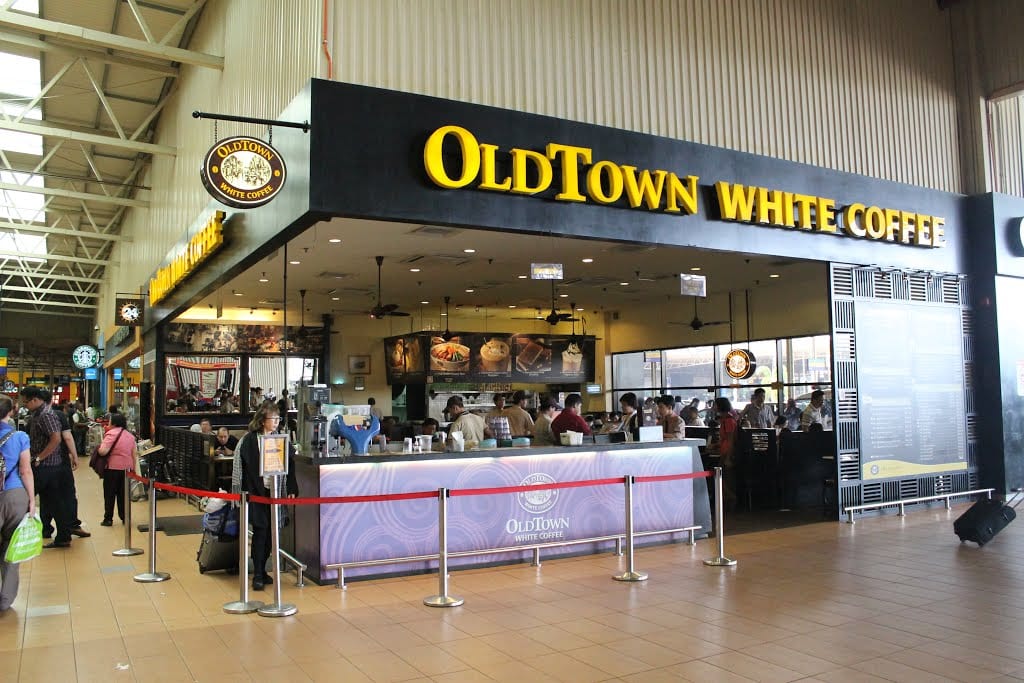
    Malaysian cafe chain OldTown Coffee has reported falling sales and profits as Malaysians continue to get used to life after the imposition of GST on April 1.

    The company, which operates 210 discount coffee shops and sells packaged coffee through FMCG channels, posted a profit of RM9.49 million ($US2.2 million)  in its first quarter, to June 30, 6.8 per cent less quarter on quarter and an unhealthy 18.9 per cent less year on year. Topline sales slumped 10.5 per cent quarter on quarter and 3.9 per cent year on year to RM94.06 million (US$22.3 million).

    OldTown concentrates on the local Malaysian market serving milky coffees and light snacks – it does not make espresso-style coffee drinks like Starbucks.

    The company says its declining fortunes were driven by a downturn in cafe sales, rather than packaged goods: Same store coffee shop profit fell 46.4 per cent year on year.

    The company plans to open 10 new outlets before the end of the current financial year, next March, representing an expansion of about five per cent.

    Sales of packaged foods – mainly instant coffee and coffee mixes – rose 29 per cent.

  • Altelier D’Auchel Hong Kong store opens

    Altelier D’Auchel Hong Kong store opens

    French leather goods brand Altelier D’Auchel has opened its first retail store in the territory.

    Altelier D’Auchel Hong Kong is located on the 14th floor of Lyndhurst Tower, 1 Lyndhurst Terrace in Central.

    The label makes leather goods to order, with price tags ranging from HK$40,000 to $300,000, depending on the materials, style and colours chosen. Once ordered, a bag takes anywher from a fortnight to a month to be created.

    A truly artisan brand, Altelier D’Auchel employs craftsmen who have trained in the traditional techniques at the Compagnons du Devoirs, which is a French apprentice training organisation dating back to the Middle Ages where master craftsmen and artisans train apprentices in a craft. After qualifying, the designers have to spend another 10 years at a name atelier to make the grade.

    Altelier D’Auchel sent master craftsmen from France to Hong Kong to celebrate the exclusive store’s opening and to provide a live demonstration of the art of making fine handbags.

  • Seed Heritage opens at VivoCity

    Seed Heritage opens at VivoCity

    Australian childrenswear chain Seed Heritage has opened a new store in VivoCity.

    It is Seed heritage’s second store in the city state, following its debut in Parkway Parade.

    Last week’s opening was marked with a 20 per cent off storewide sale across its range of baby, child and teenage girls clothing, which ended on Sunday.

    Seed Heritage is one of Australia’s most popular premium childrenswear brands, providing solutions from top-to-toe for babies, boys, and girls, from the ages of newborn to 10 year olds. It recently expanded its range into a teen collection for girls aged eight to 14 years.

    Seed Heritage is best known in Australia for its quality and detail and distinctive design across apparel, shoes, accessories, and toys.

  • First Garrett Popcorn Taiwan store planned

    First Garrett Popcorn Taiwan store planned

    Garrett Popcorn, the Chicago-based gourmet popcorn brand, is continuing its Asian expansion with the opening of a store in the landmark Taipei 101 complex.

    The first Garrett Popcorn Taiwan store expands the brands presence in Asia, where it already has stores in Singapore, Malaysia, Thailand, Hong Kong, Japan and Korea.
    Garrett says it chose Taipei 101 to set up its first Taiwan store because of its proximity to public transportation and a commercial community and the potential for tourism business.

    “The Taiwan marketplace is exciting and vibrant, with an especially rich food culture. We are happy to commit Taipei 101 as the location of choice for our flagship shop in the heart of Taipei,” said Lance Chody, chairman and CEO of Garrett Popcorn Shops.

    “We are also excited to bring delicious handmade Garrett Popcorn – made fresh with real ingredients every day – to join the landmark Taipei 101 experience,” he said.

    “The launch of Taiwan flagship store in Taipei 101 is essential in our expansion plan in the Asia market,” added Olivia Huynh, VP of Asia-Pacific operations at Garrett Popcorn Shops.

    Taiwan is the 10th overseas market for Garrett Popcorn. Outside Asia it has stores in the UAE and

  • Logistics firm 21Express to tap Indonesia’s e-commerce boom for higher growth

    Logistics firm 21Express to tap Indonesia’s e-commerce boom for higher growth

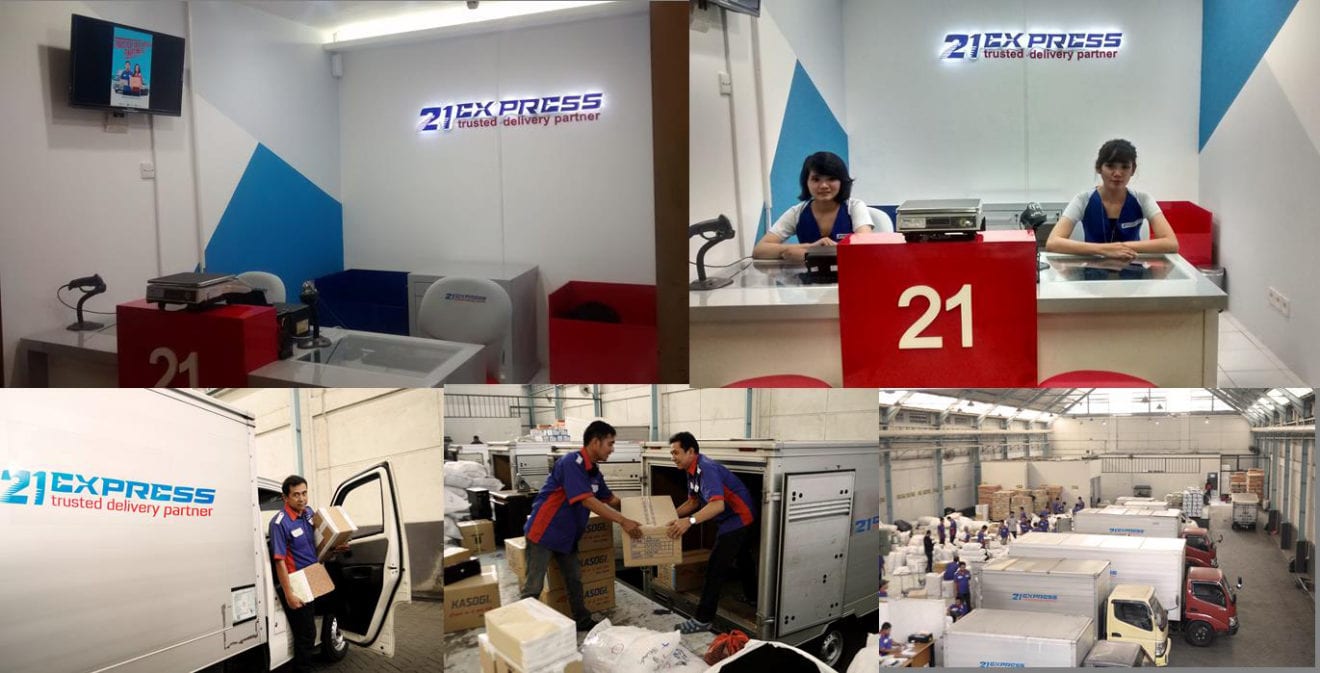
    Founder and CEO 21Express Tjia Anastasia told reporters on Wednesday that the company’s plan to enter the retail courier business is driven by the high demand from retail sector for domestic and international shipments.

    “We have seen a fast growth in e-commerce since about 2010.This growth has really impacted the logistics business as companies have to send packages to Indonesia regularly,” Fany Wyadi, managing director of 21Express, said.

    As online shopping becomes increasingly popular in smaller cities, the Jakarta-based company expects to see shipments growth double or even treble in the next year from the current 130,000 packages each month, said Fany. 21Express’ clientele is dominated by corporates who account for 70 per cent of the business while it has already signed up three of the country’s top e-commerce players as clients, Fany said, declining to divulge further.

    According to independent research body IDC, e-commerce market in Indonesia grew by 42 per cent from 2012 to 2015.

    The high growth is encouraging e-commerce businesses to find reliable partners so that the delivery of goods and documents can be done in time. For example, one of the leading retail optical networks of the country Optik Melawai, has partnered with 21Express to send stock glasses and sales tools to hundreds of outlets in Indonesia. Tjia explains that its first partner is serving the retail customers of a communication equipment distributor firm to distribute its high value products.

    “We are the pioneer company behind the successful sales and distribution of mobile phones in Indonesia and one of the companies that is believed to transmit the tools and medical material to the corners of Indonesia,” Fany said.

    Backed by more than 200 units in its fleet, the company currently has 30 official outlets in Indonesia with an additional 50 partners that franchise the service. The company said, it was in the process of adding 200 new outlets by the end of the year.

  • Indonesia’s eFishery raises undisclosed pre-Series A funding

    Indonesia’s eFishery raises undisclosed pre-Series A funding

    INDONESIA’S eFishery, a smart fish feeder manufacturer, said it has secured pre-Series A funding from Dutch aquaculture investment fund Aqua-spark and Indonesian venture capital (VC) firm Ideosource.

    eFishery did not disclose the investment amount, but said the funds would be used to scale its distribution network nationwide, and also to ramp up manpower.

    “eFishery is a perfect example of a company that is solving real problems in a lucrative market,” said Andrias Ekoyuono, vice president of business development at Ideosource.

    According to the Food and Agriculture Organisation, more than 96% of fish farming activities worldwide is concentrated in Asia. In Indonesia alone, the overall market size for aquaculture is US$5.4 billion.

    As an Internet of Things (IoT) startup for fish and shrimp farming, the Indonesian firm said it is tackling one of the largest challenges in commercial aquaculture: Feeding operations.

    Fish feeding traditionally makes up between 50% and 80% of fish farming overhead costs, eFishery said in a statement.

    Overfeeding negatively impacts the environment in many ways, as a great deal of fish food ultimately goes to waste. It also harms the health of a farmer’s stock. Underfeeding means fish may not survive.

    The result of unmeasured and inexact fish feeding methods on a commercial scale inevitably means economic losses for farmers, the company said.

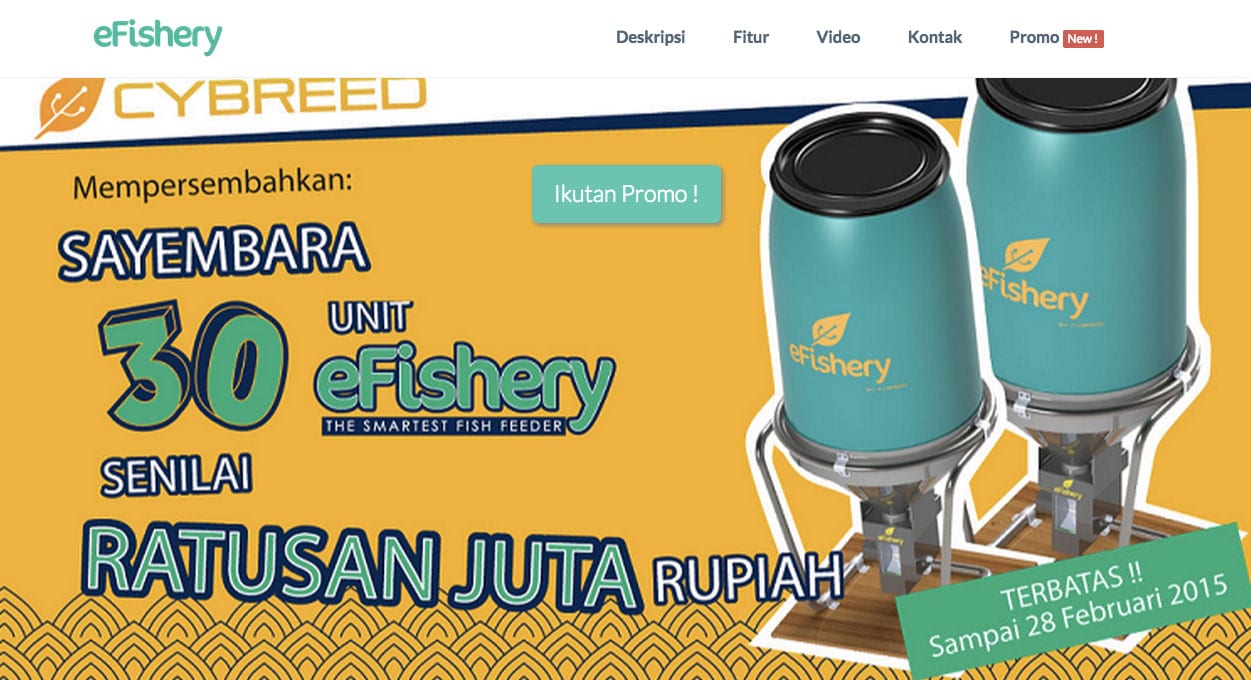
    eFishery offers a transformative, affordable, tech-based solution to solve the problem, in the form of an automatic smart feeder that uses sensors to measure fish appetite and appropriate feed amounts.

    Designed for both small and large-scale farmers, the system can sense appetites, automatically distribute feed, and give real-time reports of consumption on the farmer’s smartphone, the company claimed.

    “The problem we are solving is the inefficiency of feeding in the fish farming business,” said eFishery cofounder and chief executive officer Gibran Chuzaefah Amsi El Farizy.

    “I saw the problem when I was a fish farmer myself. Fish feeding is done inefficiently by labourers, and farmers don’t have any technology to control the feeding yet.

    “We built this product to make the fish and shrimp farming business more efficient, convenient, and accountable,” he added.

    eFishery said it makes makes money from selling smart feeders to farmers and distributors. It also charges a monthly subscription fee for the software used to monitor and analyse fish feeding activities in real-time via tablet or smartphone.

    On average, its smart feeding system reduces the amount of feed used by 21%, the company claimed.

    eFishery said it has sold hundreds of units in the past two years, and currently has over 17,000 fish and shrimp farms in its pipeline, which include orders from Thailand, Singapore, India, China, Brazil, and countries in Africa.

    “We are very excited to solve the global challenge of fish feeding with eFishery,” said Aqua-spark partner Amy Novogratz.

    “Indonesia has about 3.3 million fishponds and 2.7 million fish farms. When brought to scale, it could have a massive impact across a global industry plagued by this challenge.

    “It has the potential to set a new standard for aquaculture and make the industry more transparent, data-driven, and accountable – all factors that will make businesses in this sector more investment-friendly,” she added.

    eFishery said it will use the newly acquired capital for three purposes: To engage distributors, find local partners, and expand its market share aggressively in Indonesia.

    It is also developing a software-side platform, and will create a better dashboard for customers, as well as add more features and fish compatibility for its device.
  • MatahariMall Sets Its Sights High in Booming E-Commerce Scene

    MatahariMall Sets Its Sights High in Booming E-Commerce Scene

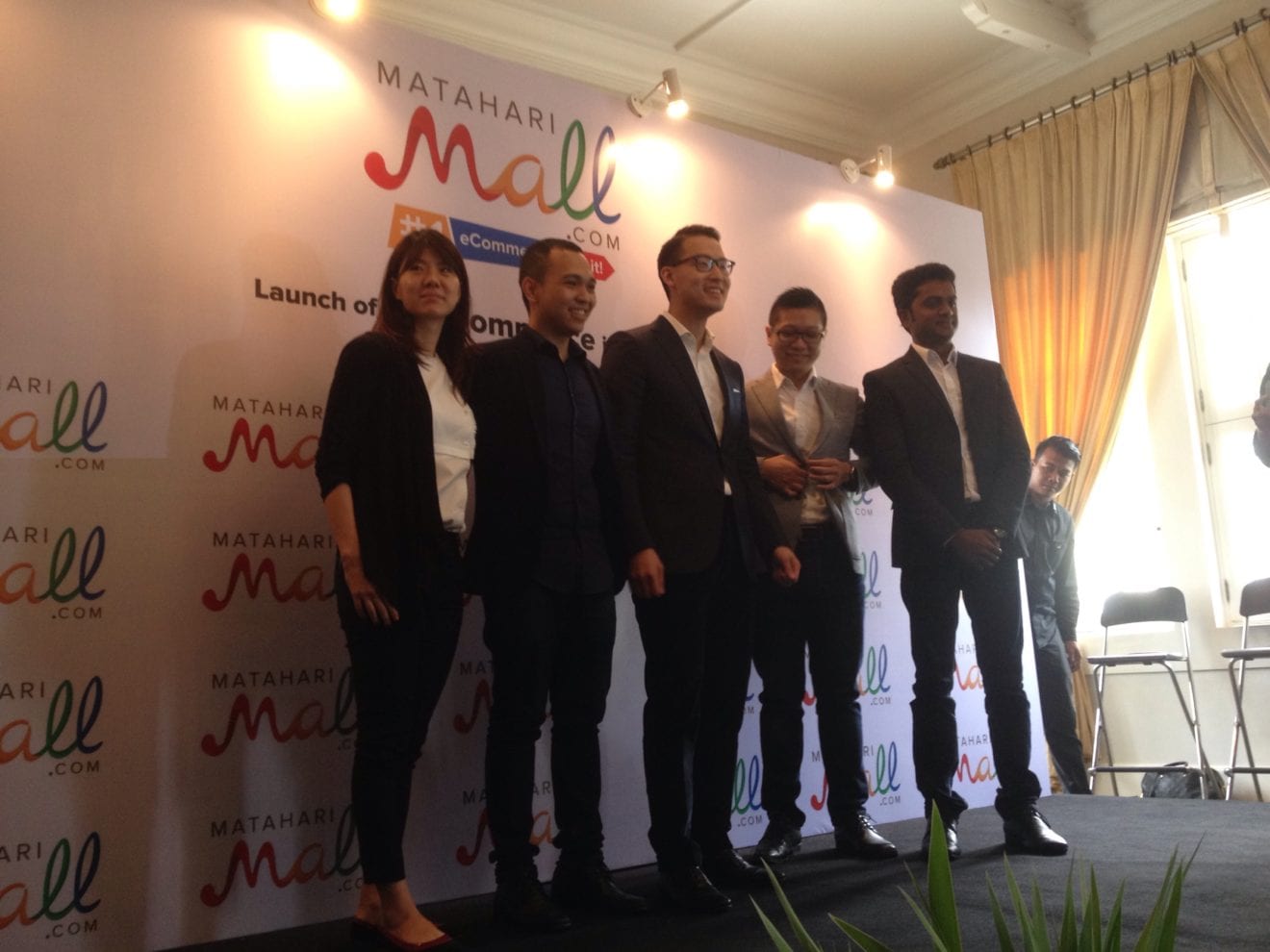
    Since its soft-launch earlier this year, MatahariMall has garnered nearly 200,000 customers with 200,000 different products in its inventory offered by some 1,200 vendors, according to Hadi.

    It has also set up a 10,000-square-meter warehouse located near Halim Perdanakusuma airport in East Jakarta.

    Backed by Lippo, one of the nation’s biggest retail groups, MatahariMall offers an online-to-offline service that would allow customers to order their goods online and collect them at a nearby Matahari department store or Hypermart supermarket.

    Both Matahari and Hypermart are affiliated with the Lippo Group, as is the Jakarta Globe.

    The service will later also be expanded across Lippo’s network, to outlets such as the Books & Beyond bookstore chain, Hadi said.

    “We are very proud of the team,” said the Lippo Group’s John Riady. “The growth numbers are very strong and the team is very focused. Lippo and our other investors are fully committed to doing anything we can to support MatahariMall as it pioneers e-commerce in Indonesia.”

    Undeterred by the current economic slowdown, Emirsyah Satar, the MatahariMall chairman, said the site aimed to capture a 20 percent share of Indonesia’s online retail market over the next five years, banking on the country’s expanding middle-class population.

    “We can see that Indonesia’s e-commerce still lags behind our neighbor countries,” he said. “In fact, we see the economic slowdown as a momentum to boost online retail, because most people are now looking for more affordable products.”

    Lippo’s much-publicized venture has lured in a series of seasoned executives from Indonesia’s tech industry, including Hadi from Zalora, another popular e-commerce site; Emirsyah from Garuda Indonesia; and ex-Google Indonesia head Rudy Ramawy as vice chairman.

    Adrian Suherman, previously the CEO of aCommerce, a Thai e-commerce logistics provider, also recently joined the MatahariMall team as a commissioner.

    The Lippo Group in April appointed Credit Suisse and Bank of America Merrill-Lynch to lead its $200 million first-round financing, with Britain’s Rothschild as financial advisers.

  • AirAsia’s Indonesian affiliate plans debt-to-equity conversion

    The Indonesian affiliate of Malaysian budget carrier AirAsia Bhd is planning to convert debt into shares to meet a new government rule on equity.

    The debt will be converted into preference shares which carry no voting rights, Sunu Widyatmoko, President Director of PT Indonesia AirAsia, told Reuters in a text message.

    He declined to disclose the amount to be converted as it is pending approval from the Indonesia investment coordinating board.

    Indonesia AirAsia is among several airlines that have until Sept. 30 to meet Indonesia’s “positive equity” rule after the country’s transport ministry extended the deadline from July 31.

    The ministry previously said 13 airlines had “negative equity” – meaning assets used to secure loans were worth less than the outstanding balance of the loans. It said those airlines risked suspension if they did not turn equity positive.

    AirAsia shares jumped as much as 5.4 percent in early trade, outperforming the benchmark index which was down 0.6 percent.- Reuters

  • Fonterra opens $37m blending and packing plant in Indonesia

    Fonterra opens $37m blending and packing plant in Indonesia

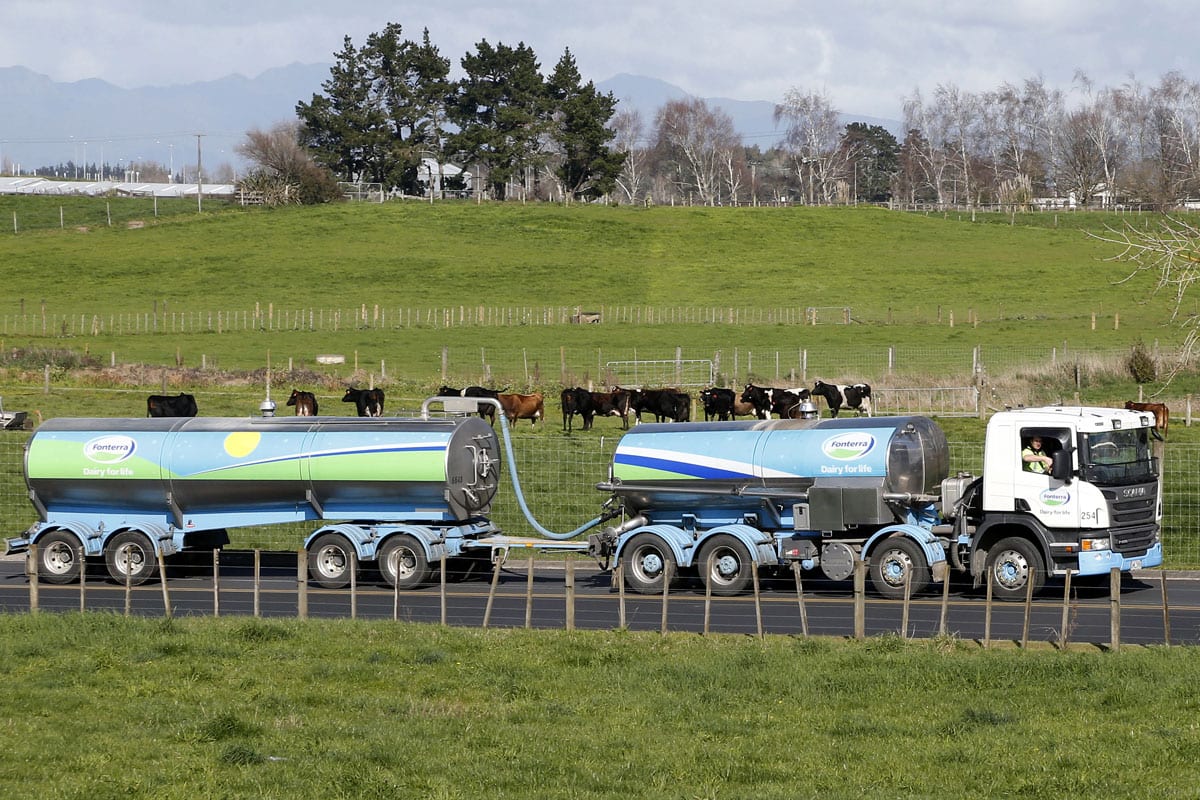
    New Zealand dairy giant Fonterra has opened a new $37m blending and packing plant in Indonesia.

    Said to be Fonterra’s first manufacturing facility in the country, the plant uses the company’s manufacturing design standards and technology.

    The plant is capable of packing close to 16,000mt of dairy ingredients annually and it will allow Fonterra to meet growing demand for nutrition in the country.

    The company says that the capacity is equivalent to nearly 87,000 packs of Anlene, Anmum, and Anchor Boneeto per day.

    When fully operational, the plant will employ 160 local people.

    The investment, which is Fonterra’s largest investment in ASEAN in the past 10 years, will boost the growth of Fonterra’s brands including Anmum, Anlene and Anchor Boneeto.

    Construction on the plant at Cikarang in West Java commenced in March 2014.

    Fonterra Asia, Middle-East, Africa managing director Johan Priem said: “The country’s large and increasingly affluent population is looking for highly nutritious foods for all ages.

    “This is fuelling dairy demand growth which is expected to increase by five per cent every year to 2020.

    “The site also utilises Cikarang’s dry port, allowing us to ensure all of our operations are located in one area. This will help us drive logistical efficiencies.”

    New Zealand Minister of Local Government, Social Housing and State Services Paula Bennett said that the new facility reflects the strength of the relationship between New Zealand and Indonesia.

    “Our governments have set a target to grow two-way trade to NZD4 billion by 2024 and dairy continues to be a critical part of this relationship,” added Bennett.

  • 11street Grows Local E-Commerce Landscape through Major Participation in MDeC’s #MYCYBERSALE

    11street Grows Local E-Commerce Landscape through Major Participation in MDeC’s #MYCYBERSALE

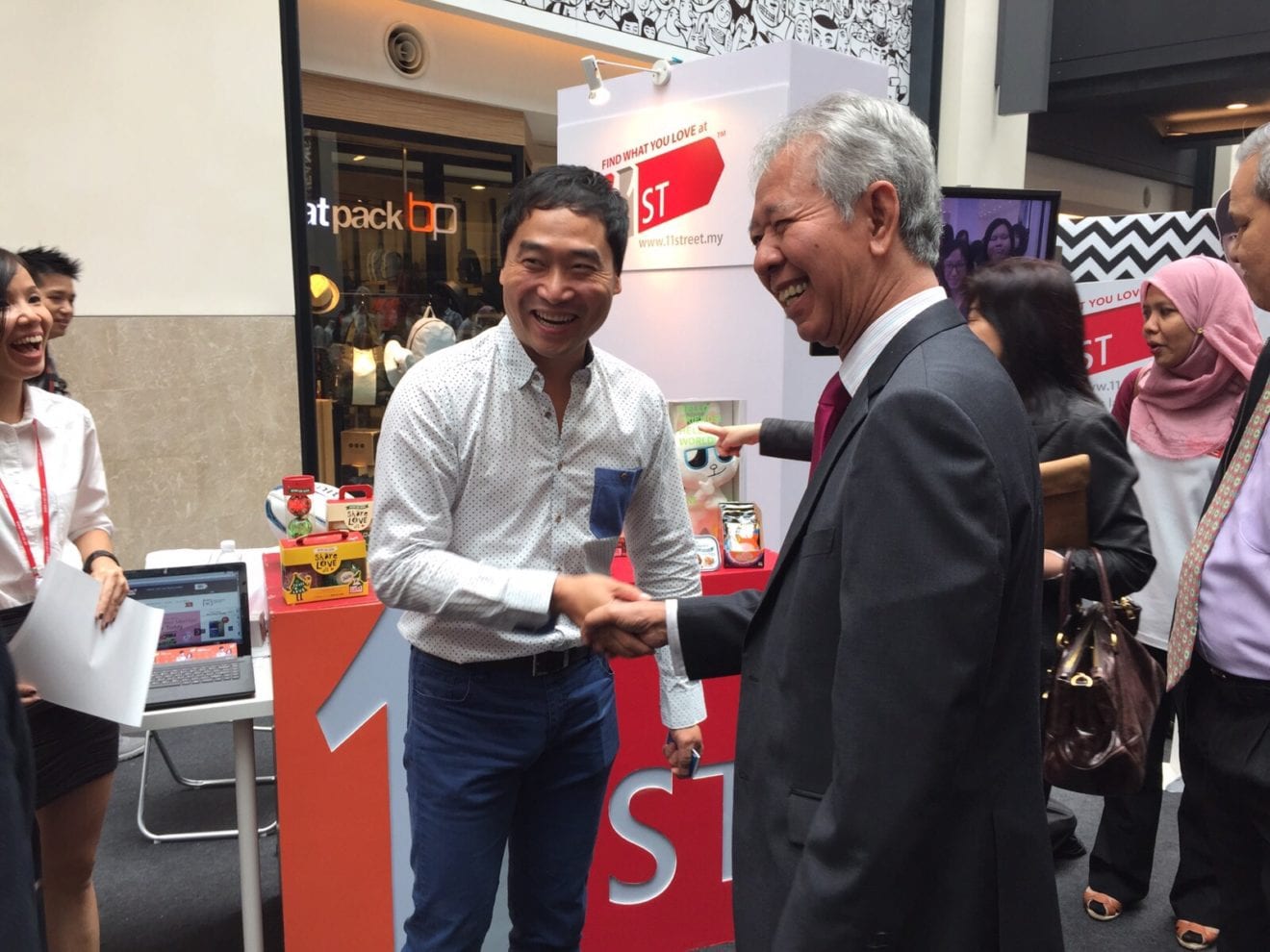
    11street, one of the largest online marketplaces in Malaysia, today announces its participation in the nation’s biggest cyber sale event, #MYCYBERSALE 2015 (www.mycybersale.my), as part of its commitments to enhance Malaysia’s e-commerce eco-system.

    Organized by Multimedia Development Corporation (MDeC), #MYCYBERSALE 2015 will see thousands of online stores gather from 28 September to 2 October with a common goal to stimulate the domestic e-commerce market. #MYCYBERSALE 2015 mobile app has also been developed to attract more local and foreign consumers to shop online. Extending the shopping period from 3 days to 5 days, this event is expected to surpass last year’s success[1] and to continue boosting the online shopping culture in Malaysia.

    11street’s Vice President of Merchandising Division, Bruce Lim says, “A national online event like this is not to be missed as it would definitely spur online shopping demands in the country. As a leading global e-commerce player, 11street is dedicated to empower our sellers with intensive industry knowledge to meet market demands. We urge local SME sellers to grab the opportunity and join us to be part of this annual cyber sale. As a result, sellers will be able to broaden their market reach and increase by leveraging on our resources and promotions strategically at this event.”

    Expect Shockingly Good Deals and Discount Coupon Giveaways from 11street at #MYCYBERSALE 2015

    To enthuse Malaysian shoppers to buy online, 11street will be lining up a series of discounted products, deals and attractive giveaways for #MYCYBERSALE 2015. Consumers can look forward to irresistible discounts during the event period, of which one of them continues to be the significant lowest price guaranteed ‘Shocking Deal’ to surprise local consumers with great offer.

    Before #MYCYBERSALE 2015 begins, 11street will also be initiating an exclusive promotion for Malaysian consumers to download free shopping credits in Malaysian Ringgit from 14 September to 27 September on a daily basis. This is to offer them a fun shopping experience online, and for those that logon 11street online and mobile platforms for a minimum of 3 consecutive days will be rewarded with up to 50% bonus coupons.

    According to statistics released by MDeC, #MYCyberSALE 2014 saw a total of 4.7 million Malaysian visitors (16% of populations) made 77,000 online orders during the 3-day sales period, of which 57% of them accessed the site via mobile devices.

  • Japan’s Kakaku.com launches Priceprice.com in India

    Japan’s Kakaku.com launches Priceprice.com in India

    Japan’s Kakaku.com has launched the Indian version of Priceprice.com, a price comparison site for mobile phones, tablets, computers and household appliances.

    Priceprice.com shows online shoppers a list of products from various sites, sorting the results from lowest to highest price, to easily show the best available price for that product.

    Kakaku.com is the largest price comparison site in Japan with approximately 50 million monthly users. Eighteen years after its founding, Kakaku.com has strengthened its management expertise and in recent years, the company has expanded its service globally. Following the launch in the Philippines, Thailand and Indonesia, Priceprice.com has established its position as the largest price comparison site in Southeast Asia with approximately 5.3 million unique users in all three countries.

    “We have now launched a new site in one of the fast-growing eCommerce market, India, where we dedicate ourselves continuously to offer pleasurable shopping experience for consumers,” the company said in a statement.

    The site not only compares prices. Users can access forums for each product allowing a place for people to ask questions about a product or for users to exchange opinions with other users. Shoppers can also see the ratings and reviews written by users who have actually used the products.

    “As we continue to improve product search and comparison functions, we also hope to include price information from offline retailers to further expand our services,” the company said.

  • One of China’s top 10 e-retailers grows Q2 revenue 30%

    One of China’s top 10 e-retailers grows Q2 revenue 30%

    September 4, 2015, 10:56 AM

    The Beijing-based web-only retailer’s total net revenues in the second quarter of 2015 were 2,312.3 million yuan ($373.0 million), a 29.8% increase from 1781.65 ($280 million) in the corresponding period in 2014. Net loss for the quarter was 21.2 million yuan ($3.4 million), compared to net income of 28.8 million yuan in the second quarter of 2014, or 1.6% of total net revenue in that quarter.

    “During the second quarter of 2015, we expanded our leading position in China’s books and media market, gained additional share in the baby, children and maternity destination category and continued to enjoy some of the highest conversion rates in the industry,” executive chairwoman of Dangdang Peggy Yu Yu said in a statement accompanying the earnings report.

    Dangdang.com was founded by Chinese book publisher Li Guoqing and his wife Peggy Yu Yu, who says she was inspired by Amazon.com when she studied in the United States.  In terms of sales, Dangdang.com is one of the largest book and media e-retailers in China and the company has gradually expanded into other categories, such as electronics and apparel.

    Dangdang also has invested heavily in serving mobile shoppers. “Mobile orders remained close to record levels at 40% of total orders, and we improved monetization of our mobile platform with a sharp increase in mobile advertising revenue,” Yu said. “Our digital business is gaining momentum, driven by our growing catalog of e-books, including original content.”

    Dangdang’s size is still small compare to leading e-retailers, however its executives contend it can challenge the Chinese e-commerce leaders, Alibaba Group and JD.com.

    “I don’t think the position of those leaders is secure. As we all know, the size of the business is not equal to competitive advantage and competitive threshold.  The market will be settled only if the marketing leaders have some unique edges and generate difficult barriers to entry,” Dangdang cofounder and CEO Li Guoqing said last month in a speech at the One Thousand E-commerce Professionals Seminar in China.  “Alibaba’s sales only account for about 5% of retail sales of China and that is not enough barrier to entry. At same time, JD.com’s electronics sales only represent 2% to 5% sales of electronics products in China. If some companies get a new business model, there are still plenty of chances to beat those leaders.”

    Also, Li said few people knew Vipshop, No. 4 in the Internet Retailer China 500, and Yihaodian, No. 7, three years ago, but now they have become e-commerce leaders in their categories in China. Wal-Mart Stores took full control of Yihaodian in July. Vipshop is a discount fashion retailer.

    • Dangdang.com is No. 10 in the Internet Retailer 2015 China 500. JD.com is No. 1. Alibaba is not ranked in the China 500 because it does not own merchandise but rather provides a platform for more than 8 million merchants to sell. However, the gross merchandise value of goods sold on Alibaba’s online marketplaces totaled $109 billion in the first quarter, while JD.com reported $18.5 billion in GMV. By contrast, Dangdang’s GMV in the second quarter was 1,890.6 million yuan ($304.9 million), a 32.1% increase from the same period in 2014.

    For the second quarter ended June 30, Dangdang reported:

    • The combination of product revenue from its own sales and GMV from marketplace sellers reached 4,130.3 million yuan ($666.2 million) and grew 31.8% year-over-year.
    • Active customers were 9.7 million, an increase of 15% from 8.4 million 2014.
    • Total orders for the second quarter of 2015 were approximately 19.5 million, a 19% increase from 16.4 million in 2014.

    For the first six months of 2015, Dangdang reported:

    • Net revenues were 4093.99 million yuan ($644.30 million), up 18.5% from 3454.25 million yuan ($543.58 million) in the same period of 2014.
    • Net income of 7.62 million yuan ($1.2 million), compared with a $35.1 million yuan ($5.52 million) net loss in same period of 2014.
  • H&M positive to the uniform minimum wage set in Myanmar

    H&M positive to the uniform minimum wage set in Myanmar

    At H&M, It is positive to the uniform minimum wage that has been set by the Government. A uniform minimum wage across all industries is essential for the sustainable economic development not only for the textile industry but also for the country as a whole.

    H&M also believes that the minimum wage should be reconsidered through an annual review mechanism, which is inclusive of key stakeholders. It aims at laying the foundation for a vibrant tripartite industrial relation and wage level negotiations process based on transparency, inclusiveness and peaceful negotiation.

    The above has been addressed in two joint letters to the Government of Myanmar. H&M has also met with the Ministry of Labor and expressed the expectations about setting minimum wage levels and annual review mechanisms to ensure that workers receive a fair wage.

    H&M’s role is to contribute to a working environment in the factories where a skilled workforce has their wages annually reviewed and negotiated. It is believed that meaningful collective bargaining is very important and are looking at ways to strengthen it. Workers’ ability to organise and negotiate about their rights is key to improve working conditions. That is why   industrial relations has set as one of our main sustainability focus and will launch a project to strengthen industrial relations in Myanmar in 2015.