Author: Mei Ling Tan

  • Garuda adds 5 extra flights  after fire

    Garuda adds 5 extra flights after fire

    National flag carrier Garuda Indonesia said on Monday that it had prepared five additional flights for passengers caught in delays and cancellations following a fire at Soekarno-Hatta International Airport’s Terminal 2E on Sunday morning.

    “We aim for all flights leaving this morning,” Garuda spokesperson Ikhsan Rosan said as quoted by tempo.co

    The additional flights will serve five routes from Jakarta to Batam, Riau; Jakarta to Semarang, Central Java; Jakarta to Pontianak, West Kalimantan; Jakarta to Surabaya, East Java and Jakarta to Denpasar, Bali.

    “We will also operate two wide-body planes, Boeing 747-400s, to carry passengers to Surabaya and Depansar,” Ikhsan added.

    Ikhsan admitted there were still several flights that were delayed until early this morning.

    “We put them [the passengers] up in hotels,” he said.

    He gave an assurance that the extra flights would not disrupt other regular flights.

    “Today’s flights will run normally as scheduled,” he said.

    A fire broke out in a VIP lounge at the airport on Sunday morning, causing disruption to departures and arrivals.

    Airport police suspect the fire was caused by an electrical short circuit in the lounge.

  • Manpower issues harm Sasa Singapore

    Manpower issues harm Sasa Singapore

    Sasa Singapore says government restrictions on staff hiring are adversely affecting its business in the city state.

    As a result, the company plans to rationalise its store network and exit some leases early.

    The Hong Kong-headquarter retailer says that during the year to March 31, turnover in Singapore decreased by 2.6 per cent in local currency to HK$243.7 million. Same store sales dropped by 5.9 per cent in local currency.

    “The challenge of filling vacancies for frontline staff and Singapore’s acute manpower constraints adversely affected our store productivity,” the company said in its stock exchange filing in Hong Kong.

    “Moreover, persistent high rental costs and dilution of sales due to the excessive increase in overall Singapore retail space contributed to the losses.”

    In the year ahead, Sasa says it will close inefficient stores, and open stores in new malls with good potential.

    “To cope with the persistent constraints in manpower, we will enhance staff product knowledge and monitor staff productivity. The group will also work on staff retention to minimise the loss of experienced sales staff and convert more job scopes into automation so that employees can concentrate on analytical and quality enhancement.”

    Sasa says its Singapore sales decline was mainly due to slower domestic income growth, resulting in weaker retail sentiment.

    “Tourism was also affected by the tragedy of the missing Malaysian Airlines passenger plane, with the top two tourist originating countries of Indonesia and China both seeing shrinkage in arrivals during the year.”

    In Malaysia, turnover increased 6.1 per cent in local currency to HK$340.3 million. Same store sales decreased 0.2 per cent.

    “Our retail sales and profit growth were impacted by changes in the management team, which adversely affected store productivity and our performance during the transitional period,” the company said.

    Malaysia sales were also affected by the Malaysian Airlines tragedy, resulting in a drop in tourism numbers.

    “We continued to expand our store network to provide enhanced service to our customers and to increase our competitiveness.”

    In Taiwan, Sasa’s turnover grew 5.7 per cent in local currency to HK$289.2 million. Same store sales grew by 1.6 per cent.

    “Sales were boosted by the enhanced house brand product mix and introduction of lower priced products and promotions, which drove traffic and sales through cross-selling. Our strategic store expansion plan began to bear fruit and we were able to capture the growth potential of increasing numbers of Mainland Chinese visitors,” the company reported.

  • Generation Z to make big retail impact

    Generation Z to make big retail impact

    New challenges lie ahead for retailers in Asia as Generation Zers embrace technology and earn more.

    In its newly released report How We Like to Shop Online, CBRE says Generation Z is expected to have significant influence over the retail market in the coming years as their income levels are set to increase rapidly upon joining the job market.

    Generation Z refers to people born after the Millennial Generation, loosely defined as from around 2000.

    “Having spent most of their lives using the internet and other related technology, Generation Z’s demographic of consumers has distinct shopping behaviors in comparison to other demographic segments,” says Jonathan Hsu, head of occupier markets research, CBRE Asia Pacific.

    “Key aspects of their online shopping habits include stronger trust in online information; more activity on social media; and needing a sense of differentiation. These factors demonstrate the increasingly important role of technology in shaping the decision-making process of consumers,” said Hsu.

    In order to remain competitive in the digital age, retailers and landlords need to be proactive in reaching out and engaging with their consumers. Mobile shopping is most prevalent in emerging markets, and in many places, smartphones are the first – and sometimes only – point of internet access for many consumers, therefore, are playing a key role in driving the growth of online retail.

    Smartphone apps and social media can provide valuable information and insights into consumer behavior, for example, push notifications for smartphone apps or social media platforms based on consumers’ shopping history, location and preferences can help personalise their shopping experience.

    “Landlords and retailers need to be more digital-savvy, keeping pace with the latest trends in smartphone applications and social media so they can build a stronger relationship with consumers especially those from Generation Z,” said Joel Stephen, senior director, head of retailer representation, CBRE Asia.

    “These digital platforms are two essential mediums of online retailing, which should be integrated into retailers’ omni-channel strategies in order to capture Online-to-Offline (O2O) business opportunities.”

    With around 70 per cent of consumers in Asia Pacific collecting their online orders in-store – and 90 per cent of them purchasing additional items when picking up their online order – click-and- collect services are also an effective way to drive in-store sales, creating a synergy between both online and offline platforms.

    CBRE says landlords should thus collaborate with tenants to help merge their online and offline offering by providing the necessary facilities and regular renovations.

  • Sanrio Partners with Universal Parks & Resorts for New Hello Kitty® Retail Store Concept

    Sanrio Partners with Universal Parks & Resorts for New Hello Kitty® Retail Store Concept

    Sanrio, the global lifestyle brand best known for beloved pop icon Hello Kitty, and Universal Parks & Resorts have announced their partnership to develop Hello Kitty interactive retail experiences
    scheduled to open later this year at Universal Orlando Resort and in the future at Universal Studios Hollywood.

    This will mark Hello Kitty‘s official retail debut at theme parks in North America and offer specialty merchandise including stationery, home goods, apparel, accessories and collectibles. The majority of merchandise will be devoted to Hello Kitty; Sanrio properties Chococat®, My Melody®, Badtz-Maru®, Purin™ and Keroppi® will also have a presence. Hello Kitty confectionery and specialty co-branded Hello Kitty Universal park-exclusive products will also be available.

    The Hello Kitty stores at Universal Studios will also offer enhanced interactive retail experiences. Customers can shop for custom designed merchandise, enjoy photo opportunities with Sanrio properties, create souvenir versions of Hello Kitty‘s signature bow, and even meet Hello Kitty herself.

    “Our partnership with Universal brings Sanrio’s experiential entertainment presence to a new level,” said Janet Hsu, President and COO of Sanrio, Inc. “We look forward to this introduction into Universal theme parks to offer new connection points to Sanrio fans of all ages.”

    Sanrio’s partnership with Universal Parks & Resorts highlights the brand’s continued expansion into lifestyle entertainment. Recent projects include the successfully unprecedented ‘Hello Kitty Con’ fan convention and ‘Hello! Exploring the Supercute World of Hello Kitty’, a record-breaking museum exhibition at the Japanese American National Museum in Los Angeles. Hello Kitty’s Supercute Friendship Festival, a live entertainment show and interactive fan festival that has reinvented the concept of a live character show, is currently touring select cities in the U.S. and Canada. Sanrio’s unique approach to lifestyle entertainment has proven to be a highly effective way of connecting with their legions of fans of all ages across the country.

    About Sanrio
    Sanrio is the global lifestyle brand best known for pop icon Hello Kitty, who recently celebrated her 40th Anniversary.  Home to many endearing characters including Chococat, My Melody, Badtz-Maru and Keroppi, Sanrio was founded on the ‘small gift, big smile’ philosophy – that a small gift can bring happiness and friendship to people of all ages. Since 1960, this philosophy has served as the inspiration for the broad spectrum of unique products and experiences.  Today, more than 50,000 Sanrio-branded items are available in over 130 countries and upwards of 15,000 U.S. retail locations including department, specialty, national chain stores and over 80 Sanrio boutiques. For more information please visit www.sanrio.com and www.facebook.com/hellokitty.

    About Universal Parks & Resorts
    Universal Parks & Resorts, a unit of Comcast NBCUniversal, offers guests around the globe today’s most relevant and popular entertainment experiences. With three-time Academy Award winner Steven Spielberg as creative consultant, its theme parks are known for immersive experiences that feature some of the world’s most thrilling and technologically advanced film- and television-based attractions. Comcast NBCUniversal is a global media and technology company that owns and operates a valuable portfolio of news, sports and entertainment networks; Universal Pictures, a premier motion picture company; significant television production operations; a leading television stations group; and world-renowned theme parks.

    Comcast NBCUniversal wholly owns Universal Studios Hollywood, which includes Universal CityWalk Hollywood. It also owns Universal Orlando Resort, a world-class destination resort featuring two theme parks (Universal Studios Florida and Universal’s Islands of Adventure), four resort hotels, and Universal CityWalk Orlando.  Comcast NBCUniversal also has license agreements with Universal Studios Japan in Osaka, Japan and Universal Studios Singapore at Resorts World Sentosa, Singapore.  In addition, Comcast NBCUniversal has recently announced plans for a theme park in Beijing and an indoor theme park to be developed as part of the Galactica Park project in Moscow.

  • Ford’s Retail Sales in China Increase 4% in May

    Ford’s Retail Sales in China Increase 4% in May

    Ford Motor Co. F sold 91,013 vehicles in China in May 2015. This reflects a 4% year-over-year increase from 87,887 units sold in May 2014. Sales of Ford in the world’s largest automobile market totaled 459,982 units in the first five months of 2015, up 1% from 456,594 vehicles sold in the same period of 2014. It is worth noting that Ford has started reporting only retail sales from May as opposed to wholesale figures reported earlier.

    Meanwhile, Ford’s passenger car joint venture, Changan Ford Automobile (“CAF”) witnessed a 3% year-over-year rise in vehicle sales to 67,357 units in May 2015. Sales of CAF inched up 1% to 332,999 vehicles in the first five months of 2015.

    Further, Ford’s commercial vehicle investment in China, Jiangling Motors Corporation (“JMC”), sold 20,910 vehicles in May. Sales improved 7% from 19,569 vehicles sold in May 2014. Moreover, JMC’s sales in the first five months of 2015 grew 4% year over year to 114,638 vehicles.

    In order to support the demand in China, Ford inaugurated an assembly plant – Changan Ford Hangzhou Plant – in Hangzhou in March. Changan Ford Hangzhou, Ford’s sixth assembly plant in China, required an investment of $760 million. It has a production capacity of 250,000 vehicles.

    Ford currently carries a Zacks Rank #3 (Hold). Better-ranked automobile stocks include The Goodyear Tire & Rubber Company GT , PACCAR Inc. PCAR and U.S. Auto Parts Network, Inc. PRTS , all carrying a Zacks Rank #2 (Buy).


  • Strong Visitor Figures for Regional Duty Free and Travel Retail Event

    Strong Visitor Figures for Regional Duty Free and Travel Retail Event

    TFWA Asia Pacific Exhibition & Conference 2015, the 20th event for the duty free & travel retail industry in Asia Pacific, closed on 14th May in Singapore after a very successful week.

    With occupied exhibition space topping previous years at 9,118 m2 – up 9% on 2014 – and 292 exhibiting companies present (+12%), of which 73 were new to the show, there was a huge variety of products on display for the benefit of visiting buyers and agents.

    Visitor numbers were considered satisfactory by organisers TFWA in a year which has been challenging for the duty free and travel retail industry, with aviation accidents, a new approach to gift giving and luxury consumption among the all-important Chinese travellers, financial instability and political tension in several countries and the resulting slowdown in the growth of air passenger traffic.

    A total of 2,655 trade visitors attended the show, equivalent to last year, from 1,053 companies (+3%) of which more than a third were “key buyers” – duty free & travel retail operators and landlords from airports, airlines, ferry and cruise companies, cross-border and downtown duty free stores.

    “I was very impressed by the quality of the stands, the assortment of products on display and the energy around the show,” said Erik Juul-Mortensen, President TFWA. “This year has not been easy for the industry in this region and, in light of that, we are really very satisfied with the number of companies present and the quality of the visitors.”

    Duty free & travel retail sales in the Asia Pacific region in 2014 totalled US$23.6 billion, up 5.5% on the previous year, according to provisional figures from independent analysts Generation Research, which ranks the region top in the global industry with 38% of total sales. The second largest region is Europe, followed by Americas, Middle East and Africa.

    Forthcoming events organised by TFWA include TFWA World Exhibition & Conference from 18th to 23rdOctober 2015 in the Palais des Festivals, Cannes and the Middle East & Africa Duty Free Association Conference from 22nd to 24thNovember 2015 at the King Hussein Bin Talal Convention Centre, Dead Sea, Jordan. Details of these events can be found at https://www.tfwa.com.


  • India’s GirnarSoft set to fight Rocket and iCarAsia for Indonesia’s auto classifieds space

    India’s GirnarSoft set to fight Rocket and iCarAsia for Indonesia’s auto classifieds space

    A combination of low interest rates, a growing middle class, and the absence of strict regulations on car ownership has led tech companies to take a keen interest in the Indonesian market. Rocket Internet’s car classifieds site Carmudi has been operating in Jakarta for nearly one year now, although it’s currenly only seeing around 300,000 visits per month. iCarAsia’s Indonesian portal Mobil123 is doing a little better with around740,000 monthly visits, as per SimilarWeb.

    According to the Indonesian Automotive Manufacturers Association, there were 1,208,019 new car sales last year in the archipelago. This is a slight dip from the year before, which saw 1,229,916. Local financial portal Indonesia-Investments credits the drop to a weakening Rupiah against the US dollar, coupled with inflation, and an economy that may be losing steam. For consumer-to-consumer car classifieds sites, however, the drop in new car sales may actually be a negligible factor. If fewer people are strolling into Astra Motor dealerships on the weekends to pick up new coups, odds are they’re looking into used vehicle alternatives.

    Regardless of what caused the dip, India’s GirnarSoft, which ownsCarDekho, still sees Indonesia as a green opportunity, having recently launched CarBay in Jakarta.

    GirnarSoft was valued at US$300 million when it raised series B fundingthis past January. The company is backed by investors like Sequoia Capital, Hong Kong-based Hillhouse Capital, and Tybourne Capital. CarDekho is GirnarSoft’s largest venture, and claims to be the number one auto portal in India with around 3 million monthly visits.

    carbay id

    Testing the waters without classifieds

    Indonesia’s CarBay is not a classifieds site yet. Instead, it’s just a content provider and resource for folks who are interested in making a purchase but still doing their homework. On the site, users can hunt for vehicles they want to know more about, filtering via price, brand, fuel efficiency, model, number of passengers, and more. Essentially, CarBay acts as a decision-making aid, and lets users easily find various dealers in Indonesia.

    CarBay also lets users do instant side-by-side comparisons of up to four different vehicles at a time. The comparisons are quite thorough, and include everything from engine stats and safety features to luxury options and performance specs.

    At the moment, it’s unclear how CarBay plans to monetize outside of charging its partner dealerships for content on its portal. It’s likely that the firm is simply trying to test local waters by building up its user base before plowing full-steam ahead with a classifieds play. If CarDekho’s business model is any indicator, CarBay will probably go head-to-head with the likes of Rocket Internet’s Carmudi and iCarAsia’s Mobile123.

    A slowing but still favorable car market

    CarBay claims vehicle sales in Indonesia have been rising at a steady 11 percent compound annual growth rate. This figure is probably referring to new and used cars alike. The company cites the nation’s annual GDP growth as one of its most encouraging stats.

    Indeed, the archipelago has been experiencing economic growth of roughly six percent annually. However, the economy only advanced by 4.71 percent this past year, which was the slowest expansion since the third quarter of 2009. Car sales are one of the key indicators by which to measure local consumers’ purchasing power as well as the general state of the economy. As of May, only 443,328 new cars had been sold in the archipelago thus far in 2015.

    “Indonesia is at a good stage of economic development and online products like CarBay will set new benchmarks for organized car buying and selling in the country,” Amit Jain, CEO and co-founder of GirnarSoft said in a release. “Our rapid growth has been due a great web and mobile product, which we feel will do well in Indonesia too.”

    carbay id 1

    From what can be seen on the site, it looks like CarBay has no intention of getting into motorcycles, a segment which dominates the nation’s personal vehicle market.GirnarSoft is one of several Indian firms to have recently come to Jakarta looking for greenfield tech startup opportunities. Earlier this week, Tech in Asia spoke with a venture capital firm called Aavishkaar, which recently locked in US$45 million to invest in Indonesia and other emerging markets. Indian tech companies setting sail for Jakarta could be an interesting trend to keep an eye on for Q3.
  • Who will dominate Korea’s mobile payment market?

    Who will dominate Korea’s mobile payment market?

    South Korean heavyweights ranging from Internet to retail to tech companies are all paying keen attention to preoccupy the mobile payment system market, which hasn’t yet taken off.

    Since Daum Kakao first ignited the competition by rolling out its mobile payment Kakao Pay last year with its 4 million subscribers. Korea’s largest portal operator Naver unveiled Naver Pay this July, by joining hands with 50,000 partner stores.

    Retail giants are also following suit. Lotte and Shinsegae are currently developing L Pay and SSG Pay respectively in order for consumers to more conveniently buy goods with retail technologies. They plan to let customers to save all the information of credit cards, gift cards, cash and coupons on smartphones to easily pay for things. Membership points will be accumulated on smartphone apps.

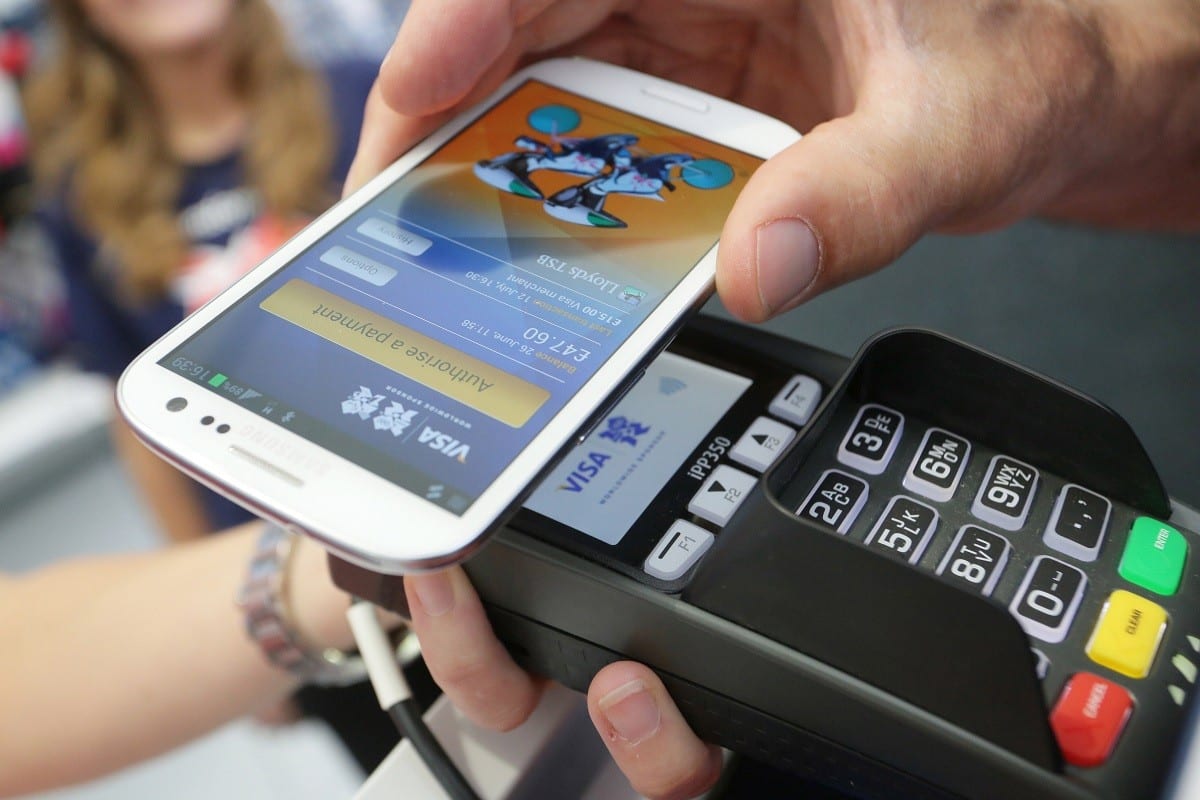
    Smartphone conglomerates are no exceptions here. Korea’s largest smartphone maker Samsung Electronics is set to unveil its new mobile payment system Samsung Pay in September. It is expected to be embedded in its latest smartphones like Galaxy S6 and Galaxy S6 Edge. As the tech giant recently acquired Boston startup LoopPay, which has magnetic secure technology, Samsung Pay will be compatible with existing magnetic card readers. This way, stores do not have to change their readers separately to use the service.

    In the smartphone market, Samsung has to compete with its global rivals Apple and Google. American search giant Google unveiled Android Pay at its I/O Conference 2015 late in April at San Francisco. Samsung’s arch rival Apple unveiled Apple Pay last October, and is now in discussion with China’s biggest e-commerce company Alibaba in a bid to make forays into the China’s market.

    Market watchers say the mobile payment system, which heralds the opening of the Fintech market – a combination of finance and technology – will have a great impact on the local financial market. Commercial banks have so far been in charge of small sum transaction but it is likely to be shifted to non-financial institutions if the mobile payment service takes off.

    Daum Kakao’s Kakao Pay, which is the first mobile payment service in Korea, already saw more than 4 million subscribers last month. Though it still does not have a great impact on the market with a limited number of partner stores, analysts say they have secured a meaningful number of clients.

    Korea’s financial watchdog said when the number of Kakao Pay’s subscribers reach 2 million, it will have a significant meaning as a financial transaction tool. Currently, no official figure of daily transaction has been unveiled.

    The local mobile payment market is expected to continue to grow, according to market observers. In a nation dubbed as IT powerhouse, many users still find it difficult to buy goods online as they have to install various programs such as Active X and keyboard security programs. Also, they have to type in their credit card information or personal information every time they pay.

    However, the emergence of the mobile payment system is removing all the hassles and only requires simple authentications such as smartphone numbers or password.

    According to research firm Gartner, the local mobile payment service market came to around 3.8 trillion won in the fourth quarter of last year, up 65 percent during the same period of the previous year. The global mobile payment service market also continued to grow around 30 to 40 percent annually for the past years. It would reach around 721 trillion won by 2017.

    “There is not yet a dominant player in the local mobile payment service market. Thus, fierce competition among tech firms hoping to preoccupy the market is expected in the second half of this year,” according to a market observer.

  • China cuts retail oil prices

    China cuts retail oil prices

    The prices of gasoline and diesel in China will respectively be cut by 110 yuan and 105 yuan (18 U.S. dollars) per tonne, the National Development and Reform Commission (NDRC), China’s top economic planner, said in a statement Monday.

    The adjustment will come into effect Tuesday. The benchmark retail price of gasoline will drop by 0.08 yuan per liter and that of diesel by 0.09 yuan.

    Prices of refined oil products in China are adjusted when international crude prices translate into a change of more than 50 yuan per tonne for 10 working days.

    Crude prices fell last week, weighed on concerns of oversupply after the Organization of the Petroleum Exporting Countries (OPEC) decided to keep its daily output at 30 million barrels for the next six months.

    The NDRC has reduced oil prices for four times and raised them five times this year, tracking changes in international crude oil prices.

  • Retail Sales Hit Hard by MERS

    Retail Sales Hit Hard by MERS

    The ripple effect of the Middle East respiratory syndrome (MERS) is spreading throughout Korea’s retail industry, including department stores, discount stores, restaurants, and cosmetic shops.

    Amid rising concerns about possible infection by the MERS virus, an increasing number of consumers are avoiding crowded places, dealing a blow against the sales of offline stores, including department stores.

    As the MERS crisis prolongs, the number of foreign tourists, including Chinese ones, declines, giving a negative impact on the cosmetics industry. According to industry sources on June 5, Lotte Department Store suffered an 8.4-percent decline in sales during the period from June 1 to 4, compared to a year ago.

    Shinsegae Department Store also suffered a 3.7-percent decline in sales during the same period. E-Mart, the largest discount store in Korea, recorded a 7.8-percent plunge in sales during the period. In particular, its outlet in Dongtan and Pyeongtaek, in southern Gyeonggi Province where the highest number of MERS cases were reported, suffered a 19.7-percent and a 16.2-percent plunge in sales during the period.

  • B2B Marketplace Bizzy.co.id Launches in Indonesia With $2.5 Million Investment

    B2B Marketplace Bizzy.co.id Launches in Indonesia With $2.5 Million Investment

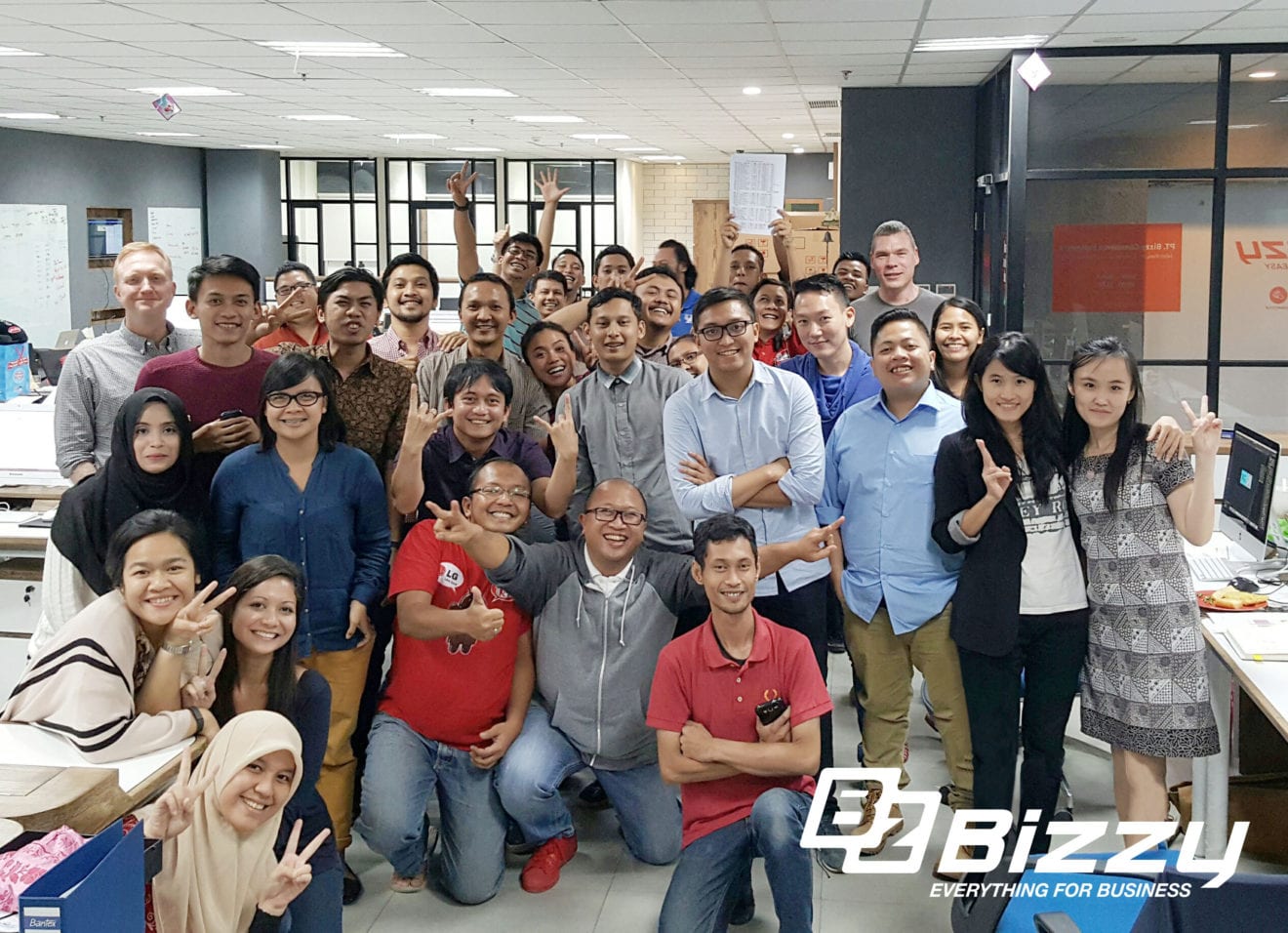
    Ardent Capital today announced the launch of one of Indonesia’s first B2B ecommerce marketplaces with a $2.5 million commitment to Bizzy.co.id, amidst a growing investor gold rush to ecommerce ventures in the country.

    Bizzy will solve a pain point with procuring inventory, supplies and services from other businesses. The platform carries thousands of products from hundreds of merchants in business supplies, electronics, cleaning, pantry and services.

    “Globally B2B ecommerce has gained massive traction. In Korea we’re talking 91 percent penetration, while in Indonesia this type of ecommerce is in its infancy so the opportunity is huge. Just 11 percent of all startup endeavours in Indonesia are dedicated to B2B,” said Adrian Vanzyl, CEO of investor Ardent Capital.

    Disrupting the Traditional B2B Climate

    Bizzy CEO and co-founder Peter Goldsworthy spent the past eight years building businesses in Indonesia and saw a lack of innovation in business supplies and services.

    “I was constantly frustrated with ordering supplies and services. In particular I felt the entire process of sourcing, approval and shipping could easily be improved upon,” Peter said.

    Through market research Bizzy discovered that many distributors and principal brands were having difficulties reaching and servicing their direct B2B customers.

    “Merchants were struggling to meet the needs of businesses. What we were seeing was that the way businesses shop was much more complex than how an individual would and this was causing problems at both ends of the transaction,” Peter explained.

    Bizzy helps merchants make the shift to online and meet the logistical demands of B2B business customers, by integrating multiple shipments from multiple vendors, known as ‘crossdocking’, through the fulfilment center of partner aCommerce.

    Enticing Millennials

    The demographics of those making B2B purchasing decisions has shifted rapidly. In a Google- and Millward Brown Digital-partnered B2B marketplace report this year, data showed that between 2012 and 2014 the age of those doing B2B research increased 70 percent in the 18- to 34-year-old age group. The data also showed that by 2014 this millennial age group was also accounting for 46 percent of B2B purchasing decisions.

    “Millennials are now the key decision-makers for company sourcing. This changing of the guard means they expect the same information available for personal purchases when they search for business solutions. Bizzy addresses that need,” Peter added.

    Bizzy will actively support not just tech startups but charities, hospitals and universities by offering wholesale pricing through a complimentary year of ‘Bizzy Wholesale’ membership, entitling them to wholesale purchase rates irrespective of purchase quantity.

    With customers like Tiket.com, Traveloka, Halomoney and Grabtaxi already onboard, Bizzy is generating the buzz to make 2015 the year of B2B.

    Snapshot: Penetration of B2B Ecommerce in Asia

    In the US, B2B ecommerce represents a $1 trillion opportunity, while in mature Asian markets B2B ecommerce already accounts for a large and growing share of total online transactions:

    • In China B2B ecommerce is estimated to have a potential value of $2.1 trillion by 2020
    • In South Korea 91 percent of online transactions are B2B
    • In Thailand B2B represents more than 50 percent of all online transaction value, yet by startup founder type, captures less than 20 percent of all founders who launch businesses
    • In Indonesia the current split between B2B and B2C revenue is just 11 percent
  • Qantas still positive about Jetstar’s Asian growth plans

    Qantas still positive about Jetstar’s Asian growth plans

    Jetstar’s Asian division reported an underlying loss before interest and tax of $33 million in the first half of the financial year.

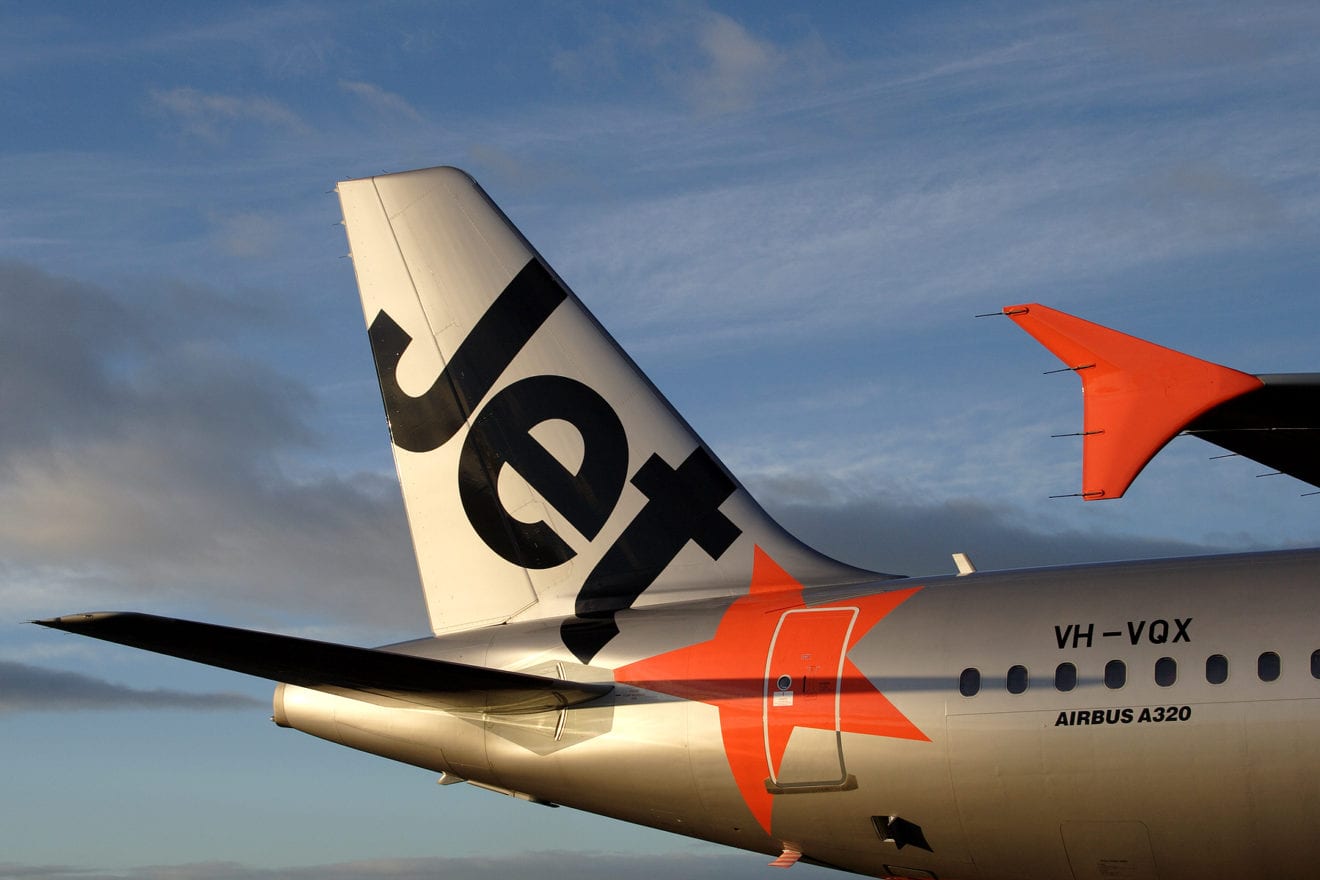
    Qantas Airways has no plans of abandoning its investment in Jetstar’s Asian arms despite disappointing returns to date because the growth potential is so big, says Qantas chief executive Alan Joyce.

    All of the airline’s other divisions are expected to report returns exceeding their cost of capital this financial year, amid forecasts the carrier could report an underlying pre-tax profit approaching $1 billion. But Jetstar’s Asian division, including businesses in Singapore, Japan, Vietnam and Hong Kong, reported an underlying loss before interest and tax of $33 million in the first half of the financial year.

    “What we are investing in Asia for the group, it is a very small amount of capital,” Mr Joyce said on Sunday on the sidelines of the International Air Transport Association annual meeting in Miami. “It is done in a very capital-light way. So for the group to get its cost of capital, this year as an example, [Jetstar in Asia] won’t return its cost of capital but the overall group will. For us these are low capital cost investments for huge growth potential.””For us these are low capital cost investments for huge growth potential.”: Qantas boss Alan Joyce.

    Mr Joyce noted the Asian market is the fastest-growing aviation market in the world, and said he believed it would eventually become the most profitable aviation market in the world. Qantas has invested in Jetstar’s Asian arms through joint ventures with local shareholders.

    Jetstar Group chief executive Jayne Hrdlicka said Singapore-based Jetstar Asia an Vietnam-based Jetstar Pacific are expected to be profitable in the second half of the financial year.

    “Significant capacity has come out of the [Singapore] market post the FY14 results,” she said. “Everybody did it tough with too much capacity coming into the market. So that has rationalised. A little bit of it is starting to come back in because the Singapore dollar is so strong. But we are very confident that the outlook will improve.

    In the meantime, Jetstar Japan remains loss-making and Jetstar Hong Kong has yet to receive long-delayed government approvals to begin flying and it has sold all but one of its original nine aircraft.

    Ms Hrdlicka admitted Jetstar had misjudged the ease of gaining regulatory approvals in Hong Kong.

    “Our expectations were not lined up with the reality of the way this government is making decisions in Hong Kong,” she said.

    But she said fellow Jetstar Hong Kong shareholders China Eastern and Shun Tak Holdings were more “patient and longminded”, especially now that the Hong Kong government has committed to a third runway at the busy Hong Kong International Airport.

    “The other aspect that is brewing confidence in our shareholders is the Hong Kong economy needs the tourism flows into Hong Kong,” she said. “Chinese tourism is significantly down. For some retail sectors in Hong Kong, they are off by 30 per cent. So that flow of customers who need low fares to make Hong Kong affordable, to have the Hong Kong experience is really important to the Hong Kong economy and supports the Hong Kong people.”

  • Zooming in on market niches lets Maybank flourish

    Zooming in on market niches lets Maybank flourish

    Navigating Singapore’s crowded banking landscape is not easy, and Maybank’s retail banking unit says it needs to be nimble by zooming in on market niches.

    The bank last month launched a Maybank Save Up programme tailored for young workers in Singapore after noticing that many are increasingly keen on financial planning.

    And, noting that young children are often neglected by lenders, it launched last September the Maybank Family Plus programme to encourage parents to help kids save.

    Maybank is also focusing on long-term relationships and on catering to customers’ needs at every stage of their lives.

    “I think (Singapore) is probably one of the most highly- banked markets, even for retail,” said Mr Choong Wai Hong, the bank’s head of community financial services. “But that said, I find the Singaporean consumers, the account holders, they are quite savvy.”

    In an interview with The Straits Times on Thursday, he said consumers are often willing to snap up new products and services. “Their sensitivity to change, to go for a product, is quite high. So if you can find the right market niche for them, the willingness to move is quite high”.

    What Maybank does in Singapore is closely-watched by rival lenders as it is one of the very few foreign banks with a large retail presence here.

    Its three entities in Singapore – Maybank, Maybank Kim Eng brokerage and Etiqa Insurance – employ 2,400 staff.

    Singapore’s central bank last month named Maybank one of the inaugural seven “domestic systemically important banks” in the Republic.

    The seven each has a significant impact on the financial system’s stability and proper functioning of the broader economy, the Monetary Authority of Singapore said.

    The three domestic lenders in the list are DBS Bank, OCBC Bank and United Overseas Bank. And apart from Maybank, the other foreign banks are Citibank, Standard Chartered and HSBC.

    Maybank has 22 full-service branches in Singapore – the largest for a foreign bank here, but nowhere near the hundreds of branches operated by the three local lenders.

    It is sometimes known as the “time deposit bank”, owing to its competitive retail deposit rates. Mr Choong said Maybank has 10 per cent to 11 per cent share of the time deposit market in Singapore.

    Its other strength is in the vehicle loan market where it has a 22 per cent market share.

    The Maybank group in Singapore last week reported profit before tax for the first quarter of $93.75 million, down from $110.9 million a year earlier.

    Asked about its retail lending profile, Mr Choong said the major segments are about 45 per cent in mortgages, 18 per cent in auto loans, 22 per cent in retail small and medium enterprises and commercial loans. Other consumer loans make up the other 15 per cent.

    Maybank, he said, has an advantage that other foreign banks here might not have – the group offers the full spectrum of services including retail banking, Maybank Kim Eng brokerage, Etiqa Insurance and Maybank Private Wealth.


  • Chow Tai Fook Quarterly Retail Sales Fall 6% on Hong Kong, Macau

    Chow Tai Fook Quarterly Retail Sales Fall 6% on Hong Kong, Macau

    Same-store sales fell by 7 percent in mainland China, and were down 24 percent in Hong Kong and Macau in the fiscal first quarter ending June, the jeweler said in a statement Thursday.

    Hong Kong-based Chow Tai Fook has been hurt by China’s slowing economic and a government-led austerity campaign, which prompted shoppers to cut back on luxury purchases. The jeweler saw net income plunge 25 percent for its fiscal year ending March as stores in mainland China, Hong Kong and Macau suffered.

    The jeweler had cut prices for some of its diamond-set products by as much as 30 percent in June, in a bid to reduce inventories bloated by weaker-than-expected sales in the city.

  • Metro Gaisano develops waterfront township in Cebu

    Metro Gaisano develops waterfront township in Cebu

    Metro Gaisano’s real estate company Taft Properties and Asia’s premier real estate developer and investment group Hongkong Land partnered to develop the first waterfront township in Mandaue City, Cebu.

    Although the real estate developer did not say when it will be finished and how much it is earmarked for the project, Metro Gaisano said the waterfront township will occupy a 20-hectare prime property right along the Mactan Channel.

    “This partnership will help jumpstart Mandaue City’s transformation into a dynamic lifestyle hub,” Jack Gaisano, Chairman of Taft Properties, said in a statement.

    “With Taft Properties’ local expertise and Hongkong Land’s international experience, this alliance will bring in new standards in design and construction while being in keeping with the local culture and tastes.” Gaisano added.

    A portion of the township will be allotted for open spaces such as a central linear park, al-fresco establishments and a waterfront promenade.

    Hongkong Land and Taft Properties Executives (L to R) Finn R. Carew, Alan R. Cruz, Tan Wee Hsien, Jack S. Gaisano and Christopher G. Narciso. Photo from Metro Gaisano

    “We are committed to creating an environmentally and economically sustainable community. The development will create jobs, and provide a significant stimulus to Cebu’s economy,” Tan Wee Hsien, Hongkong Land head of Residential Property for South Asia, said

    Hongkong Land owns and manages almost 800,000 square meters of prime office and luxury retail property in key Asian cities, principally in Hong Kong and Singapore.

    Hongkong Land is also developing a number of largely residential projects, in cities across Greater China and Southeast Asia. Hongkong Land Holdings Limited is incorporated in Bermuda and has a standard listing on the London Stock Exchange as its primary listing, with secondary listings in Bermuda and Singapore.

    Metro Gaisano’s retail arm Metro Retail has a network of 44 stores comprised of department stores, hypermarkets and supermarkets. Half of its store network is in Cebu.