Author: Mei Ling Tan

  • Pavilion Real Estate Investment Trust is buying The Intermark Mall

    Pavilion Real Estate Investment Trust is buying The Intermark Mall

    Pavilion Real Estate Investment Trust (Pavilion REIT) is buying The Intermark Mall, which forms part of The Intermark mixed-use development located at the crossroads of Jalan Ampang and Jalan Tun Razak here, for RM160 million cash, which will be fully funded through debt.

    In a filing with Bursa Malaysia today, Pavilion REIT said its manager Pavilion REIT Management Sdn Bhd has signed a sale and purchase agreement with The Intermark Sdn Bhd for the acquisition of the six-storey retail building, together with 367 car par bays.

    The deal also entails The Intermark providing Pavilion REIT with a rental guarantee of RM15 million for three years to be held by a trustee, which will be jointly appointed by Pavilion REIT and The Intermark.

    With the rental guarantee, Pavilion REIT said the estimated net yield for The Intermark Mall comes to 6.1% per year, and 3% when discounting the rental guarantee.

    Occupancy rate at the three-year retail building with a net lettable area of 225,014 sq ft, stood at 74%, based on committed and/or commenced tenancies as at the valuation date of Sept 30, 2015.

    Pavilion REIT Management said the proposed acquisition is consistent with the investment objective and strategy of Pavilion REIT and is expected to be accretive to the trust’s distributable income, as the property is located on the fringe of the Golden Triangle of Kuala Lumpur.

    “The area that the property is located at, consists of prime office buildings, prime retail centres and prestigious international class hotels, with the Kuala Lumpur City Centre development within its vicinity.

    “The property is easily accessible from various parts of the city, via various major highways interconnecting the enclave,” it added.

    Upon completion, the proposed acquisition will enlarge Pavilion REIT’s portfolio of investment properties from RM4.6 billion as at Sept 30, 2015 to RM4.8 billion.

    The trust expects for the purchase to be completed by the end of the first quarter of 2016.

    Pavilion REIT said the RM160 million price tag was derived from the market value appraised by independent registered valuer, Knight Frank Malaysia Sdn Bhd.

    “In view that the manager (Pavilion REIT Management) intends to fully fund the proposed acquisition through debt, the proposed acquisition is expected to increase the gearing of Pavilion REIT from 16% as at Sept 30, 2015 to 19%,” said Pavilion REIT.

    This is still below the gearing limit of 50%, as prescribed under Clause 8.37 of the Guidelines on Real Estate Investment Trusts issued by the Securities Commission Malaysia, it added.

    The Intermark mixed development is owned by Blackrock Inc. There have been reports that the investment fund was looking to hive off its investment in the upscale development, and it sold one of The Intermark’s office towers, Integra Tower, in April this year, to Kumpulan Wang Persaraan (Diperbadankan) (KWAP) for RM1.07 billion.

    The Intermark also houses DoubleTree by Hilton Hotel.

    “The Intermark Mall caters to the daily needs and convenience of corporate tenants and hotel guests within the integrated mixed-use development, as well as those working and/or staying in the immediate locality,” said Pavilion REIT.

    “The manager believes that with good and improving occupancy levels of its two corporate office towers and hotel, there will be opportunities for the Intermark Mall to improve its occupancy levels by offering a wider trade mix to cater to the needs of its corporate tenants, hotel guests and nearby residents.”

    Pavilion REIT shares shed one sen to close at RM1.53 per unit today, bringing its market value to RM4.65 billion.

  • Here’s Why All That Glitters Is Not Gold In China Jewelry Market

    Here’s Why All That Glitters Is Not Gold In China Jewelry Market

    Market reports on Wednesday claim that Jewelry manufacturing and retail industry are among the worst hit sectors in China due to a slowdown in the country’s economic growth. Shuibei, which was once the mecca for Jewelry retail and production in China, is now feeling the heat in terms of declining number of consumer visits due to the economic uncertainty in China.

    Among the most pertinent reasons for slumping gold demand in China are the economic slowdown as well as the government’s anti-corruption drive which has resulted in low demand for luxury items. However, the most worrisome sign for Chinese gold market is the fact that the consumers have started to become wary of the prevailing economic uncertainty. The shaken consumer confidence is likely to hit the Chinese gold market, which is also the largest market in world for the precious metal.

    Analysts say that China is entering the maturity phase of its economic cycle after growing exponentially for the last few decades. As the economic growth slows down, there may be uncertainty regarding how the government and certain sectors deal with it. This situation has been made worse by the devaluation of Chinese yuan by the People’s Bank Of China (PBOC) in August. The yuan has suffered a constant decline since and some analysts believe that this might be a deliberate step by the Chinese government.

    The gold prices are already languishing at a six-year low due to global economic uncertainty. Therefore, with China and India, the largest and second largest gold markets going soft, it would only mean more trouble for the global gold prices.

    Many of the businesses in the Shuibei district of Shenzhen have suffered a slump in trade due to the current gloomy economic growth forecast for China. This is happening due to a shift in customer confidence from being enthusiastic to wary.

    According to Wang Zhichang, regional manager of Glory Gold store, the demand for gold is unlikely to pick up anytime soon due to the fact that consumers have lost confidence in the precious metal. Therefore, it is quite possible that the revenue in the Chinese gold industry may fall in 2016 at least 10%. The revenue of Chinese gold market overall has seen a plunge of almost 20% in the current year.

    Mr. Wang also claims that due to the worsening gold market conditions in China, a number of factories had shut their operations in the last 12 months. The impact of the current slump in Chinese economy on local gold market is so widely spread that even the nationwide huge gold retail chains like Chow Tai Fook are forced to close outlets and cut down future store openings.Chow Tai Fook, the largest gold retailer in China in terms of market value, had to suffer a 42% plunge in net profit for the period from April to September 2015. This has forced the company to plan opening of only 60 stores in China in its current financial year which ends in March 2016, instead of the originally planned 150 outlets.

    A representative of Chow Tai Fook opined that the customers had become more rational with their choices and purchases in the recent times. This translates into the pressure under which the Chinese gold industry is at the moment.

    CBN opines that it was only a matter of time before the worse impacts of the economic slowdown in China began to reflect on the country’s booming gold market. With the prices of gold falling on a global level and the economic uncertainty in China, the gold market was always going to suffer. We believe that as the growth in Chinese economy slows down due to the country entering the maturity stage of its economic progression, the consumers are likely to become more wary of making bold acquisitions.

    We believe that Chinese customers are likely to want an added value for the transactions they make in the current circumstances. With the gold prices falling globally, the sense of security of holding on to a precious metal is no longer going to be the driving force for its purchase. Furthermore, doubts over economic growth are likely to force the hand of Chinese consumers towards basic necessities more than luxury acquisitions. Therefore, the struggle in the gold market in China is likely to continue at least for the coming couple of years.

  • Big C Vietnam revenue negligible, won’t be retained

    Big C Vietnam revenue negligible, won’t be retained

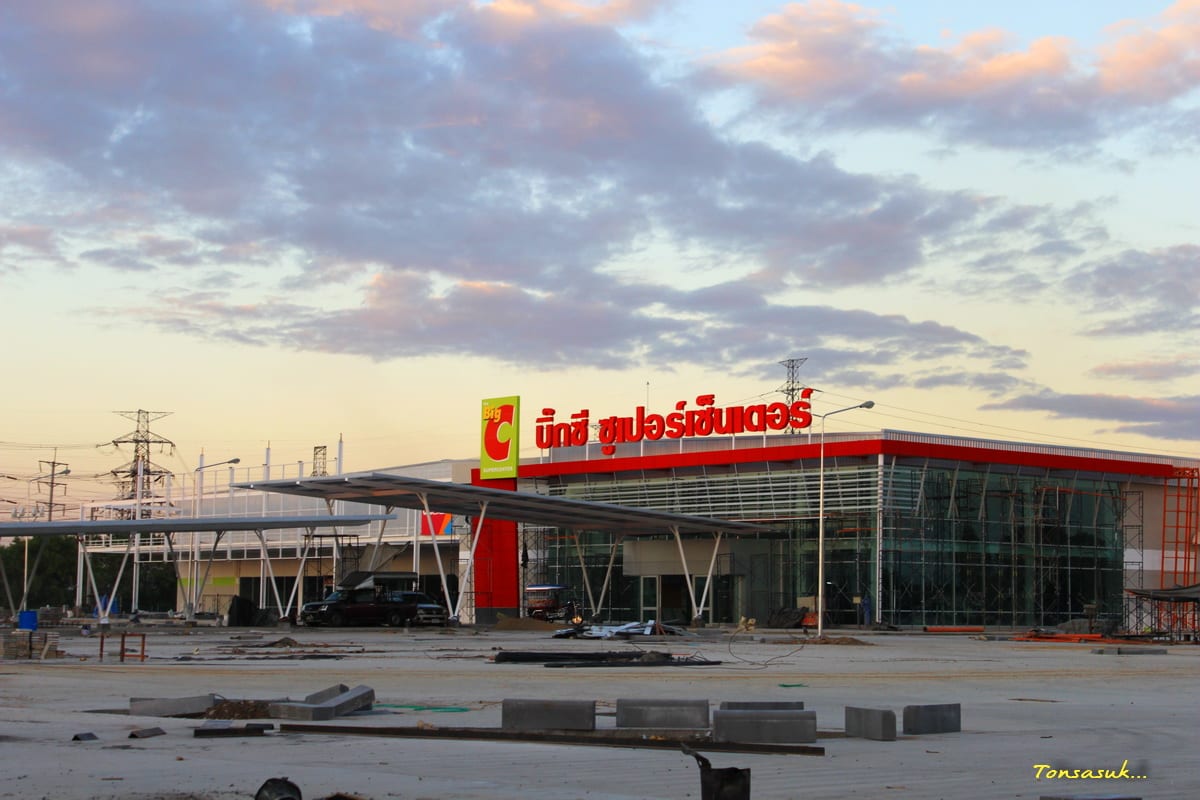
    Despite a sustainable growth rate, earnings from the Vietnamese arm are miniscule in comparison to other foreign businesses of the French retailing chain Big C, which is owned by Casino Group.

    On December 15 the French retailer issued a memorandum stating that it may seek a new owner for its supermarket chain Big C in Vietnam, as the company plans to strengthen its financial flexibility by selling assets in the country, as well as Thailand and Colombia.

    In 2016 Casino Group is expected to enact what it calls a ‘deleveraging plan’ of more than two billion euros (US$2.2 billion), mainly through real estate transactions and the disposal of non-core assets, according to the memo.

    The French group currently owns 10 retail brands across the globe, with a concentration in Asia. The Big C brand is used for the supermarket chain in Vietnam and Thailand.

    In multiple annual reports, Casino Group has assessed Vietnam as a market with high potential for growth in the future, once the economic slowdown is over and consumption begins to grow again.

    However, given the minor contribution of Big C Vietnam and the small market size, especially compared to neighboring country Thailand, the chain is now on the priority list to change hands.

    The contribution of Big C Vietnam in 2014 was just over one percent of the French parent company’s total revenue, much smaller than Big C Thailand during the same period.

    In 2014, revenue from the Asian operations of Casino Group reached 3.5 billion euros ($3.83 billion), accounting for seven percent of the total turnover of Casino Group. Breaking it down further, 98 percent of this figure was contributed by Big C Thailand, and less than two percent by Big C Vietnam.

    The revenue of Big C Vietnam last year was about $546 million, a seven percent year-on-year increase, according to data published by Retail Asia magazine using statistics compiled by London-based market research firm Euromonitor.

    In the first six months of this year, Big C Vietnam recorded a total turnover of 312 million euros ($340.66 million), up 26 percent over the same period last year, higher than the group’s total average growth rate in Asia, which was around 23 percent.

    Size that matters

    The revenue of the French retailer grossed from the Asian market is also small compared to other markets worldwide.

    Revenue from Asia accounted for less than 10 percent of its total global sales in the first six months, reaching more than 2 billion euros ($2.12 billion), 98 percent of which was generated by Big C Thailand, according to the group’s financial reports.

    In particular, revenues generated in Thailand in the first half of 2015 were 1.8 billion euros ($1.97 billion), nearly six times the earnings of Vietnam with 312 million euros ($341.46 million), a big gap between the two Southeast Asian neighbors that has been stable for the last five years.

    In terms of networks, through 2014, Big C Thailand had 123 large stores (Big C Supercenter, Extra, and Jumbo), 37 Big C markets, 324 Mini Big C convenience stores and 152 drug stores.

    Meanwhile, Big C Vietnam has 32 supermarkets and 10 convenience stores.

    In addition, the number of employees working at Big C Thailand was more than 26,600, three times the number of employees in Vietnam.

    In particular, Big C Supercenter Public Co. Ltd., the firm established to run Big C Thailand, was already listed on the stock exchange with a market capitalization of nearly 4.3 billion euros ($4.7 billion).

    On December 15, when Casino Group issued the memo in a document submitted to the Stock Exchange of Thailand, Big C Supercenter Public outlined its growth strategy next year, in which the emphasis will be on continuing to expand its network.

    In 2015, the company has opened 108 new stores, including two hypermarkets, and continues overhauling its supply chain. In 2016, it will keep enhancing its performance plan with the opening of six hypermarkets, three Big C Markets and 75 Mini Big C convenience stores.

    In addition, the global e-commerce segment, though newly developed, is yielding positive results with revenue equal to that of the Asian retail market.

    The sale of the Vietnam business could raise 750 million euros ($813.86 million), while setting up real estate investment trusts in Thailand and Colombia could net 550 million euros ($596.8 million) and 200 million euros ($216.98 million), respectively, Bloomberg reported on December 16, citing Bruno Monteyne, an analyst at Sanford C. Bernstein.

    The decision is consistent with what Casino Group shared in the memo, stating that the sale of Asian assets is a strategic move to help the French group focus on its core markets such as France with 18.8 billion euros ($20.57 billion) (38.76 percent) and Latin American with 22.6 billion euros ($24.73 billion) (46.6 percent).

    Casino Group, which is active in many other areas including e-commerce, finance and real estate, was founded in 1898 and is now one of the world’s leading retailers, with total assets of over 42 billion euros ($45.97 billion) at the end of June 2015.

    Like us on Facebook or follow us on Twitter to get the latest news about Vietnam!

  • Nike Defies Stagnation in U.S. Retail, China as Orders Surge

    Nike Defies Stagnation in U.S. Retail, China as Orders Surge

    Nike Inc. posted second-quarter results that showed the footwear and athletic-apparel giant remains largely immune to the shopper malaise that’s plagued much of retail.

    The world’s largest sporting-goods maker posted profit of 90 cents a share, topping analysts’ average estimate of 86 cents, as it continued to reap the rewards of a dominant brand and the ongoing fashion shift toward casual, sporty attire. It also defied concerns about slowing economic growth in China, with revenue there gaining 24 percent to $938 million.

    • Orders for the Nike brand for the next four months rose 20 percent, excluding the effects of currency. Analysts expected a 13.6 percent gain.
    • Net income increased 20 percent to $785 million.
    • Sales rose 4.1 percent to $7.69 billion. Analysts estimated $7.81 billion.
    • Gross margin widened 0.5 percentage point to 45.6 percent.

    The shares rose as much as 4.1 percent to $137.31 in late trading in New York. Nike had gained 37 percent this year through the close on Tuesday.

    “Overseas markets have great potential,” for Nike, said Paul Swinand, an analyst at Morningstar Inc. “Investors should take a read on Chinese consumers from the futures orders: There’s room to purchase new Western goods in people’s budgets. That highlights the potential for the long-term middle-class growth there.“

    $50 Billion

    The earnings report is Nike’s first since it announced a goal of increasing annual sales to $50 billion by fiscal 2020, up from $30.6 billion in its most recent fiscal year. The target implies an annual growth rate of 10.3 percent, slightly higher than the past two years. The company expects about a third of those gains to come from its online business. That trend played out last quarter, with sales through its websites surging 49 percent.

    In the most recent quarter, Nike’s China unit was the standout. Footwear sales there gained 30 percent to $600 million, while apparel revenue climbed 15 percent to $306 million. The strength looks set to continue, with futures orders for the segment increasing 34 percent, excluding currency effects.

    Part of Nike’s success in China has been a plan started two years ago to revamp its distribution and merchandise — like the fit of its apparel — after a glut of inventory after the Olympics weighed on results. It also has been selling more products through its own stores and websites, which is part of a companywide strategy. Revenue from those segments in China rose 51 percent last quarter.

    North America also turned in a strong performance, with sales increasing 9.4 percent to $3.55 billion. Footwear led the gain, with a 12 percent increase. North American futures orders grew 14 percent.

  • Lotte celebrates topping-out of Korea’s tallest building

    Lotte celebrates topping-out of Korea’s tallest building

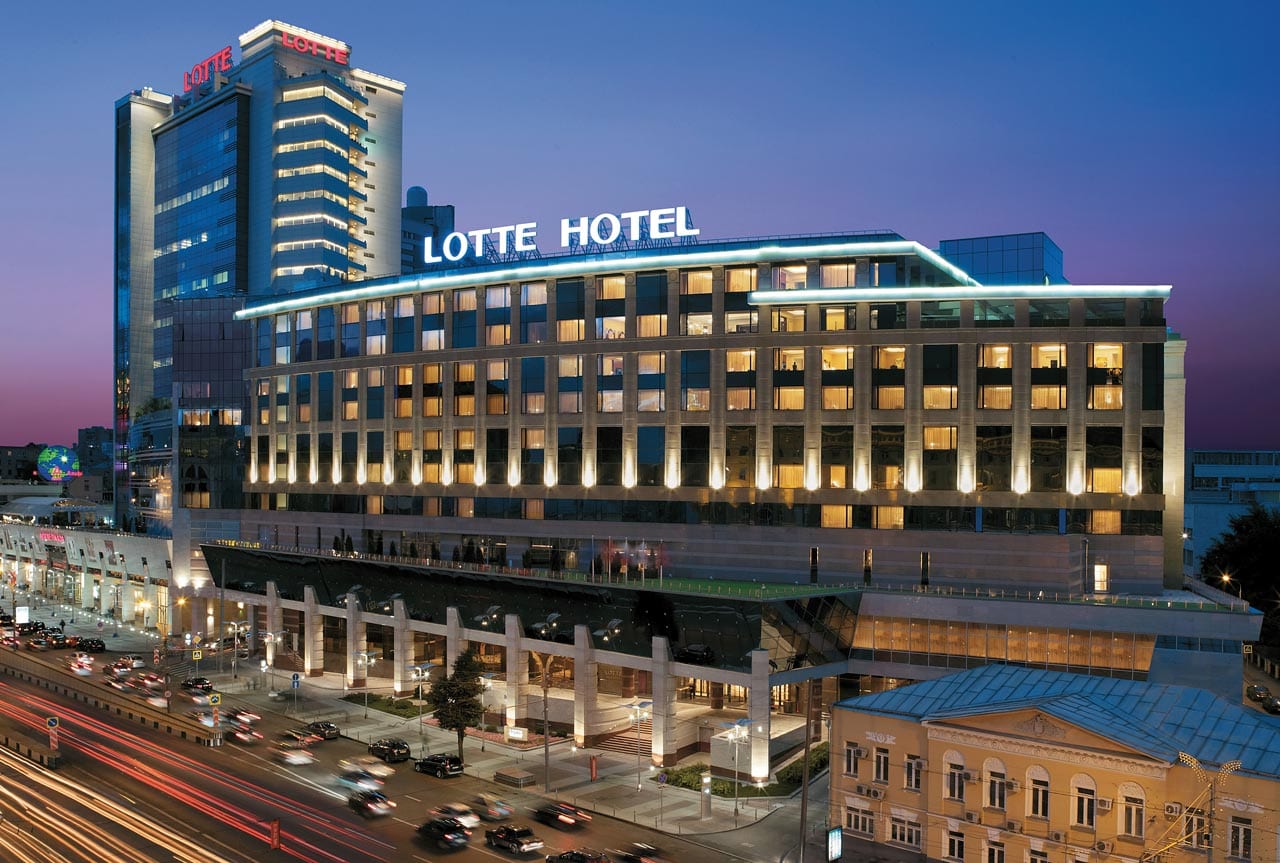
    South Korea’s retail giant Lotte Group held a symbolic topping-out ceremony Tuesday afternoon to mark the approaching completion of the Lotte World Tower, the tallest building in the country located in Jamsil, southeastern Seoul.

    Lotte Corp. placed the last crossbeam on the top floor of the 123-story skyscraper amid much fanfare with some 200 high officials in attendance, including Lotte chairman Shin Dong-bin and Seoul City mayor Park Won-soon.

    The Lotte World Tower currently stands at 508 meters as the world’s fifth tallest building in the world. It will reach 555 meters in height once the spire is placed and the interior construction is concluded next year.

    “Offering panoramic views of Seoul, the Lotte World Tower will be able to attract some 2 million tourists every year,” said the Lotte chairman in his congratulatory speech.

    Mindful of public concerns about safety, Shin emphasized that Lotte would “work to ensure that the tower becomes a safe location that can welcome all visitors” and to “successfully wrap up the remaining construction procedures.”

    The supertall skyscraper stands at the center of Lotte’s 3.8 trillion won ($32 billion) project envisioned by Lotte founder Shin Kyuk-ho to build an unparalleled legacy for the company in Jamsil.

    Located adjacent to the tower is the Lotte World Mall, a mega shopping complex featuring shops, restaurants, a movie theater and aquarium. The tower is set to house a six-star hotel, office space and an observatory once it is completed next year.

    “The Lotte World Tower has been constructed in line with my father’s wish to establish a landmark building in Korea,” said the Lotte chairman, also the eldest son of the Lotte founder.

    “The tower will become a structure beloved by people from all over the world.”


  • Esprit just made a lot of money? Look again

    Esprit just made a lot of money? Look again

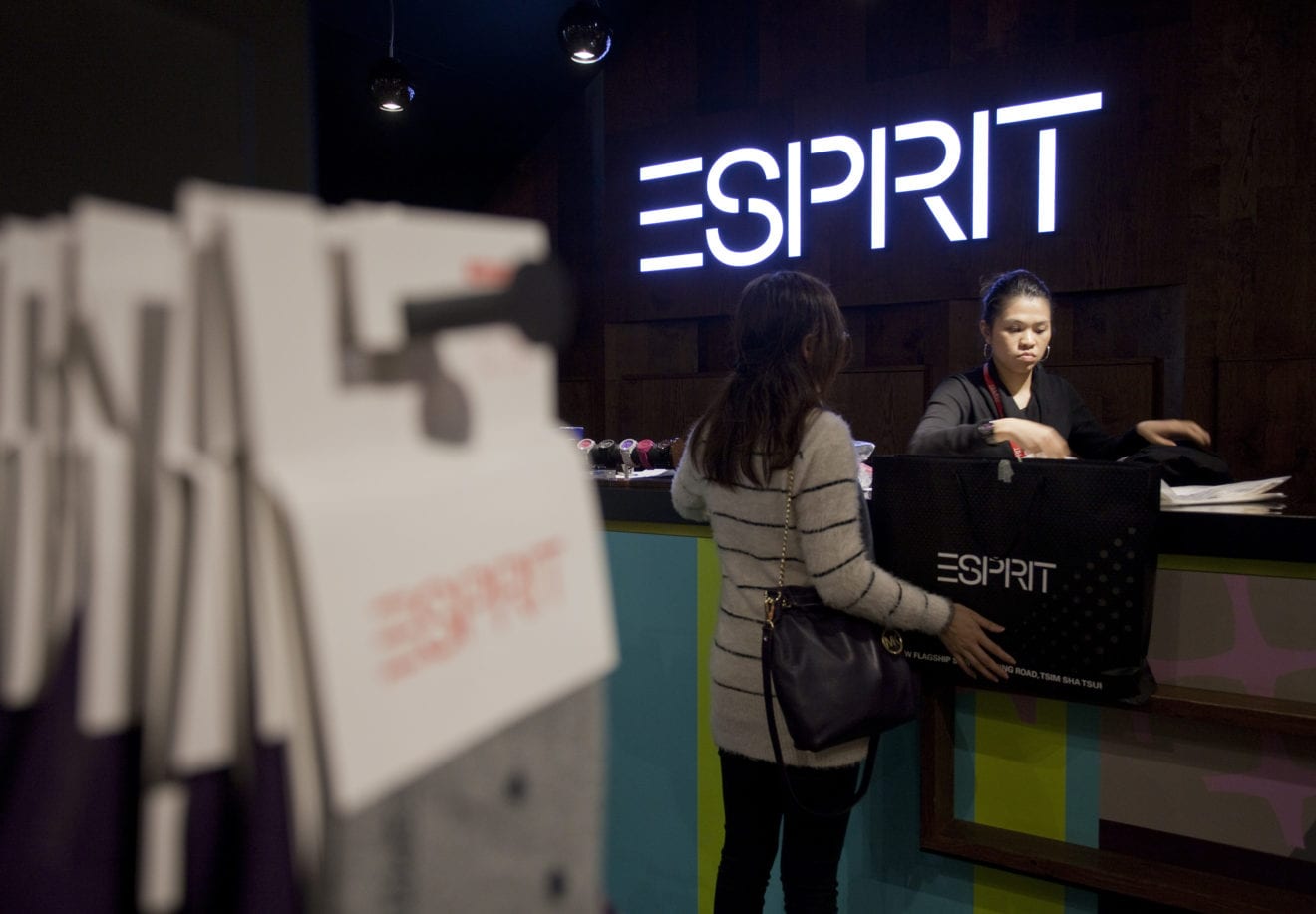
    Fashion icon Esprit is making headlines again, this time for the profitable sale of its Hong Kong headquarters.

    The struggling retailer said it made a profit of HK$725 million (US$93.53 million) from the sale of the premises — five floors in Enterprise Square in Kowloon Bay — to Phoenix Property Investors for HK$918 million.

    The buyer plans to lease the space back to Esprit for HK$2.43 million a month. That’s equivalent to a gross yield of about 3 percent on the deal, or 4 percent, assuming the additional one floor will be leased to Esprit at the same rate.

    The lease, which starts after the deal closes in March, will be for three years, renewable at a 20 per cent premium after the third year.

    The money would have been nothing to Esprit, once owned by Michael Ying, in its heyday when it churned out HK$5 billion in profits. In the financial year to June 30, 2015, Esprit made a net loss of HK$3.7 billion, or HK$1.90 per share.

    Esprit bought the property in 2004 for HK$200 million during the so-called “golden decade of retail” as mainland tourists began arriving in Hong Kong in great numbers.

    At the end of the heady run, apparel retail sales were up 126 per cent, with the biggest chunk going to three global fast fashion retailers — Japan’s Uniqlo, Sweden’s H&M and the Spanish giant Zara.

    Apple Daily reports that the three retailers have more than 80 outlets in Hong Kong combined.

    Most of its rivals did not disclose their sales figures but H&M said it recorded HK$1.29 billion in the first three quarters ended August.

    Where was Esprit in all of this?

    The Hong Kong flagship was embroiled in one of the greatest collapses in the competitive fashion industry.

    Sales from Hong Kong were down 8.4 per cent to HK$386 million, with its store network shrinking to 15 shops from 46 in 2006.

    Among the big winners were small designers such as Bauhaus, I.T. and low-end retailers such as Bossini, although Giordano lost market share.

    Altogether, local brands had 460 shops last year, according to Apple Daily, but their market share fell to 14.5 per cent from 18 per cent in 2006. Now we know why Esprit had to sell its headquarters.

    Yet, this is only one chapter in a painful restructuring that has already lasted more than five years.


  • Thai CP Group unit True Money Myanmar to test money transfer service soon

    Thai CP Group unit True Money Myanmar to test money transfer service soon

    The firm is currently working in Myanmar as a mobile top-up service provider for Myanmar Post and Telecommunications (MPT) and MEC since September 2015.

    In Myanmar, the money transfer service will be through True Corporation Plc, a subsidiary of the CP Group.

    True Money Myanmar Company Limited has already recruited agents around the country to enable easy access to banks.

    “We want to help people who are not able to reach banks easily. For people who have to go to another township to use the bank,” said Amara, assistant marketing manager of True Money Myanmar Company Limited.

    The firm is also aiming to expand to other payment services like bill payments and international remittance.

    The money transfer service is looking at the possibility of offering safe and easy remittance facility for the Myanmar population working in south east Asian countries.

    True Money Myanmar is targeting the retail customers for the money transfer business. It is also in talks with Aeon credit service and Gold Bus online booking company for future partnerships.

    True Corporation Plc also operates internet services operator, data centres and pay TV business.

  • Woolworths plans to sell online in China

    Woolworths plans to sell online in China

    Supermarket titan Woolworths considers taking advantage of China’s voracious interest for Australian food and grocery items.  Australia’s biggest general store chain has connected with China-based eCargo Holdings to construct and operate a Woolworths storefront on Alibaba’s Tmall business-to-customer online marketplace.

    eCargo will likewise facilitate Woolworths’ stock, packing and dissemination requirements, counsel on brand strategy and embrace an extensive variety of online and social advertising exercises for the retailer. Woolworths has a vicinity in the Chinese market after obtaining alcoholic beverages merchant Summergate a year ago for $US25 million. Rising interest among China’s well-to-do white collar class in food and dairy items delivered from abroad has opened up a substantial business sector for Australian food and dairy items.

    eCargo Chairman John Lau said in an announcement that they trust the food and grocery market will encounter enormous development in the coming years in between Australia and China, as cross-outskirt exchange limitations ease and the China Australia FTA produces results.

    Woolworths online invasion into China takes after a comparative move by smaller local opponent Metcash, which set up shop on Tmall not long ago to sell items like Weet-Bix, Tim Tams, long-life milk and newborn child formula.

    As of late, a few well known worldwide brands including Amazon, Macy’s and Germany’s Metro have set up shop in the online market place operated by Alibaba and rival JD.com, with an end goal to take into account China’s growing interest for imported customer items. The Chinese e business sector is conjecture to more than twofold throughout the following three years to $US1.5 trillion, as indicated by New York based research firm eMarketer.

    Woolworths has struggled in the domestic market over the previous year in the wake of taking a profit hit from its price war with adversary grocery store titan Coles and German discounter Aldi.

  • Nan Hai plans big China push for Crabtree & Evelyn

    Nan Hai plans big China push for Crabtree & Evelyn

    Nan Hai Corp. is planning a big push in the mainland China market after acquiring a company that manufactures and sells skincare products under the Crabtree & Evelyn brand.

    The Hong Kong-listed firm has received leasing invitations from several shopping malls in the mainland, and is planning to open its first Crabtree shop in a first-tier city, the Hong Kong Economic Journal reported.

    It aims to leverage the brand image and establish points-of-sale in various retail locations, including movie theater complexes and food and beverage outlets, the report said, citing Yu Xin, managing director of Nan Hai’s subsidiary Dadi Digital Cinema.

    Nan Hai plans to set up sales spots at its 270 movie theaters across the country to promote cross-sales and electronic commerce.

    Crabtree & Evelyn has 30 retail shops in Hong Kong and an aggregate of 4,000 sales spots around the globe.

    The brand’s sales in Asia and North America declined last year.

    Yu expects profitability to improve due to integration of resources and supply chain, as well as fresh marketing initiatives, once the acquisition is completed.

  • Telecoms, internet come up strong

    Telecoms, internet come up strong

    A mascot promoting the spectrum auctions for fourth generation (4G) service is seen at the headquarters of the National Broadcasting and Telecommunications Commission. Winning bidders for the 1800- and 900-megahertz spectrums are set to launch commercial 4G service early next year. Outlook for next year even rosier.

    Mobile firms ready to start 4G network

    The mobile sector is one of the big winners this year, escaping the country’s sluggish economy as mobile communications are expected to have an effect on nearly every aspect of life and business.

    Major mobile operators project a slight increase in revenue this year.

    Thailand has 110 million mobile subscribers, expected to rise to 150 million in 2016, says the National Broadcasting and Telecommunications Commission (NBTC).

    This gain will be fuelled by the continued growth of mobile data users and the arrival of machine-to-machine communications or the Internet of Things.

    Thailand has more than 40 million mobile internet users and only 35 million desktop internet users. It is a mobile-first country.

    Pete Bodharamik, chief executive of Jasmine International, the parent firm of JAS Mobile Broadband, said its average fixed-line broadband household owned up to five internet-enabled devices, with at least three of the devices mobile.

    JAS will launch its commercial fourth-generation (4G) service early next year.

    Thailand’s mobile market is valued at 300 billion baht annually.

    Somchai Lertsutiwong, chief executive of Advanced Info Service Plc, the country’s largest mobile operator, said his company’s 2015 data revenue surged thanks to mobile traffic, which is driven primarily by the proliferation of data-hungry mobile devices.

    “The mobile data market is going to explode in 2016 thanks to the arrival of full commercial nationwide 4G service,” he said.

    An Ericsson ConsumerLab report shows 89% of Thai consumers use social media on a weekly basis.

    Traffic on mobile networks will continue to grow at an impressive rate, driven by the uptake of smart devices and apps. This rapid growth is having a significant impact on networks.

    Global research firm IDC said average mobile internet usage in Thailand would increase to 192,265 Mbps per number per month over the next five years, up by 165% from this year.

    Mobile internet service could also generate new revenue streams for other ICT-related businesses, particularly e-commerce. Thailand has more than 500,000 e-commerce merchants via many channels including social media, websites and online marketplaces. The country’s e-commerce sector has grown by 20% annually.

    The value of Thailand’s e-commerce market is expected to reach 2.1 trillion baht this year, up by 3.65% from last year, which surged 165% from 700 billion in 2013 thanks to intense discount promotions and greater availability of high-speed wireless broadband networks.

    Studies suggest doubling internet broadband speeds can add 0.3% to GDP.

    Tech start-ups ready to ring in innovation

    Thailand’s tech start-up industry is one of the three most attractive in Southeast Asia thanks to a proliferation of mobile internet users and capable world-class tech talent.

    The development of tech start-ups is part of the government’s policy of promoting innovation among small and medium-sized enterprises.

    According to Thailand’s “Tech Startup Report 2015” compiled by TechSauce.co, as of last month Thai tech start-ups had raised US$84.5 million from 53 projects compared with three projects worth $2.1 million in 2012.

    The biggest tech start-up investment in Thailand in 2015 was worth $10.7 million, while the biggest in 2012 was worth $2 million.

    The number of venture capital funds in Thailand jumped to 12 worth $79 million in 2015 from three in 2012 worth $7 million.

    Nattawut Pungjarernpong, fund manager at Bangkok venture capital firm 500 Tuktuk, said the early stage of the local start-up market was just blossoming.

    Indonesia and Malaysia are other attractive destinations for global venture capital in Southeast Asia, given their large populations and strong start-up ecosystems.

    Mr Nattawut urged policymakers in Thailand to provide more attractive incentives for tech start-ups and ease regulations to promote investment.

    The government provides tax exemptions for capital gains when companies invest in tech start-ups, but the country needs more incentives to reduce the risk of investment losses, he said. Thai tech start-ups can continue to grow for another few years as capital pours into Southeast Asia.

    E-commerce continues to bloom

    E-commerce saw strong growth this year thanks to the proliferation of smartphone and mobile internet users.

    Thailand has 40 million mobile internet users, with the smartphone penetration rate exceeding half the population.

    The e-commerce market will continue to blossom next year, with a host of key regional players jumping on the bandwagon.

    The local e-commerce market increased at a double-digit rate this year, overtaking GDP, thanks to aggressive marketing and attractive discount campaigns among e-commerce companies.

    There are an estimated 14 million online shoppers in Thailand and more than 500,000 online merchants.

    The advent of full commercial fourth-generation (4G) wireless broadband service next year will transform the local mobile commerce and mobile payment markets.

    “Thailand’s retail e-commerce [business-to-consumer or B2C] market was Southeast Asia’s largest in 2014, worth US$11.7 billion,” said Surangkana Wayuparb, chief executive of the Electronic Transactions Development Agency (ETDA).

    Malaysia’s B2C market was valued at $9.6 billion, followed by Singapore ($3.4 billion), Vietnam ($2.9 billion), Indonesia ($2.6 billion) and the Philippines ($2.3 billion).

    However, compared to developed countries, Thailand trailed the US ($359 billion), China ($322 billion), Japan ($118 billion) and South Korea ($25.4 billion).

    Mrs Surangkana said Thailand’s B2C market was expected to grow by 15.2% to 475 billion baht in 2015.

    An ETDA survey of 502,676 e-commerce operators countrywide from April-October showed electronics, cosmetics and fashion were the three best-selling products in retail e-commerce.

    The survey found the top three payment channels were e-banking, credit or debit cards and mobile payment.

    Mrs Surangkana expects mobile payment will surpass other channels in 2016 thanks to the proliferation of smartphones.

    Pawoot Pongvitayapanu, president of the Thai e-Commerce Association, said operators must expand abroad, particularly to other Asean members, instead of focusing only on the domestic market.

    Paul Srivorakul, chief executive of aCommerce Group, said next year’s launch of commercial 4G service would further cement Thailand’s leading position in mobile internet and accelerate the growth of mobile commerce.

    Thailand is already one of the most mobile-enabled countries in the world, with the average Thai user having 1.4 mobile devices, he said.

    The country’s mobile internet penetration of 56% already exceeds that of the US and China, at 40% and 34%, respectively.

    However, e-commerce accounts for only 1% of Thailand’s total retail market. Local e-commerce is expected to reach double-digit figures within the next four or five years.

    Local e-commerce has grown by 20-25% year-on-year despite the stuttering economy, Mr Paul said.

    Meanwhile, a number of retailers and manufacturers have been tapping opportunities from the online channel.

    Among them are major retailers such as Central, The Mall and Tesco Lotus as well as furniture chain Index Living Mall and Mc Jeans, which already have online shopping platforms.

    Their online sales have grown in the range of 10-100% this year, depending on product category.

    Popular items are cosmetics, apparel and electrical appliances.

    Next year, these operators hope to boost online sales and attract more young-generation customers.

    An increasing number of companies plan to expand via the online channel, as they can access customers not only in the domestic market but also abroad.

    When they have succeeded in providing online shopping platforms on their own, some operators such as Central plan to serve as a marketplace, selling products for other producers, Mr Paul said.

    High hopes pinned on tourism rebound

    Tourism has been singled out as the economy’s biggest hope and a powerhouse this year amid the export slump.

    The sector has strongly recovered from the last year’s political instability and passed through the economic storm and the deadly Erawan Shrine bombing.

    Foreign tourist arrivals are expected to reach almost 30 million in 2015, exceeding the official target of 28.8 million.

    The Erawan bombing on Aug 17 caused a brief hiccup in tourism’s recovery, and the industry bounced back in a couple of months.

    The sector’s resilience led Tourism and Sports Minister Kobkarn Wattanavrangkul to declare her ministry was confident total international tourist arrivals would hit 29.5 million by year-end.

    As of last Wednesday, Thailand had welcomed 29 million foreign visitors.

    The tourism revenue target of 2.2 trillion baht is being maintained.

    Of that total, 1.4 trillion baht will come from foreign tourists and 800 billion from local travellers.

    Tourism’s strong recovery has benefited the hotel business, with many chains reporting healthy performances this year.

    Thai hotel chain Onyx Hospitality saw its operating profit rise 36% year-on-year in the first nine months, with properties in Thailand contributing 70% of revenue, president and chief executive Peter Henley said.

    He expects the strong performance will continue next year.

    For next year’s first quarter, Onyx forecast an 8.1% increase in room revenue for properties in Thailand.

    Patrick Basset, AccorHotels’ chief operating officer for East and upper Southeast Asia, called Thailand an attractive destination for tourists from around the world.

    The country’s tourism has a strong reputation, boasting natural beauty and a rich cultural heritage.

    It also offers a variety of attractions that appeal to a wide range of visitors from business travellers to eco-tourists.

    Mr Basset remains concerned about political uncertainty, which could emerge as a major risk for Thailand and tourism in the future. Tourism has been very sensitive to political problems.

    Meanwhile, the Association of Thai Travel Agents (ATTA) is satisfied with tourism’s recovery this year and projects the sector will continue to outperform next year even though Thailand will face many negative factors such as the global economic slowdown and risks of terrorism.

    “Thailand remains a popular destination, with many main feeder markets within three hours’ flying time,” ATTA president Charoen Wangananont said.

    Prior experience of dealing with crises provides proof that Thailand can sail through many negative situations and recover in a short period.

    As of Dec 20, ATTA reported the number of international tourist arrivals via its member agents had grown by 63% to 5.06 million.

    ATTA said 2015 was another good year for tourism after several years of stagnation due to political conflict.

    However, the government must boost all industries next year, not just rely on tourism revenue, Mr Chareon said.

    Tourism and sports permanent secretary Pongpanu Svetarundra said the weaker baht following the interest rate hike by the US Federal Reserve would benefit both the export and the tourism sectors.

    Budget carriers seize the helm in air wars

    Low-cost carriers (LCCs) have continued to evolve and flourish in 2015 to outshine other business sectors against the backdrop of economic doldrums.

    Having opened the skies over Thailand and other parts of the world for millions of travellers, budget airlines are now a force to be reckoned with in the aviation industry.

    Growth has been particularly dramatic in Thailand, where LCCs continue to raise their passenger share and spur traffic in a way that full-service carriers (FSCs) are unable to mimic.

    Several LCCs in Thailand continue to stimulate air travel by lowering fares and opening new routes and destinations — the primary drivers of their proliferation.

    Higher growth in Thailand’s tourism industry due largely to political stability has sent traffic soaring for LCCs, a popular transport mode for leisure travellers.

    Passengers travelling on budget airlines through the six major Thai airports run by SET-listed Airports of Thailand Plc (AoT) surged 34.1% in the first nine months of 2015 to a record 33.4 million from 24.9 million in the year-earlier period.

    That pushed LCCs’ share of the overall passengers passing through those airports during the same period including Suvarnabhumi and Don Mueang to 41.3%, up from 38.5% in the year-ago before period.

    LCC aircraft movements — take-offs and landings — rose in tandem to 229,921, up by 28.9% year-on-year, according to AoT statistics.

    Tassapon Bijleveld, chief executive of Thai AirAsia (TAA), Thailand’s biggest LCC, said the foregone conclusion was LCCs in places such as Thailand in particular and Southeast Asia in general would continue to consolidate their profiles in air transport.

    “What we see taking place in Southeast Asia is similar to Europe, where LCCs account for up to 75% of intra-European air travel,” he told the Bangkok Post.

    In Thailand, the share of LCCs in the overall passenger market is set to rise by 3-4% annually over the next several years to reach the high levels seen in Europe.

    Given the trend apparent in the first 10 months of this year, indications are the LCC passenger tally for the whole of 2015 will reach 45.5 million, according to industry executives.

    Next year, the LCC share of passenger totals will grow to 46%, Mr Tassapon said.

    Several LCCs have seen improvement in their balance sheets due to enhanced business performance.

    For instance, TAA posted a record net profit of 1.47 billion baht in the first nine months of 2015 compared with a net loss of 265 million in the same period last year.

    AOT shares closed yesterday on the SET at 344 baht, down three baht, in trade worth 427 million baht.

  • 1 in 4 Hong Kong consumers shop via mobile

    1 in 4 Hong Kong consumers shop via mobile

    More than one in four Hong Kongers (25.5 percent) shopped online via their mobile phones in the past six months, but the majority are concerned about security and identity theft.

    These are among the findings of a recent online survey conducted by Zogby Analytics and commissioned by TransUnion.

    The online survey of 500 adults, conducted by Zogby Analytics and commissioned by TransUnion, revealed that two in three Hong Kongers have shopped online more than three times in the past six months, including 20.9 percent who have shopped more than 10 times.

    While the far majority (76.8 percent) still preferred to make online purchases from a PC or laptop, 42.6 percent also used other devices, including mobile phones (25.5 percent) and tablets (17.1 percent). Most of them (65.3 percent) spent or would spend less than HK$1,000 on a single item.

    Even with online shopping becoming increasingly popular, 53.3 percent said security and identity theft is their main concern when shopping online, followed by 22.1 percent who worry that the item they purchase will not be as it appears on the website.

    “Hong Kongers are more and more comfortable shopping online and e-commerce offers a popular way to buy gifts during the hectic holiday period. However, our research demonstrates that consumers in Hong Kong might not be as aware of online security threats as they ought to be,” said Samuel Ho, chief executive officer for TransUnion Hong Kong.

    Ho said it is essential for holiday shoppers to protect their personal and financial data online.

    Besides creating strong passwords, setting a unique one for each shopping account and device, and only making purchases at encrypted shopping websites, consumers should also monitor their credit reports often so that unauthorized purchases won’t go unnoticed.

  • SEC seals China Bank-Plantersbank merger

    SEC seals China Bank-Plantersbank merger

    The Securities and Exchange Commission (SEC) has approved the merger of China Bank Savings Inc. (CBSI) and Planters Development Bank (PDB), with China Bank becoming the surviving corporation.

    Both CBSI and PDB are subsidiaries of retail tycoon Henry Sy’s China Banking Corporation (China Bank), after PDB, established in 1072 by businessman Jesus Tambunting, became part of China Bank in 2014.

    “As a result of the merger, CBSI and PDB shall become a single corporation, with CBSI as the surviving corporation,” China Bank said in a disclosure to the Philippine Stock Exchange on Monday.

    As of end-2015, China Bank is operating a total of 517 branches, including 165 CBSI and Plantersbank branches.

    Aside from the CBSI-Plantersbank merger, the SEC has also approved the appointment of some executives effective January 1, 2016.

    The executives include Carlos M. Borromeo as senior vice president, chief financial officer, and head of financial statement segment; as well as lawyer Marissa B. Espino as co-vice president, chief compliance officer, and head of compliance office.

    Maria Cristina C. Hernandez was also approved as co-vice president, head of treasury financial institution, under financial capital markets and investment segment.

    In 2015, China Bank opened a total of 47 branches. For 2016, plans are up for opening 66 more branches—50 for China Bank and 16 for the consolidated CBSI network.

    In the first nine months of 2015, China Bank’s net income rose by 8 percent to P3.64 billion, on track with its targets to grow profits by 10 percent by end-2015.

    Established in 1920, China Bank is an affiliate bank of richest man in the Philippines, Henry Sy. It mainly caters to the small and medium enterprises (SME) market through subsidiaries CBS and Plantersbank. It also offers banking services to other markets—corporate, commercial, and retail.

  • Deutsche Bank sells China’s Hua Xia Bank stake for up to $4 billion

    Deutsche Bank sells China’s Hua Xia Bank stake for up to $4 billion

    Deutsche Bank has agreed to sell its 20 percent stake in China’s Hua Xia Bank to insurer PICC Property and Casualty Co for up to 25.7 billion yuan ($4 billion) as it seeks to raise cash and reduce its balance sheet exposure.

    “As we execute on Deutsche Bank’s strategic agenda, now is the right time for us to sell this investment,” Chief Executive John Cryan said in a statement on Monday.

    Deutsche Bank has announced plans to slash 15,000 jobs, shed businesses employing some 20,000 staff and suspend dividends for two years as it seeks to bolster its finances.

    The stake in Hua Xia will generate between 23.0 billion and 25.7 billion yuan ($3.6-4.0 billion), or 3.2 billion to 3.7 billion euros at current exchange rates, depending on Hua Xia’s share price ahead of the sale’s completion.

    At the end of September, the stake was in Deutsche Bank’s books at a fair value of 3.038 billion euros.

    When Deutsche Bank first invested in Hua Xia in 2006 to tap into China’s retail banking sector, the Chinese lender’s stock stood below 4 yuan a share, compared with 11.44 yuan at Monday’s close.

    The stake sale will help boost the German bank’s common equity tier 1 capital ratio as of Sept. 30 by about 0.3 to 0.4 percentage points from 11.5 percent, it said.

    PICC said it expected relatively steady investment returns from its stake in Hua Xia, in addition to the benefits of a strategic cooperation.

  • Parkson Retail loses appeal, to pay RM93m in arbitral award

    Parkson Retail loses appeal, to pay RM93m in arbitral award

    Parkson Holdings Bhd’s retail subsidiary in China has lost its final appeal to revoke an arbitral award made in favour of its former landlord and must pay about 141 million yuan (RM93.2mil).

    The department store operator told Bursa Malaysia on Monday that a Beijing court on Dec 25 rejected the application by Hong Kong-listed Parkson Retail Group Ltd (PRGL), a 53.07% owned subsidiary, to revoke the award issued by China International Economic and Trade Arbitration Commission in March.

    “The ruling given by the court is final and no further appeal can be made by either the landlord or the tenant under China law,” it said.

    The company’s board feels the ruling does not have a material impact on the earnings of the Parkson Holdings group for this financial year ending June 30, 2016 or the group’s net assets based on the audited consolidated statement of financial position as at June 30, 2015.

    However, in a statement on April 1 regarding the profit warning issued by its Hong Kong subsidiary, Parkson Holdings said the earnings of the group for the financial year ended June 30, 2015, would be lower by about RM45mil or 4 sen per share.

    To recap, PRGL, which was a tenant at 25,140 sq m in Metro City Shopping Plaza, Beijing, had been asked by its landlord in April 2012 and repeatedly afterwards to reduce the total area of the premises under their tenancy agreement or alternatively end the agreement in return for compensation from the landlord equalling to three months’ rental payments.

    In December 2012, the landlord issued a notice of breach of contract to PRGL, asking it to vacate the premises within 30 days.

    On March 25 this year, the China International Economic and Trade Arbitration Commission made an award in favour of the landlord, saying that the 20-year tenancy agreement had been terminated on Dec 6, 2012.

    Among others, PRGL, the tenant, must pay the landlord 36.758 million yuan (RM24.36mil) in lump sum and a daily fee calculated at 3.46 yuan (RM2.29) per sq m for the period from Nov 1, 2014 up to the date on which the premises was surrendered to the landlord (March 26, 2015), totalling 12.613 million yuan (RM8.36mil).

    In addition, it must pay rental of 89.923 million yuan (RM59.57mil) and an arbitration fee of 1.102 million yuan (RM729,890) to the landlord.

    Based on the arbitral award, which represented about 57% of the PRGL group’s audited net profit for the year ended Dec 31, 2014, PRGL issued a profit warning that initially said its profit for the first quarter ended March 31, 2015, would “decline significantly” but was later revised to saying the group would record a loss for the quarter.

    However, on April 22, PRGL submitted an application for revocation of the award to the Second Intermediate Court of Beijing, which led to the enforcement of the arbotral award being suspended.

    Parkson Holdings shares closed unchanged at RM1.02 on Monday.

  • Hong Kong a drag on Prada

    Hong Kong a drag on Prada

    Luxury fashion group Prada says the Asia Pacific market continued to decline during the first nine months of the new financial year.

    And Hong Kong and Macau have taken the blame – again.

    During the last three quarters, sales in the region fell 4.9 per cent at current exchange rates.

    “This is due to reductions in both local consumption and tourist flows within the region, with Hong Kong and Macau particularly affected,” Prada said in its results statement.

    But Japan helped ease the pain. Prada sets Japanese sales apart from Asia Pacific sales, reporting a 10.4 per cent increase in sales at current exchange rates and 4.6 per cent at constant exchange rates, driven largely by the rising number of Chinese tourists – many of whom in previous years would have visited Hong Kong to shop for luxury goods.

    In Europe, too, the influx of Asian tourists boosted sales, which rose 8.6 per cent at current exchange rates and 7.6 per cent at constant exchange rates. The Italian market continued to stand out among the various European countries and recorded growth rates well above the average for the area.

    On the American market sales increased at current exchange rate by 8.5 per cent, but showed a negative underlying trend, down 7.6 per cent at constant exchange rates.

    “The significant strengthening of the US dollar over the period had an adverse impact on tourism, mainly from China and South America, but, at the same time, it encouraged a shift in American consumer spending towards Europe,” Prada said.

    By brand, Prada recorded a 2.1 per cent global sales  increase which was entirely attributable to the exchange rate effect. Miu Miu has grown with revenues up at both current exchange rates (+11.8 per cent) and constant exchange rates (+1.9 per cent). Church’s has also achieved sales growth (+17.6 per cent), a positive trend also on a like-for-like base.

    The licensing business (eyewear and fragrances) performed very well, with royalties for the nine months to October 31, totalling Euro 33.5 million, a 16.2 per cent increase, in large part thanks to the launch of the first Miu Miu fragrance.

    Prada Group’s consolidated revenue for the nine months was Euro 2.583 billion. This represents a 1.2 per cent  increase at current exchange rates on the corresponding period in 2014, entirely thanks to directly operated store sales. Wholesale revenues decreased as the group continues to reduce its presence in that channel.

    Net profit was Euro 235.1 million or 9.1 per cent of net revenue.