Author: Mei Ling Tan

  • More than half of Hongkongers surveyed say they plan to buy no Christmas presents

    More than half of Hongkongers surveyed say they plan to buy no Christmas presents

    Christmas holidays are usually the peak consumption season for both tourists and local residents, but this year retailers are expecting a grimmer picture amid the economic downturn affected by the slowdown in China and strong local currency.

    A study shows that Hong Kong people are cutting their Christmas budget to tackle the difficult economic environment this year, with 64 per cent people saying they won’t spend more than HK$1,000 on Christmas shopping and 52 per cent saying they won’t buy any Christmas gifts this year.

    The survey, conducted by Hong Kong Research Association, found Hong Kong citizens are rather cautious about this year’s Christmas consumption, as only 16 per cent of 1,084 interviewees expect spending more money than last year, while 23 per cent said they would reduce spending .

    Adding to the problem, it seems that even if Hongkongers do plan to go shopping for Christmas, they prefer to buy overseas.

    “Even local people wouldn’t buy stuff in Hong Kong ,” said Mariana Kou, retail analyst at brokerage CLSA, adding consumer products are much cheaper in Japan and Korea, as they benefited from weaker local currencies.

    She expected the poor consumption this year will further dampen sales during Christmas, the traditional shopping season, which has already been challenged by the declining tourist arrivals in last six months.

    “The Christmas sales this year will decline for sure” she said, adding the luxury sector would be the one suffering the most.

    Even though most Hong Kong people are cutting their Christmas shopping lists to save money for rainy days, the enthusiasm for shopping is still running high among top earners in the city.

    The same research showed that the wealthiest social class was the only one among the four that has responded with growing budgets for shopping this Christmas, with 13 per cent more interviewees planning to increase Christmas consumption this year than those who plan to reduce spending.

    “Despite the volatilities in the financial and property markets, rich people still have a decent wealth base.” said Wyman Ng, research officer at Hong Kong Research Association, adding “ their behaviour is less affected”.

    Meanwhile, holiday shoppers in Causeway Bay who looked up yesterday would have seen seven people climbing above the huge screen in Times Square to make a statement against the fashion of wasteful consumption during holiday seasons.

    The Greenpeace activists unfurled a huge banner across a big television screen at the iconic shopping mall, featuring the message “Buy Smart Buy Less”.

    The group said Hongkongers trash garments at an alarming speed, which has put a heavy burden on the environment. It urged shoppers to step up and break the cycle of overconsumption

    The Census and Statistics Department also revealed yesterday that the Consumer Price Index (CPI) figures for November rose by 2.4% over the same month a year earlier, the same as that in October 2015.

  • Google launches an equity-free accelerator programme in Indonesia

    Google launches an equity-free accelerator programme in Indonesia

    Up to $50,000 will be given in equity-free funding, said Roy Glasberg, Google’s global lead for its Launchpad programmes. The company will look for those startups that can have a clear impact on their home markets, while not having to worry about return on investment.

    Here’s what startups can expect, apart from the funding. Google will fly the founders down to its head-office in Mountain View, California, for a two-week bootcamp, starting January. They will meet with mentors, who comprise both people working in Google and the wider startup community, and will be given individualised tasks in areas like marketing and strategy, user experience design and others. Once this is done, they will return to their home countries, where Google will provide them space to work, and continued access to mentors and its own developer platforms.

    The new accelerator will be part of Google’s existing Launchpad programme that was started in 2013. The company plans to bring about 50 of the most promising startups each year in the accelerator programme, and do hands-off mentoring to another 200 that will not go through the bootcamp. Startups that show more promise in the latter group will be made part of the full accelerator program.

    The report mentioned that the first batch of startups include Brazil’s ProDeaf, that translates spoken language into sign language, and Jojonomic, a fintech startup from Indonesia.

  • Time to swoop on Garuda Indonesia

    Time to swoop on Garuda Indonesia

    For Indonesia’s national carrier, 2015 has been a year to forget. Shares of PT Garuda Indonesia are heading for their biggest-ever annual drop, overseas debt costs are rising and flights have gotten disrupted by forest fires and an erupting volcano.

    Timothy Ross, a top-ranked airline analyst at Credit Suisse Group AG, says this is the perfect time to buy.

    The impact of ash clouds from Mount Rinjani and haze from burning peat forests is temporary, according to Ross, the most accurate analyst for at least four Asian airline stocks tracked by Bloomberg, including Garuda. Bears who dragged down the stock by 45% this year are looking past Garuda’s market-share gains from budget rivals PT Lion Mentari Airlines and AirAsia Bhd, said Ross, who predicts the company will return to a profit this year.

    “There are fundamental changes in the company, and the stock price has dropped by half, so when you take the two together it makes me a little more positive,” said Ross, who projects Garuda will rebound 22% over the next 12 months. The Singapore-based analyst turned bullish on the shares last month for the first time in two years.

    After tumbling three times faster than the benchmark Jakarta Composite Index this year, Garuda is valued at 0.7 times net assets, the cheapest level among the 25 largest Asian airlines tracked by Bloomberg. While the rupiah’s 12% drop in 2015 has made the company’s foreign-currency liabilities more expensive, Garuda’s debt-to-equity ratio is about half that of its regional rivals. Six other analysts have buy recommendations, giving it a perfect 5 rating on a Bloomberg scale, compared with an average of 4 for its Asian peers.

    Garuda rose 1.3% at 1:25pm local time, while the Jakarta Composite slid 1.5%.

    While analysts are bullish, the nation’s top-performing fund manager in the fourth quarter isn’t buying because he sees risks related to the rupiah and oil prices.

    “The airline industry in general is too volatile and highly dependent on the exchange rate as well as oil,” said Indra Mawira, an investment manager at Panin Asset Management, whose Panin Dana Ultima fund returned 13.4% this quarter. “Although Garuda has structured itself as a better company, I still think it’s hard to make money out of it unless you’re trading the shares with a one to three-month horizon.”

    Garuda president director Arif Wibowo, who took over in December 2014, says some of the benefits of falling energy prices have failed to show up in the company’s fuel bill because the airline has been expanding capacity. Garuda will add 23 planes to its fleet in 2016, in addition to the 18 scheduled for this year, he said in an interview on Dec 8, adding that the carrier will also reduce its fuel hedging.

    New York crude has tumbled more than 30% this year, reducing the price of jet fuel and helping spark a 17% gain in the Bloomberg Asia Pacific Airlines Index.

    Garuda is luring customers after Lion Air’s cancellation record deteriorated in 2015 and an AirAsia jet crashed a year ago en route to Singapore from Surabaya, Indonesia, killing 162 people. While Indonesia has more than three times the global average rate of fatal air crashes, Garuda’s safety record is improving. The European Union lifted a flight ban on the airline in 2009 and the carrier’s last fatal accident was in 2007.

    Analysts estimate Garuda’s net income this year will be US$34.8mil, its first annual profit in three years. While 71% of the company’s US$2.2bil total short and long-term liabilities are denominated in currencies other than the rupiah, Garuda’s debt-to-equity ratio of 139% is well below the 236% average of its regional rivals.

    Investor concern about Indonesia’s air safety record is overblown when it comes to Garuda, Credit Suisse’s Ross said.

    “Those things impact share prices and customer behavior only for maybe a couple of months,” he said. “It tends to be put in the rear-view mirror pretty quickly.”

  • Indonesia U-turn on taxi app ban after online fury

    Indonesia U-turn on taxi app ban after online fury

    Indonesian authorities backed down on Friday (Dec 18) from attempting to enforce a ban on ride-hailing apps and motorbike taxis after the move sparked online fury in a country where millions rely on the services.

    Transport Minister Ignasius Jonan announced on Thursday he had ordered police to properly implement an existing law that gives a narrow definition of public transport, meaning apps such as Uber and motorbike taxis known as “ojek” should be illegal.

    But as anger mounted on Friday, Jonan did a U-turn, announcing in a statement that motorbike taxis and app-based transport can continue operating “until there is decent and reliable public transport”.

    Uber and other services, including the popular motorbike taxi app Go-Jek, have been able to operate in Indonesia despite the law, becoming immensely popular in traffic-choked cities with little public transport.

    Jonan’s move, which followed pressure from traditional transport operators, triggered a flood of online anger, with #SaveGojek becoming a top trending topic on Twitter.

    He was also summoned by President Joko Widodo, who voiced his support for transport apps.

    “Hindering innovation and progress for the sake of bureaucratic red tape? Moronic,” said Twitter user Marhadiasha.

    “Our government is dumb!”, tweeted Indonesian film director Joko Anwar.

    Go-Jek has more than 200,000 drivers across the country, also providing courier, food delivery and even house-cleaning services. A flurry of other motorbike taxi-hailing apps have appeared following its success.

    Uber is also popular but has faced difficulties, with some of its cars seized in Jakarta.

    Public transport in Jakarta and other Indonesian cities is notoriously bad, with buses poorly maintained and trains old and often overcrowded.

  • Migme buys in Indonesia

    Migme buys in Indonesia

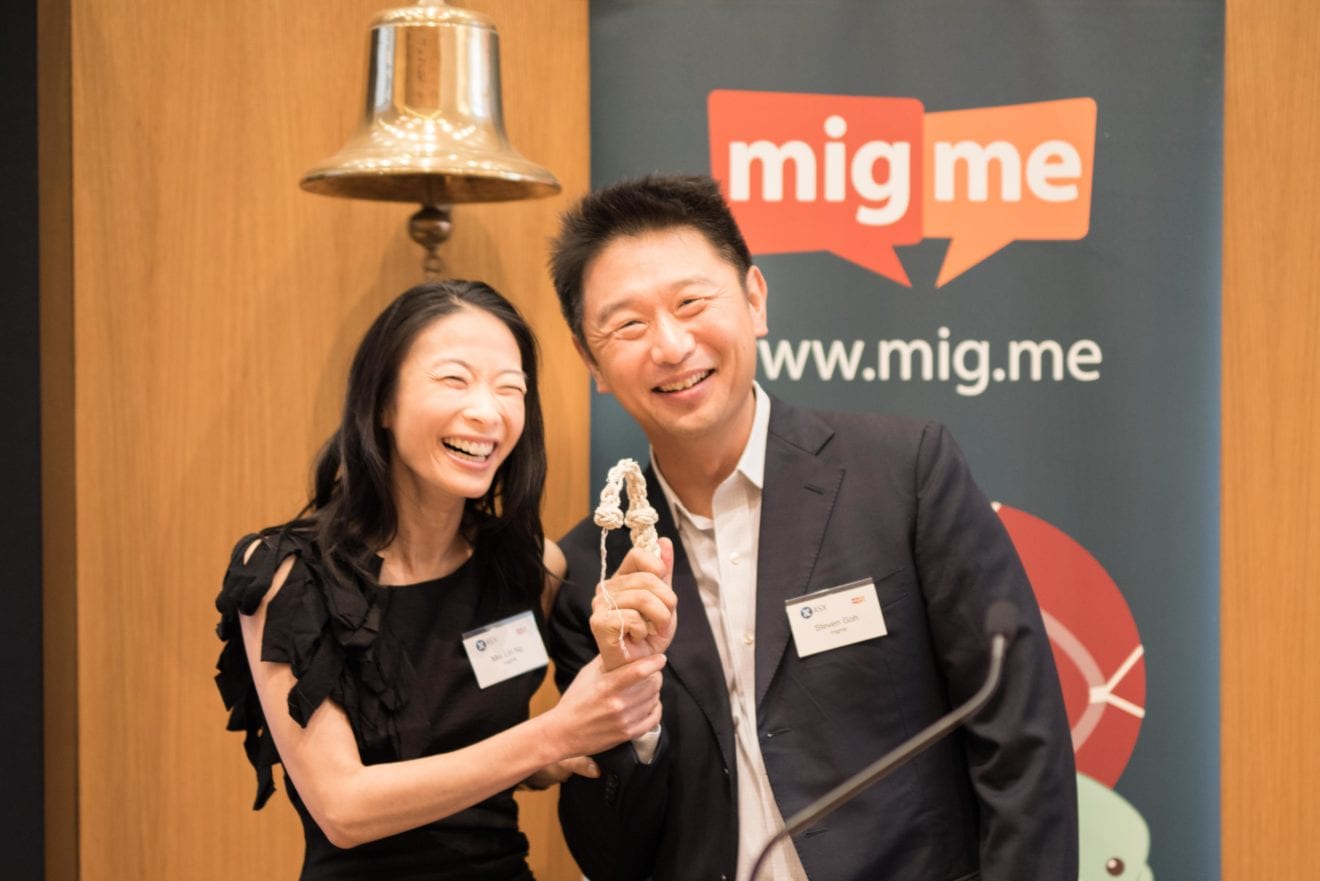
    Social networking company migme has announced the acquisition of two Indonesia-based companies, while finalising a $3.5 million convertible note issue.

    migme announced today the purchase of social news site Hipwee Media Solutions and Shopdeca, which operates two retail sites.

    The value of the acquisitions were undisclosed.

    migme chief executive Steven Goh said the Hipwee acquisition would replicate the company’s service offering in other countries, such as India and the Philippines.

    “Hipwee has always aimed to be the most influential media company for young Indonesians and joining migme will allow us to continue to pursue our mission in a whole new level,” he said.

    Hipwee delivers curated and original community generated content focused on entertainment, relationships and travel, targeting Indonesian urbanities.

    The team comprises 16 editorial and community staff, who write and curate content.

    Shopdeca, meanwhile, will enable migme to launch its ecommerce operations in Indonesia with two retail sites, which provide curated lifestyle products for Indonesian consumers.

    As part of the acquisition, Shopdeca founder Andreas Tharmin will join migme as global head of ecommerce.

    “We’re gaining valuable local market expertise and we look forward to the acquisition being a positive contributor to group results in 2016,” Mr Goh said.

    Meanwhile, migme also announced it had finalised the issue and placement of convertible notes at $1.10 per share conversion ratio and raising a total of $3.5 million.

    The price of the notes were a 22 per cent premium to migme’s opening share price.

    In a statement, the company said the proceeds would be used to fund acquisitions and accelerate market penetration in Asia.

    “The company believes raising funds via the convertible note issue is in the best interests of shareholders at this stage as it allows the business to better execute its expansion plans and achieve its stated objectives,” the company said.

    Shares in migme were 2.2 per cent higher to 90 cents each at the close.

  • VN Airlines to expand operation in Indonesia, performs well in Australia

    VN Airlines to expand operation in Indonesia, performs well in Australia

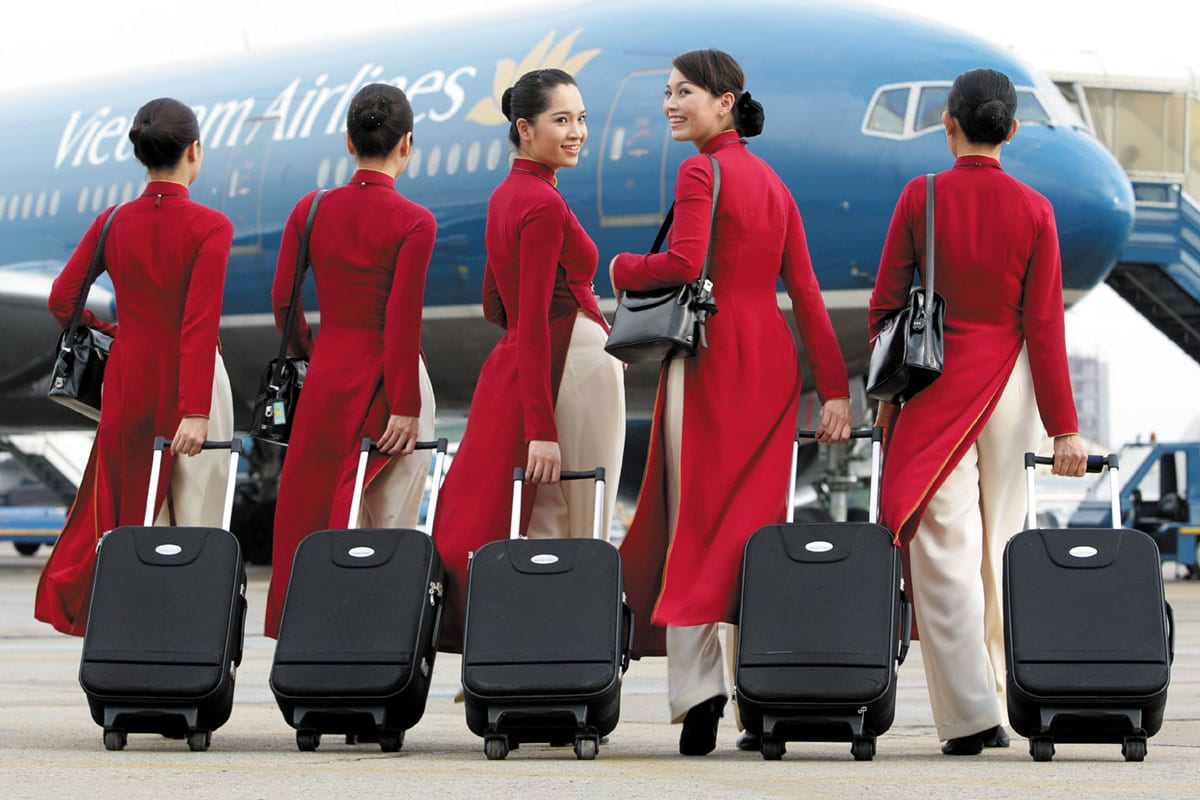
    The national flag carrier Vietnam Airlines conducted 365 flights between Vietnam and Indonesia in 2015, carrying more than 100,000 passengers and over 1,000 tonnes of cargos. According to Nghiem Van Khanh, head of the firm’s branch in Indonesia, in 2015 the Vietnamese aviation sector faced a range of difficulties stemming from Indonesia’s low GDP growth rate and rupiah depreciation, which, he said, weakened Indonesia people’s purchasing power and outbound tourism demands.The statistics were released at the firm’s customer conference in Jakarta, Indonesia, on December 16 which saw the participation of Indonesia aviation officials, and distributors, customers and partners of Vietnam Airlines in the host country.

    Against the backdrop, the firm coordinated with its distributors and partners as well as Indonesian authorities to swiftly launch marketing campaigns and build up a suitable ticket distribution system in the market, he said.

    Khanh added that Vietnam Airlines is currently operating one daily flight from Ho Chi Minh City to Jakarta, using Airbus A321.

    Since 2012, the national flag carrier has run more than 1,000 flights from Vietnam’s southern metropolis to the Indonesian capital city, contributing to boosting cooperation in economic, cultural and social fields between the two countries.

    In 2016, the branch in Indonesia plans to improve its service quality and expand its ticket distribution network in the country.

    The corporation will also launch more flights from Indonesia to Vietnam in order to meet the increasing travel demands of the two countries’ people, Khanh said, noting the plan matches the development course of two nations’ strategic partnership, especially in the context of to-be-formed ASEAN Community.

    Indonesia has become one of Vietnam’s 20 largest tourism markets with about 50,000 Vietnamese holiday-makers visiting the country each year.

    Around 80,000 Indonesian tourists also choose Vietnam as their holiday destination each year.

    Vietnam Airlines in Germany performs well

    The national flag carrier Vietnam Airlines’ branch in Germany has seen an impressive business performance with an estimated 58.3 million EUR in revenue this year.

    2015 was a challenging year for the firm and the aviation sector in general with disadvantages on euro-American dollar exchange rate, fierce competitiveness among airlines, unstable politics in the Middle East and the danger of terrorism, head of the Vietnam Airlines branch Ngo Tri Hung said at a recent customer agents’ conference in Berlin.

    Despite such challenges, the firm tried its best to improve its service quality and marketing as well to operate about 400 flights with 86 per cent full occupancy, he added.

    The firm received ideas from its agents attending the conference on improving service quality.

    Also at the conference, the firm auctioned a return ticket worth 3,000 EUR and collected more than 5,000 EUR from individuals and organisations to sponsor soldiers and guards who protect Vietnam’s islands and sea.

    Vietnam Airlines records impressive change in RoK market

    This year marks an impressive performance of the national flag carrier Vietnam Airlines in the Republic of Korea (RoK) market, with improvements in operational scale, sale revenues and service quality.

    The carrier’s branch in the RoK has fulfilled its tasks excellently, surpassing the set business plan by 11 percent, Cao Anh Son, Vietnam Airlines chief representative in Seoul said at a customer conference on December 15.

    Together with rolling out the modern A350-900 aircraft for the Hanoi- Seoul route, Vietnam Airlines launched its new corporate identity as part of the “four-star service upgrade” strategy, smartening up its image and bringing convenience to customers, Son highlighted.

    Over the past two decades, Vietnam Airlines has made travel easier for passengers by opening air routes connecting Hanoi, Da Nang City and Ho Chi Minh City with Seoul, Busan and many other big cities in the RoK with 60 flights a week.

    The airline boasts 600 representative offices in the RoK.

  • Edrington raises over SGP$55000 for local children’s charity

    Edrington raises over SGP$55000 for local children’s charity

    Edrington Travel Retail raised SGP$55,950 at its inaugural charity initiative Ride for the Children at Street 11. The initiative supports local children’s charity Child at Street 11, which supports low income and dysfunctional families in Singapore by providing early years education for their children. Edrington doubled matched public donations of $18,650, bringing the total amount raised to $55,950.

    The fundraiser saw a team of 18 cyclists from Edrington’s Asia Pacific offices pedal over 400km from Kuala Lumpur to Singapore in just three days. The travel retail business was represented by Tellis Baroutsis (managing director, Global Travel Retail), Ryan Hill (managing director, Asia Travel Retail) and Alan Hsu, sales manager (Travel Retail Taiwan).

    Ahead of the cyclist’s arrival, a Welcome Party was held at The Cube at Asia Square, Edrington Asia Travel Retail and Global Travel Retail HQ, where 20 children from the charity enjoyed food and drink and entertainment by a balloon sculptor. A raucous welcome greeted the cyclists, who despite having just completed an exhausting journey, mingled with the children from the charity.

    One of the cyclists, Ryan Hill, managing director of Edrington Travel Retail comments: “This has been a truly rewarding experience and a stellar team effort from everyone in the Edrington Asia-Pacific office. Child at Street 11 does brilliant work with underprivileged children in our new home – Singapore – and it feels great to be giving back to society when we’ve been made so welcome here. Seeing the kids from Child at Street 11 as we crossed the finish line really brought home why we were doing this and the difference our efforts will make.”

  • Online data disrupts how consumers buy cosmetics in Singapore

    Online data disrupts how consumers buy cosmetics in Singapore

    The global market research firm TSN just released the results of a study—The Connected Life—that found nearly nine out of every ten shoppers (88%) in Singapore research products before making a purchasing decision.

    “It’s unsurprising that Singaporeans are exceptionally good at shopping,” says retail expert Fabio Trabucchi of TNS Singapore, in his recent commentary piece for the Singapore Business Review. “With more high-end malls per capita than anywhere else in Asia, shopping is now a well-entrenched national past-time.”

    Pre-shopping

    A preponderance of personal care items consumers in Singapore investigates products and prices before actually shopping to buy.

    “Ever keen for a bargain, almost eight in ten (78%) shoppers say they do pre-purchase research for personal care products such as skin care, perfume, and cosmetics, and 66% for hygiene items such as deodorant and shower gel,” explains Trabucchi, referring to data from The Connected Life study.

    This marks a shift in consumer behavior that could inform brand strategy to good effect, aligning packaging, branded content and ingredient information with new consumer preferences.

    “Previously these categories used to be a prime area for impulse buying, but thanks to the ease of the internet, Singaporean shoppers are getting savvier about the products they chose and the rationale behind it,” remarks Trabucchi.

    Information age

    Getting informative content in front of consumers is the key to capturing shoppers’ attention and dollars today.

    Multinational companies are ahead of the game, producing beauty content that resonates with consumers. L’Oréal recently opened an in-house branded content studio in Canada , where employees can create dynamic messaging to reach consumers with information that matters.

    “As consumers in Singapore adopt a more considered approach to their purchases, brand owners and retailers can provide the information – and incentives – they need to make up their minds,” confirms Trabucchi in his post for the Singapore Business Review.

    “Whether online or offline, businesses need to understand researching behaviours and ensure they are providing shoppers with relevant content that informs their purchase decisions,” he believes.

    Concluding, “this means they must stop thinking in terms of advertisements and start becoming content providers that offer relevant information and offers at every stage of the shopper journey.”

  • Thailand’s Central Group cautious over 2016 expansion

    Thailand’s Central Group cautious over 2016 expansion

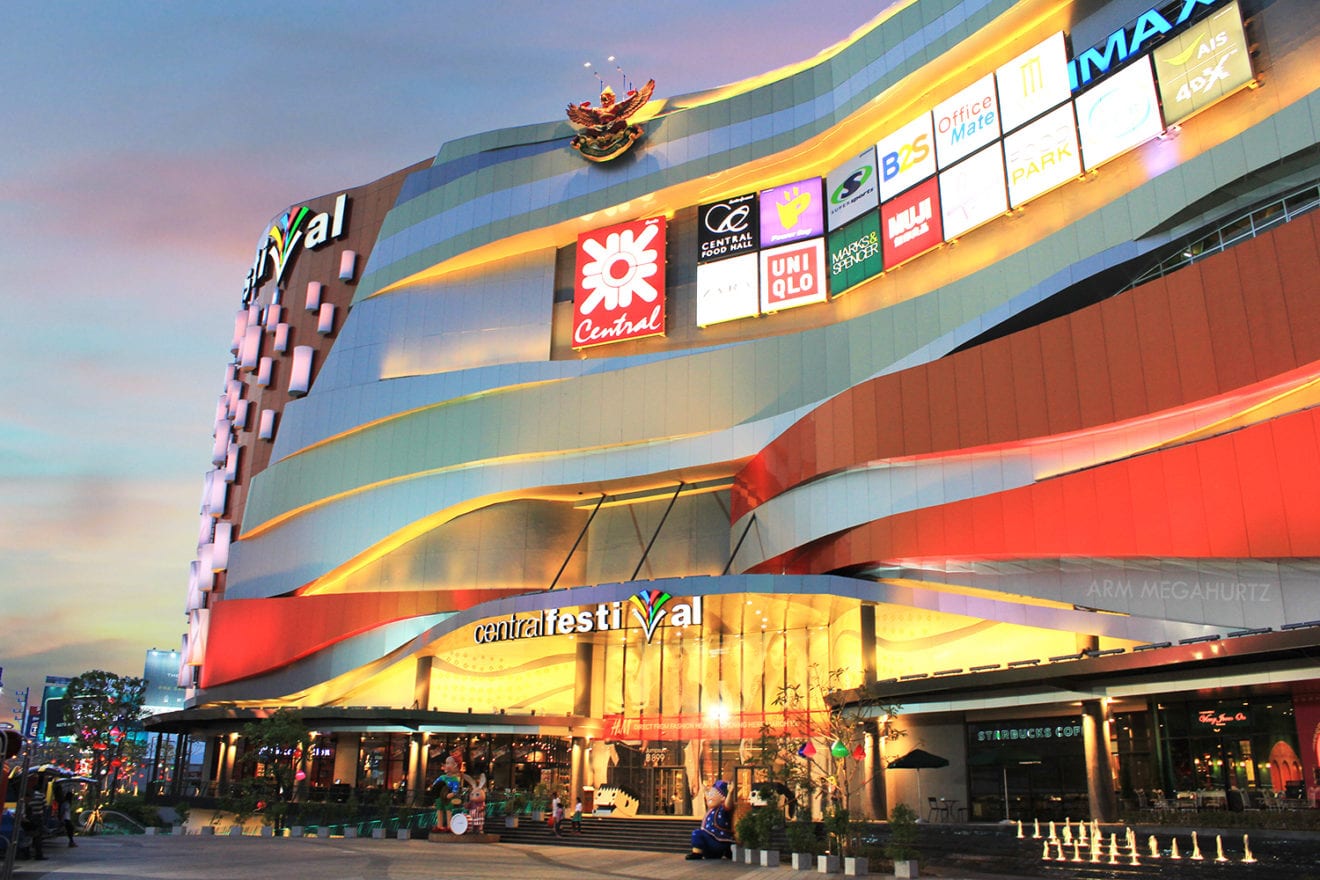
    Central Group sees 2016 as another year to be more conservative with expansion, as the country’s largest retail operator is still concerned about weak domestic consumption. Prin Chirathivat, deputy chief executive officer, said yesterday that both the global and domestic economies are expected to improve in the coming year. The only worry was moribund consumer spending, as the group is heavily involved in the retail business.

    Unlike the retail business, the group’s hotel business was still performing well this year.

    The group will continue to develop department stores as planned but with a cautious approach.

    “We have to be well prepared with a more flexible plan and put more focus on our core business,” he said.

    The company appears to be hedging its risk by focusing less on non-core businesses like warehousing.

    To support future growth of its hard-line business, which heavily relies on inventory management, Central Group’s CRC Power Retail is forming a 50:50 joint venture with WHA Corporation Plc.

    WHA Central Alliance was established with Bt850 million in registered capital to manage its Bt4-billion warehouse project in Ayutthaya’s Wang Noi district.

    Located on 320 rai (51.2 hectares) of land owned by Central Group, the new warehouse will offer a total of 250,000 square metres of space. As the first phase, Central Group has already built a 56,000sqm facility on 100 rai.

    The JV would take over both the land and warehouse under a sale-and-leaseback deal and carry out the next two phases to expand its capacity to 250,000sqm in three years. The Bt4-billion investment includes land.

    Jareeporn Jarukornsakul, vice chairman and chief executive officer of WHA, said that through the sale and leaseback of the first phase, the new JV will realise revenue of about Bt100 million from the beginning.

    The first phase was aimed at serving Central’s hard-line retail business consisting of Thai Watsadu, HomeWorks, Baan&Beyond and Power Buy.

    In preparation for continuing expansion, particularly of the new imported product line-up, the second phase is scheduled to be completed next year, adding 28,000sqm of rental space.

    The hard-line business has played an important role in the group accounting for 10 per cent of total revenue, with an average annual growth of at least 10 per cent in revenue.

    Somyos Anantaprayoon, chairman of WHA, said that after the completion of all phases, Central Group would lease 60 per cent of the total warehouse space for 10 years. The remaining areas would be available for new customers.

    With experience in the build-to-suit warehouse business, WHA could help clients to save about 30 per cent in costs incurred by constructing their own warehouse.

    WHA projects Bt400 million a year in income from the completed project, which would boost its rental, service and utilities income by 10 per cent.

    Jareeporn said the JV was the third collaboration with Central Group. The company already provides the group a 23,000sqm warehouse and distribution complex on Bang Na-Trad Road and a 20,000sqm cold storage facility on Rama II Road.

  • Duty Free Philippines targets $235m in 2015

    Duty Free Philippines targets $235m in 2015

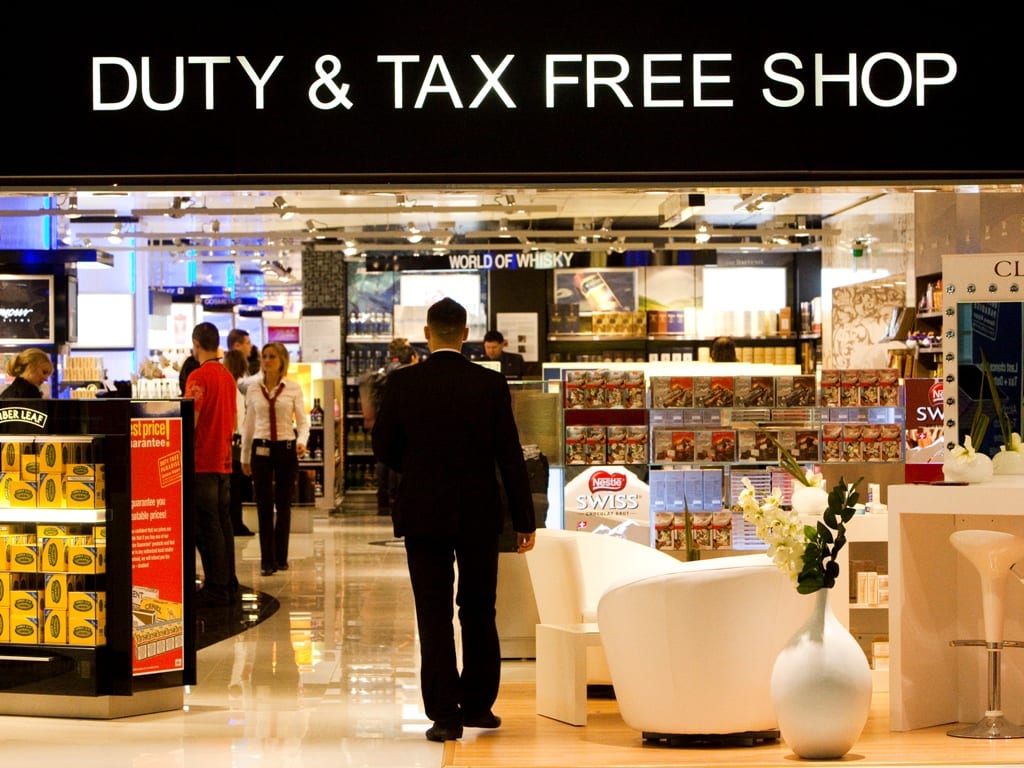
    State-owned Duty Free Philippines is targeting total sales of $235m in 2015 (+2.5%) after hitting $229m in 2014, with Manila Airport accounting for nearly 45% and the downtown Fiesta Mall just under 50% as DFP’s largest single outlet.

    While the expected sales increase is modest, it is regarded as a good performance considering Manila Airport Authority reduced the number of concessions in T1 from around 30 to less than 20 due to congestion and major airlines have also transferred operations to T3.

    “T1 work is not finished. It’s work in progress,” said Duty Free Philippines Merchandising Division Manager Jennifer Start, talking exclusively to TRBusiness recently.

    “There has been a remarkable change. We have renovated our departure stores, but we heard there is more work to be done by the airport authority in T1. It’s upgrading work. They have shown us plans to expand the facility.”

    NAIA T3 departure confectionery ©

    Duty Free Philippines’ biggest-selling product category remains confectionery, accounting for 37% of total sales. It is also the biggest selling category at Manila Airport, accounting for 44%. Above: Manila NAIA Terminal 3. ©.

    Further work is also in the pipeline for T3 (which accounts for 20% of Manila Airport sales) as DFP gets to work on renovating and increasing its shops and boutiques in the departure hall.

    Meanwhile, arrival shops sales account for more than half of DFP’s total sales revenue at Manila Airport, with Filipino passengers representing the majority of customers and the number one purchase being confectionery/chocolate.

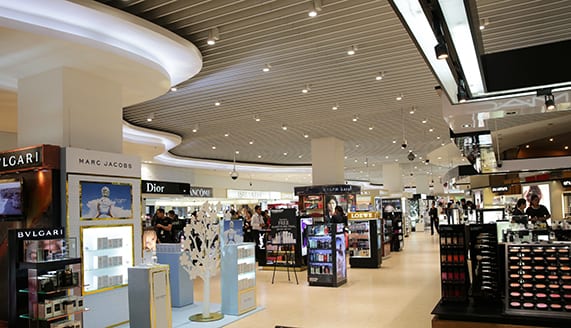
    NAIA T3 departure perfumery ©

    DFP’s perfume and cosmetics sales accounted for 11% of it total merchandise sales last year. Above: Manila NAIA Terminal 3. ©.

    By contrast, foreign passengers purchase a larger share of goods in DFP’s departure shops, with South Koreans and Mainland Chinese the highest spenders.

    Confectionery is the biggest selling category at Manila Airport, accounting for 44%, followed by liquor (26%), perfume and cosmetics (12%) and tobacco (7%). Fashion, watches and souvenirs take the remaining 11%.

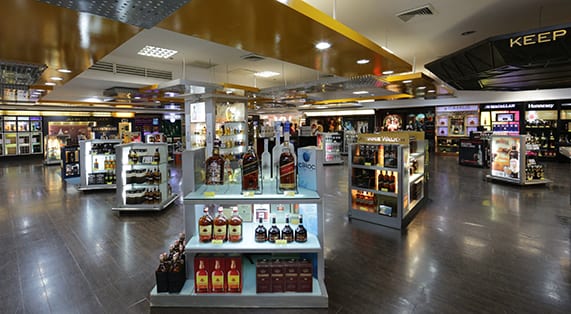
    DFP Fiesta Mall-liquor ©

    The liquor section within the Duty Free Philippines Fiesta Mall. ©.

    The retailer’s downtown duty free Fiesta Mall has also undergone a total renovation and upgrade over the last two years, according to Start, and has received favourable comments from customers: “We have had a major transformation in Fiesta Mall, especially for perfume and cosmetics last year. The fashion area also has been renovated, along with liquor, tobacco and confectionery,” she said.

    “We have new Coach and Chloe boutiques, and a complete range of lingerie, bags and perfume and cosmetics in Victoria’s Secret. Another new outlet is our Bath & Bodyworks health and beauty products shop that opened here earlier in 2015.”

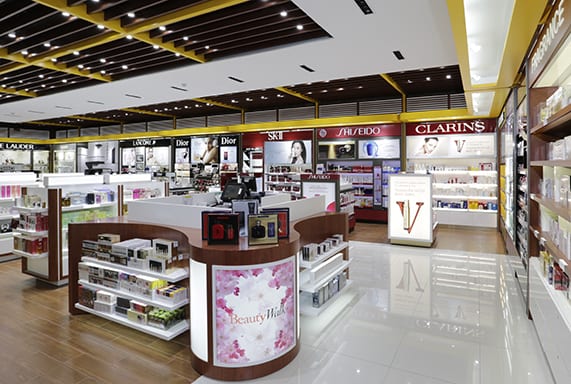
    Fiesta Mall Beauty Walk ©

    Wines and spirits is the second-largest product category in terms of sales across DFP’s outlets, accounting for 18% in total. ©.

    Including sales from all ten of its provincial airports, Manila Airport and the Fiesta Mall, DFP’s biggest selling product category remains confectionery, accounting for 37% of total sales, followed by liquor (18%); Perfume and cosmetics (11%); fashion (9%); and tobacco (5%).

  • Bank Simpanan Nasional and Cisco Digitise Banking in Malaysia

    Bank Simpanan Nasional and Cisco Digitise Banking in Malaysia

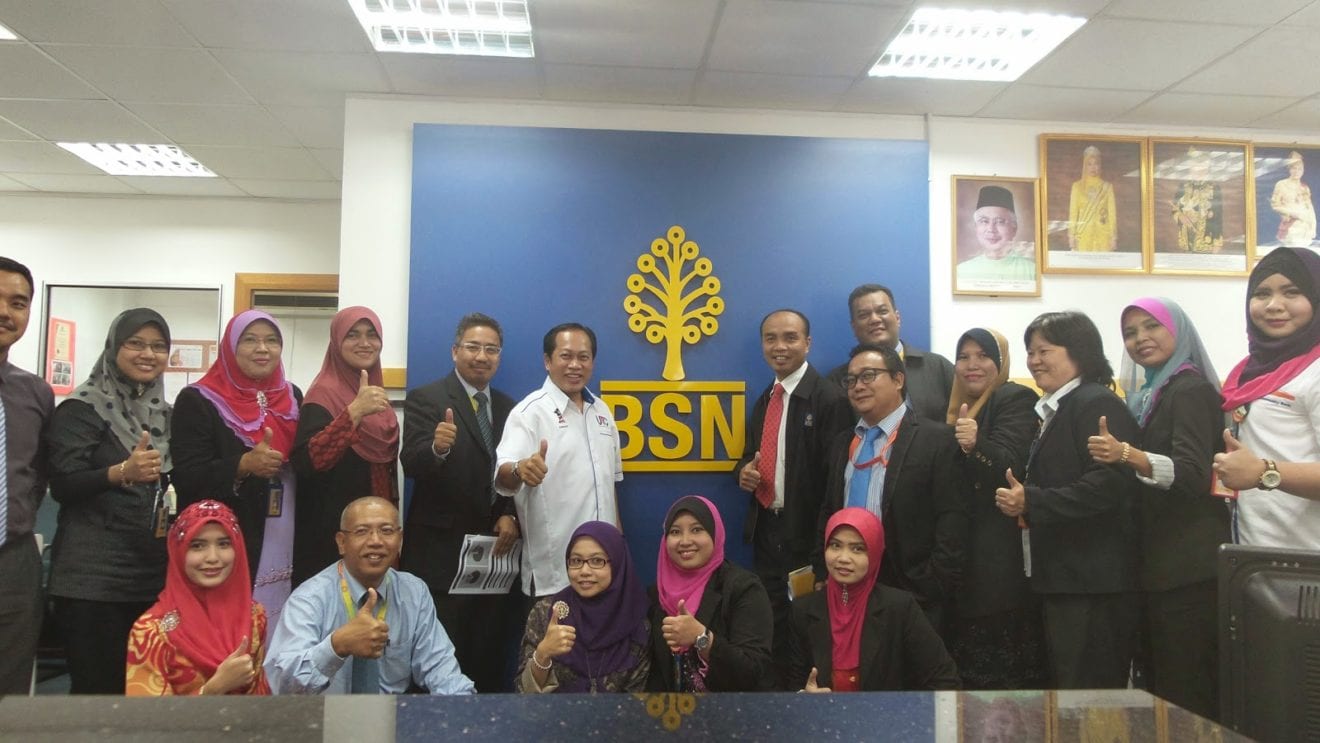
    Malaysia’s premier savings bank, Bank Simpanan Nasional (BSN), is transforming their products and services to appeal to a new generation of digital-enabled customers by deploying Virtual Teller Machines (VTM) across 31 branches. Built on Cisco® Unified Communication and Cisco Unified Computing platforms the VTM helps enable virtual, real-time engagement between customers and tellers in any of the branches, through a highly secure and immersive video platform.

    “The VTM balances the work load between branches, enabling customers in busy branches to perform transactions assisted by tellers in less busy branches nationwide. Customers can now enjoy counter transactions without geographical limitations and experience more comfortable and personalised professional financial services,” said Datuk Adinan Maning, Chief Executive of Bank Simpanan Nasional.

    Key Benefits to Digitised Teller Services

    Virtualising the services provided by in-bank tellers enables BSN to increase resources for the customer, increase bank productivity and most importantly, increase the efficiency of their organisation and the efficiency of service to their customers. Each BSN branch will have three VTM machines and these self-service kiosks that are supported by 450 virtual teller agents placed to assist their colleagues at branches that have higher customer traffic.

    The virtual tellers will be able to attend to customers’ needs, provide advice on banking products and services, and handle account inquiries as well as loan applications.

    The VTMs installed at BSN branches have highly secure features including encrypted electronic signature, thumb print verification, and card identification to ensure customers are protected.

    “The financial services industry is not immune to competition from market disruptors. Non-traditional financial institutions are delivering new digital services that are personal, customised and convenient. Malaysia is committed to transforming the economy through digitisation, and two critical aspects of the Eleventh Malaysia Plan — innovation to drive revenue and productivity acceleration for sectoral growth — are addressed with this implementation at BSN. By leveraging technologies from Cisco to drive a connected banking experience, BSN is leading the way in delivering greater value to their customers, appealing to the digital consumer, improving their productivity and efficiency, while increasing their revenue and customer base. The digitisation of bank branches is an important part of the Omni channel banking experience that transforms the customer’s transaction and increases their engagement with the bank,” said Albert Chai, Managing Director for Cisco in Malaysia.

    Built on the Cisco Business Edition 7000 unified communications platform that includes voice over Internet Protocol (IP), video through Telepresence with Cisco DX 650 and Cisco Jabber for chat functionality and presence, the VTM allows BSN employees to connect to their customers at any time during branch operation hours. The scalable, open and interoperable technologies are hosted on Cisco Unified Computing System foundation.

    “In total, BSN is investing RM30 million to roll out the VTM that provides more than 80 percent of counter services, and is an improvement over current automated teller machines (ATM) and cash deposit machines (CDM). In the near future, the VTMs will also be offering additional services including Account Opening and Debit Card, Customer Information Management and Bills Payment. The VTMs may also allow extended banking hours with the placement of VTMs at public locations,” continued Datuk Adinan.

    BSN customers will be able to use the new banking service in 31 branches, with 93 VTMs serving customers fromDecember 2, 2015.

    According to McKinsey, more than 700 million consumers currently use digital banking across Asia. With digital banking through desktops, smartphones, and tablets becoming much more common, consumers that prefer digital banking are more attractive to financial institutions as they tend to be more educated, have account balances that are two to three times higher, hold multiple banking products and are very active in online shopping. By digitising banking services through VTM machines, BSN is able to optimise technology to improve the customer experience and meet customer demand, while competing with emerging fin-tech start-ups.

  • Uber-hip Dover Street Market to open in Singapore’s Dempsey

    Uber-hip Dover Street Market to open in Singapore’s Dempsey

    The facade of Dover Street Market’s China outpost called IT Beijing Market. Dover Street Market is poised to open its first outlet in Southeast Asia in the hip Singapore neighbourhood of Dempsey. The edgy fashion retail and concept store conceived by Comme des Garçons’ Rei Kawakubo will be part of a new retail and F&B development by COMO Lifestyle.

    The Singapore branch will join an existing line-up of stores in London, Tokyo, New York and Beijing.

    Citing COMO Lifestyle’s bid, CNA added that the new concept will be known as “COMO Dempsey.”

    The facade of Dover Street Market’s China outpost called IT Beijing Market. — Picture via DoverStreetMarket.com

    It will integrate Dover Street Market with several F&B outlets, including a Jean-Georges Vongerichten restaurant and bar, new restaurant concept COMO Cuisine and local Peranakan restaurant Candlenut.

    No other details, such as projected opening date, were available at time of writing. COMO Lifestyle is part of Christina Ong’s luxury portfolio whose interests range from hotels to fashion. The Singapore businesswoman and her Malaysian-born husband Ong Beng Seng are valued at US$1.8 billion (RM7.7 billion) as of July 2014.

  • Hong Kong tourism industry better off as a vegetarian

    Hong Kong tourism industry better off as a vegetarian

    The influx of mainland visitors to Hong Kong has been easing in recent months with many preferring other destinations such as Japan and Korea where the exchange rate is more appealing.

    Still, some pro-Beijing loyalists and businessmen blame the localist campaign in Hong Kong for the decline in mainland tourist arrivals.

    The situation offers a chance for Hong Kong to reposition itself as an international tourist destination. It’s an opportunity to erase the image, built over the past decade, that the city is nothing more than a shopping mall for mainlanders in the past decade.

    We often hear leaders of our tourism industry, such as Hong Kong Tourism Board chairman Peter Lam Kin-ngok, blaming Hong Kong people’s unfriendly attitude toward mainlanders for the loss our competitive edge over other tourism destinations in the region.

    But what Lam seems to be forgetting is that Hong Kong shouldn’t rely on a single tourist market to contribute to the growth of our tourism sector.

    He also seems to be forgetting that the true value of Hong Kong as a tourist destination lies in its unique history as a former British colony, a community that melds the influences of western and eastern cultures, and an international gateway to China.

    In a press conference on Tuesday, Lam, who is also an entertainment and property tycoon, made these remarks about the tourism industry: “The China market is a fat meat. Other countries surrounding us are fighting for it. However, Hong Kong people don’t like to eat meat, they are vegetarians. [Hong Kong] will get slim if it just eats vegetables but no meat. Once Hong Kong gets thin, our pockets will also shrink. Mainlanders know Hong Kong people do not welcome them and so they turn to other destinations.”

    If that’s what he thinks, well and good. But let’s take another look at our tourism sector.

    Contrary to the gloom and doom scenarios painted by the industry captains, the situation is actually improving in recent months — at least from the point of view of the general public.

    Overall arrivals in November fell by 10.5 percent, mainly as a result of a 15 percent drop in the number of mainland visitors to 3.54 million.

    Surprisingly, however, the number of visitors from other overseas markets rose by 7.6 percent to 1.16 million, according to figures released last week by the Secretary for Commerce and Economic Development Gregory So Kam-leung.

    The government and the Tourism Board seem to have different goals as regards the city’s tourism sector.

    While Lam stressed the importance of the Chinese clientele, So is looking at a wider market.

    So said the tourist mix has been changing in the past two months, with the number of non-mainland Chinese visitors continuing to grow as Chinese visitors go to other destinations.

    He said this is becoming the “new norm” for industry, and the government will focus on the quality, not quantity, of Hong Kong’s tourism sector.

    It’s a fact that some Hong Kong people, especially the localists, took a hostile approach in dealing with mainlanders, specially with parallel traders, as their massive purchases of daily necessities are disrupting our normal life.

    But that couldn’t be the only reason for the decline in Chinese visitors. It is also partly due to the implementation of a “one trip per week” policy for Shenzhen residents, which has resulted in a 40 percent drop in the number of arrivals from the southern city.

    It’s good to hear that the number of non-Chinese visitors are growing over the past two months, although they are still behind the mainlanders by about two million.

    A balanced mix of tourists should be a key consideration in reviewing our current tourism policies and strategies.

    The tourism board, in fact, is already shifting its promotional activities toward attracting high-value-added overnight visitors, MICE (business meetings, incentives, conferences and exhibitions) and cruise tourists to offset the decline in the number of same-day visitors.

    Such a change in direction is a realistic move to drive quality growth for our tourism industry, especially since Hong Kong ignored other aspects of the business in the past decade as it focused its resources on welcoming mainland visitors.

    Several months ago, top Hong Kong officials including Chief Executive Leung Chun-ying and Secretary So blamed the localists’ anti-mainland campaign for the decline in Hong Kong tourism and retail industries.

    But now, So’s remarks indicate that the government is realizing that Hong Kong shouldn’t rely solely on China to support its economy.

    It seems that our officials are beginning to realize that the massive influx of mainland tourists made us fat quickly, but not in a healthy way.

    Perhaps, Peter Lam is right about his analogy. We have eaten too much fatty meat in the past 10 years. It’s about time we went vegetarian. It’s healthier.

  • Lessons of e-commerce explosion in China

    Lessons of e-commerce explosion in China

    The second World Internet Conference (WIC), also known as the Wuzhen Summit, will take place Dec 16 -18, in Wuzhen, Zhejiang. Chinese President Xi Jinping will attend the conference and address the opening ceremony. It takes place amid dramatic expansion of Chinese e-commerce, thanks to great market potential and the government’s supportive policies.

    In early spring, the State Council, China’s cabinet, announced it will boost e-commerce by cutting red tape and liberalizing investment regulation in the sector. Meanwhile, Premier Li Keqiang said that with the “Internet Plus” strategy China would back e-commerce development and guide the Chinese internet companies’ international expansion.

    In the mainland, e-commerce and other internet-based industries are supporting and accelerating the rebalancing of the Chinese economy toward consumption and innovation.

    In early November, transactions on the Singles Day — the Chinese version of the Valentine’s Day — morphed into a huge shopping extravaganza as the mainland consumers’ buying spree caused sales to soar almost 60 percent from last year. Although Alibaba, the e-commerce giant, started the online festival only seven years ago, its total sales alone climbed to 92 billion yuan (US$14.3 billion).

    To put the figure into an international perspective, it is more than quadruple the US earnings last year from its Black Friday and Cyber Monday sales events combined. Not surprisingly, Alibaba’s founder Jack Ma believes that Singles Day will go global.

    “In the next five years, I believe it may be in Tokyo, Paris or New York,” the e-commerce entrepreneur said.

    Chinese e-commerce is driven by heavy online buyers, younger demographics, and consumers in the relatively wealthier first-tier cities – although relative growth is even faster in many lower-tier cities and rural areas.

    These internet-based industries fuel the government’s 13th five-year plan that was officially outlined a month ago. Until recently, Chinese growth relied on investment and net exports, but that era ended with the global financial crisis. The new objective is to rebalance the Chinese economy toward consumption.

    Threat to traditional retailers

    Not everybody has benefited from Chinese e-commerce explosion, however. As the record sales on Single’s Day showed, online retailing poses an increasing threat to those brick-and-mortar retailers that continue to stay mainly offline.

    For the leading department store operators in China, online retailing remains limited and sales growth is weak. While Intime Retail may be best positioned to benefit from online retailing – not least because of its strategic cooperation with Alibaba – several other companies, including Golden Eagle Retail, Parkson Retail and Maoye International Holdings are only getting into the game.

    Golden Eagle and Maoye have collaborated with Tencent through the WeChat social platform, whereas Parkson has introduced an online shopping site.

    The explosion of Chinese e-commerce has caught off guard not just domestic retail leaders but international industry giants. Initially, these Western giants attributed their losses to China’s growth slowdown and the pullback by shoppers, which presumably accounted for their shrinking profit margins.

    However, the rapid explosion of e-commerce and the rising share of consumption in the Chinese economy cast doubt over such interpretations. Most importantly, a closer look at retailing trends in China suggests that it is not Chinese consumers or Chinese economy that accounts for the losses of these international industry giants – but competition.

    The famed Unilever, for instance, saw its sales fall off the cliff because it failed to go online fast enough. In June, Swiss food giant Nestle acknowledged that it failed to understand how retail was changing in China. The failure to move quickly and broadly into online retailing proved costly: the company had to burn instant coffee it could not sell in stores.

    The same goes for Colgate-Palmolive and Germany’s Beiersdorf, which have been suffering from offline overstocking, even as new online retailers have reaped enormous earnings.

    Intriguingly, some of these international giants have missed much of the Chinese e-commerce explosion, even though many have experienced two decades of e-commerce growth in the US, Europe and Japan. In these advanced economies, the e-commerce explosion took place differently, however.

    In the prosperous West, the Internet revolution initially relied on fixed-line personal computers and notebooks. In the emerging and developing East, such technologies remain relatively expensive. In these nations, the initial penetration has been fueled by mobile devices, particularly smartphones. In China, mobile drives retail sales growth and currently accounts for half of all e-commerce sales.

    The lessons are clear. First, business models that succeed in advanced economies may not work in emerging and developing economies. Second, advanced-economy lessons are vital but they must be adjusted to the Chinese business environment. Third, simple imitation of Western strategies does not ensure success in China. Only innovation can produce the desired results.

  • Yoma to distribute Mitsubishi cars in Myanmar

    Yoma to distribute Mitsubishi cars in Myanmar

    Mainboard-listed Yoma Strategic Holdings announced on Wednesday a 50:50 joint venture with Mitsubishi Corp to distribute the Japanese cars in Myanmar.

    The joint venture company, MM Cars Myanmar Ltd, will be responsible for the distribution (wholesale), retail sales, after-sales services, and maintenance services of Mitsubishi cars and spare parts. It will also take over the running of two Mitsubishi Motors After-Sales Service Centres set up in 2013 and currently being operated by Yoma.

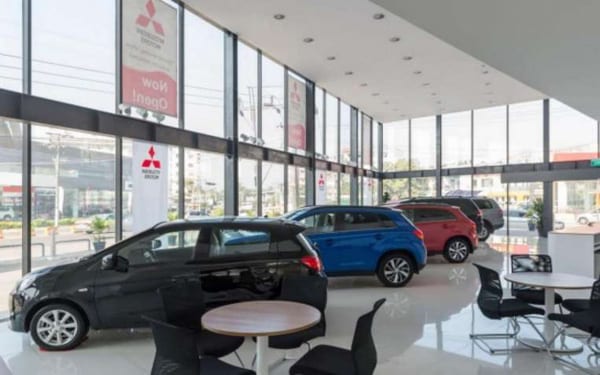
    The joint venture will also operate the first Mitsubishi Motors showroom in Yangon, which opened on Tuesday. Said Mr Melvyn Pun, Yoma Strategic CEO: “The joint venture with Mitsubishi Corporation formalizes our collaboration in developing the Mitsubishi Motor business in Myanmar over the past year.” “Our automotive segment is experiencing strong growth, and we are confident that the Mitsubishi Motors business will contribute meaningfully in the medium term.”

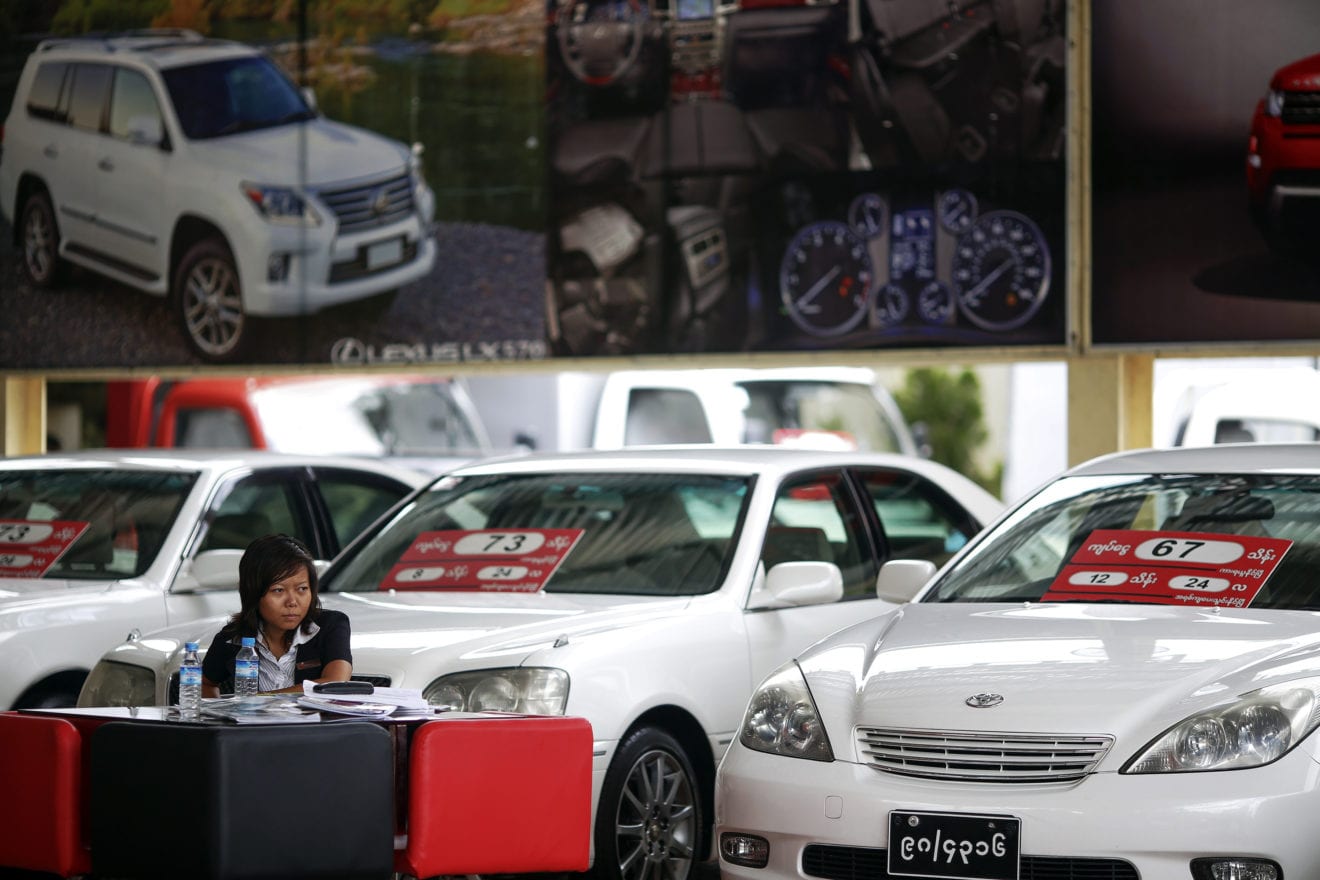
    Yoma said that since the Myanmar government announced a relaxation of vehicle import regulations in 2011 as a part of its “democratisation” policy, the number of used vehicles from Japan has seen a notable increase, making Myanmar the number one destination for used vehicles from Japan in 2014. Import regulations for new vehicles have also been gradually eased since 2012 with the Myanmar government announcing the approval of new vehicle imports and sales by joint ventures established between Myanmar and foreign companies, the company said.

    These developments are expected to generate further growth in the Myanmar vehicle market, it said. Yoma Strategic already has several partnerships with Mitsubishi Corporation, including an elevator related business, a tyre business and the operation of the Mandalay International Airport.