Author: Mei Ling Tan

  • Fintech Revolution Boosts Efficiency in Financial Services Sector

    Fintech Revolution Boosts Efficiency in Financial Services Sector

    Thriving Even in Economic Uncertainty: XYZ Company Announces Expansive Growth Strategy

    In a surprising revelation that has energized market watchers and retail news observers alike, XYZ Company recently announced a robust expansion plan which promises to dramatically increase its market footprint. The strategy, comprised of both physical and digital growth metrics, reflects a powerful response to the burgeoning consumer demand within the retail sector.

    Strategic Expansion Amidst Rising Consumer Demand

    XYZ Company, renowned for its innovative approach in the retail industry, has unveiled plans that include opening new stores in key high-traffic areas while also enhancing their online presence to capture a broader digital audience. This dual focus aims to leverage the growing trend where consumers increasingly embrace both in-person and online shopping experiences.

    Boosting Digital and Physical Footprints

    In the digital realm, XYZ is set to launch an upgraded e-commerce platform. Enhanced user interfaces and streamlined shopping processes are expected to improve customer satisfaction and drive online sales. Simultaneously, the new physical stores will not only broaden XYZ’s geographical reach but are also designed to provide unique, immersive shopping experiences, setting them apart from competitors.

    Employment Opportunities and Economic Impact

    With the expansion, XYZ Company anticipates the creation of multiple new jobs across various sectors of the economy: from retail associates and customer service representatives to logistics and supply chain experts. This growth is not only a boon for employment but also likely to spur economic activity in newly targeted regions.

    Implications for the Retail Sector and Consumers

    XYZ Company’s expansion strategy underlines a critical evolution in the retail industry, highlighting how businesses can thrive by blending innovative digital strategies with traditional brick-and-mortar strengths. For consumers, this expansion means more choices, improved shopping experiences, and enhanced accessibility to products and services. The retail sector might well take a leaf out of XYZ’s book, pushing towards a more integrated and consumer-centric future.

    By strategically positioning themselves in this manner, XYZ Company is not only expanding its brand presence but also setting new standards for consumer engagement and market growth in the retail domain.

  • CMC Steals the Spotlight at World IT Show 2025 with Impressive Showcase

    CMC Steals the Spotlight at World IT Show 2025 with Impressive Showcase

    CMC Makes a Significant Impact at WIS 2025, Strengthening Korea-Vietnam Tech Ties

    Asia’s Premier Technology Showcase

    The World IT Show (WIS) 2025, organized by Korea’s Ministry of Science and ICT, recently concluded with a resounding success, drawing significant attention across the tech community. With the theme “The Next Wave,” this prestigious event hosted in Asia saw an overwhelming turnout of over 100,000 visitors, including tech aficionados and business executives. The stage was set for over 500 companies, including global titans such as Samsung, LG, KT, SK, and Hyundai, making it a hotspot for the latest innovations in technology.

    CMC’s Standout Performance: Highlighting the ASEAN Region

    Vietnamese tech enterprise CMC showcased a vibrant presence at WIS 2025, capturing the essence of the event’s theme “Beyond Digital.” With its booth teeming with visitors, CMC engaged in numerous impactful discussions and meetings with potential Korean partners over the event’s three days. Their compelling digital solutions and technology prowess spotlighted the company’s readiness to take on substantial roles in global digital transformation initiatives.

    Innovations That Caught the Eye

    A visitor’s comment encapsulated the success of CMC at the event: “The company displayed a comprehensive technology ecosystem… I was particularly impressed by their internationally certified team…”
    CMC’s offerings such as the Comprehensive Security Platform, CMC Cloud, and Managed Services, drew particular interest. These products promise proactive defense and seamless integration, optimizing costs and adding sustainable value across sectors, including manufacturing, BFSI, healthcare, and e-commerce.

    Expansion and Future Prospects

    In August 2024, CMC took a significant step in their global strategy by establishing CMC Korea. Their participation in WIS 2025 is a testament to their commitment to nurturing long-term collaborations with Korean and global businesses. A company representative shared, “Our success at WIS 2025 underscores our global mindset and dedication to propelling Vietnamese technology on the world stage, fostering a greener, safer, and more sustainable digital future.”

    Impact on the Retail Sector and Consumer Trends

    CMC’s stride in WIS 2025 is set to bolster consumer confidence and trust in Vietnamese technology solutions globally, particularly in critical sectors like digital security and cloud services. These advancements signify a significant leap in tech consumer trends and brand expansion, influencing the broader retail and technology landscapes profoundly. As CMC continues to chart its global journey, its innovations are expected to reshape consumer experiences and enterprise tech solutions markedly.

  • China Seeks US Trade Dialogue, Insists on Lifting Tariffs as Preliminary Step

    China Seeks US Trade Dialogue, Insists on Lifting Tariffs as Preliminary Step

    Escalating Trade Tensions: U.S. and China Exchange Heavy Tariffs Amidst Negotiation Hopes

    In a dramatic escalation of the ongoing trade war, the U.S. has imposed significant tariffs of up to 145% on a variety of Chinese products starting in April. In retaliation, China has introduced a new set of tariffs, matching the U.S. with a 125% duty on American imports. This development comes amidst tentative talks and fluctuating market reactions.

    Temporary Reprieve for High-Tech Goods

    Notably, certain high-end tech products such as smartphones, semiconductors, and computers have been temporarily exempted from the U.S. tariffs. This sector will be closely watched by analysts as an indicator of potential longer-term policy shifts in these pivotal industries.

    Dialogue and Diplomacy: A Path Forward?

    Amidst these aggressive fiscal maneuvers, U.S. President Donald Trump has suggested that China is keen to negotiate, citing a “very good chance we’re going to make a deal.” Conversely, official statements from Beijing assert that it was the U.S. that initiated contact, with China now evaluating the outreach.

    However, any progression towards substantive talks appears contingent on concessions, particularly regarding unilateral tariffs. The Chinese Commerce Ministry emphasized that without the U.S. showing sincerity by reversing its tariffs, dialogue would be insincere and erode trust further.

    Hard Stances on Both Sides

    Expert opinions suggest a tough stance from China, with signals that negotiations will commence only after the U.S. exhibits concrete actions towards compromise. Wu Xinbo of Fudan University highlighted that revocation of tariffs might pave the way for addressing deeper issues such as the unbalanced trade relationship and technological suppressions alleged by Beijing.

    The Global Impact and Deadline Pressures

    As the 90-day deadline in July looms for several countries to negotiate terms with Washington, the broader international community remains on edge. Beijing’s firm resolve was echoed in a recent social media campaign, emphasizing their readiness to combat a prolonged trade war if necessary.

    Economic Strains and the ‘Olive Branch’

    Recent economic data from China and the U.S. expose vulnerabilities exacerbated by these trade tensions. China’s factory activity has contracted, and similarly, the U.S. economy faced contraction in early 2023. Amid these challenges, calls for a resolution have intensified, with some analysts like Stephen Innes from SPI Asset Management recognizing Beijing’s recent statements as a potential initial step towards de-escalation.

    Looking Ahead: Implications for the Retail Sector

    These unfolding events hold profound implications for the retail sector. Consumer trends could shift significantly as product prices and availability are impacted by the tariffs. Retail news will continue to monitor how retail chains and consumers adapt to these new economic realities. As the situation develops, the resilience of the global trade framework and international economic relations will be tested. This period may well define the future dynamics of international trade and consumer behavior in a deeply interconnected world economy.

  • Fonterra to close milk powder packaging facility in New Zealand

    Fonterra to close milk powder packaging facility in New Zealand

    Fonterra will shut its Canpac packaging facility in New Zealand in July, impacting approximately 120 employees. The site primarily blends and packages milk powders. 

    Its closure forms part of Fonterra’s plan to divest its consumer business, which includes brands such as Anchor, Anlene, Chesdale, and Mainland.

    The consumer division accounts for about A$3.1 billion (NZ$3.4 billion) of the group’s invested capital.

    Canpac currently packs up to 4,000 mt of powder products annually, equivalent to less than 1 percent of Fonterra’s total product volume.

    COO Anna Palairet said the move follows ongoing economic challenges, including low product volumes and increased production complexities.

    “It’s been a tough day for all the team at the site,” she expressed. “Making decisions like this is never easy.”

    Palairet explained that the company will pivot towards higher-value ingredients, such as advanced proteins and medical nutrition.

    “Our strategy is about creating end-to-end value and growing total returns for our farmer shareholders,” she continued.

    “We believe the best way to achieve this is to focus on our strengths and scale in ingredients and food service, and we are prioritising our investment on the parts of our operations that are better suited to this.”

    The dairy cooperative will begin a consultation process to explore potential redeployment opportunities for affected staff as it winds down operations.

  • Big M, Dairy Farmers launch Mars-inspired flavoured milks

    Big M, Dairy Farmers launch Mars-inspired flavoured milks

    The two flavoured milk brands – Big M and Dairy Farmers Classic – have teamed up with confectionery brand Mars to introduce confectionery-inspired chocolate milks.

    Anne Scott, senior brand manager of Big M, said the Maltesers-flavoured milk is part of a limited-edition release for Victorian fans, and the collaboration celebrates the 125th anniversary of the Dairy Farmers Classic.

    Taking cues from the original taste of nougat, combined with caramel, and coated with milk chocolate, Maltesers offer a lighter, chocolatey, and creamy beverage with no added sugar. 

    “Whether it’s the irresistible blend inspired by a Mars bar or Maltesers, we can’t wait for Aussies to try these delicious Dairy Farmers Classic flavoured milks.,” said Scott.

    “At Mars, we’re always looking for new ways for Australians to enjoy their beloved brands beyond the formats they know and love,” said Bianca Werkmeister, Mars’ MP director.

    These new limited-edition flavoured milks are available in 500ml bottles at supermarkets across Victoria, Queensland, NSW, and SA for a limited time.

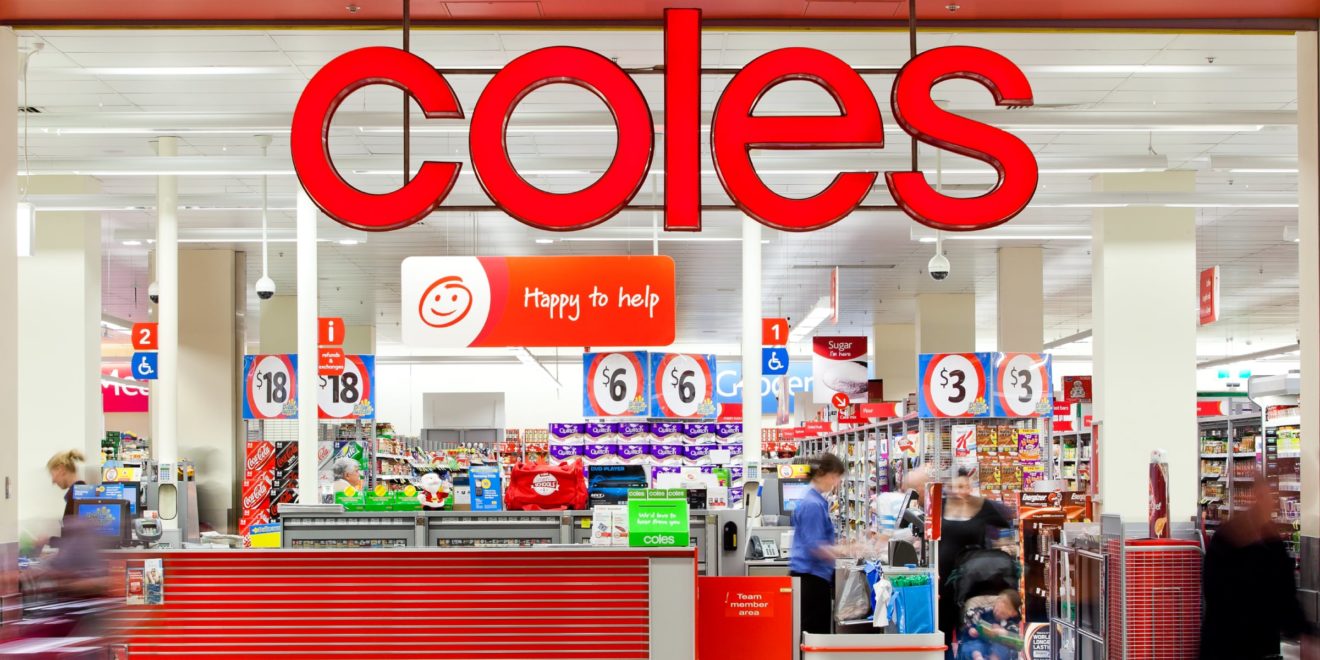
  • Coles reports steady revenue growth in supermarkets and liquor

    Coles reports steady revenue growth in supermarkets and liquor

    Coles says its third-quarter revenue was up 3.7 per cent, from $9.065 billion to $9.4 billion this year, citing volume growth and its value offering resonating with value-conscious consumers. 

    E-commerce sales increased by 25.7 per cent to $1.1 billion during this period with an 11.3 per cent increase in penetration. 

    Sales revenue for products exclusive to Coles saw a 4.5 per cent increase to $3.2 billion, with the Coles Finest range recording a revenue growth of 13.7 per cent.

    Total supermarket inflation increased slightly, from 1.4 per cent to 1.5 per cent year on year in the third quarter, despite the impact of flooding in Far North Queensland in February and Cyclone Alfred on Southeast Queensland and northern NSW in March.

    Livestock inflation was mainly seen across lamb, pork and poultry categories by increases in costs, while fresh produce inflation was elevated as a result of Cyclone Alfred and the cycling of abundant supply. 
    A deflation was reported in the categories of health and home, offsetting higher coffee and chocolate prices.

    Coles opened two new stores, with two closings and eight renewals during the quarter. 

    Liquor sales revenue rose by 3.4 per cent to $813 million, benefiting from the addition of 31 net new liquor stores over the last year, including the acquisition of 20 stores in Tasmania last June.

    E-commerce sales revenue for liquor was recorded at $52 million, a 18.2 percent increase from the same period last year, with a penetration rate of 6.5 percent.

    The Simply Liquorland program was announced in March, which will see Coles converting Vintage Cellars and First Choice Liquor Market stores into Liquorland. 

    “We are pleased to have delivered another solid quarter of sales growth, particularly as we were cycling a very strong third quarter in FY24,” said Coles group CEO Leah Weckert.

    “These results reflect the continued investments we are making in value and in improving the shopping
    experience for our customers both in store and online.”

  • Breaka and Weis partner to launch Queensland inspired milk flavour

    Breaka and Weis partner to launch Queensland inspired milk flavour

    Unilever Australia’s Weis and Queensland-flavoured milk Breaka have collaborated to launch Breaka Weis mango and cream-flavoured milk. 

    “We’re thrilled to see two iconic Aussie brands come together to offer Queenslanders a delicious category exclusive,” said Juliette Fleming, Unilever Australia’s senior brand manager for the snacking and refreshment portfolios. 

    “The new Breaka Weis Mango & Cream flavoured milk is a refreshing tribute to our sunny state’s vibrant flavours and our shared Queensland heritage”. 

    The collaboration was delivered by fashion and food brand development and extension agency, Asembl. 

    “A true flavour of Queensland fun, the Breaka Weis Mango & Cream flavoured milk is a very exciting first flavour collaboration between Unilever Australia’s Weis brand and Breaka,” said Asembl MD Justin Watson. 

    “The Breaka Weis Mango & Cream flavoured milk is a limited-edition, low-fat, flavoured milk that tastes just like the sunny state of Queensland.” 

    The new flavour, inspired by Weis’ Mango and Ice cream bars, is available at grocery and convenience stores across Queensland. 

  • Kraft Heinz lowers outlook as first-quarter sales fall

    Kraft Heinz lowers outlook as first-quarter sales fall

    The Kraft Heinz Company has reported lower global sales and profit for the first quarter, which management attributed to growing market pressures.

    For the quarter ended March 29, net sales fell 6.4 per cent to US$6 billion, while organic net sales slid 4.7 per cent.

    By region, net sales decreased 7 percent in North America, 4.4 per cent in international developed markets and 4.7 per cent in emerging markets.

    On the bottom line, operating income decreased 8.1 percent to $1.2 billion and net income fell 11 per cent to $714 million.

    “This quarter, we delivered results in line with our top line expectations despite growing market pressures,” said Kraft Heinz CEO Carlos Abrams-Rivera.

    “In today’s uncertain times, we are committed to controlling the controllables and making the necessary investments to deliver quality, taste, and value to our consumers through our beloved brands,” he added.

    The company has lowered its full-year outlook, expecting organic net sales to decrease 1.5-3.5 per cent, with sequential improvement recorded throughout each quarter.

    “We’re closely monitoring the potential impacts from macro-economic pressures such as tariffs and inflation, and we are dedicated to increasing investments to drive product and brand superiority,” said Abrams-Rivera.

  • Duxton Bees launches honey brand, Fuzzy Bum

    Duxton Bees launches honey brand, Fuzzy Bum

    Duxton Bees has launched Fuzzy Bum, a new honey brand with a mission that goes beyond sweet treats, raising awareness about Australia’s bee crisis. 

    According to the company, Fuzzy Bum is made entirely from locally sourced honey and is fully traceable back to the hive. The product is minimally processed, retaining its natural vitamins, minerals and antioxidants. 

    “Our goal with Fuzzy Bum is to highlight the importance of local beekeepers and sustainable honey production in Australia,” said Keegan Blignaut, MD of  Duxton Bees. “Bees are essential to our environment and food security, yet they are under threat.

    “By choosing 100 per cent Australian honey, consumers can help protect these vital pollinators and support a more sustainable future.” 

    The packaging is designed with bold lettering, vibrant colours, and humorous drawings inspired by local Australian flora.

    Fuzzy Bum honey is now available both online and at select retailers.

  • Judge says Apple and one of its executives lied during Epic Games trial in 2021

    Judge says Apple and one of its executives lied during Epic Games trial in 2021

    Remember Judge Yvonne Gonzalez Rogers? She was the judge who made the ruling in Apple’s 2021 legal battle against Epic Games that resulted from Apple’s decision to boot Epic and its popular Fortnite game from the App Store. Apple said that Epic included a link inside the App Store version of Fortnite that would allow users to buy in-app items for the game directly from Epic. This prevented Apple from taking the 30% cut it would usually take from the cost of paid apps and in-app purchases.

    Today, Judge Gonzales Rogers said in a court document that Apple “willfully” violated an injunction that she imposed on the company in 2021. She also wrote that Alex Roman, Apple’s Vice President of Finance “outright lied to the court” about the timing related to a decision made by Apple to place a 27% fee on some App Store purchases. The judge turned over the matter to U.S. attorneys who will now investigate whether Roman and Apple will be charged with criminal contempt.

    In a short but sweet response, Apple said, “We strongly disagree with the decision. We will comply with the court’s order and we will appeal.”

    Wednesday, Rogers ruled that Apple was in contempt and accused the tech giant of trying to violate the rulings she made in the 2021 case. The judge explained that after her decision in 2021, purchases made off-app by iPhone users would be expected not to have any commission or cut for Apple. But all Apple did in 2024 was reduce the cut it would receive from 30% to 27%.

    “In stark contrast to Apple’s initial in-court testimony, contemporaneous business documents reveal that Apple knew exactly what it was doing and at every turn chose the most anti-competitive option. To hide the truth, Vice-President of Finance, Alex Roman, outright lied under oath.”

    The judge also said that Apple never presented documentation about a meeting held in June 2023 that Apple CEO Tim Cook attended. Apple never told the court about this meeting until this year by hiding it from the court, according to Judge Gonzales Rogers. The judge ordered Apple to immediately stop charging commissions on purchases made for iPhone apps obtained through web links inside an app. As previously noted, that’s exactly what Epic did with its Fortnite app that kicked off all of this drama.

    “It’s a huge victory for developers, and it means all developers can offer their own payment service side-by-side with Apple’s payment service. This forces Apple to compete. This is what we wanted all along.”

    Additionally, Apple will be responsible for Epic’s attorney fees related to this issue. Judge Gonzalez Rogers had no sympathy for the company. “This is an injunction, not a negotiation. There are no do-overs once a party willfully disregards a court order,” the judge wrote.

  • T-Mobile is phasing out plans with included taxes and fees starting tomorrow

    T-Mobile is phasing out plans with included taxes and fees starting tomorrow

    T-Mobile recently introduced new plans where customers were quick to notice that the taxes and additional fees were no longer factored into the price. Now, according to multiple people claiming to be T-Mobile representatives, it seems that the company is doing away with its older plans entirely.

    One T-Mobile user claiming to be an employee at an authorized retailer has revealed that representatives will no longer receive commissions for activating older plans. This claim was backed up by multiple other people claiming to be employees of the carrier as well. Apparently T-Mobile has instructed store personnel to push the new plans only and stay away from plans that include taxes and fees in the price.

    Another user claiming to be a T-Mobile employee as well has also shared the same news in a separate post. The new instructions are to take effect from May 1 and will make it a lot more difficult to go to a store and sign up for a plan with included taxes and fees. Understandably representatives at these stores want to earn their commissions and will be very hesitant about activating an older plan.

    This decision comes after T-Mobile faced backlash online for introducing pricing updates to existing plans. Customers claimed that their plans, which had been marketed to them as price locked forever, also saw increases in monthly cost. Since then T-Mobile has been a lot more careful about promising price locks and new offers clearly state how long such guarantees will last.

    Naturally the revelation about older plans being no longer incentivized for store employees was met with criticism. One user even said that T-Mobile, which calls itself the “un-carrier”, is now just becoming another carrier company like AT&T or Verizon. AT&T and Verizon don’t offer plans with included taxes and fees and T-Mobile only started doing so around eight years ago.

    Including the taxes and fees in the price upfront makes it a lot easier for customers and employees. In fact representatives say that T-Mobile has gone back in time with its latest moves and they now have to once again tell customers that taxes and fees are separate. To me this feels like T-Mobile is getting ready to completely phase out plans with included charges in the near future.

  • Apple CEO Tim Cook reveals what Apple needs to build iPhone in the US

    Apple CEO Tim Cook reveals what Apple needs to build iPhone in the US

    While the tariff fiasco has brought red ink to the markets and chaos to the global economy, the ultimate goal according to President Donald Trump and his supporters, is to have manufacturing brought back to the United States. According to Trump’s Commerce Secretary Howard Lutnick, who was appearing on CNBC, Apple CEO Tim Cook told him that there is a “key catalyst” that would be necessary for Apple to consider building the iPhone in the US.

    Lutnick says that he asked Cook when he was going to bring iPhone manufacturing to the States. Cook responded by saying, “I need to have the robotic arms to do it at a scale and precision that would allow me to bring it here.” Cook seems to be one of the few tech industry leaders who might not be a Trump supporter but who still commands respect from the president and vice versa.

    This relationship has helped Apple protect its most important product, the iPhone, from tariffs during both Trump terms. Recently, Trump temporarily exempted some consumer electronics including smartphones from the reciprocal tariffs that Trump imposed on US trading partners. This includes a whopping 145% tariff on products imported to the US from China which is where the majority of iPhone units are assembled.

    By using robots to do the tedious low-paying assembly jobs such as building an iPhone, Apple wouldn’t have to worry about finding Americans willing to work for the $3 to $3.70 per hour that iPhone assemblers reportedly make in Shenzhen, China. Without a robotic labor force, at the federal minimum wage of $7.25 per hour, Apple would be paying twice that amount to build the iPhone forcing it to raise the price of the device.

    By using robots to build the iPhone in the US, Apple would be able to reduce the cost to assemble the product and might even be able to cut prices for the iPhone. But Apple is still a long way from having a team of robots unplug themselves in the morning and head over to the assembly line where they silently build iPhone units. Yet, if you ask the Commerce Secretary, he’ll try to get you to believe that this technology is coming sooner than you’d think.

    Talking about the iPhone, Lutnick says about Tim Cook, “He wants to build it here, he’s going to build it here. The Commerce Secretary does agree with our position that Americans won’t work for the low wages Foxconn pays iPhone assemblers in China. He says that Americans will be running the iPhone factories in the States. “They’re not going to be the ones screwing components in.” Unfortunately, Lutnick doesn’t explain who will be.

    Cook is right and robotics can be the answer, but this is going to take time even with AI. Let me make a statement that many of you will find surprising. If the Trump administration is patient and allows time for the technology to catch up with the goal, the current administration might end up being known for helping change the world of manufacturing for the better. However, patience is not the strong suit of our president and his team.

  • Vietnam Airlines gets go-ahead to buy 50 narrow-body aircraft

    Vietnam Airlines gets go-ahead to buy 50 narrow-body aircraft

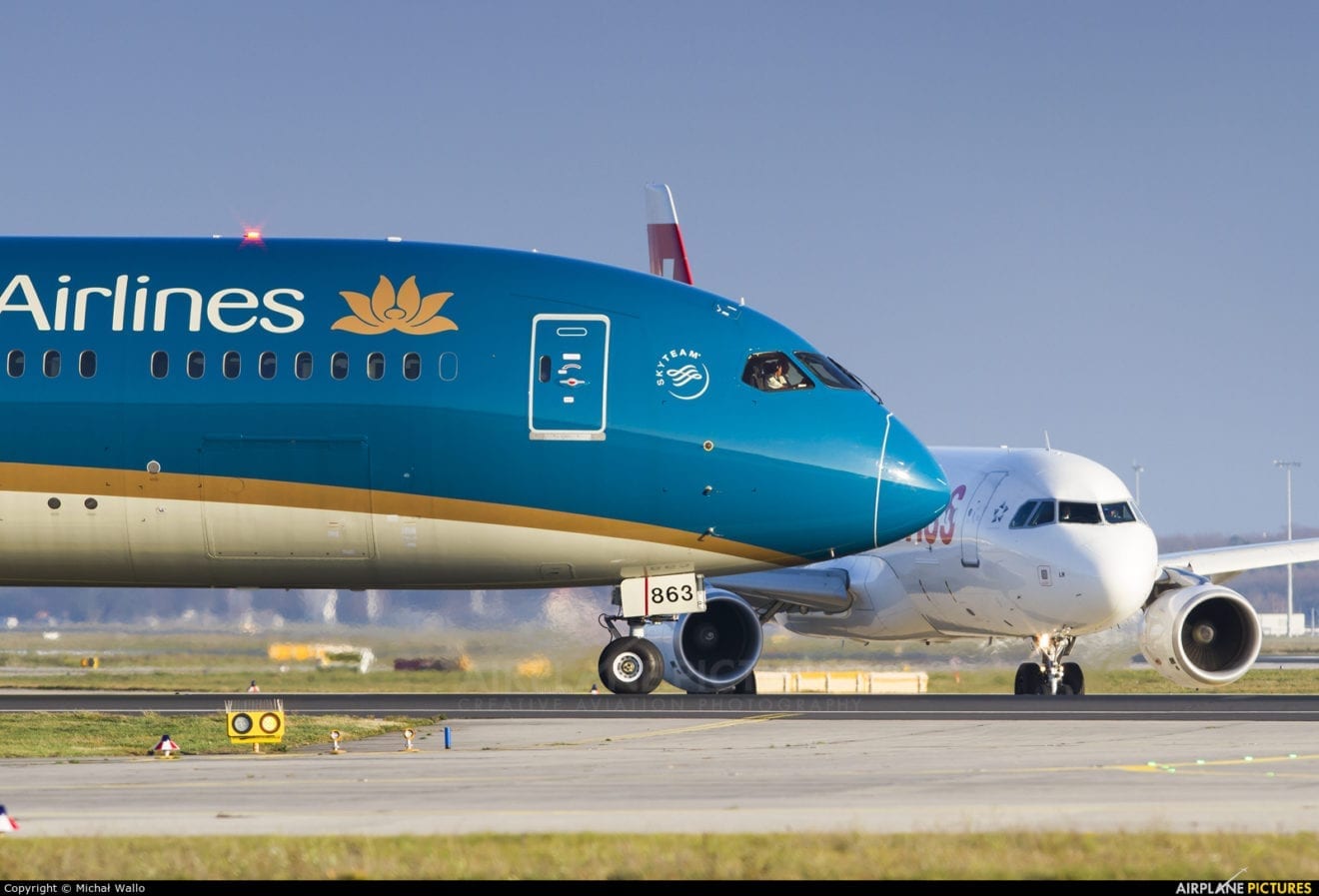
    Vietnam Airlines has been granted in-principle approval by the government to acquire 50 narrow-body aircraft without requiring a state guarantee.

    The approval, outlined in an official dispatch from the Government Office reflecting the views of Deputy Prime Minister Ho Duc Phoc, is intended to address future travel demand and phase out aging aircraft.

    Vietnam Airlines previously proposed buying 50 Airbus A320 NEO and Boeing 737 MAX jets, along with 10 spare engines, at a total estimated cost of around US$3.7 billion—equivalent to 1.6 times its current total asset value, based on 2024 financial data.

    The new aircraft will gradually phase out older A321 CEO planes as part of the airline’s fleet modernization plan.

    Earlier this month, during Phoc’s visit to the U.S., Vietnam Airlines signed a memorandum of understanding with Citibank for $560 million in funding for strategic projects, including the aircraft purchase. It also signed a separate MOU with Vietcombank to prepare additional capital for the acquisition.

    In September 2023, Vietnam Airlines signed a deal to purchase 50 Boeing 737 MAX aircraft, with deliveries expected between 2027 and 2030.

    Looking ahead, the airline projects it will need a fleet of 52 wide-body and 112 narrow-body aircraft by 2035. At present, Vietnam Airlines operates a fleet of about 100 planes, including more than 30 wide-body jets.

    According to its 2024 financial report, the carrier earned over VND113.7 trillion (US$4.37 billion) in revenue, transporting 22.7 million passengers and 314,700 tons of cargo. Its aircraft utilization averaged 11 hours per day, a 25% increase from 2023.

  • UBS Adds Global Crisis as Possible Downside Scenario

    UBS Adds Global Crisis as Possible Downside Scenario

    Wary of the potential for the escalating trade war to materially destabilize the macro environment, UBS has revised its assessment of possible downside scenarios, including the risk of a global crisis.

    In the first quarter earnings report of UBS, the Swiss banking giant revised its list of expected credit loss (ECL) models, economic scenarios that could play out as well as their weightings. This was due to prevailing economic and political conditions, most notably from the rapid escalation of the trade war under US President Donald Trump.

    As of 31 March 2025, there was a high degree of geopolitical and macroeconomic uncertainty, including uncertainty relating to tariffs that could be introduced by the US government after that date and the economic consequences thereof, the bank said.

    The actual announcing of the tariffs in April 2025 was subsequent to the reporting date. UBS has assessed the situation based on the uncertainties that existed on the reporting date and has exercised judgment.

    Adjusted Predictions

    As a result, UBS has adjusted its forecasts with the replacement of the stagflationary geopolitical crisis scenario with a «global crisis scenario» (15 percent chance) which targets risks such as sovereign defaults, low interest rates and significant emerging market stress. The «mild debt crisis scenario» has also been replaced with a mild stagflation crisis scenario (30 percent chance) with assumptions of rising rates alongside declines in GDP and equities.

    It applies a 50 percent chance to its baseline scenario of relatively stable economic conditions, down from 60 percent at the end of 2024.

    UBS is closely monitoring the current market situation, and it will carefully assess developments, potentially revisiting the narratives and weightings in the second quarter of 2025, the bank added.

  • China Mobile Hong Kong to Shut Down 3G Services by the End of June

    China Mobile Hong Kong to Shut Down 3G Services by the End of June

    The decision comes following a steady decline in 3G users, who now make up less than 0.25% of CMHK’s total mobile customer base, including post-paid, pre-paid, and virtual network operator-related subscribers. CMHK has been notifying customers of the upcoming transition since late 2023 and continues to assist affected users in upgrading their 3G phones, devices, or SIM cards.

    In a separate statement, the Communications Authority (CA) confirmed it granted CMHK prior approval to cease 3G services under Special Condition 10.4 of the company’s Unified Carrier Licence. The CA acknowledged that only a small number of users were affected and highlighted CMHK’s continued efforts to support them through service upgrades and transition arrangements.

    Customers who do not wish to upgrade will be offered reasonable termination options. The CA has also mandated that CMHK maintain adequate 3G service quality until the shutdown date.

    The CA also encouraged customers to consider upgrading to newer mobile services for improved quality and features.