Author: Mei Ling Tan

  • DHL integrates the groundbreaking GEN3 Evo race car into its Formula E logistics

    DHL integrates the groundbreaking GEN3 Evo race car into its Formula E logistics

    DHL, the Official Founding and Logistics Partner of Formula E, is enabling the delivery of the 11th season of the ABB FIA Formula E World Championship. This coming season, as a special highlight, DHL is handling the transport of the new GEN3 Evo race cars. These groundbreaking vehicles set new standards: accelerating from 0 to 60 mph in just 1.82 seconds, 30% faster than a Formula 1 car and 36% faster compared to the original GEN3 model.

    DHL transports the GEN3 Evo cars in specially designed crates, tailored to securely accommodate this highly valuable and delicate cargo. The crates are carefully packed to ensure every component is correctly placed, immobilized, and protected from damage.

    “As the trusted logistics partner for Formula E, DHL is proud to transport the new GEN3 Evo cars from race to race, delivering innovation and high performance with every journey,” says Manuela Gianni, Head of Motorsports Italy at DHL Global Forwarding. “These vehicles are redefining what’s possible in motorsport, and DHL is committed to ensuring that every car and piece of essential race equipment arrives exactly when and where it’s needed.”

    DHL has been an integral part of the world’s first all-electric motorsport championship since 2013. Drawing on 40 years of global motorsport experience, DHL has played a crucial role in bringing the championship to cities worldwide.

    DHL offers Formula E logistics with a focus on low-carbon services, utilizing multimodal transport solutions, including both sea and road freight, to maximize efficiency. Formula E uses sustainable fuels in these transport modes, which can cut GHG emissions around 80% compared to traditional fuels. This effort aligns with Formula E’s long-term commitment to the Science Based Targets initiative, aiming for a 45% reduction in absolute GHG emissions by 2030, compared to Season 5 levels. Additionally, Formula E has reduced the volume and weight of aviation freight by one-third, significantly lowering air freight emissions in season 11.

    The season opener in São Paulo on December 7, 2024, will be followed by races in major global cities, including Miami, Tokyo, Shanghai, Berlin, and London. DHL will manage the transportation of around 400 metric tons of essential freight per race, ensuring the smooth delivery of race cars, batteries, charging units, broadcast equipment, and hospitality materials.

    In addition to providing logistical support, DHL is launching its new “Positive Power” campaign, celebrating the unstoppable impact of Formula E. The campaign emphasizes the passion of the sport and its global fanbase. DHL’s founding sponsorship aims to ignite enthusiasm for Formula E, showcasing the speed and innovation of the series, especially with the new GEN3 Evo car.

    DHL was the first logistics company to set a measurable carbon efficiency target: improve efficiency by 30% compared to 2007 levels by 2020. This goal was achieved four years ahead of schedule, in 2016. In 2017, DHL committed to an even greater sustainability goal: to achieve net-zero emissions by 2050. As part of this sustainability approach, DHL Group aims to reduce logistics-related GHG emissions to less than 29 million metric tons by 2030 and implement decarbonization measures across all modes of transport, which includes the electrification of 66% of the first and last-mile fleet.

  • Bitcoin tops $100,000 on optimism over Trump crypto plans

    Bitcoin tops $100,000 on optimism over Trump crypto plans

    Bitcoin rose above $100,000 for the first time on Thursday as the election of Republican Donald Trump as president of the United States spurred expectations that his administration will create a friendly regulatory environment for cryptocurrencies.

    Bitcoin has more than doubled in value this year and is up about 45% in the four weeks since Trump’s sweeping election victory, which also saw a slew of pro-crypto lawmakers being elected to Congress.

    It last traded at $100,027 as of 9:40 a.m. Thursday, up 2.2% on the previous session, after earlier rising as high as $100,277.

    “We’re witnessing a paradigm shift. After four years of political purgatory, bitcoin and the entire digital asset ecosystem are on the brink of entering the financial mainstream,” said Mike Novogratz, founder and CEO of U.S. crypto firm Galaxy Digital.

    “This momentum is fueled by institutional adoption, advancements in tokenization and payments, and a clearer regulatory path.”

    More than 16 years after its creation, bitcoin appears on the cusp of mainstream acceptance, despite naysayers and a history of controversies.

    “Bitcoin crossing $100,000 is more than just a milestone; it’s a testament to shifting tides in finance, technology, and geopolitics,” said Justin D’Anethan, a Hong Kong-based independent crypto analyst.

    “The figure not that long ago dismissed as fantasy, stands as a reality.”

    Trump embraced digital assets during his campaign, promising to make the United States the “crypto capital of the planet” and to accumulate a national stockpile of bitcoin.

    Crypto investors see an end to increased scrutiny under U.S. Securities and Exchange Commission Chair Gary Gensler, who said last week he would step down in January when Trump takes office.

    On Wednesday, Trump said he would nominate Paul Atkins to run the Securities and Exchange Commission. Atkins, a former SEC commissioner, has been involved in crypto policy as co-chair of the Token Alliance, which works to “develop best practices for digital asset issuances and trading platforms,” and the Chamber of Digital Commerce.

    A slew of crypto companies including Ripple, Kraken and Circle are jostling for a seat on Trump’s promised crypto advisory council, seeking a say in his planned overhaul of U.S. policy, according to several digital asset industry executives.

    Trump’s businesses may also have a stake in the sector. He unveiled a new crypto business, World Liberty Financial, in September. Although details about the business have been scarce, investors have taken his personal interest in the sector as a bullish signal.

    Trump’s social media company is in advanced talks to buy crypto trading firm Bakkt, the Financial Times reported last week, citing two people with knowledge of the talks.

    Trump Media and Technology Group, which operates Truth Social, is close to an all-stock acquisition of Bakkt, according to the FT report.

    Billionaire Elon Musk, a major Trump ally, is also a proponent of cryptocurrencies.

    Bitcoin’s rebound from a slide below $16,000 in late 2022 has been rapid, boosted by the approval of U.S.-listed bitcoin exchange-traded funds in January this year.

    The Securities and Exchange Commission had long attempted to block ETFs from investing in bitcoin, citing investor protection concerns, but the products have allowed more investors, including institutional investors, to gain exposure to bitcoin.

    More than $4 billion has streamed into U.S.-listed bitcoin exchange-traded funds since the election.

    “We were trading basically sideways for about seven months, then immediately after November 5, U.S. investors resumed buying hand-over-fist,” said Joe McCann, CEO and founder of Asymmetric, a Miami digital assets hedge fund.

    There was a strong debut for options on BlackRock’s ETF in November with call options – bets on the price going up – substantially more popular than puts. McCann calculated the put to call ratio at about 22 to one.

    Crypto-related stocks have soared along with the bitcoin price, with shares in bitcoin miner MARA Holdings up around 65% in November.

    Two years ago, the industry was wracked by scandal with the collapse of the FTX crypto exchange and the jailing of its founder Sam Bankman-Fried.

    The cryptocurrency industry also has been criticized for its massive energy usage, while crypto crime remains a concern, too.

    Market participants are keeping a close eye on what happens now that bitcoin has broken above $100,000, with investors and speculators possibly looking to pocket some of their recent gains.

    “But once we flush out those sell orders, this could go higher still, and very rapidly,” said Steven McClurg, founder of Canary Capital, a digital asset.

  • Netflix is big in Japan

    Netflix is big in Japan

    Netflix reached a milestone of over 10 million subscribers in Japan during the first half of this year. That’s a success! Netflix is gaining attention in the Land of the Rising Sun with…. Japanese-language programming.

    You see, Japanese series are drawing significant attention in the expanding market. Over the past four years, the company’s subscriber base has doubled, and the streaming giant has recently released several popular Japanese-language shows that distinguish it from local broadcasters.

    Kaata Sakamoto, vice president of content for Japan, expressed satisfaction with the success of shows like “Tokyo Swindlers”, “The Queen of Villains”, and the reality-romance series “The Boyfriend”, which have garnered considerable viewership. Since Netflix began reporting viewing rankings in 2021, only two English-language series, the live-action adaptation of hit “One Piece” and the fourth season of “Stranger Things”, have topped these rankings in Japan.

    Sakamoto also noted that Japan has a strong demand for local content, which is why Netflix continues to prioritize producing such programming. In September, Netflix announced a five-year contract with Hitoshi One, the director of “Tokyo Swindlers”, a drama about a group of real estate scammers.

    The growth of streaming has led to increased consumption of Japanese content, with major entertainment companies turning their attention to their hits. For example, Amazon has adapted Sega Sammy’s “Yakuza” game series, and reports indicate that Sony is in talks to acquire media company Kadokawa to strengthen its entertainment portfolio.

    Netflix has stated that Japanese content is its third-most-viewed non-English content, following Korean and Spanish programming. Additionally, its anime offerings were watched more than 1 billion times worldwide last year.

  • Vodafone Idea Launches AI-Powered Spam Detection Solution

    Vodafone Idea Launches AI-Powered Spam Detection Solution

    ages, according to a statement from the company on Monday.

    “As more customers embrace digital communication, we recognize the growing threat posed by SMS-based spams and potential scam attempts,” said Jagbir Singh, CTO, Vodafone Idea Limited.

    “Our AI-powered spam detection technology reinforces our commitment to customer safety by delivering proactive, real-time protection,” he added.

    Vi’s AI algorithms are trained on millions of SMS examples to detect potential threats, such as fraudulent links, unauthorized promotions, and identity theft attempts. The predictive AI system learns from patterns in incoming data, including phishing links, unusual sender information, and common spam phrases, improving its detection accuracy over time.

    In September, Bharti Airtel, India’s second-largest telecom service provider, introduced an AI-powered solution to notify smartphone users about potential spam messages. Airtel’s solution analyzes one trillion records in real time and has demonstrated its ability to accurately predict more than 99% of spam messages and 97% of spam calls, according to the company.

  • Google Messages update will make you wish it’s the last of its kind

    Google Messages update will make you wish it’s the last of its kind

    If you thought you were indecisive, wait till you have a look at the latest Google Messages update. Google can’t seem to make up its mind about how it wants the text field to look. Of course, we can’t fault it for wanting to come up with the best possible design.

    When examining the new beta version of the Google Messages app, 9to5Google discovered that some changes have been made to the compose field again.

    To bring you up to speed, earlier this year, Google Messages featured a pill-shaped compose box with the emoji button in the beginning, followed by Magic Compose, Gallery, and the ‘plus’ menu. Voice Messages was outside the box, in a circle. It transformed into Send after you typed something.

    In late October, that change was reverted, with Google going back to the previous design with Plus, Gallery, and Magic Compose on the left, pushing the text field to the right, with emoji and voice memo shortcuts residing within it. Not everyone was a fan of this design, which is understandable, as it looked rather cluttered.

    Google has moved things around again in the latest beta. The text box is now again positioned on the left, but button placements have changed. The Plus is still the first button, and then comes Magic Compose, Emoji first, and Gallery. The Voice Memo/Send button remains outside. Once something is typed, only Plus and Emoji remain.

    Whether you like the new design or not, you might find yourself wishing that it remains the same for a long while. After all, muscle memory is hard to retrain and even harder to shake.

    Also, don’t be surprised if the change is not live at your end, as the report notes that it’s yet to roll out to everyone.

    Other than this, the beta version also features redesigned read receipts, but the implementation seems buggy at the moment and the new design only shows up in the main message list.

  • Netflix subscribers are warned that they are the target of a dangerous SMS phishing campaign

    Netflix subscribers are warned that they are the target of a dangerous SMS phishing campaign

    It’s absolutely nuts to think that more than 13 years and five months ago we were telling you about the Netflix app becoming available for the Motorola DROID and DROID X from the Android Market. We’ve gone from Android 2 to Android 15, the Android Market is now the Google Play Store, Netflix now offers a wide range of original content, and Motorola is trying to recapture the magic that made it and HTC early leaders among Android phone manufacturers.

    One thing that we didn’t worry about too much back in 2011 that we worry about now is the possibility of getting scammed by phishing attacks. These are emails or texts that are made to look as though they were sent from a company you do business with asking you to reveal personal information. Cybersecurity researchers are reporting that hackers are running an SMS phishing campaign against Netflix subscribers that seeks to access their Netflix accounts and steal information about the credit cards used to pay for the service.

    “We will never ask you to enter your personal information in a text or email. We will never request payment through a 3rd party vendor or website”-Netflix statement

    These bogus texts make it appear as though a subscriber’s account was placed on hold and ask the subscriber to update his/her information by clicking on a link. Here’s the scary part. This link will take the victim to a website that looks remarkably like the real Netflix site with a prompt asking for login and credit card information. If the information they request is provided to them, the scammers will take over control of the victim’s Netflix account and will have the ability to use his/her credit card and wipe out the remaining credit available.

    Security experts are warning Netflix subscribers to be on the lookout for any texts or emails stating that their Netflix account is on hold or will soon be suspended. Other texts accuse the subscriber of not paying for the service and urgently demand payment by threatening to cancel the account. Do not press on any links that are included in the text or email. You might be able to tell that the text and website are fakes since they are usually loaded with grammatical and spelling errors.

    The phishing campaign was discovered by cyber security firm Bitdefender. The security firm says that it spotted this campaign running in 23 countries, including the United States, since September. If you do receive this text, ignore it and delete it.

  • Qatar Airways Cargo and Cainiao strengthen partnership to meet global e-commerce demand

    Qatar Airways Cargo and Cainiao strengthen partnership to meet global e-commerce demand

    Qatar Airways Cargo, the world’s leading air cargo carrier, and Cainiao, a global leader in e-commerce logistics, agree to strengthen their existing partnership, aiming to support the growth of cross-border e-commerce and enhance consumer experiences worldwide.

    Cainiao, with its deep e-commerce insights and technological expertise, and Qatar Airways Cargo, with its extensive global connectivity, will together leverage their complementary strengths through this partnership to enhance global e-commerce logistics and stimulate economic growth at both regional and global levels.

    Mark Drusch, Chief Officer Cargo at Qatar Airways Cargo, said: “Since the inception of our collaboration with Cainiao in 2021, the partnership has seen strong growth, driven by ongoing flying agreements and a shared vision to support the burgeoning e-commerce industry.”

    “We are now further deepening our ties with Cainiao to work even closer together. By utilising the Qatar Airways Cargo hub at Hamad International Airport in Doha, we aim to expedite shipments to customers in Europe, the Middle East, and Africa, reinforcing our commitment to Cainiao.”

    Wan Lin, Chief Executive Officer of Cainiao, said: “At Cainiao, we’re committed to building a smart, future-proof logistics network for e-commerce. We are pleased to strengthen our partnership with quality players like Qatar Airways Cargo to build a more robust global express network and better support our global customers with faster deliveries and enhanced supply chain efficiency.”

    E-commerce remains the largest driver of air cargo capacity demand worldwide. Qatar Airways Cargo’s extensive global network and state-of-the-art fleet have positioned it as an essential partner in meeting this demand. Through this collaboration, both companies continue to enhance connectivity and reliability for businesses and consumers across the globe.

    Qatar Airways Cargo looks forward to further developing this strategic relationship, reinforcing its position as a leader in the air cargo industry.

  • Sri Lanka’s Growing Remote Work Ecosystem

    Sri Lanka’s Growing Remote Work Ecosystem

    The telecom sector is playing an essential role in this transition by providing the necessary infrastructure and services for remote workers to thrive. With advancements in high-speed broadband, affordable mobile data plans, and co-working spaces, the country is building a robust ecosystem for remote professionals.

    Historically, the shift began with the expansion of broadband access and investments in IT services, particularly after the country’s digital transformation strategy launched in 2017. Today, Sri Lanka boasts 61.48% internet penetration, with initiatives like “Digital Sri Lanka” enhancing connectivity even in rural regions.

    Interestingly, data from Sri Lankan job portal, XpressJobs, showed a 45% increase in remote job postings in 2023, particularly in sectors like IT, customer service, and digital marketing.

    The rise of remote work in Sri Lanka is being driven by factors such as affordability, scenic locales, and an influx of digital nomads seeking a balance between work and leisure. That being said, Sri Lanka’s proposed digital nomad visa, gingerly approved in 2021, is yet to be launched. In the meantime, digital nomads can apply for a 30-day Electronic Travel Authorization (ETA), which can be extended for 30-90, 90-180, or 180-270 days.

    Bolstering the essential connectivity needed for remote work is Sri Lanka’s telecom industry, which is, similarly, evolving rapidly, through investments in 4G LTE, fiber optics, and early explorations into 5G. Telecom operators like Sri Lanka Telecom (SLT-MOBITEL) and Dialog Axiata have introduced Fiber-to-the-Home (FTTH) services, affordable mobile data plans, and public Wi-Fi zones, ensuring widespread connectivity essential for remote work success.

    Sri Lankan telecom companies have made significant strides in enhancing remote work infrastructure through strategic partnerships and innovations. Dialog Axiata PLC, Axiata Group Berhad, and Bharti Airtel Limited recently agreed to merge their Sri Lankan operations, a move expected to strengthen the country’s telecommunications sector. This merger aims to boost network capacity, ensuring more reliable and faster connectivity for remote workers across the nation.

    Dialog Axiata has been at the forefront of innovation, launching Sri Lanka’s first eSIM service, enhancing flexibility for mobile users. Additionally, Dialog Enterprise collaborated with Microsoft and H One to introduce Operator Connect—a pioneering service that integrates directly with Microsoft Teams. This launch marks a significant step forward in providing seamless communication tools essential for remote work environments.

    Similarly, SLT-MOBITEL has embraced digital transformation to cater to the growing demands of remote work by deploying Microsoft 365 productivity and security solutions. By integrating tools like Microsoft Teams, Microsoft 365 F3, E3, and E5, SLT-MOBITEL has created a seamless and secure environment for its employees to collaborate remotely. This shift has empowered frontline workers and executives alike, allowing real-time access to essential applications and secure data protection from anywhere.

    Furthermore, SLT-MOBITEL is leading the way in 5G development, laying the groundwork for next-generation remote connectivity. Moreover, partnerships with companies like Nokia have accelerated nationwide fiber network expansion, ensuring broader access to high-speed internet. Another key development includes the groundbreaking Maldives-Sri Lanka Cable project, completed in 2020, which enhanced regional telecom infrastructure, improving international connectivity through a Wavelength Division Multiplexing (WDM) subsystem and an 863-kilometer fiber optic cable.

    Further strengthening its position, Dialog Axiata partnered with Rakuten Viber in 2021, becoming Sri Lanka’s largest A2P (Application-to-Person) messaging provider. These advancements collectively demonstrate Sri Lanka’s commitment to fostering a robust telecom ecosystem, essential for supporting the growing remote work sector. The partnership enabled more than 300 Rakuten Viber carrier partners to comfortably communicate with more than 16 million Dialog Axiata customers using the Rakuten Viber A2P bilateral service, further enhancing remote working capabilities.

    Dialog Axiata has significantly advanced rural connectivity in Sri Lanka, presenting new opportunities for remote work by deploying its 4000th LTE network tower in the Thihawa village (located within the Kurunegala District). Since March 2020, the company has invested LKR 50.9 billion (USD 255.8 million) to address rising connectivity demands, particularly during the pandemic, when mobile data traffic doubled, and fixed broadband usage tripled.

    Dialog Axiata upgraded over 2,800 4G towers and added spectrum capacity to meet these demands. By year-end, it plans to increase capacity across 75% of its sites and deploy 450 new towers in rural areas to achieve 4G coverage for 95% of Sri Lanka’s population, supporting the government’s Gamata Sanniwedanaya initiative to enhance connectivity in remote regions.

    Sri Lanka’s unique value proposition as a remote work destination is further enhanced by its diverse landscapes and affordable living costs. Sri Lanka aptly captures this phenomenon, showcasing how reliable telecom services have enabled professionals to transition from boardrooms to beaches, balancing productivity and leisure.

    Co-working spaces in cities like Colombo and Kandy now offer high-speed internet, video conferencing tools, and cloud storage, ensuring seamless collaboration for global teams. However, challenges like inconsistent connectivity in rural areas and the high cost of importing telecom equipment need to be addressed to fully harness the potential of remote work.

    In addition to infrastructure, digital literacy is key to Sri Lanka’s success in the remote work economy. As emphasized, developing skills in fields like web development, digital marketing, and graphic design is crucial for locals to tap into remote job opportunities. Telecom companies can play a pivotal role by partnering with educational institutions, creating awareness campaigns, and facilitating access to e-learning platforms. These initiatives can not only empower Sri Lankans with global opportunities but also position the country as a competitive player in the remote work market.

    Despite the progress, challenges remain, particularly in ensuring consistent connectivity across rural areas. These challenges present opportunities for targeted investments in broadband expansion and innovations such as 5G. Government collaboration with telecom operators, coupled with policies incentivizing innovation and tax breaks, can accelerate technological advancements.

    The economic benefits of remote work for Sri Lanka are immense. A strong telecom infrastructure can increase foreign exchange earnings by attracting digital nomads, create new jobs in sectors like IT and hospitality, and alleviate urban congestion by enabling professionals to work from less crowded areas. Moreover, remote work can provide resilience in times of economic uncertainty, offering diverse income opportunities for Sri Lankans. With continued investment in digital and physical infrastructure, Sri Lanka is well-positioned to emerge as a global hub for remote work.

    Looking ahead, the telecom sector will remain central to Sri Lanka’s remote work ambitions. Innovations in connectivity, such as the rollout of 5G, will enhance remote work experiences, while government policies supporting digital entrepreneurship will drive long-term growth. It was highlighted that Sri Lanka already has the elements needed to thrive in the remote work landscape, provided it continues to invest in its digital capabilities. By addressing existing challenges and leveraging its strengths, Sri Lanka can unlock new pathways to economic prosperity.

    Sri Lanka’s telecom sector is at the forefront of this transformation, enabling a new generation of workers to embrace flexibility and connectivity. From fiber-optic networks to mobile data plans, the industry is laying the foundation for a thriving remote work ecosystem. With strategic investments and skill-building initiatives, Sri Lanka can position itself as a global leader in


  • airBaltic Cargo partners with cargo.one to accelerate and enhance its digital sales

    airBaltic Cargo partners with cargo.one to accelerate and enhance its digital sales

    airBaltic Cargo, the cargo division of the Latvian national airline, has joined forces with cargo.one to soon offer its services upon the air freight industry’s go-to procurement platform. airBaltic Cargo is partnering with cargo.one as part of plans to expand its market presence globally and boost revenues. cargo.one will offer airBaltic Cargo customers the most convenient and user-friendly booking method, and will enable the airline to market its services to a footprint of freight forwarders across 134 countries.

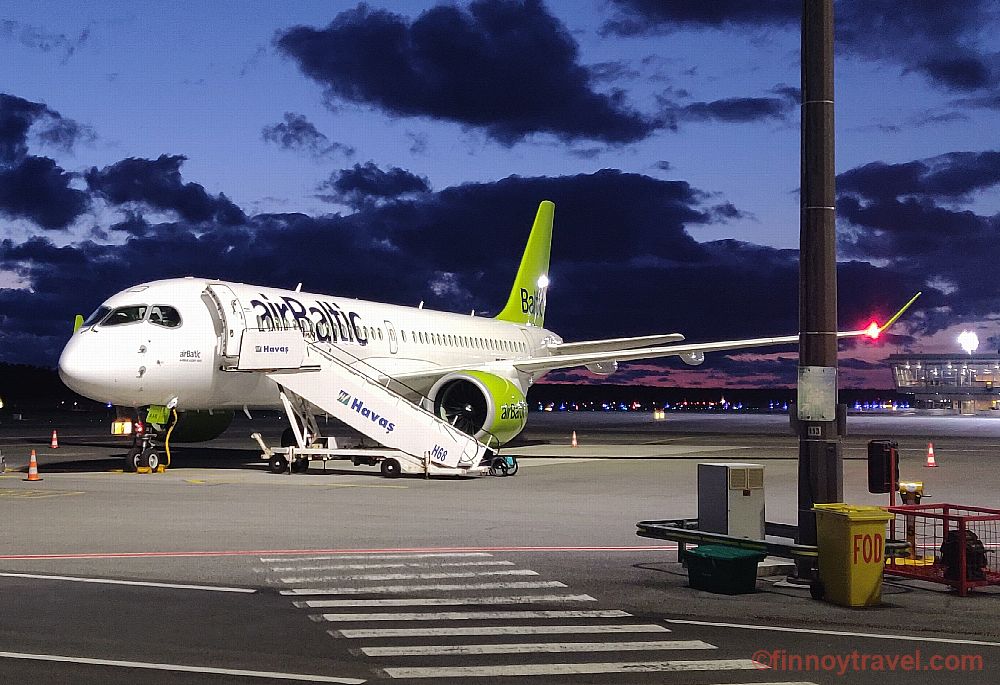
    Headquartered in Riga, Latvia, airBaltic Cargo offers freight forwarders modern and flexible belly capacity on more than 100 routes throughout Baltics, Europe, the Middle East, North Africa, and the Caucasus. Leveraging its main hub in Riga and additional bases in Tallinn, Vilnius, Tampere, and seasonally Gran Canaria, airBaltic Cargo flies into many shorter runway destinations that other airlines often do not. airBaltic Cargo also boasts one of the youngest and most efficient fleets in the world, consisting of 49 Airbus A220-300 aircraft, and planned to expand to 100 aircraft by 2030.

    The partnership coincides with airBaltic Cargo’s exciting program of expansion, having recently invested in The Baltic Cargo Hub – soon to be the largest dedicated air cargo handling center in the Baltics, and will further enhance airBaltic Cargo’s import, export and transit capabilities at RIX Riga Airport. cargo.one will soon deliver thousands of forwarders a step-change in access to airBaltic Cargo capacity for its entire network – with the ability to discover, quote, book and track its capacity in seconds. The addition of airBaltic Cargo is the latest example of cargo.one’s uniquely strong depth and diversity of global supply options.

    Iļja Seļiverstovs, VP Cargo at airBaltic, commented, “Digital sales is a vital driver of our cargo growth plans. It makes every sense to leverage cargo.one to expand our market reach and sales, and ensure airBaltic Cargo services remain front of mind with thousands of forwarders using the platform daily. Working alongside cargo.one, we will ensure that every customer receives the best possible end-to-end experience.”

    Moritz Claussen, Founder & Co-CEO of cargo.one, added, “We are thrilled to enable airBaltic Cargo to take its digital sales strategy to the next level, and our collaboration will capitalize upon its strengths in relevant markets. Forwarders rely upon cargo.one’s comprehensive global market view to discover, quote and book their air shipments, and the addition of airBaltic Cargo capacities will provide a strong option for many.”

    Accelerating its digital distribution with cargo.one allows airBaltic Cargo to better scale sales across a truly global footprint, build its brand presence within thousands of forwarding branches, lower its cost of sale, and boost sales efficiency and market responsiveness. cargo.one is the industry leader for optimizing the digital distribution progress of all sizes of airline.

    airBaltic Cargo’s partnership with cargo.one strengthens the airline’s digitalization program, ensuring that a greater proportion of customers benefit from digital speeds, accuracy and convenience. Booking on cargo.one also equips airBaltic Cargo customers with cutting-edge tools for winning and processing air shipments.

    From Winter 2024, freight forwarders using cargo.one will be able to book airBaltic Cargo capacity for general cargo, perishables and temperature sensitive pharma shipments, across its entire network.

  • WhatsApp makes sharing channels easier with a new QR code feature

    WhatsApp makes sharing channels easier with a new QR code feature

    Earlier this year, we got wind that WhatsApp was working on a new QR code feature to make accessing channels super easy. Well, now, it looks like the most popular messaging app in the world is bringing that feature to life.

    recent report reveals that the latest WhatsApp beta for Android, version 2.24.25.7, is introducing a new feature that lets users scan QR codes to view and follow channels.

    As you can see from the screenshot, in the newest beta, WhatsApp users can test out the new feature for sharing channels through QR codes. If you’re one of the users who already have access, getting the QR code for a channel is easy:

    1. Just open the channel.
    2. Tap on the sharing options in the top bar.
    3. Select the QR code option.

    Once it’s generated, you can effortlessly invite others to follow the channel with just a quick scan. The feature should roll out to more users in the coming weeks.

    In my opinion, QR codes are a way smoother way to share not only channels but everything compared to “old-school” links. To be honest, I always go for a QR code if it’s an option — especially as an iOS user (copying and pasting on iOS can be a real pain, but let’s save that rant for another time), so hopefully the feature will roll out on iOS as well.

    So, with this new feature, instead of messing around with copying links and sending them through texts or emails, you can just flash a QR code on your screen and let others scan it. This works perfectly in face-to-face situations where people can quickly scan and skip all the extra steps. Once scanned, the code takes them straight to the channel, where they can check out the content and follow it with a single tap.

    In other WhatsApp updates, voice message transcripts are finally making their way to the app. And that’s not all — WhatsApp is turning up the color with a new test feature that adds themed icons for contacts and group chats.

  • Starbucks employees to receive 60% bonus amid firm’s worst year since 2020

    Starbucks employees to receive 60% bonus amid firm’s worst year since 2020

    Many corporate workers at U.S. coffee chain Starbucks will get just 60% of their total bonuses for the 2024 fiscal year amid the company’s first annual sales decline since 2020.

    The coffee giant’s poor performance in the fiscal year, which ended on September 29, cut into the overall bonus for employees who met their personal goals, a source familiar with the matter said.

    Bonuses for most employees are determined based on both individual performance and company results, with the latter calculated from revenue and operating income, a separate document shows.

    They are typically paid in December and, in the U.S., range from 5% of base pay for non-managerial employees to 45% for senior vice presidents.

    The reduced bonuses reflect the challenges Starbucks has faced this year as consumers, hit by widespread inflation, scaled back on their lattes.

    Its quarterly and yearly performances, reported late last month, show disappointing sales in its two largest markets, the U.S. and China, which fell short of analysts’ expectations.

    For the third consecutive quarter, Starbucks saw a decline in same-store sales, with a 7% drop this quarter—the steepest since the Covid-19 pandemic, according to CNBC.

    Net income attributable to the company for the fourth quarter was US$909.3 million, or 80 cents per share, down from $1.22 billion, or $1.06 per share, a year earlier. Net sales also decreased by 3% year-on-year to $9.07 billion.

    This was Starbucks’ first quarter under new CEO Brian Niccol, who joined the company in September to turn the business around.

    “It is clear we need to change our strategy to win back customers fundamentally,” he said in the report. “We have a clear plan and are moving quickly to return Starbucks to growth.”

    For the full fiscal year, global comparable store sales dropped by 2%, largely due to a 4% decline in comparable transactions, as shown in the firm’s report.

    This marked the second drop in the last 15 years, with the first occurring in 2020 due to Covid-19 restrictions.

  • Spotify launches new platform to support publishers and authors

    Spotify launches new platform to support publishers and authors

    Spotify for Authors is a new platform for authors and publishers that allows them to manage their presence and grow on the streaming service. The new platform offers access to multiple tools that make it easier for authors and publishers to understand their audience and drive more consumption.

    Authors invited by publishers on Spotify for Authors will be offered direct access to important insights, along with growth and promotional tools that will help them tap into larger audiences, including:

    • Aggregated age and gender demographics that provide more insight than ever before, to let them know who is listening to their content on Spotify.
    • Redemption codes to share royalty-free copies of titles with reviewers, superfans, and collaborators (if enabled by their publishers).
    • Promo cards to generate professional and shareable social assets for their titles in just one click.
    • Early access to author profiles, a new feature rolling out to Spotify so fans can easily discover more about the authors behind their favorite books.
    Starting today, publishers and select authors can begin using these insights into listener demographics, take advantage of tools for marketing and promote their titles, as well as customize their author page on Spotify using the features above.

    According to Spotify, the company worked closely with authors and publishers to develop Spotify for Authors, allowing the streaming service to design each feature based on their feedback and needs.

    “Today’s launch is just the first step as we help authors and publishers reach new audiences, connect more deeply with their fans, and drive listening,” explains Spotify in a blog post.

    Spotify for Authors is now available in all markets where the streaming service is officially accessible. Publishers can access Spotify for Authors with their Spotify logins and can invite authors to join at authors.spotify.com.

    It’s also important to mention that Spotify confirmed it will expand access to authors using Findaway Voices early next year.

  • Thailand to build new bridge to Cambodia

    Thailand to build new bridge to Cambodia

    The Thai government is constructing a new bridge to link Chanthaburi province in eastern Thailand with Pailin province in Cambodia, with an estimated cost of 15 million baht (US$431,400).

    During his visit to the Ban Pakkad border checkpoint in Pong Nam Rong district on Nov. 21, Deputy Prime Minister and Interior Minister Anutin Charnvirakul highlighted the bridge’s potential to boost cross-border trade and tourism between the two nations.

    Named the New Chanthaburi-Pailin Friendship Bridge, this concrete structure will replace the temporary steel bridge currently connecting the two provinces. The new bridge will span approximately 40 meters and include 3-meter-wide pedestrian walkways on each side of the vehicular lanes.

    With its improved design and infrastructure, the bridge is expected to significantly enhance logistics and trade efficiency between Thailand and Cambodia, fostering stronger economic ties.

  • Vietnam high-speed railroad to cost $500M annually to operate

    Vietnam high-speed railroad to cost $500M annually to operate

    Vietnam’s north-south high-speed rail is expected to cost US$500 million a year to operate in the initial time, with the government footing a substantial part of the bill.

    According to the Ministry of Transport, in the first four years revenues are expected to cover only operational and rolling stock maintenance costs, and the government will need to provide funds for infrastructure maintenance.

    The 1,541 km line, running between Hanoi and Ho Chi Minh City, is estimated to cost $67.3 billion, with construction expected to last from 2027 to 2035.

    In 2037 the annual operating costs are estimated at $477 million, with the government providing $238 million.

    They are projected to rise to $524 million and $213 million, $571 million and $187 million and $618 million and $140 million in the next three years. Vietnam’s GDP last year was $430 billion, according to the General Statistics Office.

    The project is expected to take 33.61 years to break even if infrastructure costs are not considered, the ministry said in a new report addressing feedback from National Assembly deputies regarding the railway project.

    During the feasibility study phase, detailed calculations of financial indicators would be done based on investment plans, operational strategies and the conditions obtaining at the time the railroad begins operation, it said.

    The ministry was confident of the project’s economic viability, citing quantifiable benefits such as reduced travel time, lower logistics costs, fewer accidents, and reduced CO2 emissions.

    The economic internal rate of return is estimated at 12%, the benefit-cost ratio at 1.06 and net present value at $9.15 billion.

    The ministry said while economic and indirect benefits had been carefully considered, they could not be included in the financial calculations.

    In addition to measurable benefits, the railroad is also expected to enhance Vietnam’s competitiveness, restructure its transportation and create new economic opportunities through effective land use.

    The construction is projected to boost the country’s GDP by an average of 0.97 percentage points annually.

    Addressing legislators’ concerns about prioritizing the high-speed railway over other infrastructure projects, the ministry explained that the funding would be spread over 12 years, averaging $5.6 billion annually, or 16.2% of the medium-term public investment plan for 2026-30, and only account for 1% of GDP in 2027, when construction is expected to begin.

    Besides, investment for 3,000 km of expressways has been arranged, and another 1,700 km are being built, meaning reaching 5,000 km of expressways by 2030 should not be difficult, it said.

    Allaying concerns about increasing public debts and potential cost overruns, it said public debt indicators are projected to remain within acceptable limits through 2030.

    While external debt obligations and budget deficits may see slight increases, these are manageable and considered reasonable compared to scenarios without the high-speed rail.

    The railroad is designed to integrate with regional and international networks, linking up with China through routes from Hanoi via Lao Cai and Lang Son, with Laos through the Vung Ang–Vientiane route and with Cambodia through Trang Bom.

    By 2050, even with significant investments in aviation and road transport, the north-south corridor is projected to have unmet passenger demand of 122.7 million trips annually.

    The high-speed railroad is expected to address this, the ministry said.

    It will have a double track with a 1,435 mm gauge, electrified for a designed speed of 350 kph and a load capacity of 22.5 tons per axle.

    The existing north-south railroad will continue to handle freight and short-distance passenger transport.

  • Instagram levels up DMs with live location sharing and nicknames for your friends

    Instagram levels up DMs with live location sharing and nicknames for your friends

    Instagram rolling out a few new features for Direct Messages that will make it easier to meet up with friends and family in real life. One of these is a new live location sharing feature. This means you can let others know exactly where you are for a set period of time, which is perfect for coordinating meetups at events or when you’re out and about.

    To share your live location, you just need to open a direct message with a friend or a group chat. From there, you can choose to share your live location for up to an hour. If you’d rather not share your live location constantly, you can also just drop a pin on the map to show people where you are.

    If you’re worried about accidentally leaving location sharing on, you don’t have to, because the feature is turned off by default and you have to choose to use it each time actively. Plus, Instagram has added a handy reminder at the top of the chat to let you know when you’re sharing your location. Additionally, to enhance privacy, you can only share your location with people you’re already connected with in a chat.

    In addition to location sharing, Instagram is rolling out a new feature that lets you create unique nicknames for your friends (and yourself) within your direct messages. It’s a fun way to personalize your chats and add some extra laughs. These nicknames are only visible within your DMs, so they won’t affect your actual username on Instagram.

    You will have complete control over your nicknames and can change them whenever you want, in addition to being able to decide who has permission to change your nickname in a chat —  whether it’s just you or the people you follow. To start using this, just head to the top of your chat and tap on the chat name, then select “Nicknames” and choose the person you want to give a nickname to.

    And if you’re a fan of stickers, Instagram has also added a bunch of new sticker packs to its DMs, giving you even more ways to express yourself. You can now also favorite stickers from your chats so you can easily reuse them later, and create your own stickers using the “cutouts” feature.

    I think the location-sharing feature is the most impactful feature from this update as it could be really useful for planning meetups with friends. It could also be helpful for letting people know you’re safe and on your way, especially if you’re traveling alone. I’m a little bit concerned about privacy, but it seems like Instagram has put some safeguards in place.  I guess we’ll have to see how it works in practice.