Author: Mei Ling Tan

  • Shrimp exports surge 13% in 10 months

    Shrimp exports surge 13% in 10 months

    Vietnam’s shrimp exports soared by 13% year-on-year to US$3.2 billion in the first 10 months of 2024.

    They reached $394 million in October alone, a 24% increase from a year earlier, according to the Vietnam Association of Seafood Exporters and Producers.

    Shipments to major markets saw double-digit growth in the first 10 months, signaling a strong recovery in demand.

    Notably, shrimp exports to mainland China and Hong Kong totaled $676 million during the period, a year-on-year growth of 31%.

    Lobster exports surged by an extraordinary 157% to $298 million in the same period as China’s consumer stimulus policies have increased its imports of this product.

    Shrimp exports to the EU rose by 32% to $408 million, a 17% year-on-year increase. Demand from this market has experienced consistent growth since April.

    The U.S. imported $646 million worth of shrimp from Vietnam in the first 10 months, up 10% from a year ago.

    A decline in supply from the three largest producing nations, improved market sentiment and reduced inventories have boosted the U.S.’ shrimp imports.

    Prices are expected to rise with U.S. President-elect Donald Trump’s proposed import tax increases, so businesses there are in a rush to increase imports before the new tariffs take effect.

    Shrimp exports to Japan and the Republic of Korea also showed significant recovery in October, growing by 18% and 28% year-on-year, respectively, after a period of instability.

    Export shrimp prices, especially for white-leg shrimp, are on an upward trend, significantly improving profit margins for businesses.

    Additionally, processed shrimp products are experiencing robust growth, highlighting Vietnamese enterprises’ focus on high-value products.

    With this growth trajectory, shrimp exports are likely to reach $4 billion this year.
  • Voice message transcripts are finally coming to WhatsApp

    Voice message transcripts are finally coming to WhatsApp

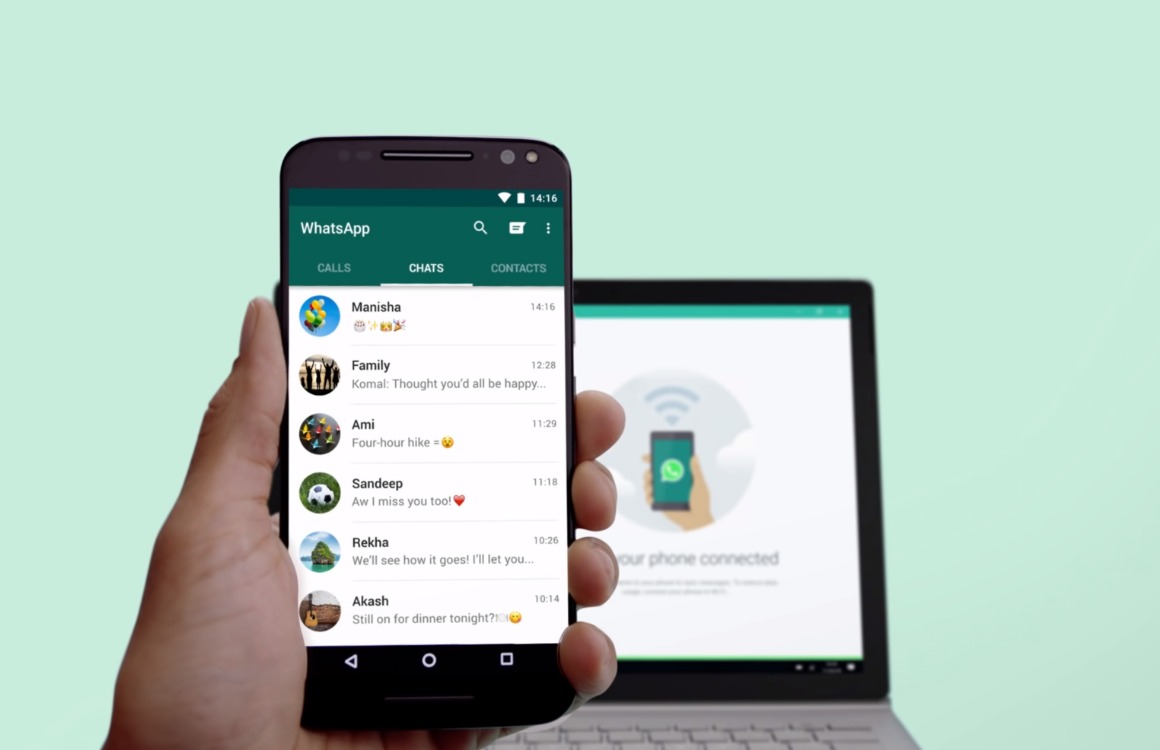
    WhatsApp is getting yet another useful feature in the coming weeks, the ability to transcribe voice messages. The messaging app has just announced the users will soon be able to transcribe texts received from friends and family if they’re in a loud place and can’t listen to them or the voice message is too long.

    In order to use the new feature, you’ll have to navigate to Settings / Chats / Voice message transcripts and enable transcriptions. Don’t forget to select your transcript language too. WhatsApp users can transcribe a voice message by long pressing on the message and tapping on “transcribe.”

    It’s worth mentioning that transcripts will be generated directly on your device, which means no one else, not even WhatsApp, will be able to hear or read the messages you receive.

    WhatsApp explains that voice message transcripts might take a moment to become available, but if you receive a “Transcript unavailable” error, you might have one of the issues described below:

    • Your transcript language setting doesn’t match the language of the voice message.
    • Some words aren’t recognized, possibly due to background noise.
    • The voice message language isn’t supported.

    WhatsApp’s new voice message transcripts feature | Image credits: WhatsApp.

    Another important thing worth mentioning is that you shouldn’t 100 percent rely on this feature, as WhatsApp says it’s possible that voice message transcripts are inaccurate.

    According to WhatsApp, transcripts will be rolled out globally over the coming weeks with a few select languages to start. The messaging app confirmed plans to add more languages over the coming months, but no other details have been provided.

    Currently, only four languages are supported: English, Portuguese, Spanish, and Russian. Keep in mind that when you enable voice message transcripts for the first time and choose your transcript language, you’ll also have to choose when you’d like to download the language by tapping “Set up now” or “Wait for Wi-Fi.”

  • Milk tea chain Chagee sparks outcry in Malaysia over alleged lucky draw tampering

    Milk tea chain Chagee sparks outcry in Malaysia over alleged lucky draw tampering

    Chinese milk tea chain Chagee has sparked anger among many Malaysian internet users by demanding them to remove videos allegedly showing their employees tampering with a lucky draw.

    The chain last week attracted large crowds at its over 100 outlets in Malaysia by offering luxury prizes such as handbags from Louis Vuitton and Gucci and Apple smartphones.

    Customers were required to find coupons hidden inside Chagee cups to determine if they had won.

    But on Monday an online video went viral, showing a staff member going through the empty cups and putting aside the ones with the top prizes, according to the South China Morning Post.

    People alleged that the staff’s action indicated that the lucky draw was rigged.

    Chagee responded by telling social media users to remove the video “immediately”, which further fueled public outrage.

    “Chagee asked delete the video or else I will be cited for legal action,” X user Naquib said in a post seen by almost 6 million people.

    The chain’s Malaysia social media page was seen with hundreds of comments, with some calling to boycott the brand, same as they had done earlier with other U.S. chains such as Starbucks or McDonald’s for believing that they were connected to Israel in the Middle East conflict.

    Facing backlash, the milk tea chain decided to apologize to defuse the tension, saying that it “deeply regret any negative experience” over the incident.

    It said the behavior shown did not reflect the standards that the brand holds itself to. “We are currently conducting a detailed investigation to better understand the situation and, if necessary, will take appropriate action in line with our values,” Chagee said in a statement.

    It changed the lucky draw mechanism to using QR codes instead of physical coupons.

    Established in Yunnan, China, in 2017, Chagee has experienced rapid growth in Malaysia, thriving despite stiff competition from Taiwanese brands like Chatime, Gong Cha, and local favorite Tealive.

  • Fruit, vegetable exports soar 27%

    Fruit, vegetable exports soar 27%

    Exports of fruits and vegetables were worth an estimated US$6.6 billion in the first 11 months of 2024, a 27% increase from a year earlier.

    The Vietnam Fruit and Vegetable Association came up with the estimate based on customs data, which shows exports to major markets growing at double-digit rates.

    In the first 10 months, for which official data is available, shipments to China rose by 30% year-on-year to $4.1 billion, while exports to the U.S., South Korea and Thailand jumped by 35%, 41% and 70%.

    Durian was the best-selling item, making up more than $3 billion worth of fruit and vegetable exports in the period, with China accounting for $3 billion.

    Vietnam has been the second largest supplier with a 39% market share, trailing Thailand’s 60.2%.

    Dang Phuc Nguyen, general secretary of the association, said China has very high demand for fruits and vegetables, especially Vietnamese durian.

    If exports to the country continue to grow at current rates, Vietnam could surpass Thailand as China’s top durian supplier in the next year or two, he said.

    He expected fruit and vegetable exports to touch a record $7 billion this year.

    Vietnam gained approval to export frozen durian and fresh coconut to China in August,and many exporters have since reported signing large contracts to supply them. One company said it has a deal to ship up to 1,500 containers of coconut.

    Coconut, passion fruit and some other agricultural products are growing in popularity in the U.S, while Thailand has increased imports of fruits from Vietnam this year as its own production has been hit by unfavorable weather.

  • Indonesia’s Enterprise ICT Revenue to Grow by 16.3% through 2028

    Indonesia’s Enterprise ICT Revenue to Grow by 16.3% through 2028

    According to research by GlobalData, this growth is attributed to significant revenue contributions from cloud computing, the Internet of Things (IoT), and artificial intelligence (AI), alongside robust demand from the manufacturing, retail, banking, financial services, and insurance (BFSI) sectors.

    The company’s recent ICT Customer Insight Survey highlights a robust spending trend, with 92.1% of enterprises reporting increased ICT budgets for 2024 compared to the previous year.

    Driving this growth is the IT services segment, which is anticipated to play a pivotal role in Indonesia’s enterprise ICT market. The segment is forecast to grow at a CAGR of 15.3%, reaching USD 48.1 billion by 2028. Notably, 53.2% of surveyed enterprises plan to allocate higher budgets to IT services in 2024 than in 2023, underscoring the segment’s critical role in the country’s digital transformation.

    The manufacturing industry is poised to remain the largest revenue-generating, end-use vertical for Indonesia’s ICT market throughout the forecast period. GlobalData projects that manufacturing will account for 12.5% of the cumulative revenue from 2023 to 2028.

    The IoT will dominate IT solution revenues, driven by increasing demand for sensor technologies and connected systems across manufacturing, defense, and agriculture. These technologies enable real-time monitoring, improving operational efficiency and security.

    Meanwhile, artificial intelligence (AI) is set to be the fastest-growing IT solution segment, with revenues projected to expand at a remarkable CAGR of 49.2% from 2023 to 2028. Rising demand for AI-powered applications in logistics, HR, education, cybersecurity, and customer service is fueling this rapid growth.

  • Google Maps for iOS has a new customizable design change

    Google Maps for iOS has a new customizable design change

    The Google Maps app has always been a useful and important tool. Over the years Google has made it better by adding new features that not only help you get from point “A” to point “B” quickly and safely but also tell you where to dine when you arrive at “B,”or where to spend the night. You’ll also learn which landmarks to visit and see, where you can find entertainment, and a whole lot more. The beauty is that all of this is available from one app.

    Google lately has been making some design changes to Google Maps even going as far as to change some of the color themes from blue to teal for buttons and tabs near the bottom of the display. The company has also offered Google Maps users a chance to switch from the iconic blue arrow representing your ride to a red car, a yellow SUV, and a green pickup truck. But after four years, users probably wanted more customization.

    Google will now allow Maps users to choose an SUV, a sedan, an off-road truck, a sports car, and a compact hatchback. Each one has eight color options:

    • Glacier white
    • Night black
    • Ash gray
    • Poppy red
    • Sky blue
    • Sunny yellow
    • Aqua green
    • Sunset magenta

    To customize your vehicle, tap the current icon used to represent your vehicle and you can select which car or truck you want to use on Google Maps by scrolling to the left with the vehicle you want to select ending up in the circle/spotlight. The color options are underneath the vehicles. After you’ve customized the vehicle on Google Maps, tap on the blue “Done” button to save your design. While the three older vehicle icons are still available, they don’t offer the color customizations that the new ones do.

    We should also point out that this new feature is only available on the iOS version of Google Maps for now. Since Google has tried to keep features on both the iOS and Android versions of the app the same, you can pretty much bet that the Android version of Google Maps will eventually offer the same customizable option. The feature is already available on my iPhone 15 Pro Max running iOS 18.2 beta 3.

  • Viettel Cyber Security’s Free Service Uncovers Risks for Philippine Businesses

    Viettel Cyber Security’s Free Service Uncovers Risks for Philippine Businesses

    In response to the growing need for enhanced cybersecurity, Viettel Cyber Security (VCS) has launched a free, innovative cyber threat check service specifically designed for businesses in the Philippines.

    The service provides real-time alerts on threats such as data breaches and compromised company accounts, along with personalized recommendations. Customers can access the service by simply entering their domain, allowing the system to conduct an automated scan.

    The VCS free cyber threat check quickly evaluates a company’s cybersecurity status. Within minutes, businesses receive a detailed report outlining vulnerabilities and risks, complete with metrics, severity scores based on asset value and threat intensity, and actionable recommendations from VCS. This real-time, no-cost service offers expert insights, helping companies of all sizes proactively protect their digital assets, prioritize critical risks, and strengthen their defenses—without the need for complex setup.

    The VCS free cyber threat check report offers essential insights into cybersecurity risks, helping businesses identify and address potential vulnerabilities. The report detects:

    • Compromised Accounts: Provides details on any compromised accounts associated with the organization.
    • Data Leaks: Supplies information on data breaches that may have exposed sensitive information.
    • Brand Phishing: Identifies fraudulent websites and phishing attempts that imitate the organization’s brand.
    • Impersonation Threats: Detects unauthorized entities attempting to impersonate the brand or business.
    • Unusual Open Ports: Highlights any open ports that could pose security risks.
    • Malware Infections: Identifies systems within the organization that may be infected with malicious software.
    • Web Security and Protocol Configuration: Assesses the security settings of the company’s web assets.

    After completing the scan, VCS compiles the findings and offers customized recommendations, including actionable solutions for each identified vulnerability. This detailed report helps businesses proactively enhance their cybersecurity measures and effectively manage risks.

  • Vietnam durian exports to China surpass Thailand’s

    Vietnam durian exports to China surpass Thailand’s

    Vietnam exported 177,000 tons of durians worth US$640.72 million to China in September, surpassing Thailand as the top supplier of the fruit to that market.

    China spent $894.58 million in all to import 228,000 tons of durian in September, with Vietnam accounting for 77.6% of it, Thanh Nien newspaper reported last Thursday, citing data from China’s General Administration of Customs.

    But Thailand remained the leader in the first nine months, exporting nearly 755,000 tons of the fruit worth $3.73 billion, accounting for 54.7%, according to Dan tri online newspaper. But the figures represented year-on-year declines of 14.1% in volume and 13.3% in value.

    During the period Vietnam shipped 618,000 tons worth $2.45 billion, up 72.2% in volume and 57.3% in value.

    According to Dang Phuc Nguyen, general secretary of the Vietnam Fruit and Vegetable Association, Vietnam typically has an edge over Thailand around year-end when it has off-season durian to export to China unlike Thailand, whose harvest ends well before that.

    He said Chinese demand also rises at that time as consumers ramp up purchases for the year-end holidays and the Lunar New Year.

    Vietnam enjoys transport advantages such as road and rail links with China, which helps its exporters save time and costs, he added.

    In a bid to boost its competitiveness, Thailand’s Digital Economy Promotion Agency recently rolled out a project called One Tambon, One Digital that aims enhance durian farmers’ productivity, strengthen consumer trust in Thai durians, and promote high-value products on a global scale, particularly amid competition from China and nearby nations, the Bangkok Post reported.

    The initiative will help over 6,100 farming households adopt digital platforms to record cultivation data and train 12,200 farmers in 23 provinces in e-commerce and Good Agricultural Practices, which is required to export durian.

    The country has 163,200 hectares under durian, and grows 1.53 million tons of the fruit annually.

    Durian accounted for 69% of its fruit exports in 2023, with China being the primary export market.

    Vietnam shipped 500,000 tons of durian worth $2.3 billion that year, with 90% going to China. It has 154,000 ha under the fruit and an output of 1.2 million tons.

    It previously surpassed Thailand in durian exports to China earlier this year, shipping 32,750 tons in the first two months of 2024. Thailand’s exports in the same period plunged by half to 19,000 tons.

  • Vietnam’s 100 best places to work in 2024

    Vietnam’s 100 best places to work in 2024

    The Vietnam 100 Best Places to Work list for 2024 features familiar names such as Unilever and Vingroup, while Danish toy maker Lego and property developer Capitaland make their debuts.

    Unilever Vietnam maintained its top position in the large business section in the 11th annual list released by recruitment consultancy Anphabe and market researcher Intage.

    The British company’s open workplace environment and emphasis on lifelong learning programs align with its sustainable development goals, Anphabe said.

    Others in the top 10 include Vingroup, U.S. healthcare solutions provider Abbott, Japanese food manufacturer Acecook Vietnam, U.S. beverage maker Coca-cola, and tech giant FPT.

    In the medium-sized business section, U.S. beverage maker PepsiCo Food Vietnam ranked first for a second straight year.

    The company is hailed as having a dynamic and innovative work environment, with robust training programs and attractive benefit policies.

    Lego, pharmaceutical firm Imexpharm and Singapore’s Capitaland Development Vietnam are some new names in the list.

    The list is based on evaluations of 700 businesses in 18 sectors by polling 65,000 employees.

    The researchers also conducted in-depth interviews with 253 company CEOs and human resource directors to evaluate their talent recruitment and retention strategies.

  • Apple says it will invest $100 million in Indonesia if the country ends iPhone 16 sales ban

    Apple says it will invest $100 million in Indonesia if the country ends iPhone 16 sales ban

    Back in October 2024 word got out that Apple was facing an iPhone 16 sales ban in Indonesia. Ministers in the country demanded that Apple renew a certificate that is issued when at least 40% of the components used in a device sold in Indonesia are sourced from the country. The last certificate Apple received for the iPhone has expired and needs to be renewed. To renew the certificate Apple will need to work out deals with local manufacturers, develop an app in the country, or work out an innovation development scheme.

    Apple is also a little shy of the investment in the country it previously promised which was supposed to add up to 1.71 trillion rupiah ($109.6 million). Thus far, Apple has invested 1.48 trillion rupiah ($94.53 million) in Indonesia which is slightly short of the amount the tech giant said it would invest. As a result, Apple has been unable to sell any of the four new iPhone 16 models in Indonesia and that will continue to be the case until Apple agrees to increase its investment in the country and receive a new certificate.

    Apple has started to work out an innovation development scheme by creating Apple Academies in the area. So far three of these have been built with a fourth one announced last April. The Academies are for aspiring app developers.

    With the sales ban, those Indonesians wanting to buy an iPhone 16 model will have to pick up the device overseas and at the same time, add on an import fee. The base iPhone 16 model, priced at S$1,299 ($994) will require an additional import fee of $155 to bring the phone from Singapore to Indonesia.

    According to a new report, Apple has increased its offer to invest $100 million in Indonesia, Southeast Asia’s largest economy, over the next two years. That is a huge increase of 10 times Apple’s previous proposal to invest $10 million in a factory in Bandung, located southeast of Jakarta, that would make accessories and components. While Indonesia has yet to give an answer to Apple’s latest proposal, the Ministry of Industry wants Apple to focus more on research and development for the iPhones released in the country.

    Indonesia has also blocked the sale of Google’s Pixel 9 handsets in the country for a similar lack of investment in the country on Google’s part. There is plenty of potential for both Apple and Google to make thins right in Indonesia. More than half of the country’s population of 278 million consumers is under 44 years old and is considered tech savvy.

  • Vietnam gold price’s rally continues as global rates jump

    Vietnam gold price’s rally continues as global rates jump

    Gold prices in Vietnam continued to rise Tuesday as global rates surged to a one-week high.

    Saigon Jewelry Company gold bar price went up 1.19% to VND85 million (US$3,345.80) per tael.

    Gold ring gained 1.08% to VND84 million per tael. A tael equals 37.5 grams or 1.2 ounces.

    Globally gold prices climbed to a one-week high on Tuesday, buoyed by a softer U.S. dollar, while the market awaited comments from Federal Reserve officials for cues on the U.S. interest rate outlook, Reuters reported.

    Spot gold rose 0.4% to $2,623.54 per ounce, the highest since Nov. 12. Prices rose 2% on Monday.

    U.S. gold futures gained 0.5% to $2,627.60.

  • Google Chat voice messaging rolls out to free personal Gmail accounts on Android, iOS, and the web

    Google Chat voice messaging rolls out to free personal Gmail accounts on Android, iOS, and the web

    Google Chat is adding voice messaging for personal Gmail accounts after launching on Workspace earlier this year. This new feature lets you send voice messages to friends and family right from your Gmail inbox. But with so many Google chat apps, you might be wondering what Google Chat is exactly, and how it’s different from the others.

    Google Chat is a communication platform that allows you to send messages, make video calls, and share files with other users. Think of it as Google’s answer to Slack or Microsoft Teams. You can use Google Chat for one-on-one conversations or group chats. It’s integrated into Gmail, so you can easily access it from your inbox.

    Now, you might be thinking, “Wait, doesn’t Gmail already have Google Meet and Spaces?” And you’re right, it does. However, Google Chat is a separate platform with its own unique features. Google Meet is primarily for video conferencing, while Spaces is more for threaded conversations and project collaboration. Google Chat, on the other hand, is designed for more instant, back-and-forth communication.

    With this update, Google Chat is getting a feature that’s already common in other messaging apps: voice messages. To use it, just tap the microphone icon in the bottom-right corner of a chat window. You’ll see a waveform and counter while recording, and you can listen to your message before sending it. Once you hit send, the recipient will see an inline waveform and get a transcript of your message after a few moments. This feature is available on Android, iOS, and the web version of Gmail.

    This update makes Google Chat a bit more versatile. It gives you another option for communicating with people, which can be especially handy if you’re on the go or if you prefer to talk rather than type.

    Personally, I think that Google Chat has its place in the workplace as a Slack competitor, but don’t see much use of it for personal accounts. Having multiple chat apps, all made by Google, can get a little bit confusing and brings on some PTSD from the whole Hangouts/Duo/Chat transition a few years back. I’m not sure if I’ll actually use the voice messaging feature, but hopefully it could be useful for some people. I’ll be interested to see if Google Chat eventually replaces another app in Google’s ecosystem of apps, or if it will continue to coexist among them.

  • Can TikTok survive under Trump?

    Can TikTok survive under Trump?

    Whatever happens in the end – I mean, if TikTok gets banned in the US or not – many people will be disappointed. If TikTok gets banned in the Land of the free and the home of the brave, some will be concerned about the freedom of speech issue (and rightly so); but many will just mourn the loss of the 5-second funny cat videos.

    If TikTok does not get banned, many people will also be annoyed; they consider TikTok to be a soul-sucking Dementor’s Kiss, a kryptonite for the mind (I can relate to a certain degree).

    So, which one will it be? For the moment, it appears that TikTok is about to survive under Trump in the US. Well, well, well.

    TikTok’s outlook in the US has significantly brightened following Donald Trump’s re-election, according to industry experts and insiders, The South China Morning Post reports.

    Cameron Johnson, a senior partner at consultancy TidalWave Solutions, noted that the situation for TikTok now appears much more favorable.

    He believes that while the new Trump administration might still push for concessions like localizing data storage and management, an outright ban on the platform seems unlikely. Johnson suggested that TikTok’s role in shaping public sentiment may have played a part in Trump’s election success, which could discourage any drastic regulatory moves against the app.

    Johnson also pointed out that the decision to preserve TikTok could serve as a strategic asset for Trump in future negotiations with the Chinese government, potentially giving the US a stronger bargaining position.

    The valuation of ByteDance, the app’s Chinese parent company, has surged as a result.

    ByteDance recently valued itself at around $300 billion, marking one of its highest valuations despite the possibility of the looming US ban. The valuation was revealed in a new share buyback offer, suggesting that ByteDance expects continued growth even amid regulatory threats.

    The company’s valuation has been increasing over the past year. In October 2023, ByteDance valued itself at nearly $225 billion.

  • Google Authenticator gets a modern makeover and useful new features

    Google Authenticator gets a modern makeover and useful new features

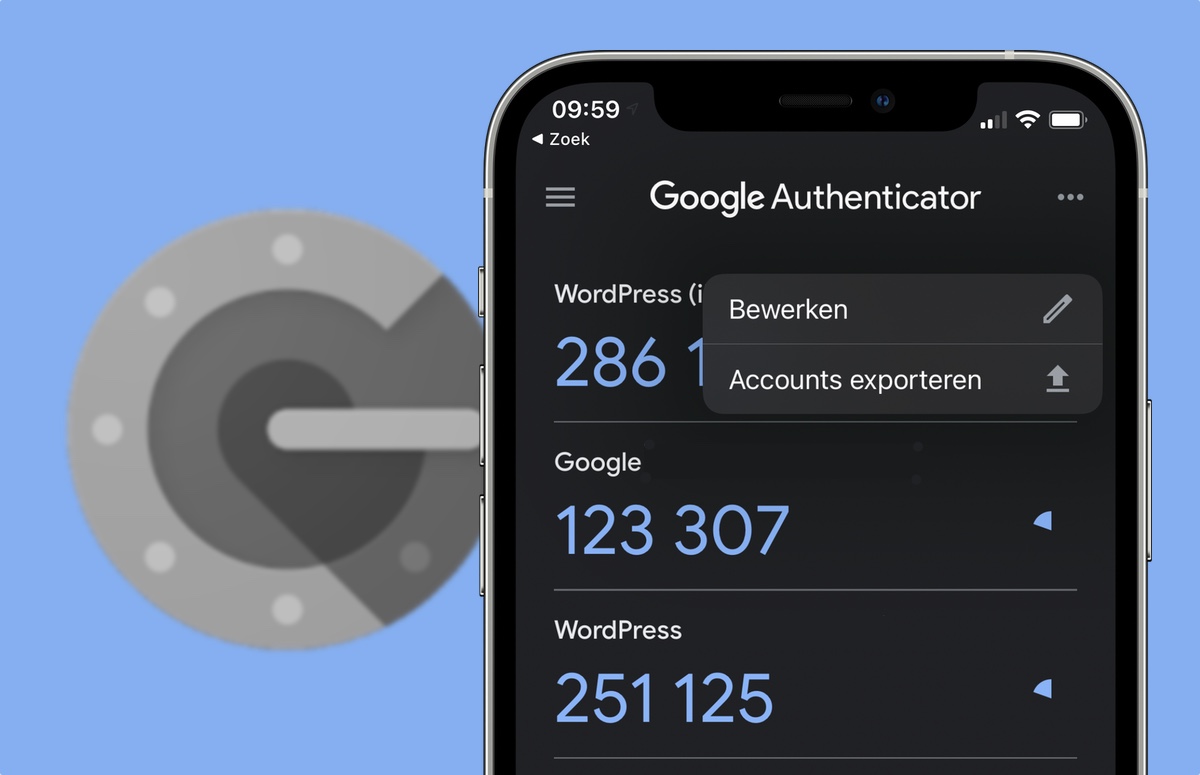
    Google Authenticator, the handy two-factor authentication (2FA) app by Google, just got a nice little update. Version 7.0 of this popular app has been revamped with a fresh new look and some helpful features.

    This is important because, in this day and age, online security is more crucial than ever. 2FA adds an extra layer of protection to your accounts, equating it to a second lock on your door. That means that even if someone has your password, they still can’t get in to your accounts without that second key. That second key in this case is a temporary code generated by Google Authenticator, which helps prevent unauthorized access and keeps your accounts safe from hackers.

    Google Authenticator has been around for years with a mostly unchanged UI but with some helpful features, such as cloud sync for all your added accounts, rolled out not to long ago. Now, Google has redesigned the app with Material Design 3, giving it a more modern and streamlined look. It also supports Dynamic Color, so the app’s colors can adapt to match your phone’s wallpaper.

    But the changes are more than just cosmetic. One of the biggest updates is how you copy 2FA codes. Previously, you had to long-press on the code. Now, a simple tap copies it to your clipboard. It might feel a bit different at first, but it’s definitely more convenient.

    Additionally, Google has added a search bar to help you quickly find the account you need. There’s also a new privacy screen that requires you to unlock the app before displaying your codes, adding an extra layer of security. This update is currently being rolled out through the Play Store, so make sure to check for updates and give it a try.

    I think this is a great update to an already essential app. Google Authenticator is certainly not the only 2FA app out there, but it is very reliable and remains one of the best 2FA apps available. The change in how you copy codes might take some getting used to, but it’s a welcome improvement for quick copying and switching over to the app you are intending to log in to.

  • Just before eagerly awaited Tyson-Paul fight, Netflix goes down

    Just before eagerly awaited Tyson-Paul fight, Netflix goes down

    You were looking forward to binging one of the best rom-coms of the year tonight on Netflix, “Nobody Wants This,” starring Adam Brody and Kristen Bell. After all, everyone at work has been talking about the film and you were the only one in your clique who hadn’t viewed any of it. So after surviving a tough day at the office you head home, get comfortable, turn on Netflix, and…nothing happens because the streamer is down.

    According to DownDetector, the number of complaints it received about Netflix soared from 406 at 7:27 pm ET to a whopping 99,876 by 9:42 pm ET. That’s a huge increase and is certainly indicative of an issue at Netflix. 88% of the complaints were related to video streaming while 11% of the submissions were related to problems with the server connection. The remaining 1% had to do with logging into the service.

    The issue could be related to the heavy traffic expected to watch the Mike Tyson-Jake Paul fight which is being streamed tonight on the platform. Most of the written complaints from Netflix users were related to the fight which was free for paid Netflix subscribers. Many said that their connection was constantly getting buffered. Other complained that the video feed was hard to look at while others said that they had no audio. The streaming issues started during the co-main event between Katie Taylor and Amanda Serrano who were battling it out for the women’s Undisputed Super Lightweight Championship.

    These complaints keep coming into Downdetector with comments suggesting that Netflix stick to movies instead of live events. Others said that Netflix obviously can’t handle internet traffic of this magnitude.

    Despite the large number of Netflix subscribers complaining about the service being down, the streamer’s own status page says that Netflix is up and is not experiencing any interruption to its streaming. Back to Downdetector, the outage map shows that Netflix is having problems in major cities like New York, Detroit, Chicago, Atlanta, Dallas, Houston, Phoenix, and Los Angeles.

    Whether you wanted to watch “Nobody Want This” or the Tyson-Paul fight, Netflix has let down a large number of subscribers tonight.