Author: Mei Ling Tan

  • UBS Data Thief Headed for Prison

    UBS Data Thief Headed for Prison

    An appeal by a former UBS banker who was convicted in absentia of espionage was denied by Switzerland’s highest court.

    The banker, only known as Rene S. was convicted of selling the data of wealth clients to tax authorities in Germany, and sentenced to 40 months in prison and fines and court costs of over 125,000 Swiss francs.

    In 2020, the verdict was upheld by an appeals court, and was again by the Swiss Federal Court, dismissing an argument that the lower appeals court did not correctly conduct the proceedings.

    At the heart of the case was the accusation that Rene S. pocketed 1.1 million euros ($1.14 million) from the sale of the documents and moved to a small town in Germany near the Swiss border.

    Swiss banks have paid billions in settlements related to charges they made it possible to wealthy foreigners to hide their wealth.

    Earlier this week, an attempt to change Swiss banking secrecy laws to exempt whistleblowers and journalists was blocked by lawmakers

  • Apple is no longer the world’s most valuable public company

    Apple is no longer the world’s most valuable public company

    Sorry Apple fans, your favorite company is no longer the most valuable publicly traded outfit in the world. That honor now belongs to oil firm Saudi Aramco. The latter is now worth just south of $2.43 trillion yesterday after converting its market capitalization to dollars. Apple, on the other hand, took a huge hit in the stock market on Wednesday with the shares declining 5%.
    Over the last five trading days, Apple’s shares have declined by $13.51 or 8.66%. Just after the regular trading session closed on Thursday, Apple’s market cap was down to $2.31 trillion. Since it set a 52-week high at $182.94 on January 4th, Apple has seen its value evaporate by 23%. On the other hand, Aramco’s shares are up 27% since the start of the year. In March, the company reported that its full-year earnings doubled thanks to booming oil prices.
    Over the last few years, Apple has become the first publicly traded U.S. firm to reach various valuation benchmarks at $1 trillion, $2 trillion, and $3 trillion. When we write about Apple’s valuation we are talking about its market capitalization which is computed by multiplying the current price of Apple’s stock ($142.56) by the number of shares outstanding.
    The only other U.S. companies giving Apple a run for the money include Microsoft ($1.91 trillion market cap), and Google parent Alphabet ($1.49 trillion market cap). Apple first went public on December 12th, 1980 at $22 per share. Since then, the company has split its shares several times with the latest taking place in August 2020 (4-1). Taking the stock splits into consideration, Apple’s IPO price was 10 cents per share.
    That means if you were lucky enough to buy 100 shares of Apple at the IPO price of $22, you would now own 22,400 shares of the company valued at $3.2 million.
  • Google Translate adds 24 languages using an incredible new technology

    Google Translate adds 24 languages using an incredible new technology

    At the Google I/O 2022 stage today, CEO Sundar Pichai announced that the company is supercharging Google Translate with 24 additional languages.
    As Translate is already quite a robust product, all 24 new languages that are being added today happen to be used by demographics around the world who aren’t all that well represented in today’s tech landscape. Even then, the company argues that these languages are spoken by a combine populace of about 300 million people every day.
    This impressive model is special because it has learned to translate these new languages by only looking at the languages themselves – meaning it hasn’t been shown any actual translation examples involving any of these languages. Google says that Zero-Shot Machine Translation has only looked at “monolingual text” – so, by just looking at text in any of these 24 languages, it seems to have gotten fluent enough so as to handle translations.
    Impressive! Still, Google warns us that while this new tech is already delivering incredible results, it’s also not perfect quite yet.
    But it sure will be better than nothing. Better than paying for a Guarani translator, that’s for use. What’s more, Google promises the model will only get better with time. If interested, here you can learn more about Zero-Shot Machine Translation.
    Finally, here’s the complete list of all 24 new languages being added to Google Translate:
    • Assamese, used by about 25 million people in Northeast India
    • Aymara, used by about two million people in Bolivia, Chile and Peru
    • Bambara, used by about 14 million people in Mali
    • Bhojpuri, used by about 50 million people in northern India, Nepal and Fiji
    • Dhivehi, used by about 300,000 people in the Maldives
    • Dogri, used by about three million people in northern India
    • Ewe, used by about seven million people in Ghana and Togo
    • Guarani, used by about seven million people in Paraguay and Bolivia, Argentina and Brazil
    • Ilocano, used by about 10 million people in northern Philippines
    • Konkani, used by about two million people in Central India
    • Krio, used by about four million people in Sierra Leone
    • Kurdish (Sorani), used by about eight million people, mostly in Iraq
    • Lingala, used by about 45 million people in the Democratic Republic of the Congo, Republic of the Congo, Central African Republic, Angola and the Republic of South Sudan
    • Luganda, used by about 20 million people in Uganda and Rwanda
    • Maithili, used by about 34 million people in northern India
    • Meiteilon (Manipuri), used by about two million people in Northeast India
    • Mizo, used by about 830,000 people in Northeast India
    • Oromo, used by about 37 million people in Ethiopia and Kenya
    • Quechua, used by about 10 million people in Peru, Bolivia, Ecuador and surrounding countries
    • Sanskrit, used by about 20,000 people in India
    • Sepedi, used by about 14 million people in South Africa
    • Tigrinya, used by about eight million people in Eritrea and Ethiopia
    • Tsonga, used by about seven million people in Eswatini, Mozambique, South Africa and Zimbabwe
    • Twi, used by about 11 million people in Ghana
  • Meta announces cuts in its RealityLabs division

    Meta announces cuts in its RealityLabs division

    Facebook parent company, Meta, has announced cutbacks in its RealityLabs division. This branch of the company focuses on Meta’s hardware efforts, develops the tech giant’s virtual and augmented reality products and is instrumental in the tech giant’s long-term strategy of establishing the “metaverse”.

    A spokesperson for Meta confirmed that some RealityLabs projects will be postponed, while others would be canceled altogether. For the time being, there are no concrete details on which ventures are going to be affected.

    For the most part, this news come as no surprise. Earlier in May, Meta announced that they will be cutting back on new hirings. The company has ruled out layoffs, at least for now.

    Meta’s earning reports published in past months indicate that the financial growth of the company is stagnating. The RealityLabs division in particular is operating at a loss. Some steps to address the concerns of investments were imminent.

    What is interesting, however, is that no one in Meta truly expected RealityLabs to reap financial success in the short-term. Mark Zuckerberg, the company’s CEO, has always made it clear that RealityLabs could take the better part of a decade? to start paying off.

    Hence, Meta is currently relying on revenue from their social media platforms to fund their long-term ambitions. This has been the financial strategy of the company, in theory, at least. Following the fluctuating number of daily Facebook users, some doubt has been cast on the viability of this business model in the long run.

    If anything, these cutbacks indicate a certain degree of hesitation on Meta’s part with regards to the company’s direction. When Facebook originally rebranded itself to reflect their newfound emphasis on the metaverse, its confidence in the project, however adventurous, seemed unwavering. It now seems that Meta is having second thoughts.

  • SoftBank Q3 profit collapses as Arm deal falls through

    SoftBank Q3 profit collapses as Arm deal falls through

    SoftBank Group Corp. reported on Tuesday a 97 percent tumble in quarterly profit and the collapse of a deal to sell chip designer Arm worth over $60 billion, mounting pressure on the Japanese conglomerate to support its sagging shares.SoftBank reported that it had squeezed out a net profit of 29 billion yen ($251 million) in the October to December quarter, compared with a record 1.2 trillion yen profit booked a year earlier as its portfolio rallied.Separately, SoftBank announced that the sale of Arm to Nvidia had fallen through amid regulatory hurdles in a major setback to its fund raising plans.

    The decision comes after US authorities filed a lawsuit seeking to block the sale and probes were launched into the deal in the United Kingdom and Europe.The Japanese investment giant said it would recognize a $1.25 billion breakup fee that Nvidia had deposited as a profit in the fourth quarter.After tech unicorns plunged into the “valley of the coronavirus” in the early days of the COVID-19 pandemic, SoftBank CEO Masayoshi Son rode a recovery in valuations as startups such as e-commerce firm Coupang came to market.

    Now valuations are again under pressure as investors cast a skeptical eye over tech firms promising future profits and central banks move toward paring pandemic stimulus.

    The Vision Fund unit posted an investment gain of 111.5 billion yen during the quarter, a sharp decrease from a 1.4 trillion yen gain a year earlier.

    “Even though some of the public companies have come down in value, there have been significant follow-on funding rounds where outside institutional investors have led those rounds,” Vision Fund’s Chief Financial Officer Navneet Govil told Reuters.

    Many SoftBank portfolio companies are trading below their listing price, with office-sharing firm WeWork, ridehailer Grab and used-car platform Auto1 all falling during the quarter.

    The group’s exposure to China has also affected performance, as regulators take action against tech firms. Shares of e-commerce giant Alibaba, in which SoftBank has a stake, dropped a fifth in the three months to the end of December.

    Such assets are used by the group for loans as it invests through its Vision Fund unit, which runs the $100 billion Vision Fund and a smaller second fund and has become the priority for the group.

    Vision Fund 2, which had $51 billion in committed capital at the end of December, had invested $43.1 billion in more than 200 startups. Industry observers have noted a disconnect between frothy private markets and skepticism in public markets.

    “We are seeing some healthy rebalancing… at some of the more extreme ends of the market,” Govil said. “We did turn down quite a few transactions because we thought valuations were rich.”

    Portfolio companies, including sports e-commerce firm Fanatics, held funding rounds during the quarter. Vision Fund has distributed $44.2 billion to its limited partners across both funds.

    The earnings come at a watershed moment for the conglomerate as senior executives exit the firm, including Chief Operating Officer Marcelo Claure , who led the restructuring of WeWork and launched the group’s Latin American-focused fund.

    The company has also seen internal turbulence recently following reports that Claure’s demands for as much as $1 billion in compensation had fuelled an internal clash.

    SoftBank launched a 1 trillion yen buyback in November.

    Group shares closed down 0.9 percent ahead of the earnings and have lost about half since highs in March last year.

    Son, who three months ago said SoftBank was in a “blizzard,” will speak at a news conference at 4:30pm local time

  • Central Retail reports solid growth in Thailand, Vietnam and Italy

    Central Retail reports solid growth in Thailand, Vietnam and Italy

    Mr. Yol Phokasub, Chief Executive Officer of Central Retail Corporation PCL (CRC), announced “Central Retail has achieved success hitting record-high in Q4/2021 performance, with a revenue of THB 58,765 million +15%. EBITDA THB 8,031 million +42% and a net profit of THB 2,464 million +124%. We ended 2021 on a high note with profit of THB 277 million. EBITDA THB 20,059 million and a total revenue of THB 195,654 million. Despite the ongoing challenges posed by the spread of COVID-19 for extended periods across Thailand, Vietnam and Italy, Central Retail achieved profitability and generated positive returns to shareholders, with dividend payment of THB 0.30 per share.

    Thailand: Sales in 2021, excluding tourist spendings, returned higher than pre-pandemic levels. Accounting for this achievement is Central Retail’s Multi-Category Platform, providing portfolio flexibility and adaptability to changing customer needs. The focus in 2021 was the hardline segment, which aligns with consumer trends during the pandemic, enabling the segment to rapidly grow and drive sales to levels higher than the pre-pandemic era by 26%. The company launched 5 new Thai Watsadu branches and new store formats under go! WOW banner of total 15 branches within three months in 2021, of which was positively received by customers, underlining the company’s leadership position in Omnichannel Home Improvement Platform. Additionally, Central Retail successfully acquired COL, including OfficeMate and B2S, and is prepared to list MEB, the leader in the e-book business and novel website for Thais, in the stock exchange of Thailand in 2022. For the food segment, Central Retail maintains its #1 position as The Best Food Destination in Thailand, driving business expansion in 2021 by opening 46 branches to reinforce its leadership position in the category. Tops Supermarket also received the Top Influential Brands award from Influential Brand Singapore and Neo Target, a leader in corporate reputation consultancy in Thailand. The company also implemented fixed prices of consumer goods from the end of last year until the first quarter of this year to alleviate financial burdens of consumers during turbulent times. For the fashion segment, the company drove the highest levels of growth in the fourth quarter when compared to previous quarters in the last two years and the segment is still strong in momentum.

    Vietnam: Despite the impact from COVID-19, Central Retail charged ahead with investment plans, including renovations and business expansion to strengthen its leadership in the hypermarket and lifestyle mall segment across urban and rural areas. The company also expanded into the food segment by launching new store format mini go! that targets mass consumers, as well as Tops Market to serve every customer segment in Vietnam. Although Vietnam faced a difficult situation during the pandemic that forced stores to close during the second and third quarters, our sales grew by 8% higher than 2019 whilst EBITDA grew 9% compared to the previous year.

    Italy: Central Retail initiated renovations of Rinascente across 3 flagship stores, including Milan, Florence and Rome. The renovations took place during the lockdown in Italy and were completed in time for the border reopening in mid-2021, which has successfully attracted a growing number of customers, resulting in strong business growth. The spending power from domestic customers along with the return of European tourists boosted sales growth in the fourth quarter, matching 99% of sales during the pre-pandemic era. The company’s annual sales in Italy saw a strong growth of 30% compared to the previous year and has achieved a fourfold increase in EBITDA compared to the year before.

    Property: Renovated and launched new branches across Thailand and Vietnam, including the opening of GO! lifestyle mall in Vietnam and Robinson Lifestyle in Thailand, totaling 6 branches. Robinson Lifestyle maintained an occupancy rate of over 90% and the number of customers has been increasing consistently. By the end of 2021, Central Retail has a total of 69 branches across Robinson Lifestyle, Tops Plaza and GO! lifestyle malls with total net leasable space over 650,000 square metres, a 10% increase from the previous year.

    Technology and Digital: Central Retail enhanced technology integration across the organisation and its people by adopting a digital-first culture and building on the most comprehensive omnichannel platforms, securing Central Retail’s unique leadership in omnichannel retailing. These efforts resulted in omnichannel sales accounting for 20% of total sales, and a 109% growth. The company also built on the CRC Data Ecosystem and developed new techn

  • Sportswear retailer Li Ning eyes in-store coffee brand

    Sportswear retailer Li Ning eyes in-store coffee brand

    As coffee gradually penetrates Chinese people’s daily life in recent years, some none-catering companies are starting to utilize the potential of this newly booming industry.

    Sportswear brand Li-Ning bursts into the coffee industry this year with Ning Coffee landing in its several offline stores in Beijing, Xiamen and some areas in Guangdong province.

    Li-Ning said it hopes to improve customers’ comfort level when shopping by optimizing its in-store services.

    In early February, China Post opened its first cafe in Xiamen, Fujian province, and will continue to open more stores in Beijing and Shanghai.

    Tongrentang, a traditional Chinese medicine pharmacy with a history dating back over 350 years, opened a shop featuring herbal coffee in 2020.

    According to market consultancy iMedia Research, China’s coffee market totaled 381.7 billion yuan in 2021, and is expected to maintain a high-speed development with a growth rate at about 27.2 percent.

  • Campos Coffee launches recyclable coffee capsules

    Campos Coffee launches recyclable coffee capsules

    Australian roaster Campos Coffee has announced the launch of its first range of recyclable aluminum coffee capsules. With more people working from home, loyal Campos Coffee drinkers have consistently asked to enjoy the distinctive Campos taste in a capsule format, and now it’s available.

    The new Campos Coffee Capsules range includes the brand’s signature Superior blend, a new blend called King St after the main drag in Sydney’s Newtown, and a Single Origin from Indonesia.

    “Campos is recognized as a symbol of quality and excellence in Australia because we have been sourcing and roasting specialty coffee for 20 years,” says Adam Matheson, Head of Coffee at Campos Coffee.

    “You’d be surprised to learn that there’s a lot more to developing a good coffee capsule than just roasting and grinding high-quality, fresh beans. Capsule design and technology are key to delivering a great coffee experience.

    “Our aluminum capsules are world-class and deliver the aroma and flavor our stunning coffees offer. We wouldn’t have it any other way.”

    Campos Coffee has also partnered with TerraCycle to make it easy and free for everyone to recycle their used Campos Coffee aluminum capsules.

    All three types of Campos Coffee Capsules

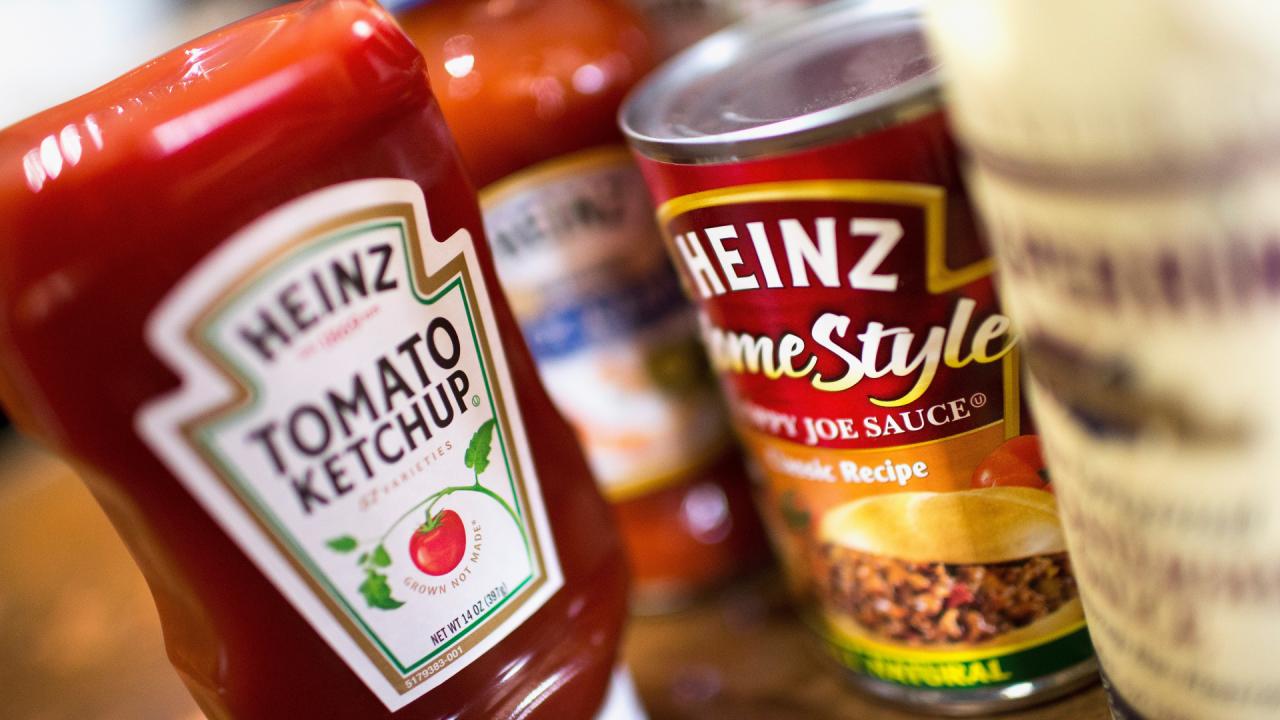
  • Heinz to test paper-based ketchup bottle for worldwide launch

    Heinz to test paper-based ketchup bottle for worldwide launch

    Pulpex, a packaging technology company co-founded by Diageo, has quickly grown in prominence with several CPGs working with the upstart. PepsiCo, which debuted a prototype of the world’s first fully recyclable paper bottle last year, and Unilever have committed to using Pulpex’s technology in their packaging as founding partners of a consortium of companies.

    For Kraft Heinz, the new bottle type will help in its broader sustainable packaging ambitions. The manufacturer of Velveeta cheese and Oscar Mayer cold cuts has pledged to make all of its packaging globally recyclable, reusable or compostable by 2025. It also is aiming to achieve net-zero greenhouse gas emissions by 2050.

    A big reason why companies are investing money to improve their packaging is not only to be altruistic but also because consumers are responding through their purchases.

    More than two-thirds of consumers consider it important that the products they buy are in recyclable packaging, according to Trivium Packaging’s 2021 Global Buying Green Report. The report also found 54% take sustainable packaging into consideration when selecting a product.

    It’s a big reason why General Mills’ Nature Valley Crunchy granola bars, for example, moved to fully recyclable plastic wrappers starting last year and PepsiCo’s Frito-Lay division introduced a compostable bag for its Off The Eaten Path brand.

    Coca-Cola has introduced bottles made from 100% recycled plastic material, Mars Wrigley has partnered with Danimer Scientific to create biodegradable wrappers for Skittles and Danone’s Evian bottled water brand has unveiled a new recycled plastic (rPET) prototype bottle using technology from Loop Industries. The Evian bottles will first appear at a commercial scale in South Korea in 2022 before debuting elsewhere in the future.

    In many cases, companies are testing out new sustainable technologies before determining whether to roll them out more broadly — a key step to ironing out any glitches and making production cost-effective. Kraft Heinz said it will test the prototype to assess performance before trying it with consumers and then eventually bringing the bottle to market.

    The fact that easily recognizable brands such as Heinz are embracing paper-based packaging adds significant momentum behind the shift.

    “The scope for paper-based packaging is huge, and when global household names like Heinz embrace this type of innovative technology, it’s good news for everyone — consumers and the planet,” said Pulpex CEO Scott Winston.

  • Ford Shelves Plans To Manufacture EVs In India

    Ford Shelves Plans To Manufacture EVs In India

    Ford India has shelved its plans to manufacture EVs in India. The carmaker had as part of its ongoing business restructuring applied for the Indian Government’s Product Linked Incentive (PLI) scheme. Under the PLI scheme, Ford had considered utilizing one of its two manufacturing facilities to manufacture EVs for exports and domestic markets though it has now announced that it is no longer pursuing that avenue.

    In a statement, the company said, “After careful review, we have decided to no longer pursue EV manufacturing for exports from any of the Indian plants. We remain grateful to the Government for approving our proposal under the Production-Linked Incentives and for being supportive while we continued our exploration.”

    Ford India had announced a halt to its domestic car manufacturing operations in September last year, with manufacturing for export markets ending by the end of the calendar year. The company though had carried on manufacturing engines for export markets which too are set to close this quarter (Q2 2022).

    Coming to how this would affect its manufacturing facilities in India Ford commented, “Ford India’s previously announced business restructuring continues as planned, including exploring other alternatives for our manufacturing facilities. We continue to work closely with unions and other stakeholders to deliver an equitable and balanced plan to mitigate the impacts of restructuring.”

    Ford’s current restructuring plans involve moving to a CBU only line-up for the Indian market with models such as the Mustang and the all-electric Mach-e expected to be on the card for India with other models from its global range also likely to be considered. The company is also looking to sell its existing manufacturing facilities in the country with Tata Motors and Hyundai reportedly interested in acquiring the plants.

  • Honda runs out of motorcycle parts, buyers take hit

    Honda runs out of motorcycle parts, buyers take hit

    Honda, which has an 80 percent share of the motorbike market in Vietnam, faces a shortage of parts. After years of using a semi-automatic motorcycle, Huy Manh of Hanoi decided to buy an automatic one, a Honda Vision listed at VND32-35 million (US$1,400-1,530).

    But the price quoted at HEADs (Honda Exclusive Authorized Dealers) was VND44 million, and he has to wait for two or three weeks for delivery.

    The production shortage and long queues in HCMC mean many showrooms have stopped taking deposits since they cannot guarantee delivery in time. It used to take buyers only around two or three days, and up to two weeks in case of special options, to get a Honda bike delivered. The waiting time is now two weeks to a month.

    Honda blamed it on a global disruption in the supply of parts and materials. Its locally assembled models like Vision, Lead and SH Mode are the worst affected. It is impossible to know when supply would return to normal levels, it said, adding it is trying its best to ensure supply to dealers.

    Buyers have to pay 20-30 percent more than the listed prices for a motorbike. They had been hiked by 1-5 percent only last month.

    Honda sold two million vehicles last year, or 80 percent of the market share, according to the Vietnam Association of Motorbike Manufacturers, whose members include all major companies.

    Supply is more stable for other producers, but their shares are too small to satisfy the market.

    Honda’s shortage not only affects its own sales but also related businesses such as accessories, painting and maintenance.

  • UBS Appears to be Mapping out a Digital Roadmap

    UBS Appears to be Mapping out a Digital Roadmap

    Many banks are making digital products an essential part of their offerings. It looks like UBS is joining the fray. UBS, Switzerland’s largest bank as registered several new brand names in the Swiss trademark register.

    Among the new brands are UBS Key4 banking, UBS Key4 wealth, and UBS Key4 business, which have been registered and are now legally protected product names of the bank.

    To date, however, Key4 is only the name of the online portal by which UBS has been selling its own and third-party mortgage loans since 2020. According to the report, the registrations of the new trademarks could indicate UBS is in the process of building additional brands for a future digital business.

    UBS rival Credit Suisse launched a digital product in 2020 and trades under the name CSX.

  • Axa Invests in Digital Health App

    Axa Invests in Digital Health App

    Axa Switzerland is expanding its focus on health by backing a start-up offering digital health solutions at work.

    Axa Switzerland is supporting health tech start-up Kinastic as a lead investor, it said in a statement Thursday, without disclosing further details of the deal.

    Kinastic is an app offered to staff by their employers to improve health in the workplace with tailored programs around exercise at work, nutrition, and mental strength.

    Axa previously launched Wecare, a health program included in its occupational benefits package sold to companies.

    We want to help as many employees as possible lead a healthy lifestyle – and we want to do this digitally and as individually as possible, Kinastic CEO Michael Kubli, said in the statement.

    The Winterthur-based startup has been working with

  • Facebook pulls the plug on some services leading to less geolocation tracking

    Facebook pulls the plug on some services leading to less geolocation tracking

    Facebook will no longer be collecting data from a number of its geolocation services. Hence, features that previously tracked your real-time location, including Nearby Friends and weather alerts among others, will soon be discontinued (after May 31st, 2022).

    In a statement for The Verge, a representative from Meta – Facebook’s parent company – confirmed the “deprecation of some location-based services”. Nearby Friends and weather alerts will be the first to go, with location history and background location expected to follow suit in the immediate future.

    Originally, the information regarding the decision to terminate geolocation data collection was disclosed to users that utilize the aforementioned services through a notification. The official justification for the discontinuation is “low usage” on the users’ part.

    Not only will data no longer be gathered, but Facebook will delete any and all stored data on August 1st, 2022. Users will be able to download and view the data collected by the platform before that cut-off point via the Setting and Privacy menu.

    It should be noted that this does not mean Facebook will stop collecting geolocation data altogether. In line with the company’s data policy, said information will continue being gathered and processed, albeit for other “experiences”.

    This naturally raises some questions, but anyone hardly expected for Facebook to voluntarily give up on collecting so much valuable user data. Meta has come under fire in recent years for the way in which sensitive user information is being handled.

    This has led companies like Apple and governments alike to start implementing measures to safeguard user data, much to the distaste of Meta. For example, iOS enables users to both distort their geolocation and withhold it from Facebook altogether.

    In the end, Facebook will be Facebook and will always treat user data as an invaluable commodity. Whether they will continue to get away with it remains to be seen.

  • Subway plans to open 500 stores in Malaysia with new franchisee

    Subway plans to open 500 stores in Malaysia with new franchisee

    Subway has inked a new master franchise agreement with Pegacorn to open 500 new locations across Peninsular Malaysia over the next 10 years. This triples the number of Subway restaurants in the market and steadily increases the annual restaurant count.

    According to Subway, this partnership is the third of its kind for the brand in Southeast Asia, following recent master franchise agreements in Indonesia and Thailand, and will significantly increase the total future restaurant commitment in the region. Pegacorn has been a partner to Subway in Malaysia since 2019.

    There will be an increase of Subway non-traditional locations across Malaysia, such as airports, hospitals, petrol stations, and convenience stores. New and updated existing restaurants will feature Subway’s modern “Fresh Forward” design and enhance convenience for the consumer with drive-throughts and “Grab & Go” options.

    The agreement with Pegacorn is part of Subway’s multi-year transformation journey to build a better Subway and improve across all aspects of the brand as the business expands its presence globally. Subway plans to double its current network of restaurants in APAC from about 3,300 today to over 6,000 in the next five years.

    Subway CEO John Chidsey said the APAC and SEA markets continue to be a huge opportunity of growth for Subway and an essential part of its international growth strategy. “Pegacorn has proven to be a well-resourced, strategic and successful local operator that has the local insight and experience needed to expand Subway’s presence in Malaysia,” he added.

    Meanwhile, Pegacorn CEO, Kin Siong Kon, said: “We have seen increased demand from guests in Malaysia for Subway’s craveable sandwiches, wraps and salads and are committed to growing the business to make Subway even more accessible to communities across the country.”

    The team in Malaysia introduced a new mascot named Sabweh alongside its Ramadan campaign in March. Sabweh debuted on limited-edition Raya packets and was the brainchild of social media artist Ernest Ng, known for his “Don’t like that la bro” comic series.

    Hang Ee Laine, head of marketing, Subway, Southeast Asia, said previously that the partnership with Ng is a key milestone for the brand in its efforts to bring Subway closer to Malaysians. Meanwhile, its spokesperson also told A+M then that Ng had previously designed the Sabweh character for one of his comics and the character was very popular with Malaysians. Subway felt that the art piece deserved a bigger stage and engaged Ng to create a series of limited-edition Raya-themed versions of Sabweh.

    Across the border, Costa Coffee reentered Singapore through a partnership with Subway after a three-year hiatus. This adds on to Subway’s breakfast options and alignts with its campaign #Talkofthemorning, which aims to encourage Singaporeans to lean into their love of coffee and breakfast as a driver of meaningful connections with one another.