Author: Mei Ling Tan

  • discovery+ joins The Roku Channel, but you still have to pay for it

    discovery+ joins The Roku Channel, but you still have to pay for it

    The Roku Channel has just announced that it has added discovery+ to its offering in the United States. Users can now subscribe to both the ad-free ($6.99) and ad-supported ($4.99) versions of discovery+ directly through The Roku Channel.

    The announcement doesn’t come as a surprise since The Roku Channel already offers premium subscriptions from over 50 services. You won’t be getting any financial benefits from subscribing to discovery+ through The Roku Channel, but you’ll enjoy a unified browse and sign-up experience and get all subscriptions on single monthly bill (if you’re subscribed to more than one services).

    discovery+ offers over 70,000 episodes of current and classic shows from popular networks, including HGTV, Food Network, TLC, ID, OWN, Travel Channel, Discovery Channel, Animal Planet, and Magnolia Network, as well as more than 200 discovery+ original titles and hundreds of hours of exclusive content.

    The Roku Channel was a top 5 channel on the Roku platform in the US by active account reach and streaming hour engagement in Q1 2022. The Roku Channel has a massive portfolio of more than 80,000 free movies and programs and over 275 free live linear TV channels in the US, as well as premium subscriptions from over 50 content partners. It’s now available on Web, iOS and Android devices, Amazon Fire TV and select Samsung TVs.

  • Carousell acquires Singapore fashion resale brand Refash

    Carousell acquires Singapore fashion resale brand Refash

    ONLINE marketplace Carousell has inked a deal to buy Refash, a Singapore e-commerce platform and store operator for second-hand clothes, the companies announced on Monday (May 9). The deal value is undisclosed.

    Launched in 2015, Refash is focused on “thrifting”, or facilitating sales and purchases of second-hand clothes. The company said that it has processed over 5 million pieces of clothing and resold apparel from over 300 fashion labels. Besides its online platform, Refash also operates 10 physical thrift stores across Singapore.

    According to data platform VentureCap Insights, Refash posted US$460,242 in revenue for FY2020 ended December, with a profit of close to US$36,300.

    Post-acquisition, Refash will continue to operate as its own brand, retaining its name, platform, and team. The deal will beef up Carousell’s fashion vertical, which has been a major category for the company since its founding in 2012.

    “With our reach and expertise in using technology and AI to create seamless buy-sell experiences for secondhand (products), we are excited to partner and accelerate the growth of Refash,” said Carousell co-founder and chief executive Quek Siu Rui.

    The deal comes months after Carousell bought Ox Street, a Singapore-based marketplace for authenticated sneakers and street wear. In February, Carousell was in talks to acquire Singapore-based property marketplace operator 99 Group, ahead of a potential US listing this year.

  • Vietnamese NFT game big in Japan

    Vietnamese NFT game big in Japan

    Titan Hunters, a non-fungible token game developed in Vietnam, is currently the 21st most downloaded adventure game on iOS in Japan. It has been downloaded over 100,000 times on Android devices.

    It has also gained social media attention and was among the top mentioned topics on Twitter at the end of last month and early this month. Popular Japanese gamer Lucian said it attracts players because of its ease of access. Titan Hunters was launched at the end of March.

    Unlike other NFT games, it is free, and those who want to play to earn need to link the game with their e-wallet. Japan has among the largest number of players and developers of electronic games globally. At 70 million players, the game has a quarter of the numbers Sony, Nintendo and Sega do.

    Titan Hunters CEO Vu Duy Tiep said Japan is a market with high competition and players there are “pretty picky.” The game has been downloaded 150,000 times across all platforms with around 50,000 active players daily, 75 percent of them in Japan, he said.

    “We aim to reach the European and U.S. markets next.”

    In Vietnam, some players have been complaining that the game has bugs and their gameplay experience is not “smooth.”

    Axie Infinity was the first NFT game developed in Vietnam to become internationally popular.

  • Nearly half of main bourse stocks hit floor prices

    Nearly half of main bourse stocks hit floor prices

    Vietnam’s benchmark VN-Index plunged 4.49 percent to 1,269.62 points Monday, a nine-month low, with 221 tickers out of 484 on the Ho Chi Minh Stock Exchange hitting the floor. The index stayed in the red throughout the day and closed nearly 60 points lower after losing 31 points in the last session.

    It is now at the lowest since July 23 last year, having fallen 15 percent since the beginning of the year.

    Major Asian markets also closed in the red Monday, with China’s Hang Seng Index losing 3.8 percent and Japan’s Nikkei 225 falling 2.5 percent, weighed by global growth worries due to lockdowns in China and aggressive policy tightening from central banks.

    The VN30 basket, comprising the 30 largest capped stocks, saw all tickers losing, with 13 of them closing at floor price.

    MWG of electronics retail chain Mobile World, PLX of fuel distributor Petrolimex and TCB of the largest private lender Techcombank all fell 7 percent.

    BID of state-owned lender BIDV, BVH of insurance company Bao Viet Holdings and CTG of state-owned lender VietinBank dropped 6.9 percent.

    Foreign investors were net buyers to the tune of VND547 billion, mainly buying VHM of real estate giant Vinhomes and HPG of steelmaker Hoa Phat Group.

    The HNX-Index for stocks on the Hanoi Stock Exchange, home to mid and small caps, dropped 5.84 percent, while the UPCoM-Index for the Unlisted Public Companies Market fell 5.28 percent.

  • Finance ministry seeks tax delay for auto industry

    Finance ministry seeks tax delay for auto industry

    The Ministry of Finance wants special consumption tax payable by auto companies to be deferred by up to four months to help them recover from the impact of Covid-19.

    The tax for June-September, worth a total of VND20 trillion ($871 million), can be paid on November 20.

    If the government approves the ministry proposal, auto manufacturers will get extra time to pay the tax for a third straight year.

    The ministry said last year auto manufacturers saw sales plunge due to social distancing restrictions and also struggled with a shortage of semiconductors.

    Though the tax delay goes against Vietnam’s international commitments, the ministry said it is needed to help businesses overcome difficulties.

    Many countries have done the same to help their manufacturers recover, and Vietnam is unlikely to be sued for it, the ministry added.

    Auto sales in Vietnam last year dropped 3 percent from 2020 to 383,444 units, according to data from data from the Vietnam Automobile Manufacturers Association (VAMA), TC Motor and VinFast.

  • Indian startup Zoomcar bets on Vietnam as key Southeast Asian market

    Indian startup Zoomcar bets on Vietnam as key Southeast Asian market

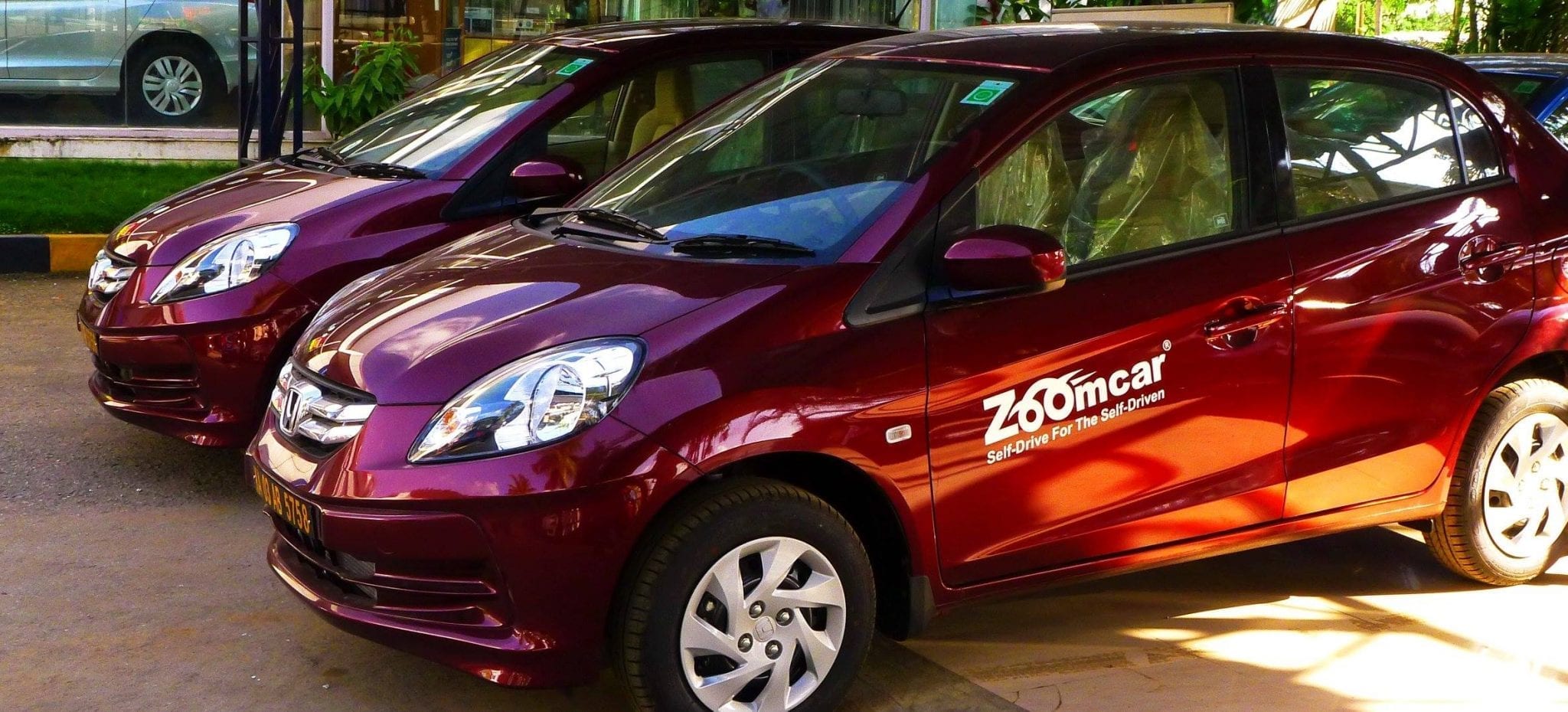
    Indian car rental startup Zoomcar eyes Vietnam as a major Southeast Asian market to take advantage of the rising demand for car ownership among its expanding middle class. Vietnam is set to account for 10 percent of Zoomcar’s revenues in the next financial year, which translates to $8 million, Kiet Pham, vice president and country director of Zoomcar Vietnam said.

    In Southeast Asia, the company is focusing on Indonesia and Vietnam, and plans to invest $100 million in the two countries. In Vietnam, it has around 1,000 cars for rent, or 10 percent of its total global number. To achieve the number, Zoomcar has been giving out large rewards to car owners to list their vehicles on its platform. An owner who listed during the four-day holiday earlier this month received VND3 million ($131).

    Zoomcar is also willing to burn cash to change Vietnamese consumers’ habit and make them familiar with renting cars.

    Kiet said the company is willing to spend $25 million to expand its presence in Vietnam. It has raised $207 million since its establishment.

    For Vietnamese users, though it is one of the top car rental companies in India, Zoomcar remains a new brand as it has only been active in HCMC for four months.

    Kiet said Zoomcar is betting big on Vietnam because the country is the fourth biggest car market (in terms of sales) in Southeast Asia and only 5.7 percent of households had a car in 2020.

    The dwindling sales of motorbikes, the expanding middle class and the development of major infrastructure projects are set to increase car usage, he added.

    Vietnam’s car rental market is set to reach $550 million this year and will grow by 10.9 percent annually in the next five years, according to data portal Statista. By 2026, it will reach $840 million with 8.7 million users.

    Kiet said: “This is the right time to enter the market. There is a lot of support for our entrance.”

    The number of trips has been doubling every month in the last four months, he said.

    “Those figures exceed our initial targets.”

    Traditionally, customers have to make a deposit of VND15-20 million, submit their household registration book, a vital identification document in Vietnam. Customers and hire a car for at least one day.

    On Zoomcar, users are not required to put down any deposit or documents, and can rent for six hours.

    But the commission of 40 percent of rental it charges discourages some car owners, who complain it is too high.

    Kiet defended it by saying it is an appropriate ratio to ensure the company has enough resources to develop the market and bear the risks of operation so that car owners only need to list their vehicles and not worry about customers’ trustworthiness.

    He also spoke about the low number of vehicles, saying only 50 percent of registered owners make them available at a time, at a time when the number of renters is increasing.

    The low rate of people with driver’s licenses (estimated to be 3 percent of the HCMC population) is also a challenge, he said.

    The company believes however that car rental would become a future trend in Vietnam as has happened in Singapore and the U.S., he said

    The company hopes to expand to Hanoi this quarter, he added.

  • Tesla Halts Production At Shanghai Plant Due To Supply Issues – Report

    Tesla Halts Production At Shanghai Plant Due To Supply Issues – Report

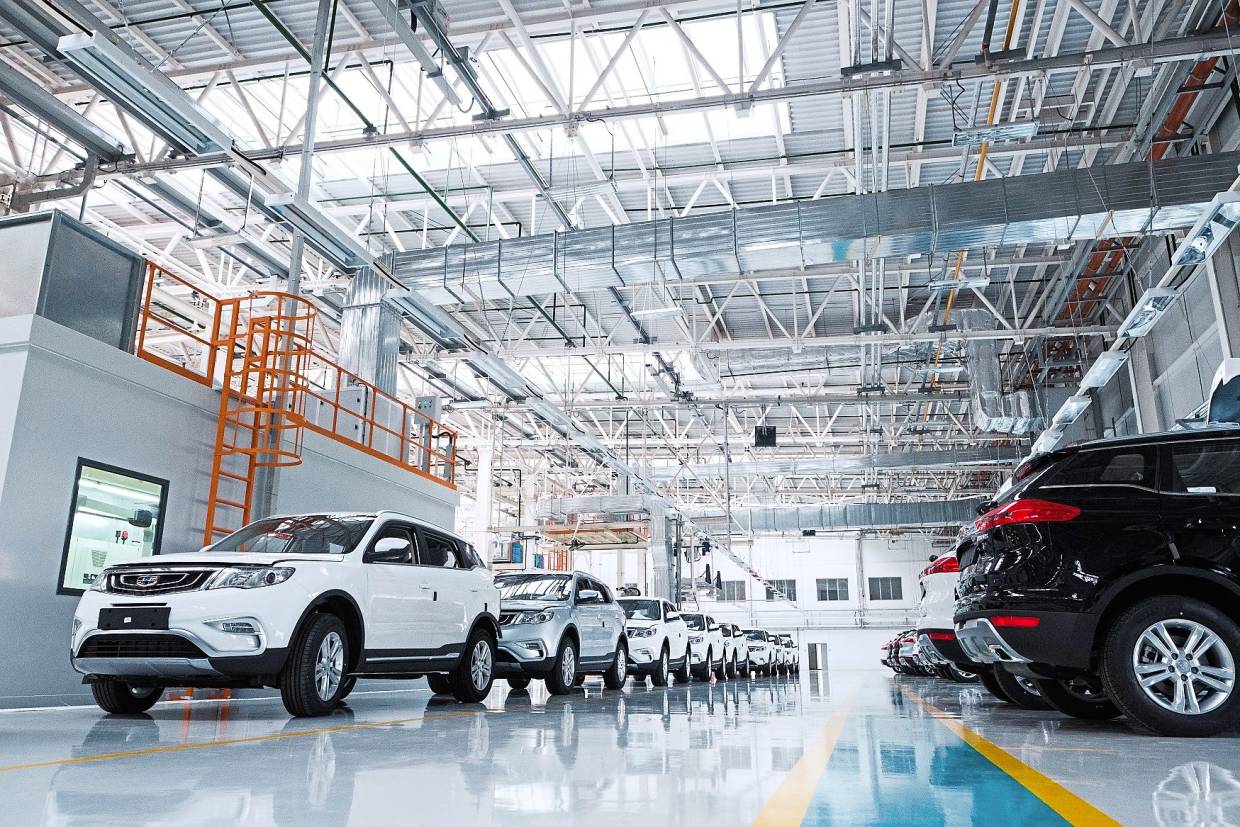
    Tesla Inc halted production at its Shanghai plant on Monday due to issues with securing parts for its electric vehicles, two people familiar with the matter said, the latest in a series of difficulties for the factory.

    Shanghai is in its sixth week of an intensifying COVID-19 lockdown that has tested the ability of manufacturers to operate amid hard restrictions on the movement of people and materials.

    Tesla had planned as late as last week to increase output to pre-lockdown levels by next week.

    It was not immediately clear when the current supply issues can be resolved and when Tesla would be able to resume production, said the people, who asked not to be identified because the production plans are private.

    Tesla did not immediately respond to a query for comment.

    China Passenger Car Association is scheduled to release April sales for Tesla, China’s second-largest EV maker behind BYD, on Tuesday.

    Another auto association said last week it estimated overall auto sales in China dropped 48% in April as zero-COVID lockdowns shut factories, limited traffic to showrooms and put the brakes on spending.

    Aptiv, Tesla’s main supplier of wire harnesses, stopped shipping from a Shanghai plant that supplies Tesla and General Motors Co after COVID-19 infections were found among its workers, two people familiar with the matter told Reuters on Monday.

    Tesla’s Shanghai plant, also known as the Gigafactory 3, produces the Model 3 sedan and Model Y crossover for the China market and for export.

    Tesla partially resumed production at the Shanghai plant on April 19 following a 22-day closure caused by the city’s COVID-19 lockdown.

    Tesla had been aiming to increase output at its Shanghai plant to 2,600 cars a day from May 16, Reuters reported previously.

    Shanghai authorities have tightened a city-wide lockdown imposed more than a month ago on the commercial hub with a population of 25 million, a move that could extend curbs on movement through the month.

  • KBank appoints Ms. Voranuch Dejakaisaya as Executive Chairman-KBTG

    KBank appoints Ms. Voranuch Dejakaisaya as Executive Chairman-KBTG

    KBank recently announced the appointment of Ms. Voranuch Dejakaisaya as Executive ChairmanKASIKORN BusinessTechnology Group (KBTG) to supervise the IT systems of KBTG and KBank, and help steer the organizations’ transformation plans and regional expansion.

    Ms. Voranuch Dejakaisaya, currently aged 62, graduated with a Bachelor of Science, Statistics, Chulalongkorn University, and a Master of Business Administration (M.B.A), Chulalongkorn University. She has extensive work experience with a number of organizations, including GE Capital (Thailand) as Chief Information Officer SEA/IT Regional Head, Bank of Ayudhya PCL as Chief Information, and Siam Commercial Bank PCL as Chief Information & Operations Officer. Prior to her retirement, she was Chief Technology Officer at SCBX PCL. She then joined KBank as Executive Chairman-KBTG in May 2022.

    Ms. Voranuch Dejakaisaya received the CIO50 ASEAN 2019” award (Ranked #1) from the International Data Group (IDG) – a world-class IT consulting company, and the “Chief Information and Technology of the Year 2019” award from The Asian Banker. Additionally, she was Chairman of the Thai Bankers’ Association’s CIO Club from 2019 to 2020.

  • EU could start enforcing Digital Markets Act rules on Apple, Google, Meta in Spring 2023

    EU could start enforcing Digital Markets Act rules on Apple, Google, Meta in Spring 2023

    You may have heard so far that the European Union has been preparing to have a say in how big tech companies like Apple, Google, and Meta operate. We are talking about a legislation dubbed the DMA (Digital Markets Act) which the European Commission has been rigorously preparing for a while. The European Commission’s

    executive vice president Margrethe Vestager has set her eyes on controlling (or at least, fining if uncontrollable) tech giants such as Apple, Google, Amazon, Meta, and others with the DMA. Previously, she expected the battle to begin in October, but it seems we are more likely to see some action in the Spring of next year.

    The waiting game depends on when the DMA will get implemented. The legislation is currently waiting for approval from the Council and Parliament.

    The EU is, however, gearing up for enforcement of the new laws. The legislation focuses on the so-called gatekeeper companies, that, if you’ve been attentive so far in this article, you might presume refers to those big tech companies we mentioned earlier.

    And you would be correct. If you’re curious, here’s the definition of what companies are considered gatekeepers: the company needs to have a market capitalization (a fancy way of saying the total of its stocks value) of over €75 billion ($82 billion) and own a social platform or app with at least 45 million monthly users.

    These companies could face fines of up to 10 percent of their total worldwide turnover (for the preceding year) if they fail to comply with the legislation. For the repeated offenders, the fine can grow to 20 percent, which could help the EU drive its point home.

    So, big tech companies will have three months to declare their status to the Commission, and then they’ll have to wait for up to two months to receive confirmation from the EU. Indeed, it seems like it could take quite a while for the giant mechanism to start working (you can’t expect tech giants and government commissions to fight a fierce Marvel-like battle that’s so quick it’s hard to see).

    And as you might imagine, the EU has a lot more work it needs to do beforehand. Hiring heroes (we mean, staff), preparing the hundreds of monitors and computers to analyze data (and possibly, the 007 coffee for the employees that are working there)… joking aside, it will indeed take some tremendous work to prepare such legislation to be executed. Vestager also mentions that they will need to prepare legal text on various procedures.

    However, when the DMA passes, it will possibly mark an end of an era. In case you haven’t heard of it yet, this is the legislation that could force Apple to allow users to download apps from outside the App Store (a possibility that freaks Tim Cook out and has him worried about the iPhone security), as well as require WhatsApp and iMessage to become interoperable with smaller chat apps.

    Sideloading (the process of downloading apps on iPhone from outside the App Store) is arguably the biggest change the DMA will force for Apple. Previously, Apple has raised concerns that this will weaken the iPhone’s security. By the way, Android users have been able to sideload apps for quite a while now.

    On the other hand, an even bigger cause of headache for Apple is that the DMA would make Cupertino allow App Store customers to make in-app payments through alternative payment platforms (you may have heard about the infamous Apple Tax, 30% cut, which Apple takes from developers when payments are made via the App Store).

    With all this being said, it will be quite interesting to see the DMA in action and what changes will big tech giants have to implement (and whether they will comply).

  • Thailand urges care over content as Lazada promotion angers royalists

    Thailand urges care over content as Lazada promotion angers royalists

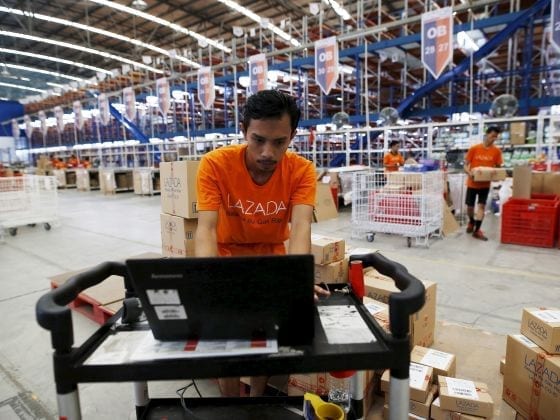
    Thailand on Saturday warned against the creation of online content that risked insulting the country’s monarchy, after a video by a social media influencer promoting e-commerce platform Lazada incensed royalists, who said it was mocking the palace.

    Thai law prescribes punishments of up to 15 years in jail for each offence if found guilty of defaming, insulting or threatening King Maha Vajiralongkorn and his closest family.

    The video, which has since been taken down, was promoting Lazada’s May 5 sale and featured a woman dressed in a traditional Thai costume sitting in a wheelchair and playing the role of an influencer’s mother.

    Royalists complained the woman in the wheelchair was a veiled reference to a royal family member. The video did not use the language used by the royal family, nor mention any of its members.

    In videos posted on Facebook, the influencer, Aniwat “Nara” Prathumthin, said the clip was a parody of a famous Thai soap opera and told critics the perceived royal insult was “all in your imagination”.

    Lazada, the Southeast Asian arm of Alibaba Group Holding, in a statement apologised for the “emotional damage” the video had caused and said it should have been more careful.

    Government spokesman Thanakorn Wangboonkongchana said such content risked damaging the reputation of brands.

    “Let us warn marketers, influencers and content creators to be careful about presenting content or promotions that reference appearances or individuals of the institution that all Thais worship and love,” Thanakorn said in a statement.

    “This is inappropriate, and will not only upset every Thai in the country, but also destroy the image and reputation of the brand. It could also be against the law.”

    The incident follows an April Fool’s prank tweeted by a staff member at budget airline Thai Vietjet Air, an offshoot of Vietnam’s Vietjet Aviation JSC, about a new route to Munich that stirred anger among royalists, who said it was a hidden joke about the Thai king spending time in Germany. The airline apologised.

  • Adidas lowers 2022 expectations amid China lockdowns

    Adidas lowers 2022 expectations amid China lockdowns

    Adidas lowered expectations for 2022 after a first-quarter slump as renewed COVID-19-related lockdowns in Greater China continues to hit the German sportswear company.

    First-quarter currency-adjusted sales shrank by 3% worldwide, to 5.3 billion euros ($5.58 billion), while profit from continuing operations fell 38%, to 310 million euros, it said on Friday.

    In Greater China, sales collapsed by 35% in the first quarter; for the year, revenue is expected to fall significantly due to store closures and strong traffic declines.

    The company now expects to come in at the lower end of its 2022 forecast for an 11-13% increase in currency-neutral sales as well as for net income from continuing operations of between 1.8 and 1.9 billion euros.

    Adidas also cut its operating margin forecast, saying it will remain at the previous year’s level of 9.4% instead of increasing to 11%.

    “In this environment, characterized by severe external challenges, it is imperative to stay focused on our strategic objectives,” said Chief Executive Kasper Rorsted.

    “While we will remain agile, we will not jeopardize our long-term growth opportunity for short-term profit optimization.”

    The company expects a return to growth in the second quarter despite the continued sales decline in Greater China and a 200-million-euro negative impact from supply chain constraints.

    In the second half of 2022, net sales are expected to grow over 20%, driven, among other things, by unconstrained supply, strong momentum in Western markets and major sports events.

  • Tata Motors Takes A Frugal Road Less Travelled

    Tata Motors Takes A Frugal Road Less Travelled

    To make its first electric vehicle for the consumer market, India’s Tata Motors Ltd repurposed an unused shop floor at its flagship plant. Here, there’s no fancy assembly line – Nexon SUV bodies designed for gasoline models are wired and fitted with battery packs by hand.

    The area, which could be mistaken for a prototype lab, initially made just eight SUVs a day. But demand has shot up over the two years since the Nexon EV’s launch. Tata now makes more than 100 a day though much of that is now handled at another plant nearby.

    Even with this humble start, which draws on India’s tradition of ‘jugaad’ – a word referring to frugal DIY innovation and workarounds, Tata dominates the country’s fledgling electric car market.

    That contrasts sharply with other major automakers which have poured billions of dollars into EV tooling and technology from the get-go, though Tata’s success also owes much to government subsidies and high tariffs that keep out imports from rivals like Tesla Inc.

    Going into India’s untried market for EVs, Tata knew it had to make an affordable car for an extremely cost-conscious population. Instead of building an EV plant or line which would be expensive and take time, it decided to pick an existing successful model and work on outfitting it with a battery pack.

    An EV plant for a nascent market would have been “a huge amount of investment sitting on the potential of emerging volumes. We didn’t want to do that,” Anand Kulkarni, vice president of product line and operations at Tata Passenger Electric Mobility, told Reuters.

    Tata also limited upfront investment by relying on Tata group companies for a range of EV components and infrastructure, and by choosing a cheaper battery chemistry type.

    That enabled it to price the Nexon EV around $19,000 – not necessarily cheap in India but affordable for the upper-middle class and not much more expensive than the top version of the Nexon gasoline model.

    With just the Nexon EV and one other model for fleet sales, Tata commands 90% of India’s electric car sales, giving it an all-important first-mover advantage even if EVs account for only 1% of the overall auto market.

    Last June, Tata outlined aggressive plans to launch 10 electric models by March 2026. This financial year alone, it wants to quadruple EV production to 80,000 cars, sources have said.

    Those ambitions attracted $1 billion in investment from U.S. private equity firm TPG, valuing its EV business at $9 billion – far below some EV startups but equivalent to 40% of Tata Motors’ market value.

    “This has definitely given us a significant head-start. It now gives us a force multiplier to aggressively move on EVs,” said Shailesh Chandra, managing director of Tata Motors Passenger Vehicles and the EV subsidiary.

    Tata has also earmarked $1 billion of its own money to fund its EV plans and by 2025 Chandra expects electric models to make up a quarter of its sales.

    Longer-term, Tata is working on an EV-specific car platform and wants its first car using that architecture to launch in 2025. The company is also evaluating the need for a dedicated EV plant, Kulkarni said.

    In the meantime, it plans to modify combustion engine platforms to build EVs with bigger batteries and longer driving ranges. Those models are likely to hit the market in about two years.

    The Nexon EV has a relatively modest real-world driving range of around 200 km per charge.

    The range is, however, sufficient for most potential Indian buyers, a Tata survey of consumers showed, prompting it to choose a 30 kilowatt hour iron-based battery from China’s Gotion High Tech Co which is cheaper than other lithium-ion batteries. Tata has also judged it safer for India’s tropical weather conditions, Kulkarni said.

    Gotion is working with Tata AutoComp Systems on assembling the battery packs and on the battery management system.

    Tata AutoComp, which sources most of the EV parts, is one of several Tata conglomerate firms that Tata Motors leans on – a huge advantage at a time when many automakers are ploughing funds into becoming more vertically integrated and less reliant on suppliers.

    Tata Power Company Ltd is setting up charging stations, Jaguar Land Rover contributes to design while Tata Chemicals Ltd has plans for battery recycling and local cell manufacturing.

    When Tata began EV production in 2020, most parts were imported. Today, Tata AutoComp produces around 50% of the components in-house, its CEO, Arvind Goel, told Reuters.

    “Our plan is to localise everything,” he said.

    All of the motor’s parts except the magnet are due to be produced locally over the next couple of years. Excluding the cells, the battery will be made in-house and the company is working on its own battery management system, Goel added.

    Tata’s EV business is, however, set to face challenges. The government wants 30% of all cars sold in the country to be electric by 2030 and while that goal may look optimistic, competition is on its way.

    South Korea’s Hyundai Motor and Kia Motors plan to start selling EVs in India this year although their models are set to be bigger and pricier. Expectations are also high for some rivals to launch gasoline-electric hybrids.

    “The major threat will come when competitors like Hyundai launch EV models in a similar price band and as Toyota and Suzuki’s hybrid cars come into the market,” said Gaurav Vangaal, associate director at S&P Global Mobility.

    And like other automakers, Tata is struggling to source semiconductors amid a global shortage that has become its biggest challenge in ramping up production and has caused a 5 month backlog in EV orders.

    That said, Tata intends to make the most of its enviable lead in India’s EV market. It has accrued a trove of data from monitoring the 25,000 EVs it has on the road – particularly relevant for developing electric cars in hot climates, says Kulkarni.

    “India has several hotspots which make it a challenge for electrification. Developing EVs in this market provides us with rich data, information which can flow back into our development process. I can’t tell you the kind of head start this gives us,” he said.


  • Apple needs to exterminate bug causing AirTags stalking false alarms

    Apple needs to exterminate bug causing AirTags stalking false alarms

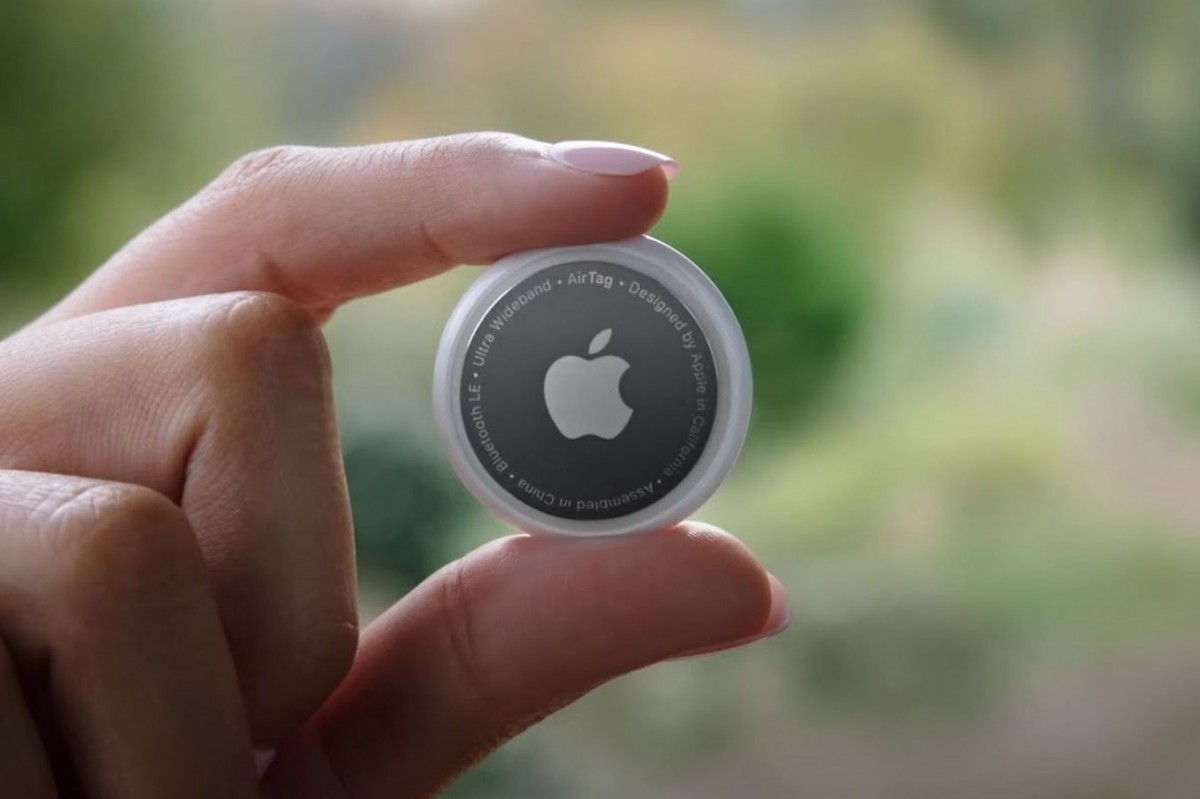
    With all of the publicity that is generated when a rogue Apple AirTag is used to stalk unsuspecting victims, Apple is now having issues with AirTags that result in alerts being sent to users who aren’t being stalked at all. While the device was designed to help people keep tabs on small items that they are apt to lose such as key chains, the AirTags have been used by criminals to follow the whereabouts of certain car models that bring high returns in the stolen car market.
    And to prevent iPhone users from becoming victims of criminal AirTag users, they are alerted when being followed by someone else’s AirTags. That’s what happened recently at Disney World when a mother and daughter were leaving the park and the daughter received a notification on her iPhone saying that she was being tracked by another person’s AirTag. Luckily, nothing ever came of the incident although it frightened both of them..
    What is happening more and more is that iPhone users are receiving such frightening alerts even if they aren’t being tracked at all. The Journal says that some of these warnings are coming in the middle of the night and are scaring those who are receiving the notifications. In most cases, the rogue AirTags are not in the path of the concerned iPhone users at all, and could be from a bug or a glitch.
    The bogus reports have created “confusion and concern, and have led recipients on wild goose chases” according to the Wall Street Journal. And graphs tracking these bogus AirTag alerts create patterns that are not realistic. These patterns are showing the erratic movements of these AirTags moving in nonsensical directions.
    Ryan McClain, a 25-year-old marketer in Indianapolis, received a notification one-morning last month that said he was being tracked. His response was a combination of bewilderment, fear, and concern. “It was a shock to my morning,” he said. “I thought, ‘Who would want to stalk me? Who would want to hurt me?” McClain and his fiance spent the next day looking in vain for the offending AirTags.
    Toronto-based consumer researcher Marcus Geisler found the pattern of movement generated by the AirTags to be strange. “The AirTag’s pattern of movement on the map looked super weird,” said Geisler.” “I thought maybe my neighbor’s dog accidentally swallowed it,” He also was unable to find any rogue AirTags.
    Another iPhone user, 24-year-old Natalia Garcia, received a notification telling her that an “AirTag (was) Found Moving With You.” She received the message after an evening in downtown Chicago. “It was scary,” Garcia said, “I checked my purse, looked all around to make sure no one put an AirTag on me,” she said. She tried to force the tracker to ring its alarm but the Find My app just would say “AirTag Not Reachable.”
    So what should you do if you’re getting bombarded with bogus notifications? Should you turn the notifications off? Not al all says John DeCarlo, director of the master’s program in criminal justice at the University of New Haven and a former Branford, Conn., police chief. “Getting false alarms with technology is a common occurrence,” DeCarlo said. “If you turn the notifications off, it leaves you without the benefits.”
    If the bogus notifications are from a bug, it will be up to Apple to try and exterminate it just to keep users from feeling that an unseen stalker constantly has his eyes on them even if that isn’t true at all.
    It just reveals what a sad state the world is in that a device meant to help people find missing objects becomes a scary product used to attack people just minding their own business.
  • Google Tasks now allows users to set up recurring tasks directly from the app

    Google Tasks now allows users to set up recurring tasks directly from the app

    The Google Tasks app is adding a feature that is such a no-brainer you have to wonder why it wasn’t added before. Oh, wait! The new feature was available through Google Calendar, but not from the app-that is until now. Let’s get down to specifics. But first, as many of you know, Google Tasks allows you to create to-do lists that integrate with Gmail and Google Calendar to help you get your chores done.
    You can create, manage, and view tasks on any device while you’re on the go. Tasks created on Gmail and Google Calendar from your desktop can be managed on your mobile phone or tablet. And to make it easier for you to finish a task, you can break down each one into sub-tasks allowing you to take smaller bites of the project, helping you finish it faster. And as your work on a task progresses, you can edit it. Tasks can be created from an email in the Gmail app and traced back to the source gmail it came from.
    Placing a due date on each task can help you quickly finish a project, says Google. However, with such pressure placed on you to complete a task by the due date, you might find yourself drenched in sweat as the pressure builds. You can also organize your tasks by date and receive notifications reminders as if you didn’t put enough pressure on yourself.
    Currently, you can set when a recurring option will come to an end by opening the task in Google Calendar. The three options you have are to keep the task recurring constantly with no end, have the recurring task end on a specific date, or have it end after X number of occurrences. To set a recurring option in Google Calendar, open the latter app and look for the yellow background that indicates a task.
    From there, press the pencil icon and the words “Does not repeat.” That will reveal a pop-up menu. Press on Custom and you’ll be sent to the Custom recurrence page that allows you to set how many times a day, week, month, or year you want this task to recur. You can even keep this task recurring without a stop-date, choose a specific stop-date, or choose for the task to end after a certain number of times that it recurs.
    After you choose the settings, hit done. Yes, that might seem like a lot of work, but there is a new shortcut you can use directly from the Google Task app. Open the app and you should see your Tasks under the “My Tasks” heading. Tap on the date next to the calendar icon. That brings up a small pop-up box with a calendar. Near the bottom of the box is an icon of a clock and right under that, there is an icon showing two arrows next to a box that says “Repeat.”
    When you tap on Repeat you get a mini-custom recurrence page that lets you choose how often you want this task to recur, the date and the time you want to start the task, and the date and time that you want it to stop. You can even add sub-tasks from this menu.
    So there you have it. You can now set your recurring tasks from Google Calendar, or directly from the Google Task app. Do it whichever way you want to, but you might find doing it from the app to be a little bit faster. And once again, Google keeps working on an older app just to make it a little easier to use, and a little bit faster to edit. While the recurring options feature in the Tasks app started rolling out on Friday, it can take up to two weeks to show up for all users.
  • Rice export prices drop in Q1

    Rice export prices drop in Q1

    Average rice export prices dipped by 10.6 percent in the first quarter, resulting in a 6-percent decline in revenues.

    Vietnam exported 2.05 million tons of rice for US$1 billion, up 4.4 percent in volume but prices fell to $386.2 a ton due to abundant supply, according to the Ministry of Agriculture and Rural Development.

    On the global market, rice prices also dropped marginally in May, with Thai 5 percent broken rice being $5 per ton cheaper at $410-412 and Indian exports falling by $10 to $361-365.

    Vietnam’s top market in the first quarter was the Philippines, whose imports increased by 63.8 percent year-on-year to 672,142 tons.

    Domestic prices remained unchanged in May, however. In the southern An Giang Province, normal rice was sold at VND11,000 ($0.48) a kilogram and jasmine rice at VND15,000.