Author: Mei Ling Tan

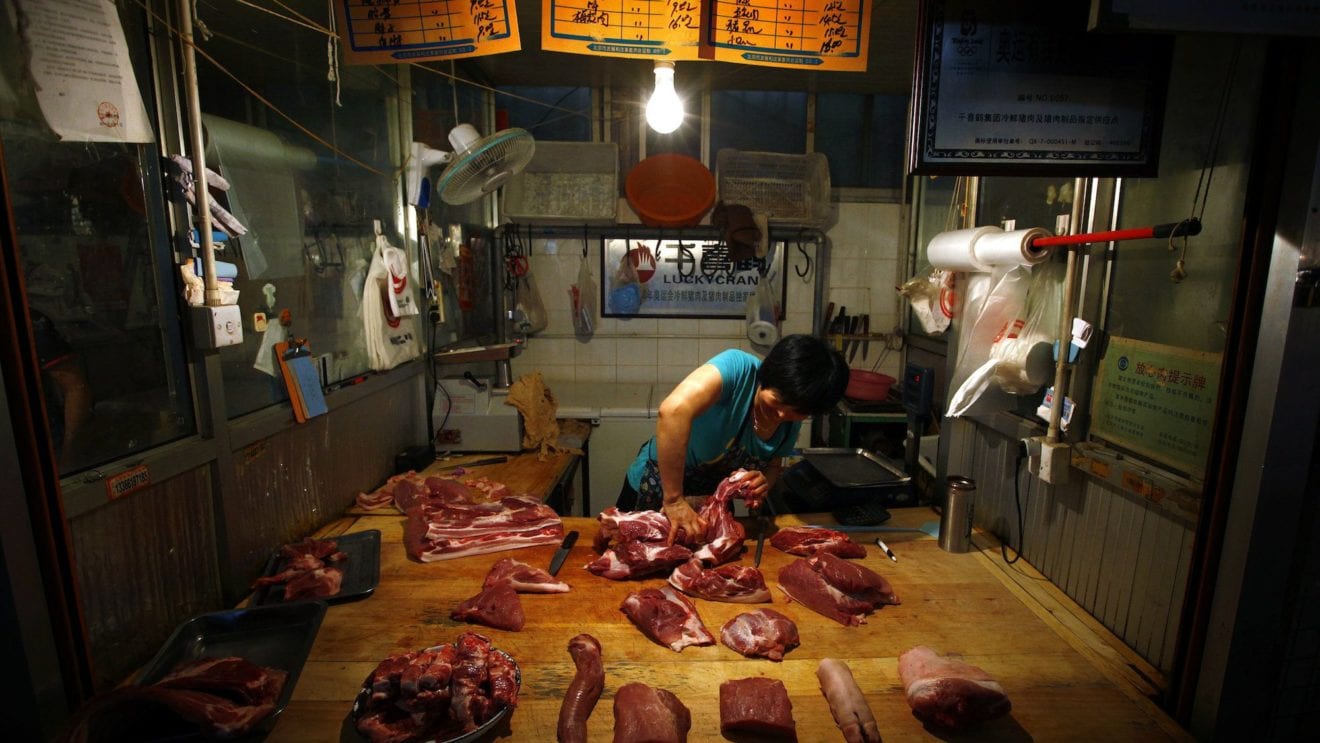
  • French meat producers eye expansion in Vietnam

    French meat producers eye expansion in Vietnam

    Meat producers from France are seeking to expand their market share in Vietnam to take advantage of the EU-Vietnam Free Trade Agreement.

    “Meat product exports to Vietnam are expected to grow faster, as, for the next 10 years, tariffs on those products will gradually decrease to zero percent,” Emmanuelle Pavillon-Grosser, the French consul general in HCMC, said.

    France is already the ninth-largest meat exporter to Vietnam, but wants to further increase its market share.

    The trade deal took effect in August 2020. The French Association of Butchers and Caterers and Business French in Vietnam are running a campaign to increase sales of meat products with EU sponsorship.

    It is expected to go on until 2024, with activities such as store promotion and inviting Vietnamese buyers to see the production process in France. Emilien Besnard of FICT said the French meat industry has more than 450 products, some of them already popular in Vietnam.

    Besides the EU, Vietnam also imports meat from the US, Russia, South Korea, and others, mostly being pork.

    Pork imports rose from 33,000 tons in 2018 to 225,000 tons in 2020 before slipping last year to 143,463 tons due to the pandemic.

  • Liquor industry wants tax increase delayed

    Liquor industry wants tax increase delayed

    Liquor companies want the proposed increase in special consumption tax put off until they recover from the effects of the Covid-19 pandemic. The government plans to hike the taxes on beer, liquor, and cigarettes from now until 2030 and is still considering by how much.

    The current rates are 65 percent on beer and 35-65 percent on liquor. Nguyen Van Viet, chairman of the Vietnam Association of Beer, Wine and Beverages (VBA), said the two years of Covid caused beer sales to drop by 20 percent or one billion liters.

    Around half of all breweries and distilleries saw revenues and profits fall in 2020 and 2021, according to a survey by the Central Institute for Economic Management (CIEM). Over 79 percent of them tried to cut costs, and 58 percent postponed expansion plans and laid-off employees.

    It is estimated that 4-7 percent of workers were laid off, and the rest saw their incomes reduce by 7-10 percent. Though the situation has improved thanks to the reopening of the economy this year, the industry is unlikely to see profits rise as input costs have risen to historic highs.

    Gasoline and malt prices have increased by 50 percent, and that of beer cans by 30-40 percent. Holly Bostock, corporate affairs director of Heineken Vietnam, said any increase in special consumption tax would add to the burden on the beverage and tourism industries, while what they need now are stability and support.

    Phan Tuan Khai, a lawyer for the VBA, said the government needs to come up with a new tax mechanism that would help businesses but also generate more tax instead of just increasing the rates. Economist Ngo Tri Long said a tax hike would exhaust businesses.

    Long said a new mechanism that taxes products with higher alcohol content more would be fairer and more transparent than the current tax mechanism and encourage people to drink responsibly. Taxation by alcohol content is done in Singapore and European Union countries.

    A study by the CIEM from 2010 to 2018 found that despite increases in alcohol tax, consumption actually rose from 6.6 liters per capita per year to 8.3 liters.

    A 2019 study by Lancet, a British medical journal, found Vietnam among the world’s top beer-consuming countries and a 90.2 percent rise in drinking per capita between 2010 and 2017.

  • Chinese speakers in demand as factories expand

    Chinese speakers in demand as factories expand

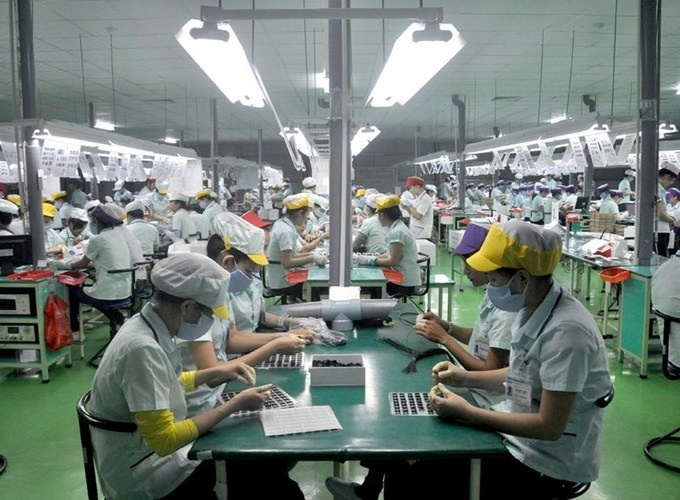
    Solar panel manufacturer Jinko Solar Vietnam in the northern province of Quang Ninh is looking for 5,000-8,000 workers, with most of them required to have basic Chinese communication skills. So far, less than 1,000 have been hired.

    “Manufacturing workers, technicians, quality control managers, we need them all. But not many suitable candidates are available,” said Dang Tran Hoang Anh, an HR officer with the company.

    As one of the world’s largest solar panel manufacturers, Shanghai-based Jinko entered Vietnam in 2020, and is looking for people in 40 different job categories to make high-quality products that are shipped to Europe.

    Anh said that Jinko pays well above average wages to secure the best talents in Vietnam. He just hired a worker who can speak Chinese fluently for a monthly salary of VND29 million ($1,263), 70 percent higher than what she was being paid at her old company.

    “We want the best Vietnamese workers who can communicate in Chinese to complete many projects.”

    Jinko is one of many companies that are scrambling to find Chinese-speaking Vietnamese workers as they set up factories in Vietnam to take advantage of the country’s low labor cost and export potential. Higher costs and risks in China, including its trade war with the U.S., motivated companies from many countries to make a shift to Vietnam.

    Taipei-based electronics manufacturer Wistron Infocomm in the northern province of Ha Nam is recruiting people for 10 job categories including project management consultants, procurement officers and engineers, with most of them required to have basic or fluent Chinese language skills. Car tire manufacturer Jinyu Tires in the southern province of Tay Ninh is looking for 50 students who can speak Chinese for a training program to find the best future employees.

    Popular recruitment platforms VietnamWorks and JobStreet have 140-200 job postings for Chinese-speaking candidates, mostly as procurement officers, quality control managers and engineers. The recruitment rush for Chinese-speaking workers began at the end of last year and grew stronger in the first quarter, with strong demand seen in northern industrial hubs, said Ngo Thi Ngoc Lan, northern region director at recruitment firm Navigos Search.

    The provinces of Bac Ninh and Bac Giang have a large supply of workers who can speak Chinese, but companies are seeing strong competition for them, she said. In the provinces of Phu Tho and Quang Ninh, there is less competition but it is more difficult to recruit high-skilled workers, she added. China has consistently been among the top 10 foreign direct investors in Vietnam in recent years.

    Mainland China ranked fourth in registered capital in the first four months at over $1.07 billion, while Hong Kong and Taiwan secured the seventh and eighth places. Together, the three territories registered $2.1 billion in capital, second only to Singapore at $3.1 billion. China’s Goertek Vina, one of the key suppliers for Apple, increased its investment in Vietnam by $306 million to over $565 million this March.

    The company had nearly 28,000 workers in its plant in the northern province of Bac Ninh as of February, up from an average 23,000 last year. Another 5,000 jobs will be added when its plant in the central province of Nghe An begins operations in June, and by 2023, it will have 30,000 employees. Another Apple supplier, Foxconn, said last year that it would pour an additional $700 million into its Vietnam operations on top of its $1.5 billion investment.

    Lan said that U.S.-China tensions, which began several years ago, have pushed many Chinese companies to move to Vietnam, generating a large demand for local employees. Chinese employees have higher requirements than Vietnamese peers in terms of salary and benefits, so it is more cost-effective to hire Vietnamese, she added.

    She predicted that the trend of recruiting Chinese-speaking Vietnamese in factories will keep rising for at least five more years.

    “This will surely encourage workers and students to learn Chinese as they see the career potential.”

    At present, however, finding Chinese-speaking Vietnamese people is not easy. Anh of Jinko said it was difficult to find suitable Chinese-speaking candidates because many do not want to move from Hanoi to Quang Ninh to work.

    “We have to train most candidates, either in Chinese or in their professional skills, to get the people we need.”

    Lan said that companies are also seeing challenges in recruiting because candidates either have the professional skills and lack language fluency or vice versa. Some companies also want employees to be able to speak English, she added.

    Chinese firms offer salaries that are 40-50 percent lower than European and American companies, while requiring employees to work on Saturdays. These are some drawbacks that discourage candidates, she said.

    Jinko Solar Vietnam used to have Chinese nationals account for 70 percent of its employees in Vietnam, but the company has reduced the ratio to 50 percent now, because Chinese staff often work for six to 12 months and return to home. The factory, meanwhile, needs long-term personnel.

    “We are offering salary of up to VND70 million a month for some directors’ jobs, and we only want Vietnamese candidates.”

  • Zurich Fintech Hires Wirecard Whistleblower

    Zurich Fintech Hires Wirecard Whistleblower

    A former CEO of German fintech Wirecard is joining a Zurich-based startup. Blockchain fintech FQX is hiring James Freis as a regulatory technology officer, it said in an emailed statement Friday.

    Freis helped uncover fraudulent activities at Wirecard, going on to lead the company as its CEO. His ties to the payments company, which continues to be at the center of an international financial scandal, have put him in the media spotlight.

    We’re honored to have James Freis join our team. With his unique combination of skills at the intersection of regulation, financial market infrastructure, and technology he is ideally positioned to work on FQX’s RegTech Engine to enable programmable debt securities and compliance by design, FQX’s Co-CEO Benedikt Schuppli, said.

    Freis started his career at the U.S. Federal Reserve in New York. From 1999 to 2005 he worked for the Bank for International Settlements (BIS) in Basel. In 2007, he was appointed CEO of the Financial Crimes Enforcement Network (FinCEN), an agency of the U.S. Department of Justice (DOJ).

    After a six-year term as managing director at Deutsche Boerse, Freis joined Wirecard as a manager in 2020. In June of the same year, the company was forced to admit that there was a 1.9 billion euros ($2.2 billion) hole in its balance sheet, after which long-time Wirecard boss Markus Braun was pressured to resign.

    Freis stepped into the CEO position which he held for seven months.

  • Reimagining the Customer Experience for New Breed of Shoppers

    Reimagining the Customer Experience for New Breed of Shoppers

    Retailers across the APAC region have had to quickly adapt to changing operating conditions over the previous two years, leading to many adopting new technologies and solutions to better serve customers across whichever touchpoints or platforms they prefer.

    As learned pandemic behaviours become the default setting for millions of consumers across the region, brands will continue to serve customers via click & collect and kerbside pickup, while simultaneously processing online returns in-store too.

    For many retailers, this agile, innovation-heavy fusion of online and physical demand is becoming more commonplace, placing the role of modern, dynamic Point-of-Sale (POS) technology squarely at the centre of a redefined connected commerce era.

    For brands today, a reimagined customer experience can be broken down into three key stages, with modern POS playing an important linchpin function at each of the three phases:

    • Pre-purchase: Retailers need to have full visibility of not just customer data such as purchase history, but also their own inventory too.
    • Purchase: Out-of-stock is no longer an option for retailers today. With modern POS, endless aisle capabilities mean shoppers can purchase goods from across an entire network, rather than being restricted by the availability of inventory at a single location.
    • Post-purchase: Stores have a critical role to play in the returns process, but without smart, joined-up store systems, returned goods can often fall into an inventory ‘black hole’.

    From retail industry’s first conception of a Point-of-Sale system, invented back in 1879, the retail landscape has come a very long way, and for those who want to meet the needs of the 21st century shopper, they need to be across all aspects of the omnichannel.

    But, as we observe an acceleration towards a true convergence point between physical and digital retail (fuelled by the effects of the pandemic), it’s important for retailers to continue to innovate and remove any remaining points of friction from this reimagined shopping experience.

    For example, if we go back to the perennial problem of out-of-stock predicaments, it’s hard to believe that even in this day and age, only a small minority of retailers are capable of offering in-store purchasing from another store’s inventory, or indeed from the warehouse.  From a customer experience perspective, this tends to feel like an outdated process, causing not only the risk of losing a sale but also brand loyalty.

    To truly reimagine the customer experience journey at a deeper level in 2022, we must recognise that the role of the store is no longer limited to selling, rather brick-and-mortar retail must be repositioned as a hub for fulfilment too.

    The benefits of this approach have been played out over the last two years and continue to do so today – with retailers with store fulfilment options seeing higher revenue growth – a 114% increase when click and collect is implemented and a 60% increase when ship from store is implemented.

    The future of the customer experience journey is closely linked to eCommerce, and the future of eCommerce is intrinsically linked to the evolving capabilities offered by stores.

    In order to meet supercharged customer expectations, retailers need to adopt a ‘sell/fulfil/engage’ mentality. However, when it comes to future-ready POS implementation, brands often make three common mistakes: adopting a store-only plan which could limit future agility, underinvestment in change management leading to uncertainty or failure to thrive, and selecting a “proven” vendor with old technology without consideration for new innovations.

    All too often, brands are still thinking in silos. Instead, they need to develop a unified commerce roadmap – encompassing a POS + clientele management + store fulfilment + customer engagement strategy. Likewise, retailers need to make a clear plan for organisational change and select the right vendor capable of delivering against long-term, aspirational, and often moving targets.

    As the evolution of POS continues amidst the backdrop of a pandemic-effected economy, one thing that has become increasingly clear is that customers are in the driving seat when it comes to how, when and where they want to shop.

    Today, it’s now up to retailers to take the reins of this new customer experience journey and drive the narrative forward, but they can only do this by having sophisticated, modern POS and order management systems in place that support their customers varied shopping journeys. Whether customers are shopping in-store, online, or via a smartphone or on social media, retailers need to ensure that they are capable of delivering a seamless customer experience journey across all the places their brand is represented, both online and physically.

    For more information on how your retailer business can enhance the customer experience in 2022, please visit: www.manh.com/en-sg

  • Elon Musk Weighs in on Active Investing

    Elon Musk Weighs in on Active Investing

    The Tesla CEO is using his newly acquired toy, Twitter, to criticize passive investing.

    Elon Musk joined a conversation on Twitter, which he recently acquired for $44 billion, initiated by venture capitalist Maro Andreessen. On the thread, the latter posited that firms like BlackRock have too much influence over companies given their outsized holdings in passive funds tracking indexes, on Thursday.

    Passive investing has «gone too far», Musk said on the Twitter thread, where he was joined by Ark Investment Management founder Cathie Wood. Those investing in index funds that tracked the S&P 500, for example, would have missed out on the big gains in Tesla before it was included as a component of the index, Wood said.

    Wood made the point that history will deem the accelerated shift toward passive funds during the last 20 years as a massive misallocation of capital.

    Those supporting index funds, however, say that active funds charge high fees and often fail to beat indexes against which they are benchmarked. For their part, the active managers highlight their role in creating efficient markets and their potential to harness higher gains.

  • Shinhan acquires 10 pct stake in Tiki

    Shinhan acquires 10 pct stake in Tiki

    South Korea’s Shinhan Financial Group said it has reached an agreement to acquire a 10 percent stake in Vietnam-based e-commerce company Tiki.

    The South Korean group said its two units, Shinhan Bank and Shinhan Card, will pick up 7.44 and 2.56 percent stakes in Tiki, respectively. It has invested $90 million in the e-commerce player.

    “Based on Shinhan’s financial expertise and Tiki’s database in a broad range of areas, we are expecting to build a new converged digital ecosystem in Vietnam,” a Shinhan representative said in a statement.

    The deal was first reported by DealStreetAsia in January, with initial investment of around $40 million.

    Founded in 2010, Tiki is the fifth most popular e-commerce site in Vietnam with 17.9 million monthly visitors last year, according to data portal Statista.

    It closed the Series E round last November with $258 million, which was led by insurance group AIA. The company has raised about $450.5 million in total, according to Crunchbase.

    The round brought Tiki closer to unicorn status, with a valuation of around $832 million.

    Shinhan Bank, the largest foreign lender in Vietnam in terms of assets, has around 650,000 users of its online platform, which was launched in 2018.

  • Samsung Internet’s latest release focuses on privacy and security

    Samsung Internet’s latest release focuses on privacy and security

    The 17th iteration of Samsung Internet is finally ready for primetime, the South Korean company confirmed this week. We’ve previously reported about the beta version of Samsung Internet 17.0, but if you missed the news, here is what’s coming in this release.

    As the title says, this release mainly focuses on privacy and security. First off, Samsung Internet 17.0 further improves the AI-powered Smart anti-tracking feature, which is now turned on by default. The privacy function is meant to prevent third parties attempting to track users’ personal information from being successful at that.

    Additionally, Samsung Internet 17.0 offers users an interesting overview of how the browser is protecting their web experience. The updated version of the browser features a visual snapshot of a user’s privacy dashboard via the Quick Access page, which provides a detailed record of weekly activities and settings that can be adjusted.

    The latest version of Samsung Internet now allows users to take advantage of external security or on-device security keys as an alternative for SMS or app-based two-factor authentication.

    Last but not least, Samsung Internet 17.0 comes with several improvements to its overall user experience such as the ability to drag and drop tabs into custom tab groups. Also, the update brings enhanced search experience across bookmarks, history and saved pages. The official version of Samsung Internet 17.0 is now available for download on Google Play and Galaxy Store.

  • Omicron restrictions throttled Hong Kong retail sales in March

    Omicron restrictions throttled Hong Kong retail sales in March

    Hong Kong’s retail sales fell in March for a second consecutive month after the city imposed stringent restrictions to curb an outbreak of COVID-19 but the government expected the sector to draw support as cases decline and measures are eased.

    Retail sales in March fell 13.8% from a year earlier to HK$23.8 billion ($3.03 billion), official data released on Thursday showed. That followed a 14.6% drop in February.

    “The improved local epidemic situation of late and thus the progressive relaxation of social distancing measures, along with the disbursement of the first batch of electronic consumption vouchers in early April, will render support to the retail sector,” a government spokesman said.

    In volume terms, retail sales in March dropped 16.8% from a year earlier, compared with a 17.6% decline in February.

    At the start of this year, Hong Kong implemented its most draconian anti-COVID-19 measures as the Omicron variant brought a dramatic spike in infections, with businesses hit hard by widespread closures.

    The city’s economy contracted 4% in the first quarter of this year, breaking four quarters of growth, but the government expects an improving situation with the local epidemic and support measures to help lift domestic demand for the remainder of the year.

    Hong Kong’s economy is expected to grow 2.0% to 3.5% this year after expanding 6.4% in 2021.

    Sales of jewellery, watches, clocks and valuable gifts, which before the pandemic relied heavily on tourists from the mainland, plunged 36.8% in March following a 33.6% drop in February, the data showed.

    Clothing, footwear and related products dropped 41.5% in March against a 39.0% drop in February.

    Tourist arrivals in March plunged 73% from a year earlier to 1,800. That compares with a drop of more than 52% in February.

    Online retail sales were a bright spot, surging 30.9% year-on-year in March in value terms after February’s 50.0% growth.

    Hong Kong will further ease COVID restrictions as cases in the financial hub continue to ease. Beaches and swimming pools reopened on Thursday and restaurants were allowed to serve eight people per table, up from four.

  • Adidas seals long-term partnership with Foot Locker

    Adidas seals long-term partnership with Foot Locker

    Adidas, a global leader in the sporting goods industry, and Foot Locker, Inc. (NYSE: FL) (“Foot Locker”), the New York-based specialty athletic retailer, today announced a new and enhanced partnership built around product innovation, elevated experiences, and deeper consumer connectivity. This enhanced relationship will establish Foot Locker as the lead partner for adidas in the basketball category, accelerate energy and hype launches, as well as include the development and expansion of key franchises across women’s, kids, and apparel. Including all Foot Locker banners in North America, EMEA, and Asia-Pacific, the new strategic partnership will target over $2 billion in retail sales by 2025, nearly tripling levels from 2021. In 2022, adidas expects to generate incremental revenues of up to €100 million as a result of the new partnership.

    “We are delighted to be deepening our partnership with Foot Locker as we continue to execute our ‘Own the Game’ strategy,” said adidas CEO Kasper Rorsted. “Consumers will be at the heart of this exciting collaboration and will be able to experience the adidas brand and its key product franchises, as well as new product innovations, at Foot Locker, stronger than ever before.”

    “We are excited to build on our partnership with adidas as we continue our strategy to broaden our selection of footwear and apparel for the sport and sneaker communities,” said Richard A. Johnson, Chairman and Chief Executive Officer of Foot Locker, Inc. “This close partnership will enable us to bring consumers even more unique, pinnacle products from iconic brands, as well as accelerate our push into apparel, adding new dimension to our assortment and bringing more customers into our ecosystem.”

    Foot Locker will lead adidas’ basketball offering, led by Fear of God founder and designer Jerry Lorenzo, spanning the lifestyle and performance categories, and develop exclusive positions in both areas. In addition, the collaboration will focus on key Originals franchises including NMD, Superstar and Stan Smith, and on the adidas influencer partnership portfolio. It will also include a prominent role for Foot Locker in the launch of adidas’ new Sportswear product division targeting the lifestyle consumer.

    To execute the new plan, adidas will provide Foot Locker with a dedicated team to deliver an elevated consumer experience both in stores and online to help create demand and elevate the marketplace. This will involve partnership on product development, exclusive Foot Locker positioning, increased product allocations, shared marketing spend, and an elevated premium presence across Foot Locker’s entire portfolio of banners with a special focus on key cities and communities that the companies jointly serve. Lastly, to provide consumers with a seamless consumer journey, on and offline, both partners will increase their digital focus and accelerate the rollout of the adidas partner program at Foot Locker.

  • Coca-Cola names new regional marketing VP

    Coca-Cola names new regional marketing VP

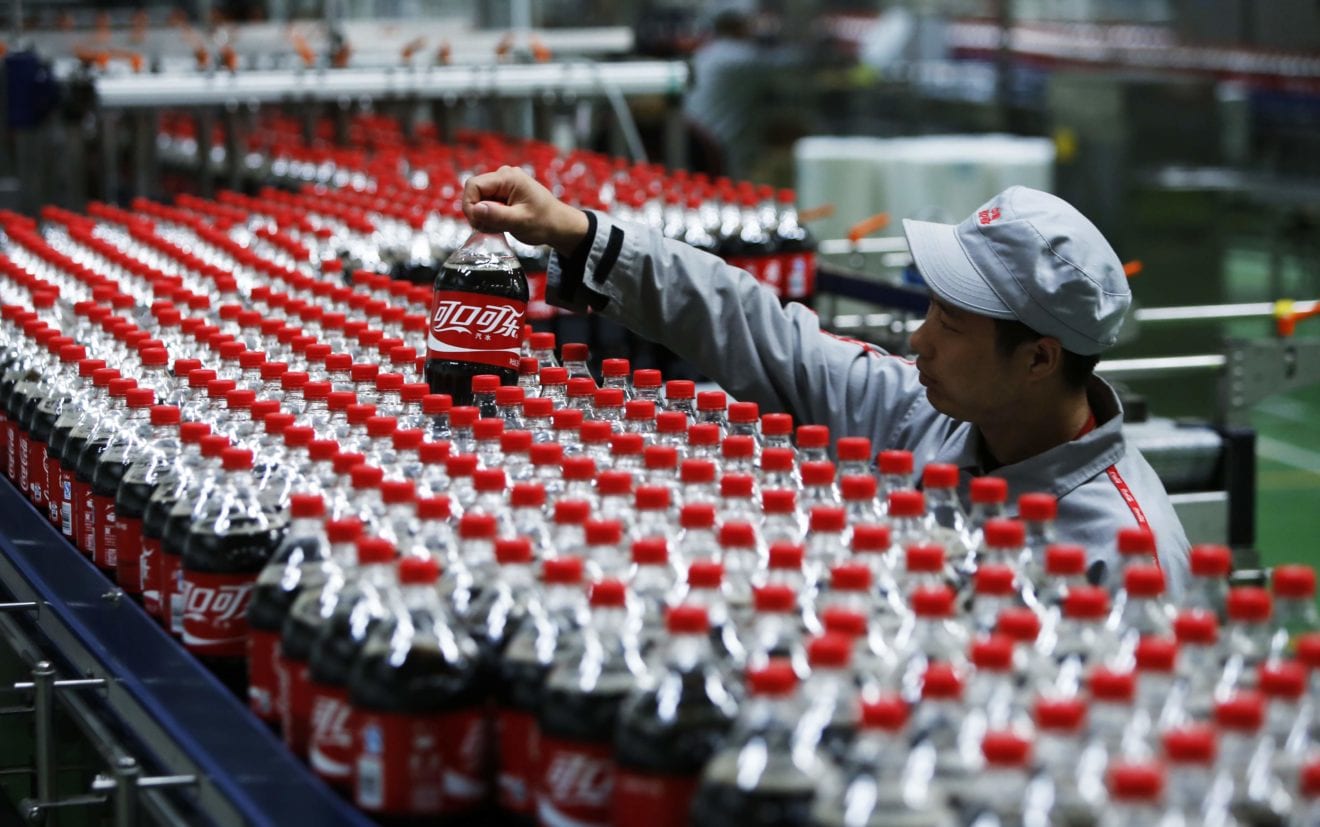
    Coca-Cola has appointed Matthias Blume as its new VP of marketing, ASEAN and South Pacific. Based in Singapore, Blume will lead the company’s marketing and brand initiatives across Southeast Asia, Australia, New Zealand, and the Pacific Islands and serve on the company’s senior leadership team in the region.

    He was most recently the frontline director for Coca-Cola’s ASEAN and South Pacific operating unit, based in Singapore. Previously, he was sparkling director for the company’s ASEAN business unit. According to the company, Blume has a detailed knowledge of the company’s business across the region and has driven growth and innovation across the company’s stills and sparkling beverage brands.

    He is also a strong supporter of integrating sustainability into the company’s portfolio of brands. Coca-Cola said Blume was “at the forefront” of the company’s introduction of a prominent “Recycle Me” call-out across all its packs as well as the move across Southeast Asia to switch its iconic Sprite brand to clear, transparent bottles which are easier to recycle. He has 24 years of international marketing experience including 21 years at Coca-Cola and three years at Danone. Blume has also held local, regional, and global roles in a range of markets across Asia, North America and Europe.

    “Blume brings a tremendous passion for marketing and people plus a superb knowledge of our bottling system,” said Claudia Lorenzo, president, Coca-Cola ASEAN and South Pacific, said. According to her, Blume also brings a combination of consumer centricity, marketing curiosity and business acumen – strengths that Coca-Cola needs and values deeply in our marketing organisation.

    Separately, on the public affairs and communications front, the company named Russell Mahoney its VP, public affairs, communications and sustainability in March. He now leads the team across ASEAN, Australia, New Zealand, and the South Pacific and looks to address “some big sustainability issues” in the company. Mahoney said in a LinkedIn post that he will be moving to Singapore in the coming months.

    With the metaverse being all the rage these days, Coca-Cola also launched a pixel-flavoured drink, the limited-edition Zero Sugar Byte, which will rolle out first in the metaverse before making its way into physical retail. Coca-Cola describes the Zero Sugar Byte as the first Coca-Cola flavour to be born in the metaverse, which will bring the flavour of pixels to life in a limited-edition beverage that transcends the digital and physical worlds. The Zero Sugar Byte is the company’s second release from its Coca-Cola creations hub, following its release of its Starlight “space-flavoured” Coke in March this year.

  • Toyota recalls hundreds of Raize SUVs over bad weld

    Toyota recalls hundreds of Raize SUVs over bad weld

    Toyota is recalling 191 Raize SUVs in Vietnam to fix poor welding in front shock absorbers, which could even cause the undercarriage to fall apart.

    The units were made in Indonesia between March 29 and October 8 last year and all of them have been sold, according to the Vietnam Register.

    The recall was issued after problems were found in front fender apron connections, which caused rattling sounds when the car drove over bumps and potholes.

    In the worst case, the welded part can detach and potentially cause a major accident, though no mishaps have been reported so far.

    The automaker has also recalled nearly 15,000 Raize SUVs in Indonesia, and Lexus, its luxury division, recalled 4,200 NX SUVs in the U.S. for the same defects.

    Toyota topped auto sales in the first quarter with 18,615 units, according to data from the Vietnam Automobile Manufacturers Association. It sold 1,671 Raize SUVs in Q1, marginally more than its closest competitor Kia Sonet (1,651 units).

  • UBS Nets Southeast Asia Wealth Planning Veteran

    UBS Nets Southeast Asia Wealth Planning Veteran

    UBS Global Wealth Management to bolster Southeast Asia wealth planning capabilities with a 20-year veteran. Michelle Lau will join UBS Global Wealth Management (GWM) as its head of wealth planning, Southeast Asia.

    Based in Singapore, Lau will start her new role in the third quarter of 2022.

    Lau is a seasoned veteran with 20 years of experience at HSBC Private Bank where she held various roles including APAC regional head of wealth planning. After last spearheading the ultra-high net worth desk at HSBC Singapore, she joined IPG Howden as its Southeast Asia chief executive to oversee the region, together with the Middle East.

    Wealth Planning Demand

    Private banks continue to focus on enhancing wealth planning capabilities in order to cater to client demands as part of an expected large-scale generational transfer of wealth transfer in Asia expected to total $2.54 trillion by 2030, according to a report by Wealth-X.

    We are confident that Lau will elevate our wealth planning offerings to the next level, accelerate our life insurance positioning and continue to develop and build the team to provide holistic coverage on all ‘legacy-related’ topics to our clients, said UBS GWM’s APAC co-head of advisory & sales and client services Dino Rinaldi in the memo.

    A spokesperson for the bank confirmed the contents of the memo.

  • Instagram is working on a more immersive news feed

    Instagram is working on a more immersive news feed

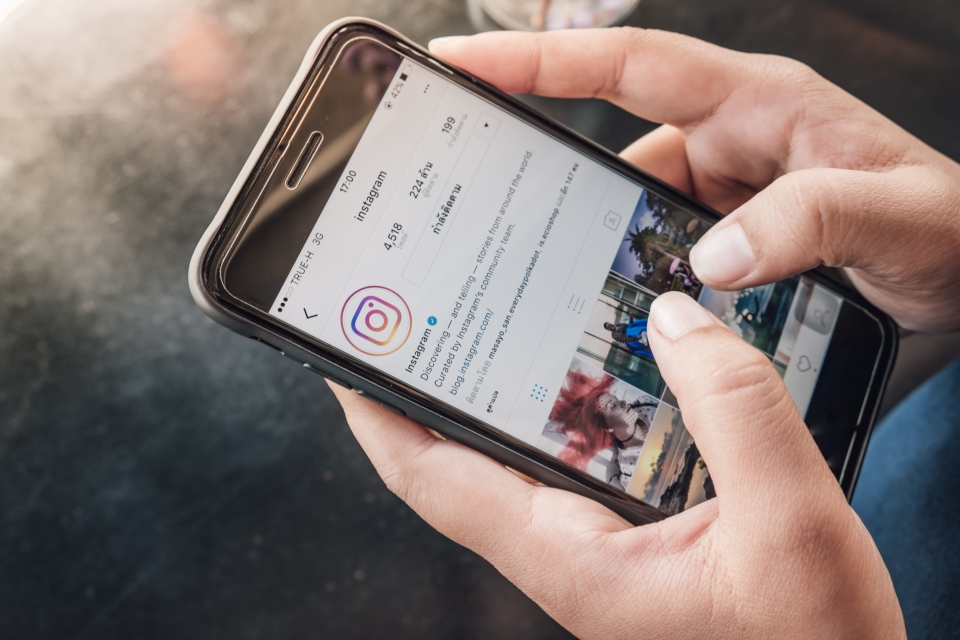
    Instagram has been implementing new features like crazy in the past couple of months. The product tagging option we told you about is now live in the US, and the new feed options announced in January are already live as well.

    Now there’s another cool feature in the works, according to Instagram chief Adam Mosseri who tweeted the following: “We’re testing a new, immersive viewing experience in the main Home feed.” This immersive experience means basically taller photos and videos in a new feed view, similar to Instagram Stories.

    Another change is the increase in post recommendations from people or accounts you don’t actually follow. While somewhat counterintuitive, this change aims to keep people engaged for a longer period of time.

    This might annoy some users but there will be an option to personalize the feed to your liking (although the details are not clear at this point) and hopefully minimize these strangers appearing in your recommendation panel.

    During the short video posted on Twitter, Mosseri also showed a glimpse of the new interface and how the new feed will look like. The experience is not full-screen per se, as users would still be able to see the home, search, Reels, and other sections under the image (take a look at the screenshot below).

    According to Mosseri, the new features will be rolling out to users that are part of Instagram’s testing program in the coming weeks. Let us know what you think about this new Instagram feed in the comments section below.

  • Oppo is reportedly prepping a clamshell foldable

    Oppo is reportedly prepping a clamshell foldable

    Earlier this year Oppo released the Find N foldable handset with a 7.1-inch internal display and a crease that isn’t as easy to spot as the one on other foldables. The 5.45-inch cover screen has a shorter and wider 18:9 aspect ratio than the taller and thinner 25:9 aspect ratio found on the Galaxy Z Fold 3’s cover screen.

    Oppo and Samsung are the only two phone manufacturers that use ultrathin glass (UTG) for their foldable phones. The UTG weighs in at just 0.03mm thick which allowed it to bend more than 200,000 times without any issues in pre-production testing.

    Back in January, a secret file found in the Android 12L Beta revealed that the measurements of the Google Pixel Fold’s internal display won’t be as large as the size of the Samsung Galaxy Z Fold 3’s internal screen as originally thought. And a report from DSCC display analyst Ross Young that we told you about on Tuesday uses rumored measurements to conclude that that the foldable Pixel’s internal display could be shorter but wider than the Galaxy Z Fold 4’s internal screen.
    Once again, this would seem to indicate that the Pixel Fold’s display will be similar to the tablet-sized screen belonging to the Oppo Find N. Almost exactly a year ago to the day, we told you that Oppo was reportedly working on a Galaxy Z Flip challenger with a clamshell design. Today, we have some more information about this phone, which would also take on the Huawei P50 Pocket.
    The rumor mill has Oppo’s foldable clamshell coming in at the equivalent of $756 compared to price tags of approximately $1,000 for the  Huwaei P50 Pocket and a rumored $1,000 for the Galaxy Z Flip 4.
    One of the smartphone brands under the BBK Electronics corporate umbrella along with OnePlus, Realme, Vivo, and iOOO, Oppo’s strategy is to differentiate its foldables from Sammy’s models by giving them a smaller footprint and a smaller price tag.
    While we don’t have any leaked specs for Oppo’s rumored flipper to pass along, we can refresh your memory to remind you that the Galaxy Z Flip 3 opens to reveal a 6.7-inch display with a 1080 x 2636 resolution and features a 120Hz refresh rate. There is a small 1.9-inch external display for notifications, messages, and alerts.
    Unlike the Oppo Find N, which turns from a smartphone into a tablet, the clamshell starts out as a pocketable device that flips open to become a large-screened handset. Plus, whenever you end a call with someone you’re not fond of, you can give your phone a satisfying slam that indicates the end of that connection (telephonically and otherwise).