Author: Mei Ling Tan

  • Another Apple Car engineer quits, this time, joining Meta

    Another Apple Car engineer quits, this time, joining Meta

    Okay, so far, we’ve had a lot of information about the reported turnover at Apple’s mysterious project for self-driving vehicles. Many engineers have reportedly left the project to join other firms. Now, AppleInsider reports about yet another Apple Car engineer leaving the company, and this time, he will be joining Meta (former Facebook).

    The long-rumored project for a self-driving car from Apple seems to be having a lot of setbacks recently, mainly due to losing engineering managers and other key staff and an overall quite consistent employee turnover.

    It seems this pattern is continuing in 2022. This time, it’s the head of software engineering of Apple Car, Joe Bass, who has reportedly left Cupertino to go join Meta. Joe Bass was the Lead Engineering Program Manager for Autonomous Systems over at Apple since the beginning of 2015. According to his LinkedIn profile, he has now left Apple for a new start.

    His new position is Director of Technical Program Management, Mixed Reality Technologies over at Meta (formerly Facebook). The departure of Bass comes after several other engineers did the same back in December, with a majority of them seemingly going to air-taxi startup Archer Aviation, and another similar company, Joby Aviation.

    Keep in mind that the Apple Car project is still just rumored, and has not had an official announcement. The most recent news about it is the report that the company is looking to announce its key partners for the project sometime this year. This information is coming from South Korean sources: it seems Cupertino has been looking into South Korean carmakers to possibly strike a deal with them for Apple Car components.

    This information seems to indicate Apple has plans to ship an Apple Car by 2025. The possible announcement of the partnerships could give us more information about the time frame in which we expect to see this ever-so-mysterious self-driving car. And from this high level of turnover, one can not help but assume things aren’t going exactly according to plan for the Apple Car.

    This image is a part of the newly-created Apple Car renders that we reported on earlier, coming from British car leasing firm Vanarama, and of course, they are based on patents filed by Apple plus previously released Apple devices.

    It is, indeed, a very early stage to know for sure if the Apple Car will look anything like the image shown above, but it looks cool, don’t you agree?

    There have been many people leaving and joining the supposed Apple Car project in recent months, especially in November and December of last year. Some of its key engineers have been leaving to join air taxi startup companies, while other ex-Tesla engineers have joined to take their place.

    Just to name a few, Eric Rogers, who was Apple’s chief engineer for radar systems for the project for the self-driving vehicle has left to go join Joby Aviation Inc, a flying taxi startup. Alex Clarabut, who was an engineering manager for the team’s battery systems group, has now joined Archer Aviation, another company working on air taxis.

    The third person who recently left Apple is Stephen Spiteri, who was a hardware engineering manager, and he has also gone ahead and joined Archer. The two flying taxis companies have confirmed the appointments.

    All these staff changes serve to show how many challenges the Cupertino tech giant is facing as it is expanding into an entirely new industry. Of course, building and selling a self-driving car represents a massive new sales opportunity, one of its famous “next big thing”. We will see how Apple will face the challenges coming with it.

  • TikTok testing new Video Avatar Tools, audio-only live streams, and more

    TikTok testing new Video Avatar Tools, audio-only live streams, and more

    TikTok is testing a couple of new features, and thanks to social media expert Matt Navarra (who has a great track record of revealing them) we have some inside information on how they look and what they actually do.

    TikTok experimental features at a glance:

    1. Video Avatar Tools
    2. Keyword filtering
    3. Group Chat shareable link invite
    4. Audio-only live streams
    5. Screen sharing in live

    1. Video Avatar Tools

    The first new feature is very similar to Apple’s Memoji, and will allow users to create a digital avatar based on a selfie shot. First you’ll need to choose a face template, which you would be able to subsequently edit with expressions based on your own face.

    “The feature lets you use your phone’s camera to take a selfie with a fun facial expression which your avatar will match,” wrote Navarra on his Twitter page.

    The screenshots, posted by Navarra, don’t explain the exact way this feature works, and whether it would be capable of tracking and mimicking your face in real time, or it would only be able to pre-record short video avatars/still images.

    2. Keyword filtering

    There’s also an interesting keyword filtering feature in the works, apparently. Contrary to the way most filtering options work, the TikTok keyword filtering will allow you to hide content from your feeds.

    Adding a keyword or hashtags to your filter will result in videos containing these words in the description or stickers not showing in your For You page or Following feeds. Advertisement containing these “filtered” keywords may still appear, though.

    3. Group Chat shareable link invite

    Also in the code, dug up by Navarra, lies a string suggesting that a new Group Chat feature is being developed. TikTok users will have the option to invite people to a group chat via a shareable link.

    TikTok has a Group Chat feature but you need to manually invite people by sending a video or creating a group chat in inbox and selecting the users you want to invite. The shareable link invite feature simplifies the process.

    4. Audio-only live streams

    TikTok is experimenting with the option to allow users to join live streams with audio-only, trying to hop on the Clubhouse train, even though the popularity of the app and all of its clones has plummeted in recent months.

    Twitter Spaces is a recent example and the company recently rolled out a new feature called Record and Replay, allowing users to record their conversations and make them available for anyone who wants to listen at a later time.

    5. Screen sharing in live streams

    This one is pretty interesting, as per the code: “Screen sharing allows viewers to see what’s on your screen in real time, including camera, audio, notification, and other alerts.”

    The ability to share your screen with friends will give TikTok creators new tools to enhance their material, new ways to make tutorials, and make live streams more interesting in general.

    TikTok provided an official statement to SocialMediaToday, shedding light on the idea behind these new experimental features:

    “We’re always thinking about new ways to bring value to our community and enrich the TikTok experience. Currently, we’re experimenting with ways to give creators tools to express themselves on TikTok.”

  • A new Lenovo Legion gaming phone leaks with a new Snapdragon chip

    A new Lenovo Legion gaming phone leaks with a new Snapdragon chip

    In his tweet, Evan Blass said that the Lenovo Halo would be equipped with the Qualcomm SM8475 chipset. Although there is little information available for this chip, it is suspected that it may be an improved version of Qualcomm’s current flagship SoC, the Snapdragon 8 Gen 1. The Snapdragon 8 Gen 1’s model number is SM8450 – very close to the SM8475 which the Lenovo Halo is rumored to have.

    Other possible specs of the Lenovo Halo include:

    • 6.67-inch, 2220×1080 pixels (FHD+) POLED display, which is basically an OLED display with a plastic substrate. Lenovo Halo’s display may also support a 144Hz refresh rate with a 300Hz touch sampling rate.
    • 8, 12, or 16GB of RAM, with 128 or 256GB of UFS 3.1 storage space, which offers fast read and write speeds and can also be found in the Samsung Galaxy S21 Ultra 5G and OnePlus 9 Pro 5G.
    • 5,000 mAh battery, 68W wired charging, and 8mm thickness

    It looks like Lenovo is aiming for a more simplistic design with the Lenovo Halo. At the front of the phone, we can see a hole-punch front-facing camera, and at the back we see a triple camera array. Bearing the “Legion” label on its back means that the Lenovo Halo will be aimed at gamers, as Legion is Lenovo’s gaming brand.

    According to Evan Blass, the Lenovo Halo is suspected to be released in Q3 2022. There is currently no information regarding the phone’s price. Evan Blass also didn’t say if the Lenovo Halo would be available worldwide or only in certain markets.

  • Soon we may be using more secure payment cards thanks to Samsung

    Soon we may be using more secure payment cards thanks to Samsung

    Samsung has announced the S3B512C security chip, its new fingerprint security chip developed in partnership with Mastercard, designed primarily for payment cards. According to the company, the chip is the ‘industry’s first all-in-one security chip solution’ and would be able to provide faster and safer interactions while making purchases. Because Samsung’s chip uses biometric authentication, the chip would also remove the need to enter your PIN code on a keypad.

    The S3B512C chip has a fingerprint sensor as well as a tamper-proof secure element (SE) that meets international security requirements, and a secure processor. The chip captures the user’s biometric data via its fingerprint sensor. Then, using the SE, it stores and authenticates the received information. After that, the chip analyzes the data by using its secure processor.

    With its biometric authentication, Samsung’s security chip may prevent fraudulent transactions which could otherwise be made with lost or stolen traditional cards. Because it has securely saved the owner’s fingerprint, a card using Samsung’s chip will check if the person performing the transaction is indeed the rightful owner. The chip also utilizes anti-spoofing technology, which prevents unauthorized users from fooling the security system using tactics such as artificial fingerprints.

    According to Samsung, although the S3B512C chip is primarily designed for payment cards, it could also be used in cards intended for highly secure authentication, such as student or employee access cards. In addition, by utilizing a fingerprint sensor, a tamper-proof secure element, and a secure processor, the S3B512C may assist card makers in reducing the number of required chips in manufacturing biometric payment cards and might help optimize card design processes.

    Although Samsung’s new security chip sounds very promising, currently, there is no information on when Mastercard will implement Samsung’s new chip.

    Currently, Mastercard offers fingerprint-authenticated payment cards, but they are not as secure as the new Samsung chip and don’t use anti-spoofing technology.

  • WhatsApp’s latest update brings Focus mode support to iPhones and iPads

    WhatsApp’s latest update brings Focus mode support to iPhones and iPads

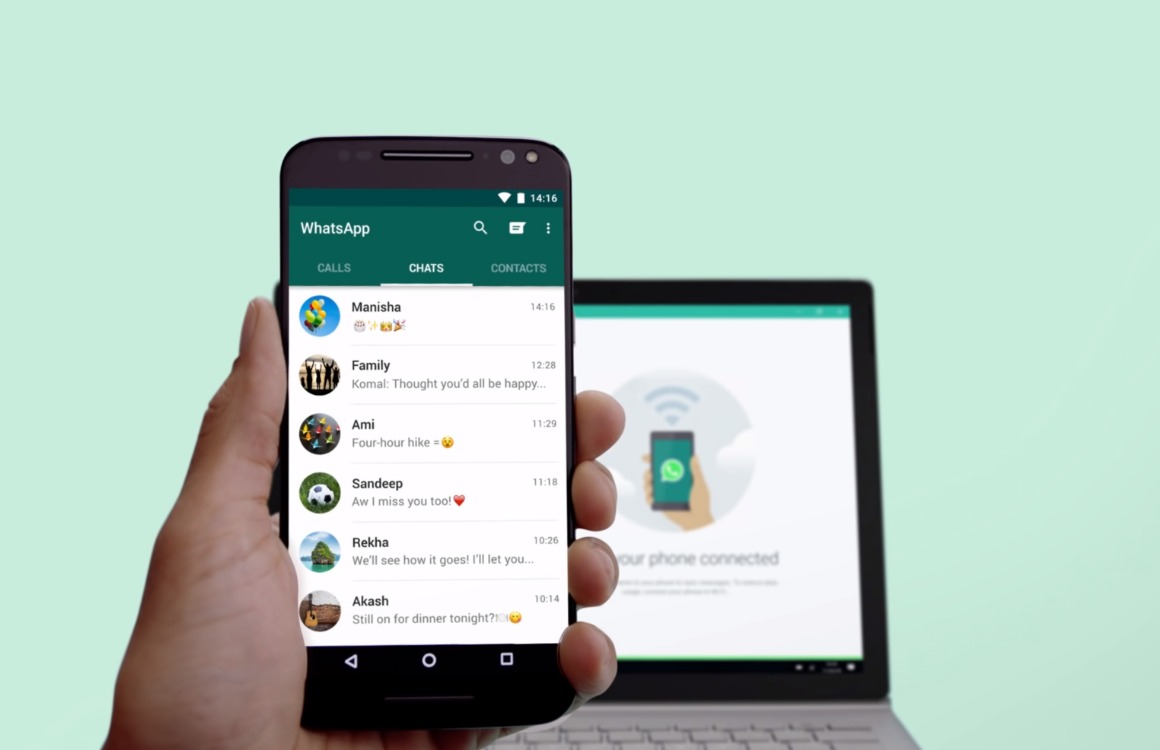
    Although WhatsApp typically rolls out updates simultaneously on both Android and iOS platforms, the latest update is one of the exceptions since it brings specific features aimed at iPhone and iPad users. Two important new features are now making their way to iOS users and are expected to be generally available over the coming weeks.

    The first one is the ability to pause and resume while recording voice messages. Surprisingly, such a nifty feature wasn’t available until the latest update, so if you’re downloading WhatsApp v22.2.75, you can try it out by swiping up to lock a recording and then tap the “pause” and “resume” buttons.

    Another important new feature rolling out to iOS users is support for Focus mode. This has been added in iOS 15 and allows selected users to message you when you have set a Focus mode. When this mode is enabled, you can set notification, call, and message filters, as well as auto-reply to others when you’re not available. Think of it as a more efficient Do Not Disturb feature.

    In other news, WhatsApp is gearing up for yet another important new feature for its users: the ability to transfer Android chats to iOS. However, the feature is still being tested internally, so it might take a while until WhatsApp will be ready to make it available to everyone.

  • M1 and Blacknut to deliver 5G-powered cloud gaming services in Singapore

    M1 and Blacknut to deliver 5G-powered cloud gaming services in Singapore

    M1 Limited (M1) has announced an exclusive partnership with market-leading cloud gaming specialist Blacknut, to bring an all-you-can-play 5G-powered cloud gaming service to Singapore.

    Boasting the world’s largest catalog for cloud gaming, Blacknut has a unified gaming platform that is fully integrated within the M1 ecosystem, enabling users to have unlimited access to more than 450 high-quality PC and console titles, including renowned hits like Overcooked, Lord of Fallen, Modern Combat 5, Asphalt9 and more. Serious and casual gamers will soon be able to discover a seamless “click & play” experience, anytime and anywhere, regardless of their device – television, PC, tablet, or mobile.

    Leveraging the high speed and ultra-low latency of M1’s True 5G network, this upcoming cloud gaming service ensures seamless and uninterrupted gaming experiences for subscribers.

    “True 5G not only transforms businesses but also consumer experiences. We are excited to show the game-changing prowess of 5G through our partnership with Blacknut, to level up gaming experiences for Singaporean gamers. Powered by 5G connectivity, M1 is on track to create an inclusive gaming ecosystem by enabling affordable and accessible gaming options,” said Manjot Singh Mann, chief executive officer, M1.

    “We are very proud to support M1 in their 5G deployments with Blacknut Cloud Gaming. We are pleased that our platform is a great fit and fully aligned with M1’s 5G ambitions. Pairing Blacknut with M1’s 5G connectivity delivers ultra-responsive cloud gaming backed by a fast, reliable network and the best market solution to fulfil M1’s vision for Singapore,” said Olivier Avaro, chief executive officer, Blacknut.

    Since its launch in July, M1’s True 5G network coverage has expanded to about 65% of Singapore, and with the continual growth of the infrastructure, customers can expect to soon enjoy more innovative and diversified digital experiences and even more OTT offerings.

    M1 has been a frontrunner in Singapore’s 5G development and was the first telco in the nation to embark on 5G trials as early as 2018. To date, M1 has a record of more than 15 5G use cases and trials across consumer, enterprise and government sectors. To further the 5G ambition and fully unleash the power of True 5G for all, M1 is also working with Workforce Singapore (WSG) to upskill and train close to 10% of the entire workforce to build a pool of talent with up-to-date skills in 5G and emerging technologies.

    Details of the cloud gaming subscription plan will be announced during the official launch in Q2 2022.

  • Production Ready Tesla Cybertruck Leaked

    Production Ready Tesla Cybertruck Leaked

    Tesla is about to share some more details around the launch of the Cybertruck with many expecting deliveries to start either at the end of the year or early next year. However, now it has been more than two years since Elon Musk showcased the car and after teasing many updates to the car since that unveil, we finally get a glimpse into what changes have happened to the car behind the scenes thanks to a leaked image of a prototype snapped by a Tesla employee which looks ready for mass production.

    Now, there is a single windscreen wiper that is resting vertically and is placed next to the A-pillar. There are two traditional side-view mirrors that were missing in the original unveil and Musk was hoping that cameras would do. There are no door handles and the wheels seem to be inspired by the aero set that was there on the Model 3. There have been reports that there could be a smaller model of the car and by the looks of it, the image showcased is representative of that fact.

    There is also a larger opening on the front bumper and appears to be a bit bigger and lower than before. This probably helps with its aero credentials but perhaps it comes with a trade-off towards its 4×4 capabilities. Musk had also said that this model will come with an updated camera system and an updated self-driving chipset which could be on this prototype.

  • Mercedes To Use Luminar’s LiDAR’s With New Deal

    Mercedes To Use Luminar’s LiDAR’s With New Deal

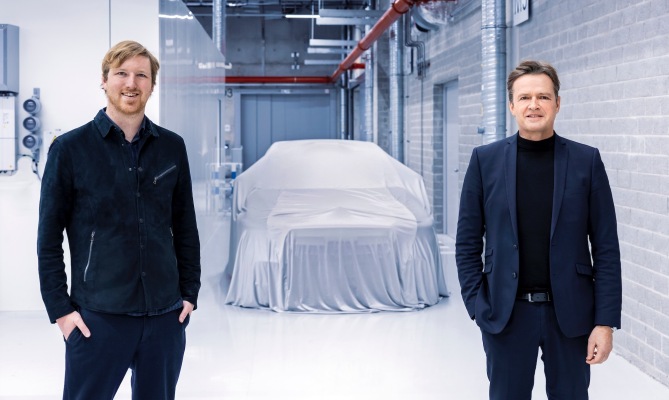
    Mercedes has announced that it has inked a deal with LiDAR maker Luminar whose devices will be incorporated in its vehicles in the future. Mercedes has also taken a small stake in the company with the acquisition of 1.5 million shares. As a part of the deal, Luminar will also be sharing data with the luxury carmaker.

    Luminar in particular has closed a deal with Daimler North America which is the parent of Mercedes in the US. Daimler will also share data from development and production vehicles for the continuous development of the systems.

    “A landmark moment in the industry that will demonstrate how substantially increased safety and autonomous driving functions on consumer vehicles are going from sci-fi to mainstream,” said Luminar founder and CEO Austin Russell.

    Currently, both companies haven’t revealed when the first Mercedes car will be revealed which will have a Luminar LiDAR. LiDAR is critical for autonomous driving – more importantly, sophisticated autonomous systems which aim for self-driving capabilities, something Mercedes currently lacks in its vehicles.

    Luminar already has announced a deal with Volvo and will be integrating its LiDAR and software in its cars. Volvo will also unveil an electric SUV later this year which will feature Luminar’s technology.

    However, Luminar’s deal with Daimler is also about the development of its Iris LiDAR system. This is not the first time Daimler has invested in Luminar its trucking division also invested in the LiDAR maker for its Blade system.

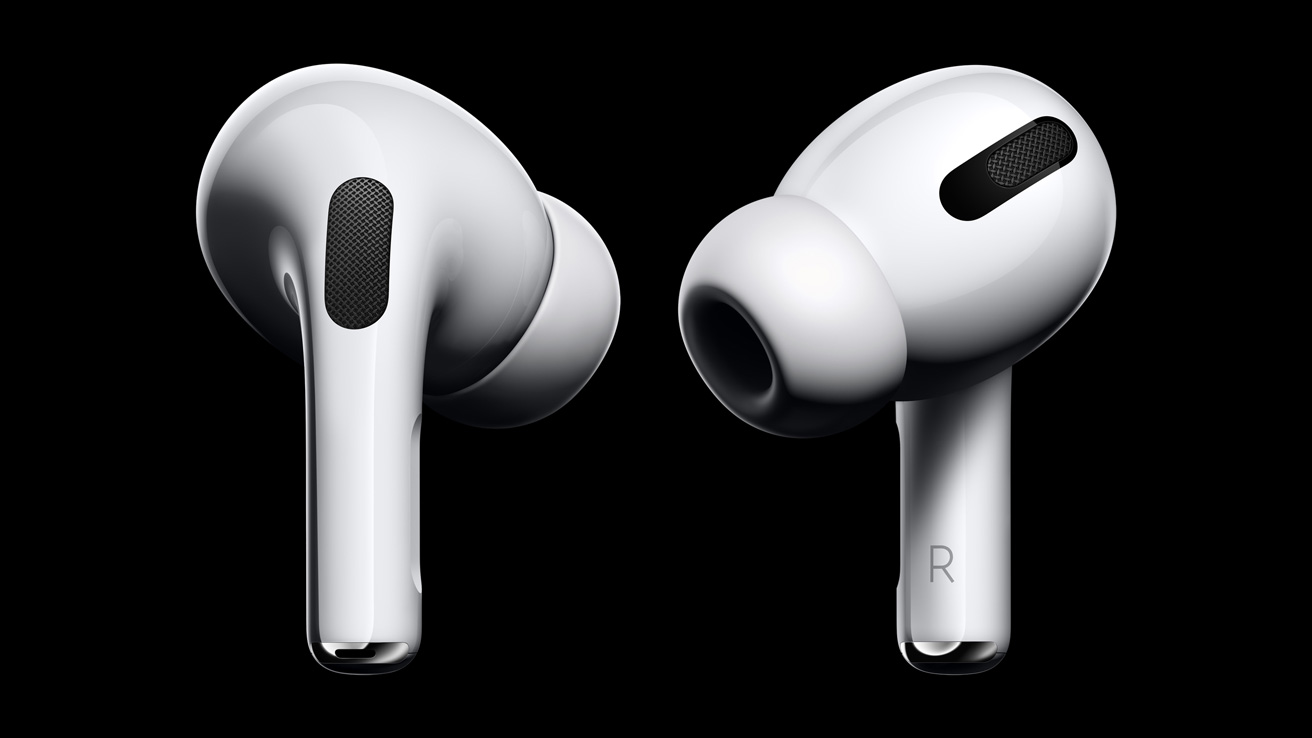
  • Apple seeks patent on automatic transparency mode for AirPods Pro

    Apple seeks patent on automatic transparency mode for AirPods Pro

    According to TF International’s highly reliable analyst Ming-Chi Kuo, the AirPods Pro 2 True Wireless Stereo earbuds should be released later this year, perhaps during the third quarter. The major difference between your average garden variety pair of AirPods and the premium-priced Pro model is the Active Noise Cancellation (ANC); the latter prevents ambient noise from getting mixed in with the streaming content heard via the Bluetooth-powered earbuds.

    But just in case you need to hear what’s happening in the background while streaming music to your AirPods Pro, transparency mode will allow you to hear a car honking to alert you to get out of the way, a police siren in case you’re being pulled over, or a friendly “hello” from a pal who has spotted you walking on the street. The problem with turning on the transparency mode is that it allows all background noise regardless of what it is.>

    But what if you could choose which sounds make it through to you via the transparency mode? That could improve your enjoyment of using the AirPods Pro knowing that the transparency mode will remain off until someone you selected is trying to talk to you, or an event takes place that needs your immediate action.

    Apple has filed a patent application titled “Interrupt for noise-canceling audio devices” that details a more selective method of letting in outside noise to be heard through your AirPods Pro. With the technology discussed in the patent application, a user will be able to determine in advance who is allowed to break through the ANC. As Apple states in the documentation, “For example, the user may desire to be interrupted by one or more pre-designated contacts that are identified at an associated electronic device as interrupt-authorized contacts, or by a person who speaks a designated keyword to the user.”

    In other words, the Active Noise Cancellation would remain in effect until people authorized by the user start talking. The voice of the other person could be recognized, or that person’s name could be mentioned by the user, or both the user and the contact could devise a specific password that would flip on transparency mode.

    The patent also notes that the user can train the system to recognize certain important sounds that you would want to hear right away “such as police or ambulance sirens, or smoke or fire alarms.” It is like having transparency mode set on “automatic.”

    There are other differences between the AirPods and AirPods Pro besides the latter offering ANC. For example, the “Pro” variant includes the ability for the user to enjoy a customizable fit. Ironically, the third-generation AirPods offer longer battery life than the AirPods Pro but we expect that to change with the AirPods Pro 2. We also could see the new premium version of the earbuds feature a new design, possibly dropping the iconic and recognizable stem from the device. This might make the AirPods Pro 2 look like some of the earbuds manufactured by competitors’s not to mention Apple’s own Beats Fit Pro.

    Other possible changes for the AirPods Pro 2 include the addition of new sensors that will allow the device to perform some type of fitness tracking. Also expected is a new chip that will make it easier for the wearables to connect with other devices. And Apple is reportedly looking at a way to use the AirPods Pro 2 as a device to measure certain health metrics just as the Apple Watch now does.

    The patent application was originally filed by Apple with the U.S. Patent and Trademark Office (USPTO) last July.

  • Volkswagen & Bosch Form JV For European Battery Production

    Volkswagen & Bosch Form JV For European Battery Production

    Volkswagen and Bosch have signed a memorandum of understanding to explore a joint venture dedicated to providing the European market with battery equipment solutions. The two, together, plan on selling integrated battery solutions with on-site ramp-up and maintenance support for battery cell and system manufacturers. This joint venture has also been designed with the goal of enabling Volkswagen to achieve its goal of building six battery cell factories by 2030 which will also be available to third-party customers.

    The idea for both Bosch and Volkswagen is to be self-sustaining for electric cars in terms of the supply chain. Volkswagen is building on top of its JV with NorthVolt with which it has planned its first facility in Salzgitter in Germany.

    “Europe has the unique chance to become a global battery powerhouse in the years to come,” said Thomas Schmall, a VW board member responsible for the automaker’s battery plans, in a statement.

    “There is a strong and growing demand for all aspects of battery production, including the equipment of new gigafactories. Volkswagen and Bosch will explore opportunities to develop and shape this novel, multi-billion-euro industry in Europe,” he added.

    “Our decision to actively engage in the vertical integration of the battery-making value chain will tap considerable new profit pools. Setting out to establish a fully localized European supply chain for e-mobility made in Europe certainly marks a rare opportunity in business history,” Schmall explained.

    The European battery alliance has already said that a third of the global batteries need to be manufactured in Europe by the end of the decade to cut dependence on South Korean and Chinese suppliers.

  • Malaysia’s Raya Airways denies acquisition talks with AirAsia

    Malaysia’s Raya Airways denies acquisition talks with AirAsia

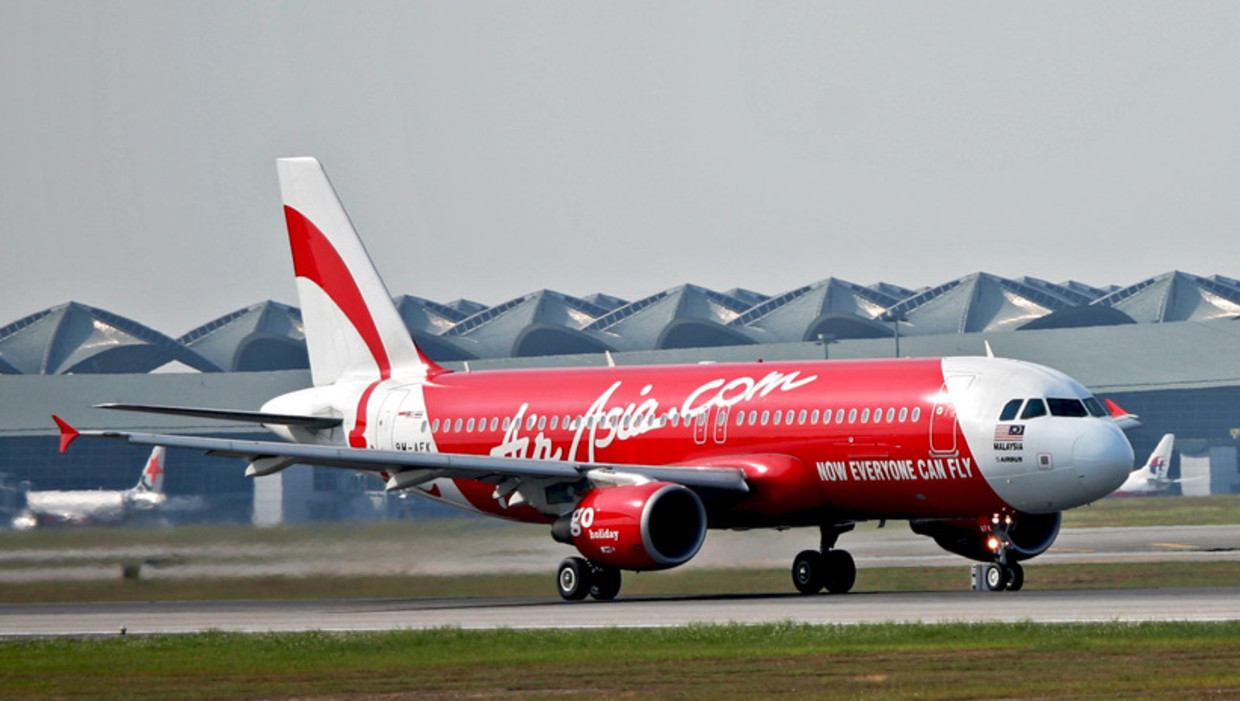
    Malaysian air cargo carrier Raya Airways has denied being in talks with budget airline AirAsia Group Bhd for an acquisition, it said in a statement on Monday (Jan 24).

    The company said the news reported over the weekend about ongoing talks was factually incorrect.

    The weekly reported that the airline has approached businessman Ishak Ismail whose family owns Raya Airways, to acquire the carrier, and are in early conversations.

    “After consulting with Raya’s shareholders and Board of Directors, we would like to clarify that Raya and its subsidiaries/affiliate companies are not in any talks with AirAsia Group Berhad or any other parties for the acquisition of the Company or any part of its businesses,” it said.

    The carrier said its operational and financial position is strengthening and it is committed to the next stage of growth.

  • Rents for Hanoi serviced apartments plunge to three-year low

    Rents for Hanoi serviced apartments plunge to three-year low

    Hanoi serviced apartment rents fell by 3 percent to a three-year low of VND547,000 (US$24.16) per square meter per month last quarter, according to Savills Vietnam.

    Compared to a year earlier the average rents for grades A-C apartments decreased by 4 percent to VND705,000, and 11 percent to VND233,000.

    The average occupancy remained unchanged from the third quarter at 69 percent but increased by 2 percent year-on-year.

    Nam Tu Liem District saw the highest rate of 83 percent, followed by Hai Ba Trung with 79 percent and Long Bien with 78 percent.

    Ten grade A and B projects has an occupancy of more than 90 percent.

    Post-Covid-19 tenants have higher requirements of the place they live in, prioritizing a good healthcare system, air quality and green space, according to a global survey done last year. Branded serviced apartments that collaborate with epidemiologists to improve their healthcare and safety quality are thus favored by tenants now.

    Savills said investors are opting to build serviced apartments on a smaller scale, and studio and one-bedroom apartments account for 49 percent of the market now.

    Apartments with two and three bedrooms account for 35 percent and 14 percent.

    The four projects that came into the market last year have small units with an area of 15-56 square meters accounting for some 65 percent.

    The revenue per square meter from small apartments is 4-15 percent higher than from larger ones.

    Studio and one-bedroom serviced apartments are becoming flexible, offering dual keys and both long-term and short-term lease.

    Savills said thanks to having double the space (kitchen, living room and office), dual-key apartments serve tenants’ demand for working remotely.

  • Globe debuts Asia’s first eco-SIM

    Globe debuts Asia’s first eco-SIM

    net-zeronet zero carbon emissions by 2040, and we align with the ambitions of many organizations to work for the better good and build a sustainable future.  The Eco-SIM card is small, but it has a big impact on plastic and polymer waste and is another example of how we innovate to drive change. We are excited to partner with Globe on this pioneering initiative in the Philippines with a goal to roll it out throughout Asia,” said  Jon Cahilig, head of mobile connectivity solutions for Asia, Thales Digital Identity & Security.

    In 2019, Globe became a signatory to the United Nations Global Compact, committing to implement universal sustainability principles on human rights, labor, environment, and anti-corruption in its operations. In January 2021, Globe formally expressed its support to the globally-recognized Task Force on Climate-Related Financial Disclosure (TCFD) in January. Along with more than 1,800 companies worldwide, Globe supports the framework set by TCFD and is committed to following recommendations towards effective climate-related disclosures.

    To further this commitment in 2021, Globe became the first publicly-listed Philippine company to be listed by the Science Based Target initiative (SBTi) committed to set science-based targets, in line with the 1.5°C global warming scenario of the Paris Agreement and the #RacetoZero Campaign. These commitments cover both the mid-term (2030) and long-term (2050) targets.

    “In order for us to truly move the needle in the fight against climate change, we all must take on the responsibility to act sustainably. This partnership with the Thales Group not only enables us to come up with a solution for our telco business, but it also gives our customers the opportunity to step up and choose to live more sustainably,” said Yoly Crisanto, Globe’s chief sustainability officer and SVP for corporate communications.

    In 2018, Globe was also the first in the country to introduce electronic SIMs or eSIM, as another alternative to the physical SIM cards. eSIMs are digital SIMs embedded in compatible mobile phone models, allowing its users to manage multiple profiles using different mobile numbers on just one device and effortlessly switch lines that fit their purpose. It also allows gadgets like smartphones and smartwatches to be connected under one mobile number.

    Globe strongly supports the United Nations Sustainable Development Goals, particularly UN SDG No. 12, which highlights the roles of responsible consumption and production patterns as crucial steps toward building a circular economy. Globe is committed to upholding the 10 United Nations Global Compact principles and 10 UN SDGs.

  • Accenture Plans Major Zurich Campus

    Accenture Plans Major Zurich Campus

    The consulting firm plans to expand its activities in Zurich to house more than 1,000 people. The move is sparked by a pandemic-induced change to working ways.

    Accenture will build a more than 9,000-square-meter hub in the heart of Zurich’s banking district, it said in an emailed statement on Tuesday. The new space will house more than 1,000 of its employees.

    The move was sparked by a shift in the definition of work as a result of both digitalization and the pandemic. «With the move, we are not only responding to Accenture’s current growth but also the changing needs of our employees,» country head Marco Huwiler said.

    Accenture will relocate in phases through 2024. «If the pandemic has shown one thing, it is that the previously valid work culture is undergoing a major transformation»

    The consulting firm led a consortium including SIX’s digital exchange, Credit Suisse, and UBS which helped the Swiss and French central banks on a cross-border settlement of digital currencies, or CBDCs, experiment.

  • Starbucks launches Coffee Experience Center in Bali, Indonesia

    Starbucks launches Coffee Experience Center in Bali, Indonesia

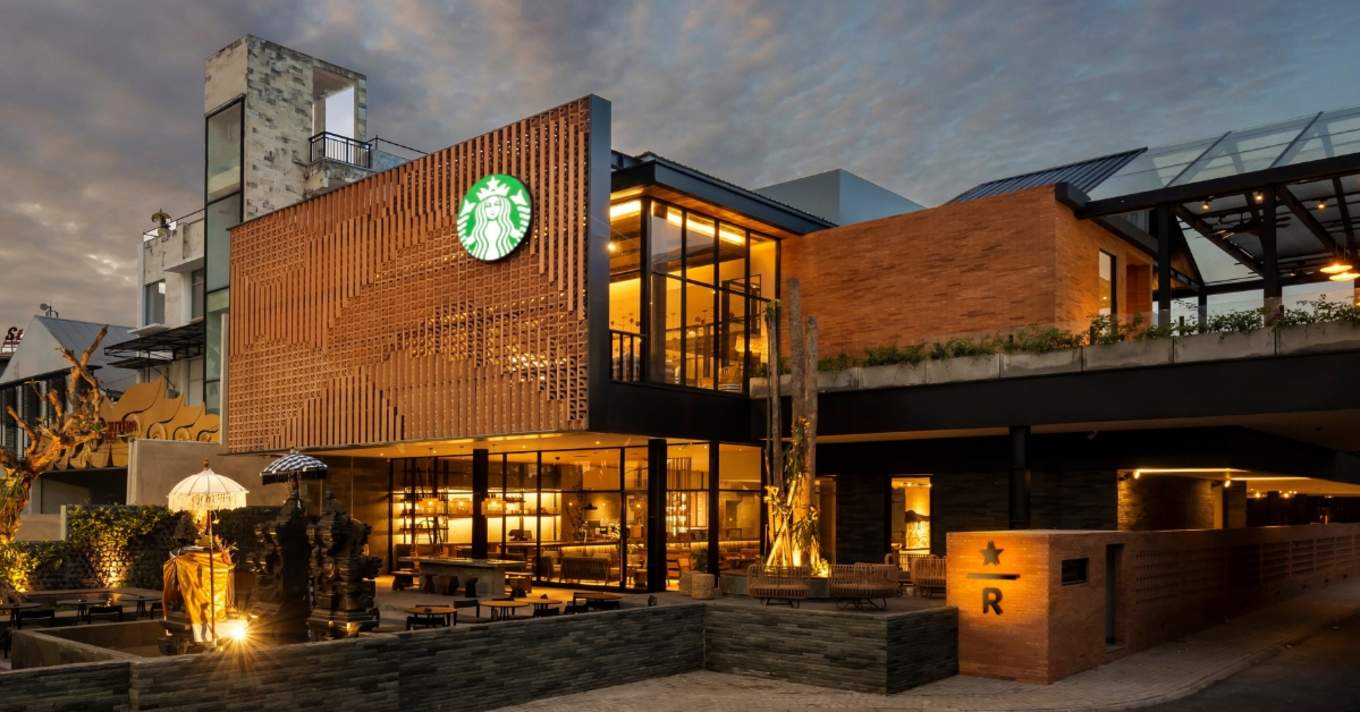
    Today, Starbucks celebrates the journey of coffee from seed-to-cup by opening its largest destination in Southeast Asia – the Starbucks Dewata Coffee Sanctuary. The one-of-a-kind Coffee Sanctuary demonstrates Starbucks Indonesia’s coffee leadership in partnership with licensee PT Sari Coffee Indonesia Limited, building upon 16 years of innovation in design, customer experience, and community impact. The store pays tribute to the important role that Indonesia, the fourth largest Arabica coffee growing region in the world, plays in bringing Starbucks customers the highest quality coffees, including the popular single-origin coffee from Sumatra. Sumatra coffee has been a staple offering at Starbucks since 1971.

    “We began sourcing Indonesian coffees more than four decades ago and have always been struck by the sense of community and care for the coffee journey at every step,” said Kevin Johnson, ceo, Starbucks Coffee Company. “The Starbucks Dewata Coffee Sanctuary amplifies our passion for the coffee journey, our ongoing commitment to Indonesia’s rich coffee culture, and our tireless pursuit of fostering moments of connection between our partners and customers. This is Starbucks at its best, and we are proud to open the doors of this unique experience in one of Southeast Asia’s most dynamic markets.”

    Designed as a coffee sanctuary, the expansive 20,000 square foot store beautifully highlights local craftsmanship and culture alongside premium coffee in this one-of-a-kind coffee experience, a sort of “origin-centered version” of the Roasteries, igniting all five senses. Visitors enter through an Arabica coffee farm, try their hand at coffee bean de-pulping and washing during harvest season, dry and rake green coffee beans, visit budding seedlings in the nursery, take in the store’s locally-inspired design featuring traditional Balinese craft and Indonesian art, and enjoy the more than 100 Dewata-exclusive handcrafted beverages, food and merchandise, including the Lavender Latte.

    “Bali has an envied reputation as one of Asia’s top travel destinations and Indonesia is one of coffee’s most extraordinary coffee origin regions, so we’re excited to invite customers here to ignite their senses and explore the seed-to-cup coffee journey at this unique Coffee Sanctuary,” said Anthony Cottan, managing director, Starbucks Indonesia, at PT Sari Coffee Indonesia Limited.  “We’re very pleased to further strengthen the longstanding partnership between Starbucks and PT Sari Coffee Indonesia with this truly one-of-a-kind Starbucks store, inspired by and filled with the finest examples of Indonesian art, design, and craftsmanship.”

    Located in Bali’s up-and-coming premium retail district on Sunset Road, the Coffee Sanctuary provides a carefully curated series of interactive experiences.

    As customers enter, they’ll be greeted at the concierge reception and then guided through a working, 1,000 square foot coffee tree farm, the size of a typical Indonesian farm. Customers will continue their journey through contemporary Balinese landscaping, passing coffee plants and a de-pulping station before trying their hand at washing, drying and raking green coffee beans. Inside, the expansive Reserve bar offers customers an intimate experience to taste Starbucks Reserve small-lot coffees, while the core bar offers Starbucks signature core beverages.

    Located on the second floor is the seedling nursery, a greenhouse canopied by panes of glass to create an open-air experience. Here, customers can touch the first stages of the seed-to-cup journey, as well as deepen their understanding of the art of tending to coffee plants alongside a local Balinese farmer. In the adjoining tasting room, customers’ tastebuds will come alive as they enjoy coffee as coffee quality professionals do, without a filter – simply coffee and water – to draw out the flavors that set each cup apart.

    For those looking for more, visitors can engage with an interactive video wall and hear how coffee is planted, processed, roasted, shipped, and brewed into a delicious cup of espresso. On the second floor, a dedicated media room features two synchronized video walls, showcasing the work of the Starbucks Farmer Support Center (FSC) in Sumatra and agronomist, Dr. Surip Mawardi’s, work with Indonesian coffee farmers.

    The Sanctuary was designed as an homage to Indonesia’s rich culture and coffee heritage. The store’s expansive interior was inspired by traditional Balinese houses with free-flowing, connected rooms that promote discovery from one space to the next.

    The store’s interior was designed in partnership with local craftspeople and artists with one goal: tell the story of coffee in Indonesia. This is brought to life by a wood carving depicting the country’s six coffee-growing regions’ local culture and architecture. A two-story mural in the courtyard pays tribute to local farmers who carefully nurture and protect the beans each step of their journey to Starbucks.

    On the main floor, Starbucks partners (employees) welcome customers to the 13-meter teak Reserve bar, drawing inspiration from Bali’s terraced rural landscapes, where customers can taste some of Starbucks rarest coffee offerings. Across the store, eyes are drawn to the living wall filled with flora from the region, situated behind the core bar designed to remind customers of Bali’s ocean waves which are replicated on the layered red-brick exterior façade.

    Starbucks is dedicated to working with farmers in Indonesia to ethically and sustainably bring high-quality Indonesian coffee to the world, and today, the company is the largest buyer of Indonesian arabica coffee.

    In 2015, Starbucks opened the Farmer Support Center in Berastagi, North Sumatra where Starbucks agronomists led by Dr. Mawardi, conduct research to develop disease-resistant coffee varietals in an effort to make coffee the world’s first sustainable agricultural product through the Sustainable Coffee Challenge. The Sumatra FSC is one of nine globally, including China, which offers open-source agronomy assistance and support for regional coffee farmers to improve the productivity and sustainability of their coffee trees.

    In a combined effort, Starbucks Indonesia has donated more than 330,000 coffee seedlings, along with technical assistance, to smallholder farmers to-date. Through locally driven initiatives to support coffee tree replanting, Starbucks commits to donating 100,000 seedlings annually in partnership with the FSC.

    Since 2006, The Starbucks Foundation has provided more than $4 million dollars to support farming communities and promote education, water, sanitation and health (WASH) programs across Indonesia. In 2018, The Foundation provided grants to Lutheran World Relief to support women-led community health and hygiene programs for 2,100 households in Sumatran coffee-producing villages over the next three years and to CARE to support economic empowerment for women tea workers and community WASH programs in West Java over the next two years.

    Today, Starbucks Indonesia delivers the Starbucks Experience across 370 stores where nearly 4,500 partners proudly wear the green apron. The Dewata Coffee Sanctuary marks the first Starbucks Reserve Bar in Bali and its tenth in Indonesia as Starbucks continues to elevate the coffee journey for customers across the market.