Author: Mei Ling Tan

  • Starbucks Korea faces probe over US$153 million in prepaid card takings

    Starbucks Korea faces probe over US$153 million in prepaid card takings

    Starbucks has been the subject of growing speculation as a number of Korean banks express their concerns over the US coffeehouse chain’s potential move into the competitive financial services industry.

    The global chain itself has not announced its plans to edge into financial services, but the booming success of the company’s prepaid gift card and mobile app – which Starbucks announced collectively had $1.56 billion in stored value by the end of 2019 – suggests there is a path emerging for the company to become a bank if it wanted to.

    Despite the enticing $1.56 billion figure, 3,900 US banks have less than $1 billion in total assets according to the Federal Deposit Insurance Corporation (FDIC).

    Starbucks revealed on a recent earnings call that its rewards program in the US had grown to 18.9 million active members at the end of 2019, up 16% year-over-year. “This is important because we know from experience that when customers join our rewards program, their total spend with Starbucks increases meaningfully,” he said on the call.

    South Korea’s Hana Financial Group is acutely aware of Starbucks’ competitive potential. Its chairman Kim Jung-tai said in his New Year address: “Technologies have allowed coffee companies like Starbucks to be our rivals. It will be fine to call Starbucks an unregulated bank, not a mere coffee company.”

    One year prior, South Korea’s KB Financial Group, KB Kookmin Bank and NongHyup Financial Group all mentioned Starbucks in their New Year’s addresses too. “The most-used mobile payment app in the US was the Starbucks app, not Google or Apple Pay,” KB Financial Group’s chairman Yoon Jong-kyoo said last year.

    “About 40% of its payments were made with the app, and the amount of cash loaded onto its prepaid cards and apps surpassed the amount of cash that some provincial banks had,” Jong-kyoo added. Industry experts believe Starbucks might move into asset management through its prepaid cards, as well as into the loan, insurance and currency exchange sectors.

    “Starbucks has been regarded as a fintech firm, not a coffee company, over the past few years,” an unnamed bank official said. “The removal of the word coffee from its signboard also proves this.”

    The coffeehouse partnered with cryptocurrency trading platform Bakkt at the end of last year. In the first half of 2020, Starbucks and Bakkt will test a consumer app “to make it easy for consumers to discover and unlock the value of digital assets”, Bakkt’s chief product officer Mike Blandina said in October.

    These recent movements by Starbucks against the backdrop of its prepaid card success have spurred the Korean financial industry to call for regulators to put controls on the coffeehouse. “Regulations are needed for prepaid service providers to maintain a certain level of capital adequacy ratio,” Hansung University’s economics professor Kim Sang-bong said.

    The global chain has plenty of capital to start up its own bank. According to Statista, its revenue in 2019 was roughly $26.51 billion. With Big Techs such as Amazon, Facbook, Uber and Grab all planting their flag in the space, it seems imaginable that a similarly well-known brand such as Starbucks might be able to do the same.

    But if regulators decide to clamp down on the company in certain regions, then its currently speculative appetites for a financial play could easily be curbed or at least put on hold.
  • Nokia deploys 5G standalone core network for Taiwan Mobile

    Nokia deploys 5G standalone core network for Taiwan Mobile

    Nokia announced that it has deployed its 5G standalone core network for Taiwan Mobile Co. to enable the operator to provide the most advanced 5G applications for enterprises and businesses, and to strengthen its network services and performance.

    The timely deployment includes Nokia’s voice core, cloud packet core, subscriber data management, signaling, network exposure, policy controller, cloud infrastructure, and security management for radio transport. With a 5G standalone core network, Taiwan Mobile can readily provide the most advanced 5G services such as network slicing and smart city solutions that require ultra-low latency and reliability.

    Nokia and Taiwan Mobile are long-standing partners and Nokia, as the sole supplier of Taiwan Mobile’s 5G network, is supporting the operator’s ‘Super 5G strategy’ focused on sustainability and digital transformation.

    Nokia leads the market in core network deployments, with 25 of the top 40 communication service providers relying on its core network products.

    Tom Koh, Senior Vice President and Chief Technology Officer, Technology Group, Taiwan Mobile, said: “Introducing SA to unleash the full potential of 5G beyond high-speed to further realize innovative use cases enabled by ultra-low latency and massive IoT is our strategic mission in the 5G era. We are delighted to reach this milestone with Nokia to bring the first true 5G network into Taiwan. Owning the agility of network slicing to swiftly customize the network for accommodating different use cases, Taiwan Mobile will be able to accelerate time-to-market to provide a wide variety of services for everyone and everything and to free enterprises to embrace Industry 4.0. The SA technology is built from cloud architecture, infrastructure-agnostic by design, which paves a critical step to a full software agile virtualization network. It unlocks the use cases with distributed cloud for low latency service with local breakout needed. Taiwan Mobile’s true 5G network will become the innovative engine for consumers to experience as well as verticals to deploy applications without limits.”

    Susanna Patja, Head of Cloud & Network Services, Greater China, Nokia, said: “We are very pleased that the Nokia 5G Standalone Core network is now up and running, on schedule, for Taiwan Mobile. This provides Taiwan Mobile with exceptional capabilities in terms of machine-to-machine communication, extreme automation, and reliability that enables critical 5G uses for enterprises; and does so with the knowledge that this standalone network will continue to function seamlessly with non-standalone networks.”

  • Full dark mode is finally coming to Waze

    Full dark mode is finally coming to Waze

    Back in 2013, Google purchased Waze for a reported $1.3 billion. While the company already owned the leading mobile navigation app in the world, over the years Google has taken some of the features that made Waze popular such as its crowd-sourced traffic information and used it to improve Google Maps. At last count, the app has over 134 million monthly active users worldwide and last year it was the second most popular mapping app in the world.

    Waze makes money by running ads from 25,000 businesses that want to reach their customers locally. A company paying $60 per month will reach an estimated 30,000 Waze users while laying out $30,000 per month will allow a company to reach as many as 1.5 million Waze users.

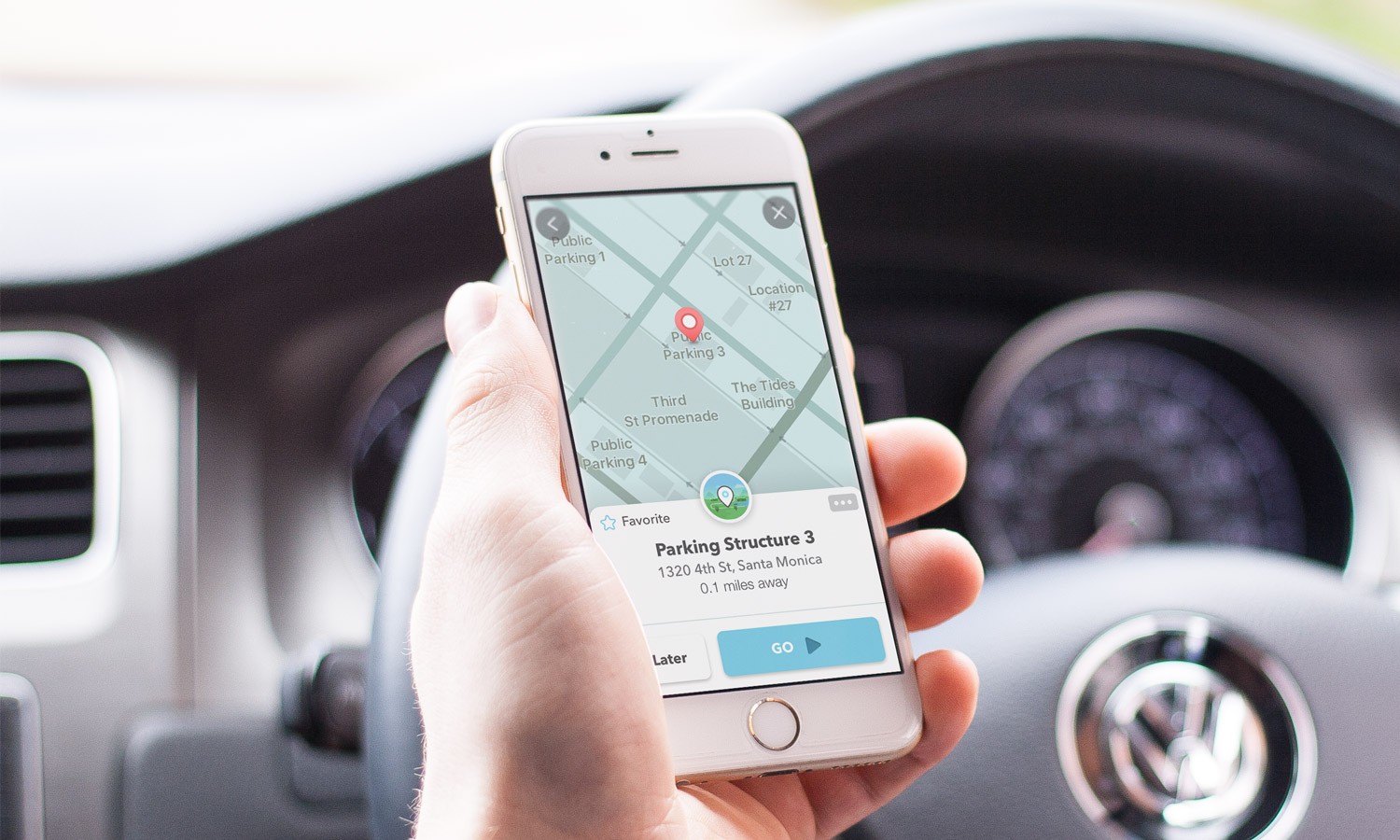
    Waze is rolling out an “alpha” version of the app with a full dark mode to a limited group of users; this is a special build of version 4.78 with a version of dark mode that the public doesn’t see. Currently, dark mode on Waze covers just the map itself. With the update, dark mode will cover all of the app including settings and the rest of the app.

    Right now, the “alpha” version of the update is considered buggy which indicates that Waze and Google have a lot more work ahead before the final version of the update is disseminated. In dark mode, instead of using dark text on a white background, white text is used on a dark background. This keeps users from getting blinded by the piercing white background which can be dangerous when using the app at night while driving.

    Google finally started disseminating a full dark mode update to Google Maps earlier this year after it had talked about it for a year. Thus, there is no reason why Waze couldn’t join its stablemate, and it will, once the bugs in the “alpha” build are exterminated.

    If you want to enable dark mode on Google Maps, tap the profile picture in the upper right corner of the screen, tap on Settings, and underneath the USING MAPS heading, you’ll see Dark Mode. Tap on it and you’ll have three options: On, Off, or Same as device setting.

    Waze says that it will not offer any setting that allows the maps to be dark and the UI light or vice versa. This news comes right after Waze launched what it calls the “headspace” experience designed to reduce stress while behind the wheel. Instead of the automobile icon, using this feature shows you in a hot air balloon as you listen to one of five different mood themes: Aware, Bright, Hopeful, Joyful, and Open.

    Drivers will also be able to stream a customized Spotify playlist with music and content from Headspace. You won’t find that on Google Maps, nor will you see the community that Waze has built on other navigation apps. In the past, Google and Waze each have said that they do not share traffic data with each other and despite being owned by Google, Waze has pretty much acted as though it was still an independent company.

    Waze has its own community forum where users can make suggestions. You can install the app on your iOS or Android phone by visiting the App Store or Google Play Store respectively.

    Among the features seen on Waze that Google Maps users will soon see is one that will show the tolls that drivers will need to pay to cross bridges, and certain roads. Members of the Google Maps.

  • Thai AirAsia parent to raise $419mn as Thailand reopens

    Thai AirAsia parent to raise $419mn as Thailand reopens

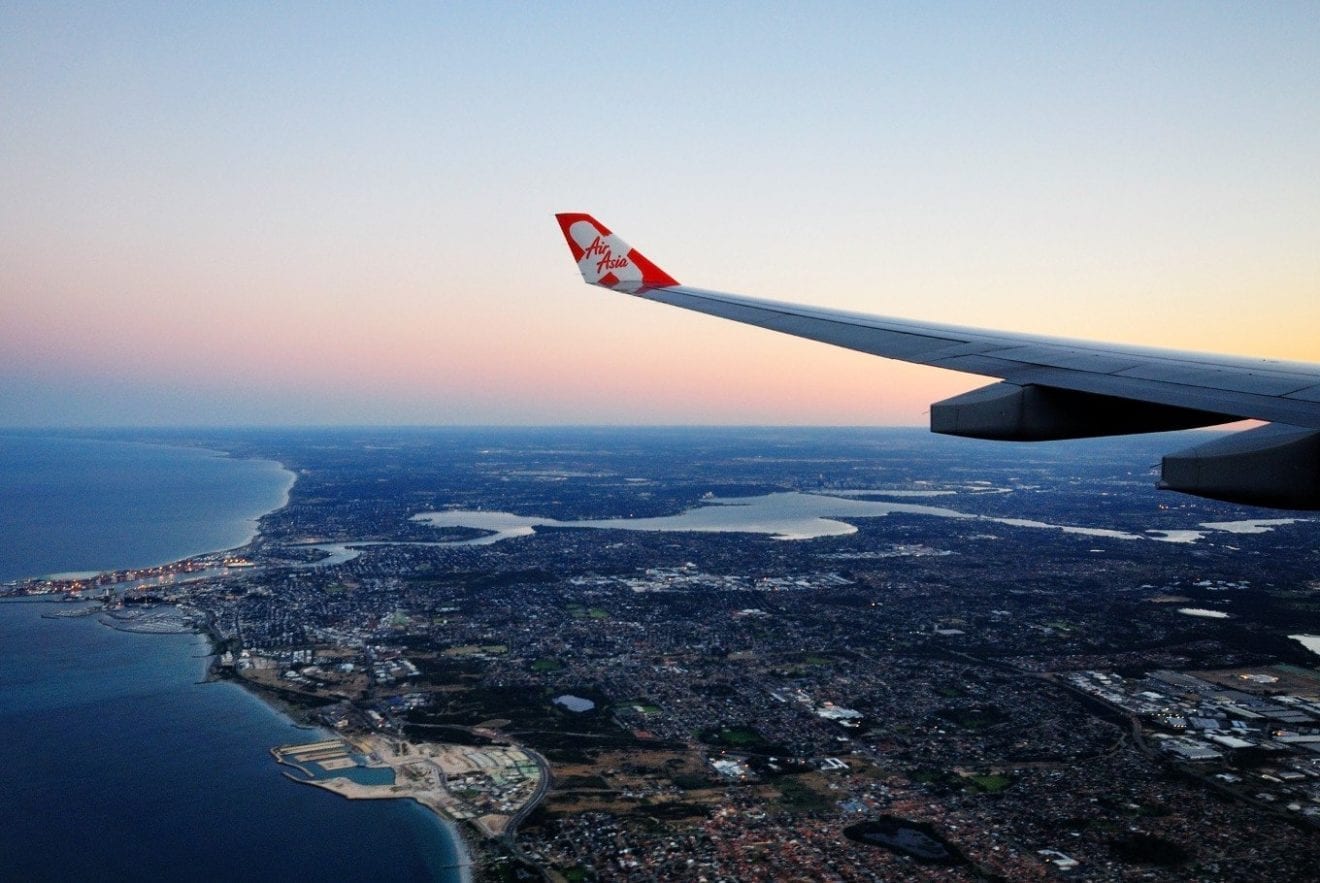
    Asia Aviation PCL (AAV), the parent company of  Thai AirAsia (FD, Bangkok Don Mueang), has said it is seeking to raise THB14 billion baht (USD419.4 million) to fund a restart at the low-cost carrier following the “very negative impact on the company’s business and operating results” thrown up by Covid-19 and the Thai government’s strict travel restrictions.

    Those restrictions are now starting to ease, as Thailand plots a reopening that will allow vaccinated arrivals from ten “low-risk” countries – including the United Kingdom, the United States, Germany, China, and Singapore – to skip quarantine from November. The other five countries have not yet been named, and the government will add more countries to the low-risk list in December.

    In a 70-page report issued after an AAV board of directors’ meeting, filed to the Stock Exchange of Thailand on October 19, the company said it would issue convertible bonds and new shares worth THB14 billion. It also pledged to eventually acquire all of the shares in Thai AirAsia and boost the airline’s liquidity. AAV currently owns 55% of Thai AirAsia, while Malaysia’s AirAsia Group holds the remaining stake.

    The restructuring, expected to conclude in the first quarter of next year, includes new shares worth THB8.8 billion (USD264 million) in a private placement to AirAsia Group and six high net-worth Thai investors. The senior unsecured convertible bonds will be allocated to two private placement investors to raise a total principal amount of THB2.2 billion (USD66 million).

    The company will also increase its registered capital from THB485,000,000 (USD14.5 million) to THB1,285,000,000 (USD38.5 million), issuing 8 billion new ordinary shares to accommodate the conversion of the bonds. The subscription for the newly issued shares will take place from January 10 to January 14, 2022.

    AAV said it would use the proceeds from the capital increase: to repay THB3.9 billion (USD117 million), plus interest, in loans that the company borrowed from financial institutions to acquire the newly issued shares in Thai AirAsia, a move by which its stake will rise from 55% to 69.2%; to purchase all the remaining shares in Thai AirAsia, representing 30.8%, totaling about THB4 billion (USD120 million); and to go towards the working capital of the group, including Thai AirAsia.

  • StanChart Nets Ex-Safra Singapore CEO

    StanChart Nets Ex-Safra Singapore CEO

    Standard Chartered has hired the former Singapore chief executive of J. Safra Sarasin to lead its South Asia private banking segment.

    Vinay Gandhi joins Standard Chartered as its regional head, ASEAN and global head, global South Asian community, private banking, according to a statement, subject to regulatory approval.

    Based in Singapore, Gandhi will report to global head of affluent coverage Raymond Ang when he joins the bank in the first quarter of 2022.

    Seasoned Private Banker

    Gandhi has 30 years of financial experience, most recently with J. Safra Sarsin where he was last its Singapore CEO and Asia deputy CEO.

    Previously, he also worked for UBS Wealth Management, Deutsche Bank and Citi Private Bank.

    Gandhi’s profound knowledge of affluent clients in Standard Chartered’s footprint markets and proven track record in leading effective teams will be a strong addition to our team, Ang said in the statement.

  • HSBC Profits Surge From More Released Loan Loss Reserves

    HSBC Profits Surge From More Released Loan Loss Reserves

    A continued reduction of credit loss provisions fuelled HSBC’s pre-tax profits in the third quarter to comfortably beat analyst expectations.

    HSBC registered $5.4 billion of pre-tax profits in the third quarter, according to its latest earnings report, marking a 76 percent year-on-year growth.

    This marked significant outperformance compared to analysts’ forecasts of $3.78 billion, according to compilations from the bank.

    All regions were profitable including Asia which recorded $3.3 billion of pre-tax gains, a 3.6 percent increase.

    Although reported revenue was up just a modest 1 percent to $12 billion, the bank managed to generate strong results through the reduction of loan loss reserves.

    In the third quarter, HSBC made a net release of $700 million in expected credit losses (ECL) compared to an ECL charge of $800 million in the same quarter last year.

    We had a good third-quarter performance, with strong growth in profits supported by additional credit provision releases, said HSBC CEO Noel Quinn. Our strategy remains on track, with good delivery in all areas. This was reflected in more consistent top-line growth, robust lending pipelines across our businesses, and rising trade and mortgage balances.

    The bank also highlighted a sufficiently strong capital position to prepare for share buybacks totaling up to $2 billion.

    While we retain a cautious outlook on the external risk environment, we believe that the lows of recent quarters are behind us, Quinn said. This confidence, together with our strong capital position, enables us to announce a share buyback which we expect to commence shortly.

  • SGX Opens Offshore Office in India

    SGX Opens Offshore Office in India

    The office will kick-start SGX India Connect IFSC, a special purpose vehicle that will facilitate SGX’s upcoming connection with India’s National Stock Exchange (NSE).

    Singapore Exchange (SGX) has opened the SGX-International Financial Services Centre (IFSC) office in India’s Gujarat International Finance Tec-City (Gift City), according to a report on Friday.

    SGX will also be launching Gift Data Connect to provide SGX’s international members with access to real-time trading data of Nifty contracts via its derivatives trading platform and give investors unrivaled insights into India’s equity market.

    The upcoming NSE IFSC-SGX Connect aims to bring together the trading of Nifty products in Gift City and create a larger pool of liquidity comprising international and home market participants.

  • DBS Appoints Chief Risk Officer

    DBS Appoints Chief Risk Officer

    A career DBS banker has been named chief risk officer for the Singapore lender, replacing Tan Teck Long.

    Soh Kian Tiong has been named chief risk officer (CRO), according to a statement, reporting to DBS chief executive Piyush Gupta.

    In addition, Soh will also be accountable to the board risk management committee as well as join as a member of the group management committee and group executive committee.

    Soh replaces ex-CRO Tan Teck Long who will be leaving the bank to take on a client-facing role elsewhere.

    Soh has over 25 years of experience, having first joined DBS as a trainee officer in its corporate banking unit in 1995. Since then, he held various senior roles, most recently as a senior risk executive for DBS Hong Kong, Greater China chief credit officer, management committee member of DBS (Hong Kong), and Hong Kong risk executive committee chairman.

    Under Tan’s leadership, DBS has further enhanced our credit underwriting capabilities, multi-year credit architecture program, and strengthened our attention on ESG risks, financial crime risk, and cyber security and data protection. While he will be sorely missed, we respect his desire to return to a customer-facing role,» Gupta said.

    Soh’ appointment is testament to our ability to groom leaders from within. Over the span of his longstanding DBS career, he has been rotated across markets, and embraced a mix of business and risk roles. I am confident that he will bring this experience to bear meaningfully in his new role.

  • Adidas opens Terrex flagship in Shanghai

    Adidas opens Terrex flagship in Shanghai

    On November 21, adidas Terrex opened its new store at APM Mall on Wangfujing Street in Beijing. Brand spokesperson Zhao Youting, senior vice president of sales channel management in Adidas Greater China, Mr. Guillermo del Nogal, senior director of outdoor sports business unit in Adidas Greater China, brand signing athletes Zhang Jingkun and Zhong Qixin, and many outdoor enthusiasts showed up at the opening ceremony of the event.. Interpret the outdoor sports attitude of ” HERE TO CREATE Created by Me” with practical actions, and encourage more outdoor fans to challenge themselves, discover their potential and find better ones in outdoor sports.
    As a mysterious challenger, Adidas Terrex ( Adidas Sharp ) brand signing athletes Zhang Jingkun and Zhong Qixin jointly completed rock climbing and mountain bike relay and performed creative outdoor events on the spot. And together with brand spokesperson Zhao Youting, senior company officials and guests at the scene, they broke the rock wall symbolizing convention and announced the official opening of the new store.
    Mr. Xiao Jiale, senior vice president of sales channel management for Adidas Greater China, said: ” Adidas Terrex has chosen to open a special store in Wangfujing APM, the bustling commercial center in Beijing this time, laying a solid foundation for the strategic layout of the brand in the national market, and hopes to make more consumers enjoy the joy brought by outdoor sports with better products and services in the future.”.
    Adidas Terrerex ( Adidas Insight ) Beijing Wangfujing Store gathers professional outdoor sports products, such as 3in1GTX waterproof eiderdown jacket made of Gore-Tex fabric technology, clima heat technology outdoor eiderdown jacket, as well as a full range of outdoor professional cross-country shoes, outdoor professional hiking shoes, outdoor accessories and other equipment.. In addition, it also has a light outdoor series with both functions and fashion. At Adidas Terrex’s outdoor store on the 4th floor of APM Mall on Wangfujing Street in Beijing, Adidas Trail provides outdoor enthusiasts with all-around professional outdoor products to provide all-around protection and uses cutting-edge outdoor technology to help outdoor enthusiasts to challenge their limits.
    The event also attracted people from various media and outdoor sports to come together. The atmosphere at the event site was full of climaxes, and creative outdoor sports were very impressive. The interactive VR device at the scene takes you to feel the outdoors and attracts a large number of people to stop.
  • Foodpanda partners with Indian cloud kitchen firm Rebel Foods

    Foodpanda partners with Indian cloud kitchen firm Rebel Foods

    Online takeaway delivery firm Foodpanda is partnering with Indian virtual kitchen company Rebel Foods to roll out the latter’s virtual restaurant brands at 2,000 outlets across ten Asian countries, Foodpanda’s chief operating officer said.

    “Foodpanda is Asia’s largest’s food delivery company while Rebel Foods is the largest virtual brands operator in the world,” COO Pedram Assadi said. “This is the largest virtual food brand partnership of its kind.”

    Under the deal, Foodpanda, which is owned by Berlin-based Delivery Hero, has recruited and trained hundreds of outlets to franchise the global restaurant brands created by Rebel Foods and offer their food on its platform.

    Mumbai-based Rebel Foods, which offers multiple cloud kitchen brands across countries including India and the United Arab Emirates, raised US$175 million this month at a US$1.4 billion valuation. It plans to launch an IPO in the next two years.

    Cloud kitchens that prepare food for delivery got a boost from the shift to online buying during the COVID-19 pandemic. Low overhead costs versus traditional restaurants and fast scale-up potential have also enabled “internet restaurant chains” to grow quickly.

    Foodpanda’s partnership with Rebel Foods is already being tested in six of the twelve Asian markets that Foodpanda is active in, and there is the option to expand to the other regions Delivery Hero is active in, Assadi said.

    He did not give any financial details of the deal but described it as core to Foodpanda’s strategy in Asia – along with its expansion into grocery delivery in Southeast and East Asia – as it takes on competitors such as British rival Deliveroo and Singaporean startup Grab Holdings.

    “Over the last year, we now have built over 250 ‘cloud stores’ that are operating grocery end to end, which makes us the largest e-commerce delivery player in APAC (Asia-Pacific)” Assadi said, referring to distribution centers dedicated to online grocery orders.

    Delivery Hero, which is active in 50 countries worldwide, announced on Tuesday it had invested US$235 million in Berlin-based grocery delivery company Gorillas, as the global race to dominate the rapid delivery service sector intensifies.

    Earlier this year, it also picked up a minority stake in Deliveroo.

  • Google Calendar adds new feature: Focus Time

    Google Calendar adds new feature: Focus Time

    Many of us rely on Google Calendar for a huge portion, if not all, of our work schedule. Meetings, important calls, even coffee with a coworker or friend—for plenty of us, it’s all slotted in right there on our Google Calendar profile, with notifications reminding us at all the right times. But sometimes, it can get a little overwhelming.

    And Google is aware of our reliance on its calendar app and working to further enhance users’ experience by introducing a new feature called Focus Time.

    It’s essentially something like an unobtrusive office manager who keeps everyone away to give you a quiet place to work, while also taking care of some of your scheduling for you.

    The main function of Focus Time is to allow you to section off important time for personal work that needs to get done, come what may. This keeps it visible on the calendar for you and anybody the calendar may be shared with, and also prevents your being assigned meetings during your scheduled heads-down time.

    Focus Time will be logged in Time Insights, where your time spent in meetings is also tracked—it will feature a headphone icon and you can assign a different color to your focus time, to set it apart from other events.

    Other than changing up the appearance of your work calendars, Focus Time can also automatically decline conflicting events while you slog away, without your lifting a finger.

    One scenario where we could see this going wrong is, you’ve got a tentative or rather arbitrary event scheduled in, such as “Coffee with Kate Tuesday 2pm maybe??” And unbeknownst to you, your boss requests an important meeting with you at the same time while you’re MIA in Focus Time—and he is automatically denied, because Google hasn’t quite reached the intelligence of differentiating varying levels of priority.

    But don’t worry, the “automatically decline events” feature is optional. The primary function is simply the ability to block out time for personal, uninterrupted work.

  • Zeekr’s 001 EV Goes Into Production

    Zeekr’s 001 EV Goes Into Production

    Chinese EV startup Zeekr has announced that its new 001 sedan is now in production. Zeekr is part of the Geely Holding Group which also owns Volvo and Polestar. The first deliveries of the Zeekr 001 will start in China this weekend. Zeekr is a more luxury-focused EV brand, unlike Polestar which is more mass market.

    This launch comes on the back of the announcement of the sustainable experience architecture which is an open-source chassis base. There are more EV brands under the Geely umbrella including Lynk & Co, Geometry will still be upon the same chassis

    Zeekr intends to compete with Tesla in China. While it is part of the Geely holding group in July, Geely pulled out as a majority shareholder in the brand, though it still has control of other subsidiaries. It even features Intel Capital CATL as investors.

    There was a ceremony at Zeekr’s intelligent factory which even features a 5G network, 300 automated welding robots, and other production systems which are being continuously self optimized using AI.

    The 001 EV features 400 kW of power with 768 nm of torque with a dual-motor system. It can do 0-100 km/h in just 3.8 seconds and can halt from the same speed in 34/5 meters. The impressive bit is that Zeekr is saying its Z-Battery architecture can charge from 0-80 percent in 30 minutes and can deliver 526-712 km of NEDC range.

    It also shared its first set of over-the-air updates to further improve Zeekr assisted drive system after the first deliveries. It has an approximate cost of between $44,000-$56,500.

    10 Zeekr Spaces planned in China that will join two already opened facilities in Hangzhou and Tianjin. Zeekr is also planning on opening 360 kW charging stations across 10 Chinese cities this year.

  • Ducati To Become Official MotoE Supplier From 2023

    Ducati To Become Official MotoE Supplier From 2023

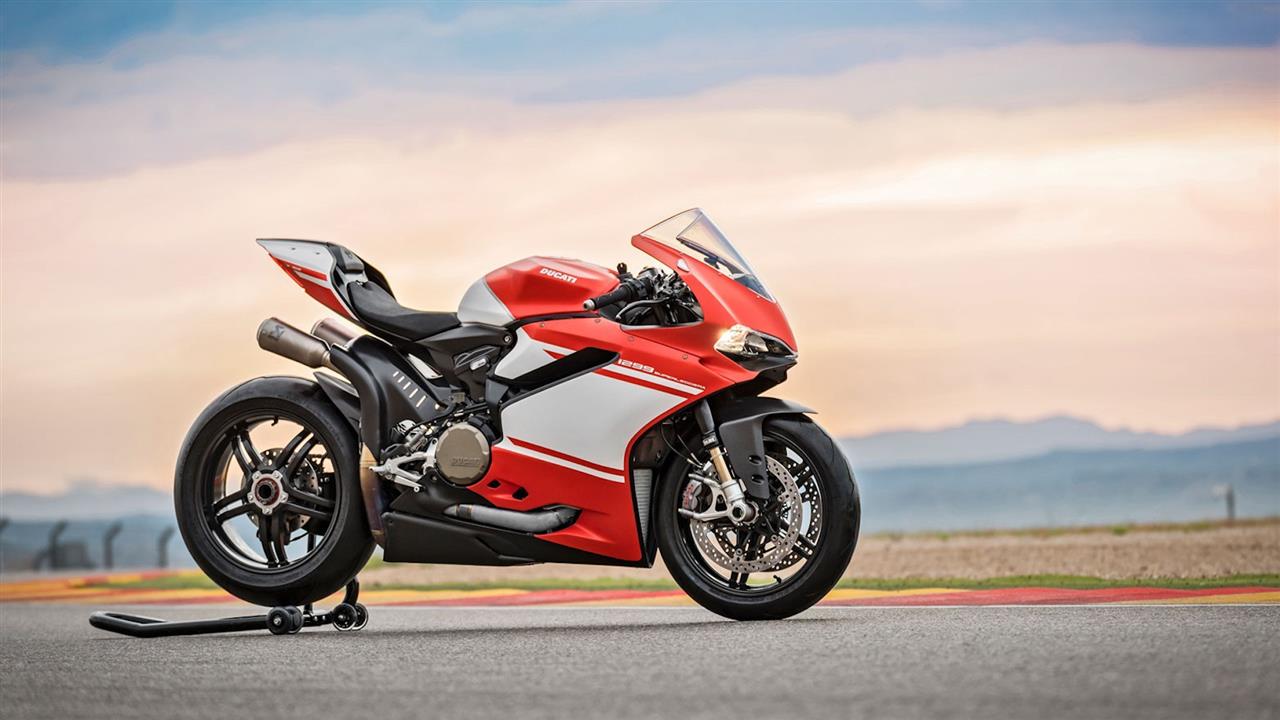
    Ducati will be the official motorcycle supplier for the FIM MotoE World Cup, the all-electric racing class at select rounds of the MotoGP World Championship, alongside Moto2 and Moto3. Ducati’s partnership with MotoE is set to begin from the 2023 racing season and will continue through 2026. The news of Ducati supplying MotoE machines has important implications and will be seen as one of the first step towards developing all-electric production machines from the iconic Italian brand. As with the MotoGP and World SBK projects, MotoE is largely expected to prove to be the perfect laboratory to take technology and innovation from the track to the showroom.

    The news comes just after Modena-based Energica announced that it will not renew its contract with Dorna Sports, which expired in 2022, after a four-year partnership. Energica is one of the few manufacturers of high-performance electric motorcycles, and the Energica Ego Corsa racebike used by all MotoE race teams is based directly on its street-legal electric superbike, the Energica Ego.

    Ducati Motor Holding CEO Claudio Domenicali and Dorna Sports CEO Carmelo Ezpeleta announced the partnership at a press conference held at the Misano World Circuit Marco Simoncelli. The MotoE World Cup came into existence in 2019 as part of MotoGP promoter Dorna Sports and the FIM’s push for greener motorcycle racing.

    “We are very proud of this agreement because, like every first, it represents a historic moment for our company. Ducati is always focused towards the future and every time it enters a new world it does so aiming to create the best-performing product possible. This agreement comes at the right time for Ducati, which has been studying electric powertrains for years, as it will allow us to develop within a controlled field: that of competition. We will work to give every participant in the FIM MotoE World Cup a high-performance, electric motorcycle and one made to exemplify being lightweight. It’s in the area of weight, which is a fundamental element of sports bikes, which will prove the greatest challenge. Lightweight machinery has always been in Ducati’s DNA and thanks to the technology and chemistry of the batteries that are evolving quickly, we are sure that we can achieve excellent results.

    “We test our innovations and future-focused technological solutions on circuits all over the world and then create exciting and desirable products for Ducatisti. I am convinced that, once again, we will treasure the experience we gain in the world of competition in order to transfer and apply it to production motorcycles,” said Claudio Domenicali, CEO, Ducati Motor Holding.

    According to Ducati, the new MotoE machine will be purpose built from the principles of Ducati’s racing DNA, with focus on creating a lightweight motorcycle “that unites tradition, passion and innovation for a new era of electric competition in the MotoGP paddock.”

  • Vietnam Airlines to resume all domestic flights

    Vietnam Airlines to resume all domestic flights

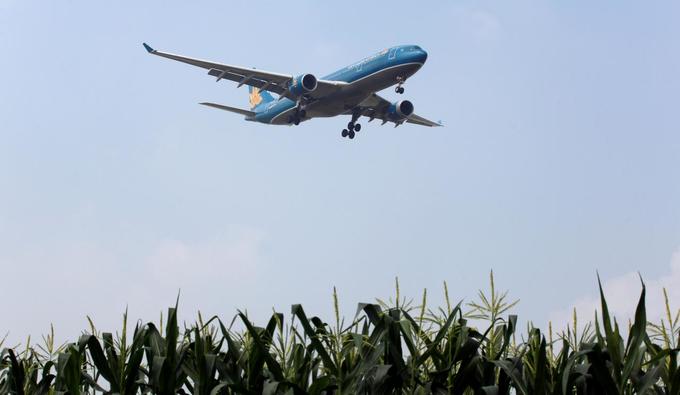
    Vietnam Airlines is set to gradually resume flying on 40 routes, or nearly its entire domestic network, by next month, prioritizing Hanoi, HCMC and Da Nang.

    Several flights are set to be resumed to the southern archipelago Con Dao Island, the central highlands province of Buon Ma Thuot and the northern province of Dien Bien from Thursday to Nov. 30.

    The group, which comprises low-cost carrier Pacific Airlines and Vietnam Air Services Company (VASCO), will start conducting 90 routes a day from Thursday and will increase the figure to 120 from the end of this month.

    There will be three flights a day between Hanoi, HCMC and Da Nang City. For the other locations the group will try to have at least one route a day, which could rise to two depending on demand.

    Passengers can fly if they have been fully vaccinated for at least 14 days, or to have recovered from Covid-19, or to test negative within 72 hours.

    Vietnam Airlines Group started resuming its domestic flights from Oct. 10. As of Tuesday it had conducted around 150 flights carrying nearly 12,000 passengers on 16 flight routes.

  • Taxi firm Vinasun revenue plunges 10 times

    Taxi firm Vinasun revenue plunges 10 times

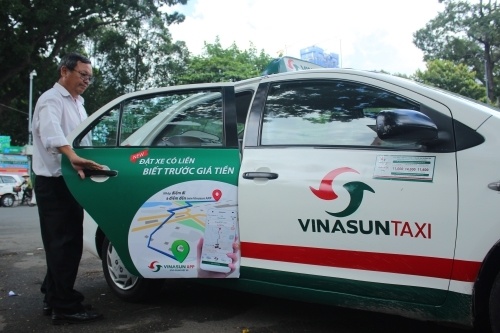
    Taxi firm Vinasun saw its revenue in the third quarter plunge 10 times to VND23 billion ($991,000) as the fourth Covid-19 wave wrecked the transport industry.

    The company posted a loss of VND91 billion, its seventh losing quarter in a row, increasing the chances of being delisted from the Ho Chi Minh Stock Exchange (HoSE).

    Months of strict social distancing in HCMC, where the company mostly operates, have caused revenue to plunge due to restrictions on public transport.

    In the first nine months, revenue fell by nearly half year-on-year to VND400 billion. It subsequently recorded a loss of VND188 billion.

    In the next 12 months, the company needs to pay nearly VND100 billion in loans.