Author: Mei Ling Tan

  • StanChart Exec Joins Blockchain Startup

    StanChart Exec Joins Blockchain Startup

    Taipei-headquartered XREX has named a managing director in Singapore as it sets its sights on expanding its platform in the region.

    Taipei-headquartered XREX has appointed Christopher Chye as managing director of XREX Singapore and director of product. In this dual role, he will oversee XREX’s businesses and operations in Singapore and play an instrumental role in bringing new value propositions to XREX’s clients, the startup announced on Tuesday.

    Chye joins from Standard Chartered Bank, where he held roles in commercial banking, consumer banking, wealth management and financial crime compliance. He was also a pioneer of Standard Chartered’s digital bank venture in Singapore, where he led the bancassurance, rewards and loyalty, and brand and marketing pillars, and was executive director at its regional CEO office. He was previously a  management consultant with KPMG.

    In a separate announcement, XREX said it raised $17 million in pre-Series A funding led by CDIB Capital Group. The funds will be used to apply for financial licenses in Singapore, Hong Kong and South Africa, and partner with banks and financial institutions, like payment gateways.

    Many of our team members are from or have lived in the markets where we serve. We keenly understand the struggles faced by many cross-border merchants who lack safe access to US dollar liquidity, XREX CEO and cofounder Wayne Huang, said in the announcement.

    XREX was launched in 2018 to drive financial inclusion in emerging markets by leveraging blockchain technology.

    The company uses blockchain technology to solve dollar liquidity shortage issues in emerging markets, and has products like a payment escrow service and crypto-fiat exchange platform.

  • PayPal Launches Singapore Hiring Spree

    PayPal Launches Singapore Hiring Spree

    The U.S. online payments giant is expanding the Singapore-based workforce by 25 percent to support the region’s growing demand for digital solutions.

    Some 150 job openings are on offer at PayPal’s its international headquarters in Singapore, under the Infocomm Media Development Authority of Singapore’s TechSkills Accelerator (TeSA) program and supported by Digital Industry Singapore (DISG), according to an announcement on Tuesday.

    PayPal said it will provide opportunities over the next three years for Singaporeans in areas such as product management, software engineering, cybersecurity, and data science, according to a statement.

    The new hires will work on projects that cover SME digitalization, PayPal’s e-wallet and commerce platform, as well as risk, compliance, trust and security, the announcement said.

    Singapore is a strategic market for the online payments platform, and is home to the only international PayPal Innovation Lab, which has contributed to over 140 patents.

    PayPal is determined to support Singapore’s continued digital transformation into a global technology and fintech hub, Aaron Wong, chief executive officer of PayPal Pte Ltd, said.

    According to the company’s recent earnings report, PayPal processed a total payment volume of $311 billion during in second quarter of 2021, up 36 percent year-on-year. There are 403 million active accounts, including 32 million merchant accounts, on the platform.

    PayPal operates in over 200 markets, with 44 percent of active accounts located outside of the United States.

    Earlier this week, PayPal announced the first international roll-out of its crypto product that first launched in the U.S. in October last year, which lets customers buy or sell bitcoin, bitcoin cash, ethereum or litecoin. It said it hopes to open this functionality to other global markets in the coming years.

  • Indonesia’s Bank Central Asia Targets Digital Growth

    Indonesia’s Bank Central Asia Targets Digital Growth

    Banks are playing catch-up to technology players in one of the world’s largest unbanked markets.

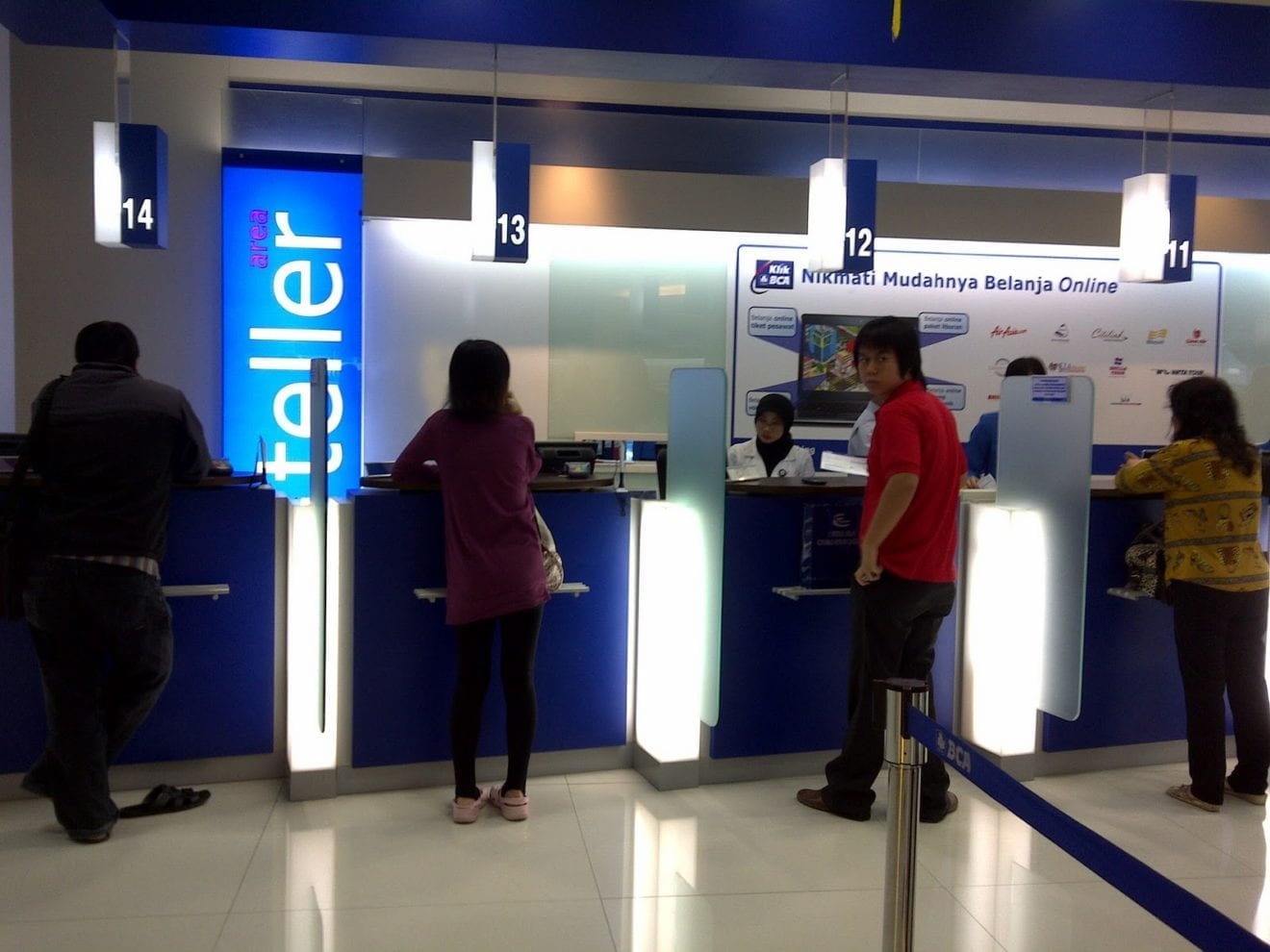
    Bank Central Asia (BCA) is boosting its digital capabilities amid increased competition from tech players in the banking space, according to a report on Wednesday.

    Indonesia’s biggest lender by market value will be investing $200 million to help its month-old digital unit Blu to increase market share ahead of an initial public offering in two years’ time. Blu currently has about 110,000 customers.

    BCA is targeting a fourfold increase in its capital, to four trillion rupiah (S$376.5 million), and is focused on gaining more customers, partners and merchants on its digital platform before the IPO, BCA president director Jahja Setiaatmadja told the publication.

    The country has an unbanked market of 83 million people, or about one-third of the population, and while traditional players have found it tough to expand across the archipelago nation, technology players have an advantage in their ease of scaling operations to meet this demand.

    Indonesia-headquartered super-app Gojek increased its stake in Bank Jago in December 2020 as part of its bid to accelerate financial inclusion in Asia, while Singapore-based e-commerce and gaming company Sea, which recently won a licence to run a digital bank in Singapore, bought unlisted lender Bank Kesejahteraan Ekonomi in January.

  • Twitter may display your Twitter Spaces listener status

    Twitter may display your Twitter Spaces listener status

    Twitter Spaces is a fairly new addition to the popular bird-themed social media platform and was launched a few months ago in competition with the exploding Clubhouse app. Its function is very similar to Clubhouse: to provide voice chat rooms which people can host and join to have discussions about anything and everything. From music, to Bitcoin, or anime, or anything else—there’s a Twitter Space for every interest.

    With Twitter Spaces growing in popularity, Twitter has been bringing new features to them—such as a variety of voice filters, web browser support, and easier management features for Space hosts. Yesterday, Twitter announced that it is also testing out the ability for Twitter users to display to their followers which Spaces they’re listening to.

    Such a feature would be a further extension of the already existing ability to show your followers which Spaces you’re currently hosting, or even currently speaking in. If you’ve only joined a space a listener, however, your status as a listener is unable to be showed on your profile

    As a listener, you have the ability to react to the conversation with emojis, follow along with live captions, as well as Tweet or send direct messages to the Space—so it would be a nice addition to have your listener status displayed on your profile, so that any interested followers can join and listen along with you. In the Twitter post announcing that the platform is working on implementing this feature, the company said that it was currently “experimenting with ways to help you discover more Spaces.”

    This hints that it’s not a guarantee that we’ll be seeing it rolled out to all everyone on the platform in the future, and Twitter also asked for users to send over their thoughts on the matter. If the response is overwhelmingly positive, it’s most likely we’ll see the option to display our listener status in Twitter Spaces sometime in the future.

  • Carriers in dire straits and need support

    Carriers in dire straits and need support

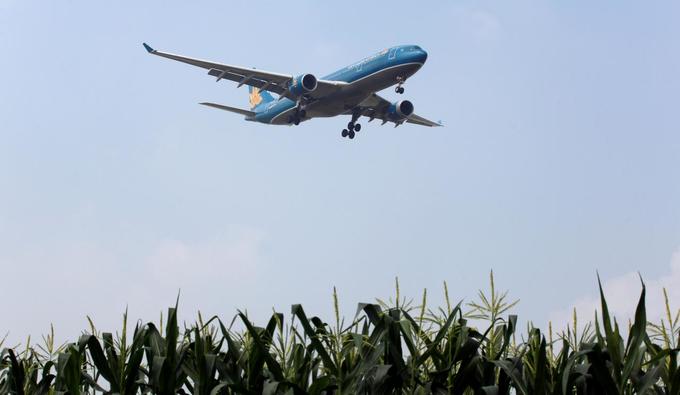
    Vietnamese carriers are confronting major financial challenges as revenues plunge and debt soars. They need urgent government intervention to improve their cash flow, a report says.

    Since Covid-19 entered the country early last year, airlines revenues have plunged by 80-90 percent, according to a recent report by the Vietnam Aviation Business Association (VABA).

    National flag carrier Vietnam Airlines posted a loss of nearly VND5 trillion ($219 million) in the first quarter, the highest quarterly loss ever, and the Ministry of Planning and Investment has said that the company is on the verge of bankruptcy.

    Budget airline Vietjet is short of VND10 trillion to cover its expenses, and startup airline Bamboo Airways shares the predicament.

    The VABA report proposes that the government extends its support on airlines’ loans to include those registered since June 10 last year.

    The current support, including a delay in payment and a reduction in interest, only applies to loans recorded before that date.

    The report also proposes that the support lasts for three to six months after the government announces that the Covid-19 pandemic has ended or the country turns to “a new normal.” The carriers need time to recover after the pandemic has been contained, the report says.

    In the first seven months of this year, Vietnamese carriers served 13.7 million passengers, down 32 percent year-on-year, according to the General Statistics Office.

  • Expats Pay Packages Fall in Singapore, Hong Kong

    Expats Pay Packages Fall in Singapore, Hong Kong

    Expat packages have taken a hit as a result of lower cost of benefits and a dip in salaries.

    The average pay package for a mid-level expatriate in Singapore fell by $7,284 a year, and now stands at $225,171 annually – the 17th highest in the world, ECA International said.

    However, cash salaries in the republic stand at the fifth-highest globally, and the city holds the title of the location offering the best quality of living, the global mobility specialist said in its annual MyExpatriate Market Pay report, published this week.

    Expatriate packages comprise three main components: the cash salary, benefits such as accommodation, international schools, utilities, or cars, and tax.

    While expats take home less, the latest rankings are expected to increase the country’s attractiveness to expatriates and companies looking to set up regional hubs in the country, given the cheaper cost of employing expatriate staff, Lee Quane, Regional Director – Asia at ECA International, said.

    Elsewhere, expatriate pay packages in rival regional financial hub Hong Kong dropped by over $5,000 over the last year, to a new average total of $279,399, despite an average salary increase of $265, largely due to falling accommodation costs.

    Globally, Japan was the most expensive location to send workers to, overtaking the United Kingdom, with the average expatriate package there costing $405,685.

  • Tesla Plans To Deploy FSD Software To Public In Four Weeks

    Tesla Plans To Deploy FSD Software To Public In Four Weeks

    Tesla has said that it plans of releasing the final version of its full self-driving software to the public in a month’s time. As of now it is still in a beta stage being tested by internal Tesla employees and members of the beta program. This program has been ongoing for almost a year now. This software is different from AutoPilot as it allows the car to drive by itself using computer vision on highways and city streets. This, however, is still considered to be level 2 autonomous system.

    Recently, Tesla’s CEO revealed that the current beta build of the FSD software 9.2 isn’t great but he has noticed great improvements in the 9.3 software which is he already using. Elon Musk had stated that the program will come out of beta once it hits version 10. The FSD software has been promised to users who have opted for the FSD package. This release has been in limbo for a while.

    Now, Musk has announced plans to accelerate the release stating that v10 of the software will be pushed to early access members in a beta stage next week. Musk expects testing for the v10 build to last 4 weeks before a wider release.

    “We should be there with Beta 10, which goes out a week from Friday (no point release this week). It will have a completely retrained NN, so will need another few weeks after that for tuning & bug fixes. Best guess is a public beta button in less than 4 weeks,” he said.

    This release is going to be an over-the-air update for the folks who have purchased the FSD package and will be downloadable by a push of a button. Tesla has moved to a full vision-based system for its autonomous technology using cameras on its cars that ping back some data to its Dojo supercomputer which trains algorithms using a neural network. Tesla’s process the information based on these algorithms in real-time using a the FSD chip that’s present on many of its vehicles.

    Tesla will deploy the next generation of its FSD hardware next year with a new chip and camera system that Musk says will debut with the Cybertruck.

  • Banks Put Kibosh on Adult Content, OnlyFans Says

    Banks Put Kibosh on Adult Content, OnlyFans Says

    The content platform defended its ban on pornography, saying it had been prompted do to so because of difficulties getting financial services if it didn’t.

    OnlyFans banned pornographic content after being denied interbank wires by banks including New York-based BNY Mellon, the London-based start-up’s founder-CEO Tim Stokely said in an interview.

    The decision unleashed a maelstrom among an estimated 2 million content creators – many of them women – who make a living by selling adult content on the platform. Performers like Blac Chyna reportedly earn millions monthly from OnlyFans subscription-based plans.

    Sites like OnlyFans are meant to hand creators – especially women – more control over their own content and revenue. An increasing wariness by financial services firms to cater to adult content complicates these efforts. The ban, effective from October 1, is seen as a war on pornography.

    Stokely, the CEO, said banks had made OnlyFans’ life difficult by holding up payments. «We pay over one million creators over $300 million every month, and making sure that these funds get to creators involves using the banking sector.»

    Stokely said J.P. Morgan was «particularly aggressive in closing accounts of sex workers or…any business that supports sex workers.» OnlyFans’ reported 130 million consumers largely use it for porn, though the platform has tried to push other entertainers like fitness influencers or musicians. Celebrities including Cardi B have also recently joined.

    Stokely is the son of ex-Barclays investment banker Guy Stokely. OnlyFans’ finance chief is John Carlyle, a former Lehman Brothers and J.P. Morgan banker.

  • Citi Eyes Crypto Opportunities

    Citi Eyes Crypto Opportunities

    The U.S. bank joins its peers in ramping up crypto-related efforts as client demand spikes  Citi is awaiting regulatory approval to trade bitcoin futures on the Chicago Mercantile Exchange (CME), Coindesk reported on Wednesday, citing two sources, including one at the bank.

    One of the sources said the bank is actively recruiting traders to its London crypto trading desk to begin working with bitcoin futures, though Citi denied this in a statement to «Insider.» It also denied that it was looking into products like bitcoin exchange-traded notes.

    We are presently considering products such as futures for some of our institutional clients, as these operate under strong regulatory frameworks, a spokesperson told the publication.

    Citi’s Wall Street rivals have shown increased interest in the space of late. Goldman Sachs reportedly restarted its crypto trading desk in March to deal bitcoin futures and non-deliverable forwards to support clients like hedge funds. In June, it also announced plans to offer options and futures trading in ether, and in July, its asset management unit filed for an application with the U.S. Securities and Exchange Commission to offer an exchange-traded fund (ETF) focused on crypto-related companies.

    J.P. Morgan opened access for its wealth clients to five related funds and BNY Mellon joined a crypto consortium that includes State Street and six unnamed banks.

    In July, Bank of America’s prime brokerage unit started the clearing and settlement of cryptocurrency exchange-traded products (ETPs) for hedge funds in Europe.

  • 95 pct made-in-Vietnam auto parts for foreign brands

    95 pct made-in-Vietnam auto parts for foreign brands

    Nearly 95 percent of auto parts produced in Vietnam are for foreign brands, showing a lack of localization in the industry.

    Of the 287 items that have been approved by the Ministry of Science and Technology as of Aug. 17, 15 were registered for VinFast cars.

    The rest were all for foreign brands. A total 226 were for Toyota, 15 for Ford and 10 for Honda.

    This means Toyota accounts for nearly 79 percent of the registered items.

    None of these items include parts for Hyundai and Mazda vehicles, although TC Motor (which assembles Hyundai cars) and Thaco (which assembles Mazda cars) have both previously affirmed they had “high” localization rates.

    TC Motor claims the rate at around 20 percent.

    Most parts are frames, chairs, and wires that are considered basic. There are no complicated parts like engines and gearboxes.

    Vietnamese officials have been calling for a higher localization rate of cars produced in the country for over two decades but the target has not been achieved.

  • Aldi tops Australia supermarket rankings

    Aldi tops Australia supermarket rankings

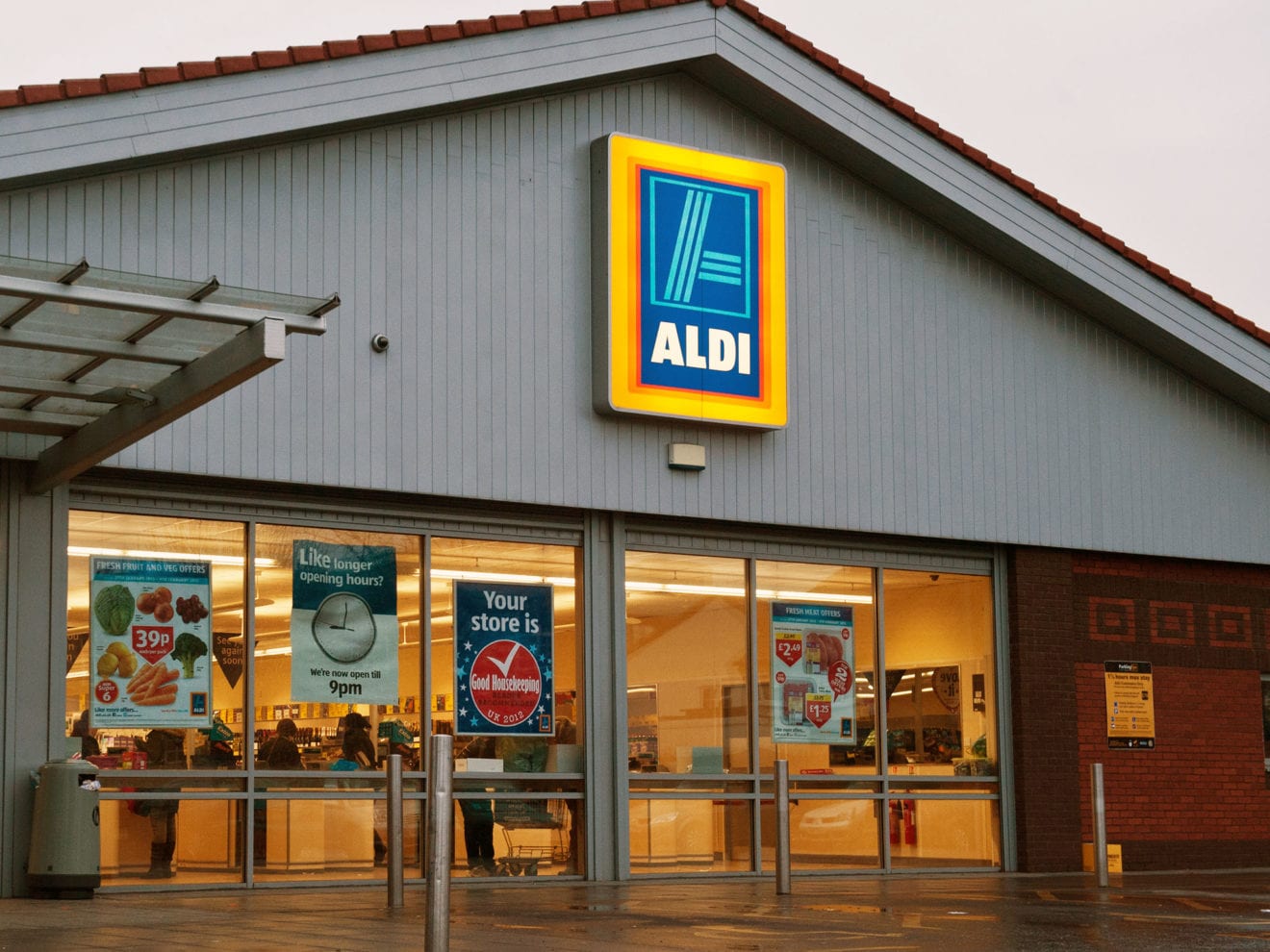
    For another year in a row, ALDI has rated best in Canstar Blue’s 2020 supermarket ratings – taking the top spot in Canstar Blue’s Most Satisfied Customers Award for 2020.

    In Canstar Blue’s latest supermarket review, the survey asked more than 2,600 shoppers about their experiences of buying groceries from a retail supermarket in the last month.

    This year, ALDI stocked up its seventh win in nine years. It rated best for the freshness of its fruit, vegetables and meat, the quality of private label products, store layout, deals and specials available, value for money and overall satisfaction.

    “We are thrilled to be rated as Australia’s best supermarket! Winning the hearts of our customers is what we strive for every day. Our commitment to providing the highest quality products at incredibly low prices is clearly being noticed by Australian shoppers. This is a proud moment for ALDI and our many Australian business partners,” said ALDI Australia Group Director – Buying Simon Padovani-Ginies.

  • Allen’s celebrates 130th anniversary with Party Fave mix

    Allen’s celebrates 130th anniversary with Party Fave mix

    Allen’s has kicked off its 130th birthday celebrations with the launch of two new party-inspired lolly packs, Allen’s Party Faves and Allen’s Piñata Party.

    The team at Allen’s has created more than 1,000 different types of lolly over the last 130 years – lovingly made in Victoria since 1891. Some of the more unusual lollies included a jelly tongue and a giant jelly rat.

    Australians’ favorite Allen’s lollies are Snakes Alive and Party Mix. Around 240 million Snakes Alive are made in a year and if you lined them up head to tail, they’d stretch 36,000km – enough to wrap around the moon three times or right around the world at least once.

    The new Allen’s Party Faves pack is filled with lolly flavors including chocolate cupcake, strawberry fairy floss, and green apple icy pole – all inspired by favorite party moments.

    Meanwhile, the new Allen’s Piñata Party is filled with fruity-flavored piñata animals, including blackberry llama, strawberry flamingo, and lemon dinosaurs.

    Nestlé Head of Marketing Confectionery, Joyce Tan says Allen’s lollies are the perfect addition to celebrations big or small.

    “Making Aussies smile has been our passion for the last 130 years, thanks to our great-tasting and much-loved lollies. Many Australians have a special Allen’s story and favorite lolly, so we can’t wait to see the smiles on Australians’ faces when they discover these creations for our 130th birthday celebration.”

    Allen’s Party Faves will be available through the petrol and convenience channel from September. Piñata Party is exclusive to Coles.

    The Allen’s 130th Birthday celebrations will continue over the coming months with more iconic collaborations on the horizon.

  • StanChart Exec Joins Blockchain Startup

    StanChart Exec Joins Blockchain Startup

    Taipei-headquartered XREX has named a managing director in Singapore as it sets its sights on expanding its platform in the region.

    Taipei-headquartered XREX has appointed Christopher Chye as managing director of XREX Singapore and director of product. In this dual role, he will oversee XREX’s businesses and operations in Singapore and play an instrumental role in bringing new value propositions to XREX’s clients, the startup said on Tuesday.

    Chye joins from Standard Chartered Bank, where he held roles in commercial banking, consumer banking, wealth management, and financial crime compliance. He was also a pioneer of Standard Chartered’s digital bank venture in Singapore, where he led the bancassurance, rewards, and loyalty, and brand and marketing pillars, and was executive director at its regional CEO office. He was previously a  management consultant with KPMG.

    In a separate announcement, XREX said it raised $17 million in pre-Series A funding led by CDIB Capital Group. The funds will be used to apply for financial licenses in Singapore, Hong Kong, and South Africa, and partner with banks and financial institutions, like payment gateways.

    Many of our team members are from or have lived in the markets where we serve. We keenly understand the struggles faced by many cross-border merchants who lack safe access to US dollar liquidity,» XREX CEO and cofounder Wayne Huang, said.

    XREX was launched in 2018 to drive financial inclusion in emerging markets by leveraging blockchain technology.

    The company uses blockchain technology to solve dollar liquidity shortage issues in emerging markets and has products like a payment escrow service and crypto-fiat exchange platform.

  • Lazada merges logistics divisions under new name

    Lazada merges logistics divisions under new name

    E-commerce player Lazada, which is now majority-owned by Alibaba, is confident that its expertise in Southeast Asian markets can counter the looming threat from Amazon’s much-anticipated entry into the region, a top executive said.

    Last year, TechCrunch reported that Amazon had planned to launch local e-commerce services in Singapore in the first quarter of 2017. But earlier this year, the news site cited sources and said Amazon’s much-anticipated entry was postponed.

    Aimone Ripa di Meana, co-founder and chief marketplace officer at Lazada, said the company’s on-the-ground knowledge about each of the six regional markets in which it operates, its logistics network, and the backing from Jack Ma’s Alibaba Group will be advantageous in the face of competition.

    “We feel very confident about what we’ve built so far — we have a very unique approach to business,” Meana said. “Having built teams that have been with us for a long time that function in a very organic way that knows the markets, know the complexities that are in each market, which can’t easily be replicated. I don’t think knowing how to do (business in) Singapore is in any way relevant to how you build your business in the Philippines or Indonesia.”

    He explained that the differences in each Southeast Asian market went beyond people and languages spoken. It involved things including the infrastructure set-up in each country to facilitate logistics and delivery, how the syntax of each local language affected the way search worked and also the behaviors of small and medium enterprises in listing their products and structuring their catalogs.

    But the region is still lucrative for e-commerce as millions of first-generation internet users embrace online shopping. A frequently cited study from Google and Singapore investment firm Temasek Holdings predicted the region’s internet economy to grow to $200 billion by 2025, driven mostly from growth in e-commerce. Meana said Alibaba’s investments into Lazada, and the speculation surrounding Amazon’s eventual push into the market, underscored the potential of the region.

    “We are in a market that is at the beginning of its curve,” said Meana. “While obviously the numbers are vast and exciting, I think the opportunities that lie ahead are much larger than anything that’s been built behind us.”

    To be sure, Amazon has aggressively invested in markets outside the U.S. to grow its stake. For example, reports in India said Amazon has invested more than $2 billion to-date to compete with local e-commerce players Flipkart and Snapdeal.

    Earlier this year Alibaba upped its stake in Lazada from 51 percent to about 83 percent, with over $2 billion invested into the company. Its affiliate Ant Financial, earlier this year, merged with Lazada’s helloPay platform to bolster payments processing capabilities.

    The backing allowed Lazada to move into Alibaba’s ecosystem and make use of all of the innovation and features for sellers on their platform, said Meana. Those include offerings like a business intelligence portal and new promotional features that allow sellers to create shop decorations in the same way they would’ve done for an offline business.

    To offer consumers more variety, Lazada launched its Taobao Collection store that curates and sells about 4 million products in English from Alibaba’s Taobao marketplace — which is inaccessible to many non-Chinese speaking consumers in Southeast Asia.

    Logistics operations, which Meana said is a key differentiator for Lazada, also benefit by tapping into Alibaba’s technology, processes and approaches to delivery. Currently, Lazada has about 100 logistics partners in the region and its operations are split into two areas of business: last-mile delivery and a control tower that coordinates the most effective means of delivering parcels from merchants to customers.

    “For a consumer or merchant, this is completely seamless. They don’t need to make decisions or choices — all that is done by us, and in turn what that means is, a number of players that were maybe too small to catch the trend, that weren’t able to enter e-commerce, are now being able to leverage our infrastructure and be part of this phenomenal growth that we’re seeing in e-commerce,” he said.

    Delivery speed is another way that many online retailers attempt to differentiate themselves. For a region like Southeast Asia, Meana explained that fast delivery was not always feasible. That is, cross-border e-commerce, a growing part of Lazada’s business, means consumers are more willing to wait for their parcels, he said.

    Ultimately, Meana said, it’s about maintaining a balance between being local and nimble — required for most online marketplaces — in multiple countries and having a regional structure to grow the business.

    “That’s clearly one of the great learnings of having built Lazada over the past five years — the interplay between having this regional structure and the economies of scale and scope to get there and then maintaining the nimbleness of the market,” he said.

    “It’s not an easy balance, but it’s something that we’ve invested a lot of time to get to and I don’t think it’s acquired or built in a day.”
  • Indonesia’s Bank Central Asia Targets Digital Growth

    Indonesia’s Bank Central Asia Targets Digital Growth

    Banks are playing catch-up to technology players in one of the world’s largest unbanked markets.

    Bank Central Asia (BCA) is boosting its digital capabilities amid increased competition from tech players in the banking space, according to a «Bloomberg» report on Wednesday.

    Indonesia’s biggest lender by market value will be investing $200 million to help its month-old digital unit Blu to increase market share ahead of an initial public offering in two years’ time. Blu currently has about 110,000 customers.

    BCA is targeting a fourfold increase in its capital, to four trillion rupiah (S$376.5 million), and is focused on gaining more customers, partners and merchants on its digital platform before the IPO, BCA president director Jahja Setiaatmadja told the publication.

    The country has an unbanked market of 83 million people, or about one-third of the population, and while traditional players have found it tough to expand across the archipelago nation, technology players have an advantage in their ease of scaling operations to meet this demand.

    Indonesia-headquartered super-app Gojek increased its stake in Bank Jago in December 2020 as part of its bid to accelerate financial inclusion in Asia, while Singapore-based e-commerce and gaming company Sea, which recently won a licence to run a digital bank in Singapore, bought unlisted lender Bank Kesejahteraan Ekonomi in January.