Author: Mei Ling Tan

  • UBS Launches Wealth Management JV in Japan

    UBS Launches Wealth Management JV in Japan

    UBS and Sumitomo Mitsui Trust further their two-year alliance with the latest launch of a wealth management joint venture in Japan.

    UBS and Sumitomo Mitsui Trust Holdings (SMTH) has launched operations under joint venture UBS SuMi TRUST Wealth Management, according to a statement, across Japan in Tokyo, Osaka and Nagoya.

    The new company is the first in Japan to offer global securities and wealth management capabilities paired with custody, real estate, inheritance, and wealth transfer expertise of a Japanese trust banking group, UBS said.

    UBS and SMTH first announced the establishment of a wealth management alliance in June 2019.

    Soon thereafter, the two groups established a consultation and event organizing company to identify prospective new clients and began cross-selling each other’s products into their respective client bases.

    We knew that with a powerful partner specialized in this unique trust banking market, we could multiply the success we have already achieved organically,» said Victor Chang, UBS SuMi TRUST Wealth Management’s president and representatives director as well as the Japan head of wealth management. «No other wealth manager in Japan boasts the same breadth and depth of our services, not to mention global reach.

  • World’s first Oreo cafe launches in US

    World’s first Oreo cafe launches in US

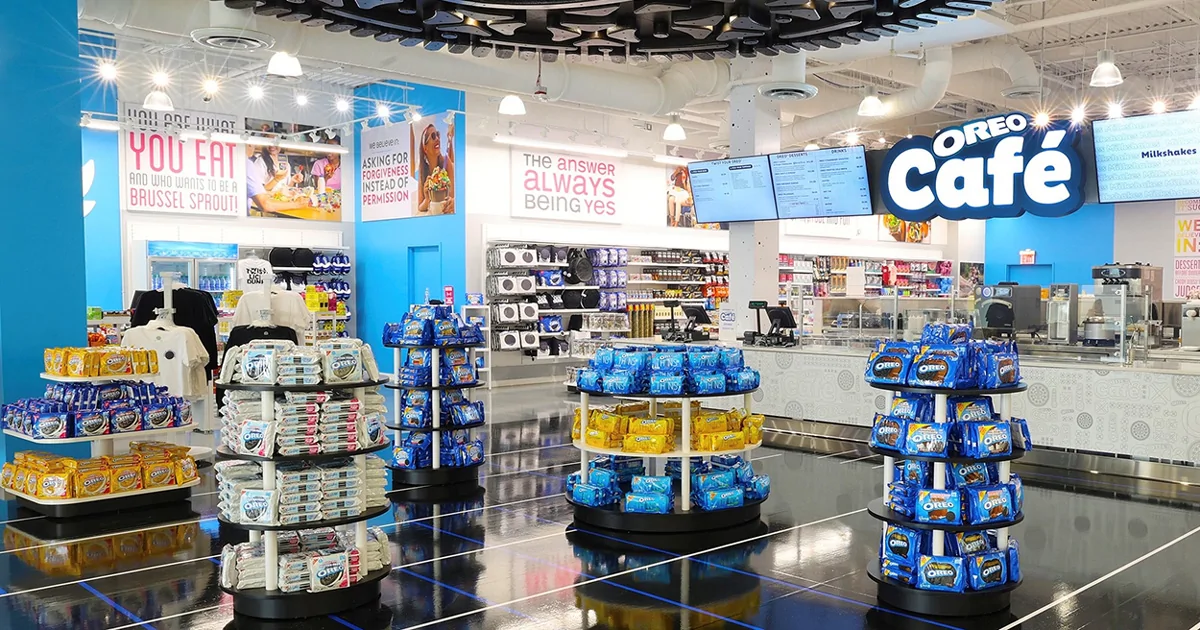
    A sweets shop at New Jersey’s American Dream mall just got even sweeter. The first-ever Oreo cafe opened last week on the top floor of the candy department store IT’SUGAR, a candy and gift shop that measures 22,000 square feet across three levels. The store features a menu of Oreo-inspired desserts, including do-it-your-self customizable treats, and limited-edition cookie merchandise.

    Located in the Meadowlands complex in East Rutherford, American Dream is a 3 million square foot commercial and entertainment center that opened in 2019 after nearly two decades of delays.

    In addition to dozens of retailers and food vendors, the mall includes DreamWorks Water Park, the largest indoor water park in North America, a Nickelodeon Universe Theme Park, an indoor ski and snow resort, LEGOLAND, an aquarium, mini-golf, and more.

    The immersive Oreo cafe includes a treats bar where visitors can customize sweets or pick from the menu of Oreo desserts, like a Waffle Sundae with baked-in Oreo pieces and Oreo cookies & cream cheesecake with Oreo cookie mousse.

    Visitors can build their own treats by choosing a dessert base, which can be a waffle, ice cream sandwich, cone, or milkshake, and then pick from more than a dozen toppings. According to the shop, there are over 200 possible combinations. Lovers of the famous cookie can even purchase Oreo products and merchandise, like tote bags, apparel, and home decor.

    The Oreo cookie actually has roots in the area. Just across the Hudson River, the cookie was invented at the former Nabisco factory, the present-day site of Chelsea Market. Nabisco wanted to create a cookie to compete with Hydrox, a creme-filled sandwich cookie. The company’s lead food scientist Sam Porcello created the recipe for the filling and the Oreo Biscuit was first sold to a grocer in Hoboken in 1912. Today, over 60 billion Oreo cookies are sold each year around the world.

  • India Considers Sharp Import Tax Cuts On EVs After Tesla Lobbying

    India Considers Sharp Import Tax Cuts On EVs After Tesla Lobbying

    India is considering slashing import duties on electric cars to as low as 40%, two senior government officials told Reuters, days after Tesla Inc’s appeals for a cut polarised the country’s auto industry. For imported electric vehicles (EVs) with a value of less than $40,000 – including the car’s cost, insurance and freight – the government is discussing slashing the tax rate to 40% from 60% presently, the officials told Reuters. For EVs valued at more than $40,000, it is looking at cutting the rate to 60% from 100%, they said.

    “We haven’t firmed up the reduction in duties yet, but there are discussions that are ongoing,” one of the officials said. India is the world’s fifth-largest car market with annual sales of about 3 million vehicles but the majority of cars sold are priced below $20,000. EVs make up a fraction of the total and luxury EV sales are negligible, according to industry estimates.

    Tesla, in its pitch to the government – first reported by Reuters in July, argued that lowering import duties on EVs to 40% would make them more affordable and boost sales. This triggered a rare public debate among automakers over whether such a move would contradict India’s push to increase domestic manufacturing. Even so, the government is in favour of a cut if it can see companies such as Tesla providing some benefit to the domestic economy – manufacture locally, for example, or give a firm timeline on when it would be able to, one of the officials said. “Reducing import duties is not a problem as not many EVs are imported in the country. But we need some economic gain out of that. We also have to balance the concerns of the domestic players,” the official said.

    Tesla CEO Elon Musk said on Twitter last month that a local factory in India was “quite likely” if the company was successful with vehicle imports but taxes on them are high. The second official said that since the duty cut is being considered only for EVs and not other categories of imported cars, it should not be a concern for domestic automakers – that mainly manufacture affordable gasoline-powered cars.

    India’s finance and commerce ministries, as well as its federal think tank Niti Aayog, chaired by Prime Minister Narendra Modi, are discussing the proposal and all stakeholders will be consulted, the person added. Both sources did not want to be identified as the discussions are still private. India’s commerce and finance ministries as well as Niti Aayog did not immediately provide comment.

    Automakers including Daimler’s Mercedes-Benz and Audi have for years lobbied for lower import duties on luxury cars but faced strong resistance mainly from domestic companies. As a result, India’s luxury car market has remained small with average sales of around 35,000 vehicles a year.

    Tesla’s demands have found support from Mercedes as well as South Korean automaker Hyundai Motor, which has around an 18% share of India’s car market.

    Tesla’s cars would fall into the high-end EV category, which are mainly imported into India and account for a much smaller percentage of sales. Mercedes, Jaguar Land Rover and Audi sell imported luxury EVs in the country.

    This time Tesla’s demands have found support from Mercedes as well as South Korean automaker Hyundai Motor, which has around an 18% share of India’s car market.

    Opposing the proposed cut are Tata Motors, which produces affordable electric cars in the country, and Softbank Group-backed Ola, which is making electric scooters in India.

    A third source familiar with the government’s thinking said there was awareness that a brand such as Tesla can make electric cars more penetrable in India, which is lagging other major auto markets in EV sales.

    The government is thinking about the best way to approach this and they want to see some benefit even if that only means Tesla pledges to source parts domestically, the person said.

  • All-New Lamborghini Countach Teased

    All-New Lamborghini Countach Teased

    The Lamborghini Countach is said to be one of the most beautiful cars to have ever been designed. Pre-dating the iconic Lamborghini Diablo, the Countach was designed by the legendary Italian car designer Marcello Gandini and production of the Countach LP 400 started in 1974 and lasted till 1990, when the 25th anniversary edition of the model was manufactured. Its wedge-shape and the scissor doors are considered to be some of the most iconic automotive design to have ever been created! But why are we harping about the Countach? That is only because Lamborghini has teased a brand-new Countach and we can’t keep calm.

    All that we know is there’s a wedge-shaped car, shrouded in mist and kept under covers. There is absolutely no other detail available! Whether it will have a V12 or will it be a hybrid. Will it be a one-off concept model or will it be a full-fledged production car? There are a lot of questions that are begging to be answered, but all in due time, says Lamborghini!

    The model under wraps reveals a roofline, which seems to be higher than that of the old Countach. Also, there is a pronounced cut back towards the rear. The front windscreen seems to be really angular, but not as much as the old model. Whether, it is a concept car, a one-off model or a production car, we believe it to be a modern interpretation of the Countach. Now that sportscar was a global icon, a masterpiece in its own right and a reinterpretation/follow-up of the Countach over three decades after the last model was manufactured is something that Lamborghini must carefully tread upon.

    Nonetheless, we are waiting with bated breath for Lamborghini to unveil the all-new Countach!

  • Audi India To Launch At Least Three More Cars This Year

    Audi India To Launch At Least Three More Cars This Year

    German luxury carmaker Audi is likely to launch at least three more cars in India this year. The company launched the new Audi RS 5 Sportback in India, its fifth model after the A4 facelift, S5 Sportback, the all-electric e-tron and e-tron Sportback. During a post-launch interaction, Balbir Singh Dhillon, Head of Audi India hinted that the Ingolstadt-based carmaker has a strong product strategy in place for India, and as many as three more launches can be expected before the end of 2021.

    When asked about upcoming product launches Dhillon said, “Last month we did three cars launches, and (RS 5 Sportback) this month, and very soon we’ll again be facing each other with another launch, then another launch, and then another. So, successively you’re going to see many more cars coming.” In July Audi launched two variants of the all-electric e-tron – e-tron 50 and e-tron 55, along with its coupe version, the e-tron Sportback 55. And this month, the company has launched the Audi RS 5 Sportback.

    While Balbir did not mention which models are coming to our shores, we can expect at least one of them to be an electric car. In July, post the launch of the e-tron range, Dhillon told carandbike that the company will bring at least one more electric car to India this year. While details regarding the upcoming EV model were not shared, globally the e-tron GT and the RS e-tron GT four-door coupe sedans are the only electric models on sale, apart from the e-tron SUVs. So, chances of one of them, or both coming to India are very much plausible.

  • Google is bringing a huge change to the Play Store

    Google is bringing a huge change to the Play Store

    As of this month onwards, Google is completely changing the game when it comes to the development and functionality of applications published on the Google Play store.

    Until now, most Android apps have been submitted to the Play Store packaged in the traditional APK format, or Android Package Kit. In this form, an app is packaged into one single bundle that goes up on the Play Store, and is then downloaded in that same compact form to desiring Android customers, with all the odds and ends included.

    As simple as it sounds, this is hardly the optimal delivery standard, mainly because it may burden the user with much more than they will need or use on their particular device.

    From August 1, however, Google is obligating Android software developers to deliver all their applications via the newer AAB (Android App Bundle) framework. The good news is that the shift won’t constitute a huge hassle for developers, as they don’t have to change too much on their end between the two standards.

    Now, you may be thinking that this probably only concerns developers, and won’t affect the everyday end user—but that would be far from the truth. The new app delivery format allows for much greater compartmentalization of components within the app, prioritization, and optimization in order to deliver the smoothest experience to whichever Android device you are using.

    Here is what this all means:

    1. No unnecessary app clutter

    In the older APK format, if a developer wanted their Android app to be usable on multiple Android device types (smartphones and tablets, for example), they would go one of two routes. In the first scenario, they would create all the necessary particularities and differing graphics for each device that will use the app, and bundle them all together into a single application on the Play Store.

    When a user downloads the APK app on their phone, then, they often end up with unnecessary odds and ends that are particular to other devices, which they’ll never use or need on their own phone.

    Alternatively, developers could also create and publish separate APK’s for each Android device the app will be run on, but that’s obviously inconvenient and a general hassle.

    But with apps bundled in the AAB framework, the Play Store is able to smartly split up the bundle into separate APK’s, recognizing which one is right for your device, and thus only downloading what’s necessary. These optimized APK’s are 15% more compact than their old counterparts, Google claims.

    2. Effective Compartmentalization

    The AAB framework allows apps to be broken down into components with differing targets and priorities, which may be downloaded one at a time to the end user, as needed. The Play Store will then automatically know which version or components to deliver to a user’s specific device, without cluttering them with unnecessary packages.

    Games or other heavier, multi-layered apps will also have the ability to be downloaded to your phone part by part, as the need arises. If you start a new graphics-heavy game, then, the Play Store could download it to your device level by level (or a few levels at a time), for example—so you don’t have to bother with insane loading times every time you open the app.

    Developers also have the freedom to play around with optional add-ons, such as augmented reality—which may work on some devices but not others—which come separately and are only downloaded to the appropriate device, when needed.

    3. Reduced load on cheaper phones

    While the Google Play Store changes will certainly streamline the average app user experience even on the newest of flagships, those with older or slower phones should see a significant difference in load times and reduced device strain.

    Because older or low-tier phones generally have weaker processors and less storage space, they will see the biggest improvement in the way newer AAB apps behave.

    Google created AAB in 2018

    The new AAB format was actually launched along with Android 9 in 2018, and has been free for developers to use at their own discretion this whole time. It’s also completely open-source and available for other application libraries to adopt if they choose.

    Google reports that already one thousand of the most popular apps are built on AAB’s, and there are already over 1 million live apps using the newer format.

    While AAB is not a novel framework in and of itself, with the new requirement that all Google Play apps be submitted in AAB’s, Google is simply enforcing the already trending, more efficient format across the Android platforms for the benefit of the end user, and at no serious cost on the development side.

    Traditional APK’s that are already on the Play Store will stay and work just fine, as only future apps will be impacted.

    The one downside, as noted by Wired, is that because AAB is Google’s handiwork, and Google controls the full packaging and verification process, the tech giant is tightening the rains on the Play Store ecosystem, wielding complete control over app distribution in the foreseeable future.

  • Asia Assets Climb Higher at HSBC Private Banking

    Asia Assets Climb Higher at HSBC Private Banking

    Assets under management at HSBC Private Banking climbed higher, driven in part by more than $9 billion of net new inflows in the first half of 2021.

    Asia assets under management at HSBC Private Banking grew 25 percent to $193 billion in the first half of this year, according to a statement, driven in part by $9.3 billion of net new money inflows.

    This accounts for over 45 percent of HSBC Private Banking’s total assets under management worldwide at $427 billion, according to its recent interim report.

    In addition to private banking, HSBC also saw growth across its affluent segments in Asia – Premier and Jade – with a 7 percent increase in the number of affluent and higher net worth clients to 1.7 million.

    Asian wealth revenues in the first half increased 26 percent and account for much of global wealth revenue growth.

    Asian wealth balances – the sum of client assets from HSBC’s Premier, Jade, and private banking segments – reached a new high of $810 billion and accounted for $49 percent of global assets.

    HSBC continues to pursue its ambitions of becoming a leading wealth manager by 2025.

    It has rolled out a series of mobile solutions and digital enhancements for wealth clients in key Asian markets.

    The bank also added around 600 full-time employees in the first half – including 350 personal wealth planners for its mainland China mobile services HSBC Pinnacle with plans to add another 100. The bank said it is on track to hire over 1,00 client-face wealth staff in Asia by the end of 2021.

    The positive momentum of our Asian Wealth business this year shows the traction we are seeing on-the-ground with our clients, as we forge ahead with our considerable investments in technology, products, and people,» said APAC regional head of wealth and personal banking Greg Hingston.

  • Retail coffee prices to climb as frost and freight costs bite

    Retail coffee prices to climb as frost and freight costs bite

    A massive shipping logjam caused by the most devastating frost in decades in Brazil and record freight costs wrought by COVID-19 in top coffee producer Brazil is expected to push retail prices to multi-year highs in the coming weeks. have hope.

    A rise in coffee prices will further increase the cost of the shopping cart for other items such as bread, vegetable oil and sugar. The United Nations Food Agency’s index of world food prices for July saw a 31% year-on-year rise at a time when many consumers are struggling financially because of the pandemic.

    The worst cold snap since 1994 in Brazil sent the price of green coffee beans to the highest level in nearly seven years and is expected to pass on to consumers when they buy roasted beans or ground coffee at supermarkets.The price of Arabica coffee on the ICE Futures US exchange has more than doubled in the past 12 months and crops in Brazil have already dried up after the worst drought in 91 years.

    The extent of the damage is still being assessed, but it could take up to seven years for production to fully recover in areas where there are no coffee trees left.

    Shipping disruptions, partly due to increased demand for consumer goods and not enough ships as people stayed home due to the global coronavirus pandemic, have led to a sharp increase in the cost of transporting beans to major consumer countries in North America and Europe. is of. .

    With merchants believing that consumers will soon have to pay more to buy coffee from supermarkets, the price of a latte or Americano at high street coffee chains may not follow suit in the short term.

    “The roast and ground (coffee at the supermarket) only has coffee and a little packaging. Your coffee at Starbucks can’t go up (as much) because you pay more for the shop, the wifi, the experience,” he said.

    Data released by the US Bureau of Labor Statistics showed ground coffee prices rose to $4.75 a pound in April, up 8.1% from a year earlier and the highest level since July 2015, as a drought-hit Brazil. had an early effect on crops.

    Arabica coffee prices on the ICE Futures US exchange rose sharply, however, after the recent frost and retail prices are sure to increase in response.

    In Brazil, the world’s number two consuming country after the United States, prices of roasted and ground coffee rose 3.4% in June, according to the statistics office IBGE.

    They are sure to grow further. Following the July frosts, Brazilian coffee industry group Ebique asked roasters to analyze their costs and adjust prices accordingly to maintain the stability of their businesses.

    Ebic estimates that green coffee prices for roasters in Brazil have increased by about 80% from the end of December to July.

    “Some companies, including market leaders, have already announced price increases,” Ebic said in a letter to affiliated roasters seen by Businesshala.

    JDE Peet’s, whose brands include Douwe Egberts, Kenko and Peet’s, said there has been a sharp increase in material, freight and other costs over the past 12 months.

    “Historically, significant fluctuations in green coffee prices have been reflected in the market (retail prices) and we expect this precedent to continue,” the company said.

    An increase in transportation costs, coupled with a shortage of shipping containers, can play a major role in driving up prices. Coffee is typically shipped in containers, as opposed to items such as cereals, which are transported in bulk carriers.

    Many coffee companies find it easier to cope with an increase in the cost of beans, at least in the short term, than to increase shipping costs because they often price their purchases several months in advance.

    Mark Schneider, chief executive officer of Nestle, recently said, “We’ve been hedging here for a good percentage of our coffee needs for the rest of this year and even part of next year, So I’m not worried about it.” Conference call, adding it was not in terms of transportation costs.

    Carlos Santana, coffee head trader at Aisa Intergricola, a unit of ECOM Trading, said it was very challenging to ship coffee specifically to the US.

    “It’s not nearly as economical to use this route right now. Ports are full in the US, shipping companies don’t want to move as much cargo there, so they charge more. Prices are three times higher than they were before the pandemic,” They said.

    Thiago Cazarini, a coffee broker in the Brazilian state of Minas Gerais, said despite paying very high prices to secure a container, exporters are having problems trying to load them into ships.

    He said the problem is widespread, affecting all players.

    One US coffee importer said, “Brazil is logically such a mess at the moment. I have coffee that arrived two months ago and haven’t received it yet.”

    Julian Thomas, managing director of Maersk Brazil (MAERSKb.CO), part of the world’s largest container shipping line, said: “The current bottlenecks of pandemic containment measures and a strong demand are also affecting supply chains in and outside Brazil. Is.”

    “We are still serving our customers and can meet their growing demand,” he told Businesshala.

    German container shipper Hapag Lloyd (HLAG.DE) said there were delays for shipping goods, “but not just coffee”.

    Brazil accounts for an estimated 30% of global exports and its peak shipment season has already begun.

    Additional reporting by Maytal Angel in London and Ana Mano in So Paulo; Editing by Veronica Brown and David Evans
  • Imported seafood prices skyrocket amid transport restrictions

    Imported seafood prices skyrocket amid transport restrictions

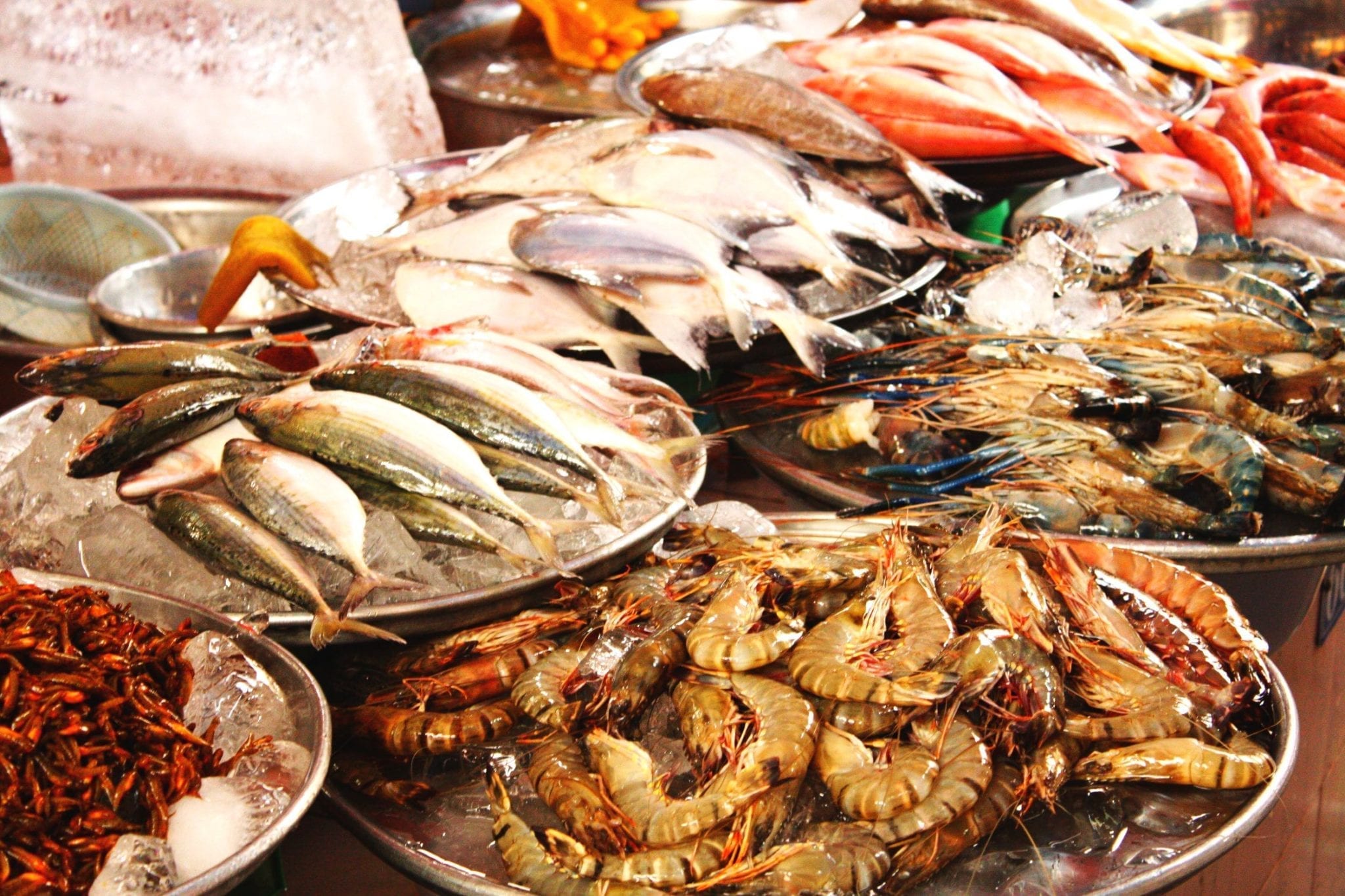
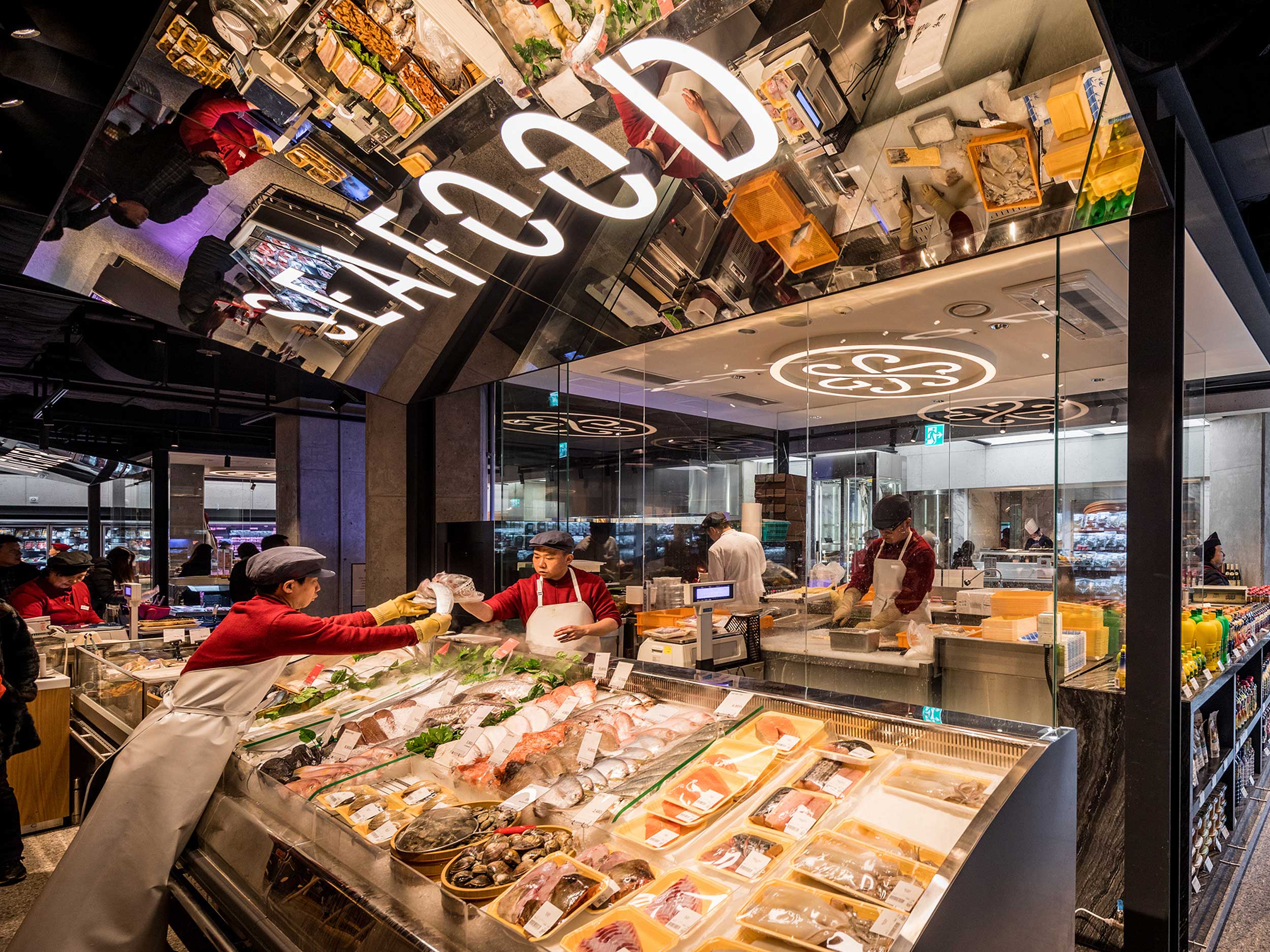
    The prices of imported king crabs and abalones have risen by 30-50 percent in HCMC due to limited supply caused by mobility restrictions.

    King crabs are sold at VND2.5-2.9 million ($109-126) per kilogram, 50 percent higher year-on-year.

    Australian and South Korean abalones are sold at 30 percent higher at VND1.6-1.8 million.

    Salmon prices are up 18 percent at VND650,000.

    A seafood importer who owns a restaurant in the city’s Tan Binh District blamed the price rise on a supply shortage, saying the semi-lockdown has made transporting seafood difficult.

    Another reason is the limited number of flights coming to Vietnam from abroad.

    Another importer said half the crabs died on the way to Vietnam due to flight delays, causing him losses. He has stopped selling for now.

    Tran Van Truong, CEO of seafood chain Hoang Gia, said flights from Norway to HCMC are rare and in most cases have to transit in other countries.

    Many sellers are increasing the sale of domestic seafood items such as red tilapia and squid to survive.

  • Adidas hit by China boycott, Vietnam factory closures

    Adidas hit by China boycott, Vietnam factory closures

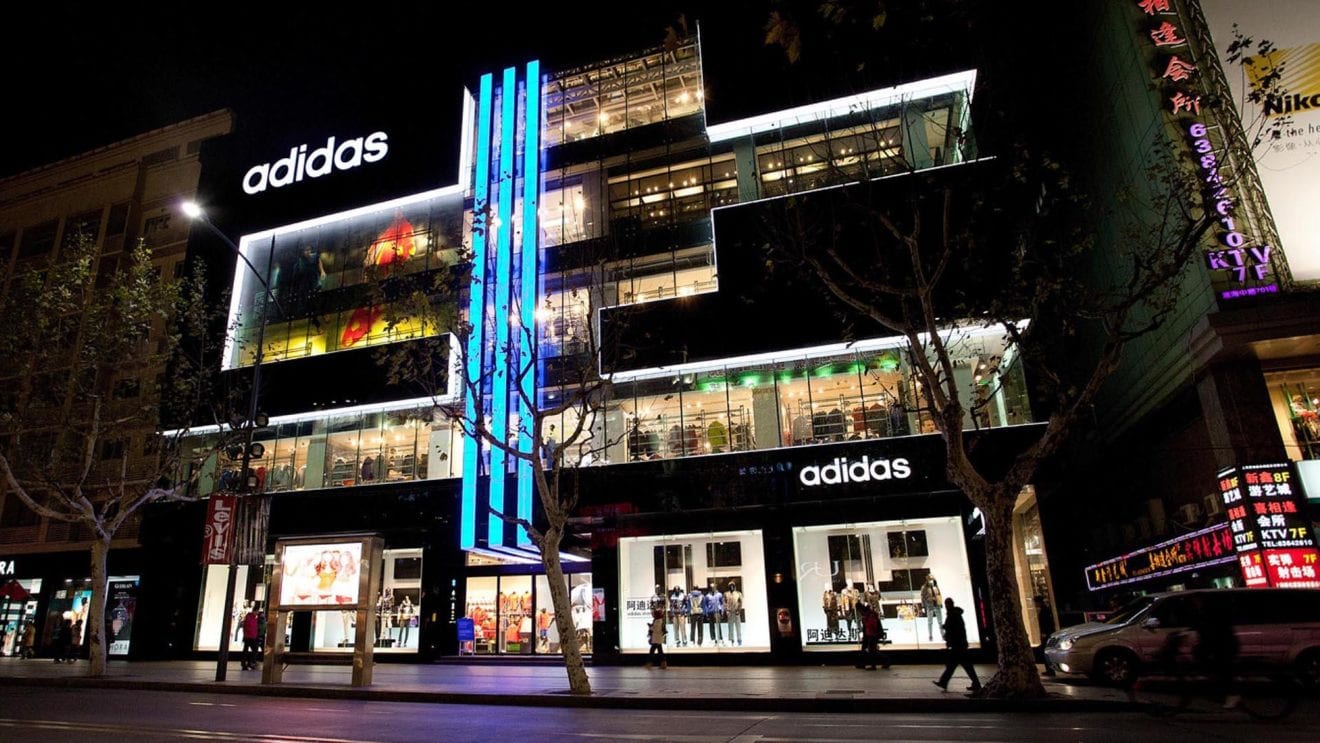
    Adidas felt the impact of a Chinese boycott of Western brands on its second-quarter results and is also suffering from the closure of factories in Vietnam due to Covid-19 infections.

    The German sportswear company still raised its outlook for full-year sales and profitability as it said it has seen demand recover in China since calls for a boycott in late March, and said it hopes to restore production in Vietnam soon.

    But Adidas shares were down 4.1 percent by 9:50 GMT as analysts noted that its growth was lagging rivals Nike and Puma, which both reported that sales nearly doubled in recent earnings releases.

    Second-quarter sales at Adidas rose 52 percent to 5.077 billion euros ($6 billion), while operating profit came in at 543 million euros, ahead of analysts’ average forecasts.

    Adidas raised its 2021 outlook to predict sales will grow up to 20 percent, and net income from continuing operations will reach 1.4-1.5 billion euros. That compared to Puma’s forecast for sales to rise at least 20 percent for 2021.

    Adidas already saw online sales return to growth in China in June, Chief Executive Kasper Rorsted told journalists, adding he expects the country to record strong growth for the full year and he welcomed a government drive to promote youth sport.

    The company hopes to be able to restart production in Vietnam after the scheduled end of a coronavirus lockdown on Aug. 15 and is working on reallocating production to other centres in the meantime.

    Vietnam usually accounts for 28 percent of Adidas sourcing and its factories mostly make shoes for the company, with a lag of three to four months before products hit the shelves.

    The combined impact of supply chain problems, new Covid-19 lockdowns in Asia and tensions with China could amount to more than 500 million euros in lost sales in the second half, said finance chief Harm Ohlmeyer.

    Ohlmeyer added he expects Adidas to seal a deal to divest the underperforming Reebok brand by the end of the summer.

  • Rising food prices make things harder amid Covid woes

    Rising food prices make things harder amid Covid woes

    Surging prices of essential goods are worsening the difficulties for people who have already been hit by job losses and travel restrictions.

    The last time Le Quang Hai of Hanoi’s Cau Giay District went to the market, the prices of eggs and most vegetables had doubled. He already could not afford meat.

    The price increases were a further financial burden for the 23-year-old delivery worker who has been unemployed for two weeks as his company cut the number of staff on authorities’ orders to limit the number of people commuting.

    His only income has been the VND1.5 million ($65) government support, which will soon run out.

    “I might have to borrow money from some friends as Hanoi has imposed social distancing for another two weeks. I hope the outbreak will be contained before I run out of money.”

    In Hanoi’s neighboring province of Hung Yen, Nguyen Hoang Yen, who tends plants in an apartment complex, has seen her work hours reduced by half for a week now due to restrictions on people coming in from outside.

    But rising food prices are creating more challenges for her family of three which depends mainly on the 50-year-old to put food on the table.

    “We try to keep our meals simple. There is not much we can do but to wait for all of this to be over.”

    Rising prices of meat, vegetables and groceries are adding to the challenges for low-income workers.

    Industry insiders say the closure of wholesale markets and retail outlets due to Covid-19 have pushed prices up in the capital.

    In Xuan La Market in Tay Ho District, the price of a kilogram of cabbage and squash have risen by a third to VND15,000 and by 20 percent to VND27,000.

    Hanh, a vegetable vendor, said since earlier this week she has been unable to buy from outside of Hanoi due to transport restrictions.

    Egg prices remain at around 50 percent higher than before the outbreak.

    “Rising demand and limited supply since most eggs are transported to HCMC have caused prices to rise,” Nguyen Thi Kim Dung, director of retail chain Co.op Mart Hanoi, said.

    The price hikes have placed a strain on both blue- and white-collar workers.

    Minh Tu, a graphic designer in Ba Dinh District, has seen his income cut by 30 percent as his company lost contracts.

    “I eat more carbohydrate and less protein to reduce my expenses. For the next few weeks there will be no fruits or desserts,” the 29-year-old said.

    To ensure enough supply and keep prices from rising, the city trade department plans to use bus stations, stadiums and empty plots of land as hubs for food to make up for the closure of wholesale markets.

    The city has also set up several mobile shopping sites to reduce crowds at markets and stabilize prices.

    Dam Manh Tuan, director of retail outlet Aeon Long Bien, said around eight tons of food would be distributed to four such points in Long Bien District at the same prices as at Aeon stores.

    Similar sales points are being set up in downtown districts.

    But for Quynh Anh in Hoan Kiem, who has been laid off from her job as an office receptionist, another two weeks of social distancing means prices will likely increase further.

    And, for the 25-year-old, finding a new job is almost impossible at this time.

    She said: “I’ve cut down spending to a minimum and my savings are almost gone. Things have never been this hard.”

  • Car dealers’ profits soar

    Car dealers’ profits soar

    Auto dealers reported three- and even four-digit growth in net profits year-on-year in the first half of the year amid a surge in demand.

    Saigon General Service Corporation (Savico) reported profits of more than VND140 billion, a 487-percent rise, on consolidated revenues of over VND7 trillion ($304.3 million).

    Hang Xanh Motors Service Joint Stock Company (Haxaco), a major dealer for Mercedes-Benz, merely said profits grew in triple digits to VND61.5 billion.

    Truong Long Auto & Technology Joint Stock Company reported growth of 650 percent.

    Ford dealer City Auto Corporation said profits were up 3,300 percent at VND17 billion.

    TMT Motors Corporation reported profits of VND21 billion, up 1,650 percent.

    The strong profit growth somewhat reflected a recovery in the market, with Hang Xanh saying sales in the second quarter rose by 20 percent year-on-year.

    According to the Vietnam Automobile Manufacturers’ Association, its members sold over 135,600 vehicles in the first half, up 32 percent. The numbers do not include the sales of Audi, Jaguar Land Rover, Subaru, Volkswagen, Volvo and some others, who did not reveal their numbers.

    According to the General Department of Vietnam Customs, the country imported over 81,100 complete built-up vehicles in the six-month period, a 100.5 percent increase.

    But dealers expect a gloomy market in the second half, mainly due to the impact of Covid-19.

    Saigon General Service Corporation said the pandemic would have a strong impact on sales in the third quarter.

  • Chinese smartphones have 50 percent market share

    Chinese smartphones have 50 percent market share

    With Vietnamese phone brand Vsmart stopping production, Chinese smartphones grabbed a 50 percent market share in the second quarter of this year, according to Counterpoint Research.

    Of five prominent Chinese brands, Xiaomi, Oppo and Vivo accounted for a 45 percent share, according to the global research firm that specialized in technology, media and telecom. South Korea’s Samsung from and the U.S.’s Apple account for another 44 percent.

    Smartphone sales grew by 11 percent year-on-year in the second quarter. Pent-up demand and a new user base coming from the feature phone segment largely contributed to this growth, according to Counterpoint’s Monthly Vietnam Channel Share Tracker.

    Samsung topped with a 37-percent share riding on the Galaxy M31, Galaxy A12 and Galaxy A02s.

    Xiaomi was in second spot with 17 percent driven by the Redmi 9 and Note 10 series. OPPO and Vivo took third and fourth spots.

    The OPPO A series was the volume driver for the brand and it was the Y series for Vivo. Apple continued to do well in Vietnam and became the fifth-largest brand in the market.

    Six of the 10 best-selling smartphones at FPT Shop in the second quarter were Chinese, including Oppo the A15, Oppo Reno 5 and Vivo Y20.

    5G-capable smartphones have a 14-percent share of the market, and it will grow as mwobile phone operators are gearing up to launch 5G services, according to Counterpoint.

    Vietnam has already started 5G trials, with Viettel becoming the first company to do so.

  • Spotify no longer plans to add AirPlay 2 support

    Spotify no longer plans to add AirPlay 2 support

    Spotify backtracked on its initial statement and now claims it will eventually add AirPlay 2 support for its iOS app. Spotify says that it’s already working on AirPlay 2, but does not offer any ETA: “A post on one of Spotify’s Community pages contained incomplete information regarding our plans for AirPlay2. Spotify will support AirPlay2 and we’re working to make that a reality.”

    In an unfortunate turn of events, Spotify has decided against adding AirPlay 2 support to its music streaming service. The reason behind the decision is purely technical and has nothing to do with any possible rivalries between Apple Music and Spotify.

    A Spotify rep says that while the company has discussed the idea of adding AirPlay 2, it decided against implementing it because of audio driver compatibility issues.

    We’ve discussed this idea internally and while we are working on supporting AirPlay 2 in a proper way, we have decided to close it for now. The reason for this is that due to audio driver compatibility issues, this seems like a bigger project that we won’t be able to complete in the foreseeable future.

    Although the wording might suggest that adding AirPlay 2 support is possible with a bigger budget, it looks like that won’t happen any time soon. We can’t help but wonder if Spotify completely shelved the project or it will come back to it at a later time.

    AirPlay allows streaming between devices of audio, video, device screens, and photos. It was originally launched as AirTunes and only used for audio. AirPlay 2 made its debut three years ago and added more improvements like multi-room audio, Siri support, and better buffering.

  • Mercedes-Benz Inks Pact With DSEU For Mechatronics Programme

    Mercedes-Benz Inks Pact With DSEU For Mechatronics Programme

    Mercedes-Benz India will offer a one-year Advanced Diploma in Automotive Mechatronics and also extend apprenticeship and placement support to students of the Delhi Skill and Entrepreneurship University (DSEU), the varsity said in a statement. The Delhi government-run university has signed a Memorandum of Understanding with Mercedes-Benz India to offer the highly specialised course under the Auto Mechatronics Research Centre (AMRC) at the DSEU Okhla campus, according to the official statement.

    The course will nurture future automobile engineers and provide experiential learning, it added.

    At the MoU exchange ceremony, Shekhar Bhide, Vice President, Customer Services & Corporate Affairs, Mercedez-Benz India said, “The course curriculum will include training in electrical and electronics technology embedded systems, advanced automobile systems engineering which will assist a holistic development of students.”

    He emphasised that the trainers will also be benefitted from the course from capacity-building exercises.

    “Both students and trainers will attend guest lectures, go on field visits, and be encouraged to enrol for apprenticeship,” he added.

    It is understandable that in today”s day and age, students are most concerned about placement when they complete a course, and hence, Mercedes-Benz India with DSEU will extend placement support to all students, he said.

    The admissions to the course are expected to be announced next month, the statement said.

    DSEU Vice Chancellor Neharika Vohra said the faculty as well as its students will greatly benefit from the course and get insights of the field from an entirely new perspective.

    “Many students have a childhood dream to design and develop their own cars. However, this dream never comes true for many. Through this partnership, the university desires to provide a platform for students to achieve their dreams while also assisting them in becoming future entrepreneurs and leaders,” she said.

    The training will include a factory visit to Mercedes Benz Pune plant.

    The Advanced Diploma in Automotive Mechatronics (ADAM) course, an initiative by Mercedes-Benz India, will fulfil the requirement for superlative service in the automotive sector and train aspiring engineers on latest automotive technology using latest, world- class tools and equipment, the statement said.