Author: Mei Ling Tan

  • Microsoft optimizes all Office mobile apps for Samsung’s new foldable phones

    Microsoft optimizes all Office mobile apps for Samsung’s new foldable phones

    The announcement of the new Galaxy Z Fold 3 and Galaxy Z Flip 3 marked a few premiers for Samsung’s flagships. For example, there are the first smartphones that allow users to seamlessly transfer all their WhatsApp chat history when they switch from an Apple iPhone to an Android phone.

    This WhatsApp feature only works on the Galaxy Z Fold 3 and Galaxy Z Flip 3, but its availability will soon be expanded to most Android and iOS devices. Another interesting premiere revealed this week focuses on Microsoft’s Office mobile apps, which have been fully optimized to work on Samsung’s new foldable phones.

    The Redmond-based giant announced a new partnership with Samsung to perfect the way its Office mobile apps work on the Galaxy Z Fold 3 and Galaxy Z Flip 3. Also, the partnership between the two companies has expanded to further integrate Teams and Outlook into the foldable smartphone experience.

    Starting with these two foldable phones, you’ll be able to run multiple apps at the same time via the Multi-Active window. For example, running Microsoft Excel and PowerPoint dragging and dropping a table right into your presentation will be a breeze now. Even running two instances of the same app will be possible.

    Samsung Galaxy Z Fold 3 and Galaxy Z Flip 3 are now available for pre-order for $1,800 and $1,000, respectively, with availability expected August 27 starting from the United States and Europe. You can pre-order either of the two flagships via the widgets below.

  • Xiaomi rewards its first ever customers with a refund

    Xiaomi rewards its first ever customers with a refund

    Back in 2011 Xiaomi launched the Mi 1 in China, and thus entered the increasingly competitive smartphone market, eventually overtaking goliaths such as Apple and Samsung, at least according to some research agencies.

    The successful Chinese phone maker is offering a reward to some of its first customers – those who bought the aforementioned Xiaomi Mi 1 ten years ago.

    According to Xiaomi, its first Android phone sold 184,600 units, so if we imagine that all of those who bought a Mi 1 are eligible and request the refund, that equates to about $57 million in refunds, or around $309 for each person.

    Of course, Xiaomi’s first users were all in China and conditions are sure to apply, plus it’s likely that the refunds are in the form of store credit. But in any case, this is a fun way for Xiaomi to acknowledge and thank the people who invested in the then-young company with their trust and hard-earned money.

    And what’s the successful company up to now? From its humble beginning with the Mi 1, running Android 3 on one gigabyte of RAM, the Chinese company’s most recent flagship is the Mi 11 Ultra, which we reviewed earlier this year and found to be solid.

    Also, recent Xiaomi Mi 12 spec rumors hint that Xiaomi’s next premium smartphone will be quite a flagship killer, possibly boasting a 200-megapixel camera and supporting wireless charging of up to 100 watts.

    If you’re a fan of Xiaomi, you may also want to check out our list of the best Xiaomi phones to check out in 2021.

  • Microsoft’s Outlook for Android and iOS will no longer sync with Facebook calendar

    Microsoft’s Outlook for Android and iOS will no longer sync with Facebook calendar

    Microsoft has decided to remove one functionality from its Outlook for Android and iOS app: the ability to sync calendars. The good news is the change will only affect three services: Facebook, Meetup and Evernote.

    The Redmond giant put up a post to inform Outlook users on Android and iOS that beginning September 13, the app will no longer sync calendars from the three services mentioned above. No explanation has been given, but Microsoft promised to give users a 2-week reminder within the app, if they are currently syncing any of these calendars in Outlook.

    Apart from the fact that syncing with Facebook, Meetup and Evernote calendars will no longer be possible after September 13, the change will not affect Outlook mobile users in any other way.

    Microsoft hasn’t said whether or not the calendar sync functionality for these three services will ever return and didn’t offer any alternative solution. If you’re currently syncing Outlook calendar with any of these three services, you’ll be getting a reminder soon if you keep using the feature.

  • Esprit issues shock profit warning

    Esprit issues shock profit warning

    Apparel retailer Esprit says it is on track to record its first profitable half year since the second part of 2017.

    In a positive profit alert filed with the Hong Kong stock exchange the embattled retailer – which lost US$463 million in the six months to June last year, mainly through writedowns – says it expects a profit of “not less than HKD 110 million” (US$14 million) for the six months to June this year. However, HKD 85 million ($10.9 million) of is due to currency-exchange gains.

    Sales for the half-year were down 6 per cent to HKD 3.8 billion (US$488 million).

    During the past three years, the company has slashed its store network, quit all Asian markets, culled staff and restructured its European operations under a form of bankruptcy protection to try to stem years of losses.

    Esprit’s acting executive chairman Christin Chiu said the reduction in sales was due to Covid-related lockdowns in key markets, and the closure of its Asia-Pacific retail operations.

    She said the group overcame the adverse effects of a significant decrease in consumer traffic and continued to implement its cost-control policy and development strategies, resulting in positive improvement in the overall operating conditions.

    “This performance reflects accelerated growth in the e-commerce channel in the first half of 2021, with a 17-per-cent year-on-year increase in the segment revenue.”

    She said the turnaround from loss to profit was due to the significant reduction in writedowns, cost control measures, higher sales and gross profit through its e-commerce channel, and the exchange gain.

    Esprit plans to release its interim results on August 24.

  • Coupang Q2 revenue soars on active customer growth

    Coupang Q2 revenue soars on active customer growth

    South Korean e-commerce company Coupang has reported surging revenues and profits on higher active customers during its 15th consecutive quarter of growth above 50 percent.

    But the company is still battling to stem losses thanks to investment into new business activities.

    Total net revenues rose 71 percent on a reported basis, or 57 percent on a constant-currency basis with the number of active customers up 26 percent year over year to 17 million.

    Revenue per active customer grew 36 percent.

    Coupang reported a gross profit of US$658 million, which would have been higher but for $158 million in inventory write-offs as a result of a fire at its Deokpyeong fulfillment center in Korea.

    Revenue from its Rocket Fresh division more than doubled, exceeding $2 billion, while the company’s Eats revenue nearly tripled during the past two quarters, with the loss per order down by more than 50 per cent year on year.

    Investments in Rocket Fresh and Eats accounted for almost the entire pre-tax loss of $122 million for the quarter, which the company said highlighted the profitability of its more mature business operations.

    In March, Coupang was valued at around US$109 billion after the company raised around $4.6 billion in its US IPO.

  • Ford Mustang Mach-E Production Delayed Because Of Global Semiconductor Shortage

    Ford Mustang Mach-E Production Delayed Because Of Global Semiconductor Shortage

    Ford is delaying shipments of Mach-E electric vehicles due to the global chip shortage that’s causing problems across all manner of industries. The company told affected owners their deliveries will be delayed by at least six weeks.

    In an effort to make up for the delay, Ford is offering an additional 250kWh worth of charging on the house, which should be good for around 700 miles of driving. That doubles the complimentary charging Mach E owners receive with their EV. The delay affects EVs that were scheduled for production between July 5th and October 1st.

    “We’d like you to know that while we’re working nonstop to deliver your very own Mustang Mach-E vehicle, we project your vehicle delivery will be delayed by a minimum of six weeks,” Ford wrote in an email to customers. “Once your vehicle receives the required chip, your vehicle status will be updated, and you’ll receive an email with an estimated week of delivery.”

    The semiconductor shortage has impacted production of a broad range of products in recent months. Along with EVs and other vehicles, game consoles, graphics cards, smartphones, Apple products and other goods have been affected. Ford cut vehicle production earlier this year due to the problem.

  • Working from home increases stress

    Working from home increases stress

    Nearly 54 percent of workers say they feel “more stressed” during the most recent outbreak compared to last year as working from home raises its own challenges, a survey found. A third of respondents receive no mental health support from their companies although they consider this important, a survey by Ho Chi Minh City-based recruitment company Adecco revealed.

    Top concerns are safety from Covid-19, long-term financial viability and job security, and career prospects said the survey, which polled 650 respondents nationwide.

    Employees also worry about their mental and physical health and the consumption of too much information during the stay-at-home period.

    “Besides following directives from the government, leaders should listen to the needs and concerns of their employees to provide timely support,” said Andree Mangels, general director of Adecco Vietnam.

    The top requests from workers concerning mental health support are allowing greater work flexibility and promoting healthy a work-life balance.

    The survey also found 82 percent of respondents prefer working from home to coming to the office, and they want to spend at least 50 percent of their work hours at home even after the pandemic.

    Eight out of ten Gen X respondents (41-56 years old) agree that their managers trust them to get the job done while working remotely. The ratio for Gen Z (under 25 years old) is 67 percent.

    The top challenges when working from home are issues with teamwork and communication, distractions, and maintaining motivation.

    Respondents also expect support from their companies while working from home. The top requests are monthly allowances, home office setup reimbursements, and flexible working hours.

  • Amazon, Indian seller Cloudtail end relationship amid regulatory heat

    Amazon, Indian seller Cloudtail end relationship amid regulatory heat

    Amazon and one of its biggest sellers in India, Cloudtail, have decided to end their relationship, following years of allegations from brick-and-mortar retailers that the seller received preferential treatment.

    A joint venture between Amazon and India’s Catamaran that controlled Cloudtail was coming up for renewal next May, and the two sides said in a joint statement they had mutually decided not to extend it beyond that date.

    The decision comes after a Reuters investigation in February based on Amazon documents showed the US company had given preferential treatment for years to a small group of sellers, including Cloudtail, and used them to bypass Indian laws.

    Amazon has said it does not give preferential treatment to any seller and that it complies with the law.

    In their joint statement, Amazon and Catamaran did not say why they had decided to end their joint venture, but said the partnership ran successfully for seven years and made “tremendous strides.”

    Cloudtail had been controversial, with Indian brick-and-mortar retailers for years accusing Amazon of giving it preferential treatment which hurt smaller retailers.

    It was formed when Amazon entered a joint venture with an entity formed by one of India’s most famous tech moguls, N R Narayana Murthy, which was then used to create Cloudtail, which began offering goods on Amazon.in after it was set up in August 2014.

    The Reuters investigation in February found Amazon publicly called Cloudtail an independent seller offering goods on its marketplace website, but internal company documents revealed the US company was deeply involved in expanding it and used it, among other sellers, to circumvent the country’s foreign investment laws.

    The story had triggered calls for a ban and an investigation of Amazon, and the financial crime-fighting agency was looking into its findings. The antitrust watchdog had said the story corroborated evidence it had against Amazon.

    Arvind Singhal, chairman of retail consultancy Technopak Advisors, told Reuters that Amazon and Catamaran’s decision appeared aimed at defending against any possible future scrutiny of their business models.

    “Before it comes under more scrutiny, they are basically disengaging themselves. But given the relationship has been there for years, this will still hang as a sword on their heads,” said Singhal.

    India is a key growth market for Amazon, where it has committed investment of $6.5 billion. But it’s one where it has faced several regulatory challenges, including stricter laws that apply to foreign e-commerce giants.

    The Reuters investigation in February found Amazon gave Cloudtail, and another seller named Appario, discounted fees.

    Amazon is also in talks with the parent of Appario to determine whether it wants to renew its joint venture next year, a source with direct knowledge told Reuters this week. Appario did not respond to a request for comment.

    The source added that multiple sellers in India were likely to take over Cloudtail’s share on Amazon India over time.

    “There will be challenges, but the company is fairly confident it will manage,” the source added.

    Separately, India’s Supreme Court on Monday ruled that Amazon and Walmart’s Flipkart will have to face antitrust investigations ordered against them in India, dealing a blow to the companies in their key growth market.
  • July auto sales hit five-month low

    July auto sales hit five-month low

    Auto sales in July fell by 33 percent year-on-year to 16,035 units, the lowest in the last five months, dragged down by mobility restrictions in major cities.

    Monthly sales have experienced a downward trend since March as the fourth Covid-19 wave forced dealers to shut down during social distancing in Hanoi and Ho Chi Minh City, according to data from Vietnam Automobile Manufacturers Association (VAMA).

    But in the first seven months, sales still rose 27 percent year-on-year to over 166,500 units thanks to a surge in the first quarter.

    During this period, Thaco led with over 56,900 units, up nearly 34 percent year-on-year. Toyota followed with 32,800 units, up nearly 8 percent.

    Mitsubishi, Ford and Honda make up the rest of the top five.

    The best-selling model in July was the hatchback VinFast Fadil with over 2,928 units shifted, followed by Toyota Vios with 1,344 units and Ford Ranger, 1,310.

  • Drone maker DJI to shut Hong Kong flagship within a week

    Drone maker DJI to shut Hong Kong flagship within a week

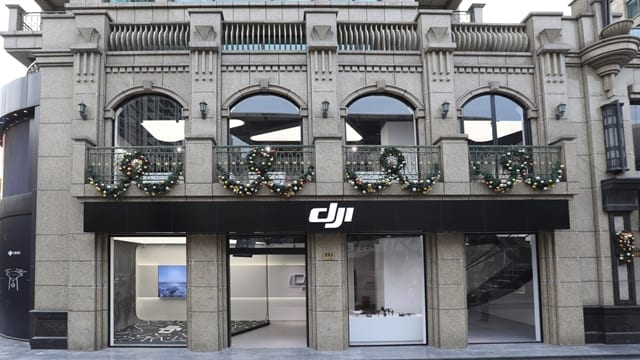
    Shenzhen-headquartered drone maker DJI is to close its Hong Kong flagship store in Causeway Bay – but the company says the move is unrelated to strict new laws restricting drone use in the territory.

    The three-story, 930sqm store, which displays the brand’s range of aerial and handheld devices and includes a space where people can carry out test flights, will close from next Monday.

    A sign affixed to the storefront says DJI remains committed to its customers and partners in Hong Kong and elsewhere in the world and that the company would continue to develop the industry’s most advanced drones and creative camera technology.

    Responding to an inquiry from the South China Morning Post, a DJI spokesperson said the flagship’s closure reflected the company’s evolving needs and had “no connection” with the new regulations requiring drone operators to be trained and licensed to fly the devices. That law takes effect next June.

    After the store’s closure, the company’s drones will remain on sale online and through authorized dealers.

    DJI opened the store in September 2016. At the time it was the brand’s third retail store, following one in Shenzhen and another in Seoul.

    A flight cage on the ground floor showcases drones in action and a SkyPixel Gallery on the first floor features international aerial photography. A technical support center and space for workshops, seminars, and special events are located on the second floor.

    Under the new Hong Kong law, drones weighing between 250gm and 7kg must be registered, and pilots must undertake online training. Insurance will become mandatory.

  • Jollibee takes full control of Tim Ho Wan business

    Jollibee takes full control of Tim Ho Wan business

    Jollibee Foods Corp (JFC) is to buy out its minority joint-venture partners in the private-equity firm that owns the Tim Ho Wan business, giving the Philippine company full control.

    Jollibee Worldwide, which already owns 85 per cent of Titan Dining, will pay US$52.7 million for the remaining stake in the business which owns the brand and the company-owned stores.

    JFC and Titan Dining established a joint venture in September last year to open a Tim Ho Wan restaurant in Shanghai and now plans to expand the network to 100 stores within four years.

    “JFC aims to build as an important part of its portfolio a significant business serving Chinese cuisine in different parts of the world,” the company said in a statement.

    Tim Ho Wan was founded by Mak Kwai Pui – previously of three Michelin starred Lung King Heen restaurant at Hong Kong’s Four Seasons Hotel – and partner Leung Fai Keung. The two chefs opened their first 20-seater top dim sum eatery in Mongkok in 2009.

    Under private-equity ownership – and latterly JFC’s control – the chain has expanded to 53 restaurants across Asia.

  • French retailer Carrefour to launch $1.9bn sale of Taiwan business

    French retailer Carrefour to launch $1.9bn sale of Taiwan business

    French retailer Carrefour is planning to launch a sale of its Taiwan business, which is valued at around US$1.9 billion in the coming weeks, three people with knowledge of the matter have told Reuters.

    The supermarket chain operator has hired Morgan Stanley to run the sale, which is expected to kick off after the summer, said the people, who declined to be identified as the information is confidential.

    Carrefour has approached a number of potential buyers, including private equity firms, to gauge their interest, the people said.

    The company did not immediately respond to a request for comment. Morgan Stanley declined to comment.

    Europe’s largest retailer said in June it had started considering possible consolidation, divestitures or tie-ups of its foreign subsidiaries, but denied it had decided to sell any assets.

    Carrefour acquired food retailer Wellcome Taiwan from Asia’s Dairy Farm in December, making it the number two player in Taiwan’s convenience stores market. The transaction, with an enterprise value of $113.6 million covers the purchase of 224 stores as well as a warehouse.

    Carrefour reported $1.48 billion in Taiwan net sales in the first half, up 13 percent year on year at constant exchange rates. The company said the newly acquired Wellcome stores strongly outperformed.

    While it has expanded in Taiwan in recent years, Carrefour retreated from the highly competitive Chinese market in 2019 by selling 80 percent of its loss-making operations to electronics retailer Suning.

  • Giordano sales rebound, delivering first-half profit despite fewer stores

    Giordano sales rebound, delivering first-half profit despite fewer stores

    Hong Kong-listed apparel retailer Giordano is back in the black after first-half sales rose 19 percent against the prior year – including 44 percent in the second quarter.

    Giordano, which now has 2094 stores across Southeast Asia, Greater China, and the Middle East, reported a post-tax profit of HKD60 million (US$7.71 million) for the half, in which its gross margin grew by 2.4 percentage points to 57 percent. The profit was a stark contrast to the Covid-impacted comparable period’s loss of HKD175 million ($22.5 million).

    And despite ongoing disruption to sales in various markets, the company pared back its inventory turn from 138 days to 124.

    The retailer closed a net 93 stores during the period, but its online sales soared 21.6 percent and now represent 10.1 percent of total group sales. Wholesale sales to franchises rose by 21.1 percent.

    While the company incurred a loss in Hong Kong and Macau – where mainland tourists were effectively barred for the entire period – increased sales to local consumers, the closure of unprofitable stores and rent reductions helped lessen the impact.

    “The average rental is still high despite gloomy consumer sentiment and the absence of incoming tourists,” said chairman and CEO Peter Lau in a results filing. “Management is continuing to negotiate with landlords for more affordable rental arrangements.”

    However, sales in Mainland China delivered a double-digit increase despite fewer stores.

    “Online sales and the franchising business continue to be our focus of development,” said Lau. “The online gross margin improved with increases in selling prices and fewer discounts.”

  • Tata Communications posts 14.9% YoY PAT

    Tata Communications posts 14.9% YoY PAT

    Tata Communications has announced its financial results for the quarter ended 30 June 2021. Consolidated revenue came in at INR 4,103 Crore (USD 556 Mn), growing 0.7% quarter-on-quarter (QoQ), and decreasing 6.8% year-on-year (YoY). This YoY contraction is primarily due to reduction in Voice business and moderation of Collaboration traffic in the Data segment.

    Consolidated EBITDA stood at INR 986 Crore (USD 134 Mn); a reduction of 5.3% YoY. This quarter, EBITDA has been impacted by a provision of INR 33 Crore on account of license fee on revenue from pure internet services which was allowed as deduction in the definition of Adjusted Gross Revenue (AGR) earlier. Despite this impact EBITDA margin has expanded by 40 BPs YoY. CAPEX for this quarter grew to INR 381 Crore as compared to INR 372 Crore in Q1 FY21.

    Data business revenue came in at INR 3,104 Crore witnessing a growth of 0.6% QoQ and a 2.2% YoY reduction. Data business continues to be affected by COVID related slowdown. Enterprise decisions have been slow due to macroeconomic headwinds leading to longer lead time for deal wins. Service delivery was affected by lockdowns during the 2nd Wave of COVID-19 pandemic. EBITDA for the segment stood at INR 932 Crore; up 0.4% QoQ and decline of 2.4% YoY. EBITDA was affected by provision of license fee made during the quarter and despite this impact EBITDA margin is maintained at 30%.

    In Core Connectivity, there is healthy growth in revenue by 1.7% YoY, and EBITDA increased by 0.3% YoY with margins at 42.6%. Digital Platforms and Services were affected by the moderation of Collaboration traffic which was at its peak in Q1 FY21. Revenue strengthened by 2.9% QoQ but reduced by 12.8% YoY. There are early signs of recovery and an uptake of usage-based services in geographies where economies have opened.

    “In a challenging quarter impacted by the second wave of COVID-19, we have delivered a robust performance,” said A S Lakshminarayanan, Managing Director and CEO, Tata Communications. “The global markets are slowly opening up and we are witnessing greenshoots of demand recovery.”

    He added, “Our focus is to continue investing in developing innovative digital ecosystem solutions driven by customers’ needs. Early demand for our recent launches for live sports on our Media Edge Cloud and IZO™ Financial Cloud is testament that we are moving in the right direction.”

    Commenting on the results, Kabir Ahmed Shakir, Chief Financial Officer, Tata Communications, said, “Our focus on growth and profitability continues to deliver results. A healthy profit and free cash flow is empowering us to innovate and accelerate growth while streamlining processes and bringing in further efficiencies. We are well-poised to enable enterprises make the shift with digitalization playing a pivotal role enabling businesses derive positive growth.”

  • Ikea’s malls arm branches out into housing with new China centre

    Ikea’s malls arm branches out into housing with new China centre

    Ikea’s shopping malls business – one of the world’s largest – has kicked off the sales process for some 500 flats at its first-ever mixed-use retail and residential development, in Changsha, southern China.

    Cindy Andersen, MD at Ingka Centres since February, said in an interview she expected flat buyers to start moving in during March next year, after the adjacent mall opened last month following pandemic-related delays.

    Ingka Centres has 45 malls, or “meeting places” as it calls them following a strategy tweak a few years ago, anchored by Ikea furniture stores across Europe and Russia, and in China where they are branded Livat.

    The company has shifted towards more entertainment and social spaces in its developments as consumers, in China in particular, increasingly shop online, visiting malls more for food or movies. Andersen told Reuters a third of tenants at the Livat Changsha mall were retailers currently.

    With housing, it is testing yet another income leg, banking on the rapid urbanization in China. Livat Changsha’s residential building, besides the flats, also sport common living and workspaces designed and decorated in co-operation with Ikea that it hopes will appeal to people working from home.

    Andersen said the Livat Changsha mall – Ingka Centres’ fifth in China and its first development across markets to also offer housing – had around 95-per-cent occupancy in July, with tenants ranging from restaurants and sport and entertainment outlets to around 350 retailers including Decathlon and Uniqlo across 130,000sqm.

    “I think we had a really relevant strategy even before the pandemic, and now the trends we saw already then have accelerated.”

    The atrium of the Livat shopping centre in Changsha, China. Image: Ingka Centres.

    She said that Ingka Centres, along with parent Ikea, still has great belief in a future of physical shopping, including in China, as long as it is tailored to consumer expectations around services, omnichannel and convenience.

    “There is a need to include retail experiences in the meeting places also going forward. We have a lot of confidence this is a need for the consumer also in China,” she said, adding that Ingka Centres had added 50 international retail brands to its portfolio in China over the past year.

    “I think it very much comes down to the fundamental needs of people. We like to be with other people and we like to be in environments where we can experience, where we can touch and feel,” she said.

    Across markets, Ingka Centres is trying various omnichannel models and digital services at its malls with tests ranging from local e-commerce platforms to live shopping events.

    At Livat Changsha – where it has invested more than US$616.8 million to date – the focus initially will be on a loyalty scheme app that is connected to Chinese social media WeChat, sporting services such as virtual reality centre navigation, online restaurant queuing and cinema ticket purchases.

    Andersen said the program currently has around 2.3 million members in China, compared with 1.5 billion in May last year.