Author: Mei Ling Tan

  • Google Maps faces a new Russian rival on Android Auto

    Google Maps faces a new Russian rival on Android Auto

    Earlier this spring, Google made the smart move to permit its Android Auto app-mirroring dashboard display software to become compatible with third-party apps. This was after it was fined $123 million in Italy, for its monopolistic actions in refusing to allow Italian navigation app JuicePass (which directs electric vehicle drivers to the nearest charging station) access in favor of Google’s own Maps app.

    Once the gates were open, naturally, there was an influx of navigational and other car experience-enhancing apps rushing in to compete with Google’s native navigational offerings. It was finally all healthy, fair competition, and Russia has joined the fray with one particular recent candidate: Yandex.Maps.

    Yandex is a Russian machine-learning navigational tech company, which seems to have created a perfect alternative to Google Maps, with its 10 years of experience in navigation and transportation services. Yandex.Maps offers it all to rival Google Maps, including voice prompts, alerts for upcoming speed limits and traffic cameras, and traffic congestion info updated in real-time.

    The new software even has the option to download directions into an offline mode, for when you run out of data or venture out on an off-road adventure in the bush somewhere.

    Yandex.Maps is currently only available in Russia, and requires a paid “Yandex Plus” subscription if drivers want to make use of the novel dashboard-navigation experience.

    The company does offer Russians a three-month free trial to test it out before buying, though. And for all we know, the $2.30 equivalent of the 169 Russian rubles that are charged as a monthly usage fee may just be worth it if it outperforms Google Maps in precise road mapping and route calculation.

    Google Maps isn’t always updated to reflect the opening up or blocking off of smaller streets, or acknowledge the existence of some legitimate off-road routes, for example, especially outside the USA—so it’s possible Yandex.Maps could be a truly worthy alternative.

    Even if it’s only a Russian breakthrough at the moment, it’s also a breakthrough in the sense that more developers are showing an interest in taking advantage of the free Android Auto app market and looking for ways to compete with Google in the car-optimized navigational software sphere.

  • AirAsia Super App launches Bangkok food service as it expands across ASEAN

    AirAsia Super App launches Bangkok food service as it expands across ASEAN

    AirAsia Group’s digital arm has launched a food-delivery service in Thailand as it ramps up its non-airline business operations to mitigate falling demand for travel during the Covid crisis.

    AirAsia Digital operates Super App that has already been downloaded more than 50 million times and the company says it now has 75 million people using it across Singapore, Malaysia and Thailand.

    Last month, the company bought the Thai operations of Indonesian ride-hailing app Go-Jek which gave it instant market share in passenger transport and delivery services in the market.

    At that time, Air Asia CEO Tony Fernandes said the company had already created a complete digital economy ecosystem. “We have successfully established over 15 different non-airline products and lifestyle services on our digital e-commerce platform in Malaysia. Now it’s time to take it to the next level. In response to overwhelming regional demand, we are setting our sights on bringing our Super App offerings to all of our key markets, following the successful rollout in Thailand.”

    Other features of the app include digital motor vehicle insurance, financial services, travel, lifestyle and rewards, flight and accommodation bookings, beauty, health, and content services.

    With the Thai launch this month, the Super App is offering 30,000 free meals for 30 days for users in four parts of Bangkok: Din Daeng, Chatuchak, Lat Phrao, and Huai Khwang. Partners in that program include McDonald’s, Flash Coffee and Cafe Amazon.

    The app plans to expand service delivery across more areas of Bangkok during the coming weeks.

    “AirAsia food marks the beginning of our digital revolution in Thailand, and we are currently preparing for courier, grocery, ride-hailing and beauty services, which will be launched in coming weeks,” said Amanda Woo, AirAsia Super App CEO.

    “The Covid-19 pandemic has permanently reshaped our everyday lives, food delivery and take-outs have undeniably become an integral part of our consumption behaviour. The key goal of AirAsia Super App is to be the best value one-stop travel and lifestyle application for everyone and every need.

    “AirAsia Super App aims to rise as the e-commerce marketplace of choice for everyone in ASEAN, be it for travel, food delivery or logistics.”

  • Pandora jewellery sales top pre-pandemic levels as US shoppers splash out

    Pandora jewellery sales top pre-pandemic levels as US shoppers splash out

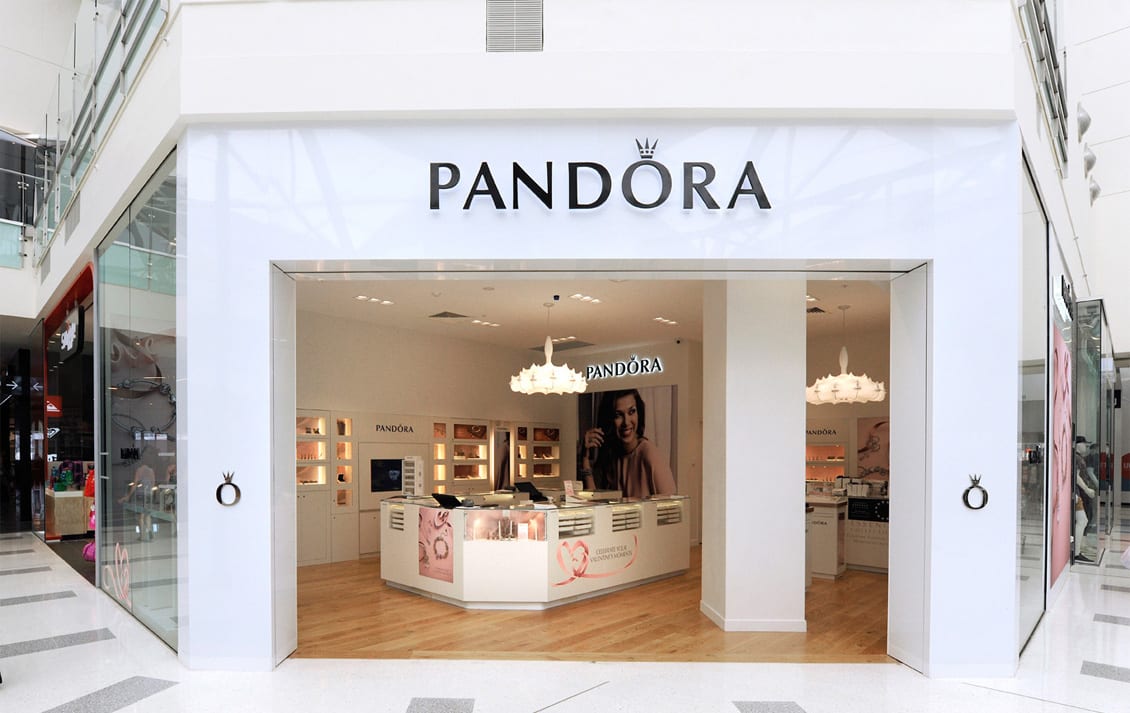
    Danish jewelry maker Pandora said on Tuesday that a strong performance in the United States spurred rapid sales growth in the second quarter but sales in China fell. Pandora, which aims to strengthen its brand in the world’s two biggest economies, said its total comparable sales in April-June jumped 7 percent compared to the same quarter of 2019 before the pandemic.

    In the United States quarterly sales more than doubled from a year earlier and were up 63 percent compared to 2019 as massive government stimulus and vaccinations against Covid-19 fuelled spending on goods and services.

    Pandora said it saw indications that it was gaining more market share in the United States, its biggest market, but cautioned that the high growth would come down in the second half of the year.

    “We have dampened the expectations on the US growth versus the first half and then we have raised expectations in Europe when the stores reopen and we are seeing that play out,” Chief Executive Alexander Lacik told Reuters in an interview.

    Pandora’s shares, which have gained around 25 percent this year, fell around 1 percent in early trade.

    “The questions arise for how long growth in the US operation can offset continued weakness elsewhere, and can Pandora stabilize its European operations to coincide with slower US growth?” Handelsbanken said in a research note.

    Sales in China, the world’s largest jewelry market, fell 13 percent in the second quarter compared to 2019.

    “It will take time so this is not a quick fix. The first attempt to try to turn this around is going to happen later this year,” Lacik said, adding that Pandora would announce further details on its brand repositioning in China at its capital markets day in September.

    Pandora earlier this month raised its full-year sales and profit margin forecasts as fewer stores would have to close due to Covid-19 than initially assumed.

    On Tuesday, Pandora also announced a new share buyback programme, the latest European company to repurchase stock in the wake of a strong earnings season.

  • Coke, Asahi lead joint venture to recycle 1 billion PET bottles annually

    Coke, Asahi lead joint venture to recycle 1 billion PET bottles annually

    Pact Group, Cleanaway, Asahi Beverages and Coca-Cola Europacific Partners (CCEP) have announced they have signed a Memorandum of Understanding (MOU) to form a joint venture that will build and operate a new PET recycling facility. Under the MOU, the parties intend to come together to provide an industry model for recycling solutions in Australia. This will include the new facility as well as the PET recycling facility currently being built by Pact Group, Cleanaway and Asahi Beverages through Circular Plastics Australia (PET) in Albury-Wodonga, which is expected to be completed later this year.

    The proposed facility will provide a massive boost to Australian recycling by processing raw plastic material collected via Container Deposit Schemes and kerbside recycling. It is expected to process the equivalent of around 1 billion bottles each year to produce over 20,000 tonnes of new recycled PET bottles and food packaging. The facility will use state-of-the-art sorting, washing, decontamination and extrusion technology.

    The cross-industry solution combines the complementary expertise of each participant to enhance their individual sustainability goals. Cleanaway will provide available PET through its collection and sorting network, Pact will provide technical and packaging expertise and CCEP, Asahi Beverages and Pact will buy the recycled PET from the facility to use in their respective products. The plant, when fully operational, will be run by Pact.

    A decision on the plant’s location is anticipated in the coming months and construction is expected to be complete by 2023.

    CCEP and Asahi Beverages, while competitors in the beverage market, have, for the purpose of this joint venture, joined with Pact and Cleanaway to increase the production and availability of recycled PET resin in Australia. The parties are proud to work with one another to advance the cause of sustainability and recycling. This proposed plant is an important step forward in creating a local plastics circular economy in Australia. This new self-sustaining industry is expected to create dozens of new jobs during the construction phase and operation of the plant.

    In describing the deal, Peter West, CCEP Vice President and General Manager Australia, Pacific and Indonesia said, “This new joint venture will deliver a collaborative cross-industry solution to recycle the material that we use to produce our products. Together we can work towards creating a circular economy for PET within the beverages industry, ensuring that we are using more locally processed recycled content for the production of our bottles in Australia.”

    Asahi Beverages Group CEO Robert Iervasi said, “This will be a ground-breaking project that will massively boost PET recycling capacity. It will help transform recycling in Australia by providing a new, local source of high-quality recycled PET. The building of this large rPET plant along with the facility in Albury-Wodonga is a major step towards helping us deliver a truly circular economy for our consumers.”

    Cleanaway Chief Operating Officer Brendan Gill said, “This project supports Cleanaway’s Footprint 2025 by ensuring we have the right infrastructure in place to create a domestic circular economy. This PET plastic pelletising facility is a huge win for the environment by creating a high value, recycled raw material from plastics we collect and sort through our network. At Cleanaway our mission is to make a sustainable future possible and we see waste as a resource to achieve that.”

    Group CEO and Managing Director from Pact Group, Sanjay Dayal said, “We are delighted to be able to bring a scaled cross-industry solution that solves for the local production of recycled resin. We are proud to have CCEP, Asahi Beverages and Cleanaway as partners creating a local circular economy. This partnership shows the value of a solution that works for industry and consumers. This is completely aligned to Pact’s strategy which is to lead the local circular economy through reuse, recycling, and packaging solutions”.

  • Domino’s seeks to grow its slice of QSR following bumper year

    Domino’s seeks to grow its slice of QSR following bumper year

    For many, March and April 2020 came with plummeting sales and a scramble to pivot operations. Domino’s was not a part of that crowd—not by a long shot. From April 20 to May 17 last year, same-store sales lifted 20.9 percent at U.S. franchises and 22 percent at company-owned stores. In the same period, domestic retail sales increased 25 percent.

    It was a stellar run for Domino’s amid all the challenges. But now the calendar has flipped forward a year, and the environment is completely different. Capacity restrictions are lifting, vaccines are increasing, and COVID rates are declining, for the most part. There’s a lot more options for consumers out there, which means Domino’s market share comes into question.

    CEO Ritch Allison is wary about the upcoming laps, but not worried, and that’s an important distinction, he said. Allison feels Domino’s is in as good of a position as it’s ever been. U.S. same-store sales increased 13.4 percent in Q1, the market’s 40th consecutive quarter of growth. With a two-year stack of 15 percent, Domino’s saw a slight sequential improvement on a two-year basis compared to Q4 2020. The lift in comps was driven by a healthy mix of average check and order growth.

    The brand opened a net of 36 U.S. stores, including just one company-owned closure. Most importantly, franchisees are coming off another year of record-setting profitability, with average store-level EBITDA coming in at just over $177,000.

    “We’ve got some pretty strong laps ahead of us from the second and the third quarters of last year, but what we’re really focused on are continuing to make the investments to drive long-term growth in the business,” Allison said during the chain’s Q1 earnings call. “And as I look out across the rest of the year, we are really in an enviable position.”

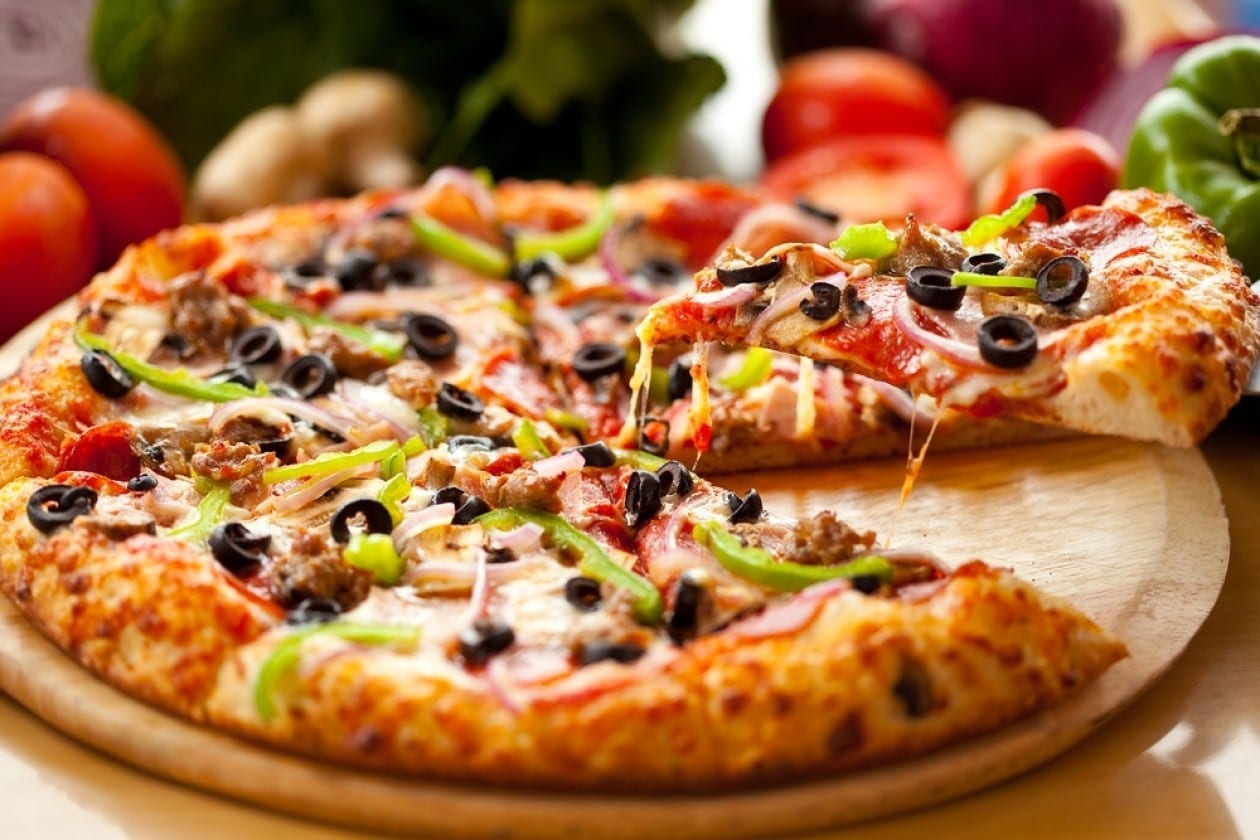
    Domino’s is in an enviable position because it has plenty of “arrows in the quiver” to fuel business, Allison said. For example, there is much room to gain in the carryout business, which saw growth in sales throughout 2020, but a weakening order volume. There’s reasons for this trend, too. Domino’s began 2020 running TV advertisements for Pie Pass, a big screen that displays customers’ names as they pick up their pizza. That had to be turned off immediately when COVID hit.

    Through the remainder of the year, Domino’s developed carside delivery as a safer service model, but it still wasn’t pushing carryout as hard as it had been in the past few years. Domino’s turned off its more aggressive promotional weeks that are usually spread across the annual calendar. Even in Q1 the pizza chain elected not to run any “boost week” promotions because of the positive sales impact from stimulus checks. Domino’s also doesn’t discount the affect of other restaurants dedicating more resources to the carryout channel throughout the pandemic.

    One key remedy is continuing the fortressing strategy, which helps Domino’s capture incremental carryout business, as well as lower relative costs, better service, and higher economics for drivers.

    “As I look this year and ongoing, fortressing is going to continue to be a big part of that strategy to gain share,” Allison said. “As we’ve talked about in the past, we are still relatively underpenetrated in terms of share in the carryout business specifically. And fortressing gives us an opportunity to go out and grab that largely incremental carry out business.”

    The foundation is already there. Domino’s has 27 million active members in its loyalty program, and the figure continues to grow. The company sees strong and steady frequency among these guests, as well. Going forward, Allison said there will be opportunities to “turn the volume back up” on new customers.

    Domino’s arsenal includes an advertising war chest to drive customer awareness and acquisition. It allows Domino’s to gather sales trends and “put a little bit more muscle against things” when and where it needs to. A good example of this came earlier this week. Domino’s announced a national TV campaign highlighting its relationship with Nuro, a robotic delivery company. As part of the advertisements, Domino’s brought back “The Noid,” a character the chain first used in the 1980s. Allison said the campaign is already “generating incredible buzz around the Domino’s brand.”

    “It’s stuff that we think about all the time because the vast majority of the dollars in that advertising fund are franchisees dollars,” Allison said. “So we spend it with great care. We talk a lot about how we use analytics to make decisions at Domino’s. It’s an area where we’ve got terrific analytics in terms of understanding the return on spending those dollars across a range of different channels or opportunities that we have to invest them on the part of our system. And so, we are constantly looking at that and managing the dials to use that investment for the greatest return for our system.”

    The marketing and advertising efforts will include carside carry out, which is a “critical weapon” in cranking up awareness toward the carryout business, Allison noted.

    “We brought that forward to address the safety concerns that customers had around picking up their food in a COVID environment,” Allison said. “But over the long-term, that’s really a great tool for us as we compete for carryout business against the drive-thru lanes of other [quick-service restaurant] concepts.”

    As Domino’s ignites its carryout business, it will be doing so in a pressure-filled labor market. Just this week, the pizza chain announced that franchise-owned stores in Florida are looking to hire roughly 4,000 workers across more than 400 stores.

    When it comes to labor pressures affecting the supply chain, CFO Stu Levy said Domino’s keeps franchisees from carrying that burden. The company is absorbing a piece of that labor increase versus passing it through, and it does the same with food inflation. At the store level, Levy noted that restaurants are challenged in many areas, but Domino’s will never use it as an excuse to slack on service.

    Similar to the carryout business, fortressing will be the “arrow” used to mitigate future labor issues. So will technological investments that drive throughput and reduce the need for manpower.

    “A good bit of the work that we’re trying to do around tech and around the store operating model is basically to keep drivers moving 100 percent of the time, with the long-term goal that they never get out of their cars or delivering pizzas constantly as opposed to other tasks and other activities that they had to perform in the old operating environment,” Allison said.

    Allison said one factor that separates Domino’s from the crowd in terms of incentive is that being a driver or a pizza maker is a legitimate stepping stone toward becoming an entrepreneur. Domino’s has the stats to prove it—more than 90 percent of franchisees started as employees.

    Will the job market prevent franchisees from opening stores? Allison doesn’t think so. In 2020, Domino’s opened a net of 624 stores. And when you look back at the trailing four quarters, its 730 net new openings. So the pace is accelerating. The unit economics are more than solid, and the demand for franchisee investment hasn’t faltered in the least, according to the CEO.

    “Staffing’s always a challenge, but one that we and our franchisees feel comfortable that we can manage overtime,” Allison said. “Part of the beauty, particularly as it relates to the opening of these new stores, is that the majority of these are opening as part of our fortressing program and giving us an opportunity to do two things. One is to shrink the territory, so we get more deliveries per hour of delivery driver labor, but also you get that incremental carry out business, which is a much less labor-intensive business for our stores, which is one of the reasons we want to continue to grow and build that business.”

    Domino’s ended Q1 with 17,819 restaurants—6,027 domestic franchise, 11,428 international, and 364 domestic company-owned.

    International comps increased 11.8 percent in Q1, marking the 109th consecutive quarter of international same-store sales growth. International markets also opened a net of 109 stores in the quarter.

    Total revenues increased from $873.1 million to $983.7 million year-over-year. The growth was primarily due to U.S. and international same-store sales growth and increases in global store counts during the trailing four quarters.

  • Sexual wellness retailers combine to form global Lovehoney Group

    Sexual wellness retailers combine to form global Lovehoney Group

    Online retailer Lovehoney is merging with WOW Tech Group to form a global sexual wellness group: The Lovehoney Group.

    The group will operate across EMEA, APAC and North America, and will combine a strong portfolio of brands, such as Fifty Shades of Grey, Happy Rabbit, Womanizer, We-Vibe, and Arcwave, as well as Swiss retailer Amorana, which was purchased by Lovehoney last year.

    The merger and expansion comes after the sexual wellbeing market exploded during global lockdowns, with the sector poised to grow at a CAGR of 8 percent from 2021 to 2028.

    Johannes Plettenberg, WOW Group founder and Lovehoney Group CEO, said the sector is fast becoming mainstream, “supported by liberalization, acceptance of sexual awareness, and the influence of popular culture.”

    “Amorana, Lovehoney, and WOW Tech share the same mission to destigmatize sexuality, empower people to enjoy a fulfilling love life, and experience sexual happiness,” Plettenberg said.

    “Combined, Lovehoney Group will provide a specialist e-commerce platform with unmatched international reach, with the creator of the most well-known and innovative brands in the industry.”

  • China reopens border gate with Vietnam

    China reopens border gate with Vietnam

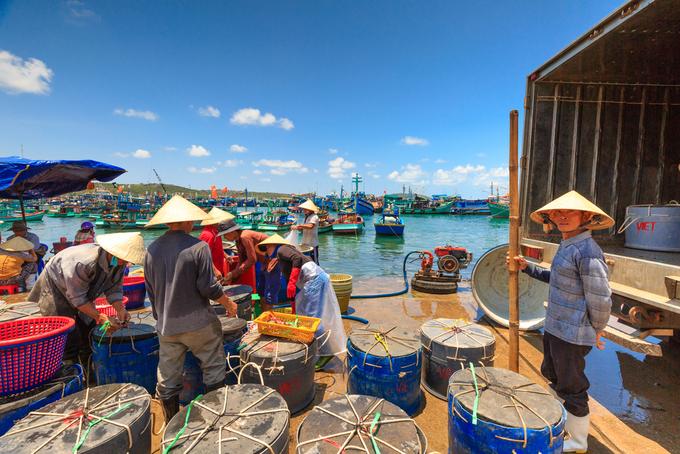
    China has reopened one of its border gates in Guangxi with Vietnam after closing it for several days due to Covid-19 fears.

    Trade resumed Wednesday at Tan Thanh Border Gate in the northern province of Lang Son after customs officials of both countries agreed on Covid-19 safety measures.

    There are over 1,000 trucks stuck at the gate and another major gate in the same province, Huu Nghi, said Nong Hai Thang, director of border gate management in Lang Son.

    “Trucks need to wait two days to pass the gate.”

    The delay is caused by China imposing more stringent examinations on vehicles and products to prevent Covid-19 contagion.

    There are 12 big and small border gates in Lang Son.

    Vietnam has recorded nearly 290,000 Covid-19 cases since the end of April.

    China was Vietnam’s second-largest export market in the first seven months with a value of $28.7 billion, up 24 percent year-on-year, according to the General Statistics Office.

  • Vietnam biggest buyer of Cambodia’s mangoes

    Vietnam biggest buyer of Cambodia’s mangoes

    Cambodia exported 140,000 tons of fresh mangos, or 86.8 percent of its total exports of the fruit, to Vietnam in the first seven months of this year.

    Citing data from the Cambodian Ministry of Agriculture, Forestry and Fisheries, the Vietnam Trade Office said the nation exported 161,228 tons of mangos between January and July, a year-on-year surge of 248 percent.

    Besides fresh mangos, Cambodia exported nearly 13,525 tons of mango jam, including 77 tons to Vietnam, 1,000 tons to Thailand and 11,000 tons to China in the seven-month period.

    Cambodia, which cultivates mangoes on 126,668 hectares at present, exported 845,274 tons of mangos worth over $473.2 million last year, mostly to Vietnam, Thailand, China, South Korea, Singapore, Russia and France.

  • Instant noodle producers gain from Vietnamese craving

    Instant noodle producers gain from Vietnamese craving

    Noodle companies in Vietnam posted strong figures last year as the country became the third-largest market globally with over 7 billion servings.

    Masan Consumer, which makes Omachi and Kokomi noodles, saw revenues from packaged food, including noodles, rising 38.5 percent from 2019 to nearly VND6.9 trillion ($302 million) last year.

    Sales of Omachi noodles rose 32 percent, with the brand claiming 45 percent of the high-end market. Omachi was also the best-selling noodle brand in supermarkets.

    In the mid-end segment, Kokomi saw sales growing 43 percent to become the best-selling brand in the northern region.

    Masan Consumer continued to post strong figures so far this year with revenue growing 10 percent to VND11 trillion.

    The company expects instant noodles and porridge products to rise double-digit for the whole year.

    Japanese producer Acecook posted revenue of VND11.5 trillion last year, 1.6 times that of Masan Consumer’s packaged food sales.

    The company claims to account for half of Vietnam’s instant noodles market. It forecasts sales to reach 350 million products next year, twice that of 2017.

    Smaller noodle producers also recorded stable figures. HCMC-based Vifon leaders once told press it made around VND200 billion a month.

    Another company, Colusa-Miliket, saw revenue falling 2 percent to VND624 billion last year.

    There are about 50 noodle businesses in Vietnam including foreign companies. The country exports to 40 markets.

    Vietnam became the third-largest instant noodles market with over 7.03 billion servings consumed last year, up two places from a year before.

  • Korean Internet Giant Opens Blockchain Units in Singapore

    Korean Internet Giant Opens Blockchain Units in Singapore

    Kakao Group will pursue the globalization of its public blockchain project, Klaytn, from the city-state.

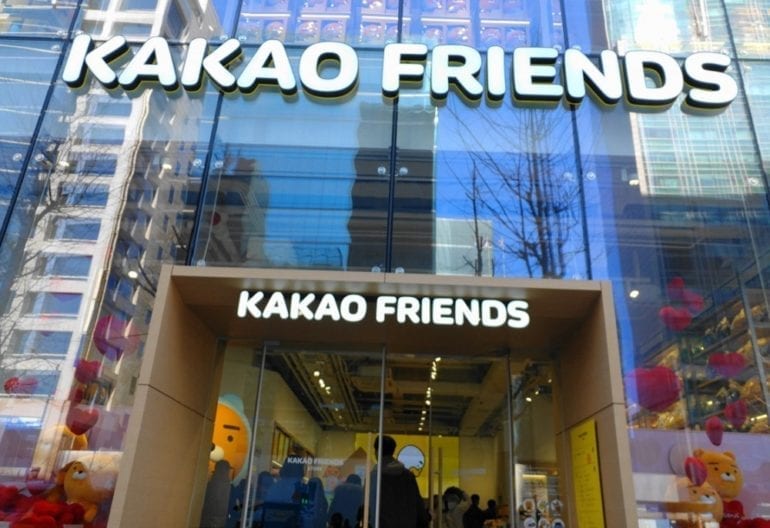
    South Korea’s Kakao Group has established two new blockchain entities in Singapore – nonprofit Klaytn Foundation and global accelerator unit Krust, it announced in a statement.

    Kakao Foundation said in a statement that it would work proactively and systematically to expand the Klaytn network, while Krust, led by Dean Song, will work with the foundation to help accelerate its mission.

    We will actively invest our human as well as financial resources in developers and businesses of the blockchain world to accelerate the growth of our ecosystem and the development of our technology, the foundation said. Founded in 2010, Kakao Group operates messenger app KakaoTalk and internet bank KakaoBank. Kakao also recently won a bid to pilot South Korea’s central bank digital currency (CBDC) project.

    The Singapore development is funded by a $300 million blockchain development war chest that also includes an improvement reserve fund used for service maintenance purposes.

  • Huawei’s chairman says that sourcing chips is its biggest problem

    Huawei’s chairman says that sourcing chips is its biggest problem

    Let’s use our imagination a little, shall we? Had the U.S. not placed Huawei on the Entity List for security reasons in 2019 and followed that up exactly a year to the day by changing Export rules banning Huawei from receiving chips from certain foundries using American technology, the smartphone market “league tables” would be different. Huawei would not have sold sub-brand Honor and would most likely be the top handset manufacturer on this planet.

    But the truth brings a harsher reality to Huawei as the manufacturer is predicted to finish the year as the seventh-largest smartphone shipper with Honor right behind it. Still, the company’s current rotating chairman (the position rotates, not the actual executive) Guo Ping is determined that Huawei will never drop out of the smartphone industry. Citing the U.S., Guo says that the policies of individual countries have no impact on Huawei’s place in the world and the firm will never limit its business to selling in China only.

    This morning, Guo told new Huawei employees that “The U.S. has created many difficulties for Huawei but they are solvable. It is in the supply chain where the US has a big impact on Huawei. We need more investment and innovation to deal with the US sanctions. Huawei has established and helped its industrial chain partners to solve the problems of supply continuity and competitiveness.”

    The Chairman said that Huawei employees should have the attitude that “what does not kill me makes me stronger,” and added that “if every employee works diligently and effectively and makes achievements, Huawei will become better and the U.S. will not be able to beat us.” For those who believe that the company should give us its mobile phone business, ponder this statistic.

    After real estate and automobiles, the mobile phone sector is the third-largest “industrial sector” in the world. This calls to mind the famous quote from bank robber Willie Sutton who was once asked why he robbed banks. “Because that’s where the money is,” was his reply. Why should Huawei give up on making phones when it still is where plenty of money lies.

    While being placed on the Entity List makes it hard for Huawei to access the U.S. supply chain, Guo says that the major issue affecting Huawei is its inability to buy chips. The chairman says, “At present, the biggest difficulty for us is the mobile phone business. As we all know, chips for mobile phone need advanced technology as they are small and have low power consumption. Huawei can design its own chip but no one can manufacture it for us. That’s where we (are) stuck.”

    As a country, China has been hoping to become self-sufficient when it comes to manufacturing chips. This would prevent tech companies in the country from having to worry about having their businesses held hostage. “Technology should be used to give full play to its value. It is imperative to combine 5G with artificial intelligence, cloud and enterprise application scenarios to unleash the potential of Internet of Everything and Intelligence of Everything,” said Guo.

    “Huawei phones have a lot of unique technologies of their own. We are looking forward to the day when the core problem of chip manufacture will be completely solved in China,” Huawei’s current chairman states. Huawei’s Chairman is also thinking ahead about 6G. He sees 5G becoming the universal global network that most people envision it becoming. But as for 6G Guo, sees the next generation of wireless connectivity being used as a regional network for industrial use.

  • Inmarsat launches ELERA to power IoT and critical connectivity

    Inmarsat launches ELERA to power IoT and critical connectivity

    Inmarsat has unveiled Inmarsat ELERA; a global narrowband network that is ideally suited to the rapidly evolving world of the Internet of Things (IoT) and for global mobility customers, including aviation, maritime, governments and select enterprises.

    “ELERA is perfectly suited to the needs of the connected IoT world,” said Rajeev Suri, CEO, Inmarsat. “Global reach, extraordinary resilience, faster speeds, smaller and lower cost terminals are all part of ensuring that we remain ahead of others in meeting the needs of our customers.”

    “ELERA is a further sign of a company with true momentum and one that is delivering new innovations and strong performance,” continued Suri. “I expect that Inmarsat will grow strongly in 2021 compared to the previous year, and that growth will span most of our business units. Our progress was evident in the first half, where we saw strong growth in revenue and EBITDA and robust cash flow. We have sharpened our strategy to focus on driving growth, accelerate decision making, launch new innovations, and are creating a more commercially focused, customer-centric culture.”

    ELERA builds on Inmarsat’s #1 position in Mobile Satellite Services (MSS) and will be a springboard for innovation, unlocking, accelerating and scaling pioneering use cases on land, at sea and in the air. Its foundation is Inmarsat’s world-class L-band network and incorporates new innovations ranging from higher speeds to smaller, low-cost terminals and [the previously announced] Inmarsat-6 satellites, the first of which (I-6 F1) is scheduled to launch before the end of the year.

    Coming just 14 days after Inmarsat announced ORCHESTRA, the world’s first network to combine GEO, LEO and 5G into one harmonious global communications solution, ELERA underlines Inmarsat’s strategic focus on the global mobility segment of satellite communications. It is also a signal of a company with momentum, delivering major technological innovations and growth.

    The unique capabilities of ELERA, combined with Inmarsat’s superior spectrum and the ideally suited orbital position of its satellite networks, will make it the essential catalyst for new IoT use cases, across everything from autonomous transport and unmanned aerial vehicles (UAV) to industrial and agricultural IoT applications.

    ELERA is built on Inmarsat’s market-leading L-band network, which already delivers the world’s most reliable and flexible global connectivity service with unique resilience in all conditions and full global redundancy. It supports everything from worldwide maritime and aviation safety services and humanitarian missions to IoT applications across agritech, transportation and utilities, among many others.

    The new innovations that the company is investing in to bring to market in the near future include spectrum management technology to deliver L-band speeds up to 1.7Mbps, the smallest footprint, low cost L-band terminal and two new L-band satellites, which are the largest and most sophisticated commercial communication satellites ever created.

    The new spectrum management capabilities (known as Carrier Aggregation) being incorporated into the ELERA network will deliver the fastest speeds globally available to L-band customers, far outstripping the capabilities of any other worldwide L-band network.

    Live customer trials in commercial aviation are scheduled to start during the course of 2022 and this technology will be rolled out across a range of sector specific applications for Inmarsat’s mobility, government and IoT customers over the coming few years.

    ELERA will also see the creation of the smallest footprint, low cost terminal for L-band users, delivering the ideal framework for satcom IoT at scale, with supporting cloud-based management, for vertical sectors such as infrastructure, rail, logistics, mining, agriculture, government, maritime and aviation.

    Inmarsat is launching two new satellites to enhance the ELERA network. The I-6 satellites, the first of which is scheduled to launch at the end of 2021, are the largest and most sophisticated commercial communications satellites ever built.

    The L-band capacity on each I-6 satellite will be substantially greater than Inmarsat’s 4th generation spacecraft and, among other enhancements, they will deliver 50% more capacity per beam; meaning that much more data can be carried over the same geographical area, in addition to unlimited beam routing flexibility.

    ELERA will also deliver a major extension to Inmarsat’s portfolio of voice-enabled devices, bringing new capabilities and innovations to hundreds of thousands of customers. This initiative represents our commitment to voice service innovation and underlines the company’s long-term commitment to the handheld voice services over satellite market.

    “ELERA is the exciting vision of how Inmarsat is planning to transform the capabilities offered to IoT and mobility customers for years to come and confirms our long-term commitment to L-band services. We will be sharing further detail on these innovations with our partner community in the coming months and continue our programme of announcements as we achieve major milestones.” said Rajeev Suri, CEO, Inmarsat.

  • Decathlon in Australia fined A$1.5 million for breaking consumer law

    Decathlon in Australia fined A$1.5 million for breaking consumer law

    French sporting goods business Decathlon has been fined $1.5 million for selling products that failed to meet Australia’s mandatory safety standards – an act in breach of consumer law.

    The Federal Court handed down the ruling, according to the Australian Competition and Consumer Commission, after the business sold more than 400 unsafe basketball rings and backboards, and over 300 portable pools, which failed to include relevant safety labelling, or installation and use instructions.

    “Mandatory safety standards exist to reduce the risk of death and serious injury to consumers, especially children, when using these types of products,” ACCC Deputy Chair Delia Rickard said.

    “By not including these important warnings, Decathlon put consumers at risk of serious harm when they were using the Decathlon swimming pools, basketball rings and backboards.”

    The basketball rings and backboards were made to appear safe to attach to brick walls, which is untrue: if a customer utilised the product in this way they risked fatal injury if the wall failed to hold the weight.

    Similarly, the portable pools failed to warn parents that children had drowned in pools of similar size (over 30 centimeters deep), and that adequate supervision and pool fencing laws applied to the product.

    “It is illegal to sell products in Australia that do not comply with mandatory safety standards, and consumers have a right to expect that products they purchase will not endanger their safety, or the safety of their family and others,” Rickard said.

    Decathlon admitted that it had contravened consumer law, and consented to issue a corrective notice to customers and implement an Australia Consumer Law compliance program to ensure it complies moving forward.

  • Victoria’s Secret joins JD with store

    Victoria’s Secret joins JD with store

    Victoria’s Secret is expanding its online presence in China with the launch of a flagship store on JD, the e-commerce platform.

    A representative from JD’s underwear business said the collaboration of the two companies not only expands JD’s cooperation with international fashion brands, but also provides additional choices for JD’s customers pursuing high-quality products.

    The JD flagship store offers Chinese customers Victoria’s Secret’s full range of classic bras, panties, lingerie and T-shirts. The launch came in time for the Chinese Valentine’s Day when sales are expected to boost as local consumers buy gifts for their loved ones.

    The online flagship follows the opening of the brand’s first China duty store in Hainan Tourism Duty-Free Shopping Complex earlier this month.

    The US lingerie brand closed its high-profile Victoria’s Secret flagship store in Hong Kong last year after two years of operation.

  • Government may halve registration fees for locally produced automobiles

    Government may halve registration fees for locally produced automobiles

    The government has instructed the Ministry of Finance to assess the impact of a 50-percent cut in registration fees for locally produced automobiles.

    Thanh Cong Motor Vietnam Joint Stock Company had called on the government to cut the fee to support an industry affected by Covid-19.

    The ministry has been told to complete the task this month.

    In June, the Vietnam Automobile Manufacturers Association (VAMA) had proposed a similar 50-percent cut in registration fees, but the ministry had rejected it.

    Last year too the government had cut the fee by half, and it cost VND6 trillion ($260.9 million).

    In the first six months of this year VAMA members, who account for more than 95 percent of the market, saw sales fall 30 percent year-on-year to 102,720 vehicles.

    Car manufacturers fear the global effects of Covid would have a long-term impact on people’s incomes and auto demand.

    VAMA expects sales to decline by more than 15 percent this year. Last year, they had risen by 11.7 percent to 322,322 units.