Author: Mei Ling Tan

  • Apple could release surprise update before dropping iOS 15 next month

    Apple could release surprise update before dropping iOS 15 next month

    Developer Brendan Shanks posted a tweet recently in which he noted that according to a beta of Apple’s Xcode software development platform, the tech giant is planning to release iOS 14.8 which is something of a surprise considering that iOS 15 is currently being beta tested with the final version expected to drop as soon as next month. The update could be needed to set up the iPhone to work with a new feature that Apple has already announced.

    As Apple says, “iOS now offers a choice between two software update versions in the Settings app. You can update to the latest version of iOS 15 as soon as it’s released for the latest features and most complete set of security updates. Or continue on iOS 14 and still get important security updates until you’re ready to upgrade to the next major version.” The update to iOS 14.8 could contain the software necessary to make this possible.

    Other possibilities include adding the software needed for the child sexual abuse material (CSAM) detection system that Apple recently announced. While most people would be in favor of ending the spread of material that would be considered sexual child abuse, some would consider this the beginning of a slippery slope. The fear is that Apple will exploit the system to scan pictures taken by users that have nothing to do with child abuse.

    A website containing an Open Letter to Apple shares concerns about photo scanning by stating that “Apple’s proposal introduces a backdoor that threatens to undermine fundamental privacy protections for all users of Apple products.” The letter goes on to say that Apple’s measures could turn every iPhone into a device that is always scanning images thus turning the handset into a “a radical new tool for invasive surveillance, with little oversight to prevent eventual abuse and unreasonable expansion of the scope of surveillance.”

    Apple released iOS 14 on September 16th, 2020 which gives us a possible release date for iOS 15 sometime over the next five weeks.

  • Nike launching sustainable concept store in Seoul

    Nike launching sustainable concept store in Seoul

    After launching the Rise concept store last year to Guangzhou, China, sportswear giant Nike has unveiled a new version of the concept which will launch in Seoul, South Korea.

    The store will feature a new digital platform, Sports Pulse, which will seek to bridge the gap between physical and online retail and create an “immersive retail experience”, as well as an interactive RFID-enabled footwear table, Inside Track, where shoppers can compare product details by simply placing products on the table.

    Three new ‘experience zones’ will also be debuted in the Seoul store: The Sports Hub, which will help shoppers connect with sporting opportunities in the city; The City Replay, a space to showcase hyperlocal products; and The Huddle, a place for a group or one-on-one expert sessions tailored to their fitness goals.

    And, according to Nike, it does so while also boosting the business’ sustainability and circularity.

    “In addition to being among the first Nike stores to secure a LEED Gold certification, Nike Seoul is also the first in Asia to launch … Nike’s fully integrated service for recycling and donating gently worn footwear and apparel,” the business said in a statement.

    “Shoppers can drop off gently-worn shoes – and now, for the first time, apparel – to the Seoul store, where the products will either be recycled or donated to partnering organizations that help communities facing disasters and other challenging circumstances.”

  • Spotify to launch new Wear OS app, brings offline listening to smartwatches

    Spotify to launch new Wear OS app, brings offline listening to smartwatches

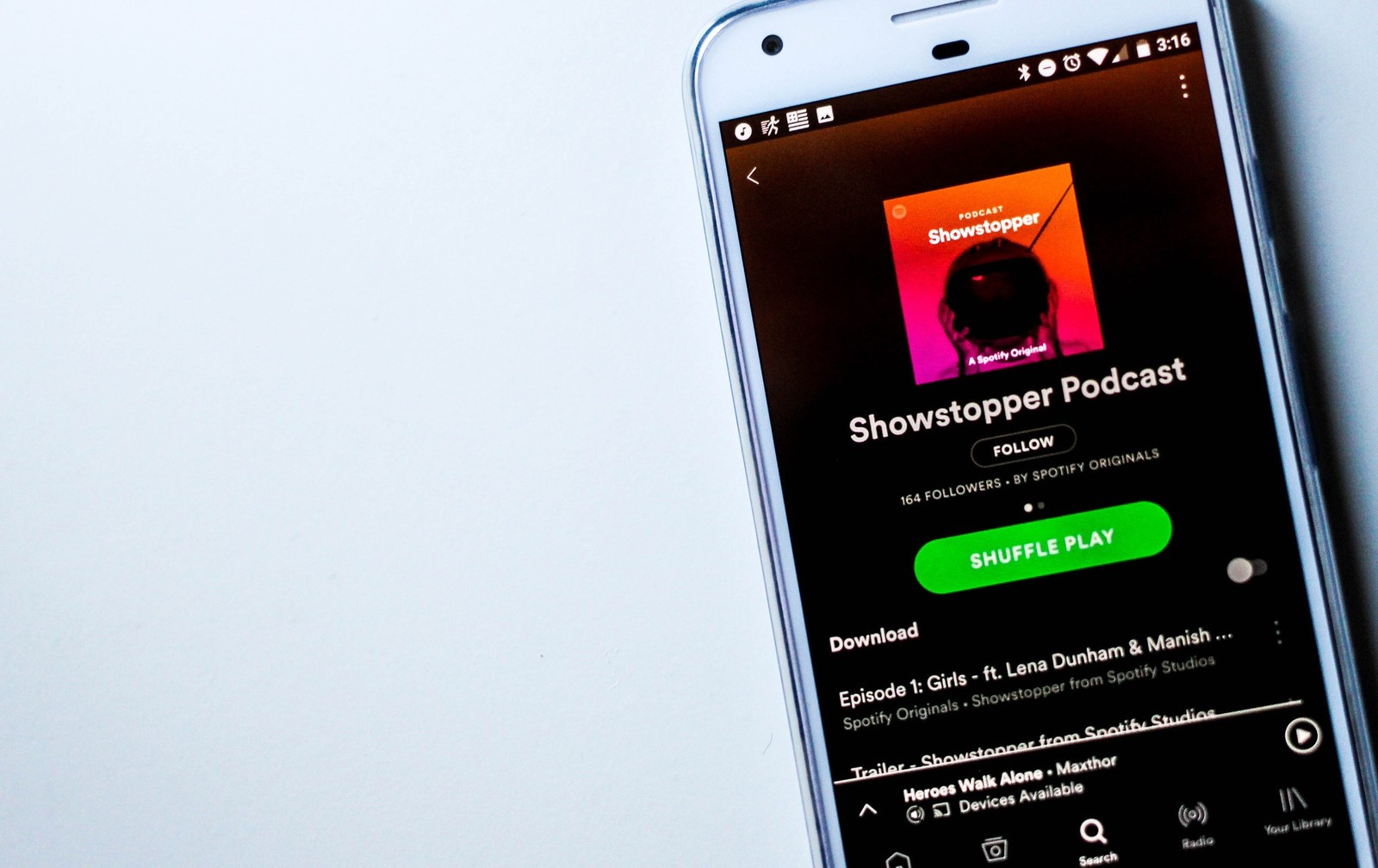
    Many months after launching its Watch OS app, Spotify announced it will launch a revamped Wear OS app that will include a couple of new features. The most important is offline listening, a brand-new feature that will be rolled out to Wear OS smartwatches in the coming weeks.

    Although the wording in the official statement implies that offline listening has been specifically designed for Samsung’s new Galaxy Watch 4 and Galaxy Watch 4 Classic, the feature will work on older Wear OS smartwatches too.

    The new feature will not be limited to music, as Spotify users will also be able to download podcasts for offline listening. Premium subscribers will be able to download their favorite albums, playlists, and podcasts to listen offline. On the other hand, free Spotify users will be able to stream their tunes in Shuffle Mode using Wi-Fi or mobile data, as well as download any of their favorite podcasts directly to the watch.

    When the new Wear OS app will be available for download, smartwatch users will be able to download content for offline listening simply by tapping “Download to watch.” The new app will be coming to Wear OS smartwatches from Fossil, Mobvoi, Suunto and more in the coming weeks.

  • Chip Shortage Prompts Production Halt At Volvo Cars In Gothenburg

    Chip Shortage Prompts Production Halt At Volvo Cars In Gothenburg

    Volvo Cars, owned by China’s Geely Holding, will temporarily stop production at its Swedish plant in Gothenburg due to the shortage of semiconductor chips, it said on Wednesday. A global chip shortage has hit manufacturing, with automakers cutting down on production and electronic device makers struggling to keep up with a pandemic-led surge in demand for phones, TVs and gaming consoles.

    “Production at Torslanda will be paused temporarily from this evening due to a material shortage linked with the semiconductor issue,” Volvo Cars said in an emailed statement.

    “Production will restart as soon as possible, at the latest before next week,” the Swedish carmaker, which in June halted production at its Belgian plant in Ghent for a week, said.

    Volvo Cars, which last month reported a return to profit in the first half as demand for electric cars grows, is considering listing on the Nasdaq Stockholm stock exchange this year.

  • Fees for transporting goods to HCMC nearly quadruple

    Fees for transporting goods to HCMC nearly quadruple

    Many HCMC residents have reported paying higher fees for transporting goods from their hometowns to the city compared to the pre-Covid period.

    Hoa in Ho Chi Minh City’s Go Vap District said that amid the city’s strict social distancing order, she had recently told relatives in the Central Highlands province of Kon Tum to send her a 15-kilo parcel of groceries including vegetables, meat and fish through an interprovincial coach company.

    The fee for transporting the parcel from Kon Tum to a coach station in HCMC was VND200,000 (nearly $8.77), instead of the typical VND50,000. On arrival, the coach company hired a shipper to transport the parcel to Hoa’s home for VND150,000, instead of VND50,000.

    An in HCMC’s Binh Thanh District said she had to pay total transport fees of VND600,000 for a 20-kilogram parcel sent from Kon Tum to her home in the city. “I have lived in HCMC for 10 years, and have never seen such high transport fees,” she said.

    Traders also have to pay higher fees to interprovincial coach firms. “Sometimes the value of goods is over VND1 million, but the transport fee is nearly half of that,” said Loan, a seafood trader in the central province of Phu Yen.

    Mai, a potato trader in the central highlands region, said transport fees for goods from the region to HCMC have surged four times to VND800,000 from VND200,000. There are fewer interprovincial coaches running between the region and HCMC, so coach firms have increased their fees, she explained.

    Tan Anh Coach Company in Kon Tum said passenger coaches are banned from running to HCMC, so lorries are used to transport goods with longer travel times and larger freights. “In the past, it took vehicles 10-12 hours to run from Kon Tum to HCMC. Now, it takes 18-20 hours. We have to cover Covid tests, and more expensive fuel,” the coach company revealed.

    Coach firms in other provinces, including Phu Yen and Khanh Hoa also said goods-transporting vehicles consume more fuel than passenger coaches.

    Meanwhile, shippers in HCMC explained that tightened social distancing, including travel restrictions, upped transport fees. “Each shipper is allowed to operate in a certain district, passing through many checkpoints,” Thanh from Go Vap District said.

    Ho Chi Minh City has recorded nearly 135,500 local Covid-19 cases since the fourth coronavirus wave hit Vietnam in late April. It is now the country’s pandemic epicenter.

  • HSBC Launches Portfolio-Based Advisory for HNW Clients

    HSBC Launches Portfolio-Based Advisory for HNW Clients

    HSBC continues expanding its wealth management offering with the latest addition of a portfolio-based advisory solution.

    HSBC has launched its portfolio-based advisory solution Wealth Portfolio Plus (WPP) targeting its Hong Kong-based Jade segment – clients with $1 million or more in investable assets.

    Previously, HSBC Jade clients could only select individual products that are aligned to their risk profiles but the new offering will enable them to review investment portfolios holistically and grant access to a wider range of products.

    We’re thrilled to bring portfolio-based advisory services to customers for the first time outside of a private bank through Wealth Portfolio Plus, powered by BlackRock’s Aladdin Wealth technology, said Sami Abouzahr HSBC’s head of customer wealth, wealth, and personal banking, Hong Kong. Since WPP provides portfolio-level rather than transactional-level analysis, new investment options can then become available to customers that fit their needs.

    The WPP offering follows the launch of risk management solution Wealth Portfolio Intelligence Service (WPIS) last year which targets high net worth and affluent banking clients.

    Thus far, WPIS has generated over 130,000 risk assessment reports and contributed nearly HK$30 billion ($3.86 billion) in net sales growth from more than 70,000 cases of investment portfolio rebalancing.

    HSBC continues to expand its offering as part of its broader ambitions to become a leading wealth manager in Asia by 2025.

    In June, the private bank launched online trading in Asia. And in April, it rolled out institutional services for single-family offices in the region.

  • DBS Receives In-Principle Crypto Approval in Singapore

    DBS Receives In-Principle Crypto Approval in Singapore

    DBS becomes Singapore’s second crypto player to secure an in-principle approval from the Monetary Authority of Singapore to offer token services.

    DBS Vickers – the brokerage arm of DBS – has received in-principle approval from the MAS under the Payment Services (PS) Act to provide digital payment token services, according to a statement.

    As a member of DBS Digital Exchange (DDEx), DBS Vickers will be able to «directly support asset managers and companies to trade in digital payment tokens through DDEx.

    DBS will also upgrade its digital exchange with operations running beyond the previous Asian hours to round-the-clock trading from August 16.

    We have seen keen interest among asset managers and corporates for access to digital payment token services, and with DBSV receiving in-principle approval under the PS Act, we are well-placed to meet this growing demand,» said DBS group head of capital markets Eng-Kwok Seat Moey.

    This could add to DDEx’s volumes in the coming months, and, coupled with DDEx going operational round-the-clock, help accelerate growth for DDEx. We are confident of doubling our investor base by the end of the year.

    DDEx has just completed its second quarter since launching in December 2020 and houses around 400 investors with close to S$130 million ($95.8 million) of digital assets in its custodial services.

    Trading volume in the second quarter reached S$180 million, more than quintupling the previous quarter.

    In June, DDEx listed its inaugural security token offering in the form of a S$15 million digital bond.

  • 4 Tips When Dealing With Shipping Delays

    4 Tips When Dealing With Shipping Delays

    Now that an increasing number of consumers worldwide have shifted to online shopping, eCommerce stores face several issues integrated into satisfying customer expectations, and providing efficient deliveries. The latter issue will be the chief topic in this article. Many businesses have to deal with delays in their shipment, which are sometimes beyond their control. Many factors usually trigger such instances.

    Unfortunately, customers can’t tolerate delays, especially when companies fail to communicate and set the right expectations about their customers’ orders. Hence, a company must know and be aware of the right ways of handling logistics issues.

    Here are some tips on how to deal with shipping delays:

    • Work With Forwarding Agents 

    One trick to deal with shipping delays is to work with freight forwarders like a customs broker. They act on behalf of importers, exporters, and other companies who want to facilitate smooth international freight transportation. They make the process easy, efficient, and less costly.

    The roles of forwarding agents are similar to your domestic logistics partner, except they are more experienced and involved in negotiating and transacting international shipments. If your business transactions are across the global market, this tip is relatively your best way to deal with shipment delays.

    Benefits of using freight forwarders include:

    • Freight forwarders are assigned to prepare export documentation and presentation. These include bills of ladings, and other appropriate documents for the seller, buyer, or third parties involved. 
    • The company also manages customs paperwork with agents in other countries to ensure items and documents are compliant with customs laws. 
    • This is also a simplified option in terms of administrative procedures. The forwarding agents will be held responsible for monitoring and securing shipment arrival from the moment the parcel is set out for delivery.
    • Communicate With And Update Proactively The Customers 

    As companies come up with different strategies like videos to boost online shopping experiences, they don’t turn a blind eye to deliveries and logistic processes. To maintain positive relationships with customers, and create a memorable customer experience, communication is vital. This is also important when shipment delays occur. Although this phenomenon is naturally anticipated sometimes, a business should give a heads-up to their clients. 

    Since you have been a customer yourself, you know that delays happen to any business or company you have dealt with in the past. Maybe you experienced a one-day delay or worse, it could have been more days to a week. But what makes you feel calm and assured is when the company would communicate with you about your purchase. This tip applies the same way to you as a business owner.  

    Customers want information in such situations. There may be times when they rush to your website or phone lines for help. And in a bad case scenario, some unhappy customers would leave bad online reviews, and low score ratings on your site, or other third-party review sites. To prevent all these, communication and updates are necessary. 

    The more updates you give them about their parcel, the more they feel better knowing the reasons for the delay. They can understand better, and give your company the chance to explain and fix the issue.  

    • Provide Options To Customers 

    A road flood or fleet issues with your courier service can cause delays without your control. Offering customers alternatives will save you both time and reputation in such situations. Look at the other options, and present them to your customers, while providing advice on which path is the best for them to take. 

    The issue causing the delay could be resolved by the cancellation of orders, or the use of rerouting options. Although refunding the items may not be suitable for your business temporarily, it will give your customers the perception of credibility and trust. You can protect your brand image, and maintain integrity if you provide options to your customers, even when they aren’t profitable on your end. 

    • Offer A Small Gift As Compensation 

    Delivering outstanding customer service to your clients is essential to ensuring customer satisfaction. In business, this is a primary factor. In the case of a delayed shipment, you could take active measures to correct the situation. Apply some tactics to ensure you won’t miss any customers, or leave a wrong impression on them. 

    One of the tricks of the trade that many other companies utilize is the compensation strategy. You can provide your customers with some inexpensive product or discounts. Although this might require you to shell out some money, it will benefit your business in the long run. Customers will be retained, and it’s one effective strategy to improve your brand

    Hundreds of potential buyers can be turned away by a single bad review. Therefore, it’s best to prevent it by offering compensation to customers who have been affected by delays in the order shipment process.  

    Conclusion 

    Put customer retention practices in place. Communicate with your customers, help them understand the problems, and tell them the solutions you are implementing. Doing these steps will protect your eCommerce store from the wrath of unhappy customers. The above tips and tricks are realistic ways your company can apply when you’re experiencing uncontrollable delays in order shipments.  


  • Toyota Launches Virtual Showroom To Further Digitize Customer Experience

    Toyota Launches Virtual Showroom To Further Digitize Customer Experience

    Toyota Kirloskar Motors has launched its virtual showroom to further expand the digital experience for its customers in India. Calling it a step towards the new normal, the Indian arm of the Japanese carmaker says that the virtual showroom will allow customers to have an in-depth look at Toyota’s vehicle line-up online. Customers can also book their new Toyota directly from the virtual showroom, as it’s fully integrated with a payment gateway. The carmaker says that the virtual showroom will facilitate offers, finance options, loan applications and other value-added services in the future.

    Commenting on the new initiative, V. Wiseline Sigamani, Associate General Manager (AGM), Sales and Strategic Marketing, TKM, said, “Owing to the pandemic and growing access to technologies, customers increasingly prefer digital and contactless experience. Last year, as COVID-19 disrupted the purchase lifecycle, we took immediate steps to digitalize our sales process by making available pricing, offers and booking in the online realm. The virtual showroom further simplifies all the elements of car buying by digitizing and integrating the key touchpoints in a customer’s purchase cycle as a one-stop-shop solution. The core idea behind the virtual showroom is to empower our customers to access our world-class cars from wherever they want to. Moving forward, we will continue to listen to our customers keenly and introduce new solutions and tools leveraging digital technologies to further improve their buying experience.”

    Customers visiting Toyota’s virtual showroom will be able to select any model and get a 360-degree external and internal view of the car. They can even check out all the available variants and colour options, switch on the lights, open and close the doors, virtually experience the top features in the day or night modes and get variant-wise prices. The platform also comes with an augmented reality mode for smartphones, which allows customers to see how a Toyota vehicle will look when parked in their garage or portico.

    The virtual showroom also gives you the option to schedule a test drive. Customers can also book their Toyota vehicle directly from the virtual showroom and get it delivered to their nearest dealership or their homes. In fact, Toyota says that it has also integrated all its dealer partners onto the new platform, and soon the virtual showroom will be made available on the websites of all its dealer partners as well.

  • Harley-Davidson Street Glide Special With Arctic Blast Colours Unveiled

    Harley-Davidson Street Glide Special With Arctic Blast Colours Unveiled

    Harley-Davidson has unveiled a limited edition H-D Street Glide Special, hand-finished in Artic Blast paintwork from Gunslinger Custom Paint, in Golden, Colorado. Only 500 units of the Harley-Davidson Street Glide Special factory custom will be made, each with a serialized individual number displayed on the fuel tank. The Street Glide Special was revealed at the 81st Sturgis Motorcycle Rally and will be available in just one single color, a metallic deep blue with bright blue strokes over a pearlescent white base.

    The attractive paintwork is hand-finished at the Gunslinger Custom Paint facility in Golden, Colorado. The facility is known for supplying CVO and limited-edition paint sets for the Harley-Davidson factory. The Street Glide Special in Arctic Blast has a subtle honeycomb pattern painted into the fairing and front fender. The paint scheme adds an exclusive custom finish to the 2021 Harley-Davidson Street Glide Special.

    Mechanically, the H-D Street Glide Special remains the same, and is powered by the larger 114 Milwaukee-Eight engine, with a higher level of trim. The 1,868 cc v-twin engine makes 161 Nm at 3,000 rpm. The 2021 Street Glide Special also features a long list of tech and gadgets, including Prodigy custom wheels, Daymaker LED headlight, Boom! Box GTS infotainment system with touch screen and Apple CarPlay, as well as Android Auto compatibility, and finished with the iconic batwing fairing with split-stream vent. The Arctic Blast Street Glide Special has been priced at $ 38,495, but it’s unlikely to be available on sale in India.

  • OCBC Deputy President Retires

    OCBC Deputy President Retires

    OCBC’s deputy president will retire after 22 years with the Singaporean bank. OCBC deputy president Ching Wei Hong will retire at the end of September, according to an exchange filing.

    Ching first joined OCBC in November 1999 as head of transaction banking and has since held various senior roles including chief financial officer, chief operating officer and chairman of Bank of Singapore before being named deputy president in early 2020.

    I am deeply grateful to Wei Hong for building a strong foundation upon which our wealth management and consumer banking businesses will grow from strength to strength. Please join me in wishing him a healthy and happy retirement, according to a report citing an email from chief executive Helen Wong.

    Separately, the bank has appointed Sunny Quek as acting head of global consumer financial services, effective October 1, as well as director of OCBC Securities, subject to regulatory approval.

    Quek will report to Wong and Bank of Singapore CEO Bahren Shaari. Quek is currently OCBC’s head of consumer financial services in Singapore.

  • Google makes its apps safer and more private for teens and pre-teens

    Google makes its apps safer and more private for teens and pre-teens

    Google announced today some changes made to give teens and pre-teens more control over some of Google’s most popular apps. Over the next few weeks, Google will debut a new policy that enables anyone under 18 years old or their parent or guardian to request the removal of the child’s image from Google Image results including Search. As Google itself points out, “Of course, removing an image from Search doesn’t remove it from the web, but we believe this change will help give young people more control of their images online.”

    Over the next few weeks, the following changes are coming to Google apps for those under 18. YouTube will change the default upload settings for those 13-17 to the most private option available. Some useful digital wellbeing features will be promoted by Google and Google will provide safeguards and educate teens about commercial content from the app. Those 13-17 will have autoplay turned off by default while bedtime and break reminders will be enabled by default.

    As the Alphabet subsidiary says, “We regularly engage with kids and teens, parents, governments, industry leaders, and experts in the fields of privacy, child safety, wellbeing, and education to design better, safer products for kids and teens. Having an accurate age for a user can be an important element in providing experiences tailored to their needs.

    Yet, knowing the accurate age of our users across multiple products and surfaces, while at the same time respecting their privacy and ensuring that our services remain accessible, is a complex challenge. It will require input from regulators, lawmakers, industry bodies, technology providers, and others to address it – and to ensure that we all build a safer internet for kids.”

    Teens using Google Search can be protected by SafeSearch which prevents the kids from seeing search results not meant for their eyes when enabled. It is on by default for users under 13 whose accounts are managed by Family Link. With the latter, parents can decide at what time their kid’s device shuts off for the day. Google plans in the coming months to turn SafeSearch on by default for existing users under 18 and make it the default setting for teens setting up new accounts.

    When it comes to teens using Google Assistant, the company says, “We’re always working to prevent mature content from surfacing during a child’s experience with Google Assistant on shared devices, and in the coming months we’ll be introducing new default protections. For example, we will apply our SafeSearch technology to the web browser on smart displays.”

    Children using supervised accounts don’t have the option of turning on Location History which is turned off by default for all accounts. Soon, Google will prevent users under 18 globally from being able to turn on Location History. In addition, a new safety section for the Play Store will allow parents to know which apps meet Google’s Family policies. Apps will also have to disclose how they use the data they collect in greater detail allowing parents to decide whether to allow their kids to install the app.

    Google will also prevent age-sensitive ad campaigns from being shown to teens and those under 18 will not be allowed to be targeted by advertisers based on age, interests, and gender. New digital wellbeing tools will allow parents to “block news, podcasts, and access to webpages on Assistant-enabled smart devices.”

    Anne Collier, executive director of the Net Safety Collaborative stated, “Being mindful about tech use is key to everyone’s wellbeing. These new defaults for teens are protective; they increase safe, mindful tech use by making teens think about what they want to see and who they want seeing their content.”

  • Porsche SE Faces U.S. Lawsuit Over Dieselgate Scandal

    Porsche SE Faces U.S. Lawsuit Over Dieselgate Scandal

    Porsche SE, Volkswagen’s largest shareholder, is facing a lawsuit in the United States over claims related to the carmaker’s diesel emissions scandal. The suit, filed with the Supreme Court of the state of New York in April, targets Porsche SE as well as former members of the management and supervisory boards of Volkswagen, Porsche SE said in its half-year report. Porsche SE, which holds 31.4% of Volkswagen, did not identify the plaintiffs and did not detail or quantify possible claims, saying the action had not yet been served.

    “The plaintiffs claim to be shareholders of Volkswagen AG and assert with their action alleged claims of Volkswagen AG on behalf of Volkswagen AG,” Porsche SE said.

    The lawsuit marks the latest chapter in the “dieselgate” saga since Volkswagen admitted in September 2015 to using illegal software to rig diesel engine emissions tests. The scandal has cost the carmaker more than 32 billion euros ($38 billion) in fees, fines and legal costs so far.

    Volkswagen and Porsche SE are already subject to 4.1 billion euros worth of shareholder claims in relation to the crisis, but it could take years before they are resolved.

    Last month, Volkswagen shareholders approved a deal to settle claims against four former executives, including long-time CEO Martin Winterkorn, related to the crisis.

  • H1 surge in phone, laptop sales

    H1 surge in phone, laptop sales

    Vietnam’s largest electronics retailers, Mobile World and FPT Shop, saw H1 mobile phone and laptop sales in the first half of the year.

    Mobile World posted total revenues of nearly VND62.5 trillion ($2.7 billion) and pre-tax profits of more than VND2.5 trillion in the six-month period.

    Of this the sales of mobile phones, laptops and relevant accessories was over VND15.6 trillion, a year-on-year increase of 7 percent.

    The Mobile World management board said the sales performance was really impressive because hundreds of the company’s stores have had to temporarily shut down or restrict sales amidst the Covid-19 pandemic.

    The FPT Digital Retail Joint Stock Company, which runs FPT Shop, earned total consolidated revenues of over VND9 trillion and consolidated before-tax profits of VND76 billion in the first half of this year, realizing over half and two-thirds of its annualized plan, respectively.

    Up to 85 percent of the total revenues came from mobile phone, laptop and accessories sales, which grew 13 percent year-on-year.

    While mobile phone sales grew 16 percent on year for Mobile World and laptop sales remained unchanged, FPT Shop saw a 31 percent year-on-year surge in laptop sales to over VND1.3 trillion.

    As of end June, Mobile World had 936 stores, up 23 stores over late 2020, but down from nearly 1,100 stores in late 2017. Meanwhile, FPT Shop had 625 stores, up 30 stores against late last year.

    According to Counterpoint Research, smartphone sales in Vietnam in the second quarter of this year grew 11 percent year-on-year.

    Meanwhile GfK has reported that sales of gaming laptops in the country grew 217 percent in the first five months of the year.

  • Quick vaccination key to ensuring smooth supply chain

    Quick vaccination key to ensuring smooth supply chain

    The delay in vaccinating workers in the retail and logistics sectors is causing disruptions in the supply chain, a key player in the Covid-19 fight.

    Earlier this month, nearly 40 VinMart and VinMart+ outlets had been closed for several days due to Covid-19 linkage, which urged its operator Masan to once again request the government to quickly vaccinate retail staff.

    The Ministry of Industry and Trade had in June also called for these employees to be vaccinated early as they come into direct contact with millions of customers every day and are at high risk of contagion.

    In retail chain BRG Mart, 30 percent of staff have received their first dose. The ratio for conglomerate Masan is 16 percent, Bach Hoa Xanh (operated by Mobile World) 21 percent, MM Mega Market over 30 percent, and Co.opmart Hanoi 30 percent.

    Nguyen Thi Kim Dung, CEO of Co.opmart Hanoi, of which one supermarket was closed for three days due to Covid-19 linkage, said social distancing alone is not enough to reduce the risks for retail workers.

    “The earlier these employees are vaccinated the sooner customers are protected.”

    Dung said Co.opmart had made the request to different government bodies but all had stated vaccines were not available.

    Retail workers, however, are only part of the supply chain.

    Le Duy Binh, CEO of market research company Economica Vietnam, said drivers, shippers, and customs officers also need to be prioritized as they serve in the frontline of the economy and deliver essential goods.

    Although government officials have demanded shippers be prioritized for vaccination, experts say the process needs to be sped up amid a surging number of Covid-19 cases.

    Economist Phung Duc Tung said vaccines are being distributed mostly to localities when instead it should be distributed to sectors to ensure the flow of essential goods.