Author: Mei Ling Tan

  • Pre-owned Store Hula opens its first permanent boutique in Hong Kong’s Central

    Pre-owned Store Hula opens its first permanent boutique in Hong Kong’s Central

    Pre-loved designer brand, HULA will be opening its first boutique on Hollywood Road this Friday. The location will feature a curated selection of over 500 unique designer womenswear pieces. There is also a dedicated Chanel rail for fans of the iconic brand.

    The boutique is open daily and offers a range of new and vintage designer items including bags, clothing, shoes, and accessories. Each week new products will be added to the boutique, including pieces not available at its Wong Chuk Hang warehouse.

    For those looking for a tailored shopping experience, the boutique also offers a personalized styling session with its in-house stylists.

    Founded by Sarah Fung in 2016, HULA is an online marketplace that sells second-hand designer womenswear and handbags. The consignment store only sells items from invited sellers to guarantee their authenticity and quality. “If we aren’t sure, we don’t sell it,” says Fung.

    HULA previously hosted a pop-up on Hollywood road last year which encouraged Fung to think about a more permanent store. “After the success of our three-week pop-up on Hollywood Road last year, opening a permanent store space in Hong Kong Central was a no-brainer and we were lucky to have found the perfect location,” she says.

    The new shop will open on March 19 and is located at 56-58 Hollywood Road, Central. For more information visit HULA’s website and Instagram.

  • Lamborghini Urus Sets High-Speed Record On Ice

    Lamborghini Urus Sets High-Speed Record On Ice

    Automobili Lamborghini took part for the first time in the Days of Speed on the ice of Lake Baikal, with the Lamborghini Urus and it set the 1,000-meter record, averaging a top speed of 114 kmph from a standing start. Piloted by the 18-time Days of Speed Russian record-holder Andrey Leontyev, the maximum recorded speed of the Urus during the record-breaking sprint was an impressive 298 kmph, despite significant warming of the ice on the world’s deepest lake. During the practice runs, the Urus even managed to reach a maximum speed of 302 kmph. Official data registered by the FIA and the RAF (Russian Automobile Federation) will be published in April.

    The annual Days of Speed festival was held between 10 and 13 March. Organised by LAV-racing company, this official sports event is dedicated to setting record speeds on ice. The event strictly adheres to all regulations of the FIA (Federation Internationale de l’Automobile) and RAF (Russian Automobile Federation).

    The Lamborghini Urus features a 4.0-litre V8 twin-turbo engine delivering 650 horses, producing maximum torque of 850 Nm at 2,250 rpm. The Urus accelerates from 0-100 kmph in 3.6 seconds, 0-200 kmph in 12.8 seconds and with a top speed of 305 kmph making it the fastest SUV in the world.

  • Maruti Suzuki To Increase Car Prices From April

    Maruti Suzuki To Increase Car Prices From April

    Maruti Suzuki has announced that it will be increasing car prices across its model line-up from April 2021. In a regulatory filing, the country’s largest car manufacture said “Over the past year the cost of company’s vehicles has been impacted adversely due to increase in various input costs. Hence, it has become imperative for the company to pass on some impact of the above additional cost to customers through a price increase in April 2021.” Maruti Suzuki India has not announced the quantum or percentage of the price hike, but it has said that the price hike will vary for different models.

    It is quite common for Original Equipment Manufacturer or OEMs to increase vehicle prices in India at the start of the new financial year. In fact, Maruti Suzuki India had also increased its prices in January 2021, making this the second price revision in just three months. Among other OEMs, Isuzu Motor India has also announced its plan to the prices of its D-Max Regular Cab and the D-Max S-Cab in India, by ₹ 1 lakh, from April 1, 2021. And we expect a few other manufacturers to join the bandwagon soon.

    Currently, Maruti Suzuki India has 15 models in its combined line-up from Arena and Nexa brands. While its most affordable model, the Alto its priced between ₹ 3 lakh to ₹ 4.48 lakh, its flagship model, the S-Cross is priced from ₹ 8.39 lakh, going up to ₹ 12.39 lakh.

  • Honda Africa Twin To Get Radar System

    Honda Africa Twin To Get Radar System

    The Honda Africa Twin is likely to get radar-assisted cruise control, after Ducati, BMW and KTM already introduced similar systems on their range-topping adventure bikes. The radar-powered adaptive cruise control system, made by Bosch, has already made its debut in production models of the KTM 1290 Super Adventure S, the Ducati Multistrada V4 S and the BMW R 1250 RT. And now, patents filed recently by Honda show that its flagship adventure tourer, the Honda Africa Twin, will be getting a radar-assisted adaptive cruise control system as well. The difference is that, perhaps Honda’s system will be indigenously developed, rather than just a plug and play device sourced from Bosch.

    Honda’s patents suggest the use of cameras alongside the radar sensors, so the system will use another layer of monitoring tech, and allow the on-board computer to make a better-informed judgement of what’s happening in its surroundings. The advantage of using cameras is that, while the radar system can sense approaching vehicles, or other vehicles in close proximity, accurately measuring distances, cameras can be used to pick up additional information, like brake lights, road signs and traffic lights.

    The front radar on the Africa Twin patent filings seem to be similar to the systems used by BMW, Ducati and KTM. And the new Africa Twin already seems to have a spot under the headlights, probably designed keeping in mind the positioning of a radar sensor. But it’s the rear section which has a different design. Honda’s Africa Twin design patents show not one, but two rear radars, mounted on the number plate hanger, and these sensors are fitted at an angle to offer a wide detection zone. So, with the dual radars, the area covered will not just be the area behind the bike, but also on each side as well.

    Honda’s system also mentions the use of transponders to broadcast information from the sensors to other vehicles, or to roadside receivers. So, these should add one more dimension to the warning system, that of vehicle-to-vehicle communication, or vehicle-to-infrastructure system, allowing safety systems like radars or cameras on one car or motorcycle to pass on to other similarly-equipped vehicles. With the rapid induction of such technology, Honda is likely to introduce the latest tech within the next couple of years, both on the next-generation Africa Twin, as well as on the Honda Gold Wing.

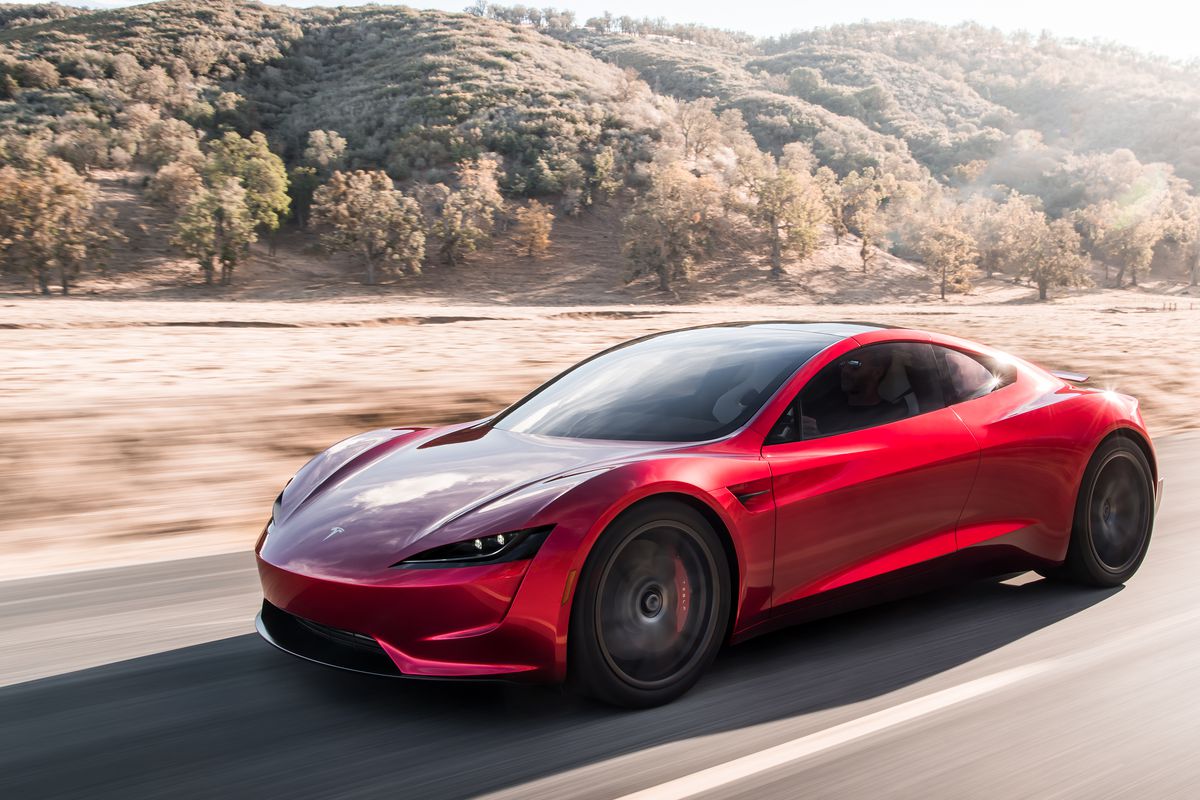
  • Tesla’s In-Car Cameras Raise Privacy Concerns: Report

    Tesla’s In-Car Cameras Raise Privacy Concerns: Report

    Tesla’s use of in-car cameras to record and transmit video footage of passengers to develop self-driving technology raises privacy concerns, influential U.S. magazine Consumer Reports said on Tuesday.

    Consumer Reports said the usage potentially undermines the safety benefits of driver monitoring, which is to alert drivers when they are not paying attention to the road.

    “If Tesla has the ability to determine if the driver isn’t paying attention, it needs to warn the driver in the moment, like other automakers already do,” said Jake Fisher, senior director of Consumer Reports’ auto test center.

    Tesla Inc’s use of in-car cameras to record and transmit video footage of passengers to develop self-driving technology raises privacy concerns

    Automakers such as Ford Motor and General Motors, whose monitoring systems do not record or transmit data or video, use infrared technology to identify drivers’ eye movements or head position to warn them if they are exhibiting signs of impairment or distraction, the magazine said.

    Tesla did not immediately respond to a Reuters request for comment.

    The Palo Alto, California-based carmaker’s internal cameras are also a point of contention in China, where the military banned Tesla cars from entering its complexes, citing security concerns.

    Tesla Chief Executive Officer Elon Musk said last week his company would be shut down if its cars were used to spy.

  • Vingroup eyes $500 mln convertible bond issue in Singapore

    Vingroup eyes $500 mln convertible bond issue in Singapore

    Vietnam’s biggest private conglomerate, Vingroup, is seeking shareholders’ approval to raise $500 million by issuing international redeemable convertible bonds.

    The bonds will be issued this year and listed in Singapore, but will not be traded in Vietnam.

    The first-ever international bond issuance by Vingroup, which has interests in property development, automobiles and smartphones, will have a tenor of five years and a fixed or floating coupon rate or a combination of both.

    Interest will be paid biannually, and the bonds can be converted into shares of Vinhomes, Vingroup’s real estate subsidiary.

    However, Vingroup has the right to redeem the bonds at the end of the third year if the Vinhomes share is above a certain price.

    The money raised will be used to pay loans and pump up the capital of its subsidiaries.

    Vingroup has so far issued VND5 trillion ($217 million) worth of bonds in the domestic market.

    It has been pouring money into expanding its manufacturing business, which it has earmarked as a main focus in the coming years. It began selling its VinSmart phones in the U.S. earlier this year and plans to sell electric cars there next year.

  • Business Groups Disappointed by Hong Kong’s Covid Plans

    Business Groups Disappointed by Hong Kong’s Covid Plans

    In response to the business community’s call for looser quarantine measures and a roadmap for reopening, the Hong Kong government remained insistent that the current status quo will remain until local vaccination rates rise significantly.

    The Hong Kong government met virtually with representatives of the business community last week, according to a report citing unnamed sources, and reiterated its own objectives with regards to the pandemic.

    Policymakers led by chief secretary of administration Matthew Cheung once again underlined the target of vaccinating 50 percent of Hong Kong’s population before any major loosening. As of Monday, the figure sits at just 5 percent.

    At the meeting, the Hong Kong government appears to have made no concessions as it reportedly downplayed the prospect of travel bubbles, border reopening with China and didn’t provide a clear roadmap for general reopening despite similar moves being made by rival financial hubs like Singapore.

    The virtual meeting follows the recent gym-linked outbreak which exposed many expatriates to Hong Kong’s quarantine measures and sparked calls within various business groups, such as regional capital markets industry body Asia Securities Industry & Financial Markets Association (ASIFMA), to push for changes.

  • Rice price surges 18 pct

    Rice price surges 18 pct

    Vietnam’s rice price in the first two months surged 18.2 percent year-on-year to $547.9 per ton, but with lower volume in most markets.

    Total volume fell 29.4 percent to over 656,000 tons, according to Vietnam Customs.

    The Philippines remained the largest importer but with volume down 28 percent year-on-year to 256,000 tons.

    Other markets that saw volumes drop by double-digits include Malaysia (–75 percent), the United Arab Emirates (–56 percent) and E.U. (–23 percent).

    China claimed second place with a 140-percent increase to 159,200 tons.

    Strong rises in volume were seen in Taiwan, up 80 percent, and France, up 47 percent.

    Vietnam’s rice exports grew by 9.3 percent last year to $3.07 billion, according to the Ministry of Industry and Trade.

  • Aviation industry to suffer $649 mln loss

    Aviation industry to suffer $649 mln loss

    Vietnamese carriers could suffer a loss of more than VND15 trillion ($649 million) this year with the suspension of commercial international flights still in effect.

    The Vietnam Aviation Business Association says in a report sent to the Ministry of Planning and Investment that domestic airlines had already posted a loss of over VND18 trillion last year, with revenues plunging by VND100 trillion year-on-year.

    In the first two months of this year, domestic carriers transported just 66,600 international passengers, down 98.8 percent year-on-year.

    The association has repeated its request for credit assistance from the government.

    Budget airline Vietjet Air has asked for a credit package of VND4-5 trillion for the 2021-2023 period, with an interest rate of 4 percent.

    The association has also proposed reducing the environmental tax on fuel to VND900 – 1,000 per liter and extending deadlines for paying taxes, including corporate income tax, value-added tax, and personal income tax.

    Bamboo Airways has called for a refinanced, zero interest long-term loan of VND5 trillion from commercial banks.

    Earlier, the government approved a bailout package for national flag carrier Vietnam Airlines, with the State Bank of Vietnam (SBV) allowed to provide a refinanced loan of up to VND4 trillion at zero interest.

    Aviation was among the worst hit sectors in 2020. The number of air passengers declined by 43 percent to 66 million, while cargo transport was down 15 percent to 1.3 million tons.

    Insiders have said that it will take at least until 2023 for the aviation industry to recover to pre-pandemic levels.

  • DBS Offloads Hong Kong Office Space

    DBS Offloads Hong Kong Office Space

    DBS is reportedly the latest to join the wave of global banks and multinationals that are cutting down office occupancy in Hong Kong.

    DBS will surrender a quarter of the eight floors it occupies in one of its Hoang Kong offices – One Island East Tower – according to a report citing unnamed sources.

    The office is located outside of Hong Kong’s central business district in Quarry Bay.

    DBS joins other global banks, like Standard Chartered and BNP Paribas, in shedding Hong Kong office stock.

    In fact, multinationals accounted for 75 percent of surrendered office space in the city last year, according to Cushman & Wakefield, amid the growing adoption of flexible work arrangements.

    In November last year, DBS said it would allow its employees to work remotely for as much as 40 percent of the time due to the pandemic.

  • Learning to Manage MacBook Storage Efficiently

    Learning to Manage MacBook Storage Efficiently

    The problem of MacBook storage is quite common, especially if you make a switch from Windows to macOS. It takes a while to learn how to manage the drive’s storage efficiently. 

    When less than 15 percent of total disk storage is free, the computer is bound to have performance problems. 

    A good Mac storage management strategy revolves around knowing certain methods to free up the laptop’s drive space. And the more information you know about cleaning up your Mac, the better off you will be.

    Let’s take a look at some of the most effective ways to keep enough free space on the MacBooks hard drive.

    Use Cleanup Software for Temporary Junk

    Starting with temporary junk files like app extensions, plugins, and caches is a good approach. The system creates temporary data constantly, and files accumulate quite fast.

    For example, the purpose of cache is to speed up certain processes by storing data in the computer memory. The files are useful for the most part. However, when there are too many, they put a strain on the overall MacBook performance. 

    Therefore, removing unnecessary junk data will free up HDD space and leave fewer files to process for the system.

    Since getting rid of temporary data manually is too much of a hassle, we recommend getting a cleanup utility tool. Such software simplifies the process since you can select the files you want to delete from the MacBook and let the cleanup tool do its work. 

    Change Default Download Location

    Changing the default location for the downloads could come in handy as well. Some people tend to forget the downloads folder and not bother checking it. Meanwhile, the number of downloads continues to grow and takes precious computer drive space.

    By making the MacBook’s desktop the default downloaded file location, you would notice these files right away and delete them when they become useless. Even a new MacBook will start to underperform if its desktop is cluttered, so you will not want to keep files on the desktop. If anything, you will want to keep the desktop clutter-free.

    Get Rid of Useless Apps

    Old applications are another item on the list. There is no point in keeping apps you no longer use. Besides, some applications come with extra files that may take more space on the computer than you expect. For instance, language support for 50 or even more languages. 

    Check the list of Mac applications and figure out which of them you can remove from the computer. And in case you ever need an app you remove again, there is an option to download and install it later.

    Remove Files From Mac Permanently

    Be it applications, downloads, media, or other files, it is important to remember that you need to remove them from the MacBook permanently. Otherwise, the total free storage of the hard drive will not change.

    If you use the Trash Bin and drag files in it to remove them permanently, remember to click the “Empty the Trash” button. 

    You could also stick to a keyboard shortcut that removes files from the MacBook permanently. Select file(s) and press Option + Command + Delete. A pop-up will ask you to confirm if you want to delete files permanently. Click the confirmation button, and the files will disappear from the laptop.

    Use Streaming Platforms

    For some MacBook users, media files are the biggest issue. They hoard movies and TV shows with the intent to watch them later but never find the time. A similar thing can be said about music. Hundreds if not thousands of tracks might be nice to have on a computer, but there are better, more efficient methods to listen to music. And these methods do not involve cluttering the MacBook’s drive.

    You should use services like Spotify and YouTube to listen to music. As for movies and TV shows, streaming platforms are the go-to option. Netflix, Disney+, and Hulu are some of the most popular streaming services currently. 

    The services cost money, but paying a few dollars to have a convenient way to consume media is worth it. Not to mention how much it can help with the MacBook’s storage.

    Stick to Cloud Storage

    iCloud offers five gigabytes of free storage. Mac owners can transfer files there and access them not just from the MacBook but also from their iPhone or iPad by syncing these devices with the iCloud account. 

    In case five gigabytes are not enough, upgrade the plan for additional storage. 50GB cost a dollar, 200GB – three dollars, and 2TB – ten dollars per month.

    Invest in an External HDD

    Similar to cloud storage, an external hard drive provides an alternative location to keep your Mac’s files. An HDD costs about 30 dollars, meaning that it should not be that much of an expensive investment.

    Besides having a different place to keep computer files, you can also combine an external hard drive with Time Machine and create data backups.


     

  • Japan’s malls and restaurants brace for Olympics without foreigners

    Japan’s malls and restaurants brace for Olympics without foreigners

    Shopping malls and restaurants in Japan will miss out on a business boom, as Tokyo expects to hold the Olympics without overseas spectators, dealing another blow to industries already on the ropes from the coronavirus.

    In the years leading up to the Games, developers have poured tens of billions of yen into shopping and dining complexes to serve an influx of foreigners, with major investments made in Tokyo’s central Shibuya district, iconic for its scramble crossing.

    But the number of foreign visitors has dropped from nearly 32 million in 2019 to almost zero, causing the government to halt a spending survey that showed their consumption that year was worth 4.5 trillion yen.

    Now Tokyo 2020’s expected decision to block foreigners from attending the Games means a boost the service sector was counting on to recover lockdown-related losses will not materialize.

    “There was so much development, with new buildings being constructed, but people aren’t coming at all,” said Ryota Himeno, an analyst at JP Morgan Securities Japan.

    Up to eight million tourists visited Shibuya’s bustling clubs and cafes in 2019, and ward chief Ken Hasebe expected 10 million in 2020 before the coronavirus scuppered those plans.

    Himeno says that projected growth prompted developers to spend more than 300 billion yen in the district, which is also home to some venues from the 1964 Olympics.

    The most imposing of the new developments is Shibuya Scramble Square, a 230-meter glass tower that has come to dominate the skyline since opening in 2019.

    Its developer, Tokyu Corp, spent 110 billion yen on projects in Shibuya in the three years through 2020.

    “Our financial results are unfortunately expected to fall into the red in the current period,” said Tokyu’s Ryosuke Toura, with hotel businesses taking the biggest hit, followed by railways and retail.

    Across the Shibuya station, at Masaka, a vegan restaurant inside Parco department store, which reopened after years of renovation in time for the Olympics, foreign tourists used to make up as much as half of the clientele.

    Manager Yuta Namekawa is now pinning his hopes on growing awareness of vegan food among locals, thanks in part to people watching documentaries about the meat industry on Netflix.

    “Part of the reason why the restaurant was opened was because of the Olympics, so it’s quite worrisome if that isn’t happening,” he said. “It can’t be helped.”

  • Nike sales crimped by pandemic and shipping issues

    Nike sales crimped by pandemic and shipping issues

    Nike’s quarterly sales missed estimates due to shipping issues and a pandemic-related slump at brick-and-mortar stores, and investors were disappointed by the world’s biggest athletic shoe maker’s full-year revenue forecast.

    Nike forecast “low-to-mid-teens” full-year revenue growth, falling just short of the 15.9% increase in sales that analysts were expecting, according to IBES data from Refinitiv.

    Nike shares were down about 3% in post-market trade.

    “I think the expectations for Nike into the call were very high with many analysts upping revenue and earnings expectations into the quarter,” said Ivan Feinseth, head of investment at Nike shareholder Tigress Financial Partners.

    Revenue rose to $10.36 billion from $10.1 billion, while analysts on average had expected $11.02 billion. The company said revenue from North America fell 11% on a currency-neutral basis because container shortages and U.S. port congestion held up inventory by more than three weeks.

    “We expect to capture this delayed revenue in the fourth quarter,” Nike Chief Financial Officer Matthew Friend said.

    U.S. container-freight traffic has slowed significantly in recent months due to COVID-19 outbreaks among dockworkers and safety restrictions aimed at stemming the spread of the virus. At the same time, ports are dealing with a cargo surge due to pandemic-led demand for bulk products.

    Nike’s net income nonetheless climbed to $1.45 billion, or 90 cents per share, in the third quarter ended Feb. 28, from $847 million, or 53 cents per share, a year earlier. Analysts were expecting earnings per share of 76 cents.

    In Europe, the Middle East and the Africa region, 45% of Nike-owned stores were closed for the last two months of the quarter. Currently, 65 percent of stores in EMEA are open or operating on reduced hours, Nike said.

    Rival Adidas ADSGn.DE said last week that it had reopened 95% of its stores after coronavirus lockdowns.

  • Tiffany & Co designer Elsa Peretti dies at 80

    Tiffany & Co designer Elsa Peretti dies at 80

    Elsa Peretti, the famed jewelry designer for Tiffany & Co., has died, according to a statement from the company. She was 80 years old.
    Peretti died in Spain on Thursday, March 18, according to a statement from her foundation.
    “Elsa was not only a designer but a way of life,” the statement from Tiffany & Co. said, describing her as a “larger-than-life” person who “touched everyone at Tiffany & Co.”
    “A masterful artisan, Elsa was responsible for a revolution in the world of jewelry design. Her collections of organic, sensual forms have inspired generations,” the statement said. “Elsa’s relationship with style and the natural world was profoundly personal and strongly reflected in her creations. Over the past nearly 50 years Elsa has created some of the most innovative jewelry and object designs in the world.”
    Peretti was born in Florence, Italy. By 1964 she’d begun modeling in Spain and later moved to New York and met the fashion designer Halston, whom she collaborated with and who introduced her to Tiffany & Co. leadership. She joined the company in 1974. Vogue reported that Peretti’s designs eventually accounted for about 10% of Tiffany & Co.’s sales.
    Peretti was also the president and founder of the Nando and Elsa Peretti Foundation, the company said, which supported projects related to human rights, environmental conservation, and arts and cultural preservation. She believed, Tiffany & Co. said, that protecting the planet was “a duty of all of humanity.”
    “We could do so much better,” she said. “I’m trying to do something good.”
  • Burberry Japan opening a virtual showroom in partnership with Elle

    Burberry Japan opening a virtual showroom in partnership with Elle

    The virtual and interactive experience will replicate the brand’s flapship Ginza store and will serve as a space to present its Spring/Summer 2021 collection. Customers will be able to purchase items from the collection by selecting the digital items in store for one month, beginning from March 19. The experience will live exclusively on Elle Japan and Ellegirl Digital Japan’s websites.

    Burberry is among the leading luxury players to have invested in digital innovation to merge digital and physical store spaces, with Louis Vuitton and Gucci also joining the market. As part of the new experience, Burberry has also collaborated with actress Elaiza Ikeda to create five styling videos that will appear throughout the virtual store and assist customer’s shopping experience.