Author: Mei Ling Tan

  • Why Production Monitoring Makes Sense for Your Business

    Why Production Monitoring Makes Sense for Your Business

    Global quality control company HQTS’ Production Monitoring service helps your supply chain be as efficient as possible. Production Monitoring is an end-to-end service for monitoring the production process. It gives customers greater control and insight into the entire manufacturing process with no unwelcome surprises.

    It’s crucial for importers to ensure product quality during production and reduce the incidences of delayed shipping and quality defects.

    The manufacturing process is becoming fragmented with increased outsourcing which represents a bigger challenge for buyers to manage. The goal should be to minimize quality issues at the start of production and have a sound quality process that detects and resolves defects throughout the production process.

    Production Monitoring is different to inspections in that it is employed throughout the entire production process from sample evaluation to loading supervision. It’s a comprehensive way to ensure products adhere to production timelines and meet shipping deadlines offering a full view into the process rather than the general snapshot that comes with inspections.

    It minimizes the risk of delayed shipments by confirming production schedule, monitoring the full manufacturing process from receiving materials to shipping according to quality requirements.

    The service helps to not only ensure products arrive on time, but also cuts out the chance of reworks, renegotiations, or returns. Problems can be solved at a stage when they are still manageable too and Production Monitoring also offers technical support to improve supplier quality management.

    The seven stages of Production Monitoring are Supplier Selection, Product Development, Production Planning, Initial Production, During Production, End of Production, and Shipping.

    HQTS has also recently expanded its offering to include a new During Production Monitoring service. The new service is based on a three-module customisable structure allowing for a more agile approach.

    The Process Monitoring Module includes Warehouse Monitoring, IQC Monitoring, Critical Components Monitoring, Production Line Monitoring, 4M1E Monitoring, and Packaging Process Monitoring.

    The Sampling Inspection Module (DPI) includes Material Sampling inspection, Semi-finished Product Sampling Inspection, On-Site Test, First Article Inspection, Finished Product Sampling Inspection, and Packaging Sampling Inspection.

    The third part is a Follow Up Module which offers an NPI Follow Up and Corrective and Preventive Action.

    HQTS will begin to work directly with suppliers to ensure clients’ quality needs are clearly communicated and met, allowing them to have more control over their production process.

    About HQTS

    HQTS provides quality control inspections, factory audits, supplier evaluations, consumer product testing, production control and management, and quality control consulting throughout greater Asia. Backed by the industry knowledge and experience of nearly 1,500 professionals, in more than 20 countries, HQTS is well-suited to be your partner in quality.


     

  • What Makes An Amazing Neighborhood

    What Makes An Amazing Neighborhood

    When choosing a place for your new home, one of the major features to consider is the neighborhood. You’re not only just buying or renting an apartment but your lifestyle will be affected one way or another based on the surrounding environment.

    A perfect neighborhood doesn’t exist but it can be well suited to your various needs and desires. However, there are some common components to good neighborhoods that can be interpreted universally to all home movers.

    Matching Your Lifestyle

    Consider your current lifestyle. Many people with similar needs tend to gravitate to the same areas. While a suburban neighborhood in a gated community might seem like a dream to some of us, it may not be a good fit for a young single professional that is looking to champion his career. Similarly, small families may not be suitable for a small apartment in a downtown neighborhood due to the noise and excitement.

    Perhaps instead of matching your current lifestyle, you can think of the lifestyle you would like to try out or experience, or even settle down with. For example, if you’re getting married and you are getting a job in the suburban neighborhood, you might want to consider your schedule. You will probably want to spend less time having to travel to work so that you can get enough rest and start a family. In that case, it might be a good idea to choose to stay in the suburbs. If you’re in the LGBT community, you’ll want to live in a neighborhood that’s LGBT-friendly. In that case, you may want to find Fort Lauderdale, Florida Gay Realtors to help you select a neighborhood you want to live in. Surround yourself with the people you want to learn from, and have the courage to pursue that chapter in your life.

    Having Pride in Living in The neighborhood

    When you and your soon-to-be neighbors are proud of your living residences and physical surroundings, the chances for some of you to connect and create small communities are high. This can be a good sign of a good neighborhood environment as its residents are concerned about the betterment of the area.

    Safety First

    Safety will always be one of the top priorities as we want to have peace of mind in our daily activities. A neighborhood with low crime rates can provide you a form of tranquility and assurance that you and your family members can get home safe every day. While not every neighborhood may be crime-free, it will always be a good idea to check out neighborhoods with decreasing crime rates as it is a telltale sign of transitional or improving ones.

    To find out how safe your neighborhood is, do some quick research online to see what kind of crime takes place in the area and how often it happens to see if it is a neighborhood suitable for you.

    Education

    For those with children, you will need to factor in the schools in the vicinity. Good schools often make good neighborhoods. They are essential for your children to grow and mature in, add significant value to the neighborhood and push the property prices up. 

    Available Outdoor Facilities

    Having access to an exciting outdoor adventure can sweeten your experience living in your neighborhood, especially when it’s just a short walk away. Some common outdoor activities include jogging, sailing, or cycling that can help you stay healthy. Meanwhile, there are some neighborhoods that provide access to tennis or badminton courts, swimming pools, and golf courses to spice up your weekly exercise routine.

    Culture

    One of the less popular features of a good neighborhood is its culture. There’s something about a town with a history that makes it more attractive. They often have very stable longtime residents and provide support to the community, which helps keep crime rates at bay. The tree-lined streets can also provide a more established and charming feel to your daily walk home.

    Healthcare

    We’ve all experienced a terrible experience waiting in line to see a doctor. But this feeling of anguish could be made worse if there are no available hospitals or clinics in the vicinity. Try to look for neighborhoods that are close to some form of healthcare services especially when you have seniors or young children living with you.

    Family-friendly

    For those with children, it will be a good idea to find a neighborhood with lots of families. This can help make your lives a little happier as there are opportunities for your children to socialize and make lifelong friends with their neighbors. On the other hand, you will be able to have an easier time with carpooling groups and a bunch of children’s programs to provide you some time off from your kids.

    Access to Public Transportation

    Not all of us have the luxury of owning a car or a vehicle, which makes public transportation exceptionally important in this case. A commuting millennial or a retiree who prefers keeping his or her car at home might be pleased to know that there are other alternatives to traveling.

    Eat, Drink, Play!

    If you’re always finding things to do out of your home, it will be a good idea to find out if there are some restaurants nearby for a quick date option or some shopping outlets to spend your weekends at. Sometimes, it might be a bore to cook dinner every day and a change in environment will be nice.

    You should also see what facilities are near your apartments such as shopping malls, movie theatres, bars, and nightlife. This can spice up your life and a huge priority for someone that loves to enjoy a night out. It will also be pleasing to know that you will be able to get home quickly and safely from the near proximity.

    Conclusion

    Whether you’re a young adult moving out of your home or a large family, it’s always a good idea to think of your circumstances and needs before choosing which neighborhood to move into. There’s no such thing as a bad neighborhood but certain features will definitely make it or break it for you based on your needs.


  • Vietjet recognized as most impactful Vietnamese brand worldwide

    Vietjet recognized as most impactful Vietnamese brand worldwide

    Vietjet has achieved another major accolade – winning the ‘Vietnam Brand, Global Impact’ award under the PR Newswire Awards 2020 in recognition of its achievement as a trailblazer in expanding its flight network and brand name proven by creative, meaningful and inspiring activities across the globe.

    The prestigious award is judged by a panel comprising international experts and leaders in the communications and public relations industry.

    Speaking at the award ceremony, Vietjet Group’s Vice President Nguyen Thi Thuy Binh said: “With our mission of constantly expanding our flight network across Asia and boosting trade activities globally, Vietjet has been an inspiring ambassador to bring Vietnam to all international friends as well as contribute towards global tourism and economic development. We achieved this thanks to our expanding network with over 200 routes, more than 100 million passengers transported to-date, many large-scale business deals signed with international partners as well as tens of thousands of jobs created in Asia, Europe and America. We are proud that Vietjet, a Vietnamese brand in the aviation industry, has been favored by millions of customers and partners and has truly become the inspiration for the young generation around the world.”

    Vietjet is also one of the few enterprises and only Vietnamese carrier that brings its brand beyond the country’s border to add more value and inspire others in the international market. In Thailand, Vietjet has established Thai Vietjet, leveraging the Vietnamese brand name of Vietjet.  The carrier has extended both the domestic and international flight network with its base in Suvarnabhumi Airport, Thailand’s largest and busiest airport. The airline has transported more than eight million passengers in Thailand and other countries to famous destinations across the Land of Smiles. It has been welcomed and trusted by the country and people of Thailand.

    The 2020 awards is hosted by PR Newswire, a Cision Ltd. Company which is a leading global provider of news distribution and earned media software and services. It has the world’s largest media distribution network, covering over 300,000 media outlets in more than 170 countries and over 40 languages.

  • BNP Paribas AM Names New APAC Chief

    BNP Paribas AM Names New APAC Chief

    The financial services industry veteran, who joins from rival J.P. Morgan Asset Management, brings a wealth of experience in the investment management industry and deep knowledge of key client segments in the region.

    BNP Paribas Asset Management on Wednesday announced the appointment of Steven Billiet as head of Asia Pacific, with effect from 8 August 2020. He succeeds Ligia Torres, who is retiring from the firm and will return to Europe in August.

    Based in Hong Kong, Billet will be responsible for further accelerating the strategic expansion of BNPP AM’s Asia Pacific business, and will facilitate a more integrated approach to driving growth in the region, the announcement said.

    Billet joined the firm in March as its Asia Pacific head of distribution and will retain these responsibilities alongside his new role. He reports to Sandro Pierri, BNPP AM global head of client group, and locally to Eric Raynaud, head of BNP Paribas in Asia Pacific.

    Billiet was previously chief executive officer for J.P. Morgan Asset Management (Singapore), responsible for overseeing all aspects of the firm’s asset management business in Singapore as well as in South and Southeast Asia and Korea.

    Before joining the firm in January 2014, Billiet spent 19 years with ING, 12 of which in Asia where he held a number of senior roles such as, CEO of Investment Management Asia Pacific (Singapore), CEO of Investment Management Australia, CEO of Investment Management Taiwan and India Country Head of Private Banking and Wealth Management.

    Billiet’s predecessor Torres retired after more than 23 years with BNP Paribas, including seven with BNP Paribas Asset Management.

    During her tenure at the firm, she contributed to significant growth in the region, and played a particularly important role in upholding the firm’s sustainability strategy and enhancing our external visibility on the sustainable investment agenda with our clients, Frédéric Janbon, BNPP AM chief executive officer, said.

  • 7-Eleven warns of bogus ‘franchisor’ in Cambodia

    7-Eleven warns of bogus ‘franchisor’ in Cambodia

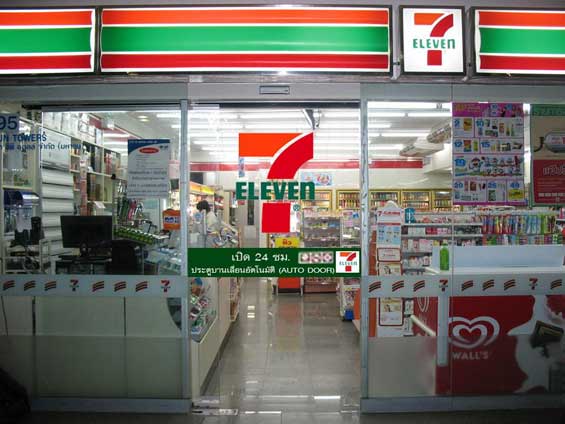
    Convenience-store chain 7-Eleven has warned of a bogus ‘franchisor’ in Cambodia. The company said it received reports that there is an unauthorized party representing itself as 7-Eleven’s master franchisee in the country and attempting to sell outlets.

    The reports promoted the company to issue an announcement confirming that Thailand’s CP All is the sole master franchisee in the market, having the exclusive right to open and operate 7-Eleven stores there.

    Last May, Thailand’s CP Group signed a master franchise agreement to operate the chain in Cambodia. The first store is scheduled to launch in Phnom Penh next year.

  • Tops unveils new supermarket retail format in Bangkok

    Tops unveils new supermarket retail format in Bangkok

    Bangkok’s Tops Market Westgate has undergone a major renovation designed to position the supermarket as the “most complete premium lifestyle supermarket in Thailand”.

    The revamp features six “magnet” zones introducing more than 40,000 globally sourced products and focused on meeting a broad range of target consumer trends, in a move to match Central Plaza Westgate’s own development plans and ambitions to become a Western Bangkok shopping hub. The zones include a bakery, health food store, international snacks market, a beauty and lifestyle zone, a dine-in section, and a pet accessories store. The renovation also features a farmers’ market.

    “The complete transformation of Tops Market Westgate is part of our strategy to move our business forward to meet changing consumer trends,” said Central Food Retail COO Sujita Phengoun. “We aim to elevate the shopping experience by offering a premium lifestyle supermarket for our customers to enjoy a new experience and have more fun while shopping.

    “Tops Market Westgate is a blueprint store for our premium lifestyle supermarkets in 2020, offering the most complete products and services in Thailand. There are six new zones that will serve as magnets that draw all customer groups. The renovation is in line with the expansion and increased purchasing power of consumers in Western Bangkok, and resonates with Central Westgate’s strategies to expand our customer base in eight provinces, in order to be the number one destination in Western Bangkok.

    Tops Market Westgate also features a fresh-food zone, a parenting zone, a fashion zone and a promotions zone.

  • Apple commits to reach carbon neutrality by latest 2030

    Apple commits to reach carbon neutrality by latest 2030

    Joining the growing list of businesses creating sustainable roadmaps to fuel future growth, technology giant Apple has committed to reaching carbon neutrality in its supply chain and production by 2030.

    Apple is already carbon neutral in its global corporate operations, but with this commitment, Apple will be removing 75 percent of its total carbon footprint while offsetting the remaining 25 percent with carbon removal solutions.

    “Businesses have a profound opportunity to help build a more sustainable future, one born of our common concern for the planet we share,” said Apple CEO Tim Cook.

    “Climate action can be the foundation for a new era of innovative potential, job creation, and durable economic growth. With our commitment to carbon neutrality, we hope to be a ripple in the pond that creates a much larger change.”

    Moving forward, Apple will lower its emissions through a number of initiatives, including a low carbon product design, investments in expanding energy efficiency, a continued focus on utilizing renewable energy, process, and material innovations, and the removal of carbon emissions.

    “We’re proud of our environmental journey and the ambitious roadmap we have set for the future,” said Apple’s VP of environment, policy, and social initiatives Lisa Jackson.

    The shift will be supported by Apple’s $100 million Racial Equity and Justice Initiative, which focuses on addressing education, economic equality, and criminal justice reform.

    “Systemic racism and climate change are not separate issues, and they will not abide by separate solutions,” Jackson said.

    “We have a generational opportunity to help build a greener and more just economy, one where we develop whole new industries in the pursuit of giving the next generation a planet worth calling home.”

    Apple’s ten-year commitment mirrors that of many of its contemporaries, with Microsoft announcing in January not only would it be carbon negative by 2030, but it would retroactively remove all carbon it had emitted since the business’ founding in 1975 by 2050.

    Swedish furniture firm Ikea, as well, is looking to become climate positive, or carbon-neutral, by 2030. The end goal is for all Ikea products to become 100 percent circular, using renewables and recycled materials.

    “That means we will reduce more greenhouse gas emissions than our value chain emits while growing the Ikea business,” Ikea said.

    “Our responsibility stretches across the entire value chain of our business: from the materials we use, manufacturing and transporting of products, our stores, customer travel and home deliveries, product use in customers’ homes and product end-of-life.

    “By taking a scientific approach and working together with our partners, suppliers, and customers around the world, we will make it happen!”

    And just last week, global retail marketplace and tech business Amazon announced a partnership with the We Mean Business coalition to further the Climate Pledge – an Amazon co-founder.

  • Spotify rolls out video podcasts to free and premium users worldwide

    Spotify rolls out video podcasts to free and premium users worldwide

    Podcasts are a thing for several years now, but they only recently blow up. Spotify and other music streaming services are pushing out lots of features related to podcasts, including the option to see the actual podcasters, while listening to them.

    Spotify revealed that it’s now rolling out a new video podcast feature with select podcasts, which will allow both free and premium users to listen to or watch these podcasts. Spotify also highlighted some of the podcasts that will benefit from video integration: Book of Basketball 2.0, Fantasy Footballers, The Misfits Podcast, H3 Podcast, The Morning Toast, Higher Learning with Van Lathan & Rachel Lindsay, and The Rooster Teeth Podcast.

    Regardless of whether you’re using an Android or iOS device, you can watch podcasts by pressing the play icon that usually appears on compatible podcasts. They should start automatically and sync almost immediately with the audio feed.

    The option to download the audio on your phone so that you can listen to your favorite podcasts on the go will remain available. Keep in mind that the video feature will only roll out in countries where podcasts are supported.

  • DBS Inks Digital Trade Financing Partnership

    DBS Inks Digital Trade Financing Partnership

    The bank will work with industry cloud software provider Infor to integrate digital trade financing capabilities into global supply chains.

    Under the partnership, the two sides will use innovative supplier financing tools, as well as Infor’s rich physical and financial supply chain data to bring new opportunities to fund suppliers and help reduce supply chain risk and friction, DBS said in a statement on Thursday.

    The first program under the partnership provides a faster and more cost-efficient digital trade financing to suppliers in an apparel company’s supply chain ecosystem, which comprises mostly small-to-medium-sized enterprises (SMEs). The next program, planned for late 2020, aims to improve the pre-shipment finance by using supply chain data as the primary conduit to assess risk and creditworthiness.

    Infor’s Nexus platform has more than 68,000 businesses, including market leaders in aerospace, healthcare delivery, automotive suppliers, industrial distributors, as well as global banks, retailers, hotel brands, luxury brands, and more.

    Our collaboration with Infor enables greater transparency into complex supply chains and provides insights into the transaction patterns between an anchor and its ecosystem of suppliers, DBS’ Sriram Muthukrishnan said about the partnership.

    The bank’s group head of trade product management noted that quicker and more cost-efficient financing to suppliers provided earlier in the cycle, as compared to conventional post-shipment supplier financing programs, is especially relevant today, given the environment characterized by prolonged trade disruptions and tighter credit lines, where optimal working capital management is key to survival.

  • Standard Chartered to Pilot Crypto Custody Solution

    Standard Chartered to Pilot Crypto Custody Solution

    The bank’s ventures and innovation platform is reportedly building a crypto custody offering for the institutional market, with a pilot planned for later this year.

    SC Ventures developing a venture to meet the demands of institutional investors for an end-to-end institutional-grade custodian of digital assets, which meets regulatory standards, Alex Manson its Singapore-based global head, told Coindesk earlier this week.

    The custodial solution will be based in the U.K., but will be open to clients from around the world, Manson said, noting interest from 20 institutions.

    Manson highlighted the opportunity to kick-start the institutional adoption of cryptocurrencies by providing the fundamental market infrastructure. He told the blockchain news portal that solutions currently available lack the security required to secure millions of dollars in digital assets, and lack function segregation.

    Complementing its custodial initiative, SC Ventures participated in an oversubscribed $17 million Series A funding round for Metaco, which runs an institutional operating system for digital assets.

    German-based security technology company Giesecke+Devrient led the round, which also saw participation from Zürcher Kantonalbank and venture capital firm Investiere, as well as all existing strategic shareholders Swisscom, SICPA, Avaloq Ventures, and Swiss Post.

    The funds will be used to fuel the next phase of the company’s growth in sales, product, and partnerships, and broaden its presence in the U.S., Southeast Asia, and Western Europe, the announcement last week said.

  • Apple defends its 30% cut of in-app purchases

    Apple defends its 30% cut of in-app purchases

    This coming Monday the CEOs of Apple, Alphabet, Amazon, and Facebook will testify before the U.S. House Judiciary Antitrust Subcommittee. Each of the four firms is being investigated for alleged anti-competitive behavior. Alphabet is Google’s parent company and Google is being accused of putting its products ahead of the competition when it comes to search results. It also is accused of forcing phone manufacturers to use Google Search and Chrome as the default search engine and browser on phones using the licensed version of Android. Amazon’s large share of the e-commerce market is under scrutiny and Facebook has a large share of the social networking scene.

    And that leaves Apple. The company is being investigated for taking a 30% cut of in-app payments and subscriptions made through the App Store (although the cut on subscriptions drops to 15% after the first year). Because Apple doesn’t allow iOS users to sideload apps from third-party app stores, it forces users to pay Apple’s prices for apps. The so-called 30% Apple Tax has led companies like Spotify and Netflix to stop accepting new subscribers from the App Store. And to make matters worse, Spotify competes directly with Apple’s own Apple Music app.

    The App Store is part of Apple’s fast-growing Services unit. After the number of iPhones it shipped peaked in fiscal 2015, the company decided that it would be a shrewd move to concentrate on a large number of active iPhone users worldwide. Apple could continue to generate profits from these consumers even without selling them a new iPhone by having them sign up for a service with a recurring subscription plan. Apple set a goal to hit $50 billion in Services revenue by fiscal 2020 from the $25 billion it took in during fiscal 2016. So far, halfway through fiscal 2020, Apple is on track to take in $52 billion in services revenue for the year. This unit includes Apple Music, Apple Pay, Apple News+, Apple Arcade, iCloud, iTunes, Apple Care+, the App Store, and more. Speaking of the App Store, it brings in twice the revenue of the Android app storefront, the Google Play Store.

    It is estimated that the App Store brings in $15 billion in revenue for Apple annually which is approximate twice the haul brought in by the Google Play Store despite the much larger share of the smartphone market that is owned by Android. The latter has approximately 85% of the connected handset market, but still, it trails badly when it comes to collecting revenue from its app storefront.

    The Wall Street Journal published Apple’s defense and the tech giant says that it does not run a monopoly. Instead, it says that the revenue it takes in from the App Store comes from a small percentage of the two million apps that are available from the store. One argument that Apple often cites on its behalf is that the 30% it charges is still cheaper than what software developers were paying to distribute their products to stores prior to the 2008 launch of the App Store.

    Apple decided to run a comparison study that sought to compare the App Store with other “digital marketplaces” including ones run by Amazon, Microsoft, Uber, and Walmart. Economists at Analysis Group, commissioned by Apple, came to the conclusion that the 30% cut charged by Apple is in line with the cut taken by Google and other peers. It is below 37% and 31% cuts taken by ticket sellers StubHub and Ticketmaster, respectively.

    European competition attorney Damien Geradin, who co-authored a study on this topic a couple of months ago, said that the App Store fee structure is “uneven.” He notes that while apps like Tinder pay 30% of their App Store sales to Apple, Uber and Airbnb don’t pay anything. “Problems are much deeper than the 30%,” he said.

  • Locals help rebooting Macau retail and restaurant activity

    Locals help rebooting Macau retail and restaurant activity

    Supportive measures for the Macau retail and restaurant trade resulted in a mild improvement in business during May, according to official data.

    According to a Statistics and Census Service report, 17 percent of restaurants surveyed in the special administrative region recorded a year-on-year increase in revenue during the period, 12-per-cent higher than those reporting increases during the previous month.

    The remaining restaurants continued to see declines in revenue during a period that continued to suffer from the heavy impact of the coronavirus pandemic.

    Similarly, 16 percent of retailers questioned saw sales increases during May this year compared to the same period last year, 7 percent higher than reported year-on-year rises during April.

    A quarter of restaurant businesses are now anticipating comparative upticks in revenue or steady revenues to be reflected in their June results – while 21 percent of retailers expect the same.

  • Shiseido looks to China’s online model for post-Covit 19 growth

    Shiseido looks to China’s online model for post-Covit 19 growth

    Shiseido Co is pumping up its e-commerce presence amid a “deep crisis” in the beauty business, with the Japanese company looking to its China strategy as a post-pandemic model for growth.

    The 148-year-old beauty giant sees its online proportion of overall sales growing to 30 percent in two or three years if current conditions continue, from about a fifth right now, according to CEO Masahiko Uotani.

    “From a business standpoint, we’ve been trying to come up with solutions to the current situation and use this as an opportunity to go at a faster pace with some reforms,” Uotani said in an interview in Tokyo.

    The reforms for Shiseido, which has relied heavily on department-store sales, involve training beauty consultants to use live streaming and social media, working more closely with retailers on the tech-enabled shopping experience, and investing in new marketing content for online, Uotani said. All strategies the company has implemented in China.

    “We need to merge online and offline to get people to buy more. Beauty products are different from others in that a human touch is very important, so we need to think about a structure that allows that,” he said. “There’s a lot we can learn from what’s going on in China.”

    Uotani’s focus comes as the beauty industry faces unexpected challenges because of the global pandemic that is different from previous downturns. Measures to control the spread of the coronavirus have melted away social norms like putting on makeup in the morning or spritzing on perfume before a night out. As people stay home, the need for beauty care has become a lower priority, making it difficult for businesses to bounce back quickly.

    The situation has also been complicated as department stores and beauty salons have closed during lockdowns, sending consumers to seek cheaper cosmetics brands online.

    Shiseido’s sales fell 17 percent in the first quarter and operating profit plunged 83 percent, mostly due to clampdowns on movement in China, where it does a fifth of its business, and a hit to tax-free sales to Chinese tourists in Japan. The company withdrew its annual forecast, acknowledging it would be unable to hit its mid-term goal of more than US$11 billion in sales by this year. For the second quarter, analysts are expecting Shiseido to swing to a loss.

    “The near-term earnings outlook will be difficult,” said Ritsuko Tsunoda, an analyst at JPMorgan Chase & Co. “But I think Uotani will leverage that for any material structural change that he couldn’t have implemented otherwise.”

    Mini-influencers

    Transitioning beauty-product sales online isn’t an easy step for an industry built on consumer preferences and dominated by the image of rows of samples at physical retailers that encourage trying and buying on the spot.

    Shiseido is training its sales staff in Japan to follow the example of Chinese employees, turning beauty counter ladies into mini-influencers. In China, department store consultants have taken to social media to stream the newest products that have arrived. Interested customers are then directed to the website of the department store to purchase the products.

    China has developed a booming culture for live video merchandising, and companies are beginning to catch on to the trend.

    Uotani sees China’s e-commerce sales hitting 40 percent of revenue from the region this year, jumping from 30 percent currently. He said China’s fast recovery — sales of high-priced prestige brands in April, after the strictest lockdowns ended, were at levels before the coronavirus hit — could bode well for other regions.

    Drunk elephant

    The focus in the short-term will be prioritizing its high-end beauty brands that can generate cash flow to invest in e-commerce, according to Uotani. The company, which owns Nars and Laura Mercier makeup, is looking to speed up the expansion of its Drunk Elephant brand, which it bought in an $845 million deal last year, as prestige skincare products have been resilient during the pandemic.

    Dealmaking, such as selling off non-core assets or buying businesses that can support the focus on prestige and e-commerce, is also part of the equation, Uotani added.

    “It’s a very deep crisis for our business, and we need to protect employees and the company,” he said.

    At stake is the legacy of Uotani’s tenure. When he took the helm of Shiseido in 2014 following stints at companies including Coca-Cola Japan, it was a rare instance of an outside executive joining the C-suite in the island nation, where managers are typically elevated through decades of service to one firm.

    Analysts and investors have praised Uotani’s efforts at Shiseido, whose value more than quadrupled during his tenure before the coronavirus hit. After such success, the current crisis is shaping up to be his biggest test.

    “In my 40 or so years working in business,” he said, “the unexpected and uncontrollable impact from the global pandemic is the biggest I’ve dealt with in my career yet.

  • Ikea City store in Shanghai opens, a Chinese first for Swedish retailer

    Ikea City store in Shanghai opens, a Chinese first for Swedish retailer

    Swedish home-furnishing giant Ikea opens an Ikea City store in Shanghai today, its first such outlet in China.

    The Ikea City opening comes after the Ikea Tmall flagship launch in March as part of the brand’s strategy to broaden the ways it reaches Chinese customers, making the brand more accessible.

    Located in Jing’an district, the store spans three floors and occupies 3000sqm. It will feature a limited range of about 3500 products.

    “We’re seeking to diversify store formats, including online channels as well, to complement each other in order to test, learn and gain feedback from customers to fuel future growth,” Francois Brenti, VP of Ikea China said.

    “We have seen solid growth of online channels following the pandemic and we expect this to continue in the future,” he said.

    The new Ikea City Shanghai store will take the brand’s number of stores in the city to five.

  • Cecil McBee forced to close all stores

    Cecil McBee forced to close all stores

    Japanese clothing label Cecil McBee is shutting down all of its physical outlets in its home territory.

    The brand has operated since the 80s, targeting a young fashionable market, but has struggled to remain relevant against Forever 21, H&M and other newer brands for more than a decade before the Covid-19 pandemic dealt a death blow.

    Cecil McBee’s decision acknowledges that the brand could not survive another outbreak with a period of store shutdowns. It will, however, continue to trade online.

    Cecil McBee’s 43 stores will close consecutively throughout Japan, with final closures to be made by February next year, according to reporting by Nikkei. Its fashionable Shibuya branch will shut down before this December.

    Several sister brands under parent firm Japan Imagination will likewise be discontinued, resulting in the closures of 92 additional stores and the retiring of 570 staff.

    The company’s other brands are Ank Rouge, Jamie ANK, Be Radiance, Fabulous Angela, Sophila, Agplus, Cachec and Rumour.s.