Author: Mei Ling Tan

  • Royal Enfield To Launch New Motorcycle Every Quarter

    Royal Enfield To Launch New Motorcycle Every Quarter

    Royal Enfield is going on the product offensive with a string of new products planned for the next three to four years, the company’s CEO Vinod Dasari revealed in online interaction in Freewheeling with SVP. According to Dasari, Royal Enfield’s product development team has been hard at work over the last few years to significantly accelerate Royal Enfield’s product plan. With new platforms, and models and variants under each platform, Royal Enfield intends to launch a new motorcycle every quarter for the next 3-4 years, Dasari revealed.

    The Royal Enfield Meteor 350 will employ the new 350 cc platform, with a new engine and new double-cradle frame

    “One of the things that we’ve done over the last 3-4 years is to significantly accelerate new product plans. We will remain a mid-sized company, that’s somewhere between 250 and 750 cc. In this range, there are five levels that we’re looking at. The first is a platform. We have a new platform coming up. We would have launched it by now, we will launch it some time, as soon as the lockdown is over. So we have the platforms, and under the platforms, we have the models, within each model we have variants, within each variant we have several color trims and graphics, and then we have the limited editions.

    “So five levels, we’re so excited that, to a point, every quarter, for the next three to four years, every quarter, we have a new model. It’s not just changing the colors or something, it will be almost a new model, or a variant, coming for the next three to four years,” Dasari said.

    The Royal Enfield Hunter is expected to be the second new model based on the same 350 cc platform

    Royal Enfield is already getting ready to launch an all-new 350 cc platform, which will debut in June 2020 with the new Royal Enfield Meteor 350. The new platform will employ a new 350 cc engine with significant performance and refinement than the existing UCE 350 engine, Dasari said, adding that the new platform will be a modular infrastructure, with the same engine, same gearbox and same frame, but will support several new models and variants.

    The new 350 cc engine is likely to replace Royal Enfield’s traditional pushrod architecture with overhead cams, and also use counterbalancers. While the CEO of Royal Enfield did not disclose any technical details about the new engine, we have reason to believe that it will be almost like a downsized version of the 650 cc parallel-twin engine, with a slick-shifting six-speed gearbox, and will be free-revving with smooth and refined performance. More details are expected when the new Meteor 350 is launched by the end of June 2020.
  • Hong Kong retail at a life or death state

    Hong Kong retail at a life or death state

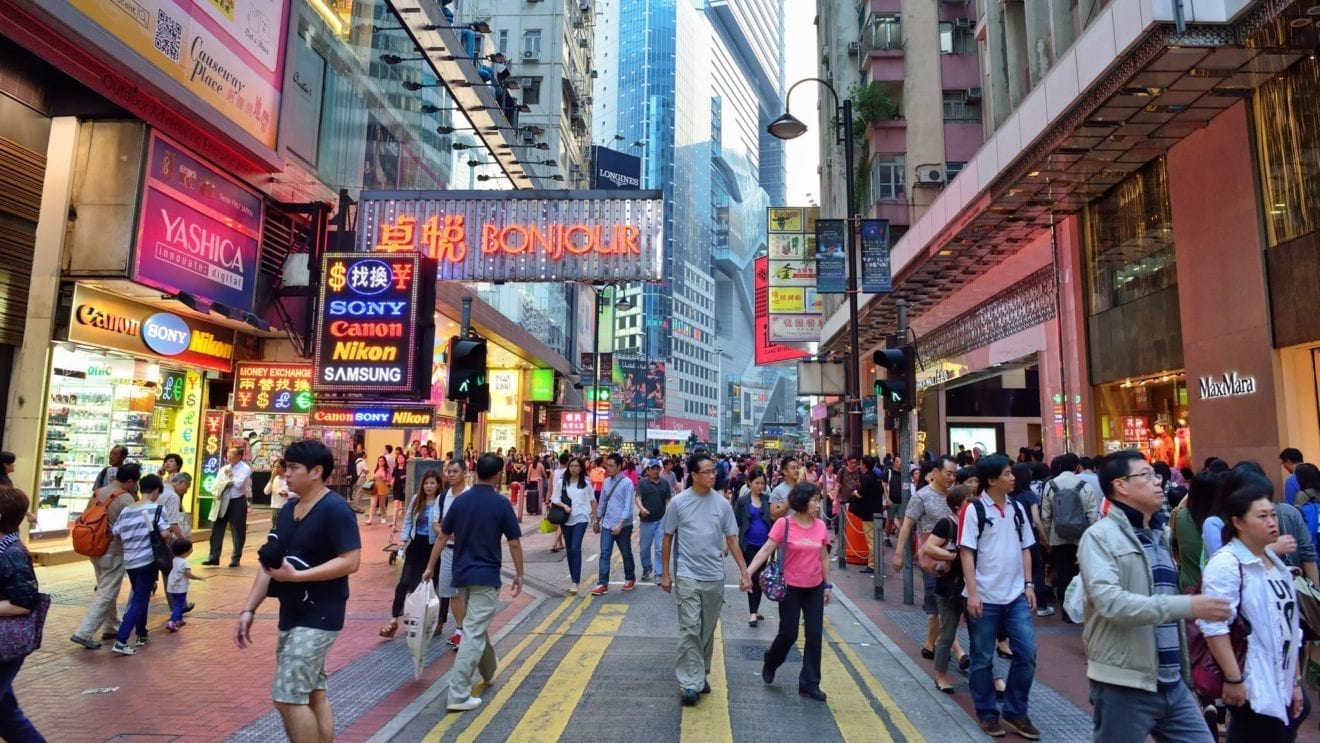
    Hong Kong’s retail industry is facing “a crucial, life-and-death moment of survival” according to the city’s main retail body the HKRMA, which has sent an open letter to chief executive Carrie Lam seeking government support.

    “Since the social unrest from June last year until the recent coronavirus pandemic, the retail industry has taken a hit for nearly a year,” Hong Kong Retail Management Association chair Annie Yau Tse told Lam in the letter.

    “The operating environment has become increasingly difficult,” she wrote, and even though the government has repeatedly offered relief measures to address immediate urgencies, the situation is still dire.

    Tse said HKRMA research projects 16,000 retail stores will close across the territory this year. That follows 14 months of negative sales growth, a brief respite, then a 40-per-cent-plus plunge during the Covid-19 crisis in February and March.

    “The industry is facing the biggest crisis in its history. Monthly rent is a retailer’s largest expense and the association has relentlessly called on landlords to reduce the rent in these difficult times.”

    While real-estate developers and individual landlords have shown support of varying degrees, the majority of the rent-reduction methods, scope and term do little to alleviate the losses already incurred “and neither is it enough to support a retailer’s continued operations,” she said.

    “In addition, recent responses and attitudes of landlords have become more indifferent and tougher than before.”

    Tse called on Lam to take action to force a suspension of rental payments for at least nine months, citing countries including Great Britain, Australia, and Singapore where laws were implemented during the Covid-19 crisis to ensure landlords take temporary action to help retail tenants recover. Restricting landlords from taking legal measures or taking back store premises for at least nine months would allow retailers to continue to trade and to recover, she advocated.

    “Hong Kong is the world’s most expensive place to rent. The income of many industries, especially those tourist-related, has contracted significantly, but store owners still face extremely expensive rent.”

    Tse also called for broader economic policies from the territory’s government to maintain a sustainable business environment.

    “Although HK’s economy has always been market-leading, the current economy is weak. Investments, consumption and exports have fallen sharply, the worst ever rate recorded in history.

    “Even if the global pandemic comes to an end, it is expected Hong Kong’s economy will still need at least half a year to gradually step out of the abyss.”

    The association believes that if high rents cannot be resolved in a timely manner, even with government funds and related relief measures, mass closures and layoffs are inevitable.

    “In the end, it will not only be a waste of government resources but also create an irreversible situation in the economy”.

  • Starbucks in Korea under fire for free-gift ‘wastage’

    Starbucks in Korea under fire for free-gift ‘wastage’

    A giveaway promotion from Starbucks in South Korea has drawn the ire of critics who allege consumers are buying coffee and dumping it to gain enough points for free goods. The promotion has become popular, critics say customers feel pressured to buy products in “excessive” volumes.

    Starbucks in South Korea is holding a promotional event from May 21 to July 22. If a customer buys 17 drinks, including seasonal drinks, they can get one of two small suitcases or a camping chair.

    Rival chain Hollys Coffee has also been running a promotion since May 12 that allows customers to purchase three products useful for camping, including parasols and chairs, at a 60-per-cent discount, if one spends more than 10,000 won (US$8.10) at the store.

    The problem is that some of these promotional products are exploding in popularity, and there is an abnormal craze, such as mass purchases of unwanted drinks to receive them.

    On social media sites, tips on how to buy 17 drinks at Starbucks for the lowest price (68,700 won) have been shared.

    Starbucks does not disclose the number of free gifts available at each store, but information about the stores is being posted online.

    Last Friday, a customer bought 300 cups of coffee at a time and returned home with only the small suitcases, as free gifts.

    The customer posted a memo titled “All Free” for the remaining 299 cups besides the one he or she took, but no one drank them, so all the coffee was reportedly discarded.

    In addition, some of the Starbucks suitcases are being sold for up to 200,000 won on online shopping malls and secondhand trading sites.

    “It is a thank-you event for customers who usually buy more than two cups a week, but we are in a difficult position as other customers report of the inconvenience,” a Starbucks in South Korea official said.

    “However, these gifts are being praised for their design and practicality.

    Hollys Coffee is also known to have many people lining up from dawn to buy its promotional items or going from store to store in search of a particular item.

    The craze is also attributed to the fact that both companies have released gifts aimed at “home camping.”

    Interest in domestic travel and camping has grown as the global Covid-19 crisis has made it virtually impossible to travel abroad during the summer vacation season.

    In particular, “home camping,” which can be enjoyed on verandas, porches or terraces at home, has also become popular as the number of people staying at home increases due to the coronavirus outbreak.

    According to Gmarket’s recent survey of sales during the period from April 22 to May 21, sales of tents for home use increased by 39 percent year-on-year, compared to growth of 49 percent for folding tables, and 48 percent for folding camping chairs.

    Some point out that the purpose of the promotional events, which were intended to convey a token of gratitude to loyal customers, is becoming blurred. Some are calling for measures such as limiting the quantity per person.

    “Unlike ordinary products, there is a problem where food and beverage be discarded if they are not consumed immediately,” a retail industry source said.

    “To prevent this phenomenon of throwing away money, Starbucks should be telling customers how many free gifts each store has prepared.”

  • H&M launches menswear clothing line using intelligent fabrics

    H&M launches menswear clothing line using intelligent fabrics

    Sweden fashion retailer H&M launches an intelligent fabric this week, deploying fashion technology for menswear which keeps the wearer cool in the summer heat.

    Called Coolmax, the intelligent fabric absorbs moisture and allows air to pass through.

    “We see fabric innovation as pushing menswear forwards in new ways,” said Ross Lydon, head of menswear design at H&M. “Coolmax is our first collection that optimizes everyday clothing with high-performance materials. It is a segment of the market that we will continue to explore and focus on in the future.”

    Coolmax fabric will be used in clothing such as polo shirts and crewneck T-shirts or jeans. The hero of the new Coolmax collection is a two-button tailored slim-lapel jacket, pictured at the top of the screen, which retails for 69.99. T-shirts are priced at €9.99 and polo shirts at 14.99.

  • Apple to reopen 100 brick and mortar stores in the states this week

    Apple to reopen 100 brick and mortar stores in the states this week

    There seems to be an urgency in the U.S. to get back to those carefree pre-COVID-19 days when the only thing you had to worry about was whether Apple’s new iPhone 12 series would support both sub-6GHz and mmWave 5G signals (they will). While some behavior, such as crowding together on beaches during Memorial Day, will no doubt lead to the second wave of COVID-19 cases, most businesses are reopening slowly while trying to take a safe approach.

    A week ago, we told you about some of the changes that T-Mobile has instituted for its reopened locations. An employee will open the door (regardless if you are coming or going), the capacity of each store will be sharply reduced to keep consumers at safe distances from one another and employees will have to wear a mask (no word on whether it has to be a magenta one). The sanitizer will be applied to the demo devices on the shelves while employees will have to spray and disinfect their own personal phones and tablets.

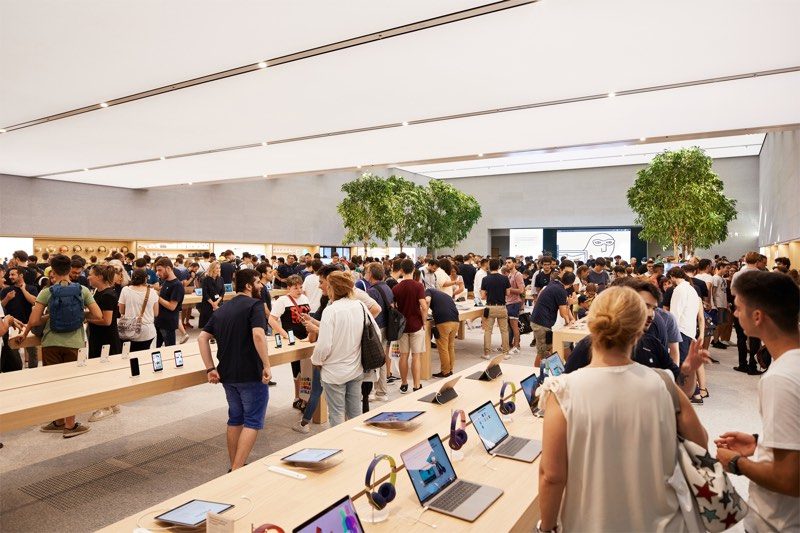
    Today, Apple said that it will reopen more Apple Stores in the U.S. starting tomorrow. Last week 25 locations in the states turned their lights back on along with 12 in Canada and 10 in Italy. The Apple Stores opened last week include those in Arkansas, California, Washington, Florida, Colorado, Hawaii, and Oklahoma. And now we are looking at another 100 U.S. stores that will be reopened this week. Most of these brick and mortar locations will provide curbside or storefront service only. Customers will be able to pick-up devices and accessories ordered online and show up for Genius Bar appointments. Some stores will be open for walk-in customers. Those stores will most likely require that customers wear a mask and have their temperatures taken before they are allowed to walk inside. Despite Apple’s willingness to get back to normal, those locations allowing walk-in customers will limit browsing and Apple will still focus on online sales.
    Apple says, “This week we’ll return to serving customers in many US locations. For customer safety and convenience, most stores will offer curbside or storefront service only, where we provide online order pick-up and Genius Bar appointments. Others will be open for walk-in customers and we encourage everyone to check their local store webpage for more information about hours at their preferred location. Customers can also visit apple.com for support by phone or chat. We are committed to reopening our stores in a very thoughtful manner with the health and safety of our customers and teams as our top priority, and we look forward to seeing our customers again soon.”
    As of today Apple has 510 stores globally with 271 located in the states. 148 stores worldwide are currently open and if Apple goes through with its plans for this week, that number will rise accordingly. Deirdre O’Brien, Apple’s Senior VP of Retail + People said earlier this month, “Our commitment is to only move forward with a reopening once we’re confident we can safely return to serving customers from our stores. We look at every available piece of data — including local cases, near and long‑term trends, and guidance from national and local health officials. These are not decisions we rush into — and a store opening in no way means that we won’t take the preventative step of closing it again should local conditions warrant.”
    Apple has still released new devices even with its stores closed. This includes the new refreshed versions of the iPad Pro (2020) and the second-generation iPhone SE. The company has also had to move its annual WWDC Developers Conference online; Apple will virtually host WWDC starting on June 22nd.
  • Fiat India Brings In Special Finance Schemes To Attract Customers

    Fiat India Brings In Special Finance Schemes To Attract Customers

    Automakers across the board are coming up with unique finance schemes to attract more consumers during these difficult times. If you’re one of those who looking at own any of the SUVs from the Jeep brand then Fiat Chrysler Automobiles (FCA) India has also announced a slew of financial packages that will make it slightly easier for you to finalize the deal. The ‘Jeep for All’ aims to reduce EMIs for corporate salaried customers, offer lowest loan interest rates on loans and give 100 percent on-road price funding albeit only for women.

    The schemes also promise coverage in the event of a job loss, critical illness or an accident. In such cases an arrangement assures customers of low EMI in the first 24 months of the loan tenure. Dr. Partha Datta, President, and Managing Director, FCA India said, “We are pleased to announce ‘Jeep for All’ which will offer customers a means to own a Jeep, comfortably within reach. ‘Jeep for All’ adds on to our booking-to-purchase digital retail module with an added sense of reassurance and peace of mind for our customers.”

    Under the scheme salaried customers can opt for a vehicle loan of up to seven years at attractive interest rates. This will offer them a three-month low EMI repayment option every year throughout the tenure of the loan. Customers can choose which months they want to pay lesser EMIs. The company is also promising 90 percent funding of the on-road price of the vehicle which goes up to 100 percent for women buyers. Lastly there’s also an option of availing a step-up loan for a tenure of up to seven years which allows the customers to pay the lowest EMIs for the first 2 years.

  • Indian jeweller Zoya expands in-country

    Indian jeweller Zoya expands in-country

    House of Tata’s luxury jeweler Zoya is launching a boutique in Bangalore. The 3300sqm South Indian flagship is opening a business in the city’s most prominent luxury strip on central Vittal Mallya Road with a venue aiming for an understated ambiance that evokes an appreciation for fine artistry and handcrafted jeweled accessories.

    “Zoya’s collections are inspired by myriad journeys, from the ones that take you across the world to the ones that help you discover your own feminine self,” said Zoya business head Amanpreet Ahluwalia. “The creative process of each jewelry piece can take up to a year from the idea of bringing it alive, resulting in artistic masterpieces, each with its own story to tell.

    “Having received a wonderful response from the North and West of India, we couldn’t have found a location for our Bangalore boutique that resonated more perfectly with the brand.”

    The boutique is conscientiously promoting its in-store sanitization protocols with the country still in the midst of the coronavirus pandemic.

  • SGX Reduces MSCI License Agreement

    SGX Reduces MSCI License Agreement

    The bourse said it will continue to broaden and deepen coverage of Asia by developing more derivatives products on its own or in collaboration with its partners.

    Singapore Exchange (SGX) will discontinue its license agreements with index provider MSCI for equity futures indices and futures contracts when they expire in February 2021, SGX announced on Wednesday.

    The two parties will retain their partnership on MSCI Singapore Index products and will both work to extend it well beyond 2021, the announcement said, noting that MSCI Singapore futures and options remain listed. SGX said it will work closely with the relevant stakeholders in managing their open interest during this period.

    While this may have a near-term impact on our equities derivatives open interest, our multi-asset portfolio shelf has reached a critical mass. SGX’s track record in derivatives positions us well to refresh and grow our suite of pan-Asian access products in a new direction, Loh Boon Chye, SGX chief executive, said.

  • UBS Nabs Top Credit Suisse Private Banker

    UBS Nabs Top Credit Suisse Private Banker

    Wealth manager UBS is poaching the banker instrumental in setting up Credit Suisse’s entrepreneur’s bank. He is the first prominent defector to join Iqbal Khan at UBS.

    UBS is enlisting Remi Mennesson to set up a financing team in a bid to provide better and faster service for its wealthiest clients, according to a memo. Mennesson is a discreet Swiss banking heavyweight and 20-year veteran of Credit Suisse, where he was a key ally of top private banker Iqbal Khan.

    At Credit Suisse, Mennesson led a strategic transactions unit that catered financing solutions to ultra-high net worth clients, generally viewed as those with more than $30 million in bankable assets. Khan and his co-head Tom Naratil have renewed emphasis on the segment by carving it out into a smaller group in January.

    Mennesson, a managing director at Credit Suisse, will join UBS in November. He will report to four co-presidents: investment bank co-bosses Rob Karofsky and Piero Novelli as well as Khan and Naratil. A spokesman for UBS confirmed the contents of the memo, which was first reported by Reuters overnight.

  • Covid-19 virus outbreak will speed up the reshaping of global retail trends

    Covid-19 virus outbreak will speed up the reshaping of global retail trends

    “Customers today care less about the breadth of assortment and more about availability.”

    Covid-19 has accelerated key underlying global retail trends that were already reshaping the industry according to a new report by KPMG.

    The research finds that retail markets globally are changing and the industry is continuing to evolve while facing massive challenges from Covid-19 crisis. However, far from stopping or slowing change in the industry, the pandemic has sped them up.

    In its report Global Retail Trends 2020, KPMG’s retail sector experts identified four key trends which will continue to impact operators:

    • An evolving retail business model, with online platforms becoming the shopping malls of tomorrow.
    • An increasing desire to explain a ‘sense of purpose’ to consumers.
    • A rethink of the costs of doing business.
    • A stronger focus on customer choices.

    KPMG’s retail sector group predicts just two types of retailers will survive: those offering a limited yet curated selection and those offering unlimited selection.

    The report also concludes that retail leaders will think more clearly about their investments into three key areas: customer loyalty programs, customer data, and technologies aimed at making the shopping experience easier, safer and more efficient.

    “In the post-Covid-19 environment, consumers will place greater emphasis on both convenience and safety,” explains Jessie Qian, partner, head of consumer and retail at KPMG in China.

    “During the lock-down, we have seen brands and shopping centers using WeChat Mini-programs, online social groups and live streaming videos to reach consumers through new channels without the need for foot traffic.

    “Customer data has now become both an important and a valuable asset,” says Qian. “Brands and retailers will aim to use customer data to improve business efficiency and increasingly provide more targeted and personalized services.”

    She says that while many physical stores will return to growth when the Covid-19 crisis passes, consumers’ experience shopping online through necessity will impact shopping behavior in the future.

    KPMG’s report on global retail trends predicts that during the year ahead, ongoing challenges with supply, demand, and business continuity will force many retail groups to rethink their business models. This should spark “a new wave of innovation and competition in the industry”.

    For retailers, cementing customer relationships may be the key to maintaining commercial viability in a post-pandemic world.

    “For most retailers, that means leaning strongly into online sales, proving that speaking to customers and understanding their needs has become just as important as the bottom line,” says Qian.

    Alice Yip, partner, head of consumer and industrial markets, Hong Kong, at KPMG China, says Covid-19 has been a catalyst for change in Hong Kong’s retail sector, impacting different retail formats by varying degrees.

    “Retailers relying on traditional brick-and-mortar stores have taken a considerable hit, while online shops are increasing their trading volumes and attracting new customers. When preparing for a post-Covid-19 environment, Hong Kong retailers will need to revisit their business models to better connect sourcing, logistics, customer interaction, and product sales both online and offline.

    “The aggressive cost-containment strategies implemented in the midst of Covid-19 have shown retailers that they will need to go further if they hope to return their business to profitable growth. Retailers will increasingly need to leverage data and analytics to identify their most profitable stores, configurations and products, and based on this, make important decisions,” she says.

    “The Covid-19 pandemic has shifted customer expectations. Customers today care less about the breadth of assortment and more about availability.”

    That sentiment was echoed by Anson Bailey, partner, head of consumer and retail in Asia Pacific at KPMG:

    “As we see changing consumer behavior, business models are evolving with the rise of platforms in Hong Kong and retailers need to move quickly as the technology is accelerating and the speed of change is relentless,” he says.

    “Consumers have greater expectations from those online experiences in terms of unlimited selections, instant delivery, transparent pricing and more flexible payments. We are therefore going to see a greater focus and investment dollars on those e-commerce platforms.”

    The group predicts that in the light of new global retail trends, retailers will focus on improving transparency, and on helping society respond and recover from the current health crisis.

    They also expect leading retailers will move from having a purposeful brand promise to using their purpose as a guiding growth principle and “a decision-making lens”.

  • Vely Vely selects Indonesian YouTube rising star to boost SE Asian brand

    Vely Vely selects Indonesian YouTube rising star to boost SE Asian brand

    South Korean cosmetic brand Vely Vely is banking on Indonesian YouTube star “Sunnydahye” to increase brand awareness as it launches into Southeast Asia.

    Sunnydahye is one of the most popular KoLs in Indonesia with more than 1.8 million subscribers on her YouTube channel. Using Sunnydahye’s influence in Indonesia and across Southeast Asia, Vely Vely hopes to accelerate its overseas market entry.

    The brand recently hosted her at its five-story flagship store in the Seoul district of Sangsu-dong.

    During her time in South Korea, Sunnydahye was introduced to Vely Vely’s latest beauty line including face mists and eye shadows. The Indonesian KoL later reviewed the products online.

    “We are very much pleased to invite Sunnydahye who has a large fan base in Indonesia while the level of interest in K-beauty is increasing in the Southeast Asian region,” said a company spokesperson. “With Sunnydahye, we will be able to introduce Vely Vely and Imvely brands to a greater number of customers in Indonesia.”

    Sunnydahye’s video review has attracted more than 250,000 views and 1000 comments, attesting to the South Korean brand’s growing popularity in Indonesia.

  • AirAsia enhances digital self check-in prior to flights resumption

    AirAsia enhances digital self check-in prior to flights resumption

    AirAsia has rolled out a number of additional safety procedures prior to the resumption of its flights, including enhanced digital self-check-in procedures.

    AirAsia check-in kiosks at airport terminals have been designed to perform contactless transactions by scanning QR codes of flight bookings from mobile devices or printed boarding documents. Guests only need to check-in online to generate a code, which will activate the kiosks automatically.

    “We look forward to flying with our guests as soon as circumstances allow it. With the hope that the global community is on its way to recovery, we continue to put in place measures that will safeguard the health and wellbeing of our passengers and crew. One way AirAsia is doing this is by maximizing the power of technology in line with our vision of becoming a fully digital company,” AirAsia Philippines Chief Executive Officer Ricky Isla said.

    To initiate a contactless transaction at kiosks, guests are advised to check-in first on the AirAsia.com website or mobile app. The generated QR code on their mobile device or printed document after checking-in may then be scanned at the kiosk, which will always be on “active mode” to read QR codes. Scanning a QR code will automatically print boarding passes and baggage tags without having to touch the kiosk’s screen.

    Guests may seamlessly self-check-in on the AirAsia.com website and mobile app 14 days up to 1 hour before the scheduled departure time.

    AirAsia’s mobile app will also see an enhancement soon where guests can scan their passports via the app itself, facilitating more streamlined user experience and a seamless and contactless self-check-in process. There are also plans to progressively add other features such as travel visa scanning capabilities in the near future.

    Meanwhile, measures that will be strictly enforced as part of the safety procedures include physical distancing at check-in and boarding queues.

    Guests will be required to have their body temperature checked by airport or airline personnel. Protective gear such as face masks will also be required inside the aircraft, and all passengers will be encouraged to practice high personal hygiene throughout the flight.

    Guests who experience symptoms related to Covid-19 during a flight are advised to seek assistance from cabin crew, who have been trained to handle inflight medical situations. Flight crew who attend to guests with said symptoms will be placed under home quarantine for 14 days in compliance with government guidelines.

    Protective equipment will be provided to ground and cabin crew while all aircraft will be furnished with antibacterial sanitizers compliant with the Bureau of Quarantine.

    All AirAsia aircraft, which are fitted with hospital-standard High-Efficiency Particulate Air (HEPA) filters, will also be sent for thorough disinfection after each flight with the use of disinfectant approved by the Bureau of Quarantine and the Civil Aviation Authority of the Philippines.

    AirAsia is complying with advice and regulations from the local government, civil aviation authorities, global and local health agencies, including the World Health Organization.

    AirAsia continues to closely monitor the situation and reserves the right to announce further policies according to the latest developments.

  • LVMH chairman Bernard Arnault buying stakes in Lagardere

    LVMH chairman Bernard Arnault buying stakes in Lagardere

    LVMH chairman Bernard Arnault will buy a stake in Arnaud Lagardere’s publishing and media group Lagardere Capital & Management (LCM).

    The transaction between the two French billionaires is expected to see Arnault pick up about a quarter of LCM’s share capital, according to a Reuters report.

    Lagardere’s portfolio includes numerous global travel retail stores, many of which are in Asia. In Hong Kong it is in a joint venture with China Duty-Free running key airport concessions for liquor & tobacco and it has a license to roll out the Thai-based Dean & Deluca cafes in airports in Europe and Asia.

    According to a statement released by LVMH and Lagardere, the move is set to “strengthen the corporate structure and financial capacities of LCM”.

    “The family groups led by Bernard Arnault and Arnaud Lagardere will act in concert with regard to Lagardere SCA”.

    Lagardere has recently been resisting attempts by leading shareholder Amber Capital to extend its influence over the firm by replacing the firm’s supervisory board. The moves are partly in response to criticism of the firm for its overly broad range of business interests and flagging stock exchange performance.

  • Korean coffee chains weigh impact of Blue Bottle debut

    Korean coffee chains weigh impact of Blue Bottle debut

    A year has passed since South Korea’s first Blue Bottle Coffee shop opened in Seoul’s eastern Seongsu neighborhood – a trendy hangout spot where young artists and designers renovated existing buildings into art spaces, fine restaurants and cafes to woo customers.

    What impact has this American coffee franchise had on the coffee industry in South Korea?

    Blue Bottle Coffee now runs five shops, located in Seongsu-dong, Samcheong, Yeoksam, Apgujeong and Hannam.

    Among coffee industry analysts, opinions are mixed. Some believe that the newcomer’s focus on specialty coffee has contributed to the expansion of the high-end coffee market, while others say that the company’s influence has been minimal.

    The coffee industry believes that Blue Bottle contributed to the popularisation of specialty coffees, once popular only among coffee enthusiasts, arguing that the market expanded when Blue Bottle opened for business.

    “Blue Bottle made a significant contribution to starting a new era for the South Korean coffee market, spreading the culture of specialty coffee far and wide,” an industry source said.

    “The company will continue to attract more popular interest in specialty coffee.

    There are others, however, who believe that Blue Bottle’s influence in South Korea has been minimal.

    A limited number of vendors and its operational focus on Seoul has led Blue Bottle to be tied up regionally, and most of the customers are hard-core coffee enthusiasts who have limited influence in the popularisation of specialty coffee, they say.

    In addition, Blue Bottle’s shops don’t provide free wireless internet and other convenience facilities normally found in other coffee shops, breaking with tradition as South Koreans commonly visit coffee shops to meet with others.

    “Blue Bottle gained attention when the first shop opened. Now, it struggles to win the heart of South Korean customers,” another industry source said.

    “They should have entered the South Korean market with a better understanding of South Korean customers.”

  • Samsung together with Facebook help Indian SMEs go live online

    Samsung together with Facebook help Indian SMEs go live online

    Samsung and Facebook have partnered up in India to train retailers to expand into e-commerce via social media platforms such as Instagram and WhatsApp.

    More than 800 retailers have undergone training sessions, with many more expected to participate in the near future.

    “Our partnership with Facebook is helping a large number of our retail partners go digital in a big way,” said Samsung India senior VP mobile business Mohandeep Singh. “By leveraging the Facebook training, our retail partners will be able to discover and target local consumers digitally.”

    The training by Samsung and Facebook most specifically targets offline retailers of Samsung products to set up business pages and accounts on Facebook’s various platforms.

    “The presence of local Samsung retailers on Facebook, Instagram, and WhatsApp will help consumers reach out to their local retailers for more information about their desired Galaxy smartphone, and shop for Galaxy smartphones on the platform of their choice,” read an official statement from Samsung.