Author: Mei Ling Tan

  • HSBC Appoints Private Banking Product Head

    HSBC Appoints Private Banking Product Head

    HSBC Private Banking named a new global head of products, investment, and collaboration based in Hong Kong.

    Lavanya Chari joins from Deutsche Bank in Singapore where she was last its global head of products and solutions for private banking.

    According to an HSBC statement, Chari will lead HSBC’s product strategy serving both private banking and personal banking client needs, effective July 20. Chari will report to Annabel Spring, head of Customers and products for the wealth and personal banking unit as well as the CEO of HSBC Private Banking.

    Chari joined Deutsche Bank in 2002 and had since held various senior roles across its wealth amendment and global markets business. Previously, she also ran other businesses such as Asia structured investment solutions, global commodities asset structuring globally, and rates asset structuring for Europe.

    Chari will be charged to cover a full continuum of clients across HSBC’s banking segments from personal banking all the way to family offices, according to a recent comment by regional head of wealth and personal banking Greg Hinston, who placed extra emphasis on the latter segment.

    The newly merged unit, with a combined $1.4 trillion in assets, will look to target markets where it has scale – Britain, Hong Kong, and Mexico – with a focus on mortgages, wealth, and issuance products, and unsecured lending.

  • Hong Kong protests against I.T Group

    Hong Kong protests against I.T Group

    Hong Kong’s Causeway Bay was yesterday the center of the largest and most disruptive protest activity since the outbreak of Covid-19, forcing stores to close and shoppers seeking shelter from tear gas.

    And they revealed a new target: Hong Kong-listed apparel retailer I.T Group and its founder Sham Kar Wai.

    Angered by moves in Beijing to impose new national security laws on the territory, thousands of protesters took to the streets yesterday, ignoring social-distancing practices and unconcerned that the gathering had not been authorized by police.

    About 180 people were arrested after police fired tear gas and pepper spray and used one of its water cannons to shower groups gathered on Hennessy Road and surrounding streets.

    I.T Group’s A Bathing Ape store on Lee Garden Road had all of its feature windows smashed, with piles of glass fragments covering the footpath.

    Around the corner, its Commes de Garcons store received similar treatment. As during last year’s protests when retailers perceived to be pro-Beijing had stores targeted, nothing was stolen.

    Images of the damaged I.T stores were circulated on Twitter along with explanations why the company is now a target. Sham Kar Wai has been identified by the protest movement as “pro-Blue” after photographs were circulated allegedly showing him attending a police social event.

    “…This has absolutely NOTHING to do w/Comme des Garcon. If anything, I admire Rei Kawakubo A LOT!,” a person identifying themselves as Chloe tweeted, referring to the damaged store. “Her inspiration is often driven by freedom and rebellion. On that note I hope Dover St Market and CDG would stop their partnership with Sham Kar Wai’s I.T.”

    In a long stream, the person also shared internal memos instructing I.T staff to urgently remove stock from shelves from the US brand Awake NY after it posted messages last year supporting protests via tweets on its own channel:

    Meanwhile, across town, live television broadcasts showed several people in restraints being escorted from the Harbour City shopping centre in Kowloon, some by plainclothes police.

  • cand JD use big data to design ‘C2M Mobile Phone’

    cand JD use big data to design ‘C2M Mobile Phone’

    Chinese e-commerce giant JD and device manufacturer Xiaomi sold 10,000 units of a jointly-produced mobile phone within 11 minutes.

    The Redmi K30 5G Racing phone was developed by Xiaomi based on customer insights generated from big data provided by JD. Sales volume passed RMB2 million (US$280,500) within two minutes, with the unit price at RMB1999 ($280).

    More than 20,000 phones were sold within the day.

    JD’s data revealed that most customers within the price range were females with higher educational backgrounds and above-average demand for device functions and CPU. The phone was designed with an upgraded CPU and with a mint green color tone, shown by the data to be more attractive to female customers. JD’s data also supported the marketing strategy of the product, targeting around 1.2 million customers likely planning to replace their phones within two months.

    “We have great confidence in the new C2M product,” said Xiaomi China VP Weibing Lu. “JD has been an important partner for Xiaomi, and we will work closely with JD on more C2M products in the future to better serve our customers.”

    “JD has been continuously working on C2M products with our brand partners, and the Redmi K30 5G Racing version is the collective effort of JD, Xiaomi, and Qualcomm,” said JD Mobile Devices president Daniel Tan.

    “C2M enables customers’ demands to directly reach upstream supply chain players, helping to optimize supply chain efficiency and reduce costs. This model enables us to keep improving the shopping experience.”

  • TUMI and ONE Championship to Design and Launch the  Ultimate Luxury Esports Gaming Bag

    TUMI and ONE Championship to Design and Launch the Ultimate Luxury Esports Gaming Bag

    The largest global sports media property in Asian history, ONE Championship™ (ONE), today announced that their existing commercial partnership with TUMI across ONE’s esports and martial arts properties will include a expand special branded challenge during season one of The Apprentice: ONE Championship Edition that will deliver the perfect companion for esports athletes – the ultimate luxury gaming bag.

    Together with ONE Esports, TUMI’s global design team will challenge the show’s contestants to help design, market, and launch the ultimate luxury gaming bag in an episode of the series. To bring the bag to life, contestants on The Apprentice: ONE Championship Edition will work with TUMI to leverage the brand’s innovative functionality, superior performance and premium design to create a product that is perfectly catered to the needs of gamers on the go. TUMI and ONE Championship will also partner on additional marketing efforts to promote this new initiative, which will eventually be sold to the public.

    Victor Sanz, TUMI Creative Director, stated: “We are excited to partner with ONE Championship on ‘The Apprentice: ONE Championship Edition.’ We look forward to seeing the innovative designs and out-of-the-box marketing launch plans the contestants come up with to elevate the journeys of gamers around the world.”

    Carlos Alimurung, CEO of ONE Esports, stated: “Given ONE’s global reach and our millennial audience who drive the gaming market, we are excited to support TUMI’s entrance into the gaming world. We are thrilled to use “The Apprentice: ONE Championship Edition” to facilitate cutting-edge innovation and work with TUMI to bring a compelling product to the market that will strongly resonate with esports athletes”

    Under license from MGM Television, ONE Championship’s unique take on the hit reality television franchise is scheduled for release and distribution in Q4 of 2020.

    The Apprentice: ONE Championship Edition will invite sixteen (16) contestants handpicked from around the world to compete in a high-stakes game of business and physical challenges. The winner will receive a US$250,000 job offer to work directly under Chairman and CEO Chatri Sityodtong for a year as his protege in Singapore.  In addition, a total of 12 of the world’s top CEOs (1 CEO per episode) will be featured as guest judges alongside Sityodtong. The business competitions will focus on a variety of real-world problems and industries. Meanwhile, the physical challenges will be graced by the World Champions from ONE Championship, where contestants will aim to outshine them in feats of athletic ability and endurance.

    ‘The Apprentice’ is one of the world’s biggest non-scripted reality TV programs in history and judges the business skills of a group of contestants competing for a job offer from a high-profile CEO. It has aired in over 120 countries. The first season of The Apprentice: ONE Championship Edition will consist of 13 episodes.

  • AirAsia India resuming domestic flight operations on Monday

    AirAsia India resuming domestic flight operations on Monday

    Domestic flight operations are all set to resume in a calibrated manner from Monday (May 25). AirAsia India is also resuming domestic flight operations tomorrow, the carrier informed on Sunday,

    In a tweet AirAsia India said, “AirAsia India is resuming domestic flight operations tomorrow, i.e. 25.05.2020. Passengers undertaking travel to any state are required to read, understand, and comply with the health and other protocols prescribed by the destination State / UT for airline travelers.”

    Note that the government has fixed upper, lower fare limits for the next three months to ensure there is no overcharging by airlines in view of an expected rush of passengers and heightened demand for tickets.

    It is worth mentioning that IndiGo, SpiceJet, AirAsia India and Vistara started taking bookings for flights starting May 25. The government had announced on May 17 that domestic flight operations will remain suspended until May 31. However, a day later, the union civil aviation minister had said the decision to allow flights is also up to state governments.

    On May 20, Aviation Minister Hardeep Singh Puri surprised people by announcing that the government will allow domestic passenger flights to resume from May 25 in a calibrated manner.

  • Facebook Shops enabling retailers to sell directly to consumers

    Facebook Shops enabling retailers to sell directly to consumers

    Social commerce is about to get a whole lot more social, with Facebook announcing the launch of its business-to-consumer marketplace offering Facebook Shops.

    The new platform began rolling out in New Zealand yesterday and will be progressively rolled out across international markets during the coming months.

    Shops will leverage the co-owned ecosystem of Facebook, Instagram, and WhatsApp to make it easy for customers to find the products they want, wherever they are, and be able to get in contact with the business selling if they need more information.

    Businesses will be able to set up a partly-customizable storefront within Facebook, which can be accessed through Facebook, Instagram, or through stories or ads.

    In the US, customers will be able to check out directly within Facebook – though this feature has yet to make it to Australia and New Zealand.

    “Over the past three months businesses of all sizes have been forced to change their business models and adapt to selling online,” Facebook Australia and New Zealand MD Will Easton said.

    “We’ve accelerated our development of new products, giving businesses better means of connecting with consumers, and helping businesses who don’t have an online presence to drive sales online.”

    Facebook founder Mark Zuckerberg says Shops will be free for businesses to access.

    “Our business model here is ads, so rather than charge businesses for Shops, we know that Shops are valuable for businesses. They’re going to – in general – bid more for ads and we’ll eventually make money that way.”

    And later this year the business will expand Shops into its live-streaming features, in which a business can tag products that will be on display before starting a stream to make them purchasable when going live.

    Facebook is already working in collaboration with e-commerce partners such as Shopify, BigCommerce and WooCommerce to enable businesses an easier time getting their Facebook Shop up and running.

    Shops is the latest push by the social media giant into the world of commerce, building off the strengths of its customer-to-customer Marketplace offering.

    And according to industry firm UBS the drive toward online shopping will only become more important for businesses in a post-Covid-19 world.

  • South Korea introducing disposable cup deposits

    South Korea introducing disposable cup deposits

    South Korea is set to introduce disposable cup deposits at coffee shops and fast-food outlets, starting 2022, in its latest efforts to cut carbon emissions.

    Under a set of bills approved in Parliament this week, businesses will factor the deposits into prices and refund the amount when customers return used disposable cups. It usually takes from six months to two years for passed bills to go into effect.

    The country’s environment ministry said it plans to set the value of disposable cup deposits based on manufacturing costs and policy needs.

    The ministry expects the policy to help reduce carbon emissions by 66 percent by boosting recycling and cutting costs related to waste incineration.

    It estimated the economic benefits coming from the plan would total 44.5 billion won (US$36.2 million) each year.

    The ministry also plans to minimise the inconvenience by allowing consumers to return the cups anywhere (ie: not from where the cup was purchased) through talks with relevant industries.

  • Sephora launched Tmall flagship store in China

    Sephora launched Tmall flagship store in China

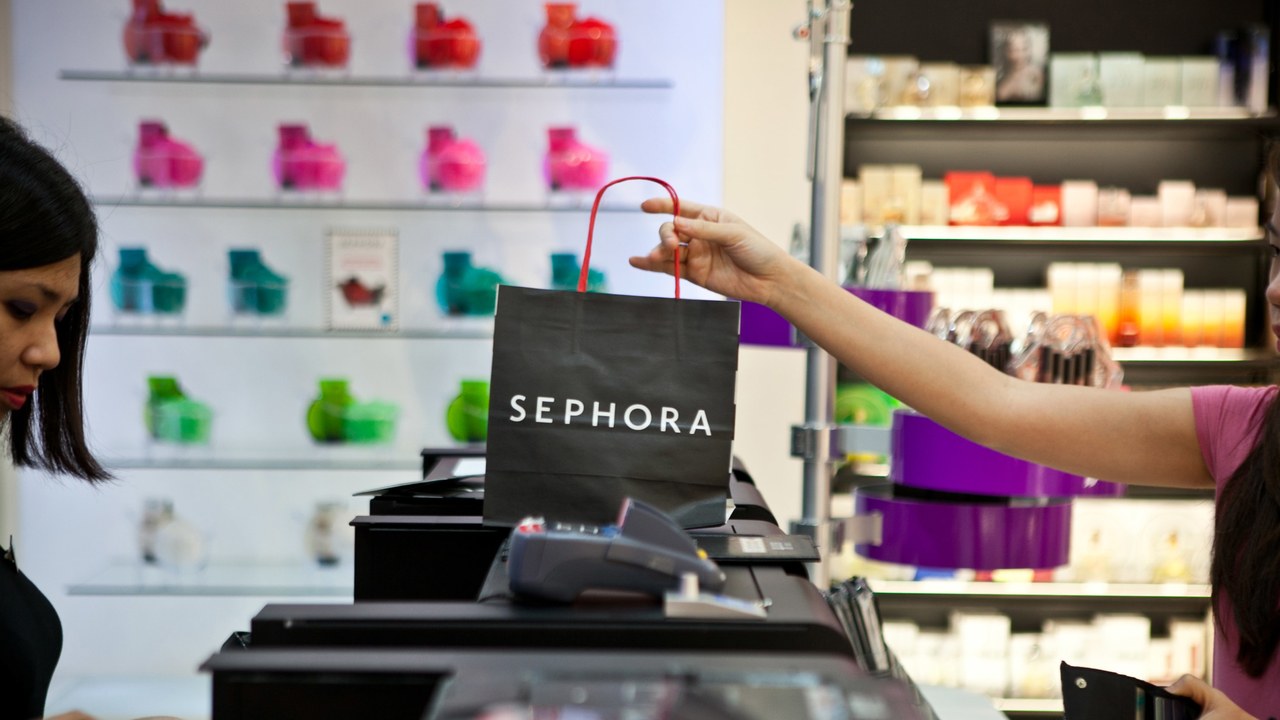
    Sephora China has launched a flagship store on Alibaba’s B2C platform Tmall Global.

    The Sephora Tmall Global flagship features a selection of beauty brands including Fenty, perfume house Bon Parfumeur, and skincare brands like Farmacy and Dermalogica. The cross-border store also introduced a series of beauty lines’ China debut such as Natasha Denona and Sunday Riley.

    As part of the launch, the beauty retailer unveiled its first showroom presenting cross-border beauty products with “cloud shelves” in a physical Sephora store.

    “Through the synergy of online and offline channels, consumers can access overseas brands to fulfill their emerging and evolving needs,” said Benjamin Vuchot, president of Sephora Asia. “This initiative is very special to us, as we are celebrating the 15th anniversary of Sephora China this year.

    “The opening of the Sephora Tmall Global flagship store offers a great opportunity for Sephora to continue reinforcing its commitment to the China market, by catering to the Chinese consumer’s ever-changing trends and evolving needs to enhance their beauty power,” Vuchot said.

    The Sephora Tmall Global flagship houses 600 products from 25 overseas beauty brands in the country.

  • Apple is reportedly livid as iOS 14 leaks earlier than usual

    Apple is reportedly livid as iOS 14 leaks earlier than usual

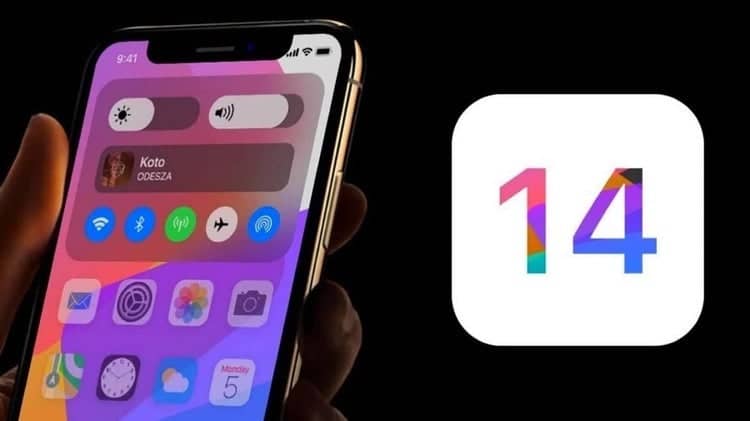
    Even though the final version of iOS 14 isn’t expected to drop until September, Motherboard reports that leaked versions of Apple’s mobile operating system have been in the hands of some hackers, bloggers, and researchers since February. Unlike past leaks which consisted of segments and screenshots of the upcoming iOS release, in this case an entire version of the software has leaked.

    How the leak happened isn’t clear, but the report indicates that someone was able to get his hands on a developmental iPhone 11 with a version of iOS 14 dated last December. As you might expect, another person purchased the phone with the software for thousands of dollars. After the phone changed hands, the buyer was able to isolate and remove iOS 14 from the phone and he passed it along to hackers and jailbreakers (which for Apple has become ballbreakers).

    Motherboard brought a copy of the leaked software to the cybersecurity firm SIXGEN. Ryan Duff, Director of Cyber Products at the firm noted the final version of iOS 14 could be much different, but the amount of information that leaked out of Apple was impressive. Duff stated that “It gives insight into a decrypted copy of the iOS file system months before release so it could be very useful. It’s pre-release, lots could change, but it’s a trove of information. I can’t say this will give an easy jailbreak or anything like that, but it’s way more information about an upcoming iOS than we ever see normally.” At least one other cybersecurity firm has this version of iOS 14 in its possession and is studying it.
    There is a hashtag on Twitter for those who trade in leaked Apple software and hardware and it is #AppleInternals. For obvious reasons, no one uses their real name when working out a deal, but the Apple software and hardware that changes hands is usually legitimate. And the existence of this marketplace doesn’t make Apple employees feel good. One employee said succinctly “that sucks” after hearing about the iOS 14 leak for the first time. Others have reportedly been offered the leaked software but stayed away from it because they were concerned about what Apple’s response might be.
    The motherboard did check with three people who claim that they had a copy of iOS 14. One of the three said, “There’s a network of people who have access to such things.” And some of those looking to sell a copy of iOS 14 are doing so right out in the open. One Twitter user posted under the #AppleInternals hashtag, “Looking for iOS 14? Send me a DM.” He shared a copy of the OS with Motherboard and the latter was able to verify that the three people who had the software all have the same version.
    With the first public beta of iOS 14 expected to be released on June 22nd, this is the earliest that an iOS build has leaked. The copy that has been circulating is dated December 10th, 2019, and has been offered on the internet since February. And Apple is ready to crack down on those who are involved in leaking iOS 14. Will Strafach, a former jailbreaker who founded iOS security app Guardian Firewall, explains how laser-focused Apple is on the situation. “Shit is wild,” said Strafach. “I feel a bit bad for whoever is messing around as Apple does not take kindly to this.”
    Apple does have a history of seeking retribution in situations where it has been unable to keep its unannounced software or hardware under wraps. In 2011 a man named Sergio Calderon found an iPhone prototype on the floor of a San Francisco bar. Apple not only sent the cops to Calderon’s house to track it down, it reportedly had members of its security team dress as San Francisco cops to find the device. Calderon claimed that one of the cops threatened him and it was later discovered that the man wasn’t a cop after all but a member of Apple’s security team.
    Apple has declined comment about the iOS 14 leak.
  • Chanel faces fair-trade hurdles in South Korea

    Chanel faces fair-trade hurdles in South Korea

    French luxury label Chanel is under investigation for alleged breaches of South Korea’s Free Trade Act.

    The Korean Free Trade Commission (KFTC) is looking into allegations that the firm is placing unfair restrictions on duty-free operators distributing its products to local retailers. Korean law has recently relaxed restrictions on how duty-free companies can sell and distribute stock following the heavy impact of the coronavirus pandemic on the industry. The previous regulations restricted duty-free companies from passing stock and inventory to local retailers.

    The French group however is refusing to allow its products to be sold at potentially reduced prices.

    “If a firm does not allow a business partner to sell its products at a certain price and threatens to cut supplies or impose a penalty in any future business relations, this is a contravention of the Fair Trade Act,” a KFTC official said.

    “If Chanel violates the act, then we can bring a case for possible judicial review and apply administrative actions, accordingly, from imposing fines through to issuing a correction order or even prosecuting the brand, in the worst-case scenario.”

    Customer levels have reduced 85.7 percent since the outbreak, with sales halving from KRW2.17 trillion (US$1.76 billion) down to KRW1.08 trillion ($885 million).

  • Job portal Mybrands launched in Singapore

    Job portal Mybrands launched in Singapore

    Retail-solutions consultancy IDA’SG is launching a niche job portal for fashion, beauty and lifestyle retail firms in Singapore.

    Called, MyBrands SG, the platform will launch on July 3 and is designed to enhance skill matching in the city’s retail industry.

    “With the launch of Mybrands.sg, we hope to help brands become more effective and efficient with managing all their hiring needs using a single touchpoint,” said IDA’SG MD Angeline Yap. “Our algorithm has been tried and tested in Japan and we are confident that it will produce results in Singapore as well. Essentially, we want our clients to be able to fill a role in the shortest time possible, with quality candidates who have the right skill sets for the job.

    “Mybrands will initially be launched in Singapore and we plan to expand the services across Asean and the rest of Asia Pacific region in the near future.”

    The platform features customizable resume templates for jobseekers and cash rewards for successful candidates who complete their probation as well as those who refer friends to the platform.

  • Maybank Posts Q1 Profit Growth

    Maybank Posts Q1 Profit Growth

    The bank’s improved quarterly performance was the result of the sale of some liquid assets and fixed income instruments, which raised net fee-based income.

    Malaysia’s largest lender recorded a profit of RM2.05 billion ($470 million) for the first quarter of the year, an increase of RM240.4 million or 13.3 percent year-on-year, according to financial results released on Thursday.

    However, the bank’s group president and chief executive Abdul Farid Alias said the results do not reflect expectations for the rest of the year, as the full impact of the Covid-19 pandemic was not yet known.

    The full effects of rate cuts across key markets will show in 2Q income, with net interest margin expected to compress 15bps in the current rate environment, Maybank said in its outlook for 2020.

    Given the strong trading income and heightened risk going forward, the bank is making additional provisions of about RM600 million for loan losses, RM400 million for forward-looking assessment based on weakening macro-economic factors, and RM200 million for retail portfolio slippage.

    Maybank said its priority was to help support the domestic economies of its home markets and to work with affected borrowers to ensure viable solutions that support employment and prevent business failures in the near term.

    In Singapore, its profit before taxation was S$77.3 million, an improvement of more than 100 percent from the same period a year before, which recorded a loss before taxation of S$79.7 million, which was due to higher loan loss allowances.

    Net fund based income was 11.8 percent lower on-year at S$170.4 million, attributed to margin compression, while fee-based income grew 26.1 percent on-year, led by wealth management and investment gains. At the same time, overhead expenses increased by 7.5 percent due to higher personnel and information technology costs.

  • WhatsApp update will close vulnerability that leaves messages unencrypted

    WhatsApp update will close vulnerability that leaves messages unencrypted

    Apple iPhone users that rely on WhatsApp’s end-to-end encryption might not realize that there is an opening that could allow a hacker to read their messages. According to the WhatsApp FAQ page, WhatsApp messages that are backed up in iCloud are not protected by the app’s end-to-end encryption. However, an update is coming to shut this vulnerability. A WhatsApp iOS beta includes a change that “enables the encryption of chat histories hosted on iCloud, including media” through the settings on the WhatsApp app.

    If WhatsApp decides to go ahead and include the feature in an upcoming update to its public iOS app, authorities, hackers, and even Apple will be shut out from reading your unencrypted text messages. Essentially, the update would extend the end-to-end encryption available from WhatsApp to messages being stored in iCloud. And at the same time, WhatsApp is working on the same protection for its chat backups on Android.

    Just as WhatsApp chats backed up in iCloud aren’t covered by end-to-end encryption, neither are the chats that Android users back up on Google Drive. The new feature could be available on the WhatsApp beta for Android version 2.20.73 and is called “Protect Backup,” which pretty much is self-explanatory. Until it becomes part of WhatsApp for Android and iOS, just keep in mind that despite the end-to-end encryption found on the app, if you back up your chats to iCloud or Drive, you are leaving them vulnerable to being read. There isn’t any evidence that this has been exploited, but it is something that every WhatsApp user should be aware of.

    It appears that WhatsApp’s iOS users are more excited by the coming addition of support for QR codes. This is a feature that will allow users to create personal QR codes to help others find them. QR code support will also be available for Android totin’ WhatsApp users soon.

  • JD sells ten thousand tons of fresh products in a week

    JD sells ten thousand tons of fresh products in a week

    Chinese e-commerce giant JD has registered sales of 27,000 tonnes of fresh products during its Foodie’s Carnival online shopping event, including 4531 tonnes of imported fresh food.

    The week-long online festival brought together more than 6000 global brands selling in excess of 1 million seasonal fresh products. The JD Fresh platform also took on a 168-per-cent increase in new users compared to the same period last year.

    The top three products in terms of sales volume during the event were shrimp, beef, and ice cream, while sales in 10 categories increased 200 percent year on year.

    During the promotion, more than 10 million eggs, 17 million crawfish, and 100 tonnes of imported fruits were sold. Durians, lychees, and blueberries were the top three best-selling fresh products among younger buyers under 25, who were shown to shop for quality and not be price sensitive.

    Special promotions were held for New Zealand and Southeast Asian fruit, as well as Norwegian seafood. The promotion also saw more than 3.3 million orders of products sold through JD’s National Fresh Produce Green Channel initiative aiming to aid Chinese farmers.

  • Bulgari E-commerce platform launched in Singapore

    Bulgari E-commerce platform launched in Singapore

    Italian jewelry firm Bulgari has launched an e-commerce platform in Singapore prior to opening online services in its home territory. Korea will soon follow.

    The luxury brand is accelerating its digital program following the effect of the coronavirus pandemic on the industry, placing restrictions on the ability of shoppers to visit physical stores. It is planning to launch new online boutiques in seven countries over the next 90 days, beginning with the Singapore shop going live yesterday.

    The store features an AR function allowing shoppers to view products as they would appear in the real-world environment, as well as e-concierges and home delivery services.

    “E-commerce must be an engaging and exclusive 360-degree experience, offering the same service of excellence delivered in a Bulgari boutique,” said Bulgari CEO Jean-Christophe Babin.

    “Not to mention the complementarity of the website with the boutiques in terms of content and information.

    “With Covid-19, our e-shop has become our number-one store worldwide with a growth exceeding 100 percent and we believe it will reinforce its leading position after Covid-19, as it has been an accelerating factor.”

    Bulgari’s next e-shops are expected to launch in the UAE, Italy, France, Korea, Mexico and Brazil.