Author: Mei Ling Tan

  • DHL adds American flights due to COVID-19

    DHL adds American flights due to COVID-19

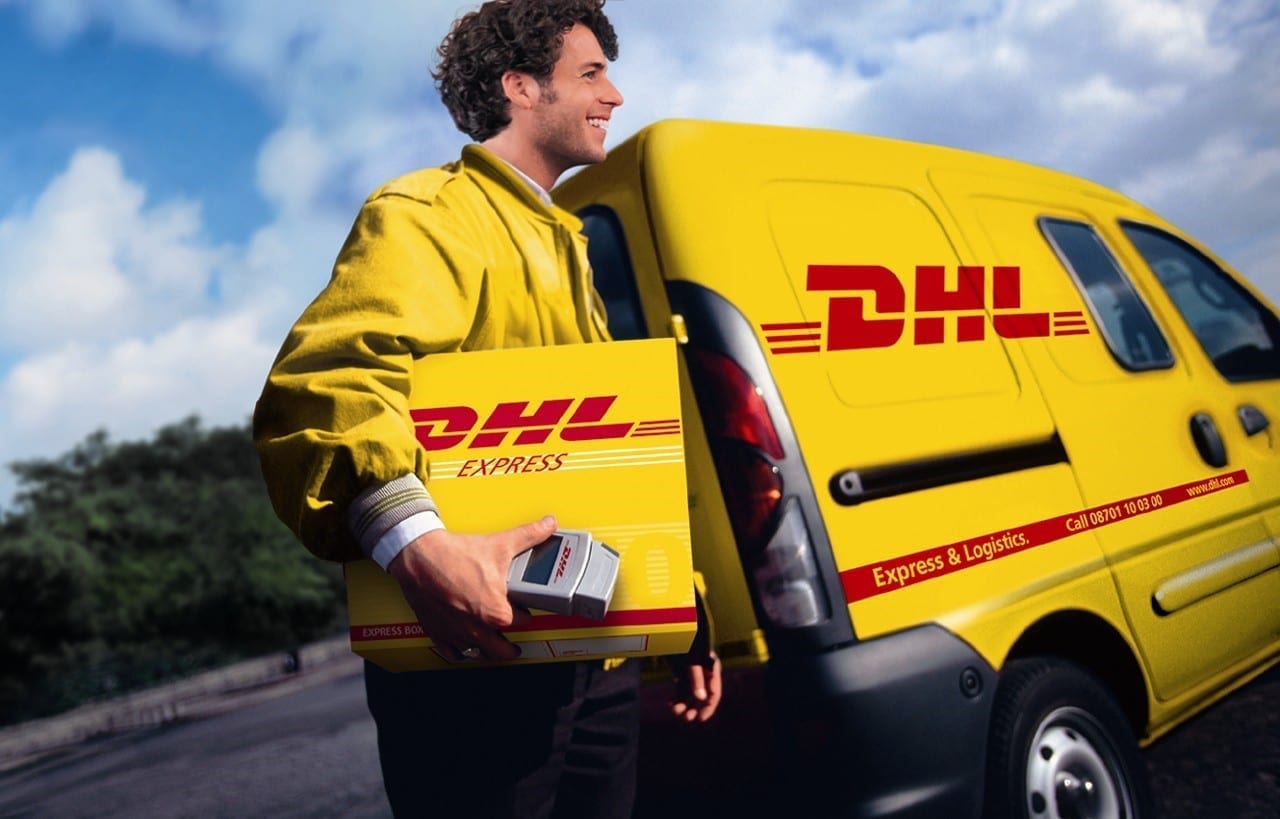
    DHL Express has seen imports from Asia to the Americas increase substantially as it helps battle COVID-19. Asian imports, coming primarily from China, are up 70% year-on-year, with DHL Express moving more than 168,000 shipments of masks, gloves, respirators, and disinfectant products into the Americas in just one week.

    Air capacity has been reduced with airlines canceling flights, so DHL has increased its services, with additional flights and charters meeting the demand for PPE shipments.

    The America’s hub at Cincinnati/Northern Kentucky International Airport welcomed an extra flight to Canada to transport 45,000 shipments of masks and other items in April. Another flight from London was added and a Cincinnati-Los Angeles-Sydney-Singapore route was added using a Boeing 777 Freighter, bringing the total to seven flights a week.

    DHL Express sent 10,000 shipments to the Americas via Miami, Florida, with 180,000 test kits going to Central America in March.

    Miami has also benefitted from connections to Brussels, Belgium, offering 225 tons of capacity per week.

    DHL Express is working with governments in Central America to transport equipment including 60 valves for digital respirators in Guatemala and test kits in Honduras.

    In South America, the first 5,000 test kits arrived in Quito, Ecuador, two weeks ago followed by another 50,000 last week.

    DHL Express donated 10,000 N95 protective masks to the Northwell Health network of hospitals and healthcare facilities across New York state.

    The masks had been flown in from abroad via the DHL Express Gateway facility at New York’s John F Kennedy airport.

    Mike Parra, CEO of DHL Express Americas, said, “We’re open for business and our operations are being mobilized around the world to deal with this global crisis. We have been largely focused on bringing the much-needed supplies to protect and support frontline employees from all industries, particularly the medical professionals and first responders who continue fighting to keep us safe and essential businesses running.”

  • First Siam Makro store in Myanmar opens its doors

    First Siam Makro store in Myanmar opens its doors

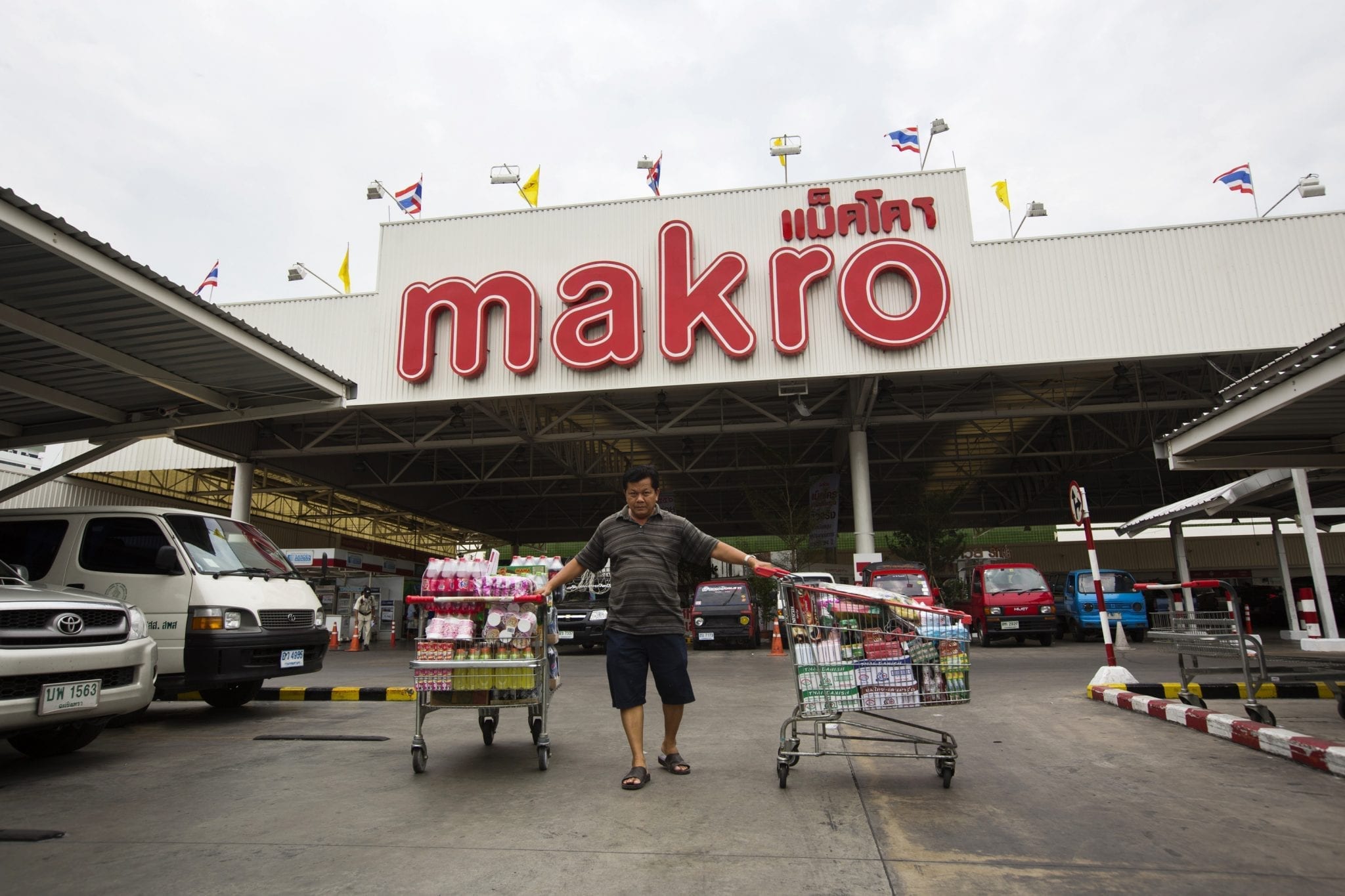
    The first Siam Makro store in Myanmar has opened its doors as the Thai-based cash & carry operator eyes the fast-growing foodservice sector in the rising country Myanmar.

    Located in Myanmar, the more than 7000sqm store offers more than 10,000 lines of fresh food, dry food, and other products.

    “Makro was big, huge,” a shopper told news outlet Myanmore. “We had to book one day in advance to actually go there. There are more local products now than from Thailand. Everyone was wearing a mask when we went there. There are social distancing activities among the queuing at the entrance and each cashier.”

    The store opening was met with lengthy queues, as the brand was welcomed by local residents, despite the fact the retailer primarily serves as a wholesaler, targeting food retailers, hotels, restaurants and catering service firms.

    The Siam Makro store in Myanmar is temporarily enforcing a maximum of 250 customers per time as a social distancing measure.

  • Google Duo update adds important new features,

    Google Duo update adds important new features,

    Google Duo received quite a few updates in the last couple of months, a strong indication that Google has big plans for the app. The most recent Duo update brings a handful of new features that will help users connect with their loved ones during these difficult times.

    Of course, the highlight of the update is the new family mode, which lets Google Duo users doodle on video calls. Various fun effects and masks can be used during video calls. To take advantage of the new feature, simply start a video call, tap the menu icon, and choose Family to start doodling.

    The new family mode becomes available as soon as you sign into Duo with your Google account. And you don’t have to worry that someone else will hijack your conversations since calls on Duo are end-to-end encrypted and remain private between you and your family or friends.

    But the new effects and masks are not just available in the new family mode. Google confirmed that Duo users will be able to use them during one-on-one video calls on Android and iOS starting this week. Expect to see even more effects and masks in the coming weeks.

    Finally, if you’re using Duo on the web, you’ll be pleased to know that Google will be adding group calls in the coming weeks. They will first be available as a preview on Chrome, along with a new layout the enables you to see more people simultaneously. The app will also let you invite anyone with a Google account to join a group call via a link.

  • Tea WG opens fourth Hong Kong store

    Tea WG opens fourth Hong Kong store

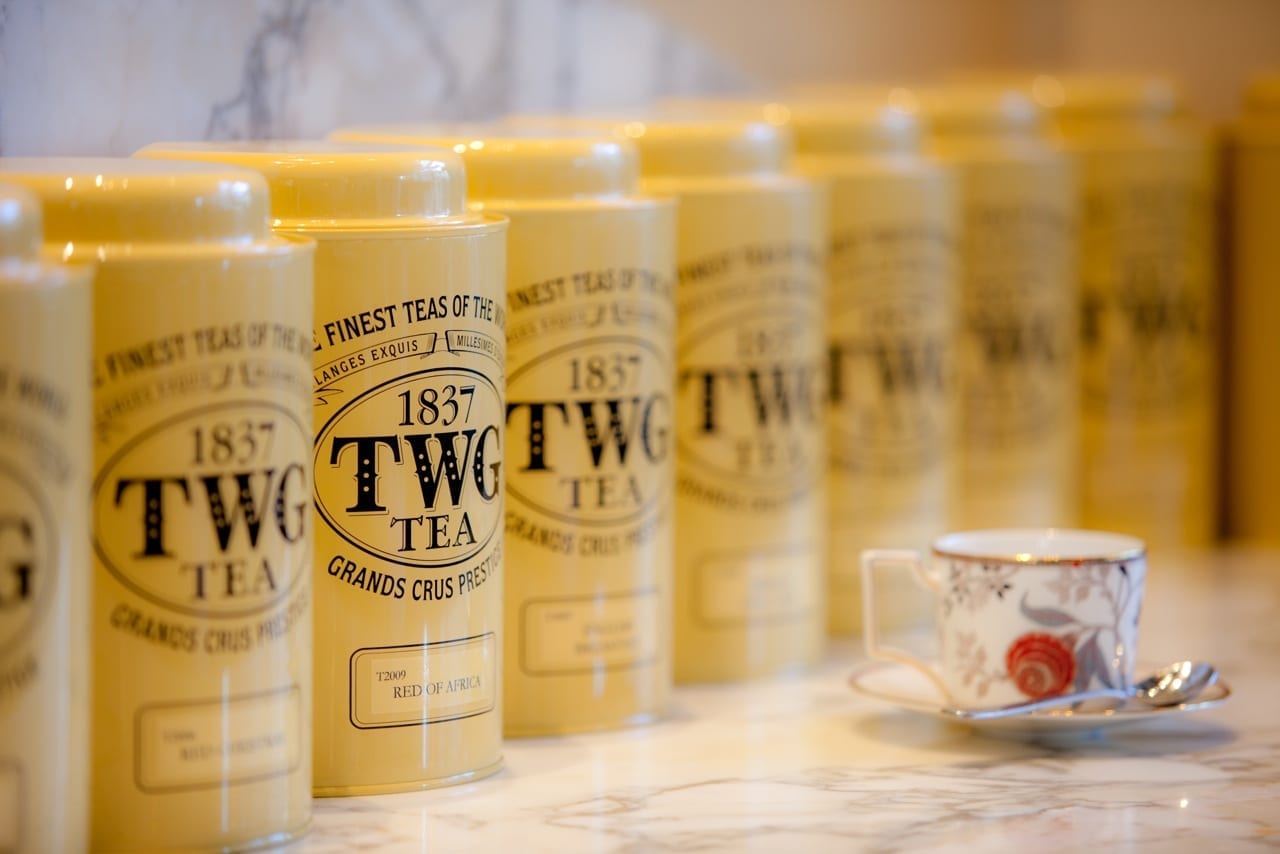
    Singaporean luxury tea brand Tea WG has expanded its Hong Kong footprint, adding a fourth boutique at Sha Tin’s New Town Plaza, its first in the New Territories.

    The retailer, which trades as TWG Tea in other markets, opened two boutiques in Festival Walk and Elements last year following its growing popularity in the territory.

    The teahouse was founded in 2008 by Taha Bouqdib, Maranda Barnes and Rith Aum-Stievenard who conceptualized luxury tea rooms with over 800 types of tea and inspired gastronomy, loved by both locals and tourists in more than 20 countries. Starting out in Singapore, the artisanal tea trend in Asia found success in the luxury market for the modern-day aspirational customer.

    The brand developed a sommelier-training facility to help its staff build an extensive knowledge through tea-tastings, training and exams to better serve customers.

    Although Tea WG’s clientele is mainly women enjoying their afternoon tea set over a cup of the company’s ‘Silver Moon’ green-tea blend, each global boutique serves different types of customers. From “tai tai’s” (wealthy ladies of the house) to Instagramming millennials, the brand is seeing a surprising increase in the number of affluent men splurging on upscale tea accessories and gold tea cups. Tea appreciation workshops (similar to wine tastings) are also held for its VIPs, offering a ‘fine-tea’ experience.

    Tea WG has built a luxury reputation that has drawn five-star establishments from Marriott Hotels to Singapore Airlines to serve the brand – even creating exclusive blends for their own clientele.

    From a Singapore brand to more than 70 locations in the world, including Paris, Tokyo, Dubai, the brand has even won over British and Chinese nationals with its exquisite blends.

    After opening a London salon and boutique flagship, Tea WG aims to expand to the US and Australia – but in the meantime, customers there can buy packaged tea through the brand’s mobile app and online store.

  • Mazda Motor Seeks $2.8 Billion In Loans To Ride Out Pandemic

    Mazda Motor Seeks $2.8 Billion In Loans To Ride Out Pandemic

    Mazda Motor Corp has sought loans totaling about 300 billion yen ($2.8 billion) from Japan’s three megabanks and other lenders to ride out the coronavirus epidemic, a source with direct knowledge of the matter said on Saturday. The megabanks – Mitsubishi UFJ Financial Group, Sumitomo Mitsui Financial Group and Mizuho Financial Group – along with the Development Bank of Japan, Sumitomo Mitsui Trust Holdings and others are set to agree, with some already having extended the loans, the person said, declining to be identified because the information is not public.

    All three megabanks declined to comment on the loan request, which was reported by the Nikkei business daily earlier. Mazda did not immediately respond to a request for comment.

    Mazda, like most other automakers, has reduced or halted production at factories around the world for the past few months as governments try to limit the spread of the new coronavirus.

    Mazda’s car sales and balance sheet had been weak even before the virus slammed the brakes on demand, with its interest-bearing debt of 650 billion yen far exceeding its cash and cash equivalents, according to the Nikkei. Mazda is scheduled to announce its financial results for the year ended in March on Thursday.

  • Ferrari Restarts Production At Maranello & Modena Plants In Full Capacity

    Ferrari Restarts Production At Maranello & Modena Plants In Full Capacity

    Ferrari, on Friday, officially announced the resumption of operations at its Maranello and Modena plants at full capacity, which in-line with its ‘Back on Track’ program. The first car to roll out from the Special Series lines was Ferrari Monza SP2 with a black and grey livery. The operations at the facility were suspended just a few hours before its completion due to the Coronavirus outbreak. Over the next few days, the company successfully rolled out the 812 GTS spider in Grigio GTS and an F8 Tributo in Rosso Corsa from the 12 and 8 cylinder lines. The new cars are ready to be delivered to the customers in Australia, Germany & USA.

    The sports car manufacturer introduced a new ‘Back on Track’ program, which majorly focuses on several practices and preventive guidelines aimed at the safety and wellbeing of the employees. The facilities in Maranello and Modena are subjected to follow these new rules and guidelines very strictly. These measures are taken specifically for common areas. The company has also reorganized the work area in order to ensure social distancing is maintained at the workplace.

    Additionally, Ferrari has also carried out a new training session for its staff wherein demonstrating the new guidelines and steps needs to be taken as precautionary measures while at work. Last month, the company came forward in support of health workers treating coronavirus patients wherein it started producing respirator valves and fittings for protective masks at its Maranello plant as one of its initiatives undertaken by Ferrari.

    The company can commence the manufacturing of the F8 Tribute and Spider, Roma, Portofino, GTC4Lusso, and GTC4Lusso T, SF90 Stradale, and the flagship hybrid hypercar along with the limited edition sports cars at the Maranello and Modena plants.

  • OCBC Quarterly Profits Down

    OCBC Quarterly Profits Down

    Net profits at OCBC plunged 43 percent in the first quarter due to non-operating losses from its insurance arm and increased provisions most notably for oil-linked exposure.

    OCBC posted S$698 million ($494 million) in quarterly net profits – below analyst estimates of $666 million, according to Refinitv data.

    Its insurance contributions nosedived 94 percent year-on-year due to unrealized mark-to-market losses and its total allowances were increased from $176 million to $465 million which includes $195 million set aside for a «Singapore-based corporate customer in the oil trading sector».

    Recently, OCBC was reportedly amongst the lenders to disgraced oil trader Hin Leong, with an estimated exposure of $220 million.

    Driven by fee income wealth management and brokerage units, non-interest income was up 11 percent to $551 million. Net investment gains were also up at $84 million due to the sale of debt securities.

    Net trading income plummeted by more than 90 percent to reach $13 million due to unrealized mark-to-market losses in Great Eastern’s investment portfolio.

    Despite a still stable balance sheet – non-performing loans were up by only 2 bps while net interest margin remained at 1.76 percent – the additional provisions signal further headwinds ahead in light of the effects from the coronavirus pandemic.

    According to OCBC group CEO Samuel Tsien, the coming period is expected to be very difficult for individuals and businesses.

    We paid close watch on our credit portfolio against the market uncertainty, and significantly shored up our allowances on a forward-looking basis, he said.

  • Hong Kong Cosmetics retailers Lush and Bonjour sued for unpaid rent

    Hong Kong Cosmetics retailers Lush and Bonjour sued for unpaid rent

    Two Hong Kong cosmetics retailers have fallen victim to the coronavirus crisis facing legal action over unpaid rent.

    British-headquartered chain Lush has been sued by its landlord, Shun Cheong Properties Management, for three months of allegedly unpaid rent on its Lockhart Road, Causeway Bay store. Lush signed on the outlet at Shun Hei Causeway Bay Centre in July 2017 at a monthly rate of HK$380,000 (US$49,000). The retailer had received rental relief of $170,000 since February but has not paid for the last three months, owing to a total of $780,000.

    Lush opened a new Lush Naked concept store on Great George Street, also in Causeway Bay, last year in addition to a new store inside K11 Musea at Tsim Tsa Tsui. There are now 12 Lush stores in Hong Kong.

    Another cosmetics retailer Bonjour Holdings has also been taken to court by its landlord Giant Manor Investment Limited, allegedly owing six months rent and management fees for its Nathan Road, Mong Kok, store.

    The Hong Kong cosmetics retailer had signed a lease agreement for three years in September 2017 at a monthly rent of $1.28 million and now allegedly owes a total of $7.8 million in rent, plus $100,000 in interest.

    Bonjour recently reported an 18.7-per-cent sales to decline for last year, citing falling numbers of inbound Mainland Chinese visitors in the wake of protests.

  • Google adds new productivity tools to Lens

    Google adds new productivity tools to Lens

    Whether you’re back working at the office or still working at home, your smartphone can be the productivity tool you need to help you get your job done. Speaking of productivity, Google has announced some new features for Google Lens. The latter uses image recognition to pass along information about objects seen through a phone’s camera. More precisely, the visual analysis is done using AI.

    One new feature will copy handwritten text from a piece of paper and paste it on another device that is signed in to the same Google account as your phone and has the latest version of the Chrome browser installed. All you need to do is point your camera at the handwritten document and using Lens, you highlight the text you want to paste. Tap on “Copy to computer” and paste it on the Chrome browser. This should save you the time it takes to transcribe written notes to your computer.

    Google says that searches related to learning a new language have doubled over the last few months; some people have decided to use the extra time at home to take on this task. Google Lens can help by translating German, Spanish, and more than 100 other languages according to Google. And all you have to do is point your camera at the text to see it translated. And if you’re having a problem with the pronunciation of a particular word, you can now tap the new “Listen” button and hear it spoken as it should be.

    Google Lens can also help you understand a word or a phrase that you see in a newspaper that you don’t understand. With in-line Google Search you can quickly learn new concepts-like gravitational waves-that you don’t understand.

    All of these new features have started rolling out for both iOS and Android devices except for the “Listen” button which will be available for iOS devices later this year. Lens is available on the Google Lens app on Android devices and the Google app on iOS.

  • Facebook-backed Libra Nabs New CEO From HSBC

    Facebook-backed Libra Nabs New CEO From HSBC

    Facebook’s global currency project is taking shape – Libra is poaching its first CEO from HSBC. The banker is impeccably connected in government circles.

    It feels like Facebook is leaving nothing to chance in its renewed attempt to get Libra, a digital currency network, off the ground. The project sparked fierce regulatory and political opposition when it was unveiled last year.

    The Geneva-based association which governs the project is naming Stuart Levey as its new CEO, effective this summer, it said in a statement. Levey has been HSBC’s legal chief for the past eight years and possesses impeccable credentials from a long career at the U.S. Treasury and the Justice Department.

    Levey’s financial enforcement experience includes overseeing U.S. sanctions by the Office of Foreign Assets Control, or OFAC and responsibility for U.S. civil anti-money laundering and counter-terrorist financing laws by the Financial Crimes Enforcement Network, or FinCEN.

    Three weeks ago, Libra said it is seeking a Swiss license for payments. I look forward to working closely with governments, regulators, and all of our stakeholders to realize this vision, Levey said in the statement.

    This represents a massive scaling-back of the Facebook-backed project initial ambitions for a global digital currency. The original plan had not only wrong-footed Bern but raised hackles among policy- and lawmakers.

  • Louis Vuitton raises retail prices in South Korea

    Louis Vuitton raises retail prices in South Korea

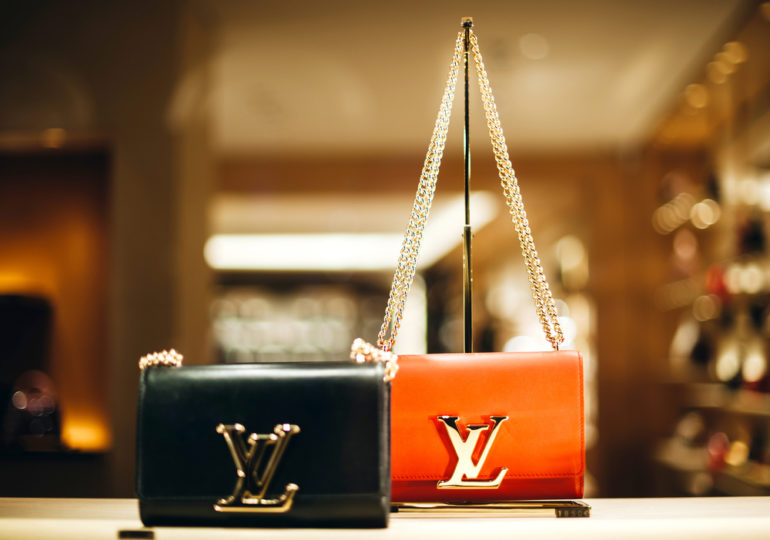
    French fashion house Louis Vuitton is raising prices for its luxury items in the South Korean market, allegedly in a bid to take advantage of a prospective surge in buying following the coronavirus outbreak.

    According to Pulse News Korea, the brand has raised prices by between 5 percent and 10 percent across its various product lines, its third price increase within the past seven months.

    “We have decided to raise the prices starting on May 5,” said a representative of Louis Vuitton Korea. “It was part of our pricing policy based on the long-term view.”

    Poor exchange rates and the closure of production facilities in France and Italy may have contributed to the brand’s decision to raise prices, although some consumers remain suspicious that the price rises are timed to take exploitative profits from coronavirus-related restrictions.

    In general, the luxury industry has seen some sales increase as high-end consumers spend disposable income on expensive treats instead of traveling. South Korean department stores Shinsegae, Lotte, Hyundai, and Galleria have all reported increased luxury sales at their outlets.

    Rival luxury brands Tiffany & Co. and Bulgari have also hiked prices within the last month.

  • DHL Survey Reveals COVID-19 Impact on International Trade

    DHL Survey Reveals COVID-19 Impact on International Trade

    In addition to the current economic issues caused by COVID-19, there are other significant events in 2020, such as the U.S. presidential election and the United States-Mexico-Canada Agreement (USMCA) implementation, which could directly affect international trade.

    To collect deeper insights into how businesses are being impacted by COVID-19 and capture their perspectives on international trade developments, DHL conducted a survey of U.S. SMEs, including its customers.

    Key findings from the more than 2,000 responses include:

    • COVID-19 causes pullback on international business outlook: Almost half (49%) of respondents said the coronavirus has resulted in them taking a more conservative approach to their business’ global trade strategy. Only 15% are taking a more aggressive approach, while 36% are staying the path on their international approach as a result of coronavirus. It is no surprise that the majority are being conservative since according to our survey, overwhelming 78% of respondents have had business revenues decrease either slightly or significantly due to COVID-19.

    • International policies will the tip scales at the voting booths: An overwhelming majority (78%) of respondents said the U.S. presidential candidate’s view on international trade will affect the way they vote this election year.

    • Business owners are willing to make sacrifices to make trade easier: 37% would forgo all their vacation for a year if it guaranteed no additional international trade barriers/regulations for their business.

    • Asia remains a top business target: Despite COVID-19 originating in China, almost one-third (32%) of respondents said Asia is the top priority region for their business this year. In last year’s survey, 21% selected Asia as their top priority region. The YOY increase in confidence in Asia is likely due to progress in potential relief with China tariffs. Additionally, other countries in Asia, such as Vietnam and Japan, have emerged as top trade and manufacturing partners for U.S. businesses as a result of the U.S.-China trade war.

    Rosemary Coates, President of Blue Silk Consulting and a columnist for Supply Chain Management Review, feels that relations between the U.S. and China remain fragile:

    “The U.S. government is creating even more animosity toward China, blaming them for the pandemic and threatening more tariffs in retaliation for allowing the virus to spread to America,” she said. “This is creating an even bigger gap in cross-border trade and cooperation that will likely enflame the trade wars even further.”

  • Neiman Marcus enters bankruptcy protection mode

    Neiman Marcus enters bankruptcy protection mode

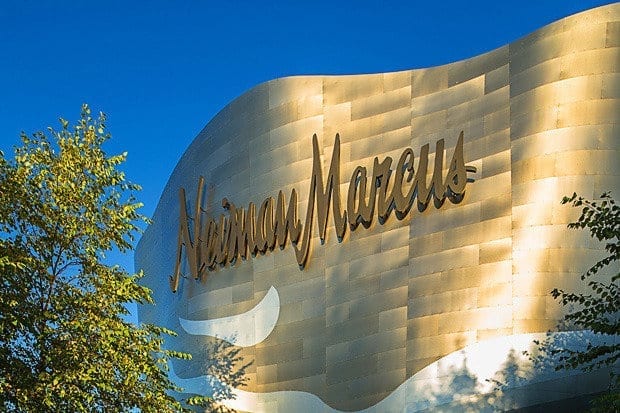
    High-end US department-store chain Neiman Marcus entered bankruptcy protection overnight and there are reports that rival Lord & Taylor is planning to follow.

    Laden down with debt, Neiman Marcus has entered Chapter 11, after receiving majority support from lenders and creditors to undergo financial restructuring, substantially reducing its debt load and interest obligations. The company will receive a further $675 million in cash from existing lenders to enable it to continue to operate during the Covid-19 crisis.

    Chairman and CEO Geoffroy van Raemdonck, said in a statement that prior to the pandemic’s advent, Neiman Marcus was making “solid progress on our journey to long-term profitable and sustainable growth”.

    But with most of its Neiman Marcus, Bergdorf Goodman and Last Call stores shuttered for more than a month, decimating cash flow, the company is struggling to meet its obligations.

    When Neiman Marcus emerges from Chapter 11 it will be “as a far stronger company,” said van Raemdonck, with no near-term maturities and some $4 billion of its existing debt eliminated.

    “In a world that is changing, we are uniquely positioned to give our brand partners access to our loyal luxury customers like no other company. We will deliver that through the strength of our associate relationships and digital solutions,” he said.

    Neil Saunders, MD of GlobalData Retail, said given the extent of the company’s debt, Neiman Marcus was “always living on borrowed time” and had no option but to enter Chapter 11.

    “In normal circumstances, the debt burden prevented it from turning a profit and restricted its ability to invest and evolve in a time of immense change in retail. The coronavirus crisis has severely exacerbated these problems as sales have dwindled and Neiman Marcus is struggling to pay the interest and capital on what it owes.”

    Saunders said the company was in a much better position than most other US department stores. “Its shops are well maintained and are mostly within strong malls, it has a loyal base of shoppers, occupies a distinct niche in the luxury space, and has made some strides into digital. In short, there is a place for Neiman Marcus in the post-coronavirus world.”

    Saunders said that while Neiman Marcus probably does not need to shut stores – it has relatively few of them and they are in good malls – with more and more sales migrating online the company may need to reduce the size of some of them.

    “There are some shops in the chain that are just too large and which do not attract enough footfall to justify their size. A rightsizing of the store base should be on the cards to optimize productivity.”

    Meanwhile, another high-profile US department-store chain, 200-year-old Lord & Taylor, is reportedly planning to enter Chapter 11 to facilitate the sale of all of its inventory when social-distancing measures are lifted and all stores are able to trade again.

    Liquidators have been appointed to manage going-out-of-business sales at its remaining 38 stores and once stock is gone, the company will close permanently, according to Reuters.

    The company has declined to comment on the reports, however, a spokesperson told Business Insider that the firm is “working through various options at this time”.

    Lord & Taylor has already closed its Instagram and Twitter accounts, further signs of it commencing a winding down of operations.

    Another US department-store chain, Nordstrom, said this week it would close 16 of its 116-strong store network.

    Last month, the Wall Street Journal reported that JC Penney, with about 850 stores across the US, was seeking a loan of between $800 million and $1 billion in order to continue trading through the Covid-19 crisis. The company was already looking to restructure operations and streamline its store network before the pandemic came along.

    And Macy’s, with 551 stores, yesterday said it would delay its first-quarter earnings report to July 1, due to the disruption caused by the pandemic.

    Earlier this week, fashion retailer J Crew entered Chapter 11, weighed down by $2 billion in debt.

  • Puma focuses on survival and recovery as sales goes down

    Puma focuses on survival and recovery as sales goes down

    Outlining a survival strategy for the coronavirus pandemic, Puma says its global operations are split into three phases: Survive, Recover and Grow Again. The sportswear retailer and manufacturer reported a 1.3-per-cent decrease in first-quarter sales to €1.3 billion, with strong growth during the first 10 weeks undermined by the widening impact of the pandemic. Net earnings fell 61.6 percent to €36.2 million.

    However, in the current quarter, global revenue is running at about 50 percent of normal levels.

    CEO Bjorn Gulden said the year started very well with a great order book, strong sell-through, and record retail numbers. “Then, at the end of January, the Covid-19 virus hit China. Since then we have worked to minimize the damage short-term without hindering the mid-term momentum of Puma.

    “The different markets are at different stages. Asia Pacific with China and South Korea is recovering. Europe is hopefully also moving towards recovery while the Americas, with almost all stores closed, are in the middle of the Survive phase.”

    Describing the first quarter as “difficult,” he believed Puma had done “a decent job”.

    “The second quarter will financially be even worse with more than 50 percent of global sports and sports lifestyle space being closed. We are mitigating the impact on our revenues wherever we can by focusing on e-commerce and the markets that are opening up again. We are working with our factories and other partners in our supply chain to minimize the damage, assure timely deliveries, avoid excess stock as much as possible and to find fair solutions for all of us.”

    Puma has secured a €900 million revolving credit facility to tide it over the crisis and has asked all partners to get additional financing to ensure operations can continue.

    “The goal is to get through this without any Puma employee losing their job. To survive this crisis in cooperation with all our partners such as retailers, suppliers, landlords, financial institutions, authorities, investors, and customers is crucial. We can only get through this together. So far, cooperation with most of them has been great.”

    Puma’s gross profit margin declined by 140 basis points to 47.6 percent, during the first quarter, impacted by negative currency valuation, lower China sales, inventory devaluation, and return provisions.

    The almost complete shutdown of China retail from the last week of January caused the most damage to Puma’s sales and profitability during the quarter.

    “Over the [ensuing] six weeks, the whole business in China, except for e-commerce, basically disappeared,” the company said in a statement. “As China started to recover in mid-March, Covid-19 had started to spread globally and by the end of the month basically 80 percent of Puma’s retail doors, both owned and operated as well as partner stores, we’re closed.”

    A significant challenge for Puma going forward is the inventory levels resulting from the lack of trading. The total inventory value is up 24.5 percent to €1.13 billion.

    However, the company has struck a positive note on its mid-term prospects. Sales in China and South Korea are already improving and the first stores are reopening in some European markets. Offsetting that is the almost full shutdown in the Americas. While e-commerce sales are rising, it is not at a pace that can compensate “in any way” for the declining sales across other channels, the company said.

    While short-term prospects are not bright, the company said it is committed to managing the crisis in the short term “without hindering the midterm momentum”.

    “This year is, and will continue to be, a difficult year, where the goal for Puma is to survive, recover and then emerge stronger with growth again. Different markets will go through these phases at different times and execution, therefore, must be very locally driven,” the company said.

    Puma expects all markets to recover by the year’s end and to return to growth next year.

    “The industry is expected to be in a strong position after the crisis. People have already now started doing more sports wherever it is possible, even under difficult circumstances. There are many indications that health and sports will be even more important than before the crisis.”

  • DHL helps Australia to Import Goods

    DHL helps Australia to Import Goods

    DHL Global Forwarding has been selected to be part of new air freight network launched by the Australian government to bridge air freight capacity gap.

    The Australian Department of Agriculture has identified supply chain disruptions as the biggest threat to farmers and fishermen in the country, where around 65% of agricultural products are exported, with a majority going to China, Japan, the United States, South Korea and several Asia Pacific countries.

    DHL Global Forwarding Australia reveals that virtually all of its high-value perishables exports, including fruits, vegetables, pre-marinated and fresh meat, seafood and dairy products, are now catered to food retail businesses such as supermarkets. This is in contrast to the pre-COVID supply chain distribution dominated by wholesale networks where some 70% of the company’s food exports typically go to foodservice businesses.

    DHL Global Forwarding, the leading international provider of air, sea and road freight services, has been appointed to be part of the new air freight network established by the government to facilitate international freight as commercial airlines tepidly return to normalcy.  The network will allow the Government’s $110 million International Freight Assistance Mechanism (IFAM) to ramp-up assistance to exporters and re-establish global supply chains, in turn also assisting importers of essential goods, such as healthcare supplies, personal protective equipment, automobile spare parts, and construction and manufacturing materials.

    Bernie Cooney, Perishables and Livestock Manager, DHL Global Forwarding Australia commented: “In perishables logistics, time is of the essence as fresh meats and produce need to arrive with their freshness and quality intact, and that is now possible as we can secure capacity through the air freight network for our customers. We are working towards restoring supply chains for all our customers. We are hopeful that with these measures, we can start to restore some of the pre-COVID volumes for perishable exports, and more if the Asian markets start to open up again once containment measures prove successful.”

    Import of much needed Personal Protective Equipment (PPE) and essentials to keep businesses going

    In addition to the export of high-value perishables, DHL Global Forwarding is supporting the Australian Government IFAM program with the import of critical products like PPE and other essential goods.

    George Lawson, Country Manager of DHL Global Forwarding Australia added: “Trade, which is the lifeblood of our economy, has been heavily impacted by travel restrictions arising from the Covid-19 pandemic. As the market leader in the export of premium agricultural products and the import of healthcare, technology and infrastructure goods, we are uniquely positioned to support the Australian Governments IFAM program in jumpstarting trade activity. With our team of global trade experts, worldwide network and digital solutions, our aim is to improve lives by keeping Australian businesses running.”