Category: Automotive

Retail News Asia is committed to providing both local and global retailers with the latest Auto and Car news throughout the Asian market. This on a daily base.

  • South Korea’s Hyundai launches new Genesis sports sedan in SUV-driven market

    South Korea’s Hyundai launches new Genesis sports sedan in SUV-driven market

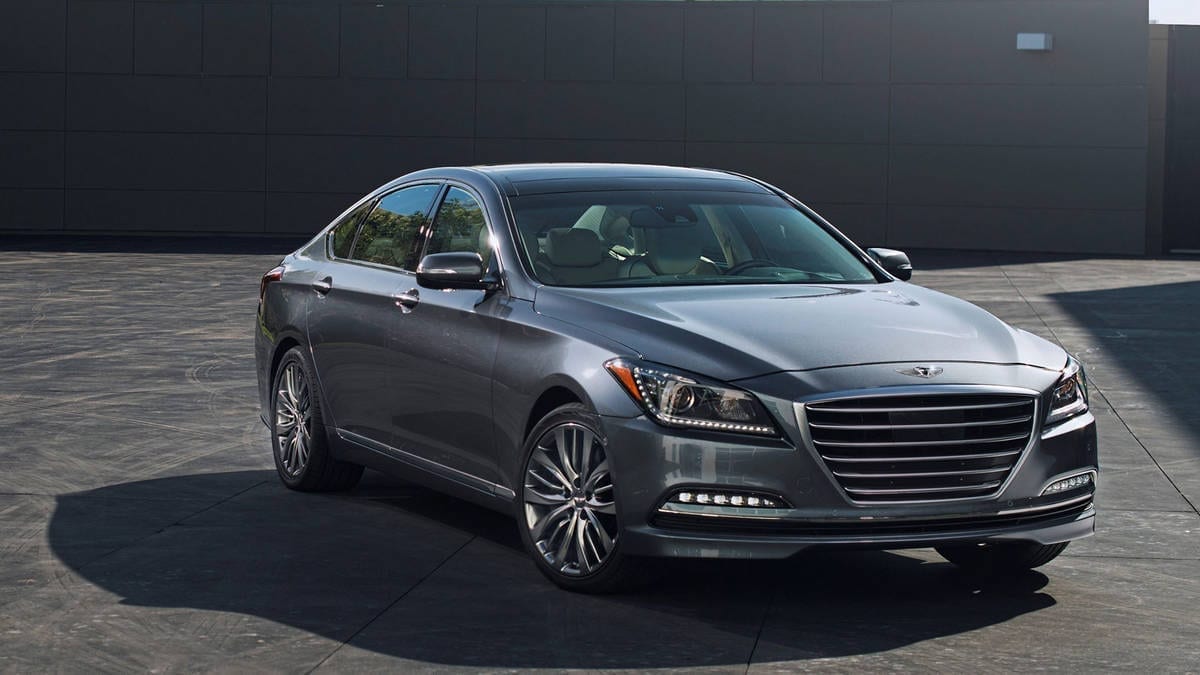
    South Korea’s Hyundai Motor Co launched its first new sedan under the premium Genesis marque in Seoul on Friday, hoping to cement the brand’s place in the luxury segment and make up for its lack of a strong SUV line-up.

    U.S. pop singer Gwen Stefani will perform for about 10,000 people at a gala event to launch the G70, the third sedan to carry the Genesis name but the first to be marketed exclusively under Hyundai Motor’s (005380.KS) fledgling premium brand.

    Starting from $33,000, the sporty four-door offers bang for the buck as it takes on rivals including affiliate Kia Motor’s (000270.KS) Stinger sedan and BMW’s 3 series.

    But analysts say the G70 will not solve Hyundai’s troubles in the United States, where sports utility vehicles (SUVs) are all the rage and the two previous Genesis-branded sedans failed to take off.

    “Look at Cadillac, with just one crossover, the brand is struggling in the U.S. It will be much the same story for Genesis until they can get a crossover to market,” said Dave Sullivan, product analysis manager at U.S. consultancy AutoPacific.

    “It’s not because the G70 will be a bad product … The sedan lineup just doesn’t match consumer demand.”

    The G70 debuts in South Korea on Friday followed by the United States early next year. Hyundai has not said when it would enter China and Europe, which are dominated by German premium brands.

    “G70 will pave the way for growth and expansion of the Genesis brand,” Executive Vice President Lee Kwang-guk told a media event.

    Hyundai Motor expects annual sales of over 60,000 G70 sedans globally.

    Hyundai has said the Genesis line-up will grow to six by 2021, with the addition of two SUVs and an electric vehicle.

    Genesis division head Manfred Fitzgerald told reporters that the next Genesis model will be an SUV, without elaborating further.

    Hyundai’s China sales tumbled more than 60 percent in the second quarter due to its lack of a strong SUV line-up and political tensions between China and South Korea over North Korea’s nuclear weapons program.

    In the United States, SUVs made up 35 percent of Hyundai’s total U.S. sales from January to August this year, far lower than the industry’s 62 percent, according to U.S. researcher Autodata.

    CRITICAL TEST

    The Genesis project is being closely watched by Hyundai Vice Chairman and heir apparent Chung Eui-sun, as he prepares to take over the world’s No.5 auto group from his father, 79-year-old Chairman Chung Mong-koo.

    As the first Genesis model which was not previously sold as a Hyundai, the G70 will be a key test of the two-year-old marque’s ability to survive in a fiercely competitive field.

    Its chief rival will be Hyundai affiliate Kia’s slightly cheaper Stinger, which shares the same platform as the G70 and launched in late April. Other rivals include BMW’s 3 series, Audi’s (NSUG.DE) A4 and Mercedes-Benz’s C-class.

  • Carmakers face electric reality as combustion engine outlook dims

    Carmakers face electric reality as combustion engine outlook dims

    ‘There’s going to be a huge increase in prices in 2021-22 if effective electrification becomes as widespread as people expect.’

    European car bosses gathering for the Frankfurt auto show are beginning to address the realities of mass vehicle electrification, and its consequences for jobs and profit, their minds focused by government pledges to outlaw the combustion engine.

    As the latest such announcement by China added momentum to a push for zero-emissions motoring, Daimler, Volkswagen and PSA Group made disclosures about their electric programs that could give policymakers some pause.

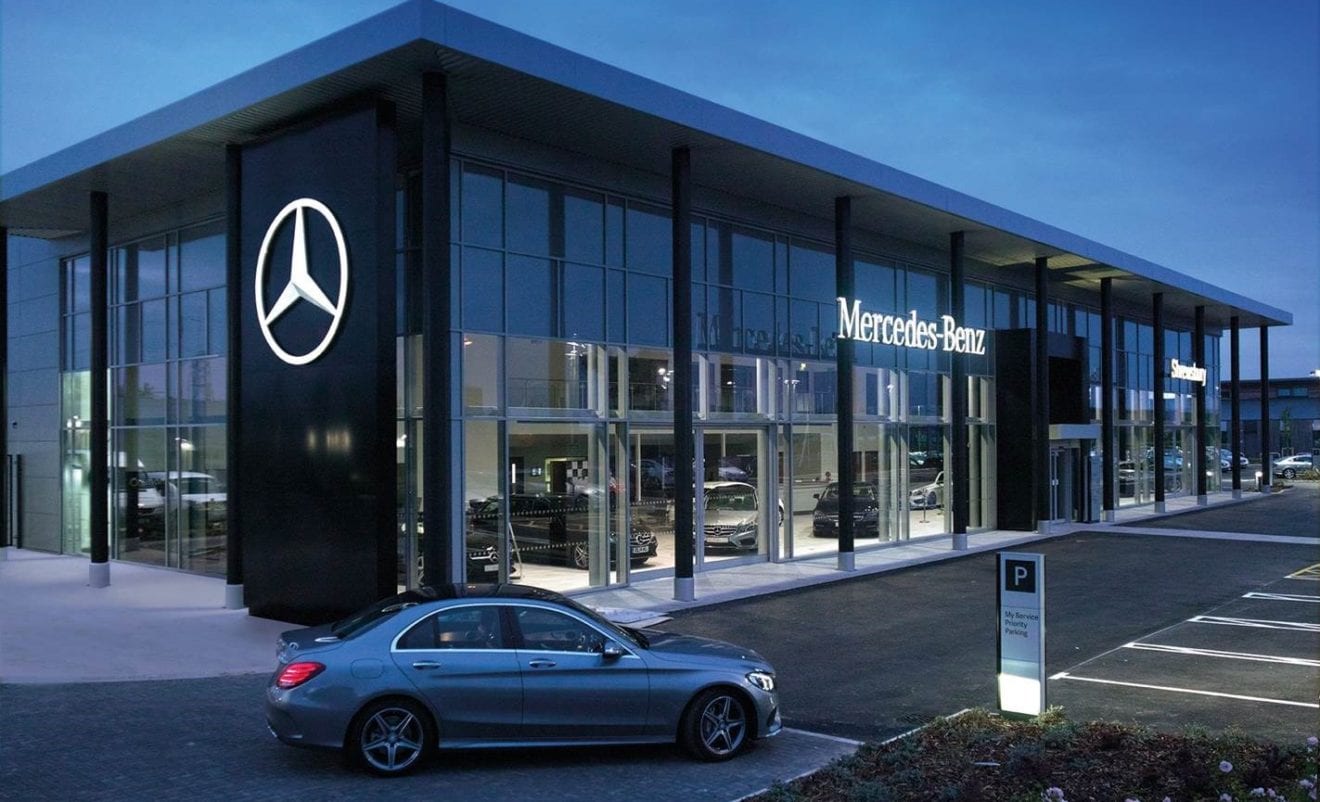
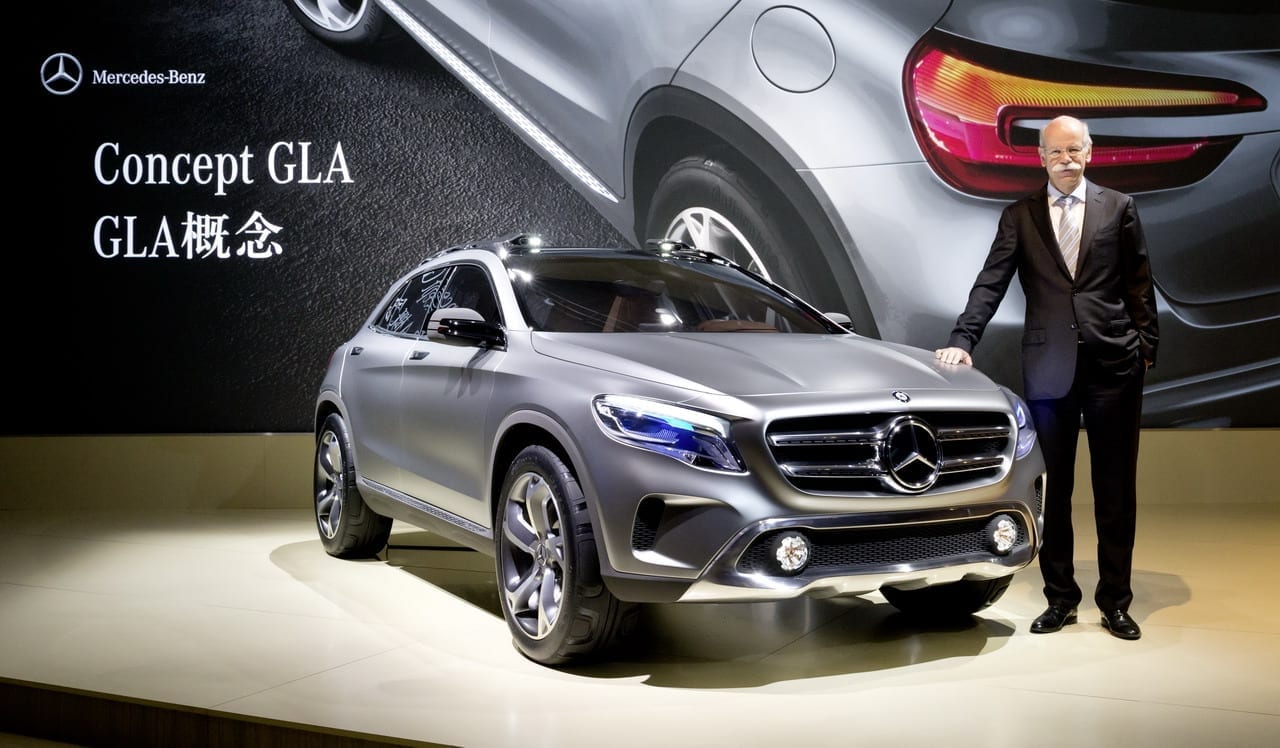
    Planned electric Mercedes models will initially be just half as profitable as conventional alternatives, Daimler warned – forcing the group to find savings by outsourcing more component manufacturing, which may in turn threaten German jobs.

    “In-house production is almost irrelevant to the consumer,” Daimler boss Dieter Zetsche told reporters and investors on the eve of the Frankfurt show, speaking in the midst of a German election campaign in which automotive jobs have loomed large.

    Volkswagen, for its part, said it was seeking new global supplier contracts to source 50 billion euros ($60 billion) of electric car content including batteries, which are not yet manufactured competitively in Europe.

    “A company like Volkswagen must lead, not follow,” Chief Executive Matthias Mueller told reporters.

    VW diesel emissions-cheating exposed by U.S. regulators triggered global public outrage, dozens more investigations into test-rigging by the wider industry and a push by some lawmakers to ban diesel and eventually all engines.

    Tightening noose

    Tesla Inc shares jumped nearly 6 percent on Monday after a Chinese minister said it was a question of when, not if, Beijing bans fossil-fuel cars, tightening the rhetorical noose around the combustion engine. France and Britain have promised its outright abolition by 2040.

    But PSA, the maker of Peugeots and Citroens, said it was concerned about the risks if consumers are left behind in the rush, and a new generation of battery cars does not sell.

    “If it doesn’t gain acceptance in the market, then everybody – industry, employees and politicians – has a big problem,” PSA Chief Executive Carlos Tavares said in a pre-show interview with German weekly Bild am Sonntag.

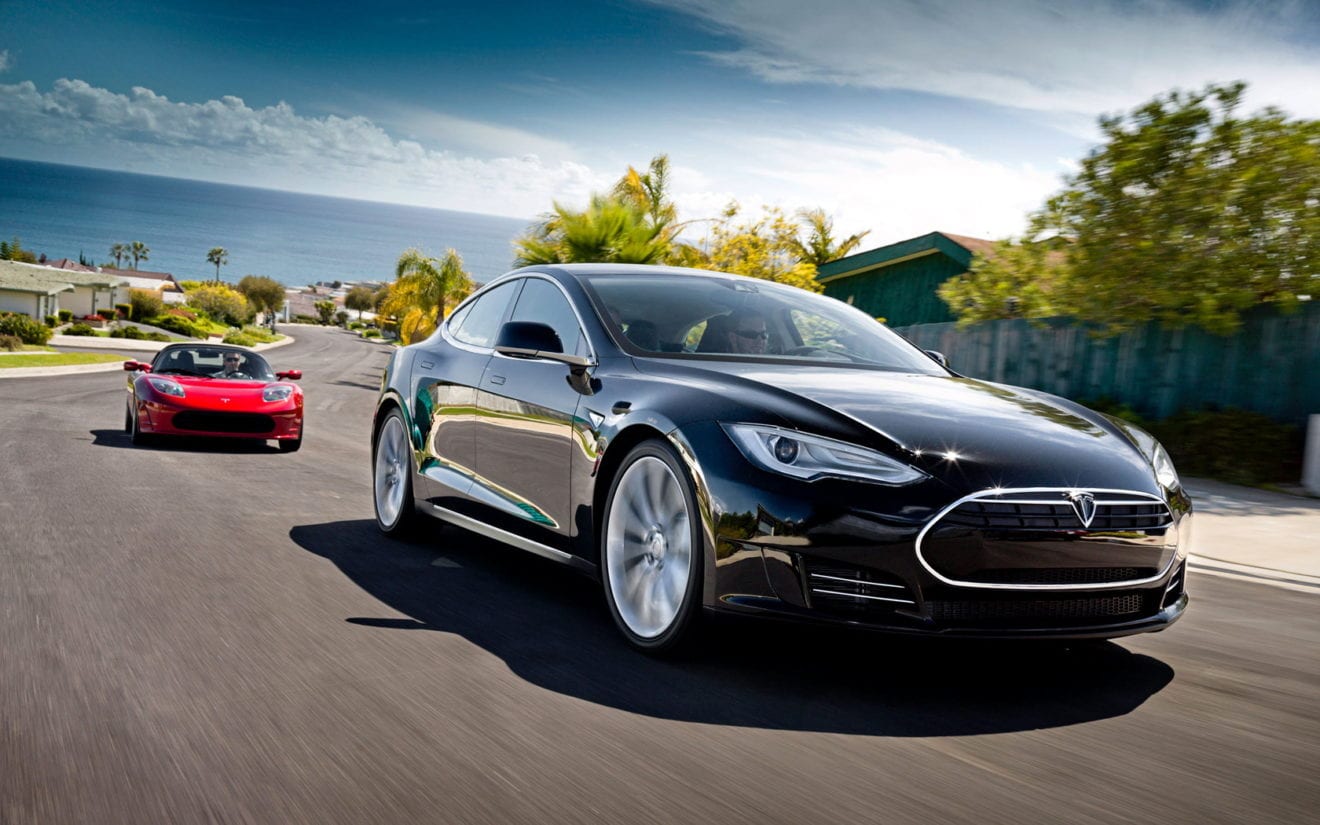
    While Tesla has carved itself a successful premium niche, electric vehicles have yet to penetrate volume markets, with the heavily subsidized exception of Norway, and still account for less than 1 percent of global car sales.

    Automakers have sought to adapt to the changing tide – and in some cases distance themselves from “dieselgate” – by announcing multibillion-euro investments in electric cars, underpinned by plans to sell millions within a decade.

    A year into the scandal, VW unveiled plans to develop 30 new electric cars and sell 2 million-3 million annually by 2025. On Monday it upped the goal to 80 models and said it would need four times the capacity of Tesla’s “gigafactory” to supply their batteries.

    Jobs flight

    Since the battery is the single biggest-value item in an electric car, however, experts point out that mass adoption would shift business and jobs from European suppliers to China, which already dominates the automotive power-pack market.

    According to consulting firm AlixPartners, electric drivetrains including batteries require 40 percent less manufacturing labor than mechanical ones. That would hit 112,000 jobs at European suppliers, even before any outsourcing.

    A phase-out of combustion engines by 2030 could cost 600,000 jobs in Germany alone, the country’s Ifo economic institute has warned. Chancellor Angela Merkel, on course for re-election on Sept. 24, said she was “no friend of bans”, in a Berliner Zeitung interview published on Tuesday.

    Any deepening of the doubts surrounding mass electric car uptake could vindicate Fiat Chrysler CEO Sergio Marchionne – one of the few car bosses who has largely resisted the plug-in vogue.

    “My aversion to electrification was based on pure cost issues,” Marchionne told analysts recently, predicting that stubbornly high battery costs would combine with tightening combustion-engine regulation to choke off overall sales.

    “There’s going to be a huge increase in prices in 2021-22 if effective electrification becomes as widespread as people expect,” Marchionne said. “That, based on everything I know in terms of economics, will cause a shrinkage of demand.” ($1 = 0.8358 euro)

  • Nissan unveils new electric car in bid to drive off competition

    Nissan unveils new electric car in bid to drive off competition

    The new vehicle ‘strengthens’ the firm’s ‘leadership’ in the electric car sector.

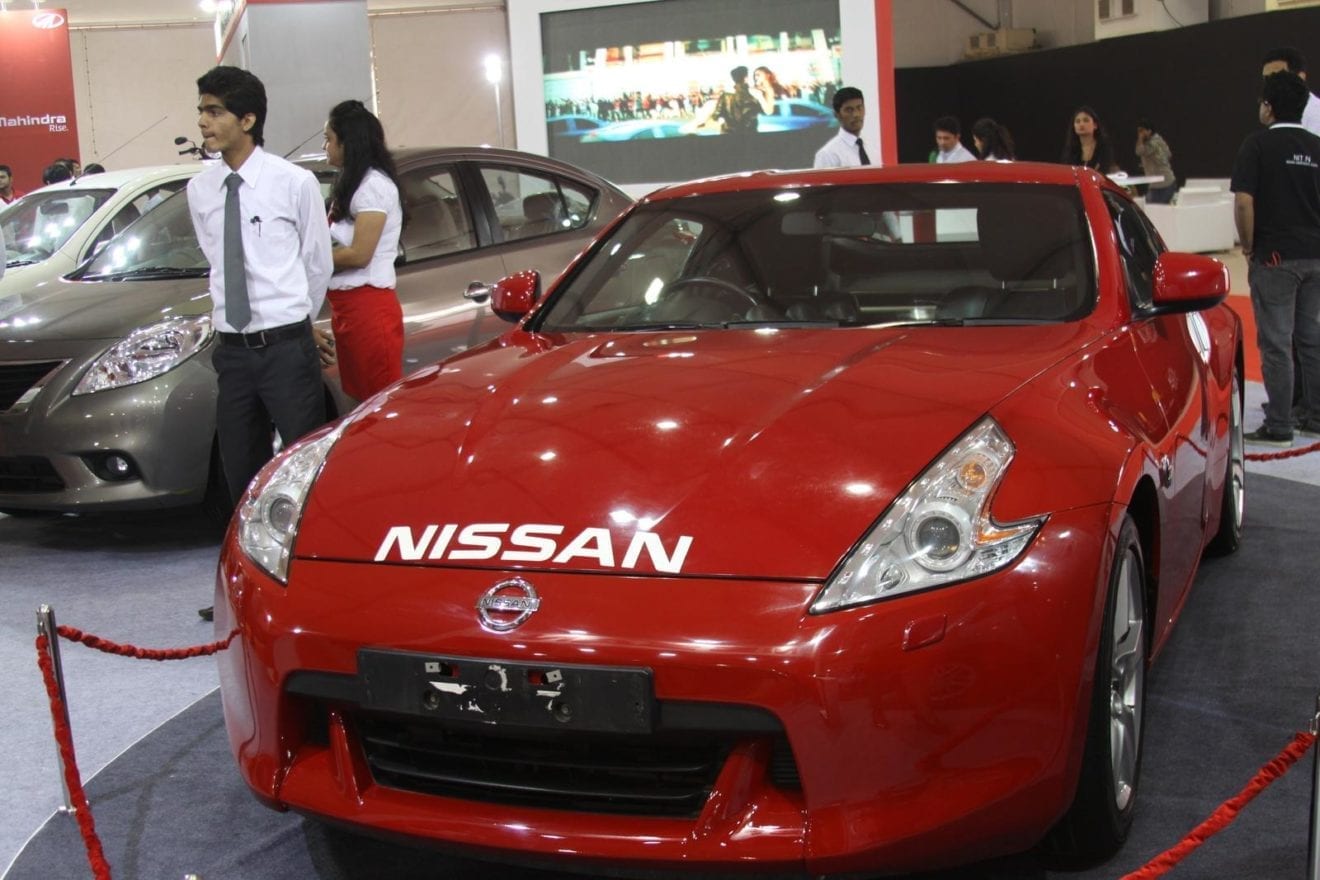
    Japanese giant Nissan Wednesday unveiled a new electric car with an extended range and semi-autonomous driving functions, as it seeks to battle off competitors in a sector it once pioneered.

    The second-generation Nissan Leaf has a potential range of 400 kilometers (250 miles) between charges, compared with 250 kilometers for its previous version.

    It also boasts semi-autonomous driving capabilities such as keeping the vehicle automatically in one lane on the motorway or parking without human intervention.

    Hiroto Saikawa, president and chief executive officer of Nissan, said in a statement that the new vehicle “strengthens” the firm’s “leadership” in the electric car sector.

    Nissan was an innovator in the sector seven years ago when it unveiled its first Leaf — which has sold 280,000 units — but has since had to contend with fierce competition from General Motors and Tesla among others.

    Faced with tighter global environmental regulations, most carmakers are investing heavily in the electric car sector, sparking a ferocious race to create the next green vehicle.

    The new car will be available next month in Japan, followed by the United States, Canada and Japan in January 2018.

    The price tag in Japan will be 3.15 million yen (around $29,000).

  • Nissan targets new Leaf global sales of more than 90,000 a year

    Nissan targets new Leaf global sales of more than 90,000 a year

    Nissan Motor is targeting annual global sales of more than 90,000 units for its new Leaf electric vehicle, the company said on Wednesday.

    The battery supplier for the revamped Leaf is Automotive Energy Supply, the same as for the previous Leaf.

    The new Leaf, launched on Wednesday, goes on sale in Japan from Oct. 2 and elsewhere early next year.

  • SK Telecom launches in-car virtual assistant

    SK Telecom launches in-car virtual assistant

    SK Telecom has announced the launch of a new in-car virtual assistant combining its T Map mobile navigation app with its NUGU artificial intelligence platform.

    The T Map x NUGU AI-based navigation service enables drivers to use their voice to activate existing navigation and new AI-based services.

    The platform is designed to allow drivers to easily set and change destinations without taking their eyes off the road of their hands off the year. Users can also ask the voice assistant to complete tasks such as finding the closest or cheapest gas station or the nearest parking lot.

    Users will also be able to request real-time traffic information and to end the service or close the app using voice commands. The virtual assistant then listens for one of two wake words.

    By November, SK Telecom also plans to add more functionality including using voice commands to take a call or send a busy message.

    T Map is the main mobile navigation service in Korea with an estimated 10.1 million active users – a 68% market share. It is available to SK Telecom mobile customers free of charge.

    Separately, Ericsson has entered a partnership with Zenuity, an automotive software development joint venture between Autoliv and Volvo Car Corporation, to develop an end-to-end platform for self-driving cars.

    The platform will cover connected safety, advanced driver assistance support and autonomous driving software and functions, Ericsson said.

    During the first phase of the collaboration, the companies plan to jointly develop the Zenuity Connected Cloud using the Ericsson IoT Accelerator.

    This offering will consist of in-vehicle software integrated with vehicle functions, onboard sensors and cloud support functions that will provide external data from other vehicles and cloud infrastructure.

    “Zenuity was formed to develop the software and solutions the industry requires to create a truly global connected automotive ecosystem,” Zenuity CEO Dennis Nobelius said.

    “With a strong focus on increasing safety through ADAS and AS software and functions, our unique expertise in ADAS and autonomous technologies combined with Ericsson’s technology leadership in complex connectivity solutions is a win-win for the entire automotive industry.”

  • Thyssenkrupp sees boost for steel from shift to electric cars

    Thyssenkrupp sees boost for steel from shift to electric cars

    South Korea’s Hyundai Motor (005380.KS) said it had suspended production at one of its China factories on Tuesday after a supplier refused to provide parts due to delays in payment – its second such incident in as many weeks.

    Frayed relations with suppliers to its venture with BAIC Motor Corp Ltd (1958.HK) are adding to headaches for Hyundai in China, where it has seen sales slump due to diplomatic tensions between the two nations and fierce competition from local brands.

    Supplier sources familiar with the matter say that BAIC is in charge of payments and has been responsible for the delays.

    The partners are fighting over their supplier strategy with BAIC favoring shifting to cheaper Chinese firms in the face of intense competition, while Hyundai wants to protect its South Korean supply chain, people familiar with the dispute said.

    Hyundai declined to comment on the reason for the failure to pay suppliers. A representative for BAIC could not be immediately reached for comment.

    Their joint venture had only just resumed production at four China plants on Aug. 30 after a suspension of about a week because one French supplier refused to provide fuel tanks due to non-payment.

    This time, a German firm has refused to provide parts for air intake systems, a representative for Hyundai said, declining to identify the supplier. The joint venture’s three other Chinese factories remain operational.

    Any loss of production from this one factory is unlikely to have a major sales impact as Hyundai probably has sufficient inventory at the plant because its cars have not been selling well, said Ko Tae-bong, an analyst at Hi Investment & Securities.

    “That is manageable. But if Hyundai’s Chinese partner is refusing to make payments, that’s a different story,” he said, adding that the issue could occur time and time again.

    Scrambling to tackle problems in China, Hyundai said this week it had appointed a new head for its China operations. Tao Hung Than, who is of Chinese descent, took the helm effective Friday replacing Chang Won-shin, who lasted less than a year in the job.

    The new China CEO, however, has a huge task in front of him if he is going to get Hyundai back on track in the world’s biggest auto market – one that accounted for nearly a quarter of Hyundai’s revenue in the last financial year.

    A weakening brand image and a product line-up without attractive SUVs are only adding to pain from diplomatic tensions. Hyundai’s sales from its Chinese factories plummeted 64 percent in April-June first quarter, when the automaker posted its smallest quarterly net profit in five years.

    South Korean firms have been hit by a Chinese backlash over Seoul’s decision to deploy a U.S. missile defense system to counter threats from nuclear-armed North Korea. China says the system poses a threat to its national security.

    Hyundai and BAIC were also due to start operations at a fifth China car factory late last month but the timetable has been pushed back. Hyundai has declined to comment on the postponement.

    Hyundai Motor shared fell 1.4 percent to their lowest level since April 19 on Tuesday and have declined 4.2 percent since the first reports of the supply disruptions emerged a week ago.

  • Toyota recalls 20,000 cars in Vietnam due to faulty airbags

    Toyota recalls 20,000 cars in Vietnam due to faulty airbags

    The airbags produced by Japanese manufacturer Takata have been linked to 17 deaths worldwide.

    Toyota Vietnam announced the recall of 20,000 cars this week to replace airbags produced by Japanese firm Takata.

    The Japanese auto maker will recall 18,138 of its Vios models assembled in Vietnam between 2009 and 2012, and 1,877 Yaris units imported into the country during the same period.

    The move is part of a worldwide recall of Takata products.

    Airbag-manufacturer Takata has suffered massive losses due to faulty airbags that have been linked to at least 17 deaths worldwide.

    The airbags’ inflators can explode with excessive force and blow a metal canister apart, sending shrapnel into the car.

    Toyota Vietnam said it will replace the airbags free of charge.

    No accidents related to the airbags have been recorded in Vietnam.

  • Samsung secures self-driving car permit in California

    Samsung secures self-driving car permit in California

    Samsung Electronics Co Ltd said on Thursday it has received a permit to test self-driving vehicles in California, marking the entry of the world’s largest smart phone maker four months after iPhone maker and arch rival Apple Inc (AAPL.O) received a permit.

    Its parent company in May secured permission from South Korean authorities to test a self-driving car fitted with its own sensors and software systems. At that time, South Korean officials said the company planned to use the car to develop a self-driving car algorithm that could drive in adverse weather.

    In a statement to Reuters, Samsung did not say what precisely what it planned to test in the United States but said it secured the permit “in pursuit of a smarter, safer transportation future.”

    The company, part of a massive conglomerate that makes everything from washing machines to heavy machinery, said it has “no plans to enter the car-manufacturing business.”

    With the foray into the U.S. self-driving car landscape, Samsung will jostle with its friends and foes. Besides Apple, it will join Waymo, a division of Alphabet Inc (GOOGL.O), which supplies the Android operating system that runs on Samsung’s phones.

    Samsung has a range of other opportunities for growth in the self-driving car business. Earlier this year, the company closed its $8 billion purchase of car audio maker Harman International Industries, giving it a wide foot print in so-called connected car technologies.

  • Ford looks at self-driving systems for commercial trucks

    Ford looks at self-driving systems for commercial trucks

    Ford Motor is considering deploying self-driving vehicle technology in larger commercial vehicles and is working with multiple partners to put its autonomous vehicles on the road, a senior Ford executive told Reuters on Tuesday.

    ”We’ve been talking with different partners in different industries“ about potential applications for Ford’s first self-driving vehicle in 2021, including ride-sharing and delivery services,” Sherif Marakby, vice president of autonomous vehicles and electrification at Ford, said in an interview.

    Marakby recently rejoined Ford from ride-services company Uber Technologies, where he oversaw development of self-driving vehicles.

    Ford Chief Executive Jim Hackett, who took over in May, is leading a review of the automaker’s strategy, including its investments in electric and self-driving vehicles.

    The company is already operating Transit vans in an “on-demand” shuttle service called Chariot, which is similar to Uber Technologies ride-hailing service, and eventually could outfit those vehicles with self-driving systems.

    AUTONOMOUS PIZZA DELIVERY

    Tesla and some commercial truck makers are trying to develop self-driving trucks. Ford does not make Class 8, long-haul semi trucks, but the company does build light- and medium-duty F-series trucks and Transit vans that commercial customers use to deliver goods.

    Ford on Tuesday said it is teaming with Domino’s Pizza to test Michigan consumers’ reactions to having their meals delivered by self-driving vehicles.

    It is working with “many other companies” to develop self-driving hardware, while its Pittsburgh-based Argo AI affiliate builds the “virtual driver” software, Marakby said.

    Ford still plans to do much of its own systems integration work, he added. Some rival automakers have announced plans to share much of the engineering work and cost. Germany’s BMW, for example, has partnered with Intel, Delphi Automotive and Fiat Chrysler Automobiles.

    “We’re developing the technology and the (customer) interfaces to go to market directly with our partners,” Marakby said. “We’re open to other arrangements in the future.”

    There has been an explosion of interest in the past year in the development and potential deployment of self-driving vehicles – from car companies and component suppliers to technology giants and startups, as well as large corporations, universities and municipalities.

  • Hyundai resumes production in China after supply hiccup

    Hyundai resumes production in China after supply hiccup

    Hyundai Motor said on Wednesday it had resumed production in China after a supply disruption forced the suspension of operations last week, complicating its efforts to lift sagging sales in the world’s biggest auto market.

    The production stoppage, although resolved, adds to investor concerns after the South Korean carmaker posted its smallest quarterly profit in five years amid political headwinds linked to diplomatic tensions between Seoul and Beijing.

    Hyundai had to cut production at its four factories in China earlier this year due to slumping sales. Its fifth China factory was scheduled to start production this month.

    Hyundai Motor’s sales from its Chinese factories plummeted 64 percent to 105,000 vehicles in April-June alone.

    “The effects of the China production halt are yet unclear, but Hyundai’s third-quarter results are likely to be lower than the previous quarter partly due to continued weak performance in China,” said Park Sang-won, analyst at Heungkuk Securities.

    Hyundai shares pared losses after skidding to their lowest level in more than four months on Wednesday, falling as much as 3.8 percent. They were trading down 0.4 percent at 0504 GMT, compared to a flat wider market .KS11.

    Hyundai said earlier on Wednesday its joint venture with China’s BAIC Motor  began shutting down production last week after a fuel-tank components supplier refused to provide parts due to non-payment.

    BAIC declined to comment and Reuters could not immediately reach the joint venture, Beijing Hyundai, for comment.

    South Korean firms are weathering a Chinese backlash over Seoul’s decision to deploy a U.S. missile defense system to counter threats from nuclear-armed North Korea. China says the system poses a threat to its national security.

    Hyundai’s weak brand image has put it at a disadvantage in China versus local and global rivals such as Honda Motor (7267.T), Toyota Motor (7203.T) and General Motors (GM.N), which all saw higher China sales for last month.

  • Sales at Toyota’s Lexus brand slide in first-half as sedans suffer

    Sales at Toyota’s Lexus brand slide in first-half as sedans suffer

    Toyota Motor on Friday said its luxury Lexus brand suffered its first fall in half-year global sales in six years as demand for its sedans tumbled in the United States, its biggest market.

    Sedans, traditionally a mainstay for automakers including Toyota and Honda Motor, have fallen out of favor in their key U.S. market in past years, sending many carmakers scrambling to manufacture more larger vehicles including SUVs and trucks.

    Toyota said it sold 305,169 Lexus vehicles worldwide in the six months to June, down 4.4 percent from 319,275 vehicles a year earlier. Sales slumped 10 percent in the United States, which comprises nearly half of Lexus’s global sales, and 23 percent in Japan, while jumping 30 percent in China.

    “The U.S. passenger car market has been very challenging, and this has affected sales,” Toyota spokesman Maki Niimi said.

    He added that the automaker expects annual sales to slide about 4.0 percent this year to around 650,000 units, as the recently launched LC sports coupe model and a revamped version of its marquee LS sedan model later this year lift sales slightly in the coming months.

    While Lexus continues to enjoy solid U.S. sales of its NX SUV crossover model, analysts said that the brand overall had fallen behind rival luxury brands with newer sedan offerings including Daimler AG’s Mercedes, which recently launched its E-Class range, and BMW’s 5-series.

    “It’s a model cycle issue,” said Janet Lewis, head of Asia transportation research at Macquarie Securities. “You have two core competing products recently launched (by Mercedes and BMW), while the LS is pretty long in the tooth.”

    Lexus sold just 1,855 units of its LS 460 model in the United States in January-June, down 35.2 percent from a year earlier.

    Overall, Toyota, the world’s second-biggest automaker, expects to sell 10.25 million vehicles globally this year, down a touch from last year.

  • Renault-Nissan to set up new China JV with Dongfeng Motor for electric cars

    Renault-Nissan to set up new China JV with Dongfeng Motor for electric cars

    Nissan Motor and its alliance partner Renault are setting up a new joint venture in China with Dongfeng Motor Group to design and build electric cars, joining a list of global automakers aiming to make such vehicles in China.

    The automakers are attempting to tap into a boom for such cleaner “new energy” vehicles in the world’s biggest auto market and gearing up to meet its anticipated stringent plug-in car quotas.

    Ford Motor Co announced earlier this month it was exploring setting up a joint venture with car maker Anhui Zotye Automobile Co to build electric vehicles in China under a new brand.

    Tesla, Daimler AG and General Motors have already announced plans for making electric vehicles in China, which wants electric and plug-in hybrid cars to make up at least a fifth of the country’s auto sales by 2025.

    The new joint venture, called eGT New Energy Automotive Co, will be owned 25 percent each by Nissan and Renault with Dongfeng owning 50 percent, Nissan and Renault said in a statement on Tuesday.

    They said eGT will design a new electric vehicle on a subcompact crossover SUV platform of the Renault-Nissan alliance.

    “The establishment of the new joint venture with Dongfeng confirms our common commitment to develop competitive electric vehicles for the Chinese market,” Carlos Ghosn, chairman and chief executive officer of the Renault-Nissan alliance, said in the statement.

    The statement did not give details of financial commitments of the joint venture partners or say by when the vehicles will be launched. Dongfeng already partners Nissan in China.

    Both Nissan and Renault already market electric cars. Nissan’s Leaf compact hatchback has become the world’s top-selling electric car since its launch in 2010, while Renault began selling its Zoe model in 2012.

    The game changer for global automakers, many of whom until recently have resisted an industry shift to heavily electrified vehicles, is China – an auto market with strong potential for growth where stringent policies favoring cleaner energy cars are being aggressively pursued.

    Under China’s latest proposals, electric vehicle sales quotas, which are expected to take effect as early as 2018, are due to require 8 percent of automakers’ sales to be battery electric or plug-in hybrid vehicles by next year, rising to 10 percent in 2019 and 12 percent in 2020.

  • Auto industry calls for luxury tax cut on sedans

    Auto industry calls for luxury tax cut on sedans

    The Indonesian Automotive Manufacturers Association (Gaikindo) chairman Jongkie Sugiarto said on Tuesday that the association had long lobbied the Finance Ministry to reduce the luxury tax on sedans.

    He said the cut in luxury tax for sedans from 30 to 10 percent, a similar rate for multi-purpose vehicles, would encourage producers to manufacture more sedans, not only for the domestic market but also for export.

    “Because of cheaper taxes, Indonesia has now become the king of MPVs, but our exports are just 200,000 units per year, from a total production of 1.3 million,” Jongkie said during a discussion on the automotive industry organized by the Indonesian Business Data Center (PDBI) in Jakarta on Tuesday.

    “Thailand produces 2 million units of vehicles per year, but it exports 1.2 million because they produce everything from sedans and pickups to MPVs. The Thai government also does not discriminate in the taxes on the automotive products.”

    He said Gaikindo had already hired experts at University of Indonesia’s Institute for Economic and Social Research (LPEM UI) to carry out independent research on the issue and the result was that a luxury-tax cut on sedans would increase sales by 17 percent.

    This year, Gaikindo’s efforts received support from Industry Minister Airlangga Hartarto, but it was still struggling to convince the Finance Ministry.

    “We have lobbied for so long [the Finance Ministry], but it has not moved,” Jongkie said, adding that the association had proposed the tax cut since 2011. (bbn)

  • Autosports Group announecs acquisition of BMW Melbourne

    Autosports Group announecs acquisition of BMW Melbourne

    Autosports Group Ltd acquisition of Bmw Melbourne.

    Expects to pay for the bmw melbourne businesses a consideration of approximately $22 million.

    Unit enters agreement with bmw melbourne to buy businesses such as bmw melbourne ,mini garage melbourne ,south bank motor cycles and bmw body shop.

  • Germany draws up rules of the road for driverless cars

    Germany draws up rules of the road for driverless cars

    Protecting people rather than property or animals will be the priority under pioneering new German legal guidelines for the operation of driverless cars, the transport ministry said on Wednesday.

    Germany is home to some of the world’s largest car companies, including Volkswagen, Daimler and BMW, all of which are investing heavily in self-driving technology.

    German regulators have been working on rules for how such vehicles should be programmed to deal with a dilemma, such as choosing between hitting a cyclist or accelerating beyond legal speeds to avoid an accident.

    Under new ethical guidelines – drawn up by a government-appointed committee comprising experts in ethics, law and technology – the software that controls such cars must be programmed to avoid injury or death of people at all cost.

    That means that when an accident is unavoidable, the software must choose whichever action will hurt people the least, even if that means destroying property or hitting animals in the road, a transport ministry statement showed.

    The software may not decide on its course of action based on the age, sex or physical condition of any people involved.

    “The interactions of humans and machines is throwing up new ethical questions in the age of digitalization and self-learning systems,” German Transport Minister Alexander Dobrindt said in a statement.

    “The ministry’s ethics commission has pioneered the cause and drawn up the world’s first set of guidelines for automated driving,” he added.

    Germany earlier this year passed legislation under which a driver must be sitting behind the wheel at all times ready to take back control if prompted to do so by the autonomous vehicle, clearing the way for the development and testing of self-driving cars.