Category: Automotive

Retail News Asia is committed to providing both local and global retailers with the latest Auto and Car news throughout the Asian market. This on a daily base.

  • Fiat Chrysler shares fall as it plans to curb production

    Fiat Chrysler shares fall as it plans to curb production

    Shares in Fiat Chrysler fell more than 5 percent on Thursday amid worries that problems in China were undercutting sales of flagship models such as the Maserati and Alfa Romeo sport utility vehicles.

    The shares fell after a trade publication, “Automotive News”, reported on Wednesday that FCA would temporarily cut production of the Maserati Levante SUV and the Alfa Romeo Stelvio SUV and Giulia sedan at plants in Italy, because new import rules in China were hurting sales.

    Fiat shares closed down 6 percent in Milan at 13.99 euros. The stock was also hit by weakness in the auto industry overall, after Nissan announced that it was suspending all car production in Japan.

    “The whole auto sector is under pressure today, but the market also seems to be digesting the impact the production shutdowns could have on FCA,” a trader said.

    Manufacturing of the Levante, which is essential to reviving sales at Maserati, was suspended for two weeks during October and November, unions said. The Mirafiori plant produces around 130 Levantes per day, they said.

    “This is the first time we have a shutdown at the Levante line since it came into production, so this is quite worrying,” said Federico Bellono, general secretary for the FIOM union in Fiat’s home town of Turin.

    FCA also reduced production of the Stelvio and the Giulia models, which were designed to revamp the Alfa Romeo brand, by making fewer vehicles per shift this month and halting lines on four Fridays. FCA declined to comment on the cuts.

    Deliveries of the Levante to Chinese dealerships dropped to 310 in July and just under 400 in August, compared with 1,064 in June, data from market researcher JATO Dynamics show.

    Stelvio deliveries were around 1,006 in June and 2,666 in July but fell to 227 in August. Sister model Giulia saw a similar crash in deliveries over the summer.

    The sales drop will make it difficult for FCA to reach its global goal of selling 60,000 Maseratis and 170,000 Alfas this year, said Felipe Munoz, an automotive analyst at JATO.

    Adding to the pressure were a slow sales start for Alfa Romeo in the United States, from which it had been absent for years, and growing competition for both brands in the popular premium segment.

    “The Stelvio SUV has done good so far, but it arrives ten years after the segment took off,” Munoz said.

    Levante, which helped Maserati increase sales by 90 percent in the first six months, “is perhaps the most beautiful of its segment, but it soon lagged behind its rivals in terms of technology when they were updated … The new Porsche Cayenne could be its biggest headache”, Munoz said.

    The analyst forecasts global sales this year of 130,000 to 140,000 for Alfa and 40,000 for Maserati.

  • Royal Enfield motorcycles roar into Vietnam

    Royal Enfield motorcycles roar into Vietnam

    Royal Enfield motorcycles have landed in Vietnam with a flagship store in Ho Chi Minh City.

    The Indian company is focussing on expanding in South Asia, and Vietnam is the world’s fourth-largest two-wheeler market. Royal Enfield’s official dealer for Vietnam, Al Naboodah International (VN), has opened the store in Saigon Paragon in the city’s District 7.

    Initially three models will be available, the Bullet 500, Classic 500 and Continental GT 535. The company is focussed on expanding its mid-sized motorcycle segment (250cc to 750cc) internationally.

    “Vietnam has a large population that is young and commutes on two-wheelers,” says Royal Enfield president Rudratej Singh.

    Royal Enfield also has presence in Indonesia with two exclusive stores in Jakarta and an outlet in Bali. It has also set up the first Royal Enfield gear store outside India in Jakarta.

    There is also a store in Bangkok.

  • Daimler recalls over 1 million vehicles worldwide for air bag fix

    Daimler recalls over 1 million vehicles worldwide for air bag fix

    Daimler is recalling more than 1 million Mercedes-Benz cars and sport utility vehicles worldwide to address potential unintended air bag deployments, the German automaker said on Monday.

    The safety recall covers 495,000 vehicles in the United States, 400,000 in Britain, 76,000 in Canada and a few hundred thousand in Germany, company officials said. The German automaker did not immediately have a complete worldwide total.

    An electrostatic discharge, coupled with a broken clock spring and insufficient grounding of steering components, can lead to inadvertent deployment of the driver side front air bag in vehicles subject to the recall, the company said.

    As part of the fix, it said dealers would add new grounding to the steering components.

    A Mercedes-Benz spokeswoman in the United States said there had been “a handful of instances where drivers suffered minor abrasions or bruises” due to the air bag problem.

    No deaths have been reported and the issue is not related to the massive recall of Takata air bag inflators worldwide.

    The recalls covers some 2012-2018 model year A, B, C, and E-Class models and CLA, GLA and GLC vehicles.

  • Mitsubishi to accelerate R&D, capital spending

    Mitsubishi to accelerate R&D, capital spending

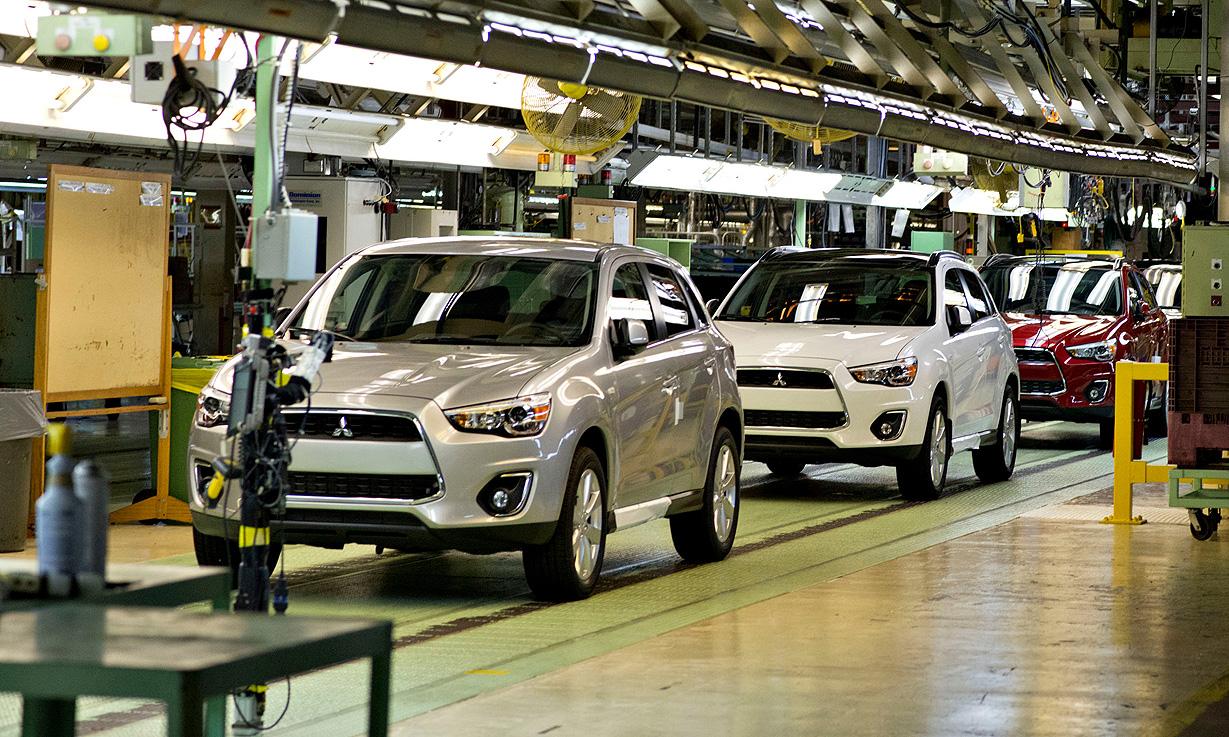
    Japanese automaker Mitsubishi is planning to inject more than 600 billion yen ($5.35 billion) in capital spending and research and development (R&D) over the next three years through fiscal 2019 in a bid to turn around its business after recent scandals, the Nikkei said.

    The new plan calls for spending 5 percent of annual sales on equipment and the same proportion on R&D.

    Funds will be used by the company for the development of electrified vehicles and for production in China and Indonesia.

    Mitsubishi Motors will release the specifics of the capital injection in a new medium-term plan due Wednesday, the business daily said.

  • Infiniti Motor Company aims to rev up retail

    Infiniti Motor Company aims to rev up retail

    With a chance to boost retail innovation in Hong Kong, Infiniti Motor Company has partnered with venture capital firm Nest to launch Infiniti Lab Global Accelerator 3.0 under the theme “The Future Consumer”.

    Infiniti has invited seven high-potential startups, two from Hong Kong and the others from Canada, Germany, Mexico, Sweden and the US, to its global headquarters to develop technologies to enhance the customer journey. The program will involve testing, evolving and refining their technologies to win over investors and industry leaders.

    The Hong Kong startup ventures are ActiMirror and Cove.

    “These exciting startups will have access to the Infiniti network of executives and ecosystem partners, and benefit from intensive business coaching and mentoring as well as exposure to established investors across Asia,” says Nest CEO Lawrence Morgan. “We have created a bespoke 10-week program for our startups and look forward to working with these high-potential businesses.”

    Chance to pitch

    Following the program will be Demo Day on December 13 at which the entrepreneurs will pitch their ideas to a panel of investors. They also have a chance to pitch their business cases to key decision makers from Infiniti and the Renault-Nissan Alliance.

    “We are dedicated to supporting top entrepreneurial talent around the world and helping bring their ideas to life through comprehensive startup programs and world-class partnerships,” says Infiniti Motor Company GM for global business transformation Dane Fisher.

    To launch the venture, Infiniti hosted a panel discussion about the future consumer and using emerging technologies to  improve the customer experience. As well as Fisher, Visionaries 777 head of business development David Castaneda, Bluebell Group digital director Benoit Lavaud, and Red Ant Asia regional director Elisa Harca, Regional Director, Red Ant Asia discussed how disruptive technologies such as AI, Big Data and VR will transform consumer experience.

    Headquartered in Hong Kong, Infiniti is represented in 50 international markets. Launched in 1989, it offers a range of premium automobiles built in China, Japan, the UK and the US. The brand is known for its design and innovative driver-assistance technologies. Last year it became a technical partner of the Renault Sport Formula One team.

  • Tesla fired hundreds of employees in past week

    Tesla fired hundreds of employees in past week

    It’s about 400 people ranging from associates to team leaders to supervisors. Luxury electric vehicle maker Tesla Inc fired about 400 employees this week, including associates, team leaders and supervisors, a former employee told Friday.

    The dismissals were a result of a company-wide annual review, Tesla said in an emailed statement, without confirming the number of employees leaving the company.

    “It’s about 400 people ranging from associates to team leaders to supervisors. We don’t know how high up it went,” said the former employee, who worked on the assembly line and did not want to be identified.

    Though Tesla cited performance as the reason for the firings, the source told Reuters he was fired in spite of never having been given a bad review.

    The Palo Alto, California-based company said earlier in the month that “production bottlenecks” had left Tesla behind its planned ramp-up for the new Model 3 mass-market sedan.

    The company delivered 220 Model 3 sedans and produced 260 during the third quarter. In July, it began production of the Model 3, which starts at $35,000 – half the starting price of the Model S.

    Mercury News had earlier reported about the firing of hundreds of employees by Tesla in the past week.

  • Ford’s China sales stuck in first gear as rivals overtake

    Ford’s China sales stuck in first gear as rivals overtake

    Ford Motor saw its China vehicle sales make the barest of increases in September, extending a tough run in the world’s largest auto market even as global rivals have logged robust gains.

    The U.S. automaker has lacked a high-volume brand of affordable entry cars for China and has been criticized for slow decision-making that has cost it share in a market where consumer tastes change quickly.

    In response, it has brought in a new China head, Jason Luo, a Chinese-born American formerly at U.S.-based air bag maker Key Safety Systems, tasked with building closer ties with Ford’s local partners and working more effectively with regulators.

    The U.S. carmaker sold 112,902 vehicles in China last month, an increase of some 430 from the same period a year earlier.

    By contrast, rivals Toyota, Honda and Nissan Motor saw gains of 14 percent or more while General Motors posted an increase of 7 percent.

    Overall vehicles sales in China rose 5.7 percent in September – a fourth straight month of growth.

    Like many other global automakers, Ford is also looking to revamp its strategy towards electric vans and cars to keep up with Beijing’s push for cleaner new-energy vehicles (NEV).

    The country has set strict quotas for NEVs which carmakers must meet by 2019, a move that is prompting a flurry of electric car deals and new launches of electric and hybrid models. Ford said it was looking to set up an electric car venture with Chinese firm Anhui Zotye Automobile Co in August.

  • Toyota plans to halve Japan car models by 2025

    Toyota plans to halve Japan car models by 2025

    Toyota is planning to halve the number of car models it sells in Japan to about 30 by 2025 to focus on more popular models in a shrinking market, a person briefed on the matter told Reuters on Thursday.

    The automaker currently offers about 62 car models in Japan, including the Prius gasoline hybrid and the Aqua compact hatchback, along with less popular ones including the Premio sedan.

    Auto sales in Japan have been falling as the population rapidly ages, while young people are losing interest in car ownership.

    The plans will allow Toyota to make better use of its resources, the person said, who was not authorized to comment on the matter and declined to be identified.

    Toyota spokeswoman Akiko Kita said the company was pursuing a number of strategies to maintain sales at least 1.5 million vehicles annually in a shrinking market. It currently sells around 1.6 million a year.

    Toyota and other global carmakers are concentrating their efforts on developing lower emissions vehicles, including electric cars while also focusing on expanding market share in emerging markets.

  • Mercedes-Benz Opening ‘Mercedes me’ Store In Melbourne

    Mercedes-Benz Opening ‘Mercedes me’ Store In Melbourne

    The most liveable city in the world is soon to become home of Australia’s first Mercedes me Stores. This will be the seventh Mercedes me location worldwide, joining cities including Hamburg, Munich and Hong Kong.

    Set-up as an inner-city concept, Mercedes me Melbourne will allow you to soak up the atmosphere of Mercedes-Benz in a space synonymous with the foundations of Melbourne lifestyle – Food, Sport, Art, Design, Fashion, Innovation and Coffee.

    Reside in cutting-edge architecture whilst enjoying world-class food and coffee from Melbourne’s famous ST. ALi. Learn more about Mercedes in an open, casual environment with our interactive facilities and welcoming specialists.

    During the evenings, Mercedes me Melbourne’s unique venue will transform, offering an eclectic mix of events and entertainment. Whether it be an exclusive preview of the latest products, bespoke fashion show, movie screening or live music, Mercedes meMelbourne will be the place to be.

    Prepare yourself for a space of versatility. Whether you’re a vehicle enthusiast or an avid coffee drinker, you will fit right in. As this journey progresses, we are becoming increasingly excited to share this new experience with you.

    Stay tuned and ensure you keep up to date by registering your details.

  • Car vending machines dispense vehicles bought online

    Car vending machines dispense vehicles bought online

    The US motor vehicle industry appear to have removed the last piece of personal interaction involved in the process of purchasing a car, with the launch of car vending machines.

    Shoppers who prefer to bypass physical dealerships can now order and pay for their car online before popping down to a multi-storey building resembling a vending machine to collect their ride.

    NYSE-listed Carvana, a leading eCommerce platform for buying used cars, has launched the latest of its car vending machines in Jacksonville, Florida. The eight storey-high building is fully automated and coin-operated (yes, you did read that correctly) and can house as many as 30 vehicles. Carvana says the buildings “give customers a unique and memorable pickup experience” for cars they buy online.  It is the seventh such building Carvana has opened, the others being in Houston, Austin, San Antonio and Dallas in Texas, Nashville, Tennessee and Raleigh North Carolina.

    Carvana says its system appeals to customers because instead of spending hours walking around dealerships, customers who choose Carvana can search through the company’s national inventory of 7000 vehicles and finance and purchase their car completely online. From start to finish, the entire process takes as little as 10 minutes. All vehicles in Carvana’s inventory have passed a 150-point inspection and have never been in a reported accident or have frame damage. All features, imperfections and updated information about open safety recalls are listed on the car’s vehicle description page.

    Once the online purchase is complete, customers can choose to have their car delivered as soon as the next day, or pick it up from one of the car vending machines. Customers who choose  the vending machine option will receive a commemorative, oversized Carvana coin on-site to activate the vending process and transport the car into the delivery bay. Customers then have a seven-day, money-back guarantee, giving them the chance to see if the vehicle really fits their life. If they aren’t satisfied, they can return the vehicle for a full refund.

    Ernie Garcia, founder and CEO of Carvana says he wants to “bring some fun back into the car buying process”.

    Vehicle pickup at any of Carvana’s car vending machines is free for customers. Those who live outside the metropolitan delivery area but would still like to pick up their car at a vending machine, Carvana will subsidise $200 for an airfare and arrange “white glove transportation” from the airport.

    Founded in 2012 and based in Phoenix, Arizona, Carvana says its mission is to change the way people buy cars.

    “By removing the traditional dealership infrastructure and replacing it with technology and exceptional customer service, Carvana offers consumers an intuitive and convenient online automotive retail platform. A fully transactional website enables consumers to quickly and easily buy a car online, including finding their preferred vehicle, qualifying for financing, completing the purchase and loan with signed contracts, and receiving delivery or pickup of the vehicle,” the company says in a statement.

  • Magna joins BMW-Intel self-driving car project

    Magna joins BMW-Intel self-driving car project

    Canadian auto parts producer Magna International Inc said on Tuesday it had joined a consortium including BMW and Intel Corp to develop a self-driving vehicle platform for the use of auto makers by 2020.

    The move comes as automakers are increasingly seeking alliances to share the high costs of developing self-driving vehicle technology, which requires extensive research and development and software expertise outside the traditional domain of carmakers.

    Magna is the latest addition to the BMW-Intel alliance, which aims to develop new technology that could put self-driving cars on the road by around 2021. (reut.rs/2y9llha)

    The consortium also includes Mobileye, Fiat Chrysler and auto suppliers Delphi Automotive and Continental AG.

    Earlier this year, Intel bought Mobileye, the world’s largest supplier of systems used in automotive collision detection systems, for $15 billion.

    Magna will also help automakers industrialize the platform designed by the consortium, the Canadian company in a statement.

  • Denso to invest $1 billion creating 1,000 jobs

    Denso to invest $1 billion creating 1,000 jobs

    Japanese auto parts supplier Denso Corp plans to invest $1 billion in its Maryville, Tennessee plant to develop vehicle electrification and safety systems, creating around 1,000 jobs.

    This is the latest in a series of announcements from automakers rushing to bring a large number of electric vehicle models to market in the coming years.

    Policymakers in key markets such as China are pushing a shift to electric cars from internal combustion engines over the next two to three decades, while relatively new rival Tesla is gaining momentum, pressuring traditional automakers to crank up plans for fully electric vehicles.

    Denso said in a statement the investment would expand multiple production lines at the facility to produce advanced safety, connectivity and electrification products for hybrid and electric vehicles. The new jobs will include production workers, technicians and engineers.

    “We are seeing dramatic shifts in the role of transportation in society, and this investment will help position us to meet those changing demands,” Kenichiro Ito, chairman of Denso’s North American board, said in a statement.

    In 2015 the auto supplier announced a $400 million investment in Maryville and the creation of 500 jobs.

    Last week, Toyota Motor announced a joint venture with partner Mazda Motor Corp (7261.T) to develop electric vehicle technology. Toyota will take a 90 percent stake in the joint venture while Mazda and Denso, Toyota’s biggest supplier, will each take 5 percent.

    No. 1 U.S. automaker General Motors said this week it would add 20 new battery electric and fuel cell vehicles to its global lineup by 2023.

    A day later, Ford Motor said it planned to slash $14 billion in costs over the next five years and shift capital investment away from sedans and internal combustion engines to develop more trucks and electric and hybrid cars.

  • Ferrari opens new Kuala Lumpur showroom

    Ferrari opens new Kuala Lumpur showroom

    Ferrari has opened a new showroom in Kuala Lumpur in partnership with Naza Italia, the official importer and distributor of Ferrari in Malaysia.

    Located at Naza Platinum Park on the ground flor of Tower 1, Naza Italia has invested RM2.8 million to develop the 3,115 square foot Ferrari City Showroom.

    A second Ferrari outlet for the Malaysian capital, the new showroom showcases three of the latest Ferrari models, and boasts a luxurious customer lounge as well as a configuration and customiszation room.

    The opening is part of the company’s strategy to boost the brand’s presence in the metropolitan area.

    “Substantial growth in business calls for an expansion that will enable us to better serve Ferrari’s discerning clientele,” Naza World Group executive chairman, Datuk SM Faisal SM Nasimuddin, told media at the launch.

    “To address that, we are making the brand more accessible with a showroom in this prime location,” he continued.

    The Naza Platinum Park location compliments Ferrari’s first showroom offering, located in Petaling Jaya.

    “The showroom is somewhat of an appetizer, presenting Ferrari enthusiasts and potential buyers a taste of the latest offerings and a preview of experience provided at the showroom in Petaling Jaya,” he said.

    Naza World also recently invested RM5 million to renovate its debut KL showroom.

    “The upgrade is a reflection of Naza Italia’s commitment to the clientele and to better serve our customers,” he concluded.

  • Jaguar Land Rover store opens at Westfield Bondi Junction

    Jaguar Land Rover store opens at Westfield Bondi Junction

    Australia’s first Jaguar Land Rover retail experience store has opened at Westfield Bondi Junction last week.

    The new-look premium retail experience store covers 290sqm over two floors and showcases display vehicles housed in two state-of-the-art digital vehicle configuration spaces.

    Electronic displays allow customers to “build” their cars on-screen, changing and comparing interior and exterior colours, adding options and also try different wheels and trims to create unique vehicles.

    The auto firm said the space offers a different experience to traditional automotive retail outlets, and is staffed by dedicated product experts.

    The location will offer a full range of Jaguar and Land Rover vehicles on-site at the shopping centre for immediate test drives.

    Jaguar Land Rover Australia’s managing director, Matthew Wiesner, said the new retail experience store’s location puts it right in the heart of one of Sydney’s most upbeat areas.

    “We are very excited to see the first Jaguar Land Rover premium retail experience store in Australia and we are extremely pleased to have worked with our partner Inchcape to bring it to fruition, he said.

    “The location at Westfield Bondi Junction illustrates how changing market trends and buyer demands are bringing the premium retail experiences to shopfront locations.”

    Designed by Centric Architects and built by Reitsma Constructions, the store also carries a complete range of quality, branded merchandise from clothing and accessories to luggage and die-cast models, office items, toys, tees and back packs.

    “This fantastic new facility is in line with our own approach to delivering new, customer-centric ways of experiencing the brands, sophisticated environment that is totally focussed on consumer needs and convenience,” said Nick Senior, CEO of automtive supplier, Inchcape.

  • Renault expects electric cars and emerging markets to boost sales

    Renault expects electric cars and emerging markets to boost sales

    French carmaker Renault expects a first-mover advantage in electric cars and a wider range of vehicles for emerging markets to help it deliver a 44 percent sales increase by 2022.

    Electric cars are “turning into a significant contributor to our performance while other automakers are just starting the journey”, Chief Executive Carlos Ghosn said on Friday.

    Renault’s mid-term plan shows it growing faster than alliance partner Nissan (7201.T), which it trails in China, due to recent investments in Iran and India and a Russian rebound.

    While taking a lead in electric vehicles had come at the expense of profitability, Ghosn expects to turn this around with the launch of eight new battery-powered models and 12 hybrids.

    “Our vision now is a profitable core business,” he said. Renault and Daimler’s (DAIGn.DE) Smart are likely to extend their small-car cooperation into electric models, he added.

    Renault plans to increase annual sales to 5 million vehicles by 2022 from 3.47 million last year while also aiming for a 7 percent operating profit margin and 70 billion euros ($82 billion) in revenue, goals that were announced in February.

    Renault said on Friday that its margin would remain above 5 percent in the intervening years, as it pursues 4.2 billion euros in cumulative productivity gains and invests 18 billion euros in research and development.

    The company also outlined a new dividend policy, promising to increase shareholder payouts to 15 percent of earnings by 2022, from 7 percent last year.

    In addition, it will continue to pass through its own Nissan and Daimler dividends to Renault shareholders. Renault owns 43.4 percent of its Japanese alliance partner and 3.1 percent of the Mercedes-Benz maker.

    Renault’s share price was up 1.5 percent at 86.86 euros at 1100 GMT and the price might be supported in the coming weeks by “management’s increased confidence” over its mid-term goals, Evercore ISI analyst Arndt Ellinghorst said.

    “This is good news in a world where most people fear earnings, cash flow and profitability will fall due to disruption,” Ellinghorst said.

    LOW-COST RANGE

    The market in China, where Renault only began manufacturing last year, is expected to account for half a million sales by 2022.

    Renault’s budget car line-up, starting with the Dacia Logan in 2004, has underpinned the push into emerging markets and spawned a second car platform underpinning the Kwid mini-SUV, which has more than doubled the group’s sales in India.

    Combined sales of the “Global Access” low-cost cars are seen expanding 54 percent to reach 2 million vehicles, or 40 percent of the group total. An expanded utility van range is also expected to contribute to the emerging-markets surge.

    Europe’s share of Renault vehicle deliveries would shrink to 36 percent from 52 percent under the plan, with sales in the home region remaining broadly flat.

    Pure electric cars may rise to about 5 percent of global sales, Ghosn said, adding that the forecast was “probably conservative” and almost certainly wrong.

    Renault has been transformed since 2005 when he took over from a carmaker dependent on French sales of Megane compacts into a “resilient, multi-polar global company”, Ghosn said.

    Ghosn, who also heads the Renault-Nissan-Mitsubishi alliance, has not yet indicated whether he will seek to renew his contract as Renault’s CEO, which expires next year.