Category: Automotive

Retail News Asia is committed to providing both local and global retailers with the latest Auto and Car news throughout the Asian market. This on a daily base.

  • Peugeot gears up with nuTonomy for self-driving car test

    Peugeot gears up with nuTonomy for self-driving car test

    French carmaker Peugeot is partnering with Boston, Massachusetts-based tech firm nuTonomy to test self-driving cars in Singapore. NuTonomy’s software, sensors and computing platforms will be installed in Peugeot 3008 models as part of plans to develop the technology needed for large fleets of autonomous cars, PSA and nuTonomy said in a statement on Wednesday.

    The latest PSA Group project seeks to work on “level 5” autonomous capable vehicles, which require no driver input, and will allow both companies to study how an “on-demand autonomous vehicle mobility service” performs, they said.

    The combination is the latest between technology and automotive companies after Daimler, which owns Mercedes-Benz, last month unveiled an autonomous cars development partnership with supplier Robert Bosch, while BMW has announced an alliance with chip maker Intel and Israel’s Mobileye.

    Autonomous driving in urban areas requires a more radical approach to vehicle design, particularly for software and sensors, to help a car navigate inner city obstacles, said Anne Laliron, Head of the Business Lab at PSA Group.

    “That is the reason we jump on the opportunity to work with nuTonomy,” Laliron told.

    PSA Group will use the project to learn about what components make sense, and which suppliers are available, Laliron said.

    Following the initial phase of this partnership, the companies will consider expanding their on-road AV testing initiative to other major cities.

    nuTonomy, a software company founded by Massachusetts Institute of Technology (MIT) academics and McKinsey management consultants was the first to begin on the road testing of driverless taxi services in Singapore last year.

    It raised $16 million last May in a funding round led by Highland Capital Partners and has backing from Singapore government authorities and Samsung Ventures, among others.

  • Tesla must complete brake fix to regain top safety rating

    Tesla must complete brake fix to regain top safety rating

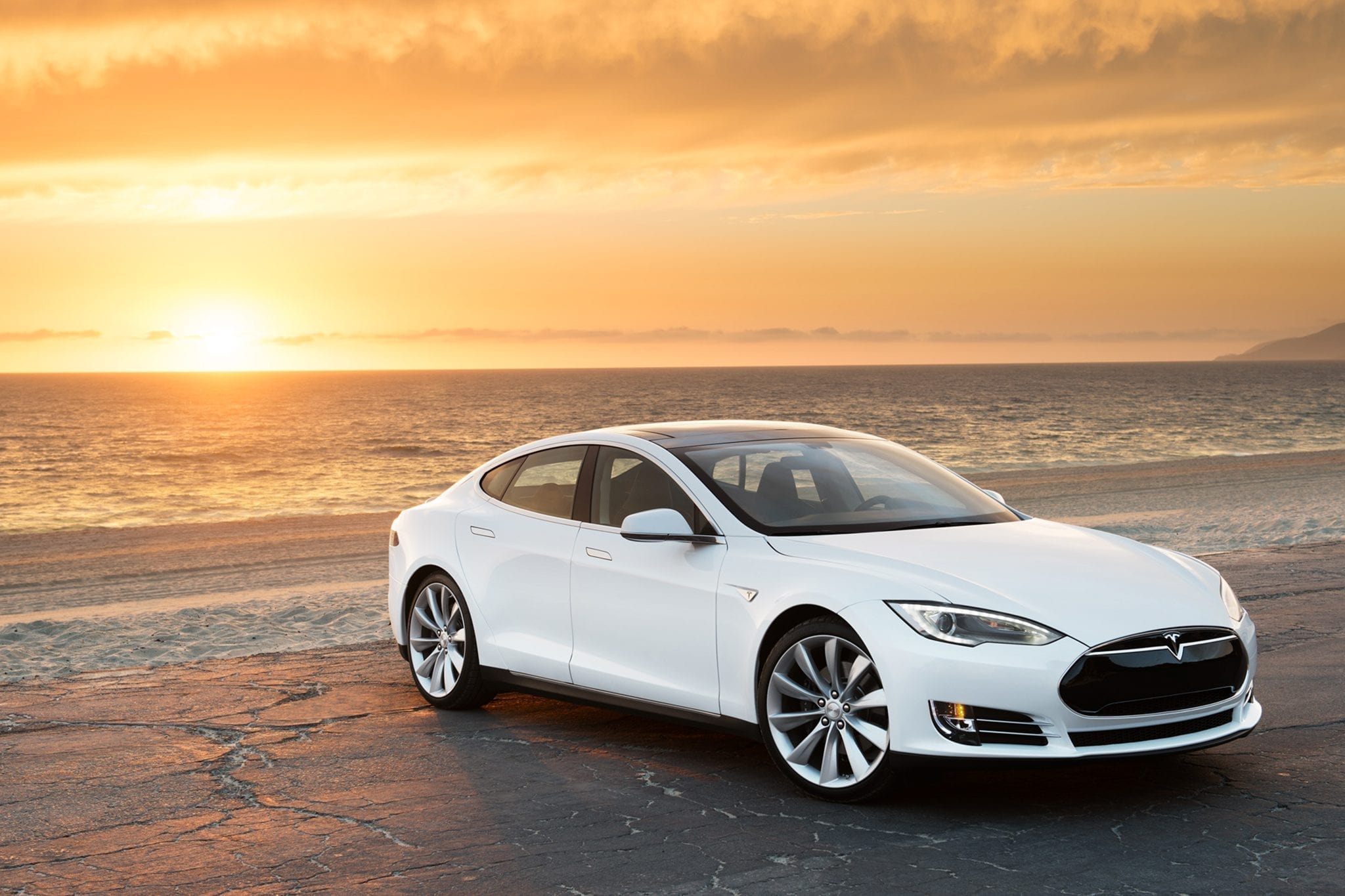
    Tesla needs to complete fixing its Model S sedan emergency braking system to regain Consumer Reports’ top safety rating, the magazine said on Friday, noting that a recent update by the luxury electric car maker was not enough.

    The magazine, which provides an annual rating of vehicles sold in the United States, said on Wednesday the sedan had lost its top ranking in the ultra-luxury car category for failing to install the feature that it had promised to owners as standard equipment.

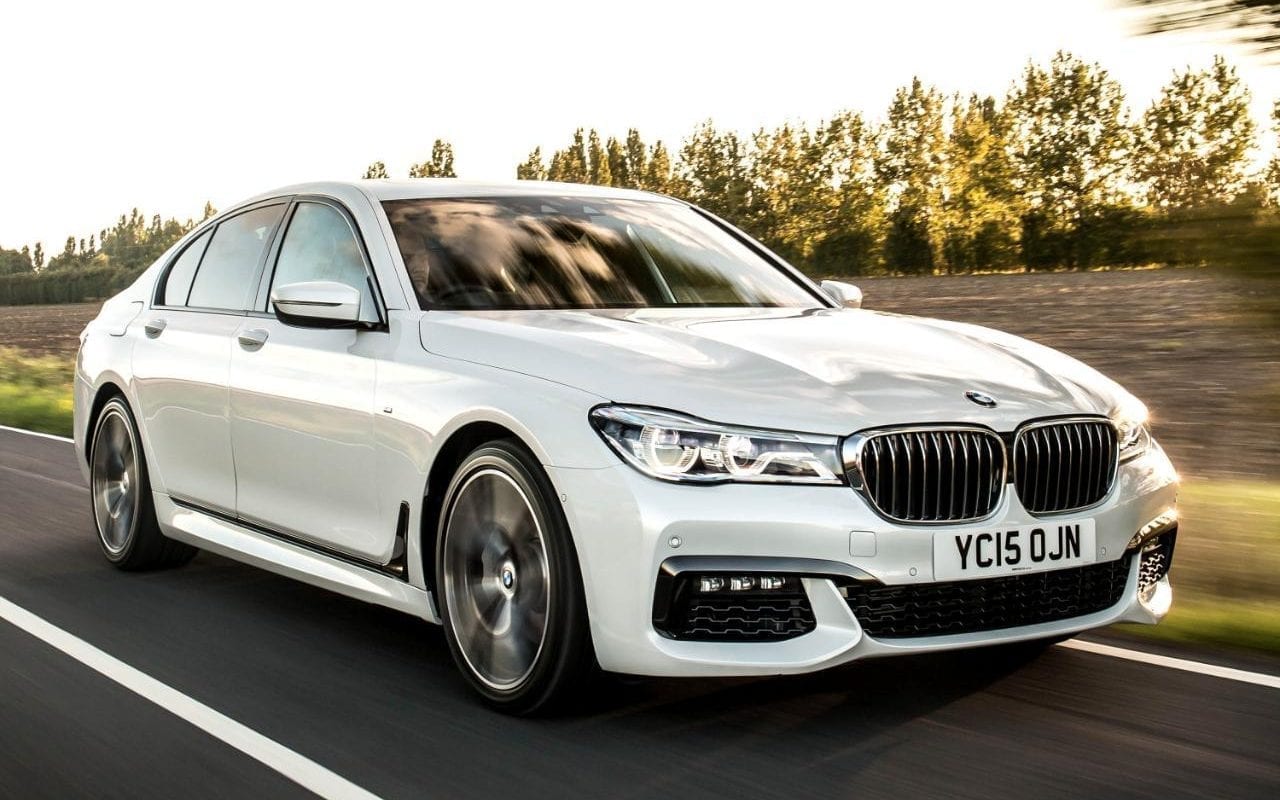
    The Model S fell to third place in Consumer Reports’ ratings behind the Lexus LS made by Toyota Motor Corp and the BMW 7 Series.

    Consumer Reports said both Tesla models previously came with standard automatic emergency braking (AEB), a feature that helps reduce accidents. The software issue affects more recent vehicles built since late October 2016.

    The magazine said Friday that the Model S sedan it owns had received an automatic emergency braking software update Thursday, but the new version only operates up to 28 miles per hour (45 km).

    That is far less than the current 90 mile per hour limit for the prior Tesla AEB system included on vehicles built before late October.

    The magazine cited a statement from Tesla that “over the next several weeks” the car maker would increase the speed limit “until it is the most capable of any vehicle in the world.”

    The California automaker last week recalled 53,000 Model S and Model X vehicles to fix an unrelated parking brake issue.

    Earlier this month, Tesla briefly edged out General Motors Co to become the most valuable U.S. car maker.

  • Fiat Chrysler may add more self-driving supplier partners

    Fiat Chrysler may add more self-driving supplier partners

    Fiat Chrysler Automobiles may seek more supplier partners to help it develop and build self-driving vehicles, Chief Executive Officer Sergio Marchionne said on Wednesday.

    The Jeep and Ram brands are strong enough to exist as standalone entities outside FCA, Marchionne also said on a conference call with analysts after the company reported record first-quarter results. But he did not elaborate on whether there were any plans for a spin-off of either, like with Ferrari.

    The automaker reported an 11 percent jump in first-quarter operating profit, boosted by strong sales in North America, its most profitable market. Shares jumped about 10 percent on the news.

    FCA currently has a partnership with Alphabet Waymo self-driving unit. Marchionne said Waymo has an “unbeatable solution” to help build self-driving vehicles, including versions of the Chrysler Pacifica hybrid minivan, but that FCA is looking at additional partners.

    “Between now and the next three years, we need to provide viable solutions to take people around,” Marchionne said, citing Waymo’s new test program in Phoenix offering ride sharing in self-driving Pacificas.

    But FCA is considering more partners “because banking all of our solutions on one possible outcome is going to be disastrous,” Marchionne said. FCA continues to work with Waymo “in a very intense way,” he said, but “we need to look at optionality in more than one dimension” to build self-driving cars.

    FCA is retooling several U.S. plants to produce redesigned versions of the popular Jeep Wrangler and Ram 1500 pickup later this year and early next. Marchionne said the company would continue to produce several versions of the current models for several months in 2018 after the new versions begin production.

    New models from premium brands Maserati and Alfa Romeo should help boost FCA’s gross margins. Marchionne said Alfa, long a cash drain on the company, could be profitable in the fourth quarter, while Maserati has returned double-digit margins over the past three quarters. Both brands have launched new luxury utility vehicles in the United States.

    Marchionne said FCA hopes to resolve emissions certification issues “in a few weeks” with the U.S. Environmental Protection Agency and the California Air Resources Board.

    In the meantime, he said FCA will try to meet future emissions regulations without relying so heavily on diesel engines, but with a combination of gasoline engines and electric motors.

  • South Korea’s Kia invests in Indian factory after China troubles hit profit

    South Korea’s Kia invests in Indian factory after China troubles hit profit

    South Korean carmaker Kia Motors Corp signed a deal on Thursday to invest about $1.1 billion to build its first factory in India, aiming to tap a fast growing market at a time when its China sales are sagging.

    The Hyundai Motor Co affiliate posted a 19 percent slump in first-quarter net profit as anti-Korean sentiment and a conflict with dealers hit its China sales, sending its shares down 2.2 percent in a flat market.

    Production at the factory in Anantapur district, Andhra Pradesh state, would begin in the second half of 2019, the company said.

    Kia is expected to leverage Hyundai’s supply chain network built around its factories in the neighboring state of Tamil Nadu to gain a foothold in the Indian market, tipped to become the world’s third-largest by 2020. Hyundai is India’s No.2 automaker by sales.

    The plant, which will have production capacity of 300,000 vehicles a year, will produce a compact sedan and a sport utility vehicle tailored for the Indian market, Kia said in a statement.

    It will break ground in the fourth quarter of this year.

    “Our new India plant will enable us to sell cars in the world’s fifth-largest market, while providing greater flexibility for our global business,” Kia Motors President Park Han-woo said in a statement.

    Reuters reported in February that Kia was close to finalizing Andhra Pradesh as the site for its first Indian factory..

    The announcement came after Kia and Hyundai Motor suffered a March sales slump in China, their biggest market, and sharply cut production in the wake of Seoul’s decision to deploy a U.S. anti-missile system, which angered China.

    “The fall in consumer sentiment in China is stemming from a political issue, a situation which is beyond the control of an individual firm and is difficult to be resolved within the short term,” Han Chun-soo, Kia’s chief financial officer, said during an earnings conference call.

    Kia would adjust its China production to reduce inventories, cut costs and launch new models including a small crossover to minimize the impact of the political row, he said.

    Kia also said its first-quarter profit was hurt by a cost of 160 billion won ($141.53 million) to recall vehicles over an engine issue in North America and South Korea.

  • Peugeot first quarter revenue rose 4.9 percent as new models offset forex impact

    Peugeot first quarter revenue rose 4.9 percent as new models offset forex impact

    French carmaker PSA Group’s first-quarter revenue rose 4.9 percent, the maker of Peugeot, Citroen and DS models said on Wednesday, as new models helped offset the effect of weak sales growth and a negative exchange-rate impact.

    Revenue rose to 13.63 billion euros ($14.92 billion) from 13 billion a year earlier, the Paris-based company said. Revenue at the core automotive division rose 2.5 percent to 9.02 billion euros.

    PSA also lifted its full-year market outlook to a 1 percent expansion in Europe and 2 percent in Latin America, having previously forecast flat demand in both regions.

  • Mobileye in deal with Nissan to create maps for self-driving cars

    Mobileye in deal with Nissan to create maps for self-driving cars

    Israeli autonomous vehicle technology firm Mobileye said on Tuesday it forged an agreement with Nissan Motor to create next generation maps to enable safe self-driving cars.

    The deal comes after a successful trial last year that culminated in Mobileye’s mapping technology being used in Nissan’s recent autonomous vehicle demonstration in London.

    “We now have significant commitments from multiple global automakers to generate and share data from camera-equipped ADAS (advanced driver-assistance systems) vehicles,” said Mobileye Chairman Amnon Shashua, adding the results will add to a global road map that is a critical feature of self-driving autos.

    Mobileye, which also is collaborating with German automaker BMW, is in the process of being acquired by Intel, which last month agreed to buy the company for $15.3 billion in a deal that promises to escalate the arms race among the world’s carmakers and suppliers to acquire autonomous vehicle technology.

  • Indian cars cheapest, French most expensive in Vietnam

    Indian cars cheapest, French most expensive in Vietnam

    For many Vietnamese, Indian cars prove to be the best choice. The products are described as ‘unprecedentedly low’ with the import price of VND84 million, CIF, not including tax.

    A GDC report shows that in January 2017, Vietnam imported 5,425 cars, worth $97 million, an increase of 120.8 percent in quantity and 92 percent in value compared with the same period last year.

    The report showed the sharp increase of 233 percent in imports form ASEAN with 3,408 cars imported, accounting for 62.8 percent of less-than-nine-seat imports, which were mostly from either Thailand or Indonesia. These included 1,585 cars from Thailand, worth $31 million, an increase of 55 percent in quantity and 209 percent in value.

    The number of cars from Indonesia increased unexpectedly to 1,823, worth $35 million. Only one car came from the market last year, worth $10,000.

    From January 1, 2017, the tariff on CBU less-than-nine-seat cars from ASEAN was cut from 40 percent to 30 percent.

    A car dealer said the import volume increased sharply because domestic automobile manufacturers have stopped making some car models in Vietnam, such as Fortuner and Civic, but import them from ASEAN to sell domestically.

    The public is more concerned with the appearance of a new source of supply – India. 1,006 cars from India docked at Vietnam’s ports in January, with the average price of $3,708, or VND84 million only. However, Indian imports cannot enjoy preferential tariffs like products from ASEAN.

    In mid-2016, the average import price was VND160 million. The figure decreased to VND100 million in late 2016 and then to VND84 million in January 2017.

    Contrary to all predictions, the most expensive imports are the ones from France, not from Germany or the UK, which produce many luxury brands.

    Only six CBU cars from France were imported to Vietnam in January 2017, worth $342,000, which means the average import price was $57,000, or VND1.3 billion.

    In Vietnam, the products of two French brands – Renault and Peugeot – are distributed.

    Meanwhile, 27 cars from the UK came in January, worth $1.349 million, and 146 cars from Germany, worth $7.624 million, which meant the average import price was $52,220 for British cars and $49,998 for German cars.

  • Jokowi optimistic of witnessing 10% growth in automotive industry

    Jokowi optimistic of witnessing 10% growth in automotive industry

    Indonesian President Joko Widodo (Jokowi) is optimistic that the automotive industry would attract more investors and grow over 10 percent annually.

    “Indonesias automotive industry is more competitive now and is growing on an average of more than 10 percent,” he remarked in Bekasi on Tuesday.

    President Jokowi expressed optimism in his remarks at the opening ceremony of PT Mitsubishi Motor Krama Yudha Indonesia (MMKI) at the Greenland International Center, Central Cikarang, Bekasi District, West Java.

    “With such a large market, I am certain that more investments will flow into the automotive sector of Indonesia, as we have a large market, and greater the investments, more employment opportunities will be available,” he emphasized.

    President Jokowi lauded Mitsubishi Motors commitment to increasing its investment by setting up a new plant in Indonesia, which will be able to offer jobs to around three thousand people.

    “This can provide employment to some three thousand people. Once again, three thousand job opportunities,” the president pointed out.

    Hence, Jokowi is committed to easing the flow of investments, particularly in the automotive sector, considering its impacts on the economic growth.

    “The inflow of investments will create more job opportunities, and it means more people will have jobs,” he stated.

    However, the president highlighted the importance of the quality of human resources to meet the high standards of the automotive industry.

    He pointed out that the government is taking steps to boost economic development by providing skilled manpower through vocational schools.

    “Here, we will strengthen vocational education, vocational schools, as well as vocational training, entrepreneurship, and the labor market,” he affirmed.

    “The government will continue to implement policies that link and match or job matching between vocation and the industry,” the president noted.

    Investment in industry will also allow the transfer of technology and knowledge to Indonesia. Hence, President Widodo has urged the employees to use the opportunity extensively.

    “I hope you will also pay attention to the transfer of technology and knowledge. Continue conducting trainings for the local human resources, and it will be better if the Japanese work ethics, such as high discipline, can be imbibed by Indonesian human resources,” he said.

    “Do not hesitate to involve the Indonesian people in creating new innovations, as they are all actually smart,” added Jokowi.

    In addition, President Jokowi is optimistic that the automotive industry would begin developing its export market.

    “The local or domestic market is large, but we also need to focus on the export market to achieve a balance,” he pointed out.

    Some VIP guests also attended the opening ceremony with President Jokowi, including Minister of Industry Airlangga Hartarto, Minister of State Secretary Pratikno, Head of the Investment Coordinating Board Thomas Lembong, Vice Minister of Finance Mardiasmo, Vice Governor of West Java Deddy Mizwar, and Chairman of Mitsubishi Motors Carlos Ghosn.

  • Japanese automakers strengthen grip on SE Asia

    Japanese automakers strengthen grip on SE Asia

    The Japanese auto industry maintained its strong grip on the vehicle markets of southeast Asia last year, according to exclusive data provided to just-auto.

    The Japanese carmakers’ combined sales in the region’s five main markets rose by an estimated 3.3% to 2.62 million units in 2016, for a market share of 84%, according to data supplied by AsiaMotorbusiness.com.

    The highest Japanese dominance is in Indonesia, the region’s largest market, where their combined share of sales rose to a staggering 98.5% by last year. In Thailand, the Japanese accounted for 88% of sales, while in Malaysia it was 78%, including sales of Perodua – a domestic brand which depends entirely on Daihatsu for its products.

    Competitors from elsewhere have tried and failed to gain a significant foothold in this region and in key markets the Japanese have only strengthened their grip in recent years.

    European manufacturers such as Mercedes-Benz and BMW, and to a much smaller extent Jaguar Land Rover, dominate the premium segments and this is set to continue. But this success does not extend to other segments of the market.

    Ford withdrew from Indonesia at the end of last year, choosing instead to focus on markets where it has a better chance of competing. It has had better luck in some of the smaller emerging markets such as Vietnam and the Philippines.

    GM’s efforts to break into the high-volume compact MPV segment in the region were short-lived. It closed its “Spin”MPV plant in Indonesia last year and is downsizing its product range in the region to include just pickup trucks and SUVs.

    Toyota dominates the ASEAN region, with sales in the five main markets estimated at 910,263 units in 2016 – for a market share of 29%. If combined with Daihatsu, upon which it relies heavily, and with its Hino subsidiary, Toyota group’s sales in the region rose to 1.355m units last year (including Perodua) – to account for more than 43% of sales.

    Toyota has been extremely successful in maximising synergies with Daihatsu in Indonesia, which is by far its largest market in the region and where it is responsible for 56% of total sales.

    Toyota has by far the largest range of vehicles in this market and has been at the forefront of the development of new market segments across the region, including low-cost green cars and small and medium MPVs and SUVs. It enjoys the best economies of scale and strongest pricing power.

    Honda has emerged as the second-best selling brand in the region in recent years, despite the company’s lack of a presence in the commercial vehicle segment. Its share of regional sales has risen from just over 8% in 2012 to almost 14% in 2016.

    Honda’s recent growth has been underpinned by its strong and successful product range expansion, particularly in the compact MPV and SUV segments. New models such as the Mobilio, H-RV and B-RV have proved to be extremely popular in markets such as Indonesia, where its sales and market share have almost tripled in since 2012.

    Not all Japanese automakers have enjoyed growing sales in the region. Nissan and Suzuki in particular have struggled to keep pace with their more successful rivals, while Mitsubishi/Fuso has also been impacted by weak commercial vehicle demand in key markets.

    In ASEAN’s smaller markets the Japanese dominance is not so overwhelming. Japanese brands accounted for 69% of total vehicles sales in the Philippines last year, while in Vietnam their combined share was below 50%.

    South Korean brands such as Hyundai and Kia have been more successful in penetrating these markets, as have Ford and GM. Chinese brands have also targeted in the commercial vehicle segments here with a degree of success.

    But one wonders whether it’s just a matter before the Japanese tighten their grip on these markets too.

  • Unicom launches trial of Nokia VSR

    Unicom launches trial of Nokia VSR

    China Unicom has launched a live trial of Nokia’s Virtualized Services Router for around 5,000 residential broadband subscribers.

    The trial in the province of Shandong involves the delivery of residential broadband over an agile network based on virtualized network functions.

    China Unicom is using Nokia VSR as a virtualized broadband network gateway (BNG) for residential subscriber management functions.

    The operator plans to migrate massive BNG services to the virtualized platform as part of an initiative to transform its metro server edge.

    China Unicom plans to extend the trial to other parts of the network over the next two years as it moves to the next phase of the trial, which will incorporate the delivery of IPTV services.

    “We are proud to be a part of China Unicom’s initiative to evolve its metro edge to a cloud-centric architecture,” Nokia head of IP routing and packet core Sri Reddy said.

    “The Nokia VSR provides delivery of broad and rich virtualized IP edge applications with superior performance and enhanced scalability. Upon completion of this network transformation project, China Unicom will ensure increased operational efficiency and deliver a superior customer experience for its subscribers.”

  • Apple self-driving car testing plan gives clues to tech program

    Apple self-driving car testing plan gives clues to tech program

    Apple Inc outlined a plan to train operators of self-driving cars in documents submitted to California regulators earlier this month, the latest clues to the company’s autonomous vehicle technology aspirations.

    Apple was granted a permit to test self-driving cars on April 14 by the California Department of Motor Vehicles but the company has never said anything about its plan.

    The state released 41 pages of Apple application documents to Reuters that give some clues about the company’s highly secret self-driving effort, which it has never openly acknowledged.

    The iPhone maker joins a long list of carmakers, start-ups and technology rivals, including Alphabet’s Waymo, that are testing cars on state roads. Apple is looking for new hit products and autonomous car technology is expected to revolutionize the traditional auto industry.

    As part of the application, Apple included a 10-page training plan that appeared to be related to operators taking back manual control of the car during automated driving exercises of the system, which it calls a development platform.

    Apple declined comment beyond the filing.

    The plan includes a document called “Automated System: Development Platform Specific Training Overview” whose objective is “to train safety drivers in various automated driving conditions.”

    “Development platform will be controlled electronically (e.g. joystick) and safety drivers must be ready to intervene and take control,” the document reads.

    The document highlights different scenarios to be tested, from high speed driving and tight U-turns to lane changes.

    One letter sent from Apple to the state Department of Motor Vehicles noted that Apple’s development platform “will have the ability to capture and store relevant data before a collision occurs.”

    The document does not include detail on how Apple’s self-driving platform actually works or other technical details. It also does not say what kind of sensors are found on Apple’s three permitted vehicles, all 2015 Lexus model RX450h.

    The permit does not necessarily mean that Apple itself is building a full car. Apple could instead be designing a self-driving platform that can be integrated into other manufacturer’s cars.

  • New BMW M4 CS revealed

    New BMW M4 CS revealed

    High-performance coupe gets more power to level the 0-100kph time with the two-door Audi RS5 and Mercedes-AMG C63 S. Thanks to an improving competition, BMW has made a fourth version of the M4 called CS (Club Sport) following the regular model, Competition Package and GTS.

    As seen in these first official pictures, the M4 CS highlights some sporty details like front splitter and rear spoiler made from carbonfibre. Inside, there’s a steering wheel clad with Alcantara and the handles on the slimmed-down door panels have been replaced with loops.

    BMW has tweaked the 3.0-litre twin-turbo inline-six engine to 460hp and 600Nm for the M4 CS. That’s 10hp and 50Nm more than in the M4 Competition Package.

    As a result, the M4 CS goes from 0-100kph in 3.9sec – a tenth of a second quicker than the M4 Competition Package. And because the M4 CS comes with the M Driver’s pack as standard, the electronically limited top speed has been raised from 250kph to 280kph.

    Speaking of the acceleration time, the M4 CS is now level with Audi’s latest RS5 Coupe and Mercedes-AMG C63 S Coupe.

    The M4 GTS is faster with a 3.8sec time. However, BMW’s intention with the M4 CS is to create a go-faster model suited for public roads; the M4 GTS has been developed with the race track in mind.

    That’s one reason why the M4 CS still has rear seats and omits the roll-cage fitted in the two-seat M4 GTS. BMW says the M4 CS’s 7min 38sec lap time around the Nurburgring falls in between the M4 Competition Package and M4 GTS.

    According to BMW, the exhaust sound in the M4 CS can be adjusted by a mode selector. As well, drifts can be made easier in the M4 CS thanks to the M Dynamic diff being modified to allow greater wheel slip.

    Standard in the M4 CS is seven-speed dual-clutch automatic with paddle-shift, M adaptive suspension and Michelin Pilot Sport Cup 2 tyres. Carbon-ceramic brakes, however, are optional.

    The M4 CS will only be built in limited numbers and is expected to command a slight premium over the lesser M4s at just over 10 million baht.

  • 2017 Mercedes-Benz S-Class facelift includes new engines

    2017 Mercedes-Benz S-Class facelift includes new engines

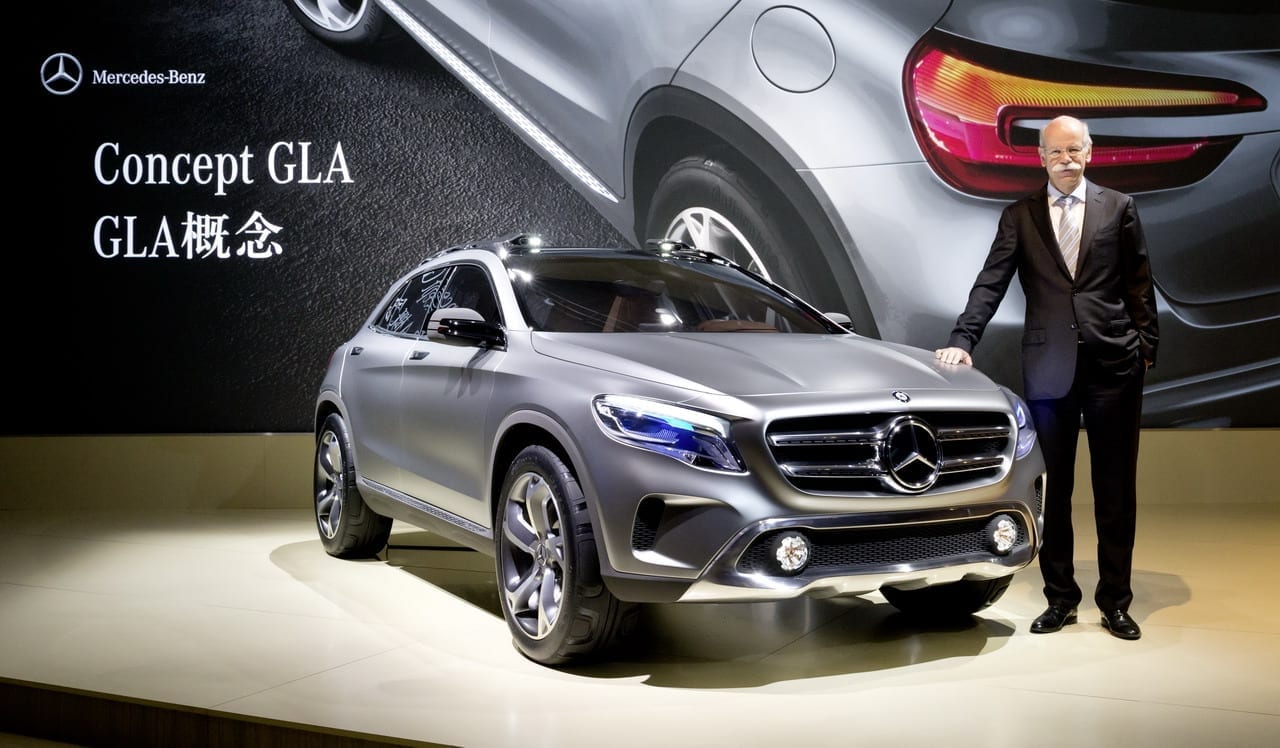
    Flagship saloon receives mandatory mid-life design tweaks and new inline-six and eight-cylinder engines.  The Mercedes-Benz S-class you see here in official pictures is a mid-life refresh of the current generation that’s currently making its debut at the Shanghai motor show.

    Stuttgart’s flagship saloon gets a more prominent face thanks to more accentuated air vents in the bumper. The interior has also been updated with new materials and sportier-looking steering wheel for AMG-trimmed models.

    Mercedes-Benz usually showcases its latest technologies in the S-class before letting them filter down into other models. And while the S-class can already do many things in a semi-autonomous manners, it has raised the bar of its so-called Distronic Active Proximity Control and Active Steering Assist systems.

    Apart from being able to automatically accelerate and brake within speed limits, the S-class can also self-steer for half-a-minute. These features are probably the most advanced driver-assist technologies available so far in a production-ready vehicle.

    After using V6 engines for many years, Mercedes-Benz has returned with a straight-six petrol and diesel engines. These 3.0-litre motors are said to be developments of the existing 2.0-litre four-pot motors and are hooked up to 48V electrical motor and compressor systems and lithium-ion batteries to help enhance performance, as well as reducing fuel consumption and CO2 emissions.

    There are two outputs for the diesel head including 286hp for the S350d and 340hp for S400d. The petrol version gets plug-in ability to allow for 50km of pure electric driving. This particular model is called S560e and replaces the S500e, which had 3.0-litre V6 petrol-electric hybrid.

    On the high performance front, the 455hp 5.5-litre twin-turbo V8 seen in the S500 has been superseded by a smaller 468hp 4.0-litre bi-turbo V8, now called S560.

    As the Thai government is now trying to lure carmakers in bringing EV technology to Thailand, Mercedes-Benz (Thailand) will continue to focus purely on plug-in hybrid for the revised S-class when sales start toward the end of this year.

    As reported earlier, this particular hybrid drivetrain will also appear in a performance-oriented version of the E-class Coupe. The rumoured Mercedes-AMG E50 is said to develop over 400hp when petrol power is combined with electricity.

  • Jaguar F-Type gets four-pot turbo power

    Jaguar F-Type gets four-pot turbo power

    New entry-level sports car may not match the performance credentials of the Porsche Cayman on paper but is set to be significantly cheaper in price in Thai showrooms.

    The Jaguar F-Type Coupe you see here in official pictures is the new entry-level model powered by a 2.0-litre four-cylinder petrol-turbo engine. This new motor is also available in the Convertible version.

    For the sake of differentiation, this particular F-Type gets a single exhaust pipe mounted centrally behind where you can also find a new diffuser design. The 3.0 V6 models get two tailpipes, while the 5.0 V8 receives four of them.

    And since the F-Type is now three years old in its current generation, Jaguar has given new mag wheels and slightly massaged the front end with new LED lights and bumper.

    What’s the power like?

    Jaguar has taken its new Ingenium four-pot engine from other models and tuned it to 300hp – between 50-100hp more than in other applications. Maximum torque is rated at 400Nm attained at 1,500rpm. Drive in this F-Type goes via eight-speed automatic to just the rear wheels.

    Jaguar claims a 0-100kph time of 5.7sec – 0.4sec slower than the F-Type fitted with 340hp 3.0-litre supercharged V6. However, the four-potter is said to be 16% more fuel efficient while spewing out 163g/km of CO2; the V6 emits 199g/km.

    Although the acceleration time may by slightly slower, the four-pot F-Type may have the chance of being more agile to drive because Jaguar says it is 52kg lighter than the V6. But what also remains to be seen is whether the engine noise would be as tuneful as the V6.

    How does it fare against the Cayman?

    The Porsche Cayman comes with 300hp 2.0-litre flat-four turbo-petrol engine, seven-speed dual-clutch automatic and a quicker 4.9sec (4.7sec with launch control) acceleration time.

    But the Cayman already costs one million baht more than the 7.99 million baht F-Type V6. This means than the F-Type in 300hp suit should be priced even lower than that level when sales start later this year, although punters must be content with the inferior on-paper performance figures the front-engined Jag concedes to the mid-engined Porsche.

  • VW brand recovery helps to power Volkswagen profit rise

    VW brand recovery helps to power Volkswagen profit rise

    Volkswagen reported a 28 percent jump in first-quarter operating profit, helped by a return to earnings growth at its core VW brand which has struggled to recover from the German carmaker’s diesel emissions scandal.

    Group operating profit came to 4.4 billion euros ($4.7 billion) in the three months to the end of March, compared with 3.4 billion in the year-earlier period, Volkswagen said on Tuesday as it published key financial figures ahead of schedule.

    Although the group has bounced back from the scandal and overtook Japan’s Toyota (7203.T) last year to become the world’s biggest selling carmaker, analysts view a turnaround at the VW brand as key to its prospects.

    Volkswagen said on Tuesday that first-quarter operating earnings at the VW brand came to around 900 million euros, up from 73 million in the year-earlier period.

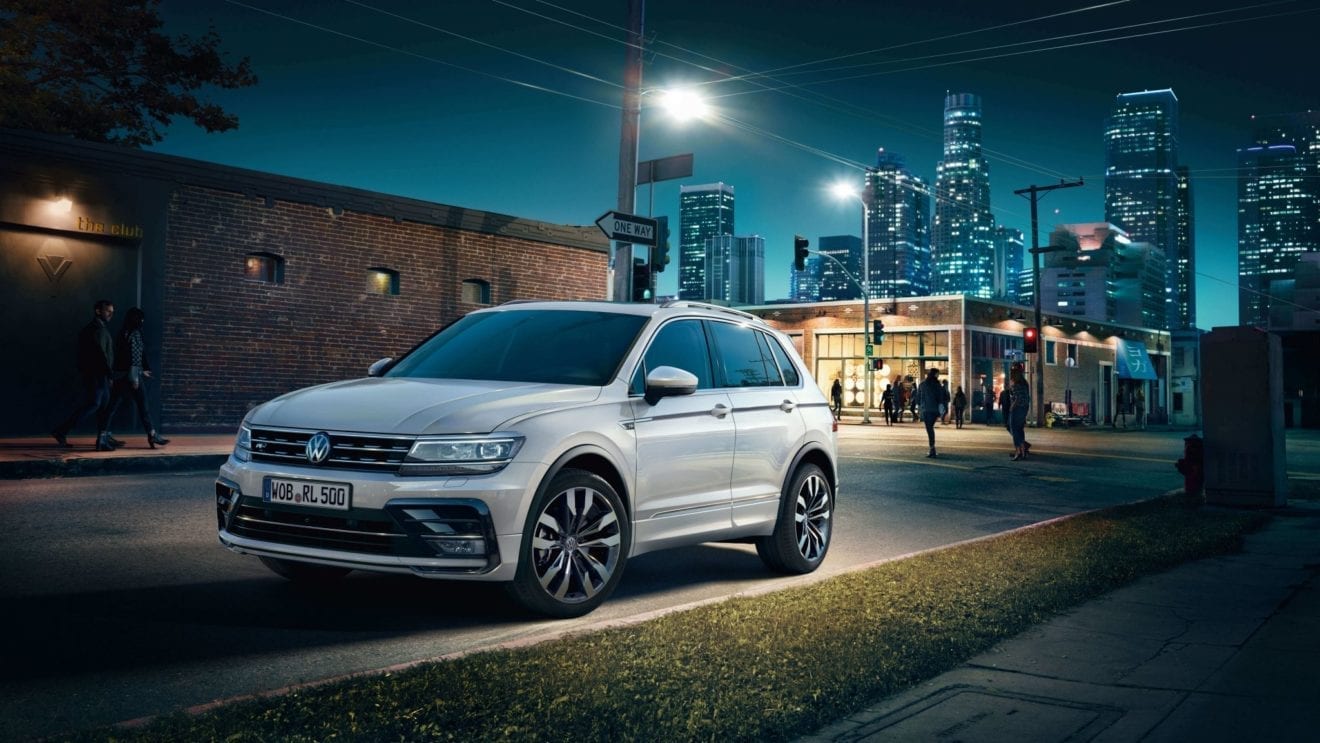
    “Causal factors for the Volkswagen Brand result include the success of new model introductions, particularly the Tiguan, and a strong financial performance in the West European market,” Volkswagen said in a statement.

    “Optimized fixed costs also positively affected the result,” it added.

    DZ Bank analyst Michael Punzet, who has a “hold” recommendation on VW’s stock, said he had expected the brand’s operating profit to come to around 500 million euros.

    Volkswagen said its other brands, which include Audi and Skoda, also contributed to the good performance but did not provide details. E

    It said it still expected to report a full-year group return on sales of between 6 and 7 percent this year.

    “If Q2 continues to do well, we expect VW to increase its full-year guidance in summer,” said Evercore ISI analyst Arndt Ellinghorst, who had expected first-quarter group operating profit of around 3.8 billion euros.