Category: Automotive

Retail News Asia is committed to providing both local and global retailers with the latest Auto and Car news throughout the Asian market. This on a daily base.

  • Daimler acquires 15% stake in Hong Kong’s Lei Shing Hong to expand its dealer network

    Daimler acquires 15% stake in Hong Kong’s Lei Shing Hong to expand its dealer network

    German automaker Daimler has acquired 15% stake in Hong Kong based Lei Shing Hong (LSG) strengthing their longstanding cooperation with an investment by Daimler in LSH.

    The partnership is responsible for the Mercedes-Benz retail business of Lei Shing Hong Group. The transaction has been concluded after approval of the relevant antitrust authorities.

    ”With this transaction we affirm our long and successful cooperation with Lei Shing Hong. At the same time, we strengthen our Mercedes-Benz dealer network and meet the challenges in the coming years together with Lei Shing Hong,” said Bodo Uebber, Member of the Board of Management of Daimler AG responsible for Finance & Controlling and Daimler Financial Services.

    Lei Shing Hong Group is one of the world’s biggest dealer groups for Mercedes-Benz cars, Daimler said in a media release. The decade long partnership with Mercedes-Benz has eventually lead to about 200 sales and services centers with focus in Asia and Australia. Since 2015, LSH has expanded its international presence and now is also present in Europe with facilities in Germany and Great Britain.

    K S Gan, Group Managing Director of Lei Shing Hong: “Lei Shing Hong Group welcomes Daimler’s investment in LSH. We both share a common vision and passion. This investment by Daimler brings the existing relationship and cooperation to a new height. LSH, as an international group, will continue with its tradition of excelling in customer services and business management practices in its Mercedes-Benz business.”

    Daimler’s investment is a strategically important step for both parties, with the aim of bringing one of the world’s biggest dealer groups for Mercedes-Benz cars to a new era and to other markets.

    Till Conrad, who heads the sales department in the Overseas region at Mercedes-Benz so far, will assume the responsibility for the business as CEO at LSH from August 2017.

  • Supply problems hit production at BMW

    Supply problems hit production at BMW

    Problems at one of its suppliers has forced German carmaker BMW to halt production in Leipzig and could hit its plants in China and South Africa, German magazine Focus reported in its online edition.

    The magazine said problems at one of BMW’s Italian suppliers of parts for its steering technology was the reason for the disruption.

    Citing a BMW spokesman, Focus reported that the carmaker has halted output at its plant in Leipzig, Germany since Friday and may have to reduce production in China and South Africa.

    Production in Munich was also reduced for two days last week, the magazine reported.

    Focus said the disruptions would cost BMW double-digit millions of euros a day, without saying where it got its information from.

    BMW could not immediately be reached for comment outside regular business hours.

  • China will continue to relax foreign investment rules for auto industry

    China will continue to relax foreign investment rules for auto industry

    China will continue to relax foreign investment rules for the country’s auto sector and other high end manufacturing, lifting restrictions in an orderly fashion, the commerce ministry said on Thursday.

    The government is preparing to further open up the new energy vehicle battery market to foreign investment, Ministry spokesman Sun Jiwen told a regular briefing in Beijing.

  • India’s electric vehicles push likely to benefit Chinese car makers

    India’s electric vehicles push likely to benefit Chinese car makers

    India’s ambitious plan to push electric vehicles at the expense of other technologies could benefit Chinese car makers seeking to enter the market, but is worrying established automakers in the country who have so far focused on making hybrid models.

    India’s most influential government think-tank unveiled a policy blueprint this month aimed at electrifying all vehicles in the country by 2032, in a move that is catching the attention of car makers that are already investing in electric technology in China such as BYD and SAIC.

    The May 12 report by Niti Aayog, the planning body headed by Prime Minister Narendra Modi, recommends lower taxes and loan interest rates on electric vehicles while capping sales of petrol and diesel cars, seen as a radical shift in policy.

    India also plans to impose higher taxes on hybrid vehicles compared with electric, under a new unified tax regime set to come into effect from July 1, upsetting car makers like Maruti Suzuki and Toyota Motor.

    The prospect of India aggressively promoting electric vehicles was a “big opportunity”, a source close to SAIC, China’s biggest automaker.

    “For a newcomer, this is a good chance to establish a modern, innovative brand image,” the source said, although they added the company would need more clarity on policy before deciding whether to launch electric vehicles in India.

    Earlier this year SAIC set up a local unit called MG Motor which is finalising plans to buy a car manufacturing plant in western India. A spokesman at SAIC did not comment specifically on the company’s India plans.

    Warren Buffett-backed BYD already builds electric buses in the country, while rival Chongqing Changan has said it may enter India by 2020.

    BYD said in a statement the company would have “a lot more confidence” to engage in the Indian market if the government supported the proposed policy. The company said it would look at increasing its investment in India but did not give details on how it would expand its business and market share.

    High Costs

    While the Niti Aayog report has not yet been formally adopted, government sources have said it was likely to form the basis of a new green cars policy.

    If so, India would be following similar moves by China, which has been aggressively pushing clean vehicle technologies. But emulating China’s success could be tough.

    Electric vehicles are expensive due to high battery costs, and car makers say a lack of charging stations in India could make the whole proposition unviable.

    The proposed policy focuses on electric vehicles, and is likely to also include plug-in hybrids. But it overlooks conventional hybrid models already sold in India, such as Toyota’s Camry sedan, Honda Motor’s Accord sedan and so-called mild hybrids built by Maruti Suzuki.

    Hybrids combine fossil fuel and electric power, with mild hybrids making less use of the latter.

    In doubling down on electric power India would be shifting away from its previous policy, announced in 2015, that supported hybrid and electric technology.

    That could delay investments in India, expected to be the world’s third-largest passenger car market within the next decade, according to industry executives and analysts.

    “All these policy changes will affect future products and investments,” said Puneet Gupta, South Asia manager at consultant IHS Markit, adding that most car makers would need to rethink product launches, especially of hybrids.

    Economic Gap

    Mahindra & Mahindra is the only electric car maker in India but has struggled to ramp up sales, blaming low buyer interest and insufficient infrastructure.

    Pawan Goenka, managing director at Mahindra said the company was working with the government and other private players to set up charging stations in India. Mahindra was also focusing on developing electric fleet cars and taxis, Goenka said.

    The cost of setting up a car charging station in India ranges from $500 to $25,000, depending on the charging speed, according to a 2016 report by online journal IOPscience.

    While the proposed policy suggests setting up battery swapping stations and using tax revenues from sales of petrol and diesel vehicles to set up charging stations, it does not specify the investment needed or whether the government would contribute.

    “For full electric vehicles, the economic gap remains huge and the charging infrastructure needed does not exist,” said a spokesman at Tata Motors. The company makes electric buses and is working on developing electric and hybrid cars.

    Delayed Pans

    Most automakers have focused on bringing in hybrid models that are seen as a stepping stone to electrification. Toyota recently launched its luxury hybrid brand Prius in India, while Hyundai Motor plans to debut its Ioniq hybrid sedan next year.

    Maruti’s parent Suzuki Motor, along with Toshiba and Denso, plans to invest 20 billion yen ($180 million) to set up a lithium ion battery plant in India which would support Maruti’s plan to build more hybrids.

    But the apparent sharp shift in policymakers’ thinking in favor of electrification is forcing automakers like Toyota and Nissan Motor to seek more clarity before finalising future products for India, while Hyundai may delay new launches.

    Toyota, the world’s No. 2 carmaker by sales, had planned to have a hybrid variant for all its vehicles in India, but the company’s future launches would now depend on the new policy, said Shekar Viswanathan, vice chairman of its Indian subsidiary.

    Nissan, which plans to launch a hybrid SUV later this year, said in a statement it was waiting for more clarity before deciding whether to bring electric cars to India.

    A plan by Hyundai to launch at least three hybrid cars in India in 2019-2020 would likely to be delayed, said a source.

    Hyundai did not comment on queries related to delays.

    “If the government will be aggressive on electric vehicles and not support other technologies, companies will need to rethink investments,” said an executive with an Asian carmaker.

  • Harley-Davidson plans a Thailand factory to serve SE Asian market

    Harley-Davidson plans a Thailand factory to serve SE Asian market

    otorcycle maker Harley-Davidson said on Thursday it will build a plant in Thailand, a major Asian automotive hub, to serve the growing Southeast Asian market, a move criticized by a U.S. labor union.

    The company did not give a figure for the planned investment in Thailand’s Rayong province, southeast of Bangkok.

    Katie Whitmore, Harley-Davidson public relations manager, said the company had its best results in Asia-Pacific in 2016, though she gave no numbers.

    The Thailand facility “will allow us to be more responsive and competitive in the ASEAN region and China,” Harley-Davidson public relations manager Katie Whitmore said.

    “Increased access and affordability for our customers in the region is key to growth for the company in total,” she said. “There is no intent to reduce H-D U.S. manufacturing due to this expansion.”

    The plant would let Milwaukee-based Harley-Davidson avoid Thailand’s up to 60 percent tariff on imported motorcycles and help it get tax breaks when exporting to Thailand’s neighbors, thanks to a trade arrangement among members of the Association of Southeast Asian Nation (ASEAN).

    Harley opened a plant in India in 2011. It also assembles motorcycles at a plant in Brazil.

    After the New York Times reported on Harley’s planned Thai investment, United Steelworkers (USW) International President Leo W. Gerard on Tuesday said the decision was “a slap in the face to the American worker and to hundreds of thousands of Harley riders across the country.”

    USW represents members at Harley plants in two U.S. states and 850,000 workers in North America.

    Gerard also said that production outside the U.S. “puts in jeopardy the success that has propelled Harley over the years.”

    Whitmore said motorcycles assembled in Thailand would have the same “authentic look, sound and feel” as those manufactured in the U.S.

    Demand for Harley motorcycles in the U.S., the company’s biggest market, continues to be slow as its loyal baby boomer demographic changes ages.

  • Tata Aims to Build on Recent Truck Gains in Thailand

    Tata Aims to Build on Recent Truck Gains in Thailand

    Indian automaker Tata is moving production in Thailand as part of a company reset that aims to increase its Thai sales 83% this fiscal year to roughly 3,000 units.

    With a 10-year contract up at the Thonburi Automotive Assembly Plant in the south of Bangkok, Tata has signed a renewable 5-year pact with the Bangchan General Assembly plant, 20 miles (34 km) west of central Bangkok.

    Since its opening in 1970, Bangchan has been the home to assembly operations for 14 brands.

    Production will begin at Bangchan after the installation of assembly equipment at a cost the Bangkok Post puts at TB500 million ($14.5 million). The facility will have a capacity of 8,000 Tata Xenon pickups and 2,500 Tata Super Mint pickup trucks in a 1-shift operation.

    Tata says Xenon production will launch in September.

    The automaker says its Tata Super Ace line will be assembled in both right-hand and left-hand drive versions.

    To help reach its local sales target, Tata says it also will introduce more models to local showrooms.

    Tata Thailand CEO Sanjay Mishra says sales grew 19% year-on-year in the 2016 fiscal year ending March 31. “Fiscal year 2016 marked Tata’s best retail performance in Thailand ever,” he says in a statement.

    “Fiscal-year 2017 is a big step for the company’s future – we are making announcements for exciting new models as well as assembly upgrades and initiatives, new investment for the Super Ace Mint small truck and emerging opportunities that will deliver profitable and sustainable growth in Thailand.”

    Sales of Xenon pickups, the automaker’s core product in the Thai market, rose 38% to 1,398 units last year, The Nation newspaper reports.

    “With the major-change Xenon pickup to be launched in Q4 of this year, we expect to deliver 2,100 units of the new model – 1,800 domestic and 300 export – 500 units of the Super Ace Mint truck for a market share of about 10% for this type of car, 300 units of the Ultra and 100 units of heavy trucks this year,” Mishra says.

    “Our goal is being a full-range trucking solution provider, and we will be the only player in the entire commercial-vehicle segment.”

  • Chinese regulator approves VW-JAC Motor electric car venture

    Chinese regulator approves VW-JAC Motor electric car venture

    Germany’s Volkswagen AG and Anhui Jianghuai Automobile Group have received approval from Chinese regulators to form a joint venture to make electric vehicles, the two automakers said on Monday.

    The National Development and Reform Commission (NDRC), China’s top state planner, gave a green light to JAC and VW to build 100,000 pure battery electric vehicles annually in a project worth 5.1 billion yuan ($740 million), according to a JAC Motor stock exchange filing.

    A VW spokesman confirmed the approval but said certain administrative procedures still needed to be completed for a joint venture contract to be signed with JAC Motor.

    Volkswagen, China’s largest foreign automaker, has pledged to rapidly develop a range of electric vehicles as the Chinese government aggressively promotes the segment as a way to cut intense smog in much of the country.

    VW already has joint ventures with China FAW Group and SAIC Motor Corp Ltd in the country.

    The has company previously said it aims to sell 400,000 “new energy vehicles,” a category which includes pure electric and plug-in petrol-electric hybrids, in China by 2020 to meet strict Chinese fuel economy and emissions regulations, with electric vehicles made with JAC Motor coming in addition to that figure.

  • Korea emerges as top Asian importer of Benz, BMW

    Korea emerges as top Asian importer of Benz, BMW

    Korea has become Asia’s largest importer of Mercedes-Benz and BMW vehicles this year, as the two German carmakers sold more vehicles in Korea than Japan for the first time ever.

    Chinese motorists buy more Mercedes-Benz and BMW vehicles than Koreans do. But both firms roll out and sell their models through joint ventures with local Chinese firms. Hence, Korea is the populous continent’s de facto leader in terms of Mercedes-Benz and BMW vehicle imports.

    The Korea Automobile Importers and Distributors Association (KAIDA) said that Mercedes-Benz sold 24,877 cars in the first fourth months of this year, while BMW sold 18,115, up 48 percent and 32.4 percent from a year earlier, respectively.

    The luxury carmakers sold 21,365 and 15,818 cars respectively in Japan during the January-April period, up just 0.7 percent and 2.2 percent from the previous year.

    Based on its larger population and higher income, Japan has remained the largest Asian importer of the two luxury brands. Japan’s population is more than double that of Korea and its GDP per capita is 20 percent higher than that of Korea.

    But Korea dethroned Japan this year because of a months-long sales ban on Audi-Volkswagen vehicles here. The carmaker stopped selling its vehicles in Korea after the emissions scandal last summer but it did not face such troubles in Japan.

    During the sales suspension, Mercedes-Benz and BMW increased their sales in Korea’s import car market.

    The two combined to sell 57 percent of the import cars in Korea over the four months, up from 41 percent last year. In Japan, however, the figure only edged up from 38 percent to 40 percent.

    Analysts expect Mercedes-Benz and BMW will dominate the market for a while. The KAIDA also said BMW sold more cars than Mercedes-Benz in April.

    Mercedes-Benz maintained its top position until this March but fell to second place due to a short supply of its popular new E-class model. Lexus came in third in the number of sales, followed by Toyota and Honda.

  • Renault, Peugeot commit to raise orders from troubled parts maker

    Renault, Peugeot commit to raise orders from troubled parts maker

    French car makers Renault and Peugeot have committed to increasing their orders from ailing components-maker GM&S Industry after their chief executives spoke with Economy Minister Bruno Le Maire, his ministry said on Sunday.

    The future of the company, which employs 277 people in central France and is facing liquidation, was a priority of President Emmanuel Macron’s new administration, a government spokesman said on Wednesday.

    Renault agreed to raise its orders by 5 million euros to 10 million while PSA committed to lifting its purchases by 2 million euros to 12 million, the ministry said in a statement.

    “These commitments will allow the firm in 2017 to reach a turnover close to 25 million euros, and make it possible for it to continue operations and pursue takeover discussions,” it said.

  • Chinese demand for supercars races ahead at full-speed

    Chinese demand for supercars races ahead at full-speed

    Chinese demand has helped boost supercar sales around the globe to double-digit growth, according to a new report by automotive market research company Jato. While the United States remains the largest market for ultra-luxury car sales, China is close behind at number three, with demand last year jumping 54 percent to about 4,400 units. To compare, the second biggest market, the UK, only saw a 15.6 percent growth.

    Jato cites Forbes’s swelling billionaire list as evidence for the increasing demand for ultra-luxury automobiles around the globe—overall, supercar sales are up by 16 percent in 2016 from the previous year. China added 65 billionaires for a total of 400 to the list last year, the most of any country on the list, and its role in the supercar market reflects this.

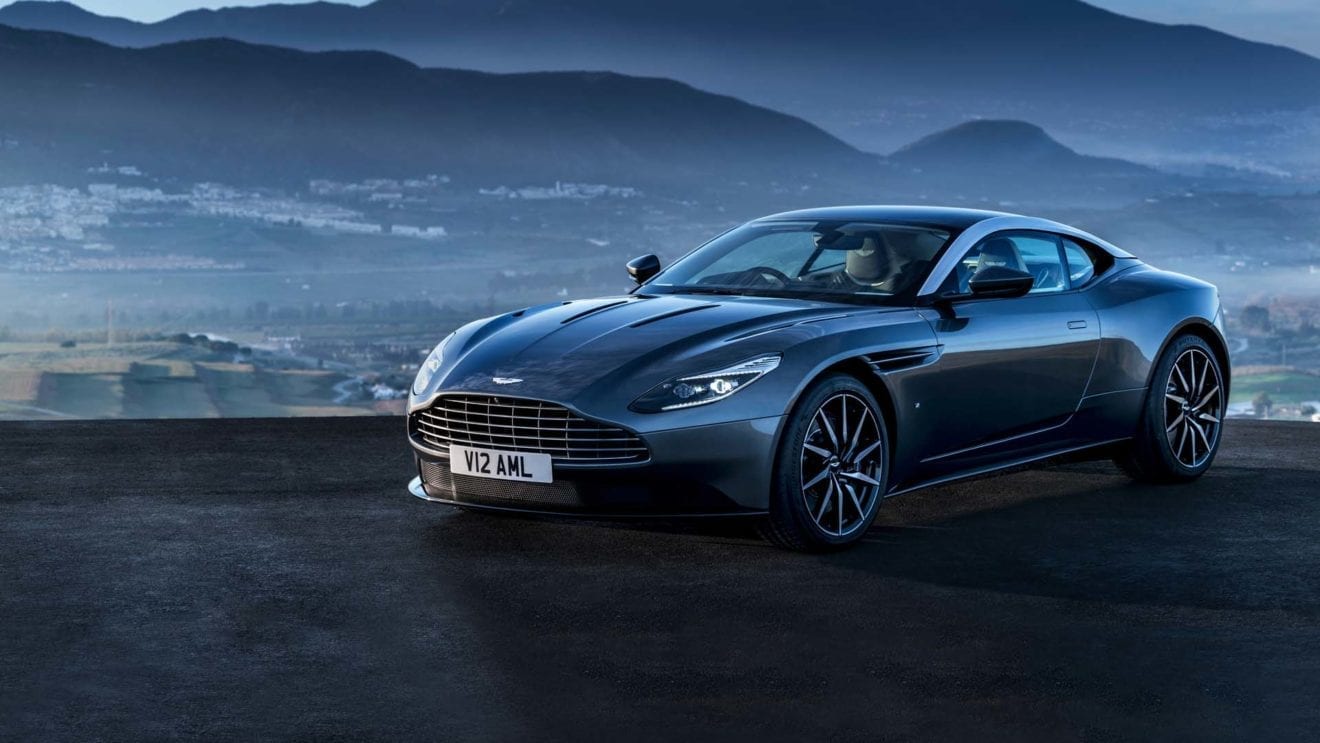
    Supercars, which include brands like Aston Martin, McLaren, Bentley, and Ferrari, have long been valued by Chinese consumers for boosting their status quo, but the report notes that supercar brands are increasingly innovating to respond to changing consumer needs. For example, many of the automakers have recently introduced luxury SUVs to their lineup, of which have witnessed a major market in China as families are getting larger. There is also more demand for sustainable vehicles, especially in China, where environmental concerns like pollution are rampant. Luxury car brands have been quick to respond—out of the 10 brands featured in Jato’s report, nine of them have announced plans for releasing electric or hybrid automobiles.

    While supercar brands are no doubt having good luck with the Chinese consumer in general, many are also now having to consider how the emerging affluent in China are getting younger and more digitally savvy. Maserati, an ultra-luxury brand that wasn’t on Jato’s list, made an effort to reach this market by opening a Tmall store, but others have room to grow when it comes to bridging their online presence with call to actions to bring customers into their showrooms. And with surging demand, the opportunity to reach China’s digital natives is likely only growing wider.

  • VW’s JV in China to recall nearly 600,000 vehicles over fuse fault

    VW’s JV in China to recall nearly 600,000 vehicles over fuse fault

    Volkswagen AG’s joint venture in China, FAW-Volkswagen Automobile, will recall 577,590 Golf and Sagitar cars because of a headlight fuse defect that may lead to safety risks, the quality watchdog said.

    The recall covers 416,364 Golfs produced between September 2009 and May 2014, and 161,226 Sagitars produced between July 2010 and March 2012, said the General Administration of Quality Supervision, Inspection and Quarantine.

    The watchdog said the defects could cause headlight failure.

    FAW-Volkswagen, majority owned by state-owned China FAW Group, could not be immediately reached for comment. Volkswagen China declined to comment.

    In March, Volkswagen recalled over 1 million Audi vehicles due to potential leaks and coolant pumps faults.

    The German carmaker delivered nearly 4 million vehicles in China last year, two fifth of its global sales.

  • Daicel, Toyota affiliate plan capital tie-up to expand air bag businesses

    Daicel, Toyota affiliate plan capital tie-up to expand air bag businesses

    Japanese chemicals maker Daicel and auto parts maker Toyoda Gosei Co said on Friday they will invest 1 billion yen ($8.98 million) in each other’s equity, deepening ties as both companies expand their global air bag businesses.

    Daicel, which produces inflators used in air bags, along with polymer and plastic products, and Toyoda Gosei, which makes air bag modules, steering wheels and other auto components, have been growing their air bag-related businesses since a global recall of inflators made by Takata Corp has snowballed since 2013.

    The companies would take a stake of about 0.3 percent in each other and discuss research and development opportunities that would enable them to further expand globally.

    Headquartered in Japan’s automaking heartland of Aichi Prefecture, Toyoda Gosei is a group company of Toyota Motor Corp , which owns a 43 percent stake in the firm. Toyota also owns a 4.3 percent stake in Daicel.

    Osaka-based Daicel supplies inflators to Takata, which has become its biggest customer as the embattled Japanese air bag maker struggles to produce enough replacement inflators in the global auto industry’s biggest ever recall.

    Daicel also sells inflators to Key Safety Systems, the Chinese-owned, U.S.-based components maker which is in talks with Takata about a financial rescue.

    Air bags and other safety-related products accounted for 28 percent of Toyoda Gosei’s annual revenue last year, up from 27 percent the previous year.

    It has been increasing air bag sales to Toyota, Honda Motor Co and other automakers in the last few years, as an increasing number of automakers shift away from Takata.

  • BlackBerry working with automakers on anti-hack tool

    BlackBerry working with automakers on anti-hack tool

    BlackBerry is working with at least two automakers to develop a security service that would remotely scan vehicles for computer viruses and tell drivers to pull over if they were in critical danger, according to a financial analyst.

    The service, which would also be able to install security patches to an idle car, is being tested by luxury automakers Aston Martin and Range Rover, Macquarie analyst Gus Papageorgiou said in a note to clients sent late on Monday.

    Auto security is among several areas that BlackBerry is betting will boost its revenue after the Canadian company lost its dominance of the smartphone market to Apple Inc and others over the past decade.

    John Wall, the head of BlackBerry’s QNX division, and company spokeswoman Sarah McKinney both declined to comment.

    Matthew Clarke, a spokesman for Aston Martin, said in an email he was not aware of the company testing such a product. Representatives with Range Rover’s parent company, Jaguar Land Rover, could not be reached for comment.

    The service could be launched as early as next year, generating about $10 a month per vehicle for BlackBerry, according to Papageorgiou, who has followed BlackBerry for more than 15 years.

    Vehicles increasingly rely on dozens of computers that connect to each other as well as the internet, mobile networks and Bluetooth communications systems that make them vulnerable to remote hacks.

    “Although a connected, more software-centric automobile offers tremendous advantages to consumers, it also opens the doors to hackers,” Papageorgiou wrote in his note.

    Automaker interest in cyber security has risen dramatically since 2015, when two hacking experts uncovered vulnerabilities in Fiat Chrysler vehicles that led to a U.S. recall of 1.4 million autos.

    BlackBerry shares rose 5.3 percent to close at C$13.84 after touching C$14.15, the highest since March 2015.

  • Ford Motor to slash workforce by about 10 percent

    Ford Motor to slash workforce by about 10 percent

    Ford Motor is set to cut about 10 percent of its global employee headcount in an effort to boost profit and its sliding stock price.

    The job cuts, expected to be revealed as early as this week, would largely target salaried employees, said on Monday.

    The automaker is targeting $3 billion in cost cuts for 2017 in a bid to improve profitability in 2018, the journal said.

  • BMW 2 Series Coupe and Convertible updated for 2017

    BMW 2 Series Coupe and Convertible updated for 2017

    Baby sports car and open-top counterpart receive mid-life styling tweaks and optional all-wheel-drive in higher-end models. In the typical fashion of facelifted BMWs, changes in the new 2-series Coupe and Convertible are microscopic and would probably only be noticed by eagle-eyed enthusiasts.

    The front end, for one, has changed the most with bigger kidney grilles, restyled air vents and bi-LED lights made standard. While the M Sport trim sees more aggressive-looking bumper design, the lesser Luxury and Sport Lines get more subtle air intakes.
    Like in the recent facelift of the 4-series Coupe and Convertible, both 2-series models get more premium finish inside as well as a newly-designed instrument panel and central touchscreen.

    As the 2-series has no direct rival from Audi, Lexus or Mercedes-Benz – three other premium brands that make compact hatchbacks with front-wheel-drive – BMW is still keen in touting the 2-series as a genuine sports car for driving fans.
    However, the decision to offer xDrive all-wheel-drive in some potent models could be seen as an effort in broadening the appeal of the 2-series to another set of buyers wanting more driving security on slippery roads as well as more predictable manners under hard acceleration.

    The M240i, for one, has 340hp 3.0-litre turbocharged inline-six with eight-speed automatic transmission with optional xDrive system. Likewise, the other petrol and diesel engine variances remain unchanged all the way down to the 218i, featuring 136hp 1.5-litre three-pot turbo motor.

    For the past few years, BMW has tried to lower the price point of the 2-series Coupe as much as possible by merely offering the 218i M Sport in Thai showrooms at 2.599 million baht apiece. However, it is claimed that that the 4-series Coupe is still the favoured choice among Thais. As the pre-facelift 420d Coupe M Sport went for 3.999 million baht, customers thought it might be just better to go for a bigger car with a four-cylinder engine. After all, luxury imports like these aren’t aimed at budget-minded punters.

    The revised 2-series goes on sale in world markets from July, although the Thai BMW office would concentrate more on the facelifted 4-series later this year due to the aforementioned reasons.