Category: Automotive

Retail News Asia is committed to providing both local and global retailers with the latest Auto and Car news throughout the Asian market. This on a daily base.

  • Ford bets on low oil prices, moves Focus production to China

    Ford bets on low oil prices, moves Focus production to China

    Ford Motor said on Tuesday it will move some production of its Focus small car to China and import the vehicles to the United States in a long-term bet on low oil prices and stable U.S.-China trade relations despite recent tensions.

    The move suggests China could play a much larger role in future vehicle production for North America, perhaps eclipsing Mexico as a low-cost manufacturing source.

    Ford painted the production shift from Mexico to China, slated for mid-2019, as a purely financial move that will save the company $500 million in reduced tooling costs.

    But Ford also expects to ship about 80,000 vehicles to China this year, including the redesigned Lincoln Navigator luxury sport utility vehicle, which goes into production this fall at Ford’s Kentucky truck plant.

    Ford’s decision to import its first vehicles from China to the United States is also the first major manufacturing investment decision made by new Chief Executive Jim Hackett, who succeeded Mark Fields in May. Discussion about the small-car production shift from Mexico to China began “a couple months ago” under Fields, said Joe Hinrichs, president of global operations.

    The decision also signals a shift in strategy at Ford, which is responding to dwindling U.S. consumer demand for small cars in favor of more expensive and more profitable trucks and SUVs. Cars accounted for more than 50 percent of U.S. auto sales as recently as 2012, but have fallen to just 37 percent of sales this year.

    Ford on Tuesday said it would invest $900 million at the Kentucky truck plant to build the redesigned Navigator and Ford Expedition. It has contingency plans to build more of the big SUVs at an Ohio plant if demand grows.

    In January, after U.S. President Donald Trump repeatedly criticized Ford for shipping small-car manufacturing to Mexico, Ford said it would kill plans to build a $1.8 billion Focus plant in San Luis Potosi and instead produce the new Focus at an existing plant in Hermosillo.

    “The Ford decision shows how flexible multinational companies are in terms of geography,” U.S. Commerce Secretary Wilbur Ross said in a statement.

    Trump did not address the issue on Tuesday.

    White House Press Secretary Sean Spicer said Trump “wants to create a tax system (so) that companies want to come back and bring back jobs in manufacturing here in the United States.”

    Although it is cheaper to build and ship cars to the United States from Mexico than China, “this was not a variable cost decision,” Hinrichs said in a briefing on Tuesday. “It allows us to free up a lot of capital” because Ford now has to retool only one plant – the existing Focus factory in Chongqing – rather than two to supply North America.

    The current Focus will be phased out of production in Wayne, Michigan, in mid-2018, according to Hinrichs. The Wayne plant will begin building a new Ranger midsize truck in late 2018 and a Bronco midsize SUV in 2020.

    Ford executives told Trump last year that moving production to Michigan of bigger vehicles that were more profitable would secure the Wayne plant’s future – a decision later praised by Trump.

    No U.S. jobs will be affected by shifting Focus production to China, Ford said, adding that it employs more U.S. hourly workers and builds more vehicles in the United States than any other automaker.

    The United Auto Workers labor union declined to comment.

    Hinrichs said “the capital saving outweighs the risk” of having to pay a potential border tax, or import tax, on the Chinese-built Focus.

    Ford U.S. Focus sales have fallen 22 percent this year, as low gas prices have helped spur more buyers into larger vehicles. Ford’s full-size F-series pickup truck remains the best-selling U.S. vehicle by a wide margin.

    Unlike many consumer products, few Chinese-made vehicles are sold in the United States.

    General Motors has been exporting Buick and Cadillac vehicles from China to the United States since last year, as has Volvo Cars, a unit of Chinese automaker Geely Automobile Holdings.

  • China problems force Aston Martin into global recall of 1,658 cars

    China problems force Aston Martin into global recall of 1,658 cars

    British sports car maker Aston Martin Lagonda Ltd is ordering a global recall of 1,658 Vantage cars after problems with a routine transmission software update led to incidents in China in which some cars stalled and lost power, its CEO told Reuters.

    Chief executive Andy Palmer said the decision was taken after a team of Aston Martin engineers went to China in May to investigate a problem that several customers there had been complaining about since 2014.

    “Normally (recalls) start in America. I don’t think it is the only example, but it’s interesting that it started from China and becomes a global recall,” Palmer told Reuters by telephone.

    “It demonstrates the importance of China, the sophistication of the customer and the diligence of the authority there.”

    The luxury carmaker, famous for making the car driven by secret agent James Bond, sold 3,259 cars globally last year, nearly 8 percent of them in China.

    Aston Martin’s plan was conveyed on Tuesday to Chinese regulatory agencies that had taken up the issue after dissatisfied customers complained. Formal documents would be submitted by the end of the European day, Palmer said.

    Chinese authorities did not respond to a request for comment.

    The global recall will be unwelcome publicity for a company that has said for years it wants to go public. It reported its first Q1 profit in a decade in May.

    Palmer did not say how much the recall would cost, but knowledgeable people close to the company estimated the total cost at around 300,000 pounds ($380,760).

    The recall will cover 1,658 Vantage cars built between June 2010 and September 2013 with the Sportshift I and Sportshift II automated manual transmission gearboxes, including 113 that were sold in China. The Vantage is the only Aston Martin model with a semi-manual shift.

    FAILURE TO RESET

    Palmer said the problem occurred because some dealerships in China failed to reset the clutch position after software updates to the automatic transmission system.

    “In the normal course of events, when you make a software change, you have to re-teach the engagement position of the clutch. And most of our dealers around the world automatically did that,” he said.

    If the clutch is not re-taught the biting point – the point when the clutch plate engages with the engine plate – “it’s possible that a car could initially stall while in operation”, he said.

    Aston Martin sent its engineers to China after it tried and failed to replicate the stalling problem in its own engineering laboratories. When they arrived, they discovered that some cars suffered unusual noise and vibration, and in worst cases an engine stall, after the new software was installed.

    The stalling caused a complete loss of power in some cases, shutting off the engine and power to the electrically-assisted steering and brakes, making it extremely difficult for a driver to guide the car safely to a stop.

    Given that dealers and customers in China may have less experience operating and maintaining supercars like Aston Martins, Palmer said the company should have spelt out to dealerships what they needed to do.

    “I blame us,” Palmer said. “Basically we should have explicitly said within the service action for the software that we should re-teach the clutch. We didn’t explicitly say that. Therefore we take responsibility for fixing it.”

    Palmer, who joined Aston Martin from Nissan Motor Co in late 2014, said the company knows of 21 instances of potential sudden engine stall, all in China.

    The fluid pipe connectors on the gearboxes would also be replaced during the recall, he said.

    Three years ago Aston Martin recalled most of the cars sold in China that had been built since 2007 after discovering a problem with defective throttle pedals, which it blamed on Chinese subcontractors using counterfeit plastic material.

    “TOO DANGEROUS”

    The Beijing branch of China’s product quality watchdog – the General Administration of Quality Supervision, Inspection and Quarantine (AQSIQ) – in January last year asked the company to investigate the issue and report back.

    AQSIQ’s Defective Product Administrative Center opened its own investigation in April. Also in April, China’s Consumers Association issued a statement saying that there were enough incidents of the Vantage stalling to warrant a recall.

    Carson Guo and his brother James lost their licensed dealership with Aston Martin in Beijing in December 2016 after fielding complaints from customers about stalling cars. Of the eight customers who complained, six had bought Vantages.

    Carson Guo told several customers waged a campaign against the British carmaker via Weibo, China’s answer to Twitter, and at least two received a refund.

    One of the knowledgeable individuals close to Aston Martin said the Guos’ contract was terminated due to a “significant reduction in sales through that outlet”.

    Zhang Jia’ao, a 32-year-old partner at a Beijing-based venture capital firm, did not get a refund.

    He told he bought his Vantage S coupe from the Guo dealership for 2.35 million yuan ($344,287) in 2013, and sold it 11 months later to a used-car dealer for 1.23 million yuan ($180,201) after a series of stalls, some at high speed.

    On one occasion, following a complete loss of power, Zhang only managed to slow the car down by repeatedly bumping the tires against the kerb, he said.

    “It was too dangerous,” Zhang said.

    Asked about the problems Zhang encountered, Simon Sproule, chief marketing officer at Aston Martin Lagonda, said: “The recall will ensure that any issues with this car are fixed.”

  • Hella and ZF enters into partnership for autonomous driving

    Hella and ZF enters into partnership for autonomous driving

    German auto component makers ZF and HELLA have entered a strategic partnership for making products for autonomous vehicles, the company informed a press statement. The partnership will strengthen both the companies in sensor technology, particularly for front camera systems, imaging and radar systems.

    “This strategic partnership for sensor technology with HELLA enhances our position as a complete systems supplier for modern assistance systems as well as autonomous driving functions,” says Dr. Stefan Sommer, CEO of ZF Friedrichshafen AG. “This non-exclusive cooperation with HELLA is an important expansion of our Vision Zero ecosystem of development partnerships. Thus, we can create a wider technological foundation for safety and autonomous driving.”

    ZF will further strengthen its portfolio as a systems supplier which offers both modern assistance systems and autonomous driving functions, whereas HELLA will drive technological development and benefits from a broader market access with its leading technologies. The first joint development project in camera technology will start immediately, with the objective of a market launch in 2020.

    Dr. Rolf Breidenbach, CEO at HELLA KGaA Hueck & Co., adds: “HELLA is a strong and experienced provider of sensor technologies. Our knowledge aligns perfectly with ZF’s expertise. By combining our strengths, we clearly aim to provide market leading and high performing assistance systems and autonomous driving functions. In addition, this cooperation will strengthen HELLA’s position as a well-regarded supplier for imaging and radar sensor technologies.”

    In their first joint project, the partners are targeting a current market trend: In the future, the highest Euro NCAP safety ratings will require the assistance of camera-supported assistance functions. Therefore, the demand for front cameras in all vehicle segments will rise. ZF and HELLA will offer automotive manufacturers a joint product and are starting development immediately with an expected SOP in 2020. ZF brings hardware and its expertise in functions, systems and integration to the table, whereas HELLA and its subsidiary HELLA Aglaia Mobile Vision contribute competence in efficient, tried-and-tested imaging software and application development.

    In the mid to long term, these cooperation partners will also provide camera systems for automated driving functions as well as for commercial vehicles and off-highway applications. ZF expands its camera portfolio and therefore offers more options to customers while continuing to work with established partner. HELLA Aglaia gains a new customer and partner for its independent and open software solutions for driver assistance systems.

    In their cooperative work in the radar systems sector, the partners will also identify opportunities to provide attractive volume-production solutions in the short to mid term by jointly building up their product portfolio. HELLA’s 360° surround view radar systems together with ZF’s mid-range and long-range radar systems will establish a new and comprehensive systems solution.

    While the joint development will focus on systems solutions, each partner will continue to develop and to offer its technology independently on a component level. Here, the true potential of a long-term development partnership lies in the ability to utilize common system architecture as well as product families which are adapted to each other.

  • Tesla close to agreement on first production plant in China

    Tesla close to agreement on first production plant in China

    Tesla Inc is close to an agreement to produce its electric cars in China for the first time and gain better access to the world’s largest auto market, citing people familiar with the matter.

    An agreement with the city of Shanghai would allow Tesla to build its facilities in Lingang development zone and could come as soon as this week, the report said.

    The electric carmaker, whose revenue from China tripled to more than $1 billion last year, would need to set up a joint venture with at least one local partner under existing rules, Bloomberg reported.

    Tesla was not immediately available for comment.

    In March, Tencent Holdings Ltd, China’s biggest internet company, bought a 5 percent stake in Tesla for $1.8 billion

  • Auto supplier Magna to manufacture BMW 5-series plug-in hybrids

    Auto supplier Magna to manufacture BMW 5-series plug-in hybrids

    Canadian auto supplier Magna International Inc will produce BMW’s new 5-series plug-in hybrid at its Austrian factory, the company said on Monday, part of a strategy to produce electric cars on a contract basis for global automakers.

    The BMW 530 plug-in hybrid will be manufactured beginning this summer at Magna’s plant in Graz, Austria, where it already plans to produce Jaguar’s I-PACE SUV beginning in early 2018.

    Global automakers and their suppliers are investing heavily in fully-electric and gasoline-electric hybrid vehicles. Consumer demand is still low versus that for gasoline engine vehicles, but companies are beginning to offer more choices to respond to government mandates for greater sales of vehicles that emit little or no carbon dioxide, and prepare for a future experts believe will be dominated by electric vehicles.

    Rival tier-one auto supplier Continental, for example, said in April it was increasing spending by 300 million euros ($334.68 million) on new products such as charging systems and battery management components related to electric vehicles.

    Magna, North America’s largest automotive supplier and the third globally, is alone among the top auto suppliers to perform contract manufacturing for carmakers. Its Austrian plant can produce about 200,000 cars per year. Magna is currently building a new paint shop in Slovenia due to increased demand.

    A Magna spokeswoman would not comment on a statement by the Slovenian government in March that the auto supplier would potentially invest up to 1.24 billion euros in the country, including a car plant with capacity of 100,000 to 200,000 vehicles per year.

    Having contract manufacturing in its portfolio creates a niche for the company as automakers slowly bring more electrified vehicles to market over the next decade. For automakers, outsourcing the assembly can be an advantage on low-volume models to minimize capital expenditures and avoid tying up their own production lines.

    Swamy Kotagiri, Magna’s chief technology officer, said he sees contract manufacturing of electric vehicles as a “near-term opportunity” for the company, given that by 2025, 40 to 50 percent of all vehicles produced will include some electrification elements.

    “We are setting up knowing the penetration will be higher.”

    Magna has also produced non-electric cars at its Austrian facility, including BMW’s Mini Countryman and Mercedes-Benz’ (DAIGn.DE) luxury G-Wagen SUV.

    Last month, Magna raised its full-year sales forecast on higher demand.

  • Takata would stop making air-bag inflators under new plan

    Takata would stop making air-bag inflators under new plan

    Japan’s Takata, facing bankruptcy over the biggest recall in automotive history, would stop making air-bag inflators after completing a global recall, under a restructuring plan under consideration by its steering committee, sources told Reuters on Friday.

    The committee is discussing plans with rival Key Safety Systems Inc (KSS) which is negotiating to take control of the company. Any plan would require final approval from Takata’s board before the air bag maker submits them as part of expected bankruptcy filings in the United States and Japan.

    Takata declined to comment on the plans.

    Takata is still building replacements required under a recall of around 100 million inflators that could detonate with excessive force after prolonged exposure to heat.

    Exploding Takata airbag inflators have been blamed for at least 16 deaths and more than 150 injuries worldwide.

    Takata would stop producing airbag inflators after it completes production of replacement parts and fulfills existing supply contracts for them with automaker clients, the sources said.

    One source said existing contracts would likely end around 2020.

    Job cuts are also on the table, the sources said, including upper-level managers involved in manipulating inflator test results to conceal possible defects. Many plant managers would likely remain to ensure that production continues during the transition period.

    The plan is critical for a bankruptcy restructuring that could be launched as early as next week. Takata is hoping to erase billions in liabilities and resolve the recall of air-bag inflators.

    Any bankruptcy would pose limited risk to Takata’s ability to supply the roughly 100 million replacement inflators required to complete the global recall, one of the sources familiar with the company’s plans said. U.S. vehicle safety regulators are putting pressure on Takata and automakers to speed up the replacement of defective inflators in the United States.

    The plan would also have Takata air bags and seatbelts rebranded as KSS products after Takata emerges from bankruptcy. Michigan-based KSS, owned by Chinese supplier Ningbo Joyson Electronic, currently is a smaller competitor to Takata in airbags and seatbelts.

  • Dutch firm aims to deliver first flying car in 2018

    Dutch firm aims to deliver first flying car in 2018

    From ‘The Jetsons’ to ‘Chitty Chitty Bang Bang’, flying cars have long captured the imagination. While several futuristic projects are under way in different countries, a Dutch design may be the first one sold and soaring into the skies.

    After years of testing, the PAL-V company aims to pip its competitors to the post. It is poised to start production on what they bill as a world first: a three-wheeled gyrocopter-type vehicle which can carry two people and will be certified for use on the roads and in the skies.

    “This kind of dream has been around for 100 years now. When the first airplane was invented people already thought ‘How can I make that driveable on the road?’,” chief marketing officer Markus Hess told.

    The PAL-V (Personal Air and Land Vehicle) firm, based in Raamsdonksveer in the Netherlands, is aiming to deliver its first flying car to its first customer by the end of 2018.

    The lucky owner will need both a driving license and a pilot’s license. But with the keys in hand, the owner will be able to drive to an airfield for the short take-off, and after landing elsewhere drive to the destination in a “door-to-door” experience.

    Different versions of a flying car are being developed in the Czech Republic, Slovakia, Japan, China and the United States.

    But final assembly on the PAL-V will start in October, with the company seeking to be the first to go into commercial production.

    ‘No falling from sky’

    The PAL-V uses normal unleaded petrol for its two 100-horsepower engines, and can fly 400 to 500 kilometers (248 to 310 miles) at an altitude of up to 3,500 meters (11,500 feet).

    On the road it has a top speed of around 170 kilometers an hour.

    In 2019, the company expects to produce between 50 and 100 vehicles, before ramping up to “quite a few hundred” in 2020.

    It won’t be cheap. The first edition, the PAL-V Liberty, costs 499,000 euros ($599,000), while the slightly cheaper PAL-V Liberty Sport, to be made next, has a price tag of 299,000 euros.

    PAL-V was founded in 2007 by Robert Dingemanse and pilot John Bakker.

    “In the beginning it was, let’s make a gyrocopter drivable,” said Hess.

    But the company, which has some 40 to 50 employees, realized the weight and length of a gyrocopter’s blades gave the vehicle a high center of gravity when driving, especially taking corners.

    They have designed the car so at the flick of a button the blades fold down and gather like a bat’s wings on the top.

    And they have incorporated into the car a 2005 breakthrough — when the Dutch company Carver invented a tilting system for three-wheelers — to counter the high center of gravity and make it roadworthy.

    The company insists the PAL-V is not a helicopter, in which the blades are powered by an engine. It is a gyroplane, in which the blades rotate thanks to airflow.

    Even if both engines cut out, the blades will still turn, so “even if you go at zero speed it still keeps rotating and you are not going to drop out of the sky,” said Hess.

    While he refused to divulge how many orders they have, he said the company “was more than satisfied”.

    ‘Selling a dream’

    Clients put down a non-refundable deposit of 10,000 to 25,000 euros depending on the model. A third option is to put 2,500 euros into an escrow account, which secures them a place in the line.

    “In some senses we are selling a dream,” Hess said, standing next to the sleek, black first model developed in 2012 which has already put in “substantial hours” of flying and driving time.

    Parts are on order, with the first already in stock. Once built, the vehicle will have to complete at least 150 flying hours, and undergo extensive tests to receive its certification from the Cologne-based European Aviation Safety Agency (EASA).

    Hess defended the hefty price tag. It’s not a lot more than “a super-duper sports car with a few extras,” he said.

    “Considering the extra certification standards we have to go through for aviation, and that a super-duper sports car can’t even fly, we think it’s actually a bargain.”

    The PAL-V staff know many inventors in other countries also developing flying cars, but remain unconcerned by the competition.

    And Hess laughs when asked whether the skies will become too crowded.

    People at first “cannot even imagine flying cars. Then suddenly when they start imagining it, they see millions of flying cars in the air.”

    That new reality, for the time being, is still a long way off, he said.

  • Fiat Chrysler recalling 297,000 vehicles for inadvertent air bag deployments

    Fiat Chrysler recalling 297,000 vehicles for inadvertent air bag deployments

    Fiat Chrysler Automobiles NV is recalling 297,000 older minivans because of a wiring problem that can lead to inadvertent air bag deployments, the company said on Thursday.

    The recall of 2011-2012 model year Dodge Grand Caravan minivans is linked to eight minor injuries, the automaker said, after initially reporting 13 injuries. Wiring may short-circuit, resulting in the driver-side air bag deploying without warning.

    The recall will begin in late July and includes 209,000 vehicles in the United States and nearly 88,000 vehicles in Canada. Dealers will replace the wiring if needed and add protective covering.

    Fiat Chrysler share fell nearly 2 percent to $10.69 on the New York Stock Exchange.

    Automakers have been recalling tens of millions of vehicles in recent years for a series of air bag problems, mainly tied to Takata inflators.

    More than a dozen automakers have called back 46 million Takata air bag inflators in 29 million U.S. vehicles that can rupture and emit deadly metal fragments. By 2019, automakers will recall 64 million to 69 million U.S. inflators in 42 million vehicles, U.S. regulators said in December.

    The new Fiat Chrysler recall is not linked to Takata, the company said.

  • Cummins to make electric powertrains for city buses in 2019

    Cummins to make electric powertrains for city buses in 2019

    Engine maker Cummins plans to start production of electric powertrains for transit buses in cities around the world in 2019, executives said on a conference call on Wednesday.

    Company executives said that more industrial and commercial uses will follow in the years to come, especially as the battery range for electric vehicles increases.

  • Hyundai Motor bets on new small SUV as China sales skid

    Hyundai Motor bets on new small SUV as China sales skid

    Hyundai Motor unveiled its first subcompact sport utility vehicle Kona for advanced markets, including the United States, Europe and South Korea, as it tries to offset sliding sales in China and catch up with rivals in the segment.

    The South Korean automaker said it would also launch an electric version of the Kona small sport utility vehicle (SUV) next year and a smaller SUV and a large SUV by 2020.

    This comes at a time when Hyundai looks set to miss its sales target for a third straight year due to the unpopularity of its mainstay small sedans and political tensions between Beijing and Seoul that have battered sales in China, the company’s biggest market.

    Hyundai, which together with its affiliate Kia is the world’s No.5 automaker, previously sold subcompact SUVs only in emerging markets, missing out on strong growth in the segment in South Korea, the United States and Europe.

    The subcompact SUV is the top-performing segment globally, growing at an annual average of 46 percent from 2010 to 2016, Hyundai said, citing IHS Automotive data.

    “Even as the global SUV market is nearing saturation, we believe that extra small or small SUVs have more room for growth than large SUVs,” Hyundai Motor Co Vice Chairman Chung Eui-sun said during a launch event near Seoul.

    The automaker launched the Kona in South Korea on Tuesday, and said it would roll out the small SUV in Europe in August and the United States in December. It aims to sell over 200,000 of the vehicles globally next year.

    The Kona will compete with Nissan’s Juke and Honda’s CR-V in the United States.

    Hyundai and Kia in January said they aimed to increase global sales by 5 percent this year, but their combined sales fell 7 percent over January to May, hit by slowing Chinese and U.S. sales.

    “Our sales plan has suffered a setback, but we will use this as an opportunity to overhaul our products,” said Chung, the only son of Hyundai Motor Group Chairman Chung Mong-koo.

    He also said Hyundai would beef up cooperation with technology firms like Cisco, Baidu and Uber instead of buying other automakers.

    Kia will join Hyundai in the launch of the former’s subcompact SUV, Stonic, starting next month.

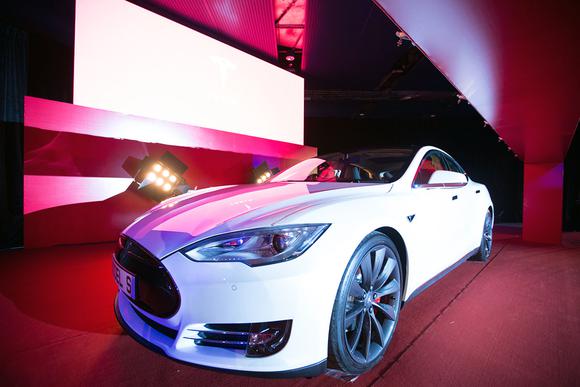
  • Tesla Model X electric cars to hit Indonesian roads

    Tesla Model X electric cars to hit Indonesian roads

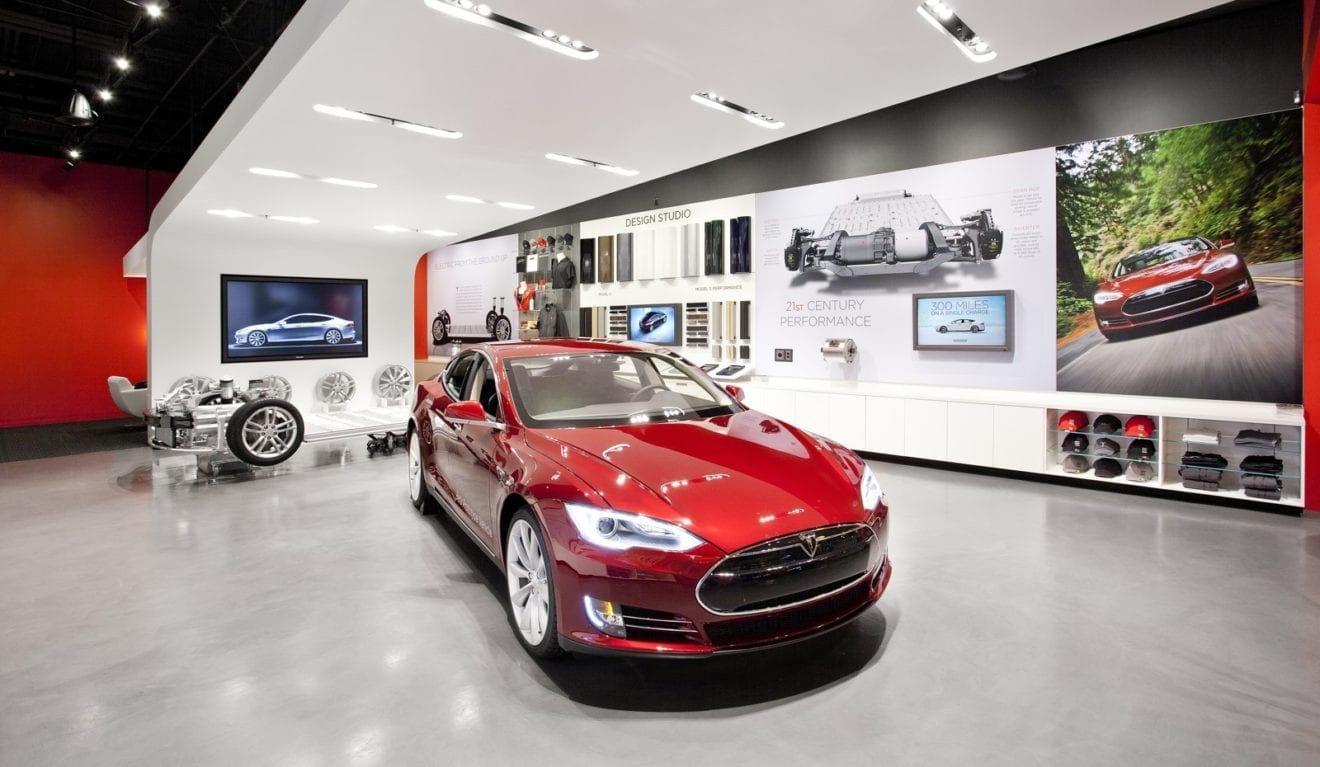
    Indonesians can now purchase US-made Tesla Model X electronic luxury cars with price tags starting from US$200,000. Prestige Image Motorcars, the sole Tesla motor car distributor in Indonesia, began exhibiting one of the cars at its showroom in Pluit, North Jakarta, on Tuesday.

    Prestige president director Rudy Salim said his company started receiving orders for the car in June with deliveries, beginning in September.

    “Tesla cars have good prospects in the Indonesian market, considering they are not the most expensive among the super cars in the country,” Rudy said.

    Each Telsa cars is equipped with a battery that supports up to 350 kilometers of travel, much more than Indonesians generally needed, Rudy said.

    A director of the Association of Indonesian Automotive Manufacturers (Gaikindo), Jongkie Sugiarto, said that Tesla cars would have their own fans in Indonesia.

    However, he said, luxury cars belonged to a specific and limited market, which did not grow significantly.

    According to Gaikindo, the domestic sales of diesel and petrol cars in the first four months of the year increased by 5.71 percent to 373,407 from 352,072 in the same period of 2016.

    Tesla Inc. of the United States was quoted by Reuters as saying in April 2 that its first-quarter vehicle deliveries jumped by 69 percent to 25,000 vehicles compared to the same period last year.

  • Electric vehicles reach 2 million cars in 2016

    Electric vehicles reach 2 million cars in 2016

    The number of electric cars on the roads around the world rose to 2 million in 2016, following a year of strong growth in 2015, according to the latest edition of the International Energy Agency’s Global EV Outlook.

    China remained the largest market in 2016, accounting for more than 40% of the electric cars sold in the world. With more than 200 million electric two-wheelers and more than 300,000 electric buses, China is by far the global leader in the electrification of transport. China, the US and Europe made up the three main markets, totalling over 90% of all EVs sold around the world.

    In Norway, electric cars had a 29% market share last year, the highest globally, followed by the Netherlands with 6.4%, and Sweden with 3.4%. The electric car market is set to transition from early deployment to mass market adoption over the next decade or so, says the Global EV Outlook.

    Between 9 and 20 million electric cars could be deployed by 2020, and between 40 and 70 million by 2025, according to estimates based on recent statement from carmakers.

    Still, electric vehicles only made up 0.2% of total passenger light-duty vehicles in circulation in 2016. They have a long way to go before reaching numbers capable of making a significant contribution to greenhouse gas emission reduction targets.

    In order to limit temperature increases to below 2°C by the end of the century, the number of electric cars will need to reach 600 million by 2040, according to IEA’s Energy Technology Perspectives. Strong policy support will be necessary to keep EVs on track.

    Cities are taking leadership roles in encouraging EV adoption, often because of concerns about air quality. Major urban centres often achieve higher EV market shares compared to national averages. A third of global EV sales took place in 14 cities in 2015.

    Paris, for instance, has mandated that any electric car is allowed to re-charge at the re-charge stations of its car-sharing program, called Autolib.

    Amsterdam has a strategy of offering the installation of charging points on public parking spaces to people who make a request, ensuring that charging infrastructure is installed where it’s actually needed. London for its part encourages EV adoption by waiving its congestion charge.

    The analysis shows that fleet procurement is an important means of encouraging early EV uptake. Fleet operators, both public and private, can contribute significantly to the deployment of EVs, first from demand signals that they send to the market, and second thanks to their broader role as amplifiers in promoting and facilitating the uptake of EVs by their staff and customers.

    Clear and ambitious policy support is vital to keep the growth of EVs on track. Despite impressive improvements in costs and energy density over the past decade, battery packs are still expensive, driving up retail prices. Financial incentives for EV adoption and taxes on fossil fuels will continue to be important in the current phase of EV technology deployment to initiate and reinforce a positive feedback loop that, through increasing sales, production scale-ups and technology learning, will further support cost reductions for batteries and other components.

  • Tata Motors global sales decline 1 per cent in May

    Tata Motors global sales decline 1 per cent in May

    Tata Motors today reported over 1 per cent decline in global sales in May at 86,385 units, including that of Jaguar Land Rover (JLR) vehicles.

    The company had sold 87,414 units in May 2016, Tata Motors said in a statement.

    In the passenger vehicles category, global sales stood at 58,075 units last month as against 55,039 units during the same period in 2016, up 6 per cent.

    Sales of luxury brand Jaguar Land Rover grew 2 per cent to 47,131 units in May compared to 46,204 units in the same month of 2016.

    However, sales of commercial vehicles declined by 13 per cent to 28,310 units as against 32,375 units in the year-ago month.

  • Indonesia May motorbike sales up 15.2% yoy

    Indonesia May motorbike sales up 15.2% yoy

    Motorcycle sales in Indonesia rose 15.2% in May from a year earlier, data from an industry association showed on Monday.

    These sales are also the highest growth rate since August 2014.

    Sales stood at 531,496 motorbikes in May, up from 461,506 sold in the year-ago period.

    It was also higher than the 388,045 bikes sold in April. Motorbikes are hugely popular in Southeast Asia’s biggest economy and their sales are a key indicator of consumption.

    Sales in May were led by Honda Motor , Yamaha Motor Co Ltd and Suzuki, data showed.

  • Automakers diverge on how fast to deploy automatic braking

    Automakers diverge on how fast to deploy automatic braking

    Big automakers are rushing to launch self-driving cars as early as 2021, but the industry’s major players are moving slowly when it comes to widespread deployment of a less expensive crash prevention technology that regulators say could prevent thousands of deaths and injuries every year.

    Nissan Motor said on Thursday it would make automatic braking systems standard on an estimated 1 million 2018 model cars and light trucks sold in the United States, including high-volume models such as the Rogue and Rogue Sport compact sport utility vehicles, the Altima sedan, Murano and Pathfinder SUVs, LEAF electric car, Maxima sedan and Sentra small car.

    Rival Toyota Motor has said it will make so-called automatic emergency braking standard on nearly all its U.S. models by the end of this year.

    Overall, however, most automakers are not rushing to make automatic brake systems part of the base cost of mainstream vehicles sold in the competitive U.S. market. The industry has come under pressure from regulators, lawmakers and safety advocates to adopt the technology, which can slow or stop a vehicle even if the driver fails to act.

    So far, only about 17 percent of models tested by the Insurance Institute for Highway Safety offered standard collision-avoiding braking, according to data supplied by the auto safety research group backed insurance industry. Many of the models with standard collision-avoiding brake systems are luxury vehicles made by European or Japanese manufacturers.

    The systems require more sensors and software than conventional brakes, and automakers said they need time to engineer the systems into vehicles as part of more comprehensive makeovers.

    Last year, 20 automakers reached a voluntary agreement with U.S. auto safety regulators to make collision-avoiding braking systems standard equipment by 2022.

    Safety advocates have petitioned the National Highway Traffic Safety Administration to begin a regulatory process to require the technologies, but the agency has said the voluntary agreement will result in faster deployment than a formal rule-making process. NHTSA says the technology could eliminate one-fifth of crashes.

    “Do the math. That’s 5 million crashes every year – 20 percent reduction means 1 million less. Those are big numbers,” Mark Rosekind, the NHTSA’s then-administrator, told last year.

    But customers would likely experience the benefits of the technology infrequently. The technology to enable a car to drive itself is far more costly, but industry executives foresee autonomous vehicles driving revenue-generating transportation services that could be attractive to investors.

    General Motors Co (GM.N) offers automatic braking as optional equipment on about two-thirds of its models. The company did not say on Thursday how many vehicles have the technology as standard equipment. GM has not made public its plans to make the technology standard across its lineup.

    “Any time you have a voluntary agreement you have a spectrum of implementation,” Jeff Boyer, GM’s vice president for safety, told Reuters earlier this week. Asked when GM would roll out standard automatic braking, Boyer said, “let’s just say we honor the voluntary commitment.”

    Ford Motor “has a plan to standardize over time,” the company said in a statement on Thursday. Currently, automatic braking systems are optional on several 2017 Ford and Lincoln models, and will be offered on certain 2018 models including the best-selling F-150 pickup truck.

    Fiat Chrysler Automobiles offers automatic braking as optional equipment in nine model lines, using cameras and radar to detect hazards ahead. The company has said it will meet the 2022 target for making the systems standard.

    As 2018 models roll out during the second half of this year, more vehicles will offer automatic braking, said Dean McConnell, an executive with Continental AG’s North American business. Continental’s automatic braking technology systems will be on certain Nissan models.

    “We see it accelerating,” he said. “It varies. There are some (automakers) that are being aggressive” and others that are waiting.

    Nissan did not disclose how much prices for vehicles would rise to offset the cost of standard automatic emergency braking. The 2018 models will be launched later this year. Currently, Nissan, like most carmakers, offers automatic braking as part of a bundle of optional safety and technology features.

    A 2017 Nissan Sentra compact sedan has a starting price of $17,875. To buy the car equipped with automatic braking requires spending another $6,820 for a Sentra SR with a premium technology package.

    German auto technology suppliers Continental and Robert Bosch will supply the systems, Nissan said.