Category: Automotive

Retail News Asia is committed to providing both local and global retailers with the latest Auto and Car news throughout the Asian market. This on a daily base.

  • Ford recalls 40000 big vans; cracked coupling can cause power loss

    Ford recalls 40000 big vans; cracked coupling can cause power loss

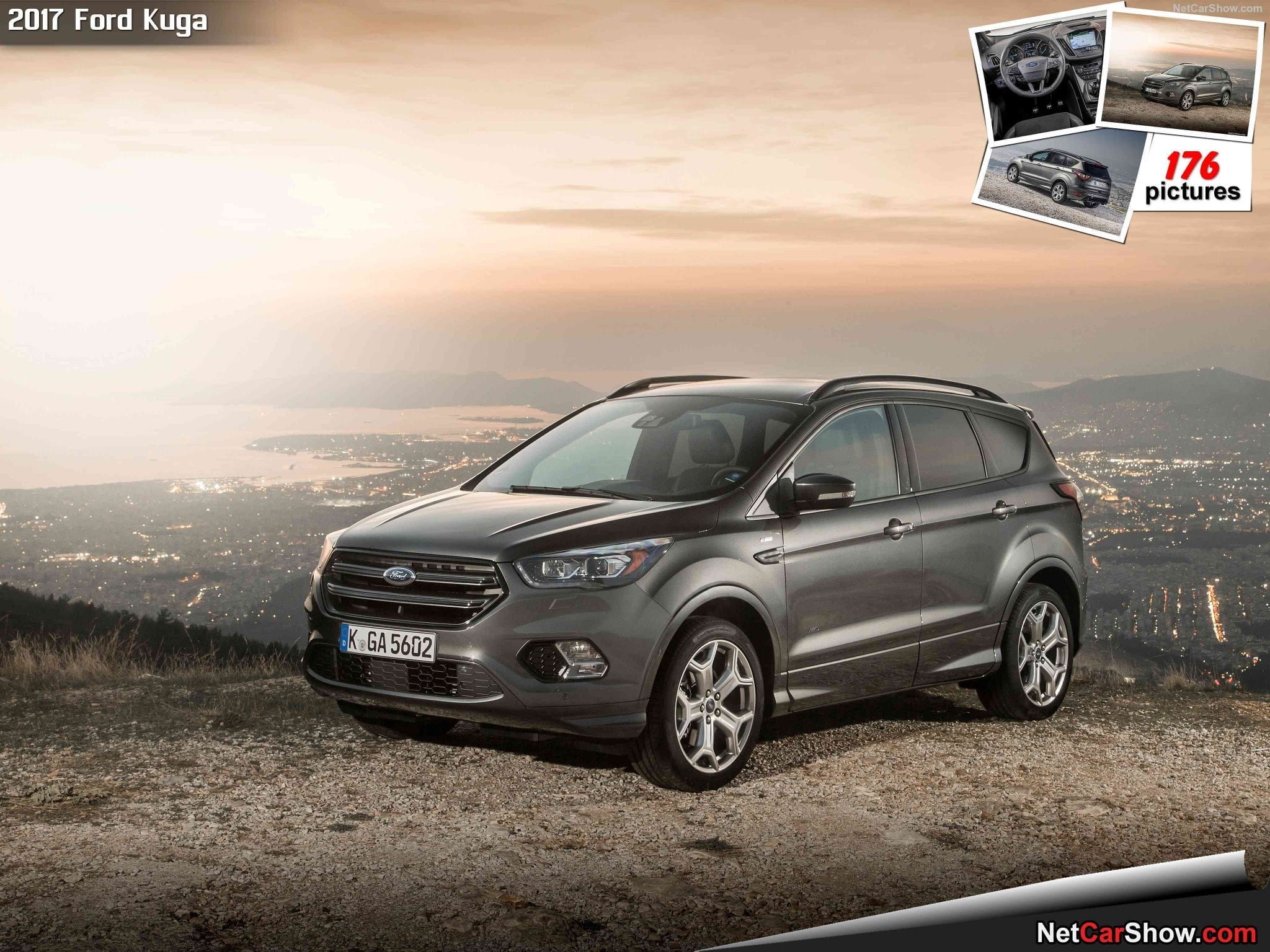
    Ford is recalling more than 400,000 Transit vans and buses to fix cracked drive shaft couplings that can cause the vehicles to lose power.

    The company says the recall covers North American vans, buses and chassis cabs with medium, long and extended wheelbases from 2015 to 2017.

    The coupling can separate from the drive shaft, causing loss of power or unintended movement when shifted into park. It also can damage surrounding parts including brake and fuel lines.

    The company says it’s not aware of any crashes or injuries from the problem.

    Ford says in a statement Wednesday that its data show the couplings won’t deteriorate enough to cause separation in vehicles with fewer than 30,000 miles. So drivers should schedule an appointment to get the coupling replaced after the vans hit that threshold. The company is still developing a permanent fix, and until that happens, drivers should have the couplings replaced every 30,000 miles.

    “We are working quickly to make it available as soon as we can,” spokeswoman Elizabeth Weigandt said.

    Owners will be notified by mail and will get another letter once the permanent repair is available.

  • Vietnam Motor Show scheduled in August

    Vietnam Motor Show scheduled in August

    They include 12 brands of 10 members of the Viet Nam Automobile Manufacturers Association (VAMA) including Chevrolet, Ford, FUSO, Honda, Isuzu, Mercedes-Benz, Mitsubishi, Nissan, Suzuki, Toyota, and Do Thanh.

    The exhibition will also feature over 50 companies from supporting industries who will bring automobile parts and services.

    The event, which this year will have the theme “connected technology for smart moving”, will highlight the role of technology in modern life.

    Toru Kinoshita, chairman of VAMA, said: “The development of automobiles has had an enormous effect on people’s way of life all over the world. Advanced technology and innovation in the auto industry nowadays has given people incredible freedom of movement and influence over how they want to move, live and enjoy life.

    “Therefore we decided to choose this theme. We would like to express the impact of connected technology on Vietnamese life, thus enabling significant changes to patterns of living.”

    The exhibitors have said they will offer many promotions at the event.

    Also at the exhibition, conferences and forums will be held to discuss urgent issues facing the industry.

    The event, which will be held at the Sai Gon Exhibition and Convention Centre in District 7, expects to welcome 150,000-160,000 visitors.

  • BMW, competing with Tesla, to introduce electric 3 Series

    BMW, competing with Tesla, to introduce electric 3 Series

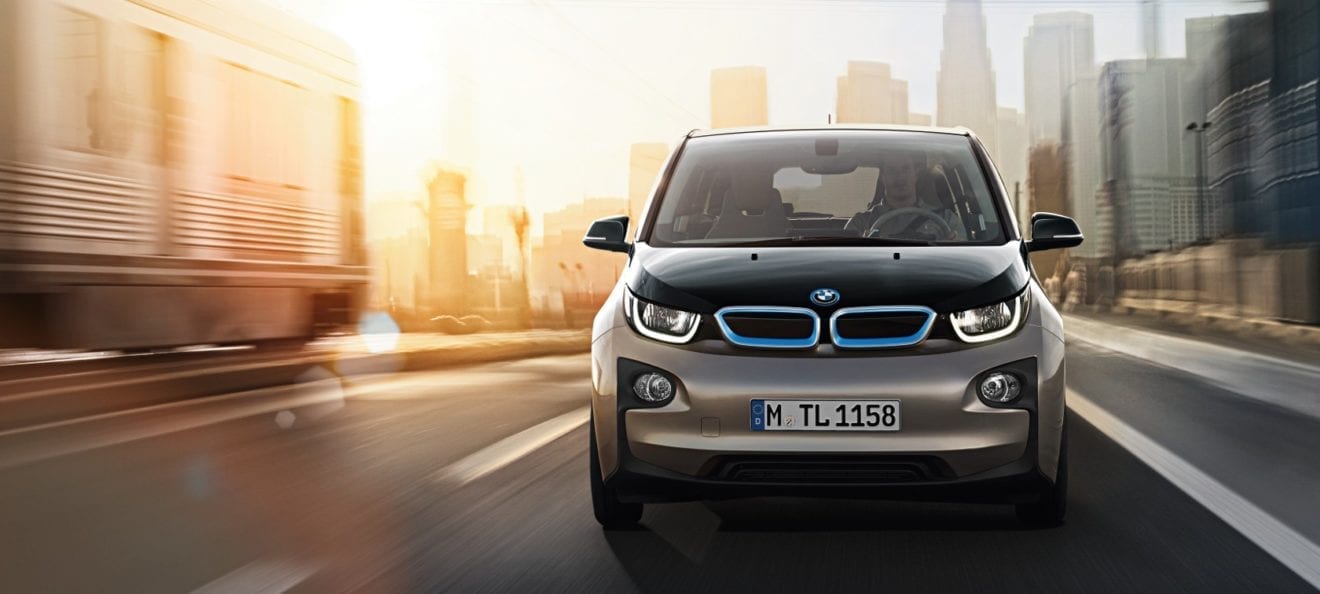
    BMW plans to introduce an electric version of its popular 3 Series in September, a move designed to fend off rival Tesla.

    The German carmaker will present the vehicle at the IAA auto show in Frankfurt in September.

    The 3 series, which is a high volume sales model, will have a range of 400 km (248 miles) and is seen as a direct response to the success of Tesla’s Model 3, according to Handelsblatt.

    BMW declined to comment.

  • Auto firms ask to lower component import taxes

    Auto firms ask to lower component import taxes

    High import taxes on auto components and parts, packaging and logistics expenses are major reasons behind locally-assembled cars costing 10-20 per cent higher than imports from Thailand and Indonesia.

    As such, these are also factors hindering growth of the domestic automobile industry, the automobile working group said at the Vietnam Business Forum (VBF) 2017 recently.

    At the forum, a meeting between the Vietnamese Government and the business community held in Ha Noi, the group said higher prices made local automakers less competitive than imports from ASEAN members, and the situation will worsen when import taxes drop to zero per cent in the region next year.

    Sumito Ishii, general director of General Motors Viet Nam and head of the VBF automobile working group, said major automakers and auto part suppliers felt the local automobile industry was operating on a small scale, so it had not attracted the participation of sufficient global part suppliers.

    “The global suppliers will not invest if there is no clear business plan – whether automakers maintain or raise production in Viet Nam or not,” Ishii said.

    Of the current part suppliers in Viet Nam, more than 90 per cent are foreign-invested businesses, and the majority of auto components, parts and materials are imported.

    To help expand domestic auto production, the Government team currently in charge of the automobile industry should have auto assemblers and part suppliers participate in the process so they can understand the industry’s current situation better, the group said.

    The team should organise monthly conferences to discuss policy drafts for the industry and keep the Prime Minister informed.

    Policy makers should also continue working with businesses to build measures that will help cut production costs, reducing the pressure of competition on local automakers from 2018. Programmes have to be developed to connect businesses in the sector.

    “The connection between foreign investment businesses and domestic businesses is ineffective because there is no available database relevant to domestic parts and component suppliers. If we have a database, businesses can compare and contact local part suppliers easily,” Ishii said.

    He said foreign investment businesses should provide the list of auto parts and components that need to be localised with more details so as to help local suppliers prepare the necessary technologies.

    Meanwhile, local part suppliers would need to focus on meeting production demands, including quality, costs and delivery, and step up co-operation with foreign suppliers.

    “As for the automobile industry, the top priority is to build up a sustainable growth market. Relevant long-term, stable policies are needed to help businesses set up their plans,” Ishii said.

    Large output

    Deputy General Director of the Truong Hai Automobile Company (Thaco), Pham Van Tai, said industry needed an output large enough for businesses to invest in technology, machines and equipment to increase the localisation rate (or the rate of parts that are produced locally) and reduce production costs.

    Tai and representatives of other domestic automakers asked the Government to issue policies protecting the local auto market to help local auto and support industries to develop in a sustainable manner.

    Tai drew attention to proposals made by the Ministry of Industry and Trade (MoIT) recently, noting that they contained effective solutions.

    In the proposal, the MoIT asks the Government to cut import taxes on auto parts and components not produced locally to zero per cent from current 15-20 per cent.

    Meanwhile, import duties on components and parts that are being produced domestically should be maintained at the highest possible level to local production and create stable jobs for more than 120,000 workers in the auto industry, they said.

    “To encourage development of the support industry, the Government needs to exempt it from special consumption tax on locally-produced components and parts, contributing to decreasing the prices of cars in Viet Nam,” said Tai.

    The group also proposed that the Government takes measures to control trade fraud, strictly examine certificates of origin and create a healthy and fair environment for all businesses.

    Deputy MoIT Minister Tran Quoc Khanh said the Government gave a lot of importance to the auto support industry.

    It has issued Decree 111/2015/ND-CP and Decision 68/2017/QD-TTg on a 10-year (2016-2025) plan to develop the support industry, he noted.

    “Apart from the ministry’s measures and proposals from auto businesses, the ministry is willing to discuss the industry’s difficulties in order to ensure sustainable development in the future,” Khanh said.

    Earlier, in an evaluation on the country’s automobile industry after 20 years of development, the MoIT had said the industry had failed to reach its set targets, especially a 40 per cent of localisation rate for cars with nine seats or less by 2005 and 60 per cent by 2010. The current rate is between seven and 10 per cent.

    The quality of local autos has improved but it is yet to match that of imported ones. Prices still remain higher than other countries in the region. Production stagnates at the basic assembly stage of four steps: welding, painting, assembling and examination.

    Besides low market capacity, the ministry said policies on taxes, fees and infrastructure lacked stability and there was no high consensus among State management bodies. These factors have led to a failure in creating favourable conditions for businesses in the auto industry.

  • Car ownership ratio remains low

    Car ownership ratio remains low

    The industry’s growth for 2012-2016 period was 38%, the highest rate in the South East Asia. About 45% of the new cars were registered in Hanoi and HCM City.

    As of 2016, about 211,000 vehicles were registered in HCM City and 291,000 in Hanoi. 600,000 cars were sold in remaining provinces and cities.

    Cars from Japan and South Korea were favoured in Vietnam. Customers now have more choice as more European car brands have appeared in Vietnam such as Renault and Volkswagen.

    However, the car ownership ratio in Vietnam is only 16 cars for 1,000 people. This rate is lower than Malaysia’s 341 cars, Thailand’s 196 cars and Indonesia’s 55 cars.

    According to Solidiance, one of the reasons is because prices are still high. Car manufacturing, as well as supporting industries, are still weak so Vietnam has to import completely built units. Moreover, poor infrastructure and constant congestion have discouraged people from buying cars.

    It is predicted that the demand will continue to rise with steady economic growth and increasing personal incomes. Import taxes will be reduced or lifted from 2018 after Vietnam joins various trade agreements such as the ASEAN Trade in Goods Agreement. As a result, the car prices will fall and become more affordable.

  • Smart Mobility Consortium holds C-V2X demo in Hong Kong

    Smart Mobility Consortium holds C-V2X demo in Hong Kong

    Hong Kong’s Smart Mobility Consortium has held the city’s first demonstration of the use of cellular vehicle to everything (C-V2X) technology for connected cars.

    The demonstration was conducted at Hong Kong Science Park as part of the Intelligent Transportation System (ITS) Asia-Pacific Forum 2017.

    It used operator HKT’s C-V2X trial network, using the 2.6-GHz band for vehicle-to-infrastructure communications and 5.9-GHz for vehicle-to-vehicle communications.

    A vehicle fitted with C-V2X technology demonstrated scenarios including the transmission of vehicle-to-vehicle do not pass, vulnerable road user, blind spot or lane change warnings, alerts sent in cases where vehicles need to make emergency stops and intersection collision warnings.

    The Smart Mobility Consortium was founded in March by HKT, Huawei, Qualcomm and the Hong Kong Applied Science and Technology Research Institute (ASTRI).

    “Three months ago, we shook hands and signed the MoU to establish the Smart Mobility Consortium. Today, we are working hand-in-hand to bring the first demonstration of C-V2X technology for pushing safe mobility in Hong Kong,” HKT group managing director Alex Arena said yesterday.

    “The demonstration shows how C-V2X alerts drivers to dangers under different use cases on the road and emergency traffic conditions, which will make the roads safer and Hong Kong a better city to live in. Being the mobile network technology leader in Hong Kong, HKT will continue to push and realize C-V2X technology & applications, in support of the Government’s Smart City vision and strategy.”

  • BMW Plans $1 Billion Expansion in Assembly Plant

    BMW Plans $1 Billion Expansion in Assembly Plant

    Germany-based BMW will invest $1 billion to expand the company’s assembly plant in Spartanburg, South Carolina.

    Dr. Norbert Reithofer, Chairman of the Board of Management, BMW Group, said, “We will expand the plant’s annual production capacity by 50% up to 450,000 vehicles by the end of 2016. Today’s capacity is around 300,000 vehicles. This investment will also create an additional 800 jobs, increasing the total workforce to 8,800 on site.”

    The additional investment will be used to increase capacity, which is necessary to meet strong global demand for BMW X models. “Plant Spartanburg was built to enhance and expand the BMW line-up, underscoring the BMW Group commitment to the United States” said Dr. Reithofer. “In addition to the X3, X5, X6, and the new X4, we are today announcing another all-new, larger X model to be manufactured exclusively at this plant for our world markets: the X7.”

    Harald Krüger, Board of Management member for Production explained the important role of the US for the BMW Group production strategy: “The BMW Group strives for a good balance of growth among all markets and continents. The Spartanburg plant is an important building block in our international network of 28 production and assembly facilities in 13 countries today and makes a vital contribution to profitable, globally-balanced growth.”

    “Our U.S. plant is the best example of our successful strategy of ‘production follows the market’. The state of South Carolina has supported us as a valuable and reliable partner throughout our 20-year involvement in the region, making the United States our second home,” he explained.

    “We are expanding BMW Plant Spartanburg as our center of competence for production of BMW X models and broadening our product portfolio,” Mr. Reithofer said. “This expansion means Spartanburg will have the largest production capacity of any plant in our global production network. This plant already exports, on average, 70% of its annual production with a 2013 value of more than US$ 7.5 billion which, according to the U.S. Department of Commerce, makes BMW the largest U.S. vehicle exporter to non-NAFTA countries.”

    Since production began 20 years ago, in 1994, the Spartanburg plant has produced over 2.6 million vehicles for BMW customers around the world. Currently the BMW X3, X5, X5 M, X6 and X6 M are all produced at the plant.

    “This is the fifth expansion since production began 20 years ago and represents another major investment,” said Manfred Erlacher, President & CEO of BMW Manufacturing. “The increase in annual capacity, the number of models produced, and the number of jobs on site, reinforce the major role BMW is playing in the region’s economic vitality through technological innovation, environmental stewardship, and development of a highly skilled workforce.”

  • Alphabet partners with Avis to manage self-driving car fleet

    Alphabet partners with Avis to manage self-driving car fleet

    Waymo, the self-driving car unit of Alphabet Inc, said on Monday it signed a multi-year agreement with Avis Budget Group Inc for the car rental firm to manage its growing fleet of autonomous vehicles, sparking a surge in Avis Budget’s stock.

    Investors bid Avis shares up by as much as 21 percent on Monday, the biggest intraday percentage gain for the stock in more than five years. The shares closed at $27.67, up about 14 percent.

    Shares in traditional rental car companies such as Avis and Hertz Global Holdings have taken a beating as more travelers use ride services such as Lyft and Uber Technologies The Waymo-Avis deal points to a potential future for rental car companies as managers for fleets of shared and autonomous vehicles require their services changing tires, cleaning interiors, and securing vehicles when they are not in operation.

    A Bloomberg report on Monday that Apple was using vehicles supplied by rival rental car company Hertz Global Holdings to test its self-driving car technology prompted a surge in that company’s shares.

    Also on Monday, General Motors Co Chief Financial Officer Chuck Stevens told analysts during a conference call that the automaker has “done a lot of thinking” about how to manage its growing fleet of self-driving vehicles. But he said “it’s early days on how that business model may play out.” GM has a large network of franchised dealers that could provide fleet management services, as well as an alliance with Lyft and its own Maven car-sharing unit.

    Waymo and Avis said they will launch their partnership in Phoenix, Arizona, where Waymo is allowing selected members of the public take rides in self-driving cars, including modified Chrysler Pacifica minivans built by Fiat Chrysler Automobiles NV. Waymo has said it plans to expand its fleet of Chrysler minivans to about 600 vehicles.

    Waymo and Avis did not say whether their partnership will expand to other cities, but John Krafcik, the head of Waymo, said in a statement that “with thousands of locations around the world, Avis Budget Group can help us bring our technology to more people, in more places.”

  • Honda outlines bold autonomous goals

    Honda outlines bold autonomous goals

    Honda Motor, long soft-spoken about its strategies for electric cars and autonomous driving in a world of raucous rivals, is suddenly talking louder.

    Executives last week outlined bold goals to deliver lane-changing autonomous driving for highways by 2020 and then extend the effort to city streets with Level 4 self-driving vehicles by 2025.

    At the same time, executives revealed that Honda has been quietly working on a range of electric vehicles under a new EV development division created in virtual secrecy in October.

    That unit will deliver not only a dedicated EV for China next year, it is working on another EV that will be introduced at an auto show this fall — possibly targeting North America.

    The revelations represent a leap forward for Japan’s No. 3 automaker as it races to catch up with competitors on the industry’s future technologies.

    The sense of urgency was palpable among executives last week as they showcased their plans here.

    “We have been lagging behind a little,” Honda R&D President Yoshiyuki Matsumoto said of the push, “so we are now trying to catch up. We are tightening the screws quickly.”

    CEO Takahiro Hachigo unveiled the strategy as part of a new 2030 midterm business vision, saying engineers needed more concrete targets and a clear timeline to keep them on track.

    At the same time, Honda has created two other divisions tasked with enhancing the perceived quality of its products and making them cheaper to develop and build. Honda wants to ensure that in a future in which self-driving EVs risk becoming like appliances, Honda cars will remain fun to drive.

    Urgency

    The sudden arrival of the plans reflects mounting pressure on Honda — a midsize global company, despite its appearance in the U.S. — to cope with industry consolidation, surging demand for costly new technologies and an onslaught of new competitors from Silicon Valley and China.

    “It does seem like a lot of stuff just appeared out of thin air,” said Christopher Richter, senior auto analyst at CLSA Asia-Pacific Markets in Tokyo. “Now that the engineering juggernaut has been pointed in this direction, things will start moving.”

    Honda has fallen behind traditional rivals such as Nissan Motor, Ford Motor and Volkswagen AG in chasing aggressive road maps for electric and self-driving vehicles. Moreover, upstarts such as Tesla, Waymo or even China’s LeEco, are opening new fronts of competition.

    In its Japanese home market, the fiercely independent Honda suddenly finds itself as odd man out in a new era of partnerships. The domestic industry has coalesced into two camps, with Mazda Motor, Subaru and Suzuki Motor Corp. joining into loose alliance with Toyota Motor, and Mitsubishi Motors teaming with Nissan Motor.

    Honda plans to spend big to make it all happen. The company will boost r&d spending 9.4 percent this year, to about $6.84 billion. But to demonstrate its competitive disadvantage in size, that commitment represents 5.3 percent of its forecasted revenue — larger rival Toyota will devote $9.57 billion to r&d this year, and that represents only 3.8 percent of its forecasted revenue.

    The situation is not lost on Honda. Leveraging partners is now a top priority under Hachigo’s business plan.

    Over the past year, Honda has deepened cooperation with General Motors in fuel cell vehicles, with Waymo in autonomous driving and with Hitachi in EV powertrains, among others.

    Expect more collaborations going ahead, Hachigo said.

    “We must secure higher competitiveness in automobile business for the future, especially in the areas of electrification and the realization of a collision-free society,” he said last week. “How we are going to achieve it remains the challenge.”

    Staying Honda

    Honda is wary of its vehicles falling into the commoditization that some forecast, in which automated EVs become bland by pulling together common parts and standardized electronics.

    Making Honda stand out from the crowd will be the stickler, Hachigo said.

    Honda set up a Product and Perceived Quality Planning Division in October to target the soft side of brand power, the subtle and hard-to-define nuances that connect people with their vehicles.

    Driving dynamics will be a top focus for the new plan, and Honda has created a prototype vehicle called the Dynamic Study to embody some of its future ideas.

    The concept vehicle is based on the current Civic sedan, with tweaks to the transmission, steering and chassis. Among them is a sporty downshift feature that revs like a stick shift when the car brakes into a curve, even though the transmission is automatic.

    Honda also aims to make its cars look better. Hachigo said the company will debut a new design language in the fall, though the company declined to offer any sneak peeks.

    Underpinning all these planned improvements will be doubled-down efforts to cut costs so vehicles brimming with ever-better technology won’t be priced out of the market.

    “Solidifying our foundations to facilitate electrification and future technologies such as automated driving is the key to our future,” the CEO said. “That’s where we need to make solid changes this time.”

  • Takata decides to file for bankruptcy

    Takata decides to file for bankruptcy

    Japan’s Takata Corp decided on Monday to file for bankruptcy protection in Japan with liabilities of more than 1 trillion yen (US$9 billion), Japanese media reported, as the auto parts supplier has struggled due to its defective air bag inflators at the center of the auto industry’s biggest ever product recall.

    The decision came at a special board meeting, public broadcaster NHK said.

    Takata is expected to file for a U.S. Chapter 11-style bankruptcy protection procedure, along with a similar filing in the United States, sources have told Reuters. This would open the door for a financial rescue from U.S. auto parts supplier Key Safety Systems, which Takata has tapped as its preferred financial sponsor.

    Faulty air bag inflators made by Takata have been linked to at least 17 deaths in the United States and other countries, prompting a massive global recall which began nearly a decade ago.

  • Michelin to re-organise business leading to job losses

    Michelin to re-organise business leading to job losses

     Tyre giant Michelin has announced plans to significantly re-organise globally, resulting in significant job losses in France and the US most of which will be covered by natural attrition.

    In the United States 450 jobs in central functions are to be cut between 2018 and 2021. According to Michelin, 1,500 employees would actually leave the company in the same period, suggesting a large majority will result from natural attrition and retirement.

    In France, the transformation coincides with significant job creation. By 2021, 5,000 employees will leave the group in France, the majority due to retirement, and around 2,000 of these would be in Clermont-Ferrand.

    However, at the same time Michelin says it wants to recruit more than 3,500 people externally in France by 2021, including 1,000 in Clermont-Ferrand. The company will also start new activities in Clermont-Ferrand and at other sites in France, creating 250 new jobs. The firm says it aims to “progressively reach the target size of the future organizations, without forced redundancies.”

    The company would not replace 970 retirees, between now and 2021 in Clermont-Ferrand. And finally, in order to be closer to its customers and improve competitiveness, Michelin will locate 290 employee and manager positions in other countries where the group is operating.

    Corporate reorganisation 

    On 16 March 2017 Michelin launched a global reorganisation project. The goal was to “boost growth by adapting…operations to meet the evolving demands of…customers and employees. ” Now, on 22 June, the company has released further details of what has been taking place. In short there will now be 10 new regions, 14 business lines and 8 operational divisions.

    The 10 new regions will be given more operational responsibilities. These are Africa – India – Middle-East; South America; Central America; North America; Eastern Asia and Australia; China; Central Europe; Northern Europe, Southern Europe and Eastern Europe.

    Tyres  and accessories understand that UK and Eire operations will fit into the Northern European region. No details of who will be leading this region or were indeed this region will be physically based have yet been announced.

    Likewise, no details of job consolidation within this region have yet been released, but while the official details clearly focus on the USA and France, it wouldn’t be surprising to learn of some job consolidation in other regions too.

    In addition 14 “business lines” will develop offers for each customer category. The purpose of these Business Lines is to develop offers to satisfy global customer groups with similar needs around the world. They would have a key role in building the strategy of the group and would steer their business results in their respective customer segments.

    At the same time eight operational divisions will provide expertise and support for the regions and business lines. These are research and development; service technology development; manufacturing; supply chain; marketing and sales support; purchasing; operations quality assurance; and corporate and business services (CBS).

    In order to streamline the group’s central operations, the corporate divisions are to focus on their strategic missions. The group’s reporting would be based on consolidation of business lines and would be very similar to currently.

  • Piaggio Indonesia poised strongly against Honda’s challenge

    Piaggio Indonesia poised strongly against Honda’s challenge

    PT Piaggio Indonesia, the principal and sole agent of Vespa and Piaggio in Indonesia, is not concerned by PT Astra Honda Motor’s introduction in April of the Honda SH150i as a new premium scooter competitor.

    Sales of the Vespa Medley, whose specifications are comparable with the Japanese counterpart, has not declined, even though they are in the same price bracket, said Piaggio Indonesia marketing director Andre Sanyoto.

    The Medley is marketed at around Rp 44 million (US$3,320), while the Honda SH150i is priced at Rp 44.9 million. “If they Honda can sell five to 10 units a month, we are seeing at least double-digit sales and have seen positive growth since the Medley’s launch in May 2016,” he said.

    Andre believes that Piaggio will not be affected by declining sales in the industry, as it relies on the premium scooter segment. It will introduce at least two more premium scooters this year, including the Vespa 946 (RED).

    ”We are sticking to the premium segment, with an audience who considers not only the functionality of our product, but also their emotional attachment to it,” he said. “The 946 (RED) model will be marketed at a similar price as the Vespa Armani, at Rp 196 million,” he said, adding that his company had already received orders for the new model from Vespa enthusiasts.

    Piaggio Indonesia’s sales is mainly supported by the Primavera and Sprint model, which are marketed at Rp 32.8 million and Rp 34.8 million respectively, and contributed 70 percent of total Vespa sales in Indonesia.

  • Jaguar seller says new tax rate could hit business

    Jaguar seller says new tax rate could hit business

    Inchcape Thailand, an importer and distributor of Jaguar and Land Rover, says it’s concerned about the way the new excise tax for cars, effective in mid-September, will be calculated.

    The government has yet to formally announce details of the new tax rate and the computation formula that will apply to car distributors; however, Inchcape said the new tax may affect the way in which it does business.

    From Sept 16 onward, Thailand’s amended excise tax law will change the base tax rate to take into account the recommended retail price of goods, rather than ex-factory prices and cost, insurance and freight (CIF) values.

    The government says a tax system based on retail prices will create a fairer system for makers and importers after some were found to have been exploiting the ex-factory and CIF values to understate tax bills.

    The act also authorises the director-general of the Excise Department to determine recommended retail prices for use as a base for excise tax calculation in the event of disputes.

    If the recommended retail price is not in line with the market price, the department will have the power to determine it. The value will be based on retail market prices or import prices.

    The department is drafting 80 organic laws to facilitate the new base for excise tax computation.

    Inchcape Thailand managing director Charnchai Mahantakhun said the details are not yet available but he is aware that the new tax measures will come into effect in September.

    “At this time, not only Inchcape but also other distributors cannot calculate future prices or margins,” he said.

    Mr Charnchai said the new tax regime will affect Thailand’s automobile market as a whole, both importers and local manufacturers.

    Imported cars are subject to an 80% import duty. In addition, all imported vehicles are also subject to a 10-50% excise tax based on CO2 emissions, a 10% interior tax and a 7% value-added tax.

    Nonetheless, Mr Charnchai remains upbeat about the sales prospects for his three brands this year, though he declined to offer projected sales figures.

    According to the Land Transport Department, Land Rover had 38 cars registered from January to May, followed by Jaguar with 23 and Range Rover with 11.

    Last year, 73 units of Jaguar were sold, with Land Rover’s sales standing at 49 cars and Range Rover’s at 47.

    Mr Charnchai said the overall sentiment for luxury cars and sport-utility vehicles is still positive, though competition has intensified with brands that run their assembly plants locally.

    The British automotive retail and services company set up a local subsidiary, Inchcape Thailand, in July last year with registered capital of 100 million baht to handle the import and distribution of Jaguar Land Rover vehicles and parts in Thailand.

    Earlier, the Jaguar and Land Rover brands were sold by authorised distributor and service provider City Automobiles Co, an affiliate of global automotive company RMA Group.

    In a related development, Inchcape yesterday launched the Jaguar Land Rover Approved programme to offer its certified used cars for buyers, aiming to upgrade its reselling prices in the Thai market.

    Inchcape has eight approved used cars that are 15-35% cheaper than new vehicles.

  • VCAR – Vietnam Limousine for the Southeast Asian market

    VCAR – Vietnam Limousine for the Southeast Asian market

    VCAR, a new generation Limousine of Vietnam, has been launched at a recent ceremony with the participation of nearly 300 businessmen and investors from many Southeast Asian countries like Malaysia, the Philippines, Thailand and Singapore.

    Since the limousine first appeared in Vietnam 5 years ago, thousands of limousines with luxurious and comfortable interiorshave been sold. To grasp this trend, Vinter Capital Group Corporation and its close joint venture partner, Dasan, has manufactured limousines with VCAR brand for the purpose of exporting to Malaysia and other Southeast Asian countries,with the support of the parent company Dynamic Investment Fund from Vinter Capital Group Corporation based in Malaysia, Vietnam and Thailand.

    At the launching ceremony of the new model of limousine, Vinter and Dasan introduced the three versions of VCAR New Generation Limousines, includingVCAR VIP, VCARSolati and VCAR X with excellent and valuable interiors.

    “VCAR Limousine brings about totally new experiences with luxury and comfortable interiors. I hope that the venture between Vinter Capital Group and Dasan will create and bring more versions of VCAR limousine, especially VCAR X to Malaysia in the coming time”, said a Malaysian entrepreneur at the ceremony.

    “Limousine has beenfavored in Vietnam since the very first day. Six versions of limousine have been introduced in the market for the past 5 years. All the essentials of limousine in Vietnam are currently crystallized in VCAR X, a President’s new generation version in Vietnam, produced by Dasan,” said Mr. Le Thanh Tuan, President of VCAR Limousine.

    “The Malaysian market is hard-to-please and much larger compared to Vietnam. Even though the population of Malaysia is only one third of Vietnam, Malaysia’s GDP is three times higher than that of Vietnam. Malaysia’s total number of tourists and revenue from tourism are three times higher, and the income per capita is six times higher. The transportation infrastructure is also one of the best among ASEAN countries. Therefore, VCAR X with its outstanding features would be able to meet the best needs in Malaysia. We believe that the limousine, which is highly favored in Vietnam, could be developed in Malaysia,” Tuan said.

    Dasan and Vinter Capital Grouphave conducted a lot of researches, improvement and investment in order to produce the VCAR limousine with the best standard and unique design to satisfy requirements of the Malaysian market in particular and the Southeast Asian markets in general.

    President of Dasan, Mr. Dang Quang Khanh, said: “Dasan and Vinter Capital Group Corporation will promote operations and fully exploit the assembly and production capacity of factories in Malaysia and supply our products to Malaysia and ASEAN countries in the near future. We will constantly improve the technologies and designs to create more variants of VCAR limousine to satisfy and suit the market trend of Malaysia in particular, as well as other countries in general. Vinter Capital Group Corporation and Dasan expect thatVCAR limousine will be the first Vietnam car brand to reach out to the world”.

    “This event is the milestone of success and close joint venture between Dasan and Vinter Capital Group Corporation. We have committed strongly to support Dasan in expanding the market of VCAR limousine in Malaysia and other ASEAN countries as soon as possible,” said Mr.  Elvin Chew Chee Wooi and Ms. Dolly Hoang Minh Tuyet, Chairman and General Director of Vinter Capital Group.

    “Dasan and Vinter Capital Group had seriously prepared over a year to get this event done. We plan to let the first VCAR limousine to be driven in Malaysia within the next three months,” said Mr. Dang Quang Khanh.

    VCAR X, a President’s new generation version has included all the essentials of existing limousines in Vietnam. Besides strengths of “Ground Specialist”, VCAR X also eliminates redundant and impractical items and overcomes inherent weaknesses of the President version (with two 180-degree-rotation seats), and adds unique interior features that are equipped for the President version.

    With the overwhelming and positive respond by the entrepreneurs and investors from the ASEAN markets, Vinter Capital Group Corporation has committed to launch the limousine as soon as possible.

    Not only manufacturing limousine, Vinter has also actively involved in several segments of business such as property development and investment, agriculture sector, legal and consulting services and resort and restaurant services.

  • Harley-Davidson enters race to buy Italian rival Ducati

    Harley-Davidson enters race to buy Italian rival Ducati

    U.S. motorcycle maker Harley-Davidson is lining up a takeover bid for Italian rival Ducati, potentially bringing together two of the most famous names in motorcycling in a deal that could be worth up to 1.5 billion euros ($1.67 billion), sources told Reuters.

    Indian motorcycle maker Bajaj Auto and several buyout funds are also preparing bids for Ducati, which is being put up for sale by German carmaker Volkswagen.

    A deal with Harley-Davidson would bring together the maker of touring bikes like the Electra Glide that are symbolic of America with a leading European maker whose high-performance bikes have a distinguished racing heritage.

    Milwaukee-based Harley-Davidson has hired Goldman Sachs to work on the deal, one source familiar with the matter said, adding tentative bids were expected in July.

    Volkswagen, whose Audi division controls Ducati – maker of the iconic Monster motorbike – is working with investment boutique Evercore on the sale which will help it fund a strategic overhaul following its emissions scandal.

    Based in the northern Italian city of Bologna, Ducati was on the wish list of private equity funds KKK, Bain Capital and Permira, which are all working on the deal, said the sources who declined to be identified as the process is private.

    Ducati was launched in 1926 as a maker of vacuum tubes and radio components and its Bologna factory remained open in World War Two despite being the target of several bombings.

    Ducati racers have won the Superbike world championship 14 times, with Carl Fogarty and Troy Bayliss its most successful riders.

    Harley-Davidson, which commands about half the U.S. big-bike market, was founded in Milwaukee, Wisconsin at the start of the last century and was one of two major American motorcycle manufacturers to survive the great depression.

    Demand for Harley’s motorcycles continues to be slow as its loyal baby boomer demographic ages and rivals such as the Indian brand bike maker Polaris Industries Inc (PII.N) and Japan’s Honda Motor offer discounts.

    Volkswagen’s powerful labor unions, which control half the seats on the carmaker’s 20-strong supervisory board, repeated their opposition to selling the Italian motorcycle maker.

    “Ducati is a jewel, the sale of which is not supported by the labor representatives on Volkswagen’s supervisory board,” a spokesman for VW group’s works council said in an email.

    “Harley-Davidson is miles behind Ducati in technology terms,” he added.

    BIDDING FIELD

    Evercore has sent out information packages to a number of potential suitors including Ducati’s previous owner Investindustrial, sources with knowledge of the matter said.

    Investindustrial bought a stake in Ducati before the financial crisis, subsequently taking control of the business before selling it to Audi in 2012.

    It is now looking to compete with heavyweight private equity firms and large industry players to regain control.

    Volkswagen, Audi, Harley-Davidson, KKR and Bain Capital declined to comment. Bajaj, Investindustrial and Permira were not immediately available.

    Volkswagen, Europe’s largest carmaker, is seeking to move beyond an emissions-cheating scandal that has tarnished its image and left it facing billions of euros in fines and settlements.

    A successful deal for Ducati, which last year reported revenues of 593 million euros, would show Volkswagen boss Matthias Mueller is serious about reversing his predecessor’s quest for size.

    Volkswagen said last June it would review its portfolio of assets and brands, rekindling speculation among analysts that “non-core” businesses could be put up for sale.

    Volkswagen hopes to raise between 1.4 billion and 1.5 billion euros from the sale of Ducati, valuing it at 14-15 times its earnings before interest, taxes, depreciation and amortization (EBITDA) of about 100 million euros, the sources said.

    The German car maker wants a valuation that reflects trading multiples of similar trophy assets in the automotive industry, such as Italian car maker Ferrari (RACE.MI) which trades at almost 30 times its forward earnings.

    Yet it may need to compromise on price as some of the bidders would struggle to pay as much as 1.5 billion euros for Ducati, several sources said.

    Price expectations have already proved challenging for some industry players who recently decided against bidding.

    Indian motorcycle firm Hero Moto and its rival TVS Motor initially expressed interest in Ducati but were put off by its price tag and decided to walk away, the sources said.

    German car marker BMW and Japanese motorcycle makers Honda and Suzuki have also decided against bidding for Ducati, sources close to the companies told Reuters.

    A BMW spokesman confirmed the German firm was not interested in Ducati, while Hero and TVS were not immediately available for comment.

    Another source close to Volkswagen said the sale of Ducati might not be finalised before the annual EICMA motorcycle show in Milan in mid-November as Volkswagen wanted to find the right buyer and the sales process might take time.