Category: Automotive

Retail News Asia is committed to providing both local and global retailers with the latest Auto and Car news throughout the Asian market. This on a daily base.

  • Renault-Nissan Alliance annual synergies rise 16% to €5bn

    Renault-Nissan Alliance annual synergies rise 16% to €5bn

    The Renault-Nissan Alliance reported a 16 percent increase in synergies for 2016 compared to 2015.

    The Alliance members secured savings, generated incremental revenues and implemented cost-avoidance measures through the world’s leading automotive partnership.

    The value of annualized synergies realized by the Alliance rose to €5 billion last year, up from €4.3 billion in 2015. Converged operations in purchasing, engineering and manufacturing contributed most of the €700 million synergy improvement.

    “The growing cooperation across the Alliance is delivering strong benefits for the members of the Alliance, reflected by the economies of scale, technological breakthroughs and innovations that are being shared between Renault and Nissan,” said Carlos Ghosn, chairman and chief executive officer of the Renault-Nissan Alliance. “We are on track to realize synergies of €5.5 billion in 2018, even before taking into account the contributions from Mitsubishi Motors, our new Alliance partner.”

    With the addition of Mitsubishi Motors, which became the third full member of the Alliance at the end of 2016, annual sales have reached 10 million units. The addition of Mitsubishi Motors comes two years after Renault and Nissan deepened their partnership by converging four key functions: Engineering, Manufacturing & Supply Chain Management, Purchasing and Human Resources. Each such functions is led by a common Alliance Executive Vice President.

    “We continue seeing tangible results of this major convergence,” added Ghosn. “Our growing synergies are helping Renault, Nissan and now Mitsubishi Motors meet their financial objectives and deliver higher-value vehicles to customers in the new era of mobility.”

    In the current year, the Alliance members are expected to introduce more next-generation technologies in electric vehicles, autonomous driving and connected cars and will increase commonalities in platforms, powertrain and parts to boost competitiveness and identify new synergies.

    In April 2017, the Alliance created a light commercial vehicle business unit that will deliver additional synergies in vans and light trucks. The new unit will maximize shared product development and cross-manufacturing, technology sharing and cost-reduction, while preserving brand differentiation among Alliance members.

  • Here are Southeast Asia’s next big car manufacturing hubs

    Here are Southeast Asia’s next big car manufacturing hubs

    Foreign car firms can smell the burning of engine oil as the Vietnamese market heats up.

    Vietnam will emerge as the second fastest-growing production hub for cars in Southeast Asia after the Philippines between 2017 and 2021, according to BMI Research, a part of Fitch Group.

    Output of passenger cars is expected to surge over 60 percent to 84,000 units during the period.

    BMI analysts predict Vietnam’s average annual car output growth could reach 10 percent over the next five years, thanks to increased investment from foreign manufacturers.

    French automaker Groupe PSA, which owns brands such as Citroen and Peugeot, and Korea’s Hyundai Motors are among those looking to take advantage of the country’s increasingly affluent population and low existing car ownership. Only 2 percent of Vietnamese households own a car, according to Pew Research Center.

    PSA aims to assemble 27,000 units in Vietnam from 2017-2020.

    Aside from these investments, there are also growing challenges to Vietnam’s role as a regional production hub.

    The cost of vehicle production in Vietnam is around 20 percent higher than in other regional countries due to the country’s heavy reliance on imported parts.

    When it comes to the localization rate in car manufacturing, Vietnam performs poorly with 20-40 percent, compared to 90 percent in neighboring Thailand.

    From 2018, import tariffs on automobiles imported from Southeast Asian countries will be cut from the current 30 percent to zero, which is likely to hurt the local auto manufacturing industry, said BMI.

  • Volkswagen recalls 766,000 VW cars worldwide for brake system update

    Volkswagen recalls 766,000 VW cars worldwide for brake system update

    Volkswagen is recalling 766,000 vehicles of its core passenger car brand worldwide for a software update to their braking control systems, a spokesman said.

    The braking control system may not function properly in certain driving conditions, such as when the driver over-steers, under-steers or slams on the brakes, the spokesman said.

    The car maker is recalling 288,000 VW-brand cars in Germany over the issue. Including the Audi and Skoda brands, the German recall impacts about 385,000 cars, the spokesman said.

    The recall in Germany was first reported by news agency DPA on Saturday.

  • Australian state picks Tesla to provide grid-scale battery

    Australian state picks Tesla to provide grid-scale battery

    South Australia has picked Tesla to install the world’s largest grid-scale battery that would be paired with a wind farm provided by France’s Neoen, as the state battles to keep the lights on.

    South Australia has raced ahead of the rest of the country in turning to wind power, triggering a shutdown of coal-fired plants that has led to outages across the eastern part of the nation, driving up energy prices.

    The drawback to South Australia’s heavy reliance on renewables has been an inability to adequately store that energy, leading to vulnerabilities when the wind doesn’t blow.

    Under the terms of the agreement, Tesla must deliver the 10-battery within 100 days of a contract being signed or it’s free, matching a commitment made by Tesla Chief Executive Officer Elon Musk in a Twitter post in March.

    There will be a lot of people that will look at this, ‘did they get it done within 100 days? Did it work?’” Musk told reporters in South Australia’s capital city of Adelaide.

    “We are going to make sure it does.”

    Dozens of companies from 10 countries had expressed interest in the South Australian project, which is viewed as a major test for the reliability of large-scale renewable energy use.

    Tesla said in a statement that upon completion by December 2017, the system would be the largest lithium-ion battery storage project in the world, overtaking an 80 megawatt-hour power station at Mira Loma in Ontario, Calif., also built using Tesla batteries.

  • Marketplace for used automobiles Droom to invest upto $10m in acquisitions

    Marketplace for used automobiles Droom to invest upto $10m in acquisitions

    After closing its $20 million Series C round of funding last week, Droom, an online marketplace for used automobiles, plans to announce a few acquisitions by the end of this year, founder Sandeep Aggarwal said.

    “We are planning 2-3 acquisitions this year and will probably spend about $8-10 million. We have been in talks with several companies,” he added.

    Droom will also expand into Indonesia this year, a year later than its earlier planned foray into Southeast Asia. When asked on the deferred timelines, Aggarwal admitted the plan had been ‘delayed’ as the company had stayed focused on its operations in India.

    “We stayed focused on India because if we capture India, then we can capture many other countries. After Diwali (this year), we will expand internationally and Indonesia will be the first country. After that, we will be expanding to Malaysia, the Philippines, Thailand and Singapore,” he said.

    After SEA, Droom will consider Middle East and Western Europe for expansion. It expects international expansion to contribute 10-15 per cent of the total revenues in calendar year 2018. In 2019, overseas revenue could increase to 20-25 per cent, Aggarwal added.

    The company’s recently closed Series C round was lower than than the quantum it had raised as part of its earlier Series B financing.

    At a press briefing announcing the funding last week, Aggarwal had said: “Series C is smaller than Series B in terms of quantum  of money – it is not because we could not get more money – in fact more money was available, but we are still sitting on 70-80 per cent of our Series B. We feel bad that we could have raised the same money now at a much higher valuation now (when compared to Series B), and seen a lesser dilution.”

    The company says it was unable to spend its Series B funding entirely as it had achieved at least three times more its internal target. It also claims to be the first e-commerce company that had achieved low single-digit dilution in Series C.

    Droom will be launching two new services — RTO services and test drive at doorstep in the coming months. By December this year, it aims to cross Rs 5,000 crore in gross revenues and close to Rs 125 crore in net revenues. Droom has 1,79,000 auto dealers and has sold 1,50,000 vehicles since its inception.

    Aggarwal has recently been locked in a bitter spat with the top management of Shopclues, another online marketplace he co-founded.

    He had handed over the reins of Shopclues to his now-estranged wife Radhika Aggarwal in 2013, when he was arrested by the FBI for his alleged involvement in an insider trading case in the US in 2013. In March this year, Aggarwal took to social media to accuse his wife of pushing him out of Shopclues, in collusion with co-founder Sanjay Sethi.

  • Tesla’s Model S fails to ace some tests in IIHS evaluation

    Tesla’s Model S fails to ace some tests in IIHS evaluation

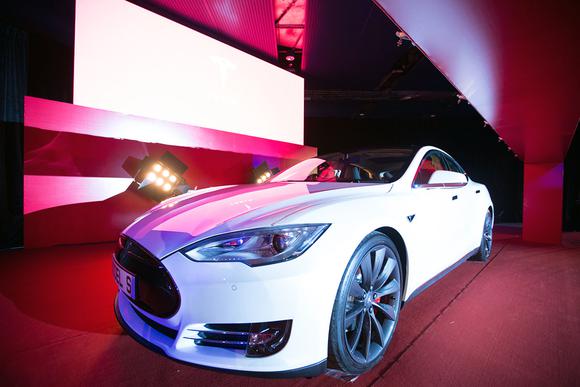
    Tesla Inc’s Model S did not get the top score in certain tests by the Insurance Institute for Highway Safety (IIHS), the agency said on Thursday.

    Chevrolet Impala, Ford Motor Co’s Taurus and Tesla’s Model S were the three sedans that got “only an acceptable rating” in a test designed to simulate what happens when the front driver-side corner of a vehicle strikes a tree or another vehicle, the IIHS said.

    Ford’s Lincoln Continental, the Mercedes-Benz E-Class and Toyota Motor Corp’s Avalon received the highest rating overall, the agency said.

    In the test, the seat belt in Tesla’s Model S was not effective and could lead to the driver’s head striking the steering wheel hard through the air bag, according to the report.

    Tesla’s Model S received the highest rating in IIHS’s crash testing in every category except one, the small overlap front crash test, where it received the second highest rating available, a Tesla spokesperson said in an email.

    “IIHS and dozens of other private industry groups around the world have methods and motivations that suit their own subjective purposes,” the spokesperson said.

    Tesla said the most objective and accurate independent vehicle safety test is done by the U.S. government, which found Model S and Model X to have the lowest probability of injury of any cars that it has ever tested.

    In order to get the top IIHS rating, automakers must have a frontal crash prevention system with automatic braking capabilities to prevent a rear-end collision.

    The vehicles must stop or slow down without driver intervention before hitting a target in tests at 12 or 25 miles per hour among other factors, IIHS said.

    Toyota said in a statement it is committed to developing safe and reliable vehicles.

    General Motors Co declined to comment, while Ford and Mercedes were not immediately available for comment.

    The IIHS is a research arm of the insurance industry, and its crash tests are increasingly influential in guiding vehicle safety design. Automakers strive for top ratings in IIHS tests as they do on federal crash tests.

  • Ford’s China sales post strongest growth of year in June

    Ford’s China sales post strongest growth of year in June

    Ford Motor Co said its China sales surged 15 percent in June, their strongest pace of the year, as the industry puts the phasing out of a tax cut behind it, adding that it was optimistic about the outlook for the second half.

    Peter Fleet, Ford’s Asia-Pacific chief, said the first quarter had been difficult after a tax on car purchases rose to 7.5 percent from 5 percent previously.

    Although Ford’s China sales declined 7 percent in the first-half from the same period a year ago, they were up 7 percent in the second quarter. Sales for June alone climbed to more than 100,000 vehicles.

    “I would expect to see for the third-quarter strong single digit percentage growth (for) the industry. That’s certainly how it looks to us based on the run rate and how the month of July has opened up,” Fleet said.

    Ford’s level of discounting tracked an overall 4 percent price decline for the industry so far this year, he said.

    “I’m not interested in driving our prices down to drive market share,” Fleet said.

  • Geely’s Volvo to go all electric with new models from 2019

    Geely’s Volvo to go all electric with new models from 2019

    Geely-owned Volvo Car Group said on Wednesday all new models launched from 2019 will be fully electric or hybrids, spelling the eventual end to nearly a century of Volvos powered solely by the internal combustion engine.

    The Gothenburg-based company will continue to produce pure combustion-engine Volvos from models launched before that date, but said it would introduce cars across its model line-up that ranged from fully electric cars to plug-in hybrids.

    Volvo’s plans make it the first major traditional automaker to set a date for the complete phase-out of combustion-engine-only models though electrification has long been a buzzword across the industry and Elon Musk’s Tesla Motors has been a pure-play battery carmaker from day one.

    “This announcement marks the end of the solely combustion engine-powered car,” Volvo Cars Chief Executive Hakan Samuelsson said in a statement.

    Five new models set to be launched in 2019 through 2021 – three of them Volvos and two Polestar-branded – will all be fully electric.

    “These five cars will be supplemented by a range of petrol and diesel plug in hybrid and mild hybrid 48-volt options on all models,” Volvo said.

    “This means that there will in future be no Volvo cars without an electric motor.”

    Volvo has invested heavily in new models and plants since being bought by Zhejiang Geely Holding Group from Ford Motor Co. in 2010, establishing a niche in a premium auto market dominated by larger rivals such as Daimler’s Mercedes-Benz and BMW.

    Part of its strategy has also been to embrace emerging technologies which allow higher performance electric vehicles as well as, eventually, self-driving cars.

    Only last month, Volvo said it would reshape its Polestar business into a standalone brand, focused on high-performance electric cars aimed at competing with Tesla and the Mercedes AMG division.

    Volvo has also taken steps towards an eventual listing, raising 5 billion crowns from Swedish institutional investors through the sale of newly issued preference shares last year, though the company has said no decision on an IPO has been made.

  • Australia new vehicle sales surge to record in June

    Australia new vehicle sales surge to record in June

    Australian new vehicle sales jumped to a record in June, a second straight month of bumper results that augured well for consumer demand across the economy.

    The Australian Federal Chamber of Automotive Industries’ VFACTS report out on Wednesday showed 134,171 new vehicles were sold in June, up 4.4 percent on the same month last year. Both months had the same number of selling days.

    June is typically a strong month as dealers clear stock for the end of the financial year.

    Sales of sports utilities alone surged 11.7 percent in June, with the upper large segment rising almost 21 percent. Sales of light commercial vehicles climbed 12.2 percent while the heavy vehicle market gained 9.2 percent.

    The willingness to splash out on big-ticket items follows upbeat reports on retail sales for both April and May and points to a likely rebound in consumption for the second quarter after a muted start to the year.

    Toyota Motor Corp retained first place on the sales ladder with 18.3 percent of the market, while Mazda Motor Corp had another strong month taking 9.3 percent.

    Hyundai Motor took third spot with an improved share of 9.1 percent. The Holden unit of General Motors tied with Mitsubishi on 6.9 percent, while Ford trailed with 6.6 percent.

  • Aggressive Thai pricing for 2017 BMW 430i Coupe and Convertible

    Aggressive Thai pricing for 2017 BMW 430i Coupe and Convertible

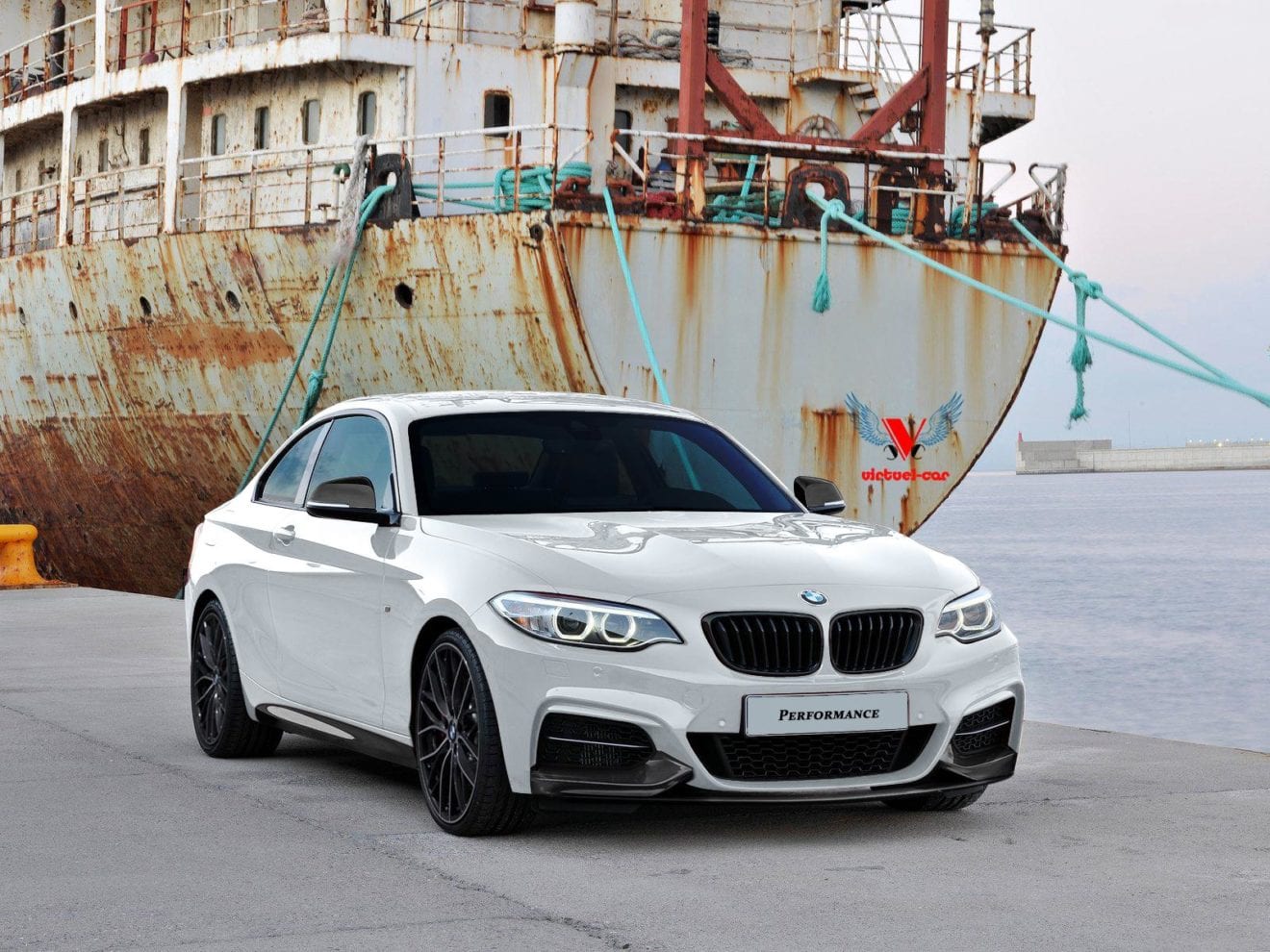
    Due to increased competition in the Thai premium mid-size coupe and convertible segments, BMW Thailand has given the facelifted 4 Series Coupe and Convertible aggressive pricing.

    To be officially launched next week, the two 4 Series models come in 430i forms boasting 252hp 2.0-litre petrol-turbo engine. The 420i Coupe, for one, goes from 0-100kph in 5.8sec and is priced at 3.499 million baht in Luxury spec. The M Sport trim, mainly distinguished with sportier appointments and M-like steering wheel, asks for an additional 300k.

    The 430i enjoys the same 30% excise tax (emitting no more than 150g/km of CO2) as the 420i, which uses a 190hp version of the same 2.0-litre block and is slower from 0-100kph by 1.7sec. Hence, the 420i isn’t available anymore.

    Sales of the pre-facelift diesel-powered 420d have also been discontinued. Two possible reasons could be its higher production costs and Thai preference for petrol power in two-door sports cars.

    How does its competition fare?

    The two most direct rivals in terms of performance are the Audi A5 Coupe 45 TFSI Quattro and Lexus RC200t F-Sport.

    Although the A5 Coupe 45 TFSI boasts the same power and engine size of the 430i Coupe, it is slower from 0-100kph, at 6.3sec. The Audi’s price of 4.299 million baht is also way higher. Even the 190hp 40 TFSI is jaded by the 430i due to its price kicking out at 3.699 million baht.

    The RC200t is in an even more crippling state. It has 245hp from a similar displacing petrol-turbo motor yet is slowest with 7.5sec time. Worse, it asks for 5.49 million baht.

    The Mercedes-Benz C250 Coupe, meanwhile, comes with lesser 211hp 2.0-litre petrol-turbo unit and costs 3.24 million baht for Sport and 3.59 million baht for AMG Dynamic. This kind of means less performance (0-100kph in 6.8sec) for less money.

    What about the open-top 430i?

    The only opponent for the 252hp 430i Convertible is the 245hp C300 Cabriolet. The 430i Convertible Luxury goes for 3.999 million baht and an extra 300k for M Sport. The C300 Cabriolet AMG Dynamic is priced at 4.24 million baht – 59k less than the spec-on-spec M Sport.

  • Tesla’s Musk says Model 3 gets regulatory nod for production

    Tesla’s Musk says Model 3 gets regulatory nod for production

    Tesla’s high-volume Model 3 sedan passed all regulatory requirements for production two weeks ahead of schedule, Chief Executive Elon Musk tweeted on Sunday night.

    “(Model 3) Production grows exponentially, so Aug should be 100 cars and Sept above 1,500,” Musk said on Twitter. “Looks like we can reach 20,000 Model 3 cars per month in Dec.”

    “Expecting to complete SN1 on Friday,” Musk added.

    SN1 is the first car off assembly line for sale, a person familiar with the matter confirmed to Reuters.

    Musk said in May Tesla was on track to begin production of the $35,000 Model 3 in July.

    Tesla had said earlier, it expected to produce over 5,000 Model 3s per week by the end of this year and 10,000 vehicles per week “at some point in 2018”.

    Reuters reported in February that the electric carmaker had shut down production at its California assembly plant for a week for production of the Model 3 sedan, to meet its target of starting production in July.

    Tesla’s previous launches for its Model S sedan and Model X sports utility vehicle were hit by production delays and initial quality issues.

    That track record meant some analysts were skeptical about the model’s July launch.

  • VW recalls 385,000 cars for a brake system update

    VW recalls 385,000 cars for a brake system update

    Volkswagen is recalling 385,000 cars in Germany for a software update to their anti-lock brake systems, news agency DPA reported, citing a spokesman for the automaker.

    Volkswagen’s VW, Audi and Skoda brands were affected, it said.

    According to DPA, the braking control system may not function properly in certain driving conditions, such as when the driver over-steers, under-steers or slams on the brakes.

    Volkswagen had no immediate comment.

  • Deputy PM encourages autos carrying Vietnamese brand name

    Deputy PM encourages autos carrying Vietnamese brand name

    Domestic automakers must manufacture autos under the Vietnamese brand name, Deputy Prime Minister Trinh Dinh Dung suggested.

    These autos must be of good quality, reasonably priced and have competitiveness in the region and the world, he added.

    Speaking with representatives of ministries and auto businesses at a conference on the automobile industry’s development in Ha Noi on Wednesday, the deputy PM said the Government was encouraging local, potential and prestigious businesses to co-operate with strategic partners in the world to study, manufacture and assemble autos with Vietnamese brand name.

    As for the support industry, Dung said it would not only meet the domestic market but also be competitive enough to take part in the global automobile manufacturing chain. For doing so, it must access and apply advanced technologies in the world.

    The industry will expand several automobile industrial complexes and centres by re-organising and re-arranging production; strengthening co-operation among automakers, assemblers and part suppliers, in addition to setting up vocational training centres, and conducting research and application to improve the investment efficiency and specialisation.

    To achieve the targets, Dung suggested that auto businesses and Vietnam Automobile Manufacturers’ Association must restructure the automobile industry to identify key products that would suit the country’s development trend, as well as the market demand.

    Each automaker should invest in advanced manufacturing technologies, raise the capacity of management and trade to cut costs, reduce production price, increase capacity, quality and the competitiveness of the products.

    The automakers, assemblers and part suppliers must take initiative, in co-operation with potential foreign partners, to expand manufacturing, as well as to develop the network of auto support industry that would meet international standards.

    The deputy PM requested the MoIT to co-ordinate with relevant sectors and ministries to supplement and complete the legal corridor, create an impartially-competitive environment for domestic automakers and importers, and meet the market principles to match with the country’s international commitments.

    It must define strategic partners in the automobile and support industries; encourage businesses to increase added value in auto manufacturing, especially of products carrying the country’s brand name; strengthen management and solve trade frauds in auto imports.

    The import tax on auto parts and components must also be adjusted.

    Dung has assigned the finance ministry to collaborate with relevant ministries to check and adjust import duties on auto parts and components, which would be in line with the Government’s orientation and international commitments.

    The ministries will study and propose preferential policies on taxes, fees and credit, ensuring the harmonisation of interests of people, the State and businesses. They need to strengthen the management of certificate of origin of complete built-up units, as per import types, which have surged in the recent time.

    The transport ministry will check and fulfil the regulations relevant to quality, safety and technologies, in addition to environment protection in manufacturing and assembling vehicles, reform administration procedures, simplify registration procedures for locally-assembled autos and create favourable conditions for businesses, ensuring high standards, while protecting the rights and interests of consumers.

    Meanwhile, the planning and investment ministry will work with other ministries to study and propose preferential policies to attract large-scale investment projects to Viet Nam, and encourage the development of products carrying Vietnamese brand names and other products suited to the customers’ preferences to increase export of autos to other countries of the ASEAN.

  • Audi to use Valeo’s stop-start technology in sports coupe

    Audi to use Valeo’s stop-start technology in sports coupe

    Luxury carmaker Audi will introduce Valeo’s micro-hybrid “stop-and-start” systems in its RS5 sports coupe, sources told Reuters, in a sign that the Paris-based supplier may be tapping new premium demand for the fuel-saving technology.

    The contract with Volkswagen’s (VOWG_p.DE) upscale Audi division underlines increased spending by automakers on technology designed to reduce carbon dioxide emissions, in response to tightening standards and testing regimes.

    Volkswagen and Valeo both declined to comment.

    Unlike a typical alternator, which converts engine torque to electricity to power a vehicle’s circuitry and charge its battery, the starter-alternator can also re-start the engine in a fraction of a second.

    The Valeo system delivers fuel savings of up to 15 percent by automatically shutting down the engine whenever a car is halted by a red light or traffic, with an in-step reduction of CO2 and pollution emissions in congested cities.

    First introduced in 2004, the so-called “i-StARS” technology is a flagship product of Valeo’s 4 billion euro ($4.6 billion)propulsion systems division, with 3 million units sold.

    But launch customer PSA Group (PEUP.PA) and other volume manufacturers have since dropped it from new models in favor of beefed-up starter motors, a cheaper though less efficient stop-and-start solution.

    The i-StARS system is beginning to find new markets, however, Valeo boss Jacques Aschenbroich told Reuters. “Demand for it is continuing to grow significantly,” the CEO said, predicting double-digit percentage sales rise.

    With the mild-hybrid RS5, which went on sale this month in Germany and in France next week, Audi becomes the first German premium brand to use the technology on its current vehicle lineup.

  • Nornickel bets on battery materials as electric car sales rise

    Nornickel bets on battery materials as electric car sales rise

    Russian miner Norilsk Nickel wants to expand in the market for materials used to make batteries for the fast-growing electric vehicle (EV) sector, its head of marketing and sales told Reuters.

    Nornickel, the world’s second-largest nickel producer and a major cobalt producer, and German chemicals company BASF said on Tuesday they were in talks to supply nickel and cobalt, needed to make lithium-ion batteries, in Europe, as the car industry’s push into electric vehicles gathers pace.

    For Nornickel, this is just the start.

    “We are discussing…transactions with several manufacturers in the industry,” Nornickel’s Markus Meurer said in an interview with Reuters.

    Nornickel and BASF’s talks cover cooperation to set the foundation to supply battery cell producers for electric vehicles in Europe with regionally produced cathode materials, they said on Tuesday.

    Meurer said the project with BASF would be developed over the next few months and that it was too early to say how much metal and in which form it would be supplied.

    “Timing will depend a lot on market development and on technology….The important question is how to enable the ramp-up of production of battery raw materials in parallel with increasing demand,” Meurer said.

    The number of electric vehicles on roads worldwide rose to a record high of 2 million last year, the International Energy Agency (IEA) said this month, as governments clamp down on fossil fuels such as gasoline and diesel.

    UBS recently raised its forecasts for global sales of electric vehicles in 2021 to 3.1 million from 2.5 million and to 14.2 million by 2025 from 9.7 million. It expects electric vehicles to account for 3.1 percent of global car sales in 2021 and 13.7 percent in 2025, against 1 percent this year.

    Last year, nickel demand for electric vehicle batteries rose 20 percent to 15,000 tonnes, according to Nornickel.

    Meurer said he expected demand for nickel from the electric vehicle market to rise to 300,000 tonnes in 10 years from 20,000 tonnes in 2017, making it the second-largest segment for nickel demand after stainless steel.

    Global demand for cobalt, a by-product of nickel and copper, last year was about 100,000 tonnes, of which roughly half was used in batteries to power electric cars. Nornickel produces about 5,000 tonnes of cobalt a year.

    Prices for cobalt metal have nearly tripled to nine-year peaks above $27 a lb from below $10 a lb in Dec 2015.