Category: Automotive

Retail News Asia is committed to providing both local and global retailers with the latest Auto and Car news throughout the Asian market. This on a daily base.

  • China’s Changan forms electric car JV with local startup Nio

    China’s Changan forms electric car JV with local startup Nio

    China’s fourth-largest automaker Chongqing Changan Automobile Co Ltd and Nio, an electric car startup formerly known as NextEV, will form a joint venture to cooperate on researching and selling electric cars, Nio said on Sunday.

    China is aggressively promoting electric cars to combat urban smog and push the industry to the forefront of automotive technology, loosening rules in recent years to allow startups like Nio to flood the industry and challenge established Chinese automakers.

    The Changan-Nio JV will focus on research, sales and service for green cars, although under a broader partnership the two sides will also share resources related to smart vehicle technology, manufacturing and other areas, according to a statement from Nio.

    Financial terms of the partnership were not disclosed.

    A Changan spokesman said the company had no further information to release regarding the partnership.

    Chinese tech giant Tencent Holdings Ltd was an early backer of Nio, and rival internet company Baidu Inc last month said it was leading a new round of investment into the startup.

    Nio has also partnered with Anhui Jianghuai Automobile Group Corp Ltd to produce electric vehicles on a contract basis.

  • Mitsubishi open to helping Renault in Southeast Asia

    Mitsubishi open to helping Renault in Southeast Asia

    Mitsubishi is open to rebadging and selling models from alliance partner Renault in Southeast Asia. It’s one way the newest member of the Renault-Nissan alliance could create synergies with its partners, Mitsubishi Chief Operating Officer Trevor Mann told Automotive News Europe.

    “Renault is almost non-existent in Southeast Asia,” Mann said at the auto show here this month. “If it made sense for Mitsubishi to cross badge a Renault product in Southeast Asia that could be an interesting discussion.”

    Mitsubishi also has a more dominant presence than Nissan in much of Southeast Asia. Mann said the company’s strength in places such as Thailand, where it has three factories that have produced more than 3 million vehicles, could be used to help boost Nissan’s market share and its bottom line.

    For instance, Mann told Reuters the two companies are studying joint production of pickup trucks in Southeast Asia. Mitsubishi, which builds the Triton pickup in Thailand, could supply Nissan with its next-generation Navara pickup. Nissan currently builds the Navara for local sales in Thailand.

    “If you look at our cost performance in that region, we are the benchmark within the alliance,” Mann said. “Our cost-base on pickups is better than Nissan’s.”

    Mitsubishi’s pickup architectures are likely to become the basis for future alliance models, added Mann, who was formerly Nissan’s chief performance officer but was dispatched by CEO Carlos Ghosn to help turn around Mitsubishi after Nissan paid $2.3 billion for a 34 percent controlling stake in the scandal-hit company last October.

    Mitsubishi’s admission that it cheated on fuel-economy ratings for several nameplates sold in Japan opened the door for Nissan to make the move. The two companies expect the deal to lead to combined savings of 49 billion yen ($473.2 million) in the 2017 fiscal year that ends in March 2018.

  • Maruti Suzuki Alto becomes the largest selling car in India, maintains 13 year streak

    Maruti Suzuki Alto becomes the largest selling car in India, maintains 13 year streak

    According to the latest numbers, the Maruti Suzuki Alto is yet again the best selling car in India. Leading the sales in its 13th consecutive year, the car maker registered sales of over 2.41 lakh units of the Alto in 2016-17.

    The fiscal year of 2016-17 saw the Alto contributing about 17 percent of total domestic sales of 1,443,641 units for Maruti Suzuki. The Alto also alone sells more than the total volumes sold in a year by several other passenger car makers individually in India. Out of the 2.41 lakh sales last year more than 21,000 units of the car were exported countries like Sri Lanka, Chile, Philippines, and Uruguay.

    Maruti brought the Alto to India back in September 2000 and in its existence of nearly 17 years, the car maker has not only improved it but has sold multiple variants. It is said that the the car’s success has been due to two reasons.

    Firstly, Alto has the largest number of variants among the entry level hatchbacks with different fuel, transmission and engine options. Secondly, Maruti Suzuki has a vast distribution network.

    “Alto is the No. 1 best-selling brand for 13 consecutive years. This unique distinction is a reflection of Alto’s popularity. I am delighted that Alto once again dominates the car industry in 2016-17,” said RS Kalsi, Executive Director (M&S) at Maruti Suzuki.

    “Maruti Suzuki’s unmatched nationwide service network, guaranteed performance and lower maintenance cost, Alto is a natural choice of the customers across India. We are thankful to all our customers for their continued support to Brand Alto. Alto K10 with AGS is the most affordable two pedal technology in the entry segment,” he said.

  • Hyundai, Kia plan major car recall in South Korea over engine issue

    Hyundai, Kia plan major car recall in South Korea over engine issue

    Hyundai Motor and Kia Motors are expected to recall more than a million vehicles in South Korea and the United States due to engine issues, the latest blow for two firms already struggling in key markets.

    The recall, which could cost the two firms hundreds of millions of dollar each, comes as Hyundai and Kia face a sharp drop in China sales and sluggish demand in the United States and South Korea.

    The two car companies said on Friday they will recall 171,348 vehicles in South Korea because of a manufacturing problem, which leads to possible engine stalling.

    The South Korean automakers have also submitted plans to U.S. authorities to recall an unidentified number of vehicles in the United States over a “similar” engine issue, a spokesperson at the South Korean duo said.

    Yonhap News Agency, citing Hyundai, said the U.S. recall would reach some 1.3 million vehicles, an amount close to the duo’s annual U.S. sales.

    The U.S. recall alone could cost the companies as much as 250 billion won ($220.19 million) each, hitting earnings, said Koh Tae-bong, an analyst at Hi Investment & Securities.

    A Hyundai official declined to confirm to Reuters the expected cost of the U.S. recall, nor the number of vehicles involved.

    The recall helped push Hyundai Motor shares lower by as much as 2.7 percent, compared to a 0.4 percent decline in the broader market .KS11. Kia Motors were down 1.1 percent.

    POSSIBLE ENGINE STALLING

    The recall in South Korea covers Hyundai’s Sonata, Grandeur sedans and Kia’s K5, K7 and Sportage models equipped with a 2-liter or 2.4-liter Theta 2 gasoline engine produced before August 2013, the South Korean transport ministry said.

    The ministry said metal debris in crankshafts could cause engine damage, leading to possible engine stalling.

    “The recall is related to a manufacturing process problem, not the structural problem of Theta 2GDi engines and we have completed improvements through appropriate measures,” the companies said in a statement.

    Hyundai will replace a defective engine with a new one after inspection. The recall will start on May 22.

    In 2015, Hyundai Motor said it would recall 470,000 Sonata sedans in the United States to replace faulty engine parts, sparking questions of safety back home.

    But Hyundai and Kia has said that engines produced at domestic factories were not defective. They instead extended the warranty period for five Theta 2-equipped models in South Korea.

    The Hyundai spokesperson said the latest recall involves a new problem.

  • Toyoda Gosei to Exhibit at Auto Shanghai 2017

    Toyoda Gosei to Exhibit at Auto Shanghai 2017

    Toyoda Gosei Co., Ltd. will exhibit a broad range of products and technologies that contribute to improved vehicle environmental performance and comfortable vehicles at Auto Shanghai 2017. The show will be held in Shanghai, China from April 19 to 28. Toyoda Gosei’s exhibition booth is located at 4BA101 on the 2nd Floor in Hall 4.

    Prominently displayed will be a wire mock-up car fitted with Toyoda Gosei products that contribute to improved safety and environmental performance. These include various airbags for full 360° coverage to protect vehicle occupants from impacts on all sides, millimeter wave radar compatible emblems, lightweight plastic fuel filler pipes and automotive LED products. The wire mock-up makes it easy to see and understand the features and location of these products on a vehicle.

    Also on exhibit will be the company’s highly designable radiator grilles that can accommodate diverse user design preferences and multifunction console boxes that provide greater convenience.

    Toyoda Gosei has 13 subsidiary companies in the China region and is actively developing its business there. The company will continue to expand its operations in the region to meet the needs of customers in the growing Chinese market.

  • Nissan premium brand Infiniti global sales rise 18 percent in January-March

    Nissan premium brand Infiniti global sales rise 18 percent in January-March

    Nissan Motor’s premium brand Infiniti sold 67,367 vehicles globally in the first three months of 2017, up 18 percent from the same period a year prior, showed a press release seen on Thursday.

    Globally, Infiniti sold 28,406 vehicles in March, up 14 percent.

    The brand’s performance in the first three months of this year was led by its U.S. unit. In the United States, Infiniti sold 43,561 vehicles over January-March, up 33 percent. U.S. sales volume in March rose 33 percent to 18,266 vehicles.

    In China, the world’s biggest auto market on which Infiniti has focused to gain momentum, the brand sold over 10,000 vehicles, up 4 percent, in the first quarter of the year. Its sales increased 6 percent in March to 4,050 vehicles.

  • VW’s Audi and Porsche to join forces on vehicle development

    VW’s Audi and Porsche to join forces on vehicle development

    Volkswagen Group’s Audi and Porsche brands will join forces on vehicle development, the two upmarket brands said on Wednesday, to help the world’s largest carmaker save money in the wake of its costly emissions test cheating scandal.

    The pact comes as Volkswagen (VW) Chief Executive Matthias Mueller, who previously worked as Porsche’s CEO and Audi’s head of product management, finalizes a plan to step up development of autonomous cars, electric vehicles and digital services.

    Porsche and Audi said the focus was on jointly developing shared vehicle platforms, modules and components, in a deal that follows a period of intense in-house competition for development resources.

    Projects will be jointly headed by representatives from each brand. In the coming months, joint teams will prepare the specific areas of cooperation and define a roadmap to 2025, they said.

    Porsche, taken over by VW 2012, has emerged as a strong rival engineering center to Audi. Porsche’s MSB platform, used for its four-seater Panamera model, has been adopted for VW group’s next generation Bentley Continental model even though Audi had developed a similar offering.

    Since the group’s emissions test cheating on diesel engines was exposed in September 2015, Audi has lost two research and development chiefs and the head of its automotive electronics division, who did pioneering work in the area of autonomous driving and battery technology.

    Audi remains the group’s center of excellence for sport-utility vehicles, a lucrative and growing market, where it supplies platforms to Porsche and other brands such as Bentley.

    With self-driving vehicles likely to play a major future role in the industry, Audi also develops autonomous cars for the group.

    But a separate internal race has begun to become an engineering hub for electric vehicles, a field which includes research and development of battery cells, battery packs and electric motors.

    Porsche has developed the J1 electric cars platform, while Audi has also worked on its own electric car.

    Porsche has also taken over production of eight-cylinder gasoline engines for large sportscars for the VW group, even though Audi has its own engine factory in Hungary.

  • Australia new vehicle sales edge higher in March

    Australia new vehicle sales edge higher in March

    Australian new vehicle sales bounced modestly in March as the timing of the Easter holidays resulted in more selling days compared to the same month last year.

    The Australian Federal Chamber of Automotive Industries’ VFACTS report out on Thursday showed 105,410 new vehicles were sold in March, up 0.9 percent on the same month last year.

    March this year had two more selling day than in 2016.

    For three months to March, sales were running 0.8 percent behind the same period last year.

    Sales of SUVs continued their domination with a rise of 7.9 percent on March last year, giving them 39.4 percent of the entire market. Sales of passenger vehicles dropped 10.7 percent, extending their long decline.

    Sales of light commercial vehicles jumped 11.3 percent, while sales in the heavy vehicle market rose 11.0 percent.

    Toyota Motor Corp retained first place on the sales ladder with 18.6 percent of the market. Mazda Motor Corp had another strong month taking 9.9 percent.

    Hyundai Motor took third spot with 8.3 percent, ahead of Mitsubishi on 7.3 percent. The Holden unit of General Motors took 6.8 percent and Ford held 6.5 percent.

  • Hyundai, Kia China sales down 52 pct in March

    Hyundai, Kia China sales down 52 pct in March

    Hyundai Motor, Kia Motors sold 72,032 vehicles in China in March, down 52.2 pct from year earlier. Hyundai Motor China sales 56,026 vehicles in March, down 44.3 percent from year earlier.

    Kia Motors China sales 16,006 vehicles in March, down 68 percent from year earlier.

  • GM leads March sales as automakers report record month

    GM leads March sales as automakers report record month

    Automakers sold a record number of vehicles during March, with General Motors leading in sales volume and posting its best monthly sales performance since 2008.

    Overall Canadian sales were driven by an 11.1 percent increase in consumer demand for pickups and sport utility vehicles during the month, which more than offset a 0.3 percent dip in passenger car sales.

    Carmakers sold 187,540 vehicles last month, a 7.1 percent increase over the same period last year, which at the time was the best March since 1988, according to industry data from Desrosiers Automotive Consultants.

    Sales growth for the first three months of 2017 was 4.6 percent.

    GM Canada, which makes Chevrolet and GMC vehicles, reported double-digit sales growth, selling 30,115 total vehicles in March, an increase of 22.9 percent from a year ago when it sold 24,498 cars and trucks.

    Fiat Chrysler Automobiles, which makes Dodge and Chrysler brands, posted a marginal sales rise, with 26,531 cars and trucks sold during the month, compared with 26,469 a year ago.

    Ford Motor sold a total of 26,487 cars and trucks in Canada last month, up from 26,447, a 0.2 percent rise.

    In the United States, monthly figures came in below market expectations, adding to concerns that the boom in U.S. auto sales may be waning. Shares of the three big automakers fell on Monday, with FCA falling nearly 5 percent, GM down 3.4 percent, and Ford closing 1.7 percent lower.

    Other automakers also reported a significant increase in Canadian sales, including Nissan Motor, which sold 14,523 vehicles, representing a 26.7 percent jump. Honda Canada reported an 18.7 percent rise, selling 17,392 vehicles.

  • Tesla delivers quarterly record of 25,000 vehicles in first quarter

    Tesla delivers quarterly record of 25,000 vehicles in first quarter

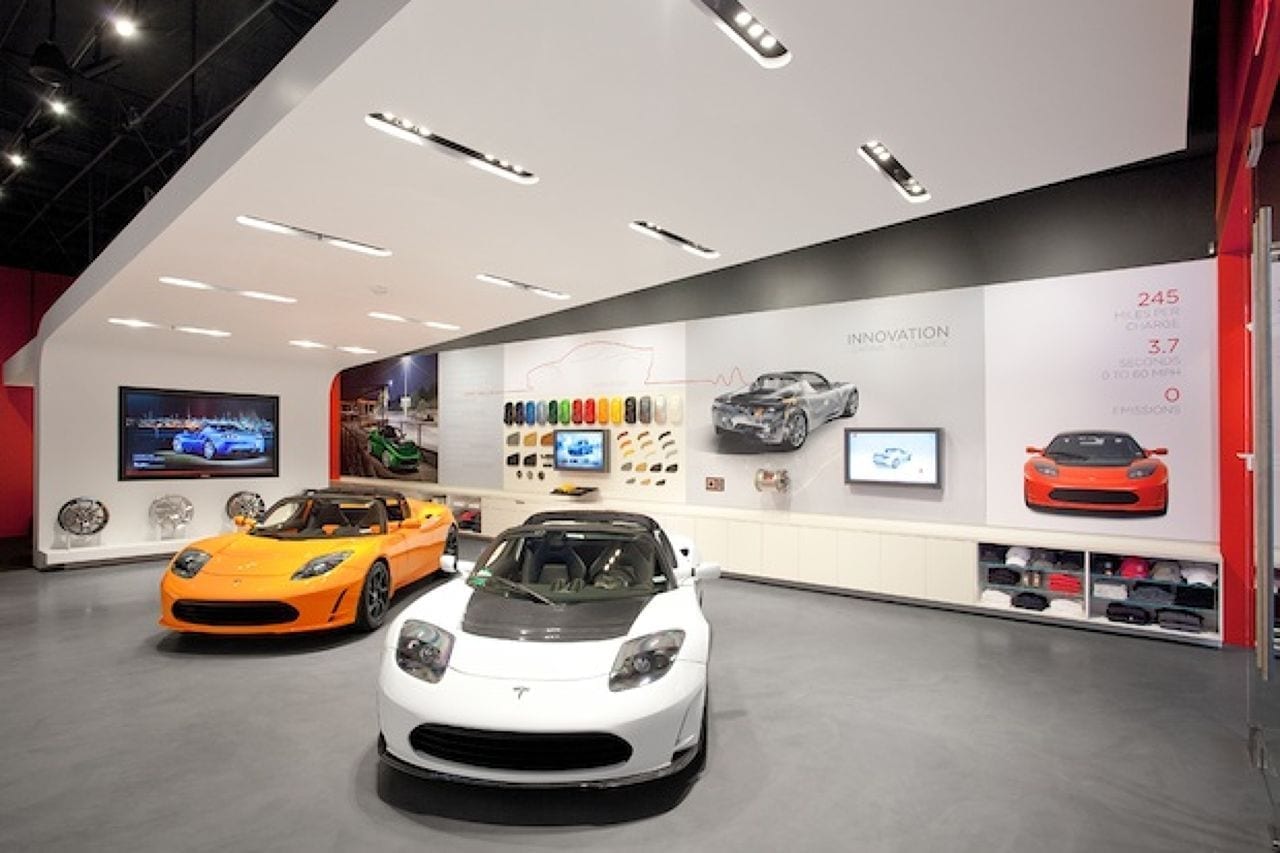
    Tesla, the U.S. luxury electric car maker, said on Sunday first-quarter vehicle deliveries jumped 69 percent from a year ago to a quarterly record of 25,000 vehicles, bouncing back from delays in the previous quarter.

    The company said of the total vehicles delivered, about 13,450 were Model S sedan and about 11,550 were Model X sports utility vehicle.

    Tesla has said it expects to deliver 47,000 to 50,000 Model S and Model X vehicles combined in the first half of 2017.

    In the fourth quarter, deliveries had fallen 9.4 percent due to short-term production hurdles from the transition to a new autopilot hardware.

    Tesla had said production challenges, which started at the end of October and lasted through early December, shifted vehicle production towards the end of the fourth quarter, resulting in delayed deliveries.

    Ultimately, about 2,750 vehicles were missed being counted as deliveries in the fourth quarter either due to last-minute delays in transport or because the customer was unable to physically take delivery.

    In addition to the first quarter deliveries, about 4,650 vehicles were in transit to customers at the end of the quarter and will be counted as deliveries in the cond quarter, Tesla said in a statement on Sunday.

    Production in the first quarter also hit a quarterly record at 25,418 vehicles.

    Tesla Chief Executive Elon Musk has taken big risks repeatedly since going public in 2010, but investors got spooked after he said in February the electric car company could get “close to the edge” as it burns cash ahead of its crucial Model 3 launch.

    China’s Tencent Holdings Ltd (0700.HK) bought a 5 percent stake in Tesla last week for $1.78 billion, providing the company with a deep-pocketed ally as it prepares to launch its mass-market Model 3.


  • Ford recalls F-250 pickups that could roll while in park

    Ford recalls F-250 pickups that could roll while in park

    Ford Motor is recalling about 52,600 F-250 pickup trucks sold in the United States and Canada because the vehicles could roll after the driver moves the automatic transmission lever into park position, the company said on Saturday.

    The recall, the third announced by Ford this week, affects 2017 model year F-250 vehicles powered by 6.2-liter gasoline engines and built in its Louisville, Kentucky, truck plant, it said in a statement.

    Ford, the second-largest U.S. automaker, also said it was unaware of any injuries or accidents associated with the latest issue.

    The company said on Wednesday it was recalling 211,000 vehicles in North America to replace potentially faulty side door latches.

    Another recall involves 230,000 vehicles that present a fire risk in the engine compartment. Ford said it had reports of 29 fires related to that issue but no injuries.

    The Dearborn, Michigan-based automaker had previously recalled nearly 4 million vehicles for door latch issues in six separate announcements since 2014, including 2.4 million vehicles recalled in late 2016.

  • Tata Motors announces JV with Jayem Automotives for special performance vehicles

    Tata Motors announces JV with Jayem Automotives for special performance vehicles

    Tata Motors on Friday has announced the launch of JT Special Vehicles, a 50:50 joint venture with Jayem Automotives, for the development of special performance vehicles based on the latest series products, informed the automaker in an official statement.

    As part of the agreement, both Tata Motors and Jayem Automotives will work towards performance enhancement and appearance of series vehicles to offer an innovative range of niche aspirational products for the passenger car customers.

    Guenter Butschek, CEO and Managing Director, Tata Motors, said, “We are delighted to partner with Jayem, a brand known for its capabilities in concept creation and prototyping of special performance vehicles. This partnership is a step towards creating long-term relationships as a part of our transformation journey and to bring more exciting performance variants to our product range”

    J Anand, Managing Director, Jayem Automotives, said, “We are excited about our joint venture with Tata Motors and to be a part of their transformation journey. We aim to bring World Class Performance Products to market in a short time, and to fulfil expectations of passionate customers in the niche segment of sportier cars.”

    JT Special Vehicles will develop a range of performance vehicles in a phased manner at a dedicated line, currently being explored at Coimbatore. With all processes including design, precision machining, assembly, and testing facilities driven under one roof, this facility will aim to deliver the next level of personalisation and enhanced performance with agility and efficiency.

    As part of Tata Motors’ Passenger Vehicle business strategy, while an architecture approach with two platform strategy will reduce complexity, these special performance vehicles will be targeted to augment the latest product range in our vision to build aspirational cars, added the automaker.

  • Ford says it will spend $295 million on two new recalls

    Ford says it will spend $295 million on two new recalls

    Ford Motor Co, the second largest U.S. automaker, on Wednesday announced two new recalls affecting 440,000 vehicles and expects to spend about $295 million to fix the issues.

    The recalls include 211,000 vehicles in North America to replace potentially faulty side door latches and 230,000 vehicles for under-hood fire risks. Ford said it has reports of 29 fires but no injuries.

    Ford said the cost of the recalls were included in its updated earnings guidance issued last week.

    Last week, Ford warned it expects lower earnings per share in the first quarter and lower pretax profit in 2017 due to higher spending on commodities, warranties and investments and a drop in sales volumes especially fleet sales.

    The Dearborn automaker had previously recalled nearly 4 million vehicles for door latch issues in six separate recalls since 2014, including 2.4 million vehicles recalled in late 2016. In September, Ford said it was taking a $640 million charge for its expanded side-door latch recalls.

    The new door latch recall includes 211,000 2014 model year Ford Fiesta, 2013-14 Ford Fusion and 2013-14 Lincoln MKZ vehicles. Ford said it not aware of any crashes or injuries associated with this issue.

    The U.S. National Highway Traffic Safety Administration (NHTSA) said in 2015 it had 1,102 reports related to the problem and Ford said it had 10,883 warranty claims related to door latch failures. Some owners told NHTSA they used ropes or tape or seatbelts to restrain doors.

    The under-hood fire recall covers 230,000 2013-15 Ford Escape, Ford Fiesta ST, Ford Fusion and Ford Transit Connect vehicles equipped with 1.6-liter GTDI engines in North America.

    Ford said a lack of coolant circulation could cause an engine to overheat, resulting in a crack in the cylinder head, which could result in a pressurized oil leak and raise the risk of a fire.

    In October, NHTSA opened a preliminary investigation into 440,000 Ford 2011-2013 Edge SUVs over door latch warning light issues. The agency said Wednesday it is closing its investigation without seeking a recall.