Category: Automotive

Retail News Asia is committed to providing both local and global retailers with the latest Auto and Car news throughout the Asian market. This on a daily base.

  • Japan’s Toyota to look at Saudi production as the countries seek closer ties

    Japan’s Toyota to look at Saudi production as the countries seek closer ties

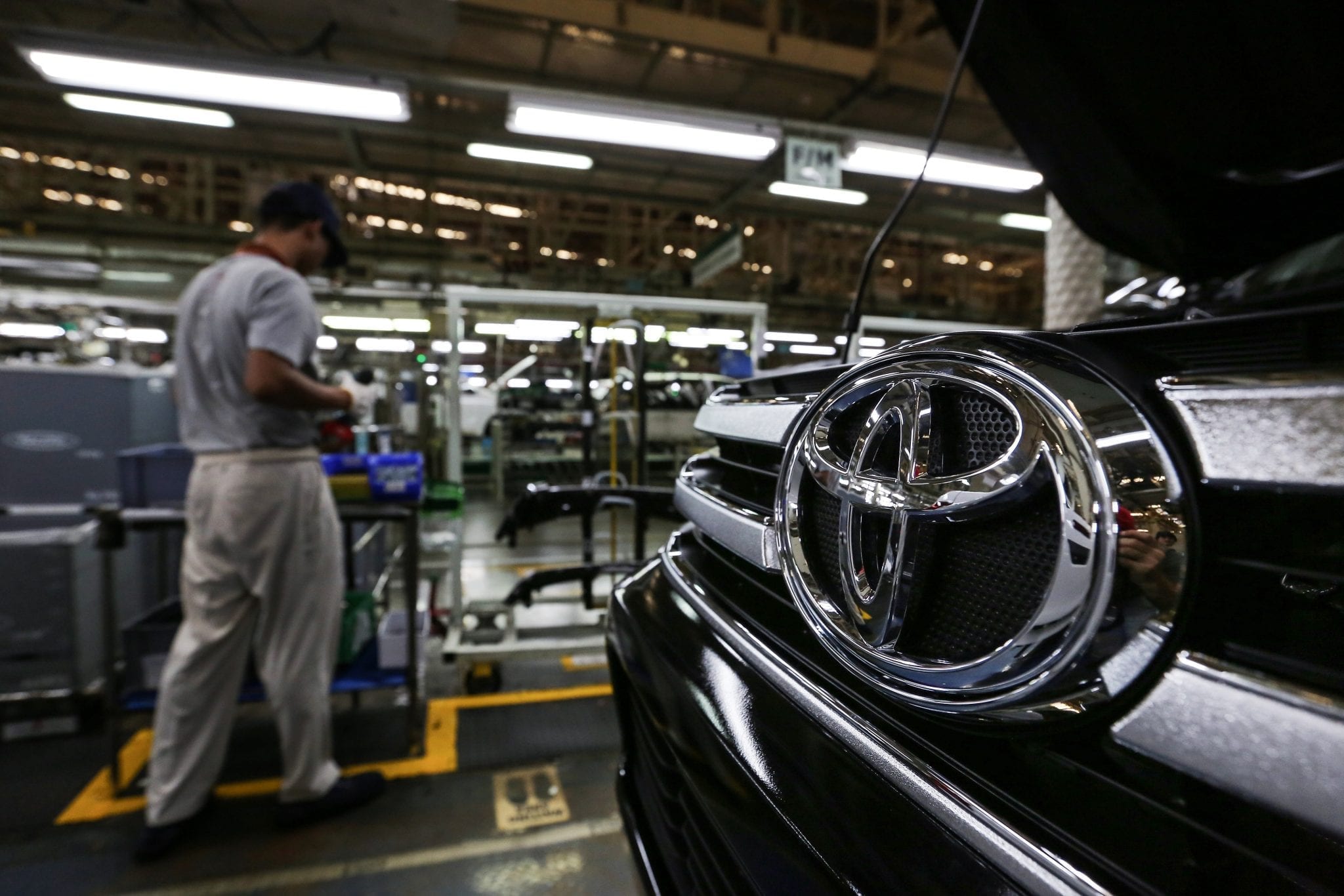
    Toyota Motor signed a memorandum of understanding (MOU) on Tuesday with a Saudi Arabian government agency to conduct a feasibility study into producing vehicles and parts in the Middle Eastern nation.

    The move, if firmed up, would be a big step for the Saudi economy as the government tries to diversify beyond oil exports and create jobs as part of the kingdom’s 2030 Vision.

    So far, Saudi Arabia and other Gulf oil exporters have failed to significantly develop industries such as automaking because they lack broad industrial bases and a skilled local workforce.

    “The study would take into account the evaluation of development of a local supply base using materials produced by major Saudi companies like Sabic, Maaden, Petro Rabigh, and other major industrial companies in the kingdom,” the official Saudi state news agency reported.

    The MOU is with Saudi Arabia’s National Industrial Clusters Development Program (NICDP).

    Meanwhile, state-run Saudi Aramco has signed MOUs with five Japanese entities during a business forum that both nations hosted on Tuesday, coinciding with a visit by Saudi Arabia’s King Salman this week.

    Saudi Aramco and Japan’s biggest oil refiner JX Nippon Oil & Energy (5020.T) agreed to consider a refinery joint venture in a third country and cooperation in trading and technology of oil and petrochemical products.

    Aramco also agreed to consider a possible future cooperation in crude oil supply and downstream business with Idemitsu Kosan Co (5019.T).

    In addition, Aramco and state-run Japan Oil, Gas and Metals National Corp (JOGMEC) formally agreed to expand crude storage capacity in Japan by 300,000 kilolitres (about 1.9 million barrels) from the current 6.3 million barrels from April 1.

    Japan treats crude oil stored by Aramco as quasi-government oil reserves, counting half of the barrels stored by Aramco as national crude reserves.

    Companies and government organizations in both nations signed a total of 20 MOUs on Tuesday, including cooperation between the Saudi Arabian General Investment Authority (SAGIA) and Japan’s three megabanks – Mitsubishi UFJ Financial Group (8306.T), Sumitomo Mitsui Financial Group (8316.T) and Mizuho Financial Group (8411.T) – on increasing investments in the kingdom.

    The MOUs also included cooperation in seawater desalination.

  • Renault denies report of emissions cheating software

    Renault denies report of emissions cheating software

    Renault is denying a report that its vehicles are equipped with software that allowed its vehicles to cheat on emissions testing.

    The statement Wednesday from the French carmaker followed a report in the newspaper Liberation, which claimed to have obtained an investigative document from the Economy Ministry indicating that emissions from two models – the Renault Captur and the Clio IV – spewed emissions more than 300 percent higher than the legal limit in real-life conditions.
    The ministry’s fraud department handed its findings to prosecutors in November.

    French authorities raided Renault premises after Volkswagen was found to have used software to cheat on U.S. diesel emissions tests. Renault recalled 15,000 cars last year over excessive levels of harmful gases, but the company insisted there was no intentional wrongdoing.

  • VW’s MAN sees significant rise in 2017 operating profit

    VW’s MAN sees significant rise in 2017 operating profit

    Volkswagen division MAN expects operating profit to rise significantly in the fiscal year 2017, as the company continues its diesel-engine unit restructuring, which started in September.

    The German truck maker said on Thursday its operating profit rose to 204 million euros ($219 million) in 2016, up from 92 million in the previous year.

  • Second Vietnam motor show to be held in Hanoi

    Second Vietnam motor show to be held in Hanoi

    The show, the second of its kind, is held by the Vietnam Association of Motorcycle Manufacturers (VAMM), carrying the message “Free Your Wheels”.

    It will gather famous brand names from official suppliers including Honda, Piaggio, Yamaha, SYM and Suzuki as well as some imported complete built units such as Benelli, Ducati, Kawasaki, Peugeot and Harley Davidson.

    In addition, tens of brands in support industry, spare parts and other fields like finance, insurance and banking will also be present at the event.

    According to VAMM Chairman Yano Takeshi, the show aims to create a prestigious and professional playground for manufacturers to popularise their products.

    He said that it is billed as a bridge to nudge high-end motorcycles with modern technology closer to Vietnamese consumers, contributing to branching out the local motorcycle industry.

    The event is expected to welcome 150,000 visitors to experience free trial drive and join in vibrant interactive activities.

    Last year’s show displayed over 100 motorcycle models, luring 140,000 people.

  • China may roll back electric vehicle quotas as industry pushes back

    China may roll back electric vehicle quotas as industry pushes back

    China is considering easing proposed quotas aimed at producing more electric vehicles, as Beijing gets pushback from the automotive industry over the scale and pace of the plans.

    If adopted, proposed changes under discussion could see a target of new energy vehicles (NEV) making up 8 percent of sales next year pushed to 2019, two auto executives said.

    The changes would lower targets from a draft policy released in September requiring 8 percent of automakers’ sales to be battery electric or plug-in hybrid vehicles by 2018, rising to 10 percent in 2019 and 12 percent in 2020.

    Any loosening of NEV targets would mark a pull back by Beijing, which has faced opposition to the planned targets as it looks to drive its domestic carmakers to overtake global rivals in the ‘green’ vehicle sector.

    Automakers and industry bodies have said the targets are too tough and could hurt manufacturers’ interests. New energy vehicles last year accounted for just 1.8 percent of sales in the world’s biggest autos market, according to Reuters calculations based on official data.

    “It’s normal to make revisions as it’s a draft plan,” An Jin, chairman of Anhui Jianghuai Automobile Group (JAC Motor) , said on the sidelines of the National People’s Congress in Beijing.

    He said he was aware of talks to revise the quota targets, but said nothing was set in stone. “JAC hasn’t been told what revisions might be made to the draft, but I think it is possible the draft will be changed after the discussions,” he said.

    “Whether the whole market can hit this quota by 2018 depends a lot on the strength of government policy. If it’s strong then we should be able to surpass the targets,” An said, “(But) if you consider China’s infrastructure and the transformation of China’s auto sector, then perhaps the pace will have to slow.”

    TWO PERCENT CUT
    Two executives familiar with the plans told Reuters the government was considering options for lowering the requirements.

    One idea was to reduce the quota requirement by 2 percent each year, cutting the 2018 requirement to 6 percent, said a China-based government relations official at a major global automaker. It would then be 8 percent in 2019 and 10 percent in 2020.

    Another option would be to push back each target by a year, with the 8 percent quota starting from 2019, an executive at a Japanese car maker said.

    Both asked not to be named due to the sensitivity of the matter and because the draft was still under consideration.

    The overall policy includes quotas for plug-in cars, targets for average fuel economy requirements, and a credit trading system to promote green energy cars while penalizing petrol cars.

    The two people said the quota stand-off was tied to a disagreement between the Ministry of Industry and Information Technology (MIIT) and China’s top state planner, the National Development and Reform Commission (NDRC).

    MIIT, which regulates manufacturers, supports a more flexible credit trading system favoured by automakers. The NDRC is more aggressive in promoting a transition to electric vehicles, pushing the introduction of the stricter quotas.

    An NDRC spokesman said the body played a “small role” when the draft was open to public for discussion. MIIT did not immediately respond to Reuters’ requests for comment.

    China has strongly supported and subsidized electric vehicles, but is gradually swapping out incentives for hard targets automakers must meet. The central government cut subsidies 20 percent this year, a first reduction towards eliminating them by 2020.

  • President Jokowi receives Toyota Motor executives

    President Jokowi receives Toyota Motor executives

    President Joko Widodo (Jokowi) received Toyota Motor Corporation executives led by the companys president, Akio Toyoda, at Merdeka State Palace here on Monday.

    “In 2015, Jokowi visited Toyota in Japan, and today we have presented a report on the several commitments of Toyota in Indonesia,” PT Toyota Motor Manufacturing Indonesias (TMMIN) deputy president director Warih Andang Tjahjono said after the meeting.

    He stated that Toyota has expressed its commitment to continue to participate and contribute to the development of automotive industry in Indonesia through investment, exports, manpower, and human resource development.

    Tjahjono was introduced to the president as the new president director of TMMIN. He would replace Masahiro Nonami starting from April 1, 2017.

    Warih would be the first local person to be in the top position of the affiliation company of Toyota Manufacturing in the Asia-Pacific region.

    Nonami, who had held the post as TMMIN president director since 2010, would take over a new position in TMMIN.

    The meeting between the president and Toyota Motor Corporation executives lasted around 30 minutes from 9.35am to 10.15am

  • Ford’s Lincoln plans to produce new luxury SUV in China by late 2019

    Ford’s Lincoln plans to produce new luxury SUV in China by late 2019

    Ford Motor Co’s luxury unit Lincoln on Monday said it plans to produce a new luxury SUV in China by late 2019.

    “The new luxury SUV will be built in partnership with its joint venture partner Changan in Chongqing,” Lincoln China said in a press release.

  • Mitsubishi-Nissan’s Cooperation Rapidly Extend to Countries Including Indonesia

    Mitsubishi-Nissan’s Cooperation Rapidly Extend to Countries Including Indonesia

    Mitsubishi Motors and its new parent Nissan are studying joint production of pickup trucks in Southeast Asia as they look for savings within the broader Renault-Nissan alliance, a senior executive told.

    The Japanese groups may pool technical underpinnings and production of future replacements for the Thai-built Nissan Navara and Mitsubishi Triton, Mitsubishi Chief Operating Officer Trevor Mann said in an interview at the Geneva car show.

    Mitsubishi’s pickup architectures are likely to become the basis for future alliance models, said Mann, who was despatched by Chief Executive Carlos Ghosn to help turn Mitsubishi around after Nissan paid US$2.3 billion for a 34 percent controlling stake in the scandal-hit company last October.

    “If you look at our cost performance in that region, we are the benchmark within the alliance,” Mann said. “Our four-by-four technology, our cost base on pickups is better than Nissan’s.”

    Nissan snapped up Mitsubishi last year after the company admitted in April it had falsified fuel consumption data, triggering a sales slump and steep losses expected in the current fiscal year, which ends this month.

    Mitsubishi expects sales to bounce back above 1 million vehicles next year, Mann said, almost reversing their 8 percent decline from 1.05 million before the outcry. Nissan and Mitsubishi currently produce frame-based pickups and cars – which have fundamental design and manufacturing differences – on separate lines at each of their Thai plants.

    Moving to common architectures could potentially allow the Mitsubishi factory to specialize in pickups while the Nissan plant builds cars and SUVs, increasing productivity at both sites, Mann said, while stressing that nothing had been decided.

    Cooperation will rapidly extend to other countries in the region including Indonesia and the Philippines, where the companies have plants, Mann said. But pickups are likely to stay based in Thailand, where they account for 40 percent of sales.

    The current Navara and Triton models were launched in 2014 and are not due for replacement before 2022, which means development and production decisions may still be two or more years away. In the meantime, Nissan and Mitsubishi are already pooling car transport and other logistics while stepping up efforts to find more savings from joint purchasing.

    Renault and Nissan, whose 18-year-old alliance is cemented by reciprocal minority shareholdings, are also likely to use Mitsubishi’s plug-in hybrid technologies, Mann added. “That’s an obvious opportunity.” But Renault may have to wait longer than its alliance partner for the market access and savings that their new affiliate can bring.

    “What we have to do is prioritize,” Mann said. “We have the capital share with Nissan, so it’s logical to start there.” Under Nissan ownership, Mitsubishi is still “cleaning house” in the wake of the fuel-economy data scandal, he added.

    “We’re introducing a proper delegation of authority, risk control and business ethics in the company,” Mann said. “If we did uncover anything (else) which was not correct, we would disclose in an appropriate manner.”

  • Daimler to recall one million Mercedes globally after 51 fires

    Daimler to recall one million Mercedes globally after 51 fires

    Daimler AG said it will recall one million newer-model Mercedes-Benz vehicles worldwide due to the risk of fire, after 51 fires were reported.

    The German company said no injuries or deaths were reported relating to the vehicles that it will begin recalling in the U.S. market in July when parts become available.

    A fix has been implemented in the production of new vehicles and vehicles on dealers lots will be fixed before they are sold, the company said. The issue relates to a potentially faulty fuse.

    “Any affected vehicles in inventory will not be sold until they can be outfitted with the additional fuse,” said a Mercedes-Benz spokesman.

    Of the million vehicles to be recalled, 307,629 are in the United States, which is 40,000 units less than Mercedes-Benz reported to U.S. regulators.

    The company did not immediately have a breakdown of where vehicles will be recalled outside of the United States.

    The United States is among the three biggest markets for Mercedes-Benz, the others being China and Germany.

    Of the 51 fires, 30 were reported in the U.S. market, a Mercedes-Benz U.S. spokesman said.

    The recall affects newer models, including those from the 2017 model year.

    Mercedes-Benz and Daimler said it would begin to notify its U.S. customers late in March. It didn’t say when owners in other markets would be notified.

  • Mercedes-Benz plant starts production of the new GLA

    Mercedes-Benz plant starts production of the new GLA

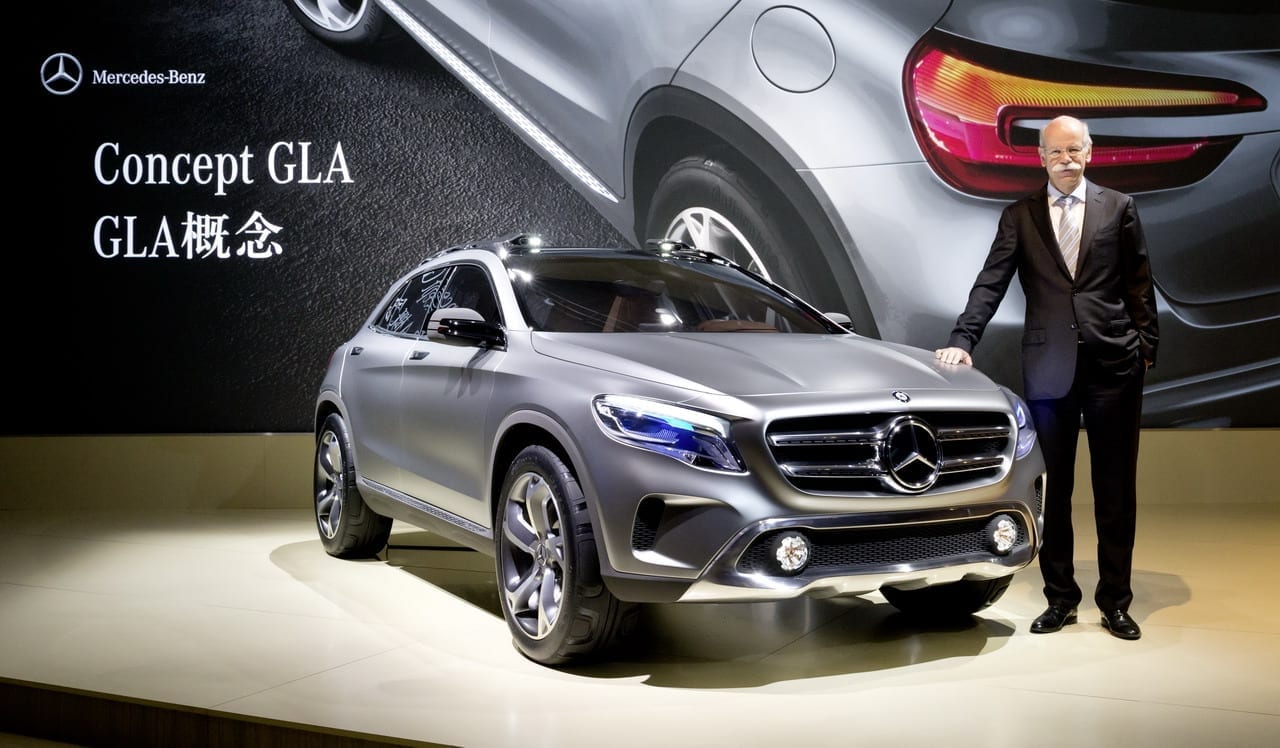
    German car manufacturer Mercedes-Benz has commenced the production of its compact SUV Mercedes-Benz GLA at its Rastatt plant in Germany.

    “The ramp-up of the GLA is further proof of the diversity, competitiveness and efficiency of our production operations at the Rastatt plant. Within a very short space of time, our team mastered another ramp-up in ongoing series-production, while the location operates at full capacity and the preparations for the next generation of compact cars are running at full steam”, says Thomas Geier, Location Manager Mercedes-Benz Rastatt plant.

    The new GLA enters its current model year with an expanded range of engines and a visual upgrade of the interior and exterior design as well as updated equipment variants. Mercedes-Benz GLA made its global debut in 2013 and has been an important product in the company’s product portfolio.

    Mercedes-Benz Rastatt plant in Germany is the biggest employer in the region, with a workforce of around 6.500 employees. Within the global Mercedes-Benz production network, the Rastatt plant is the lead plant for the production of compact cars worldwide. The A-Class, B-Class and B-Class Electric Drive, as well as the compact SUV GLA are manufactured at the location.

    In 2016, more than 300,000 vehicles rolled off its production lines.

  • Volkswagen and Tata agree to explore cooperation in India

    Volkswagen and Tata agree to explore cooperation in India

    Volkswagen has signed an agreement with Tata Motors to explore cooperation in India, company sources close to the matter said, as the German carmaker tries once again to conquer emerging markets.

    After months of talks, the carmakers have signed a memorandum of understanding (MoU) to deepen exchanges about technology, components and platforms, and analyze overlaps that could come from cooperation, one of three company sources said.

    VW, already the biggest carmaker by sales in China, is embracing electric cars and looking for new markets as it battles to recover from its diesel emissions scandal.

    A previous VW attempt to expand in emerging markets through an alliance with Suzuki Motor Corp. (7269.T) collapsed in 2015 after a fierce dispute.

    Winning emerging market share is an obvious goal for global automakers, but has yet to prove significantly profitable, except perhaps for budget-car champion Renault.

    “Covering entry-level segments will be crucial for major carmakers’ long-term growth plans,” said Ferdinand Dudenhoeffer, head of the Center of Automotive Research at the University of Duisburg-Essen.

    “A successful budget car can be a feeder to the rest of the brand,” said Dudenhoeffer, a former sales director of PSA Group’s Germany operations.

    VW’s efforts to make inroads in low-cost markets include China, the world’s biggest auto market, where it has scrapped a pre-dieselgate program and redrawn the plans for a budget car, company sources said. VW has pared costs for its MQB mass-market platform, sources told Reuters at the Geneva auto show.

    The vehicles will likely be introduced in 2019-2020 and may cost in the area of 8,000 euros to 10,000 euros ($8,500 to $10,500), sources said. VW had repeatedly failed in previous years to hit cost targets for a budget car priced between 6,000-8,000 euros.

    An announcement on budget models for China could be made at the Shanghai auto show next month, they said.

    VW views the budget car project as essential to protect its market-leading position in China against aspiring local manufacturers.

    “They’re offering relatively high quality at very aggressive prices,” VW brand chief Herbert Diess told Reuters in Geneva. “This is a concern for us.”

    VW is also working on a budget car for Latin America and has revamped its MQB architecture in a way that allows for greater savings on the models, sources said in Geneva.

    “We will continue to work on the budget car and we will offer good solutions here in the foreseeable future,” Chief Executive Matthias Mueller told Reuters in Geneva, without elaborating.

    In India, the owner of British luxury carmaker Jaguar Land Rover is restructuring its car business to cut its platforms to two from six to boost production efficiencies and adjust more quickly to market trends.

    “We confirm that we are in talks with VW for a potential alliance but an announcement will be made at an appropriate time,” a spokesman for Tata said.

    With a very low vehicle penetration rate, India, the world’s second most populous country, is a big attraction for Western carmakers as they search for growth.

    A spokesman for VW said it was discussing ways to expand its product portfolio with tailor-made solutions in India with both its car brands and potential partners.

    Light vehicle sales in India are expected to more than double to 7.1 million cars by 2025 from 3.4 million last year, according to IHS Markit.

  • Gemalto to power China’s first internet car

    Gemalto to power China’s first internet car

    Gemalto is working with Banma Technologies, a new joint venture between Alibaba Group and SAIC Motor, to help produce China’s first internet car the Roewe RX5.

    The RX5 leverages Gemalto’s machine identification module (MIM) — securing cellular M2M connections for industrial applications — and features advanced telematics such as Bluetooth virtual car key, locationing of the vehicle, voice-command-enabled remote control of in-car functions, and real-time road condition alerts, etc.

    The MIM is compliant with the GSMA standards and supports remote provisioning of any operator’s profile.

    “The Roewe RX5, empowered by Alibaba’s YunOS operating system, is the first mass produced internet car. It’s a breakthrough embodying years of research and technological innovation,” said Alex Shi, CEO of Banma. “It is a product that demands the most secure and reliable end-to-end connectivity.”

    Suzanne Tong-Li, president of Greater China and Korea at Gemalto, said connected cars mark the beginning of digital transformation across the automotive industry, paving the way for autonomous vehicles in the near future.

    “Our expertise and global experience, combined with tried-and-tested secure connectivity solutions, put us in a sweet spot to help car manufacturers create smarter and more connected vehicles,” said Tong-Li.

    The Chinese car market is currently the largest and fastest-growing in the world. In 2015, foreign and domestic car makers sold a total of 21.1 million passenger cars, up by 7.3% compared to 2014.

    For 2016, the local connected car market is expected to generate a substantial revenue of $7.7 million.

    With an estimated compound annual growth rate of 45%, this market is potentially worth up to $33.9 million by 2020. Moreover, connected car penetration in China is projected to triple from 4.8% to 18.1% over the same period.

  • Sale of cars down despite price drop

    Sale of cars down despite price drop

    Members of the Vietnam Automobile Manufacturers’ Association (VAMA) sold more than 17,600 cars in February, down 13 per cent from the previous month.

    The prices of many types of cars were adjusted in the market in recent months. This is the second month this year that the association has witnessed a drop in sales, although its members continuously reduced prices of their products.

    At the end of last month, prices of seven types of cars were adjusted, including imported and locally-assembled ones.

    Honda Vietnam decreased its price by VND80 million for Accord, which was imported from Thailand. Meanwhile, Toyota Motor Vietnam (TMV) announced new prices for Yaris models G and E, with a drop of VND47 million (US$2,057) and VND44 million, respectively. The imported Land Cruiser Prado TX-L and Land Cruiser VX also saw a revision in prices at nearly VND2.17 billion and VND3.65 billion, down VND264 million and VND70 million each.

    Honda Vietnam and TMV were followed by other automakers.

    Domestic automaker Thaco reduced the prices of Kia and Mazda models by between VND20 million and VND140 million each.

    A report from the People’s Committee in central Quang Nam Province showed that vehicles witnessed the highest inventory volume in the province, which was nearly 49 per cent higher than the previous month and almost triple compared with the same period last year.

    This was partly due to the increase in demand for vehicles before the Tet (Lunar New Year) holiday, which declined after the holiday. In addition, people were still waiting for prices to reduce further, especially once the import tax on vehicles from ASEAN countries dropped to zero per cent by January 1, 2018, according to the committee.

    While the consumption of locally-assembled cars was showing a declining trend, the volume of imported cars had sharply increased.

    According to the estimate of the General Statistics Office (GSO), Viet Nam imported some 9,000 complete built up units in February, worth $153 million, up 29 per cent in volume in comparison with the previous month but sticking to the same value.

    On average, each imported car in February was $17,000 — $4,850 lower than January – which meant almost all imported cars were less expensive.

    During the Government’s February meeting session, Prime Minister Nguyen Xuan Phuc reminded relevant ministries about the rapid increase of imported vehicles in the first two months of this year, which was due to the impact of the expected import tax decline in 2018.

    He said this was a warning to relevant ministries and sectors to strengthen management to create harmony between import and local auto manufacturing.

  • Toyota sees Europe sales up 5 pct this year as hybrids push pays off

    Toyota sees Europe sales up 5 pct this year as hybrids push pays off

    Toyota Motor expects to increase its European sales by 5 percent this year to 975,000 vehicles and maintain its market share of around 5 percent, buoyed by the popularity of hybrids, its regional head said on Monday.

    Speaking ahead of the Geneva auto show, Johan van Zyl said sales of hybrid vehicles in Europe rose 40 percent last year and made up 32 percent of all sales in the region. For Toyota, Europe counts 56 countries, including Israel, Russia and Turkey.

    “We are on our way of achieving our target of having 50 percent of our mix in hybrids by 2020,” he told journalists.

    The executive said the outlook for Europe was clouded by upcoming elections, Britain’s pending exit from the European Union and persistent difficulties in the Russian and Turkish markets.

    He expects industry-wide sales in Europe to rise 1 percent this year. He said any increase in the western part of the region would likely be absorbed by some weakness in Britain, and expects some recovery in Russia.

    Van Zyl said PSA’s announcement on Monday that it would buy Opel from General Motors Co, creating Europe’s second biggest carmaker after Volkswagen AG, would not affect its own strategy.

    “We have no intention at the moment to alter any of our plans with regards to how we’re going to compete in the industry, we’ve got a very clear strategy,” he said, adding that Toyota would keep focusing on the A, B and C segments, keeping hybrids as its differentiator.

    “We are not a volume chaser, we want to create a sustainable, growing business in Europe,” he added.

    Van Zyl said Toyota was fully committed to its operations in the UK regardless of how the negotiations around Brexit pan out, but added that the carmaker was seeking to make the business more efficient.

    “The prudent approach is always to prepare yourself for the worst-case scenario. If we prepare for that and it’s better, then we are OK,” he said.

    He declined to comment on future production plans there other than saying Toyota “will produce vehicles in the UK”.

    Didier Leroy, Toyota’s executive vice president, added that a next-generation fuel cell car the group is developing with BMW will be ready in three to five years, while a separate project to develop a sports car with the German carmaker was ongoing.

    “The project has been globally approved, that means clearly that we will do it,” he said, but declined to give a timeline for when it would be produced.

  • Volkswagen to unveil self-driving car as part of post-dieselgate shift

    Volkswagen to unveil self-driving car as part of post-dieselgate shift

    Volkswagen will show off a fully self-driving car at the Geneva auto show, as part of the German carmaker’s drive to be at the forefront of new technologies in the wake of its diesel emissions scandal.

    Europe’s biggest carmaker has said it will invest billions of euros in electric cars, ride-hailing and automated driving, and launch over 30 electric models by 2025 as it battles to recover from its emissions test cheating.

    The self-driving concept car called Sedric – a so-called Level 5 vehicle capable of fully automated operation – is a precursor for more such models from the Volkswagen (VW) group in years to come, Chief Executive Matthias Mueller said on Monday on the eve of car executives’ annual gathering in Geneva.

    VW is hiring top specialists and plans to spend several billions of euros on automated driving alone, Mueller said, without being more specific.

    Sedric can carry 4 passengers and could be used for ride-sharing fleets as well as for individual consumers, VW said.

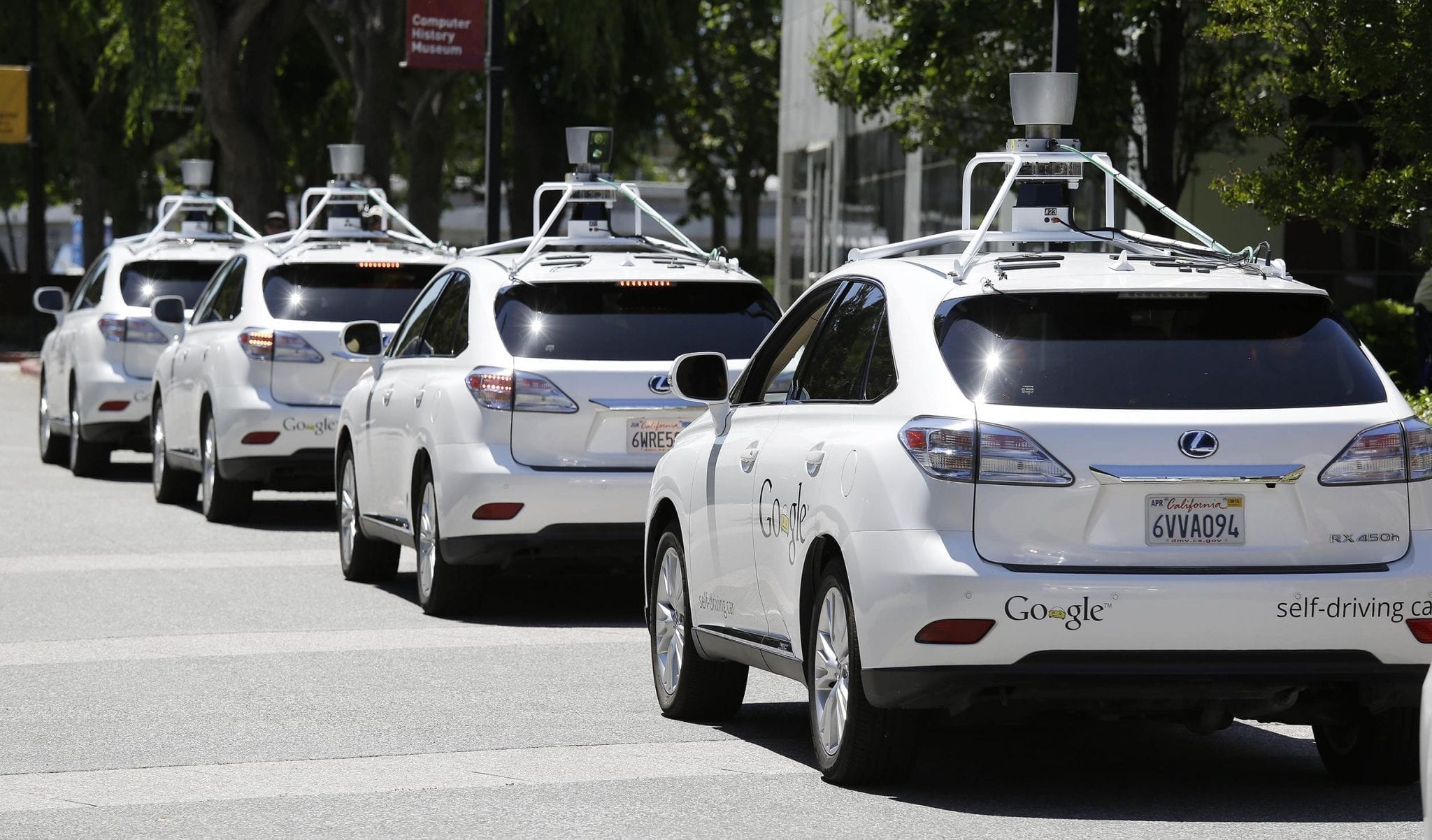
    Internet giant Google was a forerunner in self-driving technology with its 2015 prototype vehicle, but has since been challenged by companies ranging from Uber to Apple, as well as traditional carmakers.

    Manufacturers and their suppliers are working on different technology suites – including cameras, radar and laser imaging technology lidar – to enable vehicles to drive themselves, but it will take years for these vehicles to come to market.

    Mercedes-Benz unveiled its fully autonomous F 015 luxury concept two years ago. But Toyota has said it does not expect to see Level 5 cars in widespread use for another 10-15 years, while Ford does not plan to offer such vehicles for consumers until 2025 or later.