Category: Automotive

Retail News Asia is committed to providing both local and global retailers with the latest Auto and Car news throughout the Asian market. This on a daily base.

  • Made-in-China truck sales lose ground in Vietnam

    Made-in-China truck sales lose ground in Vietnam

    Made-in-China trucks which had once dominated the Vietnamese market are facing the slow sales since early 2016. According to the General Department of Customs, import of made-in-China trucks into Vietnam reached a record high of 26,700 units in 2015 worth a total USD1 billion compared to 13,700 units worth USD530 million in 2014.

    However, since early 2016, the sales of Chinese trucks have considerably fallen in Vietnam. The General Department of Customs reported that only 10,900 Chinese trucks had been imported into Vietnam in 2016 and this figure reached just 94 units in January of 2017 compared to 1,700 units in January 2015.

    Explaining about the surge in Chinese trucks imported during the 2014-2015 period, owner of an auto-agent in Hung Yen Province, said that it was low prices which attracted customers. Meanwhile, Vietnamese auto agents could owe payments for buying Chinese trucks for between 6 months and one year.

    In early 2014, the Ministry of Transport issued a regulation to tighten control over overloaded vehicles also helped to fuelled the import of large-sized Chinese trucks.

    Earlier, trucks were allowed to transport larger quantities, 2-3 times over their load capacity. But they will be fined heavily if they carried that much now with the new policy. So as to carry the same amount of goods as before, local transport firms had to increase the number of trucks.

    The slow sales of Chinese trucks in Vietnam are also attributed to the stronger competition from rivals. More trucks produced by South Korea’s Hyundai, Japan’s Hino, Russia’s Kamaz and German’s Shacman are all being sold in Vietnam with more affordable prices.

    Many showrooms of made-in-China trucks have been set up along National Highway 5A, however, over the past year, they have sold only a few units.

    Representatives of a showroom in Hai Duong Province said despite low prices, the company sales of Chinese trucks have been on the sharp fall, which is partially due to quality which is not good as those made by South Korean, Japanese or European firms.

    After being imported into Vietnam, many Chinese trucks have their bodies extended for the higher loading capacity, which is aimed to meet the Ministry of Transport’s regulations and this also seriously affects the trucks’ life-span.

  • Bus-assembly line fire inflicts $11m loss

    Bus-assembly line fire inflicts $11m loss

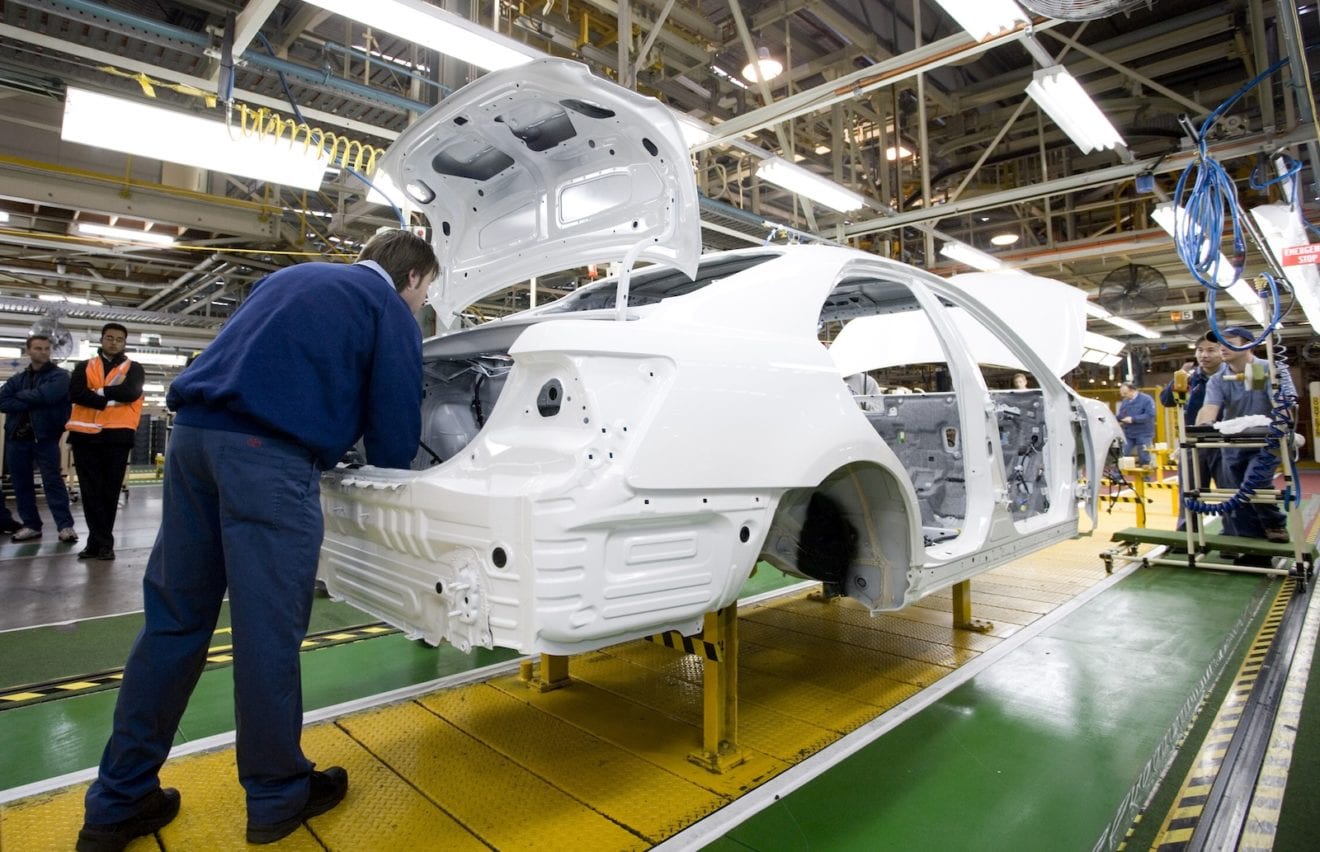
    A fire that broke out at two sites of a bus assembly plant early this month destroyed spare parts and components worth VND250 billion (US$11 million). A bus is assembled at its plant by the Truong Hai Automobile joint stock company (Thaco) in Quang Nam Province. Production was resumed nine days after a fire broke out at the plant on February 2.

    The assessment was revealed by Chairman of the Truong Hai Automobile Joint Stock company (Thaco), Tran Ba Duong, at a press conference on Sunday in central Quang Nam Province, where the plant is located.

    He said initial investigations point to the fire being caused by short-circuits.

    The fire broke out on February 2 after working hours at around 6pm at the Chu Lai-Truong Hai Auto Manufacture and Assembly Complex and blazed for around three hours.

    Components and accessories stored in the 5,400sq.m assembly workshop were burnt, Duong said.

    He said over 1,000 workers in the complex and firemen from Quang Nam, Quang Ngai, Da Nang, soldiers and staff of the Chu Lai Airport joined hands to stamp out the fire and remove components out the workshop.

    The plant resumed operations on Sunday after an initial investigation and recovery, he added.

    “The fire was out of reach of the plant’s automatic extinguishing system. It took four hours to mobilise a large fire-fighting force and extinguish the blaze,” Duong said.

    ‘Our fault’

    “It’s our fault that we collected components and accessories to service big orders while a new production line was under construction,” he said.

    Duong said Thaco had an insurance deal with the HCM City-based Bank of Investment and Development Bank (BIC) and Da Nang-based PVI for a total of VND638 billion ($28.2 million).

    He said BIC had asked an independent unit, Viet Nam International Adjuster (VIA) to assess the damage.

    The accident is still under investigation and final results will be announced after the probe is completed, he said.

    Also present at the conference was Dinh Van Thu, Chairman of the provincial People’s Committee. He said the fire was a lesson in fire prevention not only for Thaco, but other companies in the province’s industrial zones.

    Thu said Prime Minister Nguyen Xuan Phuc had asked the province to speed up the investigation and help the business resume production soon.

    The Thaco chief said the fire had delayed delivery of buses by three days to seven days.

    Thaco has invested US$400 million in constructing the Chu Lai-Truong Hai Industrial Complex, which has a logistics centre, car production factories, a vocational training college, a seaport, storage facilities and shipping services.

    Last year, Thaco earned total revenues of VND65 trillion ($2.8 billion), a 40 per cent growth, contributing VND18 trillion ($796 million) to the State budget.

    The nation’s biggest automaker plans to build three more plants with the total annual capacity of 215,000 trucks, vans, commercial cars, and achieve a localisation ratio of 16 per to 46 per cent.

    It currently manufactures and distributes Korea’s Kia model, Japan’s Mazda and France’s Peugeot. It has exported its cars to Laos, Cambodia, Myanmar and Columbia.

    Thaco plans to earn revenues of VND71 trillion ($3.1 billion) this year, equivalent to two per cent of the country’s Gross Domestic Product.

  • China to build more charging points for electric vehicles

    China to build more charging points for electric vehicles

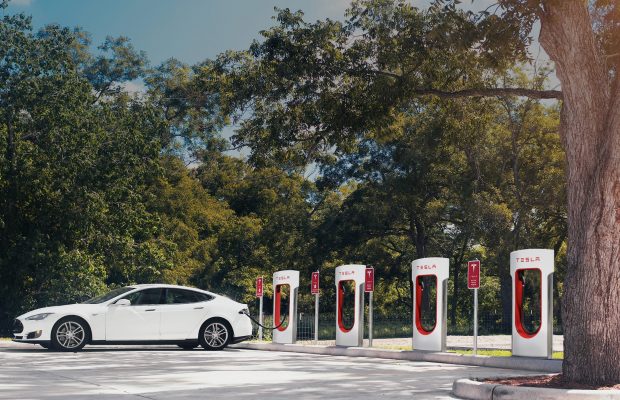
    China plans to build 800,000 charging points, including 100,000 public ones, for electric vehicles this year to meet increasing demand, the National Energy Administration (NEA) said Thursday.

    A total of 100,000 public charging points have been installed nationwide in 2016, bringing the total number of public charging points in China to 150,000, according to the NEA.

    A total of 14,000 kilometers of highway has also been equipped with inter-city fast-charging stations, with an average spacing of 48.6 kilometers.

    Electric vehicles consumed more than 1.2 billion kilowatt-hours of electricity in China last year, saving about 400,000 tons of fuel, according to the NEA.

    In Beijing and Shanghai, a charging facility can now always be found within a radius of less than 5 km, while other major cities such as Guangzhou and Shenzhen are working toward this goal.

    “For the new year, China will work to solve the payment and information-related problems for charging facility operators and implement a unified national standard for charging ports of electric vehicles,” said the NEA.

    According to China’s 13th Five-Year Plan (2016-2020), the country will build a nationwide charging-station network that will fulfill the power demands of 5 million electric vehicles by 2020.

  • BMW Group achieves new sales record in China in January

    BMW Group achieves new sales record in China in January

    German automaker BMW Group announced on Friday that its sales in China achieved double-digit growth in January, hitting a new record.

    A total of 51,345 units of the premium brands BMW and Mini have been delivered to Chinese customers, representing a year-on-year increase of 18.2 percent.

    It is the first time the Bavarian automobile company delivered more than 50,000 units in a single month in China, the largest market in Asia for BMW Group, the announcement said.

    In January 2017, a total of 163,288 vehicles were sold worldwide, an increase of 6.8 percent year-on-year. Among them, 21,219 vehicles were delivered to customers in the United States, down by 0.5 percent compared with January 2016.

    “We’ve started the year well. We’re confident that the new models we’re bringing to market this year will ensure further momentum as the year goes on,” said Ian Robertson, member of the board of management responsible for sales and marketing.

  • ‘Lucky’ license plates set to go under the hammer in Vietnam

    ‘Lucky’ license plates set to go under the hammer in Vietnam

    Channeling people’s love of lucky numbers into the state budget: Why not? Vietnamese people are die-hard fans of lucky numbers and are ready to pay a hefty price to obtain license plates or phone numbers with “meaningful” strings of digits.

    In that context, Vietnamese authorities have been pushing the country’s legislature for a new circular that would legalize the auction of personalized license plates to raise funds for the state budget.

    The Traffic Police Department under the Ministry of Public Security has been advocating the auction of license plates for many years but to no avail due to conflicts with the existing Property Auction Law, under which license plates are not listed as valid objects for auctioning.

  • Vietnam’s car imports soar in January as tariffs fall

    Vietnam’s car imports soar in January as tariffs fall

    Tariffs on car imports from ASEAN countries will be fully removed by 2018. A growing middle-class population, rising disposable incomes and falling tariffs on cars imported from neighboring countries in Southeast Asia appear to be driving Vietnam’s car market.

    The country’s car imports in the first half of January soared 50 percent from the same period last year to about 5,000 units worth $116 million, customs data shows.

    This surge in imports is mainly due to a switch from motorbikes to cars. Around 75 percent of imported cars were classed as midsize sedans and the number of vehicles with nine seats and below nearly tripled from a year ago to more than 3,000 units.

    Vietnam still relies heavily on imported automobiles to meet domestic demand despite a slight year-on-year decline in 2016 to 113,567 cars after it imported a record-breaking number of 125,534 units in 2015, according to customs statistics, equivalent to a 77 percent jump from 2014.

    Since the Vietnamese government has targeted car manufacturing as a “spearhead industry”- one of the economy’s driving forces – car import taxes have remained high to shield domestic automobile producers from foreign rivals.

    However, following the ASEAN Trade in Goods Agreement, Vietnam will cut tariffs incrementally over the next few years on imported cars from ASEAN countries. With the tariff scheduled to be fully removed by 2018, import turnover from ASEAN neighbors is expected to increase exponentially.

    The tariff on cars from Thailand and Indonesia has been cut to 30 percent from 40 percent, effective at the start of this year, according to tax authorities. As a result, many imported cars will be 7 percent cheaper than previously.

    New cars imported from Thailand dominate the market, with Mazda, Toyota and Ford among the most popular.

    Sales of used cars are slowing, said the association of automobile manufacturers.

    The number of imported new cars from ASEAN countries is on the rise due mainly to relaxed tax policies, including lower import tariffs, value added tax and special consumption tax, which will benefit import companies and authorized dealers, said a car dealer in Hanoi.

  • SKT, Ericsson, BMW achieve 3.6Gbps for 5G connected car trial

    SKT, Ericsson, BMW achieve 3.6Gbps for 5G connected car trial

    SK Telecom achieved what it says is the world’s fastest 5G speed for a connected car during a demonstration conducted with Ericsson and BMW Korea.

    SKT said the trio has successfully tested its pilot 5G network on a connected car running at 170 kilometers per hour, reaching a 3.6Gbps transmission speed over the 28-GHz band.

    The demo was conducted at the German car maker’s driving center in Yeongjong Island, Incheon, where the trio first successfully tested its pilot 5G network for multi-vehicular communications last November.

    SK Telecom said with 5G avoiding obstacles is difficult at high speeds, but the operator achieved this through the application of advanced beamforming and beamtracking technologies.

    “Connected car is regarded as the barometer for 5G as it can only be realized through the combination of all 5G technologies. As ultra-high speed and ultra-low latency are prerequisites for realizing autonomous driving and immersive media services, the 3.6Gpbs transmission speed we successfully demonstrated today not only brings us a step closer to realizing autonomous driving, but will also have a great impact on a broader range of industries,” SK Telecom said in a statement.

    The demo significantly enhances the stability of connected car services by improving image recognition and V2X (Vehicle to Everything Communication) technologies, the operator added.

    “That is, a vehicle will be able to communicate, in real time, with other vehicles, traffic lights and surveillance cameras to understand and respond to unexpected situations and obstacles… in a much shorter time.”

  • BMW to invest RM126mil to build PHEVs in Thailand

    BMW to invest RM126mil to build PHEVs in Thailand

    It appears that the production of BMW plug-in hybrid models in the region is set to increase, with BMW Group Manufacturing Thailand set to invest 1 billion baht (RM126.2 million) in the production of petrol-electric vehicles at its plant in the Amata City Industrial Estate, Rayong.

    The investment has been earmarked for the improvement of line operations there, in order to facilitate the increase of plug-in hybrid production. Of that amount, 488 million baht (RM61.6 million) has already been spent to kick off production of these vehicles last November. The company has spent 3.7 billion baht (RM467 million) on the plant from 2000 to 2015.

    The rest of the investment will be used to double the production capacity in Thailand this year; the company currently builds 20,000 BMW and MINI cars and 10,000 BMW Motorrad motorcycles a year. President of BMW Group Thailand Stafan Teuchert said that the two-year investment is meant to prepare for future demand both domestically and abroad, with Munich seeking any opportunity to export vehicles from Thailand.

    The company has exported a limited amount of cars to Malaysia since 2006 and around 1,000 motorcycles to Malaysia and China since 2015, but began shipping large amounts of completely built up (CBU) X3s and X5s to China last year. It aims to export 10,000 units of those models in 2017 – mostly to China – and is also eyeing other markets in ASEAN for opportunities.

    Locally, BMW plans to bring in more advanced technology to build plug-in hybrid batteries in Rayong by mid-2018, further reducing retail prices in Thailand. The company currently imports the batteries from Europe.

    Existing Thai-built BMW plug-in hybrids include the 330e Luxury and X5 xDrive40e M Sport, priced at 2.59 million baht (RM326,900) and 4.69 million baht (RM592,000) respectively – around 490,000 baht (RM61,800) and 690,000 baht (RM87,100) lower than if they were imported. Teuchert said that the company plans to produce the 740e this year and the 530e in 2018.

    In order to support the increase in the number of plug-in hybrid vehicles in Thailand, BMW plans to increase the number of charging stations in Bangkok to 12 this year, up from the current five. It expects sales of electric cars, mainly PHEVs, to rise from 5% of total car sales to 15% in 2017.

    Meanwhile, BMW currently assembles the 330e Sport, 330e M Sport and X5 xDrive40e in Malaysia, priced at RM248,800, RM258,800 and RM388,800 respectively, on-the-road without insurance. It also expects to export the 3 Series, 5 Series and 7 Series from Malaysia to Vietnam and the Philippines from next year.

  • Vietnamese crazy about cars, manufacturers rush to sell

    Vietnamese crazy about cars, manufacturers rush to sell

    Car trading in 2016 saw the number of projects in the sector increasing sharply. About 505 projects in the field were licensed, ranking second in terms of foreign direct investment (FDI), just after real estate, according to the Ministry of Planning and Investment (MPI).

    The representative of a foreign-invested automobile manufacturer said previously, FDI capital flowed into production and assembling, but now, it pours into retail and post-sale services.

    He said foreign investors all can see great potential in Vietnam, where the demand has been increasing rapidly. There is a big wave of foreign investors coming to Vietnam to work as distribution agents for manufacturers.

    Sources said some auto manufacturers have finalized the list of distributors for the years from now to 2023, i.e that from 2017, they will only consider appointing distributors for the years from 2024.

    From January 1, 2018, the tariff on the imports form ASEAN will be cut down to zero percent. Under free trade agreements, the tariffs on CBU (complete built unit) imports will also be decreasing step by step. By 2026, nearly all the tariffs will be lowered to zero percent before Vietnam fully opens its market by 2029.

    About 30 leading brands are present in Vietnam. However, most of them still don’t have large distribution networks. The biggest brand has 40 sales agents throughout the country. The Central Highlands and the western part of the southern region –  potential market areas – still have not been exploited.

    Automobile manufacturers understand that expanding distribution networks is the best solution to improve revenue. Therefore, they applaud the FIEs joining the distribution market.

    Mercedes Benz, Audi, BMW, Toyota, Honda, Mazda, Ford, Hyundai, Kia and Mitsubishi  have opened a series of authorized distribution agents recently.

    It is expected that by 2029, Vietnam market scale would be about 1 million brand-new cars a year with revenue of $12 billion.

    Vietnam is among the fastest growing markets in the region. Over 300,000 cars were sold in 2016, an increase of 24 percent over 2015. Experts have predicted the growth rate would be 20 percent in 2017 thanks to the tax cut and lower car prices.

    An analyst said there were clear opportunities to make money from selling cars as import tariff cuts would make cars cheaper and more affordable to Vietnamese.

  • Tesla Model S, BMW i3 fall short of IIHS Top Safety Pick+ award

    Tesla Model S, BMW i3 fall short of IIHS Top Safety Pick+ award

    The Tesla Model S and BMW i3 fell short of earning the Insurance Institute for Highway Safety’s 2017 Top Safety Pick+ award. For a vehicle to qualify for the Top Safety Pick award, IIHS said it must earn “good” ratings in all five crashworthiness tests — small overlap front, moderated overlap front, side, roof strength, and head restraints and seats — and come with a front crash prevention system that earns an advanced or superior rating.

    The “+” is awarded to vehicles that meet all the above criteria and come with “good” or “acceptable” headlights.

    Ratings for crashworthiness and headlights are good, acceptable, marginal and poor.

    Tesla’s Model S earned a good rating in all IIHS crashworthiness evaluations except the small overlap front crash test, in which it earned an acceptable rating.

    The Model S earned a good rating in all IIHS crashworthiness evaluations except the small overlap front crash test, in which it earned an acceptable rating.

    IIHS said the Model S “ran into problems in the test when the safety belt allowed the dummy’s torso to move too far forward. That allowed the dummy’s head to hit the steering wheel hard through the airbag.”

    IIHS noted that the Model S ratings apply to 2016 and 2017 cars built after October 2016.

    Tesla told IIHS that it made a production change on Jan. 23 to address the head-contact problem and IIHS will test the updated Model S for small overlap protection as soon as it can be delivered.

    The current Model S has not been rated for front crash prevention, IIHS noted, because while automatic braking equipment comes standard, the automaker has not activated the software for all vehicles.

    IIHS also noted the 2017 Model S isn’t available with anything other than poor-rated headlights. The automaker told IIHS that it is working with its supplier to improve the headlights. IIHS will evaluate the new ones when they are available.

    The BMW i3 was hindered by its acceptable rating in the head restraints and seats evaluation, IIHS found. The car’s only available headlight system earned an acceptable rating.

    One Model S variant in particular, the high-performance P100D, was also dinged for its roof strength. The P100D has the same roof structure as other Model S variants, IIHS said, but noted that because the car has a larger, and heavier, battery it earned only an acceptable rating for that test.

    The BMW i3 was hindered by its acceptable rating in the head restraints and seats evaluation, IIHS found. The car’s only available headlight system earned an acceptable rating.

    The i3 earned good ratings in other crashworthiness tests and is available with an optional front crash prevention system that earned an advanced rating, IIHS said.

    “There’s no reason the most efficient vehicles can’t also be among the safest,” said David Zuby, IIHS’ chief research officer, in a statement. “We hope Tesla and BMW will continue to refine the designs of their electric models to maximize driver protection and, especially in the case of Tesla, improve their headlights.”

    Two other green vehicles, the Toyota Prius Prime and Chevrolet Volt, earned the Top Safety Pick+ designation for crash test and crash avoidance performance, the organization said.

    IIHS plans to test the latest EV to enter the market, the Chevrolet Bolt, once it becomes widely available this year.

  • Daimler to supply self-driving cars for Uber

    Daimler to supply self-driving cars for Uber

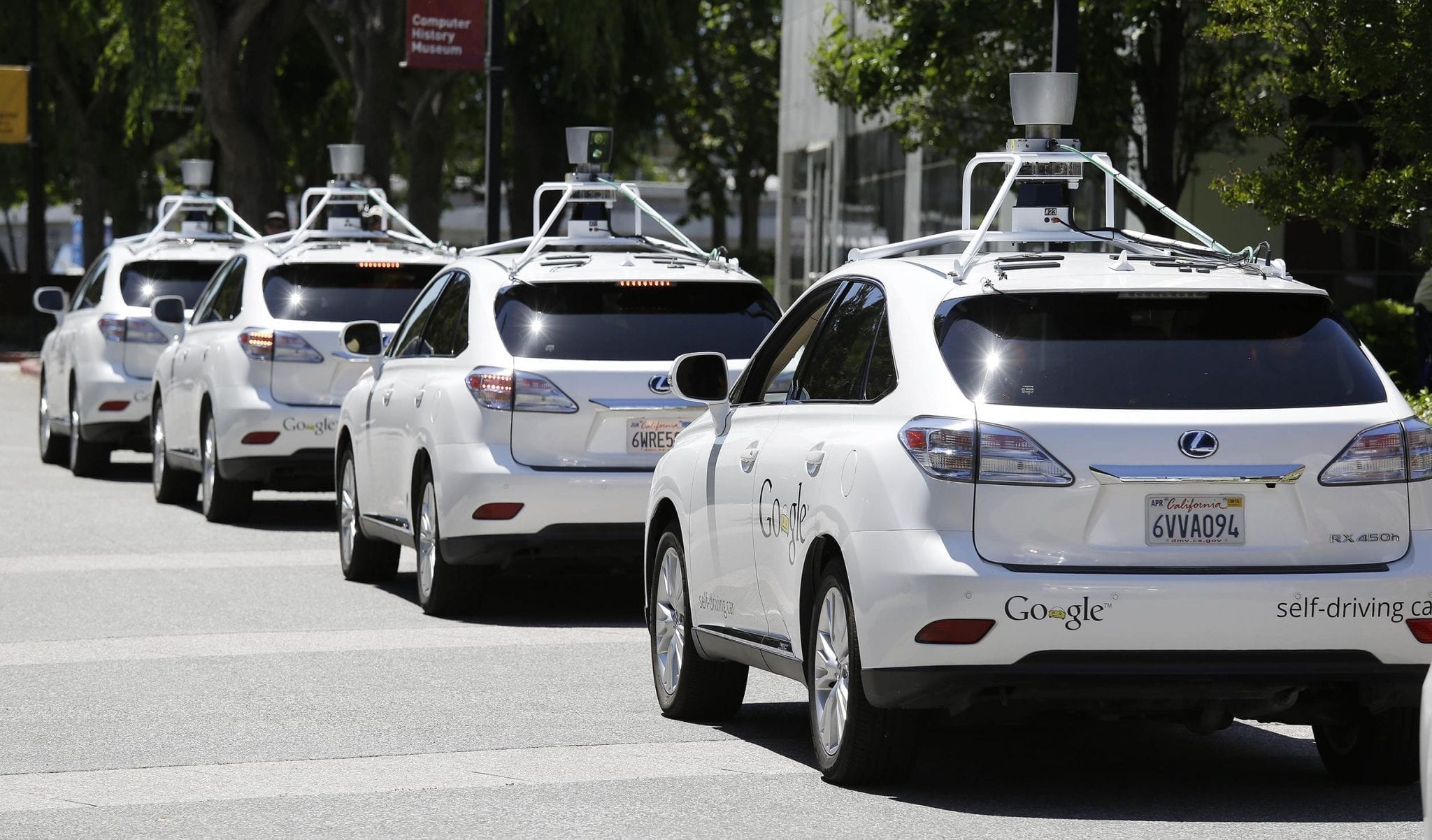
    German auto giant Daimler on Tuesday (Jan 31) said it had struck a partnership with Uber to supply self-driving cars for the US ride-hailing company.

    The tie-up comes as both carmakers and ridesharing firms are jockeying to establish themselves as leading players in the burgeoning world of autonomous driving, seen as the future of the auto industry.

    “Under the terms of the cooperation, Daimler plans to introduce self-driving vehicles … on Uber’s global ride-sharing network in the coming years,” the companies said in a joint statement.

    The agreement will see Daimler build and operate self-driving Mercedes-Benz cars for use by Uber, but the statement revealed no financial details.

    “As the inventor of the automobile, Daimler aims to be a leader in autonomous driving – one of the most fascinating aspects of reinventing mobility,” Daimler CEO Dieter Zetsche said in the statement.

    San Francisco-based Uber has invested heavily in self-driving car technology in recent years and is currently piloting the use of autonomous vehicles in the US city of Pittsburgh.

    But it has no car-building experience, prompting it to seek partnerships.

    “Self-driving technology holds the promise of creating cities that are safer, cleaner and more accessible,” Uber CEO and co-founder Travis Kalanick said.

    “But we can’t get to that future alone. That’s why we’re opening up the Uber platform to auto manufacturers like Daimler.”

    Uber is already working with Sweden-based Volvo Cars to develop self-driving cars for sale by 2021.

    And in a world first, a self-driving truck built by Uber’s Otto unit successfully delivered a beer shipment in October.

    Cars with some autonomous functions, such as the ability to adjust the speed, are already on our roads.

    But nearly all the major global automakers – including BMW, Volkswagen and Ford – are racing to get fully self-driving cars on the market in the next few years, often in cooperation with tech firms.

    US automaker General Motors last year announced a US$500 million (€460 million) investment in Uber’s rival Lyft, while Google parent company Alphabet has partnered with Fiat Chrysler to develop self-driving cars.

    The BMW group, which has partnered with US computer chip giant Intel, said earlier this month it plans to start testing self-driving vehicles on roads in the US and Europe by the end of the year.

    Auto industry expert Ferdinand Dudenhoeffer of Germany’s CAR institute predicted that the tie-up between Uber and Daimler wouldn’t be the last in the sector.

    “It’s almost to be expected. And Uber is sure to work with more car manufacturers in the future,” he told AFP. “It only makes the world of tomorrow even more exciting.”

  • Toyota Philippines To Increase Production Despite Looming Excise Tax

    Toyota Philippines To Increase Production Despite Looming Excise Tax

    Toyota Motors Philippines (TMP) has made it clear that it is still looking at increasing its production in 2017. This is despite a looming excise tax that may soon be imposed in the industry and bring vehicle retail prices significantly up.

    Modest production target to begin with

    “We’re projecting a minimum 10 percent growth. So this year we started conservatively. Of course, the looming excise tax is an issue that we have to be aware of,” Business World Online quoted TMP Vice-Chairman Alfred Ty as saying. The company has long been committed to increasing its production as part of its involvement in the Comprehensive Resurgence Strategy (CARS) Program that had been established during the Aquino administration. Aside from TMP, Mitsubishi Motors Philippines Corporation has also agreed to participate in the CARS program.

    The goal had been to produce at least 200,000 vehicles in a span of six years, averaging at 33,333 vehicles each year. In 2016, TMP managed to produce as much as 55,028 units, with its top-selling Vios and Innova vehicles assembled in its facility in Laguna.

    Tax will hurt luxury vehicles the most

    Ty has also said that since the looming excise tax will impact the luxury market more, he believes the impact may be small. “We understand where we’re coming from but we also have to be careful not to kill the market because again the luxury cars from this country do not even comprise 1 percent of the total cars,” he explained. This would readily affect Toyota’s Camry and Fortuner models.

    According to a report from Business Mirror, a vehicle selling from P600,000 to P1.1 million will be subject to an excise tax of P24,000 plus 40 percent of the value in excess of P600,000. Meanwhile, higher priced vehicles will be subject to significantly higher tax. For instance, vehicles with a retail price of P2.1 million may face a tax amounting to P1.22 million. Vehicle buyers would also have to pay 200 percent of the value exceeding P2.1 million in additional tax.


  • Luxury cars flooding Vietnamese market

    Luxury cars flooding Vietnamese market

    From now to 2020, Mercedes Benz Vietnam plans to double its sales agent network, an important step for the luxury car manufacturer to cement its position in the Vietnamese market.

    Speaking to local mass media on December 3, Choi Duk Jun, CEO of Mercedes Benz Vietnam, said together with the expansion of product items, the enlargement of sales agents will be a strategic move that helps Mercedes increase its market share in Vietnam.

    Mercedes Benz has the highest number of sales agents in Vietnam with 12 centers throughout the country.

    Sources said Rolls-Royce, a brand of German BMW, which also owns two other strong brands – BMW and Mini — is also preparing to enter the Vietnamese market.

    Toyota Vietnam has opened an authorized agent in the central region, raising the number of total sale agents in Vietnam to 44.

    Ford Vietnam has opened an authorized agent in Binh Duong province, while it has upgraded Pho Quang branch of Sai Gon Ford into a 3S branch. It is preparing to open another showroom, belonging to Sai Gon Ford, in the central business district 1 in HCMC.

    The new centers are reported as having investment capital of VND120 billion. The number of Ford’s sales agents and service centers in Vietnam has increased to 27.

    The Vietnamese market had its highest sale growth rate of 60,000 cars in 2016 compared to 2015.

    The sale of luxury cars and sports cars also increased sharply. Mercedes led the market segment with 4,401 cars sold in 2016, an increase of 22 percent over the year before.

    Meanwhile, Lexus sold 1,665 cars, up by 73 percent. Audi, Porsche and BMW  have not revealed the sales, but reported growth.

    A source said Porsche had fulfilled its yearly sales plan in Vietnam by mid-2016.

    The sales surprised many analysts, because prices had increased sharply.

    Lexus LX570, for example, saw the price increasing from VND5.7 billion to VND8 billion, while Maybach S600 was from VND10 billion to VND14 billion. Rolls Royce Phantom price soared from VND54 billion to VND84 billion.

    Oxfarm, a non-government organization, on January 12 released a report on inequality in Vietnam, pointing out that the income gap between the richest and poorest Vietnamese people is very large. The richest Vietnamese has the daily income higher than the 10 year-income of the poorest.

    In related news, Marquardt from Germany had a working session with Da Nang authorities on its plan to set up an automobile part factory in the city.

  • ZC Rubber opens first overseas Autospace store

    ZC Rubber opens first overseas Autospace store

    Autospace, ZC Rubber’s retail chain, opened its first branch in Thailand on 18 January 2017. The new branch is also the firm’s first overseas flagship store.

    Autospace, established in 2015, is the service brand of ZC Rubber in automotive aftermarket. In China, there are more than 300 franchised Autospace outlets after just two years of operation. Furthermore, ZC Rubber says it is setting its sights on both the domestic market and the international market.

    Chen Hua, president of ZC Rubber Thailand, said that the building of new Autospace store in Thailand expands the new service for Thailand customers. Nowadays, ZC Rubber Thailand operates in the stage of rapid development and will actively support the development of Autospace store in local market.

    Autospace will provide not only tyres services (which include tyre changing, repairing, and alignment), but also an express service and a mobile service.

    “We have advanced systems to provide data analysis for all the dealers and stores, and will respond to the consumers’ demand and offer to-door targeted service timely”, deputy managing director of Autospace Ms. Chen Qin said.

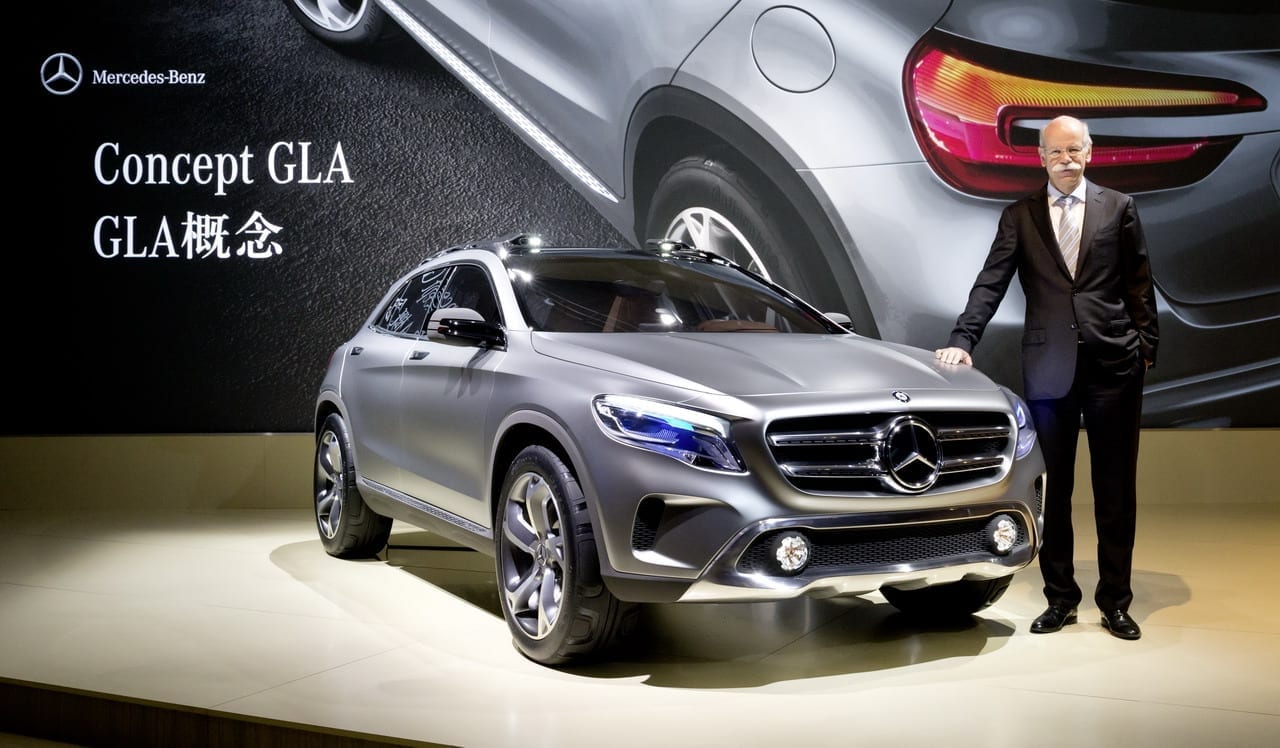
  • Mercedes-Benz begins local assembly of CKD E-Class

    Mercedes-Benz begins local assembly of CKD E-Class

    Mercedes-Benz Distribution Indonesia (MDI), the local distribution arm of German car manufacturer Daimler AG, launched on Tuesday the fifth generation of its mid-size luxury sedan E-Class.

    The sedan is assembled from the completely knocked-down (CKD) version in its Wanaherang plant, following an earlier move to introduce the completely built-up (CBU) version last August.

    MDI president director Roelof Lamberts said the local production of the E-Class was expected to help boost sales of the model in Indonesia.

    “The E-Class contributed to a quarter of our sales last year. We hope with the new generation, this contribution can be increased to a third of total sales this year,” he said during the launch ceremony.

    MDI last year saw its sales rise slightly by 3 percent to 3,371 vehicles.

    The pricing of the new model will be listed at the upcoming auto show in April, Lamberts added.

    Currently, the CBU version of the E-Class is sold for Rp 1.3 billion (US$97,600) per vehicle.

    There are two types of CKD E-Class vehicles that will be introduced into the domestic market, namely the luxury E-250 Avantgarde and the sportier E-300.