Category: Automotive

Retail News Asia is committed to providing both local and global retailers with the latest Auto and Car news throughout the Asian market. This on a daily base.

  • Peugeot poised to buy GM’s Opel, creating a car giant

    Peugeot poised to buy GM’s Opel, creating a car giant

    France’s PSA Group is set to announce a deal to buy Opel from General Motors (GM.N) on Monday after striking an agreement with the U.S. carmaker and winning the blessing of its board for the acquisition.

    The maker of Peugeot, Citroen and DS cars said on Saturday it would hold an early Monday press conference with GM, at which the transaction is expected to be presented after Reuters reported that a deal had been struck between the two automakers.

    By acquiring Opel, the French group will leapfrog rival Renault (RENA.PA) to become Europe’s second-ranked carmaker after Volkswagen (VOWG_p.DE) by market share. Between them, PSA and GM Europe recorded 71.6 billion euros ($76 billion) in revenue and 4.3 million vehicle deliveries last year.

    The tie-up was approved on Friday by the PSA supervisory board, on which the French government, Peugeot family and China’s Dongfeng (0489.HK) are represented as shareholders, one source with knowledge of the matter said.

    Spokespeople for PSA and Opel declined further comment.

    The two carmakers, which already share some production in an existing European alliance, confirmed last month they were negotiating an outright acquisition of Opel and its British Vauxhall brand by Paris-based PSA, sparking widespread concern over possible job cuts.

    In their jointly issued invitation to a Paris press conference at 0815 GMT on Monday, PSA and GM gave no indication of its subject. Separate briefings for the German press and Opel unions are expected to be held the same day.

    Sources close to the talks had reported progress on Thursday after the carmakers narrowed differences on a near-$10 billion Opel pension deficit and other issues. GM’s European arm recently posted a 16th consecutive year of losses.

    The negotiations had encountered problems over GM demands that a PSA-owned Opel be barred from competing against its own Chevrolet lineup in markets including China, they said.

    But the “non-compete” issues were finally resolved as GM agreed to inject “substantially more” into the pensions than the $1 billion to $2 billion it had initially offered, another person said. The sources declined to give further details. Detroit-based GM, which came close to selling Opel to Magna (MG.TO) in 2009, has faced investor pressure to offload its struggling European arm and focus on raising profitability rather than chase the global sales crown currently held by VW.

    After fending off 2015 merger overtures by Fiat Chrysler with support from her board, GM Chief Executive Mary Barra agreed to target a 20 percent minimum return on invested capital and pay out more cash to shareholders.

    For PSA, the Opel deal caps a stellar two-year recovery under cost-cutting CEO Carlos Tavares, who said on Feb. 23 he would apply the same methods to Opel if the deal went through. PSA averted bankruptcy by selling 14 percent stakes to France and Dongfeng in 2014, to match a diluted Peugeot family holding.

    The acquisition offered an “opportunity to create a European car champion” and quickly exceed 5 million annual vehicle sales, Tavares told analysts as he presented full-year earnings. PSA also expects savings of up to 2 billion euros ($2.1 billion) from the tie-up, sources have said.

    Tavares also told his board that PSA would redevelop the Opel lineup with its own technologies to achieve rapid savings, according to people with knowledge of the matter.

  • Ford exploring 3D printing of one-piece auto parts

    Ford exploring 3D printing of one-piece auto parts

    US based car manufacturer Ford Motor Company is exploring how large-scale one-piece auto parts, like spoilers, could be printed for prototyping and future production vehicles, as the first automaker to pilot the Stratasys Infinite Build 3D printer.

    Capable of printing automotive parts of practically any shape or length, the Stratasys Infinite Build system could be a breakthrough for vehicle manufacturing claims the company. It will provide more efficient and affordable way to create tooling, prototype parts and components for low-volume vehicles such as Ford Performance products, as well as personalized car parts.

    The new 3D printer system is housed at Ford Research and Innovation Center in Dearborn.

    “With Infinite Build technology, we can print large tools, fixtures and components, making us more nimble in design iterations,” said Ellen Lee, Ford technical leader, additive manufacturing research. “We’re excited to have early access to Stratasys’ new technology to help steer development of large-scale printing for automotive applications and requirements.”

    Wider adoption of 3D printing has been driven by recent technology advances, new areas of application and government support, according to Global Industry Analysts.

    By 2020, the global market for this emerging technology is expected to reach $9.6 billion, the organization reports. As 3D printing becomes increasingly efficient and affordable, companies are employing it for manufacturing applications in everything from aerospace to education to medicine.

    3D printing could bring immense benefits for automotive production, including the ability to produce lighter-weight parts that could lead to greater fuel efficiency. A 3D-printed spoiler, for instance, may weigh less than half its cast metal counterpart.

    The technology is more cost efficient for production of low-volume parts for prototypes and specialized race car components. Additionally, Ford could use 3D printing to make larger tooling and fixtures, along with personalized components.

    How it works
    With 3D printing, specifications for a part are transferred from the computer-aided design program to the printer’s computer, which analyzes the design. The device then goes to work, printing one layer of material at a time, then gradually stacking layers into a finished 3D object.

    When the system detects the raw material or supply material canister is empty, a robotic arm automatically replaces it with a full canister. This allows the printer to operate unattended for hours – days, even.

    Using traditional methods to develop, say, a new intake manifold, an engineer would create a computer model of the part, then have to wait months for prototype tooling to be produced. With 3D printing technology, Ford can print the intake manifold in a couple of days, at a significant cost reduction.

    3D printing is not yet fast enough for high-volume manufacturing, but it is more cost efficient for low-volume production. Additionally, minus the constraints of mass-production processes, 3D-printed parts can be designed to function more efficiently.

  • Mazda to recall 460,000 cars globally for diesel engine defects

    Mazda to recall 460,000 cars globally for diesel engine defects

    Japan’s Mazda Motor Corp said on Thursday it was recalling about 460,000 CX-5, Mazda3 and Mazda6 cars globally to fix multiple defects in their diesel engines, including a problem that could lead to engines stalling.

    The cars subject to the recalls were produced between Feb. 13, 2012 and Feb. 2 this year. No injury or fire has been reported from the defect, Mazda said.

    Of the total, 170,000 cars were sold in Japan and the remainder overseas.Japan’s Mazda Motor Corp said on Thursday it was recalling about 460,000 CX-5, Mazda3 and Mazda6 cars globally to fix multiple defects in their diesel engines, including a problem that could lead to engines stalling.

    The cars subject to the recalls were produced between Feb. 13, 2012 and Feb. 2 this year. No injury or fire has been reported from the defect, Mazda said.
    Of the total, 170,000 cars were sold in Japan and the remainder overseas.

  • BMW plans more purchasing with Daimler

    BMW plans more purchasing with Daimler

    BMW plans to expand its cooperation with Daimler in purchasing components, the carmaker’s new head of purchasing said in an interview with Frankfurter Allgemeine Zeitung.

    “It’s not been fully exploited; there are regular talks and we are discussing jointly purchasing more components,” Markus Duesmann was quoted as saying in an advance copy of the interview, due to be published on Friday.

    He did not give details of the plans or the possible savings that were being targeted.

    Daimler and BMW first started cooperating on purchasing of parts that aren’t crucial to their brand identity in 2008, such as tyres and seat frames.

    Duesmann also said BMW would have to alter its procurement to buy more software in the next few years to meet the trend for electric cars and autonomous driving. BMW could envisage using other battery suppliers too, he added.

    “We are in talks with all the major manufacturers and will make a decision for each model generation,” he said.

    BMW currently gets its batteries from Samsung.

  • Honda hits one-million unit production milestone in Indonesia

    Honda hits one-million unit production milestone in Indonesia

    PT Honda Prospect Motor (HPM) has crossed the one million-unit automobile production milestone in Indonesia, 14 years after it began manufacturing operations in the country.

    HPM began local automobile production in February 2003 with the Honda Stream at its factory located in Karawang, West Java, Indonesia. The Karawang Factory, built on an area of 512,500 square metres, has with a production capacity of 80,000 units. The second factory was inaugurated in January 2014 with a production capacity of 120,000 units, augmenting total production capacity to 200,000 units per year.

    Honda rides demand curve
    Over the years, the Japanese carmaker has seen demand grow for its products. In 2003, the company sold around 22,000 units. Since then, sales have risen considerably and Honda recorded 200,000 unit sales in 2016 with a 19% market share in the country. Currently, HPM produces seven models at its two factories, which include the Mobilio, BR-V, HR-V, Jazz, Brio RS, Brio Satya and CR-V.

    Indonesia is the best-performing global market for Honda. Sales reached an all-time record of 190,229 units, accounting for 44% of the carmaker’s overall 2016 ASEAN sales. The company attributes the sales increase of 14% over 2015 to its existing model line-up including the HR-V, Brio Satya and Mobilio, along with contribution from the newly-introduced BR-V.

    The Karawang Factory currently plays an important role in Honda’s global automobile component export worldwide. Its export destinations include neighbouring ASEAN countries such as Thailand, Malaysia, the Philippines, Vietnam, other Asian countries such as India and Pakistan, as well as Latin American countries, including Mexico, Brazil, and Argentina.

    HPM also delivers component parts to Japan. In 2016, Honda’s component export from Indonesia significantly grew and increased the number of containers exported from 5,600 in 2015 to more than 7,700 containers. In 2017, HPM plans to increase the export quantity to nearly 10,000 containers.

    Honda further strengthened its production operations with the opening of its stamping factory, which produces automobile component parts such as side panels, roof panels and floor panels. The factory began its operation in May 2016. The factory has implemented advanced production technology, including automatic continuous process and robotic system and has the production capacity of up to 2 million pieces component parts per year for both domestic sales and export.

    In September 2016, HPM made an additional 228 billion rupiah investment and started operation of its new factory for crankshafts. Honda employed advanced and environmentally friendly technology and adopted high-precision machines at this new factory to produce maximum of 240,000 crankshafts per year. This crankshaft factory meets regulations enforced by the Indonesian government for Low Cost Green Car (LCGC) models. Currently, HPM has achieved up to 87% local content in its products.

    Seiji Kuraishi, executive vice-president of Honda Motor Co, said, “It is a great achievement to arrive at this milestone in just 14 years and follows in Honda Motor Company’s 100 millionth unit of cumulative automobile production worldwide in September last year. Honda sales in Indonesia were ranked in fourth position for Honda globally, behind only US, China and Japan. Indonesia has always been and always will be an important market for Honda. We will continue to dedicate ourselves to doing business in Indonesia and the expansion of automobile production capacities with new factories is a testament to that commitment.”

    – See more at: https://www.autocarpro.in/news-international/honda-hits-million-unit-production-milestone-indonesia-23812#sthash.kzip7tzI.dpuf

  • Maven Ventures backed Embark unveils its self-driving truck technology

    Maven Ventures backed Embark unveils its self-driving truck technology

    Self-driving technology for commercial trucking Embark has unveiled its self-driving truck technology to the public. The company—which gained approval by the State of Nevada earlier this year to begin testing its truck on public roads—has created a technology that allows trucks to drive from exit to exit on the freeway without any human input.

    Embark’s truck uses a combination of radars, cameras and depth sensors known as LiDARs to perceive the world around it.

    “Analyzing terabyte upon terabyte of real-world data, Embark’s DNNs have learned how to see through glare, fog and darkness on their own,” said Alex Rodrigues, CEO and Co-founder of Embark. “We’ve programmed them with a set of rules to help safely navigate most situations, how to safely learn from the unexpected, and how to apply that experience to new situations going forward.”

    “Spending weeks on the highway is tough on you,” said Owner-Operator Jeff Scorsur. “If I could still get the job done while driving in my own city and sleeping in my own bed, that would make my family very happy,” he said.

    According to Rodrigues, the idea for Embark came after blowing a tire on the interstate and waiting four hours for the tow truck to arrive.

    “Every single 18-wheeler that drove past had a sign on the back ‘Drivers Wanted’. It was so clear there was a shortage of drivers,” he said. “The numbers back that up. The American Transportation Research Institute estimates there is currently a shortage of 100,000 truck drivers in the industry, which is poised to only get worse as baby boomer drivers – the bulk of the industry’s workforce – retire over the next decade. Embark’s goal is to increase productivity per driver and prevent the shortage from becoming a crisis.”

    The team is backed by a multi-million dollar investment led by Maven Ventures. Maven’s previous investment in self-driving technology, Cruise Automation, sold to General Motors for $1 billion last year. Embark plans to quadruple its engineering team within the next year and aggressively expand its testing fleet to show their technology is ready for the nation’s highways.

    “We are committed to proving beyond a shadow of a doubt that this technology is safe and reliable,” said Rodrigues. “That means performing extensive tests and working with our partners in the government to get it—and the market—ready.”

  • Volvo Cars’ New XC60 SUV Will Automatically Steer You Out Of Trouble

    Volvo Cars’ New XC60 SUV Will Automatically Steer You Out Of Trouble

    Volvo Cars, the premium car maker, has announced that the new XC60 SUV – which will be revealed at the Geneva Motor Show – will feature three new advanced driver assistance features aimed at keeping the driver out of trouble.

    The new safety features are designed to provide the driver with automatic steering assistance or support – when required – to help avoid potential collisions. Volvo believes that these new features will make the new XC60 one of the safest cars on the road.

    “We have been working with collision avoidance systems for many years and we can see how effective they are. In Sweden alone we have seen a decline of around 45 per cent* in rear-end frontal crashes thanks to our collision warning with autobrake system. With the XC60 we are determined to take the next step in reducing avoidable collisions with the addition of steering support and assistance systems,” said Malin Ekholm, Senior Director, Volvo Cars’ Safety Centre.

    City Safety has been updated in the XC60 to include steering support, which engages when automatic braking alone would not help avoid a potential collision. In such circumstances, the car will provide steering assistance to avoid the obstacle ahead. City Safety helps to avoid collisions with vehicles, pedestrians and large animals. Steering support is active between 50-100 km/h.

    Volvo Cars has also added a system called Oncoming Lane Mitigation, which helps drivers to avoid collisions with vehicles in an oncoming lane.

    The system works by alerting a driver who has unwittingly wandered out of a driving lane by providing automatic steering assistance, guiding them back into their own lane and out of the path of any oncoming vehicle. This system is active between 60-140 km/h.

    “All three of these new features represent clear steps in our work towards fully autonomous cars,” added Malin Ekholm.

    Volvo Cars’ optional Blind Spot Information System, which alerts drivers to the presence of vehicles in their blind spot, has also received an update to include steer assist functionality that helps to avoid potential collisions with vehicles in a blind spot by steering the car back into its own lane and away from danger.

    “We have all of the benefits of the safety technology we introduced in our larger 90 Series cars in the new XC60. This is fully in-line with our strategic approach to develop automotive safety systems based on real-life, real-road safety. Our vision is that no one will be killed or seriously injured in a new Volvo car by the year 2020,” added Malin Ekholm.

    The XC60 will deliver a host of high-end safety systems, just like its larger 90 Series siblings, including Large Animal Detection, Run-off Road Mitigation and the semi-autonomous driver support and convenience system Pilot Assist as an option.

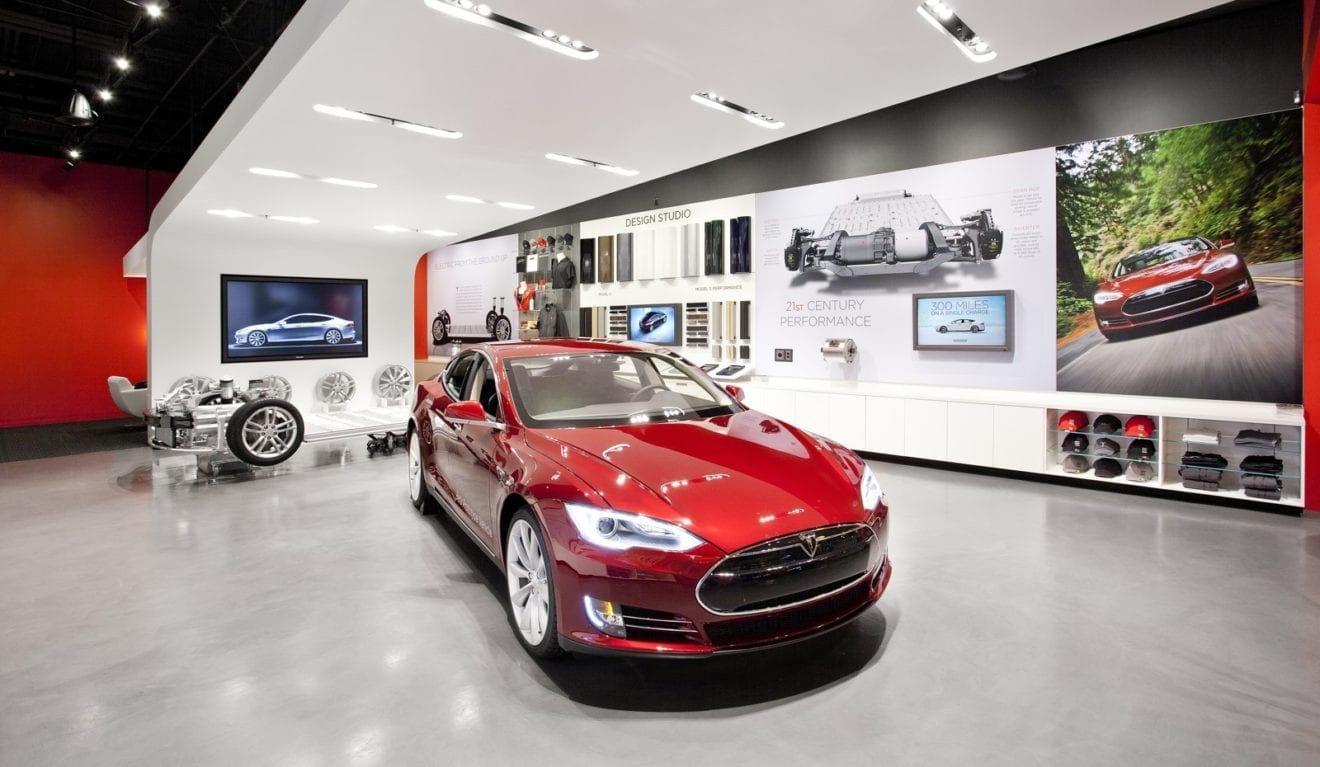
  • Tesla says Model 3 on track for volume production by September

    Tesla says Model 3 on track for volume production by September

    Tesla Inc said on Wednesday its mass-market Model 3 sedan was on track for volume production by September, encouraging investors who see the electric vehicle as the avenue to profitability for the young company.

    But the carmaker’s operations continued to burn through cash, and Chief Executive Elon Musk told analysts on a conference call that he may ask Wall Street for more.

    “According to our financial plan, no capital needs to be raised for the Model 3 but we get very close to the edge,” Musk told investors on a conference call. Tesla plans an additional $2 billion to $2.5 billion in capital expenses before the Model 3 launch and has $3.4 billion cash on hand.

    “We’re considering a number of options but I think it probably makes sense to raise capital to reduce risk,” Musk said.

    Musk said Chief Financial Officer Jason Wheeler, in his role for just over a year, would leave in April to work in public policy. He will be replaced by former Tesla CFO Deepak Ahuja, who was popular with investors.

    Tesla, whose shares rose as much as 3 percent after the bell before settling up around 1.6 percent to $277.90, beat analysts’ expectations for revenue. Its adjusted loss missed the consensus target calculated by Thomson Reuters I/B/E/S, although there was an unusually large range of estimates due to confusion over accounting for the acquisition of solar installer SolarCity.

    Ivan Feinseth, director of research at Tigress Financial Partners, said Tesla “delivered the results the market has been expecting” that drove the stock from a year low of $167.84 last February to a year high of $287.39 last week.

    By late spring or early summer, Feinseth estimated, Tesla will likely raise more money, noting that today’s highs could make it sooner rather than later.

    “You have to feed the ducks while they’re quacking. If they came to the market now they would be well received,” he said.

    Up to Wednesday’s close, Tesla’s stock had risen 53.9 percent in the last 12 months.

    Many investors and suppliers have predicted Model 3 volume production would be delayed until 2018, but Tesla said it would produce over 5,000 Model 3s per week “at some point in the fourth quarter”, and 10,000 vehicles per week “at some point in 2018”.

    Musk reiterated that Tesla still planned to deliver 500,000 cars in 2018 and 1 million vehicles by 2020.

    Tesla did not give its usual full-year delivery estimate, but said it expected to deliver 47,000 to 50,000 Model S and Model X vehicles combined in the first half of 2017.

    The company did not give a Model 3 target for this year and declined to update a previous disclosure made last April that 373,000 advance reservations had been taken for the car.

    “We’re still in great shape,” said Wheeler, when asked about early demand for the car.

    The public might not see the final version of the Model 3 until as late as July, when limited production begins, Musk said.

    Capital expenditures doubled in the fourth quarter to $521.6 million, as Tesla invests in its Fremont, California factory and its Gigafactory battery plant in Nevada.

    Cash rose by $309 million to $3.39 billion, which includes funds raised from a share sale last year.

    SolarCity installed more than 20 percent less solar in the quarter, as it focuses on profitability and cash over growth. Solar generation deployed fell to 201 MW in the fourth quarter from 253 MW a year earlier.

    Tesla’s net loss attributable to common shareholders narrowed to $121.3 million, or 78 cents per share, for the fourth quarter ended Dec. 31 from $320.4 million, or $2.44 per share, a year earlier.

    The adjusted loss of 69 cents per share compared with the analyst consensus of a 43-cent loss, according to Thomson Reuters I/B/E/S.

    Revenue rose 88 percent to $2.28 billion, topping Wall Street’s target of $2.18 billion.

  • Porsche, Audi lift VW to record underlying profit

    Porsche, Audi lift VW to record underlying profit

    Record Audi and Porsche sales helped Volkswagen (VOWG_p.DE) swing to a record underlying profit in 2016, although a bigger than expected charge from the diesel emissions scandal meant it missed estimates for its operating profit.

    Sales of the German carmaker’s luxury brands lifted underlying operating profit before special items 14 percent to 14.6 billion euros ($15.5 billion) in 2016, after the company reported its biggest ever loss in 2015.

    VW forecast broadly stable earnings this year.

    Underlying profit was broadly in line with forecasts for the world’s biggest car manufacturer by volume sales, which hiked its dividend more than expected after group sales rose to new highs, with an 8.1 percent jump in fourth quarter deliveries.

    Volkswagen (VW) is struggling with the fallout from its admission 17 months ago that it rigged U.S. diesel emissions tests, a scandal that some analysts have estimated may cost it more than $30 billion in fines, compensation and vehicle refits.

    VW has since embraced a costly shift to more electric vehicles and last year eclipsed Toyota (7203.T) as the world’s top-selling carmaker with record deliveries of 10.3 million.

    ONE-OFF CHARGES

    Although group sales fell 4 percent in January on the back of national holidays and a tax hike on small-engine cars in China, its biggest market, VW forecast an underlying operating margin of between 6 and 7 percent for 2017, compared with the 6.7 percent it achieved last year.

    But the damage from the emissions cheating affair took its toll, with VW booking bigger-than-expected one-off charges of 7.5 billion euros in 2016, of which 6.4 billion were related to the emissions-test rigging scandal. Analysts had on average forecast the cost would be 4.2 billion euros in total.

    Including those charges, VW made a 2016 operating profit of 7.1 billion euros, missing a consensus forecast of 10.5 billion euros but a big swing from a loss of 4.1 billion euros in 2015.

    VW’s Chief Executive Matthias Mueller said the carmaker was now well set for the years ahead.

    “As the figures show, Volkswagen is very solidly positioned in both operational and financial terms. This makes us optimistic about the future,” he said in VW’s results statement.

    The return to profit at group level may help calm tensions in Wolfsburg where labour bosses and VW’s brand management have been sparring over its ability to tackle the high cost base of VW’s German plants, which what analysts and investors say will be key to a further recovery.

    VW said it would propose a dividend of 2.06 euros per preferred share, more than the 1.86 euros expected by analysts on average, and 2.00 euros per ordinary share for 2016.

    That is up from 0.17 euros and 0.11 euros respectively a year earlier, when VW had to cut the dividend because of the cost of the diesel emissions cheating.

  • Tariffs are cut, import prices fall, but cars are still pricey

    Tariffs are cut, import prices fall, but cars are still pricey

    According to GDC, in January 2017 alone, Vietnam imported 1,000 cars from India, worth $3.7 million in total. The average import price was $3,700 only, or VND85 million, the price level described as ‘surprisingly low’ and ‘dirt cheap’. The imports from India are mostly Hyundai i10 and i20.

    However, Vietnamese cannot buy imports at VND85 million. The amount of money they have to pay will be four or five times higher.

    As explained by a car dealer, imports from India are taxed 70 percent. Besides, they are also subject to other kinds of tax, including luxury tax (35 percent for 1.0-1.5L cars) and VAT (10 percent).

    Imports also bear many other different kinds of fees, such as ownership registration fee (10-12 percent, or VND233-237 million), the number plate granting fee (VND20 million in Hanoi), registration fees (VND340,000 for the first time), and road maintenance fee (VND130,000 a month).

    At present, a Hyundai i10 is sold at VND350-450 million in the market, or five times higher than the factory price.As such, every import product from India would cost VND260 million on average after taxes and fees. Meanwhile, the selling prices will be defined after adding up distribution expenses, profits for distributors, storage fees, and marketing & advertisement costs.

    The same is occurring with imports from ASEAN. Though the import tariffs have been cut from 40 percent 30 percent since early 2017, the selling prices are still many times higher than the import prices.

    Nguyen Tuan, director of Thien An Phuc, a distributor, said a Toyota Fortuner from Indonesia has the CIF price of $27,500, or VND700 million. However, the selling price could be as high as VND1.3 billion.

    “Because of high taxes, Vietnamese have to pay high to own cars,” he explained, adding that the selling price in Vietnam is 2-3 times higher than in other regional countries.

    By 2018, when the import tariff goes down to zero percent, the price of one Fortuner would fall by VND290 million thanks to the tariff cut. Many people don’t buy cars at this moment, because they don’t want to waste hundreds of millions of dong on car tax.

    Ngo Tri Long, a renowned economist, said people hope the car prices would be decreasing once the tariffs are cut. However, sharp price decreases may not occur, because the car prices not only depend on import tariffs, but also on luxury taxes, fees and pricing strategies followed by car distributors.

    “In Vietnam, you’d better not dream of cheap cars,” he said.

  • Nissan, BMW, Porsche face fuel economy probes in South Korea

    Nissan, BMW, Porsche face fuel economy probes in South Korea

    South Korea has filed a complaint against Nissan Motor’s South Korean unit alleging that the Japanese car maker manipulated the fuel economy test results of its Infiniti Q50 sedan, a government official said on Tuesday.

    The transport ministry is also investigating BMW and Porsche on a similar matter, the official, Koh Sung-woo, told Reuters.

    The Seoul Central District Prosecutors’ Office has launched a probe into Nissan after a criminal compliant was filed by the ministry, a spokesman at the office said.

    Makers of imported cars, which have surged in popularity in recent years in South Korea, have been facing growing scrutiny in the country following Volkswagen’s emissions-test cheating scandal.

    The latest government action follows an announcement by South Korea’s environment ministry last month that the sale of 10 models of Nissan, BMW and Porsche had been banned after the carmakers were found to have fabricated documents on emissions and noise-level tests. The models banned include BMW’s X5M and Porsche’s Cayenne and Macan models.

    The probe was then expanded to whether the three car makers have falsified documents on fuel economy tests of the 10 models as well, Koh said.

    Koh said Nissan overstated the fuel economy of the Q50 so that it is 3.4 percent higher than the actual test result. “They manipulated the test results of the car to make the fuel economy look better,” he said.

    Nissan Korea said it reported “some inappropriate problems” in certification documents to authorities last year, saying the errors were caused by the misconduct of a manager at the company.  “We express sincere regret over those issues,” a spokeswoman said.

    Representatives of BMW and Porsche in Seoul said the companies have not been notified of the probe.

    The complaint adds to the troubles in South Korea for Nissan, which is already accused of cheating on emissions of its Qashqai diesel model. Last week, a South Korean court sided with the government which had said the Japanese automaker used a so-called defeat device in its Qashqai sport utility vehicle to turn off its emissions reduction device during regular driving.

  • Toyota sees plug-in hybrids catching on faster than conventional hybrids

    Toyota sees plug-in hybrids catching on faster than conventional hybrids

    Toyota Motor’s chairman, who led the development of the Toyota Prius, expects the latest plug-in hybrid vehicles will catch on with consumers far more rapidly than the original Prius did.

    Known as the “father of the Prius” for his role in popularizing the world’s best-selling hybrid car, Takeshi Uchiyamada said he expected to sell 1 million plug-in hybrids in less than 10 years, the time it took for sales of its conventional hybrid vehicles to hit that mark.

    “Environmental awareness has become a bigger issue today than it was 20 years ago, and demand for environmentally conscious products has increased,” Uchiyamada told reporters at an event to launch the latest plug-in version of the Prius in Japan.

    While the technology for plug-ins has developed rapidly, lowering costs, Uchiyamada said he had “no idea” exactly when plug-in sales would hit the 1 million mark. Since launching the original Prius, in 1997, Toyota has developed hybrid versions for around 40 of its models, and has sold a total of 10 million hybrid vehicles globally.

    Launching the second generation of the Prius PHV in Japan on Wednesday, Toyota said it expects to sell up to 60,000 worldwide a year, with more than half of the sales coming from Japan.

    Toyota set a similar target for the first generation of its plug-in Prius, of which only around 75,000 have been sold since its launch in 2012, largely due to its limited electric range of 26.4 kilometres.

    The latest version has a range of 42 miles according to Japanese standards. Due to a different methodology in measuring a car’s electric mode range, the vehicles’ range is listed in the United States as around 25 miles.

    Launched as the Prius Prime in North America late last year, the plug-in Prius will be introduced in Europe from March. Uchiyamada declined to comment on plans to offer plug-in versions of other models.

    The latest plug-in Prius sees Toyota widely endorsing lithium ion batteries, marking a turning point for the company which for years had resisted the technology commonly used in all-battery electric vehicles, due to concerns over their cost, size and safety.

    While rivals including Nissan Motor Co. and Tesla Inc. have marketed electric cars for nearly a decade, Toyota has promoted fuel cell-powered vehicles as the most sensible next-generation option to hybrids, although a lack of hydrogen fueling stations remains a major hurdle for mass consumption.

    But as more automakers develop electric cars in response to tightening global emissions regulations, Toyota late last year set up a new division to speed up development of long-range electric cars.

  • Proton Iriz enters Indonesia

    Proton Iriz enters Indonesia

    Proton Holdings, via its Indonesian unit, PT PROTON Edar Indonesia (PEI), has launched its latest hatchback vehicle, the Proton Iriz in several cities in the republic.

    In a statement today, Chief Executive Officer Datuk Ahmad Fuaad Kenali said Indonesia is an important market for the national carmaker.

    “Not only have we maintained strong government-to-government relations being ASEAN founding members, but we also share many similarities in terms of people, language, culture as well as the weather,” he said.

    Ahmad Fuaad said Indonesia is the second country after Brunei to import the vehicle.

    He said two variants have been made available to the Indonesian market, namely the 1.3L MT Standard and 1.3L CVT Standard, priced at IDR 175,250,000 and IDR185,283,000, respectively (RM1=IDR 2996.52).

    The PEI is supported by a total of 25 sales and after sales outlets in Indonesia, and locals can get up close and personal with the Proton Iriz in all the sales outlets from Feb 20.

    Since its debut, the Proton Iriz has received many awards and accolades from the automotive industry in Malaysia. Among them, is a 5-Star rating from the Asean New Car Assessment Programme.

    Interested customers can visit any of the dealers at their showrooms across Indonesia or visit the PEI website at www.proton-edar.co.id.

  • Multi-million dollar tax arrears catch up to luxury car importers

    Multi-million dollar tax arrears catch up to luxury car importers

    At the end of December 2016, Mercedes-Benz Vietnam (MBV) paid VND101.65 billion ($4.46 million) in tax arrears.

    However, the firm continued to submit letters of complaint about its initial tax assessment.

    The Post Clearance Audit Department of Vietnam Customs under the General Department of Vietnam Customs, Ministry of Finance, previously in June 2016, issued a decision of post-clearance audit in MBV’s headquarter.

    The department then imposed arrears of VND101.65 billion ($4.46 million) on the firm. Right after, MBV submitted an urgent letter asking for reconsideration.

    In December 2016, the General Department of Vietnam Customs has requested the provincial and municipal customs departments to allow the company to register and import under customs procedures, as long as they paid 50 per cent of the amount up front and the rest by December 31, 2016.

    In December 26, 2016, MBV has paid the whole VND101.65 billion ($4.46 million) and continued to import goods under customs procedures.

    However, on December 30, 2016, MBV submitted a letter of complaint about the initial tax assessment.

    Tan Thanh Do Auto Corporation (Land Rover and Jaguar dealer in Vietnam) and Regal Motor Car Corporation (official Rolls Royce dealer in Vietnam) found themselves in a similar situation.

    In November, they were requested to pay additional tax arrears of VND719 billion ($31.56 million) and VND50 billion ($2.19 million), respectively, because they declared a lower value of their imports than the actual price.

    Besides, at the end of November 2016, the Ministry of Finance has requested the General Department of Vietnam Customs to suspend customs clearance for imported BMW automobiles (except for the BMWs imported under diplomatic privilege).

    At the same time, the Anti-Smuggling and Investigation Department has decided to take Euro Auto Company, the Ho Chi Minh City-based importer of BMW automobiles, to court for failing to supply required documents or supplying fake documents during customs clearance and selling cars before they are cleared at customs.

  • Japanese automakers consider leaving Vietnam due to weak supporting industries

    Japanese automakers consider leaving Vietnam due to weak supporting industries

    The companies are looking for bigger profits in nearby countries such as Thailand. Japanese automakers may be shifting their production away from Vietnam in the near future due to its poor supporting industries.

    Vietnam’s supporting industries have stood still for years and that might cause Japanese companies in the country to change their investment approach, said Takimoto Koji from the Japan External Trade Organization (JETRO), a Japanese government-related organization that works to promote trade and investment by Japanese businesses overseas.

    Several automakers intend to stop assembling cars in Vietnam and import whole cars from nearby countries like Indonesia, Malaysia and Thailand instead, Takimoto said.

    Car import tariffs between Southeast Asian neighbors are falling rapidly and the new approach will secure bigger profits, he said.

    Under a new free trade agreement among the 10 members of ASEAN, car import tariffs were cut from 50 percent to 40 percent last year and will go down to 30 percent next year before being scrapped in 2018.

    Japanese companies Toyota, Mazda, Honda and Suzuki are competing in Vietnam’s auto industry, which produces around 250,000 cars a year, a modest number compared to those in nearby countries such as Thailand’s two million cars.

    According to experts, an automobile production line only becomes profitable when it delivers more than 200,000 cars a year.

    Japan registered $2.58 billion in investments in Vietnam last year, accounting for more than 10 percent of the total FDI pledges made in the country and making it the second biggest foreign investor after South Korea, according to figures from the Ministry of Planning and Investment.

    Vietnam’s FDI inflow hit a record high of $15.8 billion in 2016.