Category: Automotive

Retail News Asia is committed to providing both local and global retailers with the latest Auto and Car news throughout the Asian market. This on a daily base.

  • Tata Motors” arm reports 12% rise in December retail sales

    Tata Motors” arm reports 12% rise in December retail sales

    Tata Motors’ subsidiary — Jaguar Land Rover (JLR) has achieved its best ever December sales performance in 2016, with total retail sales of 55,375 vehicles, up 12% on the prior year, primarily driven by the ongoing success of the Jaguar F-PACE, Land Rover Discovery Sport and the Range Rover Sport as well as strong demand for the long wheel base Jaguar XFL in China. JLR total retail sales for the full 2016 calendar year also reached record levels with sales of 583,312 units, up 20% compared to 2015.

    JLR’s global retail sales performance for December shows strong growth in China (up 36%), North America (up 30%) and Europe (up 8%) but softer sales in the UK (down 3%) and in other overseas markets (down 16%).

    Jaguar retail sales were up 95% in December 2016, retailing 16,349 vehicles driven by the ongoing success of the F-PACE and strong demand for the long wheel base XFL in China. Jaguar retail sales for the full 2016 calendar year reached 148,730, up 77% compared to 2015.

    Land Rover retailed 39,026 vehicles in December 2016, down 5% compared to December 2015 as strong retail sales of the Discovery Sport and Range Rover Sport were offset by lower sales of the discontinued Defender and Discovery models. Land Rover retail sales for the full 2016 calendar year reached 434,582, up 8% compared to 2015.

  • Jaguar Land Rover sells record 583,313 cars in 2016

    Jaguar Land Rover sells record 583,313 cars in 2016

    Britain’s biggest carmaker Jaguar Land Rover sold a record 583,312 cars last year as the Indian-owned firm continues its rapid expansion with the aim of building 1 million vehicles a year at the turn of the decade.

    Sales were up 20 percent from the previous year, although sales growth slowed to 12 percent year-on-year in December, the carmaker said.

    The automaker, which spent years in the doldrums before being bought by India’s Tata in 2008, has since invested heavily in new models and expanded production with plants in China and Brazil and construction of a new site in Slovakia under way.

    Sales of luxury Jaguar models rose 77 percent to 148,730 units in 2016 due to strong demand for a range of new high-end products including the F-PACE, the brand’s first off-roader which was launched last year.

    Europe was the carmaker’s biggest overall market, accounting for almost a quarter of total demand.

    The firm said its line-up will continue to expand but it has warned about the negative effect any tariffs on its business imposed as part of a Brexit deal could have if Britain were to lose unfettered access to the single market.

    Its annual profit could be cut by 1 billion pounds ($1.23 billion) by 2020 if Britain returned to World Trade Organization rules for trade with the continent, two sources told Reuters last year.

  • Toyota to invest $10 billion over the next five years

    Toyota to invest $10 billion over the next five years

    Toyota Motor will invest $10 billion in the United States over the next five years, the same as in the previous five years, North America Chief Executive Jim Lentz said on Monday, to meet demand and upgrade plants to build more fuel-efficient models.

    The Japanese automaker has come under fire by President-elect Donald Trump for its plans, announced in 2015, to shift production of its Corolla to Mexico from Canada.

    Lentz said in an interview at the Detroit auto show the decision was not in response to Trump’s remarks made in a recent tweet, but was part of Toyota’s business strategy to invest in the United States, where it has 10 plants in eight states.

    Planning for the new Mexico plant began about two years before it was announced in 2015, said Lentz, describing such decisions as long-term ones.

    Lentz said he had not spoken with Trump.

    The $10 billion includes Toyota’s new North American headquarters in Texas that is under construction and major improvements to its plants.

    Toyota plans to expand some of its U.S. plants over the next five years, said Lentz, declining to say if that effort would boost jobs. Toyota, which employs 40,000 in the United States, added more than 5,000 U.S. jobs over the last five years, he said.

    Toyota President Akio Toyoda appeared at the show later on Monday to tout the company’s investment plans and its updated flagship Toyota Camry that is built in Kentucky.

    “We are deeply grateful to the millions of customers who have made Camry the number one selling car in America for the last 15 years,” Toyoda said.

    Lentz said “everyone” agrees with Trump’s goals of boosting manufacturing and U.S. employment, in part because “it helps us sell more cars.”

    “We have to run our business as a global business,” he said. “I have to make sure that we are competitive.”

    The company is focused on reminding policymakers in Washington about its extensive U.S. manufacturing operations, Lentz said.

    Lentz said Vice President-elect Mike Pence, who was Indiana governor, knew Toyota well because of its manufacturing operations in the state.

    He warned that a “border adjustability tax,” like the one proposed by Trump if the carmaker builds the Corolla in Mexico instead of the United States, could hike the price of cars and hurt auto employment.

    Such a tax could add $1,000 to cost of a Kentucky-built Camry because of some foreign-made parts.

    After the critical tweet from Trump, “you have to respectfully state your position and then move on,” he said.

  • Mercedes-Benz to overtake BMW as largest premium carmaker

    Mercedes-Benz to overtake BMW as largest premium carmaker

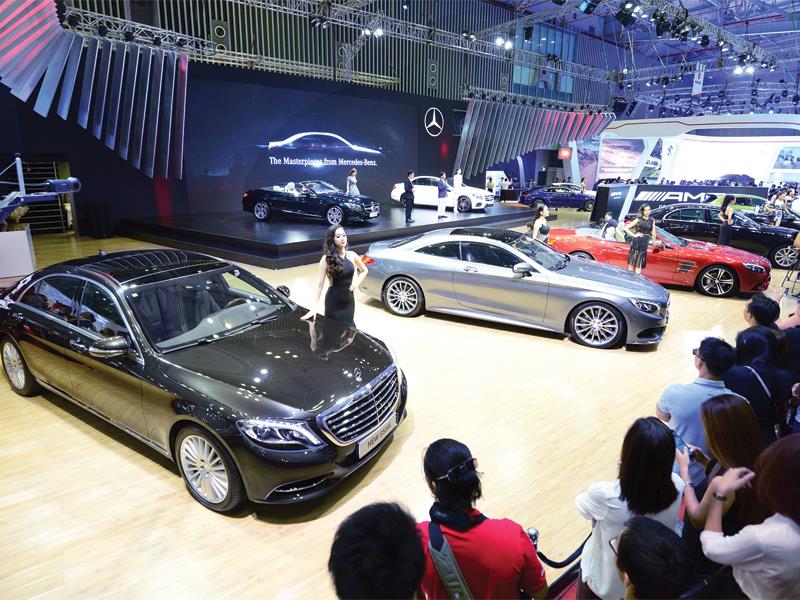
    Mercedes-Benz is expected to reach its goal of becoming the largest premium carmaker four years early – a feat achieved, ironically, only after it stopped chasing market share and focused on making stylish high-tech cars loved by consumers.

    Introducing an elegant, sporty design and establishing itself as a pioneer in new technologies like autonomous driving has helped revive the Mercedes brand which analysts say will help keep the Stuttgart-based carmaker ahead of the pack.

    The achievement is a coup for Daimler Chief Executive Dieter Zetsche, who struggled to revive the company following a messy divorce from mass market brand Chrysler in 2007. Less than four years ago Zetsche faced restive shareholders, worried that the automaker was lagging behind rivals BMW and Volkswagen AG’s Audi brand.

    “We had some deficits, cost and quality problems. Design was not top-notch. And with Chrysler we were no longer a pure premium carmaker,” Zetsche told Reuters in an interview held late in 2016 in his office at Daimler’s headquarters in Stuttgart, Germany.

    On Sunday, Daimler said it had sold 2.08 million Mercedes-Benz branded passenger cars in 2016, a lead that BMW, which has held the premium sales crown since 2005 and is due to release annual sales figures on Monday, is not expected to beat.

    Including sales of the Smart brand, Daimler sold 2.23 million passenger cars last year, the company said.

    Zetsche has presided over a renaissance in the design and technology of Mercedes vehicles, refocused the company on technological superiority instead of short-term sales goals, and adapted the entrepreneurial mindset of Silicon Valley to the traditionally risk averse culture of Stuttgart.

    Daimler is also preparing for a new era when the auto industry’s business model moves beyond manufacturing and selling cars, to lure customers interested in pay-per-minute transport solutions provided by autonomous cars.

    Zetsche set the goal of making Mercedes the best-selling luxury carmaker by 2020 at the company’s 125th anniversary in 2011, a year when even Audi sales overtook those of Mercedes, pushing it into third place.

    “Since then we worked hard and today we are leading or among the leaders when it comes to innovation, quality, design and security,” Zetsche said.

    Daimler traditionalists were shocked by the volume target, fearing that selling too many vehicles may dilute the exclusivity of their cars and reduce the appeal of the Mercedes brand in the long run.

    But consumer electronics companies like Apple had already proven that the pull of their brand did not suffer with increased volume sales so long as they offered the best customer experience.

    Audi was gaining traction with customers thanks to cool designs, so Zetsche appointed a young designer, Gorden Wagener to head up Mercedes design. He introduced an elegant and sporty style to spruce up Stuttgart’s Teutonic limousines. Mercedes cars were also equipped with state-of-the-art digital display technology, luring smartphone savvy customers.

    It was a change for Mercedes where engineers always believed they were producing the best cars in the world, but measured quality mainly using technical or engineering criteria, a strategy which often led to powerful cars with expensive and complex technical innovations.

    Today, Mercedes-Benz follows its motto “the best or nothing” by thinking about whether customers would notice or benefit from a new technological innovation, and by benchmarking the brand against competitors, Zetsche said.

    The company’s renaissance began in earnest in May 2013 with the launch of a new flagship S-class. To burnish its credentials as a technology leader, Mercedes developed a prototype version which drove around 100 kilometres (62 miles) autonomously the same year.

    Rather than designing a limousine which appealed mainly to rear seat passengers, the new S-Class featured large digital display screens on the dashboard, a deliberate attempt to appeal to a younger, driver-focused audience.

    The same youthful design approach was used for the new C-Class and E-class designs, which are now the company’s volume sellers.

    Mercedes also revived the Maybach brand, a marque targeting the ultra-luxury sector which the company had stopped making after the prior bespoke design failed to gain traction, leading the car to sell only 200 times in its final year of production.

    Since Maybach’s latest revival in February 2015, Daimler has sold 15,000 cars.

    “The rewards we are reaping today are the logical consequence of careful preparation,” Zetsche said.

  • Online retailers move to sell new cars on web

    Online retailers move to sell new cars on web

    Brick-and-mortar shops will no longer be the only go-to place for buying new automobiles, as online e-commerce shops are stepping into the industry as well.

    Interpark said Wednesday it would start a retail service for imported vehicles with local company D.parts, which delivers foreign cars to Korean customers and assists with paperwork, tax issues and delivery.

    To avoid conflict with local car dealers, the company will offer models that are not included in the list of products officially imported to Korea.

    “Buying foreign brand cars that are not dealt by official dealers can be a nuisance for general consumers,” said Cho Jin-hyuk, manager for Interpark’s electronics division. “Because our service is based on collaboration with an experienced company, customers can now buy such products with credibility and convenience on the internet.”

    “We’re looking for a way to talk directly with headquarters without going through any intermediate agents,” said a Tmon spokesman.E-commerce site Ticket Monster (Tmon) is also beginning to sell vehicles online, offering inventory from auto manufacturers inside and outside borders. The company’s brief experience in the market may offer clues about demand. The retailer sold Jaguar XE models in August, for which orders were filled in the first three hours. However, only one eventually completed a purchase after Tmon and SK Encar, agent supplier for the project, bumped heads with Jaguar Land Rover’s Korean office and official dealer Aju Networks.

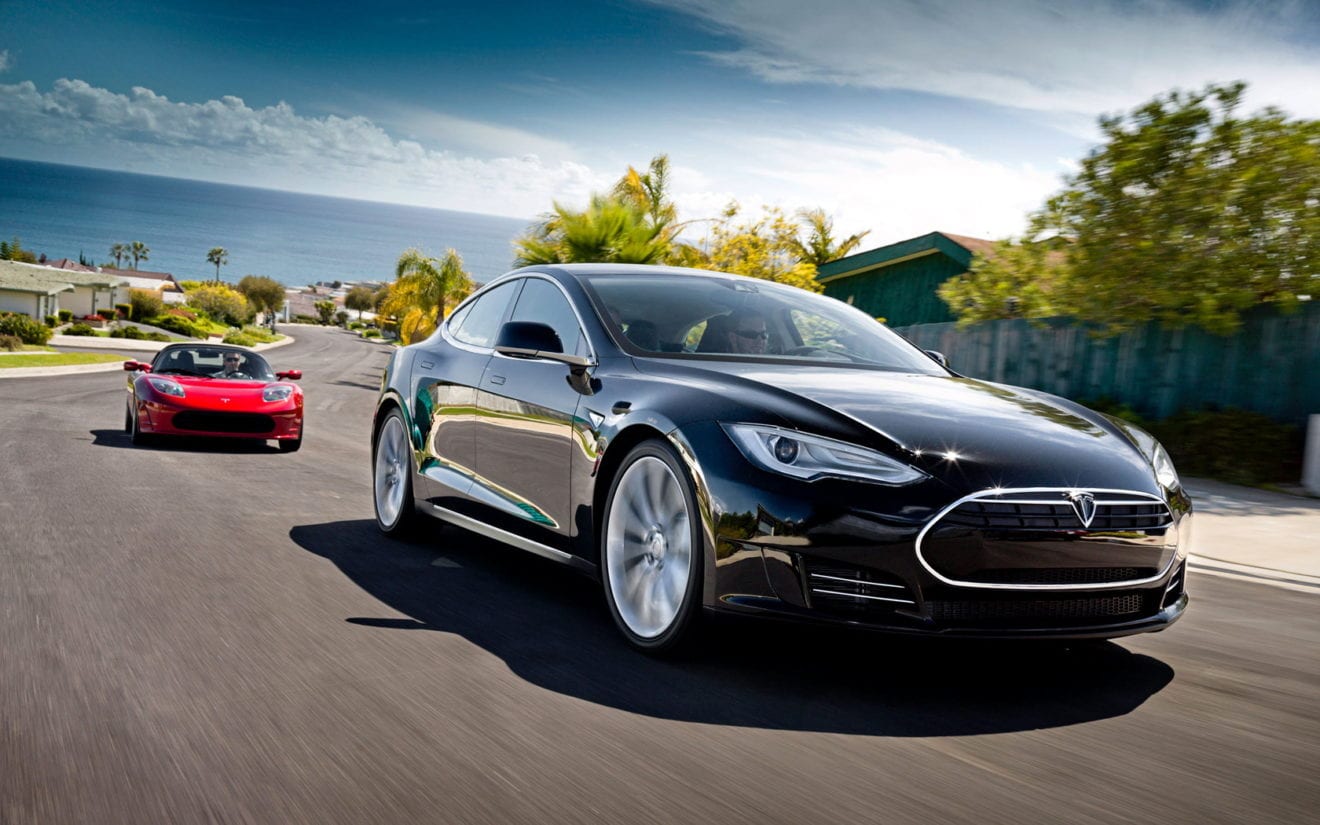
    Online is the main sales channel for the global electric car brand Tesla Motors which has two showrooms in Korea but doesn’t have an official brick-and-mortar store. Tesla’s stores serve only as showrooms and clients must use the website to order. Demand in Korea was evident last year when pre-orders of the automaker’s Model 3 surpassed 325,000 in the first week.

    Although most sales offers are temporary, online retailers are eyeing expansion into domestic car brands. In September, Auction placed 10 models of Chevrolet’s Aveo on its platform, in a deal with GM Korea. The models sold out within one minute, as Auction offered a credit of five million won ($4,195) to buyers on the website.

    “We already saw potential, so the company is open for collaboration suggestions as long as the manufacturer is willing to do so,” said Lee Jin-young, a manager for Auction.

    Starting next year, domestic cars will be sold on television home shopping channels as laws that prohibited the practice were eased in November.

    New sales channels may prove favorable for consumers, as fierce competition will prompt companies to offer discounts or interest-free installment plans, which were common when imported car sales on television were popular in the early 2000s.

    “Online sales of automobiles may be a chance to enhance consumers’ convenience and improve the ambiguous structure of domestic vehicle sales,” said Kim Pil-soo, an automotive engineering professor at Daelim University College.

    Industry insiders, however, say that there are still many obstacles. E-commerce and home shopping networks equally say that although they are interested in launching online auto sales, the final decision is up to manufacturers and official importers.

    Decision makers are not enthusiastic about the idea, as sales online would eventually hurt brick-and-mortar stores and their sales force.

    “Realistically speaking, going online is not an easy option as it is a matter likely to be attacked by our labor union,” said a source from Hyundai Motor. GM Korea employees also criticized the Aveo sale on Auction, calling it a death sentence for sales people.

    Foreign car brands don’t seem too excited about the idea either, even though they may be able to save 15 percent on the commission fees they pay dealers. Most foreign car brands sign contracts with local dealers. One source pointed out that those vehicles require service after the purchase.

    “Dealers have connections to competent car service providers and quality after-service is an essential in this industry, therefore going online may be a risky decision for brand image,” the source added.

  • Nissan’s premium brand Infiniti sells 230,000 vehicles in 2016

    Nissan’s premium brand Infiniti sells 230,000 vehicles in 2016

    Nissan Motor’s premium brand Infiniti sold more than 230,000 vehicles globally in 2016, a 7 percent annual rise, Infiniti said on Wednesday, a record year for a marque that trails rivals in the increasingly crowded premium market.

    The brand distantly lags German luxury competitors like BMW, which can sell almost as many vehicles in a single month, and second-tier luxury leaders like Toyota’s Lexus, which sells at least twice as many cars each year.

    Infiniti annual sales grew 4 percent year-on-year in the United States, its largest market, to more than 138,300, while China sales rose 3 percent to 41,590.

    In December, Infiniti sold 27,200 vehicles globally.

  • Qualcomm unveils Gigabit-class connected vehicle platform

    Qualcomm unveils Gigabit-class connected vehicle platform

    Chipmaker Qualcomm has announced the launch of a new version of its connected car reference platform that incorporates a a Gigabit-class LTE modem.

    The new reference platform is designed to allow carmakers to easily integrate new wireless and networking technologies into their vehicles, including Wi-Fi, Bluetooth, BLE and global navigation satellite system (GNSS).

    Qualcomm has also developed a reference hardware module in two band configurations, one for North America and one for the rest of the world.

    The module design can support up to four antennas to take advantage of the 4×4 MIMO capabilities of the integrated modem.

    “Connected cars are becoming intelligent sensors on the road, not only using data for consumer use cases such as Wi-Fi hotspots and video streaming, but also collecting and transmitting critical, rich real-time information about road conditions, map updates and driver status,” Qualcomm SVP and GM for automative Patrick Little said.

    “As a leader in car connectivity, Qualcomm Technologies is well positioned to address the tremendous data demand, helping automakers integrate the broad set of technologies required by a new generation of connected vehicles.”

    Qualcomm separately announced it has established a new consortium with SWARCO Traffic Systems and the University of Kaiserslautern to carry out the first Cellular-V2X (Vehicle to Everything) trial based on the 3GPP Release 14.

    The trial will focus on Vehicle-to-Vehicle (V2V), Vehicle-to-Infrastructure (V2I) and Vehicle-to-Pedestrian (V2P) direct communication, as well as Vehicle-to-Network (V2N) wide area communications.

    The new Connected Vehicle to Everything of Tomorrow (ConVeX) consortium will conduct the trial with funding from the participating organizations as well as the German Federal Ministry of Transportation and Digital Infrastructure.

  • Nissan halts joint development of luxury cars with Daimler

    Nissan halts joint development of luxury cars with Daimler

    Nissan is halting joint development of luxury cars with Daimler’s Mercedes-Benz, sources close to the companies told Reuters, suspending a key project in their seven-year partnership and potentially hitting profitability at a new shared factory in Mexico.

    Nissan (7201.T) decided in October its premium Infiniti brand would not use “MFA2”, an upgraded Daimler (DAIGn.DE) car platform that the companies have jointly funded, in part because Infiniti was not performing well enough to absorb Mercedes technology costs, the sources said.

    “It wasn’t possible to close a deal on the basis of MFA2,” said one of the people. “The targets set by Infiniti were too difficult to achieve.”

    The move could reduce efficiency at a $1 billion shared factory opening this year in Aguascalientes, Mexico, where the companies had planned to use the same compact car architecture to cut complexity and production costs, two of the sources said.

    It could also ultimately force Nissan to write down part of a 250 million pound ($306 million) investment at its UK plant that included Mercedes-based tooling, they added.

    Daimler and Nissan pursue joint programs only when “beneficial for both sides”, the companies said in separate statements to Reuters, without directly addressing emailed questions about their plans for MFA2 vehicles.

    Projects are constantly reviewed against targets to account for “developments beyond the control of management”, they added, and discussions about joint development of future premium compact cars are ongoing.

    Nissan’s decision deals a blow to the broad cooperation deal struck between Renault-Nissan boss Carlos Ghosn and his Daimler counterpart Dieter Zetsche in 2010.

    It also underscores the mixed results of Nissan’s battle over almost three decades to transform Infiniti into a significant global player in the lucrative luxury car market.

    The decision predates Donald Trump’s election as the next U.S. president, the sources said, and was unrelated to campaign vows to penalize Mexican imports that have rattled the auto industry. Ford (F.N) on Tuesday scrapped a planned compact car plant in the country.

    Nissan and Daimler are pushing ahead with Aguascalientes, where they will build Infiniti and Mercedes models for the U.S. and other markets from a single assembly line opening in 2017.

    The project nonetheless faces weakening U.S. demand for smaller cars that contributed to Ford’s cancellation and has further raised profitability hurdles for new Infiniti compacts.

    Persistently low oil prices accelerated the market shift to larger vehicles in 2016, Ford sales chief Mark LaNeve said on Wednesday. “All the growth was SUVs and trucks.”

    PREMIUM STRUGGLE

    Infiniti has struggled outside the United States, last year selling 16,000 vehicles in Western Europe and 230,000 globally – less than 5 percent of Nissan’s overall tally and barely one-tenth of Mercedes’s expected 2 million deliveries.

    The first Infiniti appeared in 1989, the same year as the launch model for Toyota’s (7203.T) upscale Lexus brand – which has since grown three times bigger by sales.

    Modern carmakers pursue economies of scale by increasing the number of models built on each underlying platform – an adaptable chassis accommodating different body sizes, engines and alternative component sets for every part of the vehicle.

    The retreat on luxury compacts leaves intact the sharing of engines between Infiniti and Mercedes, and small cars between Renault and Daimler’s Smart. The three groups also collaborate on vans and pickups.

    But joint premium car development for Mexican production was “one of the largest projects between the Renault-Nissan alliance and Daimler”, Ghosn said when unveiling the program in 2014.

    A year later, after upgrading its plant in Sunderland, England, Nissan began building the Infiniti Q30 hatchback on the current MFA architecture developed for the Mercedes A-Class and derivatives. The plant added the QX30 SUV in 2016, extending Infiniti’s push into smaller vehicles.

    Nissan has now ditched plans to use the updated Mercedes platform for successors to those models planned for Aguascalientes, the sources said – or for any future Infinitis. Other cancellations include a compact Mercedes-based Infiniti Q40 sedan earmarked for the plant in 2018.

    Instead the single, less efficient assembly line will build Mercedes cars including an A-Class sedan and subsequent mini-SUV alongside Infiniti vehicles based on Renault-Nissan architecture, starting with a new QX50 SUV this year.

    PRICING POWER

    Nissan was forced to conclude that the Infiniti brand would not command the higher prices required to turn a profit on vehicles stuffed with Mercedes technology, one source explained.

    “One of the lessons learned is that if you have the costs of a luxury vehicle but not the pricing, it’s hard to be profitable,” he said.

    Nissan may end up writing down some Sunderland investment in Mercedes-based tooling that had been intended to outlast the current Q30 and QX30, people with knowledge of the matter said.

    The company is still paying its share of MFA2 development costs running to hundreds of millions of euros for a platform it no longer plans to use, they said, but will leave Daimler with a higher share of some production costs in Aguascalientes.

    The setback may also show the limits of Ghosn’s consensual approach to economies of scale as head of both Renault (RENA.PA) and Nissan, whose 18-year-old alliance is underpinned by significant cross-shareholdings.

    The slow pace of integration has contributed to upheaval at the recently created alliance powertrain division, charged with converging Renault and Nissan engineering.

    Plans to build Infinitis on Mercedes technology had encountered resistance at Nissan from the start, one source said. “Once again, Ghosn has been unable to break through the wall of engineers to force commonality.”

  • Tesla posts 9.4 percent fall in quarterly deliveries

    Tesla posts 9.4 percent fall in quarterly deliveries

    Tesla Motors said on Tuesday fourth-quarter deliveries fell 9.4 percent due to short-term production hurdles from the transition to a new autopilot hardware.

    Deliveries fell to about 22,200 vehicles in the fourth quarter from 24,500 vehicles in the preceding quarter.

    Total deliveries for 2016 of 76,230 also fell short of the company’s projection of 80,000 to 90,000.

    Shares of the company, led by entrepreneur Elon Musk, were down nearly 2 percent at $212.90 in extended trading.

    Tesla said production challenges, which started at the end of October and lasted through early December, shifted vehicle production toward the end of the quarter, resulting in delayed deliveries.

    “We tried to recover these deliveries and expedite others by the end of the quarter, time ran out before we could deliver all customer cars,” the electric carmaker said.

    Nearly 2,750 vehicles missed being counted as deliveries in the quarter due to last-minute delays in transport or because of the inability of customer to physically take delivery.

    In addition to the fourth-quarter deliveries, about 6,450 cars were in transit and these would be counted in the first quarter, the company said.

  • South Korea bans sales of some Nissan, BMW and Porsche models

    South Korea bans sales of some Nissan, BMW and Porsche models

    South Korea has banned the sale of 10 models of Nissan, BMW and Porsche vehicles after the carmakers were found to have fabricated certification documents, in the latest fallout from the Volkswagen emissions scandal.

    The government announced in August that it would ban all 10 models after conducting an investigation into whether foreign carmakers besides Volkswagen AG falsified documents on emissions and noise-level tests.

    Nine of the models have been banned since last month and Nissan’s Qashqai diesel sport utility vehicle has been banned since June, the environment ministry said on Monday.

    It said it has also fined the carmakers’ local units a combined 7.17 billion won ($5.9 million) for the affected 4,523 vehicles already sold in South Korea.

    Spokespersons at the South Korean units of Nissan Motor Co Ltd and BMW AG acknowledged the findings in the government investigation, saying they would try to achieve certification for those affected models again. A spokesperson at Porsche AG, which is owned by Volkswagen, was not immediately available for comment.

    South Korea has been tough with Volkswagen, filing complaints against local executives, suspending sales of most of its models and imposing fines for alleged forging of documents on emissions or noise-level tests.

    In the latest move, South Korea said last month that it will file criminal complaints against five former and current executives at Volkswagen AG’s South Korean unit and fine the company a record 37.3 billion won for false advertising on vehicle emissions.

    South Korea’s sales of imported cars fell 7 percent in the first 11 months of last year, heading for their first annual sales decline since 2009.

  • South Korea Changes Rules On EV Cars

    South Korea Changes Rules On EV Cars

    EV or electronic vehicle is slowly rising to the competition in the automobile industry. South Korea already made changes to their rules to those who are interested in EVs.

    The South Korean government will change one of their rules when it comes to EVs. South Korea is known for having a market for premium cars. They’re even part of Tesla Motors’ reservation of the company’s upcoming vehicle model, the Model 3. According to Tesla’s website, the Model 3 is an affordable premium sedan. Model 3 is designed to achieve that highest rating when it comes to safety measures.

    South Korea will be removing subsidies when it comes to EVs with high-capacity batteries. This move could change the EV market in the country since this will allow other longer-ranged models to be available in the market. By removing the subsidies for the EV market, more and more models of the EV will be available at an affordable rate.

    This will also prove to be good for Tesla. The motors company will conduct their first Tesla showroom in South Korea this year. The exact date for the facility is to be revealed sometime soon. With the South Korean government changing their rules for subsidies when it comes to high-battery powered EVs, more and more models from Tesla will be available for the Korean market this year. Aside from Tesla, BYD, the world’s largest EV maker is also planning to enter the Korean market of EVs. BYD encountered a problem because their latest model doesn’t qualify for the subsidy, thus resulting in the delay of the company to join the market, according to Reuters.

    Currently, there are about four thousand electric vehicles roaming the streets of South Korea. Once the government implements this change, there might be a triple amount of EV cars in the country.

  • Hyundai, Kia aim to grow 2017 sales to 8.25 million vehicles globally

    Hyundai, Kia aim to grow 2017 sales to 8.25 million vehicles globally

    Hyundai Motor and affiliate Kia Motors said on Monday they aim to increase their combined sales to 8.25 million vehicles globally in 2017, despite rising competition.The 2017 target is slightly higher than their 2016 goal of 8.13 million vehicles. The South Korean automakers’ final sales figures for 2016 are due out later on Monday, with analysts expecting a miss due to weak demand in emerging markets.

    “The 2017 goal is slightly higher than my projection,” said Ko Tae-bong, an auto analyst at Hi Investment & Securities, adding that the performance of new models would be the key to success after some disappointments in recent years.

    With emerging markets such as Russia stabilizing, and with Hyundai and Kia Motors gearing up to boost vehicle supply to the United States and China, sales could get a lift this year.

    But Hyundai Motor and Kia Motors – which together rank fifth in global sales – plan to add capacity in China and Mexico this year, just as those markets and the United States are seen slowing, likely pressuring margins.

    “With the global economy continuing its low growth, trade protectionism spreading and competition intensifying in the automobile industry, uncertainty is growing more than ever,” Hyundai Motor Group Chairman Chung Mong-koo said in his New Year message to employees.

    Hyundai Motor likely clocked its fourth straight annual profit decline last year, hurt by its higher exposure to weak emerging markets, and a product line-up that features more sedans than sport utility vehicles, just as SUVs have become more popular across many global markets.

    Hyundai Motor is targeting 2017 global sales of 5.08 million vehicles, while Kia Motors set its goal at 3.17 million vehicles.
    Kia Motors Vice Chairman Hank Lee told employees on Monday that the automaker hoped to revive growth this year, after falling short of its 2016 sales target.

    Hyundai Motor shares were flat in a wider market .KS11 that was down 0.4 percent in early morning trade, while Kia Motors shares were down 0.3 percent

    Hyundai Motor shares fell for a third straight year in 2016, down 2 percent versus the wider market’s 3 percent gain. Kia Motors shares slumped 25 percent last year, making them the worst-performing stock among major car makers in the world.

  • Lamborghini to launch its first plug-in hybrid SUV

    Lamborghini to launch its first plug-in hybrid SUV

    Italy based luxury sports car manufacturer Lamborghini is all set to launch its Urus SUV range, informed the company in an interview to a popular media publication. The company also confirmed that Urus will also feature the brand’s first plug-in hybrid, and that it will be the brand’s first and only SUV to get a plug-in hybrid system.

    Lamborghini Urus shares its platform with its cousins Audi Q7 and Bentley Bentayga and will also feature 48V-powered active anti-roll suspension. This is also the company’s first SUV since the LM002 which was on sale from 1986 to 1993.

    Lamborghini R&D chief Maurizio Reggiani has assured that there won’t be any compromise when it comes to the power of the car and all other variants of its SUV will get naturally aspirated engines.

    He added “A supersports car is completely different; you need the responsiveness of the engine, to feel the spark of every cylinder. We will keep normally aspirated engines for our other models. They are still the best choice.”

    The company also sees a strong distinction between its front-wheel-drive models and the increasing number of Rear-Wheel-drive variants in its portfolio. Lamborghini will continue to offer both the driveline systems as Reggaini explains that “a modern electronic chassis control system like that of the Huracan LP580-2 is no substitute for the ability of four-wheel drive to transfer power to the road.”

  • China’s Jiangling Motors unit awarded electric car licence

    China’s Jiangling Motors unit awarded electric car licence

    China has awarded its seventh electric vehicle production license to a unit of Jiangling Motors, according to a posting by China’s state planner, as the country accelerates approvals for green car projects.

    Jiangxi Jiangling Group New Energy Vehicle has permission to proceed with a project to make 50,000 pure electric cars, according to a notice dated Monday in a database administered by the National Development and Reform Commission (NDRC).

    The notice did not give further details. Government records separately show that Jiangling Motors is a shareholder.

    China’s government has employed a raft of policies that spurred a boom in electric and plug-in hybrid cars since 2015. It aims to cut air pollution that frequently blankets urban areas and to push its car industry to leap-frog ahead of global automakers with long experience making internal combustion engine cars.

    The country is accelerating approvals for electric vehicle-only projects under a special programme, having approved a license for Chinese auto parts supplier Wanxiang Group earlier this month, while officials say they will restrict new factories making traditional petrol cars.

  • High-engine motorbikes stir domestic market

    High-engine motorbikes stir domestic market

    The recent launch of motorbike models with high-engine displacement has attracted the Vietnamese and stirred the domestic market, even though import prices are 2-3 times higher than world prices.

    The leader in this segment is Honda Việt Nam, with the SH 300i imported from Italy. With a price of VNĐ248 million (US$10,880), nearly the price of a small sedan, the motorbike has seen good sales in urban areas, with an expected volume of 400 units next year.

    Kymco, a brand name of Taiwan, introduced the People GT300i model in Hà Nội in July. This motorbike is seen as a direct competitor to the Honda SH300i. However, a Kymco representative said the introduction is just to get an idea of the Vietnamese market before preparing future plans.

    Meanwhile, Yamaha Việt Nam is planning to roll out model X-MAX 300 in the country this year, which is also expected to be a rival of the SH300i.

    Piaggio, early this year launched two models with high engine displacement — Aprilia and Moto Guzzi — in the domestic market, to mark its 95th anniversary. In addition, the firm has two other models — Beverly 300 i.e and Vespa GTS 300.

    A French company, Peugeot recently entered the Vietnamese market with models Geopolis 300 and Satelis 300 and appears intent to compete with its rivals for marketshare.

    Insiders said with the country’s increasing economic development and transference of customers’ consumption demand, high-engine displacement motorbikes and motor scooters would witness a lot of opportunities for development by 2020.

    Five years ago, it was rare to see a high-engine displace motorbike on the streets. But today, the image is common.

    The market opened its doors to the vehicle when the transport ministry removed its regulation which restricted the number of candidates allowed to drive with an A2 licence — the requirement for motorbikes above 175cc in force since March 1, 2014.

    This new adjustment, Honda Việt Nam General Director Minoru Kato told it was like “good medicine to stimulate the growth of the high-engine displacement motorbikes market in Việt Nam.

    However, the selling price remains high due to taxes and fees. Currently, the price of the bike factors in an import tax of between 65 per cent and 75 per cent, the special consumption tax of 20 per cent and value-added tax of 10 per cent. Besides this, other fees such as transport, storage and registration fees are also included. On an average, an imported car will have a price that is two or three times higher than the price in the world market.

    According to commitments of tax cuts and reduction from trade agreements that Việt Nam has signed, the import tax of high-engine displacement vehicles from ASEAN, Japan, European Union and the United States will be reduced systematically and abolished within the next eight years, which would lower prices in the future.

    Insiders said local motorbike makers had the tendency of producing high-engine motorbike scooters in Việt Nam, not only to meet demand, but also for export. However, there were concerns that when major cities did not yet have effective measures in place to reduce traffic jams, the increase of high-engine displacement models on the roads would worsen the situation.