Category: Automotive

Retail News Asia is committed to providing both local and global retailers with the latest Auto and Car news throughout the Asian market. This on a daily base.

  • Tesla closes its first showroom in China in retail strategy shift

    Tesla closes its first showroom in China in retail strategy shift

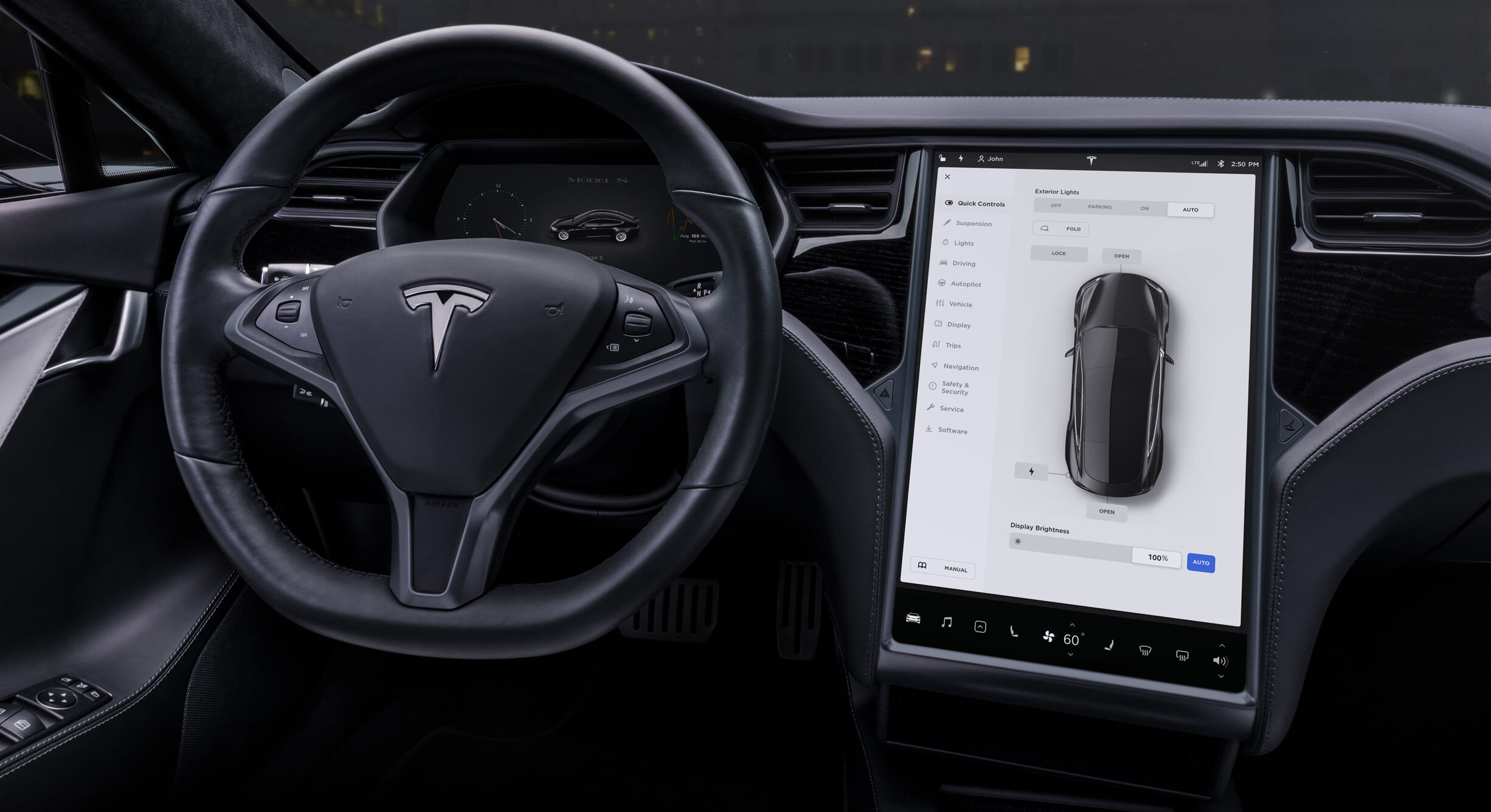
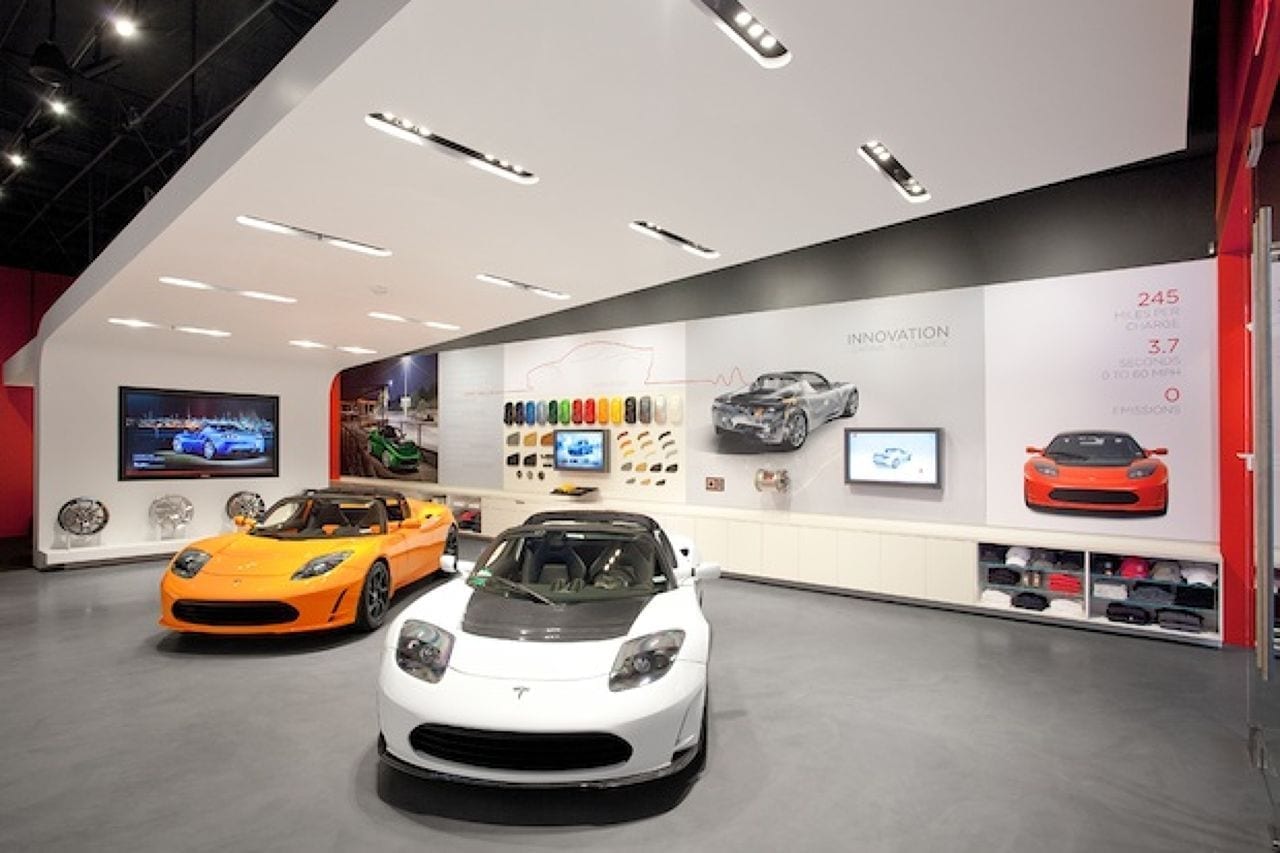
    Electric vehicle giant Tesla has closed what had been its flagship showroom in China as the company adjusts its sales and service strategy in its second-largest market, two people with knowledge of the matter said.

    Tesla shut the showroom in Beijing’s Parkview Green, an upscale downtown shopping centre late last week, according to the people, who spoke on condition they not be named because they were not authorised to discuss the closure.

    A member of the mall’s staff confirmed to Reuters during a visit to the site on Wednesday that Tesla had shut the showroom, whose windows are now plastered with posters belonging to the next tenant, a streetwear brand.

    “Their contract with us expired and Tesla decided not to extend it,” the mall staff member said.

    A call to the store earlier in the day was redirected to another Tesla showroom nearby. Tesla did not immediately reply to a request for comment.

    The Beijing store, opened in 2013, was Tesla’s first in China. It was renovated in 2018 and expanded to occupy two floors of the mall.

    Tesla owns and runs over 200 outlets across the country that display models and arrange test drives for potential buyers.

    Reuters reported in September that Tesla was considering closing some showrooms in flashy malls in cities like Beijing after traffic plunged during Covid restrictions.

    It also plans to put more emphasis on stores in less-costly suburban locations that can also provide repairs as the company works to meet Chief Executive Elon Musk’s goal of improving service for customers.

    As part of that effort, Tesla has been hiring technicians and other staff for service jobs in China. The company’s China recruitment website showed 305 openings for service jobs as of Wednesday, little changed from September.

    More than half of Tesla’s China stores do not offer repair or maintenance services and are in high-rent locations where space is limited. That included the now-closed Parkview Green Tesla store.

    Tesla owns all of its own stores rather than relying on dealers. It also sells its cars online. That has allowed it more leeway to adjust a retail strategy that had been initially modeled on Apple’s glossy stores in high-rent locations.

    Tesla has cut starter prices for its Model 3 and Model Y cars by as much as 9 per cent in China, reversing a trend of price increases across the industry amid signs of softening demand in the world’s largest auto market.

    Tesla sold 318,151 vehicles in China in the first nine months of 2022, up 55 per cent from a year earlier, according the China Passenger Car Association. By comparison, overall sales of electric vehicles and hybrids increased 113.2 per cent.
  • Volvo Global Sales Up By 6.9% In October 2022

    Volvo Global Sales Up By 6.9% In October 2022

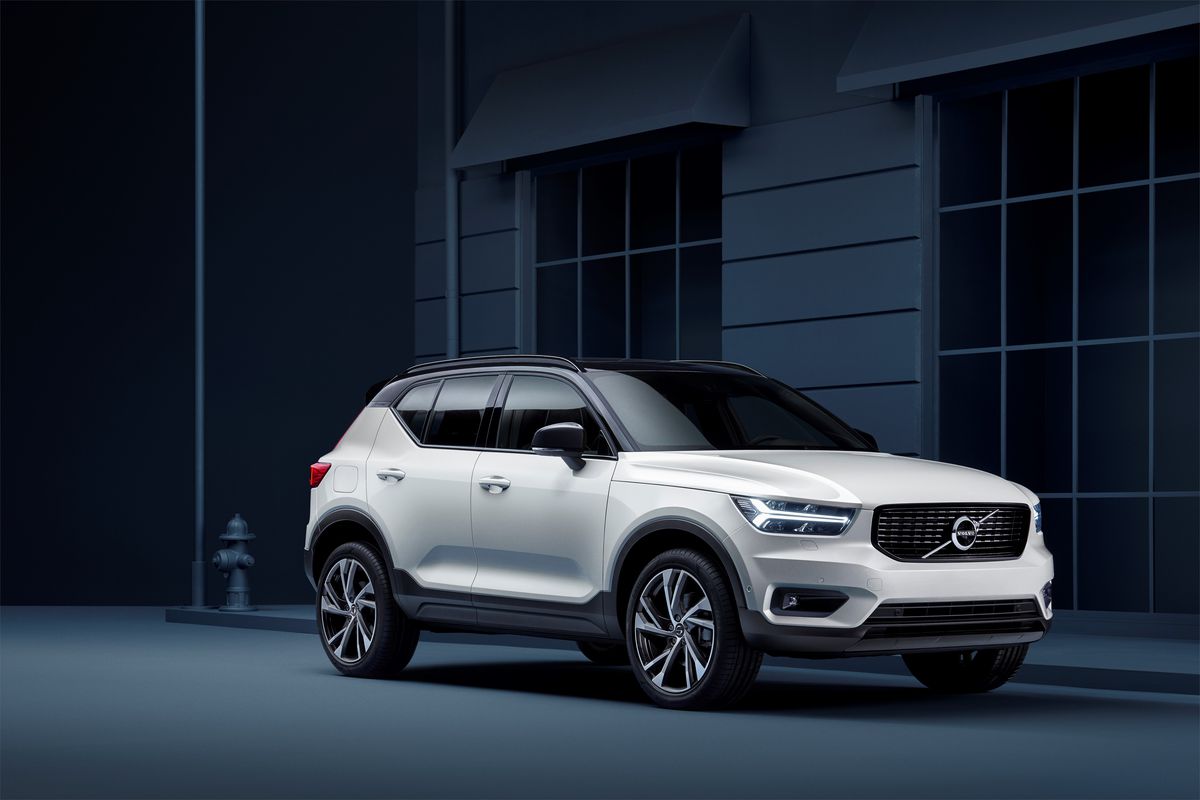
    Volvo Cars reported sales of 54,317 cars in October, up 6.9 percent compared with the same month last year. The company’s line-up of Recharge models represented 36.8 percent of the sales last month, with fully electric cars accounting for 15 percent of total sales. During the January-to-October period, Volvo Cars’ retail sales reached 483,304 cars, down 16.9 percent compared to the same period last year.

    European sales for October reached 22,030 cars, down 0.4 percent compared to the same month last year. Sales of Recharge cars accounted for 64.9 percent of the total sales in the region during the month.

    Volvo Cars’ US sales for the month reached 9,478, up 8.9 percent compared with October last year, with Recharge models making up 26.7 percent of the total sales. China sales increased by 36.7 percent in October to 15,048 cars compared with the same month last year, with Recharge models amounting to 6.1 percent of total sales.

    Volvo Cars’ top-selling model for the month was the XC60 with sales of 17,531 cars (2021: 15,399 units), followed by the XC40 at 14,883 cars (2021: 13,987) and the XC90 at 7,651 cars (2021: 8,639 units).

  • Invygo Raises $10 Million For Its Car Subscription Service

    Invygo Raises $10 Million For Its Car Subscription Service

    UAE and Saudi Arabia-based startup Invygo has raised $10 million in series A funding led by MEVP as it further develops its long-term car subscription service. The startup, which was founded by Eslam Ahmed Hussein and Pulkit Ganjoo in 2019 so far has raised $14.3 million.

    It counts Al Rajhi Partners, Arab Bank, Amana Capital, and Palm Drive Capital as its main investors. It also has backing from Signal Peak Ventures and Knollwood Investment Advisory, who have participated in the latest round.

    “We’ve split the full payment of the car into three. Normally, you have a massive down payment of around 20% and then your monthly instalments with no way to get out of that commitment. Our starting fee is around 5%, and you can cancel your plan at any time without any penalty,” Ganjoo said.

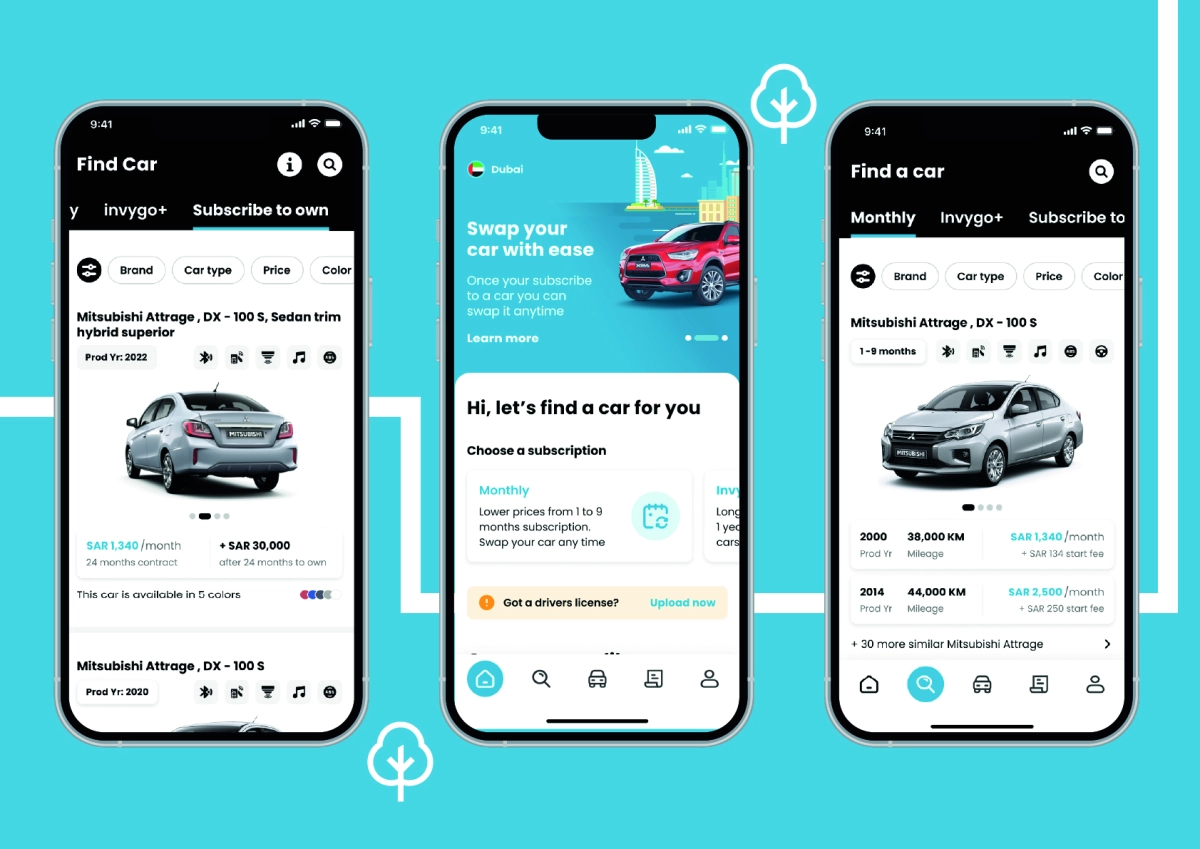
    Invygo offers three kinds of rental services – one is a short-term rental service that allows one to one to nine months. The other service is the long-term leasing option which allows users to rent a car for between a year and three years. There is also a subscription to own model, which offers brand new or semi-used cars on a 2–3-year rental period with a start fee that’s much lower than a traditional down payment.

    Users for a short-term rental can go to its website and look for available cars and book a rental. Users have access to all kinds of information like model number, year of make, and km clocked by the vehicle in question. Users can also filter parameters like car type, fuel type, transmission type and color.

    Invygo offers doorstep delivery, replacement of car, maintenance, regular insurance, and a 24×7 helpline. Invygo makes money by taking a cut of the subscription. It has around 200 cars in Saudi Arabia on its service and 100 cars in the UAE.

  • Porsche Singapore launches experience studio

    Porsche Singapore launches experience studio

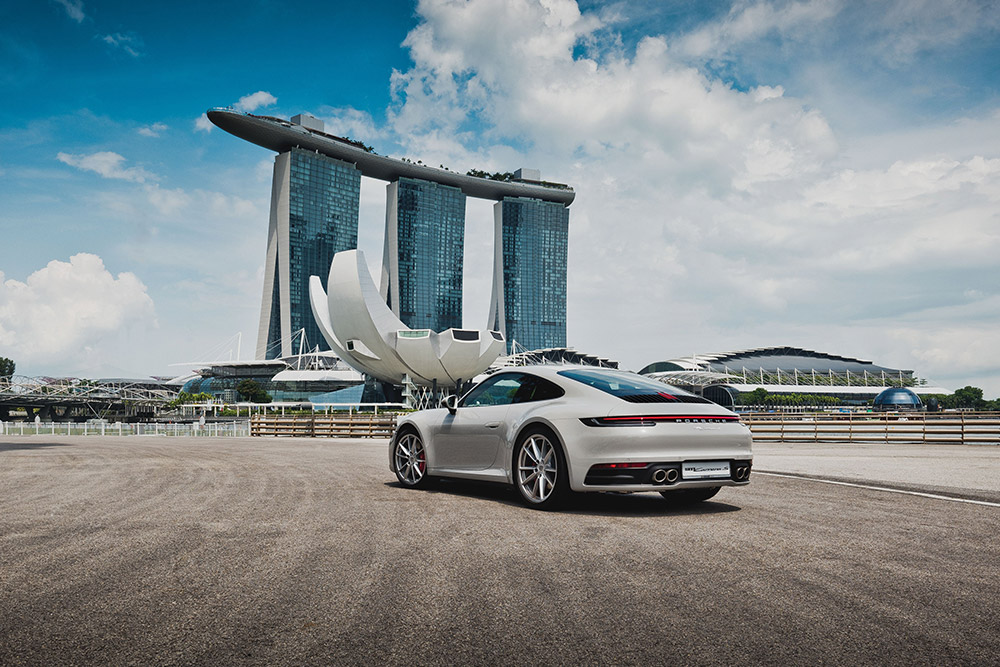
    Porsche Singapore will bring a new experience studio to the city-state, under the partnership with real estate developer GuocoLand.

    The location will open in the second half of next year, at the new Guoco Midtown integrated mixed-use development on Beach Road, near the City Hall, Bugis, and Marina Centre city core districts.

    The company says the concept underscores the brand’s dedication to take it closer to customers in Singapore and provide more customer-centric experiences.

    “Porsche Studio Singapore aims to be a premier brand destination with its convenient city-centre location – a place where fans and customers alike can immerse themselves in new experiences, connecting and exchanging ideas with other likeminded Porsche enthusiasts,” said Andre Brand, GM at Porsche Singapore.

    Porsche Studio Singapore will combine the retail spaces with Porsche car displays, and an integrated F&B experience, along with co-working and community exhibition spaces.

    There are also event spaces available for larger-scale Porsche community gatherings and family reunions.

    “Porsche is the brand for those who follow their dreams, and with Porsche Studio Singapore, we want to dream big and create a space that is both experiential for customers and fans, but also home for us to interact closely with our Porsche community,” Brand added.

    Porsche Singapore also plans to launch a Porsche Now Pop-up at Guoco Tower in the Tanjong Pagar district on January 1.

  • GM Temporarily Halts Paid Advertising On Twitter

    GM Temporarily Halts Paid Advertising On Twitter

    General Motors Co said late on Friday it had temporarily halted paid advertising on Twitter after Elon Musk completed his takeover of the social media company.

    The largest U.S. automaker said it was “engaging with Twitter to understand the direction of the platform under their new ownership.”

    Twitter did not immediately respond to a request for comment. Musk is also the chief executive of GM rival Tesla Inc.

    GM said, “as is the normal course of business with a significant change in a media platform, we have temporarily paused our paid advertising.” The Detroit automaker added its “customer care interactions on Twitter will continue.”

    Ad sales accounted for more than 90% of Twitter’s revenue in the second quarter. At a presentation for advertisers in May, some ad agencies and brands were already sceptical and concerned over Twitter’s future.

    On the eve of the deal’s closing, Musk appealed directly to advertisers in an open-letter tweet: “Twitter obviously cannot become a free-for-all hellscape, where anything can be said with no consequences! Twitter aspires to be the most respected advertising platform in the world that strengthens your brand and grows your enterprise.”

    Musk tweeted on Friday that Twitter will form a content moderation council “with widely diverse viewpoints.” Musk said no major content decisions or account reinstatements will happen before the council convenes.

  • Ford Fiesta Production To End In June 2023

    Ford Fiesta Production To End In June 2023

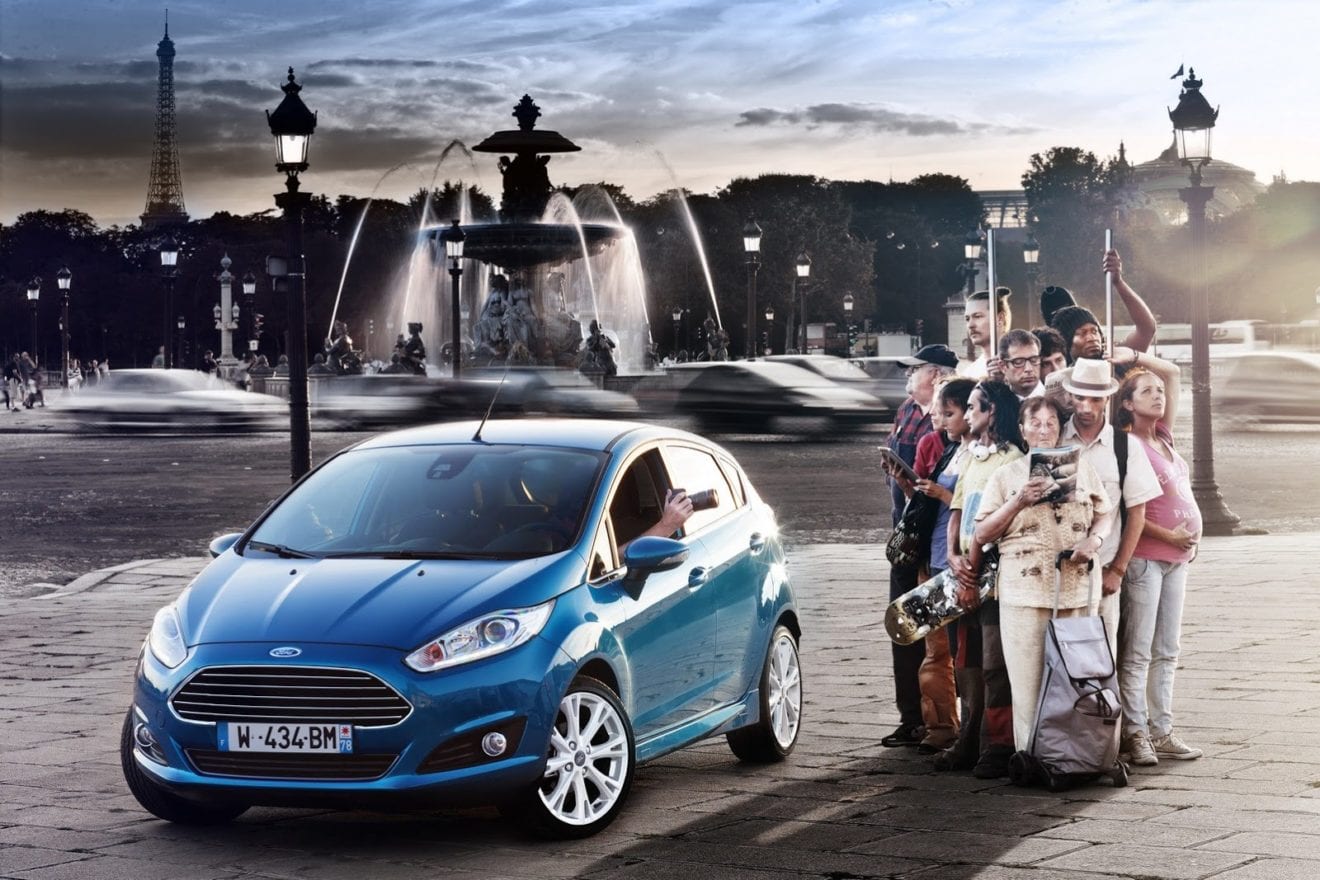
    There has already been speculation about it, now it’s official. After 47 years and over 18 million units, production of the Ford Fiesta will end in the summer of 2023, as electric vehicles are on the brand’s agenda in the future. Developed as the “Bobcat” project, the first Ford Fiesta was launched in 1976. Developed at a cost of billions, a plant was built especially for the small car in Valencia, Spain. Pony, Bambi, Metro or Sierra were discussed as alternative names, and Henry Ford II finally decided in favour of Fiesta.

    The seventh generation of the Ford Fiesta got a major facelift in 2021, but with the elimination of the three-door model a year later, it was already clear that the future would not look very rosy. Ford is now officially confirming that the Fiesta will end at the end of June 2023 at the Cologne plant. Until the end of production, only 5-door versions of the Fiesta will roll off the assembly line.

    All Ford Fiesta customer vehicles already ordered will be built and delivered. However, one cannot say exactly how long that will be, but one will ensure that Ford dealers are provided with the most up-to-date information that they can pass on to their customers. In addition, with the termination of Fiesta production, the production of combustion engines at the Cologne plant will also be phased out. The production volume of the 1.0-litre petrol engine, which is currently still being manufactured in the Cologne engine plant for other Ford locations, will be relocated to the engine plant in Craiova/Romania.

    The Ford Fiesta entered the Indian market back in 1999 as the Ford Ikon sedan in its fourth-generation avatar. It employed a powerful 1.6-litre petrol engine while later in its fifth generation, it was launched under the Fiesta moniker. It was joined by the Ford Fiesta S variant with a retuned suspension and a few other tweaks for responsive handling. Later when the sixth generation Ford Fiesta arrived, the car debuted the new 1.5-litre Ti-VCT engine along with improved safety features. However, due to poor reception, by 2015, Ford pulled the plug on the Fiesta sedan in India and missed out on receiving the Ford Fiesta hatchback altogether.

  • Tesla Recalls 24,000 U.S. Vehicles Over Seat Belt Issue

    Tesla Recalls 24,000 U.S. Vehicles Over Seat Belt Issue

    Tesla Inc is recalling just over 24,000 U.S. 2017-2022 Model 3 vehicles over a seat belt issue.

    The Austin-based electric vehicle company said the second-row left seat belt buckle and second-row center seat belt anchor may have been incorrectly reassembled during vehicle service.

    It told the National Highway Traffic Safety Administration it had reports of 105 service repairs, including warranty claims, for U.S. vehicles that were or might be related to the recall issue.

  • Honda To Cut Car Output At Two Japanese Plants In October

    Honda To Cut Car Output At Two Japanese Plants In October

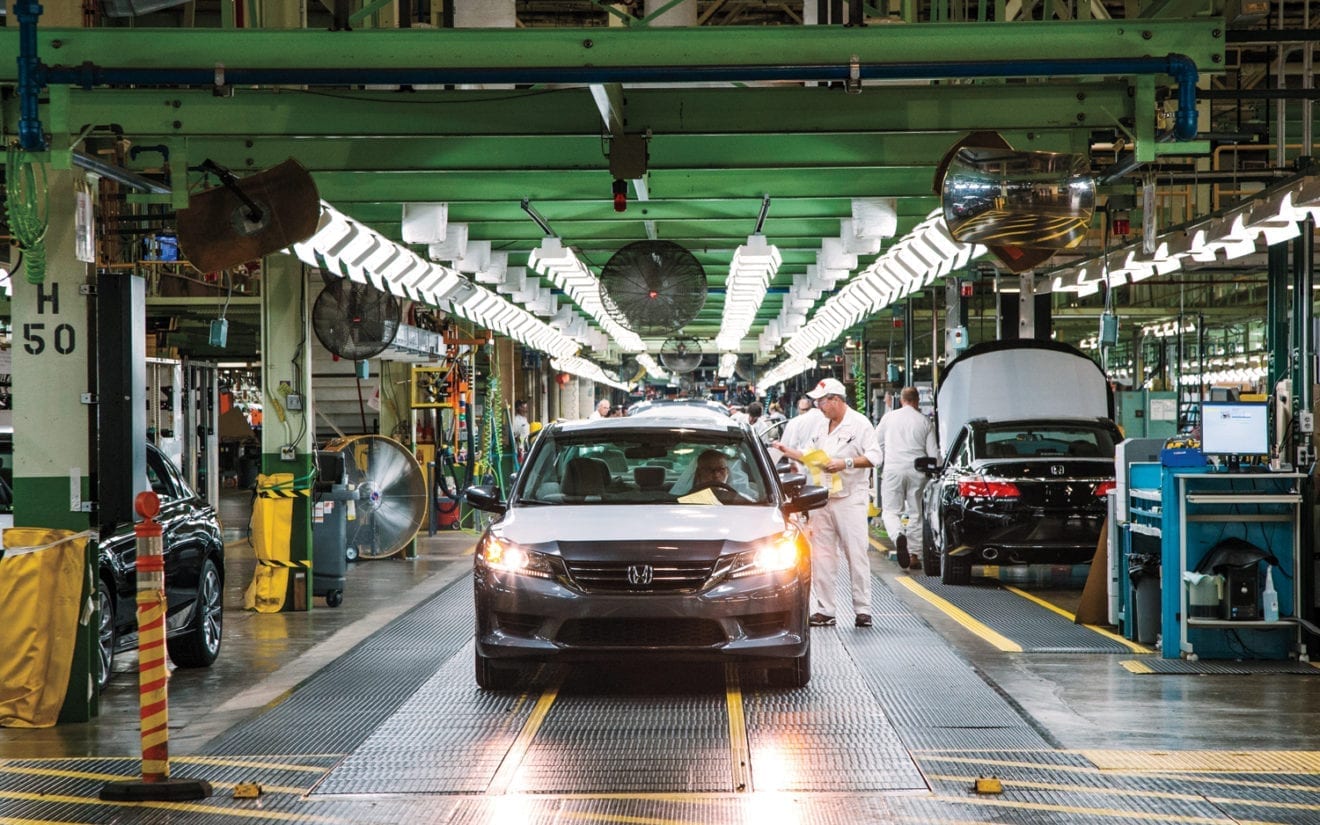
    Honda Motor Co said on Thursday it would reduce car output by up to 40% at two Japanese plants for the rest of October from its earlier plans, as the company battles with persistent supply chain and logistical problems.

    Two lines at Honda’s Suzuka plant in western Japan will cut production by about 20% in October, while its assembly plant in Saitama prefecture, north of Tokyo, will lower production plans by about 40% for the month.

    The automaker said it would cut vehicle production at Suzuka by 40% and Saitama by 30% in early October last month.

    Honda blamed delays in receiving parts and logistics on COVID-19 outbreaks and semiconductor shortages. The output reduction will affect vehicles, including the Vezel sport-utility vehicle, Stepwgn minivan, and Civic compact car.

    Honda’s production at the two plants returned to normal for June after an earlier reduction, but it began adjusting again for July.

    Last week, Honda’s rival Toyota Motor Corp lowered its October production target by 6.3% to about 750,000 vehicles because of a shortage of semiconductors.

    That announcement came about a week after it had lowered the production target for that month to around 800,000, about 100,000 short of its average monthly production plan. (This story has been corrected to fix the month Honda began cutting production to July from August in paragraph 5)

  • Indonesia In Talks With Ford And Hyundai To Setup operational Base For EVs

    Indonesia In Talks With Ford And Hyundai To Setup operational Base For EVs

    The Indonesian government seems to be pulling up its socks in a bid to catch up with other markets in the EV space. According to a Reuters report, Indonesia invited Ford Motor Company and Hyundai Motor Company to set up its operational base related to electric vehicles in the Southeast Asian country. The report states that Indonesia Coordinating Minister for Economic Affairs, Airlangga Hartarto, made this statement in Washington, D.C. last week and the country is gearing up to work in this direction.

    Ford, nickel miner Vale Indonesia and China’s Zhejiang Huayou Cobalt had earlier said that in July they had signed a non-binding memorandum of cooperation to build a plant in Indonesia to extract nickel chemicals. Hartarto said Indonesia also is in discussions with Hyundai and South Korean battery maker LG Energy Solution over battery and EV investments. “We have raw materials for EV battery technologies,” Hartarto told an audience at the Center for Strategic and International Studies. Indonesia’s large supplies of nickel, as well as semiconductor production capacity, can support the U.S. auto industry,” Hartarto said.

    If the deal materialise, Indonesia will be join the Asian developing economies in the push for faster adoption of greener vehicles. While Ford already winded up from the Indian market last year and is likely to make its comeback selling CBU models like the Mustang Mach-E, Hyundai India already sells the locally assembled Kona electric SUV in our market is testing the Ioniq 5 on the Indian roads as well.

  • Elon Musk Admits That Tesla Will Not Get Approval For Self-Driving Cars

    Elon Musk Admits That Tesla Will Not Get Approval For Self-Driving Cars

    Elon Musk has revealed that Tesla will not get any approvals for driverless cars in the U.S. (which means that the car wouldn’t need any input from the driver to operate). At the time in 2016 when Tesla had launched the AutoPilot stack, Musk had falsely predicted that permissions would be achieved by 2020 and till today he never had a morbid outlook towards the same.

    Now for the last two years, Tesla has been running its full self-driving beta but now Musk admits that it will not be given permission to operate without a driver in 2022. In fact, the software is not ready even now and Musk also says another major beta update will be rolled out before the end of the year.

    “The car will be able to take you from your home to your work, your friend’s house, the grocery store without you touching the wheel. It’s a separate matter as to will it have regulatory approval. It won’t have regulatory approval at that time,” he said.

    Recently, a Tesla Model 3 was also involved in an accident that had a fatality. The car was reportedly on AutoPilot and rear-ended a bike. Many have been critical of Tesla’s approach to the technology and accused it of false advertising which will certainly make regulatory approval harder. Tesla’s cars also don’t use radars anymore and Musk has been resistant towards adding LiDAR, something every other self-driving tech player has admitted is necessary.

  • Automakers To Double Spending On EVs, Batteries To $1.2 Trillion By 2030

    Automakers To Double Spending On EVs, Batteries To $1.2 Trillion By 2030

    The world’s top automakers are planning to spend nearly $1.2 trillion through 2030 to develop and produce millions of electric vehicles, along with the batteries and raw materials to support that production, according to a Reuters analysis of public data and projections released by those companies.

    The EV investment figure, which has not previously been published, dwarfs previous investment estimates by Reuters and is more than twice the most recent calculation published just a year ago.

    To put the figure in context, Alphabet, the parent company of Google and Waymo, has a market cap of $1.3 trillion.

    Automakers have forecast plans to build 54 million battery electric vehicles in 2030, representing more than 50% of total vehicle production, according to the analysis.

    To support that unprecedented level of EVs, carmakers and their battery partners are planning to install 5.8 terawatt-hours of battery production capacity by 2030, according to data from Benchmark Mineral Intelligence and the manufacturers.

    Leading the charge is Tesla, where Chief Executive Elon Musk has outlined an audacious plan to build 20 million EVs in 2030, requiring an estimated 3 terawatt-hours of batteries. Musk in late October said Tesla already is working on a smaller vehicle platform targeted to cost half as much as the Model 3 and Model Y.

    While Tesla has not fully disclosed its spending plans, such exponential growth – a 13-fold increase over the estimated 1.5 million vehicles it hopes to sell this year – will come at a cost of hundreds of billions of dollars, according to a Reuters analysis of Tesla’s financial disclosures and forecasts for global EV demand, and battery and battery mineral production.

    Germany’s Volkswagen, while lagging behind Tesla, has ambitious plans through the end of the decade, targeting well over $100 billion to build out its global EV portfolio, add new battery “gigafactories” in Europe and North America and lock up supplies of key raw materials.

    Japan’s Toyota Motor Corp is investing $70 billion to electrify vehicles and produce more batteries, and expects to sell at least 3.5 million battery electric models (BEVs) in 2030. It plans at least 30 different BEVs and expects to transition the entire Lexus range to battery electric over that span.

    Ford Motor Co keeps boosting its spending level on new EVs – now at $50 billion – and at least 240 gigawatt-hours of battery capacity with its partners as it aims to produce around 3 million BEVs in 2030 – half its total volume.

    Mercedes-Benz has earmarked at least $47 billion for EV development and production, nearly two-thirds of that to boost its global battery capacity with partners to more than 200 gigawatt-hours.

    BMW, Stellantis and General Motors each plan to spend at least $35 billion on EVs and batteries, with Stellantis laying out the most aggressive battery program: A planned 400 gigawatt-hours of capacity with partners by 2030, including four plants in North America.

  • Honda Motorcycle and Scooter India To Launch Flex-Fuel Engined Motorcycle

    Honda Motorcycle and Scooter India To Launch Flex-Fuel Engined Motorcycle

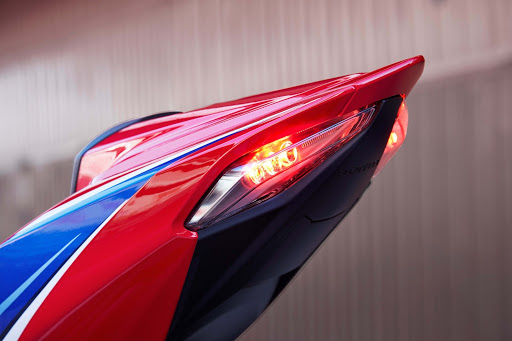
    Honda Motorcycle and Scooter India (HMSI) confirmed that will launch motorcycles with flex-fuel engines in the next two years. Atsushi Ogata, President, MD & CEO, HMSI, said that the company’s internal target is to launch at least one commuter motorcycle with flex-fuel engine by the end of 2024, although he did not mention which model will it be. Honda already has motorcycles with flex-fuel engines, which it sells in Brazil.

    TVS Motor Company was the first two-wheeler company to launch a flex-fuel motorcycle, which was the Apache RTR 200 Fi E100 in July 2019, which could run on petrol as well as Ethanol. It had an E100 200 cc single-cylinder engine which has a power output of 20.7 bhp at 8,500 rpm and peak torque of 18.1 Nm at 7,000 rpm. TVS claimed a top speed of 129 kmph. The ethanol powered Apache gets electronic fuel injection with twin-spray-twin-port system that ensures better power delivery while burning cleaner and emitting up to 50 per cent less Benzene and Butadiene gases.

    HMSI’s announcement comes at the same time as Toyota showcasing the Corolla Altis Flex-Fuel model, earlier this month, which will be launched soon. The new Corolla Altis is powered by a 1.8-litre flex fuel engine paired with the company’s self-charging strong hybrid system. The debut marks the return of name plate to India after Toyota pulled the plug on the previous generation model in 2020. The flex fuel

  • Tesla Investors To Focus On Demand Issues In Earnings Report

    Tesla Investors To Focus On Demand Issues In Earnings Report

    Tesla’s quarterly report on Wednesday will likely show whether the Elon Musk-led electric-vehicle maker is facing any weakness in demand that is starting to weigh on the wider auto industry.

    Decades-high inflation, rising energy bills in Europe and signs of a weakening China market have raised doubts among some analysts about whether Tesla can buck an economic slowdown and continue to raise prices without hurting its sales.

    Although Musk has said Tesla “does not have a demand problem”, the company’s latest report on deliveries showed that it made 22,000 more EVs than it delivered to customers in the third quarter. It blamed the rise in inventory on transportation-related problems.

    Demand for Tesla vehicles in China, the world’s biggest market for autos, is emerging as a major worry among Wall Street analysts, given that the EV maker faces tough competition from domestic rivals BYD, Nio Inc and XPeng Inc.

    “A top concern right now is demand in China as wait times seem to be shrinking,” RBC Capital Markets said. “Question is if this is a blip or signs of a bigger change among consumers.”

    Globally, there are fears that auto sales may lose steam in the coming quarters as rising interest rates and a weaker economic backdrop discourage consumers from making big-ticket purchases.

    Analysts say pricing is a key factor that could help Tesla make up for a possible demand drop and boost revenue.

    The average U.S. selling price of Tesla’s Model 3 has risen about 24% since January last year, potentially helping the EV maker rake in record revenue in the third quarter.

    Wells Fargo said Tesla is likely the biggest beneficiary of the Biden administration’s new consumer tax credits to incentivize North American battery and EV production.

    Musk also raised hopes of a share buyback earlier this month when he said “Noted” on Twitter in response to a major individual investor’s call for a stock buyback.

    Such a move could benefit Musk, whose 15% stake in Tesla makes him its biggest stakeholder, and help him raise cash to fund his $44 billion deal to take Twitter Inc private.

    Some experts say Musk may need to sell up to an extra $3 billion in stock after the earnings announcement to help fund the deal.

    “If there is a big sale of Tesla stock by Musk after earnings, that will be a strong sign that the Twitter deal is on the cusp of closing,” said Adam Badawi, a law professor at UC Berkeley.

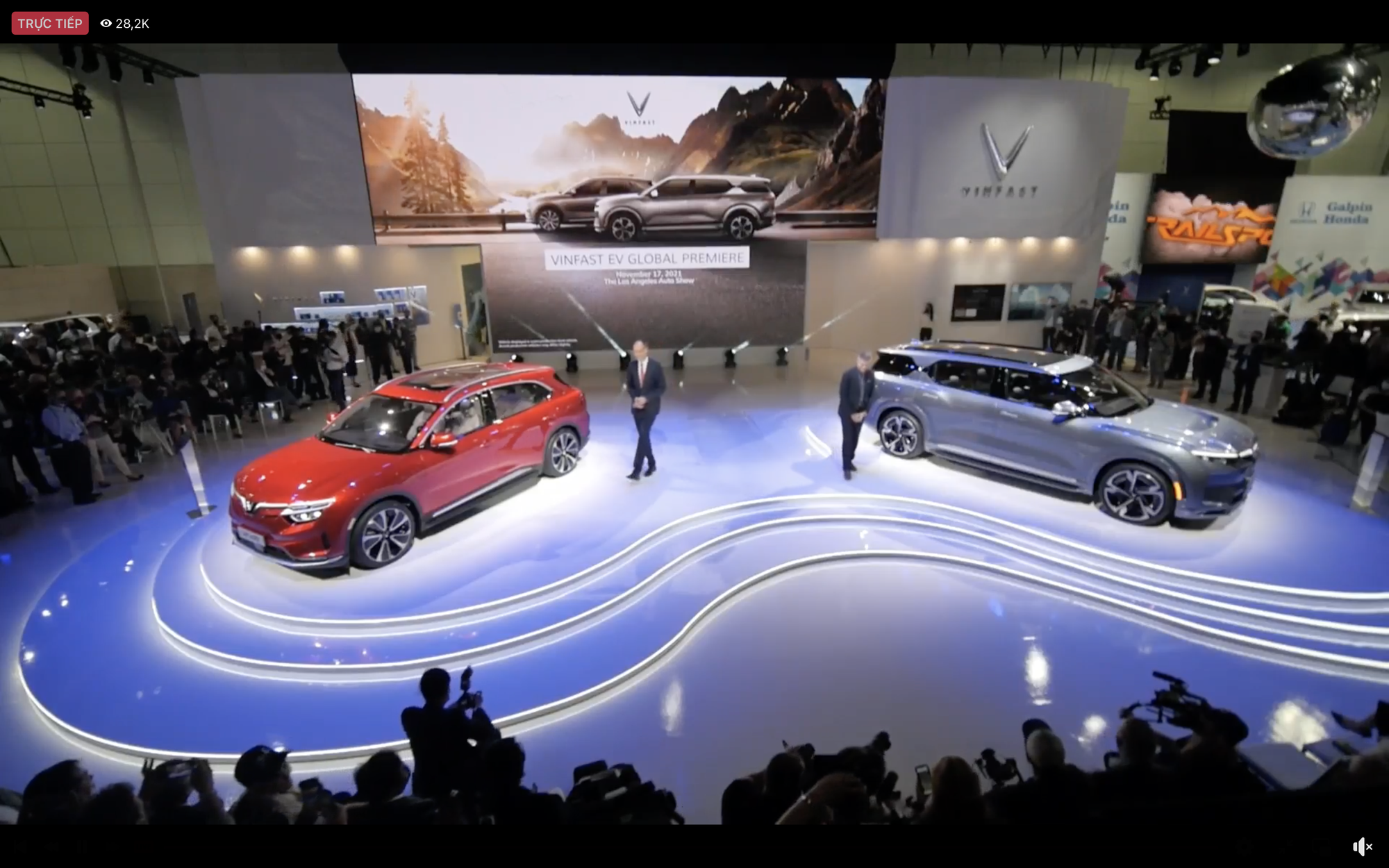
  • VinFast to set up headquarters in 3 European markets

    VinFast to set up headquarters in 3 European markets

    VinFast plans to set up headquarters in Germany, France and the Netherlands as it eyes a successful foray into key European markets for its electric cars.

    But it is unclear when the Frankfurt, Paris and Amsterdam offices will open.

    The company is set to open its first flagship store in Germany’s Cologne next month and another one in Paris in December. More are in the works by early 2023.

    To support its rollout, VinFast said it already has hundreds of employees with vehicle manufacturing experience and market-specific expertise in place across its European launch markets.

    It aims to hire over 200 technicians in the next 12 months to support its after-sales network.

    “Returning to the site of our global debut four years ago, VinFast is proud of the great strides it has made towards market expansion and its commitment to driving the global electric vehicle revolution,” Le Thi Thu Thuy, Vingroup vice chairwoman and VinFast Global CEO, said.

    “VinFast aspires to an even bigger achievement: becoming a beloved all-electric brand in crucial European markets.”

  • Mercedes Enables Apple Music Spatial Audio On Its Cars

    Mercedes Enables Apple Music Spatial Audio On Its Cars

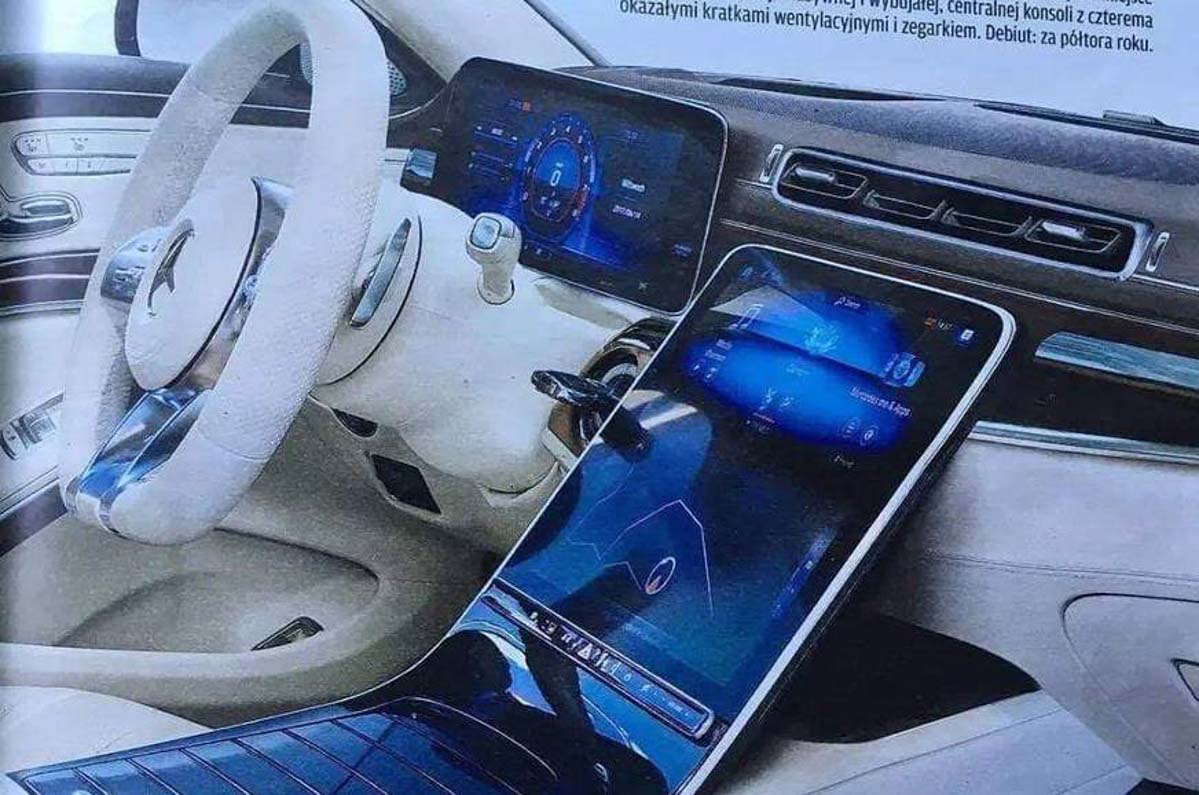
    Mercedes has always made a big deal about its Burmester Audio system on its luxury vehicles which promise 3D and 4D sound, but now it has upped the ante by collaborating with Apple. Apple’s music streaming service, Apple Music, launched spatial audio support last year and now it is deeply integrated into the latest Mercedes Benz EQE SUV which launched on Sunday.

    Spatial audio will be enabled at the heart of the MBUX infotainment system which will first come to the Mercedes Maybach S-Class, S-Class, EQS, and EQS SUV via a software update and it will be launched as well on the EQE and the newly launched EQE SUV. This feature is available for cars that have the Bumester 3D or 4D sound system which costs an additional $4,550 to $6,730.

    Mercedes and Apple believe that it will offer a more realistic audio experience and give the vibe of a concert hall.

    “Sound quality is incredibly important to Apple Music which is why we are so excited to be working with Mercedes to make Spatial Audio on Apple Music available natively in the car for the first time. Spatial Audio is revolutionising the way artists create and fans listen to music and it’s an experience that is impossible to explain in words; you have to hear it for yourself to appreciate it. Together with Mercedes, we now have even more opportunities to bring wholly immersive music to our subscribers all over the world,“ said Apple’s VP for Apple Music and Beats Oliver Schusser.

    While Apple has an arrangement with Audi and Porsche for the integration of Apple Music in their cars, this is the first time the Cupertino-based company has extended spatial audio capabilities beyond iPhone, iPad, Mac, AirPods and HomePods. Recently, Apple revealed that Apple Music had over 100 million songs and a substantial chunk of the portfolio includes songs tuned for spatial audio and lossless high-resolution audio formats.

    Most premium car owners tend to iPhone users as it is the best-selling smartphone in the world and via its vertical integration Apple is now capturing a lot of customers that would’ve traditionally gravitated towards Spotify by virtue of deals like the one it has now cracked with Mercedes.