Category: Automotive

Retail News Asia is committed to providing both local and global retailers with the latest Auto and Car news throughout the Asian market. This on a daily base.

  • Tesla Considering Lithium Refinery In Texas, Seeks Tax Relief

    Tesla Considering Lithium Refinery In Texas, Seeks Tax Relief

    Tesla Inc is considering setting up a lithium refinery on the gulf coast of Texas, as it looks to secure supply of the key component used in batteries amid surging demand for electric vehicles.

    The potential battery-grade lithium hydroxide refining facility, which Tesla touted as the first of its kind in North America, will process “raw ore material into a usable state for battery production”, the company said in an application filed with the Texas Comptroller’s Office.

    A decision to invest in Texas will also be based on the ability to obtain relief on local property taxes, Tesla said.

    Chief Executive Officer Elon Musk has previously said that Tesla may have to enter the mining and refining industry directly at scale as lithium prices surge.

    Musk has also been vocal about the need for more players in the lithium refining industry. “You can’t lose. It’s licensed to print money,” he had said at the company’s second-quarter earnings call.

    Securing a steady supply of battery components is seen critical for Tesla as it faces fierce competition in the fast-growing market for electric cars.

    If approved, construction could begin in the fourth quarter of 2022 and would reach commercial production by the end of 2024, Tesla said in the application dated Aug. 22.

    Under the plan, Tesla will ship the final product from the refinery by trucks and rail to various Tesla battery manufacturing sites supporting the supply chain for large-scale and electric vehicle batteries.

    Tesla, whose shares rose 1.4% in premarket trading, also said it would use less hazardous reagents and create usable byproducts, compared with the conventional process.

    Lithium prices have skyrocketed this year due to surging demand from the auto sector. China remains the world’s largest lithium processor, though proposed rival projects in the United States and European Union have faced a range of setbacks.

    If Tesla’s plan goes ahead, the carmaker could become the first in the sector to invest directly in lithium refining as automakers scramble to stitch up deals with miners and refiners.

    “Car-makers are trying to ensure they have control over the supply of lithium, hedging for any geopolitical situation that might arise in future where the supply is disrupted,” said Arpit Agarwal, director at venture capital firm Blume Ventures, which has backed EV startups such as Euler Motors and Yulu.

    Tesla also stands to gain from lower logistics costs as well as incentives it may get from the U.S. government, he added.

    Battery makers are also looking to increase production in the United States, where a shift toward EVs could increase as the country implements stricter regulation and tightens tax credit eligibility.

    Tesla itself signed a five-year supply deal with Australia’s Liontown Resources earlier this year, while rival EV makers Stellantis and Byd have invested in miners around the world.

    CATL, the world’s biggest battery maker, has also taken stakes in lithium miners.
  • Chinese automaker Chery plans to set up plant in Vietnam

    Chinese automaker Chery plans to set up plant in Vietnam

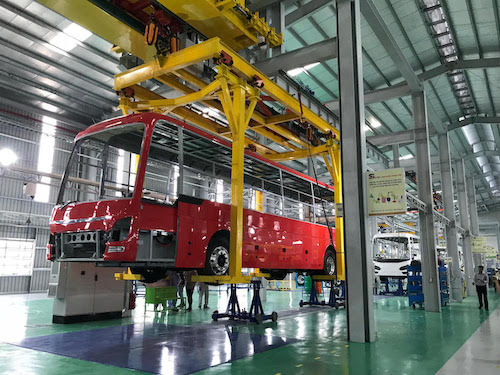
    China’s state-owned Chery Automobile has said it wants to sell its first made-in-Vietnam car by next year.

    “We want to build a factory in Vietnam as we don’t want to merely import and sell cars,” Chery Vietnam director Tocy Tang told VnExpress.

    The plant would allow Chery to “build vehicles that are localized for Vietnamese and optimize its potential,” while enhancing the branding of Chinese cars in Vietnam, he said.

    Several Chinese auto brands like BAIC, Hongqi and Brilliance are present in Vietnam, but they are imported by a dealer in Hai Phong.

    Founded in 1997, Chery is the ninth largest car manufacturer and top exporter in China. It also produces Jaguar and Land Rover in China under a 50:50 joint venture with the UK-based luxury carmaker.

  • Ford India Makes Final Settlement Offer To Chennai Factory Workers

    Ford India Makes Final Settlement Offer To Chennai Factory Workers

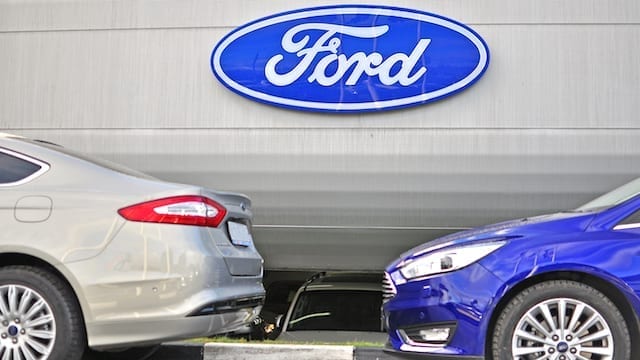
    Ford India has made the ‘final’ settlement offer to the workers of its Chennai plant, offering a deadline of September 23, 2022 to accept it. The American carmaker, who announced its plan to stop manufacturing vehicles in India last year, has continuously been in failed negotiations with the Chennai Ford Employees Union (CFEU) regarding the severance package for the factory employees. Now, Ford has presented its final severance package to the Chennai car factory Union and the company has said that it will be valid from September 5, 2022, to September 23, 2022.

    In its official statement, Ford India said, “The Company has always cared for its employees and has taken steps to help them to the extent possible. Unfortunately, the Company’s attempts to negotiate a fair severance package have not yielded results because of the Union’s unreasonable demands (of an average of 215 equivalent days of wages per completed year of service). Union also failed to recognize that no company which has decided to stop production because of significant accumulated losses and no sustainable path forward can meet such demands.”

    Alternatively, Ford has been trying to find a suitable buyer for the plant, however, as that hasn’t happened yet, the carmaker has decided to roll out the final severance settlement offer to employees. Ford India says that on average, the settlement is equivalent to 130 days of gross wages per completed year of service. The severance packages will range from a minimum amount of Rs. 33 lakh to a maximum cap of Rs. 85 lakh, which is a cumulative average severance of Rs. 41 lakh per employee.

    Ford says, “The final severance settlement offer translates to an average of about 4.6 years or 56-month salary for each employee (from a minimum of 3.5 years i.e., 43 months to a maximum of 8 years i.e., 100 months), thus assuring employees with adequate financial cushion and adequate time to decide their next action. The Company strongly encourages employees to accept and sign-up for the final severance settlement offer, valid from September 5, 2022, to September 23, 2022, for their own and their family’s future. Further, employees who take the final severance settlement offer will be paid wages until September 30, 2022.”

    Post the deadline, Ford says that if the Company were to retrench employees and pay the statutory compensation, the employees will only be entitled to severance pay of 15 days of every completed year of service.

    Earlier in August 2022, Ford India signed a Unit Transfer Agreement (UTA) with Tata Passenger Electric Mobility Limited (TPEML) for the acquisition of the former’s manufacturing plant in Sanand, Gujarat. The agreement includes entire land and buildings, the vehicle manufacturing facility as well as the machinery and equipment inside. It also includes the transfer of all eligible employees of Ford India working at the Sanand plant to Tata Motors. The Indian auto giant acquired the facility from Ford for a sum of Rs. 725.7 crore exclusive of taxes, the company said in a statement. Both companies signed a tripartite MoU on May 30, 2022.

  • Amazon Signs Green Hydrogen Supply Deal With Plug Power

    Amazon Signs Green Hydrogen Supply Deal With Plug Power

    Plug Power Inc has signed a deal with Amazon.com Inc to supply liquid green hydrogen, the companies said on Thursday, sending the hydrogen fuel cell maker’s shares up over 12% in early trade.

    Green hydrogen is often touted as the future of energy, as the flexible and zero-emission fuel can be used for transportation and electricity generation.

    Amazon said Plug Power will supply 10,950 tons of green hydrogen every year starting 2025 that it will use to replace grey hydrogen, diesel, and other fossil fuels. The companies, however, did not divulge the supply pricing specifics.

    Grey hydrogen is made from natural gas, without the carbon sequestration, and makes up the bulk of the 90 million tonnes of hydrogen produced globally every year.

    The green hydrogen deal will provide enough annual power for 30,000 forklifts or 800 heavy-duty trucks, Amazon said.

    The world’s largest online retailer said that it uses hydrogen to power over 15,000 fuel-cell propelled forklifts, and plans to increase that number to 20,000 units in three years.

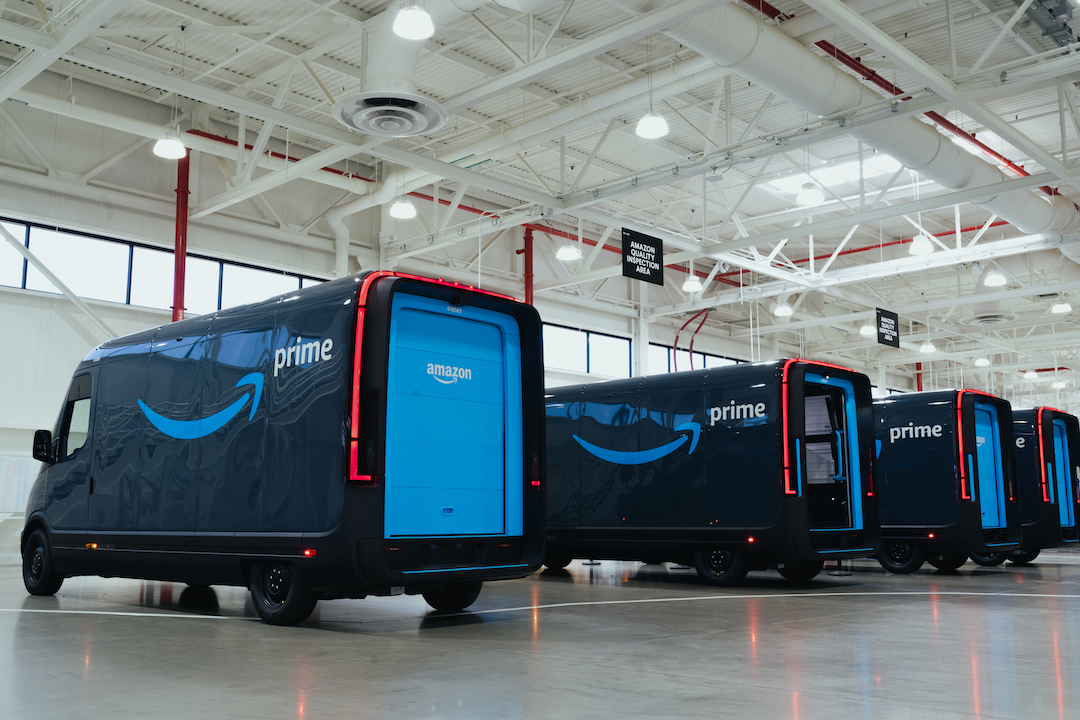
    The company also has an order for 100,000 electric delivery vehicles with Rivian Automotive Inc, in which it is the largest shareholder, according to Refinitiv.

    Plug said the Amazon deal will help the company grow towards its goal of $3 billion in revenue in 2025.

    It also said it has granted Amazon a warrant to buy up to 16 million of its shares at an exercise price of $22.9841 a unit for the first 9 million shares.

    Amazon would vest the warrant in full if it spends $2.1 billion over the seven-year term of the warrant across Plug products, it added.

  • Goodyear Launches New Assurance ComfortTred Tyres In India

    Goodyear Launches New Assurance ComfortTred Tyres In India

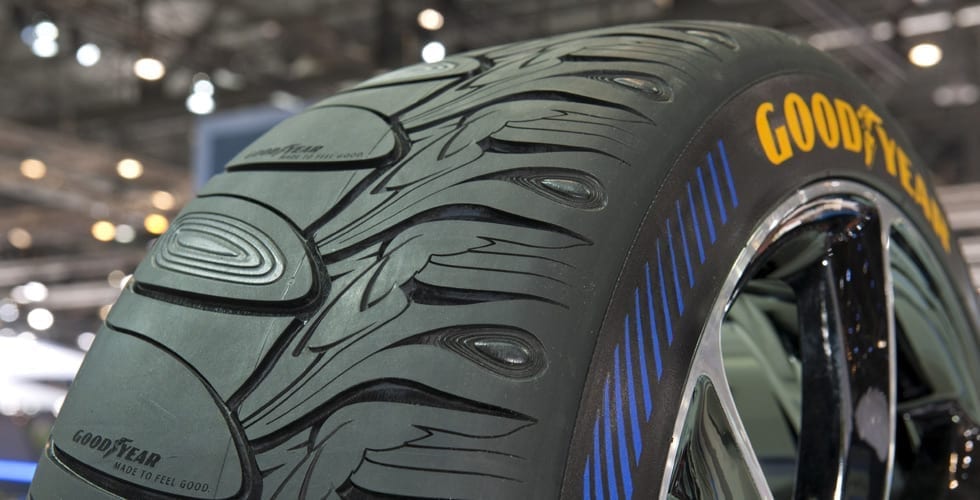
    Goodyear has launched the new Assurance ComfortTred range of tyres in India. Targeted at luxury vehicles, the company says that the new range of tyres combines advanced technology, sophisticated tread pattern and a consumer-focused design to offer a quieter ride and good levels of grip in the dry and wet.

    Sandeep Mahajan, Chairman & Managing Director, Goodyear India Limited said, “We are excited to introduce Assurance ComfortTred, a new product from Goodyear, tailored for luxury vehicles. Assurance ComfortTred is a true comfort provider that enables the vehicle to become a quiet space for the riders and thus provide superior driving experience to consumers.”

    Goodyear says that the new tyres use its trademark ANX Technology to deliver a quitter ride. The tyre’s closed tread pattern design helps to reduce air pumping noise when driving while the smaller treads reduce the force of impact with the road thus also reducing noise and vibrations. Additionally, the tyres also get an additional layer of noise and vibration-cancelling material during the course of manufacturing.

    The company also claims that the new tyre range is manufactured using a high amount of silica and resin to provide improved traction. The new range of tyres are available in 7 sizes ranging from 225/55 R16 up to 245/45 R18.

  • Tesla Shares Close Lower After 3-1 Stock Split

    Tesla Shares Close Lower After 3-1 Stock Split

    Tesla’s shares closed 2% lower on Thursday as a three-for-one stock split announced by the world’s most valuable automaker to woo retail investors came into effect.

    The stock opened at $302 and closed at $296.07 as the split allowed investors to get two additional shares for each they owned as of Aug. 17. It had closed at $891.29 before the split on Wednesday.

    This is the second stock split by Tesla in as many years and follows similar moves by high-growth companies such as Amazon.com and Google-parent Alphabet to address the growing need to diversify investor base.

    Stock splits “certainly have a higher appeal to retail investors and makes their options more affordable as well,” said Art Hogan, chief market strategist at B. Riley.

    “Retail investors are a very important cohort for Tesla and today’s stock split is an acknowledgment of that fact.”

    Austin-based Tesla debuted in 2010 at $17 and in a decade surged to a peak price of $2,000, becoming one of the highest priced shares on Wall Street and making it difficult for small investors to bet on the high-growth stock.

    The company decided to split its stock on a five-for-one basis in August 2020 and breached $1 trillion in market capitalization in 2021.

    The EV maker is the sixth company in the S&P 500 index to split its shares this year, according to Howard Silverblatt, senior index analyst for S&P and Dow Jones indices.

    Tesla’s ticker was trending on social media stocktwits.com, indicating increased chatter among individual investors. The shares have lost about 11% of their value since March when the company announced plans to increase its number of shares.

    “In typical buy-the-rumor, sell-the-news style, investors tend to drastically scale back purchases of splitting stocks in the weeks ensuing the effective split date, causing price momentum to slow,” analysts at Vanda Research said in a note.

    A stock split does not affect the fundamentals of a company, but makes it easier for individual investors to do small trades. The benefits of such splits, however, are becoming less clear as brokerages let customers buy parts of a company’s share.

    Tesla’s shares have fallen about 16% so far this year amid a selloff in high-growth stocks due to worries over aggressive interest rate hikes and geopolitical uncertainties.

  • Ex-Apple engineer pleads guilty to stealing documentation about the Apple Car

    Ex-Apple engineer pleads guilty to stealing documentation about the Apple Car

    A former Apple employee by the name of Xiaolang Zhang, who was arrested by federal agents in July 2018 just as he was about to board a flight from San Jose to China, pleaded guilty yesterday in federal court in San Jose. Zhang was charged with stealing computer files that contained secrets about Apple’s hush-hush car division. Zhang faces a sentence of up to 10 years in prison and a $250,000 fine.
    The sentencing is scheduled to take place on November 14th. Apple claimed that Zhang downloaded an internal 25-page document that contained engineering schematics of a circuit board for a self-driving vehicle. He is alleged to have taken reference manuals and PDFs that featured descriptions of Apple’s automotive prototypes and prototype requirements. He had worked for Apple from 2015 to the time of his arrest and his last position with the company was as a hardware engineer on the team developing Apple’s self-driving car.
    Even after four years have gone by since Zhang was busted at San Jose airport, Apple has remained tight-lipped about the division developing its autonomous electric car. In the charging documents created by the FBI back in 2018, it says that 5,000 Apple employees knew about the project at the time, and that 2,700 had access to project materials and databases.
    Internal software used by Apple helps the company keep track of the employees who know about a certain project and they are forced to take in-person secrecy training according to the complaint filed with the court.

    Zhang originally took paternity leave and traveled to China, but Apple started to smell a rat when he returned from the country and quit. He said that he needed to return to China to take care of his mother. Zhang did tell Apple that he was going to work for Chinese electric vehicle company Xmotors and a suspicious Apple immediately blocked his access to Apple’s network.

    But Apple made this move after Zhang had accessed company databases to download documents and information. He was also caught red-handed (no pun intended) by Apple’s closed-circuit television system removing circuit boards and a Linux server from the lab.
    Zhang isn’t the only former Apple employee who tried to peddle secrets from Apple’s car division. Jizhong Chen is accused of stealing trade secrets from Apple’s car division in early 2019. A U.S. citizen, Chen was also planning on traveling to China. While he is represented by the same attorney defending Zhang, unlike the latter, Chen has yet to plead guilty and a trial date has not been scheduled.
    While things seem a bit slow at Apple’s car division, you know, with the new iPhone 14 series just a couple of weeks away from being announced, last month there was some news. With rumors circulating that Apple had decided to give up on the project, the company reportedly hired 20-year industry veteran Luigi Taraborrelli to lead the team designing the vehicle.
    At Lamborghini, Taraborrelli was in charge of chassis and vehicle dynamics working on such models as the Urus, Huracan, Aventador, and the off-road Huracan Sterrato. He also did some work on the Asterion concept car. Earlier this year, there was speculation that Apple is developing an operating system designed just for the Apple Car that would control important functions such as navigation and lane control, Apple Music integration, and air conditioning.
  • Baidu Bags China’s First Fully Driverless Robotaxi Licenses

    Baidu Bags China’s First Fully Driverless Robotaxi Licenses

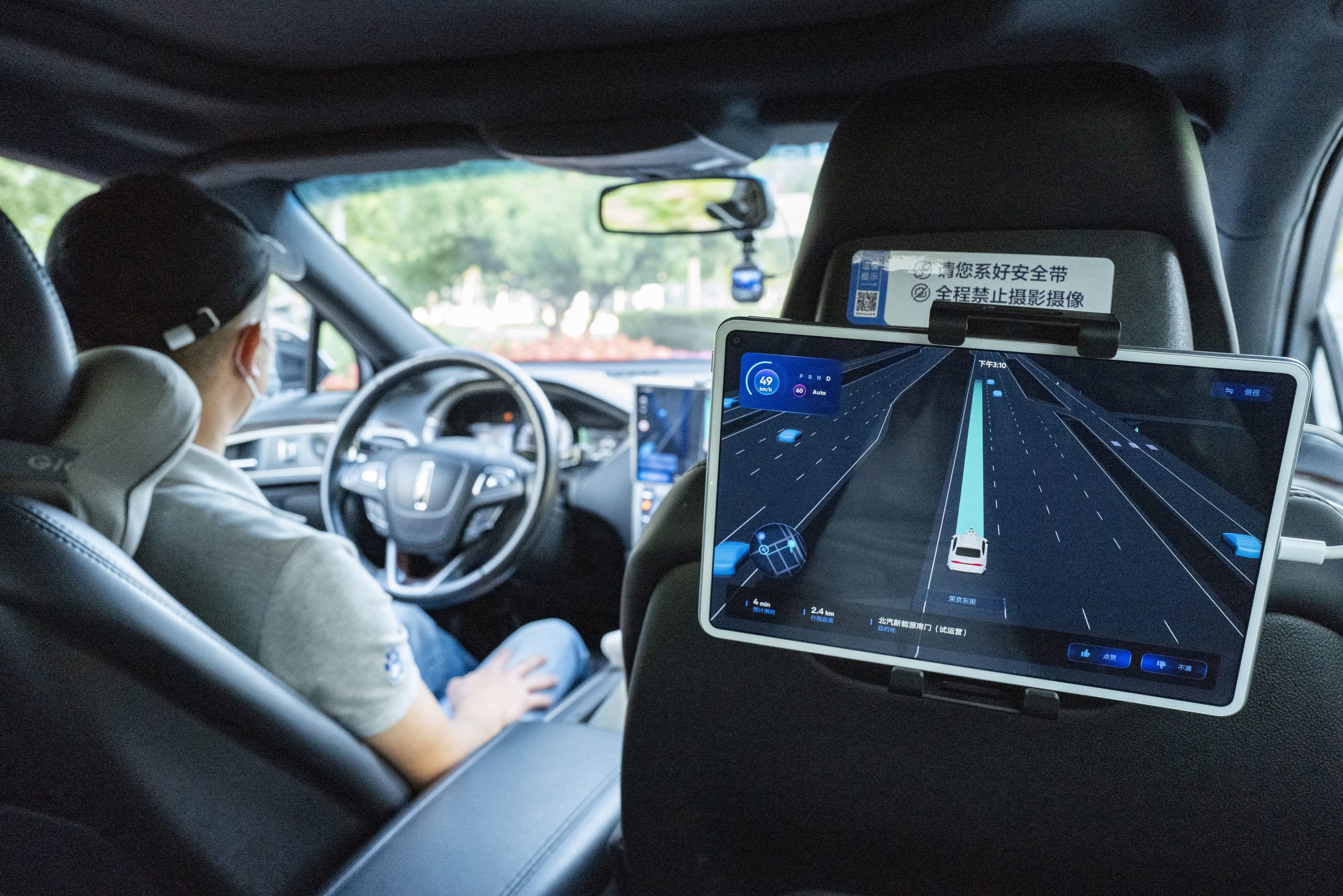
    China search engine giant Baidu Inc said on Monday it has obtained permits to operate fully driverless robotaxi services on open roads from two Chinese cities, the first of their kind in the country.

    The permits, awarded by the southwestern municipality of Chongqing and the central city of Wuhan, allow commercial robotaxis to offer rides to the public without human safety drivers in the car. They come into effect on Monday.

    Baidu said they marked a “turning point” in China’s policy-making towards autonomous driving.

    “These permits have deep significance for the industry,” Wei Dong, chief safety operation officer of Baidu’s Intelligent Driving Group, told Reuters in an interview. “If we think of the exploration of space, this moment is equal to landing on the moon.”

    At first, Baidu will deploy a batch of five fee-charging robotaxis in each city, where they will be allowed to operate in designated areas from 9 a.m. to 5 p.m. in Wuhan and 9:30 a.m. to 4:30 p.m. in Chongqing, the company said in a statement.

    The service areas span 30 square km (11.58 square miles) in Chongqing’s Yongchuan District and 13 sq km in the Wuhan Economic & Technological Development Zone.

    In April, Baidu’s Apollo and Toyota Motor Corp-backed Pony.ai said that they received permits in Beijing to deploy robotaxis without safety drivers in the driver’s seat on open roads within a 60 sq km area. But the Beijing permits  still require them to have a safety driver in the passenger seat. These services have started.

    Baidu is also in talks with local governments in Beijing, Shanghai and Shenzhen, to secure licenses within a year to test fully-driverless and unpaid robotaxis in those cities, according to Wei.

    China’s efforts to fast-track autonomous vehicle trials and permits come as U.S. regulators are also pushing ahead with milestone-setting autonomous driving policies.

    In January, self-driving company Cruise received a permit from the California Public Utilities Commission that allows it to offer paid and fully driverless rides from 10 p.m. to 6 a.m. in select streets in San Francisco.

    Apollo Go, Baidu’s robotaxi service, has operated over 1 million rides across 10 Chinese cities since its launch in 2020.

    Baidu has not reported any problems with the service and has not given a breakdown for how much it has invested in the project.

  • Auto association wants tax cuts for hybrid vehicles

    Auto association wants tax cuts for hybrid vehicles

    The Vietnam Automobile Manufacturers Association has sought cuts in excise tax and registration fees for hybrid electric vehicles.

    This would stimulate demand and encourage businesses to invest in power generation and charging systems, it said.

    Incentives for electric and hybrid vehicles should gradually decrease, and there would be no need for them by 2050 once these vehicles establish themselves in the market, it said.

    VAMA also called on the Government to soon finalize the development strategy and incentives for the auto industry to help achieve Vietnam’s goal of carbon neutrality by 2050.

    Earlier this year the National Assembly cut excise tax for electric vehicles to 3% from 15% for five years and to 11% from 2027.

    But hybrid cars are not eligible for the incentives, meaning buyers have to pay excise tax of 15% and registration fee of 10-12%.

  • Suzuki Ciaz, Hyundai Elantra are worst selling cars in July

    Suzuki Ciaz, Hyundai Elantra are worst selling cars in July

    The Suzuki Ciaz was the worst selling car in Vietnam last month, and the Hyundai Elantra made it to the list for the first time.

    In July only four Ciaz sedans were sold, down from eight in June. Elantra sold seven, but dealers said they expect to start selling a newer model in Q3.

    Toyota Land Cruiser made it to the third spot with eight units, down from 19 in June. But supply was scarce since they are imported from Japan.

    Two other Toyota cars also appeared on the list: the Alphard MPV (10 units) and the Prado SUV (19).

    Other worst selling cars in July included the Ford Explorer SUV (11), Suzuki Swift hatchback (14) and Honda Brio (14).

    Auto sales resumed in July with 30,254 units sold, up 20% from June, showing signs of recovery.

  • Canoo Outsource Production Of Electric Vans For Walmart

    Canoo Outsource Production Of Electric Vans For Walmart

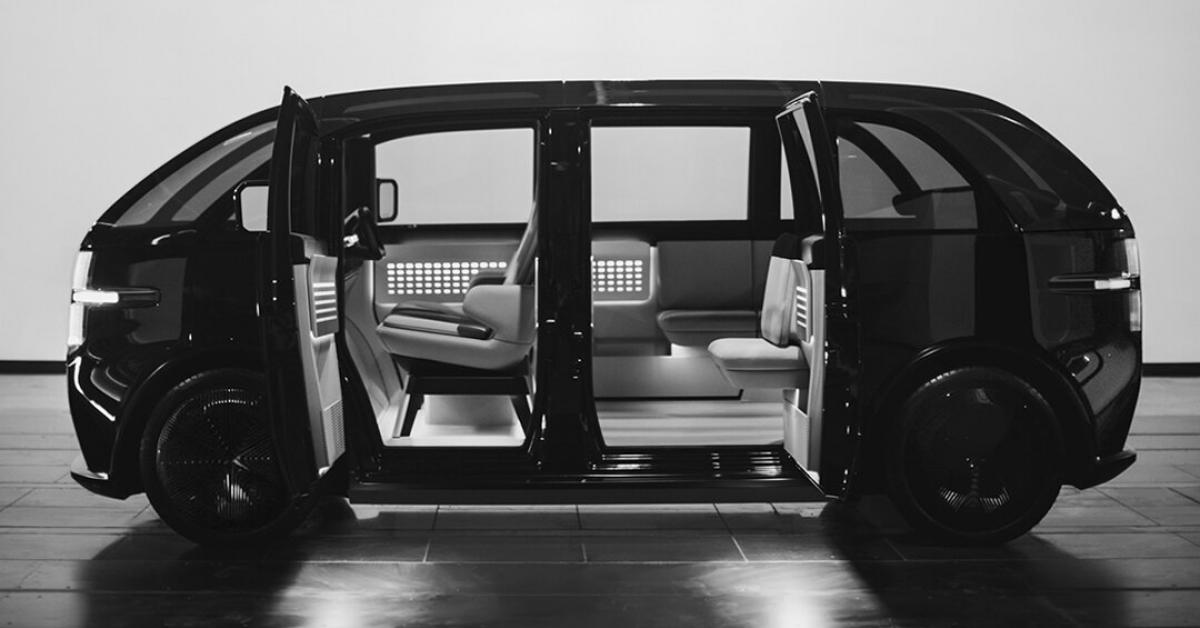
    Canoo has outsourced the production of its electric vans which it has been developing for Walmart. It announced this in its Q2 financial results filing. Its CEO Tony Aquila announced that it didn’t have the immediate capability to manufacture the vans itself so in the meanwhile an unspecific contractor till the end of the year. Originally, it said it will be shifting production facility in Bentonville where Walmart is also situated. Canoo has an order of 4,500 electric vans from the retail giant.

    Walmart also has an option of ordering up to 10,000 cars. Canoo already had a contract manufacturing deal with Dutch company VDL Nedcar but it backed out of the deal in late 2021 as it believed it could start production of the LifeStyle car.

    Aquila says that deliveries to Walmart are on track to begin in the first quarter of 2023. Canoo’s success is predicated on the completion of this agreement.

    “We have entered into an agreement with Walmart Inc. for the purchase of electric vehicles and expect that, at least initially, Walmart Inc. will be our largest customer. If we are unable to maintain this relationship, or if Walmart purchases significantly fewer vehicles than we currently anticipate or none at all, our business, prospects, financial condition, results of operations, and cash flows could be materially and adversely affected,” said Tony Aquila.

    Canoo is burning through its cash reserves quite rapidly. It has posted a net loss of $164.4 million for this quarter. It posted $289.8 million in the first half of the year.

  • Mercedes-AMG Project One Enters Production

    Mercedes-AMG Project One Enters Production

    Mercedes-AMG had taken the wraps off the Project One F1-engined hypercar five years ago at the Frankfurt Motor Show and it’s been a long time coming since then. Destined to be the fastest road car ever by Mercedes, it was delayed due to development hurdles with making the turbocharged 1.6-liter V6 petrol engine meet emission standards and noise regulations. Well! It’s through all that and the car is on the assembly line now. Mercedes-AMG will only manufacture 275 units of the Project one.

    The cars are being put together by hand at AMG’s Coventry facility in UK while the hybrid powertrain with its four electric motors is made by the Mercedes AMG High Performance Powertrains division in Brixworth. The same division was also responsible for developing and producing the heart of its F1 car. To start production of the One, AMG teamed up with Multimatic to set up a bespoke production facility. The company claims that each and every vehicle has to go through 16 assembly and testing stations and Mercedes-AMG describes the process as resembling the production of luxury watches. Over 50 people are involved in the production of a One hypercar. Once the car is assembled, it undergoes a roll-out at an adjacent proving ground where a factory test driver gives it the proverbial green light.

    The engine is tuned to churn out 1034 bhp and is covered in protective wrap and transported in a closed truck to Affalterbach in Germany at AMG’s headquarters. This is where the owners finally get their hands on the hypercar and also receive a technical vehicle briefing by AMG One experts. The Mercedes-AMG Project One can can do 200 km/h in less than 6 seconds and has a top speed of 350 km/h. It has also run purely on electric power with a range of 25 km and its internal combustion engine will need to be rebuilt after 50,000 km something that is quite common for an F1 engine

  • Auto sales rise 20% in July

    Auto sales rise 20% in July

    Auto sales resumed in July with 30,254 units sold, up 20% from June, showing signs of recovery.

    The increase came after June sales plunged to a three-month low as the government’s decree to cut registration fee by 50% ended in May.

    The multi-utility vehicle Mitsubishi Xpander was the best selling model in July at 2,711 units, followed by Hyundai Accent, 1,423, and Toyota Veloz, 1,395.

    In the first seven months, 232,094 units were sold, up 39% year-on-year.

    Truong Hai Auto Corporation (THACO) led with 83,201 units sold, up 46% year-on-year.

    It was followed by Toyota with 48,650 units and Mitsubishi, with 22,361 units.

    Honda and Ford made up the rest of the top five.

    Last year, auto sales dropped 3% from 2020 to 383,444 units.

  • Used O2O motorbike trade debuts in Vietnam

    Used O2O motorbike trade debuts in Vietnam

    OKXE has pioneered the online to offline (O2O) sale of used motorbikes, rejuvenating the market.

    The inadequacies and bad experience of users when buying used motorbikes are the reason why Wooseok Kim, CEO of OKXE launched an online platform trading used motorbikes in Vietnam.

    “We want to solve the inconvenience of users when trading used motorbikes, providing an easier, safer and more enjoyable online platform,” said the OKXE CEO.

    Founded in August 2018, the initial goal of this start-up is to create a more explicit and secure second-hand motorbike market for users. At the time, OKXE was one of the first mobile platforms in Vietnam in the field. However, a lot of Vietnamese still consider motorbikes to be assets of great value, and online transactions can be problematic due to fraud, subpar autos, and inaccurate prices. The company’s CEO admitted his online platform has only met about 50-60 percent of the original target.

    Operational for more than five years, OKXE Vietnam opened a motorbike service station, put into operation at the end of May 2022, creating a complete O2O model.

    This was a bold strategy, because the O2O model has not been applied by many in the field, said a company representative. “While focusing on the new model, OKXE maintains investment in expanding the market. This is a dual goal that we want to achieve in future.”

    The OKXE service station is expected to provide users with a more comprehensive experience based on the expanding and evolving ecosystem. The service station offers extra services in addition to its online offerings, including quality checks on used motorbikes, price recommendations, consignment acceptance, and sales negotiations.

    The first OKXE Station covers 500 square meters, including: service reception, motorbike wash, refurbishment repair, quality inspection, consignment display, cafe counter…

    This company’s research indicates the majority of Vietnamese frequently pick traditional motorcycle marketplaces or secondhand motorbike shops. By cooperating with this trading approach, OKXE opted to create a national network of collaboration rather than viewing it as a rival.

    To be more precise, this business leverages a plentiful source of clients and used vehicles from its partners, gradually enhancing and perfecting its service chain. On the other hand, OKXE uses a platform with millions of users to assist partners in selling motorbikes more quickly. Additionally, the service center aims to help partners with financial assistance packages for motorbike purchases, warranties, after-sales, photography support, and online sales.

    According to an OKXE representative, the company’s platform has experienced steady growth from the time of launch until now and is always improving. “Currently, the OKXE app has reached seven million downloads on iOS and Android platforms. More than 500,000 motorbikes have been registered and sold successfully through the application”, it was added. “As of July 2022, OKXE Vietnam has nearly 2,000 partner stores nationwide.”

  • Quarter chicken, free chips and EV charging

    Quarter chicken, free chips and EV charging

    The sometimes maligned but nevertheless delicious red-headed stepchild of Australian fast-food chains, Red Rooster, has partnered with Evie Networks to roll out EV charging at its stores across the country.

    Red Rooster and Evie Networks on Monday celebrated the installation of the first two fast charger at the recently refurbished Red Rooster in Vermont, in Melbourne’s eastern suburbs, the first of many slated to be rolled out across the fast-food chain’s network.

    “Gone are the days where we drive to fuel stations; instead, drivers can charge while they grab some chicken and chips,” said Chris Mills, Evie Networks CEO.

    The general consensus on Plugshare is that the location is a good one for a quick top up, and the temptation of free chips has not been lost on EV drivers. To claim your free chips, just show the Evie app screen at the counter.

    The announcement follows a similar partnership unveiled in late-2021 between Evie Networks and another Australia fast-food chain, Hungry Jacks.