Category: Automotive

Retail News Asia is committed to providing both local and global retailers with the latest Auto and Car news throughout the Asian market. This on a daily base.

  • Waymo, UPS Expand Autonomous Freight Truck Tie-Up Ahead Of Holidays

    Waymo, UPS Expand Autonomous Freight Truck Tie-Up Ahead Of Holidays

    Alphabet Inc’s Waymo said on Wednesday it is expanding its partnership with United Parcel Service Inc to move freight using autonomous trucks between two of the parcel delivery company’s Texas facilities during the holiday season.

    Waymo Via, the company’s delivery operation, began its partnership with UPS in early 2020 when it shuttled packages for the company between the Metro Phoenix area and its Tempe hub in Arizona using an autonomous minivan.

    The company said trial runs would start in the coming weeks, where big rigs equipped with its fifth-generation Waymo Driver technology will deliver for UPS’ North American Air Freight unit between facilities in Dallas-Fort Worth and Houston, Texas.

    Driver shortages have hit U.S. trucking and delivery companies, most notably FedEx Corp, as they race to hire workers for the crucial holiday season when package volumes can easily double. Waymo and UPS said the trials would help assess the impact of autonomous driving technology on safety and efficiency.

  • TomTom Shares Rise 9% After European Union Decision

    TomTom Shares Rise 9% After European Union Decision

    Shares in Dutch navigation and mapping company TomTom closed 9.3% higher on Wednesday, after the European Union published rules specifying that cars must incorporate a technology that the company supplies, starting in 2022.

    TomTom works with carmakers to provide the technology that helps drivers comply with speed limits, called “intelligent speed assistance.”

    The publication in the Official Journal of the European Union specified that new car models must use the technology starting in July 2022, and all cars sold must have it by 2024.

    Chief Executive Harold Goddijn was scheduled to meet with investors at a conference during the day, though it was not clear whether he discussed potential financial benefits to the company.

    A spokesperson for TomTom could not immediately comment. Sebastian Marland, an equity research analyst at AFS Group, said he believed the news was the trigger for the stock’s surge.

    “This creates a momentary opportunity for TomTom as it provides the tech required to ‘add-on’ to the cars,” he said.

    However, “from 2024 onwards, all cars in the EU must have it installed, making TomTom’s tech redundant in the long term.”

  • Harley-Davidson Sportster S To Be Launched At India Bike Week

    Harley-Davidson Sportster S To Be Launched At India Bike Week

    Harley-Davidson India will launch its second new model based on the new Revolution Max 1250 platform, after the Pan America 1250. The new Sportster S, will make its India debut at the upcoming India Bike Week 2021 at Aamby Valley, Lonavla on December 4-5, 2021. On the Sportster S, the 1,252 cc, v-twin is tuned for more torque lower in the rev range and makes less horsepower. The new Harley-Davidson Sportster S will be the second Harley-Davidson model to be launched in India, after the American motorcycle brand revamped its India business, now in association with Hero MotoCorp.

    The 1,252 cc v-twin puts out 121 bhp, (instead of the 150 odd bhp on the Pan America 1250), but peak torque has been moved down the rev range, with 127 Nm hitting at 6,000 rpm. The redline is quite high too, at 9,500 rpm, and with variable valve timing on both the intake and exhaust ports, the Revolution Max 1250 promises sporty performance across the rev range. The suspension comes from Showa, featuring 43 mm inverted forks and a piggyback reservoir rear shock with remote preload adjustment. But suspension travel is limited, with just 91 mm on the front, and a measly 50 mm travel on the rear monoshock.

    The bike was originally unveiled as the Harley-Davidson 1250 Custom, and looks stocky and muscular, with fat tires that complete the buffed-up look. The short front mudguard is reminiscent of a classic bobber, while the tail section, with the high-mounted exhaust, as well as solo seat are a nod to Harley-Davidson’s XR750 flat tracker. A round, 4-inch TFT screen displays all instrumentation and supports Bluetooth-enabled infotainment. All-LED lighting includes a Daymaker Signature LED headlamp, a similar front headlight from the Harley-Davidson Fat Bob. Once it’s launched in India, we expect the new Sportster S to be priced at around ₹ 14-15 lakh (Ex-showroom).

  • Apple reportedly accelerates ‘Project Titan’ as fully self-driving car could arrive by 2025

    Apple reportedly accelerates ‘Project Titan’ as fully self-driving car could arrive by 2025

    It might not fit in your pocket, but you might consider the Apple Car to be a mobile product. And today Apple has decided to produce a car that will be able to drive without any help from humans. Apple reportedly had been deciding between producing a car with limited self-driving capabilities similar to models currently available, and an auto that requires no human intervention.

    Sources familiar with the situation told Bloomberg that under team leader and VP of technology Kevin Lynch, Apple is working to take humans out of the equation right off the bat with its first vehicle. And we might see the Apple Car released as soon as 2025. But today’s report says that this date can change and Apple also could decide to offer limited autonomy (steering and acceleration) with its first model if need be.

    Many inside the team are not optimistic that the product will be available to consumers as soon as 2025. The timeline is aggressive and Apple still needs to find partners to help it build the vehicle. Still, investors liked the sound of what they were hearing and Apple’s shares hit an all-time high today of $158.40, up over 3% on the day.

    Apple has called its work on a self-driving car “Project Titan” as it competes with Tesla and others who are racing to complete what is obviously a complex task. Still, the company has shaved some years off of its timeline from the five-to-seven years that Apple engineers had been planning to the four years mentioned in today’s report. Apple’s car would be expected to go without a steering wheel and a large iPad-like touchscreen would be placed in the middle of the vehicle for the passengers to use.

    In case of an emergency, Apple has considered the inclusion of an emergency takeover mode. The company also has finished much of the work required to develop the chip needed to, uh, drive the car. The same team inside Apple that designed the chips used on the iPhone, iPad, and Mac did the work for the car’s processors instead of the Project Titan team. This component is the most advanced ever designed by Apple and consists mostly of neural processes needed for the vehicle to self-drive.

    Apple is also looking to include stronger safeguards for its self-driving cars than those available from Tesla and Waymo. This includes layers of backup systems just in case something in the car fails while it is going 65 miles per hour on the highway with your family inside. The tech giant is looking to hire engineers to develop test and safety features related to Project Titan.

    A recent job posting for engineers says, “The Special Projects Group is seeking an accomplished mechanical engineer to lead the development of mechanical systems with safety-critical functions. You will use your passion for figuring things out to help design safety systems and to lead the testing and countermeasure of those systems.” Apple also recently hired Tesla’s former self-driving software director CJ Moore.

    Another Apple job listing for software engineers mentions that those hired will work on “experiences for human interaction with autonomous technology.” The listing also hints that the software being developed will be based on similar technology used on the iPhone’s iOS operating software.

    Apple also has talked about using the combined charging system (CCS) to power up the vehicle allowing it to be used with a “global network of chargers.” This would be a big change from the firm’s current use of its proprietary Lightning charging platform used for the iPhone and iPad.

    With Apple looking to sell the cars for individual ownership, it will have to develop a global network of dealers, repair centers, and more. Apple might also be counting on more availability of faster 5G signals in order to make sure that there is no lagging with the mapping and navigation systems that will be used for the vehicle.

  • Volkswagen Powers Up The Grid To Take On Tesla

    Volkswagen Powers Up The Grid To Take On Tesla

    Volkswagen plans to double staff numbers at its charging and energy division, roll out new payment technology next year and strike more alliances to take on Tesla in a key electric vehicle (EV) battleground: power infrastructure. By ensuring there are enough fast-charging plugs – and enough power – for the EVs it wants to sell, Europe’s biggest carmaker hopes to convince drivers worried about battery ranges that they can ditch their fossil fuel cars for good.

    Underlining its electric ambition, Volkswagen has drafted in power industry veteran Elke Temme, who spent nearly two decades at German energy companies RWE and Innogy, to help the carmaker get in better shape to take on Tesla. In the job since January, Temme, 53, has been tasked with bundling the carmaker’s various power activities such as procuring energy, enabling customers to charge their cars at home, and on the road, and selling the electricity required.

    Getting this done will require a bigger workforce and Temme plans to double the staff at Volkswagen’s European charging and energy division, known as Elli, to about 300 in 2022, having already tripled it this year, she told Reuters in an interview. “We’re investing in huge growth areas that don’t always have to be profitable right away. We always see these investments in the overall context of our group strategy,” she said. “That’s why building up a comprehensive infrastructure is key.”

    Temme declined to specify the budget she has been given but said Volkswagen, led by Tesla admirer Herbert Diess, has approved the investment requests for the division, which also sells home battery storage systems similar to Tesla’s Powerwall. Volkswagen leads the pack worldwide by far with its investment plans for EVs and batteries through 2030, according to a Reuters analysis, and it is planning to spend 35 billion euros on battery EVs by 2025.

    But when it comes to the networks of fast-chargers that many analysts believe are crucial for bringing EVs into the mainstream, VW has some catching up to do. Tesla has been rolling out high-performance Superchargers for years and has a global network of about 30,000 fast-chargers that it says can give a 200 km (125 mile) boost in 15 minutes. The company said in October that its own network has doubled in the past 18 months – and will triple over the next two years.

    Volkswagen, meanwhile expects its network of fast-chargers to nearly quadruple to about 45,000 by 2025 – when it aims to overhaul Tesla as the global EV market leader – with 18,000 EV pumps in Europe, 17,000 in China and 10,000 in North America. Volkswagen in March said it plans to spend 400 million euros on expanding its fast-charging network on the continent by then. But that’s a drop in the ocean compared with the 5 billion euros the European Union reckons is needed every year until 2040 to expand charging infrastructure on the continent, and it is raising the pressure on utilities and governments to step up.

  • VinFast announces US headquarters in Los Angeles

    VinFast announces US headquarters in Los Angeles

    VinFast on Wednesday announced its U.S. headquarters will be located in Los Angeles, California, affirming its goal to become a global automaker spearheaded by electric vehicles.

    The company’s U.S. headquarters is located in the Playa Vista area – a neighborhood known as “Silicon Beach” and packed with tech firms in Los Angeles.

    “We are so proud to welcome VinFast to our city as we continue leading the way to a better-connected, cleaner, and more sustainable transportation future,” said Los Angeles Mayor Eric Garcetti.

    The headquarters is over 15,000 square feet (1,393 square meters) with room to expand.

    VinFast intends to establish its management team and hire more than 400 employees at its headquarters and a regional office in Los Angeles within the next several years.

    In addition to its corporate headquarters in Los Angeles, VinFast is investing in regional offices, a call center, and a network of storefronts to help introduce the brand and products to American customers.

    VinFast’s decision to place its U.S. headquarters in California was due in part to a $20.5 million tax credit awarded by the California Governor’s Office.

    The California government’s announcement, released on Nov. 5, builds on VinFast’s investment of more than $200 million in its initial phase in California, thus creating over 1,000 new, full-time jobs statewide.

    VinFast, a unit of Vietnam’s conglomerate Vingroup, will officially debut two of its first electric vehicles, the VF e35 and VF e36, at Los Angeles Auto Show that begins this week.

  • REE Unveils Leopard, A Fully Autonomous Concept Vehicle

    REE Unveils Leopard, A Fully Autonomous Concept Vehicle

    REE Automotive revealed its autonomous concept vehicle based on a brand new ultra-modular EV platform design. The full-scale concept is geared for customers including last-mile autonomous and electric delivery companies, delivery fleet operators, e-retailers, and technology companies seeking to build fully autonomous solutions.

    Leopard’s design and specifications are the results of collaborative work with leading global delivery and technology companies focused on autonomous delivery and Mobility as a Service (MaaS) fleets. The concept vehicle is 3400 mm in length with front-wheel-steer, rear-wheel-drive, and has a 2-tonne gross vehicle weight.

    Leopard – the last mile autonomous concept vehicle – is designed to carry significantly more cargo due to REE’s low, flat floor. This means improved environmental impact of fewer trips in fewer vehicles, backed by a strong cost of ownership (TCO) structure: each vehicle in the fleet will be less expensive to run and maintain due to reduced energy cost and improved serviceability, leading to lower maintenance costs.

    Daniel Barel, REE co-founder, and CEO said, “Autonomous and electric vehicles ‘Powered by REE’ offer unsurpassed operational efficiency and the lowest total cost of ownership combined with full flexibility when it comes to integrating top hats in virtually any size, shape or form. We’re here to make the shift to a carbon-neutral future a reality faster and at scale.”

  • Production Starts On The First Road-Going Full-Electric Volta Zero Vehicles

    Production Starts On The First Road-Going Full-Electric Volta Zero Vehicles

    Volta Trucks has begun production of the first road-going ‘Design Verification’ (DV) prototype Volta Zero vehicle at a bespoke facility in Coventry, UK. The DV prototypes are the first full-electric Volta Zero vehicles to be built in the recently unveiled production-ready design. A total of 25 vehicles will be manufactured and once completed in January, the fleet will embark on a rigorous testing regime. This will involve Volta Trucks engineers replicating a wide range of customer usage and delivery cycles, as well as taking the Volta Zero to the extremes of cold weather environments in the Arctic, hot weathers in equatorial conditions, and crash testing, all to validate the safety, durability, and reliability of the vehicle.

    The results of the comprehensive DV testing program will be fed into the final prototype stage – ‘Production Verification’ (PV). The PV prototype vehicles will be built at the company’s new manufacturing plant in Steyr, Austria, in mid-2022. Many of these production-specification prototypes will be lent to selected customers for extended periods to be tested in their real-world logistics conditions, undertaking millions of delivery kilometers, alongside Volta Trucks’ own engineers.

    Ian Collins, Chief Product Officer of Volta Trucks, said; “In August, the first Volta Zero rolling chassis started testing, and we’ve already extracted huge amounts of data from that vehicle. We have integrated that feedback into the Design Verification prototypes that start production today. We now move into a rapid test – learn – iterate – develop phase. This is going to be far more condensed and intensive than a normal vehicle testing program, given our ambitious timeline to start series production in a year’s time, which is driven by customers’ needs for zero-emission trucks.

    This will take us to some of the hottest, coldest, and most extreme conditions in the world, all to ensure that the product specification vehicles that roll off the production line by the end of 2022 deliver the highest possible quality standards and exceed our customers’ expectations.”

  • Volvos Concept Recharge Uses Sustainable Materials

    Volvos Concept Recharge Uses Sustainable Materials

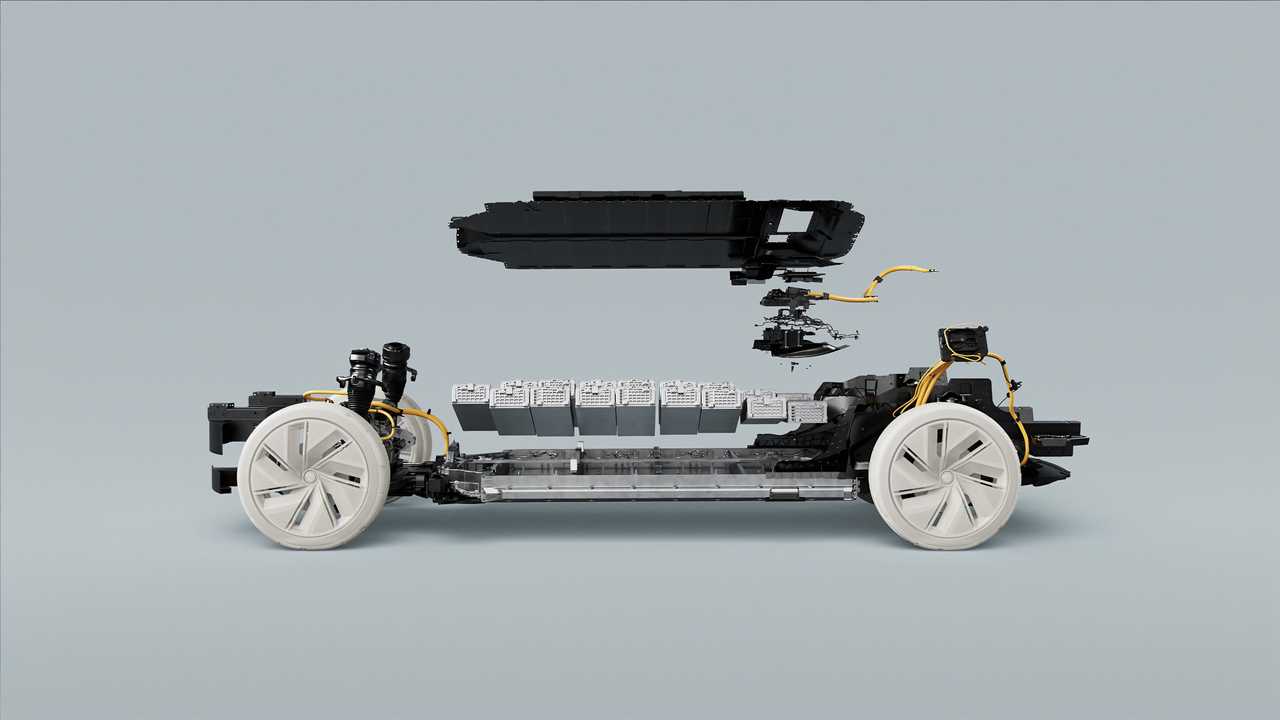
    With the Concept Recharge, Volvo Cars demonstrate the steps it will take in all areas of pure electric car development to reduce its cars’ and its overall carbon footprint. The company plans to sell only fully electric cars by 2030 and aims to be a climate-neutral and circular business by 2040. By using sustainable materials inside the car, equipping it with tyres from recycled and renewable material, improving aerodynamics, and through other measures, Volvo Cars can take huge steps to reduce its carbon impact through the car itself.

    When combining those steps with the use of clean energy throughout a decarbonized supply chain, manufacturing process, and use phase of the car, Volvo Cars believes it can reduce a car’s lifecycle CO2 impact by 80 percent versus a 2018 Volvo XC60, without losing the inherent premium qualities that Volvo cars have become known for.

    This would mean that the Concept Recharge would have an overall lifecycle CO2 impact below 10 tonnes when charged with 100 percent renewable energy.

    Volvo Cars is in the forefront when it comes to working with sustainable and natural materials in its cars, and the Concept Recharge is another proof point of its commitment to push forward with this ambition.

    The interior design is rich in sustainable materials, both natural and recycled materials – think of responsibly sourced Swedish wool, environmentally responsible textiles and lightweight composites created from natural sources.

    Sourced Swedish wool is transformed into fully natural breathable cloth, free from additives. This warm and soft material is used in the seat backrest and instrument panel top. Meanwhile, the floor and lower doors are covered by a rich carpet of 100 percent wool. The seat cushions and touch surfaces on the door are made from an environmentally responsible material that contains Tencel fibers from cellulose. This fabric has great durable strength and is soft to the skin. By using Tencel fibers, which have been produced through high water- and energy-efficient processes, Volvo designers can reduce the use of plastics in interior parts.

    The seatbacks and headrests, as well as part of the steering wheel, use a new material created by Volvo Cars called Nordico. It is a soft material made from bio-based and recycled ingredients that come from sustainable forests in Sweden and Finland, providing a CO2 footprint that is 74 percent lower than leather.

    Elsewhere in the interior, including in the lower storage areas, back of the headrest, and the footrest, the Concept Recharge uses a flax composite, developed by Volvo Cars in collaboration with suppliers. It uses fibers from the linseed plant, which are mixed with composites to provide a strong and lightweight, yet attractive and natural, aesthetic.

    On the exterior, the front and rear bumpers as well as the sill moldings also consist of flax composite. Using a flax composite both inside and out in this way results in a significant reduction of plastics used.

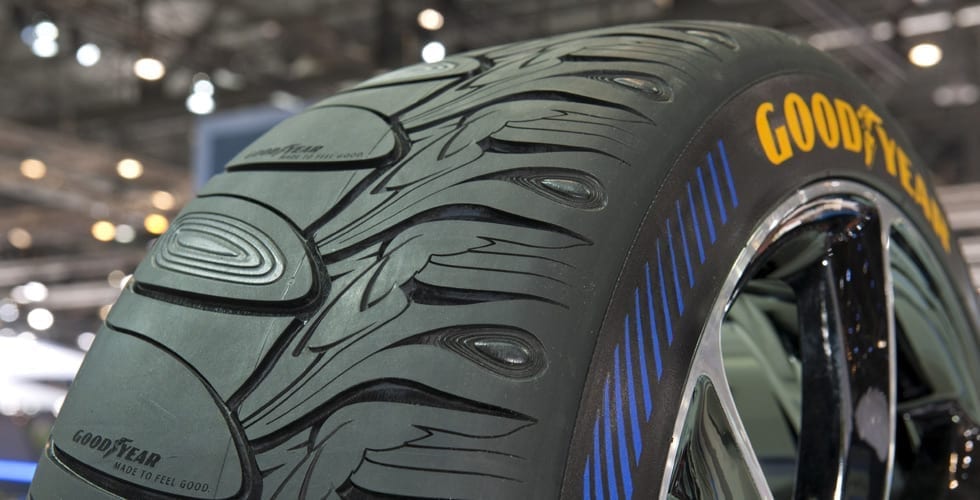
    With the internal combustion engine making way for the pure electric powertrain, tires play an even more important role. Not only are they crucial for safety, but they also contribute largely to the vehicle’s battery range. This means tires for electric cars always have to be on top of technology development.

    Hence the Concept Recharge features special tires made by Pirelli, which are completely free from mineral oil and are made from 94 percent fossil-free materials, including recycled and renewable materials such as natural rubber, bio-silica, rayon, and bio-resin. This reflects the circular approach shared by Volvo Cars and Pirelli, with a focus on reducing resource consumption and environmental impact.

    Beyond its sustainable materials, electric powertrain, and special tires, Concept Recharge also improves the environmental credibility of SUVs through efficiency and aerodynamics.

    With the Concept Recharge, Volvo Cars envision the future of aerodynamics. It incorporates innovative aerodynamic features such as exterior design details that smooth the airflow, a new wheel design, a lower roof, and a more upright rear end.

    As such, it takes the classic SUV shape and improves airflow to increase range, while offering the incredible space opportunities that come naturally with an electric car and its lower floor.

  • Auto sales hit six-month high

    Auto sales hit six-month high

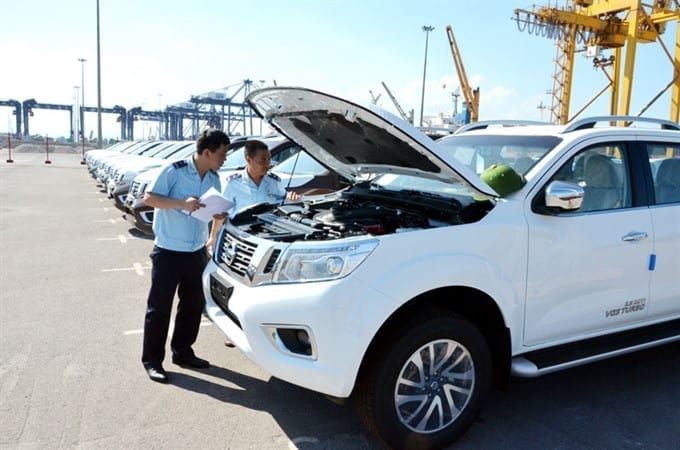
    Vietnam auto sales reached 29,797 units last month, the highest since April, indicating demand recovery after prolonged social distancing.

    This is the second monthly sales rise in a row after a chain of five dropping months from April to August when the fourth Covid-19 wave hit, according to a report by Vietnam Automobile Manufacturers Association (VAMA).

    In the first 10 months, total sales hit 218,734 units, up nearly 3 percent year-on-year.

    Truong Hai Auto (Thaco) continued to lead sales with 75,604 units in the period, up 6.3 percent year-on-year.

    Toyota followed with 45,131 units, down 9.6 percent.

    Mitsubishi, Ford, and Honda rounded out the top five.

    In October, the best-selling model was the sedan Hyundai Accent with 3,346 units, followed by the pickup truck Ford Ranger.

    Last year, sales had fallen by 8 percent to 296,634 units as the Covid-19 pandemic badly affected the economy, hitting people’s incomes and discretionary spending.

  • Apollo Tyres To Increase Prices By Up To 5 Per Cent Citing Rising Cost

    Apollo Tyres To Increase Prices By Up To 5 Per Cent Citing Rising Cost

    Apollo Tyres will increase prices by 3 to 5 percent in the domestic market in the third quarter of this fiscal to offset the rising cost, according to top company officials. The company may further increase prices in the fourth quarter if the commodity rates continue to remain high. Speaking with the media during Q2 FY22 Result Conference Call, Apollo Tyres Vice Chairman and Managing Director Neeraj Kanwar said the company had taken an average increase of around 9 percent in tyre prices up until September.

    He further said, “We are again taking price increases in this quarter varying between 3% to 5% in various segments in the months of October and November.”

    When asked what would be the level of recovery on account of cost inflation in the country post price hikes, Apollo Tyres CFO Gaurav Kumar said, “Raw material costs continue to be a moving target. Even in Q3 from Q2, we expect a small cost-push coming on account of raw material. I would say broadly, we are running about two price increases behind vis-vis what is desirable.”

    In the second quarter ended September 30, Apollo Tyres registered a 59 percent decline in standalone net profit at ₹ 89.65 crore against Rs 216.24 crore in the same period last fiscal, impacted by high raw materials cost. The revenue from operations was higher at ₹ 3,649.71 crore as against ₹ 2,911.57 crore in the year-ago quarter. The cost of raw materials consumed in the second quarter went up to ₹ 2,471.63 crore against ₹ 1,527.06 crore in the same period a year ago.

    Kumar further added that normalcy in India is gradually returning post an unprecedented pandemic situation. The company is currently witnessing a steady improvement in demand momentum. He said, “The truck tires OEM demand, which was lagging, is showing promising signs of improvement. Though, the passenger car OEM demand continues to suffer due to shortage of semiconductors.”

    He also added said the demand momentum going forward for the second half of the fiscal (H2) seems to be better and further price hikes have been announced for November to counter the raw material cost-push.

  • McLaren Denies Being Acquired By Audi

    McLaren Denies Being Acquired By Audi

    Earlier in the day, reports had emerged that Audi had closed a deal to acquire the entire McLaren group. Audi had been exploring an acquisition of the McLaren Formula 1 team to facilitate its entry into the pinnacle of motorsport in 2026 when the new engine formula come into the sport. It had been open to the full acquisition of the entire McLaren Group that gives it access to the McLaren supercar brand. Audi, of course, already has a controlling stake in Lamborghini and the Volkswagen Group has been looking to enter the world of Formula 1 with its Audi and Porsche brands. Due to the pandemic, McLaren had faced many losses and was forced to lay off 1,200 workers.

    Even though its F1 team has been on a revival and its financials have improved with external funding, last month the supercar maker also lost its longtime CEO Mike Flewitt who ran the main motorcar brand while its Applied sciences division was already sold.

    Volkswagen Group has been looking to enter the world of Formula 1 with its Audi and Porsche brands

    While Audi seems keen, McLaren has come out and rubbished all these claims. “McLaren Group is aware of a news media report stating it has been sold to Audi. This is wholly inaccurate and McLaren is seeking to have the story removed. McLaren’s technology strategy has always involved ongoing discussions and collaboration with relevant partners and suppliers, including other carmakers, however, there has been no change in the ownership structure of the McLaren Group,” the company said in an official statement.

    ly denied the report which originated from Autocar. “As part of our strategic considerations, we are constantly looking at various cooperation ideas,” said an Audi spokesperson in response to the Autocar report. Porsche is looking at a partnership with Red Bull for its powertrains division while Audi had been planning to acquire a team and McLaren was the one on top of its list. If it can’t get McLaren, it will be looking at either Sauber or Williams which are now the last of the three independent teams left in the sport.

    For Audi, McLaren is very attractive. Apart from being the third most successful F1 team in history, it is a storied supercar brand. Its team is also now back on the upswing with a great set of drivers in Lando Norris and Daniel Ricciardo. What’s interesting is if an acquisition were to happen what will happen to the McLaren brand which counts F1 core to its identity?

  • Musk Sells Nearly $7 Billion Worth Of Tesla Shares This Week

    Musk Sells Nearly $7 Billion Worth Of Tesla Shares This Week

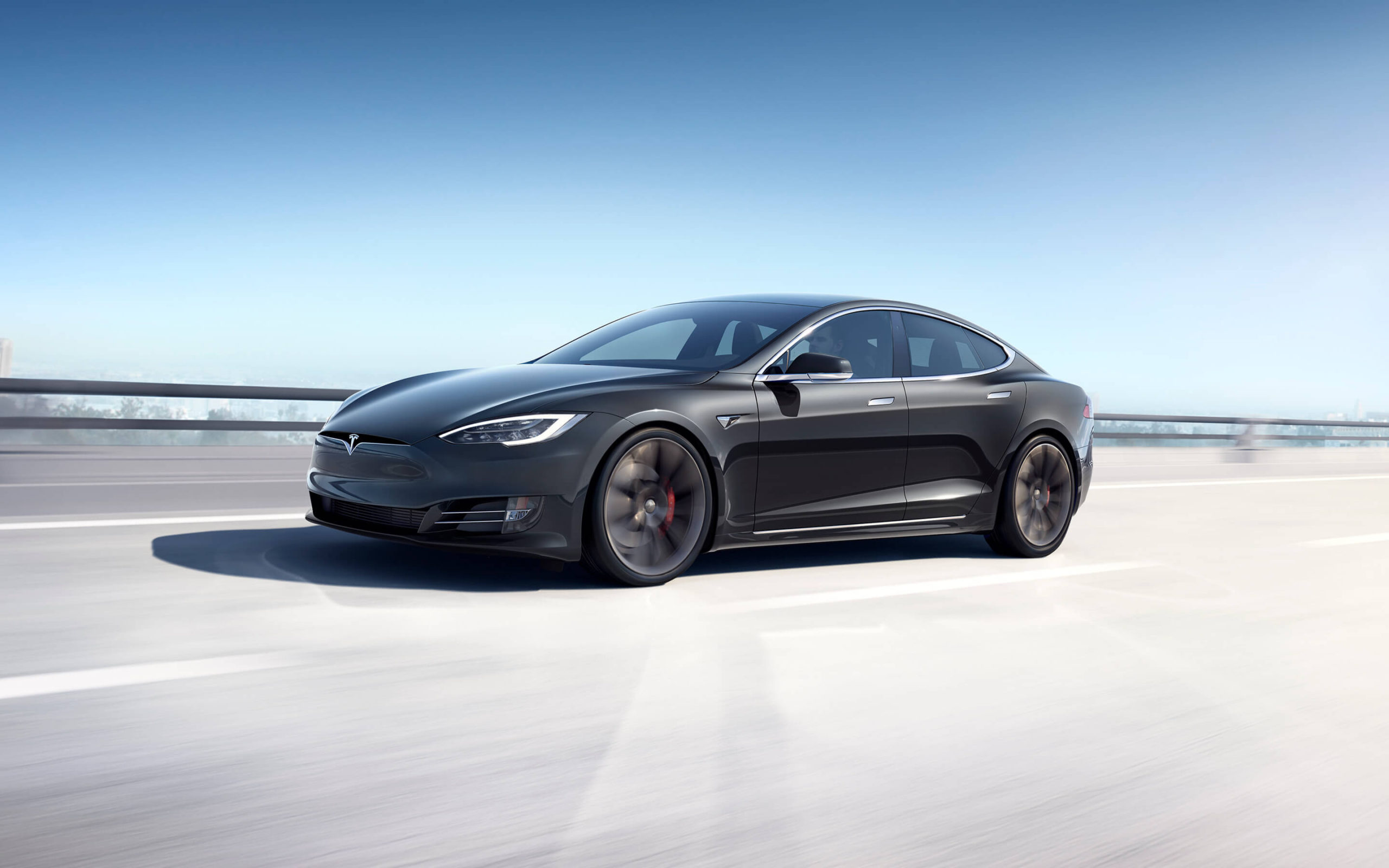
    Tesla CEO Elon Musk offloaded a combined $6.9 billion worth of shares in the electric car company this week, taking advantage of a meteoric rally that vaulted the firm’s value to over $1 trillion. The billionaire sold 1.2 million shares held by his trust for more than $1.2 billion on Friday, the latest in a flurry of his stock transactions, according to U.S. security filing released later in the day.

    The world’s richest person and Tesla’s top shareholder last Saturday tweeted that he would sell 10% of his shares if users of the social media platform approved the move. The 10% would be about 17 million shares at the time of his tweet.

    He has sold 6.36 million shares this week – around 37% of 17 million. He now needs to offload about 10 million more shares to fulfill his pledge to sell 10% of his holdings.

    Shares of Tesla Inc closed lower on Friday, down 2.8% at $1,033.42, snapping an 11-week winning streak. The shares are up more than 46% this year following a sharp rally in October.

    The stock sales, which marked the first time that Musk cashed out on a stake of that size since the company was founded in 2003, were massive by capital market standards, eclipsing the initial public offerings of most companies.

    By getting Twitter users to green-light the move, he has blunted potential criticism of cashing out at a time when Tesla’s valuation has become frothy and shares are at record highs.

    Tesla shares fell 15.4% this week and lost some $187 billion in market value, more than the combined market capitalizations of Ford Motor Co and General Motors Co.

    Despite the week’s losses, Tesla is still the most valuable automaker in the world. Recent strong gains in the stock have underscored demand for shares of electric vehicle (EV) makers.

    After the blockbuster market debut of Rivian Automotive Inc on Wednesday, the two most valuable U.S. automakers are EV companies.

    In a veiled jab at the Irvine, California-based rival, Musk tweeted on Thursday: “There have been hundreds of automotive startups, both electric & combustion, but Tesla is (the) only American carmaker to reach high volume production & positive cash flow in past 100 years.”

    Musk had previously said he would have to exercise a large number of stock options this year, which would create a big tax bill. Selling some of his stock could free up funds to pay the taxes.

    Prior to the sale, Musk owned a stake of about 23% in Tesla, including stock options. After his exercise on 2.15 million stocks on Monday, he has options for 20 million more shares he needs to exercise by next August.

    “We expect the share sales will continue, as Musk holds millions of options worth billions of dollars that would otherwise expire worthlessly, and he has also prearranged share sales under 10b5-1 plans,” said Jason Benowitz, senior portfolio manager at the Roosevelt Investment Group LLC in New York.

  • GM Says Seeing Better Flow Of Semiconductors

    GM Says Seeing Better Flow Of Semiconductors

    General Motors Co is seeing a better flow of semiconductors, and most of its assembly plants in North America are now back to running regular production, including Mexico, a GM spokesperson told Reuters in emailed comments.

    “In fact, the week of November 1 represented the first time since February that none of our North American assembly plants were idled due to the chip shortage,” the spokesperson said.

    GM’s third-quarter earnings were hit by a global semiconductor shortage and rising commodity prices, factors it has said it expects to continue until late 2022.

  • Infineon Sees Chip Shortage Extending Into 2022 As Quarterly Revenue Beats

    Infineon Sees Chip Shortage Extending Into 2022 As Quarterly Revenue Beats

    German chipmaker Infineon expects the global semi-conductor shortage to remain well into 2022, it said as it posted a 10% rise in fourth-quarter revenue on soaring demand for chips used in everything from cars to home appliances. Shares of the company rose 2% in Wednesday morning trade.

    Infineon, which gets about 40% of sales from the automotive sector, also forecast revenue of 3 billion euros for its coming first quarter, exceeding the 2.97 billion euros expected in a poll of 19 analysts by Vara Research.

    “Demand is by far outstripping supply,” Chief Executive Reinhard Ploss said on a call with analysts.

    “Supply is bound to catch up with demand eventually, but we do not see this happening on a broader scale within 2022,” he said.

    The leading supplier of chips to the auto industry is benefiting from a tailwind as more carmakers shift to electric vehicles, along with demand for chips used in consumer appliances and industrial equipment.

    The company is also investing heavily to expand its manufacturing capacities – for silicon as well as for the compound semiconductors silicon carbide and gallium nitride.

    Last month, the Munich-based chipmaker said it would invest about 2.4 billion euros ($2.8 billion) in 2022, up from about 1.6 billion this year.

    Infineon’s revenue rose to 3 billion euros ($3.47 billion) from 2.72 billion in the fourth quarter, ahead of expectations of 2.93 billion, according to IBES data from Refinitiv.

    Rival chipmaker STMicroelectronics also reported bullish earnings in its latest quarterly report.

    Infineon forecast 2022 revenue of between 12.2 billion and 13.2 billion euros, in line with expectations. It also increased its dividend by 5 euro cents to 27 euro cents per share.

    Guidance for segment result margin – a measure of operational profitability – is predicted to come in at about 21%, up from 18.7% this year.