Category: Automotive

Retail News Asia is committed to providing both local and global retailers with the latest Auto and Car news throughout the Asian market. This on a daily base.

  • Nissan Unveils Lunar Rover Prototype

    Nissan Unveils Lunar Rover Prototype

    Nissan unveiled a lunar rover prototype jointly developed with the Japan Aerospace Exploration Agency (JAXA). The JAXA Space Exploration Innovation Hub Center is conducting research on lunar rovers for space exploration. Nissan has been working with JAXA on driving the controllability of the rovers since January 2020.

    A lunar rover must be able to traverse the Moon’s powdery, rocky and undulating terrain and be energy efficient. Furthermore, energy sources for operating vehicles in space are limited. Nissan’s research applies the motor control technology it has developed through its production of mass-market electric vehicles such as the LEAF as well as the e-4ORCE all-wheel control technology featured on the all-new Ariya electric crossover. In particular, it is e-4ORCE that is boosting the lunar rover’s performance over tricky terrain.

    Nissan has focused on the development of stable driving performance that enables customers to drive their cars with greater confidence. Nissan’s e-4ORCE technology precisely controls all four wheels independently, providing the driver with confidence in various conditions.

    In its joint research with JAXA, Nissan is evolving e-4ORCE technology to improve its performance in sandy terrain and other harsh conditions. When cars are driven in sand their wheels frequently spin and dig in, impeding progress. A high level of driving skill is required to avoid getting stuck. To meet this need, Nissan has developed driving-force controls that minimize the amount of wheel spin in accordance with surface conditions.

    Through the joint research, Nissan aims to contribute to the technological evolution of automotive technology and space exploration technology by sharing know-how gained from test-vehicle development and combining it with JAXA’s knowledge of rover research

  • Honda Sets Up Battery Sharing Subsidiary In India

    Honda Sets Up Battery Sharing Subsidiary In India

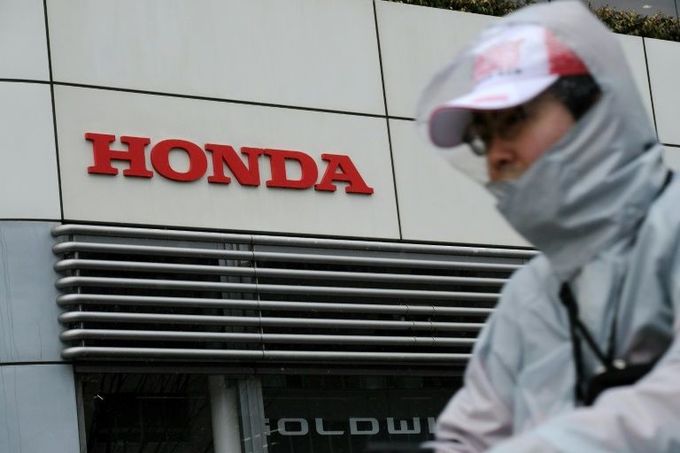
    Honda has announced setting up a new subsidiary in India, which will focus on the supply chain side of the electric vehicle industry. Called Honda Power Pack Energy India Private Limited, the new subsidiary for battery sharing service in India will offer service for small mobility players. In a statement, Honda has said that the company plans to start battery sharing service for electric auto-rickshaws from the first half of 2022 in Bengaluru, Karnataka, and expand the operations in other Indian cities in a phased manner.

    Swappable batteries will offer subscribers fully-charged batteries at the stations which can be swapped in a matter of minutes, instead of waiting to charge the vehicle.

    “The company will offer battery sharing service for small mobility, which will accelerate the penetration of electric vehicles by solving three issues of electric vehicles: limited range, long charging time, and high cost of batteries,” Honda said in the statement.

    Honda’s all-new portable and swappable batteries will be called “Honda Mobile Power Pack e,” and the company’s battery sharing service subscribers can avail of the services from the nearest battery swapping station. At the battery swapping station, subscribers can swap the used batteries with fully charged ones, and need not wait for charging and can get back on the road in marginal time.

    The company has invested ₹ 135 crore, and will work closely with original equipment manufacturers (OEMs) who wish to integrate Honda’s battery into their vehicles, by providing necessary technical information for an interface. By expanding vehicle OEMs, applications, and service areas, the company aims to onboard more drivers which will further enhance service convenience.

  • BSA Motorcycles Returns To Life, Reveals New Gold Star Retro Motorcycle

    BSA Motorcycles Returns To Life, Reveals New Gold Star Retro Motorcycle

    Iconic British bike maker, BSA Motorcycles has come back to life, and the brand was resurrected at a special event in Birmingham in the UK. Classic Legends, part of the Mahindra Group, revived the classic motorcycle brand, and also showcased the first model that will be sold under the BSA name. The BSA Gold Star was originally sold between 1938 and 1963 and was powered by a range of engines between 350 cc and 500 cc. The 2022 BSA Gold Star retains much of the classic lines of the original but power is likely to come from the newly-developed 650 cc single-cylinder DOHC engine.

    More details on the new BSA Gold Star will be revealed during the public debut on December 4, 2021, at the Motorcycle Live Show in the UK. The new BSA motorcycle has been designed and developed in the UK and will also be built there, confirmed Anupam Thareja, co-founder, Classic Legends Pvt. Ltd. Thareja also revealed that special attention was given to every detail right from the lines to the font to the tires.

    “We’d spend hours, in the end, looking at the font, the size, the color, the shape. How it looks in the day and the night. And all I can say is it went into a dizzy. But what came out of this harmonious chaos is this absolutely stunning, beautiful piece of artwork,” said Thareja.

    Classic Legends plans to produce the BSA Gold Star in Birmingham itself, the brand’s original home. Plans for the same were previously disrupted due to the pandemic. The company has already set up a technical center in Coventry to develop motorcycles. The brand is also working on electric offerings at this facility. It was also awarded a 4.6 million pound grant from the UK government for the development of zero-emission motorcycles.

    Birmingham Small Arms Company Ltd or BSA was founded in 1861, for the production of firearms. The brand’s motorcycle division was set up in 1903, and the first motorcycle was introduced in 1910. The brand went on to become the largest supplier of motorcycles to the Allied Forces during the Second World War. By the 1950s, BSA was the world’s largest motorcycle maker, with one in every four motorcycles sold worldwide sporting the BSA badge. BSA ceased operations in the 1970s after going into bankruptcy. It was acquired by Classic Legends in 2016.

  • Car demand up following news of registration fee cut

    Car demand up following news of registration fee cut

    Car dealers have seen the number of customers triple after a 50 percent registration fee discount for locally assembled cars was announced last week.

    Toyota, Honda, Hyundai, Kia and Mazda dealers in Cau Giay District reported 30 and even 50 customers a day last weekend, compared to the average 10-15 .

    The number of signed contracts rose from an average 10 a day to 30.

    A Peugeot dealer locked in seven deals on the weekend even though it was often deserted.

    Customers were still viewing cars at 8 p.m. during the two days, while on normal days the last customers often leave at 6 p.m., a manager of a Toyota dealer in Ho Chi Minh City said.

    “We needed six employees, double from before,” he added.

    The surge in demand for cars came as the government announced a decision to cut car registration fees by half for six months starting Dec. 1.

    This is the second time in the last two years that such a cut is introduced to mitigate difficulties faced by the auto industry due to the Covid-19 pandemic.

    For this reason, accountants and managers had to show up at dealers to finalize contracts when needed.

    Some salespersons said they sold two or three cars last week, while before it often took them several days to sell one.

    Customers can be divided into two main groups: those who want to prepare for the registration process when the fee drops by half starting Wednesday, and those who want to learn more about cars.

    Dealers have ended some prior promotions because of the fee discount, which urge customers to come and make purchases.

    “I am selling my existing car to buy a new one,” said Le Luan, a customer, adding he plans to put down a deposit Tuesday fearing promotions would end Wednesday.

    Registration fees are calculated based on car prices in each locality. The rates are 12 percent in Hanoi and Hai Phong, and 10 percent in HCMC.

    In the first six months last year, 17,600 cars were bought on average each month. In the second half, when the 50 percent cut took effect, sales doubled.

    Last year, car sales had fallen by 8 percent to 296,634 units as the Covid-19 pandemic badly affected the economy, hitting incomes and discretionary spending.

  • Samsung To Supply New Advanced Auto Chip To Volkswagen

    Samsung To Supply New Advanced Auto Chip To Volkswagen

    Samsung Electronics on Tuesday revealed new auto chips targeting demand for advanced chips in cars, including one mounted in Volkswagen’s infotainment system developed by LG Electronics. Demand is rising for “high-tech” automotive chips that can handle more entertainment consumption and increased electrical components in cars, Samsung said in a statement, saying that it plans to actively respond to the growing demand.

    The chips, developed by Samsung’s logic chip design business System LSI, includes a chip enabling 5G-based telecommunications for downloading high-definition video content during transit, and a power management chip for stable electricity supply.

    A third chip, an infotainment processor that can control up to four displays and 12 cameras at once, has been mounted in Volkswagen’s high-performance computer called In Car Application Server (ICAS) 3.1, developed by LG Electronics’ vehicle components business, Samsung said.

    Samsung and cross-town rival LG Electronics have both targeted the expansion of the global electric vehicle market and the rapid electrification of cars as opportunities to sell more high-tech chips and sophisticated components, analysts said.

  • Court Finds Mazda Australia Misled Customers On Refunds For Faulty Vehicles

    Court Finds Mazda Australia Misled Customers On Refunds For Faulty Vehicles

    An Australian federal court has found that the local unit of Japanese automaker Mazda Motor Corp misled customers over their rights, the country’s competition regulator said on Tuesday.

    The Australian Competition and Consumer Commission started court proceedings against Mazda in October 2019 in a case involving seven different Mazda vehicles and 10 customers.

    It said the court found that Mazda made 49 separate false or misleading representations to nine consumers, who sought refund or replacement after facing serious and recurring faults with their vehicles within a year or two of purchase.

    Mazda either ignored or rejected the claims of the customers and told them that the only available remedy was another repair, the ACCC said.

    “Mazda’s conduct towards these consumers was not just appalling customer service as noted by the judge, it was a serious breach of the law,” ACCC Chair Rod Sims said in a statement.

    Mazda Australia said it was carefully considering the federal court finding, but declined to comment further.

    The court, however, dismissed the regulator’s allegations that Mazda engaged in “unconscionable conduct” in its dealings with these customers. It will decide on penalties and other orders sought by the ACCC at a later date.

  • Car registration fee cut by half again

    Car registration fee cut by half again

    A government decree has cut registration fees for locally made cars by 50 percent for six months starting December 1.

    This is the second time in the last two years such a cut is being made to mitigate the difficulties faced by the auto industry due to the Covid-19 pandemic.

    In the first six months of last year, 17,600 cars were bought on average each month. In the second half, when the 50 percent cut took effect, sales doubled.

    The registration fees are calculated based on car prices in each locality.

    The rates are 12 percent in Hanoi and Hai Phong, and 10 percent in HCMC.

    Last year, car sales had fallen by 8 percent to 296,634 units as the Covid-19 pandemic badly affected the economy, hitting people’s incomes and discretionary spending.

  • Daimler To Produce First In-House Electric Motor At Berlin Plant

    Daimler To Produce First In-House Electric Motor At Berlin Plant

    Daimler will produce the first in-house electric motor at its oldest plant in Berlin, the carmaker said on Thursday, providing relief to workers worried that the diesel motor production site was on the brink of deep job cuts.

    Workers who feared for their positions after Daimler said in September 2020 its Berlin site would end production of the 6-cylinder diesel motor within a year would also be offered retraining in software and coding, the German company said.

    Around 450 of the plant’s 2,300-odd workers have applied to attend a pilot 160-hour training course in software development, works council chairman Michael Rahmel said on a press call, with around fifteen selected for the first round of training.

    Investment in the 120-year-old Berlin-Marienfelde plant, previously pinned at a two-digit million euro amount, will rise to a low three-digit million euro amount in the next six years, Daimler said.

    The motor, known as an axial-flux motor and designed by the British startup YASA which Daimler acquired earlier this year, weighs a fraction of its diesel equivalent and can boost the range of an EV by up to 7%, YASA’s founder Tim Woolmer told Reuters in July.

    Woolmer said at the time that Daimler had briefed YASA to bring costs down in future iterations of its motor so the carmaker could use them across its entire EV range.

    The e-motor is simpler to produce than its diesel equivalent, meaning the plant will eventually require less workers – but the exact number of future job losses was not yet clear, head of production Joerg Burzer said on a press call. A start date for the production of the motor was not provided.

    The factory’s employees are guaranteed their positions until the beginning of 2030 under an existing union agreement.

    The digital training campus, which Daimler partnered with Siemens in March to develop and which will go live in 2022, would also create new jobs, Burzer said.

    “If we make an effort here in coming years, there could even be more jobs than before,” head of IG Metall Berlin Jan Otto said.

    Production of the 6-cylinder diesel motor and some components would continue at the factory in the short-term but was being wound down, Burzer and union representatives said.

    The factory’s employees are guaranteed their positions until the beginning of 2030 under an existing union agreement.

    “A year ago, we didn’t know what would happen at the plant. Today we’re embarking on what will hopefully be a successful transformation with our heads held high,” Michael Rahmel, works council chairman at Berlin-Marienfelde, said in a statement

  • Nissan Plans 50% Electric Vehicle Sales By 2030

    Nissan Plans 50% Electric Vehicle Sales By 2030

    Automaker Nissan wants half its global sales to be electric or hybrid vehicles by 2030 and plans to plough billions of dollars into the effort, it announced Monday. The move follows in the footsteps of other major global automakers, which have increasingly signaled a move towards electric and hybrid vehicles as concern about climate change grows.

    Unveiling its new long-term plan, Nissan said it will launch 23 new models, including 15 new electric vehicles, in a bid to reach the 2030 goal.

    Last year, only around 10 percent of Nissan’s global sales were EVs or hybrids, and the firm said the new target would help it achieve carbon neutrality across the lifecycle of its products by 2050.

    Nissan has been battered by a series of problems in recent years, ranging from weak demand even before the pandemic, to the fallout from the arrest and subsequent escape of former boss Carlos Ghosn.

    Last year, only around 10 percent of Nissan’s global sales were EVs or hybrids

    After falling behind rivals during the pandemic, it has begun clawing back performance, tripling its full-year net profit forecast earlier this month despite the impact of a global chip shortage.

    In a statement, Nissan CEO Makoto Uchida said the long-term plan announced Monday would “transform Nissan to become a sustainable company.”

    It’s a move seen across the auto industry with Sweden’s Volvo pledging to switch all sales away from traditional fuel cars by 2030, and Japan’s Honda setting the same target by 2040.

    Top-selling Toyota says by 2030 all the vehicles it sells in Europe will be electric or hybrid models, with a goal of 70 percent in North America and 100 percent in China by 2035.

    Nissan said 20 of its new electric models would hit the market in the next five years, setting a target for electric cars to make up 75 percent of sales in Europe by fiscal 2026.

    The Japanese automaker said it will invest two trillion yen ($17.5 billion) over the next five years to speed up electrification, aiming to launch electric vehicles with its proprietary batteries by 2028.

    Electric and hybrid vehicles are being increasingly adopted in the face of concern about climate change, with Britain moving to ban new sales of diesel and petrol cars in the UK from 2030.

    US President Joe Biden earlier this year announced a target for half of all ears sold domestically by 2030 to be zero-emission.

    At present, around 10 percent of European car sales are EVs, but the US figure is just two percent.

  • Car registration fee cut by half again

    Car registration fee cut by half again

    A government decree has cut registration fees for locally made cars by 50 percent for six months starting December 1.

    This is the second time in the last two years such a cut is being made to mitigate the difficulties faced by the auto industry due to the Covid-19 pandemic.

    In the first six months of last year, 17,600 cars were bought on average each month. In the second half, when the 50 percent cut took effect, sales doubled.

    The registration fees are calculated based on car prices in each locality.

    The rates are 12 percent in Hanoi and Hai Phong, and 10 percent in HCMC.

    Last year, car sales had fallen by 8 percent to 296,634 units as the Covid-19 pandemic badly affected the economy, hitting people’s incomes and discretionary spending.

  • Kawasaki To Unveil Three New Electric Motorcycles In 2022

    Kawasaki To Unveil Three New Electric Motorcycles In 2022

    Kawasaki Motors President and CEO Hiroshi Ito have announced that the Japanese brand will introduce not one, but three new electric models in 2022. Addressing the assembled crowd at the EICMA 2021 show in Milan, Italy, Hiroshi Ito laid down a broad outline for Kawasaki’s immediate future plans, including alternative fuels, as well as new products. What is clear from the comments from EICMA 2021 quoted by several sources, is that Kawasaki intends to fully embrace a carbon-neutral society. And what is important is that Kawasaki seems to be almost ready with several new electric models.

    “I would like to share a new commitment with you now. Next year, in 2022, we will show a minimum of three electric vehicles globally. That is a promise,” said Hiroshi Ito, President and CEO, Kawasaki Motors.

    The news seems to be part of Kawasaki’s plans to introduce 10 electric and hybrid motorcycles by 2025. But what is also interesting is Kawasaki’s plans to evaluate other forms of cleaner transportation. In his address, the Kawasaki Motors President and CEO also made mention of the Japanese brand’s commitment to exploring other power sources, including hydrogen, hybrids, and eFuels.

    “In addition to electric vehicles, Kawasaki is looking at all options as we work towards achieving a carbon-neutral society. One example is a hydrogen engine. In Japan, all industries supported by the government are making great efforts to make hydrogen a practical domestic alternative are currently moving forward. The Kawasaki Group is taking on a key role in this project, leading the way in hydrogen production, transport, storage, and use.

    “And just recently, on November 13, Kawasaki Motors decided to take the first steps in developing a hydrogen-powered motorcycle engine with Yamaha. Of course, we will look at the possibilities of other alternative fuels, like biofuel and eFuels,” added Hiroshi Ito.

    The announcement is a clear indication that Kawasaki is serious about cleaner transportation and is leading the development and pursuit of alternative power sources. And it will be interesting to see what the three new electric products will be, but even more interesting will be the development of alternative fuels, including hydrogen power.

  • Hero Electric Reports 100 Percent Jump In Retail Sales

    Hero Electric Reports 100 Percent Jump In Retail Sales

    Hero Electric, India’s leading electric two-wheeler manufacturer, has clocked 24,000 retail sales during the festive period this year. According to the company, compared to last year, when Hero Electric’s festive sales stood at 11,339 units during the period from October 1, 2021 to November 15, 2021, the growth in retail sales has been more than double. The company says the recent amendment in FAME II policy and rising fuel prices has propelled the demand for electric vehicles resulting in heightened demand. With strong government support to the sector, EVs are redefining the mobility space in India and are now receiving preference for commuting with better infrastructure and awareness.

    Sohinder Gill, CEO – Hero Electric, says that a significant number of customers are showing a preference for electric two-wheelers over petrol-powered two-wheelers.

    Sohinder Gill, CEO, Hero Electric, said, “We saw two clear indicators in our showrooms this festive season. A significant percentage of customers chose Hero E bikes over the Petrol bikes and many factored environment and sustainability as influencing factors in their purchase. This is a good indicator for Hero and the E2W industry to step into exponential growth and bring around an EV revolution that will help reduce air pollution and make our cities a better place.”

    Hero Electric’s ’30 days, 30 bikes’ festive offer aided the upward sales momentum during this period, the company announced in a statement. Under the offer, every day one lucky customer purchasing a Hero Electric two-wheeler got a chance to ride home their vehicle free, further fostering the spirit of a pollution-free festive season. Pursuing a strong sales target and market share by the end of FY2022, Hero Electric is targeting 1 million customers in the near future.

    Hero Electric is one of India’s oldest, and the largest electric two-wheeler company, with a manufacturing facility in Ludhiana. Hero Electric currently has 700 and rapidly expanding sales and service outlets spread across the country, and offers a wide range of electric two-wheelers for different customers at different price points. With over 4,00,000 electric two-wheelers in India, over the past 14 years, Hero Electric has played a crucial role in developing and promoting the electric vehicle market in the country.

  • Apollo Tyres Collaborates With AWS To Make Its Factories Smarter

    Apollo Tyres Collaborates With AWS To Make Its Factories Smarter

    Amazon Web Services (AWS) announced that Apollo Tyres is going all-in on AWS to digitally transform. By moving all of its IT infrastructures to AWS, Apollo Tyres can use AWS’s broad portfolio of services to innovate new customer experiences while driving productivity, compliance, and process efficiency gains globally, across seven factories. Apollo Tyres will draw on the breadth and depth of AWS capabilities, including Internet of Things (IoT), data and analytics, and machine learning, to transform into an agile, data-driven enterprise. Using data from the factory floor and real-time information from production machines, like tyre rubber mixer machines, Apollo Tyres can expand operational intelligence capabilities and more accurately manage machine utilization, ensuring high-quality levels and machine efficiency. With AWS, Apollo Tyres is connecting all of its factories to the cloud this year in India and Europe. By 2022, Apollo Tyres plans to migrate all mission-critical enterprise applications, including its SAP applications, to AWS to enhance customer experience, improve process efficiency, and enable process automation.

    Apollo Tyres produces more than 2,425 tons (2,200 metric tons) of tires daily in its seven factories worldwide. Each factory previously ran their on-premises infrastructure in silos, which provided limited visibility into global manufacturing efficiencies. Apollo Tyres needed to upgrade its infrastructure to develop new ways of engaging with fleet operators, tyre dealers, and consumers while delivering tires and services efficiently at competitive prices. The company’s first step was to create a data lake on AWS, which centrally stores Apollo Tyres’ structured and unstructured data at scale. This data lake provides the foundation for an integrated data platform, which enables Apollo Tyres’ engineers around the world to collaborate in developing cloud-native applications and improve enterprise-wide decision making. The integrated data platform enables Apollo Tyres to innovate new products and services, including energy-efficient tyres and remote warranty fulfillment.

    Using AWS IoT SiteWise, a managed service that makes it easy to collect, store, organize and monitor data from industrial equipment at scale, and AWS IoT Greengrass, an open-source edge runtime and cloud service for building, deploying, and managing device software, Apollo Tyres developed an IoT-in-a-box solution. The solution connects production machines on the factory floor to AWS in as few as five days. Once connected, the solution captures data from multiple machines-including mixers, tyre building equipment, and curing presses-and feeds it to the data lake. Apollo Tyres uses Amazon Redshift, a cloud data warehouse, to create a global dashboard for visualizing production information from the data lake, providing business teams and plant managers with real-time visibility into the manufacturing process. This visibility improves production efficiency and productivity, for example by reducing the idle time of curing presses that shape the tyre in a mould by 50%.

  • Audi recalls 104 cars in Vietnam over lock nut issue

    Audi recalls 104 cars in Vietnam over lock nut issue

    German auto brand Audi is recalling 104 cars in Vietnam due to a lock nut issue on the rear suspension that could cause a loss of control and crash.

    Certain lock nuts on the trailing arm of the rear axle can break due to corrosion, which can change the wheel alignment on the rear axle, according to a notice the company submitted to Vietnam Register.

    If the rear axle suddenly moves in the wrong direction, the driver could lose control and crash, it added.

    There has been no known accidents reported.

    The company will contact each owner about a free replacement of the lock nut, which would take around 1.5 hours.

    The recall lasts from Nov. 15 to Nov. 14, 2024.

  • Car imports surge

    Car imports surge

    The number of imported cars in Vietnam rose 61 percent to 129,733 units in the first 10 months this year.

    Passenger vehicles saw a rise of 50 percent to 90,029 units, according to Vietnam Customs.

    In October, the three major import markets were Thailand with 8,320 units, followed by Indonesia, 3,925, and China, 1,733.

    Over 11,700 cars with nine seats or less were imported to Vietnam last month, doubling from September.

    A media representative of a Japanese auto brand said the rise came as customs activities resumed after months of social distancing.

    Companies were also importing more vehicles to prepare for the end-of-year shopping season.

    Vietnam also imported $4.07 billion worth of car parts and equipment in the first 10 months, up 33.5 percent year-on-year.

    Sales of imported, completely-built units rose 24 percent year-on-year to 97,028 in the first 10 months, according to Vietnam Automobile Manufacturers Association (VAMA).