Category: Automotive

Retail News Asia is committed to providing both local and global retailers with the latest Auto and Car news throughout the Asian market. This on a daily base.

  • Jeep Working On A Suzuki Jimny Rival For Europe

    Jeep Working On A Suzuki Jimny Rival For Europe

    Fiat Chrysler Automobile (FCA) is reportedly working on an ultra-compact Jeep SUV which will be positioned below the Renegade, in the European market. According to the report filed by Auto Express, which recently spoke to Marco Pigozzi Jeep’s Head of Brand Marketing in Europe, the new subcompact off-road SUV will act as a rival to the popular Suzuki Jimny. The report also claims that the new Jeep SUV could possibly come with an all-electric powertrain acquired from FCA’s planned merger with PSA.

    Speaking to Auto Express, Pigozzi said that the upcoming Jeep SUV will be about 4 meters in length, and in addition to being a capable everyday vehicle, it will also come with the off-road capabilities that the Jeep brand is known for. Furthermore, given the brands push for electrification, even if not fully electric, the upcoming ultra-compact Jeep SUV could possibly take the Plug-in Hybrid route, like the Renegade and the Compass. Commenting on that Pigozzi told Auto Express, “We have the capability to deliver the electrification we need.”

    While a sub-4 meter Jeep could really turntable for the brand in the Indian market, given the popularity for SUVs, but right now it is too soon to even speculate the SUV coming to our shores. Also, with the FCA and PSA merger underway, it is possible that the SUV might borrow the Common Modular Platform architecture used by Peugeot-Citroen. Engine and other technical specifications are currently unknown, but the SUV is expected to arrive sometime in 2022.

  • Renault Partners With Nino Robotics For Its Future Electric Transporter

    Renault Partners With Nino Robotics For Its Future Electric Transporter

    Groupe Renault has signed a partnership with Nino Robotics, designer of a new type of ‘seated, personal transporters’ which provide transport solutions adapted to people with disabilities or of reduced mobility. As part of this partnership, Groupe Renault will provide financial support to Nino Robotics via Mobilize Invest. The objective of this support is to contribute to the development of Nino Robotics and in particular of NINO4, its future electric transporter.

    With NINO4, Pierre Bardina, founder of Nino Robotics, intends to offer a solution far removed from those usually offered to people with reduced mobility. In addition to its highly recognizable, sleek and colorful design, as well as its minimal space requirement, this “seated personal transporter” will also be connected to provide users with data, such as battery charge level, speed and mileage. A “Follow Me” function will allow a third party to guide NINO4 and its user by auto-follow. To date, Nino Robotics has developed and markets two products: Nino, a self-balanced personal carrier and One, a scooter designed for wheelchairs.

    Pierrick Cornet, Alliance Project Director and mentor of Nino Robotics, said, “We deeply appreciate this opportunity to promote exchanges between our teams and Nino Robotics: this meets to the ambition of many employees of the Group, including myself, to get involved in actions with a societal objective.”

  • Volkswagen Says Production Suspended In Algeria

    Volkswagen Says Production Suspended In Algeria

    Carmaker Volkswagen has suspended production in Algeria, where the head of its local partner has been detained since June in a corruption probe, a spokesman for the German auto giant said.

    “Volkswagen is aware of a corruption investigation by Algerian authorities into Mourad Oulmi”, who heads Algerian partner Sovac, the spokesman told AFP.

    “Production at the factory, operated in a co-venture with Sovac, is suspended, as are deliveries by Volkswagen” to Sovac, the spokesman added.

    The Sovac-Volkswagen factory opened in 2017 at Relizane, some 250 kilometers (150 miles) southwest of Algiers, and assembles kits provided by the German parent.

    In 2018, it produced around 50,000 Volkswagen, Audi, Seat and Skoda vehicles.

    Contacted by AFP, a spokesman for Sovac refused to comment but promised a statement later in the day.

    Several Algerian news outlets reported that Sovac announced Sunday output at the factory stopped in October, effectively leaving 700 employees without work.

    Several prominent politicians and businessmen linked to Abdelaziz Bouteflika have been detained or questioned in connection with corruption since the ailing president was forced to step down in the face of mass protests in early April.

  • Harley-Davidson 338 cc Cruiser Cleared For Production

    Harley-Davidson 338 cc Cruiser Cleared For Production

    Harley-Davidson and Chinese motorcycle giant Qianjiang (also the owner of the Benelli brand) have reportedly gotten together recently for a Design Freeze Signing Ceremony to create the most affordable Harley-Davidson motorcycle. So far, we don’t have any actual images, other than design sketches released earlier of the bike, but what is clear now is that Harley-Davidson is going ahead with the production of the ‘baby Harley’. The new motorcycle will be powered by a 338 cc engine, but instead of being a v-twin, it is expected to be a parallel-twin engine.

    The Harley-Davidson 338 cc motorcycle will be made specifically for Asian markets and will be the most affordable Harley-Davidson motorcycle

    The new bike is being cleared for production at a time when Harley-Davidson is looking to expand its customer base with its ‘More Roads to Harley-Davidson’ outreach, with a series of new models planned over the next few years, including the LiveWire electric bike, the Bareknuckle, the Bronx, as well as the Pan America. While we still don’t have any actual images of the bike, the design sketches do reveal a very similar silhouette to that of the Benelli 302S. In fact, the platform could very well be of the 302S, including the chassis and most of the bodywork, aside from a new seat unit and fuel tank.

    Harley-Davidson is likely to use the new 350 cc model (actually with a 338 cc powerplant), as its mainstay as the American brand gets ready to get into new markets and more volumes, particularly in South East Asia, India and China. It’s still not known whether Harley-Davidson will use the HD350 name, or come up with a new moniker as it has for the new models the brand is developing for the future. More details are expected in the next few months.

  • Google Maps Adds Plug Type Filter For EV Charging Stations

    Google Maps Adds Plug Type Filter For EV Charging Stations

    Google Maps has received a new filter to classify the Electronic Vehicles (EV) charging stations based on plug type. There are different types of charging connectors used by several car manufacturers, for example, Nissan uses CHAdeMO, Tesla uses its instrumentation, and also the BMW and VW use CCS plug kind for charging their cars. Since the emergence of the EV search facility over Google Maps, the users were missing out on the ability to filter results based on the connector type, GizmoChina reported on Sunday.

    The recent update will surely a sigh of relief for the daily drivers, it will facilitate them to drive car on to the compatible charging station. To use the new feature, the users can head over to the Google Maps > Settings > Electric Vehicle Settings >Your Plugs > Choose and save.

    Google Maps has recently revealed that it has captured more than 10 million miles of Street View imagery – a distance that could circle the globe over 400 times. The company also announced that Google Earth now lets people browse more than 36 million square miles of high definition satellite images from various providers – covering more than 98 percent of the entire population – to see the world from above.

  • Uber Submits Appeal To Regain London Taxi License

    Uber Submits Appeal To Regain London Taxi License

    Uber submitted an appeal on Friday against a decision by London’s transport regulator to strip the taxi app of its right to operate in one its most important markets, setting up a potentially lengthy legal process during which it can continue to take rides. Last month, Transport for London (TfL) refused to grant the Silicon Valley-based company a new license due to what it called a “pattern of failures” on safety and security, the latest stage of a long-running battle with the authorities.

    Uber, which was also denied a license by TfL in 2017 before a judge restored it on a probationary basis, said it had changed its business model over the last two years and would go further, as it lodged its appeal at Westminster Magistrates’ Court.

    “We are committed to Londoners and are working closely with TfL to address their concerns and requests, as we have since 2017,” said the firm’s Northern and Eastern Europe boss Jamie Heywood. TfL director Helen Chapman said it would now be for a magistrate to decide.

    “We found Uber not fit and proper to hold a new private hire operator’s license on 25 November,” she said in a statement. “We note that Uber has submitted an appeal and it will now be for a magistrate to determine if they are fit and proper.”

    The firm’s roughly 45,000 drivers in London will still be able to take rides until the appeals process is exhausted, which could take months or even years.

    The regulator said in November that unauthorized drivers were able to upload their photos to other Uber accounts so that on at least 14,000 trips a driver other than the advertised one picked up passengers.The Silicon Valley company has run into regulatory barriers and a backlash in several markets, forcing it to withdraw completely from places such as Copenhagen and Hungary.

    In London, black cab drivers who see Uber as a threat to their livelihoods have blocked streets in protest, arguing that they are being unfairly undercut by an inferior service.

  • Audi Introduces 25 Years Anniversary Package For RS Models In Europe

    Audi Introduces 25 Years Anniversary Package For RS Models In Europe

    Audi is celebrating 25 years of its RS models and has announced an exclusive package for its performance models. Audi has released an exclusive equipment package for the Audi TT RS Coupe, RS 4 Avant, RS 5 Coupe, RS 5 Sportback, RS 6 Avant and the RS 7 Sportback models. It was the RS 2 Avant that kicked off things for Audi in the hot performance segment back in 1994 and every RS model gets some elements both on the outside and inside which are inspired by the RS 2 Avant.

    The anniversary package includes a matt aluminum look with gloss black for the exterior of all models, a front blade for models like the RS 4, RS 5, RS 6, and RS 7*, as well as the inlays in the side sills. The horizontal web of the rear diffuser also features a matt aluminum look. Moreover, the four rings, RS logos and wing mirrors along with the rear wing of the TT RS Coupe are finished in gloss black. An exclusive RS anniversary logo showing the number “25” is projected onto the ground when the doors are opened and is also featured on the hub cap. The wheels itself are designed in a two-color look featuring silver and gloss anthracite.

    The interior is also inspired by the iconic RS 2. The cabin is finished in all black an there are cobalt blue accents in Alcantara on the piping of the floor mats and the 12 o’clock marking on the steering wheel rim. The RS sport seats with a honeycomb pattern in the TT RS, RS 4, and RS 5 are draped in Nappa leather with seat center panels in Alcantara, just like the very first RS 2 Avant had back in the day. The seat upholstery of the RS sport seats in the RS 6 and RS 7 is finished in perforated Valcona leather. A special touch on the inside is the ’25 years’ logo on the shoulder area of the seats, floor mats, and the door trim panels. The anniversary package has only given cosmetic updates to the RS models and mechanically they remain unchanged.

  • November auto sales up 3 percent

    November auto sales up 3 percent

    Vietnam’s total vehicle sales increased 3 percent to 29,846 units in November from the previous month, according to the Vietnam Automobile Manufacturers’ Association (VAMA).

    Auto sales are monitored by VAMA, an association of all manufacturers in Vietnam except Hyundai TC. Including the 7,592 units sold by Huyndai, total sales rose to 35,638 vehicles.

    The most popular models sold this month were the Mitsubishi Xpander SUV, Toyota VIOS sedan, and Huyndai Accent sedan, each selling over 1,900 units, combined statistics from VAMA and Hyundai show.

    Domestic carmaker Truong Hai Auto (Thaco) retained the top in November, accounting for 28.6 percent of sales by all VAMA members. Trucks and sedans made up most of its sales.

    Toyota Motor Corp. retained its second spot, with 23.6 percent, followed by Mitsubishi and Honda, with 13.4 percent and 10.9 percent respectively.

    According to VAMA, 22,312 units sold in November were passenger cars (up 4 percent over October), 7,203 units were commercial vehicles (down 0.3 percent) and 331 units were special-purpose vehicles (up 9 percent). Total car sales last month fell 3 percent over the same month of 2018.

    Vietnam saw car sales of 289,128 units between January and November, up 14 percent over the same period last year.

  • Yamaha Opens First ‘Blue Square’ Premium Concept Showroom In India

    Yamaha Opens First ‘Blue Square’ Premium Concept Showroom In India

    India Yamaha Motor has announced the inauguration of its new ‘Blue Square’ concept showroom in the country. The first-of-its-kind outlet was launched in Chennai recently, as part of the brand’s ‘The Call of the Blue’ campaign. The first outlet is about 4000 sq.ft. in size and will retail a range of premium motorcycles and scooters including superbikes from the company’s range. The new showroom aims to bring a premium customer experience in the form of “new aesthetics, inspiring propriety created out of Yamaha two-wheelers and engaging offerings.

    Speaking at the launch, Motofumi Shitara, Chairman, Yamaha Motor India said, “We are thankful to our customers for the encouragement they offered us. “Blue Square”, a new initiative from ‘The Call of the Blue’ which is designed to introduce Yamaha’s global excitement and sport will exclusively stand out in customer experiences and we hope our customers will also love to experience it. At the moment when the motorcycling scenario is fast-growing, there’s a potential requirement of innovating the experiences of buying, servicing and facilitating other motorcycling necessities with the help of an exclusive ambiance and comfort. Yamaha’s “Blue Square” will put together an embracing racing spirit of Yamaha where an array of exciting, stylish and sporty two-wheelers and accessories will be on offer.”

    The Blue Square showroom carries a blue themed ambiance with ea range of motorcycles on display along with accessories, apparel and spare parts. The new outlets will also have more focus on accessories and apparels that are now turning out to be a profitable business for manufacturers. The Blue Square showrooms will also maintain customer records digitally, while buyers will be able to download the brochures digitally by scanning the vehicle QR codes. This, Yamaha says, will help provide on-time communication and one-to-one marketing that will improve communication between the dealer and customer.

    Yamaha also plans to introduce face-scanning systems and Dealer Management System for more effective communication in the future. In addition, the Blue Square showrooms will incorporate a cafe for customers to unwind, alongside Blue Streaks that will help speed-up customer queries and will conduct touring programs. The Japanese two-wheeler maker plans to open about 100 Blue Square outlets in 2020

  • Tesla’s German Plant To Produce 500,000 Cars A Year

    Tesla’s German Plant To Produce 500,000 Cars A Year

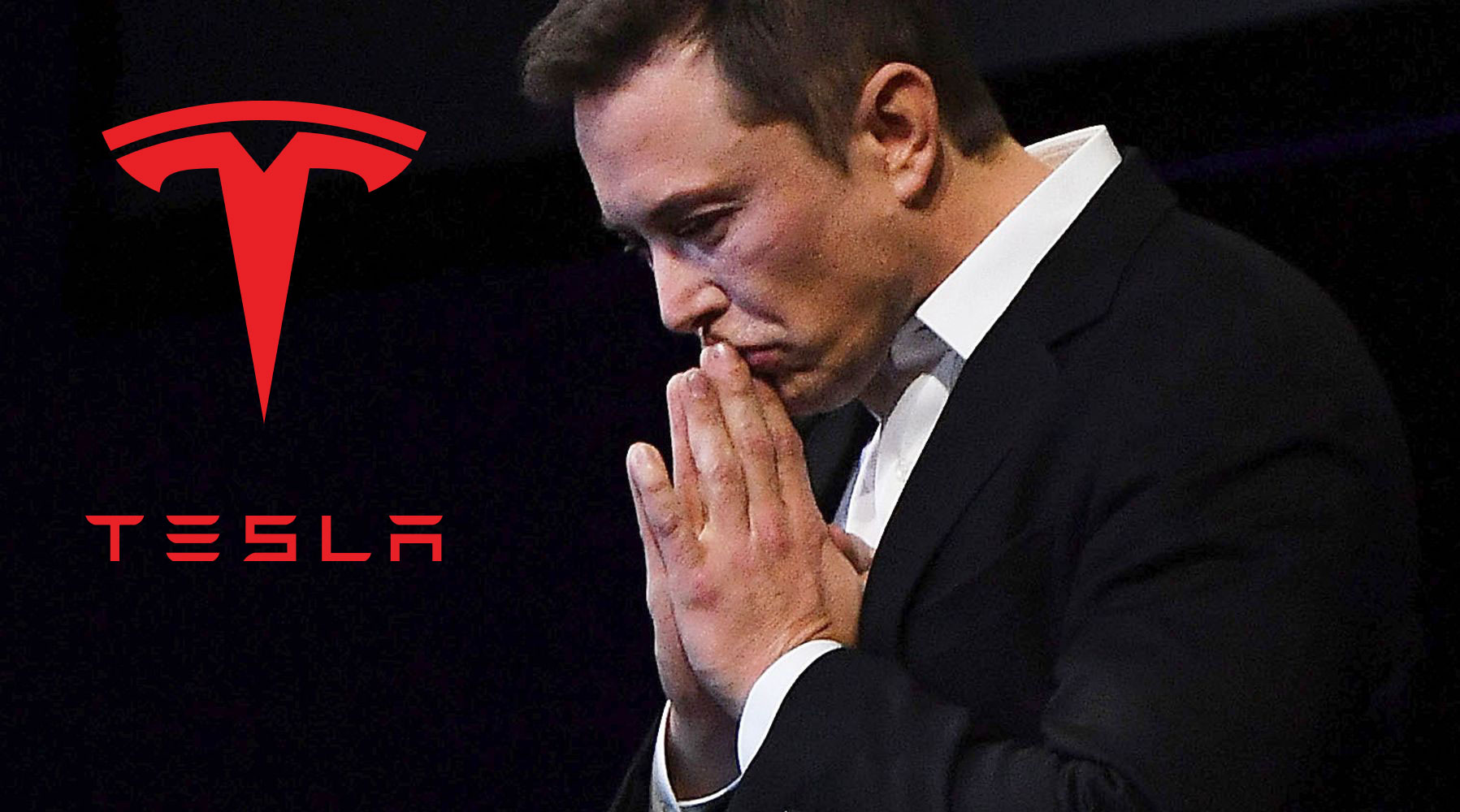
    Tesla plans to build 500,000 electric vehicles a year at its new factory on the outskirts of Berlin, Germany’s Bild newspaper reported on Wednesday.

    Last month, Tesla Chief Executive Elon Musk announced that a site in Gruenheide, Brandenburg, had been chosen to build Tesla Model 3 and Model Y vehicles.

    German newspaper Frankfurter Allgemeine Zeitung reported that Tesla will invest up to 4 billion euros ($4.41 billion) in the plant.

    Tesla’s Gigafactory will create 10,000 jobs, Bild said, citing planning documents to develop the site which is as large as 420 soccer pitches.

    Construction will start in 2020, the newspaper reported. Tesla declined to comment on the Bild article or on its expansion plans.

  • Tesla Could Make Electric Dirt Bikes In The Future

    Tesla Could Make Electric Dirt Bikes In The Future

    Tesla is known to make outrageous electric vehicles and we mean outrageous in a good way. The US-based electric vehicle manufacturer recently showcased the Cybertruck which is a piece of work and has divided opinions about its design, though no doubt, it is a radical, futuristic model that will be available for purchase in a couple of years’ time. But our ears pricked up when we heard about Musk responding to a tweet on the electric ATV. A twitter user asked about the availability of Tesla Electric ATV, which was showcased along with the Tesla Cybertruck. Elon Musk responded by tweeting that the electric ATV will be ready along with the truck, which is about two years from now.

    We’ll aim to have it come out at the same time as a truck. Two-seater electric ATV designed to work with Cybertruck will be fun! Electric dirt bikes would be cool too. We won’t do road bikes, as too dangerous. I was hit by a truck & almost died on one when I was 17.

    But he also mentioned that it would be cool to make electric dirt bikes. Although Tesla will never venture into making road bikes as they are too dangerous. Musk had a close brush with death when he was 17, riding a motorcycle and a truck hit him.

    Dirt bikes are fun and electric dirt bikes! Well, knowing Tesla, its electric dirt bikes could definitely have a significant impact on the global two-wheeler industry. Tesla has always been a car manufacturer but diversification is the name of the game and it wouldn’t be a bad idea for Tesla to venture out into the two-wheeler industry.

    Electric dirt bikes are not a new thing though and one of the most popular electric dirt bikes is the KTM Freeride E-XC which is probably as competent as its petrol-powered rivals and most importantly, it looks like a proper dirt bike too. Other electric dirt bike makers include Alta, Cake and so on. We would love to see a radically designed electric dirt bike from Tesla with Elon Musk doing a few wheelies and jumps on it, soon!

  • Tesla Plans Increasing Imported Model 3 Prices In China From January

    Tesla Plans Increasing Imported Model 3 Prices In China From January

    U.S. electric vehicle maker Tesla Inc plans to increase prices of imported Model 3 vehicles in China in January, sources familiar with the matter said.

    Tesla plans to increase prices of imported Model 3 vehicles with a longer range and those with performance function, which are currently priced at 439,900 yuan ($62,495.56) and 509,900 yuan, respectively.

    The move comes as Tesla, which is building a car plant in Shanghai, aims to deliver China-made Model 3 sedans, which are priced at 355,800 yuan, to customers before Jan. 25 next year.

    It was unclear by how much Tesla plans to increase China prices. The sources declined to be named as they are not authorized to speak to media.

    Tesla declined to comment.

    The electric vehicle maker began production in the Shanghai factory in October on a trial basis and aims to produce at least 1,000 Model 3 cars a week by the end of this year.

    The plant’s mass production schedule is crucial for Tesla’s hopes of raising its annual production rate to 500,000 vehicles by the end of this year.

    The $2 billion factories, Tesla’s first car manufacturing site outside the United States, is the centerpiece of its ambitions to boost sales in the world’s biggest auto market and avoid higher import tariffs imposed on U.S.-made cars.

  • Android Auto now lets you customize your app drawer

    Android Auto now lets you customize your app drawer

    Android Auto went through a lot of changes lately that made it a much better app, and the improvements are still coming. The only issue with these timely updates is that they’re not available to everyone at the same time. The latest Android Auto update has just starting to roll out and it includes one highly-requested feature – the ability to customize the app drawer.

    Redditor pkoya1 claims Google now lets Android Auto users choose which apps they want to appear in the app drawer. Unfortunately, the new feature is not available for everyone yet, and trying to download the Android Auto app from the Google Play Store won’t help.

    It looks like this is a server-side update that will be pushed out in waves, so it will probably take some time to reach all customers. In the screenshot attached to the article, several apps can be selected to appear in the Android Auto app drawer.

    Some of them like Google Play Music or Maps can’t be removed since they are core system apps. However, depending on what phone you use, you might be able to uninstall Google Play Music if you’d rather use Spotify instead. Keep an eye out on the new feature if you’re using Android Auto.

  • Volkswagen Charged With Violating Vehicle Emission Standards In Canada

    Volkswagen Charged With Violating Vehicle Emission Standards In Canada

    German automaker Volkswagen AG on Monday was charged with importing nearly 128,000 vehicles into Canada contravening the country’s environmental legislation, a Canadian government agency said.

    Volkswagen was charged with 60 counts of breaching the Canadian Environmental Protection Act by importing vehicles that did not conform to prescribed emission standards, Environment and Climate Change Canada (ECCC) said.

    The charges included two counts of providing misleading information. The court hearing is scheduled for Dec. 13 in the Ontario Court of Justice.

    A Volkswagen spokesman said the company has cooperated fully with the investigation by the ECCC.

    “At the hearing, the parties will submit for the Court’s consideration a proposed plea resolution and seek its approval,” he added.In 2015, the agency launched an investigation into the importing of certain vehicle models allegedly equipped with a prohibited “defeat device”.

    In this case, the device was software that reduces the effectiveness of the emission control system during normal vehicle use, according to the agency.

    News in 2015 that Volkswagen had used such devices to cheat emissions tests has so far cost the company about 30 billion euros (26 billion pounds) in fines, vehicle refits and legal costs, and also triggered a global backlash against diesel vehicles.

  • Honda’s Hachigo Seizes The Wheel As Quality Crisis Hits Profits

    Honda’s Hachigo Seizes The Wheel As Quality Crisis Hits Profits

    At a two-day gathering for Honda’s suppliers in March, Chief Executive Takahiro Hachigo sounded the alarm.

    At the Hotel Higashinihon in Utsunomiya, Hachigo told them the Japanese automaker was facing a crisis after a string of costly recalls and other quality blunders and it needed to plot a new course, according to two people who attended the meeting.

    Since then, Hachigo has been quietly working on reforms to centralize decision-making by bringing Honda’s standalone research & development (R&D) division in-house and cutting some senior management roles, according to three Honda insiders.

    Expected to be announced early next year, the reforms are meant to simplify the way Honda designs cars and put its engineering resources to more effective use at a time when it needs to develop cars for an electric age, the sources said.

    “Decades ago, localization… was the buzz word and our tech center independence was a key driver for innovation,” said a former Honda executive who now is the head of one of its suppliers. “Those days are over.”

    The sources said Hachigo was poised to integrate Honda R&D Co Ltd into Honda Motor Co Ltd so its technicians work more closely with key departments such as purchasing, manufacturing, quality assurance, and sales and marketing.

    “Honda believes strengthening the automotive business and reforming it in preparation for the arrival of next-generation mobility technologies are our most critical management tasks. This is a priority,” a Honda spokeswoman said in response to questions about the plans.

    In the 1980s and much of the 1990s, the name Honda struck terror into the hearts of executives at the big three U.S. carmakers in Detroit because they simply couldn’t match its low-cost, efficient, well-built cars.

    But after a slew of recalls since 2014 for problems with components such as airbags, sliding doors, and engines, Honda’s status as a benchmark for quality and efficiency has been seriously damaged – and the quality crisis is hitting profits.

    According to five Honda insiders, quality blunders have helped squeeze the operating margin at its global automotive business to 2%-3% – giving it less room for maneuver just as bigger rivals are building partnerships and overhauling their operations to become stronger.

    That’s in stark contrast to Honda’s motorcycle business which has already brought its R&D division in-house and has a margin of 13.9%.

    In J.D. Power’s study of vehicle dependability in the United States, one of Honda’s two main auto markets along with China, the Japanese brand fell to 18th place this year from 5th in 2015 and 4th in 2002, its highest ranking.

    “These moves we’re making today will decide our eventual fate: whether we’re going to be in business as an independent player 10 to 15 years from now,” a Honda source told Reuters.

    A senior engineer at a technical center north of Tokyo in Utsunomiya, where Honda does much of its development, said the root of the problem was the “crazy complexity” of its vehicle range and all the associated engineering processes.

    “Quality is acting up,” the engineer said. “Honda has created too many regional models, in addition to an array of types, options and derivatives for its global models.”

    “All that’s eating up our profit.”

    In the United States, for example, Honda’s 2020 Accord sedan comes in 13 versions, including three hybrids. GM’s rival Malibu has five, though it doesn’t have hybrid models.

    At the two-day meeting in Utsunomiya, Hachigo and his procurement managers told suppliers to help Honda slash its range of cars and dumb down model types and options.

    They called on suppliers to use more common parts, from engines and transmissions to door handles, rearview mirrors, and even knobs and switches, according to two people who attended the meeting and slides Honda used in presentations.

    Honda’s problems stem largely from an aggressive expansion before Hachigo took over in 2015. In addition to so-called global models such as the Civic, Accord and CR-V sports-utility vehicle (SUV), Honda developed a host of regional models which now account for 40% of its global car sales.

    They include the Crider sedan in China, the Brio and the Mobilio in southeast Asia, the WR-V in Latin America, which is also now sold in India, the Pilot SUV in the United States and the N-series of micro-minis in Japan.

    Its global models, which account for 60% of sales, come with an array of equipment options and vehicle trims that Hachigo, an engineer by training who has worked at Honda since 1982, has called unnecessary product derivatives.

    The explosion in the number of regional models had an unintended consequence: the engineering became more complex and the elevated workload led to lapses in quality and costly recalls, two company sources said.

    Even though the impact of the Takata airbag crisis had largely subsided by 2017, Honda still put aside 520 billion yen (3.7 billion pounds) in the 12 months through March 2017 for product warranties and over 450 billion in each of the past two years.

    In the four years before the Takata debacle, warranty provisions ranged from 171 billion to 274 billion yen, before surging to 727 billion in the year ending March 2016.

    In 2018, for example, Honda recalled about 600,000 cars in China because sludge was collecting in the engines of six models when driven in cold weather while the sliding doors on its U.S. Odyssey minivans started opening while the vehicles were moving.

    Hachigo flagged some of the issues at a news conference in May, saying he wanted to eliminate two-thirds of derivative products on global models by 2025 and wean Honda off its tendency to go overboard by creating colors, model types, and options specific to different regions.

    He said he was aiming to cut engineers’ workloads by about a third to free up time and resources for Honda’s technical divisions to research technologies for the cars of the future.

    What Hachigo and senior Honda officials haven’t discussed publicly are the planned structural reforms to help its quality and efficiency drive – and the main target is its R&D division, three company sources said.

    Besides the quality issues and engineering workload linked to the proliferation of regional models, the advent of new technologies requires Honda’s big-spending technical division to act less independently, two sources said.

    “In many ways, Honda’s tech companies behave much like university labs, and that was fine in years past,” the former Honda executive and supplier said.

    By putting decision-makers in Honda’s Tokyo headquarters, the hope is that the R&D division will deploy capital and human resources more economically.

    Honda’s R&D and engineering units are expected to spend 860 billion yen this financial year, or 5.5% of expected revenue. Toyota, whose revenue is double, is expected to spend 1.1 trillion yen, or 3.7% of its global revenue, on technology.

    Two company sources said Hachigo plans to eliminate the top management roles at Honda R&D and will probably turn some into divisional managers within Honda Motor.

    One source said the aim was: “to centralize the company’s fragmented, localized decision-making power back at the mothership in Tokyo.”

    According to the engineer, Honda has also introduced an internal quality target to cut global recalls by two-thirds in the next few years from a crisis level of 6 million in 2017.

    It was clear at the two-day suppliers’ powwow that Hachigo meant business.

    Without naming names, Honda executives discussed exemplary product development projects – and bad ones – so lessons could be learned. It was fairly obvious within Honda’s small community of suppliers who was being singled out and they weren’t happy, said one supplier at the meeting.

    So much so that some skipped golf on day two.