Category: Automotive

Retail News Asia is committed to providing both local and global retailers with the latest Auto and Car news throughout the Asian market. This on a daily base.

  • Hyundai Motor Unveils Plan To Invest $52 Billion Over Six Years

    Hyundai Motor Unveils Plan To Invest $52 Billion Over Six Years

    Hyundai Motor plans to invest about 61.1 trillion won between 2020 and 2025, about one-third of the expenditure focused on electric and autonomous vehicles, the company said on Wednesday. The South Korean carmaker unveiled a “Strategy 2025” roadmap that envisaged annual average spending of 10 trillion won, higher than previous years, and up from a 2018 figure of 6.1 trillion won.

    Hyundai will devote about 20 trillion won of the total investment, spread across six years, to future technologies, it added.

    It also set an ambitious deadline of 2025 to place itself among the world’s top three makers of battery and fuel cell vehicles, with annual sales of 670,000 electric vehicles, including 560,000 battery-based cars.

    Hyundai shares were up 2% by 0136 GMT after the announcement, which included a plan to buy back 259.6 billion won worth of common shares.

  • New Nissan CEO Rules Out Closer Capital Ties With Renault

    New Nissan CEO Rules Out Closer Capital Ties With Renault

    Nissan Motor Co is committed to its automaking alliance with Renault SA but will not look to deepen its capital ties with the French automaker any time soon, its new CEO said on Monday.

    On his first day in the new position, chief executive Makoto Uchida also pledged to repair profitability at Japan’s No. 2 automaker and said setting realistic targets would be key towards that goal, as it tries to make a clean break from the leadership of former chairman Carlos Ghosn.

    “Closer capital ties with Renault are not a focus in the short term,” he told reporters.

    Uchida became CEO of Nissan on Dec. 1, as the car maker tries to recover from a profit slump and draw a line under a year of turmoil after the Ghosn scandal. The ousted chairman is fighting financial misconduct charges in Japan.

    One of the new CEO’s big tasks is to salvage ties with Renault, which have deteriorated since Ghosn’s ouster as chairman of both companies.

    Renault holds a 43.4% stake in Nissan after it saved the Japanese automaker from financial ruin two decades ago, and has pushed for the two companies to merge.

    In rejecting a notion of a merger with Renault, Uchida, 53, echoes his predecessor Hiroto Saikawa, who stepped down in September.

    He added that the alliance must re-think how it can serve all of its three members, which also includes Mitsubishi Motors.

    “The alliance has to benefit each of its partners in terms of revenue and profit,” he said.

    “We need to re-evaluate what has worked and what hasn’t worked in the alliance in the past few years.”

    The CEO called for Nissan to set “challenging but achievable” targets, adding that this and the launch of more new car models and vehicle technologies would be key to its financial recovery.

    Nissan is bracing for its lowest annual profit in 11 years and has slashed its dividend by 65%. Its struggles come at a time when car companies desperately need scale to keep up with sweeping technological changes like electric vehicles and ride-hailing.

    “Somewhere along the way we created a culture of setting targets which could not be achieved,” Uchida said, adding that this had resulted in a focus on short-term results.

    “Years of this had led Nissan to its current “difficult situation,” he said, using heavy vehicle discounting in the U.S. market as an example of how aggressive sales targets to grow market share had deteriorated the company’s brand.

  • Making cars costs more in Vietnam than other ASEAN countries

    Making cars costs more in Vietnam than other ASEAN countries

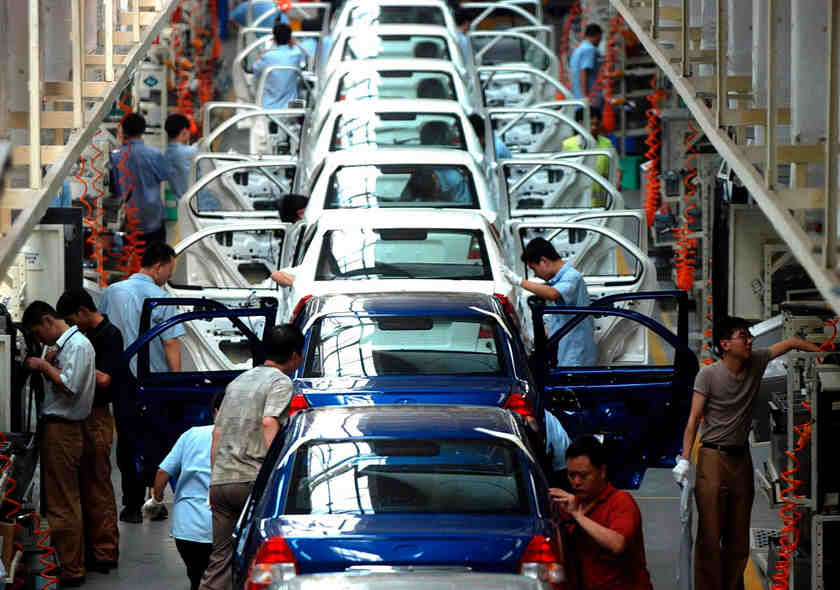
    Cars assembled and produced in Vietnam cost 20 percent more than in Thailand and Indonesia because a large number of parts have to be imported.

    Do Thu Hoang, Vice President of Toyota Vietnam, said at a forum Thursday that suppliers in the country are capable of making simple parts such as seats and wires, but for other parts like fuel caps, costs in Vietnam are 2-3 times higher than in Thailand and Indonesia.

    The country has to import about $2 billion worth of car parts each year, mostly components like the breaking and steering system, from countries like Japan, China and South Korea, according to a report submitted at the forum by the Ministry of Industry and Trade.

    Pham Tuan Anh, deputy head of the ministry’s industry department, said that the large portion of imports puts the localization rate of cars with nine seats or less at 7-10 percent, even though the country had targeted a 60 percent rate by 2010.

    Anh said that the reason for the imports is the country’s small market size, making suppliers unable to produce large volumes to lower prices.

    Hoang proposed that the government provides financial support for suppliers to upgrade their machinery and equipment to produce more advanced parts.

    “Without support, local car producers will continue to rely on imports, and local suppliers will struggle to grow.”

    Pham Van Tai, CEO of Truong Hai Auto (THACO), suggested that the country should scrap imports tax on car parts that local producers are not capable of producing.

    Vietnam began developing its car industry in 1991, 30 years later than other countries in the region.

    The sales of imported cars in the first 10 months surged 2.2 times to 106,100 units, while that of locally-assembled ones fell 12 percent to 153,100, according to the Vietnam Automobile Manufacturers Association (VAMA).

  • Chicago Approves Traffic Congestion Tax On Ride-Hailing Services

    Chicago Approves Traffic Congestion Tax On Ride-Hailing Services

    A proposal to combat traffic congestion in Chicago by increasing taxes on certain ride-hailing trips won city council approval on Tuesday as the city and ride providers accused each other of penalizing low-income passengers.

    Mayor Lori Lightfoot’s plan increases the city’s tax on single-passenger trips and lowers the tax on shared rides while imposing new surcharges on weekday rides in the downtown area to raise $40 million for the fiscal year that begins Jan. 1.

    Ride-hailing companies Uber Technologies Inc and Lyft Inc claimed the move would largely hurt low-income residents.

    Earlier this month, the city’s first female African-American mayor accused Uber of trying to resist any kind of regulation by stirring up racial tensions.

    Uber rejected her claims and said alternative proposals it offered would spare lower-income communities in Chicago’s South and West sides from higher costs while raising more money for the city’s budget.

    Reuters’ analysis of data that ride-sharing companies are required to disclose to Chicago shows fares for shared rides in the city have risen significantly over the past year, while fares for single riders have remained stable.

    The price increases for shared rides predominantly affect Chicago’s low-income neighborhoods where most of carpool rides are booked, the analysis showed. Over this period of increased fares, carpool ridership fell.

  • Honda Two-Wheelers Resumes Operations At Manesar Plant

    Honda Two-Wheelers Resumes Operations At Manesar Plant

    Honda Motorcycle and Scooter India (HMSI) has announced that the company has decided to resume operations at the Manesar plant following widespread protests by workers. The protests started earlier this month after some contractual workers, whose contracts had expired or were nearing the end of contract, were asked to go on indefinite leave. More than 2,000 workers had protested the decision, forcing HMSI to suspend operations at the company’s manufacturing facility in Manesar. Now, HMSI has released a statement saying that all permanent workers have been asked to join duties from November 25-28 in four batches.

    “The decision to resume production at Manesar plant was initiated on November 22nd. All permanent staff associates were informed to join duties from 25th to 28th November in four batches. The process of joining back to work has started as per schedule and we look forward to the normalcy of operation after this process is completed. With the intention of maintaining industrial peace, Manesar plant management reaffirmed that all permanent workers are expected to resume work as per the schedule and carry out their assigned duties with discipline, good faith, cooperation and positivity,” an official statement from Honda Motorcycle and Scooter India (HMSI) said.

    The protests began on November 5, when some contractual employees were not allowed to go into the plant. The Manesar facility of HMSI employs around 1,900 permanent workers and 2,500 contract workers. According to the employee union, HMSI had reduced production of the facility by 50 percent, and sacking contractual workers. On its part, HMSI maintains that a slowdown in the auto industry over the last 11 months had led to production adjustment and manpower realignment at the plant. According to HMSI, the contractual workers whose term had been completed were relieved from their duties, but permanent workers were not impacted.

  • Vietnamese carmaking startup VinFast gets $950 million credit line

    Vietnamese carmaking startup VinFast gets $950 million credit line

    VinFast, which aims to become Vietnam’s first domestic car manufacturer, said it has secured a 12-year credit facility for as much as $950 million to help buy machinery and equipment from German suppliers.

    The company, a unit of Vietnam’s largest conglomerate Vingroup JSC, plans to have its first production models built under its own badge hit the streets next August. Vingroup has earmarked about $3.5 billion for the project.

    VinFast, led by former General Motors executive Jim DeLuca, showed off its BMW-based LUX A2.0 sedan and LUX SA2.0 crossover at the Paris auto show last week. Assembly is scheduled to begin next week year.

    Credit Suisse AG and HSBC were the lead arrangers and the financing agreement was guaranteed by German export credit agency Euler Hermes, Vingroup and Vinfast said in a statement.

    The statement also said that in August Vinfast completed syndication of a $400 million term loan facility led by four international banks.

  • Toyota to invest $2 billion in developing EVs in Indonesia

    Toyota to invest $2 billion in developing EVs in Indonesia

    Toyota Motor Corp. plans to invest $2 billion to develop electric vehicles in Indonesia over the next four years, starting with hybrid vehicles, Indonesia’s coordinating minister for maritime affairs said.

    “From 2019 to 2023, we will progressively increase our investment to 28.3 trillion rupiahs ($2 billion),” Toyota president Akio Toyoda was quoted as saying in a statement released by the ministry on Thursday.

    Toyota said this month that it aimed for half its global sales to be from electric vehicles by 2025, five years ahead of schedule, and will tap Chinese battery makers to meet the accelerated global shift to electric cars.

    The deal was agreed at a meeting in Osaka on Thursday between Indonesia’s Coordinating Minister for Maritime Affairs Luhut Pandjaitan and Toyoda.

    “Because the Indonesian government already has an electric vehicle development map, Toyota considers Indonesia a prime EV investment destination,” Toyoda said in the statement.

    He said Toyota would follow the government’s EV plan by investing in stages, starting with the development of hybrid vehicles.

    Monet, the self-driving car joint venture of Toyota and SoftBank Corp., separately told Reuters in June it plans to begin operating in Southeast Asia next year

    Indonesia, the region’s largest economy, has plentiful reserves of nickel laterite ore, a vital ingredient in the lithium-ion batteries used to power EVs, and has been making a push to attract foreign carmakers.

    Officials are betting Indonesia, which is already Southeast Asia’s second-largest car production hub, can become a major regional player in lithium battery production and feed the fast-rising demand for EVs.

    The country announced earlier in 2019 plans to introduce a financial program that will offer tax cuts to EV battery producers and automakers, as well as preferential tariff agreements with other countries that have a high EV demand.

    Indonesian ministers told Reuters in December that Korean carmaker Hyundai Motor Co. plans to start producing EVs in Indonesia as part of an around $880 million auto investment in the country.

    Mitsubishi, meanwhile, announced in mid-2018 it would work with the Indonesian government to research infrastructure that could accommodate EVs.

    Analysts are cautious however on how quickly Indonesia’s EV ambitions can be carried out, as some of its lithium battery projects require complicated nickel smelter technology.

    The ministry’s statement on Thursday gave no details on how Toyota, which already makes batteries for hybrids and hybrid plug-ins, would implement its investment plans.

    Toyota was not immediately reachable for comment, but said in June it would partner with China’s Contemporary Amperex Technology Co. and EV maker BYD Co. for battery procurement.

  • Fiat Chrysler Says Peugeot Talks Progressing Despite GM Lawsuit

    Fiat Chrysler Says Peugeot Talks Progressing Despite GM Lawsuit

    Fiat Chrysler (FCA) said on Thursday talks with Peugeot owner PSA Group to create a $50 billion carmaking group were going well, despite FCA being sued for “substantial damages” by General Motors late on Wednesday. General Motors (GM) filed the lawsuit in the United States, alleging FCA had bribed United Auto Workers (UAW) union officials over many years to corrupt the bargaining process and gain advantages, costing GM billions of dollars.

    “Talks are progressing smoothly,” an FCA spokesman said on Thursday about discussions with PSA to create the world’s fourth-biggest automaker. Shares in FCA were down 3.4 percent, while PSA shares were 1.4 per cent lower. Asked whether the lawsuit might lead to a review of the two companies’ valuations in the proposed merger deal, a source close to FCA replied: “No.”

    In a letter to employees, FCA Chief Executive Mike Manley said: “We are astonished by this filing, both it is content and its timing. We can only assume it was intended to disrupt our proposed merger with PSA.”

    FCA will vigorously defend itself against this “meritless” lawsuit, the letter, which was seen by Reuters, said. “We will not be slowed down by this act,” Manley said, adding: “Let’s keep the performance up as it has clearly got some of our competitors worried.”

    PSA declined to comment on the GM lawsuit and its potential impact on the merger talks.

  • Jaguar Land Rover Chief Wants Alliances, Not A Merger

    Jaguar Land Rover Chief Wants Alliances, Not A Merger

    Luxury automaker Jaguar Land Rover’s chief executive told Reuters he is open to more alliances to lower the costs of developing technology but is not looking for a full-blown corporate merger. “We feel the pressure” from demands to slash carbon emissions and develop electric vehicles, Jaguar Land Rover chief Ralf Speth said in an interview on the sidelines of the Los Angeles auto show.

    But to the question of whether the company and its parent, Tata Motors Ltd. are seeking a merger for Jaguar Land Rover, Speth said: “The answer is no. We can really survive on our own.”

    The British luxury sedan and SUV maker is “always open” to discussions of technology alliances and component sharing with other companies, Speth said. Earlier this year, the maker of Jaguar sedans and Land Rover SUVs agreed with German luxury automaker BMW AG to develop electric car parts jointly.

    Jaguar Land Rover currently sells an electric Jaguar I-Pace sport utility vehicle and has said the next generation of its top-of-the-line XJ sedan will be all-electric. The company has not said when it will launch the new XJ.

    “There’s no question in our mind that electric is the drive train of the future,” Eberhardt said. “But from a customer adoption point of view it takes longer than anticipated.”

    Jaguar Land Rover has a product lineup, including hybrid, plug-in hybrid and battery electric vehicles, which could meet tighter European CO2 emissions limits which begin taking effect next year, but compliance will depend on the mix of vehicles customers buy, Speth said.

    “In Europe, the mix (of vehicles) is encouraging, but not at the moment at the level we can say we are compliant right at the beginning,” he said. “But there is time to go. We are cautiously optimistic.”

    A lack of public electric vehicle recharging infrastructure remains a challenge in selling electric vehicles in the U.S. and Europe, Eberhardt and Speth said.

    Jaguar Land Rover was unprofitable through the first half of its fiscal year ended Sept. 30, hit by Brexit-related production shutdowns and weaker demand in China. But Speth said the second half of the year should be better than the first.

    Demand in the Chinese market is volatile, though Jaguar Land Rover sales have seen “double-digit growth” in recent months, Speth said. But that growth has been from a low volume. Speth said he receives data on the Chinese market daily.

    Speth and JLR North America chief Joe Eberhardt were at the Los Angeles Auto Show for the North American launch of the Land Rover Defender, a modern reincarnation of sport utility vehicles identified with African safari adventures and British country estates.

  • Volkswagen Cuts Medium-Term Outlook For Operating Profit

    Volkswagen Cuts Medium-Term Outlook For Operating Profit

    German carmaker Volkswagen on Monday cut its medium-term outlook for operating profit as the industry is being hit by a global downturn.

    VW now expects operating profit before special items to grow by at least 25% in the 2016-2020 period, down from a previous forecast of more than 30%, slides for a presentation showed.

    The Wolfsburg-based company also cut its forecast for medium-term sales growth to 20% from more than 25%.

  • Automobili Pininfarina’s Second Car To Rival The Urus

    Automobili Pininfarina’s Second Car To Rival The Urus

    It was at the 2019 Geneva Motor Show that Mahindra-owned Pininfarina showcased the world’s first luxury electric hyper-performance GT and it’s called the Battista. In fact, the company brought three models to the event. Back then, we told you that it doesn’t stop here and a new model was already in the pipeline. Speaking at a private event in Los Angeles, US, Automobili Pininfarina CEO, Michael Perschke revealed the plans of the company. He said, “We envisage a 5 model family now and by 2025 the family will be complete.”

    While deliveries of the Battista (PF0) will start in 2020, the company is already getting ready to showcase its next product – the PF1. Perschke had already said that the second car will slot somewhere between a Lamborghini Urus, Porsche Panamera Shooting Brake and a Ferrari GTC4 Lusso and of course, it will be an all-electric car. While there’s no doubting why the company is diving into the SUV segment, considering how big a global trend the segment is; it’s interesting to see Pininfarina taking the bull by the horns and streamlining its strategy for the Indian market. While it’s currently under development, and hence not much is known about it, of course, there are some details that Perschke threw some light on.

    In an exclusive interview during the 2019 Geneva Motor Show, Perschke said, “The car will have 4 seats, maybe 5 people can sit in, but it’s going to be super functional, super emotional, superb designs and it’; be a little higher, little longer than the Battista and it’s going to be super exciting and we have to do justice to this brand.” The company has now confirmed that the PF1 will come with a 4-seater configuration but with an optional rear-seat bench to offer a 5-seater variant. The interior trim will be made of rich material 90 per cent of which will be no plastic. However, it went on to state that 90 per cent of the dash will be wood.

    At a private event in Los Angeles though, a few more details were revealed and this includes the approximate price of the car. Perschke said that the second model will be priced from $200,000 ( ₹ 1.43 crore approx.) to $300,000 ( ₹ 2.15 crore) and will slot below the Battista which currently is priced at $2 million. He in fact said that the brand will never build a car which will cost less than $ 150,000 ( ₹ 1 crore approximately)

    Giving some more details about what the PF1 would look like, Luca Borgogno, Head of Design, Pininfarina said, ” The next car will be the first sustainable S-LUV (Sustainable Lifestyle utility vehicle). It will offer performance, luxury and comfort. We want to apply a low bonnet, big fender feeling and glass canopy feel to the car. We will work with suppliers to Boeing to have glass that can be darkened or lightened as the windows in the Dreamliner.” The roof canopy will also have heat reflection.

    On the dimensions front, the PF1 all-electric SUV will be 50mm lower than the Urus; it will be more than 5 metres long, more than 2 metres wide and will have an electric powertrain that will offer upto 1000 bhp. The PF1 will use 3 electric motors; 2 at back, one in front and will boast of a 50:50 weight distribution with 80 percent of weight below the H point since the batteries will be floor mounted.

    The PF1 will be based on a new platform that Pininfarina calls skateboard. The S-LUV will be the first car to be built on this platform and all future cars from Pininfarina will be based on it. The company says that the S-LUV will not be an off-roader but will be able to handle rough roads and some more. The car will come with AWD and air suspension will be part of the package.

    It is also confirmed now that the PF1 will come with 24-inch wheels which is a size bigger than the Lamborghini Urus. Of course, you’re wondering, whether it’s a limited edition model. Well, it isn’t. It was only the production of the Battista that was capped at 150 units. According to the folks at Pininfarina, the volume will vary with each model. As far as the PF1 (S-LUV) goes, it will have a minimum annual production of 1500 units. Between the Battista, PF1 and PF2, the company will not produce more than 5000 units annually.

    Production of the PF1 S-LUV will begin from 2022 and the car will be showcased for the first time as the Pura Vision Concept at the next Pebble Beach Concours d’Elegance.

  • BMW Executive Markus Duesmann Tasked With Reviving Audi

    BMW Executive Markus Duesmann Tasked With Reviving Audi

    Volkswagen on Friday installed former BMW executive Markus Duesmann to reinvent Audi after the German premium brand lost key engineering know-how and influence in the wake of the 2015 diesel-cheating scandal. Duesmann will become chief executive of Audi as well as take on board level responsibility for research and development at Volkswagen Group on April 1 next year, the Wolfsburg-based multi-brand group said on Friday.

    Duesmann’s job will include injecting new meaning into the company’s advertising slogan “Vorsprung Durch Technik”, or “advancement through technology”, after Audi fired a raft of senior engineers in the wake of the diesel scandal. “Markus Duesmann will do everything to unlock the huge potential of the Audi brand,” Volkswagen Group Chief Executive Herbert Diess said at a press conference in Wolfsburg on Friday. Audi, based in Ingolstadt, Bavaria was a major research and development hub within Volkswagen, setting standards in aerodynamic efficiency, lightweight aluminum construction, dual-clutch gearbox technology and four-wheel-drive systems.

    But the premium brand struggled after it was discovered that engine management software, used to manipulate exhaust emissions tests at VW, was designed by Audi engineers, leading to the firing of engineering chiefs and its long-term CEO. After Audi chief Rupert Stadler was dismissed, Audi installed a sales expert, Bram Schot has interim CEO, and the brand struggled to redefine “Vorsprung Durch Technik.”

    “We need to partly refine the ‘Vorsprung’. We are working on it,” Audi’s sales chief Hildegard Wortmann told Reuters at the Frankfurt car show in September. “We don’t need little ‘Vorsprung’ stories, we need real ‘Vorsprung’ stories,” Audi’s current head of research and development, Hans-Joachim Rothenpieler told Reuters. Audi’s electric car e-tron, as well as fuel cell technology, are two pillars upon which Audi can resurrect its brand claim, Rothenpieler said. Audi’s works council chief, Peter Mosch, welcomed the appointment of an external manager. “From Markus Duesmann and his team, we expect the stable utilization of our factories and a more courageous approach.”

  • Renault’s Delbos Vies For CEO Post As Hunt Narrows

    Renault’s Delbos Vies For CEO Post As Hunt Narrows

    Renault’s interim chief executive Clotilde Delbos has applied to take the job on a permanent basis, two sources familiar with the matter said, as the French carmaker edges towards a shortlist likely to also feature several external candidates.Financial chief Delbos was propelled to the job on a temporary basis after CEO Thierry Bollore’s ousting in mid-October, as Renault and its Japanese partner Nissan clear the decks of managers closely associated with the Carlos Ghosn era.

    Ghosn, who chaired the alliance between the two companies, was arrested in Japan a year ago on financial misconduct charges he denies, and Renault and Nissan have been striving to repair their strained ties since.

    Delbos, who joined Renault in 2012, had put herself forward for the CEO job but was not certain to feature on the shortlist of frontrunners, despite being one of the few likely internal candidates, one of the sources said.

    That selection, which would comprise around three names, is expected to be turned over to the group’s nominations committee in the coming days, the source added.

    Delbos declined to comment when asked by Reuters earlier this week whether she had applied. Renault also declined to comment on Friday.The French carmaker, chaired by Jean-Dominique Senard, a former executive at tire maker Michelin parachuted in following the Ghosn scandal, is expected to choose a new CEO by year-end so that the group can try and fully refocus on its operations.

    Like many peers, both Nissan and Renault are struggling with falling sales in a faltering global auto market.

    Several heavyweight external candidates have been cited as good fits for Renault, and the French government, which has a 15% stake in the carmaker, has already made clear it was not opposed to a non-French national getting the job.

    Didier Leroy, a senior Toyota executive who was already seen as a potential replacement for Ghosn when the latter was close to departing last year, has once again been cited in the recruitment process, two other sources close to the situation said.

    “I do not pay attention to these rumors and remain 100%focused on my job at Toyota, where I enjoy a very trustful relationship with Akio Toyoda,” Leroy said, referring to Toyota’s president in a statement sent to Reuters through the Japanese carmaker.

    One of the sources said that Patrick Koller, the Franco-German CEO of car parts maker Faurecia, and Luca de Meo, the Italian boss of Volkswagen-owned SEAT, also ticked many of the boxes for recruiters, namely as both spoke French.

  • Nissan Recalls Nearly 400,000 Vehicles Over Braking System Defect In The US

    Nissan Recalls Nearly 400,000 Vehicles Over Braking System Defect In The US

    Japan’s Nissan Motor has said it is recalling 394,025 cars in the United States over a braking system defect, causing concerns that a brake fluid leak could potentially lead to a fire. The leak into internal circuit boards will trigger a warning to drivers, which if ignored may lead to a fire in “rare instances,” Nissan said in a filing dated Nov. 8 with the National Highway Traffic Safety Administration (NHTSA) under recall number 18V-601. “… if the warning is ignored and the vehicle continues to be operated in this condition, the brake fluid leak may potentially create an electrical short in the actuator circuit, which in rare instances, may lead to a fire,” the Japanese automaker said.

    The recall, which was reported on Friday by U.S. media, includes Maxima sedans from 2016 through 2018, Infiniti QX60 luxury crossovers from 2017 to 2019, Murano SUVs from 2015 to 2018 and Pathfinder SUVs from 2017 to 2019, the filing showed.

    The document does not mention whether the brake system defect actually caused any fires or injuries.

    The company also reportedly said that it was working to fix the issue and that owners of the affected cars will be notified starting early next month.

    “Once the remedy is available, owners will receive a final notification letter asking them to bring their vehicle to an authorized Nissan dealer or INFINITI retailer to have the remedy work completed at no cost for parts or labor,” it told NPR in an emailed statement.

    The development comes less than two months after NHTSA opened a preliminary investigation into 553,000 Nissan Rogue sport utility vehicles after reports of their automatic emergency braking systems engaging without warning or an obstruction.

    Improper inspections of brakes, steering wheels, speed measurements and vehicle stability had also caused the company to issue a recall of several thousand vehicles in Japan late last year.

    In September, the company recalled 1.3 million vehicles to fix a problem with its backup camera displays.

  • Ford Bets On An Electric Mustang To Charge Its Turnaround

    Ford Bets On An Electric Mustang To Charge Its Turnaround

    The Mustang Mach E electric sport utility vehicle Ford Motor Co unveiled in Los Angeles on Sunday is more than another car for the storied automaker. The Mach E has become within Ford a high-profile test for a restructuring that has been marred by profit warnings, costly quality problems and the troubled launch this year of another important vehicle, the Ford Explorer sport-utility.

    For Chief Executive Jim Hackett, the Mach E’s aggressive design and futuristic interior represent a long-awaited, visible sign of the overhaul of the company’s product creation process that he has tried to explain to skeptical Wall Street analysts for the past two years.

    By accelerating the “clock speed” of vehicle development, cutting overlapping product architectures to just five from 13 and extending the company’s most successful brands to new products, Ford could slash $20 billion out of a five-year, 2018-2023 product plan, Hackett told Reuters.

    “This is the first thing we generated out of this new thinking,” Hackett said in an interview ahead of the Mach E unveiling. “We have a lot more coming.”

    For Ford Chairman Bill Ford Jr., the Mustang Mach E puts together two previously conflicting goals: His desire for Ford to be a leader in clean cars and make the automaker carbon-neutral by 2030, and his personal love of the Mustang and its growling V-8 engine.

    “We are really pushing our chips in on the table with this vehicle,” Ford said in an interview ahead of the Mach E’s unveiling. The automaker has said it will spend $11.5 billion developing electric and hybrid models by 2022.

    The Mach E started with humble ambitions. The SUV originally was to be what Ted Cannis, Ford’s global director for electrification, called a “compliance” play – an electric variant of a front-wheel-drive internal combustion vehicle, aimed at generating emissions credits to comply with clean air regulations at low cost. There was no link to the Mustang’s muscle car image.

    Boring electric cars were the norm for Ford and other legacy automakers. Then Tesla Inc in 2013 launched its Model S – an electric car that looked like a sporty European luxury sedan with a giant screen for a dashboard and entertainment and functional features that could be upgraded with over-the-air software updates. Tesla’s market value is now higher than Ford’s.

    Ford’s own customer research showed dull electric cars were a mistake, Cannis and other executives said. Those doubts came to a head in mid-2017 when Hackett, then newly appointed, reviewed the design for the electric SUV with Executive Vice President Jim Farley, who has owned seven of the cars starting with a 1965 model he restored when he was 14 years old.

    “It’s not good enough,” Hackett recalled saying. Farley agreed, and Hackett said, “We tear it up.”

    The team designing the vehicle started over, using a new architecture engineered from the start to be a battery-electric vehicle, instead of the original plan to use a modified version of an internal combustion engine vehicle, Ford executives said.

    The Mustang muscle car’s distinctive “shark face” front end and body proportions were adapted to a new skin, and under the floor Ford designed a new battery pack that can deliver up to 300 miles (483 km) of range in an “extended range” version.

    The re-do had to be accomplished much faster than normal to stay on target for a fall 2020 launch.

    “We were super behind time,” said exterior designer Chris Walter during a briefing on the vehicle ahead of the Los Angeles debut.

    A concept for new dashboard software and a display using a 15.5-inch (39 cm) diagonal screen was pulled together in just 90 days by a 15-person group that called itself Team Menlo – a reference to Thomas Edison’s Menlo Park, New Jersey, laboratory. A paper prototype of the new screen used an empty Keurig coffee pod to represent a large control knob.

    The overhaul cost money, but Ford product development chief Hau Thai-tang told Reuters the dedicated electric vehicle architecture should allow for 25% to 30% improvements in manufacturing efficiency to help offset the cost.

    The final call on using the Mustang name came from the top, and was not given easily.

    “I was dead set against it, initially,” Bill Ford said. Ford said he started to warm to the idea as he saw the styling and the performance data for the vehicle.

    Ford said he did not grant his approval until earlier this year after driving a prototype.

    “It felt like a Mustang experience to me,” he said.

    This is not the first time a challenge to reinvent the Mustang has emboldened Ford employees to break with convention during a rough patch in the company’s history.

    The original Mustang launched in 1964 was derived from a mainstream Falcon compact car, and quickly became a hit, far outselling the company’s projections.

    In the early 1990s, with the economy in a slump, a small group of Ford employees rebelled against a plan to transform the rear-wheel-drive Mustang into a front-wheel-drive car developed by Ford’s then-partner, Japanese automaker Mazda Motor Corp. That project became a laboratory for cutting the costs of product engineering by putting representatives of different functions on the same team.

    The Mach E is another turning point, Hackett said. “The science project platform for EVs is now gone.”