Category: Automotive

Retail News Asia is committed to providing both local and global retailers with the latest Auto and Car news throughout the Asian market. This on a daily base.

  • Panasonic Develops Battery Management Technology

    Panasonic Develops Battery Management Technology

    Panasonic has developed a new battery management technology that measures a battery’s electrochemical impedance, which is an effective method of evaluating the residual value of lithium-ion batteries in devices. This technology is expected to be applied to various devices that use lithium-ion battery modules with many battery cells stacked in series and to future vehicles. Panasonic has developed this technology in collaboration with Professor Masahiro Fukui of Ritsumeikan University. Panasonic developed a new battery monitoring IC test chip, measurement algorithm, and software, while Ritsumeikan University evaluated the performance using actual batteries.

    The newly developed battery management technology makes it possible to measure electrochemical impedance using the AC current excitation method for lithium-ion stacked battery modules that are installed in operating devices. Furthermore, this technology aims to enable the evaluation of residual value by way of a deterioration diagnosis and failure estimation based on an analysis of acquired measurement data. This will contribute to the realization of a sustainable society where future lithium-ion batteries can be reused and recycled.

    Conventional electrochemical impedance spectroscopy is widely used as a non-destructive method for evaluating lithium-ion batteries. This measurement method requires an application specific measuring instrument and a large thermostatic chamber that keeps the temperature of the battery constant, and it was necessary to measure each cell in the laboratory.

    Conventional BMIC measures the individual battery voltage of 6 to 14 lithium-ion battery cells stacked in series. By using multiple BMICs, BMS acquires battery cell voltage data from several up to 200 cells connected in series, monitors the battery, and ensures its safe use. In addition, BMS calculates the remaining driving range and usable time by estimating the state of charge and the state of health.

    The newly developed BMIC test chip has a built-in electrochemical impedance measurement function using the AC current excitation method in addition to these conventional functions. The electrochemical impedance measurement is achieved by 15 fully parallel analog / digital converters and an AC current excitation circuit with pulse modulation from 0.1 Hz to 5 KHz and a complex voltage / complex current conversion circuit built in the BMIC. Therefore, the BMIC chip can measure the electrochemical impedance of a battery in operation without significantly changing the configuration of the current BMS installed in the battery.

  • Daimler Seeks 1 Billion Euros In Savings At Mercedes-Benz By Cutting Jobs

    Daimler Seeks 1 Billion Euros In Savings At Mercedes-Benz By Cutting Jobs

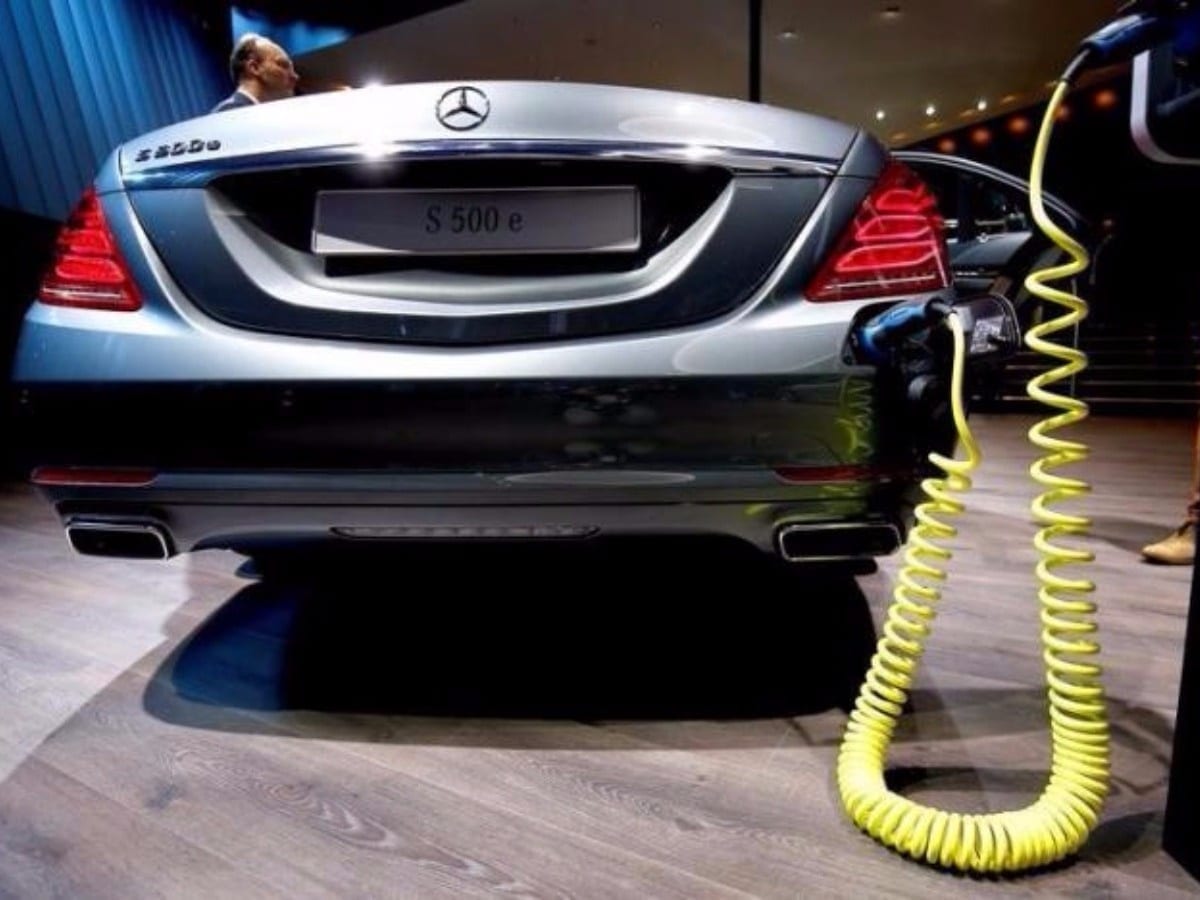
    Tougher emissions rules will hit Daimler’s profits in 2020 and 2021, prompting the German carmaker to seek more than 1 billion euros ($1.1 billion) in savings from cutting staff costs at its Mercedes-Benz business by the end of 2022, it said on Thursday.

    Daimler shares were down 2.3% in early trading at 52.17 euros, the biggest decline on Germany’s DAX blue-chip index, which was down 0.3%.

    Management positions will be cut by around 10%, and the company said it would also seek more than 300 million euros from cutting personnel costs – plus another 250 million euros in fixed costs – at its trucks business.

    Daimler said it needed to sell more electric vehicles to meet tougher European Union rules which force carmakers to cut carbon dioxide emissions from cars by 37.5% by 2030 compared with 2021 levels, and following a 40% cut between 2007 and 2021.

    The company said it expected to achieve a return on sales from operating activities at Mercedes-Benz Cars & Vans of at least 4% in 2020 and at least 6% in 2022.

    Mercedes-Benz expects car sales to grow by around 3% in 2020, but said potential trade tariffs and Brexit could depress the return on sales by up to 1%.

    Earlier this year, Daimler had said it hoped to achieve a return on sales of 3% to 5% at Mercedes-Benz Cars.

  • Toyota subsidiary to set up another airbag plant in northern Vietnam

    Toyota subsidiary to set up another airbag plant in northern Vietnam

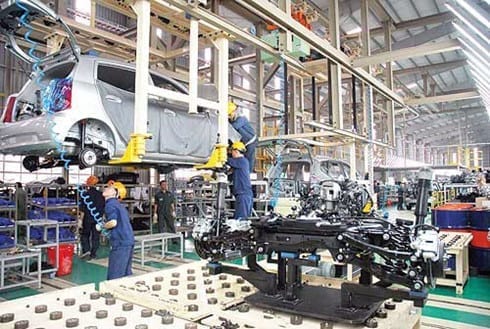
    Japanese auto parts maker Toyoda Gosei plans to build another airbag plant in Thai Binh Province at a cost of $16.8 million next year.

    Work on the plant will begin in May 2020. When completed in October 2021 it will help increase the company’s capacity in Vietnam to 25 million airbags annually, Toyoda Gosei said in a statement on Wednesday. It will employ 700 workers initially, increasing to 2,000 by the end of 2023.

    Toyoda Gosei, a subsidiary of Toyota Motor Corp., built its first plant in Vietnam in Hai Phong City in 2004. Last July it opened a $24.6-million second plant at the Tien Hai Industrial Park in Thai Binh Province.

    It plans to increase the capacity of the Hai Phong factory to meet increasing orders. Airbags produced in Vietnam are exported mainly to Japan but also to other markets such as ASEAN and North America.

    Established in 1949, Toyoda Gosei has 67 facilities and factories in 17 countries around the world.

  • Cars to enter airports fee free for 10-15 minutes

    Cars to enter airports fee free for 10-15 minutes

    From 2020, Vietnam’s airports will allow cars to wait 10-15 minutes while dropping or picking up passengers. Each airport will have its specific no-toll timeframe, which will be decided by the government, said Vu The Phiet, General Director of the Airports Corporation of Vietnam (ACV), which manages 21 civilian airports in the country.

    ACV is currently upgrading systems to collect fees digitally, including the function to record the time cars enter and leave the airports.

    For instance, cars entering and leaving Tan Son Nhat or Noi Bai airports will have their license plates photographed while entering. When leaving, if the cars are still within their allowed timeframe, the barrier at the fee collection point will lift on its own, otherwise the cars will have to pay to exit, Phiet said.

    Currently, cars are charged VND15,000 ($0.65) for the first 60 minutes after they enter the airports, and VND5,000 ($0.22) for every 30 minutes thereafter.

  • 2020 Honda City To Be Unveiled This Month In Thailand

    2020 Honda City To Be Unveiled This Month In Thailand

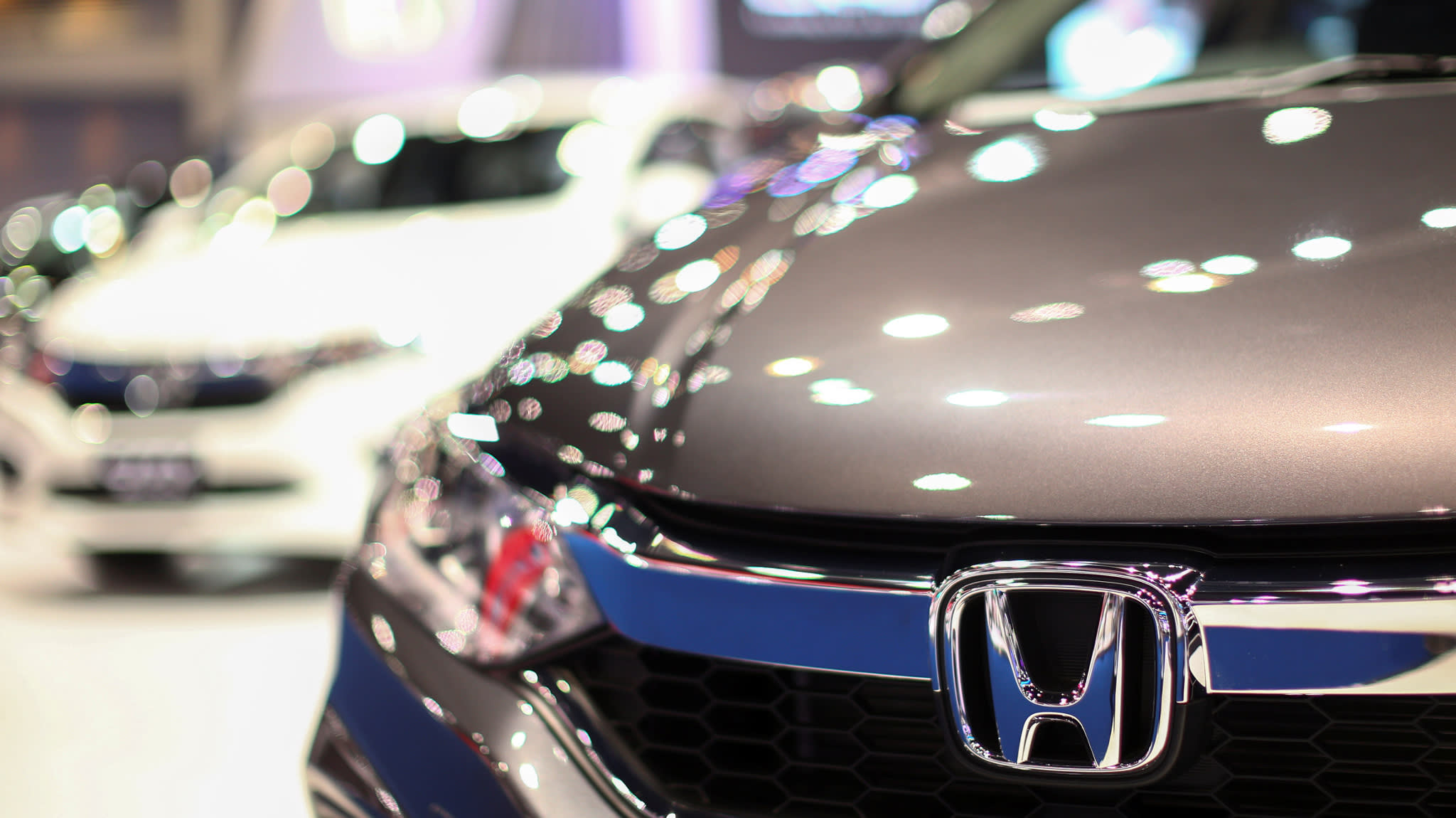
    The next-generation Honda City has been under development for a while now, and the popular-selling sedan is now confirmed to be making its global debut later this month. The 2020 Honda City will be officially unveiled on November 25, 2019, in Thailand; ahead of the Bangkok Motor Show, while the India launch is expected to take place sometime next year. The all-new City is set to get a complete overhaul and is expected to grow in proportions. The Honda promises a sportier exterior design and it will take inspiration from the new Civic and Accord models in the automaker’s line-up, also bringing a premium touch.

    The fifth-generation Honda City (seventh-gen globally) is expected revamped headlamps, a larger and wider chrome grille, and slightly curvaceous silhouette. Expect to the C-shaped LED taillights also making their way on the sedan, as part of the Honda family design. Inside, the car is expected to borrow heavily from the new generation Jazz, sharing the same underpinnings too. The dashboard design is likely to be the same sporting a new touchscreen infotainment system and a digital instrument console. Honda could introduce new connected car tech on the 2020 City along the lines of what MG And Kia offer on their respective cars.

    The big update will be under the hood of the 2020 Honda City that will get the new 1.0-liter VTEC three-pot turbocharged petrol motor for the Thai market. The turbo mill marks a comeback on the car since the first-generation version was introduced in the 1980s, and Honda says the turbocharged engine will provide 33 percent better fuel efficiency while offering improved performance. The unit is expected to churn out about 120 bhp and 200 Nm of peak torque. The smaller motor has been deemed necessary for the sedan to meet the Phase 2 Eco Car criteria in Thailand, which mandates Euro 5 compliance and a fuel consumption figure not exceeding 23.25 kmpl.

    It will also come with the new dual-motor Intelligent Multi-mode Drive (i-MMD) hybrid powertrain that debuted on the all-new Jazz earlier this year. The tried and tested 1.5-liter naturally aspirated iVTEC petrol will continue to be on offer as well churning out about 118 bhp, while the 1.5-liter iDTEC diesel will also remain on offer, particularly in India. India is expected to get a hybrid version of the City, which will help achieve higher efficiency figures and lower emissions as well. Transmission options will include a 5-speed manual, 6-speed manual or a CVT unit, depending on the engine and the market.

    The Honda City remains for ASEAN as well as Latin American markets and will go on sale in other South Asian countries this year. Honda Car India is likely to showcase the model at the 2020 Auto Expo, and we will get a fair idea on the pricing at the same time as well. That being said, do expect a marginal hike in prices when the model goes on sale next year.

  • All-New Ferrari Roma Revealed

    All-New Ferrari Roma Revealed

    The new Ferrari Roma is here! It is a brand new model from the Italian marquee and it is one of those cars which make you go weak in the knees, even when you look at it in photographs. The flared fenders, sleek headlamps, and body-colored grille are a departure from traditional Ferrari styling but stunning nonetheless! The Roma is a nod to the Italian ‘La Dolce Vita’ concept which means to live a life full of pleasure and luxury and sure enough, the way the Roma looks and the price tag with which it will come.

    It definitely means that the Roma will be an exclusive affair and it sits in accordance with Ferrari’s plan of launching three brand new cars this year and one can see it on roads, globally, in the first quarter of 2020.

    Sleek lines, elegant silhouette and its understated class, make the Ferrari Roma look like a million bucks!

    Sitting in line with the typical Ferrari design, the Roma looks more like a concept and less of a production car. Sleek lines, elegant silhouette and its understated class, make the Ferrari Roma look like a million bucks! The car is longish at 4.6 metres in length and weighs in at 1,472 kg (dry weight).

    The 4.0-liter turbo V8 sits between the front and the middle and doles out about 620 bhp at 5,750-7,500 rpm along with churning out a massive 760 Nm of peak torque at 3,000-5,750 rpm. There is an 8-speed DCT gearbox which was taken from the SF90 Stradale! The Ferrari Roma has a top-speed in excess of 320 kmph and does the 0-100 kmph sprint in 3.4 seconds. The 0-200 kmph sprint takes 9.3 seconds.

  • Tesla To Build New Plant And Design Centre In Germany

    Tesla To Build New Plant And Design Centre In Germany

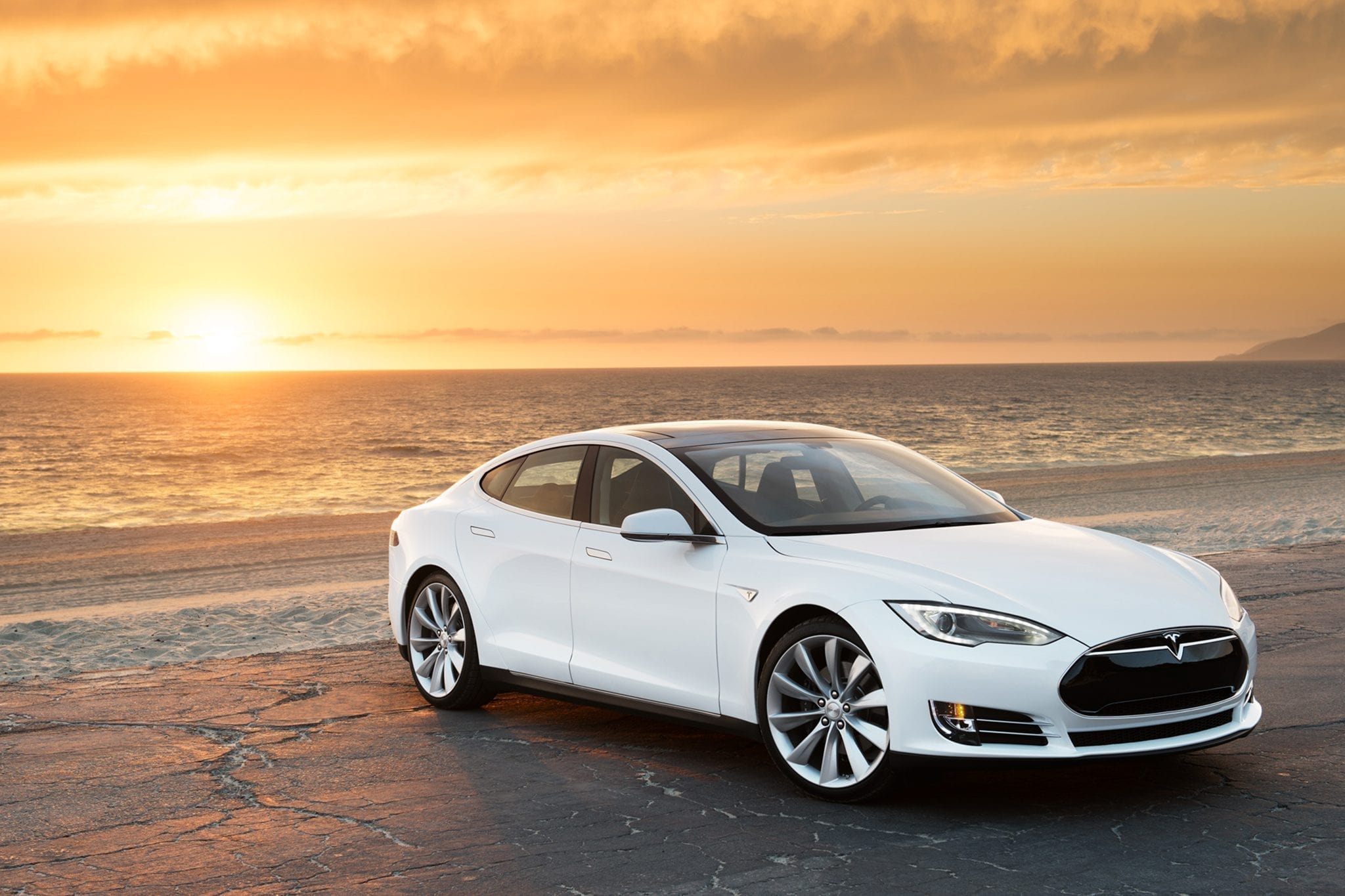
    Tesla will build its first European factory and design center near Berlin, giving the U.S. electric car pioneer the coveted “Made in Germany” label just as local rivals Audi, BMW and Mercedes prepare to launch competing cars.

    Tesla Chief Executive Elon Musk announced the move at a prestigious German car awards ceremony late on Tuesday and said the new plant would make batteries, powertrains and cars – starting with the Model Y sports utility vehicle.

    “Everyone knows German engineering is outstanding for sure. You know that is part of the reason why we are locating Gigafactory Europe in Germany,” Musk said at the ceremony in Berlin.

    The plan is a big boost for Germany as a centre for manufacturing after BMW and Mercedes in recent years chose to build new factories in Hungary, and after its auto industry was hit hard by Volkswagen’s admission in 2015 that it cheated U.S. diesel emissions tests.

    Germany’s powerful manufacturing industry has been slowing, with data on Thursday set to show whether Europe’s biggest economy has slipped into recession for the first time since 2013.

    Tesla is struggling to ramp up production and has yet to prove it can be consistently profitable as rivals including Audi-owner Volkswagen retool plants to mass-produce electric cars.

    Musk said the factory would be near Berlin’s new Brandenburg international airport, diversifying the Silicon Valley firm’s production beyond the United States at a time when global trade tariffs make exports more difficult. Besides Europe, Tesla is opening a factory in Shanghai.

    Tesla’s proposed factory will be within commuting distance of Poland, where labor costs are cheaper, a rival manufacturer – who also looked at the site – told Reuters.

    “Tesla’s decision to build an ultra-modern factory for electric cars in Germany is further proof of the appeal of Germany as an automotive hub,” Economy Minister Peter Altmaier said on Wednesday.

    “We think we now have the chance, in the coming years, to become an important international center in this future-oriented sector,” he said.

    The German government has earmarked financial support for making electric car battery cells locally as a way to secure manufacturing jobs as tougher emissions rules threaten demand for older technologies, like diesel engines.

    Dietmar Woidke, the premier of the Brandenburg state that surrounds Berlin, said any official support given to Tesla would be in accordance with European Union rulesAltmaier said there had been no discussion so far about any subsidies for Tesla’s plans, adding the company would be treated like all other carmakers.

    In a high-profile example of the impact of Brexit, Musk said he picked Germany for his new factory over Britain because of uncertainty over the nation’s exit from the European Union.

    “Brexit made it too risky to put a gigafactory in the UK,” he said in an interview with industry website Auto Express.

    Germany’s biggest labor union, the influential IG Metall, was quick to welcome Tesla’s plan. “This strengthens Berlin as an industrial location and creates jobs. We hope this sets an example,” said Birgit Dietze, IG Metall’s regional head.

    Even Germany’s auto industry association, VDA, welcomed the arrival of a U.S. competitor.

    “Elon Musk’s announcement shows how important Germany is as a location for producing electric vehicles in Europe,” VDA said. “We don’t shy away from competition, quite the opposite.”

    German carmakers and suppliers are preparing to build more than 150 electrified vehicles by 2023, VDA said.

    While Germany’s renowned car industry is mainly based in the south of the country, the capital has become a hub for start-ups and has attracted many creative and technology firms since the fall of the Berlin Wall three decades ago.

    “Tesla is coming to Brandenburg with a big investment,” said state premier Woidke, without giving details “We lobbied for this for a long time in intensive talks and with good arguments.”

    Berlin’s minister in charge of economic affairs, Ramona Pop, told public broadcaster RBB there had been talks about creating 6,000 to 7,000 jobs in production alone, with hundreds or even thousands more in areas such as design, software and research.

    Musk’s appearance at the awards ceremony is another example of Tesla’s efforts to give its cars the German stamp of quality.

    It already has an engineering firm in Pruem that specializes in automated manufacturing systems for battery factories and has tested its cars on the Nordschleife, the notorious

  • Tata Motors’ Global Wholesales Down By 19% In October 2019

    Tata Motors’ Global Wholesales Down By 19% In October 2019

    Tata Motors Group has released its global wholesale sales numbers for the month of October 2019. The group’s cumulative wholesales, including Jaguar Land Rover, stood at 89,108 vehicles, registering a decline of 19 percent, as compared to the company’s total wholesales from October 2018, which was around 1,10,009 units. The company’s total passenger vehicle sales for the month of October 2019 stood at 60,630 units, down by about 7 percent, as compared to the 65,193 units sold during the same month last year.

    Tata Group’s passenger vehicle sales also include the global wholesales for Jaguar Land Rover stood at 47,278 vehicles in October 2019. Jaguar’s wholesales for the month were 12,367 vehicles, while Land Rover wholesales for the month were 34,911 vehicles. The total number also includes the 3,721 units sold by CJLR, the joint venture between JLR and Chery Automobiles.

    The company’s total global wholesales from Tata Motors’ commercial vehicles segment stood at 28,478 units in October 2019, registering a de-growth of 36 percent, over October 2018. This also includes sales from Tata Daewoo.

    In India, Tata Motors’ domestic sales reached 39,152 units, as compared to the 57,710 vehicles sold in October 2018, registering a de-growth of around 32 percent.

  • Nissan Cuts Profit Forecast After 70% Quarterly Plunge

    Nissan Cuts Profit Forecast After 70% Quarterly Plunge

    Nissan Motor reported a 70% drop in quarterly profit on Tuesday and cut its full-year forecast to an 11-year low, hit by a strong yen and falling sales, and highlighting the turmoil at the Japanese automaker after the ouster of Carlos Ghosn.

    The latest weak showing from Nissan, which also slashed its interim dividend by 65% after its worst second-quarter performance in 15 years, illustrates the scale of the work ahead for its new executive team, which is due to take over on Dec. 1.

    Following the ouster of former chairman Ghosn almost a year ago, Nissan has been battered by falling profit, uncertainty over its future leadership and tensions with top shareholder Renault SA – whose shares fell 2% to their lowest since April 2013 after Nissan’s downbeat guidance.

    Nissan shares, down 19% this year, closed up 1% at 714.5 yen before the results announcement.

    Operating profit at Japan’s second-biggest automaker by sales came in at 30 billion yen ($275 million) in July-September versus 101.2 billion yen a year earlier.

    That compared with a mean forecast of 47.48 billion yen from nine analyst estimates compiled by Refinitiv. Nissan announced an interim dividend of 10 yen per share, down from 28.50 yen a year ago.

    The company’s global vehicle sales fell 7.5% to 1.27 million in the quarter. Sales in China, its biggest market, fell 2.5%, while those in the United States fell 4.5%.

    “Our sales in China outpaced the market, but sales in other key regions, including the U.S., Europe, and Japan underperformed,” Stephen Ma, a corporate vice president who will become chief financial officer next month, told reporters.

    Slowing demand for cars in the United States and China, the world’s biggest auto markets, has led to cut-throat competition, and Nissan’s slump in first-half sales has knocked operating profit off course from the automaker’s full-year target.

    “We are revisiting all our assumptions, and as you can see that is why we revised down our forecast for sales volume for the full year,” Ma said.

    Nissan slashed its full-year operating profit forecast by 35% to 150 billion yen, which would be its worst full-year performance in 11 years.

    It now sees global retail sales at 5.2 million vehicles, down from a previous forecast for 5.5 million, bracing for its worst annual sales in six years.

    Nissan in the past few weeks has announced a revamp of its top ranks with younger executives including Ma, while naming the head of its China business, 53-year-old Makoto Uchida, as its next chief executive. The company is seeking to draw a line under the legacy of Ghosn, who is awaiting trial in Japan on charges of financial misconduct, which he denies.

    The automaker said it would hold an extraordinary shareholders meeting on Feb. 18, 2020, to vote on a proposal for Uchida and other members of the new executive team to become company directors, while former Nissan CEO Hiroto Saikawa, outgoing interim CEO Yasuhiro Yamauchi and former Renault CEO Thierry Bollore were scheduled to vacate their director posts.

    Years of heavy discounting and fleet sales, particularly in the United States, has cheapened the automaker’s brand image while lowering vehicle resale value and denting profit.

    Nissan is implementing a global recovery plan under which it will axe nearly one-tenth of its workforce and cut global vehicle production by 10% through 2023 to rein in costs which it has said ballooned when Ghosn was CEO.

  • New Battery Design Could Allow Electric Cars To Charge In 10 Minutes

    New Battery Design Could Allow Electric Cars To Charge In 10 Minutes

    Range anxiety still remains one of the big deterrents for the masses to adopt electric vehicles (EV), and a charging time of four to five hours does not help matters for EV demand. However, the EV industry is rapidly evolving and charging times have dramatically reduced over the years. In a big step towards charging time reduction, electric vehicle owners could soon be able to fully charge their cars in as little as 10 minutes, courtesy of new battery design. A report by NewScientist states that the new design heats the battery to increase the reaction rate.

    The report quotes Chao-Yang Wang of Penn State University stating that for electric cars to be commercially attractive, the batteries need to charge up to 80 percent or a range of 300 km within 10 minutes. However, this requires the batteries to rapidly take in 400 kilowatts of power and the current set of batteries cannot do this. When the batteries are charged rapidly, the lithium ions at the time move from the positive to the negative electrode and there is a tendency for lithium to form plate-like deposits on the negative electrode’s surface that can shorten battery life.

    Wang and his colleagues are working to minimise this problem by first heating the battery to a temperature too high to allow the lithium plating to form. They tested the theory by taking a commercially available industrial battery and inserted micron-thick nickel foils in a stack of electrode layers. The structure then allows the electrode the heat in less than 30 seconds, setting up conditions for ions to move quickly into the negative electrode without causing plating on its surface.

    The battery tests were conducted at varying temperatures and were charged at 40 degrees, 49 degrees and 60 degrees Celcius, and compared the performance with a control battery charging at 20 degrees Celcius. The results concluded that the battery could maintain fast charging for just 60 cycles at 20 degrees Celcius before the lithium plating caused problems that reduced performance significantly. In comparison, heating the electrode to 60 degrees Celcius allowed the battery to charge through 2500 cycles without forming the lithium plating that would otherwise limit performance. The 2500 cycles equal to about 14 years of use or 750,000 km of life, according to Wang.

    The study overturns the current idea that lithium batteries should not be charged at high temperatures, which was believed to cause battery degradation. Instead, a short burst of high temperature will have better results. The research certainly should have major implications going forward and will immensely help in how we power not just electric vehicles but other devices as well in the future.

  • European Factories At Risk In Peugeot-Fiat Merger

    European Factories At Risk In Peugeot-Fiat Merger

    Fiat Chrysler and Peugeot owner PSA’s pledge not to close factories if they merge is likely to come under heavy strain as the combined group would have spare production capacity of almost six million vehicles in a slowing autos market. The companies last week unveiled plans to create a $50 billion group that would leapfrog Hyundai, General Motors, Ford and Honda to become the world’s No.4 automaker, based on their combined 8.7 million vehicles sold last year.

    The new car and truck making giant would have a potential manufacturing capacity of 14 million vehicles, forecasters LMC Automotive told Reuters. But the industry has entered a downturn and the European small car market in particular – where both PSA and Fiat Chrysler (FCA) are heavily exposed – is under pressure.

    “The utilization rate would be low at 58%, which would leave the group with almost six million units of spare capacity worldwide,” LMC Automotive said. “Europe is likely to bear the brunt of any potential plant closures.”

    Labour unions and politicians have already voiced concerns about job losses, and both France-based PSA and Italian-American FCA have ruled out factory closures in an attempt to quell fears. But a deadline to meet 2021 and 2025 emissions goals in Europe adds pressure on FCA to adopt PSA’s more efficient engines, calling into question some of FCA’s engine plants in Europe – mainly in Italy, as well as in Poland – in particular.

    “The focus will be Europe, where sub-scale product lines, powertrains and future EV (electric vehicle) investments could be combined,” Bernstein Research analyst Max Warburton, said in a recent note.

    A combined PSA-FCA would have a market share of 22% in Europe, September registration data from auto industry association ACEA shows, leapfrogging Volkswagen which, with a market share of 20%, has been the largest carmaker in Europe.

    PSA has already helped Opel, bought from General Motors in 2017, to make progress with emissions targets by rolling out the group’s small car platform and engines to the Opel factory in Zaragossa, Spain, where it builds the Opel Corsa.

    The CMP platform is now used in factories in Poissy, France, Trnava, Slovakia, and Kenitra, Morocco to build Peugeot, Citroen and DS branded vehicles and could be extended to fit FCA’s Lancia, Alfa Romeo and Fiat models to boost economies of scale.

    The market for small cars is under pressure because emissions rules are forcing entry-level cars to add complex catalytic converters, making them less affordable.

    “Under the new CO2 targets these cars will need to get several updates that will be expensive. This will force some players to drop some of these models as the level of investment is very high,” according to Felipe Munoz, global analyst at JATO Dynamics, a forecasting firm.

    PSA has already axed the Opel Adam and Karl models because it became uneconomical to make these entry-level vehicles emissions compliant. Meanwhile, Ford has dropped its Ka model, which shared a platform with FCA’s Fiat 500.

    Overall, the market share of cars in the so-called A and B small car segments is expected to shrink to 38% in Europe by 2021, down from 40% last year, whereas demand for sports utility vehicles is expected to hold up well, LMC’s Sammy Chan said.

    As a result, low volume manufacturing plants in Europe are increasingly vulnerable, such as Fiat’s Kragujevac factory in Serbia and PSA’s Vauxhall plants in Ellesmere Port and Luton in Britain, LMC said.

    In terms of engine plants, PSA has major operations in Tremery and Douvrin in France, and has also retooled the former General Motors Szentgotthard factory in Hungary.

    FCA’s Fiat, Lancia and Alfa Romeo brands currently source their engines from plants in Termoli and Pratola Serra in Italy, as well as the Bielsko-Biala plant in Poland.

    “In terms of engine plants, it is likely that in the long term, one or two FCA plants in Europe would no longer be needed,” LMC said.

  • Audi To Increase Engine Production In Hungary

    Audi To Increase Engine Production In Hungary

    German carmaker Audi will increase the production of engines at its Hungarian factory to 2.25 million units next year, Hungarian Foreign Minister Peter Szijjarto said on Monday.

    An Audi representative at the premium carmaker’s Ingolstadt headquarters in Germany declined to comment on internal planning.

    “They plan to manufacture 2.25 million engines next year, and so far 2 million has been the annual record,” Szijjarto told a news conference when asked about a report that Audi planned to cut jobs at its Hungarian plant.

    Audi’s Hungarian division said in April that it planned to boost the production of engines at its factory significantly in 2019 from the 1.95 million it made there in 2018, though it didn’t give a figure.

    It also said in July that it would expand the manufacture of engines for electric cars at the factory, which is in the western town of Gyor. It said then that its e-transformation project would create 250 jobs.

    The carmaker, which is controlled by Volkswagen, has been making engines in Hungary since 1994. Out of the 1.95 engines produced in 2018, 9,453 were electric axle drive units, according to the company’s website.

  • Ford Plans To Close Engine Plant In Michigan As Part Of UAW Deal

    Ford Plans To Close Engine Plant In Michigan As Part Of UAW Deal

    Ford Motor plans to close an engine plant in Romeo, Michigan, as part of a tentative agreement with the United Auto Workers union for a new four-year contract, a source told Reuters on Thursday. The 600 hourly workers at the plant will be offered jobs at a nearby transmission plant or buyouts, a source said. The UAW said Wednesday the Ford deal “secured over $6 billion in major product investments in American facilities, creating and retaining over 8,500 jobs for our communities.”

    Ford will close the plant in the future under the UAW agreement. Ford and the UAW declined to comment. In March 2017, Ford said it was investing $150 million in the Romeo Engine Plant to boost capacity for engines and new tooling for components, one of three Michigan plants at the time it said were getting new investments. Ford said the investment was to boost the plant building engines for vehicles that include Ford Super Duty, E-Series, Ford Shelby GT 350 Mustang and Shelby GT350R Mustang, along with components for F-Series, Mustang, Explorer and Edge.

    U.S. President Donald Trump praised Ford’s decision to invest in Romeo and two other Michigan plants. “Major investment to be made in three Michigan plants,” Trump posted on Twitter at the time. “Car companies coming back to U.S. JOBS! JOBS! JOBS!”

    In contrast to Ford, General Motors Co endured a 40-day-strike by its U.S. hourly workforce that cost it about $3 billion before winning approval for a new labor deal earlier this month. Detailed terms of the Ford deal were not released, but they are expected to echo those agreed to with GM, as the union typically uses the first deal as a pattern for those that follow.

    The deal includes a signing bonus of $9,000 per person, according to a person familiar with the deal who asked not to be identified. Union members at GM received $11,000 per person. UAW leaders from the various U.S. plants will meet on Friday to potentially approve the deal, which then would be sent to the 55,000 members at Ford for final approval, a union spokesman said.

  • Hyundai Motor Replaces Head Of Premium Genesis Brand

    Hyundai Motor Replaces Head Of Premium Genesis Brand

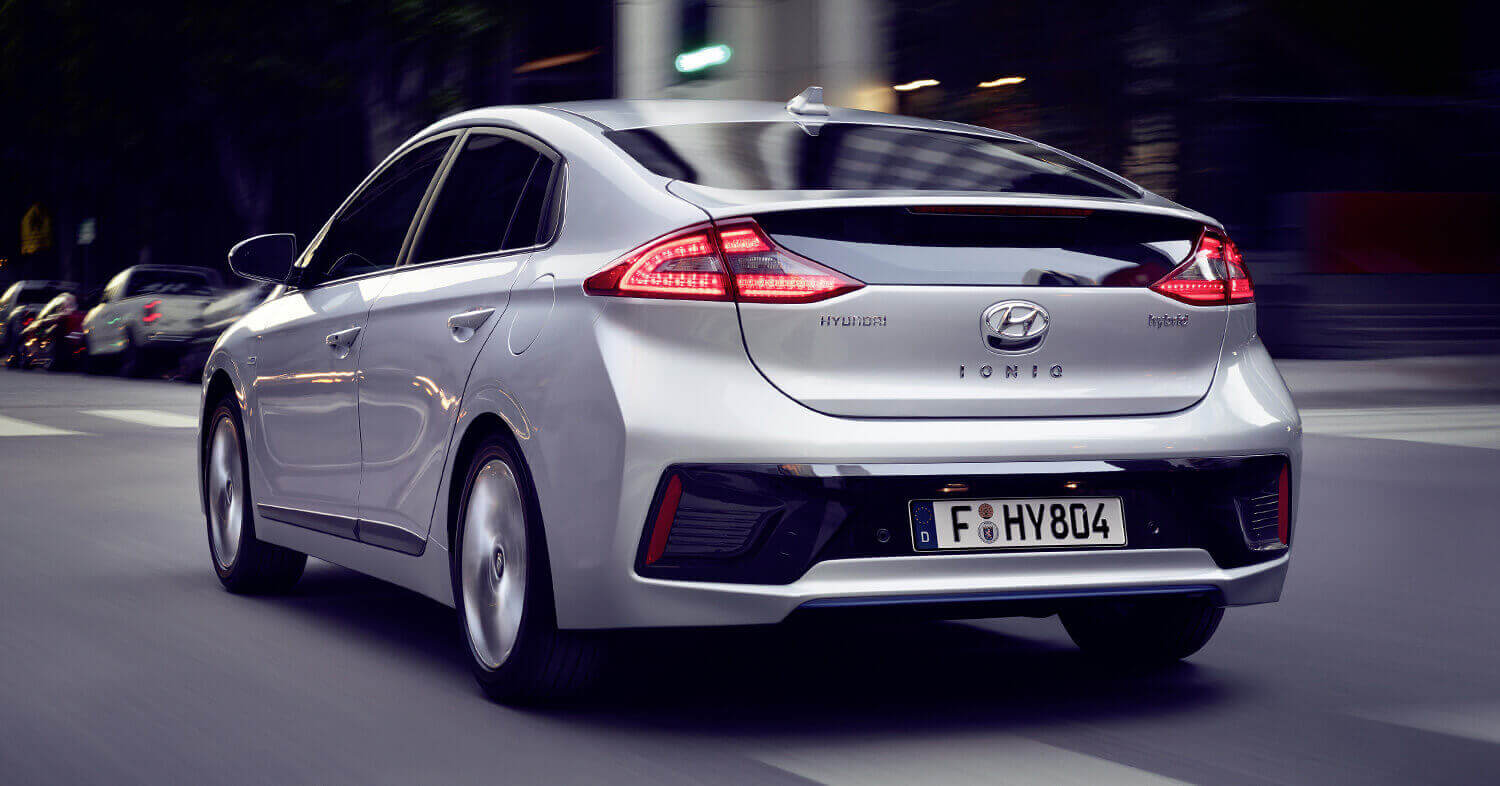
    Hyundai Motor on Tuesday named its former North American chief, William Lee, to oversee its premium Genesis brand following the departure of Manfred Fitzgerald to pursue new opportunities. Lee faces the challenge of rejuvenating Genesis sales in the U.S. market and making headway in Europe and China, both tough markets to crack for luxury car sales.

    “The company expects Mr. Lee, in his new capacity, to lead the brand’s further global expansion by leveraging his overseas business operations expertise,” Hyundai said in a statement. “North America is an imperative market for the Genesis brand,” it added.

    The news follows the appointment this month of Mark Del Rosso, a former president of Audi America, to oversee Genesis operations in North America. Genesis U.S. sales halved to 10,312 last year, although sales have picked up this year. The United States is the biggest overseas market for Genesis, which generated 72% of its sales in South Korea last year.

    Before his stint at Hyundai Motor North America, Lee oversaw Hyundai’s Brazil operations and the U.S. unit of advertising arm Innocean Worldwide.

    Hyundai said in a recent earnings conference call that it has set up Genesis sales operations for China and Europe. Hyundai Motor Group’s heir apparent Euisun Chung introduced the Genesis brand in November 2015, bringing in Fitzgerald, a former Lamborghini executive, a few months later to help the automaker shed its value for money image.

  • Mazda outscores Toyota in customer satisfaction

    Mazda outscores Toyota in customer satisfaction

    Mazda climbed two places from last year to become this year’s auto brand that satisfies Vietnamese customers the most.

    The Japanese brand ranked highest with a satisfaction score of 859 over 1,000, surpassing last year’s joint leaders Toyota (853) and South Korea’s Hyundai (835), according to U.S. market research firm J.D. Power.

    U.S.’s Chevrolet saw the steepest decline from third place last year to seventh this year with a score of 819, said the 2019 Vietnam Sales Satisfaction Index (SSI) Study released Thursday.

    It ranked above two brands with the lowest scores, Japan’s Honda (810) and South Korea’s Kia Motors (799), according to the study, which polled 1,512 new vehicle owners online between March and August.

    73 percent of customers said dealers delivered their cars with a special ceremony, an increase of 21 percentage points from 2018. Among customers who experienced a special ceremony, satisfaction points were higher.

    But demonstration of car features during delivery declined by 3 percentage points to 32 percent, despite customers showing a preference for sales consultants or delivery specialists demonstrating car features to them rather than learning on their own.

    Dealers need to pay attention to the importance of demonstrating car features professionally, especially since 75 percent of all new owners are first-time buyers, said Siros Satrabhaya, J.D. Power regional director for Thailand and Vietnam.

    The study also found out that Vietnamese car buyers are increasingly using the internet to gather information before buying a car.

    The number of people who visit a dealer’s website increased by 42 percentage points to 89 percent, and those who visit its Facebook pages increased by 20 percentage points to 57 percent.

    From January to September, sales of imported cars rose 150 percent year-on-year to nearly 93,600, while that of locally-assembled vehicles dropped 13 percent to 136,800 units, according to the Vietnam Automobile Manufacturers’ Association (VAMA).