Category: Automotive

Retail News Asia is committed to providing both local and global retailers with the latest Auto and Car news throughout the Asian market. This on a daily base.

  • Nokia Halts Legal Action Against Daimler With Mediation Offer In Patent Row

    Nokia Halts Legal Action Against Daimler With Mediation Offer In Patent Row

    Finnish telecoms equipment maker Nokia has suspended legal action against German carmaker Daimler in the hope that mediation will resolve their dispute over technology licensing fees.

    However, the decision drew a cool response from Daimler, which reiterated that the two companies had different legal opinions on the dispute.

    Nokia’s pursuit of fees from Daimler has thrown a spotlight on the wider battle between tech companies and the car industry over royalties for technologies essential for navigation systems, vehicle communications and self-driving cars.

    Daimler, along with Bury Technologies, Continental, Valeo and Thales-owned Gemalto complained to the European Commission this year about fees demanded by Nokia for patents related to car communications.

    Nokia has in recent years initiated 10 court cases against Daimler in Germany for alleged patent infringements. Daimler, meanwhile, has issued its own lawsuits against Nokia.

    However, Nokia said on Monday that constructive negotiation was the best way to resolve matters, having last week offered to enter into independent mediation as part of efforts to avoid an EU antitrust investigation.

    “To ensure there is time for this mediation to be successful, we have unilaterally chosen to postpone the pending hearing on 10 December in Germany,” Nokia spokesman Mark Durrant said.

    “We trust that Daimler and its tier 1 suppliers will now engage in these meaningful efforts to reach settlement. There is more to gain for all if we work together.”

    Daimler declined to comment on Nokia’s move, reiterating its previous stance.

    “We have a different legal opinion on the question of how to license essential patents for telecommunications standards in the automotive industry. Nokia has so far refused to license our suppliers directly on a comprehensive basis,” the German company said.

    EU antitrust chief Margrethe Vestager however welcomed the mediation efforts, saying the postponement of the court hearing was a positive move.

    “This is why we think it is a good thing that they now try mediation at the International Chamber of Commerce,” she told reporters. “It would be a good thing if there could be a mutual understanding.”

    Nokia has also offered to negotiate with the car parts makers instead of only Daimler on licensing fees.

    Carmakers argue that car parts makers should deal with the licensing fees rather than them and that patent holders should be open to negotiations with whichever company is interested in using their patents.

    Sources had told Reuters that EU competition enforcers had been poised to open an investigation into the matter until Nokia made the mediation offer.

  • Tata Nexon EV Official Unveiling Date Announced

    Tata Nexon EV Official Unveiling Date Announced

    Tata Motors has postponed the unveiling of its first electric SUV, the Tata Nexon EV, to December 19, 2019. Initially, the fully electric Tata Nexon was slated to make its global debut in India on December 17. While the company hasn’t revealed the reason for the rescheduling, we are glad that it’s differed by just a couple of days. The launch, however, is slated for some time in the Q4 of the financial year 2019-2020 (January-March 2020), and it will be the first car to be built on the company’s new electric powertrain technology – Ziptron.

    While detailed specifications of the car will be announced at the time of its unveiling, the new Tata Nexon EV will come with a permanent magnet AC motor powered by a Lithium-Ion battery, which will be liquid-cooled and IP67 certified for water and dust resistance. The electric Nexon will come with a range of 250 to 300 km on a single charge and will also get fast charging support, and the motor will also get regenerative braking which charges the battery on the drive. Tata Motors has also announced that it will be offering 8-years warranty on the battery.

    The Tata Nexon EV will also come with a dedicated Battery Management System (BMS) with the Ziptron powertrain, which is designed for an extended battery life of up to eight years and will offer consistent performance. The powertrain also gets a dedicated cooling circuit in a bid to provide consistent performance in hot weather conditions.

    Visually, the Nexon EV will borrow most of its design and styling cues from the regular Nexon SUV. Having said that, Tata Motors is also working on a facelift for the ICE-powered Tata Nexon, which is also expected to break cover early next year. So, it is likely that the electric car will be based on the facelift of the Nexon. Based on some previous teasers, the cabin and the seating layout is identical to the regular Tata Nexon, however, the car will get a fully-digital instrument cluster offering information like battery level, range, and more.

  • Hyundai Announces A Price Hike Across All Models From January 2020

    Hyundai Announces A Price Hike Across All Models From January 2020

    South Korean auto giant, Hyundai Motor has announced that the company will be increasing prices across all its cars from January 2020. With the announcement, the manufacturer joins the list of other carmakers including Maruti Suzuki, Kia and Hero MotoCorp that have announced price hikes for the new year. Hyundai has not revealed details of the price hike at the moment but did say that the decision has been made due to the rise in the input and material costs. The extent of the price increase will vary depending on the model and the fuel type, it said further in a statement.

    Both Maruti Suzuki and Kia will increase prices across product line-up but are yet to announce the sum of the hike in question. Meanwhile, Hero has said that its two-wheeler range will see an increase in prices by up to ₹ 2000, depending on the model.

    While these manufacturers are the first to announce hikes, more companies are expected to follow suit. That being said, certain companies may refrain from announcing price increases on its models for now and roll out the BS6 ready versions that are set to get a price increase at a premium over the current asking price. Tata Motors will increase prices from January next year and did say that its passenger vehicles will see a rise by ₹ 10,000-15,000 on the BS6 versions.

  • China Auto Sales Drop For 17th Straight Month In November

    China Auto Sales Drop For 17th Straight Month In November

    Auto sales in China fell for a 17th consecutive month in November, with the number of new energy vehicles (NEVs) sold contracting for the fifth month in a row, data from the country’s biggest auto industry association showed on Tuesday. Total auto sales in the world’s biggest auto market fell 3.6% from the same month a year earlier, the China Association of Automobile Manufacturers (CAAM) said. That follows a drop of 4% in October and 5.2% in September.

    Car sales in the country contracted last year for the first time since the 1990s against a backdrop of slowing economic growth and a crippling Sino-U.S trade war. In November, sales of NEVs fell 43.7%, CAAM said, following a 45.6% drop in October NEV sales had jumped almost 62% last year even as the broader auto market contracted.NEVs include plug-in hybrids, battery-only electric vehicles and those powered by hydrogen fuel cells. China has been a keen supporter of NEVs and has implemented sales quota requirements for automakers.

    But it cut subsidies this year and plans to phase them out after 2020 amid criticism that some firms have become overly reliant on the funds, making NEVs costlier and dampening demand. The prolonged car sales crisis has made global carmakers from Ford to PSA cut China production plans. Geely, China’s best-known car maker globally, posted a 1% year-on-year sales growth in November while China’s biggest carmaker SAIC Motor saw a 9.6% drop due to poor performance from joint ventures with General Motors.NEV sales at both BYD and BAIC’s electric vehicle unit BluePark, in which Daimler has a stake, fell around 63% last month from a year ago.

  • BMW Group Registers A Growth Of 1.4 Percent In Sales Globally In November 2019

    BMW Group Registers A Growth Of 1.4 Percent In Sales Globally In November 2019

    The BMW Group registered worldwide deliveries of 2,25,662 units in the month of November this year. The company registered an increase in sales of 1.4 percent over the same month last year. Deliveries in the year to the end of November were up 1.7 percent year-on-year, with a total of 22,96,174 units sold by the Group. Total sales of BMW brand vehicles grew by 2.9 percent in November to 1,94,690 units. In the year to date, BMW brand sales increased by 2.4 percent to 19,72,394. The 3 Series sedan and Touring registered double digit growth in the month of November.

    Electrified vehicles continued to draw the attention of the customers. In November, sales of BMW Group electrified models reached a new all-time high of 17,480 units. This includes 13,590 plug-in hybrid models which were a bump in sales of more than 20 percent. The BMW i3 and the BMW i8 too registered a growth of 18 percent in sales. Sales of the MINI Cooper S E Countryman ALL4 Plug-in Hybrid climbed almost 50 percent in November with 1,950 vehicles sold worldwide.

    Worldwide MINI brand sales for the year to the end of November trended lower at 319,125 units, a drop of 2.7 percent. In November, 30,509 units were sold which marked a decline in sales of 6.8 percent. In addition to its core models, John Cooper Works variants proved especially popular with customers.

    BMW Motorrad continued to post solid sales growth. In the first eleven months of 2019, a total of 161,368 BMW motorcycles and maxi-scooters were delivered to customers around the globe, marking a growth of 6 percent. However, sales in November were down by -4.4 percent.

  • Maruti Suzuki Records Production Growth In November 2019 After Eight Months

    Maruti Suzuki Records Production Growth In November 2019 After Eight Months

    Gaining volumes from a strong festive season sales, Maruti Suzuki has managed to record a growth in production numbers in the month of November, after cutting down volumes for eight months straight in a row. India’s largest carmaker manufactured 141,834 units in November 2019 as compared to 135,946 units it manufactured in the same month last year, posting a year on year (YoY) growth of 4.33 percent. The company had cut its production by 20.70 percent at 119,337 units in October 2019 as compared to 150,497 in the same month last year.

    To cash in the festive season demand, the carmaker had rolled out some attractive discounts and benefits of up to ₹ 1.5 lakh on its highly popular models like the Vitara Brezza and Swift which helped the company to pull off decent sales amidst the slowdown in the auto industry. Both the compact and utility vehicle (UV) segments have recorded double-digit production growth, after the revival in sales.

    The compact segment which includes models like the Swift, Dzire, new Wagon R, Baleno, Celerio, Ignis, and the Baleno dubbed Glanza that is supplied to Toyota grew at 18.83 percent at 78,133 units as compared to 65,754 units which were manufactured a year ago. The UV segment which has models like the Vitara Brezza, S-Cross, Ertiga and XL6 was up by 18 percent at 27,187 units as against 23,038 units which rolled off the assembly line in the same month a year ago.

    The mid-size sedan, Ciaz also recorded an uptick of 25 percent in production at 1830 units as compared to 1460 units which were manufactured in the same month a year. That said, the Mini segment and Vans segment witnessed a slump of 20 percent at 24,052 units (30,129 in November 2018) and 42.76 percent at 7882 units (13,768 units in November 2018), respectively. The total production of passenger vehicles grew by 3.67 percent at 139,084 units as compared to 134,149 units in the same month last year. The production of its only commercial vehicle, the Super Carry went up by 53.03 percent at 2750 units as compared to 1797 units in the same month a year ago.

    Maruti Suzuki had witnessed a YoY sales growth of 4.5 percent in October 2019 at 153,435 units as compared to the 146,766 units sold during the same month last year and that has reflected in its November production numbers as the company tends to maintain its inventory level. That said, in November, the domestic sales again dropped by 3.2 percent at 141,400 units last as compared to 146,018 units in the same month last year. This leaves us wondering about how the decline in November sales will reflect on its December production numbers.

  • Billionaire Lawrence Stroll Seeks Big Stake In Aston Martin

    Billionaire Lawrence Stroll Seeks Big Stake In Aston Martin

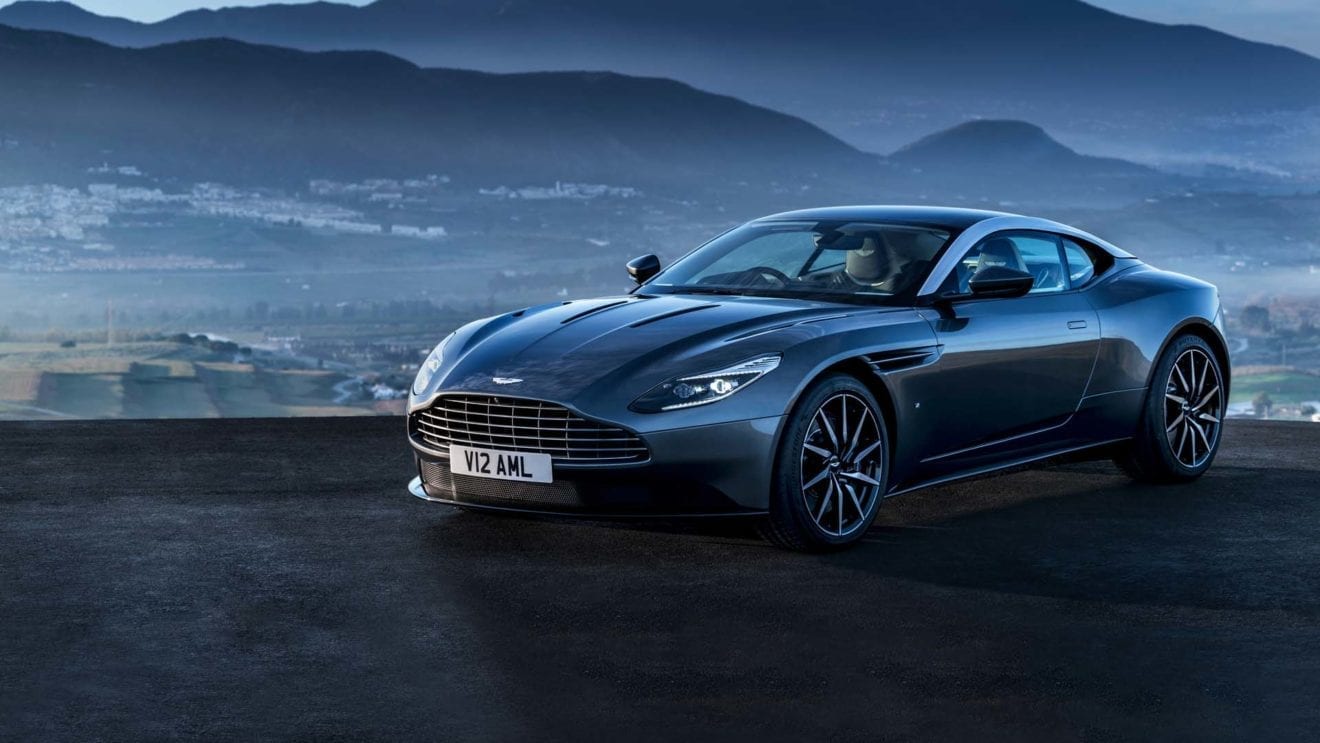
    Canadian billionaire Lawrence Stroll, owner of Formula One team Racing Point, is preparing a bid for a major stake in Aston Martin , Autocar magazine reported, sending the luxury sports car maker’s battered shares up 17 percent on Thursday.

    Aston Martin, the drive of choice for fictional British secret agent James Bond, has seen its shares slump since its flotation in October 2018 as sales have failed to meet expectations.

    Stroll, who is the father of Formula One driver Lance Stroll, is heading up a consortium looking to take a “major shareholding” in the British company, Autocar and the racefans.net website reported on Thursday.

    Racefans.net said Racing Point could be rebranded as Aston Martin if Stroll succeeded in taking a controlling stake.

    Aston Martin declined to comment and Racing Point said Stroll was unavailable for comment.

    The carmaker’s shares were up nearly 17% at 5.88 pounds ($7.54) at 1414 GMT, valuing the business at about 1.3 billion pounds, but still far below their initial public offering (IPO) price of 19 pounds.

    As the car industry consolidates through deals such as the Peugeot-Fiat merger, Aston has said it does not need to belong to a bigger automotive group, pointing to the success of stand-alone rival Ferrari .

    But the sale of a stake could help boost the company’s prospects as it seeks to turn around a poor performance, which pushed it to a 92.3 million pound ($118.4 million) loss in the first nine months of the year.

    In August, Aston’s biggest investor, Strategic European Investment Group, acquired an additional 3% stake in the company.

    A month later, Aston raised $150 million in debt at 12% interest, hiking its borrowing costs, to bolster its balance sheet for the launch of its DBX sports utility vehicle next year, with the option for another $100 million.

    The company’s hopes rest on almost doubling sales with its first SUV, which enters production in 2020, particularly by attracting more female buyers to the brand.

    Aston is also the title sponsor of the Honda-powered Red Bull team, former world champions who won three races this year with Dutch 22-year-old Max Verstappen.

    Aston will be competing in the World Endurance Championship and the Le Mans 24 Hours with its Valkyrie hypercar from 2021.

    Mercedes’ parent Daimler also has a small stake in Aston.

    Stroll, a collector of vintage Ferraris, has been involved in Formula One and motor racing for years and also owns Canada’s Mont Tremblant circuit in Quebec.

    He made his money through investing in fashion brands such as Tommy Hilfiger and Michael Kors, but came to wider prominence in motor racing circles after bankrolling his son’s career.

    Lance Stroll, 21, moved to Racing Point from Williams this season after a consortium led by his father bought the Force India team, which was co-owned by financially troubled Indian magnate Vijay Mallya and had fallen into administration.

    The Silverstone-based team, which uses Mercedes engines, finished seventh overall this season but is planning a factory expansion.

  • Japan’s Markets Watchdog Likely To Recommend $22 Million Fine Against Nissan

    Japan’s Markets Watchdog Likely To Recommend $22 Million Fine Against Nissan

    Japan’s markets watchdog will likely recommend soon that the financial regulator fine Nissan Motor Co Ltd about 2.4 billion yen ($22 million) over false reporting on its financial statement, public broadcaster NHK reported on Sunday.

    Nissan’s former Chairman Carlos Ghosn was arrested in Tokyo in November last year over allegations of financial misconduct, including understating his salary by around 9.1 billion yen ($84.71 million) over a period of nearly a decade and temporarily transferring personal financial losses to the books of Nissan, Japan’s No. 2 automaker.

    Reuters reported in June that Nissan would be fined up to 4 billion yen and it may receive a reduced fine of around 2.4 billion yen if the automaker filed documentation to the Securities and Exchange Surveillance Commission (SESC) before the formal investigation begins, citing a source.

    The fine would cover a four-year period through March 2018, the source previously told Reuters.

  • VW’s German Plants Need To Shape Up

    VW’s German Plants Need To Shape Up

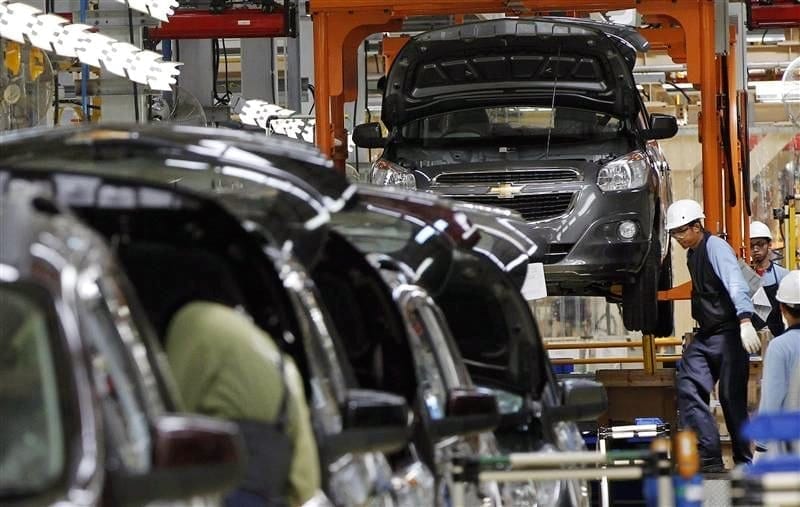
    Volkswagen’s German plants need to boost efficiency to match overseas operations, production chief Andreas Tostmann was quoted as saying, targeting 2 billion euros ($2.2 billion) in savings by 2023. German carmakers, including Volkswagen’s Audi brand, have announced thousands of job cuts in recent weeks to address an expected 5% drop in global auto sales this year, with declines likely to spill into 2020.

    “The pace of improvement is better abroad. In Germany, despite all the successes we’ve achieved, we have to do better,” Tostmann told trade journal Automobilwoche.

    Tostmann wants to implement the savings in the production of VW branded cars through a bundle of measures on top of automation, including a leaner logistics operation.

    “The result is that we need 15% less space, 60% fewer logistics vehicles and are able to move 20% more product,” said Tostmann, according to extracts from his Automobilwoche interview.

    VW’s luxury Audi division last month said that it would cut up to 9,500 jobs, equating to 10.6% of total staff, by 2025 in a move to free up billions of euros to fund the shift towards electric vehicle production.

    Rival Daimler, as well as car suppliers Continental, Robert Bosch and Osram, have also recently announced staff and cost cuts.

  • Hyundai Begins Feasibility Study For Fuel Cell Electric Vehicle in India

    Hyundai Begins Feasibility Study For Fuel Cell Electric Vehicle in India

    Hyundai Motor India today announced that it plans to expand its green mobility portfolio in India which currently only has the Kona EV. Hyundai has had its share of success with the Kona EV in the country and even managed to bag a small order from EESL. But now the company is taking another step in bringing in more green cars to the country. Hyundai today announced that it is evaluating the feasibility of bringing fuel cell electric vehicles for India.

    We told you back in September 2018, that Hyundai was planning to launch a fuel cell vehicle in the country and the Nexo will very much be part of the company’s portfolio soon and this news only cements what we had said back then. While a timeline for the launch for the Nexo has not been charted out yet, we wait to see, when these plans reach fruition. We have brought you the exclusive review of the Nexo though. The Nexo SUV is Hyundai’s important step to develop low emission models globally. The company has had a record sales for Nexo in its home market in November 2019 where it sold 699 units.

    The Nexo gets a fuel cell drivetrain, which is lighter than a regular electric powertrain. Hyundai says that the Nexo makes about 161 bhp of max power and peak torque of 395 Nm. Also, the Nexo SUV can do the 0-100 kmph sprint in 9.2 seconds and has a top speed of 177 kmph. The car has a range of 609 kilometres on a single charge according to Korean test standards. In typical SUV way, the Nexo is designed to handle cold starts even when the outside temperature is -30 degree Celsius.

    Mr S S Kim, MD and CEO, Hyundai Motor India Ltd, said, “Progress for Humanity with Zero Emission Mobility is our responsibility and vision to make a long-term positive transformation for our future generations. We have initiated the feasibility study for Fuel Cell Electric Vehicle in India and promise to bring the ultimate solution in zero emission mobility”

  • Ford And McDonald’s Collaborate To Convert Coffee Bean Skin Into Car Parts

    Ford And McDonald’s Collaborate To Convert Coffee Bean Skin Into Car Parts

    Ford Motor and McDonald’s USA have collaborated to convert coffee bean skins to vehicle parts such as headlamp housing. We all know that the dried skin (chaff) of the bean comes off during the roasting process and it’s this skin that Ford will use to reinforce certain vehicle parts. The company found that chaff can be converted into a durable material. By heating the chaff to high temperatures under low oxygen, mixing it with plastic and other additives and turning it into pellets, the material can be formed into various shapes.

    By heating the chaff to high temperatures under low oxygen and mixing it with plastic and other additives it turns to pellets.

    The chaff composite meets the quality specifications for parts like headlamp housings and other interior and under hood components. According to Ford, the resulting components will be about 20 percent lighter and require up to 25 percent less energy during the molding process. Heat properties of the chaff component are significantly better than the currently used material, says the company.

    McDonald’s is expected to direct a significant portion of its coffee chaff in North America to Ford to be incorporated into vehicle parts. The project also involves Varroc Lighting Systems, which supplies the headlamps, and Competitive Green Technologies, the processor of the coffee chaff.

  • Volkswagen Teases Nivus Subcompact Crossover

    Volkswagen Teases Nivus Subcompact Crossover

    Volkswagen has teased the Nivus subcompact Crossover and has said that the car will first be introduced in the Brazilian market after which it will be introduced in Europe. The car was earlier called the T-Sport and it looks like a small crossover coupe. Of course, the Nivus is the new name and it will slot below the T-Cross when it is unveiled and launched in markets. The Nivus is significant because it is based on the Polo and yes, it looks very different when compared to the hatchback. Though the teaser does not showcase much, we do get to see that the Nivus Coupe crossover comes with a different front grille and the coupe-like roofline with the roof rails bodes well with its crossover tag.

    So why are we interested in the Nivus? Well, it’s based on the company’s MQB A0 platform which has been specifically made by Volkswagen for emerging markets, but as we told you earlier, it will be the Brazilian market that will get the car first. While Volkswagen’s MQB A0 IN platform will also spawn a whole bunch of cars for our markets, we cannot rule out that the Nivus for the country. We’ve already told you that Volkswagen has given a big push for SUVs in India and we will see cars like the T-Roc, Tiguan AllSpace and even the T-Cross based compact SUV hitting the market by 2020.

    The Nivus then fits the bill to complete the company’s SUV assault in the country. It will definitely give consumers a lot of options to choose from while also riding on the rising SUV trend not just in India but globally as well. With a similar wheelbase as the new-gen Polo (2560 mm) so expect it to have good space on the inside. The Nivus crossover coupe will be launched in Brazil in mid-2020 and we wait to hear from Volkswagen India whether it plans to bring this car to India.

  • BMW India Launches New ‘BMW Smart Repairs’ Across Its Service Network

    BMW India Launches New ‘BMW Smart Repairs’ Across Its Service Network

    BMW India announced the introduction of ‘BMW Smart Repairs’ across its service network in the country. According to the company, the new repair service will ensure faster repairs and a reduction in cost for small and medium-size repairs. Targeted repairs without having to replace bigger parts will be carried out by the company.

    BMW Smart Repair includes body and paint related jobs including plastic parts, dents, spot paint job, headlight, alloy wheel, and leather works.

    Rudratej Singh, President and Chief Executive Officer, BMW Group India said, “BMW Smart Repair follows a technology-driven, targeted approach to ensure quality BMW service for small and medium repairs instead of replacing whole parts. It significantly reduces service-related costs and turn-around time, so our customers can enjoy complete peace of mind. Whether the job is big or small, they know that their BMW will receive the finest care.”

  • Amazon Web Services Puts Mahindra Electric In Top Gear

    Amazon Web Services Puts Mahindra Electric In Top Gear

    With India planning to replace a significant portion of its conventional internal combustion engine fleet by electric vehicles (EV) in the next decade and target 30 percent of all cars on the road to be EVs by 2030, the segment leader Mahindra Electric is witnessing a robust uptick for its vehicles not just in metro cities but also tier-1 and tier-2 cities, its CEO Mahesh Babu told IANS on Wednesday. Mahindra, the biggest electric car seller in the country, terms its eVerito “India’s first electric sedan”.

    Its electric 3-wheeler range Treo and Treo Yaari — India’s first lithium-ion electric 3-wheelers — is also witnessing a great adoption.

    As the company sees the future of the mobility as both electric and digital, the daunting task of handling data and maintaining an agile, scalable and secure workflow — anticipating millions of connected electric vehicles soon on the Indian roads — is what concerns Mahindra Electric the most.

    Amazon’s Cloud arm Amazon Web Services (AWS), which is organizing its annual flagship conference “AWS re: Invent” here this week, fits the bill for them.

    “Electric vehicles are bringing in best of the technologies together. The rapid progress demands us to be agile, secure and quick. AWS has empowered us better with handling data,” Babu said.

    “We are using load balancers and services that can auto-scale as the load increases. Agility comes from their serverless architecture that helps us to innovate faster. AWS Managed Services are compliant and have built-in security measures that include security updates and patching, etc,” he elaborated.

    Driven by an urge to cut pollution in the cities, enhance national fuel security and make it a major global manufacturing hub for electric vehicles, India has announced several incentives this year to boost the EV sector, ranging from tax cut to allow sale of electricity as “service” for charging of electric vehicles in a bid to attract investments into charging infrastructure.

    The government has introduced an outlay of Rs 10,000 crore for Phase 2 of the Faster Adoption and Manufacturing of Hybrid and Electric Vehicles (FAME 2) scheme to boost electric mobility.

    According to Babu, With FAME 2 and other benefits, they have seen an uptake in the sales of electric three-wheelers and electric cars in the fleet segment.

    “We expect the demand to come from the mass mobility segment first (3-wheelers, 2-wheelers, buses and fleet cars) followed by personal segment. Mahindra’s electric vehicles are witnessing demand not only in metro cities but also tier-1 and tier-2 cities have shown strong acceptance to our electric three-wheeler Treo,” Babu told IANS.

    Close on the heels of the Union Budget providing tax relief for buying EVs, the GST Council in its 36th meeting in July cut the tax on EVs from 12 percent to 5 percent. The Council also slashed rate for EV chargers from 18 percent to 5 percent making electric vehicles affordable for the buyers.

    Road transport accounts for around 90 percent of the total emissions in the transport sector in India. Given the large import dependence of the country for petroleum products, it is imperative that there should be a shift of focus to alternative fuels to support our mobility in a sustainable manner, according to the Economic Survey 2018-19.

    The lithium-ion powered three-wheelers are set to be a natural progression for the industry and Mahindra Electric is looking to ramp up its efforts in the li-ion battery space.

    “Mahindra Electric was the first to bring in lithium-ion powered auto with the launch of Treo. We have an experience of our 170 million electric kilometres in this technology in India that has helped us to understand the economics around EVs,” informed Babu.

    In 2018, the company announced collaboration with LG Chem to bring in global Li-ion technology to India.

    “The company is further investing in a new EV manufacturing plant in Chakan (Pune) and a global R&D centre in Bengaluru that will enable us to achieve scalability and agility to roll out new products quickly,” the Mahindra Electric CEO added.

    Mahindra Electric, he said, is now better equipped and flexible to quickly scale up its EV and connected mobility goals.

    0Comments