Category: Automotive

Retail News Asia is committed to providing both local and global retailers with the latest Auto and Car news throughout the Asian market. This on a daily base.

  • Toyota to invest $2 billion in developing EVs in Indonesia

    Toyota to invest $2 billion in developing EVs in Indonesia

    Toyota Motor plans to invest $2 billion to develop electric vehicles in Indonesia over the next four years, starting with hybrid vehicles, Indonesia’s coordinating ministry for maritime affairs said.

    “From 2019 to 2023, we will progressively increase our investment to 28.3 trillion rupiah ($2 billion),” Toyota president Akio Toyoda was quoted as saying in a statement released by the ministry on Thursday.

    Toyota said this month that it aimed for half its global sales to be from electric vehicles by 2025, five years ahead of schedule, and will tap Chinese battery makers to meet the accelerated global shift to electric cars.

    The deal was agreed at a meeting in Osaka on Thursday between Indonesia’s Coordinating Minister for Maritime Affairs Luhut Pandjaitan and Toyoda.

    “Because the Indonesian government already has an electric vehicle development map, Toyota considers Indonesia a prime EV investment destination,” Toyoda said in the statement.

    He said Toyota would follow the government’s EV plan by investing in stages, starting with the development of hybrid vehicles.

    Monet, the self-driving car joint venture of Toyota and SoftBank Corp., separately told Reuters in June it plans to begin operating in Southeast Asia next year.

  • Audi India Is Offering Attractive Discounts On Select Models

    It’s raining discounts this festive season and automakers are all buckled up to garner more footfalls. Luxury carmakers as well are offering attractive benefits on their product range to cash in the festive season demand which to an extent is likely to help them make up for lost volumes due to the prolonged slowdown. Audi India has been offering discounts on its popular models like the A3, A4 and Q5 this festive season.

    The Audi A3 is now available at a starting price of ₹ 25.99 lakh and the company is offering 57 per cent assured buyback on the model and at zero down payment. Moreover, the company is also offering exchange bonus of ₹ 1 lakh on the model and specific benefits for corporate employees and professionals. The German carmaker is also offering benefits on the A4 that has recently received a minor facelift. According to our dealer sources, there are discounts of up to ₹ 4.5 lakh on the post-facelift model while it goes up to ₹ 7.5 lakh on the pre-facelift model. The Audi Q5 which was launched last year is under a cash discount of up to ₹ 10 lakh, depending on the variant and location.

    Festive season has brought some cheers to the industry that has been under pressure for a year due to the ongoing downturn. India’s largest luxury carmaker, Mercedes-Benz too delivered 600 units in a single day on the auspicious occasion of Dhanteras. In fact, mass car makers like Maruti Suzuki delivered as many as 45,000 units on the same day while Hyundai sold 12,500 units. MG Motor alone has sold 700 units of the Hector SUV.

  • Peugeot, Fiat Chrysler Move Step Closer To Possible Merger

    Fiat Chrysler and Groupe PSA, the maker of Peugeot and Citroen cars, moved a step closer Wednesday to create a new global auto giant as the industry battles ever fiercer competition and the costly shift from traditional to electric cars.

    A source familiar with the matter told AFP that the board of PSA had approved the proposed multi-billion tie-up with its Italian-US Fiat Chrysler Automobiles (FCA) in a move that could create the world’s fourth-largest automaker.

    The deal still needs to be given the green light by FCA’s board, but the two sides could formally announce that they are in exclusive talks on Thursday, the source said.

    Earlier, both sides had said “there are ongoing discussions aimed at creating one of the world’s leading mobility groups”, but neither had offered any additional details.

    A person with knowledge of the matter told AFP on Tuesday that a merger — which is not guaranteed — would create a firm valued at about $50 billion (45 billion euros).

    The merger plans come on the heels of a failed attempt earlier this year to combine Fiat Chrysler with Renault.

    A combined FCA-PSA would produce the scale needed in an industry facing slowing demand, with 8.7 million vehicles sold per year and 184 billion euros in annual sales.

    The board of the combined group would consist of six PSA members and five FCA members, a source close to the talks said.

    Auto manufacturing globally — which accounts for 5.7 percent of global GDP and eight percent of goods trade — shrank by 1.7 percent last year by volume of vehicles produced, according to the IMF.

    If the deal goes through, PSA could gain access to the lucrative US market while fulfilling the long-held goal of late ex-FCA head Sergio Marchionne for a merger to survive escalating costs and competition.

    The tie-up would make the new automaker the fourth largest in terms of sales behind Volkswagen, Renault-Nissan-Mitsubishi, and Toyota, and would combine a host of well-known brands from Alfa Romeo, Jeep and Dodge to Citroen, Opel and Peugeot.

    Investors cheered the news. FCA shares in Milan closed up nine percent on Wednesday while PSA shares added four percent in Paris.

    “We’re in a period where grey skies are gathering over the auto industry. When business is harder, competition is stronger and margins get thinner,” said Flavien Neuvy, director of the Cetelem Observatory, a research unit of BNP Paribas.

    To offset the billions required to invest in advanced technologies, size is critical, Neuvy added.

    Talks to merge FCA with Renault broke down in June, scuppered in part by resistance from the French government, which owns a stake in Renault — as it does PSA.

    Analyst Michael Hewson at CMC Markets UK cautioned that political pressure could again be an obstacle, given France’s approximately 12 percent stake in PSA.

    “It is hard not to see that this attempt by Fiat might well go the same way as the failed Renault attempt earlier this year,” Hewson said in a note. “Business and government always make uncomfortable bedfellows.”

    France’s economy ministry said in a statement that the state would be “particularly vigilant” about jobs, corporate governance and preserving the industrial footprint when assessing any merger.

    Italian vice economy minister, Antonio Misiani, said it was “vital to preserve (existing) sites in Italy.”

    Under a merger, Carlos Tavares, the chief executive of Peugeot’s parent, Groupe PSA, would lead the company as CEO while John Elkann, FCA’s chairman, would be chairman, one source said.

    A new company would bring under one roof Alfa Romeo, Chrysler, Citroen, Dodge, DS, Jeep, Lancia, Maserati, Opel, Peugeot and Vauxhall.

    FCA is weaker in Europe than PSA, with its French and German mass-market brands. The company also lags in bringing electric cars to market and investing in new forms of mobility.

    PSA meanwhile is absent from the massive US market, where FCA sells the Chrysler, Jeep, Dodge and Ram brands.

    China’s Dongfeng holds a 14 percent stake in PSA, which could be an asset as a larger PSA-FCA tries to take a share in the world’s largest single car market.

    “Both FCA and PSA need an alliance,” Marco Bentivogli, head of the Italian trade union Fim-Cisl, said late on Tuesday when reports of the merger talks first began to circulate.

    Patrick Michel, head of the FO trade union at PSA, expressed skepticism but said the deal could give PSA “greater heft vis-a-vis giants such as Toyota or Volkswagen,” plus access to advanced technologies lacking at Fiat.

    PSA posted revenues of 74 billion euros ($82 billion) in 2018 compared to FCA’s 110 billion euros.

  • Porsche China CEO Expects Another Record Year In 2019

    Porsche China CEO Expects Another Record Year In 2019

    Porsche is looking forward to having another record year in 2019 in Chinese market, said Porsche China CEO Jens Puttfarcken ahead of the upcoming second China International Import Expo (CIIE), scheduled for November 5 to 10.

    A total of 64 countries and three international organizations have confirmed their participation in the expo in east China’s Shanghai Municipality. Porsche, which participated in last year’s CIIE, is expecting to show more at this year’s CIIE, said Puttfarcken.

    “First of all, we appreciate very much that we had the possibility to participate in the CIIE last year. It was a good possibility to show as a pure input company, what kind of products, what kind of performance we have. Yes, we do participate this year at this CIIE again. And we will have a big acquisition around electrical mobility, so we will present the new Taycan together with a lot of themes around e-mobility. We will have also the new formula e-car there in order to show that racing and also in the electrical age, something that is very convenient and does fit very well to Porsche,” said Puttfarcken.

    As China is carrying out a number of measures in boosting the consumption of goods, Puttfarcken said he believes the Chinese market is a good place to promote Porsche vehicles.

    “I think China is for us the most important market in the world. So we trust and we believe very much in the Chinese car market. We know that the government is looking into an upgrade of consumption. And that I believe fits very well to the cars and products that we are offering to the Chinese market. So I think with the right product, battery-electric car, plug-in hybrid, purely combustion engine cars, so our car which suits every purpose. And we are having the right offer to the car marketing in order to be successful also in the future,” said Puttfarcken.

  • Porsche Invests In Israeli Auto Tech Firm Tactile Mobility

    Porsche Invests In Israeli Auto Tech Firm Tactile Mobility

    Israeli automotive technology startup Tactile Mobility said on Tuesday it secured $9 million in funding from Porsche, Union Tech Ventures and previous investors.

    Tactile Mobility said it plans to use the funds, which could grow to $14 million, to further develop its technology and data offerings and expand marketing operations.

    Tactile Mobility develops software that uses a vehicle’s non-visual sensors, including wheel speed, wheel angle, RPM and gear position to help smart and autonomous vehicles “feel” vehicle-road dynamics and road conditions below their tires.

    In addition, the company said it crowdsources data regarding vehicle-road dynamics from vehicles equipped with its software to create a representation of each vehicle’s characteristics that can help maximize vehicle longevity, and a road conditions and hazards map layer.

    The company is collaborating with several manufacturers including Ford and Porsche as well as with municipalities and road authorities in the United States, Europe, and Asia.

  • VW Ramps Up China Electric Car Factories

    VW Ramps Up China Electric Car Factories

    Volkswagen AG is ramping up production of electric cars to around 1 million vehicles by end of 2022, according to manufacturing plans seen by Reuters, enabling the German carmaker to leapfrog Tesla Inc and making China the key battleground.

    Volkswagen is readying two Chinese factories to build electric cars next year. The Chinese plants will have a production capacity of 600,000 vehicles, according to Volkswagen’s plans, which have not been previously reported – revealing VW’s ability to industrialize production faster than other pioneers in the electric vehicle market.

    Tesla is still trying to reach its goal of making more than 500,000 cars a year by building a new factory in Shanghai, China, while VW can rely on an established workforce in two of its plants in Anting and Foshun to build zero-emission cars.

    The scale and speed of VW’s electrification push marks a shift in favour of established manufacturers that can use existing factories and profit from combustion-engined sport utility vehicles (SUVs) to scale up faster than startups.

    “The truth is barriers to entry in autos remain high,” said Max Warburton, an analyst at Bernstein Research. “Making cars is hard. The move to electric vehicles will be expensive, but will probably be led by traditional manufacturers.”

    VW is leveraging its large infrastructure of suppliers, factories and workers, long a handicap to its profitability, more aggressively than rivals BMW, Renault SA, General Motors Co and Tesla, which were all quicker to sell a custom-designed electric car.

    Rather than adjusting production gradually, and using multi-powertrain platforms, Volkswagen is making a massive bet on a dedicated electric vehicle architecture, known as MEB, in the hope of increasing economies of scale sufficiently to push down the price of electric cars to around 20,000 euros ($22,262). The Wolfsburg, Germany-based carmaker is retooling eight plants across the globe by 2022 to specialise in manufacturing electric cars, and license its electric MEB platform to rivals, senior VW executives told Reuters, putting it on track to become the world’s largest maker of zero-emission vehicles.

    Tesla has emerged as a serious competitor with a credible car, its Model 3, Volkswagen Chief Executive Herbert Diess told Reuters last week. But startups have a hard time entering mass production without sufficient production facilities, he said.

    “The question is, can you expand your production quickly enough? The capital intensity is increasing,” Diess said.

    To fund its own electrification shift, the German carmaker aims to increase sales of VW SUVs, with combustion engines, to 40% of overall sales by 2020 from 23% in 2018.

    The power station that supplies energy for VW’s flagship e-vehicle factory in Zwickau, Germany, marked by two tall chimneys, was built to power production of the combustion-engined Volkswagen Golf.

    Now Zwickau can piggyback off this infrastructure to ramp up production to 330,000 VW ID electric cars by 2021.

    Volkswagen Group will increase economies of scale by rolling out electric vehicle platforms to its Audi, Skoda and Seat and Porsche brands.

    Volkswagen Group will be in a position to build 22 million electric cars by 2028, of which 11.6 million could come out of Chinese factories, VW said.

    PRODUCTION PAIN

    VW’s expansion push comes at a time when investors have started to question businesses delivering growth without real profit, a change in sentiment that is crippling the ability of several electric car pioneers to raise more cash.

    Back in 2016, Tesla said it wanted to build more than 500,000 Model 3 cars by 2018, a goal it has failed to meet. This year it expects to deliver 360,000 to 400,000 cars, a target that includes selling all models.

    Tesla’s struggles have dampened optimism about how easy it is to enter the car business, making it harder for China’s NIO, backed by internet company Tencent Holdings Ltd, as well as others like Faraday Future and Byton Ltd, to fund the next stage of growth: capital-intensive volume production and sales.

    “So much respect for those doing high volume manufacturing, Tesla CEO Elon Musk tweeted earlier this month. “It’s insanely hard, but you make a real thing that people value. My hat is off to you.”

    After starting trial production runs at its factory in Shanghai, Tesla now hopes to reach its 500,000-vehicle target in the 12-month period ending June 30, 2020. Tesla is also looking for a site to start production in Europe.

    Volkswagen is converting two German plants, Hanover and Zwickau, to build electric vehicles and will retool other factories including plants in China: Foshan which VW runs together with its joint-venture partner FAW-Volkswagen, and another in Anting, which VW runs together with SAIC.

    It will retool plants in Emden and Dresden in Germany, Mlada Boleslav in the Czech Republic, and Chattanooga, Tennessee, in United States, as part of a 30 billion-euro ($33.24 billion)investment push into e-mobility by 2023.

    As a result, Volkswagen Group will be the No. 1 electric vehicle producer globally by 2025, while Tesla is likely to remain a niche player, according to UBS autos analyst Patrick Hummel.

    TECHNOLOGY INTERLOPERS

    The cutthroat rivalry between automakers and software companies started when Alphabet Inc’s Google presented a prototype autonomous vehicle in 2012, leading analysts and industry executives to fear a so-called Nokia moment. This occurs when a new player from the tech sector unveils a superior design, in the way that Apple Inc presented the iPhone in 2007, ending Nokia’s dominance of the mobile handset business.

    Today, Tesla’s cars are generally perceived as cutting-edge and potentially more sophisticated than VW’s. Volkswagen’s ID.3, which starts production this year, has an operating range of between 330 and 550 kilometers (205 to 341 miles), below the 560 km long-range Model 3 version offered by Tesla.

    That is because Tesla has a sophisticated software algorithm to control how much electricity goes to the electric motor, air conditioning, seat heaters, in-car infotainment, and cooling system.

    Volkswagen’s edge is more blunt: price and massive economies of scale.

    The ID.3 has a starting price of under 30,000 euros ($33,363) in Germany. By contrast, Tesla’s Model 3 had an average selling price of $50,000 in the second quarter. The long-range version retails for 52,390 euros in Germany.

    The VW vehicle’s lower price comes from the carmaker’s ability to place large orders which, by nature of their size, help drive down the price. Volkswagen is investing 50 billion euros ($55.5 billion) to buy battery cells and will also license its MEB electric car platform to rival carmakers to further increase economies of scale.

    That is, Volkswagen will make that huge investment if suppliers can keep up.

    “There is a lot of investment,” Stefan Sommer, Volkswagen Group’s board member responsible for procurement, told Reuters last month. “But even the big companies like Samsung, CATL, LG Chem, the big guys, SK, they hesitate to take so much money and invest because they are not seeing the market on the other side.”

    “We are now seeing the first battery plants, LG in Poland, CATL in Germany, they don’t have the skilled workforce. That will be the bottleneck,” Sommer said. “It’s a learning curve everybody has to work through. This will cause some lags in supply. We have no other choice.”

    VW plans to license its electric MEB vehicle platform to rival Ford Motor Co, which will give VW $10 billion in revenue over the next six years.

    Thomas Ulbrich, Volkswagen’s member of the board who oversees production of electric vehicles, told Reuters, “Ford and Volkswagen’s agreement will be a blueprint for further licensing deals.”

    In the short term, Volkswagen and its Chinese joint venture partners will invest 15 billion euros to produce 15 different electric cars for China alone by 2025.

    “The first MEB-based vehicle is an SUV model,” Volkswagen said about its China push.

  • Ford Cuts Full-Year Profit Outlook As Third-Quarter Profit Dips

    Ford Cuts Full-Year Profit Outlook As Third-Quarter Profit Dips

    Ford Motor Co on Wednesday cut its forecast for operating profit for the year after a disappointing third quarter that Chief Executive Jim Hackett blamed on higher warranty costs, bigger discounts and weaker than expected performance in China. Investors sold off Ford shares, which fell 2.5% to $8.98 in after-hours trading while shares in electric car maker Tesla Inc surged more than 20% on better than expected results. In a conference call with analysts, Hackett said Ford “experienced more headwinds” than expected in the quarter.

    “As a result, we will not grow adjusted EBIT this year as we intended,” Hackett said, referring to earnings before interest and taxes.

    The disappointing financial results are a setback for Hackett, the former CEO of office furniture maker Steelcase, who took over Ford in May 2017 after the abrupt ouster of Ford veteran Mark Fields.

    For two years, Hackett has been asking investors to be patient with a methodical restructuring that has made progress, including a wide-ranging alliance on electric vehicles with Volkswagen AG and the sale of money-losing operations in India to a venture controlled by Indian automaker Mahindra & Mahindra.

    But by Ford’s own reckoning, most of the restructuring work has yet to be done. It has booked only $3.3 billion of the projected $11 billion in charges it previously said it would take for the global restructuring, up from $2.2 billion at the end of the second quarter.

    The company also suffered a bumpy introduction of the redesigned Ford Explorer and all-new Lincoln Aviator in the quarter, said Joe Hinrichs, Ford’s president of automotive.

    “We were disappointed in the overall performance,” he told analysts, referring to the uneven vehicle launch and production ramp-up at an aging Chicago assembly plant.

    “We took on too much,” said Hinrichs, citing the difficulty of launching the Explorer and Aviator simultaneously while it was breaking in a new assembly line at the 95-year-old Chicago plant. “We have plenty of inventory now at dealers,” he added.

    The third quarter included $1.5 billion in costs for the company’s global restructuring, $800 million of which was related to the formation of a joint venture in India with Mahindra.

    Ford’s ongoing restructuring includes cutting costs and overhauling its product lineup in key global markets like China and Europe.

    The No. 2 U.S. automaker still faces the prospect of negotiating a new four-year labor agreement with the United Auto Workers following the union’s more than month-long strike against General Motors Co , which cost GM about $2 billion according to analysts.

    Ford reported a third-quarter net profit of $425 million, or 11 cents a share, compared with $991 million, or 25 cents a share, a year earlier.

    Excluding one-time charges, Ford earned 34 cents a share, above the 26 cents analysts had expected according to IBES data from Refinitiv. Revenue in the quarter fell 2% to $37 billion, above the $33.98 billion expected.

    Virtually all of Ford’s third-quarter pretax profit came from North America – its most lucrative market – where highly profitable pickup trucks drive margins for the Dearborn, Michigan-based automaker and its Detroit rivals, GM and Fiat Chrysler Automobiles NV.

    Ford said Wednesday it now expects a full-year adjusted operating profit in the range of $6.5 billion to $7 billion, compared with $7 billion last year. In July, it had forecast an increase in the range of $7 billion to $7.5 billion. Ford also said it expects adjusted earnings this year in the range of $1.20 to $1.32 a share. Previously, the high end of its forecast had been $1.35. Analysts expect $1.26 a share.

    Ford’s third-quarter operating profit in North America was just over $2 billion. Its U.S. sales in the quarter fell 4.9%, but demand for lucrative pickups remained strong with an increase of almost 9%.

    China revenue in the quarter slid about $300 million to $900 million and Ford’s share in that market fell to 2.3% from 2.9% last year.

    Ford’s third-quarter sales in China fell 30% as it continued to lose ground in its second-biggest market. Ford has been struggling to revive sales in China since its business began slumping in late 2017.

    In September, Moody’s downgraded Ford’s credit rating to junk status – below what it rates larger rival GM – citing Ford’s operating and market challenges, and weak cash generation due to its global restructuring.

  • Tesla Shares Soar As Surprise Profit Answers Sceptics

    Tesla Shares Soar As Surprise Profit Answers Sceptics

    Tesla Inc on Wednesday surprised investors with a quarterly profit that sent its shares soaring, as Chief Executive Elon Musk promised a 2020 rollout of a cheaper SUV and more self-driving technology to stay ahead of larger rivals rushing into the premium electric vehicle market he created. Shares rose nearly 21% to $307.12 after hours on the unexpected news, crossing $300 for the first time since March 1 after record deliveries and cost cuts ensured a profitable third quarter.

    Tesla on Wednesday posted a cash balance increase to $5.3 billion and reported a profit of $1.86 per share, shattering analyst expectations for a loss of 42 cents per share. The third-quarter results are an important milestone for Tesla and redemption for Musk who had to step down as chairman after a series of scandals and investor doubts about Tesla’s ability to withstand competition from larger, better capitalized global rivals.

    Tesla’s gross margins, an important profit indicator for investors, surpassed expectations and Tesla said it was “highly confident” in exceeding the low end of its yearly global vehicle delivery goal.

    But Tesla has yet to prove that it can be consistently profitable while managing the start of production for Model 3 sedans at its new factory in Shanghai and for Model Y sport utilities next year.

    “Given the breakneck speed of expansion, Tesla will face significant demands on its cash pile,” said Nicholas Hyett, an analyst at Hargreaves Lansdown.

    The company on Wednesday said production in Shanghai and for Model Y are ahead of schedule, with the latter expected to launch by the summer of 2020.

    Tesla also has to contain costs as it develops a gigafactory in Europe, a Semi truck, an electric pickup truck, a new generation of the Tesla Roadster and automated driving features.

    The carmaker said it had cut costs 16% on a yearly basis, citing improvements in operating efficiency and a reduction in manufacturing and material costs. Musk said on a conference call that operating costs were the lowest since Model 3 production started.

    Margin expectations are higher for Model Y than Model 3, while productions costs are roughly the same as Model 3, said Zach Kirkhorn, Tesla chief financial officer.

    Model 3 vehicles made in the Shanghai factory will have roughly the same margins as those made in Fremont, California, he said.

    Tesla also expects to generally be cash flow positive as it has grown to the point of being self-funding. That will allow the company to invest in divisions focusing on sustainable energy, including launching the third version of its solar roof tile this week.

    “For about a year and a half we stripped Tesla energy of resources,” Musk said. “Now that Model 3 production is in a good place and headed to a great place we have restored resources to Tesla storage and solar. That’s going to be really crazy growth.”

    Musk also said Tesla is open to supplying batteries and other components to other automakers.

    With Wednesday’s after-hours surge, Tesla’s stock has reduced its loss year-to-date to 8% and added about $9 billion to its market capitalization.

    A year ago, Tesla gave a quarterly report that similarly smashed investors’ expectations, igniting a rally that sent its shares 31% higher over the next two months, only to see the stock decline through much of 2019 over worries about corporate governance, profitability and demand for the Model 3. Investors in the past have shown impatience with the company’s serial failures to meet financial and production targets. Earlier this month, Tesla shares slumped after the company reported delivering 97,000 vehicles for the third quarter, only 2% ahead of the previous quarter.

    But Tesla on Wednesday exceeded promises by billionaire Musk, who in July said Tesla would break even in the third quarter and turn a profit by the end of 2019.

    The company has said it plans to deliver 360,000 to 400,000 vehicles for all of 2019, and on Wednesday said it was “highly confident in exceeding 360,000 deliveries this year.”

    Analysts have questioned how rapidly Tesla’s vehicle sales will grow as government subsidies for electric vehicle purchases dwindle in the United States, China and other markets.

    Kirkhorn on Wednesday said Tesla saw growing order rates in all markets, with current quarter orders exceeding those of the past three months.

    Tesla has said it aims to produce at least 1,000 Model 3 cars a week at the new Chinese factory by the end of this year, but it is unclear when it will meet year-end production targets due to uncertainties around orders, labour and suppliers.

    Revenue fell nearly 8% to $6.30 billion in the quarter ended Sept. 30. Analysts had expected revenue of $6.33 billion, according to IBES data from Refinitiv.

    Tesla on Wednesday said it would gradually release nearly $500 million of accumulated revenue tied to its “full self-driving capabilities”, which customers can buy for $6,000 even though fully automated driving is not available.

    Kirkhorn on Wednesday said deferred revenue would also be released as Tesla expands its “Smart Summon” feature, which allows customers to operate a Tesla from 200 feet (60 meters) away using a smartphone app.

    Federal safety regulators are looking into the feature after videos began appearing online showing driverless Teslas hitting obstacles or nearly hitting other vehicles.

    Musk on Wednesday said software updates over the coming weeks would improve Summon.

  • Daimler Third-Quarter Operating Profit Up Boosted By Mercedes Sales

    Daimler Third-Quarter Operating Profit Up Boosted By Mercedes Sales

    Daimler shares were 5.4% higher in early trading. Daimler said it would review costs after the margin at Mercedes-Benz Cars dropped to 6%, down from 6.3% in the year-earlier period due to production problems with the Mercedes GLS and because cars were being fitted with costly anti-emissions filters.

    Daimler reported a slight rise in third-quarter operating profit on Thursday boosted by sales of Mercedes-Benz cars, sending its shares higher, but announced cost cuts and warned legal provisions tied to diesel litigation could rise. Group earnings before interest and taxes (EBIT) rose 8% to 2.69 billion euros, up from 2.49 billion euros in the year-earlier period, boosted by an 8% rise in sales of luxury cars and solid cash flow.

    Daimler shares were 5.4% higher in early trading. Daimler said it would review costs after the margin at Mercedes-Benz Cars dropped to 6%, down from 6.3% in the year-earlier period due to production problems with the Mercedes GLS and because cars were being fitted with costly anti-emissions filters. “In order to master the transformation in the next few years, we need to increase our efforts considerably: we have to significantly reduce our costs and consistently strengthen our cash flow,” Chief Executive Ola Kaellenius said, without elaborating.

    Philippe Houchois, analyst at Jeffries who has an underperform rating on Daimler, said third-quarter results revealed disappointing margins at Mercedes cars and weaker than expected profit at the trucks division but solid cashflow. Daimler is due to give a detailed presentation on strategy and costs on November 14 and Chief Financial Officer Harald Wilhelm said investors should not expect a strategy U-turn.

    Daimler reiterated that it expected group earnings before interest and taxes to be significantly lower than last year, and warned it now sees revenue at the trucks division to be at the year-earlier level instead of expecting slight revenue growth. Daimler said current legal proceedings tied to diesel emissions may result in additional expenditures which may hit profits at Mercedes-Benz Cars and Mercedes-Benz Vans.

  • Vietnamese carmaking startup VinFast gets $950 million credit line

    Vietnamese carmaking startup VinFast gets $950 million credit line

    VinFast, which aims to become Vietnam’s first domestic car manufacturer, said it has secured a 12-year credit facility for as much as $950 million to help buy machinery and equipment from German suppliers.

    The company, a unit of Vietnam’s largest conglomerate Vingroup JSC, plans to have its first production models built under its own badge hit the streets next August. Vingroup has earmarked about $3.5 billion for the project.

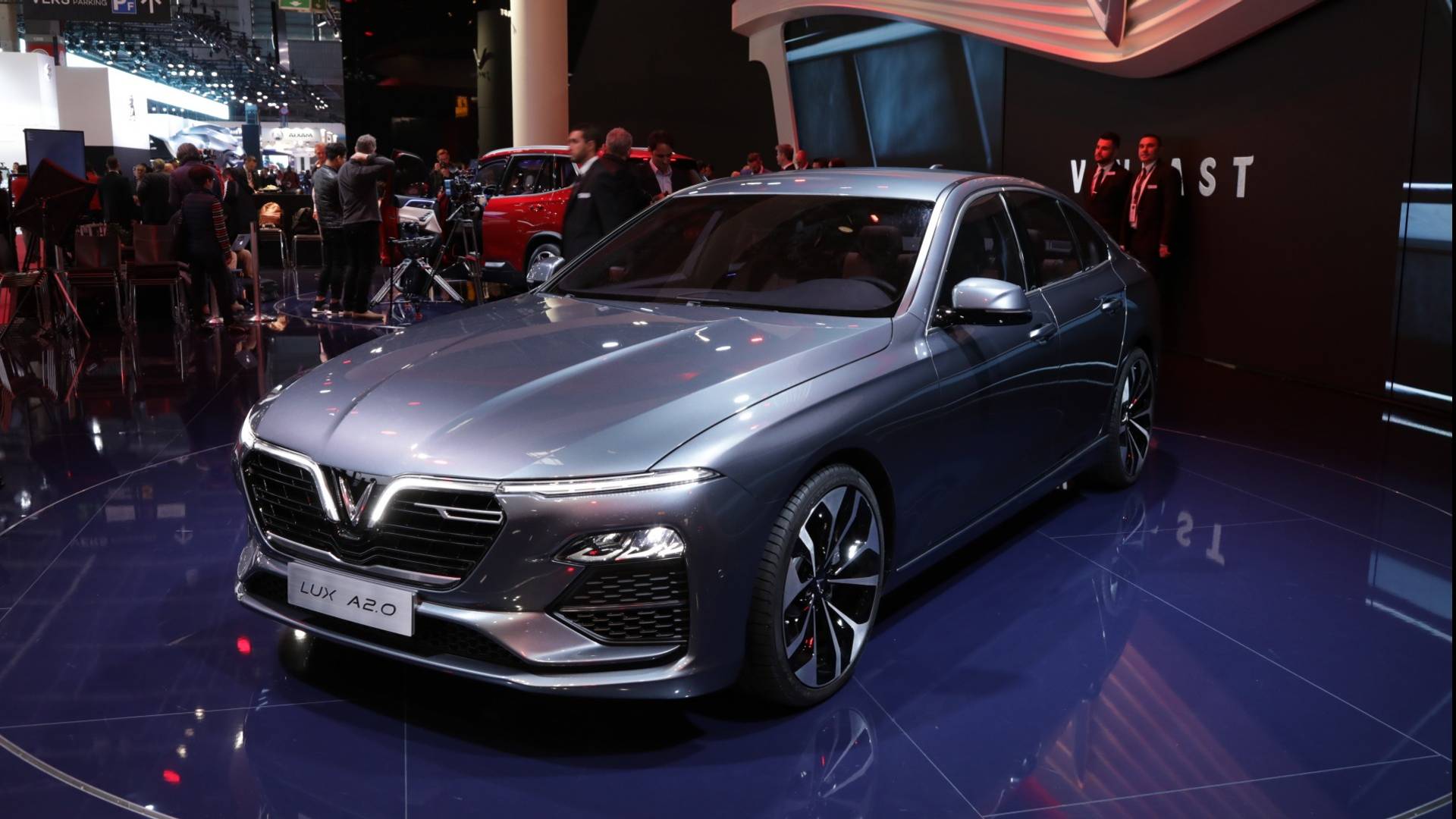
    VinFast, led by former General Motors executive Jim DeLuca, showed off its BMW-based LUX A2.0 sedan and LUX SA2.0 crossover at the Paris auto show last week. Assembly is scheduled to begin next week year.

    Credit Suisse AG and HSBC were the lead arrangers and the financing agreement was guaranteed by German export credit agency Euler Hermes, Vingroup and Vinfast said in a statement.

    The statement also said that in August Vinfast completed syndication of a $400 million term loan facility led by four international banks.

  • Toyota to invest $2 billion in developing EVs in Indonesia

    Toyota to invest $2 billion in developing EVs in Indonesia

    Toyota Motor Corp. plans to invest $2 billion to develop electric vehicles in Indonesia over the next four years, starting with hybrid vehicles, Indonesia’s coordinating ministry for maritime affairs said.

    “From 2019 to 2023, we will progressively increase our investment to 28.3 trillion rupiah ($2 billion),” Toyota president Akio Toyoda was quoted as saying in a statement released by the ministry on Thursday.

    Toyota said this month that it aimed for half its global sales to be from electric vehicles by 2025, five years ahead of schedule, and will tap Chinese battery makers to meet the accelerated global shift to electric cars.

    The deal was agreed at a meeting in Osaka on Thursday between Indonesia’s Coordinating Minister for Maritime Affairs Luhut Pandjaitan and Toyoda.

    “Because the Indonesian government already has an electric vehicle development map, Toyota considers Indonesia a prime EV investment destination,” Toyoda said in the statement.

    He said Toyota would follow the government’s EV plan by investing in stages, starting with the development of hybrid vehicles.

    Monet, the self-driving car joint venture of Toyota and SoftBank Corp., separately told Reuters in June it plans to begin operating in Southeast Asia next year.

    Battery hub

    Indonesia, the region’s largest economy, has plentiful reserves of nickel laterite ore, a vital ingredient in the lithium-ion batteries used to power EVs, and has been making a push to attract foreign carmakers.

    Officials are betting Indonesia, which is already Southeast Asia’s second-largest car production hub, can become a major regional player in lithium battery production and feed the fast-rising demand for EVs.

    The country announced earlier in 2019 plans to introduce a financial program that will offer tax cuts to EV battery producers and automakers, as well as preferential tariff agreements with other countries that have a high EV demand.

    Indonesian ministers told Reuters in December that Korean carmaker Hyundai Motor Co. plans to start producing EVs in Indonesia as part of an around $880 million auto investment in the country.

    Mitsubishi Motors Corp., meanwhile, announced in mid-2018 it would work with the Indonesian government to research infrastructure that could accommodate EVs.

    Analysts are cautious however on how quickly Indonesia’s EV ambitions can be carried out, as some of its lithium battery projects require complicated nickel smelter technology.

    The ministry’s statement on Thursday gave no details on how Toyota, which already makes batteries for hybrids and hybrid plug-ins, would implement its investment plans.

    Toyota was not immediately reachable for comment but said in June it would partner with China’s Contemporary Amperex Technology Co. and EV maker BYD Co. for battery procurement.

  • 2020 Skoda Octavia Leaked Ahead Of Global Reveal In November

    2020 Skoda Octavia Leaked Ahead Of Global Reveal In November

    Skoda Auto’s popular selling Octavia sedan is scheduled to enter its 11th generation next month, and ahead of the big reveal in Prague, an exterior image of the car has been leaked online. While Skoda released sketches of the new Octavia recently, the leaked image comes from the automaker’s online configurator that is yet to go live and gives us a good look at the new design language. As expected, the 2020 Skoda Octavia shares its design cues with the new Superb complete with the long and swooping bonnet, new single headlamp cluster design that we first saw on the Scala and a wider butterfly grille. The new Octavia looks more stately than the predecessor and that’s something the executive sedan class buyers will appreciate.

    The new generation Skoda Octavia is based on a modified version of the MQB platform and is expected to boast of a larger footprint. The leaked image hints at a longer wheelbase, although we will have to wait for the official specifications to confirm that. While the rear is yet to be revealed, the Octavia’s notchback styling will return on the new generation model, while the car will get new LED taillights that now overlap the boot-lid.

    The interiors are yet to be revealed, but previous spy images have hinted at a virtual instrument cluster, larger touchscreen infotainment system, two-spoke multi-function steering wheel and an electric parking brake. The car will also come with new driver aids and assistance systems as part of the package. The rear is also likely to boast of better legroom and shoulder room than the outgoing version. The sedan will also get the Skoda badging on the boot instead of the winged-arrow badge that has adorned the company’s offerings so far.

    Engine options on the new Skoda Octavia will include a 1.5-liter petrol and 2.0-litre diesel engines, while a hybrid version is also expected to join the line-up with a 48V mild-hybrid motor. The car will also come in the station wagon body style for the European markets, and there’s of course, the Octavia vRS in the pipeline that is expected to pack in some serious power this time around.

    The 11th generation Skoda Octavia is slated to be revealed globally at a special standalone event on November 13, 2019, in Czech Republic. Interestingly, India is expected to get the new Octavia as early as 2020 and will be part of the four new launches that the automaker will bring over the course of the year. The new Octavia is produced at Skoda’s Mlada Boleslav facility in the Czech Republic for Europe, and is partially made-in-India at VW Group’s facility in Aurangabad, Maharashtra.

  • Harley-Davidson LiveWire Production Begins After Charging Issue

    Harley-Davidson LiveWire Production Begins After Charging Issue

    Harley-Davidson has resumed the production of the all-electric LiveWire motorcycle after determining that an issue with charging was limited to a single motorcycle. The company has now said that Harley-Davidson LiveWire owners can now resume charging their motorcycles at home. Harley-Davidson had previously advised customers to the only charge at dealerships until the charging issue was resolved. The issue has still not been specified, but Harley-Davidson claims that the issue was found only on one motorcycle after “rigorous analysis”. The first all-electric Harley-Davidson received a serious setback last week when production was halted due to a problem with the bike’s charging system

    The LiveWire has a cast aluminum frame and Showa suspension with the Revelation electric powertrain mounted low on the bike

    After the issue was reported, Harley-Davidson did not recall any of the LiveWire motorcycles already on the road, but the company did stop production and deliveries and also began simultaneous testing and analysis. Nevertheless, the issue will be a speed breaker to Harley-Davidson’s plans to garner some positive publicity for its electric motorcycle program. The company has now released a statement, which, while not going into the specifics of the problem, mentions that it was actually limited to just one motorcycle.

    “Temporarily stopping LiveWire production allowed us to confirm that the non-standard condition identified on one motorcycle was a singular occurrence,” the statement said, adding, “after completing rigorous analysis this week, we have resumed LiveWire production and deliveries.”

    The issue did, however, affect Harley-Davidson’s image after the company’s first foray into electrification just weeks after deliveries of the LiveWire began. The LiveWire is meant to complement Harley-Davidson’s traditional v-twin internal combustion engines, and not replace them, and went into production in 2019. Deliveries to dealers in Europe and the US began in September 2019. The LiveWire has also been showcased in India, but so far, there have been no definitive plans of launching the electric Harley commercially in India.

  • Hyundai Motor May Raise Stake In China Joint Venture

    Hyundai Motor May Raise Stake In China Joint Venture

    Hyundai Motor said on Tuesday it was considering raising its stake in its underperforming truck joint venture in China, potentially joining other foreign automakers in boosting ownership in the world’s biggest car market. Sichuan Hyundai Motor is Hyundai’s only commercial car venture in China that makes cargo trucks and buses.

    Beijing relaxed rules last year on foreign firms controlling any Chinese automakers or joint venture, removing caps on those making fully electric and plug-in hybrid vehicles. Limits on commercial vehicle makers ease in 2020, and by 2022 for the wider car market.

    Hyundai is reviewing various plans to strengthen the joint venture’s competitiveness in changing market conditions in China, the firm said in an emailed statement, without elaborating. Volkswagen AG is exploring the prospect of buying a big stake in its Chinese electric vehicle joint venture partner, sources have told Reuters, while BMW has agreed to buy control of its main joint venture in China.

    Sichuan Hyundai Motor is jointly owned by Hyundai and China’s Sichuan Nanjun Automotive Group, with a stake of 50 per cent each. The Sichuan joint venture, which started operations in 2013, produced 12,228 commercial vehicles last year, down by more than half from 28,786.

    That means that their production facilities are heavily underutilised given that they have a capacity of making 160,000 trucks and 10,000 buses a year.

  • Bentley Kick Starts Production Of New Flying Spur In Crewe

    Bentley Kick Starts Production Of New Flying Spur In Crewe

    Bentley Motors announced that the production of the all-new Flying Spur, is now underway, and deliveries will begin from early 2020. Handcrafting of the first customer orders is taking place at Bentley’s factory headquarters in Crewe, England, following completion of over 1.6 million kilometres of development testing. This is the third generation of the company’s Grand Tourer and the company says that it is the most advanced Bentley ever built. Nearly 200 people handcraft every Flying Spur through 84 different assembly stages at the company’s factory in Crewe.

    The all-new Flying Spur is hand-built in Britain, and benefits from the extended wheelbase, while a retractable Bentley ‘Flying B’ mascot features for the first time on a modern-day Flying Spur. The cabin is unmistakably Bentley, with contemporary design lines flowing from the new wing-themed fascia through the passenger areas. Optimal comfort and style are delivered by completely new-design fluted leather seats, which feature diamond quilting for the Mulliner Driving Specification, while three-dimensional diamond-quilted leather doors inserts are a world first.

    Upfront, you get a Bentley Rotating Display and it is the central feature of the dashboard. The rear seat comes with a Touch Screen Remote Control that can operate all the major functions. There’s a panoramic sunroof, that stretches the full length of the roof. The all-new Flying Spur now comes with a wide range of Advanced Connectivity features, as also cutting-edge driver assistance systems such as a Night Vision infra-red camera, Traffic Assist and a Head-Up Display.

    Electronic All-Wheel Steering is used for the first time in a Bentley, combining with Active All-Wheel Drive and Bentley Dynamic Ride – the world’s first 48V electric anti-roll system – to deliver phenomenal handling and ride. New, three-chamber air springs offer a much greater range of suspension adjustment between limousine-style ride comfort and sporting levels of body control.

    The new Flying Spur is powered by Bentley’s 6.0-litre, twin-turbocharged W12, and it is mated to an advanced dual-clutch eight-speed transmission. 0-100 kmph is done in just 3.8 seconds while top speed is rated at 333 kmph.