Category: Automotive

Retail News Asia is committed to providing both local and global retailers with the latest Auto and Car news throughout the Asian market. This on a daily base.

  • Imported car sales soar despite efforts to tighten imports

    Imported car sales soar despite efforts to tighten imports

    Consumption of imported cars has skyrocketed while that of locally-assembled ones is falling despite efforts last year to tighten imports.

    From January to August, sales of imported cars rose 178 percent year-on-year to 82,800 units, while that of locally-assembled vehicles dropped 14 percent to 119,700 units, according to the Vietnam Automobile Manufacturers’ Association (VAMA).

    The number of imported vehicles with nine seats or less in the period almost quadrupled to over 71,000, according to Vietnam Customs.

    However, the high increase in imports this year has to do with a plunge last year because of a government decree that introduced tougher conditions for car importers, requiring them to provide certain certificates to ensure quality and countries of origin. This had led to a decline of 20 percent from 2017.

    Imports started to regain traction in the second half of last year when businesses were able to meet those requirements.

    Vietnam is considering removing special consumption tax on car parts produced locally to boost local manufacturing. Some businesses are shifting their production of high-demand vehicles to the country.

    As Vietnam sees rising demand among people to switch from motorbikes to cars alongside an increase in the country’s per capita income, annual car sales could more than triple in the next five years to reach a million in 2025, according to the Ministry of Finance.

    Vietnam imported 95,900 automobiles in January-August, up 3.2 times year-on-year, 86 percent of these from Thailand and Indonesia, according to Vietnam Customs.

  • New Benelli Motorcycle Launch Details Disclosed

    New Benelli Motorcycle Launch Details Disclosed

    Benelli India is all set to launch a new motorcycle in India towards the end of October 2019. We believe that it could be the Imperiale 400. At the launch of the Leoncino 500, the company had confirmed that it will be launching three new products by the end of 2019 which were TRK 250, Leoncino and the Imperiale 400. We believe that it is going to be the Imperiale 400, which will be launched in October 2019. The Imperiale 400 will go up against Jawa and the Royal Enfield Classic 350.

    What’s interesting to know is that the Benelli Imperiale 400 will see a lot more local content going into it than the TRK 502 and the Leoncino, which should help keep the prices competitive. While the company did not confirm the percentage of local content on the cruiser, we should get a fair idea on the same at the time of launch. The local assembly will help the Imperiale 400 stay accessible to bigger customer base with a price around the ₹ 2-2.5 lakh (ex-showroom) mark. It may not undercut the locally manufactured Royal Enfield Classic 350 or the Jawa at this price point, but certainly will be a compelling alternative.

    The Benelli 400 gets a 373.5 cc single-cylinder engine with fuel injection that churns out 19 bhp at 5,500 rpm and 28 Nm of peak torque at 3,500 rpm. The motor is paired to a 5-speed gearbox. The bike uses a double-cradle steel tube frame underneath and is suspended by telescopic forks upfront and dual shock absorbers at the rear. The vintage-looking cruiser comes with disc brakes at either end with dual-channel ABS as standard. The bike has a kerb weight of 200 kg and a fuel tank capacity of 12 litres.

  • Honda To Cease Diesel Vehicle Sales In Europe By 2021

    Honda To Cease Diesel Vehicle Sales In Europe By 2021

    Honda Motor said it would phase out all diesel cars by 2021 in favor of models with electric propulsion systems, as the Japanese automaker moves to electrify all of its European cars by 2025.

    Honda is the latest automaker cutting production of diesel cars to meet stringent global emissions regulations. The plan is part of its long-term goal to make electric cars, including all battery-electric vehicles, to account for two-thirds of its line ups by 2030 from less than 10% now.

    By next year, according to European Union emission targets, CO2 must be cut to 95 gram per km for 95% of cars from the current 120.5 gram average, a figure that has increased of late as consumers spurn fuel-efficient diesels and embrace SUVs. All new cars in the EU must be compliant in 2021.

    For Honda, declining demand for diesel vehicles and tougher emissions regulations have clouded its manufacturing prospects in Europe.

    Honda said in February it would close its only British car plant in 2021 with the loss of up to 3,500 jobs.

    Japan’s No. 3 automaker has said it would cut the number of car model variations to a third of current offerings by 2025, reducing global production costs by 10% and redirecting those savings toward advanced research and development

  • Nokian Tyres Says High Inventories In Europe To Hurt H2 Sales

    Nokian Tyres Says High Inventories In Europe To Hurt H2 Sales

    European distributors are holding back from buying costly winter tyres due to high inventories, Finland’s Nokian Tyres said on Thursday, adding it saw weakness in its Russian market too.

    “We expect short-term weakness in sales volume throughout Central Europe to continue during the remainder of the year,” Chief Executive Hille Korhonen told an investor call.

    Korhonen said summer tyre inventories in Central Europe were higher than normal, leading distributors to hold back on stocking winter tyres.

    “So it seems that the order intake is slower compared to many, many years and they will be ordering goods closer to the season,” Korhonen said, adding oversupply was putting pressure on prices.

    Korhonen said the company’s view on the Russian market had worsened through the year.

    “There is increasing uncertainty in the Russian market and my meetings with all key distributors in Russia earlier this month confirmed the weakness,” Korhonen said.

    Shares in Nokian were 3% lower in late trading.

  • Toyota To Expand Sao Paulo Plant

    Toyota To Expand Sao Paulo Plant

    Toyota Motor announced a 1 billion reais ($243.29 million) expansion at a plant in the Brazilian state of Sao Paulo, joining Volkswagen and General Motors in new investments in the region. Toyota said the funding would allow the Sorocaba plant, which builds the Etios and Yaris sedan models, to produce a new vehicle model. It did not provide details on the new model.

    Sao Paulo state has long been the heart of Brazil’s auto industry, which is, in turn, the largest in South America, but it had recently been losing steam against aggressive incentives offered by other states to lure manufacturers. Ford announced plans in February to shut down and sell one its oldest Sao Paulo plants.

    Sao Paulo Governor Joao Doria has fought back to keep manufacturing jobs in the state, devising a tax incentive program to give automakers a 25% reduction in value-added taxes as long as they invested at least 1 billion reais and created 400 new jobs.

    Toyota, however, said the Sorocaba expansion will create only 300 jobs. The company, which has two other plants in Brazil, did not immediately respond to a question about whether this would still allow it to benefit from the tax incentives.

    “During the last decade, which involved challenging times for the economy and the auto industry, Toyota remained faithful in its commitment … growing in a sustainable way,” Rafael Chang, who heads Toyota in Brazil, said in a statement.

  • Delaware Judge Says Tesla Board Must Face Trial Over Musk’s Mega-Pay Package

    Delaware Judge Says Tesla Board Must Face Trial Over Musk’s Mega-Pay Package

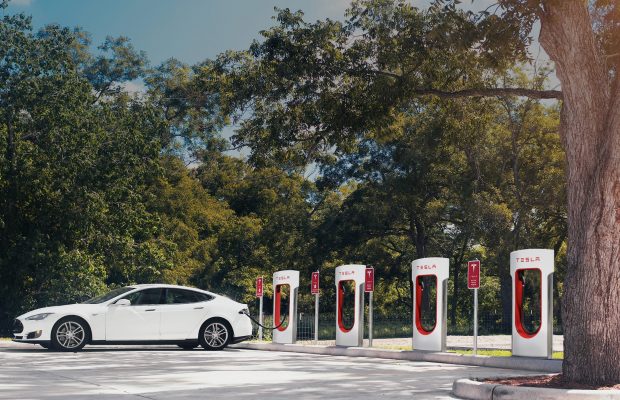
    A Delaware judge ruled on Friday that Tesla Inc’s board of directors must defend at a trial Chief Executive Elon Musk’s multibillion dollar pay package, which a shareholder lawsuit said unjustly enriched the head of the electric vehicle company.Tesla estimated the 2018 compensation package was worth $2.6 billion (£2.08 billion) when it received stockholder approval in March 2018, although stock analysts at the time said it could be worth up to $70 billion (£56.04 billion) if the company – which has yet to post an annual profit – grew quickly.

    The compensation award includes no salary or cash bonus for the Silicon Valley billionaire Musk, but sets rewards based on Tesla’s market value rising to as much as $650 billion over the next decade.

    On Friday, Vice Chancellor Joseph Slights of the Delaware Court of Chancery ruled against Tesla’s request to dismiss the lawsuit by shareholder Richard Tornetta at an initial phase in the litigation because of the way the board approved the package.

    As a result, the board must now defend against allegations that it breached its fiduciary duty in approving the package, and that the package unfairly enriches Tesla’s CEO. The ruling opens the way for additional discovery into the decision-making process.

    Tornetta had asked that the pay package be rescinded and the board of Tesla be overhauled to better protect investors.The ruling turned on Tesla’s compensation committee, which the company conceded was not independent of Musk, according to Slight’s opinion. Had the package been negotiated by truly independent directors and approved by a majority of shareholders who were unaffiliated with Musk, Slights said he would have dismissed the lawsuit.

    “Plaintiff has well pled, however, that the board level review was not divorced from Musk’s influence,” Slights wrote.

    Musk’s compensation package passed shareholder approval with about 73 percent of votes cast, excluding votes by Musk and his brother Kimbal. The vote result indicated some, but not all, big investors were prepared to support a large payout at the founder-led company, which has struggled to produce its electric vehicles efficiently and profitably.

    At the time, proxy advisory firm Institutional Shareholder Services recommended voting against the compensation, noting that if achieved Musk’s award would surpass anything previously granted to top U.S. executives.

    Under the award, which involves stock options that vest in 12 tranches, Tesla’s market value must increase to $100 billion for the first tranche to vest and rise in additional $50 billion increments for the remainder. The package does not require Tesla to hit profitability metrics.

    Musk does not hold a majority of the Tesla’s stock, but in a separate case, Slights determined that Musk’s sway over Tesla made him in effect a controller from a legal standpoint. As a controller, the board is subject to a higher standard of legal oversight for decisions it makes regarding its relationship with Musk.The judge did dismiss Tornetta’s claim that the package amounted to a waste of corporate assets.

  • The Nissan Leaf Can Now Power A House

    The Nissan Leaf Can Now Power A House

    Nissan and EDF have partnered to accelerate the delivery of electric mobility in the United Kingdom, France, Belgium and Italy and will be adopting smart charging of electric vehicles in these markets. The new agreement will be primarily focusing on the development of smart charging solutions i.e. vehicle to grid (V2G) chargers which will help to optimize the charging or discharging of an electric vehicle. Interestingly, the stored energy on the car can be supplied back to the grid and can be used to power the house.

    As part of the deal, Nissan will develop and sale the V2G compatible EVs and the EDF Group will provide the V2G charging solution. Nissan says that the V2G technology will offer a significant opportunity to electricity grids and will provide new financial opportunities to the businesses. Nissan is aiming for a potential shift towards electric vehicles after achieving record sales for both Nissan Leaf and e-NV200.

    Speaking about the partnership, Francisco Carranza, Managing Director for Nissan Energy in Europe, said: “This new partnership with EDF across four major European markets is another sign that our vision of an electric ecosystem is becoming a reality. Businesses are becoming increasingly aware of the benefits and opportunities offered by the Nissan LEAF and e-NV200, and adding a V2G solution is a logical next step for managing their energy supply and opening new revenue opportunities.”

    Speaking on similar lines, Yannick Duport, EDF Group Electric Mobility Director, says: “The cooperation agreement is fully in line with the Electric Mobility Plan launched last October. We are convinced that the development of electric mobility will be supported by partnerships. I am very pleased to count among them the cooperation agreement that Nissan and EDF have just signed to develop smart charging solutions. So, EDF is building an ecosystem of innovative players by forming strategic partnerships for the large-scale roll-out of the best technologies to support our customers.”

    Smart charging solutions include technologies to control when vehicles charge and how quickly they power up, as well as allow the two-way flow of electricity between vehicle and charger. The V2G technology helps the energy to accumulate in the batteries of electric vehicles which can also be used for businesses own energy needs or the grid when required. The energy that is stored in a electric vehicle like the Nissan Leaf and e-NV200 van can be sold back to the grid by the customer, generating additional revenue to offset vehicle ownership costs.

  • Tata Motors Showcases New Ultra Trucks In South Africa

    Tata Motors Showcases New Ultra Trucks In South Africa

    Tata Motors has showcased two new variants of its Ultra truck range- Ultra Plus 1418 and Ultra 814 AMT in South Africa at the Futuroad Expo 2019 in Johannesburg. While the Ultra AMT 814 is from the existing range, the Ultra Plus 1418 is an entirely new vehicle in the Heavy Commercial Vehicle (HCV) range. Powered by the 5.0-litre diesel engine, Ultra Plus 1418 is a multipurpose offering and is available in the wheelbase options of 4900 mm and 5300 mm. The vehicle will offer a payload capacity of seven to eight tonnes.

    The Ultra platform is modular architecture with five deck lengths, five wheelbases and payloads ranging from four to eight tonnes. The Tata Ultra is designed and tested for South African conditions and according to the company it is versatile enough to suit the needs of a large customer base, be it for large fleet, captive users, fleet rental companies or logistics companies. The Ultra range is inspired by the Prima range which is based on an Italian cab design, with engine technology and gearbox expertise from the U.S. and Germany. The chassis frame has been designed in Mexico and sheet metal dies from Japan and Korea, combined with Swedish precision on a robotic weld line.

  • Uber Awaits Renewal Decision On Vital London License

    Uber Awaits Renewal Decision On Vital London License

    Uber is still waiting to see whether its license in London, which expires on Wednesday, will be renewed as the regulator, which previously stripped the taxi app of its right to operate in the city, remains tight-lipped about the decision. Transport for London rejected the Silicon Valley company’s license renewal request in 2017 due to failings it said it found in its approach to reporting serious criminal offenses and driver background checks, prompting legal action.

    A judge in 2018 then granted Uber a probationary 15-month license, which expires on Sept. 25, after the company had made several changes to its business model in London, the firm’s most important European market.

    A question put to London Mayor Sadiq Khan from a member of the city’s assembly about the license renewal is still awaiting a reply according to an entry on the London Authority’s website from earlier this week.

    TfL said it does not comment on individual license applications. Uber declined to comment on Friday. Among its options are giving Uber a maximum five-year license, a shorter one, or stripping the firm of its ability to operate, almost certainly prompting an appeals process during which the app would still be able to take rides, as in 2017.

    Benjamin Black, Co-Head of Internet Equity Research at analysts Evercore ISI, told Reuters he thought the firm would retain its ability to operate in London, one of its top five global markets.

    “If they lost the London license, that would be a major blow… but we just don’t see it happening,” he said.

    “Is there going to be another 15-18 month renewal or is it going to be five years? Judging by (ride-sharing firm) Ola coming in and getting a 15-month license, I think they’re going to be on the shorter cycles.”

    The 2017 license loss came just weeks after Chief Executive Dara Khosrowshahi took over and became a test of his ability to assuage regulator concerns as the app faced disputes with taxi firms and the authorities in different markets.Mayor Khan was critical of Uber just weeks ago and said companies must play by the rules.

    “You will know my track record which is standing up to the big boys, and they are boys, and make sure everyone plays by the rules,” he told listeners to a phone-in on LBC radio. “I don’t care how many lawyers you employ or how big your PR budget.”

  • US Fines Hyundai $47 Million Over Dirty Diesel Engines

    US Fines Hyundai $47 Million Over Dirty Diesel Engines

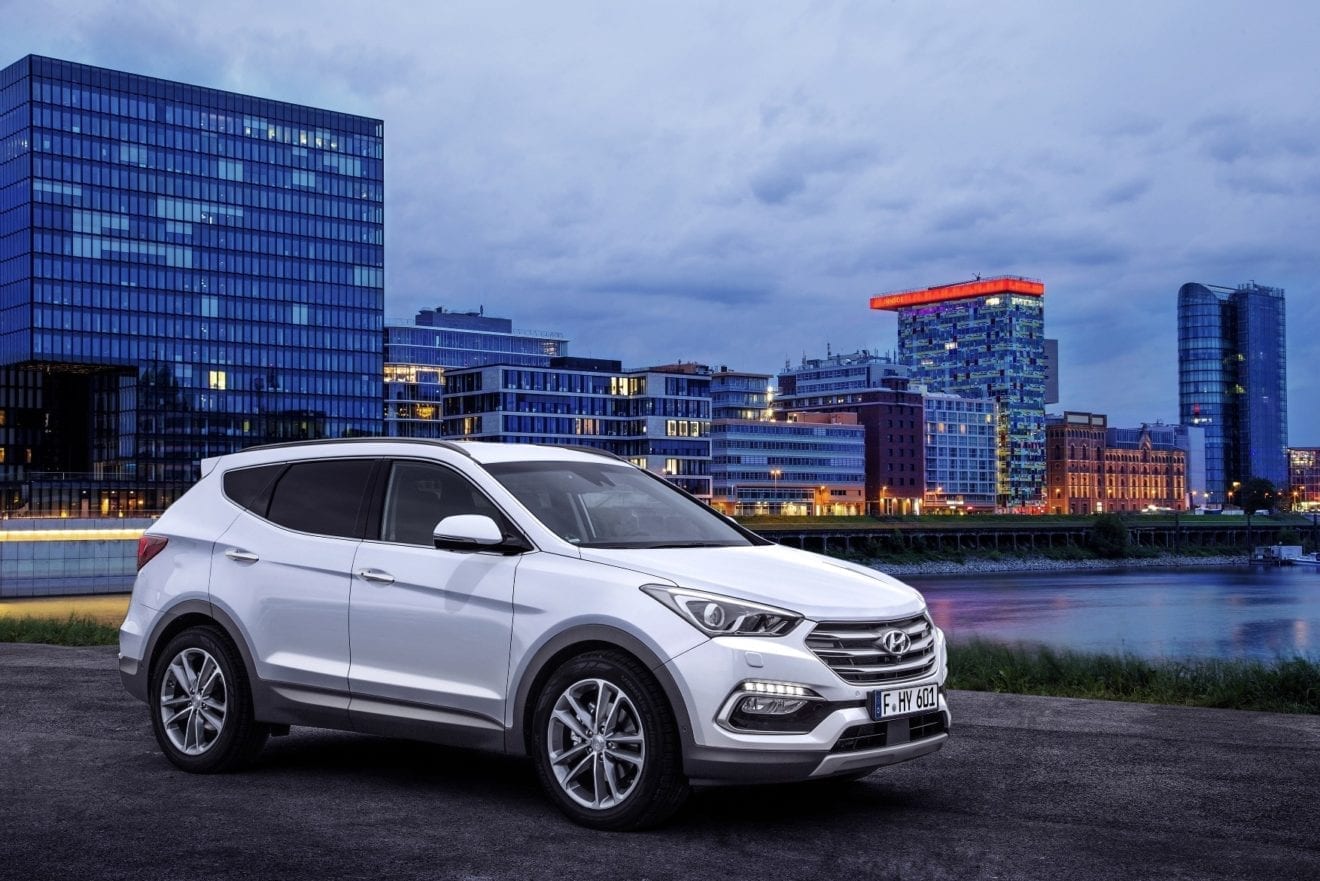
    South Korean automaker Hyundai will pay a $47 million fine for illegally importing and selling dirty diesel engines in violation of American environmental rules, US authorities announced Thursday.

    Between 2012 and 2015, the company imported nearly 2,300 diesel-powered heavy construction vehicles with engines that did not meet US emissions standards, the US Justice Department said in a statement.

    “Hyundai put profits above the public’s health and the requirements of the law,” Jeffrey Bossert Clark, head of the department’s environment and natural resources division, said in a statement.

    “We will not tolerate such schemes that skirt the Clean Air Act, designed by Congress to improve air quality.”

    The case began with a whistleblower tip submitted in 2015 to the US Environmental Protection Agency, which launched criminal and civil proceedings.

    A US court earlier imposed a $2 million fine on the company for the clean air violations.

    US officials say the Hyundai diesel engines were not certified to meet emissions standards for particulate matter and nitrogen oxide, both of which contribute to disease and premature death.

  • Ducati Multistrada Sales Cross 100,000 Units Worldwide

    Ducati Multistrada Sales Cross 100,000 Units Worldwide

    The Ducati Multistrada has reached the 100,000 sales milestone, sixteen years after the first Ducati Multistrada rolled off the assembly line at Borgo Panigale. To celebrate the milestone, a Ducati Multistrada 1260 Pikes Peak with a customised laser marking on the top yoke was handed over to German customer Dave Hayward by Ducati CEO Claudio Domenicali.

    According to Ducati, the Multistrada became the first bike to feature riding modes in 2010, and with the introduction of the D-Air version in 2014, Ducati offered the first motorcycle with a system capable of interfacing with a dedicated airbag-equipped jacket. In 2015, the Ducati Multistrada became the first motorcycle to feature a variable-timing engine with the Ducati Testastretta DVT (Desmodromic Valve Timing) engine.

    Currently, the Multistrada is available in as many as 7 versions with several engine displacements and with different components and sophisticated suspension systems. The 115 bhp Ducati Multistrada 950 is available in two versions, and the Ducati Multistrada 1260 with 160 bhp of maximum power is available in five different variants. The Multistrada 950 is available in a standard as well as a higher S variant, while the Multistrada 1260 is offered in both standard, S variant, as wel as a more off-road capable Multitrada Enduro version.

    Later in 2019, Ducati is expected to introduce a new variant in the Multistrada family as a 2020 model, called the Ducati Multistrada 1260GT, which will feature radar-assisted rider aid system and cruise control, apart from standard touring accessories. The Ducati Multistrada 1260GT is expected to be unveiled later this year, and will be offered on sale as a 2020 model. By 2021, the Ducati Multistrada will be introduced with a V4 engine, possibly shared with the current Ducati Panigale V4, with a different frame, cycle parts and state of tune.

  • BMW CFO Wants To Cut 5,000-6,000 Jobs By 2022

    BMW CFO Wants To Cut 5,000-6,000 Jobs By 2022

    BMW’s finance chief Nicolas Peter wants to cut between 5,000 and 6,000 jobs by 2022, mostly at the carmaker’s Munich headquarters, a German magazine reported on Thursday.

    Manager Magazin also said that Ilka Horstmeier was a favourite to head human resources, while Milan Nedeljkovic would take over as head of production.

    BMW, which declined to comment, has been undergoing a shakeup of top managers.

    In August, Oliver Zipse succeeded Harald Krueger to became chief executive officer, leaving vacant the production role he had overseen.

    On Wednesday, BMW announced that Milagros Caina Carreiro-Andree, the board member in charge of human resources, would not seek a new term, citing personal reasons.

  • Tesla Takes On Porsche With Battle On Germany’s Toughest Circuit

    Tesla Takes On Porsche With Battle On Germany’s Toughest Circuit

    Germany’s Auto Motor und Sport this week published photographs of a Tesla with “100D+” markings on the track where according to the magazine, it clocked an unofficial time of 7 minutes and 23 seconds, beating the recently launched electric Porsche Taycan’s lap time of 7 minutes 42 seconds.

    Tesla wants to steal Porsche’s bragging rights by testing its Model S on the northern loop of Germany’s Nuerburgring circuit, using a marketing tool that German carmakers have long used to tout the superiority of their products.

    Germany’s Auto Motor und Sport this week published photographs of a Tesla with “100D+” markings on the track where according to the magazine, it clocked an unofficial time of 7 minutes and 23 seconds, beating the recently launched electric Porsche Taycan’s lap time of 7 minutes 42 seconds.

    A formally timed record attempt was due to take place on Wednesday, with another attempt scheduled for Saturday, Auto Motor und Sport said.

    Tesla is using the Nordschleife, as the track is known, to market its “Plaid” mode on a 7-seater Tesla Model S, CEO Elon Musk confirmed on Twitter.

    “We expect these track times to be beaten by the actual production 7 seat Model S Plaid variant that goes into production around Oct/Nov next year,” Musk said on Tuesday.

    Setting a new record time for four-door electric cars would give the U.S.-based manufacturer’s ageing Model S a new lease of life just as Audi, Mercedes-Benz, BMW and Porsche prepare to launch electric cars.

    The Nordschleife is one of the world’s most treacherous thanks to its length of just over 20 km (12.5 miles), slanted cambers and an altitude difference of 300 meters (yards) between its highest and lowest point.

    Porsche says its 919 Evo hybrid racecar currently holds the record with a lap time of 5 minutes 19 seconds, set in 2018 by keeping up an average speed of 234 km (146.3 miles) an hour, despite blind corners, narrow bends and limited safety run-off zones.

    Porsche, BMW, Mitsubishi, Nissan, Cadillac and Aston Martin have used the racetrack as a boot camp to hone reliability and handling and to benchmark their vehicles against top competitors.

    “If you take the same corner, on the same road, at the same speed, in two different cars, you can see how your car measures up to the competition,” said driver Dirk Schoysman, who set a Nordschleife lap record in 1996 in a Nissan Skyline with a time of 7 minutes 59 seconds.

    For Nissan, the new record underscored the Skyline R33 GT-R’s global status as a serious sportscar, proving that Japanese brands could be as competitive as vehicles made by Germany’s finest manufacturers.

    The circuit opened in June 1927 to become an important battleground where legendary drivers like Tazio Nuvolari and Juan Manuel Fangio drove some of their most memorable races.

    In 1935 senior Nazi officials gathered at the German Grand Prix ready to cheer the home team, only to see Italy’s Nuvolari beat the Mercedes-Benz W25 and the Auto Union Typ B in an Alfa Romeo Tipo B P3.

    The track remained a venue for Grand Prix races until 1976 when a horrendous crash almost killed driving ace Niki Lauda, leading to the opening of a shorter, wider Nuerburgring track with improved facilities in May 1984.

    But carmakers have continued to use the older circuit’s 40 right-hand and 33 left-hand turns through the Eifel region’s forested hills to develop their regular vehicles.

    “Cars cannot keep secrets here, mistakes and problems will eventually rise to the surface,” Schoysman said.

    At the Hatzenbach corner, cars enter a dip forcing them over a series of undulations with their suspension compressed, testing the chassis to the limit.

    “If the car changes its line in that corner it may be a tire flexing, the suspension bushes that have gone through their stroke, or a problem with the stiffness of the car body, or its electronic stability program,” Schoysman explained.

    These development tweaks continue to be relevant for electric cars as well as for marketing purposes.

    Understanding the circumstances of the test lap will be crucial for evaluating Tesla’s achievement, Schoysman said.

    “Getting a new lap record shows the know-how of the company but there are always questions: Are the cars realistic copies of what the customer finds in a showroom? Or were they modified?”

  • Bugatti Celebrates 110th Anniversary With Baby 2

    Bugatti Celebrates 110th Anniversary With Baby 2

    Well! This one is not going to go transcending and set any earth-shattering speed record, yet it’s a Bugatti. It’s definitely something which rich kids with developing taste in cars would love to have, more so as it’s a bit grown up now. It’s the Bugatti Baby 2 which we first saw as a 3D printed model at the 2019 Geneva Motor Show and it is going to have a limited edition run. Bugatti will be manufacturing only 500 units of the Baby 2 and 500 lucky teenagers have already got one in their cart. Yes! It’s completely sold out.

    In fact, Stephen Winkelmann, President of Bugatti who also has a history of working with fast car brands is intrigued by the model and is excited to see it driving around the Bugatti premises. Incidentally, the Baby 2 also marks Bugatti’s 110th birthday. It has partnered with The Little Car Company to make this junior car. The first prototype, called the XP1, is already ready for test drives at La Grande Fete in Molsheim. To allow the Baby II to be driven by both adults and children, it has grown from the 50 percent scale of the original to a 75 percent scale replica of the Type 35 and includes a sliding pedal box for drivers of all age. In the first stage of its inception, the engineering team digitally scanned every single component of a 1924 Type 35 Lyon Grand Prix car. Then it got a new electric powertrain with lithium-ion batteries and regenerative braking along with few more redesigned elements to suit the need of modern age. It gets the same eight-spoke alloy wheels shod in new Michelin tires and it gets new hollow front axle along with the suspension and steering mechanism from the old Type 35.

    The old oil and pressure meters in the Baby 2 are now replaced with battery level, indicator and power gauge and the four-spoke steering wheel continues to be there.

    The cockpit gets the same four-spoke steering wheel ahead of the aluminum casing which sports Bugatti’s signature instruments. The old oil and pressure meters are now replaced with battery level, indicator and power gauge but the clock used to measure race performance in the iconic Type 35 remains as a symbol. The fuel pressure pump from the Type 35 has been digitally replicated and repurposed as a forward or reverse control, and all cars will come with a horn, rearview mirror, handbrake, headlights and a remote control to disable the car from up to 50 meters. In the centre of the dashboard is a plaque giving the unique chassis number of the Baby 2 and displayed on the nose of every car will be Bugatti’s famous ‘Macaron’ badge, made of 50g of solid silver, just like the Chiron.

    It also gets a rear-wheel drive powertrain and comes with two selectable power modes for drivers of a different experience. A 1kW ‘child mode’ with the top speed limited to 20 km/h, and a 4kW ‘adult mode’ with the top speed limited to 45 km/h. That said, there is also a Speed Key for experienced and confident drivers which takes the total power output to 10 kW and bars the speed limiter. It also comes equipped with a limited-slip differential which channelizes all the torque to the rear wheels. The car will come with two sizes of a removable battery, a standard 1.4 kWh pack and a long-range 2.8 kWh version. While the exact range will depend on driving style, the larger pack is expected to give a range of more than 30km.

    The standard car will be painted in French Racing Blue with a black leather interior, but other color options will be available for both the exterior and interior. Additionally, all owners of Baby IIs will receive membership of The Little Car Club, and be able to attend events where they, their children and their grandchildren can drive their cars at famous motor racing circuits. The Baby 2 is available in the European markets for 30,000 Euros.