Category: Automotive

Retail News Asia is committed to providing both local and global retailers with the latest Auto and Car news throughout the Asian market. This on a daily base.

  • Hyundai Motor Group Develops New Centre Side Airbag

    Hyundai Motor Group Develops New Centre Side Airbag

    Hyundai Motor Group has developed a new center side airbag, which works to separate the space between driver and passenger. The Group will roll out the technology in upcoming vehicles. This new, additional airbag expands into the space between driver and passenger seats to prevent head injuries of passengers in the front row. If there is no one in the front passenger seat, the airbag will protect the driver from side collision coming from the right side. The center side airbag is installed inside the driver’s seat and will deploy once the impact is sensed.

    The new center side airbag is expected to diminish head injuries caused by passengers colliding with each other by 80 percent. The Group has applied newly patented technology to maintain reliability but reduce the weight and size of the airbag.

    Hyundai Motor Group has developed a new technology to simplify the design and reduce the weight of component produce an airbag which is about 500g lighter than the competing products. Thanks to the smaller size of the airbag, the company’s design teams will have more flexibility in the type of seat design they envision for future products.

    The additional airbag expands into the space between driver and passenger seats to prevent head injuries

    Upcoming Euro NCAP is expected to include side-impact into its consideration beginning year 2020 and Hyundai Motor Group’s airbag will certainly help in addressing this.

  • Toyota Invests $391 Million In Its Texas Truck Assembly Plant

    Toyota Invests $391 Million In Its Texas Truck Assembly Plant

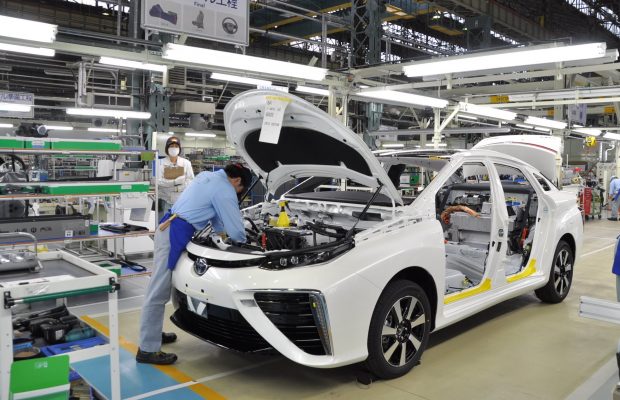
    Toyota Motor Corp said on Tuesday it was investing $391 million in its pickup truck assembly plant in San Antonio, Texas, as part of the Japanese automaker’s plan to invest $13 billion in its U.S. operations over five years through 2021. The company said the investment will be used to introduce advanced manufacturing technologies at the plant and also to help with the development and education of the local workforce. Christopher Reynolds, Toyota Motor North America’s chief administrative officer, told Reuters the investment could allow the company to eventually boost the plant’s capacity but no decision has been made. Reynolds added that the company was “bullish” on the future of its U.S truck sales, which are up 4% this year. Toyota’s San Antonio truck plant assembles full-size Tundra and mid-size Tacoma pickup trucks and employs more than 7,200 workers.

    The announcement comes a day after U.S President Donald Trump said Washington had struck trade agreements with Tokyo that could be implemented without congressional approval, but stopped short of assuring Japan that new tariffs would not be slapped on vital auto exports. Trump’s announcement left unclear whether he has agreed not to impose threatened national security tariffs on Japanese vehicles and auto parts.

    Avoiding the “Section 232” tariffs of up to 25% was a major motivating factor for Tokyo in negotiating with Washington on trade.Over much of the past year, the scope of talks has narrowed to exclude the automotive sector, the source of most of the $67 billion U.S trade deficit with Japan. Prime Minister Shinzo Abe in August announced an agreement in principle on a deal that covered reductions in tariffs on agricultural and industrial goods, but not autos.

    Abe has repeatedly emphasized the significant U.S investments of Japanese automakers and parts manufacturers to Trump

  • Volkswagen Agrees To Australian Settlement Over Diesel Cheating

    Volkswagen Agrees To Australian Settlement Over Diesel Cheating

    Volkswagen said on Monday it had agreed to pay up to A$127 million ($87.3 million) to settle lawsuits brought on behalf of thousands of Australian customers caught up in its global diesel emissions cheating scandal.

    The German automaker said it would pay about A$1,400 each to owners of affected Volkswagen, Audi and Skoda EA189 diesel vehicles who opted into the lawsuit.

    “This is a significant step toward fully resolving the diesel lawsuits in Australia,” a Sydney-based Volkswagen spokesman said in an emailed statement.

    As part of the settlement, which was agreed on a “no-admissions basis”, Volkswagen will pay the legal costs of the claimants who filed several class-action lawsuits.

    “This is an important step in providing a measure of justice and redress to the thousands of Australian motorists who claim they were financially impacted by the diesel emissions issue,” principal lawyer at Maurice Blackburn, Julian Schimmel said.

    The settlement is subject to court approval.

    The settlement follows revelations in 2015 that Volkswagen was using illegal engine-control software to cheat pollution tests. The company has already paid billions of dollars in legal costs around the world.

    The Australian consumer watchdog in 2016 also sued the German carmaker alleging it intentionally sold more than 57,000 vehicles with software which deceived buyers about levels of toxic emissions.

    Volkswagen said it expected to settle that lawsuit shortly.

    In the United States, Volkswagen has already agreed to pay more than $25 billion in claims from owners, environmental regulators, states and dealers and offered to buy back about 500,000 polluting U.S. vehicles.

    In May, the group said it had set aside 5.5 billion euros ($6.1 billion) in contingent liabilities of which 3.4 billion euros had been earmarked to cover potential lawsuits.

  • MG eZS Teased Ahead Of India Launch

    MG eZS Teased Ahead Of India Launch

    MG Motor India had already said that it will launch its all-electric SUV the eZS in India in 2019 and now the company has teased the car on its social media page. The MG eZS will be one of the first-ever fully electric SUVs in India when it is launched. The eZS will be MG’s second launch in India after the upcoming MG Hector. The company further said that its electric vehicles will get over-the-air (OTA) technology and would go over 300 km in a single charge from its lithium-ion battery. MG is yet to announce the exact specifications for the eZS.

    By the end of 2019, MG Will have a total of 120 sales and service outlets across India and the company said it will also reach out to Indian target audience and educate them about electric vehicles and look to address issues such as range anxiety and charging infrastructure. Like the MG Hector, the eZS will also feature MG’s iSmart Next-Gen connected technology.

    The company, in fact, has already launched the electric SUV in the UK and it’s priced at around ₹ 18.36-20.07 lakh and will lock horns against the recently launched Hyundai Kona Electric. The company has already said that it is looking at December 2019 to launch the car in India.

    MG Motor India and Fortum India have joined hands to creating DC Fast Charging infrastructure (50 KW) in the country. The carmaker’s tie-up with Fortum will see the installation of the country’s first 50 KW DC fast-charging EV stations. Under the partnership, Fortum will install 50 KW CCS/CHAdeMO DC fast Public Charging Stations for Electric Vehicles across MG’s showrooms in 5 cities including Delhi NCR, Hyderabad, Mumbai, Bengaluru and Ahmedabad by September this year.

    The MG ZS EV for the UK is powered by a single electric motor that produces 141 bhp and 353 Nm of peak torque. The motor is powered by a 44.5kWh lithium-ion battery pack that can be charged up to 80 per cent in 43 minutes when plugged into a 50 kW fast charger. When charged with a domestic 7 kW wall box, the charging time extends to six and a half hours. MG promises a range of 262 km on a single charge on the ZS EV with the lithium-ion battery getting a seven-year warranty.

    The all-electric model will be locally assembled at the automaker’s Halol facility in Gujarat and prices will be competitive given that the GST rates for electric cars are now just 5 per cent.

  • Tata Motors Group Global Wholesale Down

    Tata Motors Group Global Wholesale Down

    Tata Motors group global wholesale has gone down by 32 percent at 72,464 units in August 2019 including the Jaguar Land Rover Business. In the same month, global wholesale of Tata Motors commercial vehicle (CV) division was down by 45 percent at 25,366 units while global wholesale of passenger vehicle (PV) division was down by 22 percent at 47,098 units. Global Wholesale of Jaguar Land Rover stood at 39,615 units which include 4680 units of the CJLR business, JLR’s China joint venture with Chery Automobiles. In August 2019, Jaguar sold 10,097 units while Land Rover sold 29,518 units of SUVs.

    The overall de-growth in Tata Motors business is due to the slowdown in the Indian auto business which has adversely affected its domestic business while JLR sales in global markets aren’t adding up substantially. Tata Motors PV sales were down by 58 percent in August 2019 at 7316 units as compared to 18,420 units which were sold a year ago. The company has announced attractive discounts ahead of the festive season in a bid to cash is the demand and recover its lost market share. In the April – August 2019 period, its market share went down by 1.39 percent at 5.41 percent.

  • BMW Engine Development Expert Duesmann Set To Become Audi Chief In April

    BMW Engine Development Expert Duesmann Set To Become Audi Chief In April

    BMW’s engine development and purchasing expert, Markus Duesmann, is set to become the CEO of Volkswagen’s Audi premium brand, after BMW dropped its opposition to his early departure, a German newspaper reported on Saturday.

    The Frankfurter Allgemeine Zeitung cited a person with knowledge of the appointment as saying Duesmann will start as Audi chief on April 1.

    It said BMW’s board would discuss Duesmann’s planned departure to Audi in the near future.

    Wolfsburg-based VW is on the lookout for clean-engine expertise as it struggles to overcome an emissions scandal that originated in Audi’s engine development department.

    Audi’s current CEO and VW board member Rupert Stadler was forced to step down temporarily after his arrest in June as part of an ongoing emissions investigation. VW is seeking to replenish its senior leadership while Stadler remains in custody.

    VW had said in July that Duesmann will take up his new position as soon as he is able to do so. He will be the second high-profile defection from rival German carmaker BMW after the poaching of Herbert Diess in July 2015.Duesmann’s BMW contract runs until Sept. 30, 2019, and it would also have a non-compete clause that BMW board members are required to sign.

    BMW had said that Duesmann had informed its chairman that he would not make himself available for an extension of his contract because of personal reasons.

  • Toyota Tests Solar-Powered Prius In Quest For Plugless Electric Car

    Toyota Tests Solar-Powered Prius In Quest For Plugless Electric Car

    Inspired by new ultra-thin solar panels developed for satellites, a project led by Toyota Moto is experimenting with a sun-powered Prius that it hopes will one day require no plugging in. In the Japanese government-funded demonstration project, Toyota engineers fitted solar panels designed by Sharp Corp to the hood, roof, rear window and spoiler to see how much juice the sun can generate. The electricity from the panels goes directly to the drive battery, so the Prius can charge while moving or when parked.

    On a good day, the charge can be sufficient for up to 56 kilometres (35 miles) of travel, more than the 47 kilometres driven a day by the average American, according to a study by the AAA Foundation for Traffic Safety.

    But the performance drops off quickly if it is cloudy or even when it’s too hot. If used in real-world driving in those conditions, the Prius would have to be plugged in to recharge.

    The solar cells are super-slim – just 0.03 millimetres, making them malleable enough to form-fit to the body of a car. The engineers needed to create a buffer between the car and the cells to protect them, so the actual solar panel modules are closer to a centimetre thick.

    The trunk of the car is filled with batteries for the solar panels, adding an extra weight of around 80 kilograms (180 lb).

    Making the entire package lighter and bringing down the extremely high costs are among the biggest challenges for the technology, said Satoshi Shizuka, Toyota’s lead engineer on the project, adding that commercialisation likely remained “years away”.

  • European Automakers Tell Governments They Must Help Sell Electric Cars

    European Automakers Tell Governments They Must Help Sell Electric Cars

    Europe’s carmakers are telling governments they must help build electric car charging points and provide consumer subsidies to boost sales of battery-powered vehicles and assist the industry in meeting stringent new emissions rules.

    German carmakers are accelerating plans to launch electric vehicles, under pressure from a European Union mandate to deliver a 37.5% cut in carbon dioxide emissions between 2021 and 2030, on top of a 40% cut in emissions between 2007 and 2021.

    Industry executives warned at this week’s Frankfurt auto show that the EU rules could be disastrous for profits and jobs because mainstream customers were not buying electric vehicles. Instead, consumers are opting for larger sport utility vehicles.

    “Our industry is eager to move as fast as possible toward zero-emission mobility. But this transition is a shared responsibility,” said PSA Group Chief Executive Carlos Tavares, who is also president of European auto industry association ACEA. “It requires a 360 degrees approach.”

    “Governments across the EU need to match the increasing pace at which we are launching these cars by dramatically stepping up investments in infrastructure. Moreover, they also have to put in place sustainable purchase incentives that are consistent across the EU,” Tavares said.

  • China Sees Decline In Electric Vehicle Sales For Second Consecutive Month

    China Sees Decline In Electric Vehicle Sales For Second Consecutive Month

    China has reported a decline of 16 percent in electric vehicle sales for the month of August. Last month the cumulative sales of all pure-electric, fuel-celled, and plugin hybrids vehicles stood at 85,000 units the China Association of Automobile Manufacturers, compared to 100,000+ vehicles sold during the same month in 2018. In addition to the decline in year-on-year (YoY) sales, China also registered month-on-month (MoM) drop of 4.7 per cent compared to the total EV sales in July 2019. This for the second straight month the EV sales have gone down in China, following the local government’s decision scale back subsidies.

    China is currently the world’s largest electric vehicle market, accounting for about half of the world’s EV sales. The electric vehicle segment is a strategically important industry in China, which hopes to electrify 60 per cent of its total vehicle population by 2035. However, the automotive industry is still heavily reliant on the government, which is why China decided to gradually reduce the subsidies for NEVs since 2017, with an aim to make the EV segment self-sufficient. But, the poor performance of China’s EV segment in the last two months is now putting pressure on the government to again come to the industry’s aid with new relief measures.

    In addition to EVs, China’s regular passenger vehicle wholesales also fell by 7.7 per cent in August, seeing a sales slump for the 14th consecutive month, coming down to 1.65 million units. One of the main reasons for this is also the slowdown of the Chinese economy, which is further affected by the ongoing trade conflict with the US.

  • FADA Asks SIAM To Calculate OEM Market Share Based On Retail Numbers

    FADA Asks SIAM To Calculate OEM Market Share Based On Retail Numbers

    The Federation of Automobile Dealers Associations (FADA) has announced sending a letter to the Society of India Automotive Manufacturers (SIAM), asking it to upgrade Auto OEM’s market share calculations on basis of actual registration numbers. FADA President Ashish Harsharaj Kale says that the actual registration data is which is found in Ministry of Road Transport & Highway’s Vahan Platform in much detail. Requesting for this much-needed reform, in his letter to SIAM President Rajan Wadhera, Kale mentioned that this is a globally followed norm and it should be implemented for the betterment of the Indian Auto Industry.

    Kale also says that many senior industry captains share this sentiment and had even voiced the need for such a practice at the recently held SIAM and ACMA conventions. The letter also claims that both dealers and component manufacturers feel if retail numbers were reported instead of wholesale figures, it would have been easier for them to predict the ongoing slowdown in the auto sector. Such a practice would have not only helped them manage their inventory efficiently and be better equipped for such troubled times.

    FADA has been advocating the need to upgrade Auto OEM’s market share calculations on basis of actual registrations from November 2018. The apex retail body says that many of its members have also done the same with their respective OEM’s and have received a positive response of accepting it if it becomes an industry practice.

  • Toyota Using Tesla-Style Panasonic Batteries For China Hybrids – Sources

    Toyota Using Tesla-Style Panasonic Batteries For China Hybrids – Sources

    Toyota Motor has started using the same type of battery that Panasonic Corp designed for Tesla Inc in some of its plug-in hybrids sold in China, sources familiar with the matter said.

    Toyota is using Panasonic’s cylindrical batteries in its new Corolla and Levin plug-in hybrid sedans launched in China this year, one of the people said.

    The batteries are the same size as those that Panasonic makes for Tesla, but the composition is different, said the sources, who declined to be identified as the matter is private.

    The move reflects Toyota’s efforts to secure stable supplies of high-quality batteries amid the accelerated global shift to electricity-powered cars.

    Japan’s biggest automaker co-developed the batteries with Panasonic over a period of several years as it expands its lineup of electrified vehicles, according to one of the people, who has direct knowledge of matter.

    A Panasonic spokeswoman said the company is not in a position to comment as a supplier, while Toyota declined to comment. The Nikkei newspaper reported the news earlier.

    Toyota has favoured square, or prismatic, batteries for its vehicles, and uses some manufactured by Panasonic for its hybrids. The two companies announced a joint venture in January to build electric-vehicle (EV) batteries, pooling the R&D and manufacturing strengths of one of the world’s largest automakers with one of the largest battery makers.

    Toyota has also partnered with China’s Contemporary Amperex Technology Co Ltd (CATL) and EV maker BYD Co Ltd for battery procurement.

    Toyota is believed to have ordered about 50,000 of the cylindrical batteries, pushing Panasonic’s battery plant in Osaka to full capacity, the Nikkei said.

    Panasonic has been the exclusive battery cell supplier for Tesla, but the U.S. electric vehicle maker is in advanced talks with South Korea’s LG Chem Ltd as it seeks to diversify sources of the key component.

  • Amazon adds important offline capabilities to Alexa Auto

    Amazon adds important offline capabilities to Alexa Auto

    Voice assistants are becoming more useful as companies like Amazon, Apple and Google are trying to penetrate as many markets and industries as possible. It’s great to have a car that allows you to make a call or ask for information concerning the weather without having to touch anything.

    Voice control has become a convenient way to do all these tasks while driving thanks to digital assistants like Amazon Alexa, Siri, and Google Assistant. The majority of the features offered by these assistants rely on connectivity, so when you’re driving through tunnels, parking garages or areas with a weak signal, these features are unavailable.

    To reduce the chance of being unable to access Alexa, Amazon launched something called Local Voice Control Extension, which is available in Alexa Auto SDK 2.0. The new feature enables offline access to Alexa in vehicles so that you can use music and radio, search and navigation, calling and messaging, as well as car control even when connectivity is intermittent or not available at all.

    With the latest version of Alexa Auto SDK, automakers will be able to add a lite version of Alexa’s cloud-based service to a car’s infotainment system, which kicks in when your car is no longer in an area with decent connectivity.

    The in-vehicle voice service will impact the purchasing decision of 59% buyers, and most (76%) people want continuity from their voice service at home to vehicle, Amazon claims. That’s why the name of the voice assistant vehicles offer could become a major selling point in the coming years.

  • Volvo XC40 Plug-in Hybrid Variant Launched Globally

    Volvo XC40 Plug-in Hybrid Variant Launched Globally

    Volvo has launched the plug-in hybrid variant of its XC40 compact SUV and with that, it has become the first automotive manufacturer to offer an electrified variant for each of its car models. The new T5 Twin Engine petrol-electric hybrid powertrain made its debut in UK and will be launched in other European markets soon. The Volvo XC40 plug-in hybrid has a front-wheel-drive system which uses a 180 bhp petrol engine which displaces 1.5-liters and has three-cylinders. There is also an electric motor which churns out 82 bhp and together, the combined power output is about 262 bhp, which is the highest in the XC40 lineup. There is a Lithium-ion battery with 10.7kWh capacity which provides an all-electric driving range of up to 46 kilometers.

    The initial data from World Harmonised Light-Duty Test Procedure (WLTP) indicates that the XC40 plug-in hybrid has a fuel efficiency of 59.98 kmpl while having a 0-100 kmph sprint time of 7.3 seconds. This is also the first occasion where a hybrid powertrain has been used in Volvo’s Compact Modular Architecture or CMA platform. The car also gets a 7-speed dual-clutch transmission as standard, which is a first in a new-generation Volvo model. Volvo will also be launching a fully electric variant of the XC40 premium compact SUV in 2020, and offer a complete range of powertrain options. The new powertrain offered in R-Design, R-Design Pro, Inscription and Inscription Pro trim levels.

    The XC40 T5 Twin Engine models get a charging outlet on the nearside front wing. The company will provide a 4.5 metre cable with a three-pin plug as standard while a type 2/mode 3 fast-charge cables will be available as an optional extra. Charging via the fast-charge cable will completely recharge the car’s high-voltage battery in as little as 2.5 hours. Fully charging via the three-pin plug cable takes between 3.5 and 6 hours.

    Volvo UK dealers have begun taking orders now and the first cars will be delivered in February 2020.

  • Hyundai Motor Joins European Electric Car Charging Venture Ionity

    Hyundai Motor Joins European Electric Car Charging Venture Ionity

    Ionity, the European electric vehicle charging joint venture of Volkswagen, BMW, Daimler and Ford, said on Monday that South Korea’s Hyundai Motor had joined as a shareholder.

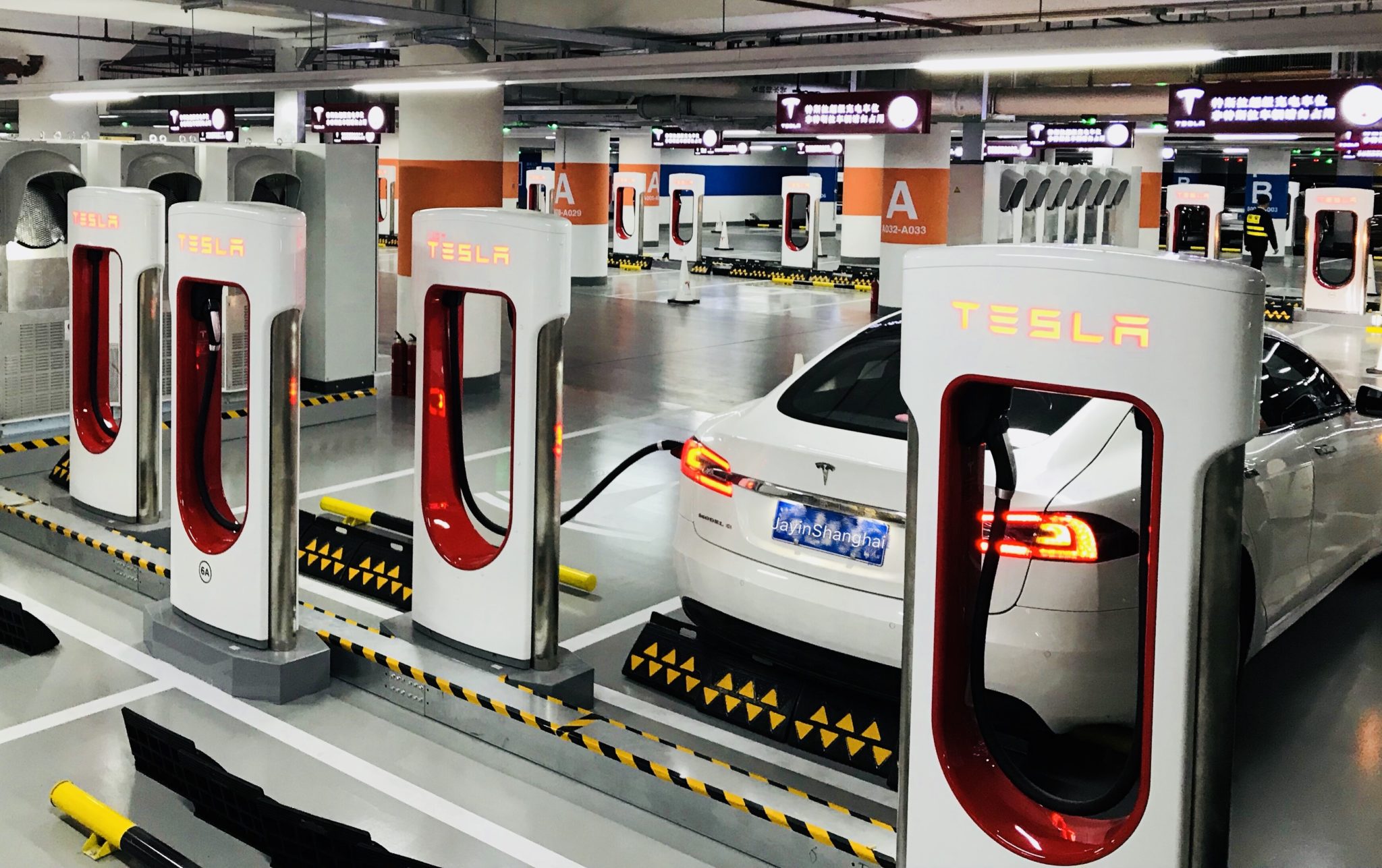
    Ionity aims to install 400 high-speed charging stations across Europe by the end of next year in a bid to combat concerns about the range of electric vehicles, which is still considered a key factor limiting demand.

    So far, the venture has installed 140 stations in 14 European countries, while a further 50 are under construction.

    “The participation of new investors in Ionity is a clear signal of trust indicating that the work of our young company is already bearing fruit,” Chief Executive Michael Hajesch said in a statement.

    The announcement comes days before the Frankfurt Auto Show IAA, where sustainable driving and electric cars will take centre stage. Volkswagen will display its ID 3 electric vehicle, Porsche its Taycan electric sports car, and Mercedes-Benz its fully electric van.

    Carmakers are pouring much of their cash into developing electric vehicles, while energy providers hesitate to take on responsibility for the rollout, as long as electric car sales remain too low to provide a profitable customer base.

    Reporting by Christoph Steitz; Editing by Edmund Blair

  • Porsche Opens Factory For The All-electric Taycan

    Porsche Opens Factory For The All-electric Taycan

    After a construction period of less than 48 months, Porsche officially opened the new production facility for its first all-electric sports car at its Zuffenhausen site. The new production facility sets new standards in terms of energy efficiency and environmental friendliness. Assembly takes place in a flexible, networked and using 4.0 production technology. It is a further step towards the “Zero Impact Factory” with no negative environmental impact: production of the Porsche Taycan with zero-emission powertrain at the Zuffenhausen site will be carbon-neutral. In addition to using electricity from renewable sources and biogas to generate heat, the new production buildings are designed to be energy-efficient. Further examples are the electrically powered logistics vehicles, the use of waste heat in the paint shop, the greening of roof areas and a continuous and holistic approach to other potential resource savings.

    Oliver Blume, Chairman of the Executive Board of Porsche AG said, “We have a level of responsibility for the environment and society. Production of the Taycan is carbon-neutral. Heritage meets the future at our parent plant in Stuttgart-Zuffenhausen, which is the heart of the brand.”

    Porsche uses automated guided vehicle systems instead of traditional conveyor belts to transport components and vehicles from station to station. Production of the Porsche Taycan will see 1,500 new jobs created at the Zuffenhausen site. In total, the company is set to invest more than six billion euros in electromobility by 2022. The company has invested a total of 700 million euros in the new production facilities alone.