Category: Automotive

Retail News Asia is committed to providing both local and global retailers with the latest Auto and Car news throughout the Asian market. This on a daily base.

  • Maruti Suzuki Expands Its Arena Retail Channel To 450 Showrooms Across India

    Maruti Suzuki Expands Its Arena Retail Channel To 450 Showrooms Across India

    Maruti Suzuki started transforming its dealerships to a more modern and digitally integrated Arena Experience Centres back in 2017. Within two years the company has expanded to a total of 450 Arena showrooms across 323 cities in India. Maruti decided to go premium with separate Nexa dealerships for models like the Baleno, S-Cross, Ignis and the Ciaz, which helped it position the brand as an upmarket carmaker, but there was a concern that required to be addressed. Following the digitalization trend and upgrading its showrooms to suit the liking of new-age customers, the rationale behind Arena was also to make sure that its existing and small car customers don’t feel left out.

    Speaking on the new milestone, Shashank Srivastava, Executive Director (Marketing & Sales), Maruti Suzuki India said, “We launched Maruti Suzuki Arena with a strategy to transform our network and meet the expectations of offering an evolved car buying experience to the young, dynamic and contemporary Indian customers. The two-year milestone is a marquee statement to showcase our commitment towards customer satisfaction. We are delighted to celebrate over 450 Arena showrooms and we look forward to offering experiences with revolutionary design and innovative technology that are at par with global benchmarks.”

    Arena showrooms are equipped with touchscreens to give every detail to the customers before they approach towards the car to get hands on experience. Specifications, features, color options, EMI options, Accessories, etc information are available on the touchscreen panel and customers even get the option of online and offline purchase. Maruti Suzuki is also integrating iCreate configurator in Arena dealerships to offer a 360-degree view of the car. Maruti Suzuki claims that users are also active on the Arena website and it has around 4.74 million visitors every month.

  • More Jobs In Auto Lost, Toyota And Hyundai Cut Production

    More Jobs In Auto Lost, Toyota And Hyundai Cut Production

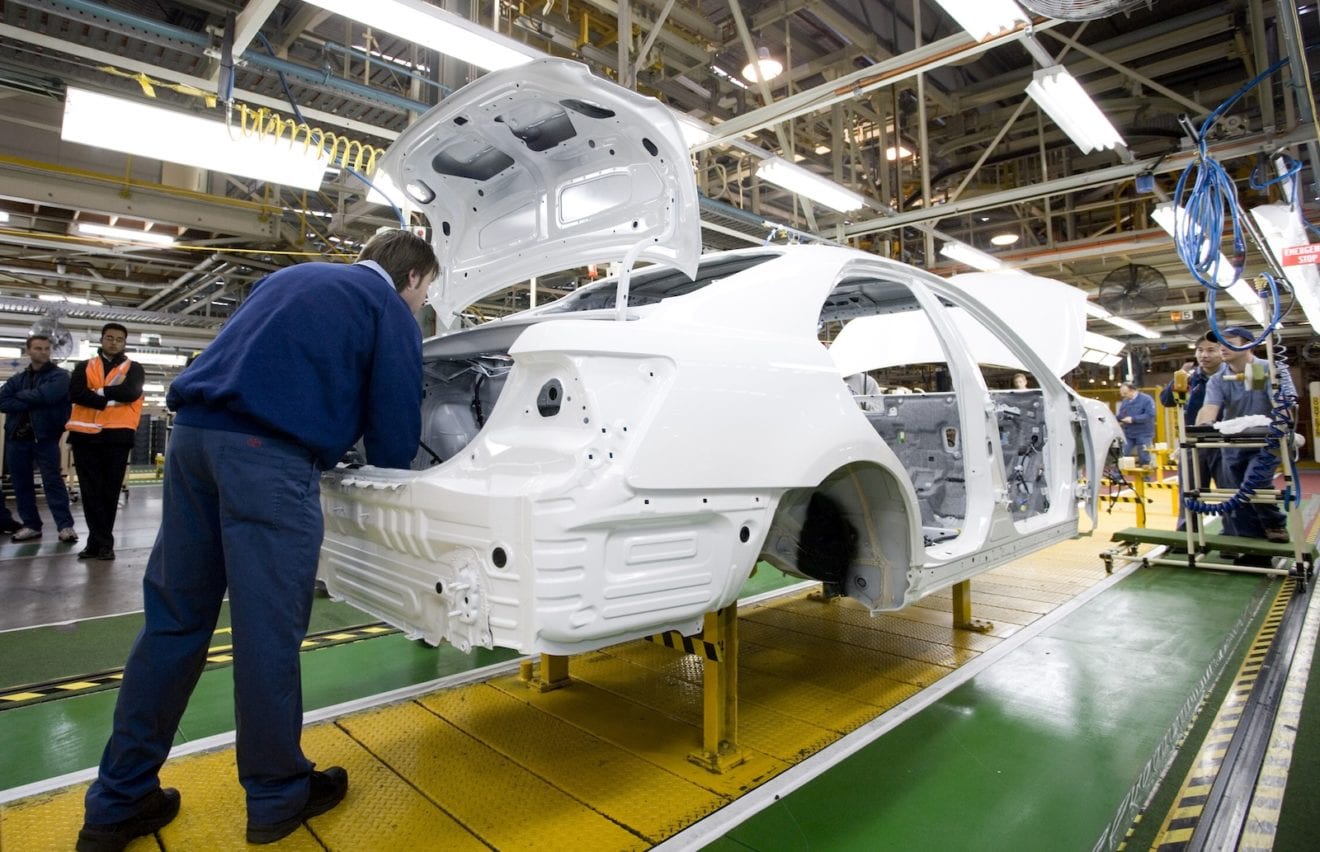
    With India’s auto sales declining for the ninth straight month in July, more automotive manufacturers are laying off workers and temporarily halting production to keep costs in check, according to sources and documents seen by Reuters.

    Japanese carmaker Toyota Motor and South Korea’s Hyundai Motor are the latest in a string of companies to briefly halt some parts of production at plants to combat slumping sales, according to company memos to employees, reviewed by Reuters.Passenger vehicle sales in July fell at the fastest pace in nearly two decades.

    The sales declines have triggered major job cuts in India’s auto sector, with many companies forced to shut down factories for days and axe shifts.

    Sources have told Reuters that even more companies have now begun to lay off temporary workers as the slowdown worsens.

    Denso Corp’s India unit, which makes powertrain and air-conditioning systems for cars, has cut some temporary workers at its Manesar plant in north India, four sources familiar with the matter told Reuters.

    A spokeswoman for Denso said the information was incorrect and declined to elaborate further.

    In a separate email, another company official disputed that the firm employed temporary workers at its Manesar plant.

    Bellsonica, which is part-owned by India’s biggest carmaker Maruti Suzuki and makes auto framework parts, has also let more than 350 workers go in Manesar, two sources said.In an email, Bellsonica said the workers that had been let go were temporary workers, and most had been let go earlier in the year.Reuters earlier this month reported automakers, component manufacturers and dealers had already cut 350,000 jobs

    In a meeting with India’s finance ministry on Aug 7, industry executives asked for tax cuts, and easier access to finance for dealers and buyers, in an effort to revive sales.Toyota, in a notice dated Aug 13, told its workers the company would halt production at its plants in Bengaluru in southern India on Aug 16 and 17 “due to low market demand of vehicles” and high stock of about 7,000 vehicles. N Raja, deputy managing director, at Toyota’s India unit, told Reuters that while the company had a flexible production system it had to resort to five no-production days in August to prevent the build up of stock.”The industry is deeply concerned with the reality of poor customer sentiment faced by the sector,” said Raja, adding he hoped the government would step in to support the industry

    Hyundai, in a memo on Aug 9, also said it would halt production for several days in August across various departments including the body shop and paint shop as well as its engine and transmission plants. A Hyundai Motor India spokesman said the company expected sales to pick up in the festive season starting next month and added that the company had not laid off any workers.

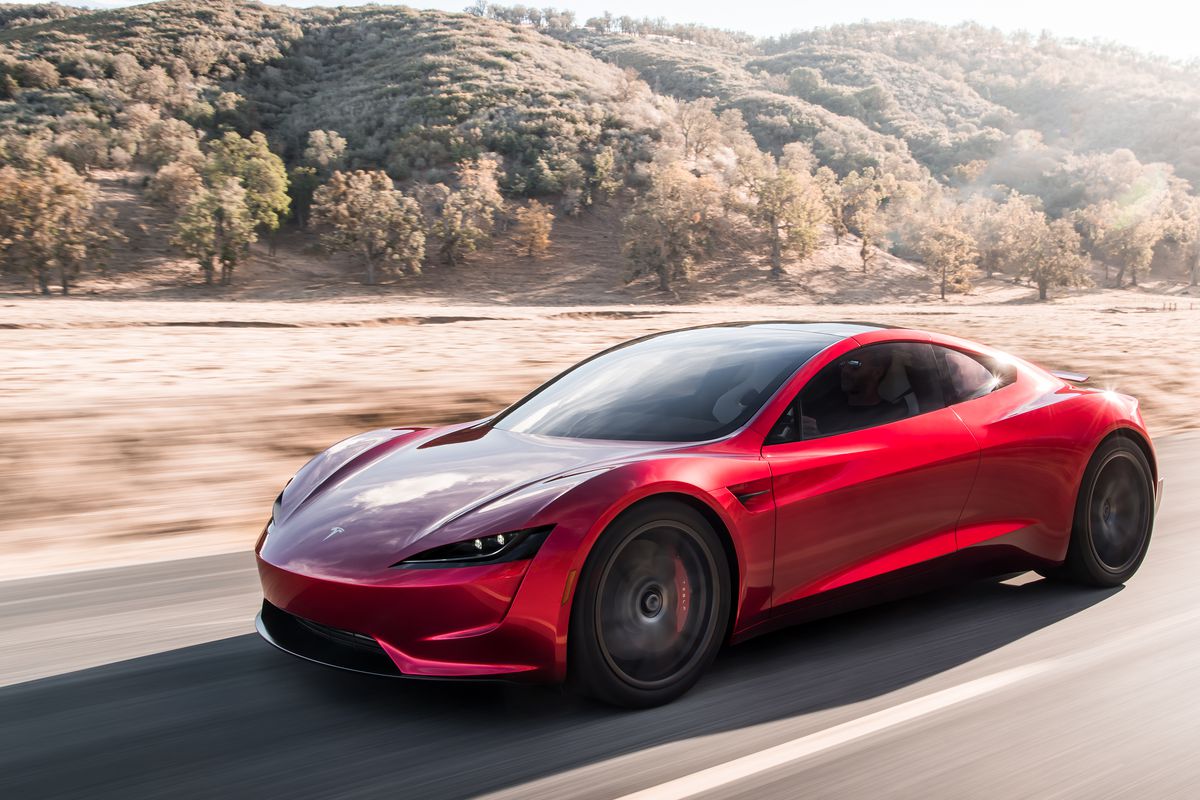
  • Tesla Raises Prices For Some Vehicles In China

    Tesla Raises Prices For Some Vehicles In China

    U.S. electric vehicles maker Tesla Inc said on Friday it had raised prices for some vehicles in China, a decision that comes as the Chinese yuan trades at its weakest levels in more than 10 years.

    The starting price for the Model X sport utility vehicle (SUV) was now 809,900 yuan ($114,186) compared with 790,900 yuan previously, Tesla said on its China website. Its long-range dual-motor variants of mass-market Model 3 vehicles were now priced at 439,900 yuan, up from 429,900 yuan previously.

    People familiar with the matter told Reuters earlier this week that Tesla would hike prices on Friday and could do so again in December should Chinese tariffs on U.S.-made cars take effect.

  • Volvo XC90 To Come In A 3-Seater Excellence Trim In India

    Volvo XC90 To Come In A 3-Seater Excellence Trim In India

    Volvo Auto India is all set to launch the XC90 Excellence variant in India on September 3, 2019. The Excellence option is only on offer in select markets and India gets to be one of them. The regular XC90 Inscription trim cabin is already pretty upscale, but the Excellence adds to that. So there’s a lot more on offer and yes, you’re quite literally in the lap of luxury. To begin with the XC90 Excellence comes with individual seats at the rear and this makes it a 3-seater which means there’s a lot of space for anyone sitting at the rear. The seats can be reclined and adjusted electrically. There’s a lot provided at the rear to pamper the passengers and this includes features like a massage function – which along with the rest of the seat functions (including ventilated cooling and seat heating) can be operated using a pop-up touchscreen that sits between the two seats.

    Volvo also provides tray tables that can be folded out of the central armrest. The armrest also has a storage bin housed below it which contains charging and USB points. Between the seats is the in-car refrigerator where you can store and cool any beverage of your choice. The Excellence comes with its own exclusive set of crystal glasses and special champagne flute holders, that can be housed inside the fridge to keep them cool. Now, that’s taking exclusivity to a whole new level. There is a holder between the seats to stick the specially designed flutes too.

    Now with all these features at your disposal, you certainly want a bit of peace and quiet so what Volvo has done is put a glass partition between the cabin and the cargo area to make sure that the cabin is quiet and of course cooler. The cabin will be finished in two colors – black or beige. All these luxurious features will certainly cost you. Currently, the XC90 lineup starts at around ₹ 80 lakh and goes up to ₹ 1.31 crore, we expect the XC90 Excellence to be priced at ₹ 1.3 crore.

  • Revolt RV 400 Electric Motorcycle Launched

    Revolt RV 400 Electric Motorcycle Launched

    Revolt Intellicorp has launched the company’s first electric motorcycle, touted as India’s first artificial intelligence-enabled motorcycle, the Revolt RV 400. The Revolt RV 400 e-motorcycle is positioned to compete with conventional 125 cc motorcycles and is the brand’s flagship offering. In addition to the RV 400, the bike maker also introduced the new entry-level RV 300 that remains the most affordable offering from the company. Both bikes are being offered with a payment plan with the RV 300’s prices start at ₹ 2999 per month (for 37 months), while the payment plan for the RV 400 starts at ₹ 3499 for the standard variant, going up to ₹ 3999 (for 37 months) for the premium variant.

    The Revolt RV400 is equipped with an embedded 4G LTE SIM which enables the internet and cloud-connected features of the motorcycle. A dedicated Revolt mobile app offers real-time motorcycle diagnostics, satellite navigation, bike locator, geo-fencing for security, doorstep battery service and access to a battery charging network, called the Battery Switch, as well as online payment gateway.

    The lithium-ion battery of the RV 400 has an ARAI-certified range of 156 km on a single charge, and it will take less than four hours to fully charge the battery. The removable battery can be easily charged either at home or the workplace, with the help of an on-board charger, and re-charged batteries can also be ordered via the app with doorstep delivery options as well. The RV 400 is a quiet, electric motorcycle and the 3kW electric motor offers 175 Nm of instant torque, with a claimed top speed of 85 kmph. The company is also offering an unlimited warranty on the battery of the RV 400.

    The Revolt RV 400 is available for order on Amazon as well as the Revolt Intellicorp official website. The RV 400 also boasts of a choice of synthesized sounds, which can be selected by the rider from the Revolt App. The Revolt RV 400 is now available in Delhi and Pune and soon availability will be extended to other cities, including Bengaluru, Hyderabad, Ahmedabad, and Chennai in the next few months.

    The smaller Revolt RV 300 is powered by a 1.5 kW motor that uses a 2.7 kW battery pack that promises a range of 80-150 km on a single charge. The top speed is rated at 65 kmph. The electric motorcycle will come with an 8 years/75,000 km warranty, with a service interval at every 10,000 km. Revolt is also offering a free tire replacement, one set in three years, but only for the premium variant of the RC400. Bookings for the Revolt RV 300 and RV 400 will open from August 29,2019.

  • 2021 Mercedes-Benz GLE Coupe Breaks Cover

    2021 Mercedes-Benz GLE Coupe Breaks Cover

    Mercedes-Benz has revealed the 2021 GLE Coupe and the car will be built in Tuscaloosa, Alabama. The new GLE Coupe is longer, wider and has grown in terms of wheelbase too. The new GLE Coupe is 4939 mm long and 2010 mm wide (39 mm longer and 7 mm wider than its predecessor). The wheelbase has grown by 20 mm compared with the predecessor but remains 60 mm shorter than that of the GLE. The front sees the diamond radiator grille is replaced with the single horizontal louver. The openings in the louver, high-gloss chrome-plated underguard in the front apron all bring out a premium image. With the AMG Line the grille widens downwards in an A shape, and the pins in the diamond radiator grille are portrayed in chrome. The flatter-angled windscreen makes the car look more dynamic and the rear-sloping roofline makes it look elegant.

    Move to the rear of the new Mercedes-Benz GLE Coupe and you can see that beneath the C-pillar there’s a broad muscle which protrudes from the surface of the vehicle side, starting in the rear side door and encompassing the rear lamps. The tail lamps are slim and elongated and look good too.

    The cabin is similar to other premium SUV models from the company’s line-up. The cockpit sees two 12.3-inch screens, one forms the instrument panel while the other acts as the infotainment system. the strikingly shaped instrument panel, horizontally divided by a trim element tier, and seamlessly flowing into the door trim, appear familiar. The upper surface is covered in Artico man-made leather upholstery as standard in the GLE Coupe. The 2021 GLE Coupe gets 655 liters of boot space which can be increased to 1790 liters with the rear seats down.

    Under the hood of the GLE Coupe 350d is a OM 656, 6 cylinder engine which churns out 268 bhp and 600 Nm of torque. There’s also a 400d 4Matic which puts out 326 bhp and 700 Nm. Because all variants of the new GLE Coupe; have a transfer case with an electronically controlled multi-plate clutch as standard behind the 9G-TRONIC automatic transmission. This allows a variable transfer of drive torque from 0-100 percent between the axles. During cornering it can influence the yaw torque in a targeted manner towards over- and understeering of the vehicle and together with the shorter wheelbase it increases the agility of the new GLE Coupe. The AMG gets a 3-liter six-cylinder engine putting out 425 bhp and it comes with 48-volt technology, fully variable AMG Performance 4MATIC+ all-wheel drive, AMG SPEEDSHIFT TCT 9-speed automatic transmission.

    As standard, the new GLE Coupe is given the steel suspension chassis with sportier and tauter tuning. Compared with the preceding generation it benefits from firmer attachment points and improved geometry and offers even more precise wheel location and better shielding from vibrations caused by unevenness in the road surface. The enhanced air suspension system AIRMATIC is available with sporty tuning as an option. Its adaptive adjustable damping uses highly complex sensor systems and algorithms to adapt the damping characteristics to the road condition and the driving situation in real-time. Irrespective of the load the air suspension also keeps the vehicle at the same level and can also adjust the ground clearance – automatically or at the press of a button depending on the driving speed and situation.

  • Volkswagen Polo & Vento Facelifts To Be Launched Next Month

    Volkswagen Polo & Vento Facelifts To Be Launched Next Month

    Volkswagen India will be introducing the facelifted versions of the Polo and the Vento models on September 4, 2019. VW’s most popular models in the country are set to get subtle cosmetic changes for the new model year along with feature upgrades. The updated cars were spotted testing earlier this year too, and the changes will keep the model fresh, with the next generation Polo and Vento for India still some time away from launch. We recently told you that the new generation Polo for India will be based on the MQB A0 platform, which will also spawn the new Vento.

    Based on what we’ve seen on the previous spy shots, the Volkswagen Polo and Vento facelifts will sport a revised front that includes changes to the grille that takes inspiration from the GTI models, while the front and rear bumper have been tweaked as part of the update. The silhouette on both cars remains unchanged. The updated versions will also get new alloy wheels finished in grey. In addition, the Volkswagen Polo and Vento facelifts will get a number of mandatory features as standard including front seatbelt reminders, rear parking sensors, and speed alert system. Dual airbags and ABS are already standard across all variants. It needs to be seen if the infotainment system gets any changes on the cars.

    0Comments

    The Volkswagen Polo completed 10 years in India this year and has largely remained the same barring the cosmetic upgrades and feature additions from time to time. The Vento too has gone through a similar process during its life in the country. With Skoda in charge of the VW Group in India, the company’s focus is on bringing the new range of SUVs first as part of the Volkswagen 2.0 plan, which will be followed by the new Polo and Vento that are likely to arrive by 2021. We do expect to hear a few official announcements at the Auto Expo next year.

  • Harley-Davidson Street 750 10th Anniversary Edition Launched In India

    Harley-Davidson Street 750 10th Anniversary Edition Launched In India

    American motorcycle manufacturer Harley-Davidson completes ten years in India this year, and to commemorate the occasion, the company has introduced a limited edition version of its entry-level offering. The Harley-Davidson Street 750 10th Anniversary Edition is priced at ₹ 5.47 lakh (ex-showroom, India) and becomes the first motorcycle in the bike maker’s line-up to meet the upcoming BS6 emission norms. The special model is about ₹ 13,000 more expensive than the standard version, and production is restricted to just 300 units in order to maintain the exclusivity on the model.

    The Harley-Davidson Street 750 10th Anniversary Edition remains largely identical to the standard model, but you do get the new Indian motif on the fuel tank and on the tail section just above the taillight. The bike continues to sport black finished alloy wheels, along with fork gaiters on the front forks. The short seat remains the same too on the 2020 Street 750.

    Mechanically, the Harley Street 750 anniversary edition the same components. The bike draws power from the same 749 cc liquid-cooled, V-Twin Revolution X engine that has been upgraded for the new and stringent emission norms, and churns out 60 Nm of peak torque at 3750 rpm, while paired with a 6-speed gearbox. The bike uses telescopic forks up front and twin shocks at the rear for suspension duties, while braking performance comes from disc brakes with dual-channel ABS.

    Apart from announcing the new Street 750, Harley-Davidson India also unveiled the LiveWire in the country. The production-spec version of the much-awaited motorcycle remains only an unveil for now and there has been no announcement on the launch of the motorcycle.

  • Slow Charging Could Be The Long-Term Solution To Sustainable EV Charging Infrastructure

    Slow Charging Could Be The Long-Term Solution To Sustainable EV Charging Infrastructure

    Automakers around the world are pushing hard for new networks that can charge electric cars fast. In Europe, some power companies and grid operators are testing whether it might be smarter and cheaper to move into the slow lane.

    A 15-month study of electric car charging behaviour in Germany has concluded that consumers can be persuaded to accept slow, overnight recharging that could help avoid brownouts from surges in electricity demand or costly upgrades to power grids.

    The prospect of millions of EVs hitting the roads as governments gradually ban new diesel and gasoline cars is seen as a major challenge for power companies, especially in Germany which is switching from nuclear and coal to less predictable sources of energy such as wind and solar.

    The small study in the wealthy Stuttgart suburb of Ostfildern-Ruit though has helped alleviate the concerns of some grid operators that too many electric vehicles (EVs) charging at peak times could cause network crashes.

    The engineers at Netze BW, the local grid operator behind the trial, found that all the households involved came around to leaving their electric cars plugged in overnight and only half ever charged simultaneously.

    “Since the experience with the project we have become a lot more relaxed. We can imagine that, in future, half of the inhabitants of such a street own electric vehicles,” said Netze BW engineer Selma Lossau, project manager for the study.

    Still, with limited EV battery ranges for now, slow, overnight charging doesn’t get around the problem of how to persuade drivers to ditch petrol cars altogether.

    Without a network of fast-charging stations offering quick refuelling, drivers may be wary of using EVs for long trips – which is why some automakers want lots of fast-charging stations to encourage the widespread adoption of electric cars. Slower, or delayed, charging has already gained traction in Norway, Europe’s leading EV market, where nearly 50% of new car sales are zero-emission vehicles.

    A study by energy regulator NVE showed that Norway faces a bill of 11 billion crowns ($1.2 billion) over the next 20 years for low- and high-voltage grids, substations and high-voltage transformers – unless it can persuade car owners to charge outside peak afternoon hours.

    The investment cost to the country of 5.3 million people could drop to just over 4 billion crowns if cars are charged in the evening, and may fall close to zero if batteries are only plugged in at night, NVE said.

    NVE is now working a tariff proposal which will penalise peak-hours charging. Tibber, a Norwegian power company, already offers cheaper electricity for EV charging if you let it decide when your car is charged while firms such as ZAPTEC offer ways to adjust charging to the available grid capacity.

    Some of the 10 households participating in the Stuttgart trial said they initially wanted to keep topping up their cars for fear of running out of juice, but soon adapted to leaving the power company to handle it as it saw fit overnight.

    “At the start, I did not want to take any risks and charged frequently in order to feel secure. Over time, I changed my outlook,” said Norbert Simianer, a retired head teacher who drove a Renault Zoe during the trial. “I grew used to the car and became more at ease in handling the loading process.”

    Simianer and his neighbours were given electric cars and 22 kilowatt (kW) wall-boxes for their garages, alongside two charging points in the street, all free of charge.

    In return, they gave up their normal cars and allowed Netze BW, which is a subsidiary of German utility EnBW (EBKG.DE), to monitor and carry out a deferred and down-scaled charging process during a seven-and-a-half-hour period overnight.

    Netze BW tried various options, either slotting cars in at the maximum 22 kW charging flow one after another, or lengthening the charging time for individual cars by adjusting the power flow, or combining both methods, Lossau said.

    The participants, who used apps to check the status of their car batteries, grew accustomed to the lack of instant charging capability because their vehicles could always handle their everyday commutes of up to 50 km (31 miles).

    EnBW said nine of the 10 households in the trial on Ostfildern-Ruit’s Belchenstrasse had opted to keep the wall-boxes and most were exploring leasing electric car.

    Lossau said monitoring 10 households did not in itself provide the “empirical mass to draw conclusions for the load profile of all of Germany”.

    She also said there would need to be better two-way communication between EVs, the grid and consumers for the system to function efficiently on a large scale.

    “There will have to be more exchange of information between e-cars and the grid to update the loading status in real-time, because otherwise, there can be the wrong impression about the speed of loading,” she said.

    Utility companies developing so-called vehicle-to-grid (V2G) services, however, are struggling to persuade some automakers to use technology that allows two-way flows of information, and power, between batteries and grids.

    Carmakers such as Volkswagen , Daimler and Ford, for example, are prioritising one-directional fast-charging instead to overcome consumer resistance to EVs.

    Japan’s Nissan (7201.T) has been leading the way among carmakers exploring V2G though Germany’s BMW has now decided to develop it too, saying cooperation between cars and grids will be key to making e-mobility ready for mass markets.

    “It is about making sure there is enough supply for the electric cars and that the lights do not go out elsewhere,” a BMW spokesman said. “The cars don’t just load when it’s best for the market, but they can also supply power back to the grid to help even out demand spikes.”

    “There has to be more progress on the data exchanges, however. It is not yet the standard,” he said.

    Nevertheless, the Ostfildern-Ruit trial has raised hopes that power grids might be able to cope with an influx of electric cars, especially if the consumers play ball.

    Even if drivers resist overnight charging, suppliers of software and equipment to power grids, such as Germany’s Siemens, are also looking at safer and more efficient ways to manage how and when power is used to charge cars.The German city of Hamburg, for example, started a three-year pilot project this month with Siemens to pre-emptively identify overloads on transformers and along cables, and manage EV charging points accordingly.

    “Loading processes offer so much flexibility that the overload on the networks can be reduced by deferring loading times or reducing the load that is supplied,” said Thomas Werner, expert at Siemens Digital Grid.

    “This happens through the digitisation of hardware and software and with communication technology,” he said.

    Using software to help protect ageing power networks from predictable surges could also avoid costly hardware upgrades to parts of the 1.7 million km of distribution grids in Germany.

    With few than 100,000 electric-only cars in Germany at the moment, there is little threat of blackouts from over-demand. But the Transport Ministry in Berlin envisages up to 10 million electric cars on the roads by 2030.

    The number of charging points across the country also only stands at 21,000. That’s up 50% over the last year but still barely a fraction of future needs.

    Next up for Netze BW is a trickier test.

    Managing the power for 10 households with electric cars in a suburban street of 22 homes is one thing, now the power company is launching a study of car charging behaviour in an apartment block with 80 flats, where quarrels over access are likely.

    It is also looking at a study in rural areas, where the longer cables required present challenges in maintaining stable voltages for charging.

    But that’s still only part of the story. Lossau said power companies would have to work more closely with carmakers to fill knowledge gaps and exchange information.

    “It can only work if we get more data from each other.”

  • Harley-Davidson LiveWire Unveiled In India

    Harley-Davidson LiveWire Unveiled In India

    Harley-Davidson has launched the American motorcycle manufacturer’s first electric motorcycle, the Harley-Davidson LiveWire in India. The LiveWire is the first model in a broad portfolio of electric motorcycles from Harley-Davidson and is priced at US$ 29,799 and will be available on sale at Harley-Davidson dealerships in the US, Canada and European countries. For now, Harley-Davidson India has just showcased the LiveWire in India, but it could well be launched in India, in a few years from now. If at all it’s launched, we expect the LiveWire to be priced at around ₹ 40-50 lakh in India.

    The LiveWire is powered by the all-electric Harley-Davidson Revelation powertrain which puts out 103.5 bhp of power and 116 Nm of instant torque. The LiveWire has claimed acceleration from 0 to 100 kmph in just 3 seconds and roll-on acceleration from 100 kmph to 129 kmph in 1.9 seconds. The electric powertrain requires no clutch and no gear shifting, so just a twist of the throttle is all that is required. There is regenerative braking as well, and the LiveWire produces a unique futuristic sound complementing the smooth electric power.

    The LiveWire is loaded with electronics, including cornering anti-lock braking system (ABS), cornering enhanced traction control system, rear wheel lift mitigation, as well as a drag-torque slip control system which manages rear wheel slip and prevent rear-wheel lock due to the regenerative braking. A 4.3-inch full-colour TFT touchscreen panel offers the rider controls to seven riding modes, including four pre-programmed modes – Road, Rain, Sport and Range. Additionally, there are three more fully customisable modes, where the power (maximum rate of acceleration), regeneration (braking effect when off-throttle), throttle response and traction control settings can be fully customised.

    The LiveWire has a cast aluminium rigid frame which is said to offer precise and responsive handling, and front and rear Showa suspension, with Showa Separate Function Front Fork Big Piston and a Showa balanced free rear cushion-lite monoshock rear is said to offer a comfortable ride and precise handling. Braking is handled by Brembo Monobloc front brake calipers gripping dual 300 mm diameter rotors on the front wheel. The LiveWire runs on 17-inch wheels shod with Michelin Scorcher Sport tyres with a 180 mm rear tyre width and 120 mm front tyre width. Riders can also use the H-D Connect service, together with the H-D App which will offer bike vitals, including battery charge, bike location, and a security system as well.

    The permanent magnet electric motor is located low on the LiveWire to lower the centre of gravity and aid in the motorcycle’s handling, despite its 249 kg kerb weight. The high-voltage 15.5 kWh lithium-ion battery has a claimed range of 225 km while ridden in the city, with 142 km of claimed range on the highway. Additionally, a small 12-volt lithium ion battery provides power for start-up and key fob recognition. Full charging time of the battery with a Level 1 on-board charger is 12 hours from a standard household power outlet, while a DC Fast Charger will fully charge the LiveWire in just 60 minutes. So far, there’s no word on if and when, the LiveWire will be commercially available in India. As things stand today, the fast charger cannot be used in India, and can only be used in European and other international markets.

  • Ride-Hailing Firm Grab Plans Major Investment In Vietnam

    Ride-Hailing Firm Grab Plans Major Investment In Vietnam

    Singapore-based ride-hailing firm Grab is set to invest “several hundred million dollars” in Vietnam where the company sees its next major growth market, just weeks after it unveiled a $2 billion plan in Indonesia.

    The proposed investment is the latest example of a top-notch regional brand deepening its commitment to Vietnam, one of Asia’s fastest growing economies. It also shows the eagerness of Grab, which has raised billions of dollars from investors, to put its cash to work.

    “We’re very excited about Vietnam. We see very similar characteristics to Indonesia,” Grab President Ming Maa told Reuters in an interview.

    Grab and rival Indonesia-based Go-Jek are evolving from ride-hailing app operators to become one-stop shops for services as varied as payments, food delivery, logistics and hotel bookings in Southeast Asia.

    Grab, with its app on more than 160 million mobile devices across eight countries, has said its Indonesia investment aims to build a next-generation transport network and transform how critical services such as healthcare are delivered.

    Like Indonesia, many middle class and young consumers in Vietnam are using apps and websites to access services, Maa said.

    “I would expect us to invest over several hundred million dollars into growing our Vietnam business,” he said without giving specific details on the investment.

    Vietnam ranks third or fourth among Grab’s top markets, said Maa, who joined the company three years ago from its major investor, Japan’s Softbank Group Corp, and a previous decade-long stint at investment bank Goldman Sachs.

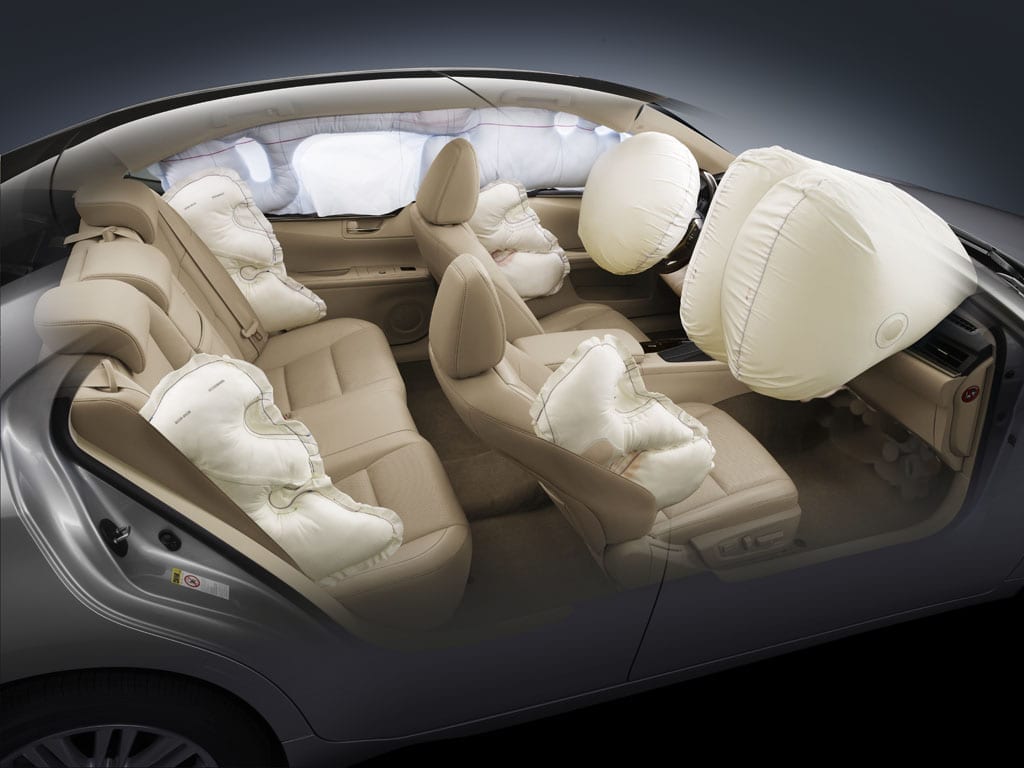
  • Honda Develops New Front Airbag Technology

    Honda Develops New Front Airbag Technology

    The development and testing of the new airbag was led by engineers at Honda R&D Americas, Inc. in Ohio in partnership with Autoliv

    Jim Keller, President of Honda R&D Americas, Inc, said, “This new airbag technology represents Honda’s continuing effort to advance safety performance in a wider variety of crash scenarios and reflects the innovative thinking that our engineers are bringing to the challenge of reducing traffic injuries and fatalities.”

    Unlike conventional airbag systems that rely on a single inflatable compartment, the new system utilises four major components: three inflated compartments – a center chamber and two outward-projecting side chambers that create a wide base across the dash – along with a sail panel that stretches between the two side chambers at their outermost edge. Operating something like a baseball catcher’s mitt, the sail panel catches and decelerates the occupant’s head while also engaging the side chambers, pulling them inward to cradle and protect the head, mitigating the potential for injury.

    It is particularly beneficial in angled frontal impacts in which lateral collision forces can cause an occupant’s head

    Honda also is working to develop and deploy advanced passive safety and active safety systems that can reduce the severity of a collision or help avoid it entirely. In addition to passive safety systems such as airbags, seatbelts and advanced crash safety structures like the company’s Advanced Compatibility Engineering (ACE) body structure, Honda is aggressively deploying its Honda Sensing and AcuraWatch suites of safety and driver-assistive systems. The company has committed to making this broad suite of technologies standard on nearly all of its vehicles by 2022.

  • China’s Car Wreckage Cries Out For Consolidation

    China’s Car Wreckage Cries Out For Consolidation

    Chinese carmakers are involved in a slow-motion wreck. Falling sales hit Geely Automobile Holdings and Great Wall Motor harder in the first half than rivals partnered with foreign marques. Both companies have started seeking JVs, too. A better route to recovery would be industry consolidation, and soon.

    Domestic manufacturers are getting crunched from every direction. The withdrawal of government incentives last year caused customers to accelerate their purchases. Geely, whose parent company owns Volvo, blamed new emissions standards for its aggressive price cuts, and by extension a 40% fall in profit through the end of June. The bottom line at $9 billion SUV maker Great Wall shrank 60% for similar reasons. Beijing is also now slashing subsidies for electric vehicles, putting even more pressure on margins.

    Some sympathy might be expected from the central government, which considers autos a “pillar” industry. Yet Beijing is also aware the country has far too many car companies, and that too many of them rely too heavily on shared revenue from overseas JVs, which has crippled their export competitiveness. Sales of BMW models, for example, made up 90% of revenue at $5 billion Brilliance China Automotive, whose profit fell just 9% in the first half; Guangzhou-based GAC relies on its relationship with Toyota to compensate for slackening demand for its unfortunately named Trumpchi sedan.

    Local manufacturers are losing market share at home. It was down to 36% in July, after they ceded 3.9 percentage points from a year earlier. Even Geely and Great Wall, which had found some market traction for their own models, have started flirting with overseas rivals. The better ones, however, are mostly taken.

    Domestic mergers make more sense. Geely and Great Wall are up against mordant state-backed giants such as FAW, along with dozens of smaller rivals and hundreds of EV startups. Local officials stubbornly prop up weak manufacturers to preserve employment, which keeps them running but weak. The long-expected combination of FAW with Dongfeng and Changan, for example, has yet to happen. It’s time to start revving up these sorts of deals.

  • Hyundai Group Unveils New Integrated E-Scooter For Last Mile Mobility On Future Vehicles

    Hyundai Group Unveils New Integrated E-Scooter For Last Mile Mobility On Future Vehicles

    Speaking on the new concept, DongJin Hyun, head of Hyundai Motor Group Robotics Team said, “This is the vehicle-mounted personal scooter which could be featured in future Hyundai Motor Group vehicles. We want to make our customers’ lives as easy and enjoyable as possible. Our personal electric scooter makes first- and last-mile commuting a joy while helping to reduce congestion and emissions in city centers.”

    Research data by global consultancy McKinsey & Company has released data suggesting that the last mile mobility market is expected to grow to $500 billion by 2030. The new integrated e-scooter is another step in that direction. The e-scooter is mounted on a vehicle and is automatically charged using the electricity generated when driving. A key change since the 2017’s concept has been the shift from front-wheel drive to rear-wheel drive that was essential for enhancing safety and stability as it positions weight near the rear. In addition, the engineers have added a suspension set-up to the front wheel for a smoother ride on rough surfaces.

    Hyundai’s integrated e-scooter features a 10.5 Ah lithium-ion battery, which enables a top speed of 20 kmph and can travel up to 20 km in a single charge. The scooter is light with a weight of 7.7 kg that makes it highly portable, while its tri-folding design makes it light and compact. The scooter also features a digital display that puts out a host of information including the speed and battery status. The e-scooter is also equipped with LED headlights and two taillights for enhanced visibility at night. Hyundai is also looking to introduce regenerative braking on the scooter to increase the range by seven percent.